Author

admin

Browsing

Outages on Shopify’s e-commerce platform have been resolved, the company said late Monday, bringing to an end a daylong glitch on the annual ‘Cyber Monday’ shopping day.

Some merchants that use Shopify’s service to sell goods online said they experienced issues with checkouts through the company’s point-of-sale system.

Businesses that run on Shopify also had trouble logging into their administrative portals.

In a statement, Shopify said: ‘We had a system degradation that has now been mitigated.’

Throughout the day, business owners posted angry messages directed at the company on X, where Shopify President Harvey Finkelstein had posted ‘HAPPY CYBER MONDAY! Let’s finish strong!’ earlier in the day, with an emoji of a flexed arm.

One business, Costack Spices, based in London, replied: ‘How??? [We] cannot fulfill orders or log on,’ with three red-faced emojis. In a follow-up, the company posted, ‘This is unbelievable.’

Another user wrote, ‘@ShopifySupport I haven’t been able to access it for the last couple hours.’

Shopify replied to most users on X with the same message: ‘We are aware of an issue with Admins impacting selected stores, and are working to resolve it.’

In 2024, merchants using Shopify services recorded $11.5 billion in sales from Black Friday through Cyber Monday, the company said, with more than 76 million customers buying from businesses powered by the platform.

Shopify provides website design tools, online checkout services and digital advertising products to businesses of all sizes. The company says that millions of merchants use its services.

While Shopify’s share of Cyber Monday sales may be limited, smaller businesses that rely on the company to process their transactions may have missed out on crucial sales at the start of the all-important holiday season.

Total Cyber Monday sales are expected to be more than $53 billion, according to Salesforce.

Shopify stock ended the trading day down 5.9%.

This post appeared first on NBC NEWS

MILAN — The Prada Group announced Tuesday that it has officially purchased Milan fashion rival Versace in a 1.25 billion euro (nearly $1.4 billion) deal that puts the fashion house known for its sexy silhouettes under the same roof as Prada’s “ugly chic” aesthetic and Miu Miu’s youth-driven appeal.

The highly anticipated deal is expected to relaunch Versace’s fortunes, after middling post-pandemic performance as part of the U.S. luxury group Capri Holdings.

Prada said in a one-line statement that the acquisition had been completed after receiving all regulatory clearances.

Prada heir Lorenzo Bertelli will steer Versace’s next phase as executive chairman, in addition to his roles as group marketing director and sustainability chief.

The son of co-creative director Miuccia Prada and longtime Prada Group chairman Patrizio Bertelli has said he doesn’t expect to make any swift executive changes at Versace. But Bertelli has said that the company, which places among the top 10 most recognized brands in the world, has long been underperforming in the market.

Prada has underlined that the 47-year-old Versace brand offered “significant untapped growth potential.’’

Versace has been in the midst of a creative relaunch under a new designer, Dario Vitale, who previewed his first collection during Milan Fashion Week in September. He had previously been head of design at Miu Miu, but his move to Versace was unrelated to the Prada deal, executives have said.

Capri Holdings, which owns Michael Kors and Jimmy Choo, paid $2 billion for Versace in 2018, but had been struggling to position Versace’s bold profile in the recent era of “quiet luxury.″

Versace represented 20% of Capri Holdings 2024 revenue of 5.2 billion euros. An analyst presentation for the Prada deal said that Versace would represent 13% of the Prada Group’s pro-forma revenues, with Miu Miu coming in at 22% and Prada at 64%. The Prada Group, which also includes Church’s footwear, reported a 17% boost in revenues to 5.4 billion euros last year.

The Prada Group has already begun preparations to incorporate crosstown rival Versace into its Italian manufacturing system, a point of pride for the group.

“Making a bag for one brand or another, the know-how is the same,″ Bertelli told reporters last week at the group’s Scandicci leather goods factory, which already makes bags for the Prada and Miu Miu brands and will soon add Versace.

The Prada Group’s has invested 60 million euros in its supply chain this year, including a new leather goods factory near Siena, a new knitwear factory near Perugia as well as increasing production at its factory Church’s footwear factory in Britain and expanding another Tuscan factory. That’s on top of 200 million euros in investments from 2019-24.

Prada’s efforts include an academy that has trained some 570 new artisans over the last 25 years in an in-house training academy operating in the Tuscany, Marche, Veneto and Umbria regions.

Last year, Prada hired 70% of the 120 artisans who trained in the academy. The number of trainees rose by 28% to 152 this year.

This post appeared first on NBC NEWS

Tech billionaires Michael and Susan Dell announced Tuesday that they are pledging $6.25 billion to create some 25 million additional ‘Trump Accounts’ for children across the country.

These accounts will be seeded with $250 each, and available for children who missed the eligibility cutoff for the $1,000 federally funded ‘Trump Accounts’ for babies born after Jan. 1, 2025.

Children living in ZIP codes with median incomes below $150,000 will be the first to receive the funds, the White House said.

‘The greatest investment that we could possibly make is in children,’ Susan Dell said alongside President Donald Trump at the White House.

‘It’s really an amazing moment that two people would do that kind of a contribution,’ Trump said.

The president said he was also talking to other wealthy donors and friends to potentially make similar contributions.

Michael Dell; President Donald Trump.Errich Petersen; Chip Somodevilla / Getty Images

Asked how this donation came to be, Michael Dell said: ‘We started talking about Texas only at the beginning. And then we thought about it some more, and we went back and forth, as we do on these things, and this is where we ended up.’

The Dells said they considered making the pledge for a long time. But they said they didn’t want the pledge to be the end of their involvement.

Michael Dell encouraged states to ‘really grow financial literacy’ to help educate families about how the accounts and markets work.

‘These deposits will reach the accounts of most children age 10 and under who were born prior to the qualifying date for the federal newborn contribution,’ the Dells said in a statement issued by their foundation.

‘Children older than 10 may benefit, too, if funds remain available after initial sign-ups,’ the Dell family said. ‘It is an incredibly practical and direct step to help families begin saving today.’

The Dells say they ‘believe this effort will expand opportunity, strengthen communities, and help more children take ownership of their future.’

The Dell family gift “is expected to reach nearly 80% of children age 10 and under across 75% of U.S. zip codes,” according to the nonprofit Invest America.

Children born after Jan. 1 and until Dec. 31, 2028, will receive an account infused with a $1,000 investment from the U.S. Treasury, as part of the recently passed One Big Beautiful Bill.

The accounts will open and begin accepting contributions starting on July 4, 2026. The accounts will initially be held by a financial firm designated by the Treasury Department, but later will be able to be transferred to any brokerage firm.

Those accounts will also be eligible for additional contributions of up to $5,000 per year until the beneficiary child reaches age 18. Withdrawals from the accounts are not permitted until the children reach that age.

Trump accounts can be invested only in low-cost index funds or ETFs that either mirror the S&P 500 or ‘another American stock index,’ according to the White House Council of Economic Advisers.

‘These investment accounts are simple, secure, and structured to grow in value through market returns over time,’ the Dell family said.

‘Trump Accounts represent a potentially valuable tool for building up savings and tapping the power of compound growth for the young,’ Charles Schwab tax planning director Hayden Adams recently wrote.

If a family could contribute and invest the maximum $5,000 per year in the accounts, and with a reasonable growth rate of about 6%, ‘by age 18, the child’s account would hold around $191,000 in assets.’

Once a child turns 18, the accounts are eligible to be converted to a traditional individual retirement account, ‘meaning it could continue to accumulate potential gains on a tax-free basis’ for many years.

The Dells are one of the wealthiest families in America, with a fortune of nearly $150 billion, according to Bloomberg Billionaires. The family’s primary source of wealth is Dell Technologies, the company founded by Michael Dell in 1984.

In recent years, the value of Dell shares have been fueled by the booming AI revolution, for which Dell is a supplier of servers and other technology.

This post appeared first on NBC NEWS

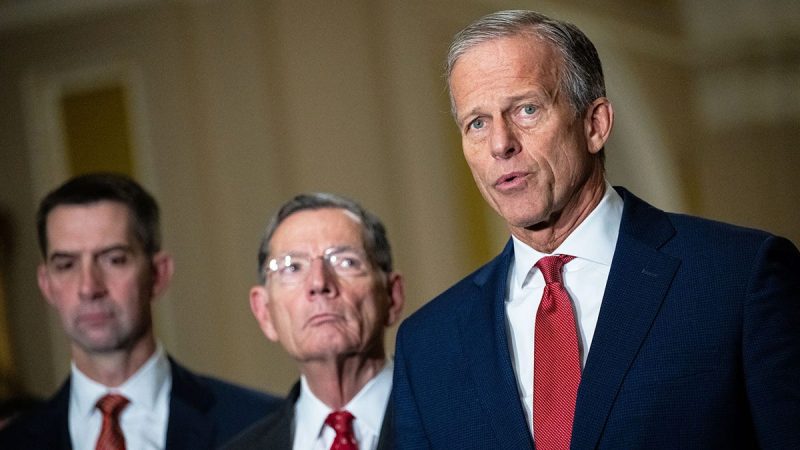
The chances of a bipartisan solution to expiring Obamacare subsidies are growing slimmer with each passing day as the Senate gears up for a vote next week on extending the credits.

Senate Democrats made the subsidies the focal point of their position during the government shutdown, which ended only after a group of Democrats broke from Senate Minority Leader Chuck Schumer, D-N.Y., based largely on a guarantee from Senate Majority Leader John Thune, R-S.D., that lawmakers would get a chance to vote on extending the subsidies.

And next week is Thune’s deadline to get a proposal on the floor, but the likelihood that it is bipartisan is fast fading.

‘I mean, my assumption is that by next week, when we have to have that vote, that we might not be far enough along in the bipartisan discussions. But my assumption is we’ll still have a vote of some kind, because that’s what we’re committed to do,’ Thune said.

Bipartisan talks have been ongoing, both during the shutdown and in the weeks after. But those have yet to yield a plan that could muster the 60 votes necessary to break through the filibuster in the upper chamber.

Republicans want to see reforms to the program and are floating proposals that would see money from the subsidies that normally flows to insurance companies be sent directly to Health Savings Accounts (HSAs) — a plan previously floated by President Donald Trump.

Democrats, however, want a cleaner extension of subsidies but are open to reforms either up front or down the line.

Sen. Roger Marshall, R-Kan., told Fox News Digital he’s been involved in talks with colleagues across the aisle, but those discussions had recently slowed. He agreed that a bipartisan solution was likely out of reach by next week’s vote.

‘I mean, I would love to see that, but it’s not realistic, and I’m putting my eggs into the basket for Jan. 30, a nice bipartisan package,’ he said.

At that point, however, the subsidies will have expired.

That leaves the option of a possible side-by-side vote, with Democratic and Republican proposals put on the floor to see which survives. But that idea may not have much support, either.

‘I don’t know about whether they would have the appetite for a side-by-side,’ Sen. Tammy Baldwin, D-Wis., said. ‘We certainly have not seen Republicans come up with any sincere plans to help alleviate the concerns.’

Senate Health, Education, Labor and Pensions Chair Bill Cassidy, R-La., who is leading Republicans’ negotiations for a plan on the subsidies, scoffed that if Democrats spoke with him, ‘You’re going to be hearing a lot of sincerity.’

Cassidy’s plan revolves around HSAs, which he sketched out in broad terms to Fox News Digital. Under his plan, HSAs would be pre-funded with, ‘say $2,000,’ that he argued would see Americans pay roughly the same health insurance deductibles and act as a much more workable day-to-day policy moving forward.

He noted that Democrats see where he’s coming from, but that he couldn’t say if he’s got ‘their vote yet.’

‘If you look at the numbers, there are people who are in their 50s and 60s who will really, like, pay a third of their income for insurance on the exchange, and so the Democrats have set it up so there’s a cliff at the end of this year, and we’re trying to avoid that cliff,’ Cassidy said.

‘So [we’re] looking for a way that can take care of those folks but begin to transition to a system which is much more workable,’ he continued. ‘The Obamacare subsidy system is not workable.’

Cassidy and Senate Finance Committee Chair Mike Crapo, R-Idaho, pitched ideas and options during the Senate GOP’s closed-door lunch on Tuesday, but there still wasn’t a solid consensus on a path forward on a Republican proposal.

Sen. John Kennedy, R-La., said it would take ‘divine intervention’ for Republicans to agree on a plan to vote on by Thune’s deadline next week.

‘Have you ever heard of a Rorschach test where it’s smeared all over the wall? That’s kind of where we’re at,’ Kennedy said.

Members on both sides of the aisle believe that Trump should get more involved, too, given that anything that passes the Senate and works through the House would need his signature to become law.

Sen. Angus King, I-Maine, one of the eight Democratic caucus members that voted to reopen the government with Republicans, said that it would help if Trump told the Senate GOP to make a deal.

‘I think the easiest, clearest thing would be a straight extension with some modest reforms, and then we can move on,’ King said. ‘And frankly, if it doesn’t happen, then the Republicans can own massive premium increases. And I don’t know why they would want to do that.’

This post appeared first on FOX NEWS

On about two dozen occasions, the Supreme Court had to step in during President Trump’s second term because many inferior courts refused to accept that he is the president. The justices must do so again, after lower courts invalidated the appointments of acting U.S. attorneys Alina Habba of the District of New Jersey and Lindsey Halligan of the Eastern District of Virginia.

The Senate has a tradition that is over a century old called the blue slip. Home-state senators have an extraordinary power: the ability to veto U.S. marshals, U.S. attorneys and U.S. district judges. In order for nominees to proceed, home-state senators must return a blue slip approving the nominations. Senators will never let this power go, so administrations have to bear the consequences. In New Jersey, leftist Senators Cory Booker and Andy Kim have refused to allow the nomination of Alina Habba to serve as U.S. attorney. Likewise, in Virginia, their fellow leftist Senators Tim Kaine and Mark Warner will not acquiesce to the nomination of Lindsey Halligan to serve as U.S. attorney. As such, Attorney General Pam Bondi appointed Habba and Halligan to 120-day terms to serve on an interim basis, as 28 U.S.C. § 546 allows. Halligan replaced another interim prosecutor, Eric Siebert, who departed shortly before his 120 days lapsed.

After 120 days have expired, leftists asserted that Bondi can make no more appointments; only district judges can. The Executive Branch, this argument goes, has no say whatsoever after 120 days. This result would lead to a scheme where leftist senators can block President Trump’s nominees. Then, courts composed mostly of leftist judges in these blue states can install leftist puppet U.S. attorneys, and the Executive Branch must grin and bear it, just as with the blue slip process.

The 120-day limit first appeared in a statute in 1986. During the years of Presidents Clinton and Bush, attorneys general made successive 120-day appointments under the statutory scheme in effect from 1986-2006, the same scheme as today. Yet, Clinton Judge Cameron Currie of South Carolina did not view this historical evidence as persuasive when she invalidated Halligan’s appointment. Halligan secured indictments against New York Attorney General Letitia James for mortgage fraud and former FBI Director James Comey for false statements to and obstruction of Congress concerning the Russiagate hoax.

Those indictments are, for the moment, invalid. Currie’s opinion drips with disdain for Halligan, noting Halligan’s lack of prosecutorial experience. This issue is irrelevant to the legal question. Halligan, under Currie’s analysis, could have had three decades of prosecutorial experience, and her appointment would still have violated the Constitution’s Appointments Clause. Currie also quoted another irrelevant piece of evidence: President Trump’s social media post demanding Bondi move faster on prosecutions. Whether Halligan’s appointment is valid has nothing to do with that post. Its inclusion thus has no valid legal purpose.

The Appointments Clause vests appointment power in a president, by and with the advice and consent of the Senate, for principal officers. Congress can also require the advice and consent process to apply to inferior officers, and it did so with respect to U.S. attorneys. As such, presidents nominate U.S. attorneys, and the Senate confirms them. When there are vacancies, attorneys general can fill them for 120 days at a time, and a separate part of Section 546 allows for district courts to make appointments after the 120 days have expired. The Constitution grants department heads and courts the power to appoint inferior officers. District judges, for example, appoint magistrate judges.

Section 546 does not vest the authority to appoint U.S. attorneys exclusively in district courts. Under the reading of the judges who have invalidated the appointments of Habba and Halligan, President Trump’s attorney general could not make a 120-day appointment, either. The text of Section 546 does not specify a 120-day appointment per president. When one president’s attorney general makes a 120-day appointment, these judges absurdly prevent any future president’s attorney general from doing so in that district. District judges, therefore, have all the power until the Senate confirms a nominee one of these years or decades.

Fortunately, the issue now is ripe for Supreme Court review. This week, a Third Circuit panel ruled that Habba’s appointment is invalid. The justices should decide the cases together, even though the Fourth Circuit has not ruled on the Halligan appeal. There is only one circuit with all states that have Republican senators: the Fifth. This district court control could continue into the terms of a President Vance.

The easiest way to correct the lower court’s error is for the Supreme Court to hold that Section 546 allows attorneys general to make more than one 120-day appointment. Alternatively, the justices could hold that Section 546’s stripping of appointment power from the Executive Branch with respect to its officials violates the separation of powers.

In the face of immense criticism from Democrat politicians, the leftist media, and academic elites, the justices have intervened time and again to thwart unlawful interference by resistance lower courts. Because of the Supreme Court’s intervention on issues ranging from the ability to fire Executive Branch employees to the ability of the president to revoke temporary protected status from illegal immigrants, President Trump has been able to do his job far more effectively.

Bondi, Solicitor General John Sauer, and their team of stellar lawyers have amassed a success rate of over 90% at the Supreme Court. The justices must restore Habba and Halligan to preserve the separation of powers and prevent U.S. attorneys from being servants of district courts instead of presidents.

This post appeared first on FOX NEWS

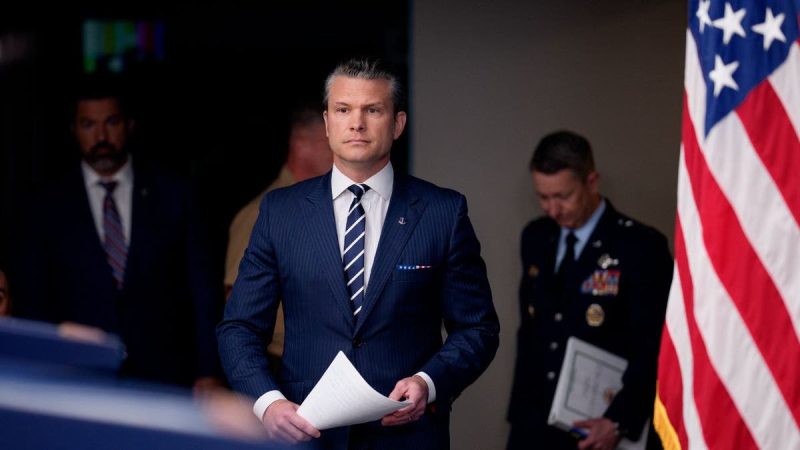
Secretary of War Pete Hegseth chastised the press following media reports that he signed off on a second strike against an alleged drug boat after the first one left survivors. 

The Trump administration has come under renewed scrutiny for its strikes in the Caribbean targeting alleged drug smugglers, after the Washington Post reported on Friday that Hegseth verbally ordered everyone onboard the alleged drug boat to be killed in a Sept. 2 operation. The Post reported that a second strike was conducted to take out the remaining survivors on the boat. 

On Monday, the White House confirmed that a second strike had occurred, but disputed that Hegseth ever gave an initial order to ensure that everyone on board was killed, when asked specifically about Hegseth’s instructions.

Hegseth said that he watched the first strike live, but did not see any survivors at that time amid the fire and the smoke — and blasted the press for their reporting.

‘This is called the fog of war. This is what you in the press don’t understand,’ Hegseth told reporters at a Cabinet meeting on Tuesday. ‘You sit in your air-conditioned offices or up on Capitol Hill and you nit pick, and you plant fake stories in the Washington Post about ‘kill everybody’ phrases on anonymous sources not based in anything, not based in any truth at all. And then you want to throw out really irresponsible terms about American heroes, about the judgment that they made.’ 

Hegseth said that after watching the first strike, he left for a meeting and later learned of the second strike. The White House said Monday that Hegseth had authorized Adm. Frank ‘Mitch’ Bradley to conduct the strikes, and that Bradley was the one who ordered and directed the second one. 

At the time of the Sept. 2 strike, Bradley was serving as the commander of Joint Special Operations Command, which falls under U.S. Special Operations Command. He is now the head of U.S. Special Operations Command.

According to Hegseth, carrying out a subsequent strike on the alleged drug boat was the right call. 

‘Admiral Bradley made the correct decision to ultimately sink the boat and eliminate the threat,’ Hegseth said Tuesday. 

Meanwhile, reports of the second strike have attracted even more scrutiny from lawmakers on both sides of the aisle on Capitol Hill and calls for greater oversight, amid questions about the strikes’ legality. 

‘This committee is committed to providing rigorous oversight of the Department of Defense’s military operations in the Caribbean,’ Reps. Mike Rogers, R-Ala., and Adam Smith, D-Wash., who lead the House Armed Services Committee, said in a statement on Saturday. ‘We take seriously the reports of follow-on strikes on boats alleged to be ferrying narcotics in the SOUTHCOM region and are taking bipartisan action to gather a full accounting of the operation in question.’

Hegseth said Tuesday that although there has been a pause in strikes in the Caribbean because alleged drug boats are becoming harder to find, the Trump administration’s campaign against the influx of drugs will continue. 

‘We’ve only just begun striking narco-boats and putting narco-terrorists at the bottom of the ocean because they’ve been poisoning the American people,’ Hegseth said. 

The Trump administration has carried out more than 20 strikes against alleged drug boats in Latin American waters, and has bolstered its military presence in the Caribbean to align with Trump’s goal to crack down on the influx of drugs into the U.S.

This post appeared first on FOX NEWS

On about two dozen occasions, the Supreme Court had to step in during President Trump’s second term because many inferior courts refused to accept that he is the president. The justices must do so again, after lower courts invalidated the appointments of acting U.S. attorneys Alina Habba of the District of New Jersey and Lindsey Halligan of the Eastern District of Virginia.

The Senate has a tradition that is over a century old called the blue slip. Home-state senators have an extraordinary power: the ability to veto U.S. marshals, U.S. attorneys, and U.S. district judges. In order for nominees to proceed, home-state senators must return a blue slip approving the nominations. Senators will never let this power go, so administrations have to bear the consequences. In New Jersey, leftist senators Cory Booker and Andy Kim have refused to allow the nomination of Alina Habba to serve as U.S. Attorney. Likewise, in Virginia, their fellow leftist senators Tim Kaine and Mark Warner will not acquiesce to the nomination of Lindsey Halligan to serve as U.S. Attorney. As such, Attorney General Pam Bondi appointed Habba and Halligan to 120-day terms to serve on an interim basis, as 28 U.S.C. § 546 allows. Halligan replaced another interim prosecutor, Eric Siebert, who departed shortly before his 120 days lapsed.

After 120 days have expired, leftists asserted that Bondi can make no more appointments, only district judges can. The Executive Branch, this argument goes, has no say whatsoever after 120 days. This result would lead to a scheme where leftist senators can block President Trump’s nominees. Then, courts composed mostly of leftist judges in these blue states can install leftist puppet U.S. attorneys, and the Executive Branch must grin and bear it, just as with the blue slip process.

The 120-day limit first appeared in a statute in 1986. During the years of presidents Clinton and Bush, attorneys general made successive 120-day appointments under the statutory scheme in effect from 1986-2006, the same scheme as today. Yet, Clinton Judge Cameron Currie of South Carolina did not view this historical evidence as persuasive when she invalidated Halligan’s appointment. Halligan secured indictments against New York Attorney General Letitia James for mortgage fraud and former FBI Director James Comey for false statements to and obstruction of Congress concerning the Russiagate hoax.

Those indictments are, for the moment, invalid. Currie’s opinion drips with disdain for Halligan, noting Halligan’s lack of prosecutorial experience. This issue is irrelevant to the legal question. Halligan, under Currie’s analysis, could have had three decades of prosecutorial experience, and her appointment would still have violated the Constitution’s Appointments Clause. Currie also quoted another irrelevant piece of evidence: President Trump’s social media post demanding Bondi move faster on prosecutions. Whether Halligan’s appointment is valid has nothing to do with that post. Its inclusion thus has no valid legal purpose.

The Appointments Clause vests appointment power in a president, by and with the advice and consent of the Senate, for principal officers. Congress can also require the advice and consent process to apply to inferior officers, and it did so with respect to U.S. attorneys. As such, presidents nominate U.S. attorneys, and the Senate confirms them. When there are vacancies, attorneys general can fill them for 120 days at a time, and a separate part of Section 546 allows for district courts to make appointments after the 120 days have expired. The Constitution grants department heads and courts the power to appoint inferior officers. District judges, for example, appoint magistrate judges.

Section 546 does not vest the authority to appoint U.S. attorneys exclusively in district courts. Under the reading of the judges who have invalidated the appointments of Habba and Halligan, a future President J.D. Vance’s attorney general could not make a 120-day appointment, either. The text of Section 546 does not specify a 120-day appointment per president. When one president’s attorney general makes a 120-day appointment, these judges absurdly prevent any future president’s attorney general from doing so in that district. District judges therefore have all the power until the Senate confirms a nominee one of these years or decades.

Fortunately, the issue now is ripe for Supreme Court review. This week, a Third Circuit panel ruled that Habba’s appointment is invalid. The justices should decide the cases together, even though the Fourth Circuit has not ruled on the Halligan appeal. There is only one circuit with all states that have Republican senators: the Fifth. This district court control could continue into the terms of a President Vance.

The easiest way to correct the lower court’s error is for the Supreme Court to hold that Section 546 allows attorneys general to make more than one 120-day appointment. Alternatively, the justices could hold that Section 546’s stripping of appointment power from the Executive Branch with respect to its officials violates the separation of powers.

In the face of immense criticism from Democrat politicians, the leftist media, and academic elites, the justices have intervened time and again to thwart unlawful interference by resistance lower courts. Because of the Supreme Court’s intervention on issues ranging from the ability to fire Executive Branch employees to the ability of the president to revoke temporary protected status from illegal immigrants, President Trump has been able to do his job far more effectively.

Bondi, Solicitor General John Sauer, and their team of stellar lawyers have amassed a success rate of over 90% at the Supreme Court. The justices must restore Habba and Halligan to preserve the separation of powers and prevent U.S. attorneys from being servants of district courts instead of presidents.

This post appeared first on FOX NEWS

A top federal court official defended Judge James Boasberg’s gag orders that hid subpoenas related to the FBI’s Arctic Frost investigation, saying this week that the chief judge in Washington would likely have been unaware that the subpoenas’ intended targets were members of Congress.

The administrative office for the federal courts indicated that the chief judge in D.C. routinely blindly signed gag orders when the Department of Justice requested them, including during Arctic Frost, the investigation that led to former special counsel Jack Smith bringing election charges against President Donald Trump.

The administrative office’s director, Robert Conrad Jr., provided the explanation on behalf of Boasberg to Senate Judiciary Committee Chairman Chuck Grassley, R-Iowa, in a letter first obtained by Fox News Digital.

The letter came in response to Grassley, Sen. Ron Johnson, R-Wis., and Rep. Jim Jordan, R-Ohio, demanding an explanation from Boasberg about why he authorized the one-year gag orders, which barred phone companies from telling Republican Congress members that their records were subpoenaed by Smith in 2023.

Conrad said he could not address those specific subpoenas and gag orders, in part because some of the material was sealed, but that he could help the lawmakers ‘understand relevant practices’ in place during Arctic Frost.

The DOJ’s requests for gag orders, also known as non-disclosure orders, ‘typically do not attach the related subpoena; rather they identify the subject accounts only by a signifier — e.g., a phone number,’ Conrad wrote. ‘As a result, [non-disclosure order] applications would not reveal whether a particular phone number belonged to a member of Congress.’

Read a copy of the letter below. App users click here.

Grassley reacted to the latest correspondence from the court by faulting the Biden DOJ for seeking the gag orders from Boasberg without notifying the judge that they pertained to Congress members.

Grassley noted that the DOJ’s Public Integrity Section gave Smith’s team the green light to subpoena lawmakers’ phone records but had also told the prosecutors to be wary of concerns lawmakers could raise about the Constitution’s speech or debate clause, which gives Congress members added protections in prosecutorial matters.

‘Smith went ahead with the congressional subpoenas anyway, and it appears he and his team didn’t apprise the court of member involvement,’ Grassley told Fox News Digital. ‘Smith’s apparent lack of candor is deeply troubling, and he needs to answer for his conduct.’

The DOJ revised its policy in response to an inspector general report in 2024 so that prosecutors were required to notify the court if they were seeking a gag order against a Congress member so that judges could take that into consideration when deciding whether to authorize the orders. Smith’s subpoenas pre-dated that policy shift.

The subpoenas, and the gag orders that kept them concealed, have drawn enormous criticism from the targeted lawmakers, who alleged that the Biden DOJ improperly spied on them over their alleged involvement in attempting to overturn the 2020 election and that Boasberg was complicit in allowing it. Among the top critics is Sen. Ted Cruz, R-Texas, who was set to lead a since-postponed hearing Wednesday examining the case for impeaching Boasberg. Impeachment of judges is exceedingly rare and typically has only occurred in response to crimes like corruption and bribery.

Johnson said he remained unsatisfied with Boasberg after the letter from the administrative office.

‘Judge Boasberg’s refusal to answer questions from Congress about his approval of unlawful gag orders is an affront to transparency and an obvious attempt to deflect any responsibility for his awareness of or involvement in Jack Smith’s partisan dragnet,’ Johnson told Fox News Digital. ‘Judge Boasberg must immediately lift the seal that is apparently preventing him from addressing Congress’ questions and provide the public a full explanation for his actions.’

Public documents reveal that as chief judge of the D.C. federal court, Boasberg authorized numerous gag orders that blocked phone companies from telling about a dozen House and Senate lawmakers that Smith had subpoenaed their phone data.

Smith had sought a narrow set of their records, which included details about when calls and messages were placed and with whom the Congress members were communicating. The records did not include the contents of calls and messages. Smith has defended the subpoenas, saying they were in line with department policy and ‘entirely proper.’

This post appeared first on FOX NEWS

(TheNewswire)

Additional Financing Closes

NOT FOR DISTRIBUTION TO UNITED STATES NEWS WIRE SERVICES OR FOR DISSEMINATION IN THE UNITED STATES

Vancouver, British Columbia TheNewswire – December 3rd, 2025 Prismo Metals Inc. (‘ Prismo ‘ or the ‘ Company ‘) (CSE: PRIZ,OTC:PMOMF) (OTCQB: PMOMF) is pleased to announce it has received assay results for samples recently taken at the Silver King Project from two exploration targets located on the east side of the property, namely the Black Diamond replacement target and the newly named Crown porphyry intrusion target (Fig. 1).

Figure 1 .  Map showing the location of the Black Diamond replacement and Crown porphyry intrusion exploration targets at the Silver King project.  Claim boundaries are shown in yellow.

The assays show high grade copper mineralization present at Black Diamond (Fig 1). The rock chip samples yielded generally high copper assays with several samples analyzing in excess of 1 % Cu and two samples in excess of 5 % Cu (Table 1, Fig. 2).  Gold is generally anomalous for the Black Diamond samples.

Rock chip samples from the Crown porphyry intrusion generally exhibited lead and zinc values with elevated silver and low copper and gold (Table 2).  Importantly, however, two samples of vein material from the stockwork target yielded high gold values of 4 and 5 g/t (Fig. 2). The mineralization in the stockwork veining at Crown provides impetus to complete additional exploration in the area.

Table 1. Assay results for samples from the Black Diamond replacement target.

Sample

Location

Easting

Northing

Width m

Au g/t

Ag g/t

Cu %

Pb %

Zn %

544572

Black Diamond

492601

3687624

1.5

0.007

0.30

0.18

0.009

0.02

544573

Black Diamond

492601

3687625

1.5

0.052

0.34

0.29

0.013

0.03

544574

Black Diamond

492603

3687623

1.5

0.008

0.47

0.12

0.009

0.02

544575

Historic adit 3

492642

3687624

0.5

1.08

0.15

5.56

0.013

0.03

544576

Historic adit 3

492641

3687625

0.5

0.045

1.08

0.44

0.022

0.02

544577

Historic adit 3

492643

3687621

1.0

0.012

0.76

0.07

0.014

0.02

544578

Historic adit 1

492670

3687639

0.8

0.285

12.43

6.02

0.01

544581

Historic adit 1

492672

3687640

1.1

0.125

10.5

1.14

0.011

0.02

544582

Historic adit 1

492667

3687640

1.4

0.285

6.66

2.63

0.006

0.02

544583

Black Diamond

492678

3687626

0.5

0.034

2.18

0.15

0.009

0.02

544584

Historic adit 2

492670

3687625

0.5

0.35

7.99

1.24

0.006

0.01

544585

Historic adit 2

492679

3687628

0.5

0.125

8.87

0.45

0.013

0.02

544586

Historic adit 2

492672

3687638

1.0

0.053

8.97

1.42

0.013

0.02

Table 2 . Assay results for samples from the Crown porphyry intrusive target.

Sample

Location

Easting

Northing

Width m

Au g/t

Ag g/t

Cu %

Pb %

Zn %

544566

Crown

492633

3687859

1.5

0.008

3.7

0.005

0.03

0.04

544567

Crown

492805

3687910

1.3

0.011

1.3

0.006

0.01

544568

Crown

492803

3687910

2.0

0.006

1.28

0.008

0.03

0.03

544569

Crown

492836

3687898

1.0

0.012

0.25

0.008

544570

Crown

492499

3687669

1.0

0.011

2.31

0.035

0.07

0.09

544571

Crown

492534

3687657

0.5

0.016

2.65

0.002

0.09

0.03

544588

Crown

492737

3687901

2.5

0.015

2.76

0.005

0.01

0.01

544589

Crown

492746

3687884

1.0

0.022

4.21

0.010

0.03

0.02

544590

Crown

492763

3687867

0.5

0.07

11.26

0.013

0.05

0.11

544591

Crown

492799

3687851

1.0

5.19

46.44

0.048

0.21

0.06

544592

Crown

492793

3687823

1.0

4.06

13.97

0.021

0.10

0.07

544593

Crown

492701

3687858

1.5

0.027

1.0

0.011

0.03

0.04


Click Image To View Full Size

Figure 2. Copper assays and high gold values for samples mentioned from the Black Diamond
and Crown areas at Silver King.

IP Survey Update

The Company also has received the report for initial phase of its IP survey at Silver King.  The IP survey consisted of a gradient array to test for resistivity and chargeability anomalies at a depth of about 300m below the surface.

The IP survey shows low resistivity lows associated with the Black Diamond replacement body as well as the stratigraphically controlled Cu bearing replacements that extend toward the nearby Magma mine (Fig. 3).  A second nearly east-west trending resistivity low occurs in the central portion of the claim block and coincides with a hypothesized structure that may control the Black Diamond body and also may be important in the formation of the Silver King deposit.  This type of structure is similar to the Magma vein, the main mineralized structure at the high-grade Magma mine, and is a prime exploration target.

The IP survey also shows several chargeability anomalies that are presumably associated with disseminated sulfides, largely pyrite (Fig. 4).  The stockwork intrusion mentioned previously is associated with one of these chargeability anomalies and provides a second important exploration target with characteristics similar to mineralization at high structural levels in porphyry systems.  A second similar chargeability anomaly occurs nearby to the southwest in an area overlain by a mostly barren quartz diorite intrusive and may represent a similar blind porphyry target.

Based on the results of the initial IP survey, a follow-up pole-dipole survey to further define the anomalies from shallow to deeper levels along section lines is planned to be conducted in December.

Figure 3. IP resistivity map showing exploration targets: yellow line-Silver King glory hole,
magenta line-polymetallic vein, green line-copper vein, red outlines-Black Diamond replacement
body and stratigraphically controlled replacement horizons, black outline-stockwork intrusion.

Figure 4. IP chargeability map showing exploration targets: yellow line-Silver King glory hole,
magenta line-polymetallic vein, green line-copper vein, red outlines-Black Diamond replacement
body and stratigraphically controlled replacement horizons, black outline-stockwork intrusion.

Drilling Update

Alain Lambert, CEO of Prismo commented: ‘The results announced today confirm the vast exploration potential at Silver King. While we look forward to drilling these new targets in the future, our plans remain unchanged. Our immediate priority is to undertake our fully funded drill program, as previously announced. This drill campaign will focus primarily on the historic Silver King mine site and will be for a minimum of about 1,000 meters. The objective is to test the upper half of the steeply dipping pipelike Silver King mineralized body as well as potential mineralization adjacent to the dense stockwork that was the focus of historic mining.’

Mr. Lambert added: ‘We are pleased with the steady progress on the permitting front. The collaboration of Forest Service officials demonstrates a clear commitment to supporting mining activities in Arizona.’

Prismo recently announced that the Forest Service, the federal surface land management entity for Silver King, had determined that the Company’s proposed drill plan meets the regulatory requirements for processing, and that such plan is complete, as described in the regulations at 36 CFR 228.4(c).

The Forest Service will now proceed with the environmental analysis pursuant to 36 CFR 228(a)(5) in conformity with the National Environmental Policy Act (NEPA). This analysis will proceed as a Categorical Exclusion, the lowest level of environment reviews applicable to projects that are not expected to have a significant effect on the environment, such as Silver King.

Financing Update

Prismo also announced that further to its news releases dated October 20, 2025 and November 13, 2025, the Company has proceeded with an upsized second closing of its previously announced non-brokered private placement of units of the Company (‘ Units ‘) at an issue price of $0.10 per Unit (the ‘ Private Placement ‘). The second closing of the Private Placement was increased from 1,250,000 Units to the issuance of 1,650,000 Units for gross proceeds of $165,000 (the ‘ Second Tranche ‘). The Company previously announced a first closing of the Private Placement on November 12, 2025 for aggregate gross proceeds of $1,745,000. Due to strong investor demand, the Company has now raised aggregate gross proceeds of $1,910,000.

Each Unit consists of one common share in the capital of the Company (a ‘ Share ‘) and one common share purchase warrant of the Company (a ‘ Warrant ‘). Each Warrant entitles the holder to purchase one Share for a period of thirty-six (36) months from the date of issue at an exercise price of $0.175.

The Company intends to use the net proceeds of the Private Placement primarily for drilling at its Silver King project and for general corporate purposes. The Company expects to accept additional subscriptions of units in the coming days for an approximate amount of $125,000.

The Units issued pursuant to the Second Tranche are subject to a four-month hold period from the closing date of the Second Tranche under applicable Canadian securities laws, in addition to such other restrictions as may apply under applicable securities laws of jurisdictions outside Canada.

In connection with the Second Tranche, the Company issued an aggregate of 68,000 finder’s warrants (the ‘Finder’s Warrants’ ) and paid finder’s commissions of $6,800 to a certain qualified finder. Each Finder’s Warrant is exercisable for a period of twenty-four (24) months from the date of issuance to purchase one Share at a price of $0.10. In addition, the Company paid a cash fee of $2,000 to a financial advisor.

The securities being issued in connection with the Second Tranche have not been and will not be registered under the U.S. Securities Act and may not be offered or sold in the United States, or to, or for the account or benefit of, U.S. persons or persons in the United States, absent registration or an applicable exemption from the registration requirements. This press release shall not constitute an offer to sell or the solicitation of an offer to buy nor shall there be any sale of the securities in any State in which such offer, solicitation or sale would be unlawful.

QA/QC

Samples were analyzed by SGS, an internationally recognized analytical lab, with preparation at the Tempe, Arizona facility and analyses at the Burnaby laboratory.  Prismo inserts controls samples consisting of a standard pulps and a coarse blanks in the sample stream, and the lab also inserts control samples.

Qualified Person

Dr. Craig Gibson, PhD., CPG., a Qualified Person as defined by NI-43-01 regulations and Chief Exploration Officer and a director of the Company, has reviewed and approved the technical disclosures in this news release.

About Prismo Metals Inc.

Prismo (CSE: PRIZ,OTC:PMOMF) is a mining exploration company focused on advancing its Silver King, Ripsey and Hot Breccia projects in Arizona and its Palos Verdes silver project in Mexico.

Please follow @PrismoMetals on Twitter , Facebook , LinkedIn , Instagram , and YouTube

Prismo Metals Inc.

1100 – 1111 Melville St., Vancouver, British Columbia V6E 3V6 Phone: (416) 361-0737

Contact:

Alain Lambert, Chief Executive Officer alain.lambert@prismometals.com

Gordon Aldcorn, President gordon.aldcorn@prismometals.com

Neither the Canadian Securities Exchange nor its Market Regulator (as that term is defined in the policies of the Canadian Securities Exchange) accepts responsibility for the adequacy or accuracy of this release.

Cautionary Note Regarding Forward-Looking Information

This release includes certain statements and information that may constitute forward-looking information within the meaning of applicable Canadian securities laws. Forward-looking statements relate to future events or future performance and reflect the expectations or beliefs of management of the Company regarding future events. Generally, forward-looking statements and information can be identified by the use of forward-looking terminology such as intends’ or anticipates’, or variations of such words and phrases or statements that certain actions, events or results may’, could’, should’, would’ or occur’. This information and these statements, referred to herein as ‘forward-looking statements’, are not historical facts, are made as of the date of this news release and include without limitation, statements regarding discussions of future plans, estimates and forecasts and statements as to management’s expectations and intentions with respect to, among other things: the timing, costs and results of drilling at Silver King; and the intended use of any proceeds raised under the Second Tranche.

These forward-looking statements involve numerous risks and uncertainties, and actual results might differ materially from results suggested in any forward-looking statements. These risks and uncertainties include, among other things: the potential inability of the Company to utilize the anticipated proceeds of the Private Placement as anticipated; and those risks set out in the Company’s public disclosure record on SEDAR+ ( www.sedarplus.com ) under the Company’s issuer profile .

In making the forward-looking statements in this news release, the Company has applied several material assumptions, including without limitation, that the Company will use the proceeds of the Second Tranche as currently anticipated and on the timeline currently expected.

Although management of the Company has attempted to identify important factors that could cause actual results to differ materially from those contained in forward-looking statements or forward- looking information, there may be other factors that cause results not to be as anticipated, estimated or intended. There can be no assurance that such statements will prove to be accurate, as actual results and future events could differ materially from those anticipated in such statements. Accordingly, readers should not place undue reliance on forward-looking statements and forward- looking information. Readers are cautioned that reliance on such information may not be appropriate for other purposes. The Company does not undertake to update any forward-looking statement, forward-looking information or financial outlook that are incorporated by reference herein, except in accordance with applicable securities laws. We seek safe harbor.

Copyright (c) 2025 TheNewswire – All rights reserved.

News Provided by TheNewsWire via QuoteMedia

This post appeared first on investingnews.com

Investor Insight

Charbone Corporation offers investors exposure to the rapidly expanding clean ultra high purity (UHP) hydrogen and specialty gases market through a modular, capital-efficient strategy that accelerates deployment and revenue generation. With first helium and UHP hydrogen deliveries, successful financings, and a growing network of long-term supply agreements, the company is entering a pivotal commercial phase supported by robust industry and policy tailwinds.

Overview

Charbone Corporation (TSXV:CH,OTCQB:CHHYF,FWB:K47) is an integrated company specialized in clean UHP hydrogen and the strategic distribution of industrial gases in North America and the Asia-Pacific region. It is developing a modular network of clean UHP hydrogen production while partnering with industry players to supply helium and other specialty gases without the need to build costly new plants. This disciplined strategy diversifies revenue streams, reduces risks and increases flexibility.

Charbone has accelerated its growth trajectory, negotiating a US$50 million financing, as one of possibilities in its toolbox, to expand across North America, executing a US$1 million collaboration agreement to advance a clean UHP hydrogen project in Malaysia, and achieving multiple milestones at its flagship Sorel-Tracy facility in Quebec. In 2025, the company completed the construction and equipment installation at Sorel-Tracy and began commissioning, after acquiring from Harnois Énergies and relocating the operating hydrogen production and refueling equipment to the site to enable faster commissioning and earlier hydrogen sales.

Charbone also launched its Industrial Gases Distribution Division and made its first helium delivery of 161,000 cubic feet of helium to an independent distributor in the Greater Toronto Area, underpinned by a three-year supply agreement. The company also signed a five-year clean UHP hydrogen supply contract with an Ontario-based distributor, with first deliveries scheduled to begin in December 2025. These agreements mark the company’s entry into the Ontario market and its integration into the North American specialty gases supply chain.

With its exclusive focus on clean UHP hydrogen, Charbone is positioning itself as a first mover in a multi-billion-dollar market. Leveraging Canada’s hydroelectric power and expanding nuclear capacity, Charbone plans to deliver sustainable hydrogen solutions that meet rising demand from both governments and global industries.

Company Highlights

  • Canada’s only publicly listed clean UHP hydrogen company: Charbone Corporation offers investors unique exposure to the fast-growing hydrogen economy as a company focused on clean UHP hydrogen production and distribution.
  • Building a North American clean UHP hydrogen pipeline: Advancing multiple projects, anchored by its flagship Sorel-Tracy facility in Quebec, to establish a scalable production and distribution network.
  • Well-financed for growth and expansion: Charbone negotiated US$50 million financing, facilitated by US Capital Global, as one of its possibilities in its toolbox to accelerate funding of modular build-out and expand its footprint across North America.
  • Expanding into international markets: Through a US$1 million master collaboration agreement, Charbone is supporting the deployment of a clean UHP hydrogen project in Malaysia, highlighting its global reach.
  • Aligned with strong policy and market tailwinds: For years, Canada leaned on centralized, fossil-based reformers. That playbook is obsolete. Now, Quebec’s hydropower can supply electrolyzers that split H₂O into H₂ and O₂ with zero carbon footprint. Charbone’s plug-and-play approach repurposes proven gear, slashing lead times and trimming capex. Charbone is well-placed for long-term growth.
  • Focus on clean UHP hydrogen production: Charbone is dedicated to producing hydrogen using baseload renewable energy, such as hydroelectric and nuclear energy — a critical pathway to decarbonization with a reliable and efficient production capacity.
  • New Industrial Gases Distribution Division: Achieved its first helium delivery and signed a three-year supply agreement, establishing a new revenue stream in specialty gases.

Project Pipeline and Key Partnerships

Charbone forged strong partnerships to execute its business model. Here’s where it gets cool: renewable hydroelectricity powers electrolyzers that split water into hydrogen and oxygen. Purification skids then crank it up to 99.999% purity – true industrial grade. This hydrogen production model serves everything from fuel-cell fleets and semiconductor fabs to specialty metal processing and next-gen refueling stations.

Charbone isn’t flying solo. The company has built a network of strategic partners across production, infrastructure and commercial distribution, including:

  • Energy and technology partners such as Hydro-Québec and ABB, supporting clean power supply and the development of modular hydrogen facilities across North America.
  • Equipment and construction partners responsible for the delivery, relocation and installation of Charbone’s operating hydrogen production assets and the completion of civil works at Sorel-Tracy.
  • A US Tier-One industrial gas producer, with whom Charbone recently formed a strategic alliance to expand access to helium and specialty gases and strengthen North American market penetration.
  • Commercial distributors in Ontario and the Greater Toronto Area under multi-year agreements for clean UHP hydrogen and UHP helium, marking Charbone’s entry into these fast-growing specialty gas markets.
  • Public listings on the TSX Venture Exchange, OTCQB, and Frankfurt Stock Exchange, supporting access to global capital.

Charbone’s memorandum of understanding (MOU) with ABB includes the development of up to 16 modular and scalable green hydrogen production facilities across North America over the next five years. Under the MOU, ABB will support Charbone in standardizing basic engineering for systems and components across its project portfolio to increase energy efficiency and reliability.

Among the sites covered by the collaboration is Charbone’s flagship Sorel-Tracy facility near Montreal in Quebec, Canada. In 2025, the project reached several major milestones: the safe reception and transfer of all major hydrogen production components, the launch and completion of civil works, and the equipment installation and the start of Phase 1a commissioning on schedule in November 2025. These advances were enabled by Charbone’s acquisition from Harnois Énergies and relocation of operating hydrogen production assets, accelerating deployment and reducing capital requirements.

The construction of its Sorel-Tracy facility is being done with the participation of EBC, one of the largest construction companies in Quebec. EBC has a proven track record of designing and building facilities in Canada and the US. The partnership agreement gives EBC the right of first refusal to construct additional Sorel-Tracy phases, as well as one or all of Charbone’s facilities within the North American market.

In addition, Charbone has entered into several other strategic partnerships, all aimed at expanding its footprint in North America. The company entered into a special consultancy agreement with Enki GéoSolutions for potential partnership proposals as a co-operator and distributor of an emerging form of clean and renewable hydrogen, known as white or natural hydrogen.

In June 2024, Charbone executed a supply agreement for a complete containerized electrolyzer system ready for shipment to its flagship clean UHP hydrogen site in the City of Sorel-Tracy, Quebec. Since then, the company has completed grid and water connections, obtained its first hydrogen tube trailer for bulk transport, and introduced a dedicated helium tube trailer to support new commercial activity in Ontario. These logistics capabilities now support both hydrogen and helium deliveries under multi-year supply agreements.

Charbone also signed commercial supply agreements (CSAs) with a top-tier US industrial gas producer and distributor. The first CSA secures hydrogen supply ahead of Charbone’s own production, while the second expands its product offerings to include helium and other industrial gases. In 2025, this relationship expanded into a broad strategic alliance, strengthening Charbone’s access to high-value gases and enhancing its commercial footprint across North America.

Superior Plus

This partnership allows Charbone to sell hydrogen produced at the Sorel-Tracy facility to Certarus, a subsidiary of Superior Plus. Such supply agreements ensure that Charbone can generate cash flow immediately following the commencement of production.

NEK Community Broadband

The agreement with NEK Community Broadband ensures the supply of green hydrogen in the Northeast Kingdom of the state of Vermont, USA. NEK Broadband is building a high-speed broadband infrastructure and plans to install a hydrogen fuel cell backup system for a reliable power supply.

Oakland County Economic Development Department, Michigan

Further advancing its goal of US expansion, Charbone signed a memorandum of understanding in December 2023 with Michigan’s Oakland County Economic Development Department to set up Charbone’s first clean UHP hydrogen facility in the US. Oakland County is home to major automakers, and a clean UHP hydrogen facility in their proximity will support the effort of producing environmentally friendly mobility options.

Being the only publicly listed clean UHP hydrogen player in Canada, Charbone offers investors a unique opportunity to participate in the rise of Clean UHP hydrogen as a potential low-emitting alternative to fossil fuels.

Management Team

Dave Gagnon – Chairman and CEO

Dave Gagnon has been chairman and chief executive officer of Charbone Corporation since April 21, 2022. With over 20 years of executive leadership experience in Cleantech, Wind Power, Hydropower, Lithium Resources, and Industrial Gases, he has built a career focused on scaling innovative infrastructure, accelerating sustainable energy solutions, and leading cross-border growth initiatives in high-impact sectors.

Benoit Veilleux – Chief Financial Officer

Benoit Veilleux was appointed as the CFO of Charbone on August 15, 2022. Veilleux has over 15 years of experience in corporate accounting and finance. He began his professional career at KPMG in 2003, where he managed and coordinated audit teams for public companies until 2010. Since then, he has worked with a number of companies including Air Liquide Canada and the Hypertec Group.

Daniell Charette – Chief Operating Officer

Daniell Charette has been the chief operating officer of Charbone since February 2019. He brings over 25 years of experience in running and managing renewable energy companies. He has worked in senior leadership roles with several renewable companies including NEG Micon A/S, Vestas and Brookfield Power. He has served on various association boards and councils, including the Canadian Wind Energy Association, Association Québécoise des Producteurs d’Énergie Renouvelable, and Latin Wind Energy Association.

Francois Vitez – Director

Francois Vitez is a hydropower and energy storage expert with more than 24 years of experience in development, engineering and construction management as well as operations and maintenance of hydropower and energy storage projects in North America and internationally. He is a board member and chair of the Value of Hydropower committee at Waterpower Canada, vice-chair of the Energy Storage Association of Canada, board member of the California Energy Storage Association, and member of the International Hydropower Association.

Patrick Cuddihy – Industrial Gases Operations Team

Patrick Cuddihy is a seasoned operations leader with over 20 years of experience at Air Liquide Canada, to its hydrogen operations team. Patrick brings a wealth of expertise in managing industrial gas production and distribution, having held senior roles including network sales director for Quebec Region, general manager for Pacific Region, director of procurement services, and director of logistics and assets for the Eastern Region.

Jean Watelle – Hydrogen Production

Jean Watelle is an engineer with more than 25 years of experience in technical and manufacturing management, including 11 years as director, hydrogen and site operations, large industries – Eastern Region at Air Liquide Canada, five years in Lean Manufacturing and as a Tier 1 specialist for Chrysler and Ford. Known for his dynamism, creativity and excellent knowledge of continuous improvement tools, Watelle enjoys successfully completing stimulating challenges with a committed team.

This post appeared first on investingnews.com