Author

admin

Browsing

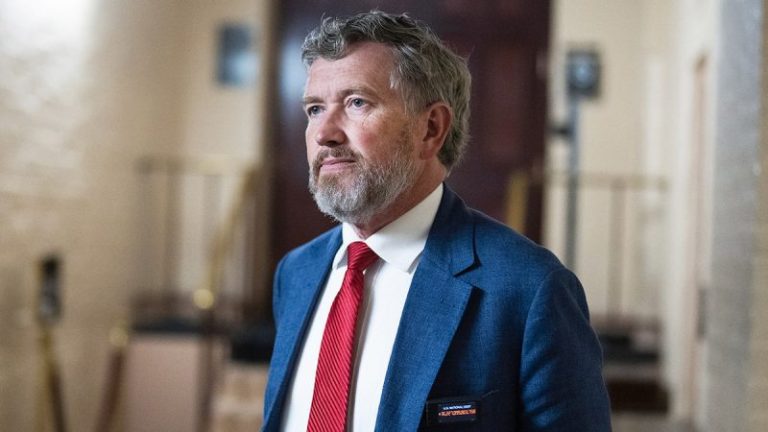
Republican Rep. Thomas Massie of Kentucky announced on Tuesday that he had introduced a measure to remove the U.S. from the North Atlantic Treaty Organization, arguing that the decades-old alliance is obsolete, has been costly for American taxpayers and puts the nation at risk of engagement in foreign wars.

‘NATO is a Cold War relic. The United States should withdraw from NATO and use that money to defend our country, not socialist countries. Today, I introduced HR 6508 to end our NATO membership,’ Massie said in a post on X.

GOP Rep. Anna Paulina Luna of Florida shared Massie’s post and wrote, ‘Co-sponsoring this.’

‘NATO was created to counter the Soviet Union, which collapsed over thirty years ago. Since then, U.S. participation has cost taxpayers trillions of dollars and continues to risk U.S. involvement in foreign wars. Our Constitution did not authorize permanent foreign entanglements, something our Founding Fathers explicitly warned us against. America should not be the world’s security blanket—especially when wealthy countries refuse to pay for their own defense,’ Massie said, according to a press release.

Republican Sen. Mike Lee of Utah introduced the ‘Not a Trusted Organization Act,’ or ‘NATO Act’ in the Senate earlier this year — Massie is now fielding companion legislation in the House.

Article 13 of the North Atlantic Treaty stipulates that ‘After the Treaty has been in force for twenty years, any Party may cease to be a Party one year after its notice of denunciation has been given to the Government of the United States of America, which will inform the Governments of the other Parties of the deposit of each notice of denunciation.’

The proposal advanced by Lee and Massie would use this escape hatch to extract the U.S. from the longstanding NATO alliance.

‘Consistent with Article 13 of the North Atlantic Treaty, done at Washington April 4, 1949, not later than 30 days after the date of the enactment of this Act, the President shall give notice of denunciation of the North Atlantic Treaty for purposes of withdrawing the United States from the North Atlantic Treaty Organization,’ the proposal declares.

‘No funds authorized to be appropriated, appropriated, or otherwise made available by any Act may be used to fund, directly or indirectly, United States contributions to the common-funded budgets of the North Atlantic Treaty Organization, including the civil budget, the military budget, or the Security Investment Program,’ the text of the measure stipulates.

This post appeared first on FOX NEWS

A federal judge has cleared the Justice Department to release secret grand jury transcripts from Jeffrey Epstein’s 2019 sex trafficking case on Wednesday.

U.S. District Judge Richard Berman reversed his earlier decision to keep the transcripts under wraps, citing Congress’s recent action on the Epstein files. Berman had previously warned that the contents of the roughly 70 pages of grandjury materials contain little new information.

The move comes just one day after Judge Paul Engelmayer granted the DOJ’s motion to unseal separate grand jury transcripts and exhibits in Maxwell’s criminal case. Last week, Judge Rodney Smith also moved to allow the DOJ to release transcripts from an abandoned federal grand jury probe from the 2000s.

Maxwell, who was convicted of sex trafficking charges in December 2021, is currently serving a 20-year prison sentence. Her attorney said that she took no position on the requested unsealing of records but noted that the release could harm Maxwell’s plan to file a habeas petition, according to The Associated Press.

The Epstein Files Transparency Act requires the DOJ ‘to publish (in a searchable and downloadable format) all unclassified records, documents, communications, and investigative materials in DOJ’s possession that relate to the investigation and prosecution of Jeffrey Epstein.’

The act was passed in November and paves the way for the public to have more insight into the infamous cases against the late disgraced financier.

The law places a deadline for releasing files on Dec. 19.

The DOJ is reportedly working with survivors and their attorneys to redact records to protect survivors’ identities and prevent the dissemination of sexualized images, according to the AP.

Fox News’ Rachel Wolf contributed to this report.

This post appeared first on FOX NEWS

A new bill could see part of the national capital renamed after slain conservative activist Charlie Kirk, introduced three months after his assassination.

Rep. Nancy Mace, R-S.C., is introducing legislation to rename the area that until recently had been known as ‘Black Lives Matter Plaza,’ she first told Fox News Digital.

‘Black Lives Matter is a terrorist organization that wants to defund the police and take your speech away,’ Mace argued. ‘And what I want to do on the three-month anniversary of Charlie Kirk’s political assassination is celebrate him and the First Amendment and freedom of speech by renaming the plaza after him.’

Black Lives Matter is a far-left activist group that gained traction after the murder of George Floyd in Minneapolis by a White police officer.

It is not designated as a terrorist organization, but people on the right and even some Democrats have criticized it for going too far with calls to ‘defund the police,’ while questions have also been raised in the past about how it spends its funding.

A two-block area of Washington, D.C., was renamed Black Lives Matter Plaza by the city’s government in June 2020 amid nationwide protests over Floyd’s killing.

It was marked by a massive mural depicting the words ‘Black Lives Matter’ in the middle of the street.

That was reversed in March of this year after pressure from Republicans, including President Donald Trump, amid a crackdown on diversity, equity and inclusion (DEI) efforts across the country.

Mace suggested she was not optimistic that her bill would get a House-wide vote but said she would ‘fight like hell’ for it.

It comes three months after Kirk was assassinated while speaking at a college free-speech event in Utah. Both Republicans and Democrats have condemned the killing as a tragedy and an attack on free speech.

Prosecutors in Utah are seeking the death penalty against Tyler James Robinson, Kirk’s accused killer.

Mace’s bill is one of several pieces of legislation introduced to memorialize Kirk in the wake of his death.

‘I think members of Congress have done their part, rank-and-file members. But there’s still more to do yet. And we need to make sure that we continue his legacy forever,’ Mace said.

A resolution honoring Kirk passed the House of Representatives in September with support from all Republicans and 95 Democrats. Fifty-eight Democrats voted against it, while another 38 voted ‘present.’

This post appeared first on FOX NEWS

When the South Korean boy band/K-pop sensation BTS takes the stage in Seoul this June, ending a four-year touring hiatus, it will mark more than just a comeback — it will validate one of the shrewdest soft-power decisions in recent memory.  

In 2022, at the absolute apex of their global dominance, the group’s seven members chose to fulfill their mandatory military service rather than seek exemptions, which would almost certainly been granted. Their management company, HYBE, supported the decision. The world got a masterclass in how cultural power is created. 

The cynics predicted career suicide. Instead, BTS demonstrated that soft power isn’t built on avoiding obligations — it’s built on embracing them. When they reunite on stage, they’ll do so with enhanced credibility, having proven their success didn’t exempt them from the responsibilities of ordinary citizens. Americans remember Elvis taking a similar course at the height of his fame.  

The great thing about soft power is that, while generated by creative individuals and companies, it’s to the entire nation’s benefit. Like economic and martial power, soft power generates influence that can be used to bolster a nation’s standing. Examples of soft power abound from Britain’s cricket legacy and rock ’n’ roll ‘invasion’ of the 1960s to French and Italian cinema to America’s NBA, jazz music and Hollywood’s entertainment machine. Now, South Korea is stepping up.

Thus, it is almost tragic that while BTS was serving in the military, the ecosystem that made the band possible faces mounting scrutiny. South Korea has become expert at creating cultural phenomena that captivate the world — and equally expert at treating the architects of that success with suspicion once they achieve scale. This is a pattern South Korea cannot afford.   

South Korea’s cultural preeminence did not emerge from a government plan. It sprang from creative ambition, commercial ruthlessness, and just enough regulatory space for experimentation. The K-pop system requires massive capital investment, sophisticated global distribution and executives willing to bet nine figures on whether teenagers in Jakarta and São Paulo will stream the same songs. 

Yet, there’s a reflex in South Korean public life that treats popularity itself as evidence of wrongdoing. Bang Si-hyuk, the producer who built HYBE and shaped BTS into a global phenomenon, now faces legal scrutiny over stock transactions — the kind of corporate governance questions that seem to emerge almost inevitably once South Korean companies achieve sufficient scale.   

The particulars matter less than the pattern: bold risk-taking generates soft power, then invites investigation once it succeeds. 

Executives who might build the next BTS or international TV steaming sensation like, ‘Crash Landing on You,’ watch what happens to those who came before and recalibrate their ambition accordingly. In cultural soft power, this reflex is potentially fatal. 

South Korea’s competitors are watching. China has spent billions trying to manufacture soft power through state-directed enterprises. The PRC has largely failed — because audiences smell propaganda. South Korean free enterprise is succeeding in creating cultural exports that are simultaneously local and universal, specific enough to feel authentic in Seoul and accessible enough to travel across the globe.  

This is South Korea’s opportunity. Japan was given a similar window in the 1990s with anime and video games, but largely failed to capitalize on the trend because of governmental missteps. South Korea could easily repeat that mistake and lose the global influence that comes with serious national soft power. 

South Korea needs to recognize soft-power assets as strategic resources. France protects its luxury brands because Paris recognizes these companies project French taste globally in ways no government agency could. South Korea should ask: What institutional arrangements allow us to maintain standards while protecting our champions? 

South Korea’s cultural preeminence did not emerge from a government plan. It sprang from creative ambition, commercial ruthlessness, and just enough regulatory space for experimentation. 

BTS’s decision to fulfill their national military service obligations demonstrates what’s possible when artists, companies and national interest align voluntarily. HYBE supported that choice. But South Korea can’t count on such choices being made repeatedly if the system treats success as inherently suspect.

In June 2026, when BTS embarks on a global tour generating billions in economic impact and incalculable goodwill toward South Korea, remember this moment almost didn’t happen. The members could have sought exemptions. Instead, they chose service and came back stronger. 

But South Korea can’t count on such choices if the message to cultural entrepreneurs is that success invites scrutiny. The next generation is watching, deciding whether to aim for global impact or settle for domestic safety.

South Korea stumbled into becoming a cultural superpower. It doesn’t have to stumble out of it. But that requires recognizing that the bold, imperfect figures who build global cultural enterprises are assets to be protected, not problems to be managed. 

BTS made their choice — they bet on their country. Now, South Korea needs to decide if it’s going to bet on the people who create the next BTS, or put them under investigation instead. 

This post appeared first on FOX NEWS

// Not for distribution to the United States newswire services or for dissemination in the United States //

Copper Quest Exploration Inc. (CSE: CQX,OTC:IMIMF; FRA: 3MX) (‘ Copper Quest ‘ or the ‘ Company ‘) is pleased to announce that it has completed its positive due diligence of the arms-length Option to Purchase Agreement (the ‘ Agreement ‘) dated November 7th, 2025 and previously announced November 14, 2025 . The Agreement is with 0847114 B.C. Ltd. (‘ Privco ‘), a British Columbia Incorporated company that holds 100% ownership, title, and interest in the Alpine Gold Property (the ‘ Property ‘), located in the West Kootenay region of British Columbia (the ‘ Acquisition ‘). The Company plans to immediately begin the process to complete the Acquisition of the Property.

Highlights of the Alpine Gold Property

  • 2018 NI43-101 Inferred Resource of 268,000 tonnes estimated using a cut-off grade of 5.0 g/t Au and an average grade of 16.52 g/t Au that represents an inferred resource of 142,000 oz of gold (McCuaig & Giroux, 2018).
  • Substantial opportunity to grow the maiden Alpine resource to the east-west and to depth with only about 300m of the roughly 2km long vein system explored to date by underground mine workings and drilling.
  • Estimated 24,000 tonnes Run of Mine mineralized stockpile on surface presenting a possible near term cash flow opportunity.
  • 1,650 meters of clean and dry underground workings accessing sampled and mineable zones.
  • At least 4 additional relatively unexplored vein systems on the Property (Black Prince, Cold Blow, Gold Crown & past-producing King Solomon), all hosting historic high-grade gold values.
  • Road accessible 4,611.49-hectare Property including 15 Crown Grants (1 with surface rights) and 19 staked mineral claims with all-season operation potential (Figure 1).
  • Additions of Mr. Allan Matovich to the Board of Directors. Mr. Ted Muraro and Mr. John Mirko as Technical Advisors on closing. They have a combined mining and exploration experience of 150+ years in the industry.

The 4,611.49-hectare Property is approximately 20 kilometers northeast of the City of Nelson (Figure 1) and hosts the former operating underground mine with a recorded production of approximately 16,810 tonnes of mineralized vein material (Table 1). This material contained 356,360 grams of gold, 222,054 grams of silver, 49,329 kilograms of lead and 17,167 kilograms of zinc. The other 4 significant vein systems on the property will also be explored including the Black Prince and Cold Blow quartz veins approximately 3km to the northeast of the Alpine mine, the Gold Crown vein system 600m southeast, and the past-producing King Solomon vein workings 1.8km to the south. Further information about the Alpine Gold property will be forthcoming in the upcoming weeks.

Brian Thurston, President & CEO of Copper Quest, commented : ‘ The Alpine Gold property presents a tremendous opportunity to create near term value for our shareholders through exposure to an all-time high gold market while we continue to also focus on our efforts of copper exploration. Our recent closing of approximately $2 million in financing ensures that our shareholders will see work put into the ground to advance our multiple properties. We look forward to welcoming Mr. Matovich, Mr. Muraro and Mr. Mirko to our team in the very near future.’

Figure 1: Location Claim Map

Appointment of Mr. Allan Matovich as Director

Copper Quest is also pleased to announce that upon closing of the acquisition, Mr. Allan Matovich will join the Company’s Board of Directors. Mr. Matovich is the principal owner of the Alpine Gold Property.

Mr. Matovich has 60+ years of mining and exploration experience in Canada and the United States. He first started with Cominco in Trail BC working in the smelter operation. Mr. Matovich then started Matovich Mining Industries where they supplied considerable tonnages of siliceous flux materials, lead and zinc concentrates to Cominco for over 20 years. Mr. Matovich then opened a mining operation in 1997 in Northern British Columbia to supply barite for drilling fluids in the oil and gas industry. This mining operation is still in production today. Mr. Matovich also opened a barite operation in Washington State that is going into production. He also worked with Halliburton, Baker Hughes, and Newmont and was very successful. In 2000, Mr. Matovich purchased the Alpine Gold Mine and since then has spent a considerable amount of time proving up the project.

Mr. Matovich commented I am very pleased to bring the Alpine Gold Property to Copper Quest and join as a director. The company has a fantastic portfolio of critical mineral projects advancing and the Alpine Gold Project gives a potential near term cash flow opportunity along with upside to grow the current resource with drilling. I look forward to working with the Copper Quest team to help create value for all stakeholders involved.’

Table 1 – Production History – Minfile (082FNW127) for Alpine Mine for gold (Au) and silver (Ag)

YEAR Tonnes Tonnes Au Grams Ag Grams Est Grade Est Grade
Mined Milled Recovered Recovered Au (g/t) Ag (g/t)
1988 200 90 198 591 2.20 6.57
*1948 16,889 11,384 25.32 17.07
*1947 2,768 1,866 15.38 10.37
*1946 11,042 5,785 18.59 9.74
*1942 56,079 34,182 824.69 502.68
1941 11,517 11,517 219,350 130,011 18.26 11.29
1940 3,992 3,992 57,852 35,333 14.49 8.85
1939 3 0 62 62
1938 35 0 1,120 902
1915 4 0 1,938

*ore milled not reported

Appointment of Mr. Ted Muraro as Technical Advisor to the Board

Mr. Muraro will be appointed as Technical Advisor to the board on closing of the transaction. Mr. Theodore (Ted) W. Muraro has accumulated over six decades of experience in mineral exploration, including 35 years with Cominco where he advanced through Exploration to serve as the companies Chief Geologist and Internal Consulting Geologist. Early in his career, Mr. Muraro gained underground experience at Keno Hill, HB Mine, Sullivan, and Western Mines. His tenure at Cominco was marked by direct involvement in the discovery and subsequent successful development of the Westmin Mine at Buttle Lake, the Polaris Mine on Little Cornwallis Island in the high Arctic and Snip Mine on the Iskut River.

Following his service at Cominco, Mr. Muraro assumed the role of Vice President, Exploration at Romanex and International Barytex Resources, contributing his expertise to international gold projects.

Mr. Muraro, who was awarded the Spud Huestis award in 2021 for his outstanding contributions to the industry and excellence in exploration, worked as an independent consultant (T.W. Muraro Consulting 1993-2016) on base metal and gold exploration projects around the world until his retirement in 2016. In these later years, he served on several boards as Director and/or Advisor, most recently with Imperial Metals. Mr. Muraro’s working relationship with Al Matovich started in the Rossland Mining Camp and shifted to the Alpine Property in the late 80’s.

Appointment of Mr. John Mirko as Technical Advisor to the Board.

Mr. Mirko will be appointed as Technical Advisor to the board on closing of the transaction. Mr. Mirko has over 40 years’ experience in the mining industry, past President, and Founder of Canam Alpine Ventures Ltd. (recently sold to Vizsla Resources Ltd.), currently President and Founder of Canam Mining Corp. and Rokmaster Resources Corporation.

From 1986 to 2010 Mr. Mirko the founder, President-CEO and Director of 4 public mining-exploration companies and a founder and Director of 3 others. He has been self-employed in the sector since 1972 as a prospector, contractor and consultant involved in exploration, development, and mine construction of various projects in 12 counties, and commercial production of mineral concentrates and metal products from 5 of the projects.

In 2008, Mr. Mirko was a recipient of the ‘E. A. Scholtz Medal for Excellence in Mine Development’ from the Association for Mineral Exploration of British Columbia, and in 2009, the Mining Association of British Columbia’s ‘Mining and Sustainability Award’ for the MAX Mine.

Mr. Mirko is currently a member in good standing of the Society of Economic Geologists, Inc., the Canadian Institute of Mining, Metallurgy and Petroleum, the Prospectors and Developers Association of Canada and AME BC.

Transaction Details

The Agreement provides for the purchase of all the minerals claims and crown grants held by the Privco that make up the Alpine Gold Property. At closing Copper Quest will issue 14,177,517 Copper Quest common shares to Privco at a deemed price of $0.175c per share. The Shares will have a 24-month escrow agreement from closing date.

Additionally, Copper Quest will pay $225,000 towards the 2025 expenditures of the Property that was completed earlier this year and a 2 percent NSR will be granted to Privco on closing of the Acquisition with half being able to be bought back for CAD$1-million.

Closing is subject to exchange approval and other customary closing conditions. A finder’s fee is payable in common shares in connection with the transaction.

Qualified Person

Brian Thurston, P.Geo., the Company’s President, CEO and a qualified person as defined by National Instrument 43-101 Standards of Disclosure for Mineral Projects , has reviewed and approved the technical information in this news release.

Increase in Financing

To accommodate increased interest in the Private Placement previously announced December 1, 2025 , of which $1,927,000 was previously closed on December 5, 2025, the Company announces that it may further issue up to 1,500,000 common shares of the Company to be issued on a flow-through basis (‘the ‘ Flow-Through Shares ‘) at a price of $0.19 per Flow-Through Share for aggregate gross proceeds of $285,000, no later than December 22, 2025. All securities to be issued thereunder will be subject to a statutory hold period under applicable Canadian securities laws of four months and one day from the date of issuance.

Each FT Share constitutes a ‘flow-through share’ within the meaning of the Income Tax Act (Canada) (the ‘ Tax Act ‘) and the gross proceeds of the Private Placement will be used by the Company for exploration and related programs, which qualify as ‘Canadian exploration expenses’ and ‘flow-through critical mineral mining expenditures’, as such terms are defined in the Tax Act, in connection with Copper Quest’s projects in British Columbia.

The securities described herein have not been registered under the United States Securities Act of 1933, as amended (the ‘ U.S. Securities Act ‘), or any state securities laws, and may not be offered or sold absent registration or compliance with an applicable exemption from the registration requirements of the U.S. Securities Act and applicable state securities laws. This news release shall not constitute an offer to sell or the solicitation of an offer to buy nor shall there be any sale of the securities in any State in which such offer, solicitation or sale would be unlawful.

About Copper

Copper is an essential industrial metal at the heart of the global energy transition and modern infrastructure. It plays a critical role in electrification, renewable energy systems, electric vehicles, data centers, and smart technologies. With global demand rising and new supply challenged by declining grades, complex permitting, and underinvestment, the copper market faces persistent deficits and growing geopolitical scrutiny. Recent U.S. policy announcements, including import tariffs and initiatives to secure domestic and allied supply chains, underscore copper’s strategic importance and the need for resilient, localized resource exploration, development, production and processing capacity.

ABOUT Copper Quest Exploration Inc.

Copper Quest (CSE: CQX,OTC:IMIMF; OTCQB: IMIMF; FRA: 3MX) is committed to building shareholder value through acquisitions, discovery-driven exploration, disciplined execution, and responsible development of its North American Critical Mineral portfolio of assets. Please visit our website at www.copper.quest .

The Company’s land package currently comprises five projects that span over 40,000+ hectares in great mining jurisdictions as well as the Kitimat Cu-Au Project and the past-producing Alpine Gold Mine that are both pending acquisition following due diligence.

Copper Quest has a 100% interest in the Stars Property, a porphyry copper-molybdenum discovery, covering 9,693 hectares in central British Columbia’s Bulkley Porphyry Belt. Contiguous to the Stars Property, Copper Quest has a 100% interest in the 5,389-hectare Stellar Property. CQX also has an earn-in option up to 80% and joint-venture agreement on the 4,700-hectare porphyry copper-molybdenum Rip Project, also in the Bulkley Porphyry Belt.

Copper Quest has a 100% interest in the Nekash Copper-Gold Project, a porphyry exploration opportunity located in Lemhi County, Idaho, along the prolific Idaho-Montana porphyry copper belt that hosts world-class systems such as Butte and CUMO. The project is fully road-accessible via maintained U.S. highways and forest service roads and currently consists of 70 unpatented federal lode claims covering 585 hectares.

Copper Quest has a 100% interest in the Thane Project located in the Quesnel Terrane of Northern BC which spans over 20,658 ha with 10 high-priority targets identified demonstrating significant copper and precious metal mineralization potential.

Copper Quest’s leadership and advisory teams are senior mining industry executives who have a wealth of technical and capital markets experience and a strong track record of discovering, financing, developing, and operating mining projects on a global scale. Copper Quest is committed to sustainable and responsible business activities in line with industry best practices, supportive of all stakeholders, including the local communities in which it operates. The Company’s common shares are principally listed on the Canadian Stock Exchange under the symbol ‘CQX’.

On behalf of the Board of Copper Quest Exploration Inc.

Brian Thurston, P.Geo.
Chief Executive Officer and Director
Tel: 778-949-1829

For further information contact:

Investor Relations
info@copper.quest

Forward Looking Information

This news release contains certain ‘forward-looking information’ and ‘forward-looking statements’ (collectively, ‘ forward-looking statements ‘) within the meaning of applicable securities legislation. All statements, other than statements of historical fact included herein, including without limitation, statements regarding the terms and completion of the Flow-Through Offering, the payment of finder’s fees and issuance of Finder’s Warrants, the anticipated closing date and the planned use of proceeds of the Flow-Through Offering, and future operations and activities of Copper Quest, are forward-looking statements. Forward-looking statements are frequently, but not always, identified by words such as ‘expects’, ‘anticipates’, ‘believes’, ‘intends’, ‘estimates’, ‘potential’, ‘possible’, and similar expressions, or statements that events, conditions, or results ‘will’, ‘may’, ‘could’, or ‘should’ occur or be achieved. Forward-looking statements reflect the beliefs, opinions and projections on the date the statements are made and are based upon a number of assumptions and estimates based on or related to many of these factors. Such factors include, without limitation, the ability to obtain regulatory approval of the Flow-Through Offering, risks associated with possible accidents and other risks associated with mineral exploration operations, the risk that the Company will encounter unanticipated geological factors, risks associated with the interpretation of exploration results, the possibility that the Company may not be able to secure permitting and other governmental clearances necessary to carry out the Company’s exploration plans, the risk that the Company will not be able to raise sufficient funds to carry out its business plans, and the risk of political uncertainties and regulatory or legal changes that might interfere with the Company’s business and prospects. Readers should not place undue reliance on the forward-looking statements and information contained in this news release concerning these items. The Company does not assume any obligation to update the forward-looking statements of beliefs, opinions, projections, or other factors, should they change, except as required by applicable securities laws.

The Canadian Securities Exchange has not reviewed, approved or disapproved the contents of this press release, and does not accept responsibility for the adequacy or accuracy of this release.

A photo accompanying this announcement is available at https://www.globenewswire.com/NewsRoom/AttachmentNg/4ec3985f-a43a-4cd8-b8a2-03f81860fa0f

News Provided by GlobeNewswire via QuoteMedia

This post appeared first on investingnews.com

Fortune Bay Corp. (TSXV: FOR,OTC:FTBYF) (FWB: 5QN) (OTCQB: FTBYF) (‘Fortune Bay’ or the ‘Company’) is pleased to announce the adoption of its formal Environmental, Social & Governance (‘ESG’) Policy (the ‘ESG Policy’), strengthening the Company’s commitment to responsible exploration and development across its portfolio of gold and uranium projects.

The ESG Policy provides a clear framework for how Fortune Bay operates today and how it intends to advance its projects in alignment with community expectations, environmental stewardship, and industry best practices. This policy formalizes principles that have guided the Company’s approach for years: transparency, respect, scientific rigour, and proactive engagement with local partners.

Highlights of Fortune Bay’s ESG Policy

    • Responsible Environmental Practices:
      The Company will continue to prioritize minimizing its environmental footprint through data-driven decisions, robust baseline studies, and early integration of environmental considerations in project design.
      • Local Economic Participation:
        The Company is committed to creating opportunities—direct and indirect—that contribute to local economies, including contracting, employment, training, and skills development where possible and appropriate during exploration and development activities.

      ‘Responsible development has always been integral to how we operate,’ said Dale Verran, CEO of Fortune Bay. ‘Formalizing our ESG Policy reinforces that commitment as we advance our projects toward key milestones. Whether it’s establishing baseline environmental work, or maintaining transparent communication with our stakeholders, this policy ensures our values remain at the forefront of every decision we make.’

      Implementation Across the Portfolio

      The ESG Policy will guide ongoing and upcoming activities across Fortune Bay’s portfolio, including:

      • Environmental baseline studies and community engagement underway at Goldfields, supporting future regulatory engagement.
      • Establishment of local exploration agreements and stakeholder relationships in Chiapas, Mexico.

      The full ESG Policy is available on the Company’s website at https://fortunebaycorp.com/responsibility.

      About Fortune Bay

      Fortune Bay Corp. (TSXV:FOR,OTC:FTBYF; FWB:5QN; OTCQB:FTBYF) is a gold exploration and development company advancing high-potential assets in Canada and Mexico. With a strategy focused on discovery, resource growth and early-stage development, the Company targets value creation at the steepest part of the Value Creation Curve. Its portfolio includes the development-ready Goldfields Project in Saskatchewan, the resource-expansion Poma Rosa Project in Mexico, and an optioned uranium portfolio in the Athabasca Basin providing non-dilutive capital and upside exposure. Backed by a technically proven team and tight capital structure, Fortune Bay is positioned for multiple near-term catalysts. For more information, visit www.fortunebaycorp.com or contact info@fortunebaycorp.com.

      On behalf of Fortune Bay Corp.

      ‘Dale Verran’
      Chief Executive Officer
      902-334-1919

      Cautionary Statement

      Information set forth in this news release contains forward-looking statements that are based on assumptions as of the date of this news release. These statements reflect management’s current estimates, beliefs, intentions, and expectations. They are not guarantees of future performance. Words such as ‘expects’, ‘aims’, ‘anticipates’, ‘targets’, ‘goals’, ‘projects’, ‘intends’, ‘plans’, ‘believes’, ‘seeks’, ‘estimates’, ‘continues’, ‘may’, variations of such words, and similar expressions and references to future periods, are intended to identify such forward-looking statements, and include, but are not limited to, statements with respect to: the results of the Updated PEA, including future Project opportunities, future operating and capital costs, closure costs, AISC, the projected NPV, IRR, timelines, permit timelines, and the ability to obtain the requisite permits, economics and associated returns of the Project, the technical viability of the Project, the market and future price of and demand for gold, the environmental impact of the Project, and the ongoing ability to work cooperatively with stakeholders, including Indigenous Nations, local Municipalities and local levels of government. Since forward-looking statements are based on assumptions and address future events and conditions, by their very nature they involve inherent risks and uncertainties. Although these statements are based on information currently available to the Company, the Company provides no assurance that actual results will meet management’s expectations. Risks, uncertainties and other factors involved with forward- looking information could cause actual events, results, performance, prospects and opportunities to differ materially from those expressed or implied by such forward-looking information. Forward looking information in this news release includes, but is not limited to, the Company’s objectives, goals or future plans, statements, exploration results, potential mineralization, the estimation of mineral resources, exploration and mine development plans, timing of the commencement of operations and estimates of market conditions. Factors that could cause actual results to differ materially from such forward-looking information include, but are not limited to failure to identify mineral resources, failure to convert estimated mineral resources to reserves, the inability to complete a feasibility study which recommends a production decision, the preliminary nature of metallurgical test results, delays in obtaining or failures to obtain required governmental, environmental or other project approvals, political risks, inability to fulfill the duty to accommodate Indigenous Nations and local Municipalities, uncertainties relating to the availability and costs of financing needed in the future, changes in equity markets, inflation, changes in exchange rates, fluctuations in commodity prices, delays in the development of projects, capital and operating costs varying significantly from estimates and the other risks involved in the mineral exploration and development industry, and those risks set out in the Company’s public documents filed on SEDAR. Although the Company believes that the assumptions and factors used in preparing the forward-looking information in this news release are reasonable, undue reliance should not be placed on such information, which only applies as of the date of this news release, and no assurance can be given that such events will occur in the disclosed time frames or at all. The Company disclaims any intention or obligation to update or revise any forward-looking information, whether as a result of new information, future events or otherwise, other than as required by law. For more information on Fortune Bay, readers should refer to Fortune Bay’s website at www.fortunebaycorp.com.

      Neither TSX Venture Exchange nor its Regulation Services Provider (as that term is defined in policies of TSX Venture Exchange) accepts responsibility for the adequacy or accuracy of this release.

      SOURCE Fortune Bay Corp.

      View original content to download multimedia: http://www.newswire.ca/en/releases/archive/December2025/10/c8884.html

      News Provided by Canada Newswire via QuoteMedia

      This post appeared first on investingnews.com

      Commanding hundreds of billions of dollars in market capitalization globally, stablecoins have exploded around the world, with total market cap pushing past US$308 billion as of December 8, 2025.

      Stablecoins now facilitate over US$4 trillion in annual transaction volume. Functioning as efficient digital cash on blockchain rails, they offer solutions for payments, remittances and decentralized finance (DeFi).

      This amazing growth was largely fueled by the US passing the GENIUS Act in July 2025. Since then, Tether’s (USDT) market cap has grown by over 30 percent to more than US$185 billion. Meanwhile, its main competitor, Circle’s (NYSE:CRCL) USDC, has surged to surpass US$78 billion.

      Enter QCAD, Canada’s pioneering regulated digital token, serviced by Stablecorp Digital Currencies. With backing from Coinbase Ventures, Circle Ventures, Side Door Ventures and DeFi Technologies, QCAD is positioning itself to bridge traditional finance and blockchain for Canadian institutions.

      What is QCAD?

      QCAD is a digital token pegged 1:1 to the Canadian dollar, with reserves held at regulated financial institutions under the QCAD Digital Trust.

      Like other stablecoins, QCAD aims to bridge traditional financial institutions and modern blockchain networks by providing interoperable and secure digital rails. It offers institutional-grade infrastructure to facilitate transactions and digital asset operations.

      The strategy proved prescient. When Canadian regulators finally approved stablecoin standards, QCAD’s architecture aligned almost perfectly with expectations.

      The service’s primary users are fintech companies and exchanges. Qualified holders can access and use QCAD through a growing network of authorized channels, which include regulated crypto trading platforms (CTPs), fintech APIs and institutional custody providers.

      QCAD’s architecture wasn’t built in isolation – Stablecorp deliberately populated its cap table with industry leaders to learn from their experiences and avoid repeating mistakes.

      “We learn from (our partners) every day. We talk to them on an ongoing basis, and we try to learn from their strengths and learn from some of the challenges that they have. For example, the USDC from Circle…is a really good model reference test that I think is going to inform a lot of decisions that we make going forward.

      “I don’t look at QCAD as a competitor to USDC,” he added. “It really is a complementary product. When you think of use cases like FX, you can take one USDC and exchange it for a corresponding amount of QCAD. You can do that with no friction, with much lower spreads than the big banks would charge and (with) immediate settlement.”

      This interoperability is a use case that benefits both tokens rather than cannibalizing one.

      QCAD’s regulatory journey

      QCAD represents a major development in Canada’s digital money infrastructure, receiving full compliance in November 2025 from the CSA following years of regulatory collaboration.

      To achieve this milestone, Stablecorp’s six-year infrastructure build included creating a trust to hold reserves at regulated banks, securing exemptive relief from inapplicable securities rules and committing to monthly reserve attestations plus annual audits, all filed publicly on SEDAR+. Stablecorp has also partnered with exchanges to list QCAD publicly.

      Additionally, one of the company’s key investors, DeFi Technologies, made a strategic investment to scale QCAD and develop CAD-linked products like ETPs in September 2025, positioning it for payments, treasury and e-commerce use cases under Canada’s (Retail Payment Activities Act (RPAA) regulations.

      QCAD is also working to safeguard its transactions from future threats. While the full capability of post-quantum computing isn’t here yet, QCAD is being proactive by working with partners like BTQ to implement the Quantum Stablecoin Settlement Network to ensure its transactions have world-class, future-proof security against eventual quantum threats.

      “My sense is that post-quantum computing is not quite here yet. And we’re thrilled to be working with partners to actually make sure that as it becomes more real, we absolutely leverage it. (Our goal is) to have a security profile that is as strong and world-class as we can. We’re just thrilled to be working with really good partners to help us get that done.”

      Recently, the Ontario Securities Commission exempted QCAD from the underwriter certificate requirements under National Instrument 41-101, which was followed by the final prospectus approval from all CSA provinces on November 24, officially launching QCAD as the first compliant CAD token. The project is now focused on the rollout to exchanges and building liquidity integrations.

      Compliance and the non-security security

      The regulatory status and approval process of QCAD have influenced the pace and scope of its adoption by companies as users.

      QCAD operates under Canada’s unique interim stablecoin framework, requiring issuers to file a prospectus under securities laws while awaiting federal payment-focused rules.

      A rigorous approval process, while essential for compliance, creates a high bar for legitimate issuers and users.

      “I call us a non-security security,” said Desgagné. “Basically, we comply with all the requirements of the security regulators without (labelling ourselves) as a security.”

      This clever regulatory workaround allows Stablecorp to proceed under the existing CSA framework. In order for companies to use or integrate QCAD, they must also be registered or authorized as crypto trading platforms (CTPs) or financial entities that comply with Canadian securities and fintech regulations themselves.

      “By having the provincial regulators get their framework out and have us approved under it, it eliminates the key barrier that we had, which is that CTPs were basically not allowed to have these on their platform in Canada unless they were approved by the OSC. Now that the securities commission (has) approved it, our CTPs (can) have QCAD listed. That was a huge barrier.”

      Regulatory overlap and the path to unification

      Beyond securities regulation, QCAD must navigate Canada’s RPAA, the framework governing payment service providers. The Bank of Canada recently enacted RPAA Phase 1, creating potential overlap and ambiguity around how stablecoins fit into the payments infrastructure. The regulatory intent, however, appears aligned.

      “We’re encouraged that the Bank of Canada will supervise this Stablecoin Act as well as the Payments Act, because that creates much more opportunity to bring the two together. There are no barriers that prevent us from using stablecoins in payment-related use cases. And we intend to move forward doing that.”

      Legislation expected in 2026 will aim to unify rules nationwide, treating stablecoins as payments, not just securities.

      “The challenge that we have in Canada is we’re moving towards what I call a three-regulator regime, which is not ideal. The securities regulators claim jurisdiction over this space. The federal government has published its Stablecoin Act, which still needs to be passed by Parliament and proclaimed. And the banks are completely exempted from the Stablecoin Act. So how you reconcile these three regimes and end up with one coherent framework is one of the outstanding issues.”

      Budget 2025 attempts to clear a path for DeFi to scale legally nationwide without provincial patchwork, with a two-year, C$10 million commitment to the Bank of Canada for stablecoin oversight, as well as proposed amendments to the RPAA to explicitly cover stablecoin payments.

      The bottom line

      Stablecorp’s leadership sees stablecoins as foundational infrastructure enabling broader digitization.

      As federal regulation takes shape in Canada alongside maturing provincial frameworks, QCAD will become a testbed for how digital rails can replace legacy settlement systems.

      “I fundamentally believe that capital markets and, by extension, the economy will at some point go fully digitized,” said Desgagné. “That doesn’t happen until we build in digital land all of the boring financial market infrastructure that we have in what I call analog land: transparent, regulated exchanges, clear payment mechanisms, price discovery, good custody, etc. A stablecoin is a really powerful part of that.”

      The real impact won’t be measured in token volume, but in how many transactions can settle instantly, how many barriers to entry fall away, and how many previously excluded participants gain access to financial infrastructure.

      “If I want to digitize the stock exchange, where I can sell you 100 shares of Apple, and you can pay me immediately in QCAD, it eliminates the need for stock exchanges, clearing houses, collateral, T+1 settlement, margins…all of that stuff goes away. That’s just one example; banking unbanked people and making FX easier (are two more).”

      Ultimately, QCAD is not just a digital token, but a pioneering test case for how regulated stablecoins can serve as the foundational digital infrastructure to eliminate legacy barriers and drive the full digitization of Canada’s capital markets and economy.

      Securities Disclosure: I, Meagen Seatter, hold no direct investment interest in any company mentioned in this article.

      This post appeared first on investingnews.com

      (TheNewswire)

      GRANDE PRAIRIE, ALBERTA (December 10, 2025): Angkor Resources Corp. (TSXV: ANK,OTC:ANKOF) (‘ANGKOR’ OR ‘THE COMPANY’) announces an additional gold target, named CZ Gol d on the west side of the Canada Wall prospect on the Andong Meas exploration license in Ratanakiri Province, Cambodia.

      Angkor’s mineral exploration team has identified a gold target based on physical workings from a tunnel on the west side of the river running through the Andong Meas license. A quartz stockwork with an apparent thickness of 30 metres was mapped in the tunnel. The stockwork tended to have a northwest strike.   The target consists of multiple shallow trenches and one 47-metre-long tunnel excavated by artisanal miners. The tunnel is located on a steep slope and at the end of the tunnel, the artisanal miners drove a raise to surface following several veins.

      Dennis Ouellette, VP Exploration, describes the CZ Gold  Prospect and historical work from over a decade  ago, ‘ In 2012, three holes were drilled with collars about 70 metres apart. The first hole was collared immediately outside the adit and was drilled in the same direction as the tunnel. None of the holes intersected the quartz stockwork zone but they did core immediately into a granite bereft of mafic minerals and containing abundant miarolytic cavities. The granite is likely an alaskite type granite. The holes also cored thick and frequent bands of ‘bucky’ quartz (a coarsely crystallized, non-laminating quartz). ‘  Dennis further clarified that although alaskite and bucky quartz do not host gold deposits per say, they are frequently found in close proximity to gold deposits.

      Figure 1 Inside the CZ Gold tunnel showing vein and stockwork and adit.

      The team uses the rainy season, generally from June to November, to review all prospects, samples, assays, and core from the prospects on each license.  As part of that exercise and with the spike in gold over the past year, analysis took place on all gold prospects, including those close to copper porphyry systems such as the Canada Wall prospect.   In this case, historical workings from artisanal miners were part of the annual review.


      Click Image To View Full Size

      Figure 2 Nugget in the palm of Mike Weeks, recovered from panning material from CZ Gold tunnel in a small stream directly below CZ Gold Prospect

      The Company intends to conduct a surface trenching and sampling program in Q1 of 2026 on this gold target to determine the setting and orientation of the quartz stockwork. Once this has been established, a follow up diamond drill program can be planned.

      Angkor also acknowledges a restart in the border conflict between Thailand and Cambodia in the northwest quadrant of Cambodia.   Evacuations of near-border communities and school closures have occurred as the conflict continues.   Although the oil project Block VIII is in the far south of Cambodia, and the Andong Meas mineral license is far to the east of the conflict, management is carefully monitoring the Andong Bor license and no work is being done there at this time._  Safety is imperative for staff and personnel so any activities in the northwest are on hold until further notice.

      QUALIFIED PERSON:

      Dennis Ouellette, B.Sc., P.Geo., is a member of The Association of Professional Engineers and Geoscientists of Alberta (APEGA #104257) and a Qualified Person as defined by National Instrument 43-101 (‘NI 43-101’). He is the Company’s VP Exploration on site and has reviewed and approved the technical disclosure in this document.

      ABOUT Angkor Resources CORPORATION:

      Angkor Resources Corp. is a public company, listed on the TSX-Venture Exchange, and is a leading resource optimizer in Cambodia working towards mineral and energy solutions across Canada and Cambodia.

      The company’s mineral subsidiary, Angkor Gold Corp. in Cambodia holds two mineral exploration licenses in Cambodia with multiple prospects in copper and gold.  Both licenses are in their first two-year renewal term.

      Its Cambodian energy subsidiary, EnerCam Resources, was granted an onshore oil and gas license of 7300 square kilometres in the southwest quadrant of Cambodia called Block VIII.   The company then removed all parks and protected areas and added 220 square kilometres, making the license area just over 4095 square kilometres.  EnerCam is actively advancing oil and gas exploration activities onshore to meet its mission to prove Cambodia as an oil and gas producing Nation.

      Since 2022, Angkor’s Canadian subsidiary, EnerCam Exploration Ltd., has been involved in oil and gas production in Saskatchewan, Canada with measures of gas capture to reduce emissions.  ANGKOR’s carbon capture and gas conservation project is part of its long-term commitment to Environmental and Social projects and cleaner energy solutions across jurisdictions.

      CONTACT: Delayne Weeks – CEO

      Email:- info@angkorresources.com Website: angkor resources.com Telephone: +1 (780) 831-8722

      Please follow @AngkorResources on , , , Instagram and .

      Neither TSX Venture Exchange nor its Regulation Services Provider (as that term is defined in the policies of the TSX Venture Exchange) accepts responsibility for the adequacy or accuracy of this release.

      _____________________________________

      Certain information set forth in this news release may contain forward-looking statements that involve substantial known and unknown risks and uncertainties. These forward-looking statements are subject to numerous risks and uncertainties, certain of which are beyond the control of the Company, including, but not limited to the potential for gold and/or other minerals at any of the Company’s properties, the prospective nature of any claims comprising the Company’s property interests, the impact of general economic conditions, industry conditions, dependence upon regulatory approvals, uncertainty of sample results, timing and results o f future exploration, and the availability of financing.

      Readers are cautioned that the assumptions used in the preparation of such information, although considered reasonable at the time of preparation, may prove to be imprecise and, as such, undue reliance should not be placed on forward-looking statements.

      Copyright (c) 2025 TheNewswire – All rights reserved.

      News Provided by TheNewsWire via QuoteMedia

      This post appeared first on investingnews.com

      This article has been disseminated on behalf of LaFleur Minerals Inc . and may include a paid advertisement.

      MiningNewsWire Editorial Coverage : The period when a mining company advances from pure exploration into the early stages of production is often one of the most advantageous entry points for investors. This transition, when a company moves from discovery to the potential for meaningful cash flow, frequently marks a powerful value rerating. Companies that successfully navigate this development stage typically reduce operational risk, demonstrate tangible production capability and lay the groundwork for recurring revenue. For many investors, participating at this inflection point provides exposure before the full upside associated with initial production growth is recognized. The opportunity has the potential to be even more compelling when a company operates in a world-class jurisdiction, controls its own infrastructure and trades below the estimated replacement value of its assets. This is the case for LaFleur Minerals Inc. (CSE: LFLR,OTC:LFLRF) (OTCQB: LFLRF) (FSE: 3WK0) ( profile ), which owns a fully permitted and modernized gold mill in Québec’s Abitibi region and is positioned further along the development curve than many peers. With broad land holdings, an advancing flagship deposit and a clear path toward production, LaFleur is well exposed to the explorer-to-producer transition that has historically delivered some of the strongest returns in the mining sector. The company is working alongside other companies focused on establishing leadership roles in the mining industry including Nicola Mining (TSX.V: NIM) (OTCQB: HUSIF), ESGold Corp. (CSE: ESAU) (OTC: ESAUF), SSR Mining Inc. (NASDAQ: SSRM) and Troilus Mining Corp. (TSX: TLG) (OTC: CHXMF)

      • LaFleur’s strategy centers on a vertically integrated approach anchored by both its 100%-owned Beacon Gold Mill and its nearby Swanson Gold Project.
      • To continue advancing Swanson toward production and strengthen the data required for future engineering studies, LaFleur launched a 7,500-meter diamond drilling campaign this year across more than 50 regional prospects.
      • To further validate Swanson’s development potential, LaFleur has begun permitting a 100,000-tonne bulk sample.
      • One of LaFleur’s most significant assets is the Beacon Gold Mill, a fully permitted and recently upgraded processing facility in Val-d’Or’s established mining district.
      • LaFleur has outlined a restart plan for the Beacon Mill requiring C$5–6 million to execute over a six-to-eight-month period.

      Click here to view the custom infographic of the LaFleur Minerals editorial.

      Development Model Supports Streamlined Path to Production

      LaFleur’s strategy centers on a vertically integrated approach anchored by both its 100%-owned Beacon Gold Mill and its nearby Swanson Gold Project. By planning to supply its mill with mineralized material from its own deposit, the company minimizes dependence on third-party processors and establishes one of the region’s most cost-effective routes to production.

      This structure differentiates LaFleur from many junior miners that must rely on toll-milling agreements or shared facilities, arrangements that often introduce delays and reduce margins. In contrast, LaFleur’s ownership of both the mining asset and the processing infrastructure provides a more direct avenue for monetizing ore, accelerating cash flow and enabling a self-reliant operational model.

      At the center of this strategy is the Swanson Gold Project , an advanced exploration asset supported by more than 36,000 meters of historic drilling across 242 drill holes. This extensive work underpins the current resource estimate: 123.4 thousand ounces of gold in the Indicated category and 64.5 thousand ounces in the Inferred category . The scale of the existing dataset provides a strong platform for mine planning.

      Situated in the world-renowned Abitibi Greenstone Belt, which has produced more than 200 million ounces of gold, Swanson benefits from a region known for hosting long-lived, commercially successful mining operations. The combination of geologic strength, large land position and room for new discoveries makes Swanson a key asset in LaFleur’s journey toward production.

      Recent land consolidation increased Swanson’s footprint to more than 18,300 hectares , covering 445 claims and a mining lease . This expanded ownership enhances control over mineralized systems and gives the company access to new targets for drilling. The project lies approximately 60 kilometers from LaFleur’s Beacon Gold Mill, making future haulage direct and cost-effective.

      Together, Swanson and Beacon form a distinctive pairing: a promising near-production deposit and a fully permitted, scalable processing facility under single ownership—an uncommon advantage for a junior gold company preparing to enter production.

      Robust Drilling Program Aims to Grow Resources, Build Confidence

      To continue advancing Swanson toward production and strengthen the data required for future engineering studies, LaFleur launched a 7,500-meter diamond drilling campaign this year across more than 50 regional prospects. These include targets at Swanson as well as nearby zones such as Bartec, Jolin and Marimac, each exhibiting favorable geology and encouraging early indications.

      The program is designed to follow high-grade structures, test continuity and expand mineralization along strike. Early sampling from the Jolin area returned assays up to 11.7 g/t gold , demonstrating compelling potential for additional near-surface zones within the broader property position. Several drill holes are also intended to evaluate shallow mineralization that could support future open-pit scenarios. Confirming near-surface continuity is particularly valuable given the proximity to the Beacon Gold Mill, which enables rapid monetization of shallow material once production begins.

      In parallel, LaFleur is also conducting a 10-hole twin-hole program at Swanson. This initiative aims to verify historic drilling, refine grade distribution models and generate fresh core for metallurgical and ore-sorting evaluations. The results will feed into an updated mineral resource estimate and support the company’s Preliminary Economic Assessment (‘PEA’), prepared by Environmental Resources Management (‘ERM’). The PEA will evaluate geology, mine design, processing parameters and cost structures to frame the initial development scenario.

      Together, these technical programs are enhancing the geological understanding of LaFleur’s district-scale holdings and moving the company toward its longer-term objective of defining a resource exceeding one million ounces of gold. As the work progresses, it reinforces Swanson’s potential as a scalable production asset supported by a recently upgraded mill.

      Bulk Sample Permitting Supports Near-Term Production Readiness

      To further validate Swanson’s development potential, LaFleur has begun permitting a 100,000-tonne bulk sample. The sample indicates an estimated average grade of 1.89 g/t gold, containing roughly 6,350 ounces, around 3% of the current mineral resource.

      Bulk samples play a crucial role in transitioning to production by confirming geological interpretations, validating metallurgy and generating initial processing revenue. In LaFleur’s case, ownership of the Beacon Mill allows the company to process bulk sample material on-site, reducing costs and accelerating early cash flow.

      The company is progressing closure and permitting requirements with Québec’s well-established regulatory system , which is recognized for its clarity and efficiency. Because the Beacon Mill is already fully permitted, LaFleur’s focus is primarily on mine-site conditions rather than large-scale infrastructure, reducing the overall time needed to begin extraction.

      ERM’s Technical Mining Services Group is completing the PEA for Swanson, which will include mine design, resource modeling, metallurgical work, flow sheets and cost estimates. The study will also incorporate prevailing gold-price assumptions, which remain historically strong.

      The bulk sample will provide critical operational insights, including dilution, mining conditions and mill throughput, which will guide both the PEA and future feasibility work. These milestones collectively support LaFleur’s advancing timeline toward near-term production.

      Strategic Asset with Significant Replacement Value

      One of LaFleur’s most significant assets is the Beacon Gold Mill , a fully permitted and recently upgraded processing facility in Val-d’Or’s established mining district. Acquired through Monarch Mining’s restructuring in 2024, the mill received approximately C$20 million in upgrades in 2022 and is capable of processing more than 750 tonnes per day.

      The facility is supported by year-round road access, skilled labor, dependable power infrastructure and proximity to prospective deposits. Beyond serving LaFleur’s own production plans, Beacon could later generate toll-milling revenue from other explorers in the region.

      An independent assessment by Montréal engineering group Bumigeme estimated the replacement value of the mill and tailings facility at C$71.5 million, with only C$4.1 million in required rehabilitation. The mill is free of royalties and backed by a C$2.4 million reclamation bond, emphasizing its strong condition and low restart cost. Relative to LaFleur’s current market valuation, Beacon represents an unusually valuable core asset.

      Having a fully permitted mill in place significantly shortens the otherwise lengthy, multiyear process required to build new processing infrastructure. In regions like the Abitibi, where environmental standards are rigorous and permitting is comprehensive, access to an existing facility provides a substantial strategic edge. The Beacon Mill positions LaFleur ahead of local competitors that still face the challenges of designing, funding and securing approvals for new milling capacity. When combined with the resource strength at Swanson and the company’s broad land position, the Beacon facility creates a direct and achievable route to production, reinforcing LaFleur’s goal of becoming one of Québec’s emerging gold producers.

      Restart Plan, Momentum and Catalysts

      LaFleur has outlined a restart plan for the Beacon Mill requiring C$5–6 million to execute over a six-to-eight-month period. Production ramp-up is expected to begin early next year, with full capacity targeted by year-end. Planned expenditures include approximately C$3.8 million in equipment upgrades and C$1.8 million for tailings facility improvements, ensuring safe and efficient operation in line with Québec regulations.

      The restart occurs amid heightened regional consolidation across Abitibi. Recent deals, including Fresnillo’s acquisition of Probe Gold, highlight growing interest in companies with both resources and infrastructure. Probe’s implied valuation of $70–$80 per ounce of gold in the ground provides a local benchmark. Against that backdrop, LaFleur’s combined Swanson resource and Beacon Mill appear undervalued.

      To support the restart, the company engaged FMI Securities to initiate a Gold-Linked Convertible Note offering for up to C$7 million. This follows the completion of a C$2.88 million LIFE Offering and C$1.66 million flow-through financing, demonstrating strong investor commitment to LaFleur’s development plans.

      With advancing permits, upcoming bulk sample work, continued drilling success and an approaching PEA, LaFleur is strategically positioned within one of Canada’s most productive gold regions. The company’s integrated model, infrastructure ownership and near-term production pathway align squarely with a stage of development long recognized for generating substantial investor upside.

      Major Developments Reshaping Today’s Mining Landscape

      The mining sector continues to show steady momentum as operators advance projects, secure key partnerships and report strong technical results across multiple jurisdictions. These developments underscore the ongoing expansion and resilience of the global mining ecosystem as companies work to meet rising demand for essential minerals.

      Nicola Mining Inc. (TSX.V: NIM) (OTCQB: HUSIF) reported that Blue Lagoon Resources has started transporting high-grade gold and silver millfeed to BC-based Nicola’s mill. The company had previously announced that the two parties had entered into a long-term partnership and that Nicola, which is also a major Blue Lagoon shareholder, had committed to providing a non-dilutive $2.0 million line of credit to augment the latter’s balance sheet. Nicola Mining officials noted that they are pleased to see Blue Lagoon achieve this significant milestone as it morphs Dome Mountain Gold Mine from a project to a producing mine.

      ESGold Corp . (CSE: ESAU) (OTC: ESAUF) has announced the completion of the main mill building at its fully permitted Montauban Gold-Silver Project in Quebec. This marks a key step on the company’s path toward production. With structural work finalized, ESGold is now advancing to equipment procurement and installation, moving the project into its commissioning phase. According to the company, the Montauban mill building structure, concrete flooring and interior divisions have been fully completed. The on-site gold room and laboratory are also complete, providing facilities for metallurgical testing and exploration analysis, while securely housing gold and silver doré prior to shipment to off takers and refineries.

      SSR Mining Inc. (NASDAQ: SSRM) is reporting the results of a Technical Report Summary for the Cripple Creek & Victor Gold Mine, located in Colorado. Highlights of the report include after-tax NPV of $824 million at consensus gold prices averaging $3,240 per ounce over the life of the mine, with after-tax NPVs increasing to approximately $1.5 million at a gold price of $4,000 per ounce; a 12-year mine life, 26 years of total production based on 2.8 million ounces of gold Mineral Reserves; an average annual production of 141,000 ounces of gold over the three-year period from 2026 to 2028; and Measured and Indicated Mineral Resources, exclusive of Mineral Reserves, totaling 4.8 million ounces of gold with an additional 2 million ounces of Inferred Mineral Resources, highlighting the potential for future growth.

      Troilus Mining Corp. (TSX: TLG) (OTC: CHXMF), formerly Troilus Gold Corp., was awarded the Entrepreneur of the Year distinction by the Québec Mineral Exploration Association. The award was announced at the association’s annual Xplor 2025 convention and Recognition Gala. The award celebrates companies that have demonstrated exceptional progress, vision and leadership in advancing a Quebec mineral project. Troilus was recognized for the disciplined advancement of the Troilus copper-gold project, marking a transformational year defined by major milestones in engineering, permitting, and financing as the Company continues to move towards construction.

      Across the industry, progress in project buildout, resource validation and strategic collaboration reflects a broader shift toward disciplined growth and long-term value creation. As mining organizations push forward with investments in infrastructure, exploration and operational excellence, they collectively demonstrate how innovative planning and strong execution continue to propel the sector.

      For more information, visit LaFleur Minerals Profile .

      Qualified Person Statement – All scientific and technical information contained in the LaFleur Minerals Market Awareness Profile (‘MAP’) has been reviewed and approved by Louis Martin, P.Geo. (OGQ), Exploration Manager and Technical Advisor of the company and considered a Qualified Person for the purposes of NI 43-101 .

      About MiningNewsWire

      MiningNewsWire (‘MNW’) is a specialized communications platform with a focus on developments and opportunities in the Global Mining and Resources sectors. It is one of 70+ brands within the Dynamic Brand Portfolio @ IBN that delivers : (1) access to a vast network of wire solutions via InvestorWire to efficiently and effectively reach a myriad of target markets, demographics and diverse industries ; (2) article and editorial syndication to 5,000+ outlets ; (3) enhanced press release enhancement to ensure maximum impact ; (4) social media distribution via IBN to millions of social media followers ; and (5) a full array of tailored corporate communications solutions . With broad reach and a seasoned team of contributing journalists and writers, MNW is uniquely positioned to best serve private and public companies that want to reach a wide audience of investors, influencers, consumers, journalists and the general public. By cutting through the overload of information in today’s market, MNW brings its clients unparalleled recognition and brand awareness.
      MNW is where breaking news, insightful content and actionable information converge.

      To receive SMS alerts from MiningNewsWire, text ‘BigHole’ to 888-902-4192 (U.S. Mobile Phones Only)

      For more information, please visit https://www.MiningNewsWire.com

      Please see full terms of use and disclaimers on the MiningNewsWire website applicable to all content provided by MNW, wherever published or republished: https://www.MiningNewsWire.com/Disclaimer

      MiningNewsWire
      Los Angeles, CA
      www.MiningNewsWire.com
      310.299.1717 Office
      Editor@MiningNewsWire.com

      MiningNewsWire is powered by IBN

      News Provided by GlobeNewswire via QuoteMedia

      This post appeared first on investingnews.com

      ‘The U.S. struggle with China is the single greatest competition the United States has ever faced,’ defense analyst Seth Jones writes in his new book The American Edge.

      And in an interview with Fox News Digital, Jones warned that if war broke out over Taiwan, the United States could burn through key long-range missiles ‘after roughly a week or so of conflict’ — a shortfall he says exposes how far behind the U.S. industrial base remains as Beijing moves onto what he calls a wartime footing.

      Jones is a former Pentagon official and president of the Defense and Security Department at the Center for Strategic and International Studies (CSIS). He argues the United States isn’t dealing with a superpower like the Soviet Union, whose system was brittle and economically isolated. China’s economy, he noted, is roughly the size of the U.S. and deeply tied into global production. That economic weight is fueling a military buildup across every major domain, from fifth- and sixth-generation aircraft to an enormous shipbuilding sector he describes as ‘upwards of 230 times the size of the United States.’ The effect, he said, is unmistakable. ‘The gap is shrinking.’

      In ‘The American Edge,’ Jones lays out how great powers historically win long wars through production, not just innovation — and that’s where he believes the U.S. has the most to worry about. China’s missile forces now field a wide range of weapons designed to hold U.S. ships and aircraft at risk far from Taiwan. That makes stockpiles and throughput central to any American strategy in the Indo-Pacific.

      ‘When you look at the numbers right now of those long-range munitions, we still right now would run out after roughly a week or so of conflict over Taiwan,’ he said. ‘That’s just not enough to sustain a protracted war.’

      Jones stressed that China’s strengths often overshadow a major vulnerability: its limited ability to hunt submarines. He said Beijing ‘still can’t see that well undersea,’ a gap the U.S. could exploit in any fight over Taiwan. If China tried to ferry troops across the Strait or impose a blockade, American attack submarines — along with a larger fleet of unmanned underwater vehicles — would pose a serious threat. He called the undersea environment one of the few places where the U.S. retains a decisive advantage, and one where production should accelerate quickly.

      China has other problems as well. Jones pointed to corruption inside the PLA, inefficiency across its state-owned defense firms, ongoing struggles with joint operations and command-and-control and the fact the Chinese military hasn’t fought a war since the late 1970s. Its ability to project power beyond the first island chain also remains limited. But none of those challenges, he said, change the broader trajectory: China is building weapons in mass and at high speed — and the U.S. is still trying to catch up.

      That theme sits at the center of his book. Jones describes a U.S. defense industrial base constrained by long acquisition timelines, aging shipyards, complicated contracting rules and production lines that aren’t built for a modern great-power conflict. In his view, the United States must rediscover the industrial urgency that once allowed it to surge output in wartime.

      That responsibility is now falling to the Trump administration, which has pushed the Pentagon and the services to move faster on drones, munitions and new maritime capabilities. Over the past year, the Army, Air Force and Navy have launched new rapid-acquisition offices and programs aimed at fielding systems more quickly and helping smaller companies survive the long, expensive path to production. Senior defense officials have started using the phrase ‘wartime footing’ to describe the moment — language Jones said is overdue.

      ‘That is exactly the right wording,’ he said. ‘The Chinese and the Russian industrial bases right now … are both on a wartime footing.’

      He said identifying a set of priority munitions for multiyear procurement is a meaningful step, and early moves to streamline contracting are encouraging. But he cautioned that the scale of the problem is much larger than the reforms announced so far. ‘The Pentagon writ large is a massive bureaucracy,’ he said. ‘It’s going to take a lot to break that bureaucracy. There’s been some progress, but it’s trench warfare right now.’

      Jones said parts of the new National Defense Authorization Act move the needle in the right direction — especially support for expanding shipbuilding and efforts to strengthen the defense workforce. He also pointed to growing interest in leveraging allied shipyards in Japan and South Korea to relieve America’s overburdened maritime industry. But he argued that Washington is still not investing at a level that matches the threat.

      ‘As a percentage of gross domestic product, [defense spending] is about three percent,’ he said. ‘It’s lower than at any time during the Cold War. I think we need to start getting closer to those numbers and increase the amount of that budget that goes into procurement and acquisition.’

      Artificial intelligence is another area Jones believes will reshape the battlefield faster than Washington anticipates. He noted that missile and drone threats now move at a volume and speed no human operator can manually track. ‘You can’t do things like air defense now without an increasing role of artificial intelligence,’ he said. The same applies to intelligence and surveillance, where AI-driven systems are already sorting vast amounts of satellite and sensor data.

      But Jones said the United States will fall behind unless the Pentagon brings commercial AI leaders — companies like Nvidia and Google — more directly into national security programs. He argued that the United States needs the opposite of the consolidation that collapsed the defense industry in the 1990s. ‘We’ve got to get to a first breakfast,’ he said, meaning more tech firms competing in the defense space, not fewer.

      Despite his warnings, Jones said the United States still has time to rebuild its industrial advantage. But it must act quickly. The Trump administration is talking about a wartime footing. China, he warned, is already living it.

      This post appeared first on FOX NEWS