Author

admin

Browsing

Surface Metals Inc. (CSE: SUR,OTC:SURMF) (OTCQB: SURMF) (‘Surface Metals’ or the ‘Company’) announces that it has completed an agreement with Snow Lake Resources Ltd. dba Snow Lake Energy (NASDAQ: LITM) (‘Snow Lake’) to sell its remaining 49% interest in 37 mineral claims in south-eastern Manitoba for total consideration of $650,000.

Pursuant to an option agreement dated January 29, 2024 between Surface Metals and Snow Lake, Surface Metals granted to Snow Lake an option to earn up to a 90% undivided interest in the following mineral claims located in south-eastern Manitoba (the ‘Properties’):

  1. 21 mineral claims totaling 8,883 acres (3,595 hectares) (the ‘Shatford Lake Mineral Claims’);

  2. 10 mineral claims totaling 5,196 acres (2,102 hectares) (the ‘Birse Lake Mineral Claims‘); and

  3. 6 mineral claims totaling 2,930 acres (1,186 hectares) (the ‘Cat-Euclid Lake Mineral Claims‘).

Snow Lake had previously earned a 51% interest in the Properties under the option agreement, which agreement will terminate upon Surface Metal’s sale of its remaining 49% interest.

The Properties are subject to a 2% gross overriding royalty in favour of Lithium Royalty Corporation (LRC), and Snow Lake acquires Surface Metal’s remaining interest subject to the existing royalty.

About Surface Metals Inc.

Surface Metals Inc. (CSE: SUR,OTC:SURMF) (OTCQB: SURMF) is a North American mineral exploration company focused on advancing a diversified portfolio of gold and lithium projects in the state of Nevada, USA. The Company’s Cimarron Gold Project is located in Nye County, Nevada, in a historically productive gold district. Surface’s Clayton Valley Lithium Brine Project hosts an NI-43-101 compliant inferred resource of approximately 302,900 tonnes of lithium carbonate equivalent (LCE) adjacent to Albemarle’s Silver Peak Mine. Surface Metals is also advancing a lithium project in neighbouring Fish Lake Valley, Nevada.

For more information, please visit: www.surfacemetals.com

On behalf of the Board of Directors

Steve Hanson
Chief Executive Officer, President, and Director
Telephone: (604) 564-9045
info@surfacemetals.com

Neither the CSE nor its regulations service providers accept responsibility for the adequacy or accuracy of this news release. This news release contains certain statements which may constitute forward-looking information within the meaning of applicable securities laws (‘forward-looking statements’). Any forward-looking statement speaks only as of the date it is made and, except as may be required by applicable securities laws, the Company disclaims any intent or obligation to update any forward-looking statement, whether as a result of new information, future events or results or otherwise.

To view the source version of this press release, please visit https://www.newsfilecorp.com/release/278777

News Provided by Newsfile via QuoteMedia

This post appeared first on investingnews.com

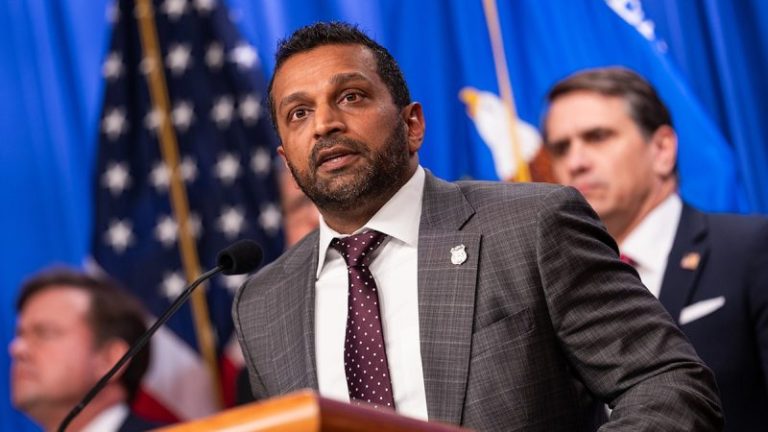
FBI Director Kash Patel said Saturday the agency is ramping up its use of artificial intelligence (AI) tools to counter domestic and international threats.

In a post on X, Patel said the FBI has been advancing its technology, calling AI a ‘key component’ of its strategy to respond to threats and stay ‘ahead of the game.’

‘FBI has been working on key technology advances to keep us ahead of the game and respond to an always changing threat environment both domestically and on the world stage,’ Patel wrote. ‘Artificial intelligence is a key component of this.

‘We’ve been working on an AI project to assist our investigators and analysts in the national security space — staying ahead of bad actors and adversaries who seek to do us harm.’

Patel added that FBI leadership has established a ‘technology working group’ led by outgoing Deputy Director Dan Bongino to ensure the agency’s tools ‘evolve with the mission.’

‘These are investments that will pay dividends for America’s national security for decades to come,’ Patel said.

A spokesperson for the FBI told Fox News Digital it had nothing further to add beyond Patel’s X post.

The FBI uses AI for tools such as vehicle recognition, voice-language identification, speech-to-text analysis and video analytics, according to the agency’s website.

Earlier this week, Bongino announced he would leave the bureau in January after speculation rose about his departure.

‘I will be leaving my position with the FBI in January,’ Bongino wrote in an X post Wednesday. ‘I want to thank President [Donald] Trump, AG [Pam] Bondi, and Director Patel for the opportunity to serve with purpose. Most importantly, I want to thank you, my fellow Americans, for the privilege to serve you. God bless America, and all those who defend Her.’

This post appeared first on FOX NEWS

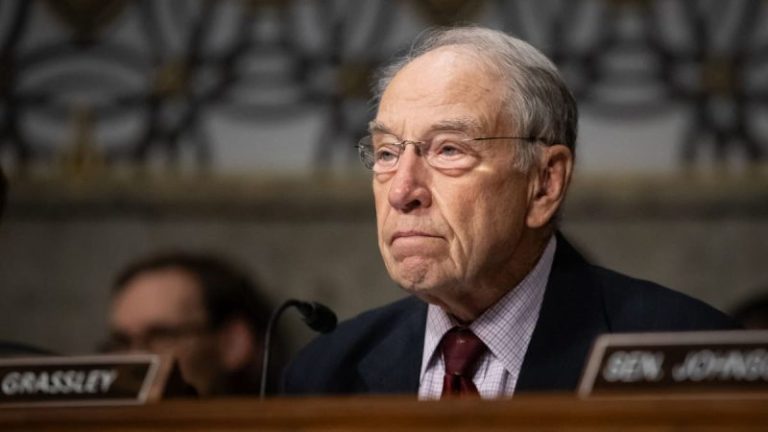
President Trump is rightfully angry that some of his top choices for U.S. attorneys in Democrat-controlled states are being blocked by Democrats and their leftist allies in the judicial branch. But the recent attacks from some supporters of the president against Sen. Chuck Grassley, Trump’s most effective ally in the Senate, are misplaced.

To start, remember who Grassley is. He’s a dignified statesman but also a shrewd legislator, fearless investigator and Senate workhorse. He doesn’t chase the limelight but quietly puts one win after the other on the scoreboard for Trump and his MAGA agenda.

This isn’t bluster. Trump appointed three Supreme Court justices, and two were carried squarely on the shoulders of Grassley, who chairs the Senate Judiciary Committee. He stopped former President Barack Obama from filling a Supreme Court seat with Merrick Garland, Joe Biden’s anti-Trump lawfare-supporting AG, enabling Trump to install Justice Neil Gorsuch instead. And when Democrats tried to ruin Justice Brett Kavanaugh’s life and derail his nomination, it was Grassley’s steady hand that guided Kavanaugh through the partisan spectacle, shut down the lies and got him confirmed.

Grassley’s done more than anybody in Congress to expose partisan lawfare against Trump. It’s thanks to Grassley that we know of the existence of Arctic Frost, Jack Smith and the Biden FBI’s demented campaign to put Trump behind bars and make any Republican that so much as breathed a subject of a criminal investigation. 

Whistleblowers at the FBI knew they could only trust one man to bring these damning details to light: Chuck Grassley. Now we know the Biden Justice Department and complicit judges spied on Republican members of both the House and the Senate and sought records for hundreds of other MAGA patriots, many of whom are a part of Trump’s administration today, like Dan Scavino, Peter Navarro and Harmeet Dhillon, who Grassley led to confirmation as Judiciary Committee chairman.

In fact, Grassley is literally breaking his own records when it comes to Senate confirmations. He’s processing and confirming judges at a rate faster than in Trump’s first administration, when Grassley was also Judiciary chairman. He navigated the vicious onslaught to confirm Judge Emil Bove, flipping the 3rd Circuit to majority Republican appointees. He bulldozed opposition and confirmed Attorney General Pam Bondi, FBI Director Kash Patel and other Justice Department leaders. 

He’s also processing U.S. attorneys through his committee faster than Democrats did during the Biden administration. And he’s doing it all while leading the charge against judicial activism and unconstitutional universal injunctions. And the billions of dollars the administration received in Trump’s One Big Beautiful Bill to secure our border and lock up dangerous criminals? Those border security provisions were written by none other than — you guessed it — Chuck Grassley.

We’re on pace to see the same number of attorney confirmations by year’s end as in Biden’s first year. But a few of his top choices — friends of mine and fellow warriors like Alina Habba and Lindsey Halligan— have been stopped by Democrats using a century-old ‘blue slip’ rule.

Sideline commentators and keyboard warriors seem to think Grassley could just bang his chairman’s gavel and make the blue slip go away. But is Grassley, the man who’s done so much for Trump, really sandbagging these nominees? The answer, for those who care to actually do their homework, is no.

The blue slip should go, but Grassley can’t just make it happen alone. He needs votes to advance nominees, and he doesn’t have them without blue slips. Months ago, Sen. Thom Tillis, R-N.C., stated unequivocally on the Senate floor he wouldn’t confirm nominees without one. Sen. John Kennedy, R-La., echoed this. That ends the conversation. Without the vote of either of these two members of the Judiciary Committee, nominees fail, regardless of Grassley’s actions.

And Tillis and Kennedy are hardly alone. Senators, both Republican and Democrat, won’t soon give up this power. All 100 senators prioritize having a say in who gets to be a judge or prosecutor in their state over letting the president decide who serves in other states. That’s why Democrat Dick Durbin couldn’t get rid of the blue slip when he chaired the Judiciary Committee during the Biden administration, even though progressive activists and their media allies begged him to do it.

Senators also won’t get rid of the blue slip because they know it benefits them when they’re in the minority. Republicans used the blue slip to block Biden from appointing nearly 30 district judges, and, so far, Trump has nominated 15 bold constitutionalist judges to fill the seats that Republicans held open.

I don’t like blue slips, but I live in the real world. I can count votes, and I know blue slips aren’t going away. As the Senate Judiciary Committee’s chief counsel for nominations, working for Grassley in Trump’s first term, I helped end blue slips for circuit judges because their jurisdictions cover multiple states and therefore their fates obviously shouldn’t be determined by a single state’s senators. That was a major achievement, but the limit of what was possible for now.

Democrats will stop at nothing to evade accountability, and Trump shouldn’t let them. His administration should use every tactic to overcome obstruction and pursue lawfare perpetrators. He’s right to want the blue slip’s end. But the Senate simply won’t deliver it this Congress as the votes don’t exist, and the president’s public outrage unfortunately hasn’t moved the needle yet.

As I’ve said before, to abolish the blue slip, the administration must build support by securing commitments from at least 50 Republican senators, including every Senate Judiciary Republican, to vote for nominees without blue slips. Grassley wants Trump’s nominees to succeed and knows the votes currently aren’t there for nominees who don’t have blue slips. Trump should trust his most effective Senate ally’s judgment. Grassley is a workhorse, not a showhorse. And Grassley has delivered more for Trump than any other senator.

This post appeared first on FOX NEWS

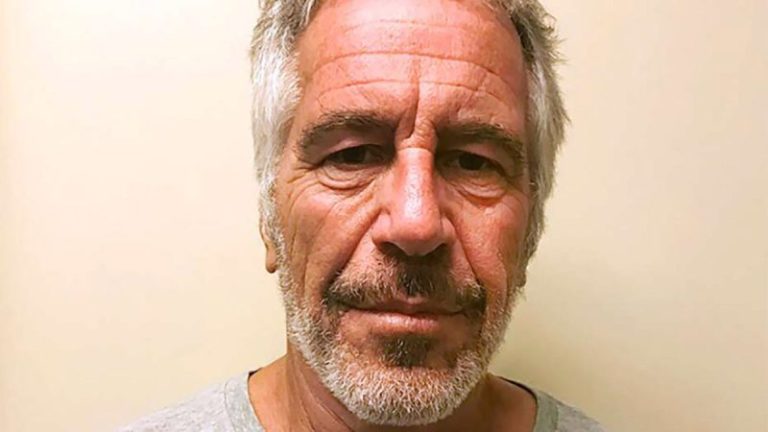
A woman whose concerns about Jeffrey Epstein were brushed off by the FBI three decades ago was vindicated Friday after the Department of Justice finally made her complaint public.

Maria Farmer’s complaint was buried in the thousands of files related to Epstein’s and Ghislaine Maxwell’s sex trafficking cases that the DOJ published as part of its obligations under the Epstein Files Transparency Act.

The document was dated Sept. 3, 1996, more than 10 years before Epstein first faced prosecution for sex crimes involving girls. In it, Farmer accused Epstein of stealing and selling photos of her young sisters. Farmer worked as an artist for Epstein and has long been outspoken about what she said was his abusive behavior.

Farmer has said the photos of her sisters cited in the 1996 complaint included nudity, and the complaint is labeled as a possible ‘child pornography’ case.

Names on the complaint were redacted, but The New York Times confirmed with Farmer that she was the one who filed it. Farmer told the outlet she felt ‘vindicated.’ 

‘I’ve waited 30 years. … I can’t believe it. They can’t call me a liar anymore,’ she said.

The complaint noted that Farmer was a professional artist whose work included the images of her then 12- and 16-year-old sisters.

‘Epstein stole the photos and negatives and is believed to have sold the pictures to potential buyers,’ the complaint stated. ‘Epstein at one time requested [redacted] to take pictures of young girls at swimming pools. Epstein is now threatening [redacted] that if she tells anyone about the photos he will burn her house down.’

Farmer and her sister Annie brought separate lawsuits in 2019 alleging Epstein and Maxwell sexually assaulted them, but the suits were dropped as part of a settlement involving accepting compensation from Epstein’s estate.

Farmer also sued the DOJ in July, alleging the Clinton administration FBI ‘chose to do absolutely nothing’ with her complaint in 1996, and that in the years since, Epstein was able to victimize more women. Farmer said she also complained again to the FBI in 2006 during the Bush administration.

Farmer’s complaint was among the tens of thousands of documents related to Epstein and Maxwell that the DOJ released on Friday, the transparency bill’s deadline. Other accusers, such as Marina Lacerda, have spoken out about their dissatisfaction with the file release, observing that it was incomplete and contained heavy redactions. The department has said more files are coming within the next two weeks.

This post appeared first on FOX NEWS

Preparations for the second phase of the Gaza ceasefire plan are underway, according to U.S. special envoy Steve Witkoff. The announcement comes after representatives from Egypt, Qatar and Turkey participated in high-level U.S.-led talks in Miami.

‘In our discussions regarding phase two, we emphasized enabling a governing body in Gaza under a unified Gazan authority to protect civilians and maintain public order,’ Witkoff wrote on X. ‘We also discussed regional integration measures, including trade facilitation, infrastructure development, and cooperation on energy, water, and other shared resources, as essential to Gaza’s recovery, regional stability, and long-term prosperity.

‘We reviewed next steps in the phased implementation of the Comprehensive Peace Plan for Gaza, underscoring the importance of sequencing, coordination, and effective monitoring in partnership with local Gazan institutions and international partners.’

In addition to looking forward to the next phase, the group reflected on the implementation of the first part of the ceasefire, which Witkoff said ‘yielded progress.’

During the first phase, humanitarian aid went into the Gaza Strip, hostilities were reduced and there was a partial withdrawal of Israeli forces. Additionally, all living hostages and most deceased hostages were released. The last remaining hostage is Ran Gvili, an Israeli police officer killed during the Oct. 7, 2023, attacks.

The U.S.-led talks on the second phase of the plan were proceeded by a similar meeting in Cairo, which reportedly included Turkey and Egypt’s intelligence chiefs, as well as Qatar’s prime minister.

‘During the meeting, [they] also agreed to continue strengthening coordination and cooperation with the Civil Military Coordination Center to eliminate all obstacles to ensure the continuity of the ceasefire and to prevent further violations,’ a Turkish source told Reuters, adding that they also discussed countering alleged Israeli ceasefire violations.

The second phase of the deal involves the deployment of an international stabilization force and the development of an international body to govern Gaza. It also includes the disarmament of Hamas. Additionally, Israel will move further from the so-called ‘yellow line’ ahead of the international force taking over, according to The Times of Israel.

This post appeared first on FOX NEWS

We also break down next week’s catalysts to watch to help you prepare for the week ahead.

In this article:

    This week’s tech sector performance

    US stocks advanced this week amid key economic data releases, with tech leading gains after Micron Technology’s (NASDAQ:MU) results release and easing artificial intelligence (AI) sector pressures.

    The S&P 500 (INDEXSP:.INX) rose 0.02 percent on the week, closing Friday (December 19) at 6,834.5.

    However, tech stock losses earlier in the week kept gains in check. The Nasdaq Composite (INDEXNASDAQ:.IXIC) lost 0.1 percent for the week to close at 23,307.62 on Friday.

    3 tech stocks moving markets this week

    1. Micron Technology (NASDAQ:MU)

    Micron Technology reported earnings for its first fiscal quarter of 2026 on Thursday (December 18), showing strong results driven by surging high-bandwidth memory sales for AI data centers

    Revenue reached US$13.64 billion, up 93 percent from last year and higher than the company’s September revenue projection of US$12.8 billion. Adjusted earnings per share were US$4.78, beating estimates of US$3.95. The company generated strong free cashflow and declared a US$0.115 per share dividend payable on January 14, 2026.

    Looking ahead, Micron adjusted its profit guidance for the upcoming quarter to US$8.42 per share, higher than Wall Street’s US$4.78 consensus, due to continued AI boom momentum.

    Investors responded to the results by sending Micron shares up 10 percent post-earnings. Momentum carried into Friday’s trading session, spilling over into other tech stocks, which have come under pressure in recent weeks over lofty valuations and funding concerns. The company ended the week 0.58 percent higher.

    2. Trump Media & Technology Group (NASDAQ:DJT)

    Trump Media & Technology Group rose nearly 30 percent before Thursday’s opening bell after the company announced plans to merge with fusion power company TAE Technologies.

    The all-stock deal is reportedly valued at more than US$6 billion. Devin Nunes, chair and chief executive of Trump Media, and Dr. Michl Binderbauer, CEO and director at TAE, are set to serve as co-CEOs.

    TAE is a private company with backing from Alphabet (NASDAQ:GOOGL) and other companies. The merger is slated to create one of the first publicly traded nuclear fusion companies. “We’re taking a big step forward toward a revolutionary technology that will cement America’s global energy dominance for generations,“ Nunes said.

    Shares of Trump Media closed the week with a gain of 39.53 percent.

    3. Oracle (NYSE:ORCL)

    Oracle shares dropped 5.4 percent on Wednesday (December 17) after a Financial Times report claimed data center investor Blue Owl Capital pulled out of a US$10 billion financing round for one of the AI data centers Oracle is constructing for OpenAI in Michigan. Talks reportedly stalled due to concerns over project delays, tougher debt terms, Oracle’s rising debt load and lease arrangements, per sources cited by the news outlet.

    Oracle disputed the report’s implications, stating that Michigan negotiations are “on schedule” without Blue Owl.

    The company said its project development partner, Related Digital, has chosen “the best equity partner from a competitive group of options, which in this instance was not Blue Owl.” Still, the company finished the week with its share price ahead by 2.18 percent as tech stocks staged an end-of-year comeback.

    Oracle, Micron Technology and Trump Media performance, December 15 to 19, 2025.

    Chart via Google Finance.

    Top tech news of the week

                Tech ETF performance

                Tech exchange-traded funds (ETFs) track baskets of major tech stocks, meaning their performance helps investors gauge the overall performance of the niches they cover.

                This week, the iShares Semiconductor ETF (NASDAQ:SOXX) declined by 0.94 percent, while the Invesco PHLX Semiconductor ETF (NASDAQ:SOXQ) saw a loss of 0.66 percent.

                The VanEck Semiconductor ETF (NASDAQ:SMH) also decreased by 0.61 percent.

                Tech news to watch next week

                Markets will be closed mid-week next week, with low trading volumes likely keeping movement calm.

                Watch for year-end selling in tech stocks, a potential rotation into safer sectors and light data like factory orders and home sales reports. Any comments on future interest rates could move markets somehwat, but expect mostly flat trading unless big news like policy changes breaks through.

                Securities Disclosure: I, Meagen Seatter, hold no direct investment interest in any company mentioned in this article.

                This post appeared first on investingnews.com

                The silver price was on the rise once again this week — it surged past the US$67 per ounce level on Friday (December 19), hitting a new record before pulling back.

                As for gold, it spent much of the period around the US$4,330 per ounce level, although it rose as high as US$4,360 on Thursday (December 18), approaching its own all-time high.

                Investors were eyeing November US consumer price index (CPI) data, which came out on Thursday. It was up 2.7 percent year-on-year, while core CPI was measured at 2.6 percent.

                Those figures were quite a bit lower than analysts’ estimates, and data collection issues caused by the US government shutdown have left market participants questioning the results.

                Notably, Bureau of Labor Statistics officials had to make ‘certain methodological assumptions’ because the October CPI report was canceled entirely. The bureau also started November data collection later than usual, driving concerns about a rebound in numbers for December.

                US jobs data for both October and November came out this week as well, showing that the unemployment rate for last month rose to 4.6 percent, the highest since 2021.

                While 64,000 jobs were added in November, 105,000 were lost in October, and revisions took 33,000 jobs away from the months of August and September.

                Outside US economic data, it’s worth noting that for silver there’s still a lot of focus on behind-the-scenes actions that could be impacting the price.

                Here’s what Substack newsletter writer John Rubino had to say about that:

                ‘A lot of the discontinuities that we’re seeing in the silver market right now are due to the fact that the big exchanges like Comex may not have enough silver to satisfy the demands of futures contract holders.

                ‘In other words, there are a lot more people out there with long futures contracts that could come in and demand silver than there is silver to satisfy that demand. And the number of people who are standing for delivery on futures contracts is rising, and the amount of silver in these exchanges is shrinking.’

                Bullet briefing — Platinum beats gold, copper hits new record

                Platinum price on the move

                I’d be remiss if I didn’t also take a moment to mention platinum.

                While gold and silver have been making headlines, platinum’s 2025 rise has been quiet, but significant — it’s up over 100 percent year-to-date and nearly hit US$1,980 per ounce this week.

                Platinum is somewhat similar to silver in that they both have precious and industrial sides, and they’ve both seen persistent deficits in recent years.

                Platinum’s deficit has definitely helped it rise this year, but looking forward to next year the World Platinum Investment Council is expecting a balanced market. When I saw that, I wondered if that would mean lower prices in 2026. But that may not necessarily be the case.

                Edward Sterck said there are a couple of nuances in the council’s outlook — for example, it’s anticipating profit taking from exchange-traded funds, but if that doesn’t happen, then the platinum deficit may persist. He also noted that balance in 2026 wouldn’t erase years of deficits:

                ‘A balanced market doesn’t solve for the fact we’ve had three years of deficits. It doesn’t in any way, I suppose, rebuild aboveground stocks. And it’s the shortage of aboveground stocks that seems to be one of the major catalysts behind this price action and behind the market tightness.’

                Copper price hits new high

                It’s not only precious metals that have been hitting new highs this year.

                The price of copper has been climbing as well, hitting a new all-time high of close to US$12,000 per metric ton last week on the London Metal Exchange.

                It’s pulled back slightly since then, but market watchers agree the copper outlook remains strong as rising demand meets constrained supply. In fact, I’ve been asking experts what they think the top-performing asset of next year will be, and copper has been a popular pick.

                Lobo Tiggre of IndependentSpeculator.com chose the base metal as his highest-confidence trade of 2025, and he said he’s sticking with it next year.

                Here’s what he had to say about copper:

                ‘Top pick for 2026 is copper. Similar reasons to 2025 —the copper price has been kicked around, up and down by what I think of as sort of extraneous issues. But the fundamentals mean the demand scenario just looks phenomenal, and the supply has been really constrained.’

                Securities Disclosure: I, Charlotte McLeod, hold no direct investment interest in any company mentioned in this article.

                This post appeared first on investingnews.com

                A photo of former President Bill Clinton topless in a dimly lit hot tub with his arms folded behind his head was included in a massive trove of Jeffrey Epstein files released Friday by the Department of Justice (DOJ).

                In another photo, Clinton is seen wading in a pool next to Ghislaine Maxwell and a woman whose face was redacted by authorities.

                Subsequent photos showed Clinton posing with American pop stars Michael Jackson and Diana Ross and seated on a plane next to a female wearing an American flag pin whose face was redacted.

                He was also seen smiling arm-in-arm with the late disgraced financier and convicted sex offender Epstein at what appeared to be a dinner party, wearing a festive shirt.

                The locations where the photos were taken were not included, and no context was provided.

                White House deputy press secretary Abigail Jackson took to social media Friday afternoon to comment on the never-before-seen photos of the former POTUS.

                ‘Here is Bill Clinton in a hot tub next to someone whose identity has been redacted. Per the Epstein Files Transparency Act, DOJ was specifically instructed only to redact the faces of victims and/or minors,’ Jackson wrote. ‘Time for the media to start asking real questions.’

                Clinton’s deputy chief of staff, Angel Ureña, accused the White House of trying to ‘hide [things] forever,’ in a statement on X, implying President Donald Trump continued a relationship with Epstein after his crimes were revealed.

                ‘The White House hasn’t been hiding these files for months only to dump them late on a Friday to protect Bill Clinton. This is about shielding themselves from what comes next, or from what they’ll try and hide forever,’ Ureña wrote in the post. ‘So they can release as many grainy 20-plus-year-old photos as they want, but this isn’t about Bill Clinton. Never has, never will be. Even Susie Wiles said Donald Trump was wrong about Bill Clinton.

                ‘There are two types of people here,’ he continued. ‘The first group knew nothing and cut Epstein off before his crimes came to light. The second group continued relationships with him after. We’re in the first. No amount of stalling by people in the second group will change that. Everyone, especially MAGA, expects answers, not scapegoats.’

                The DOJ dumped thousands of documents and hundreds of photos on its website Friday, all supposedly obtained by authorities during investigations into Epstein and Maxwell’s sex trafficking cases. 

                Other photos showed interior and exterior views of Epstein’s properties, personal photos of Epstein with various people and heavily redacted potential victim exhibits.

                While more than a dozen politically known individuals appeared in the files, Clinton and other notable figures’ inclusion in the files does not necessarily imply wrongdoing.

                The document drop was triggered by the Epstein Files Transparency Act, which required the DOJ to make the files public 30 days from its Nov. 19 signing by President Donald Trump.

                Some files may be withheld by the DOJ if disclosure would jeopardize an ongoing investigation or prosecution, to safeguard victims’ privacy or to avoid publishing sensitive child sexual abuse material.

                Ross’ communications teams did not immediately respond to Fox News Digital’s requests for comment.

                This post appeared first on FOX NEWS

                From a distance, Margarita Island looks like a Caribbean escape. Palm-lined beaches, duty-free shops, and resort towns sell the image of a tropical playground just off Venezuela’s northeastern coast. But U.S. officials say the Venezuelan outpost has become something else entirely: Hezbollah’s most important base of operations in the Western Hemisphere, strengthened by Iran’s growing footprint and the Maduro regime’s protection.

                That threat, U.S. officials warn, reflects a broader security challenge emerging from the region. ‘The single most serious threat to the United States from the Western Hemisphere is from transnational terrorist criminal groups primarily focused on narcotrafficking,’ Secretary of State Marco Rubio said at an end-of-year press conference at the State Department on Friday.

                ‘Margarita Island might be of significance to the U.S. because of its location and the security dynamics around it,’ Melissa Ford Maldonado, director of the Western Hemisphere Initiative at the America First Policy Institute, told Fox News Digital. ‘It is close to Trinidad and Tobago and Grenada, in an oil-rich part of the Caribbean along key maritime routes, and it has long had a reputation for being a major drug-trafficking hub, possibly because it’s off the mainland and there’s not a lot of law enforcement there.’

                The island’s isolation, she said, has made it attractive to ‘irregular armed groups, foreign intelligence actors and criminal networks that use it as a departure point for boats carrying illicit shipments out of Venezuela.’

                Marshall Billingslea, the former assistant secretary for Terrorist Financing and Financial Crimes in the U.S. Treasury Department, said Margarita Island now serves as Hezbollah’s key foothold in the Western Hemisphere.

                ‘From what I have seen and what I have been told, there is a wide range of activities that Hezbollah and to some extent Hamas are engaged in,’ Billingslea told Fox News Digital. ‘Margarita Island is really the center of gravity for their activities.’

                In written testimony submitted to the Senate Caucus on International Narcotics Control for an Oct. 21 hearing, Billingslea traced the island’s transformation back more than two decades. Under Hugo Chávez, he wrote, Venezuela ‘opened its doors to Hezbollah, allowing the group to establish a major footprint, including a paramilitary training site, on Margarita Island.’

                ‘When Nicolás Maduro seized power,’ Billingslea added, ‘the breadth and depth of Hezbollah’s presence in Venezuela dramatically expanded, as did their ties to the narco-terrorist regime and the Cartel de los Soles.’

                ‘The relationship is very close with the Cartel de los Soles, and it has been so for many, many years,’ Billingslea said, referring to the network of senior Venezuelan officials accused by the United States of drug trafficking.

                Billingslea said Hezbollah has embedded itself into Margarita Island’s economy, exploiting the island’s duty-free status and cross-border access to Colombia to generate revenue through smuggling and drug importation. He said the group operates a wide range of companies on the island and also maintains several training camps there.

                His testimony also detailed how Venezuela’s state apparatus helped embed Hezbollah inside the country. He wrote that former senior official Tareck El Aissami, while overseeing Venezuela’s passport and naturalization agency, ‘was instrumental in furnishing passports and citizenship documents to Hezbollah operatives as well as a large number of people from Lebanon, Syria, and Iran.’ Between 2010 and 2019, Venezuelan authorities issued more than 10,400 passports to individuals from those countries, according to the testimony.

                A May 27, 2020, Justice Department announcement alleged that Diosdado Cabello directed Venezuelan lawmaker Adel El Zabayar to travel to the Middle East to obtain weapons and recruit members of Hezbollah and Hamas for training at clandestine camps inside Venezuela. The filing also describes a subsequent weapons delivery at a hangar controlled by Maduro at the country’s main international airport.

                Recent developments in the Middle East have only increased Margarita Island’s importance, Billingslea said. Israel’s campaign against Hezbollah in Lebanon has damaged the group’s military leadership and financial infrastructure, forcing it to rely more heavily on overseas networks.

                ‘Israeli successes against Hezbollah in Lebanon in particular, including their strikes on the financial infrastructure Al-Qard al-Hassan that operates in Lebanon, are going to have two effects,’ he said. ‘The first is that it is making the fundraising and the revenue generation that comes out of Latin America even more important to the terrorist group. Secondly, we have seen indications that Hezbollah actually has been relocating fighters from Lebanon, several hundred from Lebanon to Venezuela in particular.’

                Asked whether that shift moves the threat closer to the United States, Billingslea said Hezbollah is now operating ‘close to the U.S. and further away from the Israelis.’

                He said Iran’s role in Venezuela has deepened alongside Hezbollah’s. ‘There is a substantial Iranian footprint in Venezuela related to the trade of weapons and drones, in particular, for gold,’ he said. After suffering losses in the Middle East, he added, ‘the Iranians find themselves even more dependent on that supply of gold in exchange for drones and weapons.’

                He said Washington faces a strategic choice. ‘I think the United States has positioned sufficient forces in the Caribbean at this time to take care of the Hezbollah threat,’ he said. ‘But obviously, when you have a terrorist group that has merged into the local population, highly precise intelligence is needed. I believe the Venezuelan opposition possesses a great deal of that intelligence, though it is not clear to me that the United States government is making the best use of that access.’

                For Billingslea, the conclusion is cleaner — eliminating Venezuela’s narco-terrorist regime would significantly strengthen U.S. national security.

                This post appeared first on FOX NEWS

                It’s not just Minnesota.

                The past few weeks have made clear that fraudsters stole billions of dollars from states’ welfare programs, much of it from Medicaid. It also appears that Democratic politicians tolerated the heist for their own political benefit. 

                Yet politicians in virtually every state have let waste, fraud and abuse spread like wildfire in Medicaid, putting taxpayers on the hook for an estimated $2 trillion in improper spending over the next decade alone. 

                Thankfully, President Donald Trump and congressional Republicans have given states a reason to clean up this mess and spare taxpayers that pain.

                In a new paper, I show how Democrats have turned Medicaid into one of the most fraud-ridden programs in America — and how Republicans are fixing it. While Medicaid has long been plagued with improper spending, Democrats supercharged this crisis in the Obama years.

                ObamaCare added tens of millions of able-bodied adults to the program, yet that population is much more likely to be ineligible.

                The Obama administration refused to rigorously check eligibility, and the Biden administration adopted the same policy, deliberately hiding an explosion in waste, fraud and abuse. Meanwhile, states refused to police their Medicaid programs, confident that the federal government would look the other way and cover the tab.

                The first Trump administration found that 27.4% of federal Medicaid spending was improper in 2020, or about $120 billion at the time. The administration also found that four out of every five improper payments were the result of eligibility errors. This money flowed to people who shouldn’t have been on Medicaid and therefore diverted money and care away from its intended recipients. Five years later, it’s highly likely that at least one in five Medicaid dollars is still wrongly spent.

                Call this what it is — an assault on taxpayers. It’s also a clear violation of federal law. States are legally required to reimburse the federal government for Washington’s share of Medicaid payments if their improper payment rates are above 3%, a far cry from the 27.4% rate in 2020.

                The Trump administration is once again conducting eligibility checks, but even without that info, it’s all but certain that every state already exceeds the 3% threshold. The only reason they’ve avoided a budget blowout is by receiving so-called ‘good faith waivers’ from Washington. Essentially, states have promised that they’ll tackle fraud and abuse, even when they have no intention of doing so.

                Republicans called time on this rigged game in the law President Trump signed July 4. They effectively eliminated good-faith waivers and told states that, starting in 2030, they will be forced to cover the federal share of any improper payments above 3%. While five years may seem like an eternity, it’s an acknowledgment that states have a mountain to climb to bring their error rates into the low single digits. 

                Consider Ohio. In 2019, it had an improper payment rate of nearly 45%, giving the Buckeye State the worst record in the nation for waste, fraud and abuse. Based on its most recent spending levels, Ohio would be on the hook for $9.7 billion, equal to roughly 15% of its current state budget. Illinois, with a 35.4% rate, would pay $6.4 billion, a tough ask given the state’s famous fiscal woes. Even states with lower improper payment rates, like Pennsylvania, Michigan and Missouri, would still be looking at annual costs of more than $1 or $2 billion.

                Without reform, I estimate that states will pay a combined $100 billion in penalties beginning in 2030. Their only hope to avoid this fiscal pain is to immediately start rooting out waste, fraud and abuse. In the state legislative sessions that start in January, lawmakers should focus on several key reforms.

                First, stop allowing Medicaid recipients to self-attest their income, address and other personal information. Using the honor system invites abuse.

                Second, review recipients’ eligibility at least twice a year for able-bodied adults and once a year for everyone else, thereby removing ineligible individuals early and often.

                Third, cross-check Medicaid data with easily accessible information such as wage, hiring and tax records; returned mail and changes of address; out-of-state food stamp transactions; and prison and death records. These basic good government measures can quickly identify people wrongly receiving taxpayer money.

                Waiting to tackle Medicaid fraud is the most foolish thing states can do. So is hoping that Democrats get their wish and successfully repeal Republicans’ Medicaid reforms. That won’t happen while Trump is president. And if states wait to see the outcome of the 2028 election, they may be disappointed. At that point, they’d face an even steeper hill with barely a year to get their act together.

                There’s no avoiding the reality that Democrats broke Medicaid — in Minnesota and everywhere else — or that Republicans have given states an urgent mandate to finally root out the waste, fraud and abuse.

                 Michael Greibrok is a Senior Research Fellow at the Foundation for Government Accountability.

                This post appeared first on FOX NEWS