
Author

admin

Browsing

Rio Silver Inc. (‘Rio Silver’ or the ‘Company’) provides the following year-end update and shareholder letter from President and Chief Executive Officer Chris Verrico, outlining the Company’s strategic positioning amid record silver prices, its clear development pathway at the Maria Norte Project in Peru, and the exploration and long-term growth opportunities across its broader portfolio.

Dear fellow shareholders,

As we approach the end of the year, I want to take a moment to speak directly to our shareholders and reflect on where we are, the environment we are operating in, and where Rio Silver is headed next.

It has been an extraordinary year for silver. Prices have reached all-time highs, driven not by speculation, but by fundamentals that continue to strengthen. According to industry data and independent analysis, the silver market has now entered its fifth consecutive year of structural deficit, with industrial demand accelerating faster than supply can respond. Silver is being consumed at record levels by solar energy, electrification, data infrastructure, and advanced manufacturing, while at the same time continuing to serve its historical role as a monetary asset during periods of economic uncertainty. Simply put, silver is being pulled from both sides of the equation, and supply has struggled to keep pace.

This backdrop is exactly why we have been so focused on building Rio Silver into a pure-play, high-grade silver company with a realistic and disciplined path to development.

This year culminated in an important milestone with the official approval of the Maria Norte acquisition, which we believe marks a turning point for the Company. Maria Norte is not a conceptual exploration project. It is a high-grade silver asset located in one of the world’s most prolific silver districts, with a skilled local workforce, and operating processing facilities just 11 kilometres away. With exchange approval now secured, our team is already advancing next steps, including social licience, site preparation, infrastructure planning, permitting activities, and underground access sequencing. Our objective is clear: move Maria Norte along a practical path toward production while advancing exploration in parallel under Peru’s established exploration and exploitation framework.

Looking ahead to 2026, shareholders can expect a steady cadence of updates as we progress through development milestones, engineering work, and exploration initiatives. Our focus remains on executing efficiently, prioritizing accessible high-grade mineralization first, and positioning the Company for near-term cash flow potential while preserving long-term upside.

Beyond Maria Norte, we are excited about the exploration potential at Santa Rita. While still early, Santa Rita is situated within a highly prospective geological setting known for hosting large-scale polymetallic systems. Historical work has outlined multiple styles of mineralization and a broad surface footprint that we believe warrants systematic follow-up. As we advance Maria Norte, Santa Rita represents an important component of our longer-term growth strategy and district-scale potential.

We also continue to recognize the significant opportunity represented by our Ring of Fire critical metals project in Northern Ontario. This asset is supported by encouraging historical work and is located in a region that has increasingly become a strategic priority at both the provincial and federal levels. We have been encouraged by ongoing dialogue with local First Nations communities and by recent policy developments aimed at responsibly advancing Canada’s critical minerals sector. This project provides meaningful optionality and long-term value, and we look forward to sharing key developments as we advance the Ring of Fire project in the near future.

In addition to advancing our core development assets, we enter 2026 with the benefit of several retained royalty interests and an equity position in Magma Silver Corp., which provide added flexibility and optionality as we move forward. These interests give us exposure to external project progress without requiring additional capital, helping support our balance sheet while allowing us to remain focused on advancing high-grade silver development in Peru. We believe this complementary exposure strengthens our overall position as we continue to execute on Maria Norte and build long-term value through the next phase of the silver cycle.

As we look forward, I am confident that 2026 will be a defining year for Rio Silver. With silver prices at record levels, a clear development path at Maria Norte, meaningful exploration upside across our portfolio, and a strong team on the ground, we believe we are well positioned to create value for our shareholders, partners, and stakeholders.

On behalf of the entire Rio Silver team, I would like to sincerely thank you for your continued support and belief in our vision. I wish you and your families a Merry Christmas and Happy Holidays, and I look forward to what I believe will be an exceptional year ahead as we work toward delivering our strongest year yet for all stakeholders.

Sincerely,

Chris Verrico
President & Chief Executive Officer

About Rio Silver Inc.

Rio Silver Inc. (TSX-V: RYO | OTC: RYOOF) is a Canadian resource company advancing high-grade, silver-dominant assets in Peru, the world’s second-largest silver producer. The Company is focused on near-term development opportunities within proven mineral belts and is supported by a seasoned technical and operational team with deep experience in Peruvian geology, underground mining, and district-scale exploration. With a clear development strategy, and a growing portfolio of highly prospective silver assets, Rio Silver is establishing the foundation to become one of Peru’s next emerging silver producers.
Learn more at www.riosilverinc.com

ON BEHALF OF THE BOARD OF DIRECTORS OF Rio Silver INC.

Chris Verrico
Director, President and Chief Executive Officer

To learn more or engage directly with the Company, please contact:

Christopher Verrico, President and CEO
Tel: (604) 762-4448
Email: chris.verrico@riosilverinc.com
Website: www.riosilverinc.com

Cautionary Note Regarding Forward-Looking Information

This news release contains ‘forward-looking statements’ within the meaning of applicable Canadian securities laws. All statements in this release that are not historical facts are forward-looking statements and are based on expectations and assumptions as of the date of this release. Forward-looking statements relate to future events or performance and include, but are not limited to, statements regarding the Company’s planned exploration and development activities at the Maria Norte Project, expected timelines for regulatory approvals, future work programs, engagement with local stakeholders, geological interpretations, and the Company’s ability to advance its assets toward potential development.

Forward-looking statements involve known and unknown risks, uncertainties, and other factors that may cause actual results to differ materially from those expressed or implied. These risks include, but are not limited to, operational risks, regulatory risks, geological uncertainties, availability of financing, community and social risks, commodity-price fluctuations, and general economic conditions. Additional risks are described in the Company’s filings available on SEDAR+ at www.sedarplus.ca .

Readers are cautioned not to place undue reliance on forward-looking statements. Rio Silver does not undertake to update forward-looking statements except as required by applicable law.

Neither the TSX Venture Exchange nor its Regulation Services Provider accepts responsibility for the adequacy or accuracy of this release.

News Provided by GlobeNewswire via QuoteMedia
This post appeared first on investingnews.com

While next year’s midterms will determine whether Republicans can keep control of Congress after winning big in 2024, there are also a slate of gubernatorial elections, several that are toss-ups, which could have equally wide-ranging impacts.

Three states with Democratic Party governors, Arizona, Michigan and Wisconsin, are currently listed as ‘toss up’ races across multiple high-profile election polling groups, such as The Cook Political Report and Sabato’s Crystal Ball. Meanwhile, Republicans will have to defend the governorship in Georgia and Nevada, two other races considered a ‘toss up’ by some, while others are giving Republicans a slight advantage. For example, Nevada and Georgia are considered a ‘toss up’ in The Cook Political Report’s latest polling that came out Dec. 20, but they are listed as ‘lean Republican’ by Sabato’s Crystal Ball. 

‘Whether it’s Aaron Ford vacationing instead of doing his job in Nevada, Katie Hobbs tanking Arizona’s economy, or Jocelyn Benson letting non-residents vote in Michigan, Democrats are not sending their best to gubernatorial races next year,’ Regional Communications Director Delanie Bomar told Fox News Digital. ‘Republicans have a track record of winning these states and we will do so again next year.’


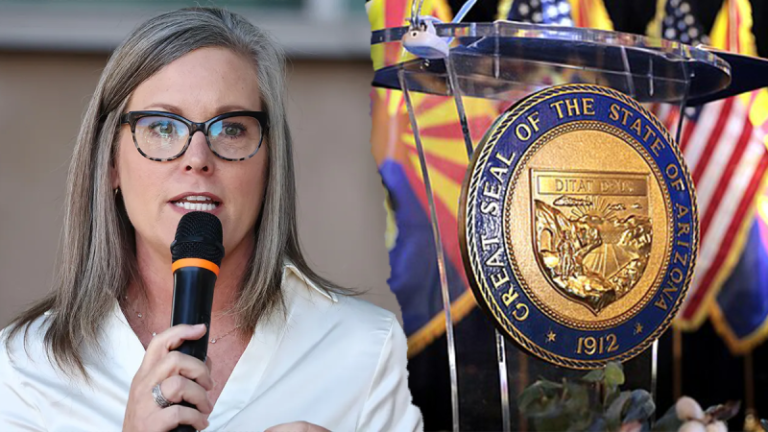
In Arizona, Democrat Governor Katie Hobbs will have to maintain her seat against long-time House Reps. Andy Biggs, R-Ariz., and David Schweikert, R-Ariz., as well as attorney Karrin Taylor Robson, who lost to Kari Lake in the GOP primary for governor in 2022.

In 2024, Hobbs was investigated for involvement in an alleged ‘pay-for-play’ scheme after a report revealed a group home business that looks after vulnerable children was approved for a rate hike after it donated big to her inauguration and the Arizona Democratic Party. However, Hobbs has pushed back against the allegations, arguing she was not personally involved in the rate decision. The controversy is still under criminal investigation by both the Arizona attorney general and the Maricopa County attorney, and the Arizona House also launched its own inquiry last month into the matter. Hobbs, who has had a lengthy political career dating back to 2010, has been criticized for how she treats her staff and who she hires, but also has a history of being able to rake in campaign funds and run successful elections. 

In Michigan, Democratic Party Gov. Gretchen Whitmer will be term-limited out. Her secretary of State, Jocelyn Benson, is among the front-runners to take over Whitmer’s seat. Earlier this year, Fox News Digital reported about Benson’s attendance at a ‘unity’ dinner that featured decor threatening to assassinate President Donald Trump and equating his supporters with Nazis. Republican Michigan lawmakers have called on the Trump Justice Department to monitor Michigan’s 2026 elections, arguing there is an ‘inherent’ conflict associated with Benson, who is Michigan’s top election official, running while overseeing the state’s elections.  

Wisconsin’s Democratic Party Gov. Tony Evers announced his retirement in July, indicating he will not seek a third term under the state’s unlimited term limit rules. As a result, the seat is up for grabs, with House Rep. Tom Tiffany, R-Wisc., and Wisconsin County Executive Josh Schoemann among the GOP front-runners. On the Democrat side, former Lt. Gov. Mandela Barnes, current Lt. Gov. Sara Rodriguez and Wisconsin County Executive David Crowley find themselves at the top of the heap.

Courtney Alexander, a spokesperson for the Republican Governor’s Association, pointed out how voters view governors’ races ‘through a unique prism’ following Trump’s first year of his second term. ‘They see that Republican-led states are more affordable and safer, while Democrat-led states are among the most expensive and have allowed their cities to become hellscapes of crime and homelessness,’ Alexander told Fox News Digital. ‘Americans have already voted with their feet, and that tells us everything we need to know about what to expect in 2026 — Democrats running at the gubernatorial level have records they cannot defend.’

Georgia and Nevada will have to be defended by Republicans if they hope to add to their GOP gubernatorial headcount. Georgia, which historically has been a Republican stronghold, has seen Democratic Party wins in the last several years, making it a place for hard-fought elections. Current Republican Gov. Brian Kemp is being term-limited. It was being mulled he might go to the U.S. Senate, but Kemp later waved off the rumors.

In 2026, there will be a total of 36 gubernatorial elections held on Nov. 3, 2026. The primaries for these races will be held at various times ahead of the scheduled general election date.  

While not seen as a tough race for Republicans, Florida’s primary race has the ingredients for something interesting. The Sunshine State’s current GOP governor, Ron DeSantis, will be term-limited, and it is unclear who DeSantis desires to be his replacement after President Donald Trump endorsed GOP Rep. Byron Donalds, R-Fla. Thus far, DeSantis has not embraced Donalds as the best person to take over his office, like Trump. Rather, DeSantis has publicly hinted his wife, Casey DeSantis, could be a formidable contender. ‘She would do better than me,’ DeSantis told reporters earlier this year while discussing speculation about Florida’s first lady succeeding him. ‘There’s no question about that.’

Fox News Digital’s Michael Dorgan contributed to this report.

This post appeared first on FOX NEWS

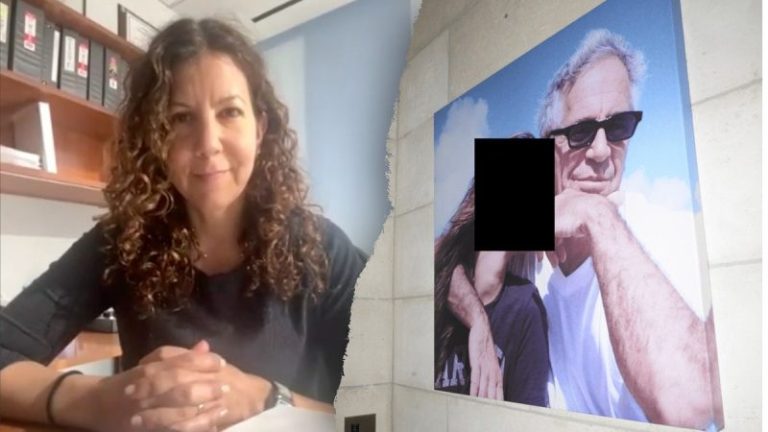
If the Department of Justice (DOJ) wanted to release every Jeffrey Epstein-related document they had on file, they had the firepower to do so, a former assistant U.S. attorney argued.

The DOJ has faced bipartisan criticism over its initial release of heavily redacted Epstein files, which lawmakers argue fell short of the requirements of a recently passed transparency law.

‘The Department of Justice has all the resources in the world, right? I mean if they wanted to put 1,000 lawyers on this to review the documents and get them ready for the production, they could have,’ Sarah Krissoff said.

‘And they don’t appear to have done that,’ she added.

The DOJ did not immediately respond to a request for comment.

Krissoff, who worked as a prosecutor for almost 14 years in the Southern District of New York, described key differences between the Epstein Files and the normal redaction process that attorneys grapple with. Those distinctions make it unclear who would have had final say about the information the DOJ released on Friday as the agency attempted to follow through on the requirements laid out by the Epstein Files Transparency Act. 

That law, passed by Congress last month and signed by President Donald Trump on Nov. 19, gave the DOJ just 30 days to make its documentation of Epstein public. It included some exceptions for protecting the identity of victims.

Despite the thousands of files that became publicly available at the end of last week, the DOJ’s first trove sparked criticism from some lawmakers and viewers online outraged that the department hadn’t released them all at once.

‘They are hiding a lot of documents. That would be very helpful in our investigation,’ Rep. Suhas Subramanyam, D-Va., a member of the House Oversight Committee, told CNN on Monday morning. 

Although she remains skeptical of the department’s effort, Krissoff noted that what the DOJ’s been asked to do goes far outside the norm for disclosures.

‘There is no real mechanism in the law that the public can just access documents because they’re interested in them, right? In this case, this law is requiring the DOJ to make these things public because so many members of Congress are interested in this issue,’ Krissoff said.

In the cases she’s been a part of, Krissoff said redactions usually came down to meticulous negotiations between the prosecution and the defense. Sometimes deliberations drilled into individual sentences or words.

‘This situation is a little different because it’s unclear, you know, who is still working on this from the original case team. And so, the question is: who at the Department of Justice reviewed these in connection with the redactions here?’ Krissoff said.

She said whole case files rarely get released to the public beyond what shows up in court filings — and what’s there usually serves the narrow purposes of the prosecution. In Epstein’s case, the public’s interests extend beyond any potential conviction of Epstein himself. Epstein died in 2019 while incarcerated on suspicion of sex-trafficking minors. His death, ruled a suicide, cut short his prosecution and left behind questions about whether he facilitated illegal sexual encounters for his vast social network. 

Photos released by the DOJ last week lack context and do not, on their own, implicate anyone depicted in them of wrongdoing. 

‘The case file often implicates many other people that are not charged in the crimes. So, there may be 15 people charged in a drug ring. You’ve only charged one or two people; you don’t want to impugn those other people who have not been charged by releasing information showing their involvement in this drug ring,’ Krissoff said.

‘The last thing you want to do is put that neighbor’s information or his name or even his statement out there,’ Krissoff said.

She believes that there’s a danger in forcing disclosure of an ongoing case simply because of great public interest and setting a precedent for that to become a regular occurrence. In her view, it could disrupt ongoing investigations of the future that draw intense public interest.

The DOJ said it will continue to release its documents on Epstein on a rolling basis. It has not announced when they expect to continue their release of the Epstein files.

This post appeared first on FOX NEWS

A Republican lawmaker has reacted to the massive unfolding fraud scandal in Minnesota with legislation aimed at preventing more taxpayer dollars from being wasted at the United States Department of Health and Human Services.

Republican Rep. Mariannette Miller-Meeks has introduced the Welfare Abuse and Laundering Zillions Act, or the ‘WALZ Act,’ which would require HHS’ Office of Inspector General to open investigations into any program that sees a 10% or greater increase in total payments over any six-month period within a fiscal year.

Under the bill, HHS would no longer have discretion to ignore sudden billing increases that critics say often signal fraud schemes, particularly in large entitlement programs.

The bill comes amid revelations in recent months that Minnesota’s federally funded health and nutrition programs were rife with fraud to the tune of potentially up to $9 billion, federal prosecutors said last week. 

Critics have made Walz the face of the scandal, given the fact that concerns over the fraud date back to 2019, when he took office and the inability of the state, which he serves as the top executive, to tackle the problem over the last five years.

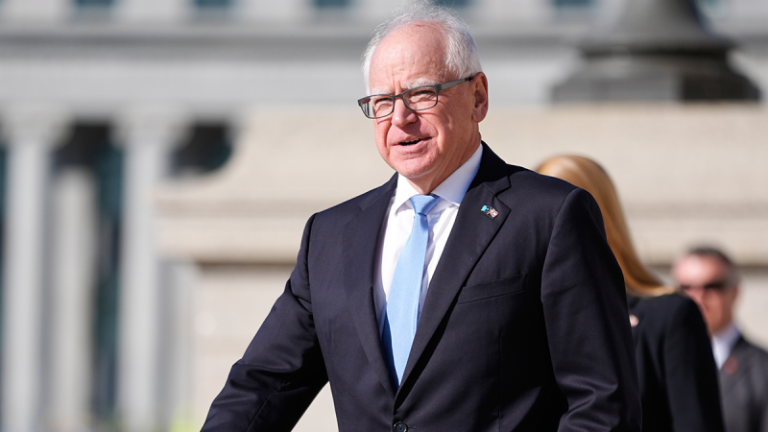
‘This is on my watch,’ Walz told reporters on Friday. ‘I am accountable for this. And more importantly, I am the one that will fix it.’

Miller-Meeks told Fox News Digital the situation in Minnesota represents a ‘jaw-dropping failure of leadership.’

‘This is what happens when soft-on-crime Democrats run the show: zero accountability, zero oversight and taxpayers left holding the bag,’ the Iowa Republican continued. ‘The WALZ Act is named for a reason, to ensure this level of negligence can never be repeated anywhere else in America. This bill puts hard safeguards in place to protect taxpayer dollars, shut the door on scam artists and bring real accountability back to government programs.’

On Monday, a group of 98 Minnesota mayors raised concerns with state leaders and Walz in a letter about their state’s fiscal policies, saying they have impacted their cities and residents, noting a disappearing $18 billion surplus and a projected $2.9 billion to $3 billion deficit for the 2028-29 biennium.

Former federal prosecutor Joe Teirab, who briefly worked on the Feeding Our Future aspect of the fraud investigation, recently told Fox News Digital the fraud scheme was notable not only for its size, but for how easy it was to carry out.

‘Honestly how easy this fraud was to do,’ Teirab said. ‘These fraudsters were just saying that they were spending all this money on feeding kids… and they were just making up these PDFs, putting false names into Excel sheets.’

Teirab said oversight failures within the Minnesota Department of Education and other agencies played a significant role. He argued that officials had incentives to avoid scrutiny, citing political sensitivities surrounding Minnesota’s Somali community.

‘There were huge incentives to just turn the other way,’ Teirab said. ‘There’s a sense of, ‘If we say something, are they going to call us racist?’ And that’s exactly what happened.’

Fox News Digital’s Nikolas Lanum and Louis Casiano contributed to this report

This post appeared first on FOX NEWS

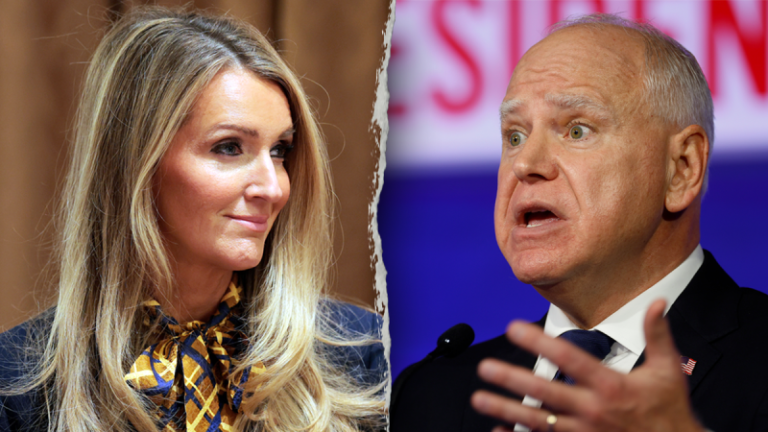
Federal Small Business (SBA) Administrator Kelly Loeffler sent a letter Tuesday to Minnesota Gov. Tim Walz alerting him that her agency will ‘halt’ more than $5.5 million in annual support to resource partners in the state ‘until further notice.’

The move comes as Walz and his administration grapple with billions of dollars in social services fraud diverted to everything from sham nonprofits to the Somali terror group Al-Shabaab. U.S. Attorney Joseph Thompson said Thursday a ‘significant amount’ of $18 billion worth of programmatic Medicaid funding was likely lost to fraud.

‘I am notifying you that effective immediately and until further notice, the SBA is halting the disbursement of federal funds to SBA resource partners operating in the state of Minnesota, totaling over $5.5 million in annual support,’ Loeffler wrote Walz on Tuesday.

‘This action is the result of a fundamental breakdown in the public trust. Under your leadership, Minnesota failed to safeguard taxpayer dollars, and SBA will not continue to place federal resources at risk in a state where oversight measures are ignored and accountability is abandoned.’

Loeffler blamed Walz for making the Land of 10,000 Lakes the ‘epicenter’ of the largest fraud scandal of the COVID-19 pandemic era, and that recent criminal convictions of Somalis and other figures prove such fraud is ‘endemic’ to St. Paul’s vast welfare curriculum.

She cited Thompson’s calculations, saying that the Somali fraud network netted $1 billion in its Minneapolis-centered fraud scheme and that at least half of certain Medicaid funding programs subsidized by Minnesota taxpayers have been ‘pocketed by criminals’ – assessing the final figure at at least $9 billion.

She noted the USDA – which facilitates SNAP and other programs – as well as Treasury Secretary Scott Bessent have launched probes into the scandals.

At least $2.5 million in Paycheck Protection Program (PPP) and Economic Injury Disaster Loan (EIDL) funds issued during the pandemic were tied to the Somali fraud scheme, the SBA said.

Another $430 million in PPP subsidies – totaling 13,000 individual loans – had been flagged as fraudulent but funded anyway, including some that were among those loans altogether forgiven during the Biden administration, Loeffler wrote.

‘The volume and concentration of potential fraud is staggering, matched in its egregiousness only by your response to those who attempted to stop it,’ she told Walz.

‘When legislators and whistleblowers raised concerns about potential abuse during the pandemic, your Administration resisted oversight, refused accountability, and allowed the misconduct to metastasize.’

Loeffler faulted Walz for dismissing some criticisms of his administration’s ‘generosity’ as ‘racism.’

Walz previously said that fraudsters in Minnesota will go to prison, and that ‘I don’t care what color you are [or] religion you are,’ but followed up by saying that critics ‘demonizing an entire population’ is ‘beneath that,’ according to PBS.

SBA will immediately halt $2.22 million in Small Business Development Center awards, $450,000 in women’s business center awards, $2.6 million in ‘microloan’ awards – the entire 2025 disbursement – and about $550,000 in other disbursements.

Loeffler called Minnesota’s fraud scandals the consequence of ‘socialist policies deliberately designed to pump out welfare funding without oversight or accountability.’

‘SBA’s responsibility is to taxpayers and small business owners, not to criminals or the politicians who enable them — We will continue to do what you did not: protect federal dollars on behalf of the American people,’ she said.

Fox News Digital reached out to Walz for any comment on general sentiments expressed in the letter about the fraud scandal and his handling of it.

This post appeared first on FOX NEWS

Tensions are once again boiling in the House GOP after four moderate Republicans joined Democrats in a bid to force a vote on extending Obamacare subsidies that were enhanced during the COVID-19 pandemic.

‘It’s a betrayal to the Republican Party,’ House Freedom Caucus member Rep. Eric Burlison, R-Mo., said. ‘It basically turned the agenda over to the Democrats.’

‘This is not what people voted for when they voted for a Republican majority,’ he said.

A Democrat-led Congress voted to broaden who can get federally subsidized healthcare during the COVID-19 pandemic in 2021, later voting to extend those subsidies through 2025 the following year.

Congress has now left D.C. until the new year with no plan in place to extend or replace those subsidies, and millions of Americans are now facing heightened healthcare costs in a matter of days.

The majority of Republican lawmakers are opposed to extending those subsidies, calling them a pandemic-era initiative that’s part of an overall broken system.

But several GOP lawmakers have warned that a failure to extend the subsidies, preferably with reforms, would negatively impact people across the country — as well as Republicans headed into a tough re-election year.

Several GOP plans have emerged for another short-term extension to give Congress an off-ramp while they work on a new healthcare plan, but leaders in the House and Senate showed no appetite for taking them up.

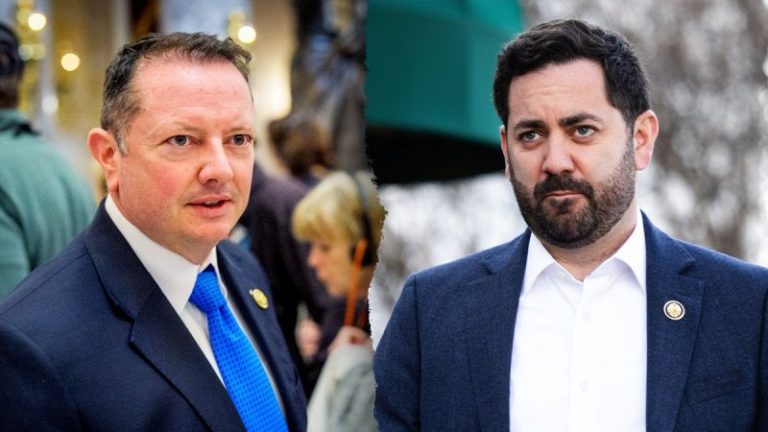
The four House Republicans who joined Democrats’ push for a three-year extension — Reps. Mike Lawler, R-N.Y., Brian Fitzpatrick, R-Pa., Robert Bresnahan, R-Pa., and Ryan Mackenzie, R-Pa. — have argued that their own leaders left them with no choice but to tack onto a pathway they did not want to support to extend the subsidies.

‘Ultimately, the failure to bring a vote left us with little choice,’ Lawler told reporters last week.

But it’s inflamed tensions with conservatives, threatening an already-unsteady peace in the House GOP’s razor-thin majority.

‘For any Republican to be supportive of Obamacare is really gross and a betrayal to everything that we’ve ever promised voters,’ Rep. Lauren Boebert, R-Colo., said. ‘I mean, this is the Democrats’ fault. They are the ones who made insurance, health insurance, unaffordable and unreliable.’

She noted that House Republicans did pass a bill with some modest healthcare reforms before they left Washington, but conceded ‘we need to do a lot more.’

Rep. Randy Fine, R-Fla., told Fox News Digital, ‘I think it’s disappointing — why people would want to bail out Obamacare, I don’t understand.’

‘That discharge petition forces our children to go into greater debt,’ Fine said. ‘We should be focused on destroying Obamacare, not bailing it out.’

A discharge petition is a mechanism for forcing a vote on legislation over the wishes of House leaders, provided it gets support from more than half of the lawmakers in the chamber.

In this case, the four moderates helped House Minority Leader Hakeem Jeffries, D-N.Y., clinch a majority of signatures on his petition, setting up a vote early next month.

Lawler criticized Jeffries as ‘not interested in actually solving the problem’ in his comments to reporters last week, however.

‘He wants it to fail so he can use the issue. Otherwise, you would get the bipartisan discharge to move. And that’s the unfortunate thing,’ Lawler said. ‘But my view is, doing nothing is the worst thing. And that’s why Brian Fitzpatrick, myself, Robert Bresnahan and Ryan Mackenzie signed the discharge.’

Meanwhile, Mackenzie said he spoke directly with one of his fellow House Republicans who was critical of their move.

‘I went to him directly and said, ‘I would like to talk to you about your comments.’ I said, ‘I need to explain to you why I voted this way.’ Here’s an anecdote from my district about an individual, a small business owner, a restaurateur. For him and his family, without the premium tax credits, he goes from $3.99 a month up to $9.31 a month, and what that meant for him was that he was going to de-enroll and hope that nothing happened to his family,’ Mackenzie told reporters last week.

‘I said, that is not a great outcome for that individual, so we’re looking for some kind of relief or reform. And when ultimately we had that long conversation with the individual … we came to a much better resolution. We both were more understanding of each other.’

House Freedom Caucus Chairman Andy Harris, R-Md., did not appear as frustrated as some of his colleagues but predicted ‘it will die in the Senate.’

The House GOP’s healthcare plan, which did not include an extension of the subsidies, passed last week with support from all Republicans, save for Rep. Thomas Massie, R-Ky. It got no Democratic ‘yes’ votes.

The nonpartisan Congressional Budget Office (CBO) estimated that enacting the bill would reduce the federal deficit by $35.6 billion for a 10-year period through 2035.

If the bill became law, it would also decrease the number of people with health insurance by an average of 100,000 per year between 2027–2035 and lower gross benchmark premium costs by an average 11% through 2035, CBO said.

However, it’s not immediately clear whether it will be taken up by the Senate.

This post appeared first on FOX NEWS

Lundin Mining (TSX:LUN,OTC Pink:LUNMF) has agreed to sell its Eagle mine and Humboldt mill in Michigan to Talon Metals (TSX:TLO,OTCID:TLOFF), pivoting its US-based operations to focus on domestic supply.

The transaction will see Lundin Mining receive 275.2 million Talon shares, representing 18.4 percent of Talon’s outstanding equity, with a total implied value of approximately US$83.7 million based on recent trading prices.

Following the deal, Lundin Mining’s stake in Talon will rise to 19.99 percent.

The Eagle mine, acquired by Lundin Mining in 2013, has produced more than 194,000 metric tons of nickel and 185,000 metric tons of copper. It had generated over US$3.2 billion in revenue as of the third quarter of 2025.

The strategic rationale for the deal centers on consolidating US nickel-copper assets under a single operator, while allowing Lundin Mining to concentrate on its larger-scale copper operations in Brazil and Chile.

Talon will operate the Eagle mine and Humboldt mill while adding new exploration opportunities, including the Tamarack project and its newly discovered Vault zone. Discovered through recent drilling, Vault features 47.33 meters of 11.01 percent nickel and 11.4 percent copper, as well as platinum-group metals.

“The combination of Talon and Eagle will create a pure-play US nickel company anchored by the Eagle mine, the only primary nickel mine currently operating in the United States,” said Lundin Mining President and CEO Jack Lundin.

“This transaction unlocks meaningful synergies, including the opportunity to leverage the Humboldt Mill as a shared, centralized processing facility,’ the executive added.

Darby Stacey, who has managed Eagle mine operations since commissioning, will assume the role of CEO and director of Talon. Lundin Mining will nominate Jack Lundin and Juan Andrés Morel to Talon’s reconstituted 10 member board.

The deal also includes arrangements such as a production payment agreement for non-Eagle ore processed at the Humboldt mill, transitional services provided by Lundin Mining and investor rights protections.

The transaction is expected to close in early January 2026, pending approval from the TSX and customary closing conditions. Talon will continue to trade on the TSX under the symbol TLO.

Securities Disclosure: I, Giann Liguid, hold no direct investment interest in any company mentioned in this article.

This post appeared first on investingnews.com

(TheNewswire)


THIS NEWS RELEASE IS INTENDED FOR DISTRIBUTION IN CANADA ONLY AND IS NOT INTENDED FOR DISTRIBUTION TO UNITED STATES NEWSWIRE SERVICES OR DISSEMINATION IN THE UNITED STATES.

TORONTO, ONTARIO (December 22, 2025) TheNewswire – Laurion Mineral Exploration Inc. (TSX.V: LME|OTC: LMEFF|FSE: 5YD) (‘LAURION’ or the ‘Corporation’) is pleased to announce that it has closed its previously-announced non-brokered private placement (the ‘Private Placement’) consisting of flow-through units (the ‘FT Units’). Pursuant to the Private Placement, the Corporation issued 4,619,130 FT Units at a subscription price of $0.33 per FT Unit, for aggregate gross proceeds to the Corporation of $1,524,313.

Each FT Unit consists of one common share of the Corporation (each, a ‘FT Share‘) and one-half of one common share purchase warrant (each, a ‘Warrant‘). Each Warrant entitles the holder thereof to acquire one non flow-through common share of the Corporation at a price of $0.39 per share for a period of 24 months from the date of issuance. The FT Shares and the Warrants comprising the FT Units qualify as ‘flow-through shares’, as defined in subsection 66(15) of the Income Tax Act (Canada) (the ‘Tax Act‘).

The gross proceeds of the Private Placement will be used for ‘Canadian exploration expenses’ (within the meaning of the Tax Act), which will qualify, once renounced, as ‘flow-through mining expenditures’, as defined in the Tax Act, which will be renounced with an effective date of no later than December 31, 2025 (provided the subscriber deals at arm’s length with the Corporation at all relevant times) to the initial purchasers of FT Units in an aggregate amount not less than the gross proceeds raised from the issue of the FT Units. LAURION intends to allocate the proceeds from the Private Placement to advance the Corporation’s 2026 drill program on the Ishkõday property. Planned drilling will focus on key areas within the A-Zone/McLeod and CRK Trend, as well as the historic Sturgeon River Mine area. These zones have been prioritized based on their structural characteristics, surface observations and past drill results, as LAURION continues to build on its growing understanding of the broader mineralized system.

‘This financing enables us to keep advancing our disciplined, technically driven approach to unlocking the potential of the Ishkõday system,’ said Cynthia Le Sueur-Aquin, President and CEO. ‘We are targeting areas with strong structural and geological signals, guided by strong technical fundamentals and a clear strategy for long-term value creation.’

In connection with the Private Placement, certain arm’s-length finders received an aggregate of $66,559 as a cash finder’s commission and an aggregate of 201,693 finder’s warrants. Each finder’s warrant entitles the holder thereof to acquire one non flow-through common share of the Corporation at a price of $0.33 per share for a period of 24 months from the date of issuance.

Pursuant to applicable Canadian securities laws, all securities issued pursuant to the Private Placement are subject to a hold period of four months and one day, expiring on April 23, 2026. The Private Placement remains subject to the final approval of the TSX Venture Exchange (the ‘TSXV‘).

About LAURION Mineral Exploration Inc.


The Corporation is a mid-stage junior mineral exploration and development company listed on the TSXV under the symbol LME and on the OTCPINK under the symbol LMEFF. LAURION now has 278,716,413 outstanding shares, of which approximately 73.6% are owned and controlled by insiders who are eligible investors under the ‘Friends and Family’ categories.


LAURION’s emphasis is on the exploration and development of its flagship project, the 100% owned mid-stage 57 km2 Ishkõday Project, and its gold-rich polymetallic mineralization.


LAURION’s chief priority remains maximizing shareholder value. A large portion of the Corporation’s focus in this regard falls within the scope of its mineral exploration activities and more specifically, advancing the Ishkõday Project. A consequence of LAURION’s success and advancement over the past several years is that the Corporation has become positioned as an acquisition target for appropriate potential acquirors. Accordingly, the Corporation’s Board of Directors is aware that possible strategic alternatives and transactional opportunities may arise and/or could be procured in the short or medium terms. The Corporation will promptly issue a press release if any material change occurs.


FOR FURTHER INFORMATION, CONTACT:


LAURION Mineral Exploration Inc.


Cynthia Le Sueur-Aquin – President and CEO

Tel: 1-705-788-9186 Fax: 1-705-805-9256


Douglas Vass – Investor Relations Consultant

Email: info@laurion.ca


Website: http://www.LAURION.ca


Follow us on: X (@LAURION_LME), Instagram (laurionmineral) and LinkedIn ()


Caution Regarding Forward-Looking Information


This press release contains forward-looking statements, which reflect the Corporation’s current expectations regarding future events including with respect to LAURION’s business, operations and condition, management’s objectives, strategies, beliefs and intentions, the use of proceeds of the Private Placement, the Corporation’s ability to advance, expand and/or develop the Ishkõday Project and any possible strategic alternatives and transactional opportunities that may arise and/or could be procured in the future with respect to the Corporation. The forward-looking statements involve risks and uncertainties. Actual events and future results, performance or achievements expressed or implied by such forward-looking statements could differ materially from those projected herein including as a result of a change in the trading price of the common shares of LAURION, the TSXV not providing its final approval for the Private Placement (including the payment of finders’ fees in connection therewith) or any strategic alternatives or transactional opportunities, the interpretation and actual results of current exploration activities, future prices of gold and/or other metals, and those factors disclosed in the Corporation’s publicly filed documents. Investors should consult the Corporation’s ongoing quarterly and annual filings, as well as any other additional documentation comprising the Corporation’s public disclosure record, for additional information on risks and uncertainties relating to these forward-looking statements. The reader is cautioned not to rely on these forward-looking statements. Subject to applicable law, the Corporation disclaims any obligation to update these forward-looking statements. All sample values are from grab samples and channel samples, which by their nature, are not necessarily representative of overall grades of mineralized areas. Readers are cautioned to not place undue reliance on the assay values reported in this press release.


NEITHER THE TSX VENTURE EXCHANGE NOR ITS REGULATION SERVICE PROVIDER (AS THAT TERM IS DEFINED IN THE POLICIES OF THE TSX VENTURE EXCHANGE) ACCEPTS RESPONSIBILITY FOR THE ADEQUACY OR ACCURACY OF THE CONTENT OF THIS NEWS RELEASE.


Copyright (c) 2025 TheNewswire – All rights reserved.

News Provided by TheNewsWire via QuoteMedia

This post appeared first on investingnews.com

Nickel prices were stagnant in 2025, trading around US$15,000 per metric ton (MT) for much of the year.

The metal’s primary price motivation stemmed from persistent oversupply from Indonesian operations.

Overall, sentiment remained weak amid soft demand growth from the construction and manufacturing sectors, and declining interest in nickel as electric vehicle (EV) battery makers began to eye cheaper chemistries.

Nickel supply in 2026

The big question going into the new year is if nickel supply and demand will come into balance.

The most significant contributing factor over the last several years has been an abundance of supply from Indonesia, which has become the world’s top nickel producer.

The US Geological Survey estimates that full-year 2024 nickel production came in at 2.2 million MT, a staggering increase over the 800,000 MT it believes the nation produced in 2019.

In February 2025, the Indonesian government changed its quota system, effectively increasing nickel ore output to 298.5 million wet metric tons (WMT) from 271 million WMT in 2024. At the time, it said the increased production capacity was being limited to major production areas and was designed to reduce supply pressures.

The increase helped drive the amount of nickel sitting in exchange warehouses. Stockpiles at the London Metal Exchange (LME) had risen to 254,364 MT by the end of November, up from 164,028 MT at the start of 2025.

Meanwhile, the nickel price sank to US$14,295, toward the lower end of profitability for low-cost Indonesian miners.

The profitability question has raised the possibility of cuts — according to Shanghai Metal Market, the Indonesian government is proposing to cut nickel ore output to around 250 million MT in 2026. If the reduction comes to pass, it would mark a significant decline from the 379 million WMT laid out by Indonesia in 2025. Discussions on the final amount are ongoing, and the outlet states that it will be some time before the target is finalized.

“The global market is still forecast to remain in surplus — around 261,000 MT in 2026 — so further cuts would need to be significant to alter fundamentals,” she explained.

Additionally, there could be a wait-and-see approach as other new policies adopted by the Indonesian government in 2025 begin to take hold. The first, introduced in April, saw a shift from a flat 10 percent royalty to a more dynamic rate of 14 to 18 percent, depending on nickel prices. The second came in October, when the government cut the validity period of mining licenses from three years to one, providing the government greater oversight of production levels.

These prices, however, aren’t supportive of western producers, which began curtailing operations in 2024 when the LME average price was US$16,812 and reached US$21,000 in May of that year.

For her part, Manthy suggested that to get back to that range, there needs to be a more coordinated approach to constraining supply, and it may not make an immediate difference.

“To push prices to that range, cuts would need to be deep enough to erase most of the projected surplus. Given the scale — hundreds of thousands of MT — this seems unlikely without coordinated action. Even then, investor sentiment would probably require sustained prices above US$20,000 to materially improve producer attractiveness,” she said.

Nickel demand in 2026

The challenges faced by nickel go beyond oversupply; demand growth for the base metal is also soft.

Nickel’s primary use case is in the production of stainless steel, much of it destined for the Chinese housing market, which has yet to recover from its collapse in 2020.

While the Chinese government tried to stabilize the market in 2024 and earlier in 2025, it has done little to reverse the downward trend. According to a CNBC report on December 2, November sales were down 36 percent from the same period in 2024, and declined 19 percent through the first 11 months of the year.

“China’s property sector weakness has weighed on stainless steel demand, which accounts for over 60 percent of global nickel consumption. Even with broader economic growth, this stagnation has kept nickel prices subdued. A property turnaround would help, but given the surplus outlook, price upside would likely be limited,” Manthey said.

Adding to nickel’s woes is soft growth from the EV market.

Much of the increase in nickel production over the last five years was to fuel the need for EV batteries, but more recently producers like Contemporary Amperex Technology (SZSE:300750,HKEX:3750), one of the world’s largest battery makers, have shifted chemistry to lithium-iron-phosphate (LFP).

Nickel-manganese-cobalt batteries had been seen as superior due to their higher energy density and longer range. But recent advances in LFP technology have erased that gap, with vehicles using the chemistry achieving ranges of over 750 kilometers. Additionally, LFP batteries are cheaper to produce and less volatile, making them safer.

According to a December 1 Reuters article, nickel battery demand rose 1 percent year-on-year in September, while LFP battery demand increased 7 percent. However, the news outlet notes that most of the nickel demand was likely driven more by a rapidly growing EV market than by the benefits of its chemistry.

Although Reuters also notes that nickel chemistry remains the dominant battery technology in western EV markets, that too comes with a caveat, especially in the US, where the elimination of the EV tax credit in September has cratered EV demand. While US EV sales reached a record 1.2 million through the first nine months of 2025, much of that was driven by consumers seeking to take advantage of the US$7,500 credit before it expired.

Early data from Cox Automotive analysis indicates that American EV sales are down 46 percent in Q4 from the third quarter, and 37 percent from the same period last year.

Against that backdrop, Ford Motor (NASDAQ:F) has scaled back its EV plans, taking a US$19.5 billion writedown, and will pivot to extended-range EVs — which use gas-powered engines to augment range — and hybrid cars. Similarly, in mid-December, the EU dropped its plans to ban the sale of all internal combustion engine light vehicles by 2035.

These policy changes likely aren’t good news for nickel watchers.

“Any slowdown in energy transition policies adds to bearish sentiment for battery metals, including nickel,” Manthey said.

Nickel price forecast for 2026

Manthey suggested that nickel prices will remain under pressure throughout 2026.

“We expect prices to struggle to hold above US$16,000 given the surplus. Upside risks hinge on unexpected supply disruptions or stronger-than-forecast stainless and battery demand, but sustained levels above US$19,000 look unlikely under current fundamentals. We see prices averaging US$15,250 in 2026,” she said.

That’s in line with the World Bank’s 2026 nickel price outlook of US$15,500, rising to US$16,000 in 2027.

The primary reason for these projections is the ongoing nickel market surplus.

While it didn’t make a price prediction, Russia’s Nornickel, one of the world’s largest nickel producers, suggests that the market will see a surplus of 275,000 MT of refined nickel in 2026.

Low prices will be a challenge for nickel producers and investors alike. Until there is a shift in market fundamentals, a rebound for nickel doesn’t appear to be in the cards in the short or even medium term.

Securities Disclosure: I, Dean Belder, hold no direct investment interest in any company mentioned in this article.

This post appeared first on investingnews.com