Author

admin

Browsing

Dan Bongino returned to private life on Sunday after serving as deputy director of the Federal Bureau of Investigation (FBI) for less than a year.

Bongino said on X that Saturday was his last day on the job before he would return to ‘civilian life.’

‘It’s been an incredible year thanks to the leadership and decisiveness of President Trump. It was the honor of a lifetime to work with Director Patel, and to serve you, the American people. See you on the other side,’ he wrote.

The former FBI deputy director announced in mid-December that he would be leaving his role at the bureau at the start of the new year.

President Donald Trump previously praised Bongino, who assumed office in March, for his work at the FBI.

‘Dan did a great job. I think he wants to go back to his show,’ Trump told reporters.

Bongino spoke publicly about the personal toll of the job during a May appearance on ‘Fox & Friends,’ saying he had sacrificed a lot to take the role.

‘I gave up everything for this,’ he said, citing the long hours both he and FBI Director Kash Patel work.

‘I stare at these four walls all day in D.C., by myself, divorced from my wife — not divorced, but I mean separated — and it’s hard. I mean, we love each other, and it’s hard to be apart,’ he added.

Bongino’s departure leaves Andrew Bailey, who was appointed co-deputy director in September 2025, as the bureau’s other deputy director.

This post appeared first on FOX NEWS

It can fairly be said that the most precarious jobs in the world are those of a golf ball collector at a driving range, a mascot at a Chuck E. Cheese and a Trump administration lawyer.

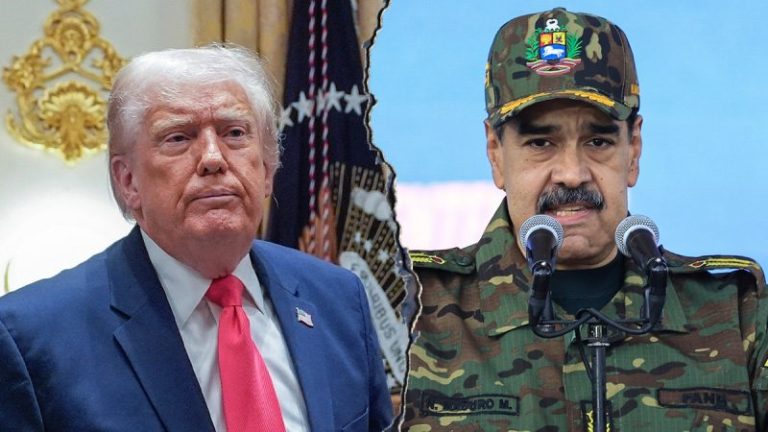
That was evident at the press conference yesterday as President Donald Trump blew apart the carefully constructed narrative presented earlier for the seizure of Venezuelan President Nicolás Maduro and his wife, Cilia Flores. Some of us had written that Trump had a winning legal argument by focusing on the operation as the seizure of two indicted individuals in reliance on past judicial rulings, including the decisions in the case of former Panamanian dictator Manuel Noriega.

Secretary of State Marco Rubio and Air Force Gen. Dan Caine, chairman of the Joint Chiefs of Staff, stayed on script and reinforced this narrative. Both repeatedly noted that this was an operation intended to bring two individuals to justice and that law enforcement personnel were part of the extraction team to place them in legal custody. Rubio was, again, particularly effective in emphasizing that Maduro was not the head of state but a criminal dictator who took control after losing democratic elections.

However, while noting the purpose of the capture, Trump proceeded to declare that the United States would engage in nation-building to achieve lasting regime change. He stated that they would be running Venezuela to ensure a friendly government and the repayment of seized U.S. property dating back to the government of Maduro’s mentor and predecessor, Hugo Chávez.

This city is full of self-proclaimed Trump whisperers who rarely score above random selection in their predictions. However, there are certain pronounced elements in Trump’s approach to such matters. First, he is the most transparent president in my lifetime, with prolonged (at times excruciatingly long) press conferences and a brutal frankness about his motivations. Second, he is unabashedly and undeniably transactional in most of his dealings. He is not ashamed to state what he wants the country to get out of the deal.

In Venezuela, he wants a stable partner, and he wants oil.

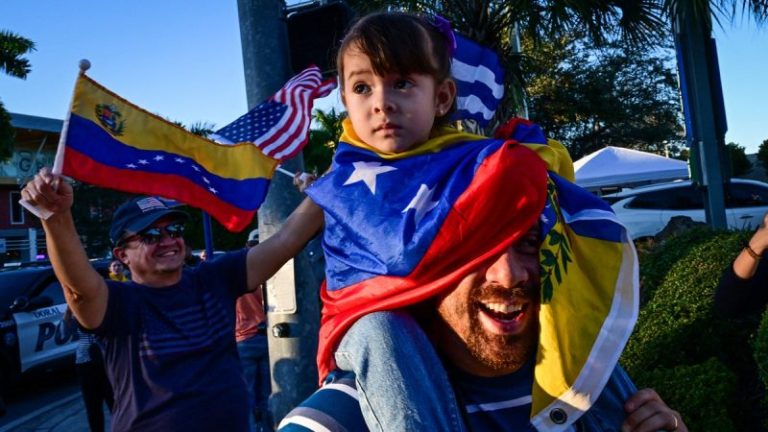
Chávez and Maduro had implemented moronic socialist policies that reduced one of the most prosperous nations to an economic basket case. They brought in Cuban security thugs to help keep the population under repressive conditions, as a third fled to the United States and other countries.

After an extraordinary operation to capture Maduro, Trump was faced with socialist Maduro allies on every level of the government. He is not willing to allow those same regressive elements to reassert themselves.

The problem is that, if the purpose was regime change, this attack was an act of war, which is why Rubio struggled to bring the presser back to the law enforcement purpose. I have long criticized the erosion of the war declaration powers of Congress, including my representation of members of Congress in opposition to Obama’s Libyan war effort.

The fact, however, is that we lost that case. Trump knows that. Courts have routinely dismissed challenges to undeclared military offensives against other nations. In fairness to Trump, most Democrats were as quiet as church mice when Obama and Hillary Clinton attacked Libya’s capital and military sites to achieve regime change without any authorization from Congress. They were also silent when Obama vaporized an American under this ‘kill list’ policy without even a criminal charge. So please spare me the outrage now.

My strong preferences for congressional authorization and consultation are immaterial. The question I am asked as a legal analyst is whether this operation would be viewed as lawful. The answer remains yes.

The courts have previously upheld the authority of presidents to seize individuals abroad, including the purported heads of state. This case is actually stronger in many respects than the one involving Noriega. Maduro will now make the same failed arguments that Noriega raised. He should lose those challenges under existing precedent. If courts apply the same standards to Trump (which is often an uncertain proposition), Trump will win on the right to seize Maduro and bring him to justice.

But then, how about the other rationales rattled off at Mar-a-Lago? In my view, it will not matter. Here is why:

The immediate purpose and result of the operation was to capture Maduro and to bring him to face his indictment in New York. That is Noriega 2.0. The administration put him into custody at the time of extraction with law enforcement personnel and handed him over to the Justice Department for prosecution.

The Trump administration can then argue that it had to deal with the aftermath of that operation and would not simply leave the country without a leader or stable government. Trump emphasized, ‘We’re going to run the country until such time as we can do a safe, proper and judicious transition.’

I still do not like the import of those statements. Venezuelans must be in charge of their own country and our role, if any, must be to help them establish a democratic and stable government. Trump added, ‘We can’t take a chance that somebody else takes over Venezuela that doesn’t have the good of the Venezuelan people in mind.’

The devil is in the details. Venezuelans must decide who has their best interests in mind, not the United States.

However, returning to the legal elements, I do not see how a court could free Maduro simply because it disapproves of nation-building. Presidents have engaged in such policies for years. The aftermath of the operation is distinct from its immediate purpose. Trump can argue that, absent countervailing action from Congress, he has the authority under Article II of the Constitution to lay the foundation for a constitutional and economic revival in Venezuela.

He will leave it to his lawyers to make that case. It is not the case that some of us preferred, but it is the case that he wants to be made. He is not someone who can be scripted. It is his script and he is still likely to prevail in holding Maduro and his wife for trial.

This post appeared first on FOX NEWS

With Venezuelan dictator Nicolás Maduro extracted from Caracas on Jan. 3, Venezuelans and the world are anxious to learn about the future that awaits.

In a press conference following the Maduro operation on Saturday, President Donald Trump announced that the U.S. is ‘going to run the country’ until a transition can be safely made.

Isaias Medina, an international lawyer and former senior Venezuelan diplomat, said a peaceful transition is vital for the 9 million to 10 million Venezuelans who are forcibly displaced and living in exile. Medina, who resigned his diplomatic post in protest against Maduro’s rule in 2017, told Fox News Digital that exiled Venezuelans ‘have been preparing ourselves to go back to rebuild our nation.’

With support from international organizations like the Organization of American States, Medina said the most important next step for Venezuela is to establish a transitional government that can restore the rule of law and rebuild institutions that have been decimated under the Maduro regime. Setting in place free and fair elections is particularly important, Medina said, noting that it’s ‘a legal obligation owed to [Venezuela’s] people, because on their occupied territory, it was never equitable or really free.’

Under Maduro, Medina said that ‘there was no separation of powers, there was no rule of law, there was not even sovereignty.’ Instead, Medina said Venezuela had an occupied territory extensively influenced by terrorist and trafficking organizations Hamas, Hezbollah, the Ejército de Liberación Nacional (ELN) and the Revolutionary Armed Forces of Colombia (FARC). He said these groups were exploiting Venezuelan resources.

David Daoud, a senior fellow at the Foundation for Defense of Democracies, told Fox News Digital that so long as Venezuela poses no threat to U.S. national security, the ‘ideal situation’ for Venezuela ‘would be American guidance for determined local action.’ 

‘The best we can shepherd Venezuela to be is a productive member of the family of nations, and that’s something that we can help with a softer touch, without boots on the ground,’ Daoud said. ‘I don’t think we need to be in the business of trying to create Jeffersonian democracies anywhere.’

Following Maduro’s ouster, Daoud said the level of chaos allowed to exist inside Venezuela will determine whether terror groups like Hezbollah and Hamas will be able to continue operating there. ‘It would really depend — does the day after in Venezuela create a stable state that is able to properly exercise control over all its territory, is interested in implementing the rule of law, is not corrupt. That would make things very, very complicated, if not impossible, for Hezbollah to operate, at least in the way it has been operating for a decade-plus, ever since the linkage between it and the original Chávez regime came about.’

Going forward, Medina suggested that the country will also have to manage guerrilla forces like the colectivos, violent groups of Venezuelans who were armed and trained with old U.S. and Russian military weapons. Medina said having these guerrillas ‘return the weapons for freedom’ could help to ‘unite the nation under one banner of development and evolution… so that we can have a country that really meets the expectations, not only of the riches that it has, but of the people and the development of their education and training and jobs, because it has been completely destroyed by design.’

Though the road ahead is uncertain, Medina is filled with hope. ‘What we have ahead of us is a great journey to be able to build upon the ruins of what this regime left us. But I think we’re going to become stronger, and this is the moment. The time has come,’ Medina said.

This post appeared first on FOX NEWS

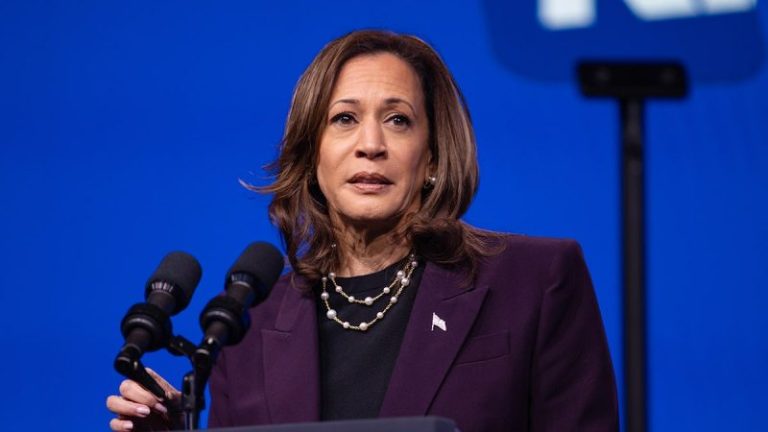
Former Vice President Kamala Harris on Saturday evening condemned the Trump administration’s capture of Venezuelan dictator Nicolás Maduro and his wife, calling the operation both ‘unlawful’ and ‘unwise.’

In a lengthy post on X, Harris acknowledged that Maduro is a ‘brutal’ and ‘illegitimate’ dictator but said that President Donald Trump’s actions in Venezuela ‘do not make America safer, stronger, or more affordable.’

‘Donald Trump’s actions in Venezuela do not make America safer, stronger, or more affordable,’ Harris wrote. ‘That Maduro is a brutal, illegitimate dictator does not change the fact that this action was both unlawful and unwise. We’ve seen this movie before.

‘Wars for regime change or oil that are sold as strength but turn into chaos, and American families pay the price.’

Harris made the remarks hours after the Trump administration confirmed that Maduro and his wife were captured and transported out of Venezuela as part of ‘Operation Absolute Resolve.’

The former vice president also accused the administration of being motivated by oil interests rather than efforts to combat drug trafficking or promote democracy.

‘The American people do not want this, and they are tired of being lied to. This is not about drugs or democracy. It is about oil and Donald Trump’s desire to play the regional strongman,’ Harris said. ‘If he cared about either, he wouldn’t pardon a convicted drug trafficker or sideline Venezuela’s legitimate opposition while pursuing deals with Maduro’s cronies.’

Harris, who has been rumored as a potential Democratic contender in the 2028 presidential race, additionally accused the president of endangering U.S. troops and destabilizing the region.

‘The President is putting troops at risk, spending billions, destabilizing a region, and offering no legal authority, no exit plan, and no benefit at home,’ she said. ‘America needs leadership whose priorities are lowering costs for working families, enforcing the rule of law, strengthening alliances, and — most importantly — putting the American people first.’

Maduro and his wife arrived at the Metropolitan Detention Center in Brooklyn late Saturday after being transported by helicopter from the DEA in Manhattan after being processed.

Earlier in the day, Trump said that the U.S. government will ‘run’ Venezuela ‘until such time as we can do a safe, proper and judicious transition.’

Harris’ office did not immediately respond to Fox News Digital’s request for comment.

Fox News Digital’s Jasmine Baehr contributed to this report.

This post appeared first on FOX NEWS

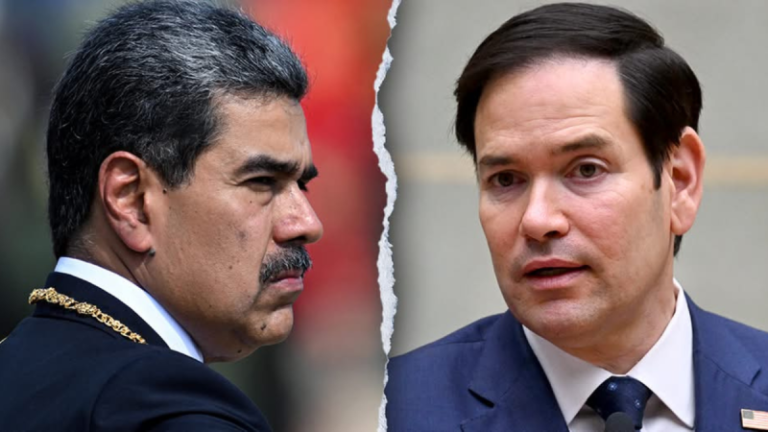
Cuban leaders should be concerned following the U.S. military operation in Venezuela and the arrest of Nicolás Maduro, Secretary of State Marco Rubio said Saturday, as President Donald Trump signaled that his administration could shift its focus to the Caribbean island.

Cuba has long maintained a presence in Venezuela, with intelligence agents and security personnel embedded amid close relations between Havana and Caracas.

Rubio, the son of Cuban immigrants, said Venezuela’s spy agency was ‘basically full of Cubans,’ as was Maduro’s security detail.

‘One of the biggest problems Venezuelans have is they have to declare independence from Cuba,’ he said during a news conference in which officials revealed details of the military operation. ‘They tried to basically colonize it from a security standpoint.’

He added that the communist island was ‘a disaster. It’s run by incompetent, senile men — and in some cases, not senile, but incompetent nonetheless.’

The secretary has repeatedly denounced Cuba and its leadership as a dictatorship and a failed state.

‘If I lived in Havana, and I was in the government, I’d be concerned — at least a little bit,’ Rubio said.

Trump said Cuba was something his administration would ‘end up talking about because Cuba is a failing nation right now — a very badly failing nation.’

‘And we want to help the people,’ he added. ‘It’s very similar in the sense that we want to help the people in Cuba, but we also want to help the people who were forced out of Cuba and are living in this country.’

Maduro and his wife, Cilia Flores, were taken by U.S. forces and brought aboard the USS Iwo Jima. They were expected to be transported to the U.S. to face federal charges.

The couple, along with other Venezuelan officials, face ‘drug trafficking and narco-terrorism conspiracies,’ according to an unsealed indictment posted on social media Saturday by U.S. Attorney General Pam Bondi.

They are accused of partnering with drug cartels to traffic drugs into the U.S.

Maduro and his wife ‘will soon face the full wrath of American justice on American soil in American courts,’ Bondi wrote.

They are charged with narco-terrorism conspiracy, cocaine importation conspiracy, possession of machine guns and destructive devices, and conspiracy to possess machine guns and destructive devices against the U.S.

This post appeared first on FOX NEWS

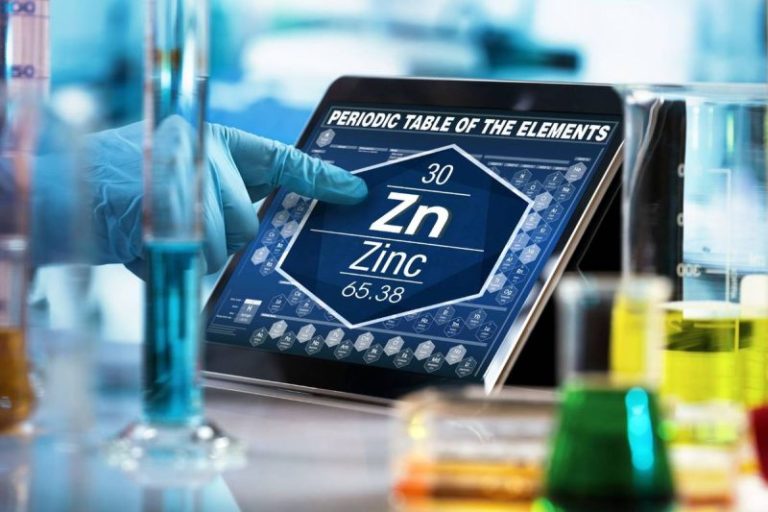
After a steep decline during the first half of 2025, the zinc price is ending the year close to where they started.

Because it’s used to make galvanized steel, the majority of zinc demand is closely tied to housing and manufacturing sectors, which have recently faced pressures from a combination of high inflation and interest rates.

Additional pressures have come from an evolving US trade policy, causing uncertainty among investors who turned away from real estate and consumers who reduced spending.

What happened to the zinc price in 2025?

The zinc price was relatively flat at the start of 2025, beginning the year at US$2,927 per metric ton (MT) on January 2 and closing the first quarter at US$2,855 on March 30. However, the second quarter brought a broad rout for base metals prices, and by April 9 zinc had fallen to a yearly low of US$2,562.

Since then, zinc has gained steadily, ending the second quarter at US$2,753 on June 30. The price rise continued through Q3 and Q4, with zinc reaching US$2,954 on September 30 and US$3,088 on December 29.

Zinc price, 2025.

Chart via the London Metal Exchange.

Key trends for zinc in 2025

As mentioned, zinc saw a major price decline at the start of April, falling 14 percent as the base metals sector responded to US President Donald Trump’s “Liberation Day” tariffs announcement.

At the time, analysts predicted that the proposed reciprocal tariffs could trigger a recession, impacting consumer spending on new homes and cars, both of which have significant inputs of galvanized steel.

While the threat of a significant global recession eased as the proposed tariffs were dialed back, considerable uncertainty among both investors and consumers remained. This was evident in the US housing market, where affordability challenges persist, leading to stagnation in new housing starts and a glut of unsold homes.

Likewise, a stalled Chinese housing market persisted throughout 2025. The country’s real estate market collapsed in 2020 as Evergrande and Country Garden filed for bankruptcy. Over the past five years, the government has implemented several measures to stimulate the beleaguered sector, but they have had little effect.

According to CNBC, November sales from China’s top 100 developers declined 36 percent over 2024, and were down 19 percent through the first 11 months of 2025 — a ‘real and concerning’ worsening.

Against that backdrop, the International Lead and Zinc Study Group (ILZSG) is predicting a 2025 zinc market surplus of 85,000 MT in 2025. It notes that during the first 10 months of the year, zinc mine production rose to 10.51 million MT, up from 9.87 million MT in 2024. Refined zinc production was also up, rising slightly to 11.52 million MT from 11.12 million MT in the same period last year. Zinc demand reached 11.44 million MT, up from 11.19 million MT in 2024.

Despite the oversupply situation, London Metal Exchange (LME) stockpiles fell from 230,325 MT on January 2 to just 33,825 MT on November 1. The gap has since widened again, reaching 52,025 MT on November 28.

Zinc surplus expected in 2026

Oversupply is likely to persist as newly mined metals enter the market, while demand growth remains modest.

The ILZSG is predicting that global refined zinc demand will increase by 1 percent to 13.86 million MT in 2026.

The group notes that while it anticipates sees Chinese demand posting a 1.3 percent gain in 2025, it believes usage from the country will be flat in 2026 as the slump in the Chinese real estate sector persists into 2027.

Additional challenges are arising from a slowdown in the US housing market, as new buyers face high home prices and elevated mortgage rates. However, policy proposals from the Trump administration on December 17 could give the sector a much-needed boost and potentially increase downstream demand for zinc.

Likewise, European zinc demand is likely to grow next year following predicted 0.7 percent growth in 2025.

However, the ILZSG is predicting a more significant upward trend in zinc mine supply in 2026 — the organization is anticipating that output will increase by 2.4 percent to 12.8 million MT. This will come on the back of higher output from existing operations in Europe, Australia, Brazil, the Democratic Republic of Congo and China.

Additional zinc supply will come from a recent restart at the Almina-Minas Aljustrel mine in Portugal, commissioning of Bunker Hill Mining’s (CSE:BNKR,OTCQB:BHLL) namesake mine in Idaho, and the start of commercial production at the Xinjiang Huoshaoyun mine in China, which will be the sixth largest lead-zinc mine in the world.

Refined zinc output is also expected to increase by 2.4 percent in 2026, reaching 14.13 million MT from the anticipated 13.8 million MT in 2025. The higher levels are owed to the greater availability of concentrates in Brazil, Canada, Norway and China. Overall, the ILZSG predicts a global zinc supply surplus of 271,000 MT in 2026.

Zinc price forecast for 2026

In terms of the zinc price in 2026, a December report from Fastmarkets suggests that upward momentum from the 2025 LME average of US$3,218 is expected to continue through the first half of the year.

The firm points to regional disparities as Chinese production runs at a surplus, while the rest of the world falls short.

However, the expectation is that the zinc market will achieve a better balance in the second half of the year and into 2027 as global surpluses begin to emerge. Zinc prices are then seen declining as a result.

For its part, Morgan Stanley (NYSE:MS) recently revised its zinc price outlook for 2026, calling for a yearly average of US$2,900 for the base metal, as per a mid-December Reuters article.

Additionally, according to a November Argus report, long-term zinc contracts have slowed amid low LME inventories, creating near-term uncertainty and driving prices higher.

Argus suggests that manufacturers have been slow to issue sales orders, which has caused uncertainty among producers, leaving them to take a wait-and-see approach to determine if low inventories persist.

It’s also important to note that zinc is listed as a critical mineral in the US for its use in the production of galvanized steel for infrastructure and defense projects. The US has already given South32’s (ASX:S32,OTC Pink:SHTLF) Hermosa project FAST-41 approval, giving it access to streamlined regulatory processes.

With building regional disparities and a tense relationship between the US and China, the world’s top zinc producer, a deteriorating trade status could be a boon for US and western producers of the metal.

However, as long as refined supply of zinc remains in surplus against a backdrop of weak demand growth, investors can expect more of the same from zinc markets in the near term. This may open up opportunities for patient or less risk-averse investors who are willing to take a wait-and-see approach to how the market evolves.

Securities Disclosure: I, Dean Belder, hold no direct investment interest in any company mentioned in this article.

This post appeared first on investingnews.com

To kick it off, our team asked nine experts to share their highest-conviction sectors.

Here’s what they had to say.

1. John Rubino — Silver

2. Peter Schiff — Silver, mining stocks

Peter Schiff of Euro Pacific Asset Management and Schiff Gold mentioned silver too, although he also said he sees mining stocks overall doing well.

3. Craig Hemke — Silver-mining stocks

Similarly, Craig Hemke of TFMetalsReport.com is bullish on silver, but said his choice for top-performing asset of 2026 would be silver-mining stocks.

4. Byron King — Gold

5. Chris Temple — Uranium

6. Lobo Tiggre — Copper

7. Rick Rule — Oil/gas, small-scale community banks in the US

Unsurprisingly, Rick Rule of Rule Investment Media went outside the box.

8. Gareth Soloway — ‘Defensive names’ like Pfizer (NYSE:PFE)

Gareth Soloway of VerifiedInvesting.com also had an alternate take. Although he believes gold will perform well in 2026, he said it won’t necessarily be the top-performing asset.

9. Clem Chambers — Intel (NASDAQ:INTC)

Finally, Clem Chambers of aNewFN.com spoke about why he sees promise in Intel.

Securities Disclosure: I, Charlotte McLeod, hold no direct investment interest in any company mentioned in this article.

This post appeared first on investingnews.com

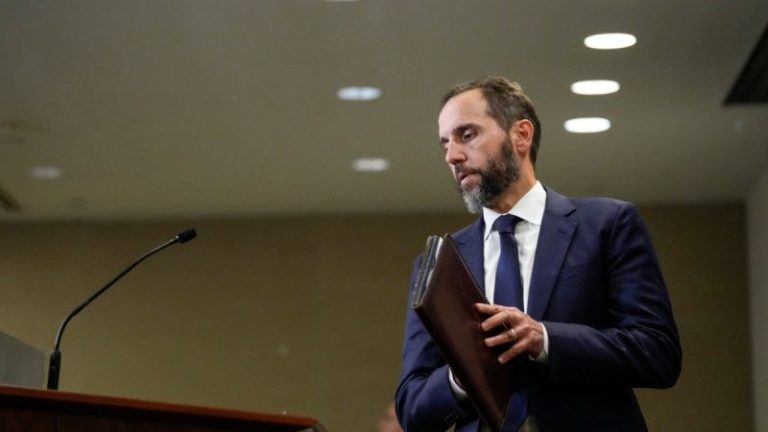
Former special counsel Jack Smith used a closed-door deposition with House Republicans last month to defend his investigations into Donald Trump’s alleged effort to subvert the 2020 presidential election and his alleged retention of certain classified documents, using the hours-long testimony to forcefully dispute the notion that his team had acted politically, and citing what he described as ample evidence to support the indictments that had been levied against Trump. 

‘I made my decisions in the investigation without regard to President Trump’s political association, activities, beliefs, or candidacy in the 2024 presidential election,’ Smith told members of the House Judiciary Committee in the Dec. 17 interview.

The interview was Smith’s first time appearing before Congress since he left his role as special counsel in 2024. And while much of the information was not new, the exchange was punctuated by sharp exchanges with Republicans on the panel, both on the strength of the case, and on his own actions taken during the course of the probe — most recently, on the tolling records his team sought from a handful of Republican lawmakers over the course of the investigation. Republicans have assailed the records as being at odds with the speech or debate clause of the Constitution.  

‘I made my decisions in the investigation without regard to President Trump’s political association, activities, beliefs, or candidacy in the 2024 presidential election,’ Smith told the committee. ‘We took actions based on what the facts, and the law required — the very lesson I learned early in my career as a prosecutor.’

Republicans on the panel ultimately opted to publish the redacted transcript on New Year’s Eve, a decision that may have helped dull the impact of any news the 255-page document may have generated amid the broader hustle and bustle of the holiday season.

Here are some of the biggest moments and notable exchanges from the eight-hour hearing. 


New political tensions 

Smith was tapped by former Attorney General Merrick Garland in 2022 to investigate the alleged effort by Trump and his allies to overturn the results of the 2020 election, as well as Trump’s keeping of allegedly classified documents at his Mar-a-Lago residence in Palm Beach after leaving office in 2020. Smith had brought charges against Trump in both cases.

The charges were dropped after Trump’s election, in keeping with a longstanding Justice Department policy that discourages investigating sitting presidents for federal criminal charges, and Smith resigned from his role shortly after.

If nothing else, Smith’s Dec. 17 testimony underscored just how much has changed since Trump’s reelection in 2024. 

Trump, for his part, has used his first year back in office to follow through on his promises to go after his perceived political ‘enemies,’ including by revoking security clearances of many individuals, including employees of a D.C.-based law firm that represents Smith, and taking other punitive measures to punish or fire FBI agents involved in the Jan. 6, 2021, investigation.

During his testimony last month, Smith fiercely disputed the notion that Trump’s remarks about the 2020 election results would be protected by the First Amendment. 

‘Absololutely not,’ he said in response to a lawyer for Republicans on the House Judiciary Committee.

The lawyer then ticked through a ‘long list of disputed elections’ in U.S. history and former presidents who have spoken out about ‘what they believed to be fraud,’ or other issues regarding election integrity. ‘I think you would agree that those types of statements are sort of at the core of the First Amendment rights of a presidential candidate, right?’

‘There is no historical analog for what President Trump did in this case,’ Smith said immediately. 

‘Powerful’ evidence

Smith told members that the special counsel ultimately gathered evidence against Trump that was, in his view, sufficient to secure a conviction.

‘He made false statements to state legislatures, to his supporters in all sorts of contexts and was aware in the days leading up to Jan. 6th that his supporters were angry when he invited them, and then he directed them to the Capitol,’ Smith said of Trump’ actions in the run-up to Jan. 6. 

‘Now, once they were at the Capitol and once the attack on the Capitol happened, he refused to stop it. He instead issued a tweet that, without question in my mind, endangered the life of his own vice president,’ Smith added. ‘And when the violence was going on, he had to be pushed repeatedly by his staff members to do anything to quell it.’

Other possible co-conspirators had not been charged, as Smith noted at one point during the interview. 

But Smith said in the testimony that his team had developed ‘proof beyond a reasonable doubt’ that Trump ‘engaged in a criminal scheme to overturn the results of the 2020 election and to prevent the lawful transfer of power.’

They’d also developed what he described as ‘powerful evidence’ that Trump willfully retained highly classified documents after leaving office in January 2021 at his private Mar-a-Lago residence, and was obstructing the government’s efforts to recover the records.

Smith’s team had not determined how to proceed for possible ‘co-conspirators’

Smith said that, when the special counsel wound down in the wake of the 2024 elections, his team had not determined whether to charge the key Trump allies who may or may not have acted as co-conspirators, including Rudy Giuliani, Sidney Powell and John Eastman.

‘As we stated in the final report, we analyzed the evidence against different co-conspirators,’ Smith said. Smith reiterated his allegation that Trump was ‘the most culpable’ and ‘most responsible’ person for the alleged attempts to subvert the 2020 election results. 

He said the special counsel had ‘determined that we did have evidence to charge people at a certain point in time.’ 

But at the time the investigation was wound down, they had not made ‘final determinations about that at the time that President Trump won reelection, meaning that our office was going to be closed down.’

He lamented the ousting of DOJ, FBI officials 

Smith used his opening remarks to lament the ousting of FBI agents and Justice Department officials involved in the Jan. 6 investigations.

‘I am both saddened and angered that President Trump has sought revenge against career prosecutors, FBI agents, and support staff simply for doing their jobs and for having worked on those cases,’ Smith said.

His remarks came after the FBI in recent months ousted a handful of personnel involved in the Jan. 6 investigations, an effort individuals familiar with the action described to Fox News at the time as an act of ‘retaliation.’

Thousands of FBI personnel in February were forced to fill out a sprawling questionnaire asking employees detailed questions about any role they may have played in the investigation into the Jan. 6, 2021, U.S. Capitol riots — ranging from whether they had testified in any criminal trials to when they last participated in investigation-related activity.

Smith’s team didn’t tell the courts that subpoenaed phone records belonged to lawmakers

Smith was grilled during the deposition about the highly scrutinized subpoenas his team issued to phone companies for data belonging to House and Senate lawmakers as part of his investigation, saying they aligned with the Justice Department’s policy at the time.

Smith said the Public Integrity Section signed off on the subpoenas, a point corroborated by records previously released by Grassley’s office. 

Those records also showed that the Public Integrity Section told prosecutors to be wary of concerns lawmakers could raise about the Constitution’s speech or debate clause, which gives Congress members added protections.

The subpoenas to the phone companies were accompanied by gag orders blocking the lawmakers from learning about the existence of the subpoenas for at least one year. Smith said the D.C. federal court, which authorized the gag orders, would not have been aware that they applied to Congress members.’I don’t think we identified that, because I don’t think that was Department policy at the time,’ Smith said.

Asked during the deposition about who should be held accountable for lawmakers who felt that the seizure of a narrow set of their phone data was a constitutional violation, Smith said Trump should be held accountable.

‘These records are people, in the case of the Senators, Donald Trump directed his co-conspirators to call these people to further delay the proceedings,’ Smith said.

‘He chose to do that. If Donald Trump had chosen to call a number of Democratic Senators, we would have gotten toll records for Democratic Senators. So responsibility for why these records, why we collected them, that’s — that lies with Donald Trump,’ he said.

This post appeared first on FOX NEWS

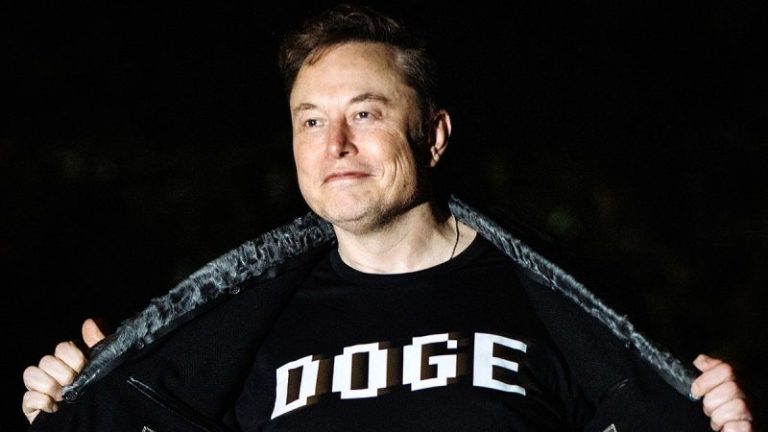
The Department of Government Efficiency (DOGE) said Friday that federal agencies have terminated or reduced 55 contracts over the last three days with a combined ceiling value of $1.6 billion, claiming $542 million in savings.

DOGE, whose name nods to Elon Musk’s high-profile involvement, was launched during the opening days of President Donald Trump’s second administration as part of a broader effort to reshape federal spending and bureaucracy.

While Musk has since stepped back from the project, elements of the DOGE framework remain active across federal agencies.

In a post on X, the department wrote: ‘Contracts Update! Over the last 3 days, agencies terminated and descoped 55 wasteful contracts with a ceiling value of $1.6B and savings of $542M.’

The post listed several examples, including what it described as ‘a $47M State Dept. program support contract for ‘Africa / Djibouti, Somalia armored personnel carriers and Somalia National Army crew’,’ and ‘a $19.5M HHS IT Services contract for support for National Institute of Environmental Health Sciences in designing, creating, updating, maintaining, and archiving online communications.’

DOGE also referenced ‘a $151k DoW education services contract for ‘Director’s Development Program in Leadership – Partnership course to be held at Northwestern University’,’ according to the post.

Screenshots shared with the DOGE post show federal contract records matching the descriptions and dollar amounts cited.

One screenshot shows a contract record tied to Somalia, listing professional program management support under a federal services code and identifying the country of service origin as Somalia. The contract description references support related to armored personnel carriers and Somalia National Army crews in Djibouti and Somalia.

A second screenshot shows an IT management support services contract based in the United States, categorized under computer systems design services. The description outlines work for the National Institute of Environmental Health Sciences focused on maintaining and managing online communications, including websites, webpages, mobile tools and social media platforms.

The DOGE post did not provide additional details about when the contracts were originally awarded, how much funding had already been obligated or spent, or which agency actions produced the savings figure cited in the post.

The announcement comes amid heightened scrutiny this week over several Somali-owned, government-funded daycare facilities in Minnesota that have been accused of fraudulently collecting millions of dollars worth of taxpayer funds.

Fox News Digital has reached out to the White House, DOGE, the State Department and HHS for additional information.

This post appeared first on FOX NEWS

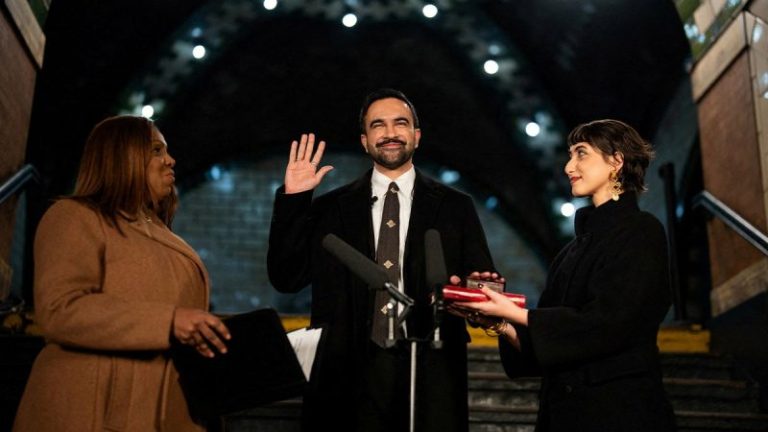
New York City’s new mayor wasted little time drawing ideological lines, using his swearing-in ceremony to double down on campaign promises filled with government-led solutions — a sharp contrast with free-market principles Republicans warn are increasingly under threat amid an evolving understanding of socialism among younger audiences.

‘We will draw this city closer together,’ Zohran Mamdani, a socialist, said at his ceremony on Thursday. ‘We will replace the frigidity of rugged individualism with the warmth of collectivism. If our campaign demonstrated that the people of New York yearn for solidarity, then let this government foster it.’ 

His aims were echoed by his supporters at his inauguration — including Rep. Alexandria Ocasio-Cortez, D-N.Y., one of the most progressive lawmakers on Capitol Hill.

‘We have chosen that over the distractions of bigotry and barbarism of extreme income inequality,’ Ocasio-Cortez said of Mamdani’s visions for government-led programs like universal child care.

Mamdani’s victory over independent candidate Andrew Cuomo was made possible in part by his stunning success among younger voters ages 18-29. Exit polling from the election’s results indicated he captured as much as 75% of that vote. 

Ronald Suny, professor emeritus of political science and history at the University of Chicago, said the support of younger voters for an openly socialist candidate didn’t come as a surprise.

‘Socialism has now become the catchphrase for the opposition to free-market or neoliberal capitalism, which is the idea that the market can do it all. Huge swaths of the lower and middle classes have not increased their well-being or their real incomes in the last 50 years,’ Suny said.

Suny believes younger audiences have embraced socialism as a way to describe an ideal — even if they don’t have a good sense of what socialism means in practice. That’s dovetailed with the rise of Mamdani and other progressives promising to use the power of government to create a more even playing field on issues like the cost of living, housing, transportation and healthcare.

It’s a semantic change, some argue.

Jason Palmer, co-founder of TOGETHER!, a youth-centered organization that promotes political engagement at the collegiate level, first noticed a change in the way students talked about socialism around three years ago.

‘I started noticing it about 2022 — and it’s really connected to affordability. A lot of young people feel like nothing is affordable to them. They can’t buy a house. One thing that came up a lot on the campaign trail is they can’t even afford to pay the rent deposit,’ Palmer said.

‘I’ve spoken to a lot of them, and I always ask them, ‘What does socialism mean to you?’ They say, ‘Well, I don’t know the official definition, but here’s what it means to me. It means equality, it means fairness, it means an even playing field with higher taxes on the rich, a more equitable society.’’

Rep. Byron Donalds, R-Fla., attributed shifts in how socialism is viewed to shortcomings in education.

‘Our K-12 system — we failed to actually educate people about the implications of economic policy and the way it overlays into cultural frameworks of societies,’ Donalds said. ‘[Socialism] empowers government, makes government be more heavy-handed, driving choices, as opposed to letting people do that.’

Donalds’ concern stems from his conviction that socialism is at odds with the principles of American freedom. In his view, it’s overly reliant on a top-down power structure.

‘It always leads to a destruction of liberties,’ Donalds said. ‘There has to be some omnipotent person at the top who makes all the decisions.’

Donalds pointed to the mass starvation and political repression of socialist regimes in Cuba, North Korea, China and Venezuela. 

Fellow Republican Rep. Maria Elvira Salazar, R-Fla., echoed similar alarm as she introduced a bill condemning the horrors of socialism earlier this year.

‘I represent district No. 27 in Miami, Florida — a bastion of hundreds of thousands of Cubans, Nicaraguans and Venezuelans who have fled, who have escaped from despicable horrors you cannot imagine produced by that ideology,’ Salazar said in a floor speech.

But Suny, who studies social change in socialist countries, believes that political framing in the U.S. has inadvertently contributed to a renewed interest in socialism. He argues that younger voters might find themselves unconvinced by a repeated emphasis on socialism’s most grievous failures and don’t see mass starvation in the cards when politicians float government-led child care programs or government-owned supermarkets.

‘[Critics] don’t emphasize elements like turning peasant countries into industrial countries, village countries into urban countries, teaching literacy to the whole population, a number of other things, right?’ Suny said.

Palmer, the co-founder of TOGETHER!, noted that shifting understandings of socialism may vary greatly regionally. He pointed out that Mamdani’s success in New York would likely prove less effective among young voters in Virginia, Pennsylvania or other states.

‘It does play differently with different audiences,’ Palmer said.

Polling by Gallup last year showed that approval surrounding capitalism sank nationally with younger audiences, while socialism’s standing rose. Only 31% of Democrats under 50 have a positive view of capitalism, a drop from 54% in 2010. 

Inversely, Gallup’s findings also showed that the favorability of socialism climbed among younger audiences. Notably, 49% of respondents between the ages of 18 and 34 said they held a positive view of socialism, while 46% said they held a negative view. 

This post appeared first on FOX NEWS