Author

admin

Browsing

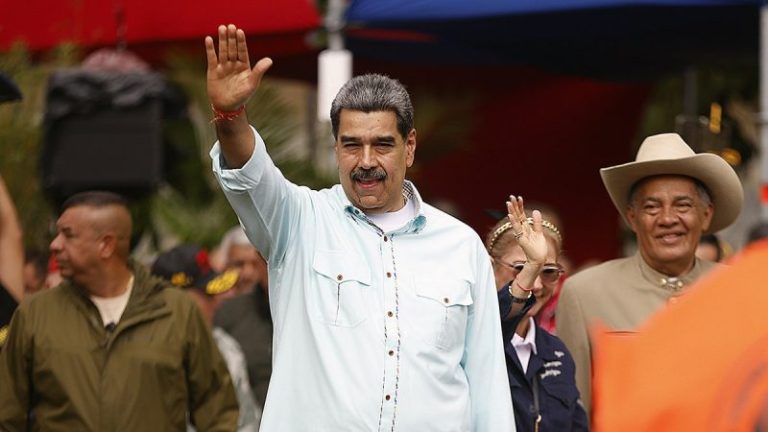
President Donald Trump’s announcement that the United States will temporarily ‘run’ Venezuela following the capture of Nicolás Maduro may prove to be a defining moment for the Western Hemisphere — either a disciplined effort to restore regional stability or the opening chapter of an avoidable, open-ended entanglement.

At his Mar-a-Lago press conference on Saturday, the president stated plainly, ‘We will run the country until such time as we can do a safe, proper and judicious transition.’ He added that members of his national security team standing behind him would oversee the effort and did not rule out ‘boots on the ground.’ Hours later, speaking aboard Air Force One, he sharpened the message further: ‘We’re going to run it, fix it.’

The strategic logic is easy to understand. Venezuela sits atop the world’s largest proven oil reserves and has become a hub for narcotics trafficking, corruption and malign outside influence. The administration’s December 2025 National Security Strategy explicitly embraces what it calls a ‘Trump Corollary’ to the Monroe Doctrine — pledging to deny non-hemispheric competitors such as China, Russia and Iran control over strategically vital assets in the Americas. In that framework, Venezuela is not merely a humanitarian tragedy; it is a test case.

But this is precisely where experience should sober ambition.

The first problem: Who is actually in charge?

A central contradiction now confronts Washington. How does the United States ‘run’ Venezuela when its constitutionally designated vice president, Delcy Rodríguez, has already been sworn in domestically as interim president following Maduro’s removal?

Rodríguez’s claim to authority — backed by Venezuela’s Supreme Tribunal of Justice and regime-loyal institutions — is rejected by Washington as illegitimate. Yet in practical terms, ministries, security forces and regional authorities inside Venezuela remain staffed by officials loyal to the old system. That means the United States is not governing Venezuela in name, law or day-to-day administration — even as presidential rhetoric suggests otherwise.

This disconnect between declared authority and actual control is where post-conflict operations often fail.

Lessons written in blood: Iraq and the cost of improvisation

I learned that lesson firsthand. In 2002 and 2003, I served as a member of then–Defense Secretary Donald Rumsfeld’s Military Analyst Group. We were given extensive access — briefings, travel and candid discussions with officials planning both the Iraq invasion and what would follow.

In early 2003, several of us met with retired officers outlining postwar governance plans. We asked basic but essential questions: Who would secure ministries? How would local governance function? How would electricity, water and fuel distribution be restored? The answers were often vague, more aspirational than operational.

After the invasion, I visited Baghdad and met with Coalition Provisional Authority officials under Ambassador Paul Bremer. Again, the gaps were obvious. We had removed a regime but had not built the machinery needed to prevent the vacuum that follows. 

One decision still echoes: the CPA’s order dissolving Iraq’s security institutions, including the Ministry of Defense. RAND’s official history records that the order was issued with little objection at senior levels, even as misunderstandings were masked by apparent consensus. The result was predictable — security collapsed, insurgency surged and the U.S. presence expanded far beyond its original scope.

Venezuela now risks a similar mistake. Capturing Maduro may prove to be the easy part. Governing what comes next is the hard part — and the part America has too often improvised.

Panama is the wrong analogy

Some have compared Venezuela today to Panama in 1989, when U.S. forces captured Manuel Noriega and quickly installed Guillermo Endara as president. The comparison is tempting — and deeply misleading.

Panama was small, U.S. forces were already present, and a recognized successor government was ready to assume power. Venezuela, by contrast, has 30 million people, no broadly accepted transitional authority and entrenched military-criminal networks embedded throughout the state. What worked in Panama cannot simply be scaled up to Caracas.

‘Not day-to-day governance’— what that really means

Secretary of State Marco Rubio has since clarified that the United States does not intend to govern Venezuela ‘day-to-day.’ That clarification matters — but it raises its own questions. If Washington is not running ministries, courts, budgets or police forces, what does that leadership look like?

In real terms, it appears the administration is signaling a model of indirect control rather than occupation. The primary lever is economic, especially oil.

Venezuela’s political and military elites survive on access to oil revenues. Whoever controls export permissions, sanctions relief, insurance access and dollar-denominated transactions controls the real center of gravity. Conditioning access to those revenues — while freezing assets abroad and coordinating sanctions enforcement with allies — offers Washington leverage over the top of the system without governing the country outright.

That approach amounts to influence without occupation: pressure without American administrators running Caracas.

A narco-state is not a one-man show

There is also a dangerous illusion at work — that removing Maduro dismantles the regime.

Maduro sat at the apex of a narco-state and was indicted in U.S. courts on charges of drug trafficking and narco-terrorism. But he did not act alone. His power rested on a network of generals, intelligence chiefs, judges, energy officials and cartel intermediaries who enriched themselves under the existing system. Many of those figures remain in place today.

They are unlikely to surrender quietly. Some will seek accommodation; others will resist through bureaucratic sabotage, violence or the manipulation of public fear. Without a credible transitional framework anchored in Venezuelan civil society and supported by international legitimacy, the system Maduro built may survive him.

The questions that must be answered — now

If the administration wants to avoid repeating Iraq, it must answer several questions publicly and soon.

What is the legal basis — and limit — of U.S. authority? Who provides immediate security, and under what rules? Which Venezuelan partners will be empowered to lead? What economic plan serves Venezuelans first, not just foreign interests? And how does this mission end?

Once the United States assumes responsibility for ‘running’ another country, it inherits responsibility not only for success but for failure.

The Trump administration can still make Venezuela a model rather than a warning. But doing so will require discipline: clearly defined objectives, credible Venezuelan partners, continuity in security forces, transparent reconstruction tied to humanitarian relief and an exit strategy that is real — not rhetorical.

Venezuela is not Iraq. But history has a way of repeating itself when preparation yields to improvisation.

This post appeared first on FOX NEWS

President Donald Trump is set to huddle with House Republicans on Tuesday morning, days after the U.S. government executed strikes in Venezuela and captured the country’s leader Nicolás Maduro. 

Trump will address GOP lawmakers at the newly renamed Donald J. Trump and John F. Kennedy Memorial Center for the Performing Arts, multiple sources told Fox News Digital. 

A White House schedule released late on Monday said Trump will speak around 10 a.m., and that his remarks will be streamed live.

House Republicans will be at the Trump Kennedy Center for an all-day policy forum Tuesday aimed at discussing their agenda for 2026, according to an email obtained by Fox News Digital.

It comes the day House lawmakers return from a two-week recess for the end-of-year holiday period.

Part of the day’s agenda was meant to include remarks by Trump to rally Republicans around their legislative priorities, but three sources told Fox News Digital they anticipate Venezuela will be a focus of the day as well.

‘My guess is he does 30 minutes on Venezuela and five on policy,’ one House GOP source told Fox News Digital.

Another source told Fox News Digital, ‘I would expect him to give a pretty typical rally-type speech … but who knows.’

That source expressed frustration that Republicans were waiting ‘until we get back to work to strategize.’

Meanwhile, Rep. Mike Haridopolos, R-Fla., also said he expected Trump’s remarks to focus heavily on Venezuela.

‘I think the president is going to walk through not only the justification he had for it, which is the court of law in the United States, but also the fact that, how legitimate is a country if the… Canadians, the [European Union], and the United States, no one recognizes this guy? The only people who recognize him are our enemies,’ the Florida Republican said.

Rep. Wesley Hunt, R-Texas, who is challenging Sen. John Cornyn, R-Texas, for his Senate seat, said he anticipated Trump to discuss November’s elections as well.

Asked what he thought he’d hear from the president, Hunt told Fox News Digital he could see Trump discussing ‘the successes of the administration, how important it’s been, what happened in Caracas a couple of days ago…codifying his agenda, and winning the midterms.’

‘I think we’re going to hear a lot of that,’ Hunt said.

This post appeared first on FOX NEWS

Venezuelan opposition leader Maria Corina Machado has vowed to return to Venezuela ‘as soon as possible’ following America’s capture of dictator Nicolás Maduro, warning that the current regime is escalating an internal crackdown on dissent and journalists.

Speaking to ‘Hannity’ on Monday, Machado said the moment is now right for her return after spending more than a year in hiding. She secretly escaped Venezuela last month and traveled to Norway to receive the Nobel Peace Prize, which she dedicated to President Donald Trump.

‘Well, first of all, I’m planning to go back to Venezuela as soon as possible,’ Machado said. 

‘As I’ve always said, Sean, every day I make a decision where I am more useful for our cause. That’s why I stayed in hiding for over 16 months, and that’s why I decided to go out, because I believed that at this moment I’m more useful to our cause, being able to speak out from where I’m at right now. But I’m going to go as soon possible back home.’

Machado said developments in the past 24 hours have been deeply concerning, pointing to what she described as a sweeping executive order signed by Maduro on the same day he was captured and flown out of the country by U.S. forces.

‘What we’re seeing right now in the last 24 hours is really alarming,’ she said.

Machado said the order mandates the persecution of Venezuelans who support Trump’s actions and claimed at least 14 journalists have been detained. A state of emergency decree issued Saturday, but published Monday, orders police to ‘immediately begin the national search and capture of everyone involved in the promotion or support for the armed attack by the United States,’ the text of the decree reads, according to Reuters.

She said the situation must be closely monitored by the United States and the Venezuelan people, arguing that the transition away from Maduro must continue.

‘So this is very alarming. This is something that has to be followed carefully, I’m sure, by the United States government and by the Venezuelan people,’ she said. ‘And certainly we believe that this transition should move forward.’

Machado also sharply criticized Venezuelan Vice President Delcy Rodríguez, calling her unfit to lead any transitional authority. Rodríguez, who has been vice president under Maduro since 2018, was sworn in as interim president on Monday.

‘Delcy Rodriguez, as you know, is one of the main architects of torture, persecution, corruption, narco trafficking,’ Machado said. ‘She’s the main ally and liaison with Russia, China, Iran, certainly not an individual that could be trusted by international investors. And she’s really rejected, repudiated by the Venezuelan people.’

Machado’s comments came just two days after the Trump administration announced that U.S. forces had captured the dictator and his wife, Cilia Flores, after successful ‘large-scale’ military strikes targeting the Venezuelan government. The dictator and his wife are now being held in New York while they await trial on narco-terrorism charges.

Fox News’ Maria Lencki and Louis Casiano contributed to this report.

This post appeared first on FOX NEWS

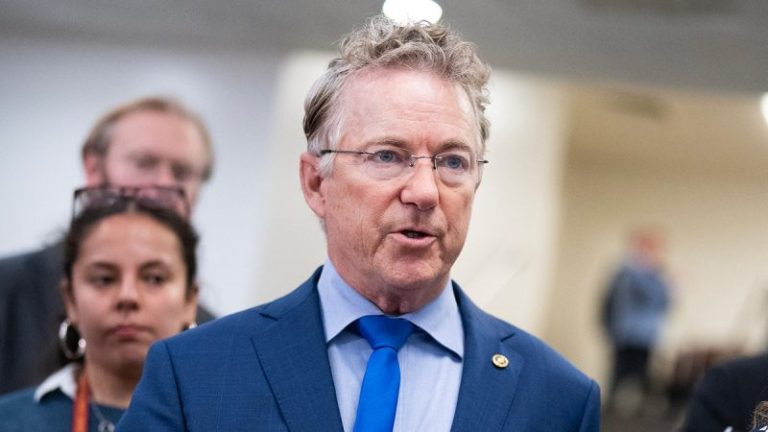
Sen. Rand Paul, R-Ky., said that President Donald Trump is under the ‘thrall of Lindsey Graham’ following the U.S. operation in Venezuela, according to audio of the remarks by the lawmaker that MeidasTouch’s Acyn Torabi posted on X.

Paul said that after the first presidential debate in 2016, the Trump family told him that they liked him and the ‘idea of not being involved in foreign wars.’ 

‘It was something I liked about Donald Trump,’ Paul said. ‘It was one of the things, whenever I had misgivings about something else, I would always come back and say, ‘Well, he’s the best we ever had.’ Much better than the Bush’s, who were war mad and wanted to be involved in all these crazy wars overseas… ‘We’re gonna make the world safe for democracy.’ I never liked any of that. And I thought Trump was different, and so, it disappoints me, but he’s under the… thrall of Lindsey Graham.’

Paul has described Trump’s move to unilaterally depose Venezuela’s Nicolás Maduro without seeking congressional approval for the attack as ‘disdainful.’ 

Sen. Lindsey Graham, a hawkish Republican from South Carolina, has strongly supported the president’s action.

‘This is Lindsey Graham. Lindsey Graham has gotten to the president who expressed — I saw a clip — there’s like 20 clips of [Trump] saying he’s not for regime change and how regime change has always gone wrong. Somehow they’ve convinced him it’s different if it’s in our hemisphere,’ Paul said to reporters Monday, according to The Hill.

Torabi also posted audio on X in which Paul can be heard quipping, ‘There should be a law’ stipulating that Graham may only visit the White House ‘every other week’ and may only meet with ‘mid-level people, not the president. And no more golf outings.’

Graham was with Trump during a recent gaggle aboard Air Force One.

The senator also recently posted a photo on X that showed him giving a thumbs-up while smiling alongside of Trump, who was holding a cap that read, ‘MAKE IRAN GREAT AGAIN.’

Graham donned such a cap during an appearance on the Fox News Channel.

Trump endorsed Graham for re-election last year.

This post appeared first on FOX NEWS

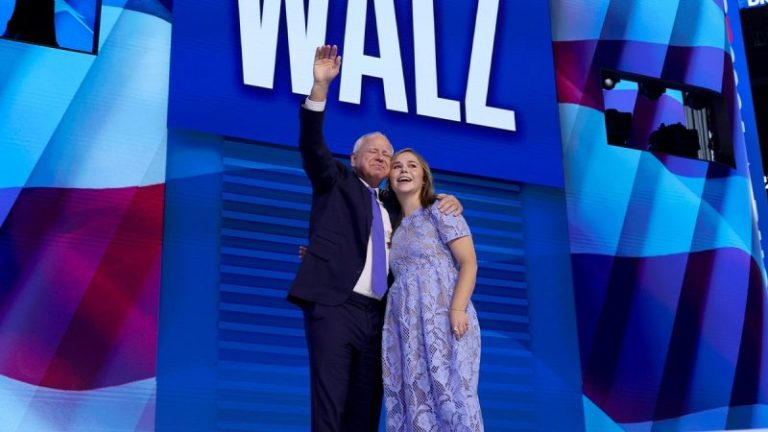
Hope Walz, daughter of Minnesota Gov. Tim Walz, shared why her father decided to drop out of the 2026 gubernatorial race in a wide-ranging podcast interview on Monday.

Speaking to ‘One Hour Detours’ host John O’Sullivan just hours after her father announced that he would not seek a third term, Walz said the decision had been made over the winter holidays.

‘I think just with things rapidly changing in the past, you know, month or so, I think my dad kind of started questioning it,’ said Walz.

She explained that she didn’t want to speak for her father, but said the increasing intensity of public scrutiny, particularly on social media and toward her family, prompted him to reassess his campaign.

‘When things started getting really intense for me, like on my social media, and then people even saying things like to Gus and stuff, I think that’s when he was really like, OK, like I need to evaluate what’s best for the state, and then I need evaluate what’s best for my family. And then I think it was just kind of a natural, you know, the past couple weeks have been really intense, kind of a natural conclusion,’ said Walz.

Gov. Walz’s decision to drop out of the gubernatorial race came amid renewed scrutiny over childcare funding following fraud allegations raised in a viral video by independent journalist Nick Shirley and the large-scale federal Feeding Our Future case.

FBI Director Kash Patel said in December that the Feeding Our Future investigation uncovered a $250 million scheme that siphoned federal food aid intended for children during the COVID-19 pandemic.

The case has already resulted in 78 indictments and 57 convictions, with prosecutors also charging defendants in a separate alleged plot to bribe a juror with $120,000 in cash, Patel said, adding that the investigation remains ongoing.

Walz has come under pressure from President Donald Trump and Republican lawmakers over the Feeding Our Future fraud case, one of the largest pandemic-era fraud schemes in the nation, and broader allegations that state agencies failed to adequately oversee Minnesota-administered social service programs.

He said in a press release announcing the end of his re-election campaign that his decision reflected a desire to prioritize governing and the challenges facing Minnesota.

‘I know this news may come as a surprise. But I’m passing on the race with zero sadness and zero regret. After all, I didn’t run for this job so I could have this job. I ran for this job so I could do this job,’ Walz explained. ‘Minnesota faces an enormous challenge this year. And I refuse to spend even one minute of 2026 doing anything other than rising to meet the moment. Minnesota has to come first – always.’

His daughter added that part of her father’s decision to step away was to get the ‘target’ off Minnesota.

‘I think he believes if he’s not in the race, there’s nothing, they [Republicans] have nothing else because he has that, you know, national profile,’ she said. ‘Trump just hates him for some reason. I think it’s because he’s everything Trump will never be.’

This post appeared first on FOX NEWS

Canada is undermining its own mining advantage as persistent policy uncertainty continues to erode investor confidence across large parts of the country, according to new commentary from the Fraser Institute.

Julio Mejía, a policy analyst, and Elmira Aliakbari, director of natural resources studies at the Fraser Institute, argue that regulatory ambiguity, and not resource quality, is increasingly the decisive factor shaping investment decisions in the mining sector.

“Bad policies create uncertainty and deter investment,” the authors wrote, warning that without predictable rules and permitting frameworks, Canada risks falling behind competing jurisdictions that offer clearer pathways to project development.

Despite being one of the most mineral-rich jurisdictions in the world, Canada has struggled to translate geology into sustained capital investment.

The consequences are already visible in the data. Mining exploration spending slipped from around US$3.3 billion in 2022 to US$3.1 billion in 2023, with early figures pointing to another decline in 2024.

Broader mining investment totaled approximately US$11.3 billion in 2023, well below the inflation-adjusted peak reached more than a decade earlier.

Furthermore, several prominent companies such Solaris Resources, Falcon Energy Materials, and Barrick Mining, have either moved headquarters out of Canada or signaled they are weighing similar steps.

The commentary further underscores that these decisions are less about commodity prices and more about jurisdictional risk. While provinces such as British Columbia, Yukon, and Manitoba boast world-class mineral potential, investors routinely cite uncertainty around land claims, protected areas, and environmental approvals as reasons to hesitate or redirect capital.

This regulatory friction, the authors note, stands in sharp contrast to US mining jurisdictions. In states such as Nevada, Arizona, and Wyoming, investors report far lower levels of concern over land tenure and environmental permitting, even when mineral endowment is comparable.

The result is a widening competitiveness gap at a time when mining capital is increasingly mobile.

The authors argue that Canada should, in theory, be well positioned to benefit from that trend. Instead, they warn that inconsistent rules and overlapping regulatory processes are dulling the country’s appeal just as capital is seeking scalable, lower-risk opportunities.

That erosion matters beyond corporate balance sheets. Mining was Canada’s second-largest export sector in 2023, generating approximately US$86.6 billion in economic output and supporting more than 700,000 jobs. The industry also pays wages nearly double the national average and remains one of the largest private-sector employers of Indigenous workers.

The Fraser Institute’s annual survey of mining companies—now in its 26th year—is cited as evidence of how these policy concerns translate into investor sentiment.

While Saskatchewan, Newfoundland and Labrador, and Alberta continue to score well on regulatory perception, several other provinces rank poorly despite strong geology, reinforcing the argument that policy choices, not mineral scarcity, are driving investment outcomes.

Reversing the trend, according to Mejía and Aliakbari, does not require lowering environmental or social standards, but rather clarifying them.

Predictable timelines, consistent land-use decisions, and coherent permitting frameworks would allow companies to assess risk more accurately and commit capital with greater confidence.

Securities Disclosure: I, Giann Liguid, hold no direct investment interest in any company mentioned in this article.

This post appeared first on investingnews.com

Locksley Resources (ASX: LKY,OTC:LKYRF; OTCQX: LKYRF and LKYLY) announced it has confirmed a continuous, high grade mineralized silver corridor at its Mojave Project in California following extensive surface reconnaissance and rock chip sampling across the North Block. The results materially extend known mineralization beyond the initial high grade silver discovery and strengthen the geological understanding of the project area. Specifics can be found here: https:cdn-api.markitdigital.comapiman-gatewayASXasx-research1.0file2924-03043548-6A1306070&v=undefined. The discovery represents an important advancement in the Company’s exploration strategy and identifies a new, potentially high-value component of the Mojave Project.

Kerrie Matthews, Managing Director and CEO said, ‘Defining a 3km mineralized trend with surface results of up to 409 g/t silver and 1.5% copper is a highly encouraging outcome. This discovery complements our core antimony development strategy and gives us exposure as a diversified U.S. critical minerals company.’ She added that the company is expected to advance this opportunity with a staged exploration program.

Locksley Resources (https://www.locksleyresources.com.au) is focused on critical minerals in the U.S. The company is actively advancing the Mojave Project in California, targeting rare earth elements (REEs) and antimony. Locksley is executing a mine-to-market strategy for antimony, aimed at reestablishing domestic supply chains for critical materials, underpinned by strategic downstream technology partnerships with leading U.S. research institutions and industry partners. This targeted approach, combined with resource development with innovative processing and separation technologies, positions Locksley to play a role in advancing U.S. critical materials independence.

Contact: Beverly Jedynak, beverly.jedynak@viriathus.com, 312-943-1123; 773-350-5793 (cell)

View original content:https://www.prnewswire.com/news-releases/locksley-confirms-continuous-high-grade-mineralized-silver-corridor-at-its-mojave-project-in-california-302653895.html

SOURCE Locksley Resources

News Provided by PR Newswire via QuoteMedia

This post appeared first on investingnews.com

(TheNewswire)

‘The LiDAR survey was highly successful in confirming the 1,600 metre known strike length of the Dos de Mayo vein system and, perhaps more importantly, has identified new structures, often with artisanal workings that may indicate the presence of vein material,’ stated Robert Archer, Pinnacle’s President & CEO.  ‘The sheer number of historic shafts, adits and pits interpreted from the LiDAR survey underscores the prospectivity of the project and, to date, we have focused only on the northernmost 10% of the property.  As such, we are adding to our geological team to follow up on these new targets.’


Click Image To View Full Size

Figure 1:  El Potrero Project Showing Two Claim Blocks and Artisanal Workings Interpreted from LiDAR


Click Image To View Full Size

Figure 2:  El Potrero Block Showing Artisanal Workings Interpreted from LiDAR Defining Main Dos de Mayo Trend and New Target Areas

On the northern, or ‘El Potrero’, claim block (Figure 2), the majority of the 3 shafts, 50 adits and 29 pits clearly outline the known trace of the Dos de Mayo vein system and the more limited exposures of the El Capulin and La Estrella veins.  However, the LiDAR also indicates the potential for an extension to this system to the southeast, across the river valley, where it would be hosted in similar andesitic rocks.  In addition, there appears to be a previously unknown northeast-southwest trend on the southeast side of the valley, also in andesites, while similar northeast-southwest trends are observed in the southwest section, presumably hosted by intrusive rocks according to government regional geology maps.  This latter scenario could give rise to a different, intrusive-related, style of mineralization.  Regionally, northeast-trending structures pre-date the northwesterly trend and are host to the Ag-Pb-Zn-Au veins of the Topia Mine, 13 kilometres to the southwest.

On the separate Maria Fernanda 2 (‘MF2′) claim block to the southwest (Figure 3), 3 shafts, 14 adits and 22 pits are somewhat scattered across the concession.  While this area has never been explored by modern methods, government maps indicate a northwest-southeast trending structure passing through the middle of the block, parallel to the Dos de Mayo system and to the regional structural trend.  The LiDAR also indicates a number of smaller structures perpendicular to this trend.  The road from Topia passes through the middle of the block and road cuts locally display intense argillic alteration and pervasive chloritization with minor pyrite that, collectively, may be indicative of a buried hydrothermal system.  Several of the pits interpreted from the LiDAR appear to lie in close proximity to this zone. Pinnacle’s geological team is planning a systematic and thorough evaluation of the area, commencing early in the New Year.  


Click Image To View Full Size

Figure 3:  MF2 Block Showing Artisanal Workings Interpreted from LiDAR, Structure and Alteration

The LiDAR survey covered the entire 11 km2 property and was flown by Eagle Mapping Ltd. of Langley, British Columbia.  Reprocessing and interpretation of the data was conducted by GeoCloud Analytics of Melbourne, Australia.

LiDAR, or Light Detection and Ranging, is a remote sensing technology that uses laser light to ‘see through’ vegetation and soil cover to measure distances, with 15-30 cm scale accuracy, to underlying rock surfaces.  In this way, it can map out features such as structures and lithological contacts that can be related to mineralization but may not be exposed at surface.  The survey also included colour aerial photography with 10-15 cm resolution that will assist in surface exploration and planning of infrastructure upgrades.

Qualified Person

Mr. Jorge Ortega, P. Geo, a Qualified Person as defined by National Instrument 43-101, and the author of the NI 43-101 Technical Report for the Potrero Project, has reviewed, verified and approved for disclosure the technical information contained in this news release.


About the Potrero Property

El Potrero is located in the prolific Sierra Madre Occidental of western Mexico and lies within 35 kilometres of four operating mines, including the 4,000 tonnes per day (tpd) Ciénega Mine (Fresnillo), the 1,000 tpd Tahuehueto Mine (Luca Mining) and the 250 tpd Topia Mine (Guanajuato Silver).

High-grade gold-silver mineralization occurs in a low sulphidation epithermal breccia vein system hosted within andesites of the Lower Volcanic Series and has three historic mines along a 500 metre strike length.  The property has been in private hands for almost 40 years and has never been systematically explored by modern methods, leaving significant exploration potential.

A previously operational 100 tpd plant on site can be refurbished / rebuilt and historic underground mine workings rehabilitated at relatively low cost in order to achieve near-term production once permits are in place. The property is road accessible with a power line within three kilometres.  

Pinnacle will earn an initial 50% interest immediately upon commencing production.  The goal would then be to generate sufficient cash flow with which to further develop the project and increase the Company’s ownership to 100% subject to a 2% NSR.  If successful, this approach would be less dilutive for shareholders than relying on the equity markets to finance the growth of the Company.

About Pinnacle Silver and Gold Corp.

Pinnacle is focused on the development of precious metals projects in the Americas.  The high-grade Potrero gold-silver project in Mexico’s Sierra Madre Belt hosts an underexplored low-sulphidation epithermal vein system and provides the potential for near-term production. In the prolific Red Lake District of northwestern Ontario, the Company owns a 100% interest in the past-producing, high-grade Argosy Gold Mine and the adjacent North Birch Project with an eight-kilometre-long target horizon.  With a seasoned, highly successful management team and quality projects, Pinnacle Silver and Gold is committed to building long-term, sustainable value for shareholders.


Signed: ‘Robert A. Archer’

President & CEO

For further information contact:

Email:        info@pinnaclesilverandgold.com

Tel.:  +1 (877) 271-5886 ext. 110

Website: www.pinnaclesilverandgold.com


Neither the TSX Venture Exchange nor the Investment Industry Regulatory Organization of Canada accepts responsibility for the adequacy or accuracy of this release.

Copyright (c) 2026 TheNewswire – All rights reserved.

News Provided by TheNewsWire via QuoteMedia

This post appeared first on investingnews.com

Homerun Resources Inc. (TSXV: HMR,OTC:HMRFF) (OTCQB: HMRFF) (‘Homerun’ or the ‘Company’) is pleased to announce that further to the Company’s News Release on September 12, 2025, it has closed the acquisition with Pedreiras do Brasil S.A. (‘Pedreiras’) a company controlled by Vitoria Stone, securing the rights to exploit the Pedreiras mining tenement at the Santa Maria Eterna Silica Sand District in the municipality of Belmonte, Bahia, Brazil, granted under a lease agreement with Companhia Bahiana de Pesquisa Mineral (CBPM). This is the third and final CBPM lease acquisition by Homerun marking another significant step in the continuing strategic plan to consolidate control over the Santa Maria Eterna Silica Sand District.

The newly acquired Pedreiras tenement is fully permitted with a low royalty rate of R$ 30.17 per extracted tonne.

The acquisition value is settled by the issuance of US$1,200,000 in Homerun common shares and US$200,000 in share purchase warrants, as per the following:

Issuance of Common Shares: the US$ 1,200,000 acquisition price is being paid through the issuance of common shares of the Company, valued at CA$1.00 per share. For conversion purposes, the exchange rate of the US dollar (USD) to the Canadian dollar (CAD) is fixed at 1 USD = 1.38 CAD to set the number of shares at 1,656,000.

Issuance of Warrants: Without prejudice to the payment provided above and as an additional component, US$ 200,000 in warrants, exercisable into Homerun common shares for a period of one year at CA$1.00 per share. For conversion purposes, the same exchange rate of 1 USD = 1.38 CAD, will be used to set the number of warrants at 276,000.

The issuance of the Homerun common shares and warrants was subject to the approval of the TSX Venture Exchange. The Homerun securities issued under the terms of this agreement are now subject to a standard 4-Month statutory hold period. Pedreiras agrees to contact Homerun regarding the sale of any Homerun common shares and also agrees to limit the sale of the Homerun common shares in any given month to 100,000.

About Homerun (www.homerunresources.com / www.homerunenergy.com)

Homerun Resources Inc. (TSXV: HMR,OTC:HMRFF) is building the silica-powered backbone of the energy transition across four focused verticals: Silica, Solar, Energy Storage, and Energy Solutions. Anchored by a unique high-purity low-iron silica resource in Bahia, Brazil, Homerun transforms raw silica into essential products and technologies that accelerate clean power adoption and deliver durable shareholder value.

  • ⁠Silica: Secure supply and processing of high-purity low-iron silica for mission-critical applications, enabling premium solar glass and advanced energy materials.
  • Solar: Development of Latin America’s first dedicated 1,000 tonne per day high-efficiency solar glass plant and the commercialization of antimony-free solar glass designed for next-generation photovoltaic performance.
  • Energy Storage: Advancement of long-duration, silica-based thermal storage systems and related technologies to decarbonize industrial heat and unlock grid flexibility.
  • ⁠Energy Solutions: AI-enabled energy management, control systems, and turnkey electrification solutions that reduce costs and optimize renewable generation for commercial and industrial customers.

With disciplined execution, strategic partnerships, and an unwavering commitment to best-in-class ESG practices, Homerun is focused on converting milestones into markets-creating a scalable, vertically integrated platform for clean energy manufacturing in the Americas.

On behalf of the Board of Directors of
Homerun Resources Inc.

‘Brian Leeners’

Brian Leeners, CEO & Director
brianleeners@gmail.com / +1 604-862-4184 (WhatsApp)

Tyler Muir, Investor Relations
info@homerunresources.com / +1 306-690-8886 (WhatsApp)

FOR THE ADEQUACY OR ACCURACY OF THIS RELEASE

The information contained herein contains ‘forward-looking statements’ within the meaning of applicable securities legislation. Forward-looking statements relate to information that is based on assumptions of management, forecasts of future results, and estimates of amounts not yet determinable. Any statements that express predictions, expectations, beliefs, plans, projections, objectives, assumptions or future events or performance are not statements of historical fact and may be ‘forward-looking statements’.

Neither the TSX Venture Exchange nor its Regulation Services Provider (as that term is defined in policies of the TSX Venture Exchange) accepts responsibility for the adequacy or accuracy of this release.

To view the source version of this press release, please visit https://www.newsfilecorp.com/release/279591

News Provided by Newsfile via QuoteMedia

This post appeared first on investingnews.com

Rio Silver Inc. (TSX-V: RYO | OTC: RYOOF) (‘Rio Silver’ or the ‘Company’) is pleased to provide an update on its Maria Norte gold-silver-lead-zinc Project in central Peru, following the completion of recent technical work and site activities conducted in accordance with National Instrument 43-101. The results confirm the presence of high-grade silver mineralization, favorable geological and metallurgical characteristics, and a clear pathway toward near-term development within one of Peru’s most prolific silver districts.

Figure 1: Maria Norte Silver Project – NI 43-101 Verification Sampling Locations
Map outlining concession boundaries and surface verification sampling locations at Rio Silver’s Maria Norte high-grade silver project in central Peru.

High-Grade Silver Confirmed by Verification Sampling

As part of the independent National Instrument 43-101 review, verification sampling was conducted by James A. McCrea, P.Geo., the independent author of the NI 43-101 Technical Report, during a site visit to the Maria Norte Project in June 2025. Sampling targeted surface vein exposures and historic waste material and returned high-grade silver values, including:

  • 869 g/t silver, with associated lead and zinc, from a 0.5-metre surface vein channel sample
  • 991 g/t silver from a 0.7-metre surface vein channel sample
  • 396 g/t silver from a historic waste dump grab sample
Sample Sample
Type
Width
(m)
Au
(g/t)
Ag
(g/t)
Cu
(%)
Pb
(%)
Zn
(%)
Location
9623 Grab 2.194 396 0.276 1.430 0.565 Waste dump
9624 Chip 0.5 1.679 869 0.310 17.310 10.170 Outcrop
9625 Chip 0.4 0.868 68.8 0.300 0.563 0.819 Outcrop
9626 Chip 0.7 6.263 991 0.612 2.350 0.357 Outcrop


Table 1: Maria Norte Verification Sampling Results (NI 43-101)*

*Verification sampling returned silver values ranging from 396 g/t Ag to 991 g/t Ag, with associated lead, zinc, and localized gold values. These results confirm the presence of high-grade silver mineralization at surface, consistent with historical sampling by previous operators and characteristic of low-sulphidation epithermal vein systems common to the Huachocolpa District.

A total of four (4) verification samples were collected, consisting of three (3) chip samples from surface vein outcrops and one (1) grab sample from a historic waste dump, with chip sample widths ranging from approximately 0.4 metres to 0.7 metres. All samples were bagged, labelled, and sealed in the field using single-use security ties, transported by the author to Lima, Peru, and analyzed by Certimin S.A., an ISO 9001–certified laboratory located in the Santiago de Surco municipality of Lima.

No additional quality control samples (blanks, standards, or duplicates) were inserted due to the limited number of samples collected, which the author considered appropriate for the exploration stage of the project. James A. McCrea, P.Geo. concluded that the sampling methods, sample handling, preparation, and analytical procedures are adequate for data verification purposes, and that the results are representative of the surface mineralization observed at Maria Norte.

CEO Comment

‘The confirmation of high-grade silver at Maria Norte reinforces what initially attracted us to this project,’ said Chris Verrico, President and Chief Executive Officer of Rio Silver. ‘These are good grades in a district known for long-life silver production, and as our team continues work on the ground, we are seeing encouraging geological indications that suggest the system may extend beyond what is currently exposed. Combined with existing infrastructure, favorable metallurgy, and strong community engagement, we believe Maria Norte offers a compelling opportunity to advance toward development while continuing to unlock further upside.’

Proven Geological Setting in a Renowned Silver District

Maria Norte is situated within the Miocene polymetallic belt of central Peru, a region that has supported decades of silver production from structurally controlled epithermal vein systems. Mineralization at Maria Norte occurs within quartz-sulphide veins and breccias, hosting silver-dominant mineralization with associated lead, zinc, and local gold values.

Mapping and structural interpretation indicate that mineralization is controlled by a well-defined vein corridor with favorable geometry for continuity along strike and at depth. This geological setting mirrors other productive operations in the district and supports the Company’s development-focused exploration strategy.

Infrastructure, Metallurgy, and Development Readiness

Historic metallurgical test work reviewed by the Company indicates that mineralization at Maria Norte responds to conventional flotation methods. Combined with the project’s location within a well-established mining district, this supports a development approach that emphasizes efficiency and capital discipline.

Key advantages at Maria Norte include:

  • Favorable Metallurgy: Historic test work indicates amenability to conventional flotation processes.
  • Established Infrastructure: Road access and operating processing facilities are located approximately 11 kilometers from the project.
  • Reduced Capital Intensity: Proximity to existing mills has the potential to lower upfront capital requirements, shorten development timelines and reduce exposure to environmental costs related to mill operation.
  • Experienced Mining District: Maria Norte is located within one of Peru’s longest-producing silver regions, which has a well-established, supportive mining culture, and experienced local workforce.

Following the recent approval of the Maria Norte acquisition, Rio Silver has advanced boots-on-the-ground activities, including site access planning, infrastructure assessments, and early permitting preparations. In parallel, the Company continues constructive engagement with local community leaders, building on a foundation of cooperation in one of Peru’s most established and supportive mining regions.

Positioned for Near-Term Development

Rio Silver’s strategy at Maria Norte is focused on advancing accessible, high-grade mineralization through staged development while continuing exploration to expand the known system. Under Peru’s established exploration and exploitation framework, development activities can progress alongside exploration, allowing the Company to advance the project efficiently and responsibly.

Management believes that the combination of verified high-grade silver, nearby processing capacity, and an experienced in-country team places near-term development firmly within the Company’s strategic horizon, subject to continued technical success and permitting.

Next Steps

  • Advance Development Planning at Maria Norte: Continue site preparation activities, infrastructure assessments, and permitting work in support of staged underground access targeting accessible high-grade silver mineralization.
  • Expand Geological Understanding of the System: Complete detailed mapping, channel sampling, and geophysical surveys to refine priority targets and assess continuity along strike and at depth within the known vein corridor.
  • Progress Community and Stakeholder Engagement: Maintain active dialogue with local communities and stakeholders to finalize access agreements and support responsible development as work programs advance.
  • Parallel Metallurgical Work at Santa Rita: Advance ongoing metallurgical test work to better understand mineral processing characteristics while technical evaluations and project integration continue.

Why This Matters to Investors

As global silver markets continue to experience structural supply deficits, projects capable of advancing high-grade silver toward development are scarce. Maria Norte stands out due to its verified grades, district-scale setting, proximity to operating mills, and disciplined development strategy. With key technical milestones achieved and field activities advancing, Rio Silver believes it is well positioned to deliver continued progress and value creation for all stakeholders as the silver cycle unfolds.

Data Verification and Qualified Persons

The author’s verification samples were sent to Certimin S.A. laboratories in the Santiago de Surco Municipality of Lima. Samples were collected in the field under the supervision of the author, as chip samples from vein outcrops and a grab sample from a waste dump; the samples were bagged, labelled and sealed with one-use ties at the time they were taken. The samples were transported by the author, from the Project to Lima and then to Certimin S.A. in Lima for final preparation. Certimin complies with ISO 9001, OHSAS 18001 and is a fully recognized and certified facility. Locations of the samples were outlined NI43-101 Technical Report on the Maria Norte Au-Ag-Pb-Zn by Independent Geologist James McCrea P.Geo filed on Sedarplus December 16th, 2025.

Historic metallurgical work and the results are also summarized in Mr. McCrea’s NI43-101 report as follows: ‘three metallurgical samples from the Maria Norte veins that had been previously worked by Buenaventura were sent to Procesmin Ingenieros S.R.L. in Caraz, Ancash. The primary objective of the test work was to collect 2 samples to perform metallurgical testing of the mineralization present in the veins that were worked by Buenaventura and a sample also for preliminary metallurgical testing of a vein located in the Plata 33 concession, where another vein with previous exploitation works was sampled. All samples were sent to a laboratory in Caraz was to determine the samples response to concentration by froth flotation.

Jeffrey Reeder, P.Geo., is a Qualified Person as defined by National Instrument 43-101 and has reviewed and approved the technical information contained in this news release. Mr. Reeder is a consultant to the Company and is not independent within the meaning of NI 43-101.

About Rio Silver Inc.

Rio Silver Inc. (TSX-V: RYO | OTC: RYOOF) is a Canadian resource company advancing high-grade, silver-dominant assets in Peru, the world’s second-largest silver producer. The Company is focused on near-term development opportunities within proven mineral belts and is supported by a seasoned technical and operational team with deep experience in Peruvian geology, underground mining, and district-scale exploration. With a clear development strategy, and a growing portfolio of highly prospective silver assets, Rio Silver is establishing the foundation to become one of Peru’s next emerging silver producers.
Learn more at www.riosilverinc.com

ON BEHALF OF THE BOARD OF DIRECTORS OF Rio Silver INC.

Chris Verrico
Director, President and Chief Executive Officer

To learn more or engage directly with the Company, please contact:

Christopher Verrico, President and CEO
Tel: (604) 762-4448
Email: chris.verrico@riosilverinc.com
Website: www.riosilverinc.com

Cautionary Note Regarding Forward-Looking Information

This news release contains ‘forward-looking statements’ within the meaning of applicable Canadian securities laws. All statements in this release that are not historical facts are forward-looking statements and are based on expectations and assumptions as of the date of this release. Forward-looking statements relate to future events or performance and include, but are not limited to, statements regarding the Company’s planned exploration and development activities at the Maria Norte Project, expected timelines for regulatory approvals, future work programs, engagement with local stakeholders, geological interpretations, and the Company’s ability to advance its assets toward potential development.

Forward-looking statements involve known and unknown risks, uncertainties, and other factors that may cause actual results to differ materially from those expressed or implied. These risks include, but are not limited to, operational risks, regulatory risks, geological uncertainties, availability of financing, community and social risks, commodity-price fluctuations, and general economic conditions. Additional risks are described in the Company’s filings available on SEDAR+ at www.sedarplus.ca .

Readers are cautioned not to place undue reliance on forward-looking statements. Rio Silver does not undertake to update forward-looking statements except as required by applicable law.

Neither the TSX Venture Exchange nor its Regulation Services Provider accepts responsibility for the adequacy or accuracy of this release.

A photo accompanying this announcement is available at https://www.globenewswire.com/NewsRoom/AttachmentNg/81e6ed33-b450-4103-8977-152584fad1db

News Provided by GlobeNewswire via QuoteMedia

This post appeared first on investingnews.com