Author

admin

Browsing

President Donald Trump reacted to a social media post joking about Secretary of State Marco Rubio becoming the president of Cuba, replying, ‘Sounds good to me.’

Trump posted the response Sunday on his Truth Social account after a user wrote, ‘Marco Rubio will be president of Cuba.’

Rubio’s broad portfolio in the Trump administration has fueled online jokes portraying him as being placed in charge of an ever-expanding list of roles.

Officially, he serves as secretary of state, national security advisor, and acting archivist of the United States.

He also previously served as acting administrator of the U.S. Agency for International Development, before the agency’s remaining functions were discontinued or absorbed into the State Department as part of a reorganization finalized in July.

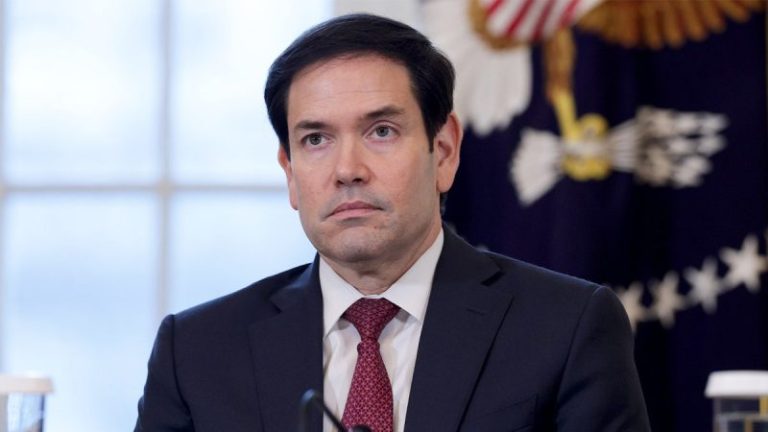
Social media users on X have turned a photo of Rubio from a White House meeting into a viral ‘realizing’ meme, joking that his growing responsibilities make him the administration’s go-to official for a widening range of positions.

Users have posted AI-generated photos of Rubio that depict him in a range of imagined roles, from the Shah of Iran and the president of Venezuela to the manager of Manchester United.

Rubio has leaned into the humor himself, writing on X last week that he wouldn’t be a candidate for the vacant head coach or general manager positions with the Miami Dolphins.

‘While you never know what the future may bring right now my focus must remain on global events and also the precious archives of the United States of America,’ he wrote.

This post appeared first on FOX NEWS

We also break down next week’s catalysts to watch to help you prepare for the week ahead.

In this article:

    This week’s tech sector performance

    Tech markets spent the first full week of 2026 responding to headlines out of the Consumer Electronics Show (CES) in Las Vegas, where semiconductor and artificial intelligence (AI) announcements helped drive Nasdaq Composite (INDEXNASDAQ:.IXIC) momentum. This enthusiasm pushed the index to a fresh record midweek before a bout of profit taking and renewed concerns weighed on sentiment heading into Friday (January 9).

    The Nasdaq finished the week up 0.95 percent from Monday’s (January 5) open, powered by gains in memory and storage names like Micron Technology (NASDAQ:MU) and Western Digital (NASDAQ:WDC) after upbeat commentary on next-generation data infrastructure. However, the rally faded as investors rotated into defensive stocks after US President Donald Trump proposed a US$1.5 trillion “Dream Military” budget.

    Labor market indicators for the week suggest a continued, gradual cooling in the American job market, supporting the case for future US Federal Reserve interest rate cuts.

    North of the border, Canada’s S&P/TSX Composite Index (INDEXTSI:OSPTX) retreated after briefly hitting a record, mirroring the US market’s rotation in the second half of the week, weighed down by Venezuela oil fears.

    3 tech stocks moving markets this week

    1. Micron Technology (NASDAQ:MU)

    Shares of Micron Technology rose 0.12 percent on Monday after the company provided an investor update confirming strong demand for its high-bandwidth memory, critical for AI GPUs, through 2026.

    Comments on storage shortages at CES amplified gains on Tuesday, driving an 8.25 percent advance for Micron that day alongside additional memory stocks. The company saw a 6.14 percent weekly gain.

    2. Lockheed Martin (NYSE:LMT)

    Lockheed Martin jumped by as much as 2.06 percent on Thursday (January 8) after Trump’s Truth Social post prompted an investor rotation to defensive tech stocks.

    3. SanDisk (NASDAQ:SNDK)

    Sandisk, a company focused on NAND flash, SSDs and memory cards for consumer and AI data center use, jumped as much as 27.57 percent on Tuesday as comments at CES from NVIDIA (NASDAQ:NVDA) and Samsung Electronics (KRX:005930,OTCPL:SSNLF) executives reignited concerns of forthcoming price increases for NAND flash memory.

    SanDisk, Lockheed Martin and Micron Technology performance, January 5 to 9, 2026.

    Chart via Google Finance.

    Top tech news of the week

      • Huang also announced that NVIDIA’s new AI server racks will not require outside cooling, a revelation that caused the stocks of cooling equipment suppliers, such as Modine Manufacturing (NYSE:MOD) and Johnson Controls International (NYSE:JCI), to fall.

                      Tech ETF performance

                      Tech exchange-traded funds (ETFs) track baskets of major tech stocks, meaning their performance helps investors gauge the overall performance of the niches they cover.

                      This week, the iShares Semiconductor ETF (NASDAQ:SOXX) advanced by 2.47 percent, while the Invesco PHLX Semiconductor ETF (NASDAQ:SOXQ) saw a gain of 1.45 percent.

                      The VanEck Semiconductor ETF (NASDAQ:SMH) also increased by 1.98 percent.

                      Tech news to watch next week

                      Next week will bring bank earnings, starting with JPMorgan Chase (NYSE:JPM) on January 12, and Bank of America (NYSE:BAC) on January 15. January 15 will also bring the latest quarterly results from Taiwan Semiconductor Manufacturing Company (NYSE:TSM).

                      US producer price index data will hit on January 14, testing Fed interest rate cut bets, while Micron is set to break ground on its US$100 billion New York mega-fab on January 16.

                      Securities Disclosure: I, Meagen Seatter, hold no direct investment interest in any company mentioned in this article.

                      This post appeared first on investingnews.com

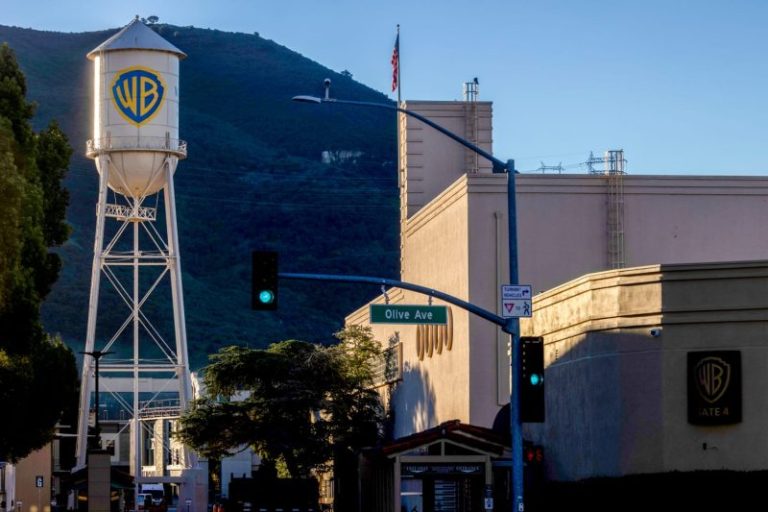
                      Warner Bros. Discovery on Wednesday rejected Paramount Skydance’s amended takeover offer, the latest in a series of rejections in David Ellison’s pursuit of the streaming and cable giant.

                      The media company said it remains committed to the $82.7 billion deal it reached in December to sell its streaming service, studio and HBO cable channel to Netflix.

                      ‘The Board unanimously determined that the Paramount’s latest offer remains inferior to our merger agreement with Netflix across multiple key areas,’ Warner Bros. Discovery Chairman Samuel Di Piazza said in a statement.

                      ‘Paramount’s offer continues to provide insufficient value,’ he continued.

                      In a letter to shareholders, Di Piazza wrote that Paramount Skydance’s offer carries ‘significant costs, risks and uncertainties as compared to the Netflix merger.’ The way the Paramount deal is structured creates a ‘lack of certainty’ about its finalization, he added.

                      Di Piazza adds in the letter that if the company were to agree to the Paramount merger and it failed to close, it would result in a ‘potentially considerable value destruction.’

                      ‘What matters most right now is our focus as we start the year,’ Warner Bros. Discovery CEO David Zaslav said in a memo to employees seen by NBC News. ‘Our operating plans remain unchanged, and our priorities for 2026 are clear and intentional.’

                      Zaslav wrote that the ‘review was conducted with discipline and rigor, and was supported by independent financial and legal advisors.’

                      On Dec. 22, Paramount Skydance increased its offer for Warner Bros. Discovery with a personal guarantee from billionaire Larry Ellison, who was backing the financing for the deal. His son, David Ellison, is the CEO of Paramount Skydance.

                      However, that was not enough for Warner Bros. Discovery. That beefed-up offer followed Warner Bros. Discovery’s Dec. 17 public rejection of Paramount. It also preceded multiple private rejections before Paramount Skydance went public.

                      In a statement Thursday, Paramount said it remained committed to the offer that WBD has rejected twice. “WBD continues to raise issues in Paramount’s offer that we have already addressed, including flexibility in interim operations,” Paramount said.

                      At stake is the future of one of the most storied media empires in the United States.

                      The bidding by Paramount also comes amid a monumental shift in the media and streaming landscape at large. On Monday, Versant Media, the cable network spinoff from Comcast, began trading as an independent company. Shares have plunged more than 20% over the course of those two days. (Comcast is the parent company of NBCUniversal and NBC News.)

                      On CNBC, Di Piazza said it would be a mistake to compare Warner Bros. Discovery‘s cable networks to Versant. ‘Discovery Global is different, it has a lot more scale,’ he said.

                      Streaming companies such as Apple, Netflix and Amazon are also challenging traditional broadcasters such as Paramount-owned CBS for sports rights.

                      Warner Bros. Discovery controls properties ranging from CNN Worldwide and the Discovery Channel to HBO, as well as the Warner Bros. film studio and archive.

                      Despite the back and forth between Warner Bros. Discovery and Paramount, Netflix has so far proceeded with the deal it inked Dec. 5, under which the world’s largest streaming company would acquire a stake in WBD.

                      Warner’s cable networks would be spun out into a separate company as part of that deal. However, Paramount Skydance wants to buy everything Warner Bros. Discovery owns.

                      Paramount’s controlling shareholders, the Ellisons, have suggested they could obtain regulatory clearance more quickly and easily than Netflix.

                      In mid-2025, the Ellisons acquired Paramount with approval from the Trump administration. But that approval only came after CBS News agreed to pay $16 million to President Donald Trump’s future presidential library over an interview that “60 Minutes” had conducted with then-presidential candidate, Vice President Kamala Harris.

                      Netflix, for its part, has met with Trump at the White House over the deal. But Trump has said either bidder poses potential problems, in his view.

                      Netflix said in a statement that it ‘welcomed the Warner Bros. Discovery board of directors’ continued commitment to the merger agreement’ the two companies reached last year. ‘Netflix and Warner Bros. will bring together highly complementary strengths and a shared passion for storytelling,’ Netflix’s co-CEOs Ted Sarandos and Greg Peters said.

                      Di Piazza said on CNBC that the difference between Paramount’s offer and that of Netflix is that Warner Bros. and Netflix already ‘have a signed merger agreement’ that has ‘a clear path to closing.’ Di Piazza also said the Netflix deal offers ‘protections for our shareholders, if something stops the close, whatever that might be.’

                      Trump has said he will be personally involved in reviewing whichever merger proceeds.

                      Paramount did not immediately respond to a request for comment.

                      This post appeared first on NBC NEWS

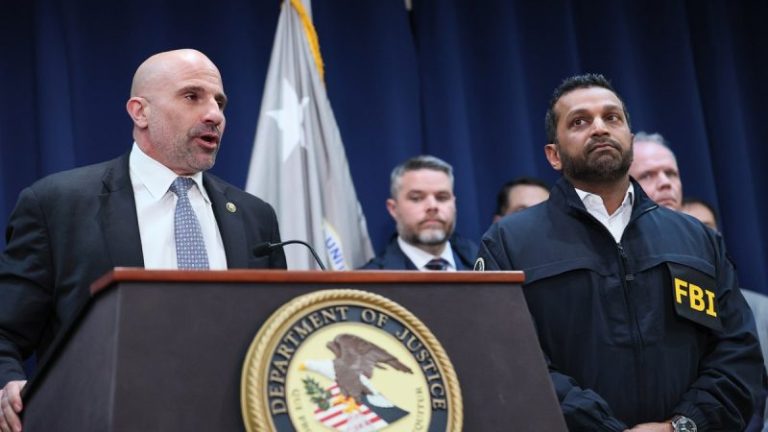
                      FBI veteran Christopher Raia has been named co-deputy director of the federal law enforcement agency, the bureau confirmed Friday to Fox News Digital.

                      Raia, who runs the bureau’s New York City field office, will move to Washington, D.C., and begin his job on Monday serving as co-deputy director with Andrew Bailey.

                      Raia’s elevation comes after Dan Bongino announced he was leaving the position and returning to ‘civilian life.’ His last day on the job was Jan. 3.

                      Bongino was a conservative commentator and podcaster before President Donald Trump nominated him for the position.

                      ‘It’s been an incredible year thanks to the leadership and decisiveness of President Trump,’ Bongino wrote on X Saturday. ‘It was the honor of a lifetime to work with Director [Kash] Patel, and to serve you, the American people. See you on the other side.’

                      Bongino made the announcement he was leaving last month, thanking Trump, Patel and U.S. Attorney General Pam Bondi ‘for the opportunity to serve with purpose.’

                      Bongino and Bondi had previously clashed over the release of the Epstein files, and a source told Fox News over the summer he had considered resigning over the Justice Department’s handling of the situation.

                      Bongino didn’t give a reason for his resignation less than a year after he started as deputy director, but Trump said last month the 51-year-old ‘wants to go back to his show.’

                      This post appeared first on FOX NEWS

                      President Trump sported a unique accessory at the White House on Friday, a custom lapel pin depicting what he called a ‘happy Trump.’

                      The president wore the small pin, which appeared to be a cartoon-style depiction of Trump in a navy suit and red tie just beneath his customary American flag lapel pin, while meeting with oil and gas executives in the East Room of the White House.

                      Fox News’ Senior White House Correspondent Peter Doocy noticed the accessory and asked the president about it. 

                      ‘I see the American flag lapel pin,’ Doocy said. ‘What is the other lapel pin?’

                      Trump explained that the pin was a gift.

                      ‘Somebody gave me this. You know what that is? That’s called a ‘happy Trump,” the president said, holding up the pin. 

                      ‘And consider the fact that I’m never happy. I’m never satisfied. I will never be satisfied until we make America great again. But we’re getting pretty close.’

                      Trump added, ‘Somebody gave it to me. I put it on.’

                      The lighthearted moment quickly gained traction on social media, with users on X praising the pin and the president’s sense of humor.

                      ‘Trump is wearing a ‘Happy Trump’ pin today,’ one user wrote, alongside laughing emoji. ‘How can you not love this guy?’

                      ‘Where can I get a happy Trump pin?’ another asked.

                      ‘Only our wonderful President Trump! He is wearing a ‘Happy Trump’ pin because he says he’ll never be happy until America is Great Again…but we’re getting close! Hilarious!’ a third user wrote.

                      The exchange came as Trump hosted nearly two dozen oil executives at the White House Friday to discuss investment in Venezuela after the U.S. military’s successful capture of the nation’s dictatorial president, Nicolás Maduro.

                      The lineup of oil companies included Chevron, Exxon, ConocoPhillips, Continental, Halliburton, HKN, Valero, Marathon, Shell, Trafigura, Vitol Americas, Repsol, Eni, Aspect Holdings, Tallgrass, Raisa Energy and Hilcorp.

                      Vice President JD Vance, Secretary of State Marco Rubio, Secretary of Energy Chris Wright and Secretary of the Interior Doug Burgum also attended the meeting. 

                      Fox News Digital’s Emma Colton contributed to this report.

                      This post appeared first on FOX NEWS

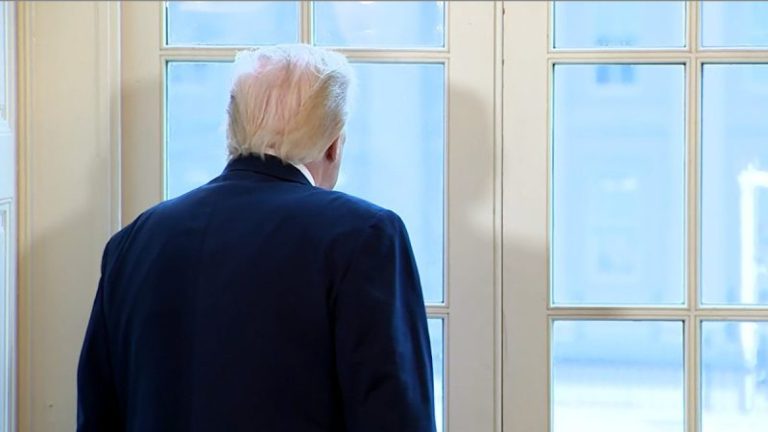
                      President Donald Trump briefly paused his meeting with nearly two dozen oil executives Friday afternoon to walk over to a window at the White House to check out updates on the ballroom’s construction.

                      ‘Today, I’m delighted to welcome almost two dozen of the biggest and most respected oil and gas executives in the world to the White House,’ he said. ‘It’s an honor to be with them. We have many others that were not able to get in. I said, ‘If we had a ballroom, we’d have over a thousand people.’

                      ‘I never knew you had that many people in your industry. But here we are. And if you’re, in fact, if you look, come to think of it. Well, I gotta look at this myself,’ Trump said as he got up from his chair to peek out of a window in the East Room, looking out to where the ballroom is under construction.

                      ‘Wow. What a, what a view. This is the door to the ballroom,’ he continued. 

                      Trump remarked that it was an ‘unusual time to look’ out in the ballroom, which earned chuckles, and then invited the ‘fake news’ to check out the progress. 

                      Trump announced in October 2025 that construction had begun on the ballroom after months of the president floating the planned project to modernize the White House. The project does not cost taxpayers and is privately funded, the White House reported.

                      Photos of the demolition crew dismantling the East Wing’s facade circulated on social media and in news reports in October 2025, sparking outrage from Democrats and other Trump critics who argued the president was ‘destroying’ the White House. 

                      Trump said Friday the construction is ahead of schedule. The White House said the ballroom will be ‘completed long before the end of President Trump’s term’ in 2029. 

                      ‘We’re ahead of schedule in the ballroom and under budget. It’s going to be … I don’t think there will be anything like it in the world, actually. … This is, as you know, our biggest room, which would seat 100 for dinner, maybe, if you’re lucky, if you’re … nice and tight.

                      ‘And the ballroom will seat many, and it’ll also take care of the inauguration with bulletproof glass, drone-proof ceilings and everything else, unfortunately, that today you need.’ 

                      The president repeatedly has remarked that the White House’s current rooms do not accommodate large crowds for dinners and other public events. 

                      Trump hosted nearly two dozen oil executives at the White House Friday to discuss investment in Venezuela after the U.S. military’s successful capture of the nation’s dictatorial president, Nicolás Maduro, Saturday. 

                      The lengthy lineup of oil companies includes Chevron, Exxon, ConocoPhillips, Continental, Halliburton, HKN, Valero, Marathon, Shell, Trafigura, Vitol Americas, Repsol, Eni, Aspect Holdings, Tallgrass, Raisa Energy and Hilcorp.

                      Vice President JD Vance, Secretary of State Marco Rubio, Secretary of Energy Chris Wright and Secretary of the Interior Doug Burgum also attended the meeting. 

                      ‘The plan is for them (oil companies) to spend at least $100 billion to rebuild the capacity and the infrastructure necessary,’ Trump said during the meeting. ‘Venezuela has also agreed that the United States will immediately begin refining and selling up to 50 million barrels of Venezuelan crude oil, which will continue indefinitely. 

                      ‘We’re all set to do it. We have the refining capacity, (which) was actually based very much on the Venezuelan oil, which is a heavy oil, very good oil.’

                      This post appeared first on FOX NEWS

                      ‘I hereby plead incompetence and stupidity.’

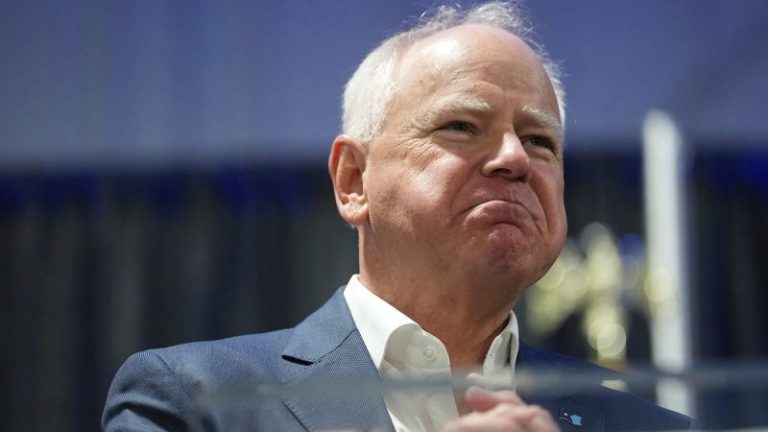
                      That’s probably the best defense that Minnesota Gov. Tim Walz can offer if he is criminally charged in the shocking multi-billion-dollar taxpayer ripoffs that grow larger by the day.

                      Given his earned reputation, his excuse of incompetence would be credible.

                      Nearly every social service program receiving federal dollars was fleeced by fraudsters right under Walz’s nose, including child nutrition, daycare, healthcare, housing, and autism aid. Most of the perpetrators were Somalians who comprise a powerful voting block that the governor treasures like gold.

                      Walz was repeatedly warned of the swindles as far back as 2019 when he first took office. Instead of stopping the scams and prosecuting the grifters, he indulged them by establishing a culture of permissible fraud.

                      The scandal has already claimed Walz’s political career, forcing him to abandon his bid for re-election. But if he reckoned that quitting would somehow shield him from legal culpability, he is mistaken. There is mounting evidence that Walz was willfully complicit, deliberately refusing to expose or pursue the monumental thefts and, instead, launching aggressive measures to scuttle any legal scrutiny and criminal consequence.  

                      The governor’s own state workers at the Department of Human Services issued a blistering statement blaming him as 100% responsible. Witnesses say he retaliated against whistleblowers and schemed to discredit the well-documented fraud reports.

                      If true, Walz’s aberrant actions run dangerously close to criminal behavior involving cover-ups and obstruction.  

                      Nine federal agencies, including the FBI, are now working to unravel the full breadth and depth of the colossal cons.  The Department of Justice (DOJ) has sent scores of investigators and lawyers to Minnesota to prosecute the web of fraud and deceit.

                      They will inevitably weigh whether Walz should face criminal charges himself.

                      Possible Federal Charges

                      There are several federal statutes to consider. 18 USC 371 makes it a crime to conspire with others to defraud the government. At present, there is no known evidence that Walz directly participated in the scams themselves or accepted money.

                      However, if he plotted to cover up the fraud by impairing, obstructing or defeating efforts to bring the fraudsters to justice, the conspiracy statute is applicable. So, too, are the various obstruction of justice laws.

                      There is also 18 USC 2, the aiding and abetting statute where accomplices are treated the same as the main perpetrators. That law gave rise to the ‘willful blindness doctrine’ recognized by our courts.

                      An example is a businessman who intentionally ignores or turns a blind eye to his partner’s money laundering, resulting in charges against both. Similarly, a public official such as Walz can be indicted for deliberate inaction where he has a clear duty to act.

                      Finally, 18 USC 3 is relevant whenever concealment occurs. Whoever knows that a crime has been committed but ‘hinders apprehension, trial or punishment,’ is guilty of accessory after the fact. That bears a striking resemblance to what Walz is accused of doing.

                      All of this invites the question of the governor’s motive. If not money, how did he stand to benefit by suppressing the avalanche of fraud? That’s the easy part. Votes.

                      Walz, together with liberal elites and their media handmaidens, have long dismissed the rumors and reports of Somali-engineered fraud as ‘racist.’ Apparently, in Minnesota it is politically incorrect to enforce the law against immigrants from that particular East African country. It’s just not fashionable.

                      God forbid that putting criminals behind bars might lose electoral support. It’s chic to turn the other cheek.

                      So, the Somalian fraudsters were gifted a ‘get-out-of-jail’ free card, courtesy of the governor and his cronies. Walz, in turn, secured their votes. It was a nifty quid pro quo, but with an alternate currency —votes. As protection rackets go, it was slick.   

                      That cozy arrangement is manifested in a recently uncovered audio recording of a 2021 conversation between Walz’s Attorney General Keith Ellison and Somali hustlers who were soon after convicted of scamming millions of dollars. They were heard leaning hard on the AG to ‘protect’ them in exchange for support and campaign donations.  

                      Ellison eagerly capitulated but now denies any wrongdoing. He returned the cash.           

                      Walz’s Incompetence Defense

                      It is too early to know whether a criminal case will be filed against Minnesota’s beleaguered governor. The U.S. Attorney and DOJ lawyers are still digging through the mountains of evidence.

                      However, as noted above, the only tenable defense Walz may be able to conjure up is incompetence and stupidity. It is something that jurors might readily accept.

                      After all, ineptitude became the governor’s calling card. He infamously conceded his own buffoonery in the 2024 Vice Presidential debate when he called himself a ‘knucklehead.’ He was such a gaffe factory that the Kamala Harris campaign squirreled him away from the media.     

                      Walz achieved the impossible. He made his running mate look like a genius. His bizarre on-stage antics were constant fodder for mockery. Baffling verbal goofs, such as boasting that he had ‘become friends with school shooters,’ left voters scratching their heads or snickering.  

                      A series of demonstrable lies about his military service and his peculiar treks to China only compounded the impression of a man who is either a serial fabricator or not right in the head. Maybe both are true.  

                      And who can forget his epic bungling of the George Floyd riots in 2020. He radicalized the tragic death, thereby ginning up the ensuing violence. As Minneapolis burned, Walz dithered. Afterwards, he blamed the looting and torched buildings on systemic racism.

                      So, it’s not a stretch to imagine that an indictment alleging Walz was wittingly complicit in his state’s massive welfare fraud scandal might be met with a defense of ‘misfeasance’ (careless or incompetent execution of a lawful duty) to combat the incriminating evidence of ‘malfeasance’ (a deliberate, unlawful act).   

                      It’s a distinction that can mean the difference between conviction and acquittal.

                      Should Walz find himself in the dock sometime soon… don’t be surprised if he portrays himself as a blockhead who was intellectually incapable of grasping the obvious.

                      Minnesota jurors who know the governor would understand completely.

                      This post appeared first on FOX NEWS

                      A federal judge Friday temporarily blocked the Trump administration from stopping subsidies on childcare programs in five states, including Minnesota, amid allegations of fraud.

                      U.S. District Judge Arun Subramanian, a Biden appointee, didn’t rule on the legality of the funding freeze, but said the states had met the legal threshold to maintain the ‘status quo’ on funding for at least two weeks while arguments continue.

                      On Tuesday, the U.S. Department of Health and Human Services (HHS) said it would withhold funds for programs in five Democratic states over fraud concerns.

                      The programs include the Child Care and Development Fund, the Temporary Assistance for Needy Families program, and the Social Services Block Grant, all of which help needy families.

                      ‘Families who rely on childcare and family assistance programs deserve confidence that these resources are used lawfully and for their intended purpose,’ HHS Deputy Secretary Jim O’Neill said in a statement on Tuesday.

                      The states, which include California, Colorado, Illinois, Minnesota and New York, argued in court filings that the federal government didn’t have the legal right to end the funds and that the new policy is creating ‘operational chaos’ in the states.

                      In total, the states said they receive more than $10 billion in federal funding for the programs. 

                      HHS said it had ‘reason to believe’ that the programs were offering funds to people in the country illegally.

                      New York Attorney General Letitia James, who is leading the lawsuit, called the ruling a ‘critical victory for families whose lives have been upended by this administration’s cruelty.’

                      Fox News Digital has reached out to HHS for comment.

                      This post appeared first on FOX NEWS

                      Japan will begin testing deep-sea mining for rare earth elements this month, moving into uncharted territory as supply security concerns intensify amid China’s tightening grip on critical minerals.

                      The government-backed trial, scheduled to run from January 11 to February 14, will take place in waters around Minamitori Island, roughly 1,900 kilometers southeast of Tokyo.

                      The test is designed to evaluate equipment capable of retrieving up to 350 metric tons of sediment per day while simultaneously monitoring environmental impacts both on the seabed and aboard the vessel.

                      According to a December Reuters report, Japanese officials say a larger-scale trial could follow next year if the initial phase proves successful.

                      Tokyo’s push into deep-sea mining comes as concerns grow over its exposure to Chinese export controls. China dominates the rare earth supply chain, accounting for about 70 percent of global production and more than 90 percent of refining capacity, according to Japanese government estimates.

                      Despite years of diversification efforts, Japan still sources around 60 percent of its rare-earth imports from China and remains almost entirely dependent on Beijing for certain heavy rare earths.

                      Those vulnerabilities have become more acute as China signals a tougher stance on exports.

                      Earlier this week, Beijing announced restrictions on the overseas sale of so-called “dual-use” items with potential military applications, a category analysts say could be interpreted broadly enough to encompass some rare earth materials.

                      The announcement revived memories of 2010, when China quietly halted rare-earth shipments to Japan during a territorial dispute, disrupting manufacturing and forcing Tokyo to reassess its supply risks.

                      Japanese government estimates suggest the economic fallout from another disruption could be severe. A three-month interruption in rare-earth supplies could cost domestic companies more than US$4 billion, while a year-long halt could shave nearly 0.5 percent off annual GDP.

                      Japan is also exploring potential cooperation with the US in the waters around Minamitori Island as part of a broader effort to build more resilient supply chains for rare earths and other critical minerals.

                      The two countries have already committed last year to collaborate on mining, processing, and supply chain development.

                      Beyond the current trial, Japan is also laying plans to build a dedicated processing facility on Minamitorishima by 2027 as part of its Strategic Innovation Promotion Program (SIP).

                      The facility would handle mud recovered from the seabed and form part of an end-to-end domestic supply chain for marine-based rare earths. A full-scale demonstration is scheduled for February 2027 to test the facility’s ability to recover up to 350 metric tons of rare-earth mud per day.

                      “We will ultimately demonstrate the entire process of extracting rare-earth elements from mud and then assess its economic viability,” Shoichi Ishii, program director at the Strategic Innovation Promotion Program, told Nikkei Asia.

                      Marine scientists and environmental groups, however, continue to warn that deep-sea mining could cause long-lasting damage to ecosystems that remain poorly understood.

                      Despite those calls, a growing number of countries are pressing ahead with exploratory projects as competition for critical minerals intensifies.

                      Securities Disclosure: I, Giann Liguid, hold no direct investment interest in any company mentioned in this article.

                      This post appeared first on investingnews.com
                      Sentiment for lithium prices and lithium stocks turned bullish in late 2025 as global demand surged, suggesting that a market surplus could tighten into a deficit sooner than previously expected.

                      Prices, which had soared through late 2022, faced volatility but rebounded in H2 on robust demand growth, inventory drawdowns and regulatory tightening.

                      Notably, Contemporary Amperex Technology (CATL) (SZSE:300750,HKEX:3750) halted operations at a major Chinese lithium mine, while Beijing introduced measures to prevent sales at unsustainably low prices.

                      The growing recognition of lithium as a critical mineral, alongside Western concerns over China’s dominance in supply chains, has strengthened the market outside of China, supporting prices and investment sentiment.

                      According to Benchmark Mineral Intelligence, global lithium demand in 2025 is projected to reach roughly 285,000 metric tons of lithium carbonate equivalent (LCE), up from 220,000 metric tons in 2024, driven largely by electric vehicle adoption and the rapid growth of battery energy storage systems.

                      Analysts anticipate continued price support as higher-cost producers exit, while demand from EVs, grid storage, and the energy transition catches up with supply constraints.

                      Against this backdrop, some lithium stocks are seeing share price gains. Below is a look at the lithium stocks in Canada, the US and Australia that performed the best in 2025, including updates on their news and activities.

                      This list of the top-gaining lithium companies is based on year-to-date as per TradingView’s stock screener. Data for all Canadian stocks, US and Australian stocks was gathered on December 30, 2025. Lithium stocks with market caps above $10 million in their respective currencies were considered.

                      Top Canadian lithium stocks

                      1. Stria Lithium (TSXV:SRA)

                      Year-to-date gain: 708.33 percent
                      Market cap: C$19.11 million
                      Share price: C$0.48

                      Stria Lithium is a Canadian exploration company focused on developing domestic lithium resources to support the growing demand for electric vehicles and lithium-ion batteries. The company’s flagship Pontax Central lithium project spans 36 square kilometers in the Eeyou Istchee James Bay region of Québec, Canada.

                      Cygnus Metals (TSXV:CYG,ASX:CY5,OTCQB:CYGGF) has an earn-in agreement with Stria to earn up to a 70 percent interest in Pontax Central. Cygnus completed the first stage in July 2023, acquiring a 51 percent interest by investing C$4 million in exploration and issuing over 9 million shares to Stria.

                      In May 2025, Stria and Cygnus agreed to extend the second stage of Cygnus’s earn-in agreement on the Pontax Central lithium project by 24 months. The second stage involves a further C$2 million in exploration spending and C$3 million in a cash payment.

                      Through its joint venture with Cygnus, Stria has outlined a JORC-compliant maiden inferred resource for Pontax Central of 10.1 million metric tons grading 1.04 percent lithium oxide.

                      In March, Stria closed a non-brokered private placement for C$650,000. The funds will be used in part for the evaluation of new mineral opportunities, according to the company.

                      Shares of Stria registered a year-to-date high of C$0.50 on December 30, 2025, coinciding with lithium carbonate prices rising to a near 24 month high.

                      2. Consolidated Lithium Metals (TSXV:CLM)

                      Year-to-date gain: 350 percent
                      Market cap: C$20.51 million
                      Share price: C$0.045

                      Consolidated Lithium Metals is focused on acquiring, developing and advancing lithium projects in Québec. Its properties — Vallée, Baillargé, Preissac-LaCorne and Duval — are located within the spodumene-rich La Corne Batholith area, near the restarted North American Lithium mine, a key area in Canada’s growing lithium sector.

                      Consolidated Lithium started the year with a C$300 million private placement earmarked for working capital and general corporate purposes.

                      In July, the company commenced a summer exploration program at the Preissac project, excavating a 100 by 30 meter trench in an area with a known lithium soil anomaly, uncovering an 18 meter wide pegmatite body at surface.

                      At the end of August, Consolidated Lithium signed a non-binding letter of intent with SOQUEM, a subsidiary of Investissement Québec, to acquire an option to earn up to an 80 percent interest in the Kwyjibo rare earths project.

                      The project is located roughly 125 kilometers northeast of Sept-Îles in Québec’s Côte-Nord region.

                      Under the deal, which was finalized in November, Consolidated Lithium will become operator of the project and can earn an initial 60 percent stake over five years through a combined C$23.15 million in cash payments, share issuances and project expenditures.

                      A significant portion of those funds will be invested in advancing Kwyjibo through stages including negotiating and finalizing an agreement with the Innu of Uashat mak Mani-Utenam, a metallurgical study and environmental permitting.

                      Upon completion, the partners will form a joint venture, and Consolidated will have the option to increase its interest to 80 percent by investing C$22 million over a further three years.

                      An uptick in lithium prices in October helped Consolidated shares rally to a year-to-date high of C$0.06 several times between October 22 and November 3.

                      3. Lithium South Development (TSXV:LIS)

                      Year-to-date gain: 330 percent
                      Market cap: C$48.76 million
                      Share price: C$0.43

                      Canada-based Lithium South Development currently owns 100 percent of the HMN lithium project in Argentina’s Salta and Catamarca provinces, situated in the heart of the lithium-rich Hombre Muerto Salar.

                      The project lies adjacent to South Korean company POSCO Holdings (NYSE:PKX,KRX:005490) billion-dollar lithium development to the east.

                      Exploration has defined a resource of 1.58 million metric tons of lithium carbonate equivalent (LCE) at an average grade of 736 milligrams per liter lithium, with the majority in the measured category. A preliminary economic assessment outlines the potential for a 15,600 metric ton per year lithium carbonate operation.

                      In January 2024, Lithium South and POSCO signed an agreement to jointly develop the HMN lithium project. Under the deal, the companies will share production 50/50 from the Norma Edith and Viamonte blocks in Salta and Catamarca, resolving overlapping claims.

                      As for 2025, in June Lithium South’s shares tripled to C$0.30 after it received positive news regarding its environmental impact assessment.

                      Lithium South shared a huge update in July that changed its trajectory; the company received a non-binding cash offer of US$62 million from POSCO to purchase its lithium portfolio, including the HMN project.

                      POSCO would acquire Lithium South’s wholly owned subsidiary NRG Metals Argentina, which holds the HMN project and all of Lithium South’s other concessions, namely the Sophia I–III and Hydra X–XI claims.

                      The 60 day due diligence period concluded in late September, and on November 12, Lithium South announced a share purchase agreement to sell its Argentinian lithium portfolio to POSCO Argentina for US$65 million.

                      Company shares climbed to C$0.44 the next day, while its highest close of the year, C$0.45, came on December 24.

                      Lithium South officially signed the deal on December 8, with its closing subject to several approvals. Following the transaction’s completion, Lithium South plans to de-list from the TSXV and begin dissolution proceedings.

                      In connection with the news, the company intends to buy back all common shares at a price of C$0.505.

                      Top US lithium stocks

                      1. Lithium Argentina (NYSE:LAR)

                      Year-to-date gain: 106.39 percent
                      Market cap: US$891.03 million
                      Share price: US$5.49

                      Lithium Argentina produces lithium carbonate from its Caucharí-Olaroz brine project in Argentina, developed with Ganfeng Lithium (OTC Pink:GNENF,HKEX:1772). The company was spun out from Lithium Americas in October 2023 and changed its name from Lithium Americas (Argentina) in January 2025.

                      In mid-April, Lithium Argentina executed a letter of intent with Ganfeng Lithium to jointly advance development across the Pozuelos-Pastos Grandes basins.

                      In August, Lithium Argentina agreed to form a new joint venture with Ganfeng Lithium that will combine the companies’ projects in the Pozuelos and Pastos Grandes basins of Salta, Argentina.

                      The joint venture will bring together Ganfeng’s wholly owned Pozuelos-Pastos Grandes (PPG) project and Lithium America’s Pastos Grandes and Sal de la Puna projects, in which Ganfeng currently holds a 15 percent and 35 percent stake respectively.

                      Once completed, Ganfeng will hold a 67 percent stake in the consolidated PPG project, and Lithium Argentina will hold a 33 percent interest.

                      In Q4, Lithium Argentina released a positive scoping study for the PPG project, confirming its scale and strong economics. The consolidated project hosts a measured and indicated resource of 15.1 million metric tons of lithium carbonate equivalent (LCE) and is designed for staged production of up to 150,000 metric tons per year over a 30 year mine life.

                      In the same announcement, the company confirmed receipt of an environmental approval for Stage 1 from the Secretariat of Mining and Energy of the Province of Salta.

                      Lithium Argentina released its Q3 results in November, noting approximately 8,300 metric tons of lithium carbonate production at its Caucharí-Olaroz operation during the quarter, with 24,000 metric tons produced between January and September.

                      Company shares rose to a year-to-date high of US$5.58 on December 31, in line with rising lithium carbonate prices.

                      2. Sociedad Química y Minera (NYSE:SQM)

                      Year-to-date gain: 87.39 percent
                      Market cap: US$19.66 billion
                      Share price: US$68.98

                      SQM is a major global lithium producer, with operations centered in Chile’s Salar de Atacama. The company extracts lithium from brine and produces lithium carbonate and hydroxide for use in batteries.

                      SQM is expanding production and holds interests in projects in Australia and China, including a 50/50 joint venture for the Mt Holland lithium operation in Western Australia. In July, the company produced its first battery-grade lithium hydroxide production at its Kwinana refinery in the state.

                      In late April, Chile’s competition watchdog approved the partnership agreement between SQM and state-owned copper giant Codelco aimed at boosting output at the Atacama salt flat. The deal, first announced in 2024, reached another milestone when it secured approval for an additional lithium quota from Chile’s nuclear energy regulator CChEN.

                      SQM ended the year finalizing the agreement. The partnership was formalized through SQM’s subsidiary SQM Salar absorbing Codelco’s Minera Tarar and being renamed Nova Andino Litio.

                      SQM reported a net income of US$404.4 million for the first nine months of 2025, rebounding from a US$524.5 million loss in the same period of 2024. Revenue totaled US$3.25 billion, down 5.9 percent year-over-year, while gross profit reached US$904.1 million.

                      The company’s third-quarter performance highlighted the turnaround, as SQM achieved record lithium sales volumes. It reported net income of US$178.4 million, up 36 percent from Q3 2024, and revenue of US$1.17 billion, up 8.9 percent. Gross profit for the quarter climbed 23 percent to US$345.8 million.

                      SQM attributed the rebound to higher realized lithium prices and improved operational efficiency, signaling a strong recovery trajectory for the remainder of 2025.

                      Shares of SQM reached a year-to-date high of US$71.63 on December 26.

                      3. Albemarle (NYSE:ALB)

                      Year-to-date gain: 64.29 percent
                      Market cap: US$16.71 billion
                      Share price: US$142.01

                      North Carolina-based Albemarle is dividing into two primary business units, one of which — the Albemarle Energy Storage unit — is focused wholly on the lithium-ion battery and energy transition markets. It includes the firm’s lithium carbonate, hydroxide and metal production.

                      Albemarle has a broad portfolio of lithium mines and facilities, with extraction in Chile, Australia and the US. Looking first at Chile, Albemarle produces lithium carbonate at its La Negra lithium conversion plants, which process brine from the Salar de Atacama, the country’s largest salt flat. Albemarle is aiming to implement direct lithium extraction technology at the salt flat to reduce water usage.

                      Albemarle’s Australian assets Wodgina hard-rock lithium mine in Western Australia, which is owned and operated by the 50/50 MARBL joint venture with Mineral Resources (ASX:MIN,OTC Pink:MALRF). Albemarle wholly owns the on-site Kemerton lithium hydroxide facility. The company’s other Australian joint venture is the Greenbushes hard-rock mine, in which it holds a 49 percent interest.

                      In late October, Albemarle signed an agreement to sell its 51 percent stake in its refining catalyst business, Ketjen, leaving it with 49 percent ownership, part of a broader portfolio reshaping that also includes the sale of Ketjen’s 50 percent stake in the Eurecat joint venture to partner Axens.

                      The combined deals are expected to generate approximately US$660 million in pre-tax cash proceeds and strengthen Albemarle’s financial flexibility. Both transactions are anticipated to close in the first half of 2026, subject to regulatory approvals.

                      In November, Albemarle reported third‑quarter results that reflected improved operations amid continued lithium market headwinds. The company logged net sales of roughly US$1.31 billion, a slight year‑over‑year decline driven by lower energy storage pricing.

                      Albemarle generated US$356 million in quarterly cash from operations, noting the company remained on track to reduce full‑year capital expenditures to around US$600 million while targeting positive free cash flow of US$300 million to US$400 million in 2025.

                      Shares of Albemarle marked a year-to-date high of US$150.01 on December 26, amid strengthening lithium prices.

                      Top Australian lithium stocks

                      1. Argosy Minerals (ASX:AGY)

                      Year-to-date gain: 310.71 percent
                      Market cap: AU$169.78 million
                      Share price: AU$0.115

                      Argosy Minerals is currently focused on advancing its Rincon lithium project in Salta Province, Argentina. The company also owns the Tonopah lithium project located in Nevada, US.

                      The Rincon project spans 2,794 hectares within the Lithium Triangle. Argosy currently holds a 77.5 percent interest in Rincon, with plans to increase to 90 percent through its earn-in agreement.

                      It entered production of battery-grade lithium carbonate in 2024 at Rincon’s 2,000 tonne per year demonstration facility, but has since suspended operations due to the low lithium price environment. The company continues to advance feasibility for its 12,000 tonne per year expansion.

                      The project currently holds a JORC total mineral resource estimate of 731,801 tonnes of lithium carbonate.

                      On June 27, the company announced a lithium carbonate spot sales contract with a Hong Kong-based chemical company for 60 tonnes of 99.5 percent lithium carbonate.

                      A few weeks later, Argosy announced that detailed engineering and feasibility works were underway to develop a 7 kilometre electric transmission line able to supply up to 40 megawatts of energy to Rincon.

                      In late October, Argosy released its Q3 results highlighting advanced development of its Rincon lithium project. The period saw progression in engineering and feasibility work towards its 12,000-tonne-per-year operation at Rincon being construction-ready.

                      During the 90 day session, the company also completed a AU$2 million placement to strengthen its balance sheet.

                      Argosy ended the period with cash reserves of about AU$4.6 million as of September 30, and said its development strategy continues to be supported by forecasted growth in global lithium demand.

                      In mid-November, Argosy signed another spot sales agreement, this time with China’s Chengdu Chemphys Chemical Industry for the sale of 16.1 tonnes of lithium carbonate produced at Rincon.

                      Shares of Argosy reached a 2025 high AU$0.125 on December 23, as lithium prices continued to trend higher.

                      2. European Lithium (ASX:EUR)

                      Year-to-date gain: 269.05 percent
                      Market cap: AU$274.7 million
                      Share price: AU$0.155

                      European Lithium is an Australia-based lithium exploration and development company. The company also holds several earlier-stage lithium exploration projects across Austria and a 100 percent interest in the Leinster lithium project in Ireland. European Lithium is also pursuing 20 year special permits for the extraction and production of lithium at the Shevchenkivske project and Dobra project in Ukraine.

                      In addition, European Lithium owns a significant equity stake in Critical Metals (NASDAQ:CRML), which it spun out in 2024 to operate the Wolfsberg lithium project in Austria.

                      Wolfsberg benefits from established road and rail infrastructure and is supported by a mining license and a broad package of exploration permits. Critical Metals has since acquired a stake in the Tanbreez rare earth project in Greenland, giving European Lithium exposure to both lithium and rare earth development in Europe.

                      The company sold portions of its holding in Critical Metals during 2025 to raise funds as Critical Metals’ share price rose.

                      In July, European Lithium raised a combined AU$5.2 million through the sale of 1 million shares, and in early October it raised a further AU$31.75 million by selling 3 million shares to a US institutional investor.

                      Shares of European Lithium rose to a year-to-date high of AU$0.465 on October 14. The rally coincided with European Lithium’s sale of 3.85 million Critical Metals shares in an off-market placement to a single US institutional investor at US$13 per share, raising about AU$76 million in net proceeds. Days later, it sold another 3.03 million for AU$76 million.

                      Following the last sale in October, the company still held 53 million shares of Critical Metals.

                      At the end of October, the company reported an active third quarter marked by portfolio funding, exploration progress and project development. Exploration advanced at European Lithium’s Irish lithium assets, and planning work was completed on the energy supply corridor for the Wolfsberg lithium project in Austria.

                      3. Global Lithium (ASX:GL1)

                      Year-to-date gain: 244.44 percent
                      Market cap: AU$167.51 million
                      Share price: AU$0.62

                      Global Lithium Resources is a lithium exploration company with multiple assets in Western Australia, including the 100 percent owned Manna lithium project in the Goldfields region and the Marble Bar lithium project in the Pilbara region.

                      Together, these projects host a combined indicated and inferred mineral resource of 69.6 million tonnes of ore at a grade of 1.0 percent lithium oxide, with Manna alone holding 19.4 million tonnes at 0.91 percent Li2O in ore reserves.

                      In an effort to focus on its core lithium projects, Global Lithium launched an initial public offering to spin out its Marble Bar gold assets into a separate company, MB Gold, in October. Global Lithium will retain the rights to the lithium tenements at Marble Bar.

                      The same month, Global Lithium released its Q3 results, highlighting advanced permitting and development work across its Western Australian portfolio.

                      Additionally, the company secured a Native Title Mining Agreement with the Kakarra Part B group and was granted a mining lease for its flagship Manna lithium project, while continuing definitive feasibility study (DFS) work aimed at improving project economics.

                      At Marble Bar, drilling results were released from a co-funded exploration program. Corporate activity included the sale of its investment in Kairos Minerals (ASX: KAI,OTC Pink:KAIFF) leaving Global Lithium with a cash position of AU$21 million at quarter end.

                      The DFS for the Manna project was completed in December, which Global Lithium said confirmed it as a long-life, economically robust development. The DFS outlines a post-tax net present value of AU$472 million and an internal rate of return of 25.7 percent, supported by competitive costs, a 14 year mine life and recently secured permitting milestones, positioning the project for a future investment decision.

                      Global Lithium ended the year by signing a non-binding memorandum of understanding with the Southern Ports Authority to assess export options for spodumene concentrate from the Manna lithium project. The agreement focuses on the potential shipment of up to 240,000 tonnes per year through the Port of Esperance.

                      Global Lithium shares reached a 2025 high of AU$0.69 on December 28.

                      FAQs for investing in lithium

                      How much lithium is on Earth?

                      While we don’t know how much total lithium is on Earth, the US Geological Survey estimates that global reserves of lithium stand at 22 billion metric tons. Of that, 9.2 billion MT are located in Chile, and 5.7 billion MT are in Australia.

                      Where is lithium mined?

                      Lithium is mined throughout the world, but the two countries that produce the most are Australia and Chile. Australia’s lithium comes from primarily hard-rock deposits, while Chile’s comes from lithium brines. Chile is part of the Lithium Triangle alongside Argentina and Bolivia, although those two countries have a lower annual output.

                      Rounding out the top five lithium-producing countries behind Australia and Chile are China, Argentina and Brazil.

                      What is lithium used for?

                      Lithium has many uses, including the lithium-ion batteries that power electric vehicles, smartphones and other tech, as well as pharmaceuticals, ceramics, grease, lubricants and heat-resistant glass. Still, it is largely the electric vehicle industry that is boosting demand.

                      How to invest in lithium?

                      Those looking to get into the lithium market have many options when it comes to how to invest in lithium.

                      Lithium stocks like those mentioned above could be a good option for investors interested in the space. If you’re looking to diversify instead of focusing on one stock, there is the Global X Lithium & Battery Tech ETF (NYSE:LIT), an exchange-traded fund (ETF) focused on the metal. Experienced investors can also look at lithium futures.

                      Unlike many commodities, investors cannot physically hold lithium due to its dangerous properties.

                      How to buy lithium stocks?

                      Through the use of a broker or an investing service such as an app, investors can purchase lithium stocks and ETFs that match their investing outlook.

                      Before buying a lithium stock, potential investors should take time to research the companies they’re considering; they should also decide how many shares will be purchased, and what price they are willing to pay. With many options on the market, it’s critical to complete due diligence before making any investment decisions.

                      It’s also important for investors to keep their goals in mind when choosing their investing method. There are many factors to consider when choosing a broker, as well as when looking at investing apps — a few of these include the broker or app’s reputation, their fee structure and investment style.

                      Securities Disclosure: I, Georgia Williams, hold no direct investment interest in any company mentioned in this article.


                      This post appeared first on investingnews.com