Author

admin

Browsing

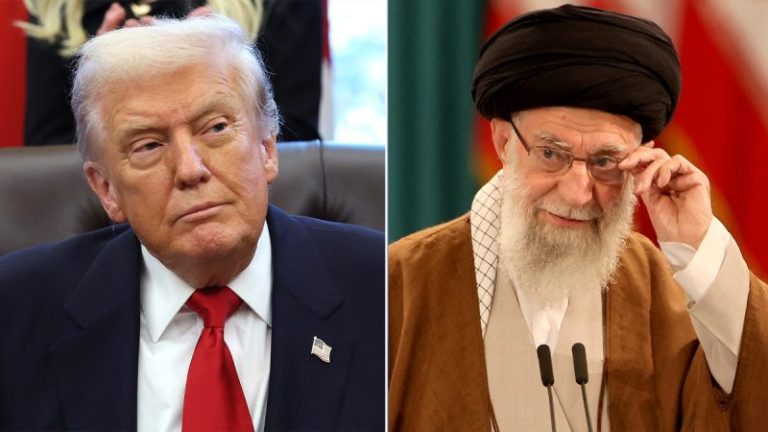
The indirect nuclear talks between the U.S. and Iran mediated by Oman were ‘very good,’ according to President Donald Trump.

‘Iran looks like it wants to make a deal very badly. We’ll have to see what that deal is. But I think Iran looks like they want to make a deal very badly, as they should. Last time they decided maybe not to do it, but I think they probably feel differently,’ Trump told reporters aboard Air Force One on Friday.

The president added that the U.S. had a ‘big Armada’ heading towards Iran, something he has spoken about in the past.

When he was pressed on how long the U.S. would be willing to wait to make a deal with Iran, the president indicated some flexibility, saying that he believes the two nations can reach an agreement.

‘It can be reached. Well, we have to get in position. We have plenty of time. If you remember Venezuela, we waited around for a while, and we’re in no rush. We have very good [talks] with Iran,’ Trump said.

‘They know the consequences if they don’t make a deal. The consequences are very steep. So we’ll see what happens. But they had a very good meeting with a very high representative of Iran,’ the president added.

American and Iranian representatives held separate meetings with Omani officials on Friday amid flaring tensions between Washington and Tehran. Oman’s Foreign Ministry said that the meetings were ‘focused on preparing the appropriate conditions for resuming diplomatic and technical negotiations.’

On Friday, Iranian Foreign Minister Abbas Araghchi said that indirect nuclear talks were ‘a good start’ and that there was a ‘consensus’ that the negotiations would continue.

‘After a long period without dialogue, our viewpoints were conveyed, and our concerns were expressed. Our interests, the rights of the Iranian people, and all matters that needed to be stated were presented in a very positive atmosphere, and the other side’s views were also heard,’ Araghchi said.

‘It was a good start, but its continuation depends on consultations in our respective capitals and deciding on how to proceed,’ he added.

While both sides expressed optimism about a possible deal, the U.S. moved to impose fresh sanctions on Iran after the talks. The State Department announced that the U.S. was sanctioning ’15 entities, two individuals and 14 shadow fleet vessels connected to the illicit trade in Iranian petroleum, petroleum products, and petrochemical products.’

‘Instead of investing in the welfare of its own people and crumbling infrastructure, the Iranian regime continues to fund destabilizing activities around the world and step up its repression inside Iran,’ the statement read.

‘So long as the Iranian regime attempts to evade sanctions and generate oil and petrochemical revenues to fund such oppressive behavior and support terrorist activities and proxies, the United States will act to hold both the Iranian regime and its partners accountable.’

The Iranian Foreign Ministry did not immediately respond to a Fox News Digital request for comment on the sanctions.
This post appeared first on FOX NEWS

Secretary of War Pete Hegseth has his ‘Arsenal of Freedom Tour’ in full swing, visiting the nuclear submarine production floor at Newport News, Virginia and Blue Origin’s space launch at Cape Canaveral Florida. His goal: restore American industrial prowess and secure freedom for generations to come.

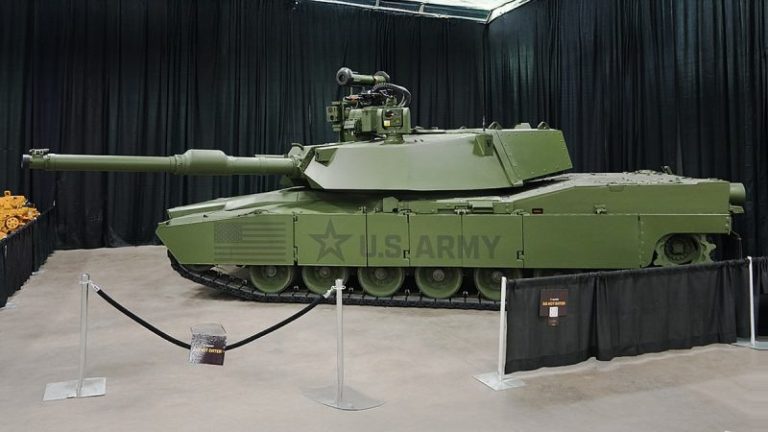
You’ll never guess which program is moving fastest of all: it’s the Army’s new M1E3 Abrams tank.

Get this: the M1E3 Abrams is five years ahead of schedule. Yes, five years. And it’s a hybrid.

While Golden Dome missile defense, the battleship design and other programs are on the drawing board, the Army has accelerated the M1E3 Abrams to wartime pace.

Credit Army Chief of Staff General Randy George and Secretary of the Army Dan Driscoll. It’s part of their push to accelerate top programs like the MV-75 air assault tilt-rotor plane. In the case of the tank, the Army had been studying upgrades and watching the Ukraine war. George and his science adviser Dr. Alex Miller were told they would not see the tank until 2032. ‘We said no,’ Miller recalled.

The result: the M1E3 prototype rolled out at the Detroit Auto Show in January. The first platoon of the M1E3 will be ready for testing by soldiers in 2028.

As seen in Detroit, the new M1E3 is a sleek change from earlier Abrams models. Gone is the top turret position. Now the three-man crew side by side in the hull where armor is strongest. External cameras, sensors, heat-detecting thermal sights, and laser-range finders feed into gaming-inspired cockpit displays. Their remote? It’s not for changing channels. An M1E3 tank crew can remotely fire Javelin anti-tank missile with a 2.5-mile range and a range of other weapons, including loitering munitions.

Here are five killer attributes of the M1E3 Abrams.

  • Formula One Cockpit. The M1E3 tank has a driver interface that ‘looks like an Xbox controller,’ said George. Just as important, the tank uses a modular, ‘plug-and-play’ open systems software backbone. Soldiers can plug in new apps and upgrade it in at a point in the vehicle software where all the things that make the vehicle run are protected.
  • Quiet mode. It’s a hybrid. No, the Army isn’t going eco-friendly. The M1E3 will have a Caterpillar diesel engine and a SAPA transmission that allows it to switch into electric mode. The hybrid electric drive is all about silent stalking. Iraqis facing the Abrams in 1991 called it Whispering Death, but the new Abrams takes the silent mode into a new realm when the tank is running on electric. Add in heat signature reduction and electronic jammers. This is not eco-mode. It’s whispering death. Iraqi soldiers reportedly feared the quiet killing power of the Abrams in 1991 Gulf War; the new Abrams takes silent lethality to a new level.
  • Active Protection. Shoot at an Abrams and ‘active protection’ will detect, target and obliterate you. This is the Army’s term for a system that can sort out a whole range of incoming threats, from recoilless rifles to anti-tank guided missiles, rockets, tank rounds and rocket-propelled grenades.  And of course, drones. The best part is the detection system nails the location of the enemy shooter. So, the Abrams crew can destroy it.
  • Reactive Armor. Already an Abrams standard, tiles fitted on the tank hull prevent penetration by RPGs and deflect blast downward or outwards, depending on the tactical situation. The Army really doesn’t like to talk about this secretive system, but guarantee you, the M1E3 will improve on it.
  • Great Guns.  With lessons drawn from the Ukraine battlefield, a .30-mm chain gun replaces both the .50-caliber and the loader’s gun. The .30-mm can hit light-armor vehicles like the Russian BMP. It can also chew up drones. Remember remote control permits the crew to fire without popping the hatch.

By the way, this is a tank on a diet. Older Abrams models weigh close to 80 tons. Expect the M1E3 to weigh in at about 60 tons, after shedding top turret armor. Lighter weight yields about 40% greater fuel efficiency. It also allows the M1E3 tank to access 30% more bridge crossings in Poland and other NATO Eastern front-line countries facing Russia.

Why a new tank? To deter Russia. The Ukraine war could stop tomorrow, and Putin’s Russia would still be a long-term threat. Russia has lost over 3,000 tanks in Ukraine but can still produce 1,500 tanks per year, according to former NATO Supreme Allied Commander General Christopher Cavoli.

In the end, it is the tank that deters the taking of territory. Just ask the soldiers of the 3rd Battalion, 66th Armored Regiment, 1st Armored Brigade Combat Team, who wrapped up an armored live-fire exercise in Poland during Operation Winter Falcon last month. Polish and U.S. forces fired their M1A2 Abrams tanks side by side. ‘We train to be ready for anything that might happen in the future … you’ve [got to] do that in the place you may have to defend,’ said U.S. Army Col. Matthew Kelley, Commander, 1st Armored Brigade Combat Team.

This post appeared first on FOX NEWS

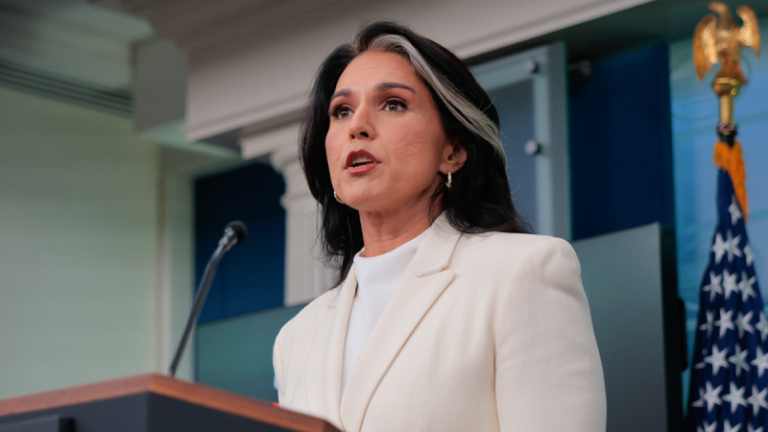
Director of National Intelligence Tulsi Gabbard denied any wrongdoing on Saturday as Democrats question why a whistleblower complaint filed against her last May took nearly a year before it was referred to Congress.

‘[Virginia Democrat] Senator Mark Warner and his friends in the Propaganda Media have repeatedly lied to the American people that I or the ODNI ‘hid’ a whistleblower complaint in a safe for eight months,’ Gabbard wrote in a lengthy X post on Saturday. ‘This is a blatant lie.’

She continued, ‘I am not now, nor have I ever been, in possession or control of the Whistleblower’s complaint, so I obviously could not have ‘hidden’ it in a safe. Biden-era IC Inspector General Tamara Johnson was in possession of and responsible for securing the complaint for months.’

The highly classified complaint by a U.S. intelligence official alleging wrongdoing on the part of Gabbard was filed eight months ago with the intelligence community’s watchdog office and was first reported on by the Wall Street Journal.

The complaint has been locked in a safe since its filing, according to the Journal, with one U.S. official telling the newspaper that the disclosure of its contents could cause ‘grave damage to national security.’

The whistleblower’s lawyer has accused Gabbard’s office of slow-walking the complaint, which her office has denied, calling it ‘baseless and politically motivated.’ 

Meanwhile, Democrats are also questioning why it took her office so long to hand the complaint over to Congress.

‘The law is clear,’ Warner, the senior Democrat on the Senate Intelligence Committee, said Thursday, according to NPR, adding that the complaint was required to be sent to Congress within 21 days of its filing. ‘I think it was an effort to try to bury this whistleblower complaint.’

Neither the contents of the complaint nor the allegations against Gabbard have been revealed.

Gabbard wrote on Saturday that the first time she saw the complaint was ‘when I had to review it to provide guidance on how it should be securely shared with Congress.’

‘As Vice Chair of the Senate Intelligence Committee, Senator Warner knows very well that whistleblower complaints that contain highly classified and compartmented intelligence—even if they contain baseless allegations like this one—must be secured in a safe, which the Biden-era Inspector General Tamara Johnson did and her successor, Inspector General Chris Fox, continued to do,’ she continued. ‘After IC Inspector General Fox hand-delivered the complaint to the Gang of 8, the complaint was returned to a safe where it remains, consistent with any information of such sensitivity.’

She claimed that either ‘Warner knows these facts and is intentionally lying to the American people, or he doesn’t have a clue how these things work and is therefore not qualified to be in the U.S. Senate.’

Gabbard further wrote that ‘When a complaint is not found to be credible, there is no timeline under the law for the provision of security guidance. The ‘21 day’ requirement that Senator Warner alleges I did not comply with, only applies when a complaint is determined by the Inspector General to be both urgent AND apparently credible. That was NOT the case here.’

An inspector general representative said that it had determined some of the allegations in the complaint against Gabbard weren’t credible, while it hasn’t made a determination on others, according to the Journal.

Gabbard said she was made aware that she needed to provide security guidance on the complaint by IC Inspector General Chris Fox on Dec. 4, ‘which he detailed in his letter to Congress.’

Afterward, she said she ‘took immediate action to provide the security guidance to the Intelligence Community Inspector General, who then shared the complaint and referenced intelligence with relevant members of Congress last week.’

In closing her post, Gabbard once again accused Warner of spreading ‘lies and baseless accusations over the months for political gain,’ which she said ‘undermines our national security and is a disservice to the American people and the Intelligence Community.’

Warner’s office told Fox News Digital Gabbard’s post was an ‘inaccurate attack that’s entirely on brand for someone who has already and repeatedly proven she’s unqualified to serve as DNI.’ 

Republicans on the House and Senate intelligence committees have backed up Gabbard, with Sen. Tom Cotton, R-Ark., writing on X on Thursday: ‘I have reviewed this ‘whistleblower’ complaint and the inspector general handling of it. I agree with both inspectors general who have evaluated the matter: the complaint is not credible and the inspectors general and the DNI took the necessary steps to ensure the material has handled and transmitted appropriately in accordance with law.’

He addded, ‘To be frank, it seems like just another effort by the president’s critics in and out of government to undermine policies that they don’t like; it’s definitely not credible allegations of waste, fraud, or abuse.’

Gabbard’s office did not immediately respond to Fox News Digital’s request for comment.

This post appeared first on FOX NEWS

Sen. Lindsey Graham, R-S.C., swiftly pulled the plug on a meeting with Lebanese Chief of Defense Gen. Rodolphe Haykal after the Lebanese official refused to confirm that the Iranian regime-backed Hezbollah movement is a terrorist organization.

Graham posted to X a blunt message about his frustration with the state of Lebanon in particular and Mideast power politics in general.

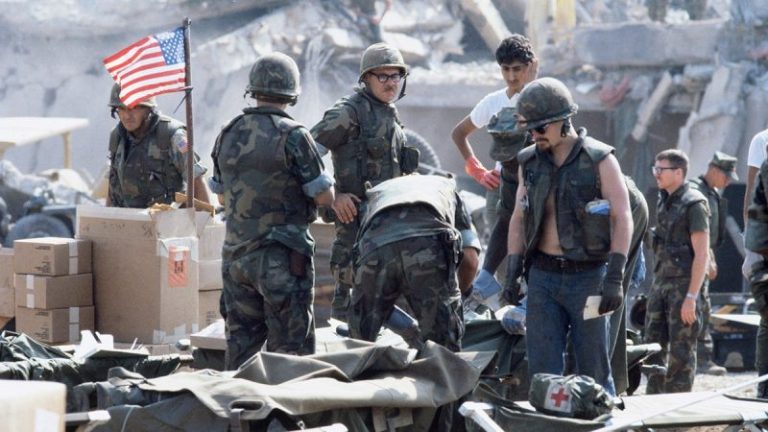
 ‘I just had a very brief meeting with the Lebanese Chief of Defense General Rodolphe Haykal. I asked him point blank if he believes Hezbollah is a terrorist organization. He said, ‘No, not in the context of Lebanon.’ With that, I ended the meeting. They are clearly a terrorist organization. Hezbollah has American blood on its hands. Just ask the U.S. Marines,’ 

He continued, ‘They have been designated as a foreign terrorist organization by both Republican and Democrat administrations since 1997 – for good reason. As long as this attitude exists from the Lebanese Armed Forces, I don’t think we have a reliable partner in them. I am tired of the double speak in the Middle East. Too much is at stake.’

Haykal’s refusal to recognize that Hezbollah is a terrorist organization set off security alarm bells among leading experts on the movement.

Matthew Levitt, a leading scholar on Hezbollah from the Washington Institute, told Fox News Digital that, ‘Gen. Haykal’s comment is only going to further concerns that the LAF sees Hezbollah as an actor with which it should deconflict, rather than disarm. The ceasefire agreement is clear that Hezbollah must be disarmed, in both the south and north of the country. In several instances to date, the LAF appears to have shared with Hezbollah targeting intelligence obtained from Israel through the US-led mechanism rather than acting on it.’

He added, ‘At a time when the LAF is seeking international aid, purportedly to disarm Hezbollah, failing to recognize the group as an adversary not only of Israel but of Lebanon as well undermines the case for further funding.’

Fox News Digital sent multiple press queries to Lebanon’s embassy in Washington, D.C.

Sarit Zehavi, a leading Israeli security expert on Hezbollah from the Israel Alma Research and Education Center, told Fox News Digital that, ‘I was not surprised by what Haykal said. This is exactly the problem. Hezbollah is not designated as a terrorist organization in Lebanon. The Lebanese army… is not willing to clash with Hezbollah. Hezbollah is not willing to voluntarily disarm. It will not happen as long as there is no clash.’

Zehavi claimed the Lebanese Armed Forces has ‘helped Hezbollah to conceal is military activity and weapons storages in south Lebanon.’

The U.S. brokered a ceasefire in Nov. 2024 between Hezbollah and Israel. In August, Lebanon’s government accepted an American plan to disarm the group by the end of 2025. That deadline does not seem to have been met.

U.S. Ambassador to Turkey, Thomas Barrack, who also serves as envoy to Syria, said at a recent Milken Institute event that Lebanon is a ‘failed state.’ 

Barrack said, ‘The confessional system does not work. A Maronite president, a Sunni prime minister and a Shia speaker; 128 parliamentary seats split equally between Islam and Christians; everything is a deadlock.’

He said, ‘Hezbollah is a foreign terrorist by U.S. standards,’ and ‘it also happens to be a large political party within Lebanon that has blocking rights… This idea of saying you have to disarm Hezbollah … you’re not actually gonna do it militarily.’

Barrack said, ‘The U.S. is saying Hezbollah needs to be disarmed, Hezbollah is a foreign terrorist organization, it cannot exist. My personal opinion is you kill one terrorist, you create 10. That can’t be the answer.’ He urged the Lebanese political leadership to ‘run to Israel and make a deal…there is no other answer.’

Walid Phares, an American academic expert on Hezbollah and Lebanon who has advised U.S. presidential candidates, told Fox News Digital that ‘The disarming of Hezbollah is not just a U.S. and international request but also and most importantly a request by a majority of Lebanese since at least the Cedars Revolution in 2005, when 1.5 million Lebanese Christians, Druze and Sunnis rallied against the Syrian occupation and the Khomeinist militia.’

He added, ‘While the Assad forces withdrew, Hezbollah remained armed. In May 2008, the radical Shia militia conducted an urban military coup against the pro-Western government and seized full power until the Israel-Iran war, known as the 12-day war of 2025. The latter was provoked by Hezbollah siding with Hamas during the Oct. 7 war.’

Fox News Digital reported in November that the Trump administration ramped up pressure on the Lebanese government to disarm Hezbollah.

This post appeared first on FOX NEWS

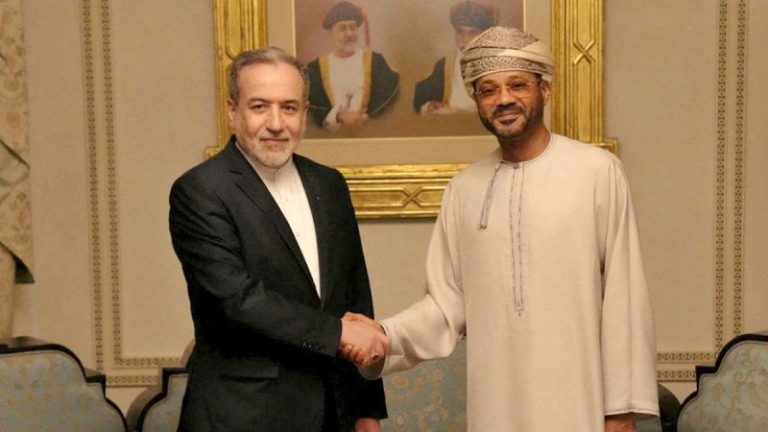
Iranian Foreign Minister Abbas Araghchi said that indirect nuclear talks with the U.S. in Oman were ‘a good start’ and that there was a ‘consensus’ that the negotiations would continue.

‘After a long period without dialogue, our viewpoints were conveyed, and our concerns were expressed. Our interests, the rights of the Iranian people, and all matters that needed to be stated were presented in a very positive atmosphere, and the other side’s views were also heard,’ Araghchi said.

‘It was a good start, but its continuation depends on consultations in our respective capitals and deciding on how to proceed,’ he added.

Omani Foreign Minister Badr al-Busaidi met with both Iranian and American officials on Friday, the Foreign Ministry of Oman said on X. The ministry said that al-Busaidi held separate meetings with Araghchi and U.S. special envoy Steve Witkoff and Jared Kushner.

‘The consultations focused on preparing the appropriate conditions for resuming diplomatic and technical negotiations, while emphasizing their importance, in light of the parties’ determination to ensure their success in achieving sustainable security and stability,’ the Foreign Ministry of Oman said.

Oman reportedly put out a public statement acknowledging the talks after journalists with The Associated Press saw Iranian and American officials separately visit the palace, the outlet reported. The AP said it was not immediately clear if talks were done for the day, but noted that the palace was empty after the convoys left.

The Iranian representatives reportedly met with al-Busaidi first, and only after their convoy left the palace did another set of vehicles arrive, one of which had an American flag, according to the AP. The outlet said the SUV flying the American flag stayed at the palace for an hour and a half.

The talks were initially set to take place in Turkey, but were later moved, according to Secretary of State Marco Rubio, who confirmed the change in venue on Wednesday.

‘We thought we had an established forum that had been agreed to in Turkey. It was put together by a number of partners who wanted to attend and be a part of it,’ Rubio said when taking questions from reporters on Wednesday.

‘I saw conflicting reports yesterday from the Iranian side saying that they had not agreed to that. So, that’s still being worked through. At the end of the day, the United States is prepared to engage in, has always been prepared to engage with Iran.’

Iranian officials also reportedly tried to limit the talks to a bilateral U.S.-Iran format, excluding other Arab and regional countries, according to Axios.

Tensions between Iran and the U.S. have been high since Washington bombed Tehran’s nuclear facilities in the summer of 2025. Things escalated further as the U.S. condemned Iran’s treatment of anti-regime protesters, with President Donald Trump threatening to act if government actors used violence against demonstrators.

Trump recently said in an interview with NBC News that Iranian Supreme Leader Ayatollah Ali Khamenei ‘should be very worried,’ though the president acknowledged that the two countries were ‘negotiating.’

When pressed about why he has not followed through on threats to take action if the regime used violence against protesters, Trump said that the U.S. ‘had their back’ and that the ‘country’s a mess right now because of us,’ referring to the strikes on Iran’s nuclear facilities. Trump also told NBC News that the U.S. had learned that Iran was attempting to build a new nuclear site in a different part of the country.

The president said that he issued a threat that if Iran were to build a new nuclear facility, the U.S. would ‘do very bad things.’

It is not immediately clear whether there will be more discussions over the course of the weekend or if there are any plans for direct discussions between Iranian and American officials.

The State Department did not immediately respond to Fox News Digital’s request for comment.

This post appeared first on FOX NEWS

House Oversight Chairman James Comer, R-Ky., announced Friday that he’s investigating companies linked to Ilhan Omar’s, D-Minn., husband, citing a dramatic increase in value in a short time and raising questions about whether their success could be tied to widespread fraud schemes uncovered in Minnesota. 

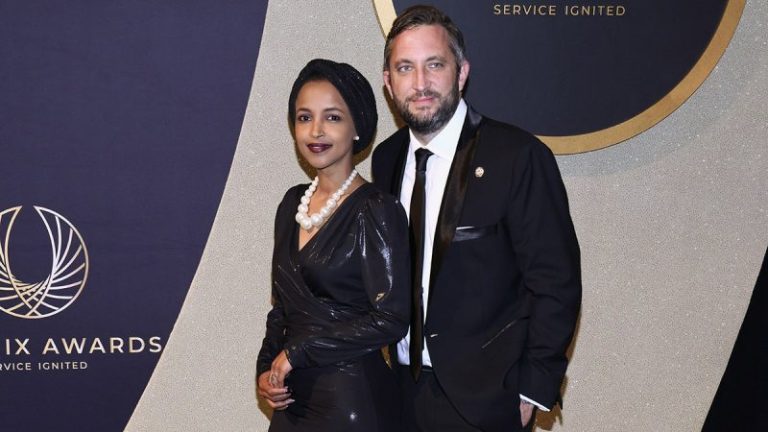
In a letter published Friday morning, Comer said the Oversight Committee would conduct a closer look at the ventures of Tim Mynett, who married Omar in March 2020.

‘We want to know: who’s funding this? And who’s buying access?’ Comer said.

In his letter, Comer described how two of Mynett’s companies, eStCru LL. and Rose Lake Capital LL., went from being worth $51,000 in 2023 to up to $30 million in 2024.

‘Given that these companies do not publicly list their investors or where their money comes from, this sudden jump in values raises concerns that unknown individuals may be investing to gain influence with your wife,’ Comer wrote in his letter to Mynett, citing congressional financial disclosures.

The Oversight Committee is asking Mynett to produce communications regarding the companies’ latest audits, communications with the Securities and Exchange Commission (SEC), correspondence with any other federal agencies and travel records to or from the United Arab Emirates, Somalia or Kenya.

Comer did not explain how the committee is approaching the investigation but hinted that lawmakers were on guard for possible connections to the fraud schemes in Minnesota.

‘The Committee on Oversight and Government Reform is investigating widespread fraud in Minnesota’s social service programs,’ Comer told Mynett in his letter.

Mynett and Omar have come under public scrutiny in recent months as financial reports revealed that the pair’s wealth has grown exponentially since Omar arrived in Congress in 2019.

Those concerns overlap with ongoing federal, state and congressional probes into as much as $9 billion in state funding that Minnesota may have lost to fraud. Through scores of schemes, fraudsters allegedly siphoned funding from government programs like daycare centers and health clinics while returning no benefits, greatly exaggerating their services and pocketing government funding.

Rep. Tom Emmer, R-Minn., the House whip and No. 2 Republican in the chamber, said he expects the public will soon secure answers through the Oversight Committee’s demands for additional details.

‘As President Trump said last month: Time will tell all. I’m confident that Rep. Comer’s investigation into Ilhan Omar’s suspiciously exploding wealth will reveal the truth. The truth sets some people free, but it may send Ilhan packing.’

The committee has asked to see its requested information no later than Feb. 19.

Rep. Omar’s office did not immediately respond to a request for comment.

This post appeared first on FOX NEWS

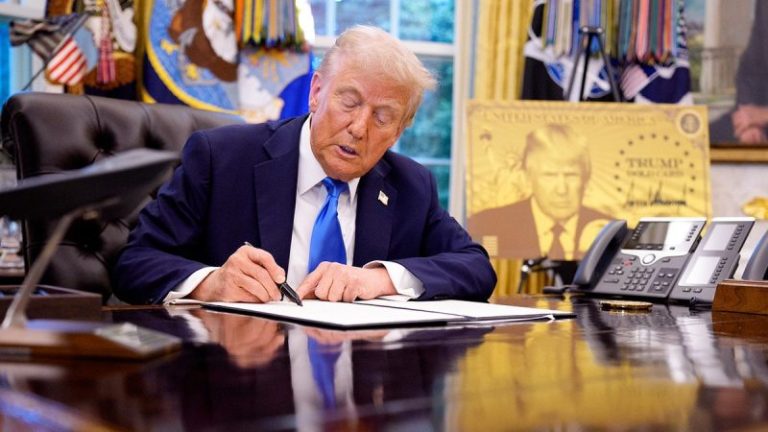
President Donald Trump on Thursday signed an executive order requiring the government to assess foreign weapons sales based on their impact on U.S. production capacity for key systems and to favor allies whose defense investments and strategic importance align with U.S. national security priorities.

Under the order, obtained first by Fox News Digital, the Departments of War, State and Commerce are instructed to ensure that U.S. arms transfers support weapons systems deemed most operationally relevant to the National Security Strategy, reinforce critical supply chains, and prioritize partners that have invested in their own defense and occupy strategically important regions.

The administration argues that past arms transfer policy allowed foreign demand to shape U.S. production decisions, contributing to backlogs, cost overruns and delivery delays that left both the U.S. military and its allies waiting years for critical equipment.

‘The America First Arms Transfer Strategy will now leverage over $300 billion in annual defense sales to strategically reindustrialize the United States and rapidly deliver American-manufactured weapons to help our partners and allies establish deterrence and defend themselves,’ according to a White House fact sheet.

A central goal of the order is to speed up a foreign military sales process that defense officials and industry leaders have long criticized as slow and overly bureaucratic. The order directs federal agencies to identify ways to streamline enhanced end-use monitoring requirements, third-party transfer approvals and the congressional notification process — steps the administration says have contributed to years-long delays in delivering U.S. weapons overseas.

The order also creates a new Promoting American Military Sales Task Force charged with overseeing implementation of the strategy and tracking major defense sales across the government. In a move aimed at increasing accountability, the administration says agencies will be required to publish aggregate quarterly performance metrics showing how quickly defense sales cases are being executed.

 The strategy also signals a shift in how the United States prioritizes its partners. The order directs the government to favor countries that have invested in their own defense and occupy strategically important regions, effectively tying arms sales decisions more closely to U.S. military planning and geographic priorities.

Other partners could face longer timelines or lower priority if their requests do not align with U.S. strategic or industrial objectives. While the order does not name specific countries, it reflects an effort to focus limited U.S. production capacity on allies viewed as most critical to executing the National Security Strategy.

The order also instructs the War, State and Commerce departments to ‘find efficiencies in the Enhanced End Use Monitoring criteria, the Third-Party Transfer process, and the Congressional Notification process.’

Congress will likely be watching how the administration implements the order, especially provisions aimed at speeding both oversight of U.S. weapons once they are sold abroad and the process for notifying lawmakers about major arms deals. Lawmakers have argued those steps help prevent misuse of U.S. weapons, even as they have criticized delays that slow deliveries to allies.

The order follows a series of recent defense-related executive actions taken by Trump. In January 2026, he signed an order directing defense contractors to prioritize production capacity, innovation and on-time delivery over stock buybacks and other corporate distributions.

That built on an April 2025 order aimed at improving speed and accountability in the foreign military sales system, as well as a January 2025 order focused on modernizing defense acquisitions and reducing red tape across the defense industrial base.

This post appeared first on FOX NEWS

Former president Bill Clinton said on X that he has shared what he knows about the crimes of disgraced financier Jeffrey Epstein in a sworn statement shared with the House Oversight Committee, which both Bill and Hillary Clinton have agreed to testify in front of under subpoena pressure.  

‘I have called for the full release of the Epstein files. I have provided a sworn statement of what I know,’ the former president said on X, formerly Twitter, Friday afternoon. ‘And just this week, I’ve agreed to appear in person before the committee. But it’s still not enough for Republicans on the House Oversight Committee.’

In the wake of news that the Clintons would comply with House Republicans’ subpoenas to testify, after concerns they would not and threats of contempt, Republicans accused the Clintons of ‘requesting special treatment.’

After the Clinton’s attorneys sent the House Oversight Committee a letter indicating they would comply and testify under certain conditions, Democrat Ranking Member of the committee, Robert Garcia, said the letter amounted to full compliance with the committee’s demands.

However, House Oversight Committee Chairman James Comer disputed the characterization, telling Fox News Digital the agreement lacked specificity.  

‘The Clintons’ counsel has said they agree to terms, but those terms lack clarity yet again, and they have provided no dates for their depositions,’ Comer said. ‘The only reason they have said they agree to terms is because the House has moved forward with contempt. I will clarify the terms they are agreeing to and then discuss next steps with my committee members.’

The Clintons’ change of heart led the House to temporarily pause proceedings on holding them in contempt on Monday night. 

Democrats on the committee have pointed out that Comer has not pushed to hold others who did not appear in contempt, nor has he made any threats against the DOJ for failing to produce all of its documents on Epstein by a deadline agreed to by Congress late last year. The department has produced a fraction of the documents expected so far.

‘Now, Chairman Comer says he wants cameras, but only behind closed doors. Who benefits from this arrangement? It’s not Epstein’s victims, who deserve justice,’ Clinton said in his X post on Friday afternoon. ‘Not the public, who deserve the truth. It serves only partisan interests. This is not fact-finding, it’s pure politics.’

‘Now, Chairman Comer says he wants cameras, but only behind closed doors,’ he continued. ‘Who benefits from this arrangement? It’s not Epstein’s victims, who deserve justice. Not the public, who deserve the truth. It serves only partisan interests. This is not fact-finding, it’s pure politics.’


Fox News Digital’s Greg Wehner and Elizabeth Elkind contributed to this report.

This post appeared first on FOX NEWS

Here’s a quick recap of the crypto landscape for Friday (February 6) as of 9:00 p.m. UTC.

Get the latest insights on Bitcoin, Ether and altcoins, along with a round-up of key cryptocurrency market news.

Bitcoin (BTC) was priced at US$70,178.66, up by 11.3 percent over 24 hours.

Bitcoin price performance, February 6, 2026.

Chart via TradingView.

Bitcoin has stopped behaving as an alternative safe-haven asset and has re-aligned with the risk-asset cycle. Its high correlation with traditional financial markets, including a broad sell-off in technology stocks, precious metals, and equities, suggests a scenario of systemic stress and scarce liquidity.

Downward pressure intensified after breaking key technical levels, causing nearly US$770 million in leveraged long positions to be liquidated in 24 hours, suggesting the market’s ‘cleansing phase’ is ongoing. The decline was exacerbated by a strong dollar and rising bond yields, which reduced the appeal of non-yielding assets like cryptocurrencies, prompting a rotation into defensive assets.

In the short term, price action will be limited and vulnerable to renewed selling pressure as long as restrictive financial conditions and a defensive tone prevail in global markets. Stabilization requires an improvement in global financial conditions and Bitcoin’s ability to rebuild solid technical support.

Ether (ETH) was priced at US$2,052.03, up by 10 percent over the last 24 hours.

Altcoin price update

  • XRP (XRP) was priced at US$1.46, up by 25.2 over 24 hours.
  • Solana (SOL) was trading at US$87.37, up by 10.4 percent over 24 hours.

Securities Disclosure: I, Meagen Seatter, hold no direct investment interest in any company mentioned in this article.

This post appeared first on investingnews.com

It’s been a wild couple of weeks for gold and silver.

After surging to record highs at the end of January, prices for both precious metals saw significant corrections, creating turmoil for market participants.

This week brought some relief, with gold bouncing back from its low point and even trading above US$5,000 per ounce for a brief period of time.

Silver, which is known for outperforming gold on both the upside and the downside, was more volatile, but seems to have found support around the US$70 per ounce level.

Why did gold and silver drop, and more importantly, what’s next? As always, there are a variety of different factors at play, but I’ll give you a rundown of what I’ve been hearing.

Starting with the pullback, I spoke with Joe Cavatoni of the World Gold Council, who pointed to speculative players as a key reason for gold’s price decline. Here’s how he explained it:

‘At the end of this, you’re looking at a lot of people who were pushing the price higher — speculative in nature — pulling back and taking money off the table. That’s why I think we’re seeing a correction in the price. I don’t think that we have an issue with, fundamentally, what’s going on in the gold market.’

Gary Savage of the Smart Money Tracker newsletter made a similar comment, saying that there are times when sentiment gets so bullish that eventually there’s no one left to buy.

However, on the silver side he saw signs of market manipulation as well:

‘Some of it is just (that) we got way too bullish, ran out of buyers. We were due for some kind of correction anyway, and I think the banks took advantage of that and coordinated a huge overnight attack that dropped silver … I think it was almost 30 percent, or maybe it was 30 percent, almost overnight. That allowed them to get out of their shorts, because a lot of those contracts were going to stand for delivery, and they were going to have to buy physical silver at US$120 an ounce to to deliver.’

Adding more nuance to the silver story this week was the news that billionaire Chinese trader Bian Ximing has reportedly established the largest net short position on the Shanghai Futures Exchange, with his bet against the white metal clocking in at US$300 million.

Bloomberg analysis of exchange data shows he started ‘ramping up silver shorts’ in the last week of January, although he initially began shifting from a long silver stance this past November.

Aside from silver, Bian is known for his moves in gold and copper.

There’s also been commentary suggesting that the nomination of Kevin Warsh for the US Federal Reserve chair position has weighed on gold and silver prices.

President Donald Trump announced his choice on January 30, with market watchers quickly pointing to Warsh’s hawkish reputation and questioning whether he will fall in line with Trump’s calls for lower interest rates. Rates have been a sticking point between Trump and current Fed Chair Jerome Powell.

However, in the days since the news broke, the tone has shifted, with Trump himself saying that Warsh wouldn’t have gotten the job if he said he wanted to raise rates.

Taking a step back from what’s happening now, I want to emphasize that the majority of the experts I’ve been speaking with recently don’t believe gold and silver are topping.

In a January 25 interview, Adrian Day of Adrian Day Asset Management said exactly that, pointing to previous bull markets where both metals moved steeply down before continuing up. This quote is from before last week’s correction, but I think you’ll see why it’s still relevant:

‘A pullback is always in the cards. And people forget, everybody talks about … 1974 to 1975, when gold dropped almost 50 percent. But people forget, the same thing happened in 2006. Halfway through the bull market, you had a 30 percent correction in gold, which of course means a much bigger correction for gold stocks.

‘So a pullback at some point is always not just a possibility, but it’s almost a certainty. But if we rephrase the question to, ‘Is this a top?’ You know, absolutely not. In my view, we are absolutely nowhere near a top.’

With that said, a point that’s come up repeatedly in my interviews lately is personalization — while it’s valuable to listen to other people’s views, what’s really important is to form your own opinions and understand why you own the assets in your portfolio. If you can do that, you’ll be better equipped to weather any storms, and to buy and sell when it’s time.

Securities Disclosure: I, Charlotte McLeod, hold no direct investment interest in any company mentioned in this article.

This post appeared first on investingnews.com