Author

admin

Browsing

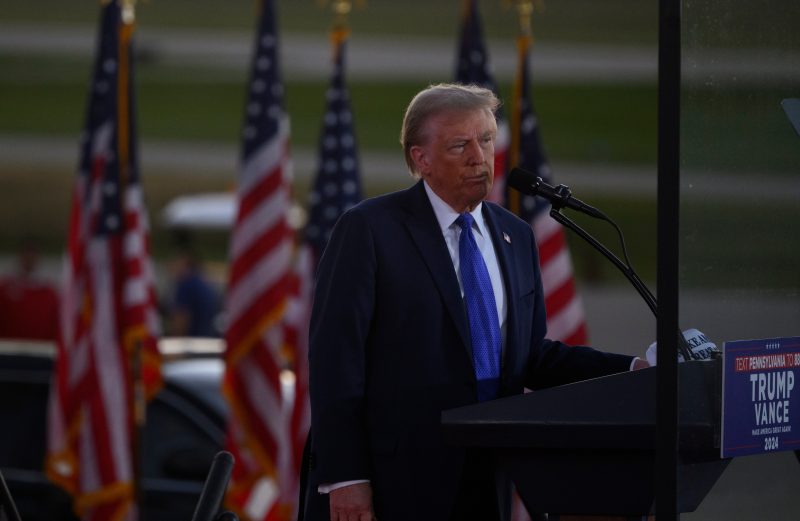
President Donald Trump’s executive order aimed at slashing U.S. drug prices has divided Democrats on Capitol Hill, with some cautiously optimistic while others dismissed the move as a bluster.

Most Democratic lawmakers who spoke with Fox News Digital about the order noted they had not read into the details, but the reactions were mostly split.

‘It certainly seems more bark than it is bite,’ Rep. Richard Neal, D-Mass., the top Democrat on the House Ways & Means Committee, told Fox News Digital. 

Neal said it ‘strikes me as though it’s another example of the executive order that garners a lot of attention’ with little impact, though he noted he was still looking into the details.

Rep. George Latimer of New York, a first-term Democrat who unseated a former member of the progressive ‘Squad,’ ex-Rep. Jamaal Bowman, D-N.Y., signaled he was hopeful about the initiative.

‘If we can keep drug costs low, that’s a positive thing,’ Latimer said. ‘I don’t, you know, oppose everything the president does, things that help people lower costs. If that’s what this turns into, then yes, it’s a worthwhile idea. But I have to be honest, I’ve got to read it more closely to understand it better.’

Trump announced Monday that he was directing the Department of Health and Human Services to set price targets for pharmaceutical companies.

The president said the order would have pharmaceutical companies set drug prices on par with the lowest prices in other developed countries.

He said, ‘some prescription drug and pharmaceutical prices will be reduced almost immediately by 50 to 80 to 90%.’

Democratic Rep. Lou Correa, D-Calif., told Fox News Digital when asked about the order, ‘It’s always a good thing to reduce drug costs.’

‘I think it’s a move in the right direction, let’s just see the details,’ Correa added.

Rep. Lloyd Doggett, D-Texas, like Neal, told Fox News Digital he was more skeptical.

‘My feeling is that, like his…announcements during his first term, there’s much talk and no meaningful reduction of drug prices,’ Doggett said. ‘It remains to be seen whether any patient in America will see a price reduced on a single drug as a result of this order. So, until I see action, I will not believe that he has truly committed to reducing prices.’

House Democratic Caucus Chair Pete Aguilar, D-Calif., also said he did not believe Trump was ‘serious’ when asked.

‘All of this is just a disingenuous effort…on the part of House Republicans and Donald Trump, to pretend like they were looking out for people,’ Aguilar said. ‘If they were serious about it, the policy would be placed within their reconciliation bill. It’s not. This is just a performance effort by the president.’

Meanwhile, Rep. Ro Khanna, D-Calif., introduced a House bill to make Trump’s order permanent.

‘I rise today, to introduce as legislation, President Trump’s executive order for the most favored nation status on drug pricing,’ Khanna said on the House floor.

‘My legislation will codify President Trump’s executive order, which basically says that Americans should not pay more for drugs than people in other countries and other parts of the world.’

In an exclusive Fox News interview with Sean Hannity, Trump argued that his executive order should offset Democrats’ concerns with his ‘big, beautiful’ budget reconciliation bill being pushed by Republicans.

Democrats have accused Republicans of using the bill to gut critical programs like Medicaid for millions of people who need it, while the GOP has contended it was just trying to eliminate waste and abuse within the system.

‘It’s the Democrats’ fault that people are being ripped off for years and years. And now I hear Democrats saying, ‘Oh, well, we’re going to not go for the bill.’ It’s going to be very hard for them not to approve of the big, beautiful bill that we’re doing,’ Trump said. ‘We’re doing the biggest tax cuts in the history of our country because people are going to be getting a 50 to a 90% reduction on drug prices.’

When reached for comment on Democrats’ responses, White House spokesman Kush Desai told Fox News Digital, ‘Democrats talk; President Trump delivers. Instead of again putting politics over the American people, Democrats should work with the Trump administration to build on the President’s historic action to lower drug prices and end global freeriding off the backs of Americans.’

This post appeared first on FOX NEWS

NEWYou can now listen to Fox News articles!

On May 5, President Donald Trump signed an executive order outlawing future federal funds going to gain-of-function research. This move comes as the nation begins to reckon with the broader failures of its pandemic response – failures that extended far beyond the lab and into every aspect of public health policy.

As the acute phase of the COVID-19 pandemic fades into the rearview mirror, the United States finds itself engaged in postmortems: on lockdowns, vaccines, school closures and public trust. But there’s one glaring lesson the U.S. has yet to fully absorb – its health strategy during crises can’t rely on just one type of tool. A narrow, binary response to COVID-19 cost lives. The country must do better next time.

During the pandemic, the public was often presented with a simple directive: get vaccinated or take your chances. While most Americans indeed should have gotten vaccinated, policymakers should have provided more room for nuance and variation. They ignored a core truth of medicine – no single solution fits every individual. The virus evolved. Patient responses varied. But the official toolkit did not adapt.

What the U.S. needed (and still needs) is a robust, flexible public health approach that supports a range of modalities: vaccines, yes, but also antivirals, monoclonal antibodies (mAbs) and emerging biologics. 

A resilient system is one that can pivot quickly, match patients with the right intervention and adapt as science advances.

Monoclonal antibodies offer a clear example of what went wrong. These therapies, proven to reduce hospitalizations and deaths among high-risk patients, were widely distributed early in the pandemic and used successfully by top federal officials, including the president. But in late 2021 and early 2022, federal authorities stopped distributing them, citing reduced efficacy against new variants.

This was a mistake. mAbs are a platform technology. They can be tailored to variants and deployed quickly. They are especially important for those who don’t respond well to vaccines. But nearly five years after the start of the pandemic, no mAb has received full FDA approval for respiratory virus prevention despite meeting the same safety and efficacy benchmarks used to fast-track other medical countermeasures. 

Meanwhile, the public was encouraged to rely on booster shots which, while still additive, lost efficacy as the pandemic continued. CDC data show that the bivalent booster provided only 37% protection against hospitalization for adults over 65 after several months. For the immunocompromised, protection was even lower. Yet, therapies that could have closed that gap were taken off the table.

The U.S. should have maintained an all-of-the-above approach to treatment so its health professionals could make patient recommendations on a case-by-case basis, ensuring the most vulnerable Americans receive adequate protection. 

More broadly, five years later, the U.S. still lacks a proactive framework for deploying flexible, evidence-driven therapeutics in a public health emergency. The U.S. needs a system that doesn’t just rely on whatever is first to market; it needs one that actively supports a diversified portfolio of tools.

That means empowering agencies like the Biomedical Advanced Research and Development Authority and the National Institutes of Health to invest in adaptable countermeasures – antibody platforms, broad-spectrum antivirals, rapid diagnostics and therapeutic RNA technologies. It also means modernizing the FDA’s approval pathways to reflect the pace of innovation. When real-world evidence shows that a therapy is saving lives, regulators should have the flexibility to act.

Congress can help by authorizing funding streams that reward versatility, creating incentives for companies to maintain and adapt an all-of-the-above treatment approach, and ensuring public-private partnerships are built for speed and scale. Legislation could also establish a standing procurement mechanism for variant-specific updates, not just vaccines.

All of this will help to mitigate the damage of one of the greatest casualties of the pandemic – the decline of public trust in America’s health institutions. This erosion stemmed from the sense that key decisions lacked transparency or failed to account for patients’ diverse needs.

According to a 2022 Pew Research Center survey, only 29% of U.S. adults said they had a great deal of confidence in medical scientists, down from 40% at the beginning of the pandemic. Trust in public health officials followed a similar decline.

A more transparent, inclusive approach, where policymakers communicate the rationale behind treatment shifts and openly assess real-world outcomes, can help rebuild that trust. A better system would emphasize data-sharing, clear communication, and respect for physician judgment in tailoring care to patient needs.

COVID-19 exposed the limits of the U.S.’ current playbook. A more effective future demands flexibility, pluralism and the humility to admit health policymakers don’t always know right away what will work best, or for whom. 

But if regulators build the right system – one that encourages innovation, evaluates outcomes in real time, and keeps every safe and effective tool on the table – they won’t have to learn this lesson again the hard way.

This post appeared first on FOX NEWS

President Donald Trump on Thursday arrived in the United Arab Emirates for his final stop in the Middle East this week in a visit that marked the first time a U.S. president has traveled to the nation in nearly 20 years, following President George W. Bush’s trip in 2008.

Trump, who has secured major business deals first in Saudi Arabia and then Qatar, is expected to announce more agreements with what has long been one of the U.S.’ chief trading partners in the region — though given recently announced trillion-dollar deals, it is unclear what more the Emiratis will agree to. 

In March, the UAE pledged a $1.4 trillion investment in the U.S. economy over the next decade through AI infrastructure, semiconductor, energy and American manufacturing initiatives, including a plan to nearly double U.S. aluminum production by investing in a new smelter for the first time in 35 years. 

On the eve of the president’s visit to the Middle Eastern nation, the State Department also announced a $1.4 billion sale of CH-47 F Chinook helicopters and F-16 fighter jet parts to Abu Dhabi.

However, lawmakers on Wednesday suggested they may block this sale amid concerns over direct personal business ties, as Trump’s crypto venture has also received a $2 billion investment by a UAE-backed investment firm.

‘If I was a betting person, I’d bet that the Emiratis almost certainly kept some things in reserve for President Trump’s actual visit that can be announced when he’s on the ground in Abu Dhabi,’ John Hannah, former national security advisor to Dick Cheney and current Randi & Charles Wax senior fellow at the Jewish Institute for National Security of America (JINSA), told Fox News Digital. ‘I wouldn’t be at all surprised if we see some new items unveiled or some additional details put out on some of the earlier announcements.’ 

‘The UAE has clearly staked its future on being the Middle East leader in a wide range of 21st-century technologies, from AI to chips to space,’ he added. ‘And of course, the shopping list for high-end weapons is almost limitless and always a possible deliverable for a trip like this.’  

Increased scrutiny arose around Trump’s Middle East tour as engagement with all three nations holds personal value to him, given the Trump Organization’s luxury resorts, hotels, golf courses, real estate projects and crypto investment schemes in the region.

But all three nations also hold significant value to Washington, as they have become key players in some of the toughest geopolitical issues facing the U.S. and its allies. 

Saudi Arabia and Qatar have been integral in facilitating U.S. negotiations when it comes to ending Russia’s war in Ukraine and hostage negotiations in the Gaza Strip.

While neither of these issues appeared to be top points of discussion in Trump’s visit to Saudi Arabia or Qatar, he may hit on geopolitical ties more heavily when it comes to the UAE, particularly given that Abu Dhabi is one of the few Middle Eastern nations that holds normalized diplomatic ties with Israel.

The UAE has ardently opposed Israel’s military operations in the Gaza Strip, has called for a two-state solution, and has rejected Trump’s ‘riviera plans,’ instead favoring an Egypt-reconstruction alternative.

But Abu Dhabi has also maintained relations with the U.S.’ biggest adversaries, including China, Russia and Iran, which could be a topic of conversation during Trump’s one-day visit.

‘As everywhere on this trip, the headlines will likely be dominated by the dollar signs and deal-making,’ Hannah said. ‘But I’m personally most interested in the geopolitical angle of trying to reset the U.S.-Emirati strategic partnership, especially in the context of America’s great power competition with China and to a lesser extent Russia, and regionally with Iran.’

Hannah explained that Trump’s visit to the UAE exemplifies a recommitment by the U.S. economically and militarily to support Abu Dhabi’s ‘stability, security, and success in a dangerous neighborhood’ and could ‘pay real dividends going forward.’

 ‘The UAE’s top leadership has come to believe that putting most of its eggs into the American basket was an increasingly risky bet as one president after another decided that the Middle East was a lost cause — nothing but ‘blood and sand’ as President Trump famously said in his first term — and the country needed to pivot its focus toward Asia,’ he continued. ‘With a country as influential and resource-rich as the UAE, correcting that unhelpful perception and putting the strategic relationship back on a much more positive dynamic is an important goal.’   

This post appeared first on FOX NEWS

Sister Stephanie Schmidt had a hunch about what her fellow nuns would discuss over dinner at their Erie, Pennsylvania, monastery on Wednesday night.

The day before, a Republican operative in the battleground state falsely suggested to his nearly 58,000 followers on X that no one lived at the monastery and that mail ballots cast from there would be “illegal votes.” Cliff Maloney, who hired 120 people to go door-to-door across Pennsylvania urging Republican voters to return their mail ballots, wrote on X that one of those workers had “discovered” an Erie address where 53 people were registered to vote but “NO ONE lives there.”

This post appeared first on washingtonpost.com

A former deputy Palm Beach County sheriff who fled to Moscow and became one of the Kremlin’s most prolific propagandists is working directly with Russian military intelligence to pump out deepfakes and circulate misinformation that targets Vice President Kamala Harris’s campaign, according to Russian documents obtained by a European intelligence service and reviewed by The Washington Post.

This post appeared first on washingtonpost.com

MADISON, Wis. — Early voting kicked off in this battleground state this week with computer delays and long lines.

Voters waited as long as three hours Tuesday to cast ballots in West Bend, a city of about 32,000, city clerk Jilline Dobratz said. State computer issues reared up again Wednesday, and by midafternoon, voters had to wait about 90 minutes to vote in the community 40 miles northwest of Milwaukee, she said. Residents were not used to anything like it.

This post appeared first on washingtonpost.com

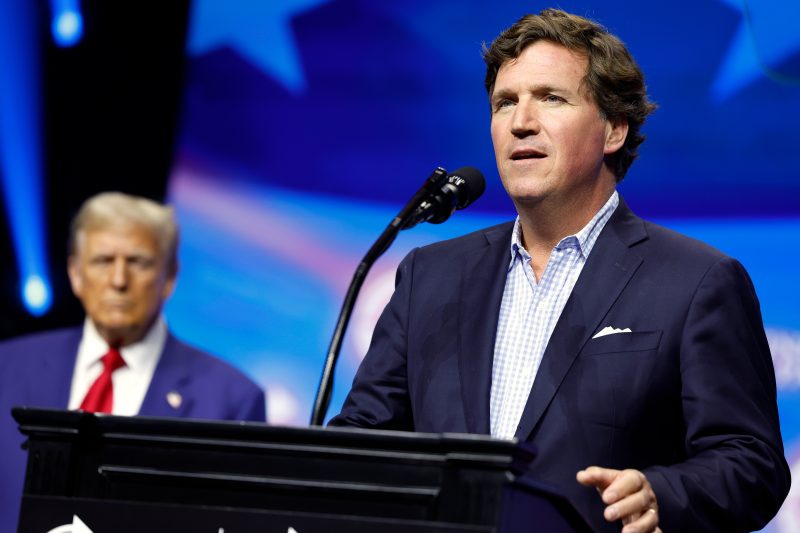
DULUTH, Ga. — Former Fox News host Tucker Carlson warmed up the crowd at Donald Trump’s rally here Wednesday night with a dark metaphor, bashing Vice President Kamala Harris and declaring that “dad” was coming home to mete out discipline.

“He’s pissed!” Carlson said to extended cheers. “Dad is pissed. … And when dad gets home, you know what he says? ‘You’ve been a bad girl. You’ve been a bad little girl, and you’re getting a vigorous spanking right now.’”

This post appeared first on washingtonpost.com

(TheNewswire)

Widest Vein Ever Intersected at Drayton-Black Lake

VANCOUVER, BC TheNewswire – May 15, 2025 Heritage Mining Ltd. (CSE: HML FRA:Y66) (‘ Heritage ‘ or the ‘ Company ‘) is pleased to announce preliminary results from its 2025 diamond drill program at Zone 3 extension, Drayton Black Lake project (‘ Project ‘). Two scout holes have been completed, and a third hole is in progress, testing a major northeast-southwest striking linear magnetic feature that is granite-hosted.  The second scout hole (HML25-011) intersected the widest quartz vein ever drilled within the Project area to date, approximately 46m wide (true width ~32m, assuming the vein is near vertical).  The Company has therefore modified the current drill program to further test this quartz-rich structure at deeper and shallower levels, as well as along strike.

Zone 3 Extension Drill Highlights:

  • Drilling discovered a broad zone of granite-hosted quartz vein mineralization

  • Widest quartz vein ever intersected at the Project

  • Vein width is ~46 metres (from 209.40m to 255.55m)

  • Locally visible sulphides include chalcopyrite, galena, pyrite and hematite staining

  • Drill core is being logged, split and sent for assay as soon as possible

We are extremely pleased to have intersected such a broad vein zone in only the second scout hole at Zone 3 Extension prospect.  Our geologists have observed locally significant sulphides in the quartz (galena, molybdenite, pyrite), indicating this structure acted as an important conduit for mineralized fluids. Tapping into such a broad quartz structure this early into the program underscores the significant opportunity at the Drayton-Black Lake Project for further discoveries within this established gold-rich camp.  This is an excellent start to Heritage’s scout drill program, and we are now redesigning the drill program to ensure this mega-structure is pierced further along strike and at a range of depths. We look forward to reporting more results from the scout program in due course.’ Commented Peter Schloo, President, CEO and Director of Heritage Mining.


Click Image To View Full Size


Click Image To View Full Size


Click Image To View Full Size

Click Image To View Full Size


Click Image To View Full Size


Click Image To View Full Size


Click Image To View Full Size


Click Image To View Full Size


Click Image To View Full Size


Click Image To View Full Size


Click Image To View Full Size


Click Image To View Full Size

Figure 1: HML25-011 Box 5 8 (top) to 69 (bottom), ~209.40m to ~255.55m (~46m); shows the thickest quartz sulfide vein ever intersected at Drayton-Black Lake.

Discussion of Results

The 2025 drill program at Zone 3 Extension is targeting granite-hosted mineralized quartz-vein structures that were first observed in the HML Zone 3 drilling program of August 2024. T wo scout holes (HML25-010 and -011) totalling 592m have been completed by the Company.  Both drill holes tested a northeast trending linear magnetic feature that is ~2km long and up to ~200m wide hosted by the Lake of the Bays Batholith.  These scout holes were drilled approximately ~1km from the nearest drill site at Zone 3 2024 drilling targets.

The first scout hole (HML25-010) intersected multiple zones of granite cut by broadly spaced, cm-scale quartz – pyrite – chalcopyrite veins. The second scout drill hole HML25-011 intersected much wider structural zones, including a massive quartz vein from 209.4m to 255.5m depth (true width ~32m), the widest quartz-vein structure ever intersected on the Project.  This ‘Mega’ quartz structure is characterized by ‘dirty’ quartz with moderate hematite staining and locally contains disseminated and vein-hosted pyrite, chalcopyrite, sphalerite, galena and molybdenite mineralization (Figure 4).  This maiden discovery of a ‘mega’ quartz structure is highly encouraging and warrants further exploration.


Click Image To View Full Size

Figure 2: Plan map view showing the vein zone in HML025-011 (red line segment); line of section for Figure 3 is shown with a dashed white line.


Click Image To View Full Size

Figure 3: Cross-Section view showing planned holes to test the vein zone in HML025-011. The planned drill fan is arranged approximately perpendicular to the global trend of the linear magnetic feature shown on the map in Figure 2.

Figure 4: Selected mineralization photos from HML25-011 209.40m – 255.55m showing ‘dirty’ quartz with moderate hematite staining and locally contains disseminated and vein hosted pyrite, chalcopyrite, sphalerite, galena and molybdenite mineralization.

Qualified Person

Stephen Hughes P. Geo, Strategic Advisor for the Company, serves as a qualified person as defined by National Instrument 43-101 – Standards of Disclosure for Mineral Projects and has reviewed the scientific and technical information in this news release, approving the disclosure herein.

ABOUT HERITAGE MINING LTD.

The Company is a Canadian mineral exploration company advancing its two high grade gold-silver-copper projects in Northwestern Ontario. The Drayton-Black Lake and the Contact Bay projects are located near Sioux Lookout in the underexplored Eagle-Wabigoon-Manitou Greenstone Belt . Both projects benefit from a wealth of historic data, excellent site access and logistical support from the local community. The Company is well capitalized, with a tight capital structure.

For further information, please contact:

Heritage Mining Ltd.

Peter Schloo, CPA, CA, CFA

President, CEO and Director

Phone: (905) 505-0918

Email: peter@heritagemining.ca

FORWARD-LOOKING STATEMENTS

This news release contains certain statements that constitute forward looking information within the meaning of applicable securities laws. These statements relate to future events of the Company. Any statements that express or involve discussions with respect to predictions, expectations, beliefs, plans, projections, objectives, assumptions or future events or performance (often, but not always, using words or phrases such as ‘seek’, ‘anticipate’, ‘plan’, ‘continue’, ‘estimate’, ‘expect’, ‘forecast’, ‘may’, ‘will’, ‘project’, ‘predict’, ‘potential’, ‘targeting’, ‘intend’, ‘could’, ‘might’, ‘should’, ‘believe’, ‘outlook’ and similar expressions are not statements of historical fact and may be forward looking information. All statements, other than statements of historical fact, included herein are forward-looking statements.

Forward looking information involves known and unknown risks, uncertainties and other factors which may cause the actual results, performance, or achievements of the Company to be materially different from any future results, performance or achievements expressed or implied by the forward-looking information. Such risks include, among others, the inherent risk of the mining industry; adverse economic and market developments; the risk that the Company will not be successful in completing additional acquisitions; risks relating to the estimation of mineral resources; the possibility that the Company’s estimated burn rate may be higher than anticipated; risks of unexpected cost increases; risks of labour shortages; risks relating to exploration and development activities; risks relating to future prices of mineral resources; risks related to work site accidents, risks related to geological uncertainties and variations; risks related to government and community support of the Company’s projects; risks related to global pandemics and other risks related to the mining industry. The Company believes that the expectations reflected in such forward-looking information are reasonable, but no assurance can be given that these expectations will prove to be correct and such forward‐looking information should not be unduly relied upon. These statements speak only as of the date of this news release. The Company does not intend, and does not assume any obligation, to update any forward‐looking information except as required by law.

This document does not constitute an offer to sell, or a solicitation of an offer to buy, securities of the Company in Canada, the United States, or any other jurisdiction. Any such offer to sell or solicitation of an offer to buy the securities described herein will be made only pursuant to subscription documentation between the Company and prospective purchasers. Any such offering will be made in reliance upon exemptions from the prospectus and registration requirements under applicable securities laws, pursuant to a subscription agreement to be entered into by the Company and prospective investors.

NOT INTENDED FOR DISTRIBUTION TO UNITED STATES NEWS WIRE SERVICES OR FOR DISSEMINATION IN THE UNITED STATES

Copyright (c) 2025 TheNewswire – All rights reserved.

News Provided by TheNewsWire via QuoteMedia

This post appeared first on investingnews.com

Skyharbour Resources Ltd. (TSX-V: SYH ) (OTCQX: SYHBF ) (Frankfurt: SC1P ) (‘Skyharbour’ or the ‘Company’), is pleased to announce that its joint-venture partner, Orano Canada Inc. (‘Orano’), will commence a large-scale diamond drilling program at the 49,635-hectare Preston Uranium Project (‘Preston’ or the ‘Property’) located in the western Athabasca Basin, Saskatchewan, Canada. The drilling program will consist of approximately 6,000 to 7,000 metres of drilling during the summer of 2025. Orano is the majority owner and operator at the project with Skyharbour owning a minority interest of approximately 25.6%.

Location Map of Preston Project:  
https://www.skyharbourltd.com/_resources/images/Sky_Preston.jpg

2025 Exploration Program at Preston:

The planned program for the Preston Project will consist of a helicopter-supported diamond drilling campaign, totaling 6,000 to 7,000 metres, with up to 28 holes designed to test high-priority targets across the property at depths ranging from 200 to 350 metres. The work is scheduled to commence in mid summer of 2025. Primary drill target areas (outlined in Figure 2) include the previously untested Johnson Lake, the Canoe Lake and FSAN target. Target areas are spread throughout the project to ensure assessment credits are met across all claims, while testing perspective trends.

Figure 2: Target Area Overview – Preston Lake Project:  
https://www.skyharbourltd.com/_resources/news/Figure_2_Target_Area_Overview.jpg

Drilling in the Johnson Lake area (Zone 1; Figure 2) will target a broad structural corridor initially identified in an airborne VTEM survey and subsequently refined by a ground-based ML-TEM survey in 2018 and a DC resistivity survey in 2020. Multiple parallel conductors exhibiting moderate to strong responses have been delineated across the grid. A total of 4 to 5 drill holes are planned with an average depth of 350 metres for a total of approximately 1,750 metres, contingent on results. The primary objective is to test ground conductors at structurally complex intersections which are considered highly prospective for uranium mineralization. There has been no drilling completed in the Johnson Lake grid area to date.

Figure 3: Johnson Lake Grid Ground Conductors:  
https://www.skyharbourltd.com/_resources/news/Figure_3_Johnson_Lake_Grid.jpg

The Canoe Lake area (Zone 2; Figure 2) comprises nine conductive trends that remain largely untested, with only one to three historical drill holes completed on each to date. The 2025 program aims to assess high-priority targets for uranium mineralization and to further define Canoe Lake as a prospective discovery corridor within the Preston Lake Project.

A total of 6 to 12 diamond drill holes are planned, totalling approximately 1,200 to 2,400 metres, with an average hole depth of 200 metres. Six zones of interest have been identified based on the review of available airborne and ground geophysical data, characterized by gravity lows near interpreted structural breaks and crosscutting magnetic features. Structural features in the southwestern portion of the grid are of particular interest due to their orientation, which is analogous to the structural trends controlling mineralization at the PLS and Arrow uranium deposits. These targets are on strike with zones of brittle-ductile deformation and hydrothermal alteration observed in historical drilling, supporting their potential for hosting basement-hosted uranium mineralization.

Figure 4:   Canoe Lake Ground Gravity, Zones of Interest and 2025 Targets:  
https://www.skyharbourltd.com/_resources/news/Figure_4_Canoe_Lake_Ground_Gravity_and_Zones_of_Interest.jpg

The FSAN Zone (Zone 3; Figure 2) will be the most extensively tested area in the 2025 program, with both reconnaissance and direct targeting strategies to be employed. Reconnaissance drilling will consist of 3 holes totalling approximately 1,050 metres, focusing on discrete airborne EM anomalies near the intersection of prospective east-west structures. An additional 7 to 14 holes will be drilled using a more direct targeting approach for a total of 1,400 to 2,800 metres. These holes will test gravity low anomalies, areas of magnetic disruption, and sites of high geochemical response, including SGH uranium anomalies and historical surface grab samples with anomalous uranium and pathfinder element concentrations.

Figure 5: FSAN 2025 Ground Gravity Results with Lineament and 2025 Targets:  
https://www.skyharbourltd.com/_resources/news/Figure_5_FSAN_2025_Ground_Gravity_Results_with_Lineament_and_2025_Targets.jpg

The West and Far West Grids (Zone 4; Figure 2) have been designated as contingency targets for the 2025 drill program. These areas encompass the western extent of the PL-1 conductive trend, where historical drilling intersected moderately to strongly graphitic, brittle-ductile fault zones with localized hydrothermal alteration. The structural complexity observed in this area enhances its prospectivity for basement-hosted uranium mineralization and warrants further investigation.

2024 Exploration Program Completed at Preston:

The 2024 field program marked the first exploration activities conducted by Orano at the Preston Project since 2020. The program included a 35.6 km ground Moving-Loop Transient Electromagnetic (ML-TEM) survey over the Preston West and Far West targets, focusing on an airborne VTEM conductor at Preston West and following up on a prior reconnaissance survey at Preston Far West.

A ground gravity survey comprising 2,295 stations was also completed over an area encompassing the FSAN and FSANE trends to help with drill target prioritization. In addition, a Spatiotemporal Geochemical Hydrocarbon (SGH) geochemical survey comprising approximately 1,100 samples was carried out during the summer of 2024. SGH is a cost-effective technique which has been successfully used to detect surficial anomalies associated with buried uranium mineralization in the Athabasca Basin.

Preston Uranium Project:

In March 2017, Skyharbour signed an option agreement with Orano (formerly AREVA Resources Inc.) that provided Orano an earn-in option to acquire a majority working interest in the 49,635-hectare Preston Uranium Project. The significant potential of the Project has been highlighted by past discoveries in the area by NexGen Energy Ltd. (Arrow deposit), Fission Uranium Corp. (Triple R deposit), and F3 Uranium Corp. (PLN discovery). Exploration at the Project has consisted of ground gravity, airborne and ground electromagnetics, radon, soil, silt, biogeochem, lake sediment, and geological mapping surveys, as well as exploratory drill programs. Over a dozen high-priority drill target areas associated with multiple prospective exploration corridors have been successfully delineated through these methodical, multi-phased exploration initiatives, which have culminated in an extensive, proprietary geological database for the project area.

Joint Venture and Strategic Partnership:

In early 2021, Orano fulfilled its earn-in option on the project by funding exploration expenditures and making the required cash payments. Upon completion of a total of CAD $4.8 million in exploration spending, a joint venture was established between Orano, Skyharbour, and Dixie Gold to advance and develop the project. Orano currently holds a 53.3% interest in the joint venture, with Skyharbour and Dixie Gold holding 25.6% and 21.1% interests, respectively.

Qualified Person:

The technical information in this news release has been prepared in accordance with Canadian regulatory requirements set out in National Instrument 43-101 and has been reviewed and approved by Serdar Donmez, P.Geo., Vice President of Exploration for Skyharbour Resources, who is a Qualified Person as defined by NI 43-101.

About Orano Canada Inc.:

Headquartered in Saskatoon, Saskatchewan, Orano Canada Inc. is a leading producer of uranium, accounting for the processing of 16.9 million pounds of uranium concentrate in Canada in 2024. Orano has been exploring for, mining and milling uranium in Canada for more than 60 years. Orano Canada is the operator of the McClean Lake uranium mill and a major partner in the Cigar Lake, McArthur River and Key Lake operations. The company employs over 450 people in Saskatchewan, including about 375 at the McClean Lake operation where over 40% of employees are self-declared Indigenous. As a sustainable uranium producer, Orano Canada is committed to safety, environmental protection and contributing to the prosperity and well-being of neighbouring communities.

Orano Canada Inc. is a subsidiary of the multinational Orano group. As a recognized international operator in the field of nuclear materials, Orano delivers solutions to address present and future global energy and health challenges. Its expertise and mastery of cutting-edge technologies enable Orano to offer its customers high value-added products and services throughout the entire fuel cycle. Every day, the Orano group’s 17,000 employees draw on their skills, unwavering dedication to safety and constant quest for innovation, with the commitment to develop know-how in the transformation and control of nuclear materials, for the climate and for a healthy and resource-efficient world, now and tomorrow.

Visit Orano at www.oranocanada.com or follow us on LinkedIn, Facebook and Twitter: @oranocanada

About Skyharbour Resources Ltd.:

Skyharbour holds an extensive portfolio of uranium exploration projects in Canada’s Athabasca Basin and is well positioned to benefit from improving uranium market fundamentals with interest in thirty-six projects covering over 614,000 hectares (over 1.5 million acres) of land. Skyharbour has acquired from Denison Mines, a large strategic shareholder of the Company, a 100% interest in the Moore Uranium Project, which is located 15 kilometres east of Denison’s Wheeler River project and 39 kilometres south of Cameco’s McArthur River uranium mine. Moore is an advanced-stage uranium exploration property with high-grade uranium mineralization at the Maverick Zone that returned drill results of up to 6.0% U 3 O 8 over 5.9 metres, including 20.8% U 3 O 8 over 1.5 metres at a vertical depth of 265 metres. Adjacent to the Moore Project is the Russell Lake Uranium Project, in which Skyharbour is the operator with joint-venture partner Rio Tinto. The project hosts several high-grade uranium drill intercepts over a large property area with robust exploration upside potential. The Company is actively advancing these projects through exploration and drill programs.

Skyharbour also has joint ventures with the industry leader Orano Canada Inc., Azincourt Energy, and Thunderbird Resources at the Preston, East Preston, and Hook Lake Projects, respectively. The Company also has several active earn-in option partners, including CSE-listed Basin Uranium Corp. at the Mann Lake Uranium Project; TSX-V listed North Shore Uranium at the Falcon Project; UraEx Resources at the South Dufferin and Bolt Projects; Hatchet Uranium at the Highway Project; Mustang Energy at the 914W Project; and TSX-V listed Terra Clean Energy at the South Falcon East Project. In aggregate, Skyharbour has now signed earn-in option agreements with partners that total over $36 million in partner-funded exploration expenditures, over $20 million worth of shares being issued, and $14 million in cash payments coming into Skyharbour, assuming that these partner companies complete their entire earn-ins at the respective projects.

Skyharbour’s goal is to maximize shareholder value through new mineral discoveries, committed long-term partnerships, and the advancement of exploration projects in geopolitically favourable jurisdictions.

Skyharbour’s Uranium Project Map in the Athabasca Basin:  
https://www.skyharbourltd.com/_resources/images/SKY_SaskProject_Locator_2024-11-21_v1.jpg

To find out more about Skyharbour Resources Ltd. (TSX-V: SYH) visit the Company’s website at www.skyharbourltd.com .

Skyharbour Resources Ltd.

‘Jordan Trimble’
___________________________
Jordan Trimble
President and CEO

For further information contact myself or:
Nicholas Coltura
Investor Relations Manager
‎Skyharbour Resources Ltd.
‎Telephone: 604-558-5847
‎Toll Free: 800-567-8181
‎Facsimile: 604-687-3119
‎Email: info@skyharbourltd.com

NEITHER THE TSX VENTURE EXCHANGE NOR ITS REGULATION SERVICES PROVIDER ACCEPTS RESPONSIBILITY FOR THE ADEQUACY OR ACCURACY OF THE CONTENT OF THIS NEWS RELEASE.

Forward-Looking Information

This news release contains ‘forward‐looking information or statements’ within the meaning of applicable securities laws, which may include, without limitation, completing ongoing and planned work on its projects including drilling and the expected timing of such work programs, other statements relating to the technical, financial and business prospects of the Company, its projects and other matters. All statements in this news release, other than statements of historical facts, that address events or developments that the Company expects to occur, are forward-looking statements. Although the Company believes the expectations expressed in such forward-looking statements are based on reasonable assumptions, such statements are not guarantees of future performance and actual results may differ materially from those in the forward-looking statements. Such statements and information are based on numerous assumptions regarding present and future business strategies and the environment in which the Company will operate in the future, including the price of uranium, the ability to achieve its goals, that general business and economic conditions will not change in a material adverse manner, that financing will be available if and when needed and on reasonable terms. Such forward-looking information reflects the Company’s views with respect to future events and is subject to risks, uncertainties and assumptions, including the risks and uncertainties relating to the interpretation of exploration results, risks related to the inherent uncertainty of exploration and cost estimates and the potential for unexpected costs and expenses, and those filed under the Company’s profile on SEDAR+ at www.sedarplus.ca. Factors that could cause actual results to differ materially from those in forward looking statements include, but are not limited to, continued availability of capital and financing and general economic, market or business conditions, adverse weather or climate conditions, failure to obtain or maintain all necessary government permits, approvals and authorizations, failure to obtain or maintain community acceptance (including First Nations), decrease in the price of uranium and other metals, increase in costs, litigation, and failure of counterparties to perform their contractual obligations. The Company does not undertake to update forward‐looking statements or forward‐looking information, except as required by law.


News Provided by GlobeNewswire via QuoteMedia

This post appeared first on investingnews.com