Author

admin

Browsing

Rio Silver Inc. (the ‘Company’) (TSX.V: RYO) (OTC: RYOOF) announces that, further to its announcement on March 26, 2025, it has received from the TSX Venture Exchange (the ‘Exchange’) conditional acceptance (the ‘Conditional Approval’) of the proposed transaction (the ‘Transaction’) with Peruvian Metals Corp. for the acquisition of Mamaniña Exploraciones S.A.C.

The Company is working to satisfy the remaining conditions outlined in the Conditional Approval and will be making further announcements in respect thereof including without limitation the geological report prepared in accordance with National Instrument 43-101 and other items. The Transaction remains subject to the Exchange’s final acceptance.

There can be no assurances that the conditions under the Conditional Approval will be satisfied or that the Transaction will be completed as proposed or at all.

ON BEHALF OF THE BOARD OF DIRECTORS OF Rio Silver INC.

Chris Verrico

Director, President and Chief Executive Officer

Neither the TSX Venture Exchange nor its Regulation Services Provider accepts responsibility for the adequacy or accuracy of this release.

For further information,

Christopher Verrico, President, CEO

Tel: (604) 762-4448

Email: chris.verrico@riosilverinc.com

Website: www.riosilverinc.com

This news release includes forward-looking statements that are subject to risks and uncertainties. All statements within, other than statements of historical fact, are to be considered forward looking. Although the Company believes the expectations expressed in such forward-looking statements are based on reasonable assumptions, such statements are not guarantees of future performance and actual results or developments may differ materially from those in forward-looking statements. Factors that could cause actual results to differ materially from those in forward-looking statements include market prices, exploitation and exploration successes, continued availability of capital and financing, and general economic, market or business conditions. There can be no assurances that such statements will prove accurate and, therefore, readers are advised to rely on their own evaluation of such uncertainties. We do not assume any obligation to update any forward-looking statements except as required by applicable laws.

News Provided by GlobeNewswire via QuoteMedia

This post appeared first on investingnews.com

Here’s a quick recap of the crypto landscape for Wednesday (May 14) as of 6:00 p.m. UTC.

Get the latest insights on Bitcoin, Ethereum and altcoins, along with a round-up of key cryptocurrency market news.

Bitcoin and Ethereum price update

Bitcoin (BTC) was priced at US$103,243 as markets closed, down 1 percent in 24 hours. The day’s range for the cryptocurrency has seen a low of US$102,964 and a high of US$104,836.

Bitcoin performance, May 14, 2025.

Chart via TradingView.

Ethereum’s (ETH) price has stabilized since surging after the May 7 Pectra upgrade. ETH has increased by over 44 percent since last week and is up 57.2 percent month-on-month. It finished Wednesday at US$2,586.72, a 1 percent decrease over 24 hours. The day’s range saw a low of US$2,571.87 and a high of US$2,708.81.

Altcoin price update

  • Solana (SOL) closed at US$175.53, down 1.6 percent over 24 hours. SOL experienced a low of US$174.64 and a high of US$184.05.
  • XRP is trading at US$2.54, reflecting a slight 0.3 percent decrease over 24 hours. The cryptocurrency reached a daily low of US$2.63 and a high of US$2.55.
  • Sui (SUI) is priced at US$3.92, showing a decreaseof 2.6 percent over the past 24 hours. It achieved a daily low of US$3.88 and a high of US$4.08.
  • Cardano (ADA) is trading at US$0.7991, down 2.7 percent over the past 24 hours. Its lowest price of the day was US$0.7939, and it reached a high of US$0.8354.

Today’s crypto news to know

Strategy’s Bitcoin binge draws shock and skepticism

A new Financial Times documentary has reignited scrutiny over Strategy’s (NASDAQ:MSTR) high-risk Bitcoin accumulation strategy, which has transformed the software firm into a de facto Bitcoin investment vehicle.

The company has acquired over 568,000 BTC since 2020, funding the purchases through repeated stock sales and convertible bond issuances totaling over US$12 billion.

Insider Jeff Walton, a former reinsurance broker turned Strategy advocate, has called the firm’s capital-raising feat “insane,” highlighting how it raised the equivalent of US$100 million 120 times in just 50 days.

Critics also warn that the model’s success is contingent on sustained Bitcoin price growth; any prolonged downturn could unravel investor confidence and the firm’s market cap. Meanwhile, supporters argue the move is a master stroke in capital deployment, leveraging valuation premiums to secure more digital assets without diluting core equity value.

Strategy Chair Michael Saylor claims the firm’s balance sheet is “bulletproof,” stating that even a 90 percent Bitcoin drop held for half a decade would not destabilize the company.

Perplexity and PayPal team up to automate AI shopping

Artificial intelligence search startup Perplexity has entered into a partnership with payments giant PayPal (NASDAQ:PYPL) to enable seamless purchases directly within its chat interface.

Starting this summer in the US, users of Perplexity Pro will be able to book travel, buy tickets or purchase goods through a single query — without manually inputting payment information. Transactions will be processed behind the scenes using PayPal or Venmo, streamlining everything from checkout to invoicing while eliminating the need for passwords.

The companies are calling the deal a major leap for “agentic commerce.” The partnership is expected to integrate Perplexity’s tools into PayPal’s 430 million active accounts, dramatically expanding the reach of both platforms.

Backed by tech titans like Jeff Bezos, Nvidia, and SoftBank, Perplexity is also reportedly in talks to raise US$500 million in fresh capital at a US$14 billion valuation, showing investor confidence in the model.

Coinbase to join S&P 500

Coinbase Global (NASDAQ:COIN) will officially join the S&P 500 (INDEXSP:.INX) on May 19, replacing Discover Financial Services following its acquisition by Capital One Financial (NYSE:COF).

Shares of Coinbase surged 24 percent on the news, marking its largest single-day rally since November 2016. Analysts say inclusion in the S&P 500 not only legitimizes Coinbase’s role in the financial system, but could also drive as much as US$16 billion in fresh inflows from passive index funds, according to Bernstein.

The stock has also drawn new bullish forecasts, with Oppenheimer raising its target price to US$293 while maintaining an ‘outperform’ rating. This development comes on the heels of Coinbase’s strong first quarter earnings report, which beat earnings per share expectations, but slightly missed on revenue.

Coinbase recently announced plans to acquire crypto derivatives exchange Deribit for US$2.9 billion, a deal that represents the largest acquisition in the industry to date.

Thailand to issue US$150 million worth of digital investment tokens

Thailand’s finance ministry announced it will issue 5 billion baht (US$150 million) worth of blockchain-based “G-Tokens” within the next two months as part of the government’s borrowing strategy. The issuance follows cabinet approval, and will function as a market test to gauge public appetite for blockchain-based debt instruments.

Finance Minister Pichai Chunhavajira said the tokens will offer higher returns than traditional bank deposits, which currently yield between 1.25 and 1.5 percent — below the central bank’s 1.75 percent policy rate.

Retail investors will be able to participate with relatively small capital as the government aims to democratize access to high-yield investment tools. The initiative reflects growing enthusiasm within Thailand for blockchain innovation; last year, the country exempted crypto earnings from taxation and expanded stablecoin trading on local exchanges.

Robinhood to buy WonderFi for US$179 million

Robinhood Markets (NASDAQ:HOOD)has agreed to acquire Canadian crypto firm WonderFi (TSX:WNDR,OTCQB:WONDF) in an all-cash deal worth C$250 million (US$179 million).

WonderFi operates Bitbuy and Coinsquare — two of Canada’s largest registered crypto exchanges — with more than C$2.1 billion (US$1.5 billion) in assets under custody. The deal, expected to close in the second half of the year, marks Robinhood’s third major crypto acquisition following its purchases of Bitstamp and TradePMR in the past year.

WonderFi’s recent history has been tumultuous: its CEO Dean Skurka was kidnapped last year in a US$1 million ransom plot that ultimately cost the company US$3.6 billion in damages and security upgrades.

Canada Crypto Week in full swing in Toronto

Securities Disclosure: I, Giann Liguid, hold no direct investment interest in any company mentioned in this article.

Keep reading…Show less
This post appeared first on investingnews.com

The US Department of the Interior announced on Monday (May 12) that it will fast track environmental permitting for Anfield Energy’s (TSXV:AEC,OTCQB:ANLDF) Velvet-Wood uranium project in Utah

The decision slashes what would typically be a years-long review process down to just 14 days, and makes Velvet-Wood the first uranium project to be expedited under a January 20 statement from President Donald Trump. In it, he declares a national energy emergency and emphasizes the importance of restoring American energy independence.

This week’s decision signals what Anfield calls “a decisive shift in federal support for domestic nuclear fuel supply.”

The Velvet-Wood project, located in San Juan County, Utah, is expected to produce uranium used for both civilian nuclear energy and defense applications, as well as vanadium, a strategic metal used in batteries and high-strength alloys.

Secretary of the Interior Doug Burgum characterized the move as part of an urgent federal response to what he said is “an alarming energy emergency” created by the “climate extremist policies” of the previous administration.

“President Trump and his administration are responding with speed and strength to solve this crisis,” he said. “The expedited mining project review represents exactly the kind of decisive action we need to secure our energy future.”

Anfield acquired Velvet-Wood, which is currently on care and maintenance, from Uranium One in 2015.

The asset sits on the site of a previously active operation. Between 1979 and 1984, Atlas Minerals extracted approximately 400,000 metric tons of ore from the Velvet deposit, recovering around 4,000,000 pounds of U3O8. If approved, the revived project would disturb only three acres of new surface area, according to the interior department.

‘As a past-producing uranium and vanadium mine with a small environmental footprint, Velvet-Wood is well- suited for this accelerated review,’ said Anfield CEO Corey Dias.

He added that the company aims ‘to play a meaningful role in rebuilding America’s domestic uranium and vanadium supply chain and reducing reliance on imports from Russia and China.”

The company also owns the Shootaring Canyon uranium mill in Utah, which it plans to restart. The facility, described as one of only three licensed, permitted and constructed conventional uranium mills in the country, would convert uranium ore into uranium concentrate bound for nuclear fuel production.

Uranium market sentiment turning a corner?

After a rocky start to 2025, the uranium market is showing signs of renewed strength and resilience.

According to Sprott Asset Management’s latest uranium report, the U3O8 spot price rose by 5.4 percent in April, climbing to US$67.70 per pound from a March low of US$63.20. The price recovery continued into early May, with the spot price briefly touching US$70, a nearly 10 percent gain from 2025 lows.

This rebound has renewed investor confidence and appears to signal the beginning of a steadier climb, underpinned by tight supply conditions, resurgent utility activity and greater clarity around US trade and tariff policy.

The uranium term price, which remains steady at US$80, continues to reflect strong long-term fundamentals. This persistent premium over spot pricing has re-energized the uranium carry trade — where traders purchase spot uranium for future delivery under term contracts — helping to support spot prices and inject fresh liquidity into the market.

A major contributor to the uranium market’s renewed confidence has been improved policy visibility in the US.

The Trump administration’s decision to pause the implementation of its new reciprocal tariffs for 90 days provided utilities with the breathing room needed to resume contracting.

Although uranium was excluded from the initial tariff package, it remains part of an ongoing Section 232 investigation into critical minerals, a move that Sprott believes elevates uranium’s strategic profile.

As for the long-term outlook, uranium’s bullish case is also being bolstered by growing power demands from artificial intelligence and data centers. In April, Google (NASDAQ:GOOGL) announced funding for three new nuclear projects, each with at least 600 megawatts of planned capacity.

These moves align with a broader US Department of Energy strategy that includes identifying 16 federal sites for co-locating data centers and new energy infrastructure.

Securities Disclosure: I, Giann Liguid, hold no direct investment interest in any company mentioned in this article.

Keep reading…Show less
This post appeared first on investingnews.com

Gold is one of the most important metals on the planet. For millennia it has been used in jewelry, art and currency, capturing the collective imagination as a thing of wonder. Gold’s association with royalty and wealth has inspired explorers and treasure hunters alike, who put themselves at risk for a chance to strike it rich.

Today, gold’s hold on us as a precious metal is no less powerful. Still used for jewelry and as a store of wealth, the metal also has a variety of modern industrial and electronic applications.

Even though gold seems to be everywhere, in reality it’s a finite resource. Only 244,000 metric tons of gold have ever been mined, and two-thirds of that has been extracted since 1950. Comparing that amount to the more than 700 million metric tons of copper that have been pulled from the ground provides an idea of how precious a resource gold truly is.

For investors interested in the yellow metal and the companies that mine it, it’s important to understand global gold reserves. This data can provide critical information on the long-term viability of supply and which countries have room to grow.

Data for this article comes from the most recent Mineral Commodity Summary from the US Geological Survey as well as Mining Data Online (MDO).

Although gold is often measured and discussed in ounces, the USGS uses metric tons for its gold data, so this article will contain a mix of the two measurements. For perspective, 1 metric ton of gold is equal to 35,274 ounces and worth US$116 million at a price of US$3,300 per gold ounce.

According to the US Geological Survey, identified economic gold reserves currently stand at 64,000 metric tons globally. This is a significant jump from 59,000 metric tons in the previous report, with reserves for many countries revised to the upside. Read on to learn about the top 10 gold reserves by country.

1. Australia

Gold reserves: 12,000 metric tons

The sixth largest country by land area, Australia is tied for the most gold reserves of any nation at 12,000 metric tons, with over 60 percent of its gold deposits located in Western Australia.

The mining nation is also one of the top producers of gold, digging up 290 metric tons of the metal in 2024.

Australia is home to many large gold mines, including Newmont’s (TSX:NGT,NYSE:NEM,ASX:NEM) Boddington and Cadia Valley operations, which produced 590,000 ounces and 464,000 respectively in 2024. It also hosts the Tropicana mine, a joint venture between AngloGold Ashanti (NYSE:AU) and Regis Resources (ASX:RRL,OTC Pink:RGRNF) that produced 426,000 ounces of gold.

1. Russia

Gold reserves: 12,000 metric tons

Russia has the largest land area of any country, and unsurprisingly is now tied for the top country for gold reserves, boasting an impressive 12,000 metric tons of gold. Its reserves were raised from 11,100 in 2023, but they mark an even more sizeable increase from the 6,800 metric tons of reserves reported for 2022.

Additionally, Russia’s gold output remained steady in 2024 with 310 MT extracted. Russia has several large gold mines, but none are more prolific than Polyus’ (MCX:PLZL) Olimpiada mine in the Krasnoyarsk Krai region of Siberia. According to the company’s most recent data, the mine produced 1.48 million ounces in 2024.

Russian gold is having difficulties reaching most markets following the country’s invasion of Ukraine. The London Bullion Market Association halted trading and removed Russian refiners from its accredited list in March 2022. However, a significant portion of the metal was exported to the United Arab Emirates following the sanctions, according to Reuters, and Russian gold has also made its way into the country’s stockpiles.

3. South Africa

Gold reserves: 5,000 metric tons

South Africa remains a powerhouse in terms of global gold reserves, and the country’s Witwatersrand Basin is among the top gold jurisdictions in the world.

Although South Africa remains comfortably in the top three countries for reserves with 5,000 metric tons, the country has lost some of its luster when it comes to production. At the turn of the century, South Africa was the top gold-producing country, with 431 metric tons extracted in 2000. The country’s output has slowly fallen in the decades since though, and has hit all-time lows in recent years — South Africa produced just 100 metric tons of gold in 2024.

One reason for lowered production is decreasing gold grades, which have led miners operating in the country to move to greater depths. In fact, eight of South Africa’s gold mines are among the world’s 10 deepest mines for any commodity, with AngloGold Ashanti’s (NYSE:AU,JSE:ANG) Mponeng gold mine topping the list at 2.4 kilometers to over 4 kilometers below surface. This has made industrial mining operations prohibitively expensive and more dangerous.

Harder to reach resources and high electricity costs have resulted in limited investment in exploration as companies looked to lower cost projects in other countries like Australia and Canada.

4. Indonesia

Gold reserves: 3,600 metric tons

Indonesia is home to 3,600 metric tons of gold reserves. The country jumped significantly from 2023, adding more than 1,000 metric tons to its reserves and climbing to number four on our list.

Indonesia is home to the Grasberg complex, one of the world’s largest gold operations and host to 23.9 million recoverable gold ounces. Operated by Freeport-McMoRan (NYSE:FCX), Grasberg includes several underground mines and the Kucing Liar deposit, which is currently being developed.

Once Kucing Liar is operational, Freeport expects it to deliver an additional 520,000 ounces of gold per year for 6 million total ounces between 2029 and 2041.

5. Canada

Gold reserves: 3,200 metric tons

Canada’s gold reserves total 3,200 metric tons, up 900 metric tons in the latest USGS report. Its gold reserves had previously remained constant since 2012 at 2,300 metric tons. The country has more than doubled its gold output in that time, jumping from 97 metric tons in 2012 to 200 metric tons in 2024.

Canada has a rich history of gold mining since the metal was first discovered in Québec in the early 1800s. Mining operations can now be found across Canada, but more than 70 percent of the country’s gold is produced in Ontario and Québec. Other significant producers are BC with 9 percent, the Yukon with 4 percent and Manitoba with 2 percent.

Canada has a number of very large gold mines, the largest of which is Agnico Eagle Mines’ (TSX:AEM,NYSE:AEM) Canadian Malartic Complex in Québec. The mine produced 689,000 ounces of gold in 2023 and hosts proven and probable reserves of 7.92 million ounces.

Because of its well-established natural resource sector, Canada is leading the way in sustainable initiatives to protect the environment and communities. The Mining Association of Canada’s Toward Sustainable Mining initiative has been adopted by organizations around the world, including those in Finland, Brazil and the Philippines.

6. China

Gold reserves: 3,100 metric tons

China’s importance as a gold miner has been growing over recent years and made significant gains, moving from number nine on our list with 1,900 metric tons in 2022, to number six with 3,100 metric tons in 2024. Additionally, China’s gold output ranks first overall globally with 380 metric tons of gold last year.

China’s gold-mining industry is dominated by state-owned operators. Some of the largest companies include Zijin Mining Group (HKEX:2899), which owns the Shanxi mine, the largest gold mine in the Shanxi province. The mine produced 107,700 ounces of gold in 2024.

Another of China’s largest companies is China Gold International Resources (TSX:CGG,HKEX:2099), which owns a 96.5 percent stake in the Chang Shan Hao gold mine located in Inner Mongolia, one of China’s largest gold mines. Chang Shan Hao produced 108,188 ounces of gold last year.

In addition to its high gold reserves and production, China also has a strong impact on the gold market through significant purchases by the People’s Bank of China in recent years. As of April 2025, the Chinese central bank holds an estimated 2,280 metric tons of gold.

7. United States

Gold reserves: 3,000 metric tons

Gold reserves in the US have remained steady at 3,000 metric tons since 2012. The country is home to well-developed infrastructure, highly experienced companies and an advanced workforce. However, over the last decade, production and refinement of the yellow metal in the US has been in decline, dropping from 230 metric tons in 2012 to 160 metric tons in 2024.

The largest gold-mining assets in the US are all owned by Nevada Gold Mines, a joint venture between Barrick Gold (TSX:ABX,NYSE:GOLD) and Newmont, and consist of Turquoise Ridge, the Cortez Complex and the Carlin Complex. Between them, the mines produced 3.03 million ounces of gold in 2023.

8. Peru

Gold reserves: 2,500 metric tons

Gold has been an important part of Peru’s economy for centuries. The country has a well-documented mining industry, and it ranks as one of the top nations in the world when it comes to gold reserves. Its gold reserves peaked in 2022 with 2,900 metric tons before falling to 2,300 metric tons in 2023. Peru’s gold reserves were back up slightly in this report, helping it to land at number eight on our list with 2,500 metric tons.

Peru’s gold production has remained consistent over the past two years at 100 metric tons.

Large players make up the bulk of Peru’s gold industry, with major miner Newmont leading the way at Yanacocha, the biggest gold mine in Peru. In 2024, output from the mine reached 354,000 ounces of gold, a significant jump from 2023’s 276,000 ounces.

There are also artisanal operations in the country, along with operations being run by criminal organizations. While environmental concerns are common in the mining industry, illegal and small-scale gold miners often employ mercury during the extraction process, which is very damaging to the environment.

To counteract illegal mining operations, the Peruvian government instituted Operation Mercury in 2019, which involved military interventions at illegal mine sites and the destruction of mining operations. For small-scale and artisanal mining, programs such as the Fairmined Ecological Gold certification exist to encourage environmentally friendly mining methods by introducing premium prices for gold that meets particular requirements. This also allows gold buyers to identify gold from legal operations that reduce the use of toxic treatments like mercury during the extraction process.

9. Brazil

Gold reserves: 2,400 metric tons

Home to the first modern gold rush over 300 years ago, Brazil currently has 2,400 metric tons of economic gold reserves. Brazil has an undeniable history with the precious metal, although its extracted only 70 metric tons in 2024.

The largest gold mine in Brazil is AngloGold Ashanti’s AGA Mineracao Operaation in Minas Gerais. In 2024, the mine produced 271,000 ounces of gold. New production also came online last year. G Mining Ventures (TSX:GMIN,OTCQX:GMINF) declared commercial production at its Tocantinzinho mine in September 2024, and the mine produced 63,566 ounces of gold by the year’s end.

Much like Peru, gold mining in Brazil has a darker side as well. Illegal operators, many of which have found their into mining through social media sites like YouTube and TikTok, are impacting both sensitive rainforest ecosystems and local Indigenous communities. Despite government crackdowns, new operations continue to pop up throughout the Amazon.

10. Kazakhstan

Gold reserves: 2,300 metric tons

Kazakhstan’s gold reserves total 2,300 metric tons, up a sizeable 1,300 metric tons compared to the prior year, a big enough boost to break into this top 10 gold reserve list.

The jump is owed to a significant increase in exploration, which saw 23 new deposits, including 20 metric tons of gold, added to the country’s subsoil registry. Launched in 2023, the registry has helped to streamline the exploration process and allowed modern technology to be applied to historical data sets.

Kazakhstan’s largest gold-mining operation is the Altyntau Kokshetau mine, owned by mining giant Glencore (LSE:GLEN,OTC Pink:GLCNF).

In its 2024 production report, Glencore stated that it produced 603,000 ounces of gold across all its Kazakhstan assets, the majority of which came from the Altyntau Kokshetau mine.

Securities Disclosure: I, Dean Belder, hold no direct investment interest in any company mentioned in this article.


Keep reading…Show less
This post appeared first on investingnews.com

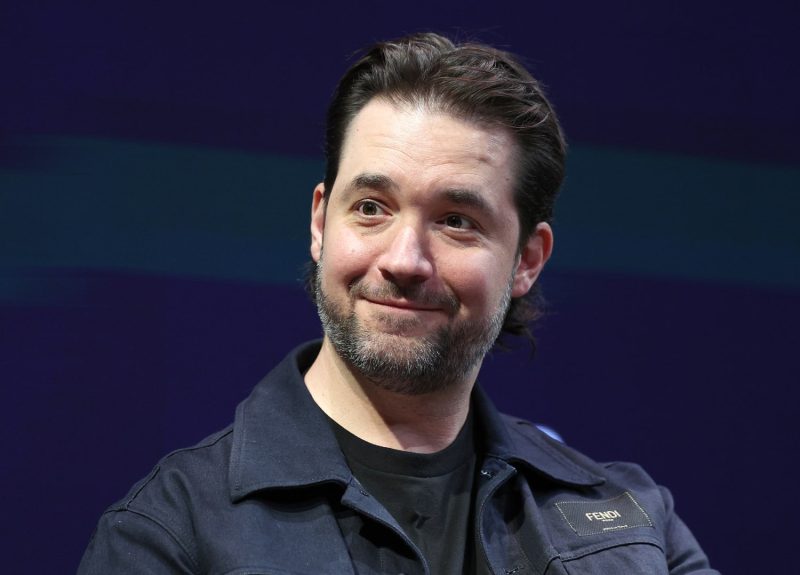
Reddit co-founder Alexis Ohanian has purchased a minority stake in Chelsea FC Women, giving him an ownership stake in two of the most-valuable teams in women’s sports.

The founder of venture capital firm Seven Seven Six and husband of tennis legend Serena Williams paid 20 million pounds for a 10% stake in the English soccer team, according to a person familiar with the deal. Ohanian is also a part owner in the National Women’s Soccer League’s Angel City FC alongside Disney CEO Bob Iger and his wife, Willow Bay.

Ohanian’s Chelsea deal values the women’s club at 200 million pounds, according to the person familiar, making it the most valuable women’s team in the world based on current foreign exchange rates. As part of the deal, Ohanian will be given a seat on the team’s board.

“I’ve bet big on women’s sports before — and I’m doing it again,” Ohanian said in a post on social media site X confirming the stake.

Chelsea FC Women have won six consecutive Women’s Super League titles. Ohanian says he see the opportunity to grow a worldwide brand within women’s football.

“I’m confident Chelsea FC Women is the next global women’s sports brand,” he said.

Ohanian told CNBC’s “Squawk Box” on Thursday that one of the things that drew him to Chelsea was the team’s large social media following. Chelsea FC Women have 4 million followers on Instagram.

“As a social media guy, I look for heat online in the free market of attention,” Ohanian said. “If this were any other type of brand, there is a lot of revenue opportunity there.”

Ohanian also said he believes in the business model and that women’s sports have been undervalued too long. He said brands are only now starting to wake up to that value.

“We will see billion-dollar clubs in women’s soccer one day in the not-too-distant future,” he predicted.

Ohanian left Reddit in 2020 to focus on building a legacy for his two young daughters through sports and other investments.

He said in 2024 he had invested $250,000 from his daughters trust fund into Angel City FC. Ohanian said the investment made them the youngest owners in professional sports and multi-millionaires.

Williams also recently became part owner of WNBA expansion team the Toronto Tempo, and Ohanian has started a women’s track competition.

This post appeared first on NBC NEWS

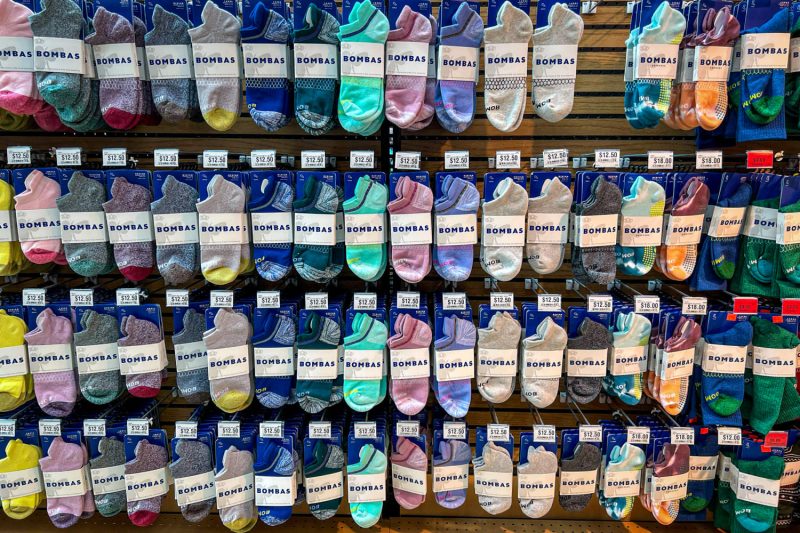
Bombas founder David Heath is stepping down from his role as CEO as the socks and apparel company looks to expand beyond its direct-to-consumer roots.

Bombas President Jason LaRose, a former Under Armour and Equinox executive, will take over as the company’s next CEO effective Thursday. Heath said he realized it was necessary for a retail veteran to lead the company through its next phase of growth.

“We’ve reached a size and scale that is beyond my expertise. I didn’t come from a big apparel company before … I found myself more so over the last 18 months saying, ‘I don’t know what to do next,’” Heath, who is staying at Bombas as its executive chair, told CNBC in an interview. “So then, when I looked at someone with Jason’s background … having that tried and true experience is what will set Bombas up to succeed for the next chapter and I think I feel more comfortable having someone with Jason’s experience in the driver’s seat.” 

LaRose, who spent six years at Under Armour and oversaw its North America business, takes the helm at a critical point in Bombas’ growth story. 

Bombas’ revenue has grown 22% in its current fiscal year through April, it’s reached more than $2 billion in lifetime sales and its EBITDA is at a “super healthy, double digit” margin, LaRose told CNBC. The company’s footwear segment, such as its ultra-popular Sunday Slipper, is expanding the fastest. The company expects footwear revenue will soar more than 70% this year, but socks are still growing steadily, with sales up 17% in April compared to the prior year. 

But in order to reach its goal of growing from a “Shark Tank” startup into a multibillion dollar company over the next five-to-10 years, Bombas needs to expand its wholesale presence. Retailers that primarily sell online like Bombas tend to reach a growth ceiling and need to turn to other channels to keep scaling profitably.

Under LaRose’s direction, Bombas is looking to grow its wholesale revenue from around 7% of sales to between 10% and 20%. The company also wants to test out physical stores. 

“More than 60% of socks in this country are sold in physical locations, you know, whether that’s stores we could open, or stores that we fill with our partners … the wholesale opportunity is big for us,” said LaRose. “It’s also a billboard for us, right? It’s a chance to tell our story. When the customer walks by, we have a chance to tell them about the mission every time, why we’re here, let them touch and feel the product, which is always important when you’re introducing somebody to a new apparel brand.” 

Bombas currently sells in Nordstrom, Scheels and Dick’s Sporting Goods, and unlike some of its peers, it isn’t considering Amazon as a wholesale channel. Instead, it’s looking to expand its assortment offered by its current partners, try out its own stores and perhaps bring on some new wholesalers — if they’re the right fit. 

Digitally native brands that have long enjoyed the benefits of a direct model, such as customer data and the ability to stay close to customers, are often wary about expanding too deeply into wholesale because it’s less profitable and it’s harder for brands to tell their stories. For a company like Bombas, which spent years developing what it calls the “most comfortable socks, underwear, and T-shirts” on the market, that storytelling is extremely important — especially at a price point of around $15 per pair of socks. 

However, it’s that very attitude that has led some to criticize the direct selling model because of how it can stymie growth and lead to unsustainable business models. Many of the early direct-to-consumer darlings have seen their valuations shrivel up as they chase profitability years after they were founded. E-commerce has become harder to do profitably, and at a certain point, stores and wholesale are a more effective and profitable customer acquisition tool for some companies than marketing online. Selling goods through wholesale channels allows brands to scale and acquire customers more profitably than just selling online.

Brands like Bombas that were early to move to wholesale — Heath joked that the company “focused on profitability before it was cool” — understand the need for expansion but have looked to be strategic about who they partner with. Growth is important, but so is maintaining a brand, which is critical to staying ahead of rivals. 

“As a DTC brand, we care so much about our brand and our story, it has to be somebody who’s going to do an excellent job taking care of our brand. We’re not out there to be out there,” said LaRose. “We’re looking at some other partners. We’ll continue to always look for people who we think strategically give us access to the right customer, you know, nothing to announce yet on that front, but we’ll keep looking.” 

Disclosure: CNBC owns the exclusive off-network cable rights to “Shark Tank.”

This post appeared first on NBC NEWS

Netflix said Wednesday its cheaper, ad-supported tier now has 94 million monthly active users — an increase of more than 20 million since its last public tally in November.

The company and its peers have been increasingly leaning on advertising to boost the profitability of their streaming products. Netflix first introduced the ad-supported plan in November 2022.

Netflix’s ad-supported plan costs $7.99 per month, a steep discount from its least-expensive ad-free plan, at $17.99 per month.

“When you compare us to our competitors, attention starts higher and ends much higher,” Netflix president of advertising Amy Reinhard said in a statement. “Even more impressive, members pay as much attention to mid-roll ads as they do to the shows and movies themselves.”

Netflix also said its cheapest tier reaches more 18- to 34-year-olds than any U.S. broadcast or cable network.

This post appeared first on NBC NEWS

Virtual Investor Conferences, the leading proprietary investor conference series, today announced the agenda for the Precious Metals & Critical Minerals Hybrid Virtual Investor Conference. Individual investors, institutional investors, advisors, and analysts are invited to attend.

This in-person and virtual event will showcase live company presentations and interactive discussions featuring Precious Metals and Critical Minerals including Gold, Silver, Antimony, Copper, Lithium, Nickel, PGM, Rare Earth Elements, Uranium and Vanadium.   Company executives and industry experts will present live from the OTC Markets Group headquarters at 300 Vesey Street in New York City. All presentations will be broadcast to the Virtual Investor Conferences community. For those who are interested in attending, there are two ways to register:

Register for IN-PERSON attendance: register here

Register for ONLINE attendance: register here

For individuals joining online, it is recommended that investors pre-register and run the online system check to expedite participation and receive event updates. There is no cost to attend and schedule 1×1 meetings with management.

‘OTC Markets is proud to host the Precious Metals & Critical Minerals Hybrid Investor Conference , presented in collaboration with Murdock Capital, TAA Advisory LLC, The Prospector, and Resource World,’ said John Viglotti , SVP of Corporate Services, Investor Access at OTC Markets Group. ‘We are especially honored to welcome our distinguished keynote speakers, Jeff Christian, Managing Partner at CPM Group, and Jack Lifton, Senior Advisor at Energy Fuels, Inc., whose insights will be invaluable to this premier industry event.’

May 22 nd

Eastern
Time (ET)
Presentation Ticker(s)
9:00 AM Keynote Presentation: ‘What’s next for precious metals?’
-Jeff Christian, Managing Partner of CPM Group
9:30 AM Viva Gold Corp. (OTCQB: VAUCF | TSXV: VAU)
10:00 AM StrikePoint Gold, Inc. (OTCQB: STKXF | TSXV: SKP)
10:45 AM Honey Badger Silver Inc. (OTCQB: HBEIF | TSXV: TUF)
11:15 AM Relevant Gold Corp. (OTCQB: RGCCF | TSXV: RGC)
12:30 PM Keynote Presentation: ‘Surveying the Critical Minerals Landscape,’
–Jack Lifton, Senior Advisor, Energy Fuels, Inc.
1:00 PM Azimut Exploration Inc. (OTCQX: AZMTF | TSXV: AZM)
1:30 PM Energy Fuels Inc. (NYSE American: UUUU | TSX: EFR)
2:00 PM Lion & Copper Gold Corp. (OTCQB: LCGMF | CSE: LEO)
2:45 PM Alaska Silver Corp. (Pink: WAMFF |TSXV: WAM)
3:15 PM Cygnus Metals Ltd. (OTCQB: CYGGF |TSXV: CYG)
3:45 PM Power Metallic Mines Inc. (OTCQB: PNPNF |TSXV: PNPN)

To facilitate investor relations scheduling and to view a complete calendar of Virtual Investor Conferences, please visit www.virtualinvestorconferences.com .

About Virtual Investor Conferences ®

Virtual Investor Conferences (VIC) is the leading proprietary investor conference series that provides an interactive forum for publicly traded companies to seamlessly present directly to investors.

Providing a real-time investor engagement solution, VIC is specifically designed to offer companies more efficient investor access. Replicating the components of an on-site investor conference, VIC offers companies enhanced capabilities to connect with investors, schedule targeted one-on-one meetings and enhance their presentations with dynamic video content. Accelerating the next level of investor engagement, Virtual Investor Conferences delivers leading investor communications to a global network of retail and institutional investors.

Media Contact   :  
OTC Markets Group Inc. +1 (212) 896-4428, media@otcmarkets.com

Virtual Investor Conferences Contact:
John M. Viglotti
SVP Corporate Services, Investor Access
OTC Markets Group
(212) 220-2221
johnv@otcmarkets.com

News Provided by GlobeNewswire via QuoteMedia

This post appeared first on investingnews.com

Americans for Prosperity (AFP) is hosting a day of action on Saturday in competitive congressional districts as House Republicans iron out the details of President Donald Trump’s ‘big, beautiful bill.’

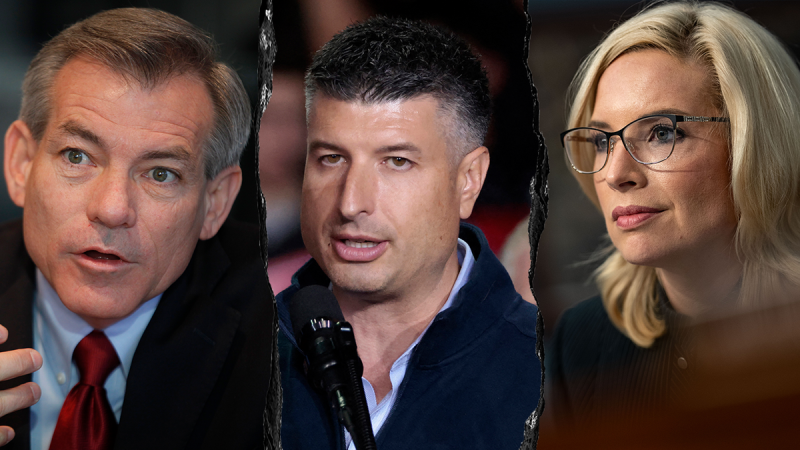
AFP is teaming up with GOP Reps. David Schweikert and Juan Ciscomani of Arizona, Ashley Hinson of Iowa, Tom Barrett of Michigan and Ryan Mackenzie of Pennsylvania for door-knocking, phone banks and grassroots organizing in a show of support for extending Trump’s 2017 Tax Cuts and Jobs Act (TCJA). 

Canvassers will encourage constituents in Arizona, Iowa, Michigan and Pennsylvania to urge their senators and representatives to extend Trump’s tax cuts as a key component of his ‘big, beautiful bill.’

‘Working families and small businesses throughout the country are counting on Congress to act as soon as possible to renew President Trump’s tax cuts,’ AFP Managing Director Kent Strang said in a statement to Fox News Digital ahead of the day of action. 

‘With support from AFP’s activists bringing their unmatched energy and drive this weekend, we can ensure we extend pro-growth tax policy and help Republicans prevent the largest tax hike in history from crushing the middle class.’

AFP is launching their day of action in conjunction with their $20 million ‘Protect Prosperity’ campaign, which the conservative advocacy group has called the single largest investment of any outside group dedicated to preserving the Tax Cuts and Jobs Act.

As House Republicans searched for alternative ways to offset an extension of the 2017 tax cuts and Trump’s ambitious goals to cut taxes on tips, overtime and Social Security, AFP urged Republicans to offset budget cuts by eliminating former President Joe Biden’s ‘Green New Deal giveaways.’ 

The House Energy and Commerce Committee debated green energy cuts during their lengthy markup on Capitol Hill this week as part of the House budget reconciliation process. 

Meanwhile, House Republicans debated potentially raising taxes as Trump indicated his support for a small tax hike to fund his ‘big, beautiful bill.’ While rumors swirled among House Republicans for weeks that the White House was floating a tax hike on millionaires, Trump confirmed on Friday he would be ‘OK if they do.’

However, House Republicans seemed to drop their plans for a new millionaire’s tax hike as the reconciliation began. The House Ways and Means Committee released nearly 400 pages of legislation on Monday that did not include a tax hike. 

It’s no coincidence that AFP is focusing its attention on competitive districts in Arizona, Iowa, Michigan and Pennsylvania, as contentious races are expected in 2026. 

In Arizona’s sixth congressional district, Ciscomani won his House seat in 2022 with just over 50% of the vote. Schweikert narrowly won Arizona’s first congressional district by less than 2% of the vote in 2022 and 2024, as one of the most expensive House races in the country last year. 

And while Hinson won by a much larger margin in Iowa’s second congressional district, Democrat Kevin Techau has already announced his campaign to unseat Hinson. 

Both Barrett in Michigan and Mackenzie in Pennsylvania managed to pick up Republican House seats in 2024, flipping their congressional districts from blue to red. Democrats will likely seek to win those seats back in 2026. 

This post appeared first on FOX NEWS

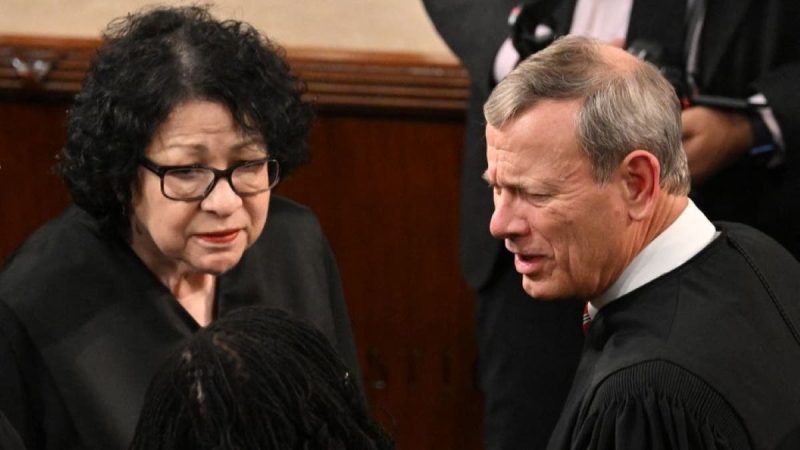
Supreme Court Chief Justice John Roberts reined in Justice Sonia Sotomayor during argument over birthright citizenship and nationwide court injunctions on Thursday.

Sotomayor dominated questioning for several minutes at the outset of Thursday’s argument after taking over from Justice Clarence Thomas. She pressed U.S. Solicitor General John Sauer for President Donald Trump’s administration on several points relating to the authority for federal courts to issue nationwide injunctions, often speaking over the lawyer and interrupting him.

Sotomayor argued that Trump’s order invalidating birthright citizenship violated four Supreme Court precedents, and that it was justified for a federal judge to grant an injunction against such a controversial order.

‘You are claiming that not just the Supreme Court, that both the Supreme Court and no lower court, can stop an executive from universally violating holdings by this court,’ Sotomayor said.

‘We are not claiming that because we’re conceding that there could be an appropriate case only in class only,’ Sauer said.

‘But I hear that–,’ Sotomayor said, beginning to interrupt Sauer.

‘Can I hear the rest of his answer?’ Roberts then interjected.

Sauer then elaborated on his statement, saying the government is arguing that federal courts can intervene on behalf of specific plaintiffs before them, but not nationwide. He said the Supreme Court has the authority to grant nationwide injunctions in certain circumstances.

Sauer used the bulk of his opening arguments Thursday to reiterate the Trump administration’s view that universal injunctions exceeded lower courts’ Article III powers under the Constitution, noting that the injunctions ‘transgress the traditional bounds of equitable authority,’ and ‘create a host of practical problems.’

Universal injunctions ‘require judges to make rushed, high-stakes, low-information decisions,’ he said. ‘They operate asymmetrically, forcing the government to win everywhere,’ and ‘invert,’ in the administration’s view, the ordinary hierarchical hierarchy of appellate review. They create the ongoing risk of conflicting judgments.’

A Supreme Court decision here could have sweeping national implications, setting a precedent that would affect the more than 310 federal lawsuits that have challenged White House actions since Trump’s second presidency began on Jan. 20, 2025, according to a Fox News data analysis.

The consolidated cases before the court are Trump v. CASA, Trump v. the State of Washington, and Trump v. New Jersey.

It’s unclear when the justices will rule, but their decision to fast-track the case means an opinion or order could come within weeks – or even days.

Fox News’ Breanne Deppisch, Shannon Bream and Bill Mears contributed to this report.

This post appeared first on FOX NEWS