Author

admin

Browsing

Newly elected Canadian Prime Minister Mark Carney announced his cabinet on Tuesday (May 13). Among his selections was Tim Hodgson, the Member of Parliament from Markham-Thornhill, as the new Minister of Energy and Natural Resources.

Hodgson’s portfolio will involve overseeing Canada’s resource sector. His selection has been seen as a nod to Alberta’s oil and gas sector due to his time serving as a board member of MEG Energy (TSX:MEG,OTC Pink:MEGEF), an oilsands producer based in Calgary.

Hodgson also spent time running Goldman Sachs’ (NYSE:GS) Canadian operations, where he advised the Bank of Canada during Carney’s tenure as the central bank’s governor.

South of the border, the United States Bureau of Labor Statistics released April’s consumer price index (CPI) data on Tuesday, reporting that all-items inflation rose by 0.2 percent on a monthly basis, as did core CPI, which doesn’t include the volatile food and energy categories.

The figures indicate a reversal in the deceleration seen over the past few months. During that time, all-items inflation slowed from a 0.5 percent increase in January to a 0.2 percent gain in February before recording a 0.1 percent decline in March. Similarly, core CPI had slowed to a 0.1 percent increase in March.

On an annualized basis, CPI posted a 2.3 percent increase, down from the 2.4 percent recorded in March. However, core CPI remained steady at 2.8 percent.

Markets and commodities react

In Canada, major indexes were mixed at the end of the week.

The S&P/TSX Composite Index (INDEXTSI:OSPTX) gained 2.07 percent during the week to close at 25,971.93 on Friday, the S&P/TSX Venture Composite Index (INDEXTSI:JX) fell 1.93 percent to 672.84 and the CSE Composite Index (CSE:CSECOMP) shed 0.5 percent to 119.01.

US equities were in positive territory this week, with the S&P 500 (INDEXSP:INX) gaining 2.6 percent to close at 5,958.37, the Nasdaq-100 (INDEXNASDAQ:NDX) rising 2.88 percent to 21,412.91 and the Dow Jones Industrial Average (INDEXDJX:.DJI) adding 1.8 percent to 42,654.75.

The gold price was in decline this week, posting a loss of 3.75 percent, to close Friday at US$3,199.69. The silver price was also down, shedding 1.37 percent during the period to US$32.28.

In base metals, the COMEX copper price fell 2.34 percent over the week to US$4.60 per pound. Meanwhile, the S&P GSCI (INDEXSP:SPGSCI) posted a small gain of 0.31 percent to close at 533.11.

Top Canadian mining stocks this week

How did mining stocks perform against this backdrop?

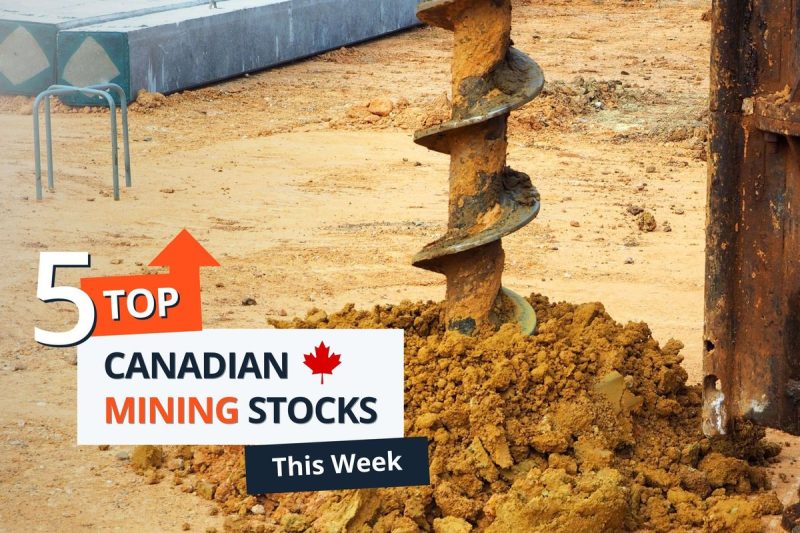
Take a look at this week’s five best-performing Canadian mining stocks below.

Stock data for this article was retrieved at 3 p.m. EDT on Friday using TradingView’s stock screener. Only companies trading on the TSX, TSXV and CSE with market capitalizations greater than C$10 million are included. Companies within the non-energy minerals and energy minerals sectors were considered.

1. Foremost Clean Energy (CSE:FAT)

Weekly gain: 133.11 percent
Market cap: C$29.88 million
Share price: C$3.45

Foremost Clean Energy is a uranium explorer advancing projects in Saskatchewan’s Athabasca Basin. In 2025, its primary focus has been its Hatchet Lake property, part of its Eastern Athabasca projects. The site consists of nine mineral claims within two blocks covering an area of 10,2012 hectares and has seen exploration dating back to the 1960s.

Foremost announced in October 2024 that it had completed the first phase of an option agreement with Denison Mines (TSX:DML,NYSEAMERICAN:DNN) to acquire a 20 percent stake in 10 uranium properties, including Hatchet Lake, in exchange for 1.37 million common shares. Under the terms of the agreement, Foremost can earn up to a 70 percent stake in the properties in exchange for meeting certain milestones within 36 months.

Shares in Foremost have gained after making several positive exploration announcements over the past few weeks.

On May 1, Foremost announced a new uranium discovery at Hatchet Lake based on initial results from an ongoing inaugural drill program. The company said the discovery includes multiple intervals of mineralization, highlighting one grading 0.22 percent equivalent U3O8 over 0.9 meters, including two intersections of 0.1 meters grading 0.58 percent and 0.5 percent.

Follow up information from the program was released on Thursday (May 15) when Foremost reported anomalous radioactivity was detected in 6 out of 10 completed drill holes. After receiving the preliminary results, the company expanded its program from the original eight hole, 2,000 meter program to a 10 hole, 2,400 meter program. Assay results remain pending.

2. Anfield Energy (TSXV:AEC)

Weekly gain: 50 percent
Market cap: C$10.27 million
Share price: C$0.09

Anfield Energy is a uranium and vanadium development company working to advance several projects in the United States.

Among them is its Velvet-Wood project located in Lisbon Valley, Utah, a region with historic uranium exploration and production. The site itself hosts underground infrastructure that was used to recover approximately 4 million pounds of uranium oxide between 1979 and 1984.

According to a January 2023 preliminary economic assessment, the site hosts a measured and indicated resource of 4.64 million pounds of uranium oxide equivalent from 811,000 metric tons of ore at an average grade of 0.29 percent, as well as an inferred resource of 8.41 million pounds of uranium oxide equivalent from 1.84 million metric tons at 0.24 percent.

The report also showed an inferred vanadium oxide resource of 54.4 million pounds from 2.65 million metric tons of ore at an average grade of 1.03 percent.

Shares in Anfield gained this week after it announced on Tuesday that the US Department of the Interior selected Velvet-Wood for expedited environmental permitting as part of the government’s FAST-41 initiative to bolster domestic mineral production. Under the expedited process, the Bureau of Land Management has been directed to complete its review of the project within 14 days.

3. Roscan Gold (TSXV:ROS)

Weekly gain: 44.44 percent
Market cap: C$30 million
Share price: C$0.065

Roscan Gold is an exploration and development company working to advance its Kandiole gold project in the Republic of Mali. The company’s permits cover an area of 288.8 square kilometers and host several mineralized targets.

Kandiole hosts an indicated mineral resource of 1.02 million ounces of gold from 27.4 million metric tons at an average grade of 1.2 grams per metric ton (g/t) gold, and an inferred resource of 200,000 ounces from 5.2 million metric tons at 1.2 g/t.

Roscan has focused on de-risking its project as it moves towards obtaining a mining permit, and spent much of 2024 raising funds. The latest funding announcement came in October 2024 when Roscan closed a non-brokered private placement for gross proceeds of C$2 million. At the time, the company said it would use the funds for general working capital and exploration and development at the Kandiole project.

The most recent news release from Roscan came on March 10 when it welcomed an announcement by the Government of Mali that lifts the partial suspension of the processing of mining license applications. The company said the decision marks a milestone for de-risking the Kandiole gold project.

License applications in Mali had been suspended since 2022. At the time, the military government, which took power in 2021, said the action was to improve the issuance process and better serve the industry.

4. Baru Gold (TSXV:BARU)

Weekly gain: 44.44 percent
Market cap: C$19.55 million
Share price: C$0.065

Developer Baru Gold is advancing its Sangihe gold project in Indonesia. The company holds a 70 percent stake in the 42,000 hectare project, with the remaining 30 percent interest held by three Indonesia-based companies.

Baru Gold is progressing toward approval of its production operations plan, which was redesigned due to the significant macroeconomic shift and increase in the gold price since its last resource estimate in May 2017.

On February 14, the company published a technical report with an updated resource estimate. The resource estimate demonstrates an indicated resource of 114,000 ounces of gold and 1.93 million ounces of silver from 3.15 million metric tons of ore with grades of 1.12 g/t gold and 19.4 g/t silver. The project also hosts an inferred resource of 91,000 ounces of gold and 1.08 million ounces of silver from 2.3 million metric tons of ore with grades of 1.22 g/t gold and 14.5 g/t silver.

The update marks a significant step toward government approval for production operations status, with the only remaining requirement being the payment of taxes.

On Thursday, Baru announced it entered into an arm’s length binding preliminary collaboration agreement with Quantum Metal Thailand, a gold ecommerce platform, which would invest up to US$100 million in Baru as part of an offtake and funding collaboration. Baru said the funding would be used to enhance its gold production and refining capacity to a purity rate of 99.99 percent.

Under the terms of the potential deal, funding would be broken down into an initial investment worth up to US$30 million, and subsequent tranches worth US$10 million. Baru will repay the amount with refined gold based on the London Bullion Market Association gold price, with the first tranche discounted at 30 percent and remaining tranches discounted at 20 percent.

Once production commences, Quantum will also receive 20 percent of the company’s monthly refined gold production until the investment is fully repaid.

5. Talon Metals (TSX:TLO)

Weekly gain: 42.86 percent

Market cap: C$140.21 million
Share price: C$0.15

Talon Metals is an exploration and development company working to advance its Tamarack North polymetallic project in Minnesota, US. Talon owns a 51 percent stake in the 31,000 acre project, with Rio Tinto (ASX:RIO,NYSE:RIO,LSE:RIO) owning the remaining 49 percent.

A technical report released in November 2022 reported a total indicated resource of 8.56 million metric tons of ore at an average grade of 1.73 percent nickel and 0.92 percent copper, 0.05 percent cobalt, 0.34 g/t platinum, 0.21 g/t palladium and 0.15 g/t gold.

Talon has been working through 2024 and 2025 to expand the resource at the project. On May 1 the company announced the highest grade intercept encountered at Tamarack: 8.25 meters at 12.62 percent nickel, 13.88 percent copper, 0.12 percent cobalt, 4.7 g/t palladium, 7.08 g/t platinum, 6.17 g/t gold and 44.31 g/t silver.

The company followed up with further significant news on Monday (May 12), announcing a drill hole encountered 34.9 meters of cumulative massive nickel mineralization over a total length of 47.33 meters.

Brian Goldner, Talon’s chief exploration and operations officer, commented, “In my 19 years working on the Tamarack Project, I’ve never seen anything like this. This 34.9 meter intercept of high-grade massive sulphide isn’t just the longest ever recorded at Tamarack, it’s a defining moment.”

FAQs for Canadian mining stocks

What is the difference between the TSX and TSXV?

The TSX, or Toronto Stock Exchange, is used by senior companies with larger market caps, and the TSXV, or TSX Venture Exchange, is used by smaller-cap companies. Companies listed on the TSXV can graduate to the senior exchange.

How many mining companies are listed on the TSX and TSXV?

As of February 2025, there were 1,572 companies listed on the TSXV, 905 of which were mining companies. Comparatively, the TSX was home to 1,859 companies, with 181 of those being mining companies.

Together the TSX and TSXV host around 40 percent of the world’s public mining companies.

How much does it cost to list on the TSXV?

There are a variety of different fees that companies must pay to list on the TSXV, and according to the exchange, they can vary based on the transaction’s nature and complexity. The listing fee alone will most likely cost between C$10,000 to C$70,000. Accounting and auditing fees could rack up between C$25,000 and C$100,000, while legal fees are expected to be over C$75,000 and an underwriters’ commission may hit up to 12 percent.

The exchange lists a handful of other fees and expenses companies can expect, including but not limited to security commission and transfer agency fees, investor relations costs and director and officer liability insurance.

These are all just for the initial listing, of course. There are ongoing expenses once companies are trading, such as sustaining fees and additional listing fees, plus the costs associated with filing regular reports.

How do you trade on the TSXV?

Investors can trade on the TSXV the way they would trade stocks on any exchange. This means they can use a stock broker or an individual investment account to buy and sell shares of TSXV-listed companies during the exchange’s trading hours.

Article by Dean Belder; FAQs by Lauren Kelly.

Securities Disclosure: I, Dean Belder, hold no direct investment interest in any company mentioned in this article.

Securities Disclosure: I, Lauren Kelly, hold no direct investment interest in any company mentioned in this article.


This post appeared first on investingnews.com

(TheNewswire)

Vancouver, British Columbia May 16, 2025 TheNewswire Allied Critical Metals Inc. (formerly Deeprock Minerals Inc.) (CSE: ACM) (OTCQB: 0VJ0) (the ‘ Company ‘ or the ‘ Resulting Issuer ‘) is pleased to provide a corporate update as to its updated uses of funds updating the disclosure in its Listing Statement dated April 23, 2025 (the ‘ Listing Statement ‘) which is publicly available under the Company’s profile on SEDAR+ at www.sedarplus.ca, to better reflect the actual results of concurrent financing (‘ Concurrent Financing ‘) of approximately $4.6 million announced by the Company on March 25, 2025 and corresponding updated uses of funds.

The following provides an outline of the Company’s principal purposes of funds, which updates the disclosure in the Listing Statement.

Principal Purposes of Funds

The Company intends to use the funds available to it upon completion of the Company’s transactions (the ‘Transactions ‘) for listing (the ‘Listing’) on the Canadian Securities Exchange (the ‘CSE’) to further its business objectives. Specifically, the Company intends to use the funds available to it following compl etion of the Transactions over the next 12 months as follows:

Use of Proceeds

Estimated Amount
($2.5 million minimum Concurrent Financing)

Estimated Amount
($5.0 million maximum Concurrent Financing)

Resulting Amount
(actual $4.6 million Concurrent Financing)

Variation from maximum $5.0 million Concurrent Financing

Exploration [1]

Borralha – Phase 1

$492,600

$492,600

$492,600

$0

Borralha – Phase 2 [2]

$1,503,200

$1,503,200

$0

Vila Verde – Phase 1 [3]

$226,000

($226,000)

Vila Verde – Phase 2 [4]

$1,066,835

($1,066,835)

Prepayment on 2027 Note [5]

$100,000

$100,000

$100,000

$0

12 months general and administrative costs [6]

$182,000

$182,000

$180,000

($2,000)

Estimated transaction costs [7]

$250,000

$250,000

$250,000

$0

Investor Relation Services [8]

$885,500

$885,500

Additional working capital [9]

$496,035

$231,866

$231,866

Totals:

$1,520,635

$3,820,635

$3,574,811

($245,824)

Notes:

  1. The Exploration is comprised of the recommended work programs for the Borralha Tungsten Project and the Vila Verde Tungsten Project, which are summarized in the Listing Statement. For more detail, please see the Borralha Technical Report and the Vila Verde Technical Report.

  2. Phase 2 of the recommended work program for Borralha was estimated at $1,503,200.

  3. The Company prioritises exploration of Borralha over Vila Verde, but once exploration of Borralha is addressed and if there are sufficient remaining funds then such funds may be allocated towards exploration at Vila Verde, which totals $226,000 for Phase 1 and $1,066,835 for Phase 2. As a portion of drilling expenses are expected to be settled in common shares, the Company expects that there will be sufficient available funds to begin exploration at Vila Verde.

  4. The total cost for Vila Verde’s Phase 2 work program is $2,279,000, but if drilling expenses are partly settled in common shares there may be sufficient funds available to commence Phase 2 of the Vila Verde work program following completion of Phase 1.

  5. On Closing, ACM must pay $100,000 to Pan Iberia as a prepayment of the 2027 Note. The funds available is already net of payment of short term promissory notes, which are paid on Listing and are related to repayment of mineral property license fees and acquisition of the 1% NSR.

  6. The 12 months general and administrative costs are expected to include $35,000 for audit and accounting expenses, $15,000 for regulatory, $45,000 for legal fees, $61,645 for investor conferences marketing fees and expenses, and $23,355 contingency for other general and administrative matters. The budget for management fees ($72,000) was reallocated to Borralha exploration as they pertain to license regulatory expenditure and other work in Portugal in respect of Borralha and the $60,000 budget for legal fees was adjusted to $45,000.

  7. The Transaction costs includes $170,000 legal expenses, $20,000 for the subscription receipt and warrant agent and CDS, $40,000 for CSE listing fees, and $20,000 filing fees and contingency.

  8. Since completion of the Listing, the Company has reallocated $885,500 fixed fees for investor relations services, as described in the Company’s news release dated May 2, 2025. A further amount of up to $15,560 per month variable cost of investor relations was allocated as additional working capital as such services will be terminated to limit costs within budgeted amounts. A discussion of the rationale for the allocation to investor relations services is provided below.

  9. Additional working capital will be deployed towards exploration of Borralha, then Vila Verde, and as working capital for expenses, which may include variable monthly expenses of up to $72,000 for market making ($6,000 per month) and other such expenses for investor relations services.

Prioritizing Borralha Exploration – Rationale for Changes to Uses of Proceeds

As previously disclosed in the Listing Statement (Section 3.3—Resulting Issuer), the Company is prioritizing exploration of Borralha as such exploration enables completion of a preliminary economic assessment( PEA) or prefeasibility study( PFS) for Borralha by the end of summer 2025. In particular, the above use of funds will enable the Company to complete Phase 1 and Phase 2 exploration of Borralha by the end of August 2025. Drilling is expected to commence at Borralha as soon as May 22, 2025.

Borralha is a brownfield past-producing advanced stage, near term production tungsten project which requires a proportionate approach to investor relations to adequately position the Company for the next stage of development. Accordingly, total funds of $885,500 (less than one fifth of the Concurrent Financing) were allocated for investor relations services to sufficiently position the Company’s profile for more significant capital raising following completion of the PEA/PFS this summer to prepare for eventual project financing. Funds allocated to investor relations are aimed at direct interactions with potential capital providers and market participants in the critical metals and tungsten markets to fast track the development and construction the Borralha as a key western source of global tungsten production, highlighting the Company’s profile as particularly well-placed to become a significant leader in global tungsten mineral exploration and development in Portugal. While global macro-economic and political factors are creating an excellent positive environment for the Company with tungsten prices rising 25% from $320/MTU (metric tonne unit) to $400/MTU over the past five months [Source: Fastmarkets, May 2025], tungsten remains a lesser known niche critical mineral in the capital markets community. Accordingly, the Company in consultation with its financial advisors, have developed a strategy to accelerate increased profile recognition in the lead up to completion of its PEA/PFS in the coming months. The Company is excited to begin the next chapter of development of its Borralha and Vila Verde Tungsten Projects and look forward to providing updates as drilling and further exploration progresses over the coming weeks and months.

The Company intends to spend the funds available to it on completion of the principal purposes described above. Nevertheless, there may also be circumstances where, for sound business reasons, a reallocation of funds may be necessary for the Company to achieve its short term and long term objectives. The Company may require additional funds in order to fulfill all of the Company’s objectives, in which case the Company expects to either issue additional shares or incur indebtedness. It is anticipated that the available funds will be sufficient to satisfy the Company’s objectives over the next twelve months.

New CFO

In addition, the Company is pleased to announce Sean Choi as its new Chief Financial Officer who replaces Keith Margetson who has stepped down effective May 14, 2025. The Company greatly appreciates all of Keith’s efforts in completing the Transactions as Chief Financial Officer for the Company since April 2023, and Keith will remain a consultant to the Company to provide assistance as necessary going forward.

Mr. Choi has over 19 years of experience in public accounting and mining industry. During his career, he has served as Chief Financial Officer of Ecuador Gold and Copper Corp. and Northern Sun Mining Corp. which were both reporting issuers listed on the TSX Venture Exchange. He also served as Chief Financial Officer of York Harbour Metals (TSXV: YORK) from April 2014 to June 2024.  Sean is a Chartered Professional Accountant and Chartered Accountant (Ontario) and holds a Bachelor of Administrative and Commercial Studies degree from the University of Western Ontario.

Options and RSUs

The Company also hereby announces the grant of 3,500,000 stock options (the ‘ Options ‘) at an exercise price of $0.22 per share granted to directors, officers, employees and consultants of the Company pursuant to its omnibus equity incentive plan, which vests immediately and expire 5 years after the date of grant. The Company also announces that it has granted 4,097,760 restricted share units (‘ RSUs ‘) to directors, officers, employees and consultants of the Company pursuant to its omnibus equity incentive plan, which vests on September 16, 2025.

The Options and RSUs will be subject to a four month hold period in accordance with applicable Canadian securities laws and the policies of the Canadian Securities Exchange.

ABOUT Allied Critical Metals INC.

The Company is is a Canadian-based mining company focused on the expansion and revitalization of its 100% owned past producing Borralha Tungsten Project and the Vila Verde Tungsten Project in northern Portugal. Tungsten has been designated a critical metal by the United States and other western countries, as they are aggressively seeking friendly sources of this unique metal. Currently, China and Russia represent approximately 90% of the total global supply and reserves. The Tungsten market is estimated to be valued at approximately $5 – $6 billion USD and it is used in a variety of industries such as defense, automotive, manufacturing, electronics, and energy.

Please also visit our website at www.alliedcritical.com.

Also visit us at:

LinkedIn: https://www.linkedin.com/company/allied-critical-metals-inc/

X: https://x.com/@alliedcritical/

Facebook: https://www.facebook.com/alliedcriticalmetalscorp/

Instagram: https://www.instagram.com/alliedcriticalmetals/

CAUTIONARY NOTE REGARDING FORWARD-LOOKING STATEMENTS

This news release contains ‘forward-looking statements’, including with respect to the use of proceeds. Wherever possible, words such as ‘may’, ‘would’, ‘could’, ‘should’, ‘will’, ‘anticipate’, ‘believe’, ‘plan’, ‘expect’, ‘intend’, ‘estimate’, ‘potential for’ and similar expressions have been used to identify these forward-looking statements. These forward-looking statements reflect the current expectations of the Company’s management for future growth, results of operations, performance and business prospects and opportunities and involve significant known and unknown risks, uncertainties and assumptions, including, without limitation, those listed in the Company’s Listing Statement and other filings made by the Company with the Canadian securities regulatory authorities (which may be viewed under the Company’s profile at www.sedarplus.ca ). Examples of forward-looking statements in this news release include, but are not limited to, statements regarding the proposed timeline and terms of the investor awareness campaign, anticipated benefits to Company from running the investor awareness campaign, and the performance of the investor relations services providers of the marketing services as contemplated in the marketing agreements, or at all. Should one or more of these risks or uncertainties materialize or should assumptions underlying the forward-looking statements prove incorrect, actual results, performance or achievements may vary materially from those expressed or implied by the forward-looking statements contained in this news release. These factors should be considered carefully, and prospective investors should not place undue reliance on the forward-looking statements. This list is not exhaustive of the factors that may affect any of the Company’s forward-looking statements and reference should also be made to the Company’s Listing Statement dated April 23, 2025 , and the documents incorporated by reference therein, filed under its SEDAR+ profile at www.sedarplus.ca for a description of additional risk factors. The Company disclaims any intention or obligation to revise forward-looking statements whether as a result of new information, future developments or otherwise, except as required by law.

The Canadian Securities Exchange does not accept responsibility for the adequacy or accuracy of this press release and has neither approved now disapproved the contents of this press release.

ON BEHALF OF THE COMPANY

‘Roy Bonnell’

Chief Executive Officer and Director

For further information, contact:

Dave Burwell

VP Corporate Development

¿¿ daveb@alliedcritical.com

¿¿ 403-410-7907

Copyright (c) 2025 TheNewswire – All rights reserved.

News Provided by TheNewsWire via QuoteMedia

This post appeared first on investingnews.com

The Justice Department isn’t planning to prosecute Boeing in a case tied to two crashes of the aerospace giant’s 737 Max, a person familiar with the matter said, a tentative agreement that would allow the plane-maker to avoid a guilty plea.

Boeing agreed to plead guilty in the case last summer in a deal with the Justice Department after the Biden administration found earlier that year that the company violated a 2021 agreement tied to the crashes. A judge rejected that plea deal last year, citing concerns about diversity, equity and inclusion, and opened the possibility that Boeing could face trial.

The fraud charge stems from Boeing’s development of the 737 Max. The U.S. had accused Boeing of misleading regulators about its inclusion of a flight-control system on the Max that was later implicated in the two crashes.

A final, non-prosecution agreement hasn’t been reached yet, the person said. The Justice Department and Boeing didn’t immediately comment.

Under the new agreement, Boeing could pay family members of victims of the two Max crashes. In total, the two crashes of the best-selling Boeing jet killed all 346 people on board the planes.

The new tentative agreement, which was reported earlier on Friday by Reuters, would mean Boeing wouldn’t be labeled a felon. That label could have come with restrictions on defense contractor work.

Boeing is the country’s biggest exporter and, in addition to making commercial jetliners, it’s a major defense contractor. The Trump administration recently awarded the company a multibillion-dollar contract to build a next-generation fighter jet.

This post appeared first on NBC NEWS

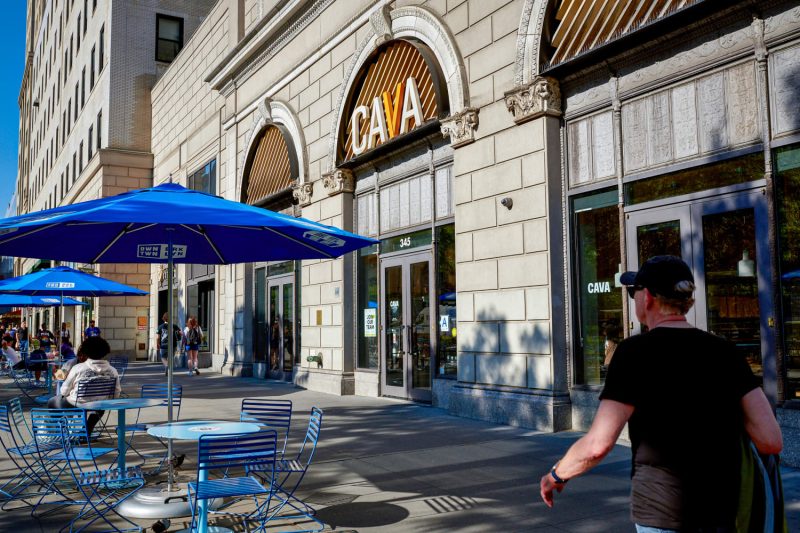
Cava on Thursday reported better-than-expected sales in its latest fiscal quarter, shaking off the malaise the broader restaurant industry has felt as consumers have cut back on dining.

The Mediterranean chain said its same-store sales grew 10.8% in the three months that ended April 20, lifted by traffic growth of 7.5%. Analysts surveyed by StreetAccount were projecting same-store sales growth of 10.3%.

“When we look at our consumers in the quarter, we saw an increase in premium attachment on higher priced items, like our pita chips or amazing housemade juices. We also saw that our per person average continued to increase, and then when we look at our results, there’s positive traffic across all of our geographies, across all of our income cohorts, as well as the different formats of our restaurants and dayparts,” Chief Financial Officer Tricia Tolivar told CNBC.

She added that diners have been trading up from fast food and down from casual-dining restaurants into Cava’s bowls and pitas, a trend the company has seen for several quarters.

Elsewhere in the restaurant industry, companies have been reporting very different behavior from consumers, although many companies’ results did not include any time in April, when the industry’s sales and traffic performance improved.

Fast-casual rival Chipotle said its transactions fell 2.3% in the first quarter as consumers pulled back their spending in February, spooked by economic uncertainty. Sweetgreen reported its first quarterly same-store sales decline since it went public in 2021. McDonald’s CEO Chris Kempczinski said fast-food industry data showed both low- and middle-income consumers spending less. The burger giant said U.S. same-store sales declined 3.6% for the first quarter.

Despite the strong quarterly performance, Cava reiterated its same-store sales forecast, sticking with its projections of a 6% to 8% increase. The chain said last quarter that it is expecting slower growth in the back half of its fiscal 2025.

The stock fell 5% in extended trading. As of Thursday’s close, Cava shares have slid 11% so far this year, hurt by investor concerns over its conservative outlook for the fiscal year and the economic fallout from the Trump administration’s tariffs.

Here’s what the company reported compared with what Wall Street was expecting, based on a survey of analysts by LSEG:

The company reported fiscal first-quarter net income of $25.71 million, or 22 cents per share, up from $13.99 million, or 12 cents per share, a year earlier. Cava reported an income tax benefit of $10.7 million related to stock-based compensation, which boosted its earnings this quarter.

Net sales climbed 28% to $332 million. On a 12-month trailing basis, Cava’s revenue has surpassed $1 billion, representing a major milestone for the company.

The company did raise some of its projections for the fiscal year.

Cava now anticipates adjusted earnings before interest, taxes, depreciation and amortization of $152 million to $159 million, up from its prior forecast of $150 million to $157 million. The company also plans to open between 64 and 68 new locations, higher than its previous outlook of between 62 and 66 restaurant openings.

This post appeared first on NBC NEWS

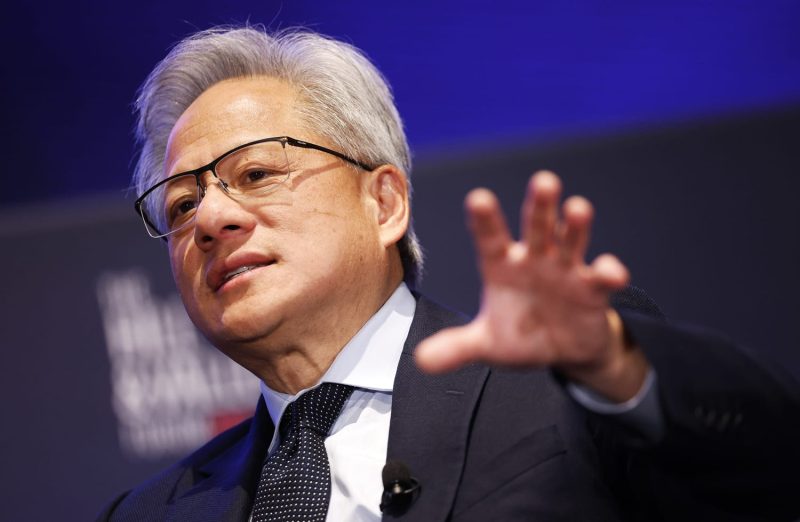
Nvidia said it won’t be sending graphics processing unit plans to China following a report that the artificial intelligence chipmaker is working on a research and development center in Shanghai in light of recent U.S. export curbs.

“We are not sending any GPU designs to China to be modified to comply with export controls,” a spokesperson said in a statement to CNBC.

The Financial Times was the first to report the news, citing two sources familiar with the matter. CEO Jensen Huang discussed the potential new center with Shanghai’s mayor, Gong Zheng, during a visit last month, the FT reported.

The center will assess ways to meet U.S. restrictions while catering to the local market, although production and design will continue outside China, according to the report.

AI chipmakers such as Nvidia have been hit with major China roadblocks since 2022 as the U.S. began cracking down on sending advanced chips to China because of concerns of possible military use.

Last week, the Trump administration said it would replace restrictions put in place under President Joe Biden with a “much simpler rule that unleashes American innovation and ensures American AI dominance.” Nvidia said last month that it would take a $5.5 billion charge tied to selling its H20 GPUs in China and other countries.

Huang has previously commented on the significance of China, which is one of the company’s major market after the U.S., Singapore and Taiwan. He told CNBC this month that getting shut out of the world second-largest economy would be a “tremendous loss,” estimating that China’s AI market could hit $50 billion over the next two to three years.

“We just have to stay agile,” Huang told CNBC’s Jon Fortt, in an interview alongside ServiceNow CEO Bill McDermott. “Whatever the policies are of the government, whatever is in the best interest of our country, we’ll support,” he added.

This post appeared first on NBC NEWS

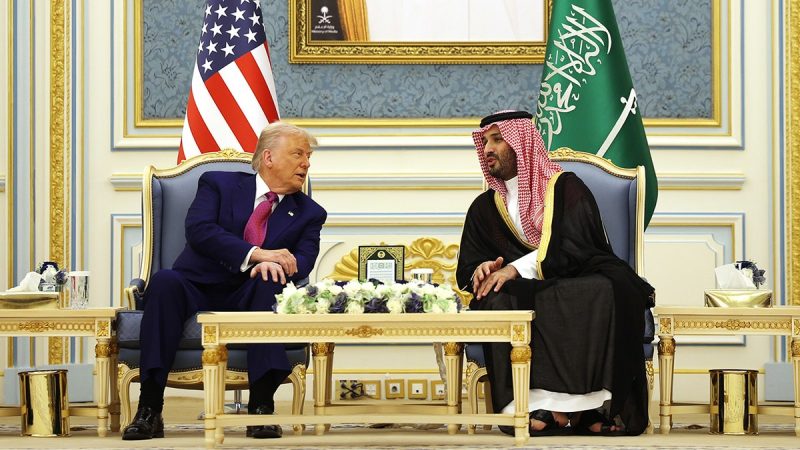
President Donald Trump returned to Washington from the first major trip of his second term with significant agreements in place. 

The deals struck in the Middle East mark historic moments for both the U.S. and its partners in the region. Saudi Arabia, the United Arab Emirates (UAE) and Qatar have all committed to increasing their investments in the U.S., similar to deals Trump has pushed for with U.S. partners across the globe.

1. Saudi Arabia

Saudi Arabian Crown Prince Mohammed bin Salman and Trump signed several agreements on energy, investments, defense, mining and more that totaled $600 billion. This included a commitment by Google, Uber, Salesforce, AMD and Saudi Arabia’s DataVolt to invest $80 billion toward the development of revolutionary technologies in both countries.

American companies will also take on major projects in Saudi Arabia, including the King Salman International Airport, King Salman Park, The Vault and Qiddiya City, according to the White House. The administration predicts the projects will generate a total of $2 billion in U.S. service exports. 

Additionally, several U.S. government departments will begin coordinating with Saudi government ministries, including the U.S. Department of Energy and the Ministry of Energy of the Kingdom of Saudi Arabia, as well as NASA and the Saudi Space Agency. 

Trump was also able to secure an agreement that would allow the U.S. to carry cargo between Saudi Arabia and third-party countries without stopping in the U.S., which the White House said is ‘an important right for cargo hub operations.’

2. Qatar

Trump’s deals with Qatar were arguably the most controversial of his trip, after both Republicans and Democrats criticized a plan for Doha to provide a jumbo jet that is expected to be used as Air Force One. 

Sen. Ted Cruz, R-Texas, and Sen. Bernie Sanders, I-Vt., found themselves in a rare position — on the same side of an argument. However, they objected to the plan for different reasons. While Sanders questioned the constitutionality of the administration accepting the Qatari jet, Cruz cited ‘significant espionage and surveillance problems.’ Additionally, Sens. Rick Scott, R-Fla., and John Kennedy, R-La., expressed their lack of trust in Doha.

‘Qatar is not, in my opinion, a great ally. I mean, they support Hamas. So, what I’m worried about is the safety of the president,’ Scott told reporters on Tuesday.

The deals Trump secured during his trip will see Doha and Washington participate in agreements worth $1.2 trillion, according to the White House. This is in addition to economic deals totaling $243.5 billion, which include the sale of American-made aircraft to Qatar Airways.

The White House also touted a defense deal that will ‘lock in Qatar’s procurement of state-of-the-art military equipment from two leading U.S. defense companies.’ The two countries also agreed to a multibillion-dollar agreement to strengthen their security partnership.

3. United Arab Emirates 

Trump left the UAE with $200 billion in commercial deals, including a $14.5 billion commitment from Etihad Airways to invest in 28 American-manufactured aircraft. Additionally, Emirates Global Aluminum is set to invest $4 billion in an aluminum smelter project in Oklahoma, which will be one of the first new smelters built in the U.S. in 45 years, according to the White House.

The UAE and the U.S. also reached energy agreements in which the Abu Dhabi National Oil Company will partner with ExxonMobil, Occidental Petroleum and EOG Resources to expand oil and natural gas production. The White House said in a statement that the deal is expected to ‘help lower energy costs and create hundreds of skilled jobs in both countries.’

The deals made during Trump’s trip to Abu Dhabi are set to expedite a commitment the UAE made in March to a 10-year, $1.4 trillion investment framework in the U.S., which covered a range of industries, including energy and AI.

This post appeared first on FOX NEWS

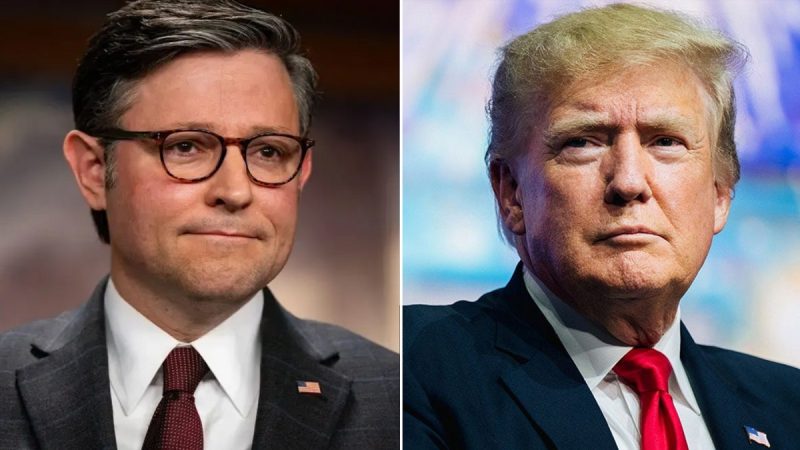
President Donald Trump’s ‘big, beautiful bill’ failed to pass the House Budget Committee on Friday, in what appears to be a massive blow to House GOP leaders’ plans to hold a House-wide vote next week.

Reps. Chip Roy, R-Texas, Josh Brecheen, R-Okla., Andrew Clyde, R-Ga., and Ralph Norman, R-S.C., and Lloyd Smucker, R-Pa., all voted against the legislation. Smucker’s vote was a procedural maneuver that allows him to bring the legislation up again, rather than opposition to the legislation.

House Budget Committee Chairman Jodey Arrington, R-Texas, said the panel would likely not meet again on Friday, and could reconvene on Monday.

The committee met to mark up and debate the bill, a massive piece of legislation that’s a product of 11 different House committees’ individual efforts to craft policy under their jurisdictions. The result is a wide-ranging bill that advances Trump’s priorities on the border, immigration, taxes, energy, defense and raising the debt limit. 

Emotions ran high in the hallway outside the House Budget Committee’s meeting room from the outset, however, giving the media little indication of how events would transpire.

Rep. Brandon Gill, R-Texas, who had been at home with his wife and newborn baby, surprised reporters when he arrived at the Cannon House Office Building after he was initially expected to miss the committee meeting.

His appearance gave House GOP leaders some added wiggle room, allowing the committee to lose two Republican votes and still pass the bill, rather than just one.

But at least four House Republicans went into the meeting warning they were opposed to the bill.

Shortly before the meeting was expected to begin, Roy, Norman, Clyde and Brecheen abruptly left the room while saying little to reporters on the way out.

Each came back a short while later and criticized the legislation in their opening remarks.

The fiscal hawks are frustrated about provisions curbing Medicaid in the bill not going into effect until 2029, and had similar issues with the delay in phasing out green energy subsidies from former President Joe Biden’s Inflation Reduction Act..

‘Only in Washington are we expected to bet on the come that in five years, then everything will work. Then we will solve the problem,’ Roy said during debate. ‘We have got to change the direction of this town. And to my colleagues and other side of the aisle, yes, that means touching Medicaid.’

At one point, Norman came out of the room and called for the committee to recess in order to work through the fiscal hawks’ concerns.

‘If they call for a vote now, it’s not going to end well,’ he said, adding he was still waiting on commitments from House GOP leaders.

Minutes later, House Majority Leader Steve Scalise, R-La., who is not a member of the committee but had been meeting with holdouts, told reporters he wanted the legislation to advance through the Budget panel ‘as soon as possible.’

When asked about Norman’s comments, he said, ‘I just walked out of the meeting with him a few minutes ago as well, we’re working on some questions that Ralph and others have, and we’re going to be getting them answers as soon as we get them back from the Trump administration. His questions were the same as Chips and a few others, and they’re very specific questions, valid questions we’re working on getting those answers right now.’

This post appeared first on FOX NEWS

President Donald Trump is in the midst of promoting what he says are commonsense policies that will usher in the ‘golden age’ for America, with his platform bolstered by a handful of traditional Democratic platforms, Fox News Digital found. 

‘In everything we do, we’re putting America first, because the Republican Party is now known as the party of common sense. It’s the party of common sense. Very important. I think it’s a very important phrase for you to use.  It’s all about common sense. We’re conservative, and, you know, we’re a lot of things, but most important thing is we have to use common sense,’ Trump said in February while addressing a conference of the nation’s Republican governors. 

As liberals and media talking heads bashed Trump on the campaign trail as a ‘threat to democracy’ and compared him to Adolf Hitler, roughly four months into his administration, Trump has rolled out policies or made favorable remarks toward issues that Democrats have long rallied around during campaign events or in the chambers of Congress. 

Trump held a press conference flanked by Health and Human Services Secretary Robert F. Kennedy Jr. and other health officials on Monday morning to sign an executive order to lower drug prices by up to 80%. The executive order specifically ‘directs the U.S. Trade Representative and Secretary of Commerce to take action to ensure foreign countries are not engaged in practices that purposefully and unfairly undercut market prices and drive price hikes in the United States.’

‘The principle is simple – whatever the lowest price paid for a drug in other developed countries, that is the price that Americans will pay,’ Trump said at the White House during the executive order signing ceremony. ‘Some prescription drug and pharmaceutical prices will be reduced almost immediately by 50 to 80 to 90%.’ 

‘Starting today, the United States will no longer subsidize the healthcare of foreign countries, which is what we were doing. We’re subsidizing others’ healthcare, the countries where they paid a small fraction of what for the same drug that what we pay many, many times more for and will no longer tolerate profiteering and price-gouging from Big Pharma,’ he added. 

Fox News Digital reported earlier this week that Trump’s executive order effectively amounts to price controls on pharmaceuticals.

‘We see price caps after natural disasters,’ he argued. ‘We call them anti-gouging laws, and they produce shortages. And so that’s what we can expect price controls to produce when it comes to pharmaceuticals as well — that’s if you have a binding price ceiling, you’re going to get a shortage, and I think it’s totally a wrong-headed thing.’ 

Lowering prescription drug prices through control measures and government intervention has been a cornerstone of Democratic platforms, including Vermont Sen. Bernie Sanders vowing during his 2020 presidential campaign to lower such prices by 50% if elected and then-Vice President Kamala Harris issuing a tie-breaking vote in the Senate in 2022 to pass the Inflation Reduction Act, which empowered the Centers for Medicare and Medicaid Services to negotiate prices for certain pharmaceuticals covered by Medicare. 

Trump celebrated during the executive order signing that he was taking on ‘price gouging’ from ‘Big pharma,’ which he argued is an industry that had been protected by Democrats until his administration. 

Kennedy, the son of Democratic Attorney General Robert Kennedy and nephew to former Democratic President John F. Kennedy, celebrated that the Trump administration came through on the promise of lowering drug prices after decades of Democrats vowing they would enact such a plan. 

‘This is an extraordinary day,’ he said from the White House. ‘… I grew up in the Democratic Party and every major Democratic leader for 20 years has been making this promise to the American people. This was the fulcrum of Bernie Sanders’ runs for the presidency, that he was going to eliminate this discrepancy between Europe and the United States. As it turns out, none of them were doing it. And it’s one of these promises that politicians make to their constituents, knowing that they’ll never have to do it. And the reason they’ll never do it is because they know that Congress is controlled in so many ways by the pharmaceutical industry.’

Sanders issued a statement following Trump’s executive order, declaring, ‘I agree with President Trump’ regarding how Americans pay ‘the highest prices in the world for prescription drugs,’ before warning that the executive order would likely be thrown out by the courts and that Trump should support his upcoming legislation to tackle drug prices. 

When asked about Trump promoting policies typically touted by Democrats, the White House celebrated how Trump has transformed the GOP ‘to again become the party of the working class.’

‘President Trump oversaw a historic transformation of the GOP to again become the party of the working class. While Democrats spent decades talking about helping everyday Americans, President Trump is actually delivering – revealing Democrats’ incompetence and corruption in the process,’ White House spokesman Kush Desai said. 

House Republicans released a portion of Trump’s tax agenda late on Friday evening, as Trump continues rallying lawmakers to pass his ‘big, beautiful bill’ that will fund his agenda. Included in the proposal is an expansion of the child tax credit – which has long been featured on Democrats’ policy platforms.

While on the campaign trail, the Trump team said the president would consider a ‘significant expansion of the child tax credit that applies to American families,’ FOX Business reported in August. 

While then-Ohio Sen. JD Vance said during the campaign that he would ‘love to see a child tax credit that’s $5,000 per child,’ he added, ‘but you, of course, have to work with Congress to see how possible and viable that is.’

A portion of the legislation released by the House Ways & Means Committee last week would increase the current maximum child tax credit from $2,000 to $2,500.

Top Democrats from Harris to House Minority Leader Hakeem Jeffries have promoted massive expansions of the child tax credit, including Harris campaigning on a proposal to provide a $6,000 tax credit for parents of newborns.

‘That is a vital, vital year of critical development of a child,’ Harris said during her presidential campaign. ‘And the cost can really add up, especially for young parents who need to buy diapers and clothes and a car seat and so much else.’

Trump also broke with the traditional Republican ideology of not increasing taxes, saying he would ‘love’ to tax wealthier Americans as part of a ‘redistribution’ effort. 

‘People would love to do it. Rich people. I would love to do it, frankly. Giving us something up top in order to make people in the middle income and the lower income brackets [have] more. So, it’s really a redistribution,’ Trump said last week. 

Trump added on Truth Social last Friday that such a tax increase on the wealthy would spark outrage from Democrats and likely comparisons to former President George H.W. Bush increasing taxes during his administration. Trump, however, added that he is open to the move if that is what Republican lawmakers approve. 

‘The problem with even a ‘TINY’ tax increase for the RICH, which I and all others would graciously accept in order to help the lower and middle income workers, is that the Radical Left Democrat Lunatics would go around screaming, ‘Read my lips,’ the fabled Quote by George Bush the Elder that is said to have cost him the Election. NO, Ross Perot cost him the Election!’ Trump wrote.

‘In any event, Republicans should probably not do it, but I’m OK if they do!!!’ he added. 

Swaths of the Democratic Party have touted raising taxes on the wealthy out of an effort to reduce income inequality, including Sanders, Rep. Alexandria Ocasio-Cortez, D-N.Y., and Sen. Elizabeth Warren, D-Mass.

Slogans of ‘tax the rich’ and calls for the wealthy to ‘pay their fair share’ were also a hallmark of the 2020 federal and down-ballot elections, including for former President Joe Biden’s 2020 presidential campaign. 

‘Corporations need to pay their fair share in taxes,’ Biden posted on social media in November 2019. ‘I’ll reverse Trump’s giveaway to the super-wealthy and corporations because it’s time we reward work, not just wealth.’

‘As president, I’ll make sure giant corporations and the super-wealthy pay their fair share in taxes — and then invest that money in growing a stronger, more inclusive middle class,’ he wrote weeks later in December 2019.

Trump, himself, was a registered Democrat for periods of his life, including during the early 2000s, before he switched back to the Republican Party in 2009, New York City election board data show. 

He has also found support from a handful of former Democrats, such as Kennedy and Director of National Intelligence Tulsi Gabbard, with Kennedy registering as an Independent last year during his own presidential campaign and Gabbard registering as a Republican and endorsing Trump during the campaign cycle. Gabbard herself briefly ran for president as a Democrat in the 2020 cycle before dropping out to endorse Biden.

While longtime Democrat voter and tech billionaire Elon Musk also broke with the party and endorsed Trump over the summer before becoming a fixture at rallies and ultimately serving as the public leader of the Department of Government Efficiency as a special government employee. 

‘We actually got a lot of great Democratic support, we just got RFK [Jr.], of course, Tulsi Gabbard, who endorsed the president in just the last couple of days,’ Vance said while on the campaign trail in August. 

Trump has touted that the Republican Party has become the ‘common sense’ party and that his policies are ‘all about common sense.’

‘In everything we do, we’re putting America first, because the Republican Party is now known as the party of common sense.  It’s the party of common sense. Very important. I think it’s a very important phrase for you to use.  It’s all about common sense. We’re conservative, and, you know, we’re a lot of things, but most important thing is we have to use common sense,’ Trump said in February while addressing a conference of the nation’s Republican governors. 

Fox News Digital’s Elizabeth Elkind, Megan Henney, Diana Stancy and Chad Pergram contributed to this report. 

This post appeared first on FOX NEWS

NEWYou can now listen to Fox News articles!

This week, while Bruce Springsteen and Robert De Niro were abroad trashing President Donald Trump in front of wealthy Europeans, everyday Americans were flocking to the Kennedy Center to enjoy fine art. 

It is quite a split screen to consider and, in the end, The Boss and old droopy eyes Bobby come across as looking nothing short of ridiculous.

Let’s start with Springsteen, who kicked off his tour in Manchester on Wednesday night with the message for Brits.

‘My home, the America I love, the America I’ve written about, that has been a beacon of hope and liberty for 250 years, is currently in the hands of a corrupt, incompetent and treasonous administration,’ he said.

Later in the show, during which presumably he also played some music, Springsteen called Trump incompetent and an authoritarian. It seems Bruce wasn’t born to run, he was born to whine.

Across the English Channel, which is not yet the Channel of America, De Niro was at the Cannes Film Festival receiving a lifetime achievement award, because the only thing actors do better than wearing makeup and saying things they didn’t write is giving each other awards for it.

Of course, De Niro could not resist providing plenty of raging bull about Trump.

‘[Artists] are a threat to autocrats and fascists,’ he said. ‘America’s Philistine president has had himself appointed head of one of our premier cultural institutions (the Kennedy Center). He has cut funding and support to the arts, humanities and education.’

This last statement about the Kennedy Center drew a strong rebuke from its controversial new president, Richard Grenell.

‘He’s lying,’ Grenell wrote on X. ‘President Trump hasn’t cut funding for the Kennedy Center. There are a few honest reporters already reporting the massive funding INCREASE request from President Trump for the Kennedy Center. It is De Niro’s political party that is canceling shows and booing people they don’t agree with politically. We haven’t canceled shows.’

The fact of the matter is that Grenell is absolutely right about this. It is actors from a production of ‘Les Misérables’ who are refusing to perform for Trump next month, not Trump refusing to watch them.

It was the producers of ‘Hamilton’ who decided to cancel their Kennedy Center run, not Trump administration officials in arm bands censoring art.

In fact, I don’t know if ‘Hamilton’ composer Lin Manuel Miranda knows this or not, but these days it is conservatives who are far more likely to cherish his patriotic musical. Many on the left now accuse him of whitewashing America’s supposed horrible history.

For the first time in decades, we have leadership at the Kennedy Center that is worried about what the audience, otherwise known as the people, want, not with indoctrinating Americans into progressive ideologies with shows nobody wants to see anyway.

As it turns out, I found myself at the Kennedy Center on Thursday night to catch the National Symphony’s performance of Beethoven’s ‘Missa Solemnis.’ After all, a columnist can’t survive on dive bars and Midwest diners alone.

I know this will come as a deep shock to Springsteen and De Niro, but for the life of me, I could not find the fascism or autocracy. 

Instead, I found Americans of all ages and walks of life sitting stunned as a piece of music that has enthralled audiences for 200 years unfolded under the direction of legendary Maestro Gianandrea Noseda.

It was a packed house on a Thursday night. You could see young people grabbing $10 rush tickets like I did as a student to see the Philadelphia Orchestra decades ago.

Try getting into a Springsteen concert for 10 bucks. 

While the Boss and Bobby were being feted by Euro elites, they were still playing out their sad boomer protest fantasies born under a haze of weed smoke in 1968.

Back in April, the Kennedy Center smashed its attendance record when 11,000 attended a cheesy performance that combined art, science and drones. It is exactly the kind of programming that gives this jewel of the arts back to the people.

For the first time in decades, we have leadership at the Kennedy Center that is worried about what the audience, otherwise known as the people, want, not with indoctrinating Americans into progressive ideologies with shows nobody wants to see anyway.

Maybe Springsteen and De Niro should just stay in Europe and move in near Rosie O’Donnell and Eva Longoria, who already left after Trump’s election. They all think America is awful and they can all get cheering crowds overseas for trashing the red, white and blue.

Here in the United States, we are not going to miss the talents of these naysayers, because we have a wealth of brilliant artists who want to share their gifts with everyone, Republican or Democrat, who know that at its best, art unites, it does not divide.

So, if you find yourself in Washington, swing by the Kennedy Center and check it out. Or, wherever it is that you live, find the artists who want to speak to your soul, not to your politics. Because at long last, we are finally, once again, making space for that ancient pursuit.

This post appeared first on FOX NEWS

President Donald Trump slammed Bruce Springsteen as being ‘highly overrated’ Friday after the rocker called his administration ‘corrupt, incompetent and treasonous.’

‘I see that Highly Overrated Bruce Springsteen goes to a Foreign Country to speak badly about the President of the United States. Never liked him, never liked his music, or his Radical Left Politics and, importantly, he’s not a talented guy — Just a pushy, obnoxious JERK, who fervently supported Crooked Joe Biden, a mentally incompetent FOOL, and our WORST EVER President, who came close to destroying our Country,’ Trump wrote on Truth Social.

Springsteen tore into Trump on Wednesday during the first of a series of concerts in Manchester, England.

‘The mighty E Street Band is here tonight to call upon the righteous power of art, of music, of rock and roll in dangerous times. In my home, the America I love, the America I’ve written about, that has been a beacon of hope and liberty for 250 years, is currently in the hands of a corrupt, incompetent and treasonous administration,’ Springsteen said, drawing applause from his audience. 

‘Tonight, we ask all who believe in democracy and the best of our American experiment to rise with us, raise your voices against authoritarianism and let freedom ring!’ Springsteen added in a video posted on his YouTube page. 

Trump said in his Truth Social post that ‘Sleepy Joe didn’t have a clue as to what he was doing, but Springsteen is ‘dumb as a rock,’ and couldn’t see what was going on, or could he (which is even worse!)? This dried out ‘prune’ of a rocker (his skin is all atrophied!) ought to KEEP HIS MOUTH SHUT until he gets back into the Country, that’s just ‘standard fare.’ Then we’ll all see how it goes for him!’

Springsteen declared last year that ‘I’ll be casting my vote for Kamala Harris and Tim Walz’ in the presidential election. Harris ended up losing the race to Trump.

The ‘Born in the USA’ singer, in an Instagram video endorsing Harris, attacked Trump as ‘the most dangerous candidate for President in my lifetime’ with a ‘disdain for the sanctity of our constitution, the sanctity of democracy, the sanctity of the rule of law, and the sanctity of the peaceful transfer of power.’

The Harris campaign later announced a concert series with Springsteen in battleground states to mobilize voters in the weeks leading up to Election Day last year.

Fox News Digital’s Lindsay Kornick and Brooke Singman contributed to this report.

This post appeared first on FOX NEWS