Author

admin

Browsing
NEWYou can now listen to Fox News articles!

You may have noticed that there is a reckoning going on in the liberal media over the last month as journalists admit what everyone else already knew, that Joe Biden belonged in a nursing home, not the White House for most of his failed presidency.

This week, at long last, we heard the audio from the sworn interview given by Biden to then-Special Counsel Robert Hur in the case of Biden’s obvious mishandling of classified documents. It was two things everyone expected: damning and sad.

The thing is, if we are finally admitting that Biden had less command of his faculties than Ivy League university presidents, then how can we allow any of his supposedly signed orders to stand?

Most importantly, what are we to make of Biden’s last-minute pardons, including one he swore he would never grant?

Indeed, it is the underwhelming nature of what should be shocking audio that hammers home the point that Biden was unfit, that we all knew it, and that we must seriously question any and all ink spilled by his heavily used autopen.

This is a smoking gun, but it was fired more than a year before the 2024 election. The rank smell of its duplicitous gunpowder was already wafting in the air as Democrats like Dean Phillips and Robert F. Kennedy, Jr. pleaded for a real primary.

These days, all the chastened and solemn Democrats on television swear they have learned a lesson, that if they had known then what we know now, Biden would not have been allowed to run. 

But those in a position to stop Biden did know then, and they continued to abuse the confused old man, anyway.

So why were the people who did know that Biden wasn’t fit to run a Wendy’s so eager to keep him in the White House?

Let’s consider for a moment the fact that no top-level official was ever fired in the Biden administration, and not for lack of opportunity.

Defense Secretary Lloyd Austin oversaw a disastrous exit from Afghanistan and was not fired.

Homeland Security Secretary Alejandro Mayorkas let millions of illegal aliens flow across the border and was not fired.

National Security Adviser Jake Sullivan said just days before Hamas launched its October 7 offensive that the Middle East was as ‘quiet as it had been in decades.’ He too, was not fired.

The problem with the current reckoning going on over the lie of the century is that there are few consequences. Journalists aren’t being fired, they are getting rich selling books in which they detail their own incompetence.

Nice work if you can get it. You see, when the boss was upstairs struggling to get the lid off his tapioca pudding, the White House staff could do anything they wanted, no matter how harebrained, and there were no consequences.

This brings us to the issue of Biden’s pardons, especially those granted to his family and public figures like Dr. Anthony Fauci. Put simply, did Biden have any idea what he was doing when his autopen scratched the surface of those presidential papers?

In the case of the pardon for his son Hunter, Biden is on the record just months earlier saying he would never ever do that. Sure, it’s possible that he was lying, but he did give us his word as a Biden.

If, as Democrats and their media allies insist, Biden’s decline was so swift, starting in 2023, that it caught everyone off guard, then shouldn’t we question whether the Joe Biden who signed Hunter’s pardon wasn’t deeper in the throes of dementia than the one who promised not to?

The worst part of the mendacity from the Biden administration is that all those smarmy spokespeople like Ian Sams and all his bosses knew that the harm they were doing probably could not be undone, even if the actions were born of lies.

They knew that, as a practical matter, it is likely impossible to deport 10 million illegal aliens, and they knew that it would be almost impossible to challenge Biden’s pardons, even if he thought he was signing a pool pass for Corn Pop.

The problem with the current reckoning going on over the lie of the century is that there are few consequences. Journalists aren’t being fired, they are getting rich selling books in which they detail their own incompetence.

Likewise, Hunter Biden, who is shadier than an apple orchard in a thunderstorm, is now free from all consequences. It’s like none of his corruption or crimes ever happened.

Maybe the Biden administration won this round with dirty tricks. Maybe no court can reverse these zombie pardons, but we won’t know until we find out.

If there are crimes to charge Hunter Biden with, he should be charged, and the same goes for Fauci. Let the courts decide if old man Biden was competent enough to make those calls. 

For now, there is every reason to believe that Biden’s condition, which was hidden from us, makes his pardons, all of them, null and void.
This post appeared first on FOX NEWS

The White House on Saturday released a study estimating that 8.2 to 9.2 million more Americans could be without health insurance as a result of an ensuing recession if President Donald Trump’s ‘big, beautiful bill’ on the budget does not pass. 

The finding comes from a White House Council of Economic Advisers memo titled, ‘Health Insurance Opportunity Cost if 2025 Proposed Budget Reconciliation Bill Does Not Pass.’ 

The research assumes that the U.S. had approximately 27 million uninsured people in 2025. If the budget bill does not pass, that could increase to approximately 36 million uninsured people, far closer to the approximately 50 million people who were uninsured before the implementation of the Affordable Care Act (ACA), also known as Obamacare, in 2010, according to the memo.

The memo says the estimate is ‘based on the assumption that states which expanded Medicaid with relatively generous eligibility will pull back to meet balanced budget requirements and try to provide more unemployment support during a severe recession.’ It also qualifies its conclusions by saying the analysis assumes ‘no policy countermeasures,’ which the White House describes as a ‘very unlikely but plausible worse case’ scenario. 

The White House projects that the expiration of the 2017 Trump tax cuts in 2026 and other shocks would trigger a ‘moderate to severe recession.’ The economic advisers report that a ‘major recession’ would result in reduced consumer spending as a result of higher individual taxes, lower small business investment and hiring as a result higher pass-through individual taxes, global confidence shock including concerns about U.S. competitiveness, and dollar deflation tightening credit and pushing real interest rates higher. 

According to the advisers’ ‘upper bound’ estimate of the impact of not extending the Trump tax cuts, U.S. GDP could contract by approximately 4% over two years – similar to the 2008 recession. Unemployment could increase by four percentage points, resulting in approximately 6.5 million job losses. Of those 6.5 million job losses, 60% had employer-sponsored insurance, so the White House projects approximately 3.9 million people would lose coverage and become uninsured as a result. 

The memo also anticipates a loss of individual and marketplace coverage, as those already without employer-sponsored insurance are no longer able to afford to purchase insurance themselves. The White House expects a 15% drop from approximately 22 million enrolled in 2026 to approximately 3.3 million losing coverage. 

Without the passage of the ‘big, beautiful bill,’ Medicaid and ACA subsidized plan enrollment could experience 10% enrollment frictions, resulting in approximately 500,000 to 1 million people losing or failing to gain coverage, the memo states. The expiration of the 2017 Trump tax cuts would disproportionately affect non-citizens, gig workers and early retirees, according to the White House. The advisers assess that individuals in those working classes without employer-sponsored insurance would no longer be able to afford coverage as a result of a recession, leading to 500,000 to 1 million insurance losses among ‘vulnerable segments.’

House Speaker Mike Johnson, R-La., is laboring to get the ‘One Big Beautiful Act’ through the House by a self-imposed Memorial Day deadline despite divisions among Republicans, who maintain control of the lower chamber by a razor-thin margin. 

The 1,116-page bill includes more than $5 trillion in tax cuts, costs that are partially offset by spending cuts elsewhere and other changes in the tax code, and would make permanent the tax cuts from Trump’s first term. 

It also realizes many of Trump‘s campaign promises, including temporarily ending taxes on overtime and tips for many workers, creating a new $10,000 tax break on auto loan interest for American-made cars, and even creating a new tax-free ‘MAGA account’ that would contribute $1,000 to children born in his second term.

The Associated Press contributed to this report. 

This post appeared first on FOX NEWS

NEWYou can now listen to Fox News articles!

‘For posterity’s sake.’

Those words from President Joe Biden sum up the crushing impact of the leaked audiotapes from the interview between him and Special Counsel Robert Hur. Not only did they remove any doubt over Biden committing federal crimes, but they also constituted what is akin to a political racketeering indictment against much of the Washington establishment, from the White House staff to Democratic politicians to the media.

The interview, conducted from Oct. 8-9, 2023, has long been sought by Congress, but was kept under wraps by Biden’s Justice Department even as Biden campaigned for a second term.

Many of us balked at the conclusion of Hur that no charges were appropriate despite the fact that the president had removed classified documents for decades, stored them in grossly negligent ways, and moved them around to unsecure locations, including his garage in Delaware.

Given President Donald Trump’s indictment for the same offenses, it was hard to imagine how the special counsel could not recommend the same criminal charges (presumably after he left office).

Instead, Hur declared it would have been hard to get a jury to convict Biden because he was ‘a sympathetic, well-meaning, elderly man with a poor memory.’

It appears that Trump, on the other hand, was presumptively not sympathetic or well-meaning and possessed a good enough memory to face prosecution.

The contrast was glaring and only reinforced the view of many citizens that there are two tracks for justice in Washington.

Soon after the report’s release, Biden gave an irate press conference at which he lied about the findings of his culpability and lashed out at any suggestion that he had gapped or stumbled in the interview.

For example, when reporters raised Hur’s assertion that Biden had forgotten when his son Beau died, Biden angrily responded, ‘How in the hell dare he raise that?’ Frankly, when I was asked the question, I thought to myself it wasn’t any of their damn business.’

However, it was not Hur but Biden himself who raised the death of his son, and he forgot a wide array of dates, including when he served in office.

The interview shows that in 2023 it was clear that Biden was mentally diminished despite claims from many allies and former aides that there was a sudden loss of capacity just before the disastrous debate in 2024. It is now undeniable that the White House staff actively hid the president’s incompetence from the American public. That includes the White House Press Secretary Jen Psaki (who left her post in May 2022) and her successor, Karine Jean-Pierre, who insisted that Biden was sharp and ‘running circles’ around the staff.

Of course, the media is now covering the story after the public saw the truth in the debate. Figures like CNN’s Jake Tapper have even written books that belatedly pursue the question despite previously insisting that there was no evidence of a diminishment in Biden’s mental state.

Tapper repeatedly dismissed the claim and even excoriated Lara Trump for raising it. In one interview, he pushed a White House talking point that such suggestions were mocking Biden for a childhood stutter.

‘It’s so amazing to me- a ‘cognitive decline,’’ he told the president’s daughter-in-law. ‘I think you were mocking his stutter. Yeah. I think you were mocking his stutter and I think you have absolutely no standing to diagnose somebody’s cognitive decline. I would think somebody in the Trump family would be more sensitive to people who do not have medical licenses diagnosing politicians from afar.’

When Lara Trump insisted that this was clearly evidence of a ‘very concerning’ cognitive decline, Tapper dismissed her statement by saying, ‘Thank you, Lara. I’m sure it’s from a place of concern. We all believe that.’

Keep in mind that others beyond Lara Trump were raising this issue and there were tapes showing obvious physical and mental decline. The media simply refused to seriously pursue the story until the cover-up no longer mattered after the debate.

Over on MSNBC, Joe Scarborough was equally apoplectic at those raising the issue and stated

‘Start your tape right now because I’m about to tell you the truth. And eff you if you can’t handle the truth. This version of Biden intellectually, analytically, is the best Biden ever. Not a close second. And I have known him for years…If it weren’t the truth, I wouldn’t say it

This media effort continued all the way up the debate itself. On CNN.com, Oliver Darcy wrote ‘Right-wing media figures are desperately pushing conspiracy theories about Biden ahead of the debate.’

Once the public found out, the media was ready to tell the story when it became impossible, and no longer politically beneficial, to deny it. Articles began to appear with the same realization of, ‘Oh you meant THAT mental decline. Well sure.’

It was the same belated acknowledgment that came, after the election, with Hunter Biden’s laptop. The media just moved on with a shrug and a collective ‘our bad’ concession.

As for the then-president himself, the one moment of clarity in the interview may have been his most incriminating line. When asked why he removed classified material on Afghanistan, Biden admitted ‘I guess I wanted to hang on to it for posterity’s sake.’

That is precisely what critics on CNN and MSNBC accused Trump of doing: removing material as types of keepsakes or trophies.

One president was indicted for that and one was sent along his way to pursue a second term in office.

The real indictment that comes out of these tapes is a type of political racketeering enterprise by the Washington establishment. It took a total team effort from Democratic politicians to the White House staff to the media to hide the fact that the president of the United States was mentally diminished. It there were a political RICO crime, half of Washington would be frog marched to the nearest federal courthouse.

Of course, none of this complicity in the cover-up is an actual crime. It is part of the Washington racket.

After all, this is Washington where such duplicity results not in plea deals but book deals.

This post appeared first on FOX NEWS

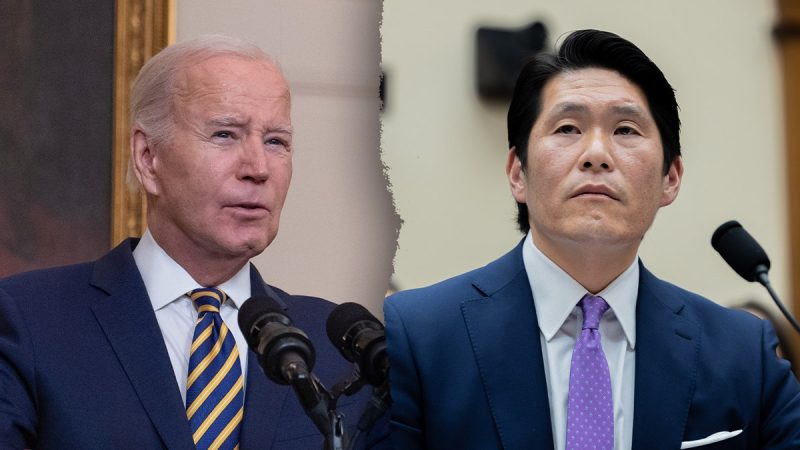
Former President Joe Biden lashed out against special counsel Robert Hur over a report in which he described the longtime lawmaker as a ‘sympathetic, well-meaning, elderly man with a poor memory.’

The part of Hur’s report that most angered Biden was the suggestion that the then-president could not remember when his son, Beau, died. However, new audio obtained by Axios sheds light on Biden’s lapses in memory.

In February 2024, Biden and several high-profile Democrats — as well as media personalities — attacked Hur. During a press conference on Hur’s report, Biden said, ‘There’s some attention paid to some language in the report about my recollection of events. There’s even a reference that I don’t remember when my son died. How in the hell dare he raise that?’

Then-Vice President Kamala Harris slammed Hur in February 2024, saying his report was ‘gratuitous, inaccurate and inappropriate.’ She also suggested that it was ‘clearly politically motivated.’ Harris recalled Biden’s alleged sharpness at the time, noting that Hur’s interview took place on Oct. 8, 2023 — just one day after Hamas’ attack on Israel. Harris said she was ‘in almost every meeting’ with Biden and that he was ‘in front of and on top of it all.’

Reps. Jerry Nadler, D-N.Y., and Pramila Jayapal, D-Wash., grilled Hur when he testified on Capitol Hill in March 2024. Both lawmakers attempted to get Hur to say that his report ‘exonerated’ Biden — which he did not do. Then–Rep. Adam Schiff, D-Calif., also criticized the special counsel, suggesting that Hur knew his description of Biden would ‘ignite a political firestorm,’ something Hur denied.

Former Obama advisor David Axelrod also criticized the report, calling it a ‘shiv the special counsel stuck into the Biden reelection campaign,’ according to CNN.

On Friday, Axios published a bombshell report that included audio recordings from Biden’s interview with Hur, something the previous administration refused to release. The audio includes long pauses in which Biden struggled to recall the dates of several major events, including when President Donald Trump was elected to office for his first term, his son’s death or his exit from office as vice president.

Since his report was released, Hur has seen two key moments of vindication aside from Friday’s report. The first came when the transcript of his interview was released in March 2024. At the time, the White House refused to release the audio, citing fears of AI deepfakes. Hur appeared to receive further vindication when Biden had his disastrous debate against then-candidate Trump in June 2024. Less than a month after the debate, Biden withdrew from the 2024 presidential race and endorsed Harris.  

This post appeared first on FOX NEWS

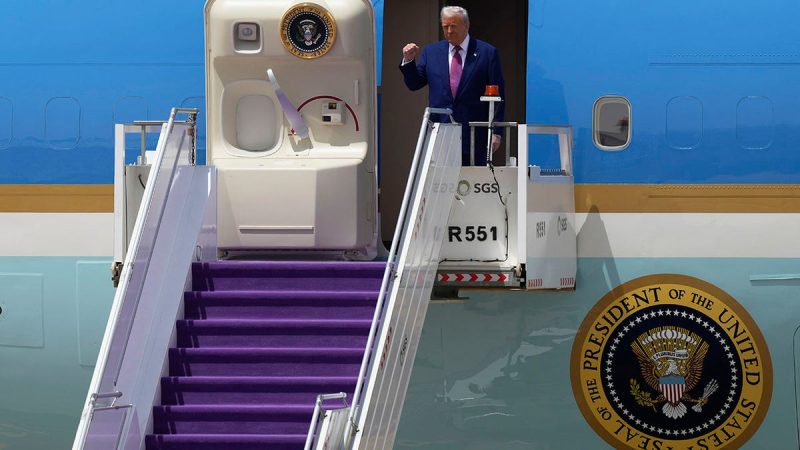
President Donald Trump spent his 17th week as commander-in-chief visiting the Middle East, marking his first major overseas trip of his second term. 

The president left Washington, D.C., Monday for Saudi Arabia, followed by a visit in Qatar and the United Arab Emirates. 

The president’s trip comes amid the continuing war between Israel and Hamas, ongoing U.S.-Iran negotiations over Iran’s nuclear program, and his plans to broaden his first administration’s Abraham Accords, which normalized diplomatic relations between Israel and Arab League nations such as the United Arab Emirates. 

Trump arrived in Riyadh, Saudi Arabia, early Tuesday morning, with the nation sending fighter jet escorts to welcome Air Force One to the ground and Saudi Crown Prince Mohammed bin Salman greeting Trump on the tarmac, which was adorned with a lavender-colored carpet.

Upon his arrival to Riyadh, Saudi Arabia, Trump was also met with a mobile and operational McDonald’s truck. 

The president, during a speech in Riyadh shortly after meeting with Crown Prince Mohammad bin Salman, vowed to continue America’s partnership with the Saudi Arabian government, but also called for peace in the Middle East, urging the region to pursue economic development rather than Iran’s ‘self-destructive’ path. 

‘If the responsible nations of this region seize this moment, put aside your differences and focus on the interests that unite you, then all humanity will soon be amazed at what we will see here in the geographic center of the world, and the spiritual heart of its greatest faiths,’ Trump said.

‘Before our eyes, a new generation of leaders is transcending the ancient conflicts and tired divisions of the past, and forging a future where the Middle East is defined by commerce, not chaos; where it exports technology, not terrorism; and where people of different nations, religions, and creeds are building cities together, not bombing each other,’ he added.

Trump’s speech came after he and Salman signed several economic agreements totaling $600 billion in trade deals. The agreements could help create up to two million U.S. jobs, Trump said.

Several of the agreements tracked with previously stated ambitions by both Washington, D.C., and Riyadh, Saudi Arabia, particularly when it comes to defensive deals. 

But as for Iran, Trump, during his Saudi Arabia speech, also warned the Islamic Republic of a ‘massive maximum pressure’ campaign if it did not come to a nuclear agreement with the U.S. 

‘As I have shown repeatedly, I am willing to end past conflicts and forge new partnerships for a better and more stable world, even if our differences may be profound,’ Trump said. ‘If Iran’s leadership rejects this olive branch… we will have no choice but to inflict massive maximum pressure, drive Iranian oil exports to zero.’

‘Iran can have a much brighter future, but we will never allow them to threaten America and our allies with terrorism or a nuclear attack,’ Trump said. 

Trump had announced a 60-day time frame to reach an agreement with Iran over its illegal atomic weapons program. The first U.S. negotiating session with Iran commenced April 12. 

Trump’s special envoy Steve Witkoff met with Iranian officials for a fourth round of nuclear talks over the weekend. 

The nuclear talks were ‘difficult but useful,’ Iranian Foreign Ministry spokesperson Esmail Baghaei said. A U.S. official, speaking on condition of anonymity to discuss the closed-door negotiations, offered more, describing the talks as being both indirect and direct, The Associated Press reported.

An ‘agreement was reached to move forward with the talks to continue working through technical elements,’ the U.S. official said. ‘We are encouraged by today’s outcome and look forward to our next meeting, which will happen in the near future.’

The Trump administration has said the flawed 2015 Obama-era Joint Comprehensive Plan of Action (JCPOA), also known as the Iran nuclear deal, did not prevent Iran from building an atomic bomb. 

Trump, throughout his visit, made stark warnings to Iran — verbally, and through sanctions. 

Just shortly after dangling a carrot of a ‘brighter future’ for Iran, the Treasury Department gave a taste of Trump’s ‘maximum pressure’ campaign and sanctioned more than two dozen firms operating in Iran’s illicit international oil trade. 

Trump said Iran has the nuclear ‘proposal.’ 

‘But more importantly, they know they have to move quickly or something bad — something bad is going to happen,’ the president said. 

Next, the president traveled to Qatar, where he signed a series of agreements with Qatar’s Emir Sheikh Tamim bin Hamad Al Thani in Doha.

Trump and his motorcade were greeted by dozens of mounted camels after his plane landed in Qatar Wednesday morning as he continues his four-day trip to the Middle East. 

The agreements there involved a purchasing agreement by Qatar for Boeing aircraft, as well as letters of intent and ‘joint cooperation’ between Qatar and the U.S. The emir also signed an intent agreement to purchase MQ-9 drone aircraft.

Al Thani said he had a ‘great’ conversation with Trump prior to the signing ceremony Wednesday, adding that the agreements have elevated the U.S.-Qatar relationship to ‘another level.’

The president then met with U.S. service members at Al Udeid Air Base in Qatar, and cited ‘substantial pay raises’ for U.S. troops in his 2026 budget. 

‘You are without a doubt the greatest fighting force in the history of the world,’ Trump said. ‘And as your commander-in-chief, I’m here to say that America’s military will soon be bigger, better, stronger and more powerful than ever.’ 

Next, the president traveled to the United Arab Emirates for his final stop — a visit that marked the first time a U.S. president has traveled to the nation in nearly 20 years, following President George W. Bush’s trip in 2008.

The Burj Khalifa in Dubai, the tallest building in the world, was illuminated in red, white and blue in honor of President’s historic UAE visit. 

Trump visited the Grand Mosque, a rare visit for a U.S. president, and was gifted the UAE’s highest civilian honor, the Order of Zayed, by UAE’s President Sheikh Mohammed bin Zayed Al Nahyan. 

The president wrapped up his visit to the United Arab Emirates with a visit to the Abrahamic Family House, which encompasses a mosque, a church, a synagogue, and a forum, and served as a community for inter-religious dialogue and peaceful co-existence.  

As of this week, Trump has signed 148 executive orders since his inauguration in January, including a whopping 143 within his first 100 days as president, dwarfing the number of executive orders signed by his predecessors stretching back to at least President Franklin D. Roosevelt. 

Fox News Digital’s Emma Colton, Morgan Phillis and Anders Hagstrom contributed to this report. 

This post appeared first on FOX NEWS

The top tax-writer in the House of Representatives is arguing that President Donald Trump’s ‘big, beautiful bill’ will be ‘big’ for American taxpayers as well – including seniors.

House Ways & Means Committee Chairman Jason Smith, R-Mo., and other Republicans on the panel spent months negotiating behind closed doors on how to enact Trump’s tax policies.

Among those is an added $4,000 deduction for Americans aged 65 or older. Seniors with income of less than $75,000 as single filers, and less than $150,000 as joint filers, would be eligible for the full deduction, which then would begin to phase out.

‘So, that’s on top of their guaranteed deduction, and that’s per person . . . anyone who has total earnings of $75,000 a year or less is going to be made completely whole, so all the low-income and middle-income seniors on Social Security will be paying zero on Social Security in the long run,’ Smith told Fox News Digital, while adding of others, ‘most of them will be paying much less.’

Republicans are using the budget reconciliation process, which lowers the Senate’s threshold for passage from 60 votes to 51 for certain pieces of fiscal legislation, to advance a vast bill full of Trump’s priorities on taxes, immigration, energy, defense and the national debt.

Because the House already operates under a simple majority, reconciliation allows the party in power to pass sweeping legislation while sidelining the other side, in this case, Democrats.

Trump has directed congressional Republicans to permanently extend his 2017 Tax Cuts and Jobs Act (TCJA), as well as implement new policies eliminating taxes on tips, overtime pay and retirees’ Social Security.

But the law that established the reconciliation process, the Congressional Budget Act of 1974, also specifically forbade direct changes to Social Security via the process.

Smith said Republicans’ had added $4,000 tax deduction as a way to make them ‘completely whole.’

Rather than seeing that tax relief month-to-month, however, Smith said it would come in people’s yearly tax returns.

He argued that it was more beneficial for lower-income seniors as well, giving added relief to those whose incomes were too low to pay Social Security taxes in the first place.

‘Under the rules of reconciliation, you cannot touch Social Security directly. What we did is to make sure that they get . . . tax relief for any senior who makes less than $75,000 per year,’ Smith said. ‘It’s not that we didn’t want to do it, it’s that it cannot be done under the rules of reconciliation, or you wouldn’t qualify for the 51-vote threshold over in the United States Senate.’

‘But the tax relief they will receive is an added tax cut, and that will make up for what they have paid in Social Security tax.’

The White House also endorsed Smith’s plan despite its departure from Trump’s initial campaign pitch.

‘The One, Big, Beautiful Bill not only delivers permanent tax cuts and bigger paychecks, but it secures a historic tax break for seniors on Social Security,’ White House spokesperson Anna Kelly said. ‘This is another promise made, promise kept to our seniors who deserve much-needed tax relief after four years of suffering under Bidenflation.’

The $4,000 tax deduction, which would be in effect from the 2025 through 2028 tax years, would be on top of the higher standard deduction that people above age 65 already receive. 

It would not be a tax credit, reducing tax liability directly regardless of tax brackets. A deduction reduces taxable income and is dependent on the taxpayer’s rate.

But for single seniors making up to $75,000, and married seniors making less than $150,000, qualifying for the $4,000 deduction, it would likely provide some relief for millions of taxpayers across the country.

‘It’ll be a wash of what their Social Security tax would’ve been,’ Smith said, adding later in the interview: ‘Failure’s not an option. We’re going to get this done.’

This post appeared first on FOX NEWS

NEWYou can now listen to Fox News articles!

President Donald Trump’s bold executive order on drug pricing isn’t just policy—it’s a revolution in healthcare affordability. The plan is simple yet transformative: ensure Americans pay no more for medications than citizens of other wealthy nations.

Consider this stark reality: a GLP-1 drug costing $88 in London commands $1,000 in the United States. Even after manufacturer discounts to insurers, Americans still pay over $400—for the identical medication, from the same company, produced in the same facility. This disparity is especially galling when pharmaceutical companies extract 70% of their profits from America—a nation representing just 4% of the world’s population. This global free-riding on American patients ends now.

Industry leaders recognize this imbalance. I’ve already engaged with CEOs from four major American pharmaceutical companies and a foreign manufacturer eager to relocate to the U.S. Their response has been encouraging, but we’re prepared to act decisively if necessary. U.S. Health and Human Services and Centers for Medicare & Medicaid Services (CMS) possess the statutory authority to deliver on President Trump’s commitment: other developed nations must pay more, so Americans can pay less, thus preserving the innovation pipeline.

Americans deserve both groundbreaking therapies and affordable access to them. Yet according to the Kaiser Family Foundation, nearly one-third of patients skip prescribed medications due to cost—an unacceptable reality in the world’s wealthiest nation.

While prevention through healthier lifestyles remains our best strategy for reducing medication dependence, certain treatments will always be essential. The pharmaceutical industry has delivered remarkable advancements in cancer and autoimmune therapies that benefit patients worldwide. 

We value continued innovation as a core American principle, but we cannot indefinitely subsidize global medical progress while other wealthy nations contribute disproportionately little.

President Trump’s negotiation approach has already proven effective with NATO, where European countries responded to accountability by making historic reinvestments that strengthened the alliance. The same principle applies here. The President and I stand united: global free riding on American patients must end.

CMS, with Dr. Mehmet Oz at the helm, extends beyond payment reform to fundamentally realigning care delivery incentives. This initiative will protect safety nets for vulnerable populations while addressing the financial pressures facing state partners and federal programs—particularly Medicaid, which has seen dramatic growth in both enrollment and costs.

The coming months will be decisive in achieving President Trump’s prescription for a healthier America—one where innovation thrives, and patients no longer shoulder an unfair share of the global healthcare burden.

This post appeared first on FOX NEWS

Here’s a quick recap of the crypto landscape for Friday (May 16) as of 4:00 p.m. UTC.

Get the latest insights on Bitcoin, Ethereum and altcoins, along with a round-up of key cryptocurrency market news.

Bitcoin and Ethereum price update

Bitcoin (BTC) was priced at US$104,223 as markets closed, up 1 percent in 24 hours. The day’s range for the cryptocurrency has seen a low of US$102,935 and a high of US$104,291.

Bitcoin performance, May 16, 2025.

Chart via TradingView.

Ethereum (ETH) finished the trading day at US$2,592.45, a 1.2 percent increase over the past 24 hours. The cryptocurrency reached an intraday low of US$2,527.33 and saw a daily high of US$2,631.38.

Altcoin price update

  • Solana (SOL) closed at US$171.79, down 0.3 percent over 24 hours. SOL experienced a low of US$168 and a high of US$173.98.
  • XRP is trading at US$2.42, reflecting a slight 1.5 percent decrease over 24 hours. The cryptocurrency reached a daily low of US$2.37 and a high of US$2.50.
  • Sui (SUI) is priced at US$3.87, showing an increaseof 2.0 percent over the past 24 hours. It achieved a daily low of US$3.79 and a high of US$3.94.
  • Cardano (ADA) is trading at US$0.7788, up 0.9 percent over the past 24 hours. Its lowest price of the day was US$0.755, and it reached a high of US$0.7905.

Today’s crypto news to know

Coinbase faces US$400 million fallout after major cyber attack

Coinbase Global (NASDAQ:COIN) disclosed that a sophisticated cyber attack has compromised a portion of its customer base and could cost the firm up to US$400 million.

Hackers reportedly gained access to internal systems by paying off employees and contractors, allowing them to impersonate Coinbase and scam users out of their crypto.

Less than 1 percent of customer data was breached, but the attackers demanded a US$20 million ransom—which Coinbase flatly refused to pay. Instead, the company has pledged to fully reimburse affected users and established a US$20 million reward for information leading to the perpetrators’ arrest.

the timing of the attack is significant, coming just days before Coinbase is set to join the S&P 500 (INDEXSP:.INX), a milestone for mainstream crypto acceptance.

Ripple’s US$50 million SEC settlement rejected by federal judge

A US federal judge has rejected a US$50 million settlement deal jointly proposed by Ripple Labs and the US Securities and Exchange Commission (SEC), calling the motion ‘procedurally improper’ and outside her jurisdiction.

The dispute stems from the SEC’s longstanding lawsuit accusing Ripple of conducting unregistered securities sales through XRP, a case now under appeal. Judge Analisa Torres said that because the litigation is at the appellate stage, the district court has no authority to modify the previous judgment.

Ripple’s chief legal officer responded by emphasizing that the ruling doesn’t affect the company’s earlier court wins and that both sides remain aligned on resolving the issue.

Bitget becomes world’s third top crypto exchange by trading volume

Bitget has officially surged into third place among global crypto exchanges, reporting a stunning US$757.6 billion in futures trading volume and US$68.6 billion in spot volume for April 2025.

The Seychelles-based platform has made a name for itself through features like copy trading, which allows users to mimic high-performing traders in real time. Bitget’s April performance stood out despite a broader market correction, expanding its market share to 7.2 percent and pushing its user base above 120 million.

The exchange’s rise signals increasing demand for advanced crypto trading products beyond the traditional buy-and-hold strategy.

Fifth Third Bank eyes expansion into crypto after regulatory green light

After five years of quietly exploring the crypto space, Fifth Third Bank now says it’s ready to expand its offerings amid friendlier US regulations. The Cincinnati-based lender, which holds over US$200 billion in assets, has been working with crypto firms since 2020 but delayed larger moves until clearer guidance from regulators arrived.

According to Chief Strategy Officer Ben Hoffman, the bank is now exploring stablecoin-powered cross-border payments, crypto payroll services and digital asset custody. Recent signals from the Office of the Comptroller of the Currency and the Trump administration’s pro-crypto stance have given institutions more confidence to act.

Fifth Third has formed internal teams across its business lines to integrate blockchain-based financial products responsibly. With mainstream banks finally stepping into crypto with more certainty, a new chapter of institutional adoption appears to be underway.

US lawmakers debate GENIUS Act as stablecoin regulation nears critical juncture

The GENIUS Act, a bipartisan bill aimed at establishing a regulatory framework for US dollar-backed stablecoins, is under intense scrutiny as lawmakers grapple with its potential implications.

While the legislation seeks to provide clarity and oversight in the burgeoning stablecoin market, recent developments have introduced partisan divisions and raised concerns over consumer protections and financial stability.

Initially enjoying bipartisan support, the GENIUS Act has encountered resistance from Senate Democrats following revelations about former President Donald Trump’s involvement in digital asset ventures.

Lawmakers are now advocating for amendments to enhance consumer protections, enforce stricter financial controls and address potential ethical issues, particularly regarding the participation of large tech companies like Meta in the stablecoin space.

Despite these challenges, Republican proponents of the bill are pushing for its approval by Memorial Day (May 26), emphasizing the need for regulatory clarity to foster innovation and maintain the US dollar’s dominance in the digital economy.

Mastercard teams up with MoonPay to enable stablecoin payments worldwide

Mastercard (NYSE:MA) has announced a major new partnership with crypto payment processor MoonPay to bring stablecoin-based payments to more than 150 million global merchants.

The collaboration leverages Iron, a blockchain infrastructure company recently acquired by MoonPay, to enable real-time spending of stablecoins at any location accepting Mastercard.

The partnership is geared toward gig workers, digital creators and international businesses looking to send or receive money in a faster, cheaper and more flexible way. MoonPay says it already works with over 500 crypto platforms and can now expand its reach to over 100 million active users

Securities Disclosure: I, Giann Liguid, hold no direct investment interest in any company mentioned in this article.

This post appeared first on investingnews.com

Coinbase Global (NASDAQ:COIN), one of the world’s largest crypto exchanges, has announced an investment in Stablecorp to bring QCAD — a Canadian dollar-denominated stablecoin — to Canadians.

The announcement was made in Toronto at the Blockchain Futurist Conference, where it was presented during a fireside chat by Lucas Matheson, Canada country director at Coinbase, and Alex McDougall, CEO of Stablecorp.

The pair positioned the launch as part of a global shift toward stablecoin integration and digital financial innovation, underscoring Canada’s unique opportunity to carve out a leadership role in the emerging digital currency ecosystem.

‘Stablecoins are probably the topic to draw this year in crypto, for a lot of good reasons,” said Matheson.

“When you look at volume around the world for cryptocurrencies, stablecoins currently account for about 70 percent of all volume in cryptocurrency, while maintaining about 10 percent of the market cap.”

Matheson pointed out that governments around the world, from the US to the UK, are moving quickly to legislate and define these assets as legitimate payment instruments. He stressed that Canada needs to be part of that conversation.

Stablecorp’s QCAD is not new to the scene. McDougall noted that the company has been working since 2020 to create a homegrown stablecoin that reflects Canada’s economic standing. Despite the US dollar’s dominance in the global stablecoin market, McDougall believes the Canadian dollar has a compelling case to make.

“The Canadian dollar trades over C$400 billion a day in foreign exchange. Over C$3.6 billion of goods cross the American border, back and forth every day,’ he told audience members. “There’s over C$316 billion in international central bank reserve currencies, and that’s up to C$65 billion over 2024 — the Canadian dollar quietly kicks ass.’

The Coinbase-Stablecorp partnership aims to fill this void by integrating QCAD into use cases ranging from simple peer-to-peer transactions to institutional finance and global trade. Matheson explained that Coinbase’s backing will bring the reach, trust and compliance capabilities needed to scale QCAD nationally and internationally.

Their discourse also revolved around real-world applications. McDougall described QCAD as a solution that dramatically lowers costs and increases speed in cross-border and domestic payments.

He pointed to practical examples already being piloted, such as Brazilian students paying Canadian tuition fees using QCAD, and Filipino workers receiving remittances via seamless FX-to-stablecoin pipelines.

In both cases, traditional banking systems are circumvented in favor of instant, lower-fee digital rails.

The stablecoin, McDougall added, also opens new doors for small business financing. Canadian businesses will soon be able to draw international lines of credit that settle in QCAD in real-time, with FX baked into transactions, a feature traditional banks currently do not offer. He also highlighted use cases in global telecommunications billing, where cross-border carrier settlements, a US$5 billion annual burden, could be simplified via programmatic stablecoin payments.

Even more futuristically, he envisions QCAD being critical infrastructure for Canada’s artificial intelligence ambitions.

“From just simple everyday things like sending money around and taking that power back, all the way to having these fully automated global webs of commerce — stablecoins are the building blocks for every single one of those,” he said.

Despite the momentum, both Matheson and McDougall acknowledged that Canada’s regulatory environment has not kept pace with innovation. Unlike jurisdictions such as the US and UK, where stablecoins are being defined through legislation as distinct asset classes, often as e-money, Canada remains entangled in a fragmented regulatory landscape.

“Our challenge is that we have 13 different provincial securities regulators, each approaching crypto through the lens of securities law,” said Matheson. “That’s led to a square peg, round hole problem.”

The lack of a unified federal framework has made it difficult for firms like Stablecorp to fully operationalize a compliant and scalable stablecoin solution. However, the panelists hope this may be changing with a cabinet shakeup.

With the QCAD rollout and further announcements expected in the coming weeks, the pressure now shifts to Ottawa to match private sector ambition with public policy action.

Securities Disclosure: I, Giann Liguid, hold no direct investment interest in any company mentioned in this article.

This post appeared first on investingnews.com

As the global energy transition accelerates, the mining sector is increasingly navigating a complex landscape of shifting demand, volatile prices and growing sustainability priorities.

During an S&P Global webinar on the state of the mining industry in Q1, analysts highlighted renewable power development and mine-site electrification as key sustainability drivers shaping the future of resource extraction.

Copper, a key component of the energy shift, remains a focal point, with average prices holding at US$9,412 per metric ton in the first quarter, though forecasts suggest a slight decline to US$9,317 by year end.

Meanwhile, the battery metals space continues to feel the squeeze.

Lithium prices slumped to US$9,000 per metric ton, leaving an estimated 27 percent of producers operating at a loss, according to S&P. Cobalt held above US$14 per pound, bolstered by the Democratic Republic of Congo’s export ban.

Nickel, driven by surging Indonesian output, is forecast to fall to US$15,730 per metric ton.

The webinar also touched on broader sector dynamics, including ongoing trade tensions, subdued financing activity and an uptick in M&A as companies reposition for long-term growth amid tightening supply and geopolitical uncertainty.

Copper supply disrupted, green demand bolstered

As mentioned, copper prices are expected to dip slightly to US$9,317 by year end.

While positive drivers like a weaker US dollar and resilient Chinese demand are offering some support, refined production cuts, bad weather in Chile and smelter challenges have added pressure to the global supply chain.

Notably, production disruptions in Chile — including a national blackout and Glencore’s (LSE:GLEN,OTC Pink:GLCNF) partial suspension at Altonorte — along with declining US consumer confidence, have led S&P to revise its US refined copper demand growth forecast down to just 1.5 percent for the year. Meanwhile, tightness in the concentrate market has sent spot treatment charges to record lows, amplifying strain on smelter margins.

“(A) developing demand driver for copper is the increasing demand from the green energy transition,’ said Naditha Manubag, associate research analyst, metals and mining research, at S&P Global Commodity Insights.

‘Despite the intensifying US-China trade disputes, copper demand in China has shown resilience, with copper concentrate imports growing by 10 percent in Q1 and cathode imports increasing month-over-month.’

Lithium, cobalt and graphite markets under pressure

In contrast, the battery metals space continues to reel from oversupply and weak pricing. Lithium carbonate CIF Asia dropped to just US$9,000, the lowest level seen since 2021.

“Overcapacity will continue to limit lithium prices until the next decade,” said Manubag. “With this, we have lowered the lithium carbonate CIF Asia price in 2025 to US$9,031. And using this price assumption, 27 percent of lithium operations will be loss-making on a total cash operating margin basis.”

Prices are expected to dip further to US$8,600 in Q3 before a modest recovery in 2027.

The cobalt market, while supported by the Democratic Republic of Congo’s export ban, is forecast to remain in surplus through 2025, though prices are likely to hold above US$14.

“The Democratic Republic of Congo accounts for over 70 percent of global cobalt mine output, yet its ongoing export ban is unlikely to trigger significant production cuts,” the analyst said, adding that the stockpiled supply is expected to re-enter the market once the ban lifts — supporting a sustained price recovery.

Cobalt hydroxide prices have surged the most since the ban began due to tightening supply, and cobalt prices are expected to remain above US$14 through 2025. However, elevated prices may accelerate the trend toward substituting cobalt in battery chemistries as the lithium market braces for further cuts.

Meanwhile, graphite prices are under pressure despite tightening Chinese export controls.

China’s December export ban on key critical minerals, including gallium and germanium, has prompted tighter scrutiny on graphite exports to the US. With China supplying roughly half of America’s antimony and natural graphite imports, pressure on prices has mounted as Tanzanian supply grows, but export options narrow.

Despite current oversupply, a structural deficit is forecast in the medium to long term.

“Spot prices for natural graphite have come under further pressure,” Manubag said. “(US President Donald) Trump’s Section 232 probes import dependence on processed graphite, supporting US anode projects.”

As such, S&P sees US capacity growing to 236,000 metric tons in 2028.

“We maintain our view that continued high feedstock cost on the synthetic anode supply chain could support fine flake and spherical graphite prices,’ the expert added.

Gold leads Q1 mining M&A

M&A in the mining sector slowed sharply in Q1, with both the number and value of deals declining.

Although gold transactions accounted for 86 percent of total M&A value, overall gold deal value dropped 62 percent quarter-over-quarter to US$4.02 billion. In the lead for the period was Equinox Gold’s (TSX:EQX,NYSEAMERICAN:EQX) planned US$1.87 billion takeover of Calibre Mining (TSX:CXB,OTCQX:CXBMF).

Nickel followed, with MMG’s (OTC Pink:MMLTF,HKEX:1208) US$500 million acquisition of Anglo American’s (LSE:AAL,OTCQX:AAUKF) nickel business, including producing assets like Barro Alto and Codemin.

In copper, the top transaction was Hudbay Minerals’ (TSX:HBM,NYSE:HBM) purchase of Mitsubishi Materials’ (OTC Pink:MIMTF,TSE:5711) remaining stake in the Copper Mountain mine for US$44.3 million.

“Gold deals are expected to continue leading M&A activity as the metal maintains its safe-haven appeal amid global trade uncertainty,” Gian Seblos, associate research analyst, metals and mining research, at S&P Global Commodity Insights, said during this week’s webinar. He added, “Meanwhile, cash-rich producers may drive consolidation in base metals, either to secure future output or diversify amid shifting trade dynamics.”

Capital raised by mining companies surged to US$11.92 billion — doubling from the previous quarter and marking the second consecutive quarter of growth following the US Federal Reserve’s December rate cut. Debt financing jumped to 65 percent of total capital raised, up from 35 percent previously, fueled by a surge in senior debt offerings.

Major mining companies led the charge, raising US$7.57 billion — nearly six times more than Q4 2024.

Juniors saw a 25 percent increase, raising US$3.48 billion. Gold companies captured half of the funding, followed by those focused on base metals (33 percent) and specialty commodities (17 percent).

Regionally, Asia and the Middle East posted a 331 percent gain to US$1.58 billion, primarily driven by Saudi Arabia’s Ma’aden through two non-convertible bond offerings worth US$1.25 billion.

Africa and Europe also saw strong growth, while Australia, Canada and the US experienced declines.

Securities Disclosure: I, Georgia Williams, hold no direct investment interest in any company mentioned in this article.

This post appeared first on investingnews.com