Author

admin

Browsing

TSX Venture Exchange: BSK
Frankfurt Stock Exchange: MAL2
OTCQB Venture Market (OTC): BKUCF

Blue Sky Uranium Corp. (TSX-V: BSK) (FSE: MAL2) (OTC: BKUCF), (‘Blue Sky’ or the ‘Company’) is pleased to announce that it has secured drill contractors and scheduled a start date of June 1 st 2025 for the previously announced drill programs to advance the Ivana Uranium-Vanadium Project (the ‘ Project ‘).  As reported on May 14, 2025 Blue Sky’s joint-venture operating company Ivana Minerales S.A., (‘ JVCO ‘, a partnership with Abatare Spain, S.L.U.) has planned a two-phase drilling campaign. The first phase will focus on infill drilling at the Ivana deposit, while the subsequent second phase will test satellite targets.  The entire campaign is expected to last approximately five months.

Nikolaos Cacos , President & CEO of the Company stated, ‘Our JVCO team has procured agreements with very capable operators that will enable us to advance Ivana quickly and efficiently. We look forward to seeing the drills turning again as we move our pre-feasibility work forward.’

The infill drilling campaign has been awarded to Patagonia Drilling, which will mobilize two reverse circulation (‘ RC ‘) drill rigs in stages to complete the program. This program aims to achieve better definition of the known mineralized bodies and assess the potential extension of zones where mineralization remains open, particularly in the areas of greatest interest as outlined in the most recent Preliminary Economic Assessment . Patagonia Drilling is a well-established company with extensive experience in mineral exploration across Argentina and successfully conducted the most recent drilling campaign at the Project.

The second campaign, scheduled to begin immediately after the first, has been awarded to AGV Falcon Drilling. This phase will employ both RC and diamond drilling methods. AGV Falcon Drilling is a reputable company with a strong presence in Argentina and significant experience in supporting domestic mineral exploration. The objective of this campaign is to further delineate mineralization previously identified in satellite areas surrounding the Ivana Project, many of which have returned encouraging results from earlier drilling and require more detailed definition.

Qualified Persons

The technical contents of this news release have been reviewed and approved by Mr. Ariel Testi , CPG, who works for the Company and is a Qualified Person as defined in National Instrument 43-101.

About Ivana Minerales S.A.

Ivana Minerales S.A. is the operating company for the joint-venture between Blue Sky and its partner Abatare Spain, S.L.U. (‘ COAM ‘) to advance the Ivana Uranium-Vanadium deposit in Rio Negro Province of Argentina . The activities of JVCO are subject to the earn-in transaction (the ‘ Agreement ‘) in which COAM will fund cumulative expenditures of US$35 million to acquire a 49.9% indirect equity interest in the Ivana deposit, and then has the further right to earn up to an 80% equity interest in JVCO by completion of a feasibility study and funding the costs and expenditures up to US$160,000,000 to develop and construct the project to commercial production, subject to the terms and conditions in the Agreement. For additional details, please refer to the News Release dated February 27, 2025 , as well as the Company’s latest Financial Statements and MD&A available at blueskyuranium.com .

About Blue Sky Uranium Corp.

Blue Sky Uranium Corp. is a leader in uranium discovery in Argentina . The Company’s objective is to deliver exceptional returns to shareholders by rapidly advancing a portfolio of surficial uranium deposits into low-cost producers, while respecting the environment, the communities, and the cultures in all the areas in which we work. Blue Sky has the exclusive right to properties in two provinces in Argentina . The Company’s Amarillo Grande Project was an in-house discovery of a new district that has the potential to be both a leading domestic supplier of uranium to the growing Argentine market and a new international market supplier. Blue Sky is advancing its flagship Ivana Uranium-Vanadium Deposit through a joint venture with subsidiaries of Corporación América Group. The Company is a member of the Grosso Group, a resource management group that has pioneered exploration in Argentina since 1993.

ON BEHALF OF THE BOARD

‘Nikolaos Cacos’
______________________________________
Nikolaos Cacos , President, CEO and Director

Neither TSX Venture Exchange nor its Regulation Services Provider (as that term is defined in policies of the TSX Venture Exchange) accepts responsibility for the adequacy or accuracy of this release.

This news release may contain forward-looking statements and forward-looking information (collectively, the ‘forward-looking statements’) within the meaning of applicable securities laws. Forward-looking statements address future events and conditions and therefore involve inherent risks and uncertainties. Any statements that are contained in this press release that are not statements of historical fact may be deemed to be forward-looking statements. Forward-looking statements are often identified by terms such as ‘may’, ‘should’, ‘anticipate’, ‘will’, ‘estimates’, ‘believes’, ‘intends’ ‘expects’ and similar expressions which are intended to identify forward-looking statements. More particularly and without limitation, this press release contains forward-looking statements that, other than statements of historical fact, address activities, events or developments the Company believes, expects or anticipates will or may occur in the future, including, without limitation, statements about the Company’s planned drilling campaign at the Ivana deposit. Forward-looking statements are not guarantees of future performance and accordingly undue reliance should not be put on such statements due to the inherent uncertainty therein.

Forward-looking statements are subject to a number of risks and uncertainties that may cause the actual results of the Company to differ materially from those discussed in the forward-looking statements and, even if such actual results are realized or substantially realized, there can be no assurance that they will have the expected consequences to, or effects on, the Company. Factors that could cause actual results or events to differ materially from current expectations include, among other things: uncertainty relating to mineral resources; risks related to heavy metal and transition metal price fluctuations, particularly uranium and vanadium; ri   sks relating to the dependence of the Company on key management personnel and outside parties;   the potential impact of global pandemics; risks and uncertainties related to governmental regulation and the ability to obtain, amend, or maintain licenses, permits, or surface rights; risks associated with technical difficulties in connection with mining activities; and the possibility that future exploration, development or mining results will not be consistent with the Company’s expectations, including in respect of the Company’s planned drilling program described in this news release. Actual results may differ materially from those currently anticipated in such statements. Readers are encouraged to refer to the Company’s public disclosure documents for a more detailed discussion of factors that may impact expected future results. The forward-looking statements contained in this press release are made as of the date of this press release, and the Company does not undertake any obligation to update publicly or to revise any of the included forward-looking statements, whether as a result of new information, future events or otherwise, except as expressly required by securities law.

View original content to download multimedia: https://www.prnewswire.com/news-releases/blue-sky-uranium-schedules-start-of-drill-program-for-ivana-uranium-vanadium-project-302462911.html

SOURCE Blue Sky Uranium Corp.

View original content to download multimedia: http://www.newswire.ca/en/releases/archive/May2025/22/c8921.html

News Provided by Canada Newswire via QuoteMedia
This post appeared first on investingnews.com

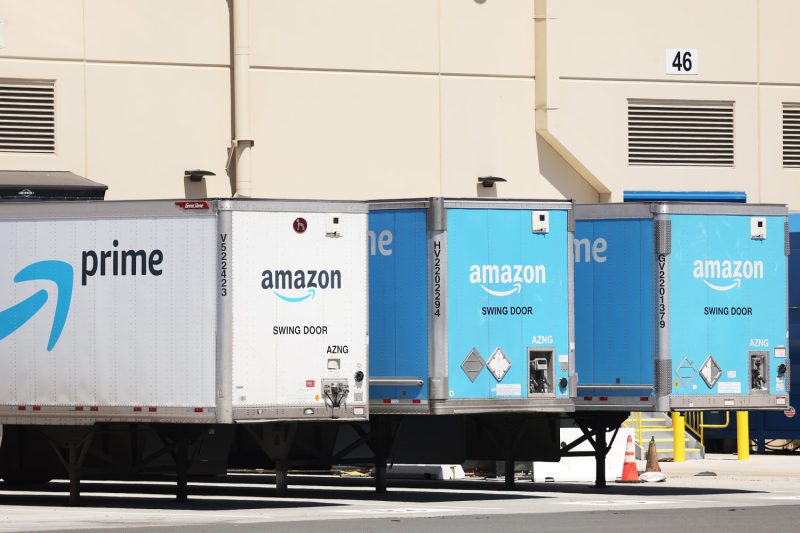
Department of Justice officials on Tuesday charged members or associates of an Armenian organized crime ring with stealing more than $83 million worth of cargo from Amazon by posing as legitimate truck drivers and siphoning off goods destined for the company’s warehouses.

Since at least 2021, at least four people linked to the crime ring carried out a scheme across California to steal truckloads of merchandise, ranging from smart TVs and GE icemakers to SharkNinja vacuums and air fryers, the DOJ alleged.

“At present, Amazon is plagued by recurring thefts of its shipments, which is commonly referred to as ‘cargo theft,’” the complaint says.

Amazon has ramped up its efforts to track and shut down fraudulent, deceptive and illegal activities on its sprawling online store. Eliminating stolen goods is particularly challenging. CNBC reported in 2023 that Amazon suspended dozens of third-party merchants it alleged were selling stolen goods, though many of those sellers claimed they were unknowingly caught in the scheme, putting their businesses at risk of survival.

Amazon isn’t the only retailer afflicted by cargo theft. Experts told CNBC cargo theft-related losses are estimated at close to $1 billion or more a year.

In its complaint, the DOJ said the alleged fraudsters operated four transport carriers — AK Transportation, NBA Holdings, Belman Transport and Markos Transportation — that would obtain contracted freight routes from Amazon Relay, an application used by truckers to obtain work, also referred to as loads.

Each trucker is assigned a load for pickup from a manufacturer’s warehouse to be dropped off at an Amazon facility. Instead, the groups would divert from their designated routes, take a portion of the goods off the trucks and resell them or gift them to associates, prosecutors allege.

In some cases, the “self-styled carriers” would complete their deliveries at an Amazon warehouse several days after they were expected to show up, according to the complaint.

DOJ officials seized the alleged fraudsters’ iPhones and found photos and videos of warehouses lined with boxes of crockpots, Keurig coffee machines, keratin shampoo, Weber grills and other goods.

Amazon teams cooperated with DOJ officials in their investigation, including sharing information about the stolen goods, and details of the alleged fraudsters’ accounts on its online marketplace.

An Amazon spokesperson said in a statement that the company has “zero tolerance” for cargo theft and other forms of organized retail crime. Amazon relies on a mix of internal teams and technologies to prevent ORC schemes. The company has also referred “thousands” of ORC bad actors to law enforcement officials.

“These referrals have resulted in arrests, product seizures and recoveries, and the dismantling of ORC networks in the U.S. and around the world,” they said in a statement.

DOJ officials linked the defendants to a litany of other alleged crimes, including attempted murder, kidnapping, illegal firearm possession and health-care fraud. Several of the 13 defendants are expected to appear in a Los Angeles district court on Tuesday and Wednesday, while one of the defendants appeared in a court in Fort Lauderdale, Florida, on Tuesday and was detained.

This post appeared first on NBC NEWS

Raising prices on consumers to cover the costs of President Donald Trump’s tariffs will be Target’s ‘very last resort,’ CEO Brian Cornell said Wednesday.

The remarks came as Target reported weaker-than-expected sales in its first quarter and cut its full-year forecast. The retailer, whose business hasn’t fared as well against rivals better known for bargain prices, has “many levers to use in mitigating the impact of tariffs,” Cornell said.

Major retailers appear to be treading cautiously around the question of price hikes after Trump slammed Walmart last weekend for warning that shoppers could pay more due to tariffs. In the days since, Target, Lowe’s and Home Depot have each made carefully worded remarks about the potential for higher prices or minimized discussion of tariffs altogether.

Walmart said last week that it customers would likely start seeing some prices climb as soon as this month because tariffs have created a more “challenging environment to operate in.” While presidents typically avoid appearing to dictate individual companies’ strategies, Trump castigated Walmart on his social media platform, demanding that it “EAT THE TARIFFS” and adding, “I’ll be watching, and so will your customers!!!”

“We’ll keep prices as low as we can for as long as we can given the reality of small retail margins,” Walmart told NBC News Saturday in response to Trump’s post. Days later, Home Depot all but ruled out near-term price hikes, citing its scale and supply-chain arrangements. Lowe’s barely mentioned tariffs when it reported earnings Wednesday but said just 20% of what its shoppers buy now comes from China, after years of diversifying its sourcing.

For Target, Cornell emphasized that tariffs were just one factor in a series of “massive potential costs” the company is grappling with. He pointed to consumer uncertainty over the direction of the economy and a high-profile backlash over Target’s watering down of its diversity, equity and inclusion policies. The retailer had expanded those initiatives after police murdered George Floyd in its hometown, Minneapolis, five years ago this weekend.

Target has rolled out discounts over the past year to lure inflation-weary shoppers and touted plans to expand its third-party marketplace to offer a broader range of items. To deal with new trade policy challenges, it’s negotiating with vendors, reassessing its product lineup and adjusting its foreign supply chain, Chief Commercial Officer Rick Gomez told investors Wednesday.

‘Half of what we sell comes from the U.S.,’ he said, adding that Target is expanding production in the United States and in other countries outside of China, whose exports currently face a 30% import tax.

Target’s stock fell more than 5% Wednesday during a broader market sell-off.

Some major companies that sell products at leading retailers have raised prices or said they’re considering doing so, including toolmaker Stanley Black & Decker, consumer products giant Procter & Gamble, sportswear brand Adidas and toy maker Mattel.

Mattel, the maker of Barbie dolls, has also come under fire from Trump, who threatened to hit it with 100% tariffs this month, after it signaled price hikes were on the table.

Big companies generally have more latitude to handle cost increases and other economic headwinds than their smaller counterparts. The U.S. Chamber of Commerce and independent business owners have warned that tariffs threaten to snuff out many small operators, chipping away at the competition for already large corporate rivals.

The National Retail Federation, which represents some of the biggest retailers in the country, has emphasized that risk in lobbying against new levies. “Small and medium-sized businesses will be disproportionately affected by the tariffs, with many saying they will have to raise prices or shut down,” it says on its website.

So far, “consumers are still spending despite widespread pessimism fueled by rising tariffs,” NRF Chief Economist Jack Kleinhenz said in a statement last week after retail sales eked out a modest 0.1% rise in April.

But even the largest multinational companies aren’t insulated from tariff-driven uncertainty, the NFR and industry analysts say. Like Target, several large firms have revised or scrapped their financial outlooks in recent weeks, unsure how the White House’s trade agenda will affect them. Nike plans to increase prices on several items between now and June 1, a person familiar with the matter told NBC News on Wednesday.

Not every retailer is voicing tariff jitters. The parent company of T.J. Maxx and Marshalls beat sales estimates Wednesday and maintained its full-year forecast. The discounter, which buys unsold merchandise from other brands that have already paid tariffs on much of it, said it expects to be able to handle the pressure from higher import taxes.

Sportswear brand Canada Goose, which makes popular winter jackets, also exceeded Wall Street expectations. But it joined the slew of companies pulling their forecasts for the rest of the year, citing an “unpredictable global trade environment.”

This post appeared first on NBC NEWS

We now know who won the contest to attend an intimate dinner with President Donald Trump by buying his cryptocurrency — and he’s a familiar face to Securities and Exchange Commission regulators and law enforcement officials.

Justin Sun, a Chinese-born crypto entrepreneur, confirmed in an X post Tuesday that he was behind the account, labeled ‘SUN,’ that purchased the most $TRUMP meme coin to sit at the president’s table at a crypto-focused gala scheduled for Thursday.

‘Honored to support @POTUS and grateful for the invitation from @GetTrumpMemes to attend President Trump’s Gala Dinner as his TOP fan!’ Sun wrote. ‘As the top holder of $TRUMP, I’m excited to connect with everyone, talk crypto, and discuss the future of our industry.’

He capped the post with an American flag emoji.

Critics have blasted the dinner contest as potentially unconstitutional and a blatant opportunity for corruption. Trump has not publicly commented on the accusations, and the Office of Government Ethics has declined to comment. A White House official did not immediately respond to a request for comment Tuesday.

The Trump administration is not directly involved in administering $TRUMP coin. As for the dinner, a White House official said in a statement that the president ‘is working to secure GOOD deals for the American people, not for himself.’

‘President Trump only acts in the best interests of the American public — which is why they overwhelmingly re-elected him to this office, despite years of lies and false accusations against him and his businesses from the fake news media,” White House spokesperson Anna Kelly said.

While Trump has not been as aggressive in directly promoting cryptocurrencies as some campaign backers in the industry had hoped, his administration has abandoned or paused many pending cases that had been brought against crypto entrepreneurs and businesses.

That includes Sun, who was charged in 2023 with market manipulation and offering unregistered securities. Regulators sought various injunctions against him that would have largely prevented him from participating in crypto in the U.S. The Verge, a tech industry website, had also reported Sun was the target of an FBI investigation.

But in February, the SEC, now controlled by Trump appointees, agreed to a 60-day pause of the suit in order to seek a resolution.

Two months earlier, Sun purchased $30 million in crypto tokens from World Liberty Financial (WLF), the crypto venture backed by Trump and his family, the website Popular Information reported.

Eventually, Sun became the largest publicly known investor in World Liberty after he brought his funding total to $75 million.

According to Bloomberg News, per the terms of World Liberty’s financial structure, 75% of the proceeds of token sales like Sun’s get sent to the Trump family as a fee — meaning they may have directly earned as much as $56 million.

On Jan. 22two days after Trump was inaugurated Sun posted on X, “if I have made any money in cryptocurrency, all credit goes to President Trump.”

In April, The Wall Street Journal reported that Joe Biden’s Justice Department had been investigating Sun, noting that researchers had estimated that more than half of all illicit crypto activity took place on Sun’s Tron blockchain platform. The Journal said it wasn’t clear whether the investigation was ongoing. It said Sun’s representatives declined to comment about what they called “baseless allegations about legal matters” while denying Tron enables criminal activity.

Sun may now be a multibillionaire, with a net worth estimated at $8.5 billion, according to Forbes. He reportedly was forced to spend $2 billion to shore up one of his crypto firms that was facing collapse in 2022.

He did not immediately respond to a request for comment about what he hoped to get out of the dinner with the president.

Sun has also earned headlines for purchasing ‘Comedian,’ an art installation composed of a banana duct-taped to a wall, for $6.2 million, and for buying lunch with Warren Buffett for $4.57 million.

This post appeared first on NBC NEWS

As Burger King enters the next phase of its turnaround efforts, the fast-food chain is trying to lure families back to its restaurants with colored Whopper buns and kid-friendly movie partnerships.

Starting Tuesday, the Restaurant Brands International chain will sell new menu items inspired by the “live action” remake of “How to Train Your Dragon.” The collaboration is more than just a one-time partnership — it’s part of Burger King’s broader strategy to lift U.S. sales.

“Where we’re really starting to lean in now that we’ve made some progress in both operations and in our restaurants is on a family-first marketing strategy,” Burger King U.S. and Canada President Tom Curtis told CNBC.

Burger King’s U.S. business has been in turnaround mode for more than 2½ years. After falling behind burger rivals McDonald’s and Wendy’s, the company announced plans to invest hundreds of millions of dollars in a comeback strategy to renovate its restaurants, improve its operations and spend on advertising. The chain even bought its largest U.S. franchisee with the goal of accelerating its restaurant remodels.

“We’re finding that there will be chapters to this as we go through time, and right now is this family strategy chapter, where we’ve done enough work and transformed our restaurant operations to the extent that we’re proud of,” Curtis said. “We’re inviting families back in, and we’re finding that we’re getting better retention when they do come back in.”

Curtis said focusing on families gives Burger King the opportunity to attract customers across age cohorts, from millennials to Generation Alpha, which is roughly defined as people born between 2010 and 2025. Plus, parents’ avid use of social media means that word spreads quickly, giving the approach a leg up compared with targeting a single demographic that isn’t as enthusiastic online.

The limited-time themed menu items include the Dragon Flame-Grilled Whopper, with a red and orange marbled bun; Fiery Dragon Mozzarella Fries, made with Calabrian chili pepper breading; Soaring Strawberry Lemonade; and the Viking’s Chocolate Sundae, with Hershey’s syrup and black and green cookie crumbles.

Movie collaborations aren’t anything new for fast food — or Burger King. It was one of the first fast-food chains to lean into movie tie-ins. In 1977, the chain sold “Star Wars” drinking glasses ahead of the film’s release.

McDonald’s wasn’t far behind, following with a Star Trek-themed Happy Meal two years later, kicking off decades of movie, TV and toy tie-ins aimed at kids. More recently, the Golden Arches’ collaboration with “A Minecraft Movie” across more than 100 markets sold out within two weeks in the U.S., about half the time earmarked for the promotion.

In Burger King’s more recent past, under Curtis’ leadership, the chain has had two major partnerships: one with “Spider-Man: Across the Spider-Verse” two years ago and another with the Addams Family franchise, timed for Halloween last year.

Both of those menus featured Whoppers with thematic, colored buns, dyed using natural colorants, like beet juice or ube.

“Not having artificial dyes and colors is something that’s been important to us for a while,” Curtis said.

Burger King use of natural dyes comes as artificial food dyes have come under fire from health-concerned parents. Following a push from Health and Human Services Secretary Robert F. Kennedy Jr., the Food and Drug Administration recently announced plans to phase out the use of petroleum-based synthetic dyes in food and drinks.

The two previous collaborations also were Burger King’s top-selling Whopper innovations, based on the number sold, according to Curtis.

“What we found in the Addams Family promotion specifically was, as we dug into the property, traffic was fairly flat, but sales were up,” he said, attributing the sales growth to families, which have a higher average check than a solo diner or a couple.

The expected sales lift from the “How to Train Your Dragon” menu comes at a crucial time for Burger King.

In its most recent quarter, the company’s comeback stumbled. The chain’s U.S. same-store sales slid 1.1%, mirroring an industrywide slump as fears about the economy and bad weather kept diners at home.

But Curtis is confident that Burger King is on the right track, pointing to the chain’s relative outperformance compared with its two biggest competitors: McDonald’s and Wendy’s.

“I know that they’re scrambling, and sometimes, frankly, copying some of the things that we do, which, you know, plagiarism is the sincerest form of flattery,” he said. “When we see them doing that, it gives us more conviction to stay on course.”

When the live-action version of “How to Train Your Dragon” hits theaters on June 13, it’s expected to be one of the summer’s big blockbusters. After all, the animated trilogy has grossed more than $1.6 billion worldwide.

Burger King has similar expectations for its menu tie-in.

The past success of the Spider-Verse and Addams Family menu items pushed Burger King to “dramatically” up its forecast for the “How to Train Your Dragon” menu, according to Curtis. And Burger King is also planning on changing its advertising strategy, which could drastically increase demand for the Dragon Flamed-Grilled Whoppers.

“In the past, we would just kind of associate ourselves with the movie property, but we wouldn’t necessarily advertise the association — you’d just see it and hear about it in social media,” Curtis said.

The promotion is supposed to run through early July, but in case Burger King burns through its supply in just three weeks, the chain is prepared to monitor what locations have run out of the menu items. That’s a lesson it learned during its Spider-Verse promotion, when it had to launch a tracker on its website to help customers find the coveted Whopper.

As it learns from every experience, Burger King is planning to dive deeper into franchise partnerships, betting that the extra effort will drive long-term loyalty for the brand.

“We’re doing a couple more of them than we have in the past,” Curtis said. “We’ve got one toward the end of the year that we’re very, very excited about … and we’re getting some lined up for next year as well. In every one of those, we’ll go all in.”

Disclosure: Comcast owns CNBC and Universal Studios, the producer and distributor of “How to Train Your Dragon.”

This post appeared first on NBC NEWS

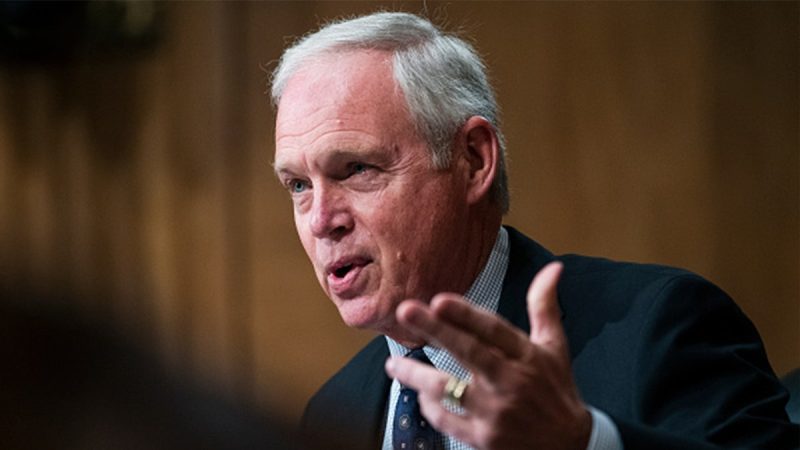
U.S. health officials knew about the risks of myocarditis from COVID-19 vaccines but downplayed the concern and delayed informing the public about the risks of taking the jab — that is according to a new Senate report released by Sen. Ron Johnson Wednesday.  

Johnson, R-Wis., chairman of the Senate Permanent Subcommittee on Investigations, has been investigating the safety and efficacy of the COVID-19 vaccines. Earlier this year, he subpoenaed the Department of Health and Human Services (HHS) for records relating to COVID-19 vaccine safety data and communications about the pandemic. 

The interim report, spanning 55 pages, obtained and reviewed by Fox News Digital, revealed that Biden administration officials ‘withheld crucial health information from the Subcommittee and the public.’ 

Since 2021, Johnson has sent more than 70 oversight letters, which he says were ‘either completely ignored or inadequately addressed.’ 

The report highlights the records Johnson has obtained pursuant to the subpoena from the new, Trump administration-led health agency. Specifically, the report focuses on HHS’ awareness of and response to cases of myocarditis—a type of heart inflammation—following COVID-19 vaccination.

Johnson’s report says the 2,473 pages of records he obtained ‘contain evidence of the Biden administration’s efforts to downplay and delay warning the public about the risks of myocarditis associated with the mRNA COVID-19 vaccines.’ 

The report points to records from May 2021, in which health officials at HHS discussed whether to issue a formal warning about myocarditis.

According to the report, the formal warning about myocarditis was initially going to be distributed nationwide as a Health Alert Network message, which, according to the Centers for Disease Control and Prevention (CDC), is CDC’s ‘primary method of sharing cleared information about urgent public health incidents with public information officers; federal, state, territorial, tribal, and local public health practitioners; clinicians; and public health laboratories.’ 

However, Johnson’s report said that health officials at CDC and the Food and Drug Administration (FDA) ‘ultimately decided against issuing a formal HAN and, instead, posted ‘clinical considerations’ on CDC’s website about myocarditis.’ 

‘Based on the subpoenaed records the Subcommittee has received to date, as well as public FOIA documents, this interim report will highlight records and present a timeline showing U.S. health officials knew about the risk of myocarditis; those officials downplayed the health concern; and U.S. health agencies delayed informing the public about the risk of the adverse event.’ 

The report also highlights the Israeli Ministry of Health notifying officials at the CDC in February 2021 of ‘large reports of myocarditis, particularly in young people, following the administration of the Pfizer vaccine.’ 

The report also highlights documents showing CDC officials discussing ‘safety signals’ for myocarditis with mRNA vaccines in April 2021 based on Defense Department and Israeli data, but ‘still not taking immediate steps to warn the public.’ 

Documents obtained by Johnson also show CDC officials communicating with Moderna and Pfizer representatives about the risks. 

Johnson also obtained ‘draft meeting notes from late May 2021 exchanged between U.S. public health officials which included the question: ‘Is VAERS signaling for myopericarditis now?,’ and the answer: ‘For the age groups 16-17 years and 18-24 years, yes.’’ 

‘VAERS’ is an acronym for the Vaccine Adverse Event Reporting System. 

‘Rather than provide the public and health care providers with immediate and transparent information regarding the risk of myocarditis following mRNA COVID-19 vaccination, the Biden administration waited until late June 2021 to announce changes to the labels for the Moderna and Pfizer COVID-19 vaccines based on the ‘suggested increased risks’ of myocarditis and pericarditis,’ the report states. ‘Even though CDC and FDA officials were well aware of the risk of myocarditis following COVID-19 vaccination, the Biden administration opted to withhold issuing a formal warning to the public for months about the safety concerns, jeopardizing the health of young Americans.’ 

The report added that the Biden administration’s decision ‘to downplay the COVID-19 vaccine health risks and delay warning the public about cardiac-related adverse events associated with the mRNA vaccines jeopardized the public’s health.’ 

According to the report, as of April 25, 2025, VAERS reported 38,607 deaths and more than 1.6 million ‘adverse events worldwide associated with the administration of COVID-19 injections.’ 

Of the more than 38,000 deaths, the report said 25% occurred on Day 0, 1, or 2 following injection, compared to ‘2,663 deaths reported to VAERS associated with the flu vaccine over a period of 35 years.’ 

‘No other reports of adverse events associated with any other drug or vaccine even come close to these statistics,’ the report states. ‘And yet, those who oversaw the development and distribution of the COVID-19 vaccines continue to insist it is safe and effective, without providing the data to prove their claims.’ 

Johnson’s report demands that the ‘full extent’ of the Biden administration’s ‘failure to immediately warn the public about all COVID-19 vaccine adverse events must be completely exposed.’ 

‘The American people fund the federal health departments and agencies with their hardearned tax dollars,’ the report states. ‘The information developed by these departments and agencies belong to the American people, and should be made fully and transparently available.’ 

The report states that as ‘the roadblocks are removed and more documents that have been hidden and withheld for years become available, the Permanent Subcommittee on Investigations will provide transparency and let the American public see what is their right to see.’ 

This post appeared first on FOX NEWS

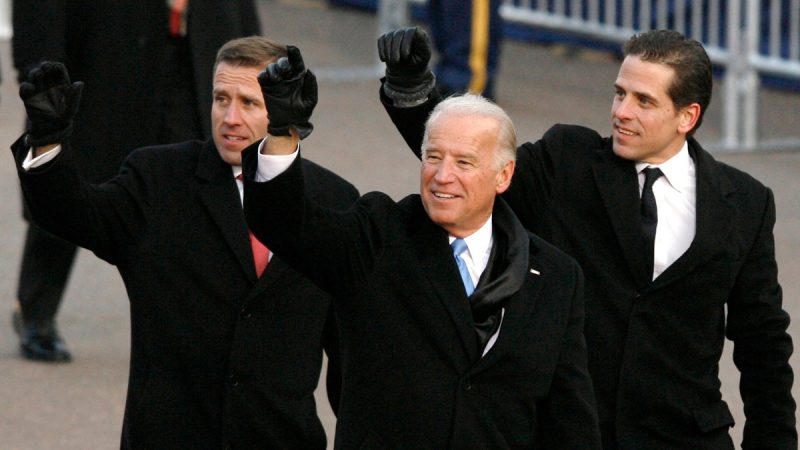
Former President Joe Biden and his late son actively chose to conceal details and misled the public regarding Beau Biden’s cancer diagnosis while he served as attorney general of Delaware, a new book claims. 

The book, ‘Original Sin: President Biden’s Decline, Its Cover-up, and His Disastrous Choice to Run Again,’ said that the Biden family wanted to keep Beau Biden’s cancer diagnosis a secret and misled the media about his condition. The nonfiction book, authored by journalists Jake Tapper of CNN and Alex Thompson of Axios, was released Tuesday. 

The revelation comes just after former President Biden announced Sunday he had been diagnosed with an ‘aggressive form’ of prostate cancer. The former president’s office later said Tuesday he had never received a prostate cancer diagnosis. 

‘Beau’s cancer treatment also demonstrated the Biden’s capacity for denial and the lengths they would go to to avoid transparency about health issues, even when the person in question is an elected official, in this case the sitting attorney general of Delaware,’ the book alleges. 

The book details how Beau collapsed in the summer of 2013 during a family vacation and that he subsequently faced surgery to remove a brain tumor. By the fall, Beau started to reduce his public appearances and media interviews. 

‘In September, Biden and Beau’s team internally debated how much to disclose about Beau — the vice president’s son and a state’s top law enforcement officer — but ultimately said nothing,’ the book said. ‘In November, Beau told a local reporter he had been given a ‘clean bill of health.’’

Months later, in February 2014, a neurologist revealed that a ‘small lesion’ was removed from Beau’s brain — even though the former president later shared the tumor was larger than a golf ball. 

Beau continued to serve as attorney general of Delaware as he received treatments all over the country. He would enter hospitals using the name George Lincoln, according to the book. 

The book details that Beau’s wife, Hallie, told others she remained confused regarding why Beau’s declining health was kept under wraps, since the public would have likely provided support. However, Joe and Beau remained against sharing details with the public, the book said. 

Hallie did not immediately respond to Fox News Digita’s request for comment. 

Additionally, the book said that the then-vice president ordered his staffers to ‘mislead’ the media regarding his whereabouts as vice president. While his team would say he was departing Washington and going to Delaware on weekends, the vice president would also travel to Houston to be with Beau, who was receiving treatment there. 

‘Publicly acknowledging Beau’s illness would make it a reality,’ the book said. ‘It was them against the world.’ 

A spokesperson for the former president did not immediately respond to a request for comment from Fox News Digital. 

Beau died of a glioblastoma brain tumor in May 2015 at the age of 46. 

‘Original Sin’ details the 2024 election cycle and how former President Biden’s team allegedly orchestrated a cover-up to hide just how severely his mental faculties had suffered. 

The book is one of several that detail Biden’s decision to run in 2024 and assert the dramatic decline of his cognitive function.

This post appeared first on FOX NEWS

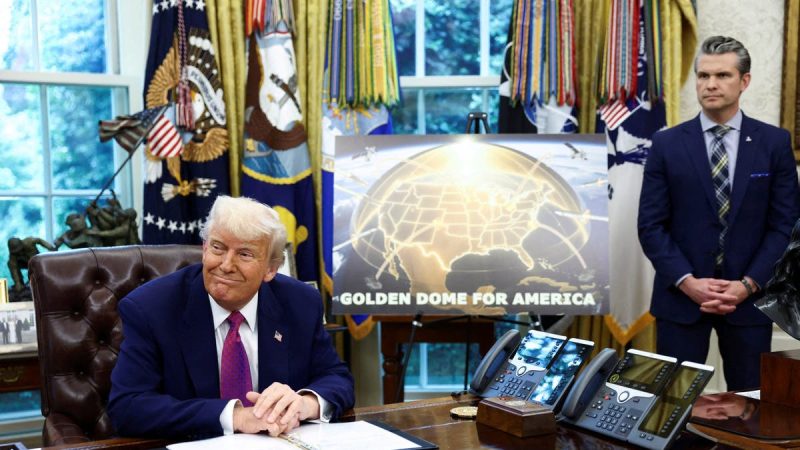
China is concerned by President Donald Trump’s proposal for a new U.S. missile defense system, called the Golden Dome, which is designed to protect against adversarial attacks on America.  

Golden Dome has a ‘strong offensive nature and violates the principle of peaceful use in the Outer Space Treaty,’ Chinese Foreign Minister Mao Ning said Wednesday. 

‘The project will heighten the risk of turning space into a war zone and creating a space arms race, and shake the international security and arms control system,’ Mao said. ‘We urge the U.S. to give up developing and deploying global anti-missile system.’

Both China and Russia have placed offensive weapons in space, like anti-satellite capabilities that could potentially be used to try to take the U.S. offline, American intelligence officials have warned.  

However, China said it was the U.S. that was ‘obsessed’ with offensive space dominance. 

‘The U.S., by putting itself first, and being obsessed with pursuing absolute security, violates the principle of, and diminishes, the security for all and undermines the global strategic balance and stability,’ Mao said.

‘China is gravely concerned about this,’ she added. ‘We urge the U.S. to give up developing and deploying the global anti-missile system at an early date and take concrete actions to enhance strategic mutual trust between major countries and safeguard global strategic stability.’ 

Trump laid out a broad overview of the Golden Dome plan from the White House on Tuesday, projecting the cost figure at $125 billion. The current government funding bill working its way through Congress includes an initial $25 billion to kick off the project. 

Trump also offered an ambitious timeline for the project to be completed before he leaves office. 

Fox News Digital has reached out to the White House for comment on China’s reaction. 

The Kremlin, meanwhile, said the Golden Dome project could prompt talks on strategic arms control between Russia and the U.S. 

The U.S. withdrew from the Intermediate-Range Nuclear Forces Treaty in 2019 and the Anti-Ballistic Missile Treaty in 2002, citing Russian violations which Moscow denied. 

‘Now that the legal framework in this area has been destroyed, and the validity period has expired, or deliberately, let’s say, a number of documents have ceased to be valid, this base must be recreated both in the interests of our two countries and in the interests of security throughout the planet,’ said Kremlin spokesman Dmitry Peskov.

China’s space-based targeting capabilities have ‘grown most impressively’ in recent years, according to Space Force Vice Chief Gen. B. Chance Saltzman, with hundreds of satellites now dedicated to tracking U.S. assets in orbit. He called China’s rapid advances ‘mind-boggling’ during a hearing on Capitol Hill last month and said the U.S. was at risk of losing its dominance in orbit.

Weeks before that, Space Force Vice Chief of Operations Gen. Michael Guetlein revealed that China has been practicing satellite ‘dogfighting,’ a sign of its growing ability to conduct complex operations in orbit.

Space Force has observed ‘five different objects in space maneuvering in and out and around each other in synchronicity and in control,’ he said.

‘That’s what we call dogfighting in space,’ Guetlein said. ‘They are practicing tactics, techniques and procedures to conduct on-orbit operations from one satellite to another.’

This post appeared first on FOX NEWS

– As House GOP leaders advance President Donald Trump’s so-called ‘big, beautiful bill’ toward a floor vote this week, Democrats, who are in the minority, are sounding a warning.

‘We’re going to hold Republicans accountable and there will be a price to pay,’ Rep. Suzan DelBene of Washington State, the chair of the Democratic Congressional Campaign Committee, emphasized as she pointed to next year’s midterm elections during a Fox News Digital interview.

Republicans are holding onto an extremely razor-thin majority in the chamber right now, and Democrats only need a three-seat pickup to win back the House majority in the 2026 elections.

Additionally, they view the sweeping and controversial GOP-crafted measure stocked full of Trump’s second-term priorities on tax cuts, immigration, defense, energy and the debt limit – which is currently making its way through numerous votes and hurdles in the House – as political ammunition.

‘This is a terrible piece of legislation,’ DelBene argued.

Democrats from across the party are shining a spotlight on the Republicans’ restructuring of Medicaid, the nearly 60-year-old federal government program that provides health insurance for roughly 71 million adults and children with limited incomes.

‘Let’s be clear, all Republicans are talking about right now is how many people and how fast they’re going to take away healthcare. They have these huge cuts to Medicaid, 14 million people lose healthcare across the country, and they’re talking about how fast they can do that,’ DelBene charged on Tuesday.

She claimed that House Republicans are ‘all blindly following the president and going to blindly follow him off the cliff.’

Rep. Ted Lieu of California, another member of the House Democrat leadership, argued as he took questions from reporters that the bill ‘has the largest cut to healthcare in U.S. history.’

The cuts to Medicaid, being drafted in part as an offset to pay for extending Trump’s 2017 tax cut law, which is set to expire later this year, include a slew of new rules and regulatory requirements for those seeking coverage. Among them are a new set of work requirements for many of those seeking coverage.

‘When you go across the country and talk to folks, folks are outraged, and they’re scared. They’re scared about the cuts to healthcare, not only cutting 14 million people off of healthcare but then raising costs beyond that for everyone and things like rural hospitals closing,’ DelBene argued. ‘This would have devastating impacts across the country. This is policy that Republicans are fighting for, cutting nutrition health programs so that families don’t even have healthy food.’

House Republicans push back against the Democrats’ attacks and say what they are doing is putting an end to waste, fraud and abuse currently in the Medicaid system, so the program can work for the public in the way that it was intended.

They call any talk that they are cutting aid to mothers, children, people with disabilities and the elderly a ‘flat out lie.’

DelBene countered, saying, ‘we’re not buying the argument because what we’ve seen in committee, what they’ve written down on paper is massive cuts in healthcare and all to pay for tax breaks for the wealthiest in our country. This isn’t a bill about helping working families. This bill is devastating for working families.’

However, her counterparty, Rep. Richard Hudson of North Carolina, the chair of the National Republican Congressional Committee, told Fox News Digital in a statement that ‘Republicans are ending waste, fraud, and abuse in Medicaid so the most vulnerable get the care they need.’

Additionally, Hudson argued that ‘Democrats are lying to protect a broken status quo that lets illegal immigrants siphon off billions meant for American families. We’re strengthening Medicaid for future generations by protecting taxpayers and restoring integrity.’

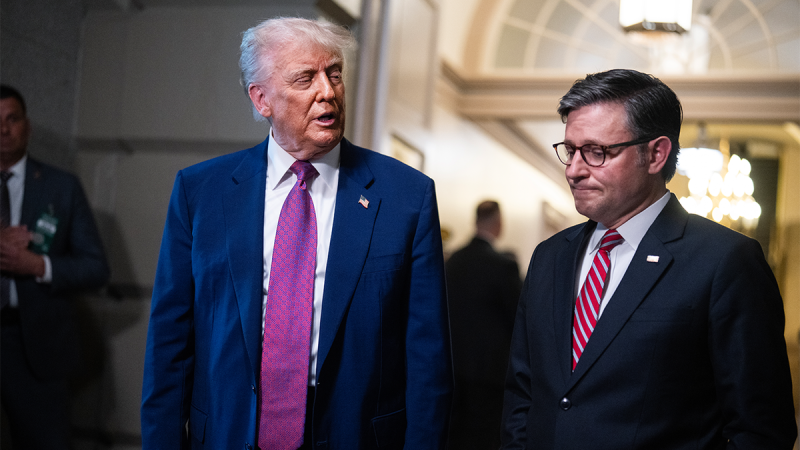
Dating back to last year’s presidential campaign, Trump has vowed not to touch Medicaid. On Tuesday, as he made a rare stop on Capitol Hill to meet behind closed doors with House Republicans in order to shore up support for the bill, Trump’s message to fiscally conservative lawmakers looking to make further cuts to Medicaid was ‘don’t f— around with Medicaid.’

While there are divisions between Republicans over Medicaid, and a chasm between the two major parties over the longstanding entitlement program, there is one point of agreement – this issue will continue to simmer on the campaign trail in one form or another long after the legislative battles on Capitol Hill are over.

This post appeared first on FOX NEWS

House Speaker Mike Johnson has reached a tentative deal with blue state Republican lawmakers to boost the cap on state and local tax deductions, or SALT, to $40,000 in President Donald Trump’s so-called ‘big, beautiful bill,’ Republican sources confirmed to Fox News late Tuesday. 

The proposed cap – which is up from $30,000 – would be per household for taxpayers making less than $500,000 per year. 

 It remains unclear whether GOP hardliners who oppose raising the SALT cap deductions will sign off on the measure. 

The tentative agreement, first reported by Politico and confirmed by Fox News, comes as House GOP factions have been engaged in high-stakes debates on taxes, Medicaid, and green energy subsidies while crafting the president’s ‘big, beautiful bill.’

SALT deduction caps primarily benefit people living in high-cost-of-living areas like New York City, Los Angeles, and their surrounding areas. 

Republicans representing those areas have framed raising the SALT deduction cap as an existential issue, arguing that a failure to address it could cost the GOP the House majority in the 2026 midterms. 

Meanwhile, Republicans representing lower-tax states are largely wary of raising the deduction cap, believing that it incentivizes blue states’ high-tax policies. 

Fox News Digital’s Elizabeth Elkind contributed to this report. 

This post appeared first on FOX NEWS