Author

admin

Browsing

Israeli Prime Minister Benjamin Netanyahu will meet President Donald Trump at the White House on Wednesday in a visit expected to center on Iran, as Washington weighs diplomacy against the threat of military action and Israel pushes to shape the scope of negotiations.

Trump has signaled the Iranian file will dominate the agenda. In a phone interview with Axios, the president said Tehran ‘very much wants to reach a deal,’ but warned, ‘Either we make a deal, or we’ll have to do something very tough — like last time.’

Netanyahu, speaking before departing Israel for Washington, said he intends to present Israel’s position. ‘I will present to the president our concept regarding the principles of the negotiations — the essential principles that are important not only to Israel but to anyone who wants peace and security in the Middle East,’ he told reporters.

The meeting comes days after U.S. and Iranian officials resumed talks in Oman for the first time since last summer’s 12-day war, while the United States continues to maintain a significant military presence in the Gulf — a posture widely viewed as both deterrence and for holding leverage in negotiations with Tehran.

From the U.S. perspective, Iran is seen as a global security challenge rather than a regional one, according to Jacob Olidort, chief research officer and director of American security at the America First Policy Institute. ‘It’s an important historic time of potentially seismic proportions,’ he told Fox News Digital.

‘Iran is not so much a Middle East issue. It’s a global issue affecting U.S. interests around the world,’ he added, calling the regime ‘probably the world’s oldest global terror network… [with] thousands of Americans killed through proxies.’

Olidort said the administration’s strategy appears to combine diplomacy with visible military pressure. ‘The president has been clear… should talks not be successful, the military option cannot be off the table,’ he said. ‘Military assets in the region serve as part of the negotiation strategy with Iran.’

For Israel, the main concern is not only Iran’s nuclear program but also its ballistic missile arsenal and regional network of armed groups.

Trump indicated to Axios that the United States shares at least part of that view, saying any agreement would need to address not only nuclear issues but also Iran’s ballistic missiles. 

Israeli intelligence expert Sima Shein has warned that negotiations narrowly focused on nuclear restrictions could leave Israel exposed. ‘The visit signals a lack of confidence that American envoys, Witkoff and Kushner, alone can represent Israel’s interests in the best way. They were in Israel just a week ago — but Netanyahu wants to speak directly with Trump, so there is no ambiguity about Israel’s position,’ she added.

Shein says Iran may be stalling diplomatically to see whether Washington limits talks to nuclear issues while avoiding missile constraints. Her analysis further suggests that a sanctions-relief agreement that leaves Iran’s broader capabilities intact could stabilize the regime at a moment of internal pressure while preserving its military leverage. 

‘An agreement now would effectively save the regime at a time when it has no real solutions to its internal problems. Lifting sanctions through a deal would give it breathing room and help stabilize it,’ she said.

‘If there is an agreement, the United States must demand the release of all detainees and insist on humanitarian measures, including medical support for those who have been severely injured. Washington would need to be directly involved in enforcing those provisions.’

Netanyahu said before leaving Israel that he and Trump would discuss ‘a series of topics,’ including Gaza, where a U.S.-backed postwar framework and ceasefire implementation remain stalled. 

According to Israeli reporting, Netanyahu plans to tell Trump that phase two of the Gaza peace plan ‘is not moving,’ reflecting continued disputes over disarmament, governance and security arrangements.

The timing of Netanyahu’s visit may also allow him to avoid returning to Washington the following week for the inaugural session of the Board of Peace, Shein said, noting the initiative is controversial in Israel’s parliament. 

‘Israel is deeply concerned about the presence of Turkey and Qatar on the board of peace and their malign influence on other members as well as on the Palestinian authority’s technocratic government,’ Dan Diker, president of the Jerusalem Center for Security and Foreign Affairs, told Fox News Digital.

‘Hamas’s control of Gaza has not weakened, while international commitments to disarm Hamas have appeared to weaken,’ he added, ‘The longer the U.S. waits before taking action against the Iranian regime, the more compromised Israel is in its ability and determination to forcibly disarm Hamas, both of which require the sanction and the blessing of the new international structures on Gaza.’

‘The prime minister’s deep concern is the stalled state of affairs both against the Iranian regime and apparently in Gaza. Timing is critical on both fronts. And for Israel, the window seems to be closing,’ Diker said.  


This post appeared first on FOX NEWS

The U.S. Food and Drug Administration (FDA) refused to consider Moderna’s application for a new flu vaccine using mRNA technology, the company announced Tuesday, a decision that could delay the introduction of a shot designed to offer stronger protection for older adults.

Moderna said it received what’s known as a ‘refusal-to-file’ (RTF) letter from the FDA’s Center for Biologics Evaluation and Research (CBER), citing the lack of an ‘adequate and well-controlled’ study with a comparator arm that ‘does not reflect the best-available standard of care.’

Stéphane Bancel, chief executive officer of Moderna, said the FDA’s decision did not ‘identify any safety or efficacy concerns with our product’ and ‘does not further our shared goal of enhancing America’s leadership in developing innovative medicines.’

‘It should not be controversial to conduct a comprehensive review of a flu vaccine submission that uses an FDA-approved vaccine as a comparator in a study that was discussed and agreed on with CBER prior to starting,’ Bancel said in a statement. ‘We look forward to engaging with CBER to understand the path forward as quickly as possible so that America’s seniors, and those with underlying conditions, continue to have access to American-made innovations.’

The rare decision from the FDA comes amid increased scrutiny over vaccine approvals under Health Secretary Robert F. Kennedy Jr., who has criticized mRNA vaccines and rolled back certain COVID-19 shot recommendations over the past year.

Kennedy previously removed members of the federal government’s vaccine advisory panel and appointed new members, and moved to cancel $500 million in mRNA vaccine contracts.

The FDA authorized COVID-19 vaccines for the fall for high-risk groups only. Last May, Kennedy announced the vaccines would be removed from the CDC’s routine immunization schedule for healthy children and pregnant women.

According to Moderna, the refusal-to-file decision was based on the company’s choice of comparator in its Phase 3 trial — a licensed standard-dose seasonal flu vaccine — which the FDA said did not reflect the ‘best-available standard of care.’

Moderna said the decision contradicts prior written communications from the FDA, including 2024 guidance stating a standard-dose comparator would be acceptable, though a higher-dose vaccine was recommended for participants over 65.

Moderna said the FDA ‘did not raise any objections or clinical hold comments about the adequacy of the Phase 3 trial after the submission of the protocol in April 2024 or at any time before the initiation of the study in September 2024.’

In August 2025, following completion of the Phase 3 efficacy trial, Moderna said it held a pre-submission meeting with CBER, which requested that supportive analyses on the comparator be included in the submission and indicated the data would be a ‘significant issue during review of your BLA.’

Moderna said it provided the additional analyses requested by CBER in its submission, noting that ‘at no time in the pre-submission written feedback or meeting did CBER indicate that it would refuse to review the file.’

The company requested a Type A meeting with CBER to understand the basis for the RTF letter, adding that regulatory reviews are continuing in the European Union, Canada and Australia.

Fox News has reached out to the Department of Health and Human Services for comment.

Fox News Digital’s Alex Miller and The Associated Press contributed to this report.

This post appeared first on FOX NEWS

Standard Uranium Ltd. (TSXV: STND,OTC:STTDF) (OTCQB: STTDF) (FSE: 9SU0) (‘Standard Uranium’ or the ‘Company’)  is pleased to announce that drilling activities have commenced at the Company’s 12,364-hectare Corvo Uranium Project (‘Corvo’, or the ‘Project’) located near Wollaston Lake in northeastern Saskatchewan (Figure 1). Field crews arrived at the Project on February 6th and drilling commenced on schedule, February 9th.

The Project is currently under a three-year earn-in option agreement (the ‘Option Agreement‘) with Aventis Energy Inc. (CSE: AVE) (‘Aventis‘). Pursuant to the Option Agreement, Aventis has been granted an option (the ‘Option‘) to earn a 75% interest in the Project by funding CAD$6M in exploration expenditures over three years. The drill program will be funded by Aventis and operated by Standard Uranium.

Highlights:

  • Drilling Underway: Drilling activities began on February 9, 2026. Approximately 2,500-3,000 metres are planned across eight (8) to ten (10) drill holes targeting shallow high-grade* basement-hosted uranium mineralization, beginning with the Manhattan target area. The program is anticipated to span five (5) to six (6) weeks.

  • Robust & Shallow Drill Targets: Drill plans comprise road accessible skid-supported diamond drilling focused on high-priority uranium targets refined by geophysical work completed by the Company in 2025, bolstered by recent prospecting and confirmation of strong radioactivity at surface (up to 8.10% U3O8 grab samples at Manhattan1) within ideal uranium host rocks.

  • Untapped Uranium Potential: One diamond drill will focus on high-priority target areas along prospective XciteTM electromagnetic (‘EM‘) corridors overlain by high-resolution ground gravity data with the proven exploration thesis of focusing on major conductor trends associated with cross-cutting faults and surficial radioactivity expressions.

  • Fully Funded: Aventis Energy will fund 100% of the program to meet the year-one expenditure requirements under the Option.

‘The team and I are thrilled to announce that the drill is spinning on the Corvo project for the first time in more than 40 years, kicking off our winter exploration season,’ said Sean Hillacre, President & VP Exploration for the Company, ‘This program also marks the first drill holes ever at the Manhattan showing, which returned uranium grades up to 8.10% U3O8 in surface samples from our prospecting program in 2025.’

Figure 1. Regional map of the Corvo Project. The Project is located 60 km due east of Cameco’s McArthur River mine and 45 km northeast of Atha Energy’s Gemini Mineralized Zone (‘GMZ’).

To view an enhanced version of this graphic, please visit:
https://images.newsfilecorp.com/files/10633/283501_8e51d43d64aaface_003full.jpg

2026 Winter Drill Program

The Standard Uranium team arrived on site February 9, 2026, and diamond drilling on the first hole at Corvo in more than 40 years is currently underway. The winter program will comprise approximately 2,500 to 3,000 metres of drilling at high-priority target areas following completion of TDEM and ground gravity surveys, and geophysical modeling last year. Corvo covers an area of 12,364 hectares across 14 mineral claims, located along highway 905 on the eastern margin of the Athabasca Basin.

Target Selection for 2026 Drill Campaign

Targets were selected and prioritized through an iterative approach working in collaboration with Convolutions Geoscience Corporation. Recent prospecting and mapping across the Project outlined multiple outcrops of favourable uranium host-rocks, including radioactive metasediments and orthogneiss. Structural measurements and radioactivity mapping has further refined drill targets in the 2026 target areas.

Targets are ranked and prioritized based on geophysical signature, geological/structural setting, proximity to surficial uranium occurrences of interest, and the Company’s recent prospecting and mapping campaign.

Qualified Person Statement

The scientific and technical information contained in this news release has been reviewed, verified, and approved by Sean Hillacre, P.Geo., President and VP Exploration of the Company and a ‘qualified person’ as defined in NI 43-101 – Standards of Disclosure for Mineral Projects.

Samples collected for analysis were sent to SRC Geoanalytical Laboratories in Saskatoon, Saskatchewan for preparation, processing, and ICP-MS or ICP-OES multi-element analysis using total and partial digestion and boron by fusion. Radioactive samples were tested using the ICP1 uranium multi-element exploration package plus boron. All samples marked as radioactive upon arrival to the lab were also analyzed using the U3O8 assay (reported in wt.%). SRC is an ISO/IEC 17025:2005 and Standards Council of Canada certified analytical laboratory. Blanks, standard reference materials, and repeats were inserted into the sample stream at regular intervals in accordance with Standard Uranium’s quality assurance/quality control (QA/QC) protocols. All samples passed internal QA/QC protocols and the results presented in this release are deemed complete, reliable, and repeatable.

Historical data disclosed in this news release relating to sampling results from previous operators are historical in nature. Neither the Company nor a qualified person has yet verified this data and therefore investors should not place undue reliance on such data. The Company’s future exploration work may include verification of the data. The Company considers historical results to be relevant as an exploration guide and to assess the mineralization as well as economic potential of exploration projects. Any historical grab samples disclosed are selected samples and may not represent true underlying mineralization.

Natural gamma radiation from rocks reported in this news release was measured in counts per second (‘cps‘) using a handheld RS-125 super-spectrometer and RS-120 super-scintillometer. Readers are cautioned that scintillometer readings are not uniformly or directly related to uranium grades of the rock sample measured and should be treated only as a preliminary indication of the presence of radioactive minerals. The RS-125 and RS-120 units supplied by Radiation Solutions Inc. (‘RSI‘) have been calibrated on specially designed Test Pads by RSI. Standard Uranium maintains an internal QA/QC procedure for calibration and calculation of drift in radioactivity readings through three test pads containing known concentrations of radioactive minerals. Internal test pad radioactivity readings are known and regularly compared to readings measured by the handheld scintillometers for QA/QC purposes.

References

1 News Release: Standard Uranium Confirms High-Grade Uranium Mineralization up to 8.10% U3O8 at Surface on the Corvo Project, https://standarduranium.ca/news-releases/standard-uranium-confirms-high-grade-uranium-mineralization-at-surface-on-the-corvo-project/

*The Company considers uranium mineralization with concentrations greater than 1.0 wt.% U3O8 to be ‘high-grade’.

**The Company considers radioactivity readings greater than 65,535 counts per second (cps) on a handheld RS-125 Super-Spectrometer to be ‘off-scale’.

***The Company considers radioactivity readings greater than 300 counts per second (cps) on a handheld RS-125 Super-Spectrometer to be ‘anomalous’.

About Standard Uranium (TSXV: STND,OTC:STTDF)

We find the fuel to power a clean energy future

Standard Uranium is a uranium exploration company and emerging project generator poised for discovery in one of the world’s premier uranium districts. The Company holds interest in over 241,652 acres (97,793 hectares) in the Athabasca Basin in Saskatchewan, Canada. Since its establishment, Standard Uranium has focused on the identification, acquisition, and exploration of Athabasca-style uranium targets with a view to discovery and future development.

Standard Uranium’s Davidson River Project, in the southwest part of the Athabasca Basin, Saskatchewan, comprises ten mineral claims over 30,737 hectares. Davidson River is highly prospective for basement-hosted uranium deposits due to its location along trend from recent high-grade uranium discoveries. However, owing to the large project size with multiple targets, it remains broadly under-tested by drilling. Recent intersections of wide, structurally deformed and strongly altered shear zones provide significant confidence in the exploration model and future success is expected.

Standard Uranium’s eastern Athabasca projects comprise over 53,166 hectares of prospective land holdings. The eastern basin projects are highly prospective for unconformity related and/or basement hosted uranium deposits based on historical uranium occurrences, recently identified geophysical anomalies, and location along trend from several high-grade uranium discoveries.

Standard Uranium’s Sun Dog project, in the northwest part of the Athabasca Basin, Saskatchewan, is comprised of nine mineral claims over 19,603 hectares. The Sun Dog project is highly prospective for basement and unconformity hosted uranium deposits yet remains largely untested by sufficient drilling despite its location proximal to uranium discoveries in the area.

For further information contact:

Jon Bey, Chief Executive Officer, and Chairman
Suite 3123, 595 Burrard Street
Vancouver, British Columbia, V7X 1J1
Tel: 1 (306) 850-6699
E-mail: info@standarduranium.ca

Cautionary Statement Regarding Forward-Looking Statements

This news release contains ‘forward-looking statements’ or ‘forward-looking information’ (collectively, ‘forward-looking statements’) within the meaning of applicable securities legislation. All statements, other than statements of historical fact, are forward-looking statements and are based on expectations, estimates and projections as of the date of this news release. Forward-looking statements include, but are not limited to, statements regarding: the timing and content of upcoming work programs; geological interpretations; timing of the Company’s exploration programs; and estimates of market conditions.

Forward-looking statements are subject to a variety of known and unknown risks, uncertainties and other factors that could cause actual events or results to differ from those expressed or implied by forward-looking statements contained herein. There can be no assurance that such statements will prove to be accurate, as actual results and future events could differ materially from those anticipated in such statements. Certain important factors that could cause actual results, performance or achievements to differ materially from those in the forward-looking statements are highlighted in the ‘Risks and Uncertainties’ in the Company’s management discussion and analysis for the fiscal year ended April 30, 2025.

Forward-looking statements are based upon a number of estimates and assumptions that, while considered reasonable by the Company at this time, are inherently subject to significant business, economic and competitive uncertainties and contingencies that may cause the Company’s actual financial results, performance, or achievements to be materially different from those expressed or implied herein. Some of the material factors or assumptions used to develop forward-looking statements include, without limitation: that the transaction with Aventis will proceed as planned; the future price of uranium; anticipated costs and the Company’s ability to raise additional capital if and when necessary; volatility in the market price of the Company’s securities; future sales of the Company’s securities; the Company’s ability to carry on exploration and development activities; the success of exploration, development and operations activities; the timing and results of drilling programs; the discovery of mineral resources on the Company’s mineral properties; the costs of operating and exploration expenditures; the presence of laws and regulations that may impose restrictions on mining; employee relations; relationships with and claims by local communities and indigenous populations; availability of increasing costs associated with mining inputs and labour; the speculative nature of mineral exploration and development (including the risks of obtaining necessary licenses, permits and approvals from government authorities); uncertainties related to title to mineral properties; assessments by taxation authorities; fluctuations in general macroeconomic conditions.

The forward-looking statements contained in this news release are expressly qualified by this cautionary statement. Any forward-looking statements and the assumptions made with respect thereto are made as of the date of this news release and, accordingly, are subject to change after such date. The Company disclaims any obligation to update any forward-looking statements, whether as a result of new information, future events or otherwise, except as may be required by applicable securities laws. There can be no assurance that forward-looking statements will prove to be accurate, as actual results and future events could differ materially from those anticipated in such statements. Accordingly, readers should not place undue reliance on forward-looking statements.

Neither the TSX-V nor its Regulation Services Provider (as that term is defined in the policies of the TSX-V) accepts responsibility for the adequacy or accuracy of this release.

To view the source version of this press release, please visit https://www.newsfilecorp.com/release/283501


News Provided by TMX Newsfile via QuoteMedia

This post appeared first on investingnews.com

Tartisan Nickel Corp. (CSE: TN,OTC:TTSRF) (OTCQB: TTSRF) (FSE: 8TA) (‘Tartisan’, or the ‘Company’) is pleased to provide an update on the Company’s flagship Kenbridge Nickel-Coppet-Cobalt Project, Sioux Narrows, Ontario. The drill program is designed to test the on strike and down dip potential for additional nickel sulphide mineralization and to enhance the size and grade of the Kenbridge Deposit.

A total of 2,700m of drilling has been completed to date. The first 3 drill targets have been completed (drill holes KB26-207, KB26-208 and KB26-209 outlined on Figure 1). Samples have been delivered to AGAT Labs in Thunder Bay for analysis. Assays are pending for hole KB26-209. The drill rig is currently drilling the 4th drill hole KB26-210. This hole is designed to be drilled below the existing shaft bottom to test for the depth extension to the deposit.

Reported in this release are the results from the 2nd infill drill hole KB26-208. Results from the hole confirm both A and B zones were intersected as outlined in Table 1 below. Zone A was intersected from 571.5m to 574.5m drill depth and returned 0.68% Ni, 0.28% Cu over 3.0 metres. Zone B was intersected from 580.5m to 591.5m drill depth. Results were 1.05% Ni, 0.33% Cu over 11.0 metres including 2.0 metres of 4.79% Ni, 1.25% Cu. Drill core intersection widths are estimated to be between 65 and 80% true width.

Fig 1: Long section of Kenbridge deposit showing drilling targets. Completed or holes in progress are outlined in red circles.

To view an enhanced version of this graphic, please visit:
https://images.newsfilecorp.com/files/1492/283527_c8eae70ff4a0aadf_002full.jpg

Mark Appleby, CEO of Tartisan Nickel Corp stated, ‘We are very encouraged by the latest drill results from the Kenbridge Nickel-Copper-Cobalt Project. Intersecting 11.0 metres of 1.05% Ni and 0.33% Cu, including a high-grade interval of 2.0 metres grading 4.79% Ni and 1.25% Cu and a high-grade interval of 3.5 metres grading 2.87% Ni and 0.81% Cu helps us confirm continuity of significant nickel-copper mineralization in this part of the system. These results strengthen our confidence in the project’s potential to deliver meaningful value for our shareholders as we advance toward further delineation and resource development.’

Table 1: Highlight intervals (* denotes hole reported in this release)

To view an enhanced version of this graphic, please visit:
https://images.newsfilecorp.com/files/1492/283527_tartisantable1.jpg

The Kenbridge Property is located in the Kenora Mining District, Sioux Narrows, Ontario, Canada with all-season road access. The Kenbridge Deposit has an existing shaft to a depth of 2,042 ft (622 m), with level stations at 150 ft. (45 m) intervals below the shaft collar and two levels developed at 350 ft (107 m) and 500 ft (152 m) below the shaft collar.

Surveyed Hole Locations (Coordinates in UTM zone 15)

To view an enhanced version of this graphic, please visit:
https://images.newsfilecorp.com/files/1492/283527_tartisantable2.jpg

Qualified Person

The technical information in this news release has been prepared in accordance with Canadian regulatory requirements as set out in NI 43-101 and reviewed and approved by Dean MacEachern, P. Geo., an Independent Consultant to the Company and a Qualified Person as defined by NI 43-101.

QA/QC

Sample QA/QC procedures for Tartisan have been designed to meet or exceed industry standards. Drill core is collected from the diamond drill and placed in sealed core trays for transport to on-site sampling and core cutting facilities. The core is logged and samples taken from 0.3m to a maximum sample length of 1.5m. The core samples are split with a diamond blade saw with continuous running water, half of the sample is sent for lab testing, and the remaining half core is left in the core box for record or further sampling. The core samples are bagged in heavy plastic bags with 6 samples being placed into a rice bag for transport to AGAT Laboratories in Thunder Bay, ON or Calgary, AB for assay. Samples are submitted in batches of 50. 100g blind certified reference materials (CRMs) from CDN Resources, as well as, duplicates and blank samples are systematically inserted by the Company into the sample stream with reference to the mineralization in the sampled rock and analyzed as part of the Company’s quality assurance/quality control protocol, as well, AGAT labs implements their own quality control testing by inserting their own CRMs and Blanks in the sample stream for accredited testing.

All drill core samples were prepped and analyzed at AGAT Laboratories in Thunder Bay, Ontario or shipped to Calgary for testing. An ISO/IEC 17025 2017 certified independent laboratory from organizations like the Standards Council of Canada (SCC), the Canadian Association for Laboratory Accreditation (CALA), ANSI National Accreditation Board (ANAB) and the American Association of Laboratory Accreditation (A2LA). They maintain accreditations across their facilities in Alberta, Saskatchewan, Ontario, Nova Scotia, Newfoundland, Quebec and internationally.

NQ-diameter sawed half-core samples from the drilling program were securely sent by Tartisan Nickel Corp’s geologists to AGAT Laboratories Ltd. (AGAT), with sample preparation in Thunder Bay, Ontario, and analysis in Thunder Bay, Ontario & Calgary, Alberta. Samples were processed for Au, Pt and Pd analysis by 50-gram fire assay with ICP-OES finish and for four acid digestion, multi-element analysis by inductively coupled plasma & mass spectrometry (ICP OES + MS). AGAT sample preparation and laboratory analysis procedures conform to requirements of ISO/IEC Standard 17025 guidelines and meet the requirements under NI 43-101 and CIM best practice guidelines. AGAT Laboratories is independent of Tartisan Nickel Corp.

Samples were dried and crushed to 2 mm, from which a 250 g sub-sample split was then pulverized to 85% passing a 75 micron sieve. Following preparation, assays were determined by the ICP OES method. A 0.25 g aliquot of the prepared pulp was digested in a 4-acid solution consisting of hydrochloric, nitric, perchloric and hydrofluoric acids. 4-acid is a near total digest and only the most highly resistant minerals are not dissolved. The resulting solution was analyzed via ICP-MS and ICP-ES for 8 elements and was corrected for inter-element spectral interferences. Lower detection limits for this procedure are 0.01 ppm for nickel, 0.01 ppm for copper, 0.01 ppm for cobalt, 0.01 ppm for platinum, 0.01 ppm palladium, 0.01 ppm silver and 0.01 ppm for gold.

Samples with initial results beyond the upper detection limit of the ICP OES method were analyzed by (201-071) 4 acid digest – Metals Package, ICP-OES/ICP-MS finish (CGY). The thresholds are >1% for nickel, copper and cobalt. AGAT Laboratories employs internal quality control standards, duplicates and blank samples at set frequencies. Tartisan Nickel Corp. stores all its drilled core on-site and takes pride in its facilities and strives for excellence in its QA/QC procedures.

About Tartisan Nickel Corp.

Tartisan Nickel Corp. is a Canadian-based critical minerals exploration and development company which owns, the Kenbridge Nickel Project near Sioux Narrows, Northwestern Ontario, the Sill Lake Silver Project near Sault Ste. Marie, Ontario as well as the Night Danger Turtle Pond Project near Dryden, Ontario.

Tartisan Nickel Corp. common shares are listed on the Canadian Securities Exchange (CSE: TN,OTC:TTSRF) (OTCQB: TTSRF) (FSE: 8TA). Currently, there are 152,215,641 shares issued and outstanding (156,287,356 fully diluted).

For further information, please contact Mark Appleby, President & CEO, and a Director of the Company, at 416-804-0280 (info@tartisannickel.com). Additional information about Tartisan Nickel Corp. can be found at the Company’s website at www.tartisannickel.com or on SEDAR at www.sedarplus.ca.

This news release may contain forward-looking statements including but not limited to comments regarding the timing and content of upcoming work programs, geological interpretations, receipt of property titles, potential mineral recovery processes, etc. Forward-looking statements address future events and conditions and therefore involve inherent risks and uncertainties. Actual results may differ materially from those currently anticipated in such statements.

The Canadian Securities Exchange (operated by CNSX Markets Inc.) has neither approved nor disapproved of the contents of this press release.

To view the source version of this press release, please visit https://www.newsfilecorp.com/release/283527

News Provided by TMX Newsfile via QuoteMedia

This post appeared first on investingnews.com

Red Metal Resources Ltd. (CSE: RMES,OTC:RMESF) (OTC Pink: RMESF) (FSE: I660) (‘Red Metal’ or the ‘Company’) announces that it has closed the second and final tranche of its previously announced non-brokered private placement financing (the ‘Offering’) (see news releases dated January 7, 2026, and January 19, 2026 and January 22, 2026) by issuing 7,496,633 units of the Company (the ‘Units’) at a price of $0.06 per Unit for gross proceeds of $449,798 (the ‘Second Tranche’). The first tranche (the ‘First Tranche’) of the Offering consisted of the sale of 9,125,000 Units for aggregate gross proceeds of $547,500, and together with the Second Tranche, the aggregate gross proceeds of the Offering were $997,298.

Caitlin Jeffs, President & CEO, commented: ‘We are very pleased with the strong support shown in this first tranche. The participation from both new and existing shareholders, including our insiders, reflects continued confidence in Red Metal’s strategy and the potential of our projects in Chile. This funding strengthens our position as we advance our exploration plans for 2026.’

Each Unit is comprised of one common share of the Company (a ‘Share‘) and one Share purchase warrant (a ‘Warrant‘), with each Warrant exercisable to acquire one additional Share at a price of $0.09 for the first 12 months from the date of issuance, $0.12 for the 12-24 month period from issuance, and $0.15 for the 24-36 month period from issuance.

The securities issued under the Second Tranche are subject to a statutory four month hold from the date of issuance. In connection with the Second Tranche, the Company paid $18,480 in cash finder’s fees and issued 308,000 finder’s warrants. Each finder’s warrant entitles the holder to purchase one Share of the Company at a price of $0.06 per Share for a period of two years from the date of issuance.

The proceeds from the Offering will be used for general working capital purposes and to advance exploration on the Company’s Carrizal copper project in Chile.

MI 61-101 Disclosure

Two insiders participated in the Second Tranche for aggregate proceeds of $58,600. Each insider’s participation in the Offering constitutes a ‘related party transaction’ as defined under Multilateral Instrument 61-101 Protection of Minority Security Holders in Special Transactions (‘MI 61-101‘). The Company is relying on the exemptions under section 5.5(a) and section 5.7(1)(a) of MI 61-101 from the formal valuation and minority shareholder approval requirements of MI 61-101, as the fair market value of the Units issued to each of the related parties and the consideration paid by each of the related parties under the Second Tranche did not exceed 25% of the Company’s market capitalization, as determined in accordance with MI 61-101. The Company did not file a material change report in respect of the related party transactions at least 21 days before the closing of the Second Tranche due to the Company’s desire to close the Second Tranche expeditiously.

Investor Awareness

About Red Metal Resources Ltd.

Red Metal Resources is a mineral exploration company focused on growth through acquiring, exploring and developing clean energy and strategic minerals projects. The Company’s current portfolio includes the 100% owned Ville Marie claims in Quebec, Canada, as well as the Company’s Chilean projects, which are located in the prolific Candelaria iron oxide copper-gold (IOCG) belt of Chile’s coastal Cordillera. Red Metal is quoted on the Canadian Securities Exchange under the symbol RMES, on the OTC Link alternative trading system on the OTC Pink marketplace under the symbol RMESF, and on the Frankfurt Stock Exchange under the symbol I660.

For more information, visit www.redmetalresources.com

Contact:
Red Metal Resources Ltd.
Caitlin Jeffs, President & CEO
1-866-907-5403
invest@redmetalresources.com
www.redmetalresources.com

Forward-Looking Statements – All statements in this press release, other than statements of historical fact, are ‘forward-looking information’ within the meaning of applicable securities laws including, without limitation, statements related to the Offering and expected use of proceeds, the Company’s plans to advance exploration on the Carrizal copper project in Chile, the Company’s exploration plans and objectives for 2026, and any expectations regarding the completion of additional tranches of the Offering. Red Metal provides forward-looking statements for the purpose of conveying information about current expectations and plans relating to the future and readers are cautioned that such statements may not be appropriate for other purposes. By its nature, this information is subject to inherent risks and uncertainties that may be general or specific and which give rise to the possibility that expectations, forecasts, predictions, projections or conclusions will not prove to be accurate, that assumptions may not be correct and that objectives, strategic goals and priorities will not be achieved. These risks and uncertainties include but are not limited to the ability to raise adequate financing, receipt of required approvals, as well as those risks and uncertainties identified and reported in Red Metal’s public filings under its SEDAR+ profile at www.sedarplus.ca. Although Red Metal has attempted to identify important factors that could cause actual actions, events or results to differ materially from those described in forward-looking information, there may be other factors that cause actions, events or results not to be as anticipated, estimated or intended. There can be no assurance that such information will prove to be accurate as actual results and future events could differ materially from those anticipated in such statements. Red Metal disclaims any intention or obligation to update or revise any forward-looking information, whether as a result of new information, future events or otherwise unless required by law.

Neither the Canadian Securities Exchange nor the Market Regulator (as that term is defined in the policies of the Canadian Securities Exchange) accepts responsibility for the adequacy or accuracy of this release.

THIS NEWS RELEASE IS NOT FOR DISSEMINATION TO U.S. NEWSWIRE SERVICES FOR DISSEMINATION IN THE UNITED STATES

To view the source version of this press release, please visit https://www.newsfilecorp.com/release/283512

News Provided by TMX Newsfile via QuoteMedia

This post appeared first on investingnews.com

Mexican authorities have recovered 10 bodies as part of an investigation into the January abduction of workers from a mining site operated by Vancouver-based Vizsla Silver (TSXV:VZLA) in the northern state of Sinaloa.

Mexico’s Attorney General’s Office said the bodies were located in the municipality of Concordia, near where the workers were taken in late January.

Five of the victims have so far been formally identified, while forensic teams continue work to establish the identities of the remaining bodies, according to Reuters.

Mexico’s national mining chamber, Camimex, confirmed that three of the deceased were miners: Ignacio Aurelio Salazar, José Ángel Hernández and José Manuel Castañeda Hernández. Castañeda Hernández, a geologist, was identified by his brother.

“In truth, this has been very painful to be here, in a place where we don’t want to be. There is no justice with what is happening,” he told CBC News in an interview.

Vizsla Silver said it is awaiting official verification from Mexican authorities and will provide further updates once more information becomes available.

The company has suspended operations at its Pánuco project since the abductions occurred and said it remains focused on locating any workers who may still be missing and supporting affected families.

“We are devastated by this outcome and the tragic loss of life,” Vizsla president and CEO Michael Konnert said in a statement. “Our deepest condolences are with our colleagues’ families, friends and co-workers, and the entire community of Concordia.”

The abductions took place on January 23, when 10 workers were taken from the mining site near Concordia.

Since then, the Mexican government has stepped up its security presence in Sinaloa, deploying more than 1,000 troops, including marines, over the past weekend as part of efforts to locate missing workers and stabilize the area.

Authorities have also arrested four people in connection with the case, officials said. Upon initial investigation, authorities are now linking the incident to an internal conflict within the Sinaloa Cartel, one of Mexico’s most powerful organized crime groups.

The dispute, which escalated in 2024, pits factions loyal to the sons of imprisoned cartel leader Joaquín “El Chapo” Guzmán against a rival group aligned with the family of Ismael “El Mayo” Zambada.

Mexico’s Security and Civilian Protection Secretary Omar Harfuch has said authorities suspect a cell linked to the faction known as Los Chapitos was behind the kidnapping. Analysts say the attack may have been intended as a show of strength in a strategically important region.

Securities Disclosure: I, Giann Liguid, hold no direct investment interest in any company mentioned in this article.

This post appeared first on investingnews.com

LOS ANGELES — The world’s biggest social media companies face several landmark trials this year that seek to hold them responsible for harms to children who use their platforms. Opening statements for the first, in Los Angeles County Superior Court, begin this week.

Instagram’s parent company Meta and Google’s YouTube will face claims that their platforms deliberately addict and harm children. TikTok and Snap, which were originally named in the lawsuit, settled for undisclosed sums.

“This was only the first case — there are hundreds of parents and school districts in the social media addiction trials that start today, and sadly, new families every day who are speaking out and bringing Big Tech to court for its deliberately harmful products,” said Sacha Haworth, executive director of the nonprofit Tech Oversight Project.

At the core of the case is a 19-year-old identified only by the initials “KGM,” whose case could determine how thousands of other, similar lawsuits against social media companies will play out. She and two other plaintiffs have been selected for bellwether trials — essentially test cases for both sides to see how their arguments play out before a jury and what damages, if any, may be awarded, said Clay Calvert, a nonresident senior fellow of technology policy studies at the American Enterprise Institute.

It’s the first time the companies will argue their case before a jury, and the outcome could have profound effects on their businesses and how they will handle children using their platforms.

KGM claims that her use of social media from an early age addicted her to the technology and exacerbated depression and suicidal thoughts. Importantly, the lawsuit claims that this was done through deliberate design choices made by companies that sought to make their platforms more addictive to children to boost profits. This argument, if successful, could sidestep the companies’ First Amendment shield and Section 230, which protects tech companies from liability for material posted on their platforms.

“Borrowing heavily from the behavioral and neurobiological techniques used by slot machines and exploited by the cigarette industry, Defendants deliberately embedded in their products an array of design features aimed at maximizing youth engagement to drive advertising revenue,” the lawsuit says.

Executives, including Meta CEO Mark Zuckerberg, are expected to testify at the trial, which will last six to eight weeks. Experts have drawn similarities to the Big Tobacco trials that led to a 1998 settlement requiring cigarette companies to pay billions in health care costs and restrict marketing targeting minors.

“Plaintiffs are not merely the collateral damage of Defendants’ products,” the lawsuit says. “They are the direct victims of the intentional product design choices made by each Defendant. They are the intended targets of the harmful features that pushed them into self-destructive feedback loops.”

The tech companies dispute the claims that their products deliberately harm children, citing a bevy of safeguards they have added over the years and arguing that they are not liable for content posted on their sites by third parties.

“Recently, a number of lawsuits have attempted to place the blame for teen mental health struggles squarely on social media companies,” Meta said in a recent blog post. “But this oversimplifies a serious issue. Clinicians and researchers find that mental health is a deeply complex and multifaceted issue, and trends regarding teens’ well-being aren’t clear-cut or universal. Narrowing the challenges faced by teens to a single factor ignores the scientific research and the many stressors impacting young people today, like academic pressure, school safety, socio-economic challenges and substance abuse.”

A Meta spokesperson said in a recent statement that the company strongly disagrees with the allegations outlined in the lawsuit and that it’s “confident the evidence will show our longstanding commitment to supporting young people.”

José Castañeda, a Google Spokesperson, said that the allegations against YouTube are “simply not true.” In a statement, he said, “Providing young people with a safer, healthier experience has always been core to our work.”

The case will be the first in a slew of cases beginning this year that seek to hold social media companies responsible for harming children’s mental well-being.

In New Mexico, opening statements begin Monday for trial on allegations that Meta and its social media platforms have failed to protect young users from sexual exploitation, following an undercover online investigation. Attorney General Raúl Torrez in late 2023 sued Meta and Zuckerberg, who was later dropped from the suit.

Prosecutors have said that New Mexico is not seeking to hold Meta accountable for its content but rather its role in pushing out that content through complex algorithms that proliferate material that can be harmful, saying they uncovered internal documents in which Meta employees estimate that about 100,000 children every day are subjected to sexual harassment on the company’s platforms.

Meta denies the civil charges while accusing Torrez of cherry-picking select documents and making “sensationalist” arguments. The company says it has consulted with parents and law enforcement to introduce built-in protections to social media accounts, along with settings and tools for parents.

A federal bellwether trial beginning in June in Oakland, California, will be the first to represent school districts that have sued social media platforms over harms to children.

In addition, more than 40 state attorneys general have filed lawsuits against Meta, claiming it is harming young people and contributing to the youth mental health crisis by deliberately designing features on Instagram and Facebook that addict children to its platforms. The majority of cases filed their lawsuits in federal court, but some sued in their respective states.

TikTok also faces similar lawsuits in more than a dozen states.

This post appeared first on NBC NEWS

Here’s a quick recap of the crypto landscape for Wednesday (February 11) as of 9:00 a.m. UTC.

Get the latest insights on Bitcoin, Ether and altcoins, along with a round-up of key cryptocurrency market news.

Bitcoin (BTC) was priced at US$66,970.63, down 2.2 percent over the last 24 hours.

Bitcoin price performance, February 11, 2026.

Chart via TradingView

Ether (ETH) was priced at US$1,949.36, down by 2.7 percent over the last 24 hours.

Altcoin price update

  • XRP (XRP) was priced at US$1.37, down by 2.4 over 24 hours.
  • Solana (SOL) was trading at US$81.04, down by 3.3 percent over 24 hours.

Today’s crypto news to know

Banks dig in on stablecoin yield as Clarity Act stalls

US banks are hardening their position on stablecoin rules, escalating a policy clash that has left the long-awaited Clarity Act stuck in Congress.

During a White House–hosted meeting led by the administration’s crypto council, banking groups circulated a proposal calling for an outright ban on paying interest or other incentives to stablecoin holders.

The draft language states: “No person may provide any form of financial or non-financial consideration to a stablecoin holder” in connection with holding or using a payment stablecoin.

Banking groups warned that allowing yield on stablecoins could “drive deposit flight that would undercut Main Street lending,” while crypto advocates argued innovation should not be stifled. The dispute centers on whether stablecoin rewards resemble bank deposits, potentially siphoning funds from traditional lenders.

‘As we noted during the meeting, that framework can and must embrace financial innovation without undermining safety and soundness, and without putting the bank deposits that fuel local lending and drive economic activity at risk. We look forward to ongoing discussions to move market structure legislation forward,’ the American Bankers Association (ABA) said in a statement following the meeting.

The standoff has become the main obstacle preventing the Clarity Act from advancing, despite earlier passage of the GENIUS Act, which created a federal framework for dollar-backed stablecoins.

Franklin Templeton, Binance roll out tokenized collateral program

Franklin Templeton and Binance have launched an institutional collateral program that allows tokenized money market fund shares to be used for crypto trading margin.

Issued via Franklin’s blockchain-based Benji platform, the tokenized shares remain in regulated third-party custody while Binance mirrors their value for trading purposes. The structure is designed to reduce counterparty risk by keeping assets off the exchange, addressing a longstanding concern among institutional investors.

Because the collateral consists of yield-bearing money market fund shares, institutions can continue earning interest while deploying capital for crypto trades. T

Currently, participation is limited to qualified institutional clients meeting Binance’s risk and compliance standards.

Goldman Sachs maintains US$1B Bitcoin ETF exposure

Goldman Sachs (NYSE:GS) disclosed in its latest SEC filing that it holds just over US$1 billion in exposure to Bitcoin through exchange-traded funds, even as the asset has fallen sharply from its October peak.

The exposure is split across products including BlackRock’s iShares Bitcoin Trust ETF (NASDAQ:IBIT) and Fidelity’s Wise Origin Bitcoin ETF (NEO:FBTC). Bitcoin has dropped roughly 47 percent from its high and is trading near US$67,000, part of a broader US$2 trillion drawdown across the crypto market.

ETF flows have been volatile, with more than US$6 billion exiting spot Bitcoin funds since November, according to industry data.

Despite the slump, Goldman has also expanded into Ethereum, XRP, and Solana ETFs.

Securities Disclosure: I, Meagen Seatter, hold no direct investment interest in any company mentioned in this article.

Securities Disclosure: I, Giann Liguid, hold no direct investment interest in any company mentioned in this article.

This post appeared first on investingnews.com

President Donald Trump’s administration is poised to walk back an Obama-era greenhouse gas finding that serves as a lynchpin for justifying climate regulations across the country on Wednesday.

The 2009 ‘endangerment finding’ identifies six greenhouse gases that the Obama administration said pose ‘a threat to public health and welfare.’ That harm finding was then used to justify sweeping climate regulations from the Environmental Protection Agency (EPA), such as raising fuel economy standards and limiting power plant emissions, The Wall Street Journal reported Monday.

EPA Administrator Lee Zeldin hailed the move as cutting through government red tape in an interview with the Journal.

‘This amounts to the largest act of deregulation in the history of the United States,’ Zeldin said.

The Journal reports that the final rule will be made public later this week and is set to eliminate requirements to measure, report, certify and comply with federal greenhouse-gas emission standards for motor vehicles. The rollback does not yet affect power plants or oil and gas facilities.

‘More energy drives human flourishing,’ Interior Secretary Doug Burgum told the outlet. ‘Energy abundance is the thing that we have to focus on, not regulating certain forms of energy out.’

Trump is reportedly expected to hold an event at the White House on Wednesday with Zeldin and Energy Secretary Chris Wright. There they will announce a new initiative for the Department of War to purchase electricity from coal-powered plants.

The Washington Coal Club is also set to name Trump the ‘Undisputed Champion of Coal’ during the event, according to the Journal.

Trump has been consistently critical of global warming claims and climate regulation throughout both of his terms in office, famously withdrawing from the Paris climate agreement when he first took office in 2017.

Trump more recently used the wall of winter storms across the U.S. as a talking point against ‘climate insurrectionists.’

‘Record Cold Wave expected to hit 40 States. Rarely seen anything like it before,’ Trump wrote on social media last month. ‘Could the Environmental Insurrectionists please explain — WHATEVER HAPPENED TO GLOBAL WARMING???’

This post appeared first on FOX NEWS

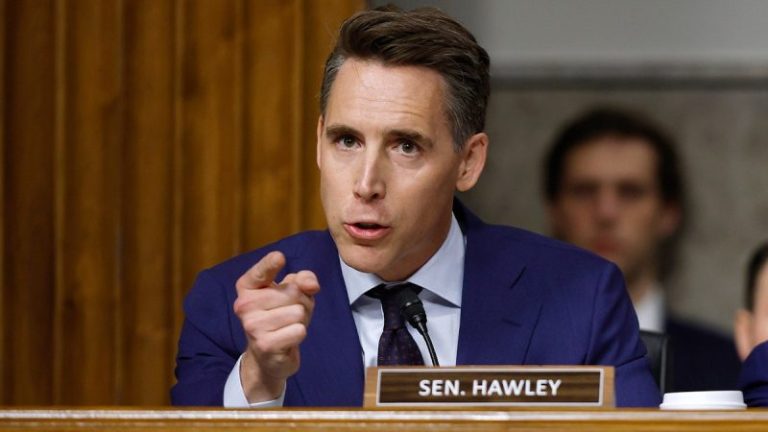
A Tuesday Senate hearing is set to expose billions in fraud in Minnesota as well as foreign backing for anti-ICE agitators across the country, Sen. Josh Hawley’s office told Fox News Digital.

The hearing before the Homeland Security Subcommittee on Disaster Management, which Hawley chairs, will feature testimony from a Minnesota state senator and representatives of third-party watchdog groups. Systemic fraud backed by transnational groups has stolen billions from child nutrition, FEMA assistance, housing, Medicaid and substance abuse services, the testimony is expected to say.

‘American taxpayers are getting robbed blind—billions stolen in Minnesota, and hundreds of billions siphoned out of the country by transnational criminals every year—all while foreign actors coordinate chaos on our streets,’ Hawley told Fox News in a statement.

‘Enough is enough. It’s time to root out the dark money and shut down the foreign influence,’ he added.

Minnesota State Sen. Mark Koran’s testimony will highlight the role Minnesota Gov. Tim Walz and Attorney General Keith Ellison played in allowing fraud to fester and spread across the state in what he calls the ‘largest expansion and fastest acceleration of fraud this country has ever seen.’

Witnesses are expected to say that senior officials were not only aware of the fraud but have also taken steps to hide it from public scrutiny by backdating audit records and cracking down on whistleblowers.

A Minnesota Department of Human Services (DHS) whistleblower told Fox News that she was the victim of a ‘smear campaign’ after raising red flags about fraud in the state since 2019.

Federal prosecutors estimate that up to $9 billion was stolen through a network of fraudulent fronts posing as daycare centers, food programs and health clinics. The majority of those charged, so far, in the ongoing investigation are part of Minnesota’s Somali population.

In addition to Koran, lawmakers will hear testimony from Seamus Bruner, the vice president of the Government Accountability Institute; Dylan Hedtler-Gaudette, the acting vice president of Policy & Government Affairs for the Project on Government Oversight, and Haywood Talcove, the CEO of LexisNexis Risk Solutions, Government.

Talcove’s testimony will focus on transnational groups that he says are exploiting federal assistance programs and using stolen funds support ‘organized crime, drug trafficking, human exploitation, and, in some cases, terrorist-affiliated or hostile foreign actors.’

Bruner’s testimony will also focus on foreign influence, linking the funding streams to foreign actors, including individuals with ties to the Chinese Communist Party.

This post appeared first on FOX NEWS