Author

admin

Browsing

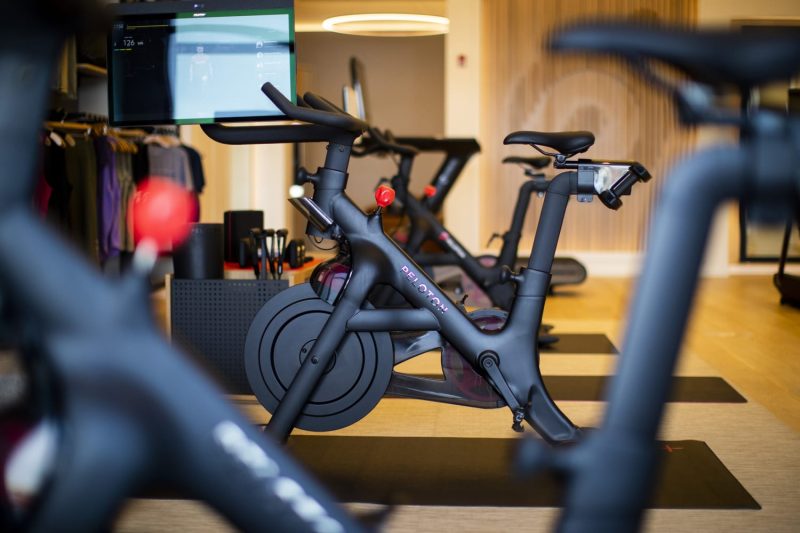
Peloton on Tuesday launched its own marketplace for reselling used equipment and gear as the company looks to capitalize on the many bikes and treadmills collecting dust in people’s homes.

The platform, dubbed Repowered, will allow members to post listings for their used Peloton equipment and gear and set a price with help from a generative AI tool, the company said.

Sellers have the final say on how much to list the item for, but the AI tool will suggest a price based on information about the product, such as its age, Peloton said.

It said sellers will get 70% of the sales price, while the rest will be shared between Peloton and its platform provider, Archive. Sellers will get a discount toward new equipment, while buyers will see the activation fee for a used product drop from $95 to $45, the company said.

Buyers will be able to see the equipment’s history on the listing and have the option to get the item delivered for an extra fee, Peloton said.

The resale market for used bikes and treadmills is booming. The company said it wants to streamline the sale process for members and offer a safe and comfortable way for prospective customers to buy equipment. It’s also an opportunity for Peloton to reach a wider array of new users as it plots a pathway back to growth.

Last summer, Peloton said it had started to see a meaningful increase in the number of new members who bought used Bikes or Treads from peer-to-peer markets such as Facebook Marketplace. At the time, it said paid connected fitness subscribers who bought hardware on the secondary market had grown 16% year over year, and it believed those subscribers exhibited a lower net churn rate — or membership cancellation — than rental subscribers.

Peloton has plenty of enthusiastic fans who use the company’s equipment every day, but some people have likened it to glorified clothes racks because so many people stop using them. While those owners paid for their exercise machines when they bought them, many have canceled their monthly subscription, which is how Peloton makes the bulk of its money, according to the company’s financial records.

Peloton is already reaping the subscription revenue from people who bought hardware on the secondary market, but now it will get a cut of that market with little upfront cost.

Repowered is a direct challenger to not just Facebook Marketplace but also the burgeoning startup Trade My Stuff, formerly known as Trade My Spin, which sells used Peloton equipment.

Trade My Stuff founder Ari Kimmelfeld told CNBC he previously met with Peloton to discuss ways to collaborate.

But Peloton said Repowered isn’t connected with Trade My Stuff.

Repowered is launching first in beta in New York City, Boston and Washington, D.C., with plans to go nationwide in the coming months, Peloton said. The platform will launch first to sellers, and once there’s enough inventory available, it’ll go live to buyers, the company said.

This post appeared first on NBC NEWS

Shares of Dollar General jumped nearly 16% on Tuesday after the discounter raised its outlook, saying it drew more middle- and higher-income shoppers amid fears that higher tariffs would hurt consumer spending.

The Tennessee-based retailer beat quarterly expectations for revenue and earnings. The company said it now anticipates net sales will grow about 3.7% to 4.7%, compared to its previous expectation of about 3.4% to 4.4%. It expects diluted earnings per share to range from $5.20 to $5.80, compared to its prior outlook of approximately $5.10 to $5.80. Dollar General anticipates same-store sales will increase 1.5% to 2.5%, higher than its previous guidance of about 1.2% to 2.2%.

Here’s how the retailer did for the fiscal first quarter compared with Wall Street’s estimates, according to a survey of analysts by LSEG:

In the three-month period that ended May 2, Dollar General reported net income of $391.93 million, or $1.78 per share, compared with $363.32 million, or $1.65, in the year-ago quarter.

As of Tuesday’s close, shares of Dollar General have risen about 48% so far this year. That far exceeds the roughly 1% gains of the S&P 500 during the same period. Shares of the retailer closed at $112.57 on Tuesday, bringing Dollar General’s market value to $24.76 billion.

Dollar General’s first-quarter results — and its stock performance — stand out in a retail industry that is already taking a hit from President Donald Trump’s tariffs. Companies including Best Buy, Macy’s and Abercrombie & Fitch have cut their profit outlooks due to tariffs.

On an earnings call Tuesday, Dollar General CEO Todd Vasos said the company has worked to reduce its exposure to China — and limit price hikes for shoppers. He said the retailer has worked with vendors to cut costs, moved manufacturing to other countries and made changes to its products or swapped them out for other merchandise.

He said direct imports make up about a mid- to high single-digit percentage of its overall purchases and indirect imports are about double that.

“While the tariff landscape remains dynamic and uncertain, we expect tariffs to result in some price increases as a last resort, though, we intend to work to minimize them as much as possible,” he said.

CFO Kelly Dilts said on the company’s earnings call that full-year guidance assumes that Dollar General will be able to offset “a significant portion of the anticipated tariff impact on our gross margin, but also allows for some incremental pressure on consumer spending.”

Customer traffic dipped by 0.3% in the first quarter compared to the year-ago period, but shoppers spent more when they visited. The average transaction amount rose 2.7%, as sales in the food, seasonal, home and apparel categories all grew.

Vasos added tariffs have also increased U.S. consumers’ desire to find deep discounts. Vasos said the company’s first-quarter results reflect Dollar General’s gains from “customers across multiple income bands seeking value.”

He said store traffic and the company’s market research indicates that more middle- and higher-income customers have come to its stores more frequently and spent more when they visited.

“We are pleased to see this growth with a wide range of customers and are excited about our ongoing opportunity to grow [market] share with them,” he said.

Those gains have helped as Dollar General’s core customer “remains financially constrained,” Vasos said. According to a survey by the company, he said 25% of customers reported having less income than they did a year ago and almost 60% of core customers said “they felt the need to sacrifice on necessities in the coming year.”

Dollar General’s sales largely come from U.S. consumers who are on a tight budget. About 60% of the retailer’s sales come from households with an annual income of less than $30,000 per year, Vasos said last fall at a Goldman Sachs’ retail conference.

In addition to wooing value-conscious shoppers, Dollar General has tried to tackle company-specific problems that drew government scrutiny and tested customer loyalty. The discounter, which has more than 20,000 stores across the country, has paid steep fines to the Labor Department for workplace safety violations due to blocked fire exits and dangerous levels of clutter.

Vasos highlighted some of the ways that Dollar General has tried to improve the customer experience. Among them, it’s worked to reduce employee turnover, and it took about 1,000 individual items off its shelves so it can keep top-selling items in stock, he said.

Dollar General has launched its own home delivery service, which is now available at more than 3,000 stores. Its deliveries through DoorDash have grown, too, with sales up more than 50% year over year in the quarter.

Dollar General has also bulked up its merchandise categories outside of the food and snack aisles, adding more discretionary items like seasonal decor and home items.

Vasos said sales in those categories have also gotten a boost from middle- and higher-income customers shopping its stores.

Its newer store chain, Popshelf, sells mostly discretionary items and caters to consumers with higher household incomes than Dollar General’s typical shoppers. Vasos did not share a specific metric for the chain, but said Popshelf’s same-store sales delivered strong growth in the quarter. The company recently changed the store layout to emphasize toys, beauty and party candy.

This post appeared first on NBC NEWS

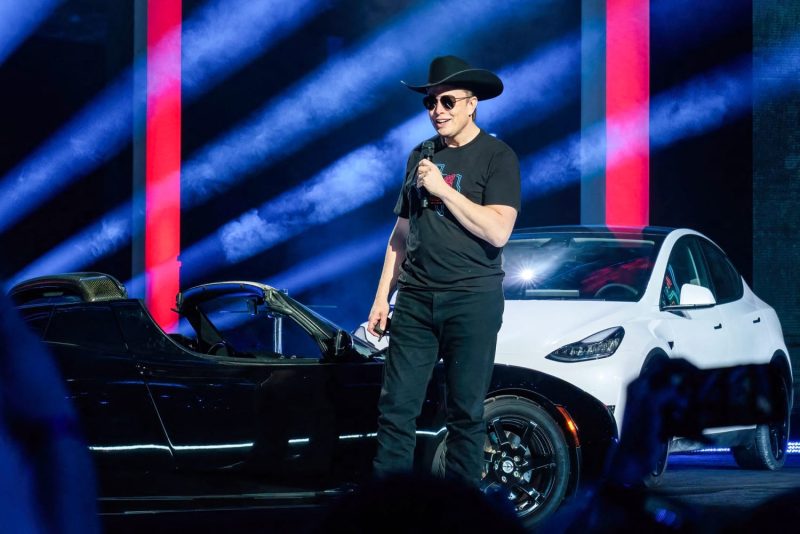
Tesla’s long-awaited entry into the robotaxi market — expected later this month — is coming to Austin, Texas, which has emerged as a key battleground for self-driving technology.

CEO Elon Musk wrote in a post on X last week that the company has been testing Model Y vehicles with no safety drivers on board in the Texas capital for several days.

Tesla’s Austin robotaxi service will kick off with 10 vehicles and expand to thousands, moving into more cities if the launch goes well, Musk said in a May 20 interview with CNBC’s David Faber.

But while the market remains nascent, Tesla already faces a hefty amount of competition.

The electric vehicle maker is one of several companies using Austin as a testing ground and debut market for self-driving technology. They’re all taking advantage of Austin’s robotics and AI talent, tech-savvy residents, affordable housing relative to other technology hubs and a city layout with horizontal traffic lights and wide roads that makes it particularly conducive to mapping software.

But the biggest reason they love Texas may be the state’s robotaxi-friendly regulation.

Already in Austin are Alphabet’s Waymo, Amazon’s Zoox, Volkswagen subsidiary ADMT, and startup Avride.

Waymo began offering robotaxi rides in Austin with Uber in March. Zoox started testing there last year, while ADMT has been testing Volkswagen’s electric ID vehicles in the city since 2023. Avride is headquartered in Austin and is testing its autonomous vehicles and delivery robots in the Texas capital. Avride said it plans to begin offering paid robotaxi rides in the city later this year.

“The winners of the space are emerging, and it’s just a matter of scaling,” said Toby Snuggs, ​​head of sales and partnerships at Avride.

According to Uber, its Austin launch with Waymo has proved successful thus far. Uber CEO Dara Khosrowshahi told investors in May that riders are choosing the robotaxis over regular cars, and the company is preparing to scale its Austin autonomous fleet to hundreds of vehicles in the coming months, ahead of a robotaxi expansion into Atlanta later this year.

“These approximately 100 vehicles are now busier than over 99% of all drivers in Austin in terms of completed trips per day,” Khosrowshahi told investors in May.

Avride, which spun out of former parent company Yandex last year, has delivery robots in a fleet of about a dozen Hyundai Ioniq 5 vehicles in downtown Austin. The company said it plans to expand its Austin fleet to 100 vehicles later this year and aims to begin offering robotaxi rides in Dallas with Uber in 2025.

Tesla primarily relies on camera-based systems and computer vision to navigate its vehicles rather than the Waymo model of using sophisticated sensors such as lidar and radar. Tesla’s “generalized” approach to robotaxis is more ambitious and less expensive than Waymo’s, Musk said during Tesla’s first-quarter earnings call with investors in April. Musk has been promising Tesla investors that a self-driving car is on the way for roughly a decade and has repeatedly missed self-imposed deadlines.

“There’s probably a lot of ways it can be done, but we’re the only ones that have done it,” Waymo co-CEO Tekedra Mawakana told CNBC’s Deirdre Bosa in May. “We’ve been doing it 24 hours a day for almost five years. And so to us, it’s really important to focus on safety … and then cost — not cost and then safety.”

“You have to be able to see at night, you have to be able to have this vision that’s better than humans,” Mawakana said.

In addition to Austin, Phoenix is an AV hub for companies such as Waymo, which has been testing in the region since 2016. Waymo and the auto manufacturer Magna International announced in May that they plan to double robotaxi production at their new plant in the Phoenix suburb of Mesa by the end of 2026.

The San Francisco Bay Area, where Google began working on its self-driving car project in 2009, also has a large fleet of Waymo vehicles. Waymo opened its paid ride-hailing service to all local users almost a year ago, and said earlier this year that it’s expanding its service to include another 27 square miles of coverage in the region. Zoox is also testing in San Francisco.

While Tesla was started in the Bay Area, Musk moved its corporate headquarters to Austin in late 2021. In California, regulators at individual municipalities closely control where and how companies can operate autonomous vehicles. Texas has more relaxed regulations that benefit AV companies.

When Waymo decided on Austin, it “looked at the operational structure and how friendly the regulatory environment is,” said Shweta Shrivastava, Waymo’s senior product and strategy executive. “It’s a tech-forward city — there’s a lot of openness in terms of welcoming and adopting new technologies, so that’s been great.”

Part of that friendliness is a 2017 Texas law that prohibited municipalities from regulating autonomous vehicles, giving the state full authority.

“It’s not like California, where you have certain regulations in LA, separate regulations in San Francisco, and municipalities between,” said Yulia Shveyko, Avride’s head of communications. “In Texas, it’s the same all across the state, and this is one of the great things about being here as an operator.”

The state is responsible for establishing the framework for autonomous vehicle operation, which includes that AVs must adhere to the same regulations as traditional vehicles, including registration, insurance and compliance with traffic laws. Texas law also requires AVs to have data recording systems to document potential accidents and incidents.

The Texas Department of Transportation’s “role is to work with autonomous vehicle (AV) companies on what is needed to ensure the state’s infrastructure is prepared for the safe and efficient rollout of AVs,” a spokesperson said in an emailed statement.

Texas law allows for AV testing and operations on Texas roadways, “as long as they meet the same safety and insurance requirements as every other vehicle on the road.”

Companies are choosing to test their AVs in Austin because of its “lower barriers both in terms of regulation and the acceptance by consumers in the area,” said Wassym Bensaid, chief software officer at EV maker Rivian.

“This is really what makes Austin and San Francisco more open to this technology,” Bensaid added. Rivian in March rolled out a “hands-free version” of its driver-assistance system for highway driving, and the company plans to have an “eyes-off-hands-off” system available by the end of next year, Bensaid said.

Texas’ transportation department created an AV task force in 2019. Formal meetings take place two to four times per year. Members of the task force include representatives from other agencies in the state and public entities as well as key industry stakeholders, its website says.

Waymo is an active member of the task force, the company confirmed.

The state’s transportation department didn’t respond to CNBC’s requests for further information about the task force.

Waymo has built goodwill with Austin officials by engaging with Texas stakeholders since it began testing in the city in 2015, the company told CNBC.

Known then as Google’s self-driving car project, the company started driving on Austin streets a decade ago with safety drivers on board.

Waymo closed Austin operations in 2019 to focus on its testing efforts in Phoenix, the spokesperson said, adding that it returned in March 2023, when the company’s technology was “more mature.”

Long before Waymo began testing in Austin, University of Texas at Austin’s Peter Stone entered his team’s vehicle in the Defense Advanced Research Projects Agency Urban Challenge in 2007. Stone is the director of the Learning Agents Research Group at UT, and his team’s entry was called Austin Robot Technology — one of the first deployments of a partially automated driving system on the streets of Austin.

Stone has been at the university for 23 years and has taught several students who are now employees at Waymo and other car companies, he said. Advancements in machine learning and years of testing have contributed to companies such as Waymo being able to navigate roads better than some human drivers, he said.

Officials from around the U.S. and the world are looking to Texas as a model for self-driving regulations, experts said. Some regulation, however, is still being sorted out.

Lewis Leff, City of Austin assistant director, said that more cities are reaching out to ask, “How do you handle these situations?” Cities that have inquired include New Orleans and Nashville, Tennessee, as well as some outside the U.S., Austin officials told CNBC.

“We were in Japan launching our service with Rakuten earlier this year and the minister of economics, and the questions they were asking was, ‘What is the regulation in Texas like?’” Avride’s Snuggs said.

Meanwhile, the AV industry is pushing for federal-level standards that would ease regulatory uncertainty around putting new tech on public roads. In Tesla’s third-quarter earnings in October, Musk said that should Donald Trump win the coming election, he would use his influence with the administration to push for federal AV regulation.

As president, Trump and his transportation secretary, Sean Duffy, have both been supportive of federal-level standards, Waymo’s Mawakana told CNBC in May, adding that she’s “optimistic” it will be arranged sometime during this presidential term. Waymo supports proposed federal frameworks for national safety standards and has voiced that support to the Trump administration, a company spokesperson said.

“Now’s the time,” Mawakana said, pointing to places such as China, which invests in AV supply chains and grants and has federal AV rules. “We should be in the exact same position.”

The concentration of regulatory power, however, comes with some concern that cities will be mostly powerless should issues arise, experts said.

A state senate transportation hearing in September addressed the lack of regulation in Texas for driverless vehicles.

“To many of our first responders communities, this is new territory for them,” Democratic Texas state Sen. Sarah Eckhardt reportedly said at the hearing. “I mean pulling over an autonomous vehicle, you know, what do you do? An autonomous vehicle in an accident, what do you do?”

In one example, Houston city officials reportedly faced delays in enforcement instructions from state regulators after Cruise cars caused a backup on the city’s Montrose Boulevard in 2023.

Texas has at least 17 companies that have deployed or tested on roads, said Nick Steingart, director of state affairs at Alliance for Automotive Innovation, at the state hearing.

“As the technology matured and evolved, we fully expected that the laws would evolve as well,” Steingart said.

The state is considering legislation that may provide some clarity, according to Austin’s transportation department.

Several AV companies in Austin have safety protocols and proactively work with local first responders. Zoox, for example, has held trainings with first responders and met with city officials, a spokesperson said. But there is technically no requirement for AV companies to engage with emergency services, Austin officials confirmed.

Companies hoping to succeed in Texas often begin their conversations with the state by focusing on safety first, Austin’s Leff said. “They note their technology can recognize a fire vehicle or a hand signal, so there’s a lot of focus on things like that,” he said.

Austin’s transportation department has been collecting information about incidents that pose a risk to public safety and relaying that data to the appropriate operators, the city said. It places “all reports we receive about AV incidents into our dashboard, about half of which over time have come from our city department colleagues,” city officials said.

Waymo, which has become one of the most visible leaders in the robotaxi market, has said it has made safety a priority. Mawakana and co-CEO Dmitri Dolgov told employees at a November all-hands meeting that they should scale up as aggressively as possible but do so with safety at the forefront of all their efforts, people familiar with the matter told CNBC. The people asked not to be named because they were not authorized to speak publicly.

Waymo tracks incidents involving its vehicles but doesn’t share city-level data publicly, a company spokesperson said.

With Texas regulation around AVs relatively lax, some AV makers worry what impact a collision by one of the players in the state could mean for the entire industry.

“It takes a long time to earn trust, and it doesn’t take that long to lose it,” Mawakana said. “There can always be an overreaction by regulators — their job is to protect the public.”

Already, the AV industry has suffered a number of black eyes. General Motors shut down its Cruise robotaxi service in December after one of its vehicles dragged a woman 20 feet on a street in San Francisco in 2023. Uber also pulled out of the self-driving space after one of its self-driving test vehicles struck and killed a woman in Arizona in 2018.

In Austin, a woman posted a TikTok video in April showing a Waymo vehicle that she said had abruptly stopped underneath a highway with her and another passenger inside. After other cars began honking at them, they contacted customer support for help but were told the Waymo couldn’t be moved. The woman said the car locked the passengers inside until they threatened to go live on TikTok.

“Now we’re walking,” the woman says in the video, “and our Waymo is still there. This is insane.”

Riders “always have the ability to pause their ride and exit the vehicle when desired by pulling the handle twice — once to unlock and another to open the door,” a Waymo spokesperson said in response to the video.

Despite such incidents, UT’s Stone said he thinks cities are being overly cautious.

“The standard people are aiming for is perfection, and the standard they should be aiming for is better than people,” he said. “A fatal car accident rarely makes the local news, but if autonomous cars reduce that number, it should be seen as a huge societal win.”

— CNBC’s Lora Kolodny and Deirdre Bosa contributed to this report.

This post appeared first on NBC NEWS

NEWYou can now listen to Fox News articles!

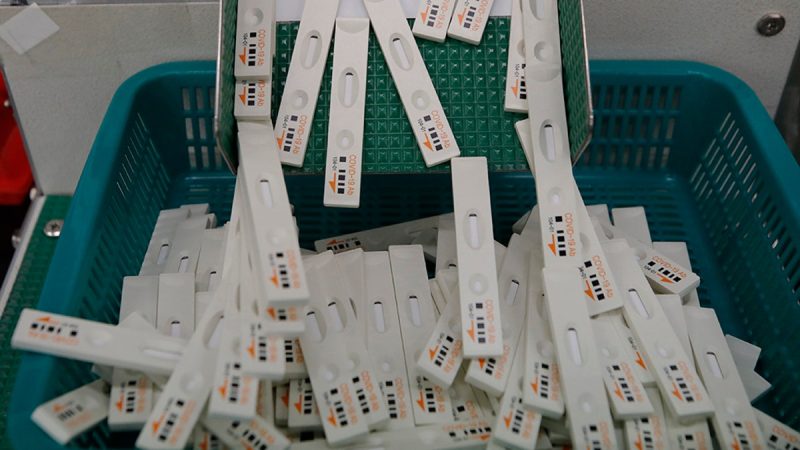
The Department of Health and Human Services announced it is shuttering a nationwide program that offered free COVID-19 tests to community organizations, citing it bled taxpayer funds despite the pandemic’s end. 

‘With COVID-19 behaving more like the seasonal flu — rising and falling through the year — and tests widely available at retail stores nationwide, continued federal distribution is a significant waste of taxpayers’ dollars,’ HHS told Fox News Digital Tuesday. ‘The COVID-19 pandemic is over and HHS is prioritizing funding projects that will deliver on President Trump’s mandate to address the chronic disease epidemic and Make America Healthy Again.’

The government had spent more than $1 billion on the program since it was established in 2021 under the Biden administration, Fox News Digital learned. 

The program deployed government-purchased COVID-19 tests to community partners across the country to deliver tests at no cost to the patient. HHS cited that testing for COVID-19 now mimics seasonal flu cases, with retail shops across the country stocking their shelves with COVID tests, meaning ‘continued federal distribution is a significant waste of taxpayers’ dollars.’

Americans who ordered tests through community partnership by 5 p.m. May 30 will still receive their order, according to HHS. 

HHS is in the midst of purchasing one million newer tests that are able to differentiate between the COVID-19 virus versus the flu, which will be deployed if there are any shortfalls or emergencies with the COVID testing, Fox Digital learned. 

State or local health departments, as well as community organizations that have a stockpile of tests and various local health centers may still provide free tests to Americans as the program shutters, according to HHS. 

The COVID-19 pandemic, which tore across the country in 2020, officially ended years ago. Then-President Joe Biden declared the pandemic was ‘over’ back in 2022, while the World Health Organization determined the pandemic officially ended by 2023. 

The announcement comes as the Trump administration’s top health department re-focuses its direction to addressing the nation’s spiraling chronic health issues, which come in the form of health issues such as rampant obesity, spikes in autism diagnoses and teenage depression. 

President Donald Trump‘s Make America Healthy Again Commission, which is chaired by HHS chief Robert F. Kennedy Jr, released its anticipated report assessing chronic diseases that have gripped U.S. youth in recent years May 22. 

The report’s findings include teenage depression nearly doubling from 2009 to 2019, more than one-in-five children over the age of six being considered obese, one-in-31 children diagnosed with autism by age 8 and childhood cancer spiking by 40% since 1975.  

‘Over 40% of the roughly 73 million children (aged 0-17) in the United States have at least one chronic health condition, according to the CDC, such as asthma, allergies, obesity, autoimmune diseases, or behavioral disorders,’ the report stated. ‘Although estimates vary depending on the conditions included, all studies show an alarming increase over time.’

Chronic diseases have a chilling effect on national security, commission members said in a Thursday morning phone call with the media. Roughly 75% of America’s youth aged 17–24 do not qualify to serve in the military due to obesity, asthma, allergies, autoimmune diseases or behavioral disorders, they said. 

‘We now have the most obese, depressed, disabled, medicated population in the history of the world, and we cannot keep going down the same road,’ Food and Drug Commissioner Marty Makary said in the phone call with the media. ‘So this is an amazing day. I hope this marks the grand pivot from a system that is entirely reactionary to a system that will now be proactive.’ 

The MAHA report will be followed by a policy recommendation report for the federal government later this summer. 

This post appeared first on FOX NEWS

NEWYou can now listen to Fox News articles!

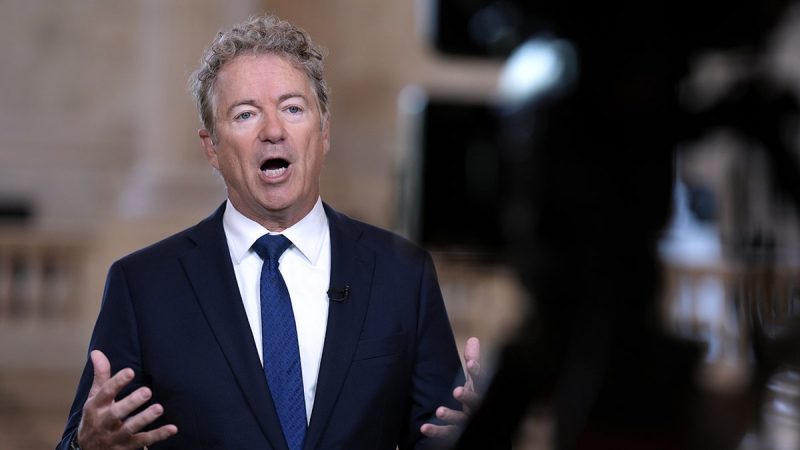
President Donald Trump on Tuesday criticized Sen. Rand Paul, R-Ky., for opposing his ‘big, beautiful bill.’ 

‘Rand Paul has very little understanding of the BBB, especially the tremendous GROWTH that is coming. He loves voting ‘NO’ on everything, he thinks it’s good politics, but it’s not. The BBB is a big WINNER!!!’ Trump wrote on TRUTH Social. 

The president added, ‘Rand votes NO on everything, but never has any practical or constructive ideas. His ideas are actually crazy (losers!). The people of Kentucky can’t stand him. This is a BIG GROWTH BILL!’ 

Paul is among a group of at least four Republican senators who have expressed apprehension over Trump’s ‘big, beautiful bill’ due to the budget package’s projected increase in the national debt. 

The White House has framed the bill as a solution to four years of failures under former President Joe Biden. Sens. Ron Johnson of Wisconsin, Rick Scott of Florida, and Mike Lee of Utah, three other Republicans in the upper chamber, have also shared concerns about the bill’s fiscal implications.

Paul told Breitbart News on Monday that while he believes the left is ‘adrift,’ most Republicans are shying away from intra-party debates on certain issues, similarly to how Democrats acted after former President Barack Obama’s re-election win. 

Paul reportedly said he supports ‘a lot’ of Trump’s budget package but disagrees with ‘the additional $5 trillion in debt’ the senator claims is attached to the bill. 

‘That’s a hard place for me as I support much of what’s in the bill, tax cuts, spending cuts, plus more spending cuts if we can get them. But I can’t reconcile myself to adding $5 trillion in debt, raising the debt ceiling,’ Paul said. 

The senator told Breitbart the debt is going to be $2.2 trillion this year and Republicans have largely continued Biden-era spending levels.

‘They’re anticipating $5 trillion in two years, and that means next year’s deficit that some people are saying it’s going to grow to over $3 trillion a year again,’ Paul said.

The senator separately expressed to the Associated Press that he told Trump this would be the first time in recent history that Republicans would ‘own’ the debt ceiling if an increase of the nation’s debt limit was included in the GOP’s sweeping tax and spending package. Paul reportedly added in the Breitbart interview that his opposition to portions of the ‘big, beautiful bill’ are meant to preserve the Department of Government Efficiency (DOGE)’s progress down the road. 

‘My fear is that when this bill passes that the ramifications a year out, two years out, will be, ‘My goodness, what happened to DOGE? What happened to the spending cuts? Why is the deficit so big still?’’ he said. ‘So I am working very hard to make sure there is still at least a part of the party — and it doesn’t have to be anti-Donald Trump because I’m for him in so many ways — but it also means people still have to stand up and present their own ideas of what they’re for.’ 

‘I do support President Trump and I support most of the bill,’ Rand also wrote on X, explaining his position. ‘I’m his biggest defender on foreign policy. But at the same time I want conservative government so I have to fight for what I believe in.’ 

Trump and Senate Majority Leader John Thune, R-South Dakota, met at the White House at a critical moment Monday as senators returned to begin negotiations over the president’s big tax breaks and spending cuts package.

Thune said that GOP senators are ‘on track’ to have the package approved by their July 4 deadline. But Thune also acknowledged the long road ahead as senators grind through private talks over changes to put their own stamp on the House-passed bill. Thune told the Senate floor on Monday that Republicans’ priority is ‘extending tax relief for hardworking Americans and strengthening our border, energy, and national security.’

Sen. Josh Hawley, R-Mo., meanwhile, says Trump told him in a call he ‘wants to make sure’ the Senate doesn’t cut Medicaid benefits, according to the AP.

The Missouri Republican has been working to strip steep healthcare cuts from the House bill, beyond work requirements for some aid recipients.

Hawley said Trump told him the senators could instead raise revenue by closing the so-called carried interest tax loophole used by wealthy filers.

The Associated Press contributed to this report.

This post appeared first on FOX NEWS

NEWYou can now listen to Fox News articles!

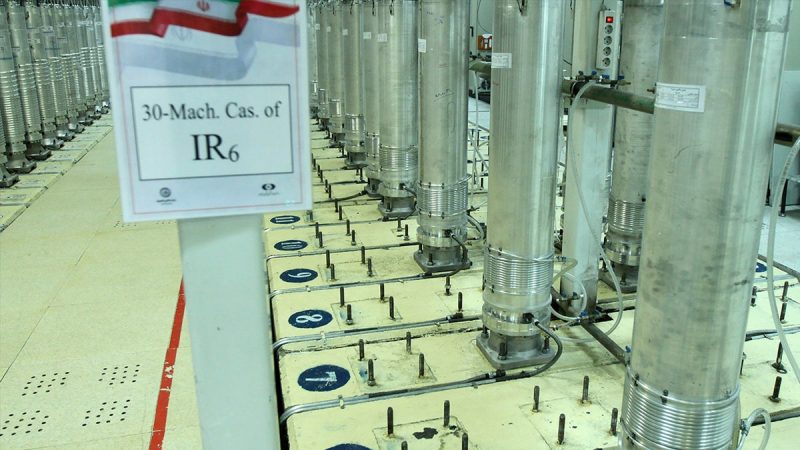
President Donald Trump on Monday evening looked to reaffirm his administration’s position when it comes to nuclear negotiations with Iran and said Tehran will not be allowed ‘any enrichment of uranium.’

His message, which surfaced on multiple social media platforms, appeared to be a direct response to a report by Axios which cited two sources with ‘direct knowledge’ of a secret proposal that Washington provided to Tehran, allegedly said the U.S. would agree to permit ‘limited low-level uranium enrichment on Iranian soil for a to-be-determined period of time.’

Fox News Digital could not independently verify the details of the proposal, but if the decision to grant Tehran some uranium enrichment were granted, it would directly contradict public comments issued by lead negotiator Special Envoy Steve Witkoff, Secretary of State Marco Rubio and Trump.

Iran has repeatedly said it will not agree to a uranium enrichment ban, arguing it has the right to the process, which is also vital for nuclear energy. Iranian Foreign Minister Abbas Araqchi on Monday reiterated this point in a press conference from Egypt, and, according to the Tasnim News Agency, said he plans to respond to the U.S. proposal soon.

Araqchi did not comment on the specifics of the agreement but said his ‘response will be based on the principles of the Iranian nation.’ 

The proposal also reportedly included the notion that Iran could join a regional consortium for uranium enrichment, as a solution to its enrichment needs. However, Iranian Foreign Ministry spokesman Esmaeil Baqaei on Monday reportedly argued that this was not a new solution, nor an adequate substitute. 

‘If some parties are proposing such a process, we welcome it and have no problem with participation either. But we emphasize that such an initiative cannot replace enrichment inside Iran,’ the spokesperson said. 

The White House has not said how long it will attempt to negotiate with Iran over its nuclear program, as security officials have repeatedly warned that Iran could be playing for time as the threat of U.N. snapback sanctions is set to expire come October. 

Iran on Tuesday reiterated that it is not going to abandon negotiations but suggested it would not cave to Washington’s demands either. 

‘Iran won’t leave the negotiating table while protecting its national interests,’ a spokesperson for the Iranian government, Fatemeh Mohajerani, said, according to the Tasnim News Agency.

Though she added, ‘All scenarios are on the table. We are prepared for everything.’

This post appeared first on FOX NEWS

NEWYou can now listen to Fox News articles!

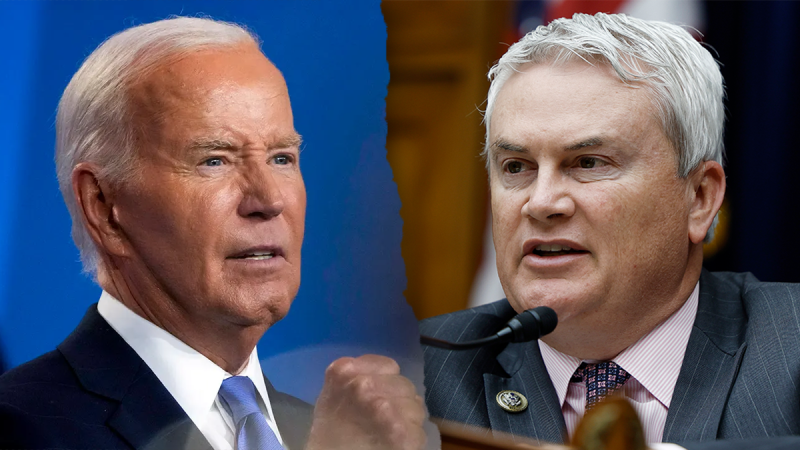
House Oversight Committee Chairman James Comer, R-Ky., is welcoming the Trump administration’s backup as he continues to probe the alleged ‘cover-up’ of former President Joe Biden’s cognitive decline.

The Department of Justice (DOJ) is investigating pardons granted by the Biden White House, specifically whether the ex-president ‘was competent and whether others were taking advantage of him through use of autopen or other means,’ according to Reuters.

‘The Trump DOJ is right to open a probe into the potential unauthorized use of autopen at the Biden White House for sweeping pardons and other executive actions,’ Comer told Fox News Digital. ‘Americans demand transparency and accountability about who was calling the shots at the White House.’

The Kentucky Republican launched a House Oversight Committee probe into the prior administration last month, requesting appearances and information from five former senior Biden aides, including his physician Kevin O’Connor.

A source familiar with the matter previously told Fox News Digital that lawyers for all five former staffers were in communication with the committee, but Comer signaled that he would not rule out compelling their appearance if those talks fell through.

‘The House Oversight Committee is investigating the cover-up of President Biden’s mental decline and will be talking soon with a large group of former administration and campaign officials, under subpoena if necessary. We welcome the DOJ’s additional efforts to ensure accountability,’ Comer said.

The DOJ declined to comment when reached by Fox News Digital.

Republicans have unleashed a tidal wave of scrutiny on the previous Democratic White House as new reports – as well as old concerns previously dismissed by mainstream media – surface about Biden’s mental state while in office and what lengths those closest to him took to allegedly hide it from others. 

It was considered all but taboo in Washington’s political circles to discuss Biden’s mental acuity until his disastrous debate against then-candidate Donald Trump in 2024.

Since then, myriad accounts about the former president misremembering longtime allies or losing focus in meetings have flooded the media.

It’s brought new scrutiny on some of the unprecedentedly broad pardons he issued during his waning days in office, including for his son, Hunter Biden, despite previously saying he would not do so.

Biden is also currently dealing with stage 4 prostate cancer, which he announced last month, though he told reporters in recent days he was ‘optimistic.’

Like the DOJ, Comer’s probe is focused on Biden’s mental decline and use of autopen for pardons and other executive actions.

‘The Committee on Oversight and Government Reform is investigating the role of former senior Biden White House officials in possibly usurping authority from former President Joe Biden and the ramifications of a White House staff intent on hiding his rapidly worsening mental and physical faculties,’ Comer said in letters to the former Biden officials.

This post appeared first on FOX NEWS

NEWYou can now listen to Fox News articles!

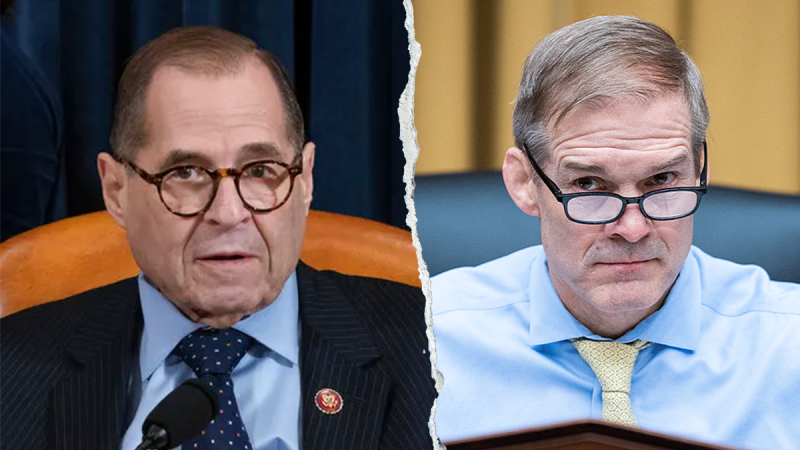
Democrats on the House Judiciary Committee sent a letter Tuesday requesting House Judiciary Chairman Jim Jordan, R-Ohio, to condemn the Department of Homeland Security (DHS) for ‘forcefully’ entering Rep. Jerry Nadler’s congressional office and handcuffing a member of his staff. 

The letter, sent by Nadler and fellow House Judiciary Ranking Member Jamie Raskin, D-Md., disputes DHS’ claim that agents were doing a ‘security check’ at Nadler’s office. 

‘We therefore urge you to bring the Secretary of the DHS, Kristi Noem, before our Committee immediately to answer our questions about her agency’s irresponsible and dangerous actions,’ the House Democrats said in the letter.  

Nadler and Raskin said the video released from the incident reveals agents handcuffed a staffer and demanded access to ‘non-public areas’ inside Nadler’s office without ‘asking about the safety and security of his staff.’

‘These types of intimidation tactics are completely unwarranted and cannot be tolerated. The decision to enter a congressional office and detain a congressional staff member demonstrates a deeply troubling disregard for proper legal boundaries,’ Nadler and Raskin said. 

The House Democrats are urging Jordan to condemn the incident and requesting DHS Secretary Noem testify before the House Judiciary Committee. 

‘We call on you, as Chairman of the House Committee on the Judiciary, to condemn this aggressive affront to the separation of powers and the safety of Members of Congress, our staff, and our constituents,’ Nadler and Raskin said. 

DHS previously told Fox News Digital the Federal Protective Service (FPS) officers who entered Nadler’s office were responding to reports that protesters were inside Nadler’s district office in Manhattan. There was a protest outside an immigration courthouse in the same facility as Nadler’s office. 

‘Based on earlier incidents in a nearby facility, FPS officers were concerned about the safety of the federal employees in the office and went to the location to ensure the safety and wellbeing of those present,’ a Homeland Security spokesperson told Fox News Digital. 

‘Officers identified themselves and explained their intent to conduct a security check. However, one individual became verbally confrontational and physically blocked access to the office,’ the spokesperson added. ‘The officers then detained the individual in the hallway for the purpose of completing the security check. All were released without further incident.’

The House Democrats refuted the spokesperson’s claim in the letter and criticized the incident as a larger issue within President Donald Trump’s crackdown on illegal immigration. 

‘Sadly, this incident is part of a broader pattern by President Donald J. Trump and DHS of using unlawful, chaotic, and reckless tactics in communities across America, as they threaten and intimidate children, members of the clergy, students, as well as Members of Congress and their staffs,’ they said. 

Nadler slammed Trump for ‘sowing chaos’ in a statement released Saturday. 

‘The time is now to halt the use of these illegitimate tactics and to ensure that DHS complies with the law and with the norms of common human decency,’ Nadler and Raskin conclude in the letter. 

DHS did not immediately provide a comment. 

Fox News Digital’s Louis Casiano contributed to this report. 

This post appeared first on FOX NEWS

Cartier Resources Inc. (″ Cartier ″ or the ″ Company ″) (TSXV: ECR; FSE:6CA) is pleased to announce the execution of an agreement (the ″ Agreement ″) with Exploits Discovery Corp. (CSE: NFLD) (″ Exploits ″) to option 100% of its interests in three groups of exclusive exploration rights, located in the Province of Québec, commonly referred to as: (a) the ″Wilson project″ located in Lebel-sur-Quévillon (the ″ Wilson Property ″); (b) the ″Fenton project″ located in Chapais (the ″ Fenton Property ″); and (c) the ″Benoist project″ located in Miquelon (the ″ Benoist Property ″), together the ″ Properties ″.

During the four-year option period, Exploits shall have the sole and exclusive right and option to earn a 100% interest (the ″ Option ″) by paying Cartier an amount aggregating $1,750,000 in cash, issuing Cartier an aggregate of 9,250,000 common shares of Exploits and incurring not less than $12,250,000 in expenditures on the properties. The Agreement is conditional on Exploits obtaining all necessary regulatory approvals under the policies of the Canadian Securities Exchange (CSE) in connection therewith. Within ten (10) business days of the effective date, Cartier will receive an amount of $200,000 in cash and 1,750,000 common shares of Exploits. All shares issued to Cartier under the Agreement will be subject to a statutory four (4) month hold period.

Upon due exercise of the Option in respect of any of the Properties, Cartier will retain a 2.0% net smelter returns (″NSR″) production royalty (each, a ″ Royalty ″) over the applicable Property(ies). One-half of the Royalty (1.0% NSR) will be redeemable at the election of Cartier for a cash payment of $2,000,000 and the remaining half of the Royalty (1.0% NSR) will be redeemable at the election of Cartier for a cash payment of $20,000,000.

About Cartier Resources Inc.

Cartier Resources Inc., founded in 2006, is an exploration company based in Val-d’Or. The Company’s projects are all located in Québec, which consistently ranks among the world’s top mining jurisdictions. Cartier is advancing the development of its flagship Cadillac project.

Cautionary Statement

Certain statements contained in this press release constitute forward-looking information under the provisions of Canadian securities laws including statements about the Company’s plans. Such statements are necessarily based upon a number of beliefs, assumptions, and opinions of management on the date the statements are made and are subject to numerous risks and uncertainties that could cause actual results and future events to differ materially from those anticipated or projected. The Company undertakes no obligation to update these forward-looking statements in the event that management’s beliefs, estimates or opinions, or other factors should change, except as required by law

For further information, contact:
Philippe Cloutier, P. Geo.
President and CEO
Telephone: 819-856-0512
philippe.cloutier@ressourcescartier.com
www.ressourcescartier.com

Neither the TSX Venture Exchange nor its regulatory services provider accepts responsibility for the adequacy or accuracy of this press release.

News Provided by GlobeNewswire via QuoteMedia

This post appeared first on investingnews.com

Athena Gold Corporation (CSE:ATHA)(OTCQB:AHNRF) (‘Athena Gold’ or the ‘Company’) is pleased to announce that it has entered into a property option agreement (the ‘Agreement’) with Firetail Resources Limited (ASX:FTL) (‘Firetail’) dated May 28, 2025, whereby the Company has granted Firetail the exclusive right (the ‘Option’) to acquire an 80% undivided interest in the Company’s Excelsior Springs Project located in Nevada, USA (‘Excelsior’ or the ‘Property’). If the Option is exercised, Firetail will pay Athena Gold AUD$200,000 in cash and issue 32,000,000 ordinary shares, and Firetail will be required to incur USD$5,000,000 in expenditures over a five-year term. A 1% net smelter return royalty will also be provided to Athena Gold on certain claims comprising the Property. If Firetail successfully earns its 80% interest, the parties will form a joint venture partnership that provides Athena Gold with a 20% free-carried interest until a Definitive Feasibility Study is published.

In addition, the Company is pleased to announce that mobilization for the proposed till program at its Laird Lake project in Red Lake, Ontario, has begun (refer to press release dated April 17, 2025).

‘Our efforts at Excelsior have attracted international interest, and we are pleased that the capable team at Firetail is keen to take on the risk and share the benefits with Athena Gold. The cash and share payments, as well as the exploration spend required for Firetail to earn an 80% interest, surpass the book value of Excelsior. When normalized to a 100% basis from 80%, the total investment approaches our current market capitalization. In addition to our significant shareholding in Firetail, Athena will maintain significant upside in the project through royalties and its 20% free-carried interest to a Definitive Feasibility Study. With Excelsior successfully monetized, we can place our focus on our new flagship project, Laird Lake, where crews have now mobilized for the 2025 field season,’ said Koby Kushner, President & CEO of Athena Gold.

Summary of the Terms of the Agreement

TERM: The term of the Option is five (5) years.

OPTION PERIOD: In consideration for the granting of the right to explore the Property and to purchase the Option Firetail shall pay a non-refundable cash fee of AUD$50,000 within five days from execution of the Agreement. Firetail has three (3) months from execution of the Agreement to determine whether to proceed with exercising the Option.

EXERCISE OF THE OPTION: Firetail can exercise the Option (the ‘Exercise Date’) within the three-month period and acquire the Property by:

  1. Paying AUD$200,000 within five (5) business days of the Exercise Date; and
  2. Issuing 32,000,000 ordinary shares in the capital of Firetail (the ‘Consideration Shares’) within five (5) business days of the Exercise Date. Firetail may at its sole discretion, elect to pay to the Company the value of the Consideration Shares in cash, calculated using the 5-day VWAP of Firetail ordinary shares trading on the Australian Securities Exchange.

Firetail agrees to incur an aggregate of not less than USD$5,000,000 in exploration expenditures on the Property over a five-year period commencing from the Exercise Date. If the Option is exercised, Athena Gold will retain a 20% free-carried interest in the Property until completion of a Definitive Feasibility Study by Firetail.

Potential Joint Venture

Assuming the entering into of a joint venture and prior to, the Company and Firetail agree to enter into a joint venture wherein the Company shall be responsible for 20% of the exploration expenditures on the Property, subject to Firetail having first expended or incurred the initial USD$5,000,000 in exploration expenditures on the Property. On commencement of the joint venture, Firetail will grant a 1% net smelter return royalty to the Company with respect to the production of all metals and minerals from the grounds without pre-existing royalties.

Upon commencement of production, from any and all mineral concessions, interests or rights acquired (collectively, the ‘Interests’), directly or indirectly, within the area of influence, these Interests will be subject to a 1% net smelter return royalty that will be granted to the Company and if any party’s interests are diluted below the 10% percentage share, this party’s said Interest will be converted to an additional 1% net smelter return royalty on the Property.

The Company reserves the right that it may, at its sole election and by providing written notice to Firetail, buy back any royalty that it has granted.

Each party to the joint venture has a right of first refusal on the terms and conditions set out in the Agreement in respect of a transfer of the whole or part of its percentage share and a party may not transfer any part of its percentage share unless and until it has complied with the terms and conditions in the Agreement.

Firetail shall have the option to terminate the Agreement at any time after giving the Company written notice of termination. In the event Firetail does not complete any part of its obligations under the Agreement, the Property will remain with the Company. The Agreement remains subject to the approval of the Canadian Securities Exchange.

About Athena Gold Corporation

Athena Gold is engaged in the business of mineral exploration and the acquisition of mineral property assets. Its objective is to locate and develop economic precious and base metal properties of merit and to conduct additional exploration drilling and studies on its projects across North America. Athena Gold’s Laird Lake project is situated in the Red Lake Gold District of Ontario, covering over 4,000 hectares along more than 10 km of the Balmer-Confederation Assemblage contact, where recent surface sampling results returned up to 373 g/t Au. This underexplored area is road-accessible, located about 10 km west of West Red Lake Gold’s Madsen mine and 34 km northwest of Kinross Gold’s Great Bear project. Meanwhile, its Excelsior Springs Au-Ag project is located in the prolific Walker Lane Trend in Nevada, where it us currently under option by Firetail Resources Limited. Excelsior Springs spans over 1,500 hectares and covers at least three historic mines.

For further information about Athena Gold Corporation and our Excelsior Springs Gold project, please visit www.athenagoldcorp.com.

On Behalf of the Board of Directors
Koby Kushner
President and Chief Executive Officer, Athena Gold Corporation

For further information, please contact:
Athena Gold Corporation
Koby Kushner, President and Chief Executive Officer
Phone: 416-846-6164
Email: kobykushner@athenagoldcorp.com

CHF Capital Markets
Cathy Hume, CEO
Phone: 416-868-1079 x 251
Email: cathy@chfir.com

Forward-Looking Statements

This press release contains forward-looking statements and forward-looking information (collectively, ‘forward-looking statements’) within the meaning of applicable Canadian and US. securities laws. All statements, other than statements of historical fact, included herein, including, without limitation, statements regarding future exploration plans, future results from exploration, and the anticipated business plans and timing of future activities of the Company, are forward-looking statements. Although the Company believes that such statements are reasonable, it can give no assurance that such expectations will prove to be correct. Forward-looking statements are typically identified by words such as: ‘believes’, ‘will’, ‘expects’, ‘anticipates’, ‘intends’, ‘estimates’, ”plans’, ‘may’, ‘should’, ”potential’, ‘scheduled’, or variations of such words and phrases and similar expressions, which, by their nature, refer to future events or results that may, could, would, might or will occur or be taken or achieved. In making the forward-looking statements in this press release, the Company has applied several material assumptions, including without limitation, that there will be investor interest in future financings, market fundamentals will result in sustained precious metals demand and prices, the receipt of any necessary permits, licenses and regulatory approvals in connection with the future exploration and development of the Company’s projects in a timely manner.

The Company cautions investors that any forward-looking statements by the Company are not guarantees of future results or performance, and that actual results may differ materially from those in forward-looking statements.

Readers are cautioned not to place undue reliance on forward-looking statements. The Company undertakes no obligation to update any of the forward-looking statements in this press release or incorporated by reference herein, except as otherwise stated.

Neither the Canadian Securities Exchange nor its regulation services provider accepts responsibility for the adequacy or accuracy of this release.

Source

Click here to connect with Athena Gold Corporation (CSE:ATHA)(OTCQB:AHNRF) to receive an Investor Presentation

This post appeared first on investingnews.com