
Author

admin

Browsing

Investing in silver bullion has pros and cons, and what’s right for one investor may not work for another.

Interest in the silver market tends to flourish whenever the silver price increases, with investors beginning to wonder if silver is a good investment and it is the right time to add physical silver to their investment portfolios.

While silver can be volatile, the precious metal is also seen as a safe-haven asset, similar to its sister metal gold. Safe-haven investments can offer protection in times of uncertainty, and with tensions running high, they could be a good choice for those looking to preserve their wealth in difficult times.

With those factors in mind, let’s look at the pros and cons of buying silver bullion.

What are the pros of investing in silver bullion?

Silver can offer protection

Silver bullion is often considered a good safe-haven asset. As mentioned, investors often flock to precious metals in times of turmoil, politically and economically. For example, physical silver and gold have both performed strongly in recent years against a background of geopolitical instability and high inflation.

Silver bullion is a tangible asset

While cash, mining stocks, bonds and other financial products are accepted forms of wealth, they are essentially still digital promissory notes. For that reason, they are all vulnerable to depreciation due to actions like printing money. A troy ounce of silver bullion, on the other hand, is a finite tangible asset. That means that, although it is vulnerable to market fluctuations like other commodities, physical silver isn’t likely to completely crash because of its inherent and real value. Market participants can buy bullion in different forms, such as silver coins or silver jewelry, or they can buy silver bullion bars.

Silver’s cheaper and more flexible than gold

Compared to gold bullion, silver is significantly cheaper, which makes it more accessible for investors looking for an affordable entrance to the precious metals market. This can make it easier for investors to build up a portfolio over time.

Another benefit is that investors who need to convert their precious metals to currency will have an easier time selling a portion of their silver portfolio than those looking to sell part of their gold. Just as a US$100 bill can be a challenge to break at the store, divvying up an ounce of gold bullion can be a challenge. As a result, silver bullion is more practical and versatile, particularly for everyday investors who need flexibility in their investments.

Silver offers higher returns than gold

Silver tends to move in tandem with gold: when the price of gold rises, so too does the price of silver. Because the white metal is currently worth around 1/100th the price of gold, buying silver bullion is affordable and stands to see a much bigger percentage gain if the silver price goes up. In fact, silver has outperformed the gold price in bull markets. It’s possible for an investor to hedge their bets with silver bullion in their investment portfolio.

History is on silver’s side

Silver and gold have been used as legal tender for thousands of years, and that lineage lends them a sense of stability. Many buyers find comfort in knowing that silver has been recognized for its value throughout a great deal of mankind’s history, and so there’s an expectation that it will endure while a fiat currency may fall to the wayside. When individuals invest in physical silver, there is a reassurance that the metal has value that will continue to persist. Additionally, its increasing use as an industrial metal in the energy transition has improved the metals fundamentals even further.

What are the cons of investing in silver bullion?

Danger of theft

Unlike most other investments, such as stocks, holding silver bullion can leave investors vulnerable to theft. And of course, the more physical assets, including silver jewelry, that reside within your home, the more at risk you are for losing significantly if a burglary takes place. It’s possible to secure your assets from looting by using a safety deposit box in a bank or a safe box in your home, but this will incur additional costs.

Weaker return on investment

Silver may not perform as well as other investments, such as real estate or even other metals. Mining stocks, especially silver stocks that pay dividends, may also be a better option than silver bullion for some investors. Royalty and streaming companies are another option for those interested in investing in silver, as are exchange-traded funds and silver futures.

High silver demand leads to higher premiums

When investors try to buy any bullion product, such as an American silver ounce coin known as a silver eagle, they quickly find out that the physical silver price is generally higher than the silver spot price due to premiums used by sellers. What’s more, if demand is high, premiums can go up fast, making the purchase of physical silver bullion more expensive and a less attractive investment.

Bullion lacks quick liquidity

Silver bullion coins are not legal tender, meaning they can’t be used for every day purchases. Since the metal is usually used as an investment, this isn’t often an issue. However, it does mean that if silver needs to be sold in a hurry to cover expenses, investors will need to find a buyer. If you can’t access a bullion dealer and are in a jam, pawn shops and jewelers are an option, but they won’t necessarily pay well.

How to add physical silver to your portfolio?

How to buy silver digitally?

Larisa Sprott: Gold, Silver Early in Cycle, Smart Money Buying Now

Securities Disclosure: I, Melissa Pistilli, hold no direct investment interest in any company mentioned in this article.

This post appeared first on investingnews.com

The Trump administration announced a rebrand of the US Artificial Intelligence (AI) Safety Institute, stripping the word “safety” from the organization’s title and mission.

The institute, once tasked with developing standards to ensure AI model transparency, robustness and reliability, will now be known as the Center for AI Standards and Innovation (CAISI). According to the announcement, its focus will be on enhancing US competitiveness and guarding against foreign threats, not constraining the industry with regulations.

The decision, announced on Tuesday (June 3) by US Secretary of Commerce Howard Lutnick, marks a sharp departure from the Biden-era posture on AI governance.

‘For far too long, censorship and regulations have been used under the guise of national security. Innovators will no longer be limited by these standards,” Lutnick said in a statement.

“CAISI will evaluate and enhance US innovation of these rapidly developing commercial AI systems while ensuring they remain secure to our national security standards.”

Established in November 2023 under President Joe Biden’s executive order on AI, the original AI Safety Institute was housed within the National Institute of Standards and Technology (NIST). It aimed to assess AI risks, publish safety benchmarks and convene stakeholders in a consortium focused on responsible AI development.

But with the Trump administration’s return to the White House, the emphasis has shifted.

Instead of curbing AI risks through regulation and safety protocols, the renamed CAISI will now prioritize “pro-innovation” objectives, including the evaluation of foreign AI threats, mitigation of potential backdoors and malware in adversarial models and avoidance of what the administration sees as regulatory overreach from foreign governments.

According to the commerce department, CAISI’s primary tasks will include collaborating with NIST laboratories to help the private sector develop voluntary standards that enhance the security of AI systems, particularly in areas like cybersecurity, biosecurity and the misuse of chemical technologies. The center will also establish voluntary agreements with AI developers and evaluators, and lead unclassified evaluations of AI capabilities that may pose national security risks.

In addition to those directives, CAISI will lead comprehensive assessments of both domestic and foreign AI systems, focusing on how adversary technologies are being adopted and used, and identifying any vulnerabilities, such as backdoors or covert malicious behavior, that could pose security threats.

The center is also expected to work closely with the Department of Defense, the Department of Energy, the Department of Homeland Security, the Office of Science and Technology Policy, and the intelligence community.

CAISI will remain housed within NIST and will continue to work with NIST’s internal organizations, including the Information Technology Laboratory and the Bureau of Industry and Security.

Rise of foreign AI spurs national security concerns

The reformation of the institute reflects Trump’s broader AI strategy: loosen domestic oversight while doubling down on global AI dominance. Within his first week back in office, Trump signed an executive order revoking Biden’s prior directives on AI governance and removed his AI policy documents from the White House website.

That same week, he announced the US$500 billion Stargate initiative — a massive public-private partnership involving OpenAI, Oracle and SoftBank Group (OTC Pink:SOBKY,TSE:9984) that is intended to make the US the global leader in AI.

The Trump administration’s pivot has been partly catalyzed by growing concerns over foreign AI competition, particularly from China. In January, Chinese tech firm DeepSeek unveiled a powerful AI assistant app, raising alarms in Washington due to its technical sophistication and uncertain security architecture.

Trump called the app a ‘wake-up call,” and lawmakers quickly moved to introduce legislation banning DeepSeek from all government devices. The Navy also issued internal guidance advising its personnel not to use the app “in any capacity.”

Signs of an impending transformation had emerged earlier in the year.

Reuters reported in February that no one from the original AI Safety Institute attended the high-profile AI summit in Paris that month, despite Vice President JD Vance representing the US delegation.

Trump’s One Big Beautiful Bill reshaping US AI governance

Trump’s massive One Big Beautiful Bill, which includes much of the aforementioned legislation, is poised to dramatically reshape the landscape of AI regulation in the US. The bill introduces a 10 year moratorium on state-level AI laws, effectively centralizing regulatory authority at the federal level.

This move aims to eliminate the patchwork of state regulations, which the administration claims would foster a uniform national framework to bolster American competitiveness in the global AI arena.

The bill’s provision to preempt state AI regulations has sparked significant controversy.

A coalition of 260 bipartisan state lawmakers from all 50 states has urged to remove this clause, arguing that it undermines state autonomy and hampers the ability to address local AI-related concerns. Critics also warn that the moratorium could delay necessary protections, potentially endangering innovation, transparency and public trust. They argue that it may isolate the US from global AI norms and reinforce monopolies within the industry.

Despite the backlash, proponents within the Trump administration assert that the bill is essential for maintaining US leadership in AI. The One Big Beautiful Bill is currently being debated in the US Senate.

Securities Disclosure: I, Giann Liguid, hold no direct investment interest in any company mentioned in this article.

This post appeared first on investingnews.com

Use of low-cost e-commerce giants Temu and Shein has slowed significantly in the key U.S. market amid President Donald Trump’s tariffs on Chinese imports and the closure of the de minimis loophole, new data shows.

Temu’s U.S. daily active users (DAUs) dropped 52% in May versus March, before Trump’s tariffs were announced, while those at rival Shein were down 25%, according to data shared with CNBC by market intelligence firm Sensor Tower.

DAUs is a measure of the number of people who visit or interact with a platform every 24 hours. Monthly active users (MAUs), a measure of user engagement over a 30-day period, was also down at Temu (30%) and Shein (12%) in May versus March.

The declines were also reflected in both platforms’ Apple App Store rankings. Temu averaged a rank of 132 in May 2025, down from an average top 3 ranking a year ago, while Shein averaged a rank of 60 last month versus a top 10 ranking the year prior, the data showed.

Neither Temu nor Shein immediately responded to CNBC’s request for comment.

The user drop off comes as both Temu and Shein have pulled back on U.S. advertising spend over recent months since the Trump administration’s tariff announcements.

Trump in April announced sweeping tariffs on Chinese imports, including the end of the “de minimis” tariff exemption on May 2, which allowed companies to ship low-cost goods worth less than $800 to the U.S. tariff-free.

In May, Temu’s U.S. ad spend fell 95% year-on-year while Shein’s was down 70%.

“Temu and Shein’s decline in US ad spend was also noticeable in April, as spend decreased by 40% and 65% YoY, respectively,” Seema Shah, vice president of research and insights at Sensor Tower, said in emailed comments to CNBC.

Both Temu and Shein also altered their logistics models in the wake of tariffs, shifting away from a drop shipping model, which allowed them to send items directly from Chinese suppliers to U.S. consumers, and instead, particularly in Temu’s case, building up a network of U.S. warehouses.

Rui Ma, founder and analyst at Tech Buzz China, said such moves were also likely to have impacted the companies’ ad spend strategy and customer acquisition patterns.

“All these additional costs and regulatory hurdles are clearly hurting Chinese platforms’ U.S. growth prospects,” she wrote in emailed comments.

Tech Buzz China research from March showed that a 50% tariff would be the point at which Temu would lose most of its price advantages and find it difficult to operate. The tariff on former de minimis imports currently stands at 54%, having been lowered from 120% amid a 90-day tariff truce between the U.S. and China.

Last week, Temu’s parent company PDD Holdings reported first-quarter earnings below estimates and pointed to tariffs as a significant pressure on sellers.

Temu’s popularity has nevertheless picked up outside the U.S., with non-U.S. users rising to account for 90% of the platform’s 405 million global MAUs in the second quarter, according to HSBC.

Writing in a note last week, HSBC analysts said that was “supported by growth in Europe, Latin America, and South America.” They added that the swiftest of that growth occurred in “less affluent markets.”

“Many (Chinese platforms) are now actively redirecting their efforts toward other markets such as Europe,” Ma said.

This post appeared first on NBC NEWS

Here’s a quick recap of the crypto landscape for Wednesday (June 4) as of 9:00 p.m. UTC.

Get the latest insights on Bitcoin, Ethereum and altcoins, along with a round-up of key cryptocurrency market news.

Bitcoin and Ethereum price update

Bitcoin (BTC) was priced at US$105,057, as markets closed, down 1.1 percent in 24 hours. The day’s range for the cryptocurrency brought a low of US$104,648 and a high of US$105,484.

Bitcoin price performance, June 4, 2025

Chart via TradingView.

Despite the price dip, institutional interest remains strong. Heath care technology provider Semler Scientific (NASDAQ:SMLR) recently acquired 185 BTC for US$20 million, bringing its total holdings to 4,449 BTC (US$500 million), underscoring continued confidence in Bitcoin’s long-term value.

Market analysts are closely monitoring key resistance levels, with some anticipating a potential breakout that could influence broader cryptocurrency market dynamics in the days ahead. Crypto analyst Michaël van de Poppe suggested that a breakout above US$107,500 could pave the way for a new all-time high for Bitcoin and potentially push Ethereum’s price to US$3,000, identifying that level as a key area of concentrated derivatives market liquidity.

Ethereum (ETH) finished the trading day at US$2,629.53, a 0.3 percent increase over the past 24 hours. The cryptocurrency reached an intraday low of US$2,609 and saw a daily high of US$2,667.

Altcoin price update

  • Solana (SOL) closed at US$155.69, down 3.1 percent over 24 hours. SOL experienced a low of US$155.60 in the final minutes of trading and reached a high of US$157.54.
  • XRP is trading at US$2.22, reflecting a 2.7 percent decrease over 24 hours. The cryptocurrency reached a daily low of US$2.21 and a high of US$2.26.
  • Sui (SUI) peaked at US$3.22, showing a decreaseof 3.2 percent over the past 24 hours. Its lowest valuation on Wednesday was US$3.19, and its highest was US$3.24.
  • Cardano (ADA) is trading at US$0.6746, down 2.4 percent over the past 24 hours. Its lowest price of the day was US$0.6742, and it reached a high of US$0.6900.

Today’s crypto news to know

Vance says Bitcoin Reserve Act is on the way

At the Bitcoin 2025 conference, Frax Finance founder Sam Kazemian disclosed his private conversation with Vice President JD Vance, who revealed the administration’s sweeping crypto roadmap.

According to Kazemian, Vance confirmed that stablecoin legislation is only the starting point, with a broader market structure bill and a Bitcoin Reserve Act also in the pipeline.

This reserve act would codify Bitcoin as a long-term federal asset, mirroring how some countries hold gold. Vance emphasized bipartisan support and framed crypto as central to economic innovation.

Kazemian also noted that Frax USD, his stablecoin project, may be designated legal tender under the upcoming legislation.

GENIUS Act nears Senate vote amid sharp partisan divide

The bipartisan GENIUS Act, aimed at regulating stablecoins, could reach the Senate floor by the end of the week, according to journalist Eleanor Terrett.

Passed out of committee with a strong 66 to 32 vote in May, the bill still faces turbulence due to over 60 proposed amendments. Much of the friction stems from concerns over conflicts of interest tied to Trump’s crypto engagements, including his backing of the USD1 stablecoin.

Lawmakers are now scrambling to trim the amendment list to a “manageable” level that both parties can agree on.

If consensus is reached, the Senate could vote within days — but failure to compromise may delay the bill into next week. The bill’s progress is closely watched by the US$248 billion stablecoin industry.

Truth Social takes aim at spot Bitcoin ETF market

Interest in crypto-linked investment products continues to grow, with NYSE Arcafiling a proposal to list a spot Bitcoin exchange-traded fund (ETF) tied to Donald Trump’s media platform, Truth Social.

Submitted on behalf of Yorkville America Digital, the proposed ETF would enter an increasingly competitive field of spot Bitcoin ETFs. If approved, it would be custodied by Foris DAX, the same provider used by Crypto.com.

While the 19b-4 filing marks a key regulatory milestone, the ETF must still undergo US Securities and Exchange Commission review of its S-1 registration statement before it can move forward.

Trump-linked crypto firm drops mini ‘stimulus check’ to wallets

World Liberty Financial, a Trump-family-backed crypto firm, sent US$47 worth of its USD1 stablecoin to every wallet involved in its WLFI token sale, effectively issuing a small-scale “stimulus check.”

The drop is being viewed as a marketing maneuver tied to growing momentum around the token, which is pegged to the US dollar and integrated with Chainlink’s CCIP for multichain expansion.

Though the amount is modest, it helped spur conversation on social media and drew attention to USD1’s role in major deals, including a US$2 billion investment into Binance by MGX. World Liberty Financial currently boasts a US$200 million market cap for USD1 and is gearing up to release its own crypto wallet.

WEF speculates DePIN market could reach US$3.5 trillion in three years

According to a report published on Tuesday (June 3) by the World Economic Forum (WEF), the convergence of blockchain and artificial intelligence (AI) could see the DePIN market exceed US$3.5 trillion by 2028.

The report cites the emergence of decentralized physical AI as a catalyst for the industry’s growth, referring to it as a “fundamental shift” in AI agent interactions with physical infrastructure and external data.

Yet the report notes that companies face challenges when it comes to determining which developments to invest in and which are too immature to drive significant business value.

It mentions that allocating limited resources across different technology maturity levels requires a disciplined approach to technology assessment that goes beyond traditional ROI calculations, recommending a balanced portfolio approach that considers future value and business model innovation potential.

Hong Kong to launch digital asset derivatives trading

According to a local report, Hong Kong’s securities regulator plans to launch digital asset derivatives trading for professional investors to broaden market offerings and strengthen Hong Kong’s position in the global digital asset space.

The Hong Kong Securities and Futures Commission emphasizes prioritizing robust risk management, mandating that trades occur ‘in an orderly, transparent and secure manner.’

To further enhance preferential tax regimes for funds, single-family offices and carried interest virtual assets will be designated as qualifying transactions for tax concessions. This initiative aims to draw a greater number of significant international fintech firms to establish operations in Hong Kong, recognizing their potential contribution.

Bybit enhances security measures

Following a hack resulting in the loss of approximately US$1.4 billion worth of ETH in February, Bybit unveiled a comprehensive security enhancement today, as reported to Cointelegraph.

This upgrade involves three key pillars. First, Bybit has fortified its security auditing processes, both internally and externally, by implementing 50 new security measures.

Second, the company has strengthened its cold wallet protocols. This includes instituting a revised operational safety procedure that mandates continuous supervision by security experts, integrating multiparty computation for enhanced protection, and consolidating hardware security modules.

Lastly, Bybit has achieved ISO/IEC 27001 certification for information security risk management. In addition, all internal and customer communications, as well as data storage, are now fully encrypted.

Securities Disclosure: I, Giann Liguid, hold no direct investment interest in any company mentioned in this article.

Securities Disclosure: I, Meagen Seatter, hold no direct investment interest in any company mentioned in this article.
This post appeared first on investingnews.com

US Capital Global Securities LLC, the SEC-registered broker-dealer division of the global private financial group US Capital Global is pleased to announce that it has acted as lead advisor and facilitator on a project finance facility of up to $50 million for Charbone Hydrogen Corporation (TSXV: CH; OTCQB: CHHYF; FSE: K47) (‘Charbone’). The financing is being provided by a private fund managed by True Green Capital Management LLC (‘TGC’).

Headquartered in Montreal, Charbone is a rare publicly traded pure-play hydrogen company focused exclusively on the production and distribution of green hydrogen in North America. The company is developing modular production facilities targeting 99.999% purity (Grade 5.0) hydrogen, with all output pre-sold through tier-one offtake agreements.

‘We’re proud to have served as lead advisor to both Charbone and TGC on this transaction,’ said Charles Towle , CEO of US Capital Global Securities. ‘Charbone is gaining strong momentum as demand grows for clean hydrogen solutions to decarbonize the energy grid. With key sites in development across North America, we look forward to supporting the company’s continued growth. The transaction was led by Lisa Terk, Senior Vice President and a top CleanTech and Renewables banker at our global headquarters.’

‘This financing marks an important milestone in executing our long-term growth strategy,’ said Benoit Veilleux , CFO of Charbone. ‘We are grateful to US Capital Global for their consistent support and expertise throughout this process—from structuring and investor engagement to the successful completion of legal documentation.’

Hervé Touati , Managing Director at TGC, added: ‘We’re pleased to be financing Charbone and look forward to working together on this joint renewable clean energy initiative. We appreciate the diligence and insight of US Capital Global in bringing this opportunity to this stage.’

About Charbone Hydrogen Corporation

Charbone Hydrogen Corporation is an integrated green hydrogen company developing a North American network of modular production facilities while also leveraging commercial partnerships to distribute hydrogen, helium, and other industrial gases. This dual approach enhances revenue potential, reduces capital intensity, and increases flexibility. Charbone’s shares trade on the TSX Venture Exchange (TSXV: CH), OTC Markets (OTCQB: CHHYF), and Frankfurt Stock Exchange (FSE: K47). Learn more at www.charbone.com .

About True Green Capital Management

True Green Capital Management LLC (‘TGC’)  is a specialized renewable energy infrastructure fund manager with a focus in distributed power generation in the US and Europe. Since 2011, TGC has financed and managed clean energy assets that generate stable, low-correlated returns. Headquartered in Westport, Connecticut, TGC also maintains an office in London. Learn more at www.truegreencapital.com .

About US Capital Global

Founded in 1998, US Capital Global offers a range of advanced financial solutions, including debt, equity, and investment products customized for middle-market enterprises and investors. The firm oversees direct investment funds while delivering comprehensive wealth management and investment banking services, encompassing M&A strategies and capital raising expertise. Among the notable entities within the consortium are US Capital Global Investment Management LLC, US Capital Global Wealth Management LLC, and US Capital Global Securities LLC, an SEC-registered broker-dealer and member of FINRA. To learn more, visit www.uscapital.com .

For more information about this transaction, please contact Lisa Terk, Senior Vice President, at lterk@uscapital.com or call +1 415-889-1026.

Attachment

    Vanessa Guajardo US Capital Global +1 415 889 1010 media@uscapglobal.com 

    News Provided by GlobeNewswire via QuoteMedia

    This post appeared first on investingnews.com

    NEWYou can now listen to Fox News articles!

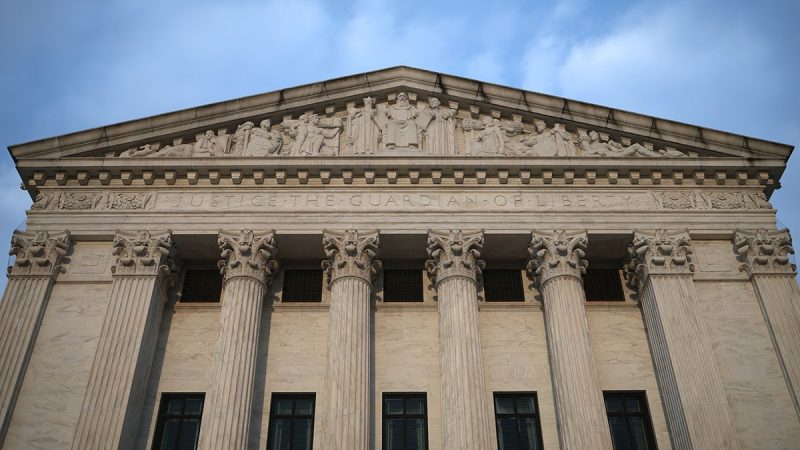
    The Supreme Court on Thursday sided with a Wisconsin-based Catholic charity group in a case centered on unemployment tax credits for religious institutions – delivering a victory for faith-based institutions, who argued that the state’s decision had violated the religious clauses under the First Amendment. 

    In a unanimous opinion, the justices agreed that the state had engaged in an ‘unnecessary entanglement’ in attempting to define whether religious groups should be entitled to an otherwise-available tax exemption based on the state’s criteria for religious behavior.

    ‘When the government distinguishes among religions based on theological differences in their provision of services, it imposes a denominational preference that must satisfy the highest level of judicial scrutiny,’ Justice Sonia Sotomayor said, writing for the majority.

    ‘Because Wisconsin has transgressed that principle without the tailoring necessary to survive such scrutiny, the judgment of the Wisconsin Supreme Court is reversed, and the case is remanded for further proceedings not inconsistent with this opinion.’

    The decision could clear the way for more states to broaden their tax-exempt status for religious organizations, with ripple effects that could stretch far beyond Wisconsin. 

    The Catholic Charities Bureau asked the Supreme Court to review a lower court ruling that had required them to pay Wisconsin’s unemployment tax, after the state determined the group’s activities were ‘primarily charitable and secular,’ and therefore not subject to the exemptions.

    Lawyers for the Catholic Charities Bureau argued the ruling was an unconstitutional violation of religious freedoms and amounted to viewpoint-based discrimination, and argued that ‘gospel values and the moral teaching of the church.’

    The Wisconsin Supreme Court ruled that the group must pay the tax since the nature of their work was primarily secular, since it was not ‘operated primarily for religious purposes,’ and serves and employs non-Catholics.

    ‘There may be hard calls to make in policing that rule, but this is not one,’ Sotomayor said on Thursday. ‘When the government distinguishes among religions based on theological differences in their provision of services, it imposes a denominational preference that must satisfy the highest level of judicial scrutiny.’

    The decision comes as the Supreme Court’s conservative majority has, in recent years, ruled in favor of religious institutions, including in cases like this one, which center on allowing taxpayer funds to be allocated to some religious organizations to provide ‘non-sectarian services.’

    This post appeared first on FOX NEWS

    NEWYou can now listen to Fox News articles!

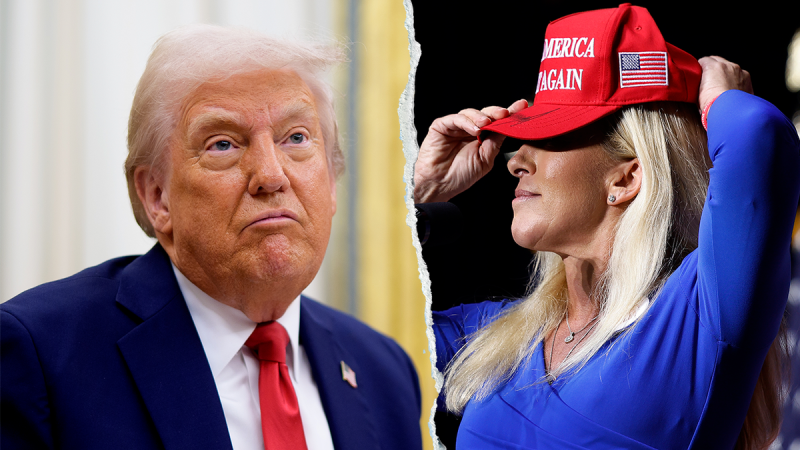
    Trump-loyalist Rep. Marjorie Taylor Greene, R-Ga., dropped a bombshell this week, revealing that she had not read the One Big Beautiful Bill Act in its entirety and no longer supports it. 

    Greene joins the growing list of President Donald Trump’s staunchest House GOP allies who have come out in opposition of the bill they voted for two weeks ago. 

    Rep. Scott Perry, R-Pa., another loyal MAGA member, said Elon Musk was ‘right to call out House Leadership’ this week.

    ‘I wish I had a nickel for every time the @freedomcaucus sounded the alarm and nobody listened, only to find out the hard way we were right all along. We expect MASSIVE improvements from the Senate before it gets back to the House,’ Perry said, referring to the bill he voted for. 

    The One Big Beautiful Bill Act passed by one vote in the House after weeks of overnight committee debates and last-minute huddles in House Speaker Mike Johnson’s office. Coined by Trump himself, he has championed the legislation to fulfill his key campaign promises, including border security, American energy production and tax cuts. 

    The One Big Beautiful Bill Act is under consideration by both a Republican-led White House and Congress. But it’s faced hiccups in the Senate this week as Republicans have indicated they do not support the bill in its current form. 

    Leading the charge against Trump’s champion legislation is Musk, who has been a fixture of the second Trump administration through his leadership of the Department of Government Efficiency (DOGE). Musk was a ‘special government employee’ until his leadership timeline expired last week.

    And Musk’s newfound freedom from the executive branch seems to have inspired him to speak out about Trump’s bill.

    ‘I’m sorry, but I just can’t stand it anymore. This massive, outrageous, pork-filled Congressional spending bill is a disgusting abomination. Shame on those who voted for it: you know you did wrong. You know it,’ Musk revealed on Tuesday. 

    White House Press Secretary Karoline Leavitt dismissed a question from Fox News’ Peter Doocy this week about how angry Trump would be at Musk for undermining his legislation. 

    ‘Look, the president already knows where Elon Musk stood on this bill. It doesn’t change the president’s opinion. This is one big, beautiful bill, and he’s sticking to it,’ Leavitt said. 

    Much of the discontent over the bill is rooted in Republicans’ reluctance to increase the United States’ national debt. The Congressional Budget Office (CBO) on Wednesday reported that the One Big Beautiful Bill Act will cut taxes by $3.7 trillion while raising deficits by $2.4 trillion over a decade. 

    Meanwhile, the national debt rose to $36,215,207,426,690.65 as of June 4, according to the latest numbers published by the Treasury Department. That is up about $806 million from the figure reported the previous day.

    However, Greene’s newfound issue with the bill has to do with its 10-year restriction on states regulating artificial intelligence (AI). 

    The provision reads, in part: ‘Except as provided in paragraph (2), no State or political subdivision thereof may enforce, during the 10-year period beginning on the date of the enactment of this Act, any law or regulation of that State or a political subdivision thereof limiting, restricting, or otherwise regulating artificial intelligence models, artificial intelligence systems, or automated decision systems entered into interstate commerce.’

    Greene, who voted in favor of the bill two weeks ago, said on X: ‘Full transparency, I did not know about this section on pages 278-279 of the OBBB that strips states of the right to make laws or regulate AI for 10 years. I am adamantly OPPOSED to this, and it is a violation of state rights and I would have voted NO if I had known this was in there.’

    Not only does she regret her vote, but Greene is urging the Senate to remove the provision, or she won’t vote for the bill when it returns to the House. 

    ‘We have no idea what AI will be capable of in the next 10 years, and giving it free rein and tying states’ hands is potentially dangerous. This needs to be stripped out in the Senate. When the OBBB comes back to the House for approval after Senate changes, I will not vote for it with this in it,’ Greene said. 

    Fox News Digital reached out to the White House and Greene for comment.

    Fox News Digital’s Alex Nitzberg contributed to this report. 

    This post appeared first on FOX NEWS

    NEWYou can now listen to Fox News articles!

    The Gaza Humanitarian Foundation (GHF), a U.S. and Israeli-backed group, has been the subject of backlash since before it began distributing aid last month. Since the beginning of its operations there have been reports of violent incidents near distribution sites. Recently, the IDF admitted that troops shot ‘suspects’ who failed to heed orders to back away from the soldiers.

    One of the most vocal critics of GHF has been the United Nations, with U.N. Under-Secretary-General for Humanitarian Affairs and Emergency Relief Coordinator Tom Fletcher urging the world to let his agency handle the situation. However, Israeli officials have pushed back on the U.N. narrative, saying that GHF is distributing aid without letting Hamas benefit.

    ‘Hamas is doing everything that it can to sabotage this effort to distribute aid directly to the people,’ Israeli Ministry of Foreign Affairs Spokesperson Oren Marmorstein told Fox News Digital.  He also said that the terror group is ‘extremely afraid’ that if the GHF is successful, it will ‘lose its grip’ on the population of Gaza.

    Marmorstein blamed Hamas for spreading ‘fake news’ and ‘fake information’ to take down the GHF.

    On Wednesday, the U.S. vetoed a U.N. Security Council resolution that called for an immediate ceasefire, the return of all hostages and the lifting of all restrictions on humanitarian aid entering the Strip. Israel has repeatedly asserted that without limitations on aid entering Gaza, Hamas would be able to enrich itself and keep control over the area.

    In remarks ahead of the veto, U.S. Chargé d’Affaires Dorothy Shea criticized the resolution, saying it failed to ‘acknowledge the disastrous shortcomings of the prior method of aid delivery, which allowed Hamas to enrich itself at the expense of Palestinians, and failed to get food and water to those who needed it most.’

    She also urged U.N. member states to support GHF ‘to help it safely deliver aid without it being diverted by Hamas.’

    Shea is not alone in her criticism of the U.N.’s approach to GHF. Israeli U.N. Ambassador Danny Danon recently accused the international body of employing ‘mafia-like’ tactics against NGOs that worked with GHF.

    ‘Without any discussion, without due process, the U.N. removed those NGOs from the shared aid database. That database is the central system for tracking aid deliveries into Gaza,’ Danon told the Security Council on May 28. ‘This is the gravest violation of the U.N.’s own principles. It is extortion of well-meaning NGOs that refuse to kiss the ring.’

    The GHF closed its distribution sites on Wednesday, saying it was working to bolster security and would reopen on Thursday. However, the reopening was delayed because of maintenance work. The sites eventually resumed aid distribution later on Thursday.

    This post appeared first on FOX NEWS

    NEWYou can now listen to Fox News articles!

    There is mounting evidence that Joe Biden was president in name only during much of his time in office. In his stead, a cabal of top White House staffers appears to have secretly operated a de facto presidency, making crucial decisions without a shred of constitutional authority.  

    If proven true, it would call into question the validity of pardons and executive orders issued under his name but without his knowledge or consent. For this reason, it is imperative that Biden’s closest advisers answer questions under oath and others in his orbit be forced to disclose what they knew or observed.

    The Department of Justice (DOJ) has launched an investigation into the pardons, commutations and clemencies granted in the waning days of Biden’s presidency, including preemptive pardons gifted to a half dozen members of his own family along with his shifty son, Hunter Biden. The probe focuses on whether the elder Biden was competent and whether others were taking advantage of his seemingly diminished mental state.  

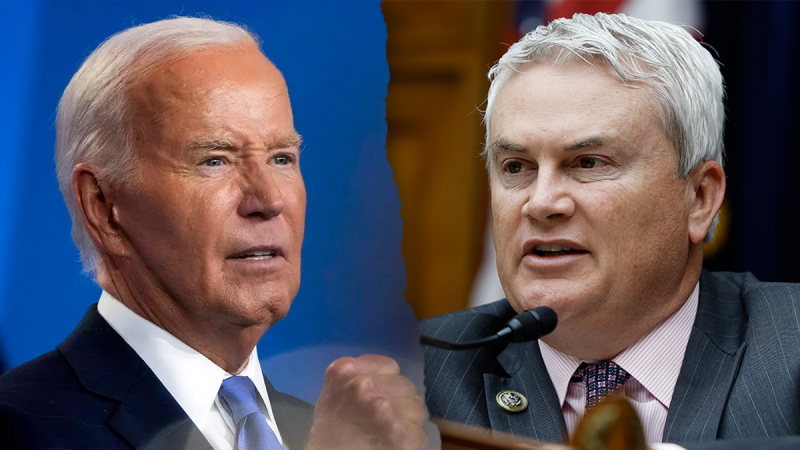
    At the same time, the House Oversight Committee is intensifying its own inquiry into the alleged ‘cover-up’ of Biden’s cognitive decline. Of particular interest in both investigations is ‘the potential unauthorized use of autopen’ for many executive actions, said Oversight Chairman James Comer.

    Did rogue actors commandeer the device from a clueless Biden to advance their own political and personal agendas? Was national security jeopardized in the process? Let’s call it, ‘The Case of the Runaway Autopen.’ Solving it won’t be easy, given Washington’s proclivity for concealment, deception, obstruction and lies.       

    Comer has requested that five former Biden aides, including his physician Kevin O’Connor, sit down for transcribed interviews.  If they resist, subpoenas will be issued. While Biden might assert Executive Privilege to keep them mum, President Trump could override the privilege just as Biden did to Trump after his first term. Assuming he is sentient, Joe might now wish he had not done so.  

    The issue of whether pardons and executive orders could be invalidated is not as simple as some legal experts have opined. They assert, for example, that nothing can be done because there is no constitutional mechanism to revoke or overturn pardons once granted. That is only half true.

    There is a well-established legal basis for annulling documents. It is founded in common law.  It is called fraud. Under statutory law, it is known as forgery. (See 18 USC 471 and 495). Each are crimes that would render the signed instruments inoperative and unenforceable.    

    Just ask the U.S. Supreme Court, which long ago declared unanimously, ‘There is no question of the general doctrine that fraud vitiates the most solemn contracts, documents, and even judgments.’ (United States v. Throckmorton, 98 US 61, (1878))  There exists no exception for presidential documents.  

    But let’s back up.

    An autopen is a mechanical device that activates a robotic arm with a pen attached. It imitates a person’s signature, although it is identifiable by a consistent impression on the paper. Past presidents have utilized the autopen for a variety of documents. It is perfectly legal but with an important caveat —there must be consent by the purported ‘signator.’ In this case, that’s Biden.     

    If the 46th president never consented or, worse, had no knowledge of the autopen’s use for any given document bearing his signature, it could be deemed null and void under law. If Biden was not even competent or mentally fit to provide knowing consent, the result is the same. 

    Two decades ago, the Justice Department formally approved presidential deployment of the autopen, but only if a President personally ‘directs’ a subordinate to affix his signature to a specified document. However, the DOJ cautioned that the chief executive may never ‘delegate’ the actual decision to approve and sign any document with the device. That right rests exclusively with a president.   

    The sheer volume of suspected Biden autopen usage merits closer scrutiny. The growing number of descriptive accounts of his worsening mental infirmities and incoherence magnifies the need for an intensive investigation. 

    If his aides deliberately obscured their boss’s health problems, did they also circumvent his permission for orders issued under his name? Did they act on their own because they knew Biden was not cognizant or otherwise feared his confused response? Americans deserve honest answers. But expecting to get them from highly secretive political operatives is fanciful at best.

    House Speaker Mike Johnson recently recounted his first private meeting with Biden last year during which the President had no idea that he signed an executive order weeks earlier pausing the exports of liquified natural gas. When Johnson pressed him, a stunned Biden insisted, ‘I didn’t do that!’ The speaker patiently explained that he did and a copy could be retrieved, yet the President insisted, ‘No, I didn’t do that.’  

    ‘He genuinely did not know what he had signed,’ said Johnson later. ‘And I walked out of that meeting with fear and loathing because I thought, ‘We are in serious trouble —who is running the country?’ Like, I don’t know who put the paper in front of him, but he didn’t know.’  

    It is possible that the executive order was signed by autopen without the consent or knowledge of the president. In the alternative, did Biden sign something that he was incapable of understanding? Perhaps his aides willfully misrepresented its contents. Or maybe Biden was so mentally impaired that he couldn’t remember what he had for breakfast, much less having signed an export ban that cratered American GDP by upwards of $200 billion.

    It is beyond curious that the preemptive pardons handed out like Halloween candy to Dr. Anthony Fauci, members of the J-6 committee and six of Biden’s immediate relatives all bear the unique marks of an autopen. By contrast, Hunter Biden’s pardon almost certainly resembles his father’s genuine and shaky signature. Why the difference? Did Biden verily approve or direct the group pardons? Or did someone command the autopen without assent?

    There is substantial and compelling evidence that Biden was sliding further and further into mental decay as his presidency progressed. Americans are right to wonder just who was running the country. Biden himself seemed to answer the question during several of his rare public outings.  

    In one memorable appearance he said, ‘Sorry, but I’ll get in trouble with my staff if I don’t do this the right way.’  In another, a confused Biden turned to staffers and asked, ‘Am I allowed to take questions? Where’s my staff?’ On a still another occasion he mumbled with regret, ‘I thought when I got to be President, I’d get to do things I wanted to do, but my staff tells me what I can’t do.’ These are stunning confessionals.   

    There is no need to recite the myriad of instances where Americans witnessed a faltering and enfeebled Biden wandering around a stage lost and bewildered. He was not ‘compos mentis.’ His mental faculties dwindled. His ability to think and communicate vanished. It all came crashing down on the night of June 27, 2024. The disastrous presidential debate reinforced the truth of his withering condition.     

    It is increasingly apparent that a coterie of unelected White House aides who connived to hide Biden’s declining state were the ones making vital decisions behind the scenes. They reportedly called themselves the ‘Politburo,’ a nod to the ruling committee of the communist party in the former Soviet Union. The symmetry is not coincidental; it is revealing. They maneuvered and manipulated in a culture of dishonesty.

    With Biden mentally incapable of fully performing the demanding duties of his high office, it seems that others took it upon themselves to arrogate his authority. This would constitute a shameful abuse of power that contravenes our constitutional framework. It merits comprehensive investigations by both Congress and the Department of Justice.

    In responding to the probes, Biden issued a statement on Wednesday insisting, ‘I made the decisions about pardons, executive orders, legislation, and proclamations,’ adding that ‘any suggestion that I didn’t is ridiculous and false.’ The denial is no surprise. But is it more of the same pretense and cover-up that came to define his presidency? Did Joe even write that statement?

    Almost five years ago in my August 2020 podcast, I warned that if Joe Biden was elected, he would become a ‘Marionette President’ controlled by unscrupulous White House puppeteers making critical decisions for the nation. I wasn’t prescient, only paying attention to what was plainly visible.

    What is so confounding —and equally alarming— is how long the deceitful charade lasted. As it slowly unravels, we are reminded that calculating lies rarely endure the engine of truth.

    This post appeared first on FOX NEWS

    NEWYou can now listen to Fox News articles!

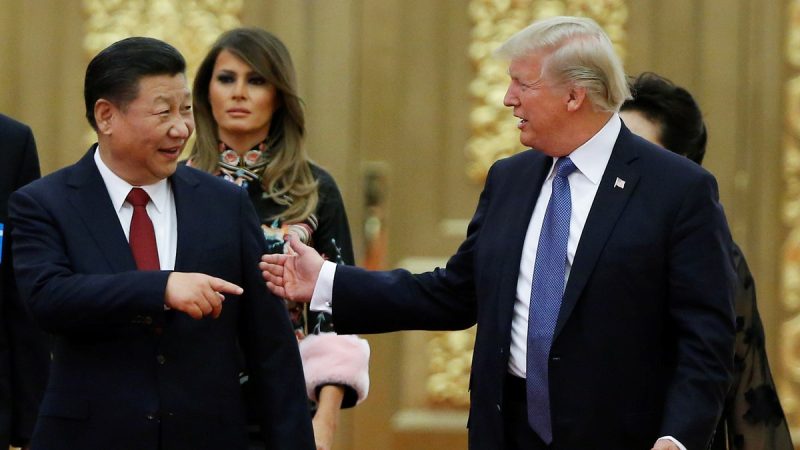
    President Donald Trump spoke with Chinese President Xi Jinping on Thursday in a lengthy call amid economic and national security friction regarding trade between Washington and Beijing. 

    ‘I just concluded a very good phone call with President Xi, of China, discussing some of the intricacies of our recently made, and agreed to, Trade Deal,’ Trump said Thursday in a Truth Social post. ‘The call lasted approximately one and a half hours, and resulted in a very positive conclusion for both Countries.’

    Trump said the conversation focused ‘almost entirely’ on trade, and that Xi invited the U.S. president and first lady Melania Trump to visit China. Trump also said he extended an invitation to Xi and his wife, Peng Liyuan. 

    Chinese media first reported the call between the two leaders on Thursday, and claimed that the call occurred per Trump’s request. White House National Economic Council Director Kevin Hassett told ABC News on Sunday that Trump was expected to talk with the Chinese president this week. 

    The call comes nearly a week after Trump condemned China for violating an initial trade agreement that the U.S. and China hashed out in May, and a day after Trump said Xi was ‘extremely hard to make a deal with’ in a Truth Social post. 

    The negotiations led both countries to agree that the U.S. would ramp down its tariffs against Chinese imports from 145% to 30%, and China would cut its tariffs against U.S. imports from 125% to 10%.

    But Trump accused China on Friday of not holding up its end of the bargain, although he refrained from disclosing specifics. 

    ‘The bad news is that China, perhaps not surprisingly to some, HAS TOTALLY VIOLATED ITS AGREEMENT WITH US,’ Trump said Friday in a social media post. ‘So much for being Mr. NICE GUY!’

    U.S. Trade Representative Jamieson Greer said Friday in an interview with CNBC that China had failed to lift its non-tariff barriers, as outlined in the deal. 

    ‘The United States did exactly what it was supposed to do, and the Chinese are slow-rolling their compliance, which is completely unacceptable and has to be addressed,’ Greer said Friday. 

    Meanwhile, China pressed the U.S. to reverse course and address its own mistakes. 

    ‘China once again urges the US to immediately correct its erroneous actions, cease discriminatory restrictions against China and jointly uphold the consensus reached at the high-level talks in Geneva,’ Chinese embassy spokesperson Liu Pengyu said in a Friday statement.

    But Trump later indicated that the two leaders ironed out their differences. 

    ‘We had a very good talk, and we’ve straightened out any complexity, and it’s very complex stuff, and we straightened it out,’ Trump said Thursday during an Oval Office press briefing with German Chancellor Friedrich Merz. 

    ‘I think we’re in very good shape with China and the trade deal,’ Trump said. ‘We have a deal with China, as you know, but we were straightening out some of the points… I would say we have a deal, and we’re going to just make sure that everybody understands what the deal is.’

    Meanwhile, Trump’s invitation to Xi and Peng to visit the U.S. comes as Trump’s administration cracks down on student visa holders in the U.S. and as Trump has threatened to ‘aggressively’ rescind visas of students from China. 

    On Thursday, Trump appeared to take a softer approach though and said that he did want foreign students to come to the U.S. — he just wants them to undergo proper vetting.

    ‘We want to have foreign students, but we want them to be checked,’ Trump said from the White House. 

    This post appeared first on FOX NEWS