
Author

admin

Browsing

Here’s a quick recap of the crypto landscape for Friday (June 6) as of 9:00 p.m. UTC.

Get the latest insights on Bitcoin, Ethereum and altcoins, along with a round-up of key cryptocurrency market news.

Bitcoin and Ethereum price update

Bitcoin (BTC) was priced at US$104,245 as markets closed for the week, up 2 percent in 24 hours. The day’s range for the cryptocurrency brought a low of US$104,006 and a high of US$105,201.

Bitcoin price performance, June 6, 2025.

Chart via TradingView.

After dipping below US$101,000 during the dispute between US President Donald Trump and Elon Musk, Bitcoin recovered to around US$105,000 early in the trading day, influenced by a strong US labor report.

Despite the rebound, analysts are wary due to technical indicators like a weakening relative strength index, suggesting potential downside. A possible rate cut from the US Federal Reserve on June 18 could push Bitcoin to US$112,000, but the outlook is uncertain. Order book data indicates a liquidity trap, and limited short interest points to a fragile recovery.

Additional selling pressure and investor distrust are contributing to shaky market sentiment.

Ethereum (ETH) finished the trading day at US$2,490.63, a 2 percent decrease over the past 24 hours. The cryptocurrency reached an intraday low of US$2,482.52 and saw a daily high of US$2,519.25.

Altcoin price update

  • Solana (SOL) closed at US$149.26, trading flat over 24 hours. SOL experienced a low of US$148.86 and reached a high of US$151.79 on Friday.
  • XRP is trading at US$2.17, reflecting a 1.6 percent increase over 24 hours. The cryptocurrency reached a daily low of US$2.16 and a high of US$2.18.
  • Sui (SUI) peaked at US$3.18, showing an increaseof 5.7 percent over the past 24 hours. Its lowest valuation on Friday was US$3.16, and its highest was US$3.19.
  • Cardano (ADA) is trading at US$0.663, up 2.8 percent over the past 24 hours. Its lowest price of the day was US$0.6604, and it reached a high of US$0.6693.

Today’s crypto news to know

Uber considers stablecoins for cost reduction

On stage at the San Francisco-based Bloomberg Tech Summit on Thursday (June 5), Uber Technologies (NYSE:UBER) CEO Dara Khosrowshahi said the company is “definitely going to take a look” at using stablecoins to help reduce the cost of moving money around the world.

“We’re still in the study phase, I’d say, but stablecoin is one of the, for me, more interesting instantiations of crypto that has a practical benefit other than crypto as a store of value,” he said. “Obviously, you can have your opinions on Bitcoin, but it’s a proven commodity, and you know, people have different opinions on where it’s going,” he added.

UK set to lift ban on retail access to crypto ETNs

The UK’s Financial Conduct Authority (FCA) has announced plans to lift its ban on retail investors buying crypto exchange-traded notes (ETNs), a major shift from its earlier risk-averse stance.

Initially barred due to concerns over volatility and investor protection, the FCA now says consumers should have the right to choose whether these high-risk assets fit their portfolios. David Geale, the FCA’s digital assets chief, said the move is part of a broader push to ‘rebalance’ the regulator’s approach to financial risk. The proposal, which would allow ETNs to be sold on FCA-registered investment exchanges, will now enter a public consultation phase.

This regulatory pivot follows the UK’s introduction of draft laws in April aimed at integrating crypto into the formal financial system. The FCA emphasized that its separate ban on crypto derivatives for retail traders will remain in place.

Switzerland adopts crypto information exchange bill

The government of Switzerland has adopted a bill to enable the automatic exchange of information (AEOI) on crypto with 74 partner countries, including the UK, all EU member states and most G20 countries.

The measure excludes the US, Saudi Arabia and China. The bill is currently under discussion in parliament and, if approved, the AEOI framework for crypto assets will take effect on Jan. 1, 2026.

Switzerland will only engage in AEOI with partner states that also desire information exchange with Switzerland.

Strategy to raise nearly US$1 billion to buy more Bitcoin

Strategy (NASDAQ:MSTR), the company known for its aggressive Bitcoin acquisition strategy, is launching a nearly US$1 billion capital raise through its new 10 percent Series A STRD preferred stock. The offering includes over 11 million shares and promises a high fixed yield, making it attractive to yield-hungry investors in a low-rate environment.

Unlike other Strategy offerings like STRK (convertible) and STRF (senior status), STRD offers the highest payout at 10 percent, but comes with more risk due to its non-cumulative dividend and junior status. Dividends are only issued when declared, and the shares cannot be called under normal market conditions.

Proceeds will go toward “general corporate purposes,” which notably include expanding its Bitcoin holdings.

Metaplanet plans US$5.3 billion warrant offering to scale Bitcoin treasury

Tokyo-based Metaplanet (OTCQX:MTPLF,TSE:3350) is taking its Bitcoin commitment to the next level with a massive US$5.3 billion stock warrant issuance, the largest of its kind in Japan.

The company is offering 555 million shares through stock acquisition rights, using a novel moving-strike pricing model that adjusts with market value — a first in the Japanese market.

This 555 Million Plan follows an earlier US$600 million raise and is part of Metaplanet’s goal to hold over 210,000 BTC by 2027, approximately 1 percent of total Bitcoin supply.

The vast majority of the proceeds — around 96 percent — will go toward direct Bitcoin purchases, while a small fraction will support debt management and derivative strategies like selling puts.

Maple Finance expands syrupUSD to Solana

Lending platform Maple Finance announced on Thursday that it has expanded user access by deploying its syrupUSD yield-bearing stablecoin to Solana-based platforms Kamino and Orca.

Previously, it had only been available on the Ethereum blockchain.

According to the announcement, Solana integration is launching with US$30 million in liquidity, which will establish “a deep and stable foundation for lending, trading, and collateral provisioning.’

This new system was made possible by using Chainlink’s Cross-Chain Interoperability Protocol (CCIP), which started operating on the Solana main network on May 19. CCIP lets different blockchain systems, specifically those using Ethereum Virtual Machine and Solana Virtual Machine technology, share information.

The ability to transfer data between these distinct blockchain environments is expected to significantly boost efficient and affordable growth within the digital ecosystem.

Securities Disclosure: I, Giann Liguid, hold no direct investment interest in any company mentioned in this article.

Securities Disclosure: I, Meagen Seatter, hold no direct investment interest in any company mentioned in this article.

This post appeared first on investingnews.com

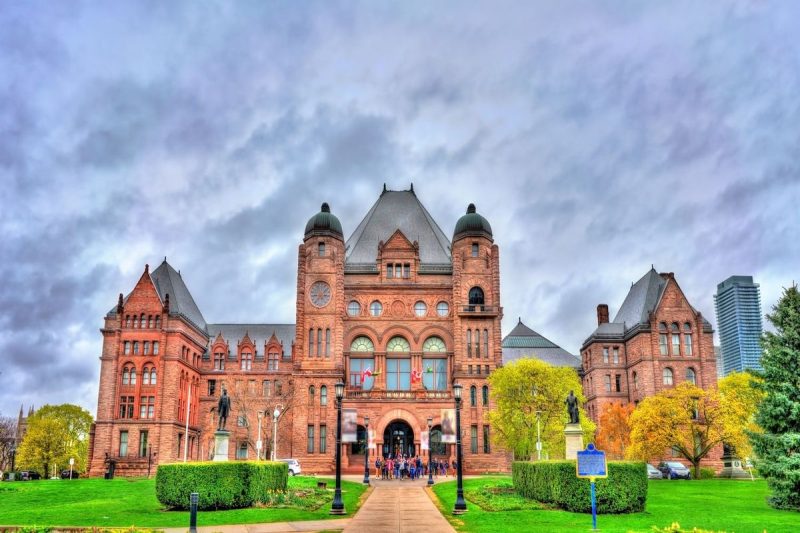
In a move that has ignited a storm of opposition from Indigenous communities and environmental groups, Ontario’s Progressive Conservative government passed Bill 5 on Wednesday (June 4).

Formally titled the Protecting Ontario by Unleashing our Economy Act, the legislation grants the province unprecedented authority to override provincial and municipal laws in favor of economic development.

Specifically, Bill 5 allows the government to establish ‘special economic zones’ where environmental protections, labor regulations and other statutes can be suspended for projects led by ‘trusted proponents.’

Premier Doug Ford’s government argues that the bill is critical for expediting development in the mineral-rich Ring of Fire region and countering global economic threats, including US tariffs.

But the bill’s passage, by a vote of 71 to 44, has drawn fierce backlash from First Nations leaders who say they were not consulted, in violation of treaty rights enshrined in the Canadian constitution.

Speaking to reporters, Grand Chief Alvin Fiddler of the Nishnawbe Aski Nation, which represents 49 First Nations in Northern Ontario, warned that protests and blockades — reminiscent of the Idle No More movement — are likely.

‘I think after today we need to look at every option that is at our disposal, including legal, political, economic, everything – including taking direct action,’ he said, adding, ‘Everything is on the table.’

Ford was not present in the legislature for the vote, drawing condemnation from Indigenous leaders and opposition politicians. He reportedly missed the vote due to an overrun in an online meeting with a US congressman.

Ontario NDP Leader Marit Stiles stood alongside First Nations representatives to denounce the premier’s absence and vowed to continue resisting the legislation, which she predicted will end up in court.

Public gallery benches erupted during the vote with shouts of ‘Shame on you!’ and ‘Where’s the premier?’ Security escorted several individuals out, including one man who yelled, ‘Our land is not for sale!’

Opposition parties attempted to stall the bill with thousands of proposed amendments, but the Progressive Conservative majority pushed it through after using time allocation to cut short debate.

Legal experts warn that Bill 5 could significantly alter the legal and environmental landscape in Ontario. The legislation includes Henry VIII-style provisions — named after the 16th-century monarch notorious for consolidating executive power — which allow the provincial cabinet to override laws without legislative scrutiny.

Laura Bowman, a lawyer with Ecojustice, said, ‘This is not just undemocratic; it’s anti-democratic.’

Environmental advocates have also raised alarm about Bill 5’s implications for conservation. It rewrites Ontario’s endangered species law by giving the cabinet, not scientists, final authority on which species merit protection.

Additionally, it eases rules on preserving Indigenous archaeological sites.

The government has floated the possibility of Indigenous-led economic zones as part of the regulations it must still draft, but details remain scarce, and First Nations groups say the damage has already been done.

Ontario Regional Chief Abram Benedict, who previously met with Ford in a tense private session, said the discussions were necessary, but insufficient. “Our Chiefs have made it clear that they fully reject Bill 5, and the Chiefs of Ontario stand by and defend the position of the Chiefs,” Benedict maintained in a statement. “First Nations rights holders must be at the table, and the Government must fulfill its constitutional and treaty obligations.”

The Ring of Fire region, located in the James Bay lowlands, is at the center of the controversy.

While some First Nations near the area support road construction projects, others oppose the rush to mine in the region without thorough consultation and environmental safeguards. The Ford government has touted the area’s reserves of critical minerals — such as nickel and lithium — as essential for Ontario’s economic future.

While some industry stakeholders have cautiously welcomed provisions in Bill 5 that streamline mining approvals under a “one project, one process” regime, critics and civil liberties advocates say its rhetoric risks escalating tensions.

Among them is the Canadian Civil Liberties Association, which has condemned Bill 5 as a dangerous overreach that could hollow out legal safeguards without meaningful public oversight.

Legal scholars say the government’s interpretation of its duty to consult remains contested. While a 2018 Supreme Court ruling (Mikisew Cree) found that governments are not constitutionally required to consult Indigenous groups during the drafting of legislation, it emphasizes that such consultation is often politically and morally necessary.

Moreover, many Indigenous leaders say consultation is no longer enough. Invoking the United Nations Declaration on the Rights of Indigenous Peoples, they are calling for ‘free, prior and informed consent’ as the new standard.

In the coming weeks, the Ford government must draft the regulations that will define how Bill 5 is implemented. These rules, it insists, will be subject to consultation. But with Indigenous leaders threatening direct action and legal battles on the horizon, Ontario may be on the brink of a new phase in its fraught relationship with First Nations.

Securities Disclosure: I, Giann Liguid, hold no direct investment interest in any company mentioned in this article.
This post appeared first on investingnews.com

Hempalta Corp. (TSXV: HEMP) (‘Hempalta’ or the ‘Company’), a Canadian-based provider of nature-based carbon credit solutions, today issued a corporate update outlining recent developments in its strategic transition.

Equipment Sale Update

On May 22, 2025, Hempalta announced its wholly owned subsidiary, Hempalta Processing Inc. (‘HPI’), had entered into a US$1.15 million agreement to sell its hemp processing and biochar equipment (the ‘Transaction’). Despite follow up discussions and repeated assurances, the purchase price has not been paid to HPI; accordingly, HPI has retained ownership of all equipment and associated intellectual property and has reinitiated the asset sale process. Interested parties may contact the Company for additional details.

FCC Forbearance Agreement

In connection with the termination of the Transaction, HPI, has entered into a forbearance agreement with Farm Credit Canada (‘FCC’) dated effective June 2, 2025. This agreement extends protection through June 30, 2025, providing HPI time to complete a revised monetization plan for its processing assets while maintaining transparency and compliance with its senior lender.

Carbon Credit Market Momentum Continues

The Company’s 2024 carbon credits now total 29,448 tonnes of CO₂ removal across 12,669 acres under the Hemp Carbon Standard. These credits are available for purchase via the Company’s Cloverly storefront (hempcarbonstandard.cloverly.app), and discussions with corporate buyers are ongoing.

CEO to Speak at Canadian Climate Investor Conference

Hempalta President and CEO Darren Bondar will be speaking at the 2025 Canadian Climate Investor Conference hosted by the Toronto Stock Exchange (TSX and TSXV) on June 11, 2025, at the Arcadian Court in Toronto. Mr. Bondar will outline Hempalta’s strategic pivot to nature-based carbon credit markets and showcase the scalable growth opportunity through its Hemp Carbon Standard platform.

About Hempalta Corp.

Hempalta Corp. (TSXV: HEMP) is a Canadian clean-tech company focused on high-integrity carbon removal credits derived from industrial hemp. Through its wholly owned subsidiary, Hemp Carbon Standard Inc., the Company supports regenerative agriculture, biochar deployment, and AI-powered MRV to deliver transparent, verifiable carbon credits aligned with global climate goals.

Learn more at www.hempalta.com or contact Investor Relations at invest@hempalta.com.

For more information, please contact:

Investor Relations
Hempalta Corp.
Email: info@hempalta.com
Website: www.hempalta.com
Hempalta Corp.
Web: https://www.hempalta.com/
Email:info@hempalta.com


Neither the TSX Venture Exchange nor its Regulation Services Provider (as that term is defined in the policies of the TSX Venture Exchange) accepts responsibility for the adequacy or accuracy of this press release.

Forward-Looking Information

This news release contains statements and information that, to the extent they are not historical fact, may constitute ‘forward-looking information’ within the meaning of applicable securities legislation. Forward-looking information is typically, but not always, identified by the use of words such as ‘expects,’ ‘plans,’ ‘continues,’ ‘intends,’ ‘anticipates,’ ‘potential,’ ‘aims,’ ‘will,’ and similar expressions, including negatives thereof.

Forward-looking information in this news release includes, but is not limited to, statements regarding: the Company’s ability to complete the sale of its hemp processing and biochar equipment; the resolution of the outstanding forbearance with Farm Credit Canada (FCC); negative cash flow from operations and the Company’s ability to operate as a going concern; the anticipated proceeds and timing of any asset sales; the scaling of the Hemp Carbon Standard platform; the sale of verified carbon credits; the development of new corporate offtake agreements; and the Company’s broader growth initiatives under Hempalta carbon credit platform.

Such forward-looking information is based on assumptions and expectations, including but not limited to: the Company’s ability to remarket and sell the equipment; continued support from major shareholders and new investors; demand for nature-based carbon removal credits; successful onboarding of additional farmers; favorable regulatory conditions; and Hempalta’s ability to execute its strategic plan and secure necessary financing on reasonable terms.

Although the Company believes the assumptions and expectations reflected in the forward-looking information are reasonable, undue reliance should not be placed on them, as actual results may differ materially due to known and unknown risks. These risks include, but are not limited to: economic conditions and capital market volatility; failure to close the asset sale or private placement; changes in carbon credit market demand or pricing; regulatory changes; inability to retain key personnel; weather-related challenges impacting hemp cultivation; and those risks set forth in the Company’s public disclosure documents available on SEDAR+ at www.sedarplus.ca.

Forward-looking information in this news release is provided as of the date hereof, and the Company does not undertake to update such information except as required by applicable securities laws.

NOT FOR DISTRIBUTION IN THE UNITED STATES OR OVER U.S. NEWSWIRES

To view the source version of this press release, please visit https://www.newsfilecorp.com/release/254819

News Provided by Newsfile via QuoteMedia

This post appeared first on investingnews.com

Procter & Gamble will cut 7,000 jobs, or roughly 15% of its non-manufacturing workforce, as part of a two-year restructuring program.

The layoffs by the consumer goods giant come as President Donald Trump’s tariffs have led a range of companies to hike prices to offset higher costs. The trade tensions have raised concerns about the broader health of the U.S. economy and job market.

P&G CFO Andre Schulten announced the job cuts during a presentation at the Deutsche Bank Consumer Conference on Thursday morning. The company employs 108,000 people worldwide, as of June 30, according to regulatory filings.

P&G faces slowing growth in the U.S., the company’s largest market. In its fiscal third quarter, North American organic sales rose just 1%.

Trump’s tariffs have presented another challenge for P&G, which has said that it plans to raise prices in the next fiscal year, which starts in July. The company expects a 3 cent to 4 cent per share drag on its fiscal fourth-quarter earnings from levies, based on current rates, Schulten said. Looking ahead to fiscal 2026, P&G is projecting a headwind from tariffs of $600 million before taxes.

P&G, which owns Pampers, Tide and Swiffer, is planning a broader effort to reevaluate its portfolio, restructure its supply chain and slim down its corporate organization. Schulten said investors can expect more details, like specific brand and market exits, on the company’s fiscal fourth-quarter earnings call in July.

P&G is projecting that it will incur non-core costs of $1 billion to $1.6 billion before taxes due to the reorganization.

“This restructuring program is an important step toward ensuring our ability to deliver our long-term algorithm over the coming two to three years,” Schulten said. “It does not, however, remove the near-term challenges that we currently face.”

P&G follows other major U.S. employers, including Microsoft and Starbucks, in carrying out significant layoffs this year. As Trump’s tariffs take hold, investors are watching Friday’s nonfarm payrolls report for May for signs of whether the job market has started to slow. While the government reading for April was better than expected, a separate reading this week from ADP showed private sector hiring was weak in May.

Shares of P&G fell more than 1% in morning trading on the news. The stock has fallen 2% so far this year, outstripped by the S&P 500′s gains of more than 1%. P&G has a market cap of $407 billion.

This post appeared first on NBC NEWS

NEWYou can now listen to Fox News articles!

There are two truths about presidential candidates.  

One: There is no such thing as a perfect candidate. 

Two: It is very difficult to convince party elites that there are no perfect candidates. 

President Donald Trump’s second first 100 days are now behind him, and the Democrats are still struggling to recover after the trauma of the 2024 election. As former President Joe Biden focuses on treatment for his cancer diagnosis, fresh questions about the chronology of Biden’s decline in mental and physical health have further wafted Kamala Harris’ hopes of a second presidential or California gubernatorial bid off the political radar and out to sea. 

The Democrats have made it no secret they are in a desperate quest for the proper frontrunner/savior who can patch the torn fabric of their political and policy agenda, show enough leadership chops to unite both the Democratic Party and the country, and then go on to win back the White House in 2028.  

Former President Bill Clinton used to say of his own complicated story, ‘If you want a perfect candidate, vote for somebody else.’ Yet back in 1992, despite myriad personal dramas, Clinton possessed many elements of the classic successful contender of that era: young but seasoned, a governor from a Southern state, folksy in style but gilded academically (Georgetown and Yale), respected for his brilliance within the party but able to relate to a broad swath of the voting public.  

As always, at this stage of the cycle, the names of dozens of potential contenders from the out-party are being tossed about with the typical fervid combo of optimism, conviction, delusion and brio. But no potential candidate has yet broken out as an obvious frontrunner, let alone a great political athlete or generational talent such as Clinton or President Barack Obama. 

That is not to say that the Democratic field does not include highly intelligent, highly accomplished and highly skilled women and men. The potential contenders are an extraordinary bunch of American leaders. But none has all the necessary elements to take on the current White House or make a clear bid to win it all. 

Clinton, always good for a pithy remark, also has noted, ‘you can put wings on a pig, but you don’t make it an eagle.’ 

In 2028, if one could take a page from Dr. Frankenstein and turn that pig into an eagle, which attributes would the Democrats choose for their perfect model?  

Let’s start with Pete Buttigieg, the former Transportation Secretary under Biden and before that, the wunderkind ‘Mayor Pete’ of South Bend, Indiana. Buttigieg, like Trump, has what one might call a ‘go-on-anything confidence.’ Pete can appear on any television network, any podcast, any stage (from vast stadiums to slatted apple crates), in any state in America, and feel comfortable and poised with his audience. That trait is an essential component for 2028.  

Gavin Newsom, the governor of California, whose good looks and stylish mien often are cited more as a disadvantage than an attribute, has a profound understanding of what is modern and urgent for today’s electorate. Newsom thinks tirelessly about America’s future, and what is important to the young and the old, growing families and hard-working tradespeople, and everyone in between. 

Gretchen Whitmer of Michigan, the popular governor of a swing state, understands how to connect with voters in a battleground arena by focusing on economic concerns and remaining on the right side of cultural issues despite party pressure. 

Rahm Emanuel, former congressman, White House chief of staff, mayor of Chicago, and former ambassador to Japan, brings not just his famous rough-and-tumble uncompromising bravado, but an ability to raise massive amounts of cash. His fundraising power comes from the business community, where he made millions; from Hollywood, where his brother, Ari Emanuel remains an uber mover and shaker; and from decades of fundraising amidst America’s wealthiest Democratic communities. 

Amy Klobuchar, senator from Minnesota, has a fierce determination and inner energy that will allow her to set goals and follow through with conviction. This is an essential combo required to win a modern political contest. 

Josh Shapiro, the governor of Pennsylvania, has shown he can twist the old adage of former New York pol Mario Cuomo, who spoke of campaigning in poetry and governing in prose. Shapiro, on the other hand, is able to merge poetry and prose in his governance, achieving solid substantive goals while creating an atmosphere of aspiration and inspiration for his constituents. 

Alexandria Ocasio-Cortez, the congresswoman from New York, has the ‘It Factor.’ Bright, charismatic, and always interesting, she commands attention whenever she speaks. (Or tweets, or comments, or posts, or poses). 

Gina Raimondo, Biden’s Commerce secretary and former governor of Rhode Island, is well-known, well-liked, and well-respected in the business community, which offsets a huge imbalance on the Republican side. A pro-business Democrat, Raimondo can speak the language of the business world, get its political support and earn its trust. 

Ro Khanna, congressman from California, understands policy and how to connect it to the real lives of real people. Khanna is a stand-out in the Democratic Party who can envision viable policy ideas and can explain his plans plainly to the American people. 

Wes Moore, the governor of Maryland, has a powerful origin story and biography. After overcoming some early challenges, Moore thrived academically, served in the military, worked on Wall Street, authored several books, ran a leading nonprofit, and dedicated his life to service. He has shown a capacity to link lessons learned from his life experience to his policy goals.  

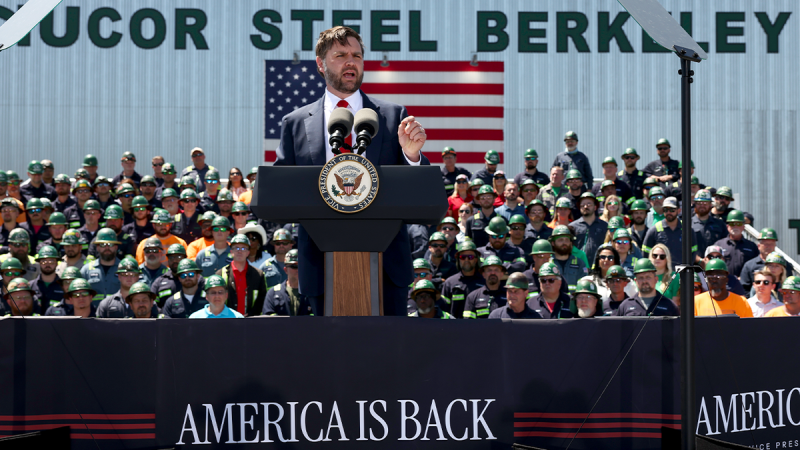
Meanwhile, over on the Republican side, the GOP already has their frontrunner. And with JD Vance, there currently is no assembly required.  

With just a few months as vice president under his (Rust) belt, Vance already has proven to be perhaps the most powerful and effectual vice president in history — yes, even including Dick Cheney, Al Gore and LBJ. Not only has Vance brilliantly managed to remain this close to the mercurial Trump without once stepping on his presidential toes, but he has forged solid bonds with fellow politicos (even those who initially looked askance when Vance was tapped for the ticket). 

He has built up an impressive, appropriate and exceedingly visible administrative portfolio and networked productively with the most powerful GOP grassroots activists and fundraising leaders around the country. 

Simultaneously, he trotted out and shielded his attractive young family; and offered a friendly hand and flash of coattails to those peers with presidential aspirations of their own, such as Secretary of State Marco Rubio and Virginia Gov. Glenn Youngkin.   

Clinton, always good for a pithy remark, also has noted, ‘you can put wings on a pig, but you don’t make it an eagle.’ 

Vance has an additional, and unique, advantage. Most vice presidents who are champing to step into the top spot only get the chance after slogging through eight long years as a second banana, and must fight for the job just as the country has grown weary of the current administration and are longing for a new dynamic. Some, such as George H. W. Bush, can slide into office riding the departing fumes of their popular boss, while others, such as Al Gore, fumble to seal the deal. 

Vance will be able to run as a sitting vice president after serving just one term, still relevant, still modern, but with a souped-up resume and sleek gravitas. 

That is a feature Doctor Victor Frankenstein couldn’t envision in his wildest dreams. 

And of all the current asymmetrical advantages on the Republican side, this is, by far, the most imposing. 

As a famous scientist once said, ‘It’s alive!’ 

This post appeared first on FOX NEWS

NEWYou can now listen to Fox News articles!

The chairman of the House Budget Committee is pushing back on Elon Musk’s claim that President Donald Trump’s ‘big, beautiful bill’ is full of ‘pork.’

Chairman Jodey Arrington, R-Texas, told Fox News Digital it was not possible for ‘pork barrel spending’ to be included in the legislation, called a budget reconciliation bill, because the reconciliation process was simply not the mechanism for such federal funds.

‘Reconciliation does not have anything to do with discretionary spending – earmarks, and all of that,’ Arrington said. ‘And quite frankly, the [Department of Government Efficiency] findings were, I think, almost entirely an issue for . . . annual appropriations.’

‘Discretionary spending’ refers to the annual dollars allocated by Congress each year through the appropriations process – also known as ‘spending bills.’ 

It’s a process that’s historically known to be rife with ‘pork barrel spending’ from both Republicans and Democrats – funding for pet projects or other specific initiatives benefiting a certain member of Congress’ district.

But reconciliation deals with the government’s ‘mandatory spending’ – largely government welfare programs that can only be amended by changing the law.

‘We’re dealing with mandatory spending programs – entitlements, health care, welfare and the tax code,’ Arrington said. 

‘We did a responsible bill. There’s no pork in it. The question, I think, for some folks and the objective of mine and my budget committee members was, whatever we’re doing on tax or security to unleash growth and to buy greater security for the American people, we wanted it to be done in a fiscally responsible way.’

Senior White House adviser Stephen Miller echoed that sentiment on X: ‘The reconciliation bill cuts taxes, seals the border and reforms welfare. It is not a spending bill. There is no ‘pork.’ It is the campaign agenda codified.’

The vast majority of the trillions of dollars in the bill are aimed at Trump’s tax policies – extending his 2017 Tax Cuts and Jobs Act (TCJA) while implementing new priorities like eliminating taxes on tips and overtime wages.

There’s also $4 trillion in House Republicans’ versions of the bill aimed at raising the debt limit.

The legislation is also aimed at amending current laws to enable new funding for border security and Immigrations and Customs Enforcement (ICE) – projected to boost those priorities by billions of dollars.

To offset those costs, House GOP leaders are seeking stricter work requirements for Medicaid and food stamps, while shifting more of the cost burden for both programs to the states.

Republicans are also looking to roll back green energy tax subsidies in former President Joe Biden’s Inflation Reduction Act (IRA).

But Musk and other fiscal hawks’ main concern has been that the legislation does not go far enough with those spending cuts.

They’ve also raised concerns about the overall bill adding to the national debt – which is currently nearing $37 trillion.

As part of his social media campaign against the bill, Musk called for both eliminating the tax cuts and removing the debt limit increase from the final legislation.

Musk reposted another X user who wrote, ‘Drop the tax cuts, cut some pork, get the bill through.’

He’s also shown support on X for Sen. Rand Paul, R-Ky., and his call to strip the debt limit provision out of the bill.

The nonpartisan Congressional Budget Office (CBO) has projected that the bill would cut taxes by $3.7 trillion while raising deficits by $2.4 trillion over a decade.

This post appeared first on FOX NEWS

NEWYou can now listen to Fox News articles!

Claims that President Donald Trump dropped his well-regarded NASA nominee over Democratic donations don’t hold up, given his track record of appointing officials from across the political spectrum.

‘Trump Is Said to Have Known About NASA Nominee’s Donations Before Picking Him,’ read the latest headline from the New York Times about the president’s decision to pull Jared Isaacman’s nomination – as the firestorm continues over the spacewalking billionaire’s close ally Elon Musk’s coinciding break with the president.

Trump had known about many of his circle’s Democratic ties before Isaacson came on the scene, including his own history.

Until the Obama administration, Trump reliably donated to Democrats, including Sen. Chuck Schumer, then-Rep. Anthony Weiner, Hillary Clinton – all of New York – Sen. Harry Reid of Nevada, and then-Sen. John Kerry of Massachusetts.

Since then, however, Trump has taken an adversarial tack toward Obama and Democrats associated with him, including Hillary Clinton – though he still reserves kind words for former President Bill Clinton.

While many of Trump’s cabinet picks are former congressional Republicans, like Veterans Affairs Secretary Doug Collins of Georgia and Secretary of State Marco Rubio of Florida, many also hail from the left or are known to donate to leftist causes.

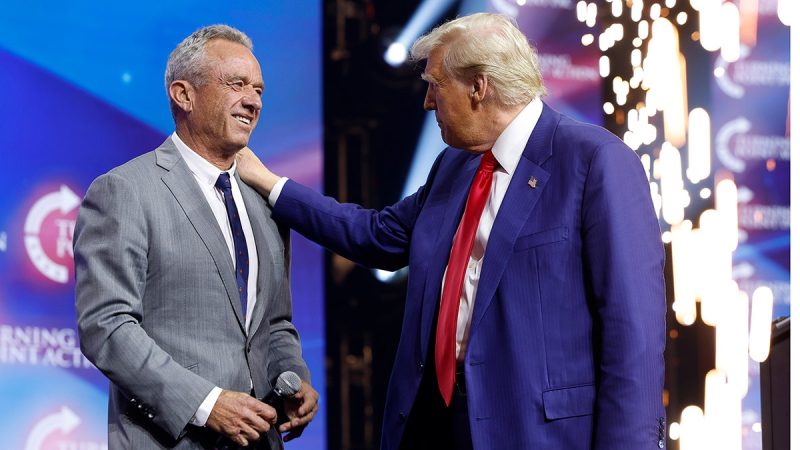
Health & Human Services Secretary Robert F. Kennedy, Jr., is the most notable example, given his surname and namesake.

Kennedy, whose father was a New York senator, attorney general and a 1968 presidential candidate until his assassination, was a noted Democrat invested in environmentalism and other liberal causes.

His sister, Kerry, was first lady of New York during her marriage to Andrew Cuomo, while another sister, Kathleen, was lieutenant governor of Maryland under Gov. Parris Glendening – and his uncles, John and Edward, were two of the most famous Democrats in U.S. history.

But Kennedy and his supporters forged a political bond with Trump and propelled him into the presidency, finding common ground on vaccine risk awareness, dangerous aspects of America’s food processing and transparency of government officials, particularly in the health care sector.

Director of National Intelligence Tulsi Gabbard was a Democratic congresswoman from Hawaii who later left her party after repeated barbs from its thought-leaders like Clinton – who accused her of being a Kremlin asset.

And Treasury Secretary Scott Bessent remains in office and has been widely praised by fiscal conservatives for his decisions so far, while also having a history of Democratic donations.

Bessent donated to Obama, Clinton and former Vice President Al Gore, and was also head of Soros Fund Management’s United Kingdom office in the early 1990s. The company, led by George Soros and his son Alex, is often considered the most powerful financial force on the far left.

Treasury Secretary Howard Lutnick – one of the lead negotiators of Trump’s tariff and trade agenda – was also a Democratic donor while head of the financial firm Cantor-Fitzgerald.

Lutnick’s donations have trended toward the GOP in recent years, and he has maintained a longtime friendship with Trump. On the Democratic side of the ledger, Lutnick historically supported the late Sen. Joe Lieberman of Connecticut, as well as Schumer and Clinton.

Lutnick has preferred pro-business and anti-regulation candidates and issues moreso than coming from a purely political point of view.

Isaacman, a New Jersey billionaire credited as the first private citizen to spacewalk, saw his May 31 nomination pulled this week after what Trump called ‘a thorough review of his prior associations,’ which many, including in the media, believed referenced his history of Democratic donations.

Isaacman has donated to fellow Garden State-born astronaut Mark Kelly – now the senior Democratic senator in Arizona – as well as former Sen. Bob Casey, Jr., D-Pa., and a SuperPAC aligned with Schumer.

He also supported Rep. George Whitesides, D-Calif., a former NASA chief of staff and congressional freshman who upset a GOP-held swing district north of Los Angeles in 2024. 

This post appeared first on FOX NEWS

NEWYou can now listen to Fox News articles!

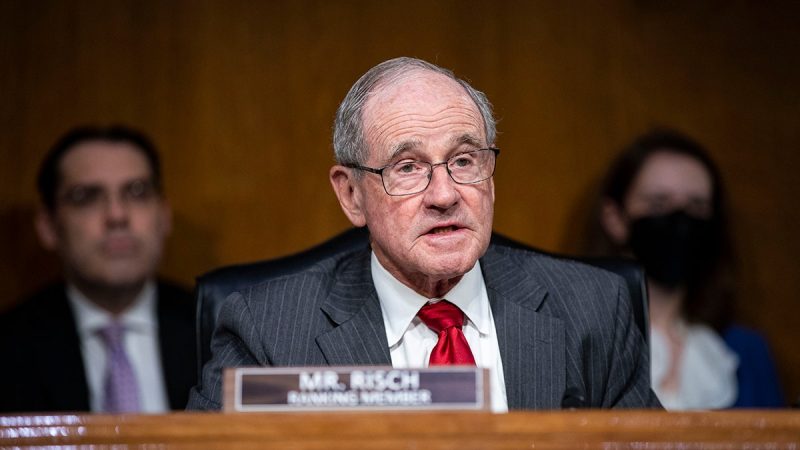
Chairman of the Senate Foreign Relations Committee Sen. Jim Risch, R-Idaho, said a thorough review of spending from the U.S. Agency for International Development (USAID) is warranted, following the Trump administration’s efforts to overhaul the agency.  

USAID was an independent agency to provide impoverished countries aid and offer development assistance, but the agency was upended since February when President Donald Trump installed Secretary of State Marco Rubio to oversee the organization amid concerns that USAID did not advance U.S. core interests. Since then, the agency has faced layoffs and is being absorbed into the State Department. 

This increased scrutiny on USAID spending is valid, according to Risch. 

‘The amount of money that we’re spending on that has to be reviewed top to bottom,’ Risch said during an event Wednesday at the Washington-based think tank the Hudson Institute.  

Risch said that several weeks into the Trump administration, he and others, including Rubio, evaluated a list of programs that detailed $3 million in funding for ‘promotion of democracy in Lower Slobovia.’ According to Risch, the description didn’t provide enough information and items like these are totaling up to billions of dollars that must undergo review.

‘Lower Slobovia’ is a fictional place and a term used by Americans to describe an underdeveloped foreign country.

‘We can do so much better, not only in how, how much money we spend, but how we spend it,’ Risch said. ‘So, if you say, well, we’re eliminating this program, be careful you don’t say, ‘Oh, that means we’re walking away from human rights.’ Look, America is human rights. If America leads the way on human rights. We are the world standard on human rights. We have no intention of giving that position up.’

The Department of Government Efficiency (DOGE) targeted USAID in its push to eliminate wasteful spending. The agency came under fire for many funding choices, including allocating $1.5 million for a program that sought to ‘advance diversity, equity and inclusion in Serbia’s workplaces and business communities’ and a $70,000 program for a ‘DEI musical’ in Ireland.

As a result, Rubio announced on March 11 that the State Department completed a six-week review and would cancel more than 80% of USAID programs — cutting roughly 5,200 of USAID’s 6,200 programs.

Fox News Digital was the first to report later in March that the State Department planned to absorb the remaining operations and programs USAID runs so it would no longer function as an independent agency. 

The move means eliminating thousands of staff members in an attempt to enhance the existing, ‘life-saving’ foreign assistance programs, according to a State Department memo that Fox News Digital obtained.


‘Foreign assistance done right can advance our national interests, protect our borders, and strengthen our partnerships with key allies,’ Rubio said in a March statement to Fox News Digital. ‘Unfortunately, USAID strayed from its original mission long ago. As a result, the gains were too few and the costs were too high.’ 

‘We are reorienting our foreign assistance programs to align directly with what is best for the United States and our citizens,’ Rubio said. ‘We are continuing essential lifesaving programs and making strategic investments that strengthen our partners and our own country.’

Meanwhile, Democrats slammed the restructuring of the agency, labeling the move ‘illegal.’ 

‘Donald Trump and Elon Musk’s destruction and dismantling of USAID is not only disastrous foreign policy and counter to our national security interests; it is plainly illegal,’ the top Democrat on the House Foreign Affairs Committee Rep. Gregory Meeks, D-N.Y., said in a statement in March. ‘Congress wrote a law establishing USAID as an independent agency with its own appropriation, and only Congress can eliminate it.’ 

This post appeared first on FOX NEWS

NEWYou can now listen to Fox News articles!

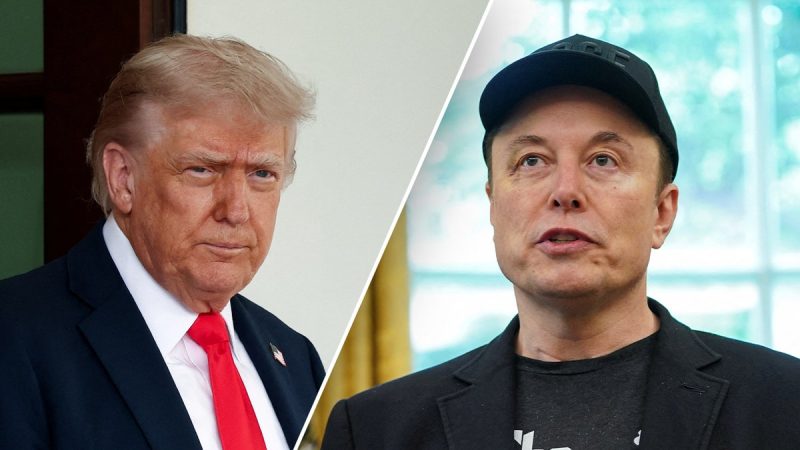
Tesla and SpaceX CEO Elon Musk may speak to White House aides Friday in an effort to calm his ongoing feud with President Donald Trump, Fox News has learned.

Musk and Trump have been arguing over social media in recent days. The blowup came after Musk started ‘wearing thin’ on Trump for about a month, Fox News senior White House correspondent Peter Doocy reported Friday.

White House aides told Doocy they are not expecting Trump and Musk to speak to each other today, but that Trump administration staffers might try to talk to Musk. 

‘No call scheduled or had. Musk wants a call. POTUS hasn’t made a decision,’ a source familiar with the matter also told Fox News regarding a possible conversation between Trump and Musk.

Doocy also reported that a red Tesla vehicle that Trump bought during a Tesla demonstration on the South Lawn of the White House grounds earlier this year is now expected to be given away or sold off. 

The vehicle with Florida tags, as of Friday, remains parked near the White House on West Executive Drive.

Musk made allegations Thursday that Trump was in the Jeffrey Epstein file.

‘@RealDonaldTrump is in the Epstein files,’ Musk wrote on X. ‘That is the real reason they have not been made public. Have a nice day, DJT!’

Musk followed the post with another, saying, ‘Mark this post for the future. The truth will come out.’

‘This is an unfortunate episode from Elon, who is unhappy with the One Big Beautiful BIll because it does not include the policies he wanted,’ White House Press Secretary Karoline Leavitt said. ‘The President is focused on passing this historic piece of legislation and making our country great again.’

On Truth Social, Trump wrote Thursday that ‘Elon was ‘wearing thin,’ I asked him to leave, I took away his EV Mandate that forced everyone to buy Electric Cars that nobody else wanted (that he knew for months I was going to do!), and he just went CRAZY!’

‘The easiest way to save money in our Budget, Billions and Billions of Dollars, is to terminate Elon’s Governmental Subsidies and Contracts. I was always surprised that Biden didn’t do it!’ Trump also said.

The feud between Musk and Trump rapidly escalated this week when Musk called the Trump-endorsed ‘big, beautiful bill’ a ‘disgusting abomination.’

Musk, who has been openly critical of the proposed reconciliation bill, said Tuesday afternoon that he ‘just can’t stand it anymore.’

‘This massive, outrageous, pork-filled Congressional spending bill is a disgusting abomination,’ Musk added in a Tuesday afternoon post on X. ‘Shame on those who voted for it: you know you did wrong. You know it.’

Fox News’ Peter Doocy, Lucas Tomlinson, Greg Wehner and Alec Schemmel contributed to this report.

This post appeared first on FOX NEWS

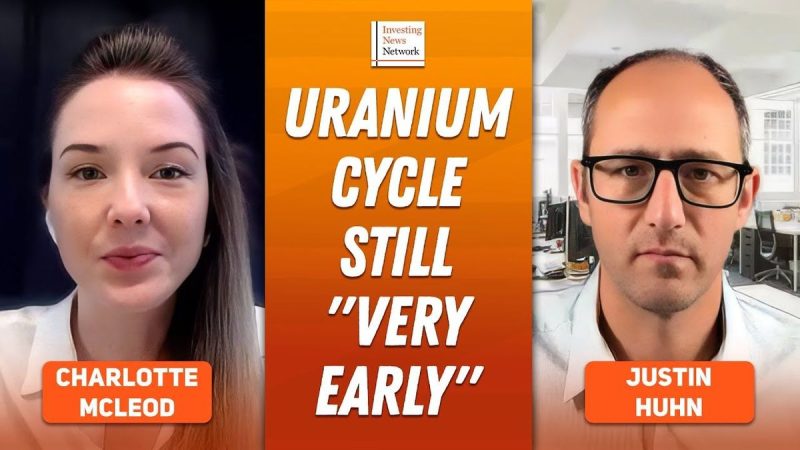
Justin Huhn, editor and founder of Uranium Insider, talks uranium supply, demand and prices.

He emphasized that it’s still ‘very early’ in the cycle and that at this point no further catalysts are needed.

Securities Disclosure: I, Charlotte McLeod, hold no direct investment interest in any company mentioned in this article.
This post appeared first on investingnews.com