
Author

admin

Browsing

LONDON — Wherever Nvidia CEO Jensen Huang goes, excitement follows — this time, all the way to London Tech Week.

The Nvidia boss — whom Wedbush analyst Daniel Ives dubs the “godfather of AI” — is more like a rockstar these days, given his wide-spanning effect on the AI industry.

“The amount of infrastructure required for AI wouldn’t be possible without that man,” one attendee at London Tech Week said.

“He’s like Iron Man,” the attendee added, referencing the popular Marvel superhero who is a tech billionaire inventor under the name of Tony Stark.

The lines to get into the Olympia auditorium were already building around 40 minutes before Jensen was set to take the stage alongside U.K. Prime Minister Keir Starmer. Not everyone managed to get in — but there were helpfully screens around the venue where people could catch a glimpse of Huang’s talk.

The Nvidia CEO gave his continued bullish assessment of artificial intelligence, calling it an “incredible technology” and saying it should be seen as infrastructure, just like electricity.

There weren’t any multi-billion-dollar investments touted at London Tech Week. But the biggest win for Starmer and the U.K. by far was Huang’s lavish praise for the country.

Wearing his trademark leather jacket, Huang called the U.K. the “envy of the world” that is in the midst of a “Goldilocks circumstance,” boasting a vibrant venture capital ecosystem, as well as budding AI entrepreneurs from leading firms including Google DeepMind, Synthesia, Wayve and ElevenLabs.

Speaking alongside Huang, Starmer spoke in an animated manner as he touted Nvidia’s investments in the U.K. Earlier in the day, the U.S. chipmaker announced a new “U.K. sovereign AI industry forum,” as well as commitments from cloud vendors Nscale and Nebius to deploy new facilities containing thousands of its Blackwell GPU chips.

Starmer spoke at length about AI’s promise and the ways in which it could ease the burdens faced by the U.K.’s public sector institutions, from hospitals to schools.

Huang added that the U.K. is “such a great place to invest,” noting that Nvidia plans to partner with the country to upskill tech workers and build out domestic AI infrastructure.

“Infrastructure enables more research — more research, more breakthroughs, more companies,” the Nvidia chief said. “That flywheel will start taking off. It’s already quite large, but we’re just going to get that flywheel going.”

Starmer thanked Huang for his point, commenting that “the confidence it gives when you explain it that way is huge.”

“From our point of view, we’re really pleased to be seen that way,” the U.K. leader said.

The pair shook hands at the end.

Altogether, there was a lot of energy in the room. Huang said he was “excited” for London Tech Week, and he was met with a round of applause from the audience.

Huang has become the CEO everyone wants to be seen with. Nvidia has positioned itself as central to the AI revolution, which many commentators say is in the early innings.

Nvidia wants that revolution to be built on its chips. And for countries like the U.K., these moments provide a chance for the country to tout its investment potential and for its leader to publicly share a stage with the man seen as powering the AI push.

London was Huang’s first stop in a broader European tour.

The Nvidia boss will travel to Paris later this week, where the chipmaker will host its GTC conference. Politicians including President Emmanuel Macron, who has driven France’s ambition to become a European AI hub, will also likely want some face time with Huang.
This post appeared first on NBC NEWS

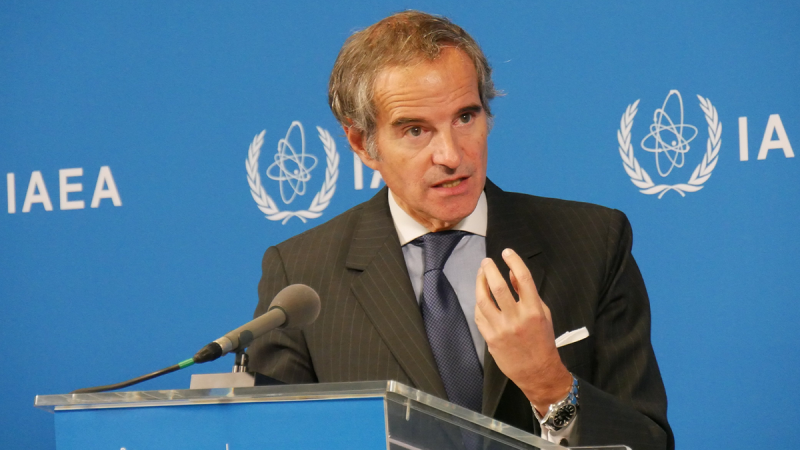
Iran’s refusal to play ball with the United Nation’s nuclear watchdog, which is charged with monitoring all nations’ nuclear programs, has meant the body cannot verify whether Tehran’s program is ‘entirely peaceful’ despite the regime’s claims.

Director General of the International Atomic Energy Agency (IAEA), Rafael Grossi, on Monday issued a warning statement that the agency has not only long been barred access to old and new nuclear sites, but that Iran has scrubbed locations in an apparent move to cover up its activities.

In 2020, the IAEA found man-made particles of enriched uranium at three sites, including Varamin, Marivan and Turquzabad. The locations were previously utilized in Iran’s nuclear program and gave the agency credence to believe Tehran had once again turned to deadly nuclear ambitions. 

‘Since then, we have been seeking explanations and clarifications from Iran for the presence of these uranium particles, including through a number of high-level meetings and consultations in which I have been personally involved,’ Grossi said. ‘Unfortunately, Iran has repeatedly either not answered, or not provided technically credible answers to, the Agency’s questions. 

‘It has also sought to sanitize the locations, which has impeded Agency verification activities,’ he added. 

Grossi, who confirmed during an April trip to Washington, D.C. that the IAEA has not been involved in nuclear negotiations between the U.S. and Iran, said on Monday that he has been working ‘closely and intensively’ with both parties in ‘support of their bilateral negotiation[s].’

The warning comes after the IAEA in a report late last month, also confirmed that Iran had drastically increased its stockpile of near-weapons-grade enriched uranium by nearly 35% in three months. 

In February, the IAEA assessed that Tehran possessed 274.8 kilograms (605.8 pounds) worth of uranium enriched to 60%, but on May 17th it found Iran now has some 408.6 kilograms (900.8 pounds) – meaning the regime is just a technical step away from being able to make up to 10 nuclear warheads. 

Last week, Iranian supreme leader Ayatollah Ali Khamenei came out in strong opposition to a U.S. proposal submitted to Tehran to end its nuclear program, though it remains unclear what details were included in the document, including on enrichment capabilities, and on Sunday, Iranian parliamentary speaker Mohammad Bagher Ghalibaf claimed the proposal didn’t include any sanction relief.

The White House has remained tight-lipped about what was included in the document, though according to some reporting, President Donald Trump gave Iran until June 11 to reach a deal with the U.S., though Fox News Digital could not independently verify these claims. 

On Monday, Iranian Foreign Ministry spokesperson Esmaeil Baghaei confirmed that ‘The U.S. proposal is not acceptable to us. It was not the result of previous rounds of negotiations.’

‘We will present our own proposal to the other side via Oman after it is finalized. This proposal is reasonable, logical, and balanced,’ Baghaei reportedly said.

Some reporting has also suggested Iran might submit their proposal as soon as June 10, though the Iranian UN mission in the U.S. would not comment on or confirm these claims. 

This post appeared first on FOX NEWS

NEWYou can now listen to Fox News articles!

The Social Security Administration (SSA) just announced a major update. Starting this summer, Americans with a ‘My Social Security’ account will be able to access their digital Social Security number (SSN) online. The goal is to simplify access, reduce paper card replacements and improve data protection.

But with convenience comes new cybersecurity concerns. Here’s how the digital SSN works, why it’s being introduced now and the steps you should take to protect your SSN from identity theft both online and offline.

What is the digital SSN? New Social Security feature explained

The SSA is introducing secure digital access to your Social Security number through the ‘My Social Security’ portal. If you forget your SSN, misplace your card or need to share your number for non-SSA purposes (such as job applications or financial services), you’ll be able to view your number online from a mobile device.

‘This enhancement will provide individuals…a simple solution allowing them to securely view their SSN online,’ said the SSA. This update eliminates the need for mail delays or in-person visits to your local SSA office.

Why the SSA is releasing digital SSNs in 2025

There are a few big reasons the SSA is rolling this out now:

  • Aging physical cards: The SSA estimates there are 47 different versions of the Social Security card still in circulation. Many of them were issued before 1983 and lack basic security features, making them easier to forge or misuse.
  • Rising identity theft risks: Your SSN is one of the most sensitive identifiers tied to your name. When cards are lost, stolen or handled carelessly, it creates opportunities for identity theft, fraud and account takeovers.
  • Demand for digital access: More Americans now expect to access government services from their phones or computers. Long lines at SSA offices and delays in mail processing have made it harder for people to get help quickly. A digital SSN provides faster, safer and more convenient access to your number when you need it.

Digital SSN launch date: When you can access it

The digital SSN option will be available in early summer 2025. If you already have a ‘My Social Security’ account, you’ll be able to access the feature once it rolls out.

How to access your digital Social Security number online

You’ll need a ‘My Social Security’ account to use the digital SSN features. Here’s how to get started:

Go to ssa.gov/myaccount and click ‘Create an Account.’

You’ll be asked to provide your name, birthdate, SSN and address. The SSA may use a third-party identity verification service and ask questions based on your credit report.

Use a strong, unique password and set up two-factor authentication with your phone number or an authenticator app. Consider using a password manager to generate and store complex passwords.

Once the digital SSN feature launches, you’ll be able to view your number securely from your account on a mobile device or computer.

If you’re already signed up, double-check your security settings and make sure your contact information is current.

7 ways to protect your Social Security number from identity theft

Even with digital access making your SSN more convenient, it’s still one of the most sensitive pieces of personal information you own. If your SSN falls into the wrong hands, it can lead to identity theft, credit fraud and even tax return scams. Here are the best ways to protect it:

Create a unique, complex password for your ‘My Social Security’ account and enable two-factor authentication. This ensures that even if someone guesses your password, they won’t be able to log in without a second verification step. Consider using a password manager to generate and store complex passwords. Get more details about my best expert-reviewed password managers of 2025 here.

If you’re checking your SSA account, avoid doing so over unsecured networks like public Wi-Fi. Use a secure home network or VPN to encrypt your connection and protect your session from hackers. For the best VPN software, see my expert review of the best VPNs for browsing the web privately on your Windows, Mac, Android and iOS devices.

Scammers often pose as the SSA to trick you into revealing your SSN. Don’t click links in unsolicited emails or texts and never give personal information unless you’re sure the source is legitimate. Always go directly to ssa.gov if in doubt.

To block suspicious links and attachments before they reach you, consider using strong antivirus software. The right antivirus can help detect phishing attempts and protect you from malicious downloads. Get my picks for the best 2025 antivirus protection winners for your Windows, Mac, Android and iOS devices.

Staying on top of your financial activity is one of the most effective ways to catch identity theft early. That’s where identity protection services come in. Identity theft companies can monitor personal information like your Social Security number, phone number and email address and alert you if it is being sold on the dark web or being used to open an account. They can also assist you in freezing your bank and credit card accounts to prevent further unauthorized use by criminals. See my tips and best picks on how to protect yourself from identity theft.

Make it a habit to review your credit reports regularly. Look for unfamiliar accounts, unauthorized inquiries or incorrect personal information. If something seems off, contact the credit bureau right away to dispute it.

Prevent fraudulent tax filings using your SSN by setting up an Identity Protection PIN with the IRS. This six-digit number adds another layer of protection during tax season.

Log in to your ‘My Social Security’ account regularly to review your earnings history and benefits. This helps ensure your information hasn’t been altered or compromised.

Kurt’s key takeaways

Starting this summer, the SSA will let you view your Social Security number online through your ‘My Social Security’ account. It’s a secure, convenient update that cuts down on lost cards and office visits. To use it safely, set up strong login credentials and two-factor authentication. And since your SSN remains a top target for identity thieves, now’s the time to protect it with tools like a password manager, VPN, antivirus software and identity theft monitoring.

Do you trust digital access to your Social Security number? Let us know by writing to us at

For more of my tech tips and security alerts, subscribe to my free CyberGuy Report Newsletter by heading to 

Ask Kurt a question or let us know what stories you’d like us to cover.

Follow Kurt on his social channels:

  • Facebook
  • YouTube
  • Instagram

Answers to the most-asked CyberGuy questions:

  • What is the best way to protect your Mac, Windows, iPhone and Android devices from getting hacked?
  • What is the best way to stay private, secure and anonymous while browsing the web?
  • How can I get rid of robocalls with apps and data removal services?
  • How do I remove my private data from the internet?

New from Kurt:

  • Try CyberGuy’s new games (crosswords, word searches, trivia and more!)
  • CyberGuy’s exclusive coupons and deals

Copyright 2025 CyberGuy.com. All rights reserved.

This post appeared first on FOX NEWS

NEWYou can now listen to Fox News articles!

The ‘Big, Beautiful Bill’ may face major changes when the Senate begins debate next week.

Look for Senate Republicans to pare down state and local tax deductions—known as SALT—which are important to House Republicans from California and New York.

Almost no Senate Republicans care about SALT. Rep. Mike Lawler, R-N.Y., says he’d oppose the bill if the Senate strips SALT.

Fiscal hawks want further Medicaid changes to achieve additional savings, but Sens. Josh Hawley, R-Mo., and Jim Justice, R-W.Va., represent states with high percentages of their constituents on Medicaid. 

Sen. Thom Tillis, R-N.C., wants to alter the no-tax-on-tips provision, arguing it’s unfair to workers outside tipped industries.

The Senate may also cut House provisions on AI and federal judges, as these policy issues don’t comply with special Senate budget rules.

This post appeared first on FOX NEWS

NEWYou can now listen to Fox News articles!

By all appearances, the world is edging perilously close to the brink of a catastrophic global conflict. In just the past few days, five deeply troubling developments have emerged — each significant on its own — but taken together, they form a pattern too urgent to dismiss. Viewed in context, these events expose a rapidly deteriorating international order, where diplomacy is failing, deterrence is weakening, and the risk of multi-theater war is rising sharply. 

First, Ukraine’s audacious drone strike deep inside Russian territory — reportedly destroying or damaging a significant share of Russia’s strategic bomber fleet — bears the hallmarks of Western involvement. While Kyiv claimed responsibility, the attack’s sophistication, including precise long-range targeting and coordinated timing, suggests U.S. or NATO intelligence and technological support.  

Former intelligence officials have even pointed to likely CIA or allied agency involvement. Whatever the true origin, Moscow now sees itself not merely at war with Ukraine, but with the broader Western alliance. Russia’s retaliation — whether cyber, kinetic or covert — could spiral well beyond the front lines. 

Second, efforts to rein in Iran’s nuclear ambitions have collapsed further. Supreme Leader Ayatollah Ali Khamenei publicly rejected a U.S. proposal that would have permitted tightly restricted low-level uranium enrichment. Denouncing the offer as ‘100% against our interests,’ he reaffirmed Iran’s demand for full sovereign enrichment rights.  

With Israel openly contemplating military action and negotiations at a standstill, the Middle East stands on the edge of a potentially region-wide conflagration — especially if Iran accelerates toward weapons-grade enrichment. 

Third, a highly anticipated phone call between President Donald Trump and Russian President Vladimir Putin yielded no diplomatic breakthrough. Though both men discussed the escalating war and the drone strike, the call ended with no commitments, no ceasefire, and no plan for de-escalation.  

Trump admitted it was not the kind of conversation that would bring peace. Instead, the call served to underscore how deeply entrenched the conflict has become — and how narrow the remaining diplomatic off-ramps now are. 

Fourth, a chilling threat emerged on American soil. Federal prosecutors charged a Chinese national couple with attempting to smuggle Fusarium graminearum into the U.S. — a crop-killing fungus labeled by the Justice Department as a potential ‘agroterrorism weapon.’ The pathogen can devastate wheat, barley and corn, and its toxins are harmful to both humans and livestock.  

The couple is linked to Chinese state-sponsored research and is suspected of prior smuggling attempts. Whether or not this plot was state-directed, it underscores an alarming vulnerability: America’s homeland is increasingly exposed to unconventional threats from hostile actors. 

Fifth, U.S. Secretary of Defense Pete Hegseth warned that China may be preparing to launch a full-scale invasion of Taiwan. Speaking at the Shangri-La Dialogue in Singapore, he declared, China ‘is rehearsing for the real deal.’  

With Beijing ramping up military drills and tightening its rhetoric, the Taiwan Strait has become a powder keg. Should China act, U.S. intervention would be virtually guaranteed — potentially igniting a major conflict in the Indo-Pacific. 

Together, these flashpoints paint a stark picture of a world in crisis. Three nuclear powers — Russia, China and Iran (potentially) — are simultaneously testing Western resolve.  

The United States faces a mounting burden to deter aggression on multiple fronts, with few diplomatic successes to lean on. Traditional tools — talks, sanctions, summits — are proving inadequate. What remains is a binary choice: step back from global leadership or confront rising threats in Europe, the Middle East and Asia, possibly all at once. 

This is not alarmism. This is convergence. With diplomacy unraveling, adversaries emboldened and the homeland no longer secure, the global order is careening toward synchronized escalation. The world is not yet at war — but it is teetering dangerously close to systemic conflict that could engulf major powers and redraw the map of the 21st century. 

The warning lights are flashing red. The only question now is whether the world will act — or continue its drift toward fire. 

This post appeared first on FOX NEWS

One day after seeing their largest-ever one-day drop, Tesla shares recovered some losses Friday as the spat between CEO Elon Musk and President Donald Trump that exploded into public view Thursday took appeared to take a breather heading into the weekend.

Shares in the electronic vehicle maker gained as much as 5% amid broader market gains following a report showing the U.S. added more jobs in May than forecast.

Even with Friday’s rally, Tesla shares are still down approximately 21% in 2025 — a decline that accelerated last week following Musk’s departure from the Trump administration.

Musk, the world’s richest person and until recently Trump’s cost-cutter-in-chief, said last week he was leaving as the head of his Department of Government Efficiency project to refocus on his businesses.

Those companies — Tesla, the satellite and space-launch company SpaceX, the social media platform X and the brain tech startup Neuralink — have faced growing criticism as Musk oversaw deep cuts to the federal workforce. Tesla sales around the world have fallen sharply this year.

Trump and Musk traded escalating insults Thursday afternoon, with the president threatening on his Truth Social platform to ‘terminate Elon’s Governmental Subsidies and Contracts.’ Yet there was no sign of any follow through on the threat Friday. At the same time, a senior White House official told NBC News that Trump is “not interested” in a call with Musk.

Tesla stock closed more than 14% lower Thursday. The automaker is Musk’s only publicly traded company — and one that the president tried to boost as recently as March, drawing sharp criticism on ethical grounds for turning the White House driveway into a car showroom just as the company’s stock was plunging.

The Trump-Musk rift has dented Tesla’s stock anew after Musk slammed the GOP spending bill as ‘a disgusting abomination” in a post on X last week.

‘Bankrupting America is NOT ok!’ he wrote in another post, part of an ongoing barrage of public ridicule.

Musk began speaking out after an electric-vehicle tax credit that would help incentivize Tesla purchases was not included in the bill, which is estimated to add $2.4 trillion to the national debt over 10 years. Musk has lobbied congressional Republicans for that tax credit, NBC News reported Wednesday.

‘I was, like, disappointed to see the massive spending bill, frankly, which increases the budget deficit, doesn’t decrease it, and undermines the work that the DOGE team is doing,’ Musk told ‘CBS Sunday Morning’ over the weekend.

As Trump spoke about the former DOGE chief in the Oval Office on Thursday alongside German Chancellor Friedrich Merz, Musk began firing off dozens of posts on X.

‘Whatever,’ he wrote. ‘Keep the EV/solar incentive cuts in the bill, even though no oil & gas subsidies are touched (very unfair!!), but ditch the MOUNTAIN of DISGUSTING PORK in the bill. In the entire history of civilization, there has never been legislation that both big and beautiful. Everyone knows this!’

Trump pushed back further on Musk’s criticism.

“Elon knew the inner workings of this bill better than almost anybody sitting here, better than you people. He knew everything about it. He had no problem with it,” he said during the meeting with Merz. “All of a sudden he had a problem, and he only developed the problem when he found out that we’re going to have to cut the EV mandate because that’s billions and billions of dollars, and it really is unfair.”

As Trump continued speaking, Musk posted another comment: ‘False, this bill was never shown to me even once and was passed in the dead of night so fast that almost no one in Congress could even read it!’

Tech analyst Dan Ives said the EV tax credit isn’t the main factor behind Tesla’s stock slide. “The reason Tesla stock’s off the way it is — and I think overdone — is because of the view that this means that Trump is not going to play nice when it comes to regulatory” issues, he told CNBC on Thursday. The feud between the two men is “not what you want to see as a Tesla shareholder,” Ives added.

‘Where is this guy today??’ Musk added Thursday in yet another post, resharing a compilation of Trump’s past tweets including one in which Trump called the federal debt ‘a national security risk of the highest order.’

‘Without me, Trump would have lost the election, Dems would control the House and the Republicans would be 51-49 in the Senate,’ Musk added on social media. ‘Such ingratitude.’

Musk is the richest person on the planet, according to the Bloomberg Billionaires index. His net worth of $368 billion is $125 billion more than that of Meta CEO Mark Zuckerberg, who is ranked second. Musk spent $250 million supporting Trump’s most recent campaign.

The president quipped from the White House that he thinks Musk ‘misses the place.’

‘I think he got out there and all of a sudden he wasn’t in this beautiful Oval Office,’ Trump said. ‘He’s got nice offices too, but there’s something about this one.’

The president’s own publicly traded company, Trump Media & Technology Group, has also suffered in the market. Shares of the Truth Social parent company fell more than 8% Thursday and are down over 41% so far this year.

This post appeared first on NBC NEWS

Here’s a quick recap of the crypto landscape for Friday (June 6) as of 9:00 p.m. UTC.

Get the latest insights on Bitcoin, Ethereum and altcoins, along with a round-up of key cryptocurrency market news.

Bitcoin and Ethereum price update

Bitcoin (BTC) was priced at US$104,245 as markets closed for the week, up 2 percent in 24 hours. The day’s range for the cryptocurrency brought a low of US$104,006 and a high of US$105,201.

Bitcoin price performance, June 6, 2025.

Chart via TradingView.

After dipping below US$101,000 during the dispute between US President Donald Trump and Elon Musk, Bitcoin recovered to around US$105,000 early in the trading day, influenced by a strong US labor report.

Despite the rebound, analysts are wary due to technical indicators like a weakening relative strength index, suggesting potential downside. A possible rate cut from the US Federal Reserve on June 18 could push Bitcoin to US$112,000, but the outlook is uncertain. Order book data indicates a liquidity trap, and limited short interest points to a fragile recovery.

Additional selling pressure and investor distrust are contributing to shaky market sentiment.

Ethereum (ETH) finished the trading day at US$2,490.63, a 2 percent decrease over the past 24 hours. The cryptocurrency reached an intraday low of US$2,482.52 and saw a daily high of US$2,519.25.

Altcoin price update

  • Solana (SOL) closed at US$149.26, trading flat over 24 hours. SOL experienced a low of US$148.86 and reached a high of US$151.79 on Friday.
  • XRP is trading at US$2.17, reflecting a 1.6 percent increase over 24 hours. The cryptocurrency reached a daily low of US$2.16 and a high of US$2.18.
  • Sui (SUI) peaked at US$3.18, showing an increaseof 5.7 percent over the past 24 hours. Its lowest valuation on Friday was US$3.16, and its highest was US$3.19.
  • Cardano (ADA) is trading at US$0.663, up 2.8 percent over the past 24 hours. Its lowest price of the day was US$0.6604, and it reached a high of US$0.6693.

Today’s crypto news to know

Uber considers stablecoins for cost reduction

On stage at the San Francisco-based Bloomberg Tech Summit on Thursday (June 5), Uber Technologies (NYSE:UBER) CEO Dara Khosrowshahi said the company is “definitely going to take a look” at using stablecoins to help reduce the cost of moving money around the world.

“We’re still in the study phase, I’d say, but stablecoin is one of the, for me, more interesting instantiations of crypto that has a practical benefit other than crypto as a store of value,” he said. “Obviously, you can have your opinions on Bitcoin, but it’s a proven commodity, and you know, people have different opinions on where it’s going,” he added.

UK set to lift ban on retail access to crypto ETNs

The UK’s Financial Conduct Authority (FCA) has announced plans to lift its ban on retail investors buying crypto exchange-traded notes (ETNs), a major shift from its earlier risk-averse stance.

Initially barred due to concerns over volatility and investor protection, the FCA now says consumers should have the right to choose whether these high-risk assets fit their portfolios. David Geale, the FCA’s digital assets chief, said the move is part of a broader push to ‘rebalance’ the regulator’s approach to financial risk. The proposal, which would allow ETNs to be sold on FCA-registered investment exchanges, will now enter a public consultation phase.

This regulatory pivot follows the UK’s introduction of draft laws in April aimed at integrating crypto into the formal financial system. The FCA emphasized that its separate ban on crypto derivatives for retail traders will remain in place.

Switzerland adopts crypto information exchange bill

The government of Switzerland has adopted a bill to enable the automatic exchange of information (AEOI) on crypto with 74 partner countries, including the UK, all EU member states and most G20 countries.

The measure excludes the US, Saudi Arabia and China. The bill is currently under discussion in parliament and, if approved, the AEOI framework for crypto assets will take effect on Jan. 1, 2026.

Switzerland will only engage in AEOI with partner states that also desire information exchange with Switzerland.

Strategy to raise nearly US$1 billion to buy more Bitcoin

Strategy (NASDAQ:MSTR), the company known for its aggressive Bitcoin acquisition strategy, is launching a nearly US$1 billion capital raise through its new 10 percent Series A STRD preferred stock. The offering includes over 11 million shares and promises a high fixed yield, making it attractive to yield-hungry investors in a low-rate environment.

Unlike other Strategy offerings like STRK (convertible) and STRF (senior status), STRD offers the highest payout at 10 percent, but comes with more risk due to its non-cumulative dividend and junior status. Dividends are only issued when declared, and the shares cannot be called under normal market conditions.

Proceeds will go toward “general corporate purposes,” which notably include expanding its Bitcoin holdings.

Metaplanet plans US$5.3 billion warrant offering to scale Bitcoin treasury

Tokyo-based Metaplanet (OTCQX:MTPLF,TSE:3350) is taking its Bitcoin commitment to the next level with a massive US$5.3 billion stock warrant issuance, the largest of its kind in Japan.

The company is offering 555 million shares through stock acquisition rights, using a novel moving-strike pricing model that adjusts with market value — a first in the Japanese market.

This 555 Million Plan follows an earlier US$600 million raise and is part of Metaplanet’s goal to hold over 210,000 BTC by 2027, approximately 1 percent of total Bitcoin supply.

The vast majority of the proceeds — around 96 percent — will go toward direct Bitcoin purchases, while a small fraction will support debt management and derivative strategies like selling puts.

Maple Finance expands syrupUSD to Solana

Lending platform Maple Finance announced on Thursday that it has expanded user access by deploying its syrupUSD yield-bearing stablecoin to Solana-based platforms Kamino and Orca.

Previously, it had only been available on the Ethereum blockchain.

According to the announcement, Solana integration is launching with US$30 million in liquidity, which will establish “a deep and stable foundation for lending, trading, and collateral provisioning.’

This new system was made possible by using Chainlink’s Cross-Chain Interoperability Protocol (CCIP), which started operating on the Solana main network on May 19. CCIP lets different blockchain systems, specifically those using Ethereum Virtual Machine and Solana Virtual Machine technology, share information.

The ability to transfer data between these distinct blockchain environments is expected to significantly boost efficient and affordable growth within the digital ecosystem.

Securities Disclosure: I, Giann Liguid, hold no direct investment interest in any company mentioned in this article.

Securities Disclosure: I, Meagen Seatter, hold no direct investment interest in any company mentioned in this article.

This post appeared first on investingnews.com

Blue Lagoon Resources Inc. (CSE: BLLG) (OTCQB: BLAGF) (FSE: 7BL) (the ‘Company’) is pleased to announce that President & CEO Rana Vig will be attending and presenting at the upcoming 121 Mining Investment Conference in New York, June 9-10, 2025.

As Blue Lagoon advances toward production at its fully permitted high-grade Dome Mountain Gold Projectfeaturing an average grade of 9 grams per tonne (g/t) gold and one of only nine mining permits granted in British Columbia since 2015-the Company continues to engage with institutional and retail investors globally. Mr. Vig will meet with leading resource investors to discuss the Company’s near-term production plans, expected cash flow growth, and the significant exploration upside across Dome Mountain’s highly prospective 22,000-hectare land package.

‘With gold prices on the rise and our project fully funded for production starting this summer, now is the right moment to elevate Dome Mountain’s profile with a broader investor base,’ said Rana Vig, President & CEO of Blue Lagoon Resources. ‘As one of the few junior companies nearing high-grade gold production, we’re uniquely positioned to deliver near-term cash flow alongside substantial exploration upside.’

Participation in the 121 New York event aligns with Blue Lagoon’s strategy to build shareholder value by actively marketing its project to global capital markets ahead of its transition to production. The conference will host a select group of mining companies and qualified investors for a series of scheduled, in-person meetings focused on project fundamentals, market strategy, and growth outlook.

About Blue Lagoon Resources Inc.

Blue Lagoon Resources is a Canadian based publicly listed mining company (CSE: BLLG) (FSE: 7BL) (OTCQB: BLAGF) focused on building shareholder value through the aggressive development of its 100% owned Dome Mountain Gold project. The Company is run by professionals with significant finance and mining experience and operates within a prime mining jurisdiction in British Columbia, Canada. With the granting of a full mining permit, a key milestone achieved in February 2025 – one of only nine such permits issued in British Columbia since 2015 – Blue Lagoon is now focused on last preparatory activities and tasks related to the safe and secure opening of the Dome Mountain Gold Mine, targeting Q3 2025 as the start of gold production. The Company’s primary objective has always been to become a cash-flowing mining company, to ultimately deliver tangible monetary value to shareholders, state, and local communities.

The Company is not basing its production decision at Dome Mountain on a feasibility study of mineral reserves demonstrating economic and technical viability. The production decision is based on having existing mining infrastructure, past bulk sampling and processing activity, and the established mineral resource. The Company understands that there is increased uncertainty, and consequently a higher risk of failure, when production is undertaken in advance of a feasibility study.

For further information, please contact:

Rana Vig
President and CEO
Telephone: 604-218-4766
Email: ranavig@bluelagoonresources.com

The CSE has not reviewed and does not accept responsibility for the adequacy or accuracy of this release.

Statement Regarding Forward-Looking Information: This release includes certain statements that may be deemed ‘forward-looking statements’. All statements in this release, other than statements of historical facts, that address events or developments that Blue Lagoon Resources Inc. (the ‘Company’) expects to occur, are forward-looking statements. Forward-looking statements are statements that are not historical facts and are generally, but not always, identified by the words ‘expects’, ‘targets’, ‘plans’, ‘anticipates’, ‘believes’, ‘intends’, ‘estimates’, ‘projects’, ‘potential’, ‘mine’, ‘production’ and similar expressions, or that events or conditions ‘will’, ‘would’, ‘may’, ‘could’ or ‘should’ occur. Although the Company believes the expectations expressed in such forward-looking statements are based on reasonable assumptions, such statements are not guarantees of future performance and actual results may differ materially from those in the forward-looking statements. Factors that could cause the actual results to differ materially from those in forward-looking statements include results of exploration activities may not show quality and quantity necessary for further exploration or future exploitation of minerals deposits, volatility of gold and silver prices, delays in mine development activities, future cash flow expectations and continued availability of capital and financing, permitting and other approvals, and general economic, market or business conditions. Investors are cautioned that any such statements are not guarantees of future performance and actual results or developments may differ materially from those projected in the forward-looking statements. Forward-looking statements are based on the beliefs, estimates and opinions of the Company’s management, contractors and consultants on the date the statements are made. Except as required by applicable securities laws, the Company undertakes no obligation to update these forward-looking statements in the event that management’s, contractor’s and consultants’ beliefs, estimates or opinions, or other factors, should change.

To view the source version of this press release, please visit https://www.newsfilecorp.com/release/254700

News Provided by Newsfile via QuoteMedia

This post appeared first on investingnews.com

NEWYou can now listen to Fox News articles!

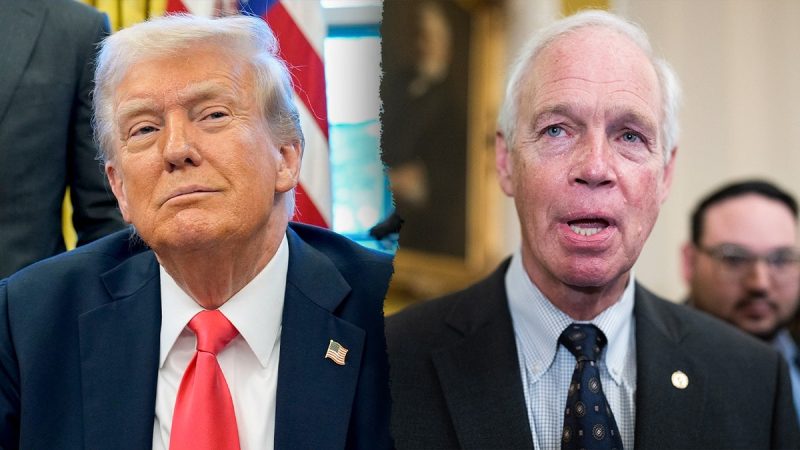
One of the leading opponents of President Donald Trump’s ‘big, beautiful bill’ declared not even the commander in chief will be able to deter him from speaking out against what he sees as a bill that falls short of Republicans’ goal of cutting government waste.

‘It’ll completely backfire on him,’ Sen. Ron Johnson, R-Wis., told Fox News Digital of any attempts by Trump to sway him on the current legislation.

Johnson has become a prominent voice of opposition against the House GOP’s offering to the budget reconciliation process. Senate Republicans finally began the tedious process of parsing through the bill this week.

Lawmakers in the upper chamber, Johnson included, are determined to make changes to the bill, with most wanting to make reductions to Medicaid and food stamps more palatable. Trump has made it clear his bill must pass but has acknowledged the Senate will need to make a few changes.

Trump’s directive has been to deliver a bill that can survive the razor-thin majorities in both chambers.  

Johnson, however, wants to see spending returned to pre-pandemic levels, cuts that are trillions of dollars deeper than what House Republicans could stomach. And he is ready to vote against the bill unless he sees the changes he wants.

And he believes that a pressure campaign from the president against him and other like-minded fiscal hawks will fail.

He said a better approach would be to work with lawmakers and fiscal hawks like him to gain a better understanding of the reality of the country’s fiscal situation, a reality that ‘is grim,’ he said.

Johnson has been up front about his disdain for the bill but has so far avoided public retribution from Trump. In fact, the two have spoken twice this week, once on Monday and later during a Senate Finance Committee meeting at the White House Tuesday.

The lawmaker has told Trump he’s in Trump’s corner and that he wants ‘to see you succeed,’ but he has been steadfast in his position that the bill does not go far enough to tackle the national debt.

And the debt continues to climb, nearing $37 trillion and counting, according to Fox News’ National Debt Tracker.

The House’s offering set a goal of $1.5 trillion in spending cuts over the next decade, which lawmakers in the lower chamber have pitched as a positive step forward to righting the country’s fiscal ship, an offering Johnson panned as falling drastically short of the GOP’s promises to cut deep into government spending.

‘What’s so disappointing about what happened in the House is it was all rhetoric. It’s all slogans,’ Johnson said. ‘They picked a number. Literally, they picked a number out of the air.’

Johnson views this attempt at the budget reconciliation process as a rare opportunity to ‘do the hard things’ when it comes to spending cuts, but others in the GOP have been more hesitant to cut as deep.

Johnson said a main reason Republicans have so far fallen short of meeting the moment for the most part is that lawmakers don’t understand just how much the federal government shovels out the door year in and year out.

The lawmaker recalled a moment roughly three years ago during a debate over another year-end omnibus spending bill, when each of the dozen appropriations bills is crammed into one, bloated package that is universally reviled and almost always passes.

He asked his colleagues if they really knew just how much the government spends, and no one ‘volunteered to answer.’

‘Nobody knew. I mean, think of that. The largest financier in the world. We’re supposedly, in theory, the 535 members of the board of directors, and nobody knew,’ he said. ‘Why would they? We never talked about it.’

Johnson has been busy trying to better educate his colleagues, putting together his own charts and graphs that cut out the ‘noise,’ like the latest nonpartisan Congressional Budget Office report that found the legislation would add $2.4 trillion to the national debt over a decade. The GOP has universally panned that projection.

‘We can’t accept this as a new normal,’ Johnson said. ‘We can’t accept — you can take pot shots of CBO, but you can’t deny that reality. [It] might be off a little bit, but that is the trajectory, and that’s undeniable.’
 

This post appeared first on FOX NEWS

NEWYou can now listen to Fox News articles!

Former President Barack Obama’s White House physician said in a new interview that former President Joe Biden’s doctor should have performed a cognitive test to evaluate his fitness to serve in office. 

Obama’s doctor, Jeffrey Kuhlman, told The Washington Post that Biden White House physician Kevin O’Connor should have performed a cognitive test during Biden’s last year as president, given his age. 

O’Connor, who Kuhlman first appointed as Biden’s doctor in 2009 when he was vice president, declared in a 2024 report that the then-81-year-old president ‘continues to be fit for duty.’ The report did not mention any neurocognitive testing. 

‘Sometimes those closest to the tree miss the forest,’ Kuhlman told the Post.

‘It shouldn’t be just health, it should be fitness,’ Kuhlman said. ‘Fitness is: Do you have that robust mind, body, spirit that you can do this physically, mentally, emotionally demanding job?’

Kuhlman, who departed the White House Medical Unit in 2013, described O’Connor as ‘a good doctor’ who appeared to do his best to ‘give trusted medical advice.’

‘I didn’t see that he’s purposely hiding stuff, but I don’t know that,’ Kuhlman told the Post. ‘Maybe the investigation will show it.’

President Donald Trump on Wednesday ordered Attorney General Pam Bondi to investigate whether Biden’s aides ‘abused the power of Presidential signatures through the use of an autopen to conceal Biden’s cognitive decline and assert Article II authority.’ 

‘This conspiracy marks one of the most dangerous and concerning scandals in American history,’ the order says. ‘The American public was purposefully shielded from discovering who wielded the executive power, all while Biden’s signature was deployed across thousands of documents to effect radical policy shifts.’  

‘Let me be clear: I made the decisions during my presidency,’ Biden said in a statement Wednesday night. ‘I made the decisions about the pardons, executive orders, legislation, and proclamations. Any suggestion that I didn’t is ridiculous and false.’

Trump’s order appeared to nod to the findings of special counsel Robert Hur, who investigated Biden’s handling of classified documents while he was vice president. 

In a report released in February 2024, Hur concluded Biden ‘willfully retained and disclosed’ sensitive materials but should not stand trial, describing the president as a ‘sympathetic, well-meaning, elderly man with a poor memory.’ Hur cited instances when Biden could not recall key dates and events, including when he served as vice president and when his son, Beau, passed away. The report was released at a time when Biden was still planning a second term run. 

Last week, House Oversight Committee Chairman Rep. James Comer, R-Ky., issued a subpoena for O’Connor to appear for a deposition at the end of the month ‘as part of the investigation into the cover-up of President Joe Biden’s cognitive decline and potentially unauthorized issuance of sweeping pardons and other executive actions.’ 

The committee re-posted the Post’s interview with Kuhlman to X, writing, ‘Even Obama’s doctor admits the truth. This is precisely why Chairman @RepJamesComer subpoenaed Dr. Kevin O’Connor, Biden’s physician. This is a scandal of historical proportions, and we will investigate it thoroughly!’ 

In a letter to O’Connor, Comer said the transcribed interview would focus on the physician’s February 2024 assessment that Biden was ‘a healthy, active, robust 81-year-old male, who remains fit to successfully execute the duties of the Presidency.’

‘Among other subjects, the Committee expressed its interest in whether your financial relationship with the Biden family affected your assessment of former President Biden’s physical and mental fitness to fulfill his duties as President,’ Comer wrote. 

Questions about Biden’s cognitive state stretch extend solely past Republicans. 

CNN’s Jake Tapper and Axios’ Alex Thompson recently published a book titled ‘Original Sin,’ which details concerns and debates inside the White House and Democratic Party over Biden’s mental state and age.

In the book, Tapper and Thompson wrote, ‘Five people were running the country, and Joe Biden was at best a senior member of the board.’

Naomi Biden, the former president’s granddaughter, dismissed the book as ‘political fairy smut for the permanent, professional chattering class.’ 

Comer requested transcribed interviews with Biden’s White House senior advisers Mike Donilon and Anita Dunn, former White House chief of staff Ron Klain, former deputy chief of staff Bruce Reed and Steve Ricchetti, a former counselor to the president. He also called for former senior White House aides Annie Tomasini, Anthony Bernal, Ashley Williams and Neera Tanden to appear before the committee and suggested subpoenas could be forthcoming if they did not schedule voluntary interviews. 

The Associated Press contributed to this report. 

This post appeared first on FOX NEWS