
Author

admin

Browsing

Here’s a quick recap of the crypto landscape for Wednesday (June 11) as of 9:00 p.m. UTC.

Get the latest insights on Bitcoin, Ethereum and altcoins, along with a round-up of key cryptocurrency market news.

Bitcoin and Ethereum price update

Bitcoin (BTC) was priced at US$108,710, a slight decrease of 0.8 percent in 24 hours. The day’s range for the cryptocurrency brought a low of US$108,574 and a high of US$110,269.

Bitcoin price performance, June 11, 2025.

Chart via TradingView.

Bitcoin has surged over 10 percent since June 5, briefly reaching US$110,000 on Wednesday.

If Bitcoin breaks its US$112,000 all-time high, analysts believe it could make a rapid rise to US$114,000, with further gains predicted if momentum continues. Experts’ targets range from US$120,000 to US$150,000 in the short term, while long-term forecasts sit between US$1 million and US$2.4 million.

This week’s on-chain analysis from Glassnode shows a deviation from past bull markets, with long-term holders continuing to buy instead of selling. This points to growing institutional interest and a shift toward long-term thinking. Price swings are unusually low, suggesting a stable market, but moves could be sharp if demand shifts.

Ethereum (ETH) ended the day at US$2,810.96, a 1.6 percent increase over the past 24 hours. The cryptocurrency reached an intraday low of US$2,796.60 and saw a daily high of US$2,870.74

Altcoin price update

  • Solana (SOL) closed at US$162.72, down 0.5 percent over 24 hours. SOL experienced a low of US$163.05 and reached a high of US$167.80 on Wednesday.
  • XRP was trading at US$2.29, down by 0.3 percent to its lowest valuation in 24 hours. The cryptocurrency reached a high of US$2.33 for the day.
  • Sui (SUI) was trading at US$3.42, showing a decreaseof 0.7 percent over the past 24 hours and its lowest valuation of the day. It peaked at US$3.51.
  • Cardano (ADA) closed at its lowest price of the day at US$0.7041, down 0.5 percent over the past 24 hours. Its highest valuation was US$0.7285.

Today’s crypto news to know

Experts make ETF approval calls

Bloomberg exchange-traded fund (ETF) analysts Eric Balchunas and James Seyffart are calling for a ‘potential Alt Coin ETF Summer,’ according to a note released on Wednesday.

“Get ready for a potential Alt Coin ETF Summer with Solana likely leading the way (as well as some basket products) via @JSeyff note this morning which includes fresh odds for all the spot ETFs,” an X post from Balchunas states.

They predict that the US Securities and Exchange Commission (SEC) could approve exchange-traded funds (ETFs) tracking broad crypto indexes by July. The SEC could also “act early on spot Solana and staking ETF filings” after REX-Osprey filed for Solana and Ethereum ETFs with staking components using a C-Corp structure on May 30.

Seyffart and Balchunas now place the approval odds of SOL and Litecoin ETFs at 90 percent. Spot Solana ETF approval odds also jumped to 91 percent on Wednesday on Polymarket.

Stripe to acquire Privy

Stripe has announced plans to acquire Privy, a specialized cryptocurrency wallet infrastructure developer, for an undisclosed amount in a deal signaling Stripe’s deepening involvement in the digital asset space.

Under the terms of the purchase, Privy will operate as a subsidiary within Stripe, focusing on providing infrastructure for developers engaged in building solutions on cryptocurrency rails. According to Privy’s announcement, this transition to Stripe’s umbrella will empower the company with “more resources, flexibility, and firepower.”

Privy’s core expertise lies in offering comprehensive infrastructure for companies involved in the development and management of digital asset wallets. Its tech enables millions of secure crypto wallets on a global scale.

This acquisition aligns with the broader trend of established financial institutions and tech giants integrating blockchain and cryptocurrency technologies into their portfolios.

Ukraine considers adding crypto to national reserves

The Verkhovna Rada, Ukraine’s parliament, received a draft bill on Tuesday (June 10) that proposes modifications to banking laws. These changes would permit the National Bank of Ukraine to incorporate cryptocurrencies into its reserves, standing alongside gold and foreign currencies. According to Yaroslav Zhelezniak, a member of parliament who confirmed the introduction of the bill via Telegram, bill 13356 would allow crypto to be included, but the central bank would retain full discretion over how much of its reserves to allocate to crypto and would not be required to add it.

Zhelezniak clarified in a video interview with Kyrylo Khomiakov, Binance’s regional head for Central and Eastern European countries and Central Asia, that while the draft bill has been introduced, the Ukrainian government isn’t pushing for cryptocurrency, but wants to keep pace with its increasing global usage.

“This story has the right to life, and, as we see, many countries are implementing it,” he said.

Bullish confidentially files for US IPO amid pro-crypto climate

Crypto exchange Bullish has confidentially filed for a US initial public offering (IPO), signaling renewed optimism in digital assets as Donald Trump’s administration ushers in a more crypto-friendly regulatory landscape.

Backed by billionaire Peter Thiel and led by former NYSE President Tom Farley, Bullish’s IPO plans mark a major comeback after its failed SPAC merger in 2021. The company’s move follows Circle’s (NYSE:CRCL) blockbuster US$1.1 billion IPO and coincides with a wave of new filings, including Gemini’s confidential application last week.

Jefferies is slated to lead underwriting for Bullish, though the bank has declined to comment.

Ondo brings tokenized US treasuries to XRP ledger

Ondo Finance has launched its tokenized short-term US Treasury product, OUSG, on the XRP Ledger (XRPL), using Ripple’s new RLUSD stablecoin for settlement. This marks the first time tokenized Treasuries are accessible on XRPL, allowing institutional investors to mint and redeem around the clock with instant settlement.

OUSG provides exposure to low-risk, short-term Treasuries and is already live on Ethereum and Solana, with a combined US$670 million in assets across chains. With US$30 million in total value locked already on XRPL, this expansion could significantly scale institutional DeFi on public ledgers.

Strategy hit with lawsuit over alleged misleading Bitcoin strategy

Strategy (NASDAQ:MSTR) is facing a class-action lawsuit alleging that the Michael Saylor-led firm misled shareholders about the risks of its Bitcoin-heavy investment approach.

Law firm Levi & Korsinsky filed the suit on Tuesday, calling on investors who bought shares between April 2024 and April 2025 to join the case, with a lead plaintiff deadline set for July 15.

The complaint cites the company’s recent US$5.91 billion unrealized loss due to Bitcoin’s volatility and claims executives downplayed risk while hyping upside potential. On April 7, the company dropped nearly 9 percent after disclosing a Q1 loss; by May 1, Strategy had formally admitted to the nearly US$6 billion hit.

A second lawsuit, filed by Anas Hamza, is also underway for alleged violations of the Securities Exchange Act.

Saylor has defended the firm’s strategy, arguing that its capital structure is resilient even in the face of a 90 percent Bitcoin crash. Strategy has not issued an official comment on the lawsuits.

Securities Disclosure: I, Giann Liguid, hold no direct investment interest in any company mentioned in this article.

Securities Disclosure: I, Meagen Seatter, hold no direct investment interest in any company mentioned in this article.

This post appeared first on investingnews.com

FireFly Metals (ASX:FFM,TSX:FFM,OTC Pink:MNXMF) has attained firm commitments to raise up to about AU$95 million, giving it a total of AU$135 million for its multi-pronged growth strategy.

The company highlighted on Tuesday (June 10) that the equity financing will be completed via the issuance of approximately 94.7 million fully paid ordinary shares; it will receive around AU$1 per new share.

The funds will be raised via three transactions, with the first being an AU$11.2 million charity flow-through placement to Canadian investors. This will be followed by a AU$54.9 million two-tranche institutional placement, as well as a AU$28.8 million fully underwritten Canadian bought-deal offering with BMO Capital Markets.

Alongside the equity raising, FireFly is inviting shareholders to participate in a non-underwritten share purchase plan (SPP) that can potentially raise up to AU$5 million before costs.

Proceeds of the equity raising and the SPP will collectively be allotted to advance the Green Bay copper-gold project in Canada, including transaction costs and working capital.

Located in the Baie Verte district of Northeast Newfoundland on Canada’s east coast, Green Bay was acquired by FireFly in August 2023. Green Bay includes Ming underground mine, which was mined between 1972 and 1982, with activity restarting in 2012. Historic production totaled 6.7 million metric tons (MT) at 2 percent for 134,000 MT of copper.

Measured and indicated resources at Ming are at 21.5 million MT at 1.8 percent for 307,000 MT of copper equivalent, while inferred resources are at 28.4 million MT at 2 percent for 576,000 MT of copper equivalent.

FireFly began drilling at Ming in October 2023, completing 79 drill holes across 37,110 meters within a year.

“The overwhelming demand for the raising reflects the quality and growth outlook at Green Bay, our commitment to a multi-rig exploration campaign and the demand among global investors for top-shelf copper-gold projects,” said FireFly Managing Director Steve Parsons in the company’s press release.

He called the asset, alongside FireFly’s exploration team and AU$135 million in funding, “the ideal recipe for growth.”

FireFly states on its website that it will continue with its low-cost rapid resource growth strategy, with the underground exploration drill drive at the Ming deposit to be extended during this year.

The company debuted on the Toronto Stock Exchange in December 2024.

Securities Disclosure: I, Gabrielle de la Cruz, hold no direct investment interest in any company mentioned in this article.

This post appeared first on investingnews.com

Energy sector innovators took center stage on Wednesday (June 11), with Eclipse Automation securing major deals in nuclear infrastructure, and Oklo (NYSE:OKLO) snagging a key US clean energy contract.

Eclipse Automation, part of Accenture (NYSE:ACN), has secured multiple contracts to design, manufacture and supply advanced automated tooling and equipment for upcoming CANDU nuclear reactor refurbishment projects.

The projects are at the Cernavoda plant in Romania and the Qinshan facility in China, and the agreements include automated inspection units, radioactive-handling systems, reactor-assembly tools and a remote-control center.

Based in Cambridge, Ontario, and backed by Accenture’s global footprint, Eclipse Automation is working to bolster nuclear safety and efficiency with cutting-edge technology.

“In the last decade, Eclipse has delivered automated solutions and equipment to support nuclear refurbishment work at the Embalse reactor in Argentina, and at the Darlington and Bruce nuclear generating stations in Canada,” said Steve Mai, CEO of Eclipse Automation, in the company’s press release.

Putting the ‘Can’ in CANDU

Canada’s CANDU (Canada deuterium uranium) reactors trace their origins back to the 1950s, with the first commercial unit, NPD, launching in 1962 using heavy water moderation and natural uranium fuel. Featuring pressure tubes and online refueling, CANDUs allow continuous operation, unlike light-water reactors that require shutdowns.

Today, 19 CANDU reactors operate in Canada, primarily in Ontario and New Brunswick, and over a dozen more are deployed abroad in South Korea, Romania, China, Argentina and India.

The design is prized for high reliability, clean power and the ability to burn natural uranium and alternative fuels.

Canada and other countries are now investing in life extensions and advancing next-generation designs like the Enhanced CANDU-6, the Advanced CANDU reactor and small modular reactors, supported by federal funding to sustain a domestic supply chain and global competitiveness.

Defense department eyes microreactors

Elsewhere, advanced nuclear company Oklo received a notice of intent to award from the US Department of Defense to deploy its Aurora microreactor at Eielson Air Force Base in Alaska.

The project, which will be led by the Defense Logistics Agency Energy, will serve as the Air Force’s pilot for enhancing energy resilience at remote sites. Under a long-term power purchase agreement, Oklo will design, build, own and operate the reactor, supplying both electricity and heat. The Aurora system uses fast reactor technology to deliver continuous, off-grid power — ideal for mission-critical infrastructure.

‘This Notice of Intent to Award reflects continued confidence in Oklo’s ability to deliver clean and secure energy solutions for mission-critical infrastructure,’ said Jacob DeWitte, co-founder and CEO of Oklo. ‘We are honored to support national defense resilience objectives while demonstrating the value of US-pioneered fast reactor technology.’

These contracts reflect a global resurgence in nuclear energy as countries look for ways to power their expanding grids with clean energy.

Securities Disclosure: I, Georgia Williams, hold no direct investment interest in any company mentioned in this article.

This post appeared first on investingnews.com

Peter Krauth, editor of Silver Stock Investor and Silver Advisor, outlines the factors driving silver’s recent price run, which has pushed the white metal to levels not seen in over a decade.

In his view, the current macroeconomic environment is combining with short supply and strong demand dynamics to create a ‘perfect storm.’

Securities Disclosure: I, Charlotte McLeod, hold no direct investment interest in any company mentioned in this article.
This post appeared first on investingnews.com

E-Power Resources Inc (CSE: EPR) (FSE: 8RO) (‘E-Power’ or the ‘Company’) announces its intention to complete a flow-through non-brokered private placement to raise gross proceeds of up to $150,000 (the ‘FT Offering’). The Company will also complete a Hard Dollar Private Placement to raise gross proceeds of up to $50,000 (the ‘Hard Dollar Offering’).

Securities to be issued pursuant to the FT Offering shall consist of an amount of up to 3,000,000 units of the Company (the ‘FT Units‘) issued at a price of $0.05 per FT Unit, each FT Unit being comprised of one common share in the capital of the Company (each a ‘FT Share‘) that will qualify as ‘flow-through shares’ (within the meaning of subsection 66(15) of the Income Tax Act (Canada)), and one-half Warrant, each Warrant entitling its holder thereof to acquire one Share at a price of $0.10 per Share for a period of 5 years from the closing date of the FT Offering.

The Hard Dollar Offering units ‘Hard Dollar Units’ shall consist of 1,000,000 units of the Company issued at a price of $0.05 per Hard Dollar Unit. Each Hard Dollar Unit shall consist of one common share in the capital of the Company and one full Warrant, each Warrant entitling its holder thereof to acquire one Share at a price of $0.10 per Share for a period of 5 years from the closing date of the Hard Dollar Offering.

In connection with both the FT Offering and Hard Dollar Offering, the Company may pay cash finder’s fees and issue broker warrants. The securities issued in connection with the FT Offering and Hard Dollar Offering are subject to the applicable statutory four-month and one-day hold period.

Net proceeds from the FT Offering will be used by the Company to incur eligible ‘Canadian exploration expenses’ that will qualify as ‘flow-through mining expenditures,’ as defined in subsection 127(9) of the Income Tax Act (Canada) and under section 359.1 of the Taxation Act (Quebec) (the ‘Qualifying Expenditures‘), related to the Company’s Tetepisca Graphite Property, located in the Tetepisca Graphite District of the North Shore Region of Quebec, on or before December 31, 2026. All Qualifying Expenditures will be renounced in favour of the subscribers to the FT Offering effective December 31, 2025. ‎ In addition, with respect to Quebec resident subscribers of FT Shares and who are eligible individuals under the Taxation Act (Quebec), the Canadian exploration expenses will also qualify for inclusion in the ‘exploration base relating to certain Quebec exploration expenses’ within the meaning of section 726.4.10 of the Taxation Act (Quebec) and for inclusion in the ‘exploration base relating to certain Quebec surface mining expenses or oil and gas exploration expenses’ within the meaning of section 726.4.17.2 of the Taxation Act (Quebec).

Subject to compliance with applicable regulatory requirements and in accordance with National Instrument 45-106 – Prospectus Exemptions (‘NI 45-106‘), the FT Shares and FT Units will be offered by way of private placement pursuant to applicable exemptions from NI 45-106. The FT Offering and Hard Dollar Offering are expected to close on or about June 20, 2025 (the ‘Closing Date‘), subject to the satisfaction or waiver of the customary closing conditions, including the approval of the Canadian Securities Exchange (‘CSE‘).

The securities to be offered pursuant to the FT Offering and Hard Dollar Offering have not been, and will not be, registered under the U.S. Securities Act of 1933, as amended (the ‘U.S. Securities Act‘) or any U.S. state securities laws, and may not be offered or sold in the United States or to, or for the account or benefit of, United States persons absent registration or any applicable exemption from the registration requirements of the U.S. Securities Act and applicable U.S. state securities laws.

This press release shall not constitute an offer to sell or the solicitation of an offer to buy nor shall there be any sale of the securities in any jurisdiction in which such offer, solicitation or sale would be unlawful.

About E-Power Resources Inc.

E-Power Resources Inc. is an exploration stage company engaged principally in the acquisition, exploration, and development of graphite properties in Quebec. Its flagship asset, the Tetepisca Graphite Property, is located in the Tetepisca Graphite District of the North Shore Region of Quebec, approximately 215 kilometers from the Port of Baie-Comeau. For further information, please refer to the Company’s disclosure record on SEDAR (www.sedarplus.ca) or contact the Company by email at info@e-powerresources.com.

On Behalf of the Board of Directors

James Cross
President & CEO
+1 (438) 701-3736
info@e-powerresources.com

Disclaimer for Forward-Looking Information

This news release contains certain forward-looking statements within the meaning of applicable securities laws. All statements that are not historical facts, including without limitation, statements regarding future estimates, plans, programs, forecasts, projections, objectives, assumptions, expectations or beliefs of future performance are ‘forward-looking statements.’ These forward-looking statements reflect the expectations or beliefs of management of the Company based on information currently available to it. Forward-looking statements are subject to a number of risks and uncertainties, including those detailed from time to time in filings made by the Company with securities regulatory authorities, which may cause actual outcomes to differ materially from those discussed in the forward-looking statements. These factors should be considered carefully and readers are cautioned not to place undue reliance on such forward-looking statements. The forward-looking statements and information contained in this news release are made as of the date hereof and the Company undertakes no obligation to update publicly or revise any forward-looking statements or information, whether as a result of new information, future events or otherwise, unless so required by applicable securities laws.

The CSE has not reviewed, approved or disapproved the contents of this news release.

To view the source version of this press release, please visit https://www.newsfilecorp.com/release/255269

News Provided by Newsfile via QuoteMedia

This post appeared first on investingnews.com

LAS VEGAS. — Former Starbucks CEO Howard Schultz said Wednesday that he “did a cartwheel” in his living room when current chief executive Brian Niccol first coined his “back to Starbucks” strategy.

The enthusiasm from the 71-year-old Starbucks chairman emeritus is a key stamp of approval for Niccol as he tries to lift the company’s slumping sales and restore the chain’s culture.

Schultz, who grew Starbucks from a small chain into a global coffee giant, made a surprise appearance at the company’s Leadership Experience in Las Vegas and cosigned Niccol’s plans. The three-day event has gathered more than 14,000 North American store leaders to hear from Starbucks management as the company embarks on a turnaround.

Niccol took the reins in September, joining the company after the board ousted Laxman Narasimhan, Schultz’s handpicked successor.

Schultz had returned in 2022 for his third stint as chief executive, but it was only an interim role. He previously told CNBC that he has no plans to come back again. Schultz no longer holds a formal role within the company, although CNBC has previously reported that he’s forever entitled to attend board meetings unless barred by the company’s directors.

During Niccol’s first week on the job, he outlined plans for the comeback in an open letter, making the commitment to get “back to Starbucks.” More details on how the chain planned to return to its roots followed in the ensuing months, from bringing back seating inside cafes to writing personalized messages on cups. Under Niccol’s leadership, the company’s marketing has shifted to focus on its coffee, rather than discounts and promotions.

When Starbucks announced Narasimhan’s firing and Niccol’s hiring, Schultz issued a statement of support, saying that the then-Chipotle CEO was the leader that the company needs. However, the Leadership Experience marks the first time that Niccol and Schultz have appeared publicly together.

During Narasimhan’s short tenure as CEO, Schultz did not mince words when the company’s performance fell short of his expectations. After a dismal quarterly earnings report, he weighed in publicly on LinkedIn, saying the company needs to improve its mobile order and pay experience and overhaul how it creates new drinks to focus on premium items that set it apart.

But Schultz said Starbucks’ problems went further than just operational issues and lackluster beverages and food.

“The culture was not understood. The culture wasn’t valued. The culture wasn’t being upheld,” he said on Wednesday.

This post appeared first on NBC NEWS

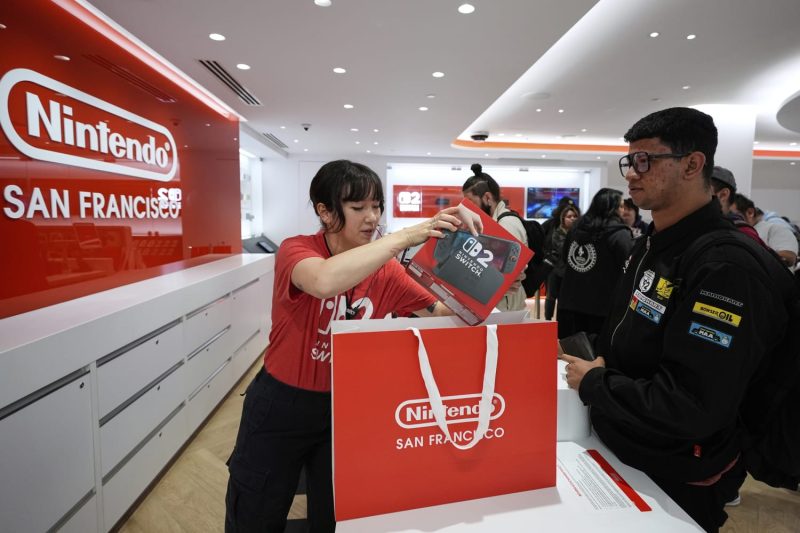
Nintendo sold more than 3.5 million units of its flagship Switch 2 gaming system in the four days following its launch, with online stores of major U.S. retailers putting up “out of stock” signs.

The record-breaking start for the company’s first new console in eight years, puts Nintendo on the path to realizing its aim of selling 15 million units of the Switch 2 console in the fiscal year ending March 2026.

However, analysts continue to believe that those expectations are modest, and forecast the strong initial demand to sustain.

“The market expected a record from Nintendo, and as it turns out, Nintendo delivered,” Serkan Toto, CEO and founder of gaming industry consultancy Kantan Games, told CNBC.

“All signals prior to launch pointed to significant demand, and I believe we will see further records broken over the next weeks or months,” he added.

Toto has maintains that the Switch 2 will sell over 20 million units in its first 12 months. David Gibson, senior research analyst at MST Financial told CNBC that he expects 20 million sales for the year ending March 2026.

The Switch 2, which was released on June 5, has been met with much fanfare, with people lining up for hours ahead of midnight releases at Nintendo stores.

“Fans around the world are showing their enthusiasm for Nintendo Switch 2 as an upgraded way to play at home and on the go,” Nintendo of America President and Chief Operating Officer Doug Bowser said in a statement, adding the company was thankful for the response.

Tokyo-listed shares of Nintendo, which have gained nearly 30% so far this year, were down 3.5% on Wednesday, LSEG data showed. The company has seen its shares rise nearly fivefold since the original Switch debuted in early March 2017.

It remains to be seen if the Switch 2 can recapture the magic of its predecessor, which had set the bar with 15 million unit sales in its first year. It went on to sell more than 152 million units to become the second-highest selling Nintendo device ever, behind the Nintendo DS.

The record initial sales of the Switch are in line with the strong demand analysts had predicted. However, the rush has put into question Nintendo’s ability to meet demand.

Retailers including Walmart, GameStop, Target and Best Buy were out of stock of the consoles, their online stores showed Wednesday.

In April, Nintendo’s Bowser told CNBC that the company had been working with “retail partners to ensure there’s ample supply for not only the launch weekend, but well beyond.”

However, Nintendo President Shuntaro Furukawa stated the same month that 2.2 million people in Japan had entered the lottery to purchase the Switch 2 on launch day, exceeding expectations and what the company had initially planned to deliver to stores.

Kantan Games’ Toto said shortages in Japan were expected to persist, but would be less impactful elsewhere.

“Except for Japan where demand for Switch 2 is extraordinarily high, it looks like fans who really want the console and invest time in trying to secure one actually can get one,” he said. “It might take a while, but as far as can be monitored, supply seems to be more robust than around the launch of the original Switch in 2017.”

President Donald Trump’s “reciprocal tariffs” on most countries around the world also present headwinds for the Switch 2.

In April, the company announced that it would delay preorders of the Switch 2 in the U.S. while it considers the impact of tariffs.

The Switch 2 retails for $449 in the U.S., which makes it Nintendo’s priciest console to date.

Nintendo’s Bowser said in April the company was going to “monitor where tariffs are going” before making any further decisions on price hikes.

MST Financial’s Gibson said that a resolution to Trump’s tariffs and lower duty rates could see the Switch 2 prices drop in the U.S.

The Switch 2 builds on the success of the original Switch, featuring a larger screen and improved performance. The system also introduces the new GameChat2 feature, which allows players to voice or video chat with friends online and share game screens.

This post appeared first on NBC NEWS

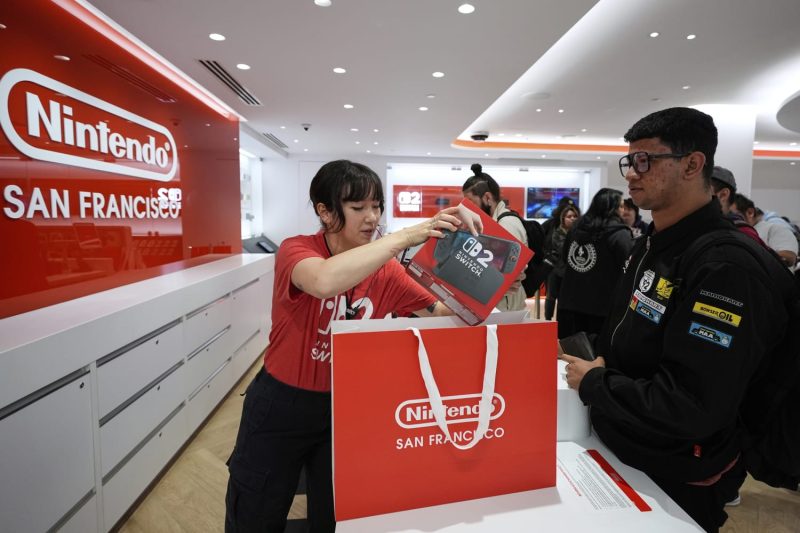
Nintendo sold more than 3.5 million units of its flagship Switch 2 gaming system in the four days following its launch, with online stores of major U.S. retailers putting up “out of stock” signs.

The record-breaking start for the company’s first new console in eight years, puts Nintendo on the path to realizing its aim of selling 15 million units of the Switch 2 console in the fiscal year ending March 2026.

However, analysts continue to believe that those expectations are modest, and forecast the strong initial demand to sustain.

“The market expected a record from Nintendo, and as it turns out, Nintendo delivered,” Serkan Toto, CEO and founder of gaming industry consultancy Kantan Games, told CNBC.

“All signals prior to launch pointed to significant demand, and I believe we will see further records broken over the next weeks or months,” he added.

Toto has maintains that the Switch 2 will sell over 20 million units in its first 12 months. David Gibson, senior research analyst at MST Financial told CNBC that he expects 20 million sales for the year ending March 2026.

The Switch 2, which was released on June 5, has been met with much fanfare, with people lining up for hours ahead of midnight releases at Nintendo stores.

“Fans around the world are showing their enthusiasm for Nintendo Switch 2 as an upgraded way to play at home and on the go,” Nintendo of America President and Chief Operating Officer Doug Bowser said in a statement, adding the company was thankful for the response.

Tokyo-listed shares of Nintendo, which have gained nearly 30% so far this year, were down 3.5% on Wednesday, LSEG data showed. The company has seen its shares rise nearly fivefold since the original Switch debuted in early March 2017.

It remains to be seen if the Switch 2 can recapture the magic of its predecessor, which had set the bar with 15 million unit sales in its first year. It went on to sell more than 152 million units to become the second-highest selling Nintendo device ever, behind the Nintendo DS.

The record initial sales of the Switch are in line with the strong demand analysts had predicted. However, the rush has put into question Nintendo’s ability to meet demand.

Retailers including Walmart, GameStop, Target and Best Buy were out of stock of the consoles, their online stores showed Wednesday.

In April, Nintendo’s Bowser told CNBC that the company had been working with “retail partners to ensure there’s ample supply for not only the launch weekend, but well beyond.”

However, Nintendo President Shuntaro Furukawa stated the same month that 2.2 million people in Japan had entered the lottery to purchase the Switch 2 on launch day, exceeding expectations and what the company had initially planned to deliver to stores.

Kantan Games’ Toto said shortages in Japan were expected to persist, but would be less impactful elsewhere.

“Except for Japan where demand for Switch 2 is extraordinarily high, it looks like fans who really want the console and invest time in trying to secure one actually can get one,” he said. “It might take a while, but as far as can be monitored, supply seems to be more robust than around the launch of the original Switch in 2017.”

President Donald Trump’s “reciprocal tariffs” on most countries around the world also present headwinds for the Switch 2.

In April, the company announced that it would delay preorders of the Switch 2 in the U.S. while it considers the impact of tariffs.

The Switch 2 retails for $449 in the U.S., which makes it Nintendo’s priciest console to date.

Nintendo’s Bowser said in April the company was going to “monitor where tariffs are going” before making any further decisions on price hikes.

MST Financial’s Gibson said that a resolution to Trump’s tariffs and lower duty rates could see the Switch 2 prices drop in the U.S.

The Switch 2 builds on the success of the original Switch, featuring a larger screen and improved performance. The system also introduces the new GameChat2 feature, which allows players to voice or video chat with friends online and share game screens.

This post appeared first on NBC NEWS

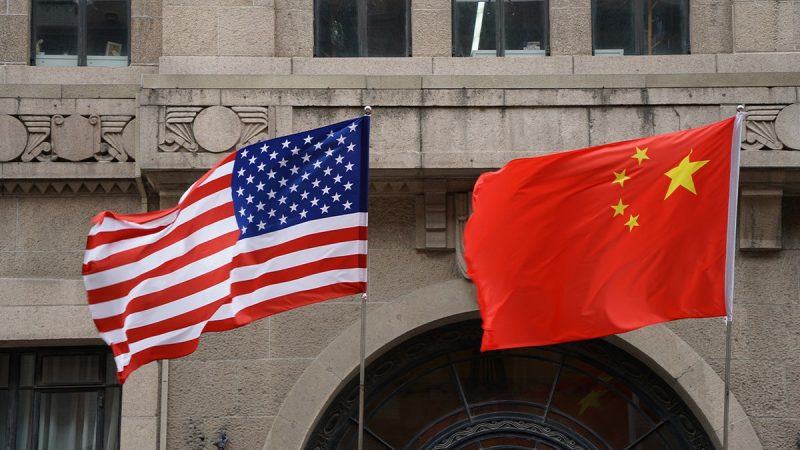
A national security-focused nonprofit organization has released a comprehensive report detailing the workings of a well-funded nominally U.S.-based organization that it says is undermining American energy, pushing left-wing green initiatives, and ultimately advancing Chinese interests. 

The report, published by State Armor, outlines the money trail of Energy Foundation China, registered as a 501(c)(3) nonprofit that is technically headquartered in San Francisco but with employees mostly based in Beijing.

‘Energy Foundation China used to be known as the Energy Foundation before it spun off most of its U.S.-based operations in 2019 into a separate organization called the U.S. Energy Foundation,’ the report explains. ‘While still formally organized as the Energy Foundation, since 2019, the organization has used the alias ‘Energy Foundation China’ or ‘EF China’ to differentiate from the now-separate U.S. Energy Foundation. The group was founded by Hal Harvey, a climate activist and entrepreneur with deep ties to numerous left-wing organizations and to China.’

State Armor found that EFC has ‘spent millions each year to bankroll climate advocates who promote phasing out fossil fuels and implementing green energy alternatives like the Rocky Mountain Institute (RMI) and Natural Resources Defense Council (NRDC), the latter of which was the target of a 2018 Congressional inquiry into whether it should register as a foreign agent based on its Chinese funding.’

The Rocky Mountain Institute produced one of the most prominent studies used by many Democrats to justify cutting down on gas stoves and was cited by President Biden’s Department of Energy. 

Earlier this year, multiple committees joined to begin an investigation into EFC, and requested files from EFC President Zi Chou about financial resources given to American organizations after Fox News Digital reporting on the group funneling millions of dollars to fund climate initiatives and environmental groups in the U.S.

The report details how EFC ‘led a U.S. state-level legislative drive’ against Bayer, the leading Western fertilizer company, that pushed for lawsuits against the company over a potentially carcinogenic pesticide with the aim of driving the company out of the U.S. and in turn forcing reliance on Chinese suppliers. 

The report goes on to outline how the organization has ‘provided millions’ to the International Council on Clean Transportation (ICCT) to support ‘a clean energy future’ and how ICCT was an ‘active supporter’ of climate initiatives in the Inflation Reduction Act targeting increased battery electric trucking infrastructure. 

Fox News Digital reported in 2023 that The Energy Foundation sent $480,000 to the Washington, D.C.-based International Council on Clean Transportation, which advocates for widespread EV adoption and policies decarbonizing the transportation sector broadly. It also wired grants — one to the University of Maryland and another to the Jackson Hole Center for Global Affairs — worth a total of $450,000 and earmarked for projects to phase out coal power reliance.

Josh Hodges, Commissioner on the U.S.-China Economic and Security Review Commission and former National Security Advisor to Speaker of the House Mike Johnson and NSC Senior Director in the first Trump Administration, told Fox News Digital that EFC is a ‘textbook example of the CCP’s asymmetric warfare strategy and drive to deepen its dominance over American companies.’

‘Communist China is manipulating a supposed philanthropic network to steer the U.S. away from reliable domestic energy sources and into dependence on Chinese supply chains,’ Hodges said. ‘Whether it’s solar panels, mobile phones, electric vehicle batteries, or agricultural chemicals, Beijing’s fingerprints are all over the ‘green transition’ being pushed on America.’

The report quotes Chinese climate envoy Liu Zhenmin who suggested that Biden’s green energy policies will remain even under a more skeptical Trump administration and said, ‘even if the new Trump administration reverses climate change policies, it is unlikely to completely change the green transition actions that have already begun in various parts of the U.S.’

‘In other words, the CCP’s penetration of the U.S.’ political and industrial systems runs so deep that CCP officials believe that not even a skeptical White House could halt America’s growing dependence upon Chinese technologies,’ the report states. 

Will Hild, Executive Director of Consumers’ Research told Fox News Digital that the report ‘exposes a disturbing truth’ that EFC is part of a broader push to undermine American energy independence and ‘stifle’ the Trump energy agenda to benefit the CCP. 

EFC is weaponizing woke ideology to pull off this scheme and force American consumers to rely on the Chinese Communist Party for energy sources,’ Hild said. ‘Americans deserve to know the truth about our foreign adversary’s campaign that is poisoning our economy and reshaping our energy future. We applaud organizations like State Armor that are working to expose these grifts against consumers.’

In addition to the EFC’s climate activism, the report focuses on how, by ‘co-opting climate activism and dominating new so-called green supply chains, Beijing converts a domestic weakness into a global strength’ while also detailing the ties between EFC and the CCP. 

For example, EFC’s CEO Zou Ji has served in previous roles at top leadership positions in China’s official National Center for Climate Change Strategy within the National Development and Reform Commission of the State Council. 

‘He was so deeply tied into CCP leadership that he was included as a part of China’s delegation to the 2015 Paris Climate Talks,’ the report says. ‘Zou’s other affiliations include a position at Tsinghua University at a center where his colleagues include a retired senior PLA officer and a former deputy director of an MSS think tank.’

Zou is not the only EFC figure with ties to the CCP, the report says, pointing to EFC Board Member and Washington, D.C. based attorney Hongjun Zhang, who serves as a member of China’s Council for International Cooperation on Environment and Development and was previously a legislative director for the China National People’s Congress. 

Zhang, according to his law firm’s bio page, spent ‘many years in the Chinese government’ that included work at the ‘Ministry of Industry and Information Technology (MIIT), Ministry of Commerce (MOFCOM), State Food and Drug Administration (CFDA), Ministry of Agriculture (MOA), and National Development and Reform Commission.’ 

The report states that EFC’s operations in China are overseen by the CCP’s National Development and Reform Commission (NDRC) and that the organization’s Beijing headquarters are located in a building owned by a state-owned investment corporation tied to Chinese state media propaganda. 

Rep. John Moolenar, R-Mich., who is the chairman of the House Select Committee on the Strategic Competition Between the United States and the Chinese Communist Party, sounded the alarm over the report, telling Fox News Digital ‘This report confirms what we’ve long warned: the Chinese Communist Party is using seemingly innocuous nonprofits to influence American policy and undermine U.S. interests — in this case, our energy independence.’

‘Energy Foundation China operates at the direction of the CCP and is exploiting our charitable system to push policies that benefit Beijing, not the American people,’ Moolenar continued. ‘The Select Committee continues to investigate how CCP-linked organizations infiltrate U.S. institutions, shift critical supply chains toward China, and shape environmental agendas that aim to make America weaker while China gets stronger. We will continue to expose these influence operations and work with Congress and the Administration to safeguard U.S. energy security and national sovereignty.’

The report also points to examples of EFC collaborating with U.S. entities and officials including in 2023 when it ‘provided support’ for an event that featured California Gov. Gavin Newsom during a visit to China and then hosted a forum a month later for a discussion promoting ‘low-carbon cooperation between the two nations.’

Vance Wagner, the vice president for strategic partnerships at Energy Foundation China, pushed back on the report, telling Fox News Digital that ‘Energy Foundation China (EFC) is an independent grantmaking charitable organization that provides funding for research and capacity building related to climate change and China.’

‘Climate change is one of the greatest threats facing our world. Our work is currently focused on China given the scale of its energy sector and its role in global emissions. Despite geopolitical tensions, meaningful engagement with China on climate change and emissions reductions is in everyone’s interests,’ Vance continued. ‘All grants we make support projects related to climate change and China, and are in no way related to influencing U.S. energy policy. EFC does not accept funding from any government or political party.’

‘Neither the Chinese government nor the CCP fund, direct, or control EFC or our grant-making decisions,’ he added. ‘We are compliant with all U.S. and Chinese laws and regulations and do not lobby or support electoral activities in any country.’

The report states that between 2020 and 2021, EFC gave over $1 million to the Department of Energy’s Lawrence Berkeley National Laboratory for funding ‘green energy research’ and laboratory training increasing the efficiency of China’s industrial sectors. 

The Biden administration, according to the report, gave $60 million in grants to the Institute for Sustainable Communities, which is a group ‘frequently in collaboration with Energy Foundation China.’

‘America’s energy security is national security,’ Jason Isaac, CEO of American Energy Institute, told Fox News Digital. 

‘The State Armor report lays bare how the Chinese Communist Party has co-opted climate activism to shift the U.S. onto so-called ‘green’ technologies that are manufactured, mined, and controlled by China. From solar panels to EV batteries and rare earth minerals, our supply chains are increasingly entangled with a foreign adversary that uses forced labor, ignores environmental safeguards, and openly aims to dominate the global energy future. This isn’t progress—it’s dependence. Real energy dominance means leveraging America’s vast domestic energy resources, not outsourcing our future to Beijing.’

Along with the report, State Armor has sent letters to Republican committee chairs in Congress, including Chairmen Grassley, Lee, Moolenaar, Comer, and Guthrie, that call for prompt oversight on the matter. 

‘Congress must act,’ the letter, authored by Lucci, implores. ‘Oversight is urgently needed to expose the full extent of this operation, beginning with Energy Foundation China. The EFC is not a passive observer; it is an active player in a geopolitical contest where America’s energy security and global leadership hang in the balance.’

Fox News Digital’s Thomas Catenacci and Joe Schoffstall contributed to this report

This post appeared first on FOX NEWS

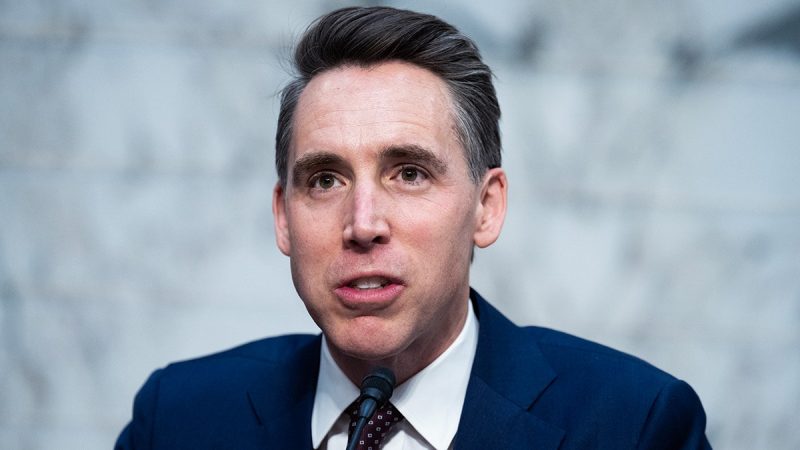
Sens. Josh Hawley, R-Mo., and Peter Welch, D-Vt., are pushing legislation that would hike the federal minimum wage to $15 per hour and provide for annual increases to account for inflation.

The proposal would implement a dramatic increase from the current $7.25 per hour federal minimum wage, which has been in place for more than 15 years.

‘For decades, working Americans have seen their wages flatline. One major culprit of this is the failure of the federal minimum wage to keep up with the economic reality facing hardworking Americans every day. This bipartisan legislation would ensure that workers across America benefit from higher wages,’ Hawley said, according to press releases from both lawmakers.

The purchasing power of the U.S. dollar has eroded significantly over the years due to inflation.

Under the proposed legislation, the yearly increases to the initial $15 per hour federal minimum wage would be based on ‘the percentage increase, if any, in the Consumer Price Index for Urban Wage Earners and Clerical Workers (or a successor index), as published by the Bureau of Labor Statistics’ and would be ’rounded to the nearest multiple of $0.05, if the amount … is not a multiple of $0.05.’

‘We’re in the midst of a severe affordability crisis, with families in red and blue states alike struggling to afford necessities like housing and groceries. A stagnant federal minimum wage only adds fuel to the fire. Every hardworking American deserves a living wage that helps put a roof over their head and food on the table–$7.25 an hour doesn’t even come close,’ Welch said, according to the releases.

‘Times have changed, and working families deserve a wage that reflects today’s financial reality. I’m proud to lead this bipartisan effort to raise the minimum wage nationwide to help more folks make ends meet,’ the senator added. 

In post on X, conservative commentator Dana Loesch decried the idea of raising the federal minimum wage, pushing back against Hawley’s advocacy for the policy.

‘This is a horrible, progressive idea,’ Loesch asserted in the tweet.

This post appeared first on FOX NEWS