Author

admin

Browsing

Skyharbour Resources Ltd. (TSX-V: SYH ) (OTCQX: SYHBF ) (Frankfurt: SC1P ) (‘Skyharbour’ or the ‘Company’), is pleased to announce that its joint-venture partner, Orano Canada Inc. (‘Orano’), recently commenced a large-scale diamond drilling program at the 49,635-hectare Preston Uranium Project (‘Preston’ or the ‘Property’) located in the western Athabasca Basin, Saskatchewan, Canada. The drilling program will consist of approximately 6,000 to 7,000 metres of drilling during the summer of 2025. Orano is the majority owner and operator at the project with Skyharbour owning a minority interest of approximately 25.6%.

Location Map of Preston Project:
https://www.skyharbourltd.com/_resources/images/Sky_Preston.jpg

2025 Exploration Program at Preston:

The program for the Preston Project will consist of a helicopter-supported diamond drilling campaign, totaling 6,000 to 7,000 metres, with up to 28 holes designed to test high-priority targets across the property at depths ranging from 200 to 350 metres. Primary drill target areas (outlined in Figure 2) include the previously untested Johnson Lake, the Canoe Lake and FSAN target. Target areas are spread throughout the project to ensure assessment credits are met across all claims, while testing perspective trends.

Figure 2: Target Area Overview – Preston Lake Project:
https://www.skyharbourltd.com/_resources/news/Figure_2_Target_Area_Overview.jpg

Drilling in the Johnson Lake area (Zone 1; Figure 2) will target a broad structural corridor initially identified in an airborne VTEM survey and subsequently refined by a ground-based ML-TEM survey in 2018 and a DC resistivity survey in 2020. Multiple parallel conductors exhibiting moderate to strong responses have been delineated across the grid. A total of 4 to 5 drill holes are planned with an average depth of 350 metres for a total of approximately 1,750 metres, contingent on results. The primary objective is to test ground conductors at structurally complex intersections which are considered highly prospective for uranium mineralization. There has been no drilling completed in the Johnson Lake grid area to date.

Figure 3: Johnson Lake Grid Ground Conductors:
https://www.skyharbourltd.com/_resources/news/Figure_3_Johnson_Lake_Grid.jpg

The Canoe Lake area (Zone 2; Figure 2) comprises nine conductive trends that remain largely untested, with only one to three historical drill holes completed on each to date. The 2025 program aims to assess high-priority targets for uranium mineralization and to further define Canoe Lake as a prospective discovery corridor within the Preston Lake Project.

A total of 6 to 12 diamond drill holes are planned, totalling approximately 1,200 to 2,400 metres, with an average hole depth of 200 metres. Six zones of interest have been identified based on the review of available airborne and ground geophysical data, characterized by gravity lows near interpreted structural breaks and crosscutting magnetic features. Structural features in the southwestern portion of the grid are of particular interest due to their orientation, which is analogous to the structural trends controlling mineralization at the PLS and Arrow uranium deposits. These targets are on strike with zones of brittle-ductile deformation and hydrothermal alteration observed in historical drilling, supporting their potential for hosting basement-hosted uranium mineralization.

Figure 4:   Canoe Lake Ground Gravity, Zones of Interest and 2025 Targets:
https://www.skyharbourltd.com/_resources/news/Figure_4_Canoe_Lake_Ground_Gravity_and_Zones_of_Interest.jpg

The FSAN Zone (Zone 3; Figure 2) will be the most extensively tested area in the 2025 program, with both reconnaissance and direct targeting strategies to be employed. Reconnaissance drilling will consist of 3 holes totalling approximately 1,050 metres, focusing on discrete airborne EM anomalies near the intersection of prospective east-west structures. An additional 7 to 14 holes will be drilled using a more direct targeting approach for a total of 1,400 to 2,800 metres. These holes will test gravity low anomalies, areas of magnetic disruption, and sites of high geochemical response, including SGH uranium anomalies and historical surface grab samples with anomalous uranium and pathfinder element concentrations.

Figure 5: FSAN 2025 Ground Gravity Results with Lineament and 2025 Targets:
https://www.skyharbourltd.com/_resources/news/Figure_5_FSAN_2025_Ground_Gravity_Results_with_Lineament_and_2025_Targets.jpg

The West and Far West Grids (Zone 4; Figure 2) have been designated as contingency targets for the 2025 drill program. These areas encompass the western extent of the PL-1 conductive trend, where historical drilling intersected moderately to strongly graphitic, brittle-ductile fault zones with localized hydrothermal alteration. The structural complexity observed in this area enhances its prospectivity for basement-hosted uranium mineralization and warrants further investigation.

2024 Exploration Program Completed at Preston:

The 2024 field program marked the first exploration activities conducted by Orano at the Preston Project since 2020. The program included a 35.6 km ground Moving-Loop Transient Electromagnetic (ML-TEM) survey over the Preston West and Far West targets, focusing on an airborne VTEM conductor at Preston West and following up on a prior reconnaissance survey at Preston Far West.

A ground gravity survey comprising 2,295 stations was also completed over an area encompassing the FSAN and FSANE trends to help with drill target prioritization. In addition, a Spatiotemporal Geochemical Hydrocarbon (SGH) geochemical survey comprising approximately 1,100 samples was carried out during the summer of 2024. SGH is a cost-effective technique which has been successfully used to detect surficial anomalies associated with buried uranium mineralization in the Athabasca Basin.

Preston Uranium Project:

In March 2017, Skyharbour signed an option agreement with Orano (formerly AREVA Resources Inc.) that provided Orano an earn-in option to acquire a majority working interest in the 49,635-hectare Preston Uranium Project. The significant potential of the Project has been highlighted by past discoveries in the area by NexGen Energy Ltd. (Arrow deposit), Fission Uranium Corp. (Triple R deposit), and F3 Uranium Corp. (PLN discovery). Exploration at the Project has consisted of ground gravity, airborne and ground electromagnetics, radon, soil, silt, biogeochem, lake sediment, and geological mapping surveys, as well as exploratory drill programs. Over a dozen high-priority drill target areas associated with multiple prospective exploration corridors have been successfully delineated through these methodical, multi-phased exploration initiatives, which have culminated in an extensive, proprietary geological database for the project area.

Joint Venture and Strategic Partnership:

In early 2021, Orano fulfilled its earn-in option on the project by funding exploration expenditures and making the required cash payments. Upon completion of a total of CAD $4.8 million in exploration spending, a joint venture was established between Orano, Skyharbour, and Dixie Gold to advance and develop the project. Orano currently holds a 53.3% interest in the joint venture, with Skyharbour and Dixie Gold holding 25.6% and 21.1% interests, respectively.

Market Maker:

The Company has engaged the services of Independent Trading Group (‘ITG’) pursuant to an agreement dated and starting on July 1 st , 2025 (the ‘Agreement’) to provide market-making services in accordance with TSX Venture Exchange (‘TSX-V’) policies. ITG will trade shares of the Company on the TSX-V and all other trading venues with the objective of maintaining a reasonable market and improving the liquidity of the Company’s common shares.

Under the terms of the Agreement, ITG will receive compensation of CAD $5,000 per month, payable monthly in advance. The Agreement is for an initial term of one month and will renew for additional one-month terms unless terminated by either party with 30 days’ notice. There is no performance factors contained in the Agreement and ITG will not receive shares or options as compensation. ITG and the Company are unrelated and unaffiliated entities.

Independent Trading Group (ITG) Inc. is a Toronto based CIRO dealer-member that specializes in market making, liquidity provision, agency execution, ultra-low latency connectivity, and bespoke algorithmic trading solutions. Established in 1992, with a focus on market structure, execution and trading, ITG has leveraged its own proprietary technology to deliver high quality liquidity provision and execution services to a broad array of public issuers and institutional investors.

Qualified Person:

The technical information in this news release has been prepared in accordance with Canadian regulatory requirements set out in National Instrument 43-101 and has been reviewed and approved by Serdar Donmez, P.Geo., Vice President of Exploration for Skyharbour Resources, who is a Qualified Person as defined by NI 43-101.

About Orano Canada Inc.:

Headquartered in Saskatoon, Saskatchewan, Orano Canada Inc. is a leading producer of uranium, accounting for the processing of 16.9 million pounds of uranium concentrate in Canada in 2024. Orano has been exploring for, mining and milling uranium in Canada for more than 60 years. Orano Canada is the operator of the McClean Lake uranium mill and a major partner in the Cigar Lake, McArthur River and Key Lake operations. The company employs over 450 people in Saskatchewan, including about 375 at the McClean Lake operation where over 40% of employees are self-declared Indigenous. As a sustainable uranium producer, Orano Canada is committed to safety, environmental protection and contributing to the prosperity and well-being of neighbouring communities.

Orano Canada Inc. is a subsidiary of the multinational Orano group. As a recognized international operator in the field of nuclear materials, Orano delivers solutions to address present and future global energy and health challenges. Its expertise and mastery of cutting-edge technologies enable Orano to offer its customers high value-added products and services throughout the entire fuel cycle. Every day, the Orano group’s 17,000 employees draw on their skills, unwavering dedication to safety and constant quest for innovation, with the commitment to develop know-how in the transformation and control of nuclear materials, for the climate and for a healthy and resource-efficient world, now and tomorrow.

Visit Orano at www.oranocanada.com or follow us on LinkedIn, Facebook and Twitter: @oranocanada

About Skyharbour Resources Ltd.:

Skyharbour holds an extensive portfolio of uranium exploration projects in Canada’s Athabasca Basin and is well positioned to benefit from improving uranium market fundamentals with interest in thirty-six projects covering over 614,000 hectares (over 1.5 million acres) of land. Skyharbour has acquired from Denison Mines, a large strategic shareholder of the Company, a 100% interest in the Moore Uranium Project, which is located 15 kilometres east of Denison’s Wheeler River project and 39 kilometres south of Cameco’s McArthur River uranium mine. Moore is an advanced-stage uranium exploration property with high-grade uranium mineralization at the Maverick Zone that returned drill results of up to 6.0% U 3 O 8 over 5.9 metres, including 20.8% U 3 O 8 over 1.5 metres at a vertical depth of 265 metres. Adjacent to the Moore Project is the Russell Lake Uranium Project, in which Skyharbour is the operator with joint-venture partner Rio Tinto. The project hosts several high-grade uranium drill intercepts over a large property area with robust exploration upside potential. The Company is actively advancing these projects through exploration and drill programs.

Skyharbour also has joint ventures with the industry leader Orano Canada Inc., Azincourt Energy, and Thunderbird Resources at the Preston, East Preston, and Hook Lake Projects, respectively. The Company also has several active earn-in option partners, including CSE-listed Basin Uranium Corp. at the Mann Lake Uranium Project; TSX-V listed North Shore Uranium at the Falcon Project; UraEx Resources at the South Dufferin and Bolt Projects; Hatchet Uranium at the Highway Project; Mustang Energy at the 914W Project; and TSX-V listed Terra Clean Energy at the South Falcon East Project. In aggregate, Skyharbour has now signed earn-in option agreements with partners that total over $36 million in partner-funded exploration expenditures, over $20 million worth of shares being issued, and $14 million in cash payments coming into Skyharbour, assuming that these partner companies complete their entire earn-ins at the respective projects.

Skyharbour’s goal is to maximize shareholder value through new mineral discoveries, committed long-term partnerships, and the advancement of exploration projects in geopolitically favourable jurisdictions.

Skyharbour’s Uranium Project Map in the Athabasca Basin:

https://www.skyharbourltd.com/_resources/images/SKY_SaskProject_Locator_2024-11-21_v1.jpg

To find out more about Skyharbour Resources Ltd. (TSX-V: SYH) visit the Company’s website at www.skyharbourltd.com .

Skyharbour Resources Ltd.

‘Jordan Trimble’
____________________________
Jordan Trimble
President and CEO

For further information contact myself or:
Nicholas Coltura
Investor Relations Manager
‎Skyharbour Resources Ltd.
‎Telephone: 604-558-5847
‎Toll Free: 800-567-8181
‎Facsimile: 604-687-3119
‎Email: info@skyharbourltd.com

NEITHER THE TSX VENTURE EXCHANGE NOR ITS REGULATION SERVICES PROVIDER ACCEPTS RESPONSIBILITY FOR THE ADEQUACY OR ACCURACY OF THE CONTENT OF THIS NEWS RELEASE.

Forward-Looking Information

This news release contains ‘forward‐looking information or statements’ within the meaning of applicable securities laws, which may include, without limitation, completing ongoing and planned work on its projects including drilling and the expected timing of such work programs, other statements relating to the technical, financial and business prospects of the Company, its projects and other matters. All statements in this news release, other than statements of historical facts, that address events or developments that the Company expects to occur, are forward-looking statements. Although the Company believes the expectations expressed in such forward-looking statements are based on reasonable assumptions, such statements are not guarantees of future performance and actual results may differ materially from those in the forward-looking statements. Such statements and information are based on numerous assumptions regarding present and future business strategies and the environment in which the Company will operate in the future, including the price of uranium, the ability to achieve its goals, that general business and economic conditions will not change in a material adverse manner, that financing will be available if and when needed and on reasonable terms. Such forward-looking information reflects the Company’s views with respect to future events and is subject to risks, uncertainties and assumptions, including the risks and uncertainties relating to the interpretation of exploration results, risks related to the inherent uncertainty of exploration and cost estimates and the potential for unexpected costs and expenses, and those filed under the Company’s profile on SEDAR+ at www.sedarplus.ca. Factors that could cause actual results to differ materially from those in forward looking statements include, but are not limited to, continued availability of capital and financing and general economic, market or business conditions, adverse weather or climate conditions, failure to obtain or maintain all necessary government permits, approvals and authorizations, failure to obtain or maintain community acceptance (including First Nations), decrease in the price of uranium and other metals, increase in costs, litigation, and failure of counterparties to perform their contractual obligations. The Company does not undertake to update forward‐looking statements or forward‐looking information, except as required by law.


News Provided by GlobeNewswire via QuoteMedia
This post appeared first on investingnews.com

Highlights 

  • Closing the oversubscribed brokered offering for $13.8 million of gross proceeds. 
  • Offering was completed without dilutive warrants and without a significant discount to market trading price. 
  • Completion of this financing secures a treasury balance sufficient to fund 12 to 18 months of aggressive exploration across on the projects.

Rua Gold Inc. (TSXV: RUA) (OTCQB: NZAUF) (WKN: A40QYC) (‘Rua Gold’ or the ‘Company’) is pleased to announce that it has closed its previously announced brokered ‘best efforts’ public offering (the ‘Public Offering’) and private placement (the ‘Private Placement’ and with the Public Offering, the ‘Offering’) consisting of 19,714,450 common shares in the capital of the Company (each, a ‘Common Share’), which included the exercise of the over-allotment option in full, at a price of C$0.70 per Common Share for aggregate gross proceeds of C$13,800,115.

The Company intends to use the net proceeds from the Offering for continuing the exploration program on its New Zealand properties and general working capital and general corporate purposes, as disclosed in the Prospectus Supplement (as defined below).

‘For the first time, Rua Gold is fully funded to execute all of our exploration plans over the next 12 to 18 months’ stated CEO, Robert Eckford. ‘Since listing the Company last year, we have accelerated both the Reefton Project on the South Island, and Glamorgan Project on the North Island of New Zealand. With the addition of a cornerstone 9.9% investor, we have strengthened our support base, enabling a two-pronged strategy: the continuation of an aggressive drill campaign at the Reefton Project, and the planned commencement of drilling at the Glamorgan Project in Q4 2025. Both strategies are designed to highlight the exceptional geological potential of New Zealand, supported by a very significant financing.’

The Offering was completed pursuant to an agency agreement (the ‘Agency Agreement‘) dated June 18, 2025 among the Company, Cormark Securities Inc. and Red Cloud Securities Inc., as Co-Lead Agents and Beacon Securities Limited (collectively, the ‘Agents‘).

In consideration for services rendered in connection with the Public Offering, the Company paid the Agents a cash fee of approximately C$446,651 and issued to the Agents 638,073 broker warrants (the ‘Broker Warrants‘). Each Broker Warrant is exercisable to acquire one Common Share at an exercise price of $0.70 per Common Share for a period of 24 months following closing of the Offering.

The Public Offering was completed in Canada pursuant to a prospectus supplement dated June 18, 2025 (the ‘Prospectus Supplement‘) to the Company’s short form base shelf prospectus dated July 11, 2024 (the ‘Shelf Prospectus‘) filed in each of the provinces and territories of Canada, except Québec. Common Shares were also issued in the United States and in offshore jurisdictions pursuant to private placement or similar exemptions in accordance with applicable securities laws. Copies of the Prospectus Supplement, Shelf Prospectus and Agency Agreement are available under the Company’s SEDAR+ profile at www.sedarplus.ca.

The Private Placement was completed pursuant to applicable exemptions from prospectus requirements under applicable securities laws. The Common Shares issued pursuant to the Private Placement are subject to a statutory hold period in Canada expiring four months and one day expiring on October 27, 2025.

The Offering remains subject to the final acceptance of the TSX Venture Exchange (the ‘TSXV‘).

Insiders of the Company (the ‘Insiders‘) subscribed to the Offering for an aggregate of 1,529,800 Common Shares. This issuance of the Common Shares to the Insiders constitutes a ‘related party transaction’ as such term is defined under Multilateral Instrument 61-101 – Protection of Minority Security Holders in Special Transactions (‘MI 61-101‘). The Company is relying on an exemption from the formal valuation and minority shareholder approval requirements provided under MI 61-101 pursuant to section 5.5(a) and section 5.7(1)(a) of MI 61-101, on the basis that the participation in the Offering by the Insiders does not exceed 25% of the fair market value of the Company’s market capitalization. A material change report was not filed in connection with the participation of the Insiders in the Offering less than 21 days in advance of the closing of the Offering, which the Company considers reasonable in the circumstances so as to be able to avail itself of potential financing opportunities and to complete the Offering in an expeditious manner.

The securities referred to in this news release have not been, nor will they be, registered under the United States Securities Act of 1933, as amended (the ‘U.S. Securities Act‘) or any U.S. state securities laws, and may not be offered or sold within the United States or to, or for the account or benefit of, U.S. persons absent U.S. registration or an applicable exemption from the U.S. registration requirements. This news release does not constitute an offer for sale of securities, nor a solicitation for offers to buy any securities in the United States, nor in any other jurisdiction in which such offer, solicitation or sale would be unlawful. ‘United States’ and ‘U.S. person’ are as defined in Regulation S under the U.S. Securities Act.

Option and DSU Grant

On closing of the Offering, the Company granted 2,250,000 options (each, an ‘Option‘) to certain directors, officers and consultants of the Company in accordance the Company’s stock option plan dated July 24, 2024. Each Option is exercisable into one Common Share at an exercise price of $0.66 per Common Share for five years following the date of grant. The Options are subject to a 3-year vesting period with 750,000 Options vesting on June 26, 2026, 750,000 Options vesting on June 26, 2027, and 750,000 Options vesting on June 26, 2028.

The Company also announces that it has granted an aggregate of 200,000 deferred share units (‘DSUs‘) to certain directors of the Company, in accordance with the Company’s DSU Plan dated July 24, 2024. The DSUs are subject to a 3-year vesting period with 66,666 DSUs vesting on June 26, 2026, 66,667 DSUs vesting on June 26, 2027, and 66,667 DSUs vesting on June 26, 2028. Each DSU entitles the holder to receive one share of the Company at the time the holder ceases to be a director of the Company.

Advisory Fees

The Company has also paid an advisory service fee of $340,000 and issued 485,000 advisory warrants of the Company (each, an ‘Advisory Warrant‘) to Red Cloud Securities Inc. for their services as financial advisor. Each Advisory Warrant is exercisable to acquire one Common Share at an exercise price of $0.70 per Common Share until June 26, 2027.

About Rua Gold

Rua Gold (TSXV: RUA) (OTCQB: NZAUF) (WKN: A40QYC) is an exploration company, strategically focused on New Zealand. With decades of expertise, our team has successfully taken major discoveries into producing world-class mines across multiple continents. The team is now focused on maximizing the asset potential of Rua Gold’s two highly prospective high-grade gold projects.

The Company controls the Reefton Gold District as the dominant landholder in the Reefton Goldfield on New Zealand’s South Island with over 120,000 hectares of tenements, in a district that historically produced over 2Moz of gold grading between 9 and 50g/t.

The Company’s Glamorgan Project solidifies Rua Gold’s position as a leading high-grade gold explorer on New Zealand’s North Island. This highly prospective project is located within the North Islands’ Hauraki district, a region that has produced an impressive 15Moz of gold and 60Moz of silver. Glamorgan is adjacent to OceanaGold Corporation’s biggest gold mining project, Wharekirauponga.

For further information, please refer to the Company’s disclosure record on SEDAR+ at www.sedarplus.ca.

Rua Gold Contact

Robert Eckford
Chief Executive Officer
Phone: (604) 655-7354
Email: reckford@RUAGOLD.com
Website: www.RUAGOLD.com

Neither TSX Venture Exchange nor its Regulation Services Provider (as that term is defined in policies of the TSX Venture Exchange) accepts responsibility for the adequacy or accuracy of this release.

This news release includes certain statements that may be deemed ‘forward-looking statements’. All statements in this news release, other than statements of historical facts, that address events or developments that the Company expects to occur, are forward-looking statements. Forward-looking statements are statements that are not historical facts and are generally, but not always, identified by the words ‘expects’, ‘plans’, ‘anticipates’, ‘believes’, ‘intends’, ‘estimates’, ‘projects’, ‘potential’ and similar expressions, or that events or conditions ‘will’, ‘would’, ‘may’, ‘could’ or ‘should’ occur and specifically include statements regarding: the Company’s strategies, expectations, planned operations or future actions including but not limited to exploration programs at its New Zealand properties; the intended use of the net proceeds of the Offering; and the final acceptance of the TSXV with respect to the Offering. Although the Company believes the expectations expressed in such forward-looking statements are based on reasonable assumptions, such statements are not guarantees of future performance and actual results may differ materially from those in the forward-looking statements.

Investors are cautioned that any such forward-looking statements are not guarantees of future performance and actual results or developments may differ materially from those projected in the forward-looking statements. A variety of inherent risks, uncertainties and factors, many of which are beyond the Company’s control, affect the operations, performance and results of the Company and its business, and could cause actual events or results to differ materially from estimated or anticipated events or results expressed or implied by forward looking statements. Some of these risks, uncertainties and factors include: general business, economic, competitive, political and social uncertainties; risks related to the effects of the Russia-Ukraine war; risks related to climate change; operational risks in exploration, delays or changes in plans with respect to exploration projects or capital expenditures; the actual results of current exploration activities; conclusions of economic evaluations; changes in project parameters as plans continue to be refined; changes in labour costs and other costs and expenses or equipment or processes to operate as anticipated, accidents, labour disputes and other risks of the mining industry, including but not limited to environmental hazards, flooding or unfavorable operating conditions and losses, insurrection or war, delays in obtaining governmental approvals or financing, and commodity prices. This list is not exhaustive of the factors that may affect any of the Company’s forward-looking statements and reference should also be made to the Company’s short form base shelf prospectus dated July 11, 2024, and the documents incorporated by reference therein, filed under its SEDAR+ profile at www.sedarplus.ca for a description of additional risk factors.

Forward-looking statements are based on the beliefs, estimates and opinions of the Company’s management on the date the statements are made. Except as required by applicable securities laws, the Company undertakes no obligation to update these forward-looking statements in the event that management’s beliefs, estimates or opinions, or other factors, should change.

This news release is intended for distribution in Canada only and is not intended for distribution to United States newswire services or dissemination in the United States.

To view the source version of this press release, please visit https://www.newsfilecorp.com/release/256925

News Provided by Newsfile via QuoteMedia

This post appeared first on investingnews.com

Chris Schwegmann is getting creative with how artificial intelligence is being used in law.

At Dallas-based boutique law firm Lynn Pinker Hurst & Schwegmann, he sometimes asks AI to channel Supreme Court Chief Justice John Roberts or Sherlock Holmes.

Schwegmann said after uploading opposing counsel’s briefs, he’ll ask legal technology platform Harvey to assume the role of a legal mind like Roberts to see how the chief justice would think about a particular problem.

Other times, he will turn to a fictional character like Holmes, unlocking a different frame of mind.

“Harvey, ChatGPT … they know who those folks are, and can approach the problem from that mindset,” he said. “Once we as lawyers get outside those lanes, when we are thinking more creatively involving other branches of science, literature, history, mythology, that sometimes generates some of the most interesting ideas that can then be put, using proper legal judgement, in a framework that works to solve a legal problem.”

It’s just one example of how smaller businesses are putting AI to work to punch above their weight, and new data shows there’s an opportunity for much more implementation in the future.

Only 24% of owners in the recent Small Business and Technology Survey from the National Federation of Independent Business said they are using AI, including ChatGPT, Canva and Copilot, in some capacity.

Notably, 98% of those using it said AI has so far not impacted the number of employees at their firms.

At his trial litigation firm of 50 attorneys, Schwegmann said AI is resolving work in days that would sometimes take weeks, and said the technology isn’t replacing workers at the firm.

It has freed up associate lawyers from doing “grunt work,” he said, and also means more senior-level partners have the time to mentor younger attorneys because everyone has more time.

The NFIB survey found AI use varied based on the size of the small business. For firms with employees in the single digits, uptake was at 21%. At firms with fifty or more workers, AI implementation was at nearly half of all respondents.

“The data show clearly that uptake for the smallest businesses lags substantially behind their larger competitors. … With a little attention from all the relevant stakeholders, a more equal playing field is possible,” the NFIB report said.

For future AI use, 63% of all small employers surveyed said the utilization of the technology in their industry in the next five years will be important to some degree; 12% said it will be extremely important and 15% said it will not be important at all.

Some of the most common uses in the survey were for communications, marketing and advertising, predictive analysis and customer service.

“We still have the need for the independent legal judgment of our associate lawyers and our partners — it hasn’t replaced them, it just augments their thinking,” Schwegmann said. “It makes them more creative and frees their time to do what lawyers do best, which is strategic thought and creative problem solving.”

The NFIB data echoes a recent survey from Reimagine Main Street, a project of Public Private Strategies Institute in partnership with PayPal.

Reimagine surveyed nearly 1,000 small businesses with annual revenue between $25,000 and $50,000 and also found that a quarter had already started integrating AI into daily workflows.

Schwegmann said at his firm, AI is helping to even the playing field.

“One of the things Harvey lets us do is review, understand and incorporate and respond much faster than we would prior to the use of these kinds of AI tools,” he said. “No longer does a party have an advantage because they can paper you to death.”

This post appeared first on NBC NEWS

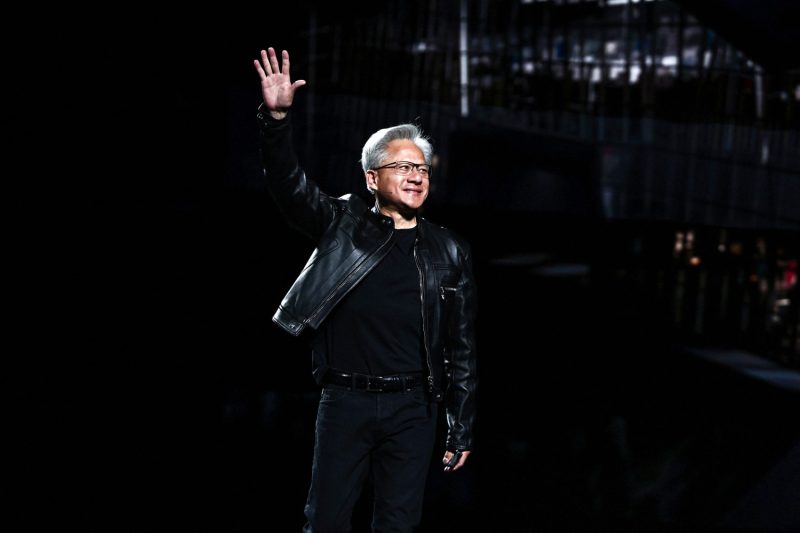
Nvidia CEO Jensen Huang sold 100,000 shares of the chipmaker’s stock on Friday and Monday, according to a filing with the U.S. Securities and Exchange Commission.

The sales are worth nearly $15 million at Tuesday’s opening price.

The transactions are the first sale in Huang’s plan to sell as many as 600,000 shares of Nvidia through the end of 2025. It’s a plan that was announced in March, and it’d be worth $873 million at Tuesday’s opening price.

The Nvidia founder still owns more than 800 million Nvidia shares, according to Monday’s SEC filing. Huang has a net worth of about $126 billion, ranking him 12th on the Bloomberg Billionaires Index.

The 62-year-old chief executive sold about $700 million in Nvidia shares last year under a prearranged plan, too.

Nvidia stock is up more than 800% since December 2022 after OpenAI’s ChatGPT was first released to the public. That launch drew attention to Nvidia’s graphics processing units, or GPUs, which were needed to develop and power the artificial intelligence service.

The company’s chips remain in high demand with the majority of the AI chip market, and Nvidia has introduced two subsequent generations of its AI GPU technology.

Nvidia continues to grow. Its stock is up 9% this year, even as the company faces export control issues that could limit foreign markets for its AI chips.

In May, the company reported first-quarter earnings that showed the chipmaker’s revenue growing 69% on an annual basis to $44 billion during the quarter.

This post appeared first on NBC NEWS

Saga Metals Corp. (‘SAGA’ or the ‘Company’) (TSXV: SAGA) (OTCQB: SAGMF) (FSE: 20H) a North American exploration company focused on critical mineral discovery, is pleased to announce the mobilization and commencement of its 2025 summer field program at the 100% owned Radar Titanium Property (the ‘Property’) in Labrador, Canada.

Field crews arrived on site on June 17 and have initiated ground-based geophysical surveys targeting future high-priority drill targets. Concurrently, the team is constructing an access trail along the full 20 km strike extent of the Dykes River Intrusion oxide layering zone. Mobilizing drill rigs to the Trapper Zone is a first construction priority (see Figure 1 below).

The road and trail construction aims to provide direct access to both the eastern Hawkeye Zone and the western extent of the Trapper Zone. This strategic roadwork will significantly enhance logistical efficiency and exploration capacity across the entire 20 km oxide layering zone.

Figure 1: Detail of the Radar Titanium Project showcasing the road network from the Hawkeye Zone to the Trapper Zone and location of SAGA’s 2025 field programs.

SAGA’s field team is actively clearing overgrown sections of the historic forestry road to enable access for trucks and heavy equipment to the western areas of the Property. The program began with a 6-tonne excavator, while a larger 25-tonne unit is currently in transit and will be used to complete the remaining clearing work. Once operational, the 25-tonne excavator will also be deployed to construct a new access trail extending from the northwest end of the Trapper Zone, following the oxide layering zone southward before turning east toward the western anomalies within the Hawkeye Zone. This strategically designed, drill-compatible trail is a key component of SAGA’s infrastructure development, enabling efficient mobilization of diamond drilling equipment to high-priority targets and supporting cost-effective execution of future drilling campaigns.

Figure 2: SAGA’s field team utilizes a 6-tonne excavator to clear the old forestry road that runs east-west within the Radar project

Magnetic and Electromagnetic (EM) Survey over the ‘Trapper Zone’

As previously reported, targeted VLF-EM (Very Low Frequency electromagnetic survey) and magnetic surveys from Q4 2024 successfully defined drill targets for our maiden drill program over the Hawkeye zone. Now, our crews are targeting the Trapper zone that returned one of the highest responses in the regional airborne magnetic survey. SAGA has mobilized two geophysical crews to ensure complete survey coverage across the Trapper Zone within the next four weeks. Planned is a highly detailed magnetic and VLF-EM-survey over the northern anomaly of the Trapper zone.

Due to the strength of the magnetic anomaly detected over the Trapper zone, SAGA’s geological team has had to continually recalibrate the geophysics instruments. To mitigate this, the Company has mobilized an additional instrument and expanded the team with two more personnel.

The survey employs a 25-meter station spacing along lines separated by 50 meters, allowing for detailed mapping of magnetic and conductive features associated with magnetite mineralization. This high-resolution approach is critical for accurately defining subsurface targets and enhancing confidence in drill planning for this promising western extension. The ultimate objective is to develop a magnetic inversion model—comparable to that successfully used at Hawkeye—to guide follow-up drilling along the broader 20-kilometre oxide layering trend.

Figure 3: SAGA’s field team conducting the magnetic and electromagnetic survey, including Very Low Frequency (VLF-EM) on the Radar Titanium Project

Michael Garagan, CGO & Director of SAGA, comments: We are fortunate to have exceptional infrastructure at the Radar Titanium project. The ability to complete low-cost maintenance on the forestry road and access trail into the Trapper zone will only further enhance the cost-effectiveness of future programs, adding tremendous value to shareholders. We are excited to have two teams conducting geophysics over the Trapper zone, with interpretations expected by mid-summer. As I previously mentioned, early indications suggest the Trapper zone contains some of the strongest magnetic anomalies, and we’ll be utilizing the magnetic inversions to delineate drill targets similar to the Hawkeye Zone.’

Figure 4: Radar Property map, depicting aeromagnetic anomalies, oxide layering and the site of the 2025 drill program. The Property is well serviced by road access and is conveniently located near the town of Cartwright, Labrador. A compilation of historical aeromagnetic anomalies is shown. SAGA has demonstrated the reliability of the regional airborne magnetic surveys after ground-truthing and drilling in the 2024 and 2025 field programs.

Radar Ti-V-Fe Project Overview:

The Company’s 100%-owned Radar Property is located 10 km from the coastal city of Cartwright, Labrador, benefiting from tremendous infrastructure, including road access, deep-water port, airstrip and nearby hydro-electric power. The Radar Property comprises 24,175 hectares and entirely encloses the Dykes River intrusive complex, mapped at 160 km² on the surface.

The Dykes River intrusive complex is a recently recognized Mesoproterozoic layered mafic intrusion (Gower, 2017). It has gained attention due geological similarities to large AMCG-type intrusions and a very extensive titanium–vanadium–iron (Ti-V-Fe) rich layer.

Radar Ti-V-Fe Project 2025 Winter Drill Program Highlights:

  • Analytical results have been received on all seven diamond drill holes from the 2025 winter program.
  • Combined with petrographic analysis, these assays confirm that the primary economic mineral is vanadiferous titanomagnetite, favourable for simplified metallurgical processing.
  • Notable intercepts of vanadiferous titanomagnetite from the 2025 winter drill program include:
    • 20.2 meters grading 31.35% Fe , 6.32% TiO₂ , and 0.435% V₂O₅ in HEZ-07
    • 57.7 meters grading 27.09% Fe, 5.305% TiO₂, and 0.365% V₂O₅ in HEZ-07
    • 25.0 meters grading 19.92% Fe , 4.14% TiO₂ , and 0.213% V₂O₅ in HEZ-05
    • 31.5 meters grading 25.95% Fe, 5.34% TiO 2 and 0.28% V 2 O 5 in HEZ-01
    • 50 meters grading 24.49% Fe, 4.74% TiO 2 and 0.305 % V 2 O 5 in HEZ-04
    • 28 meters grading 20.11% Fe, 4.22% TiO₂, and 0.214% V₂O₅ in HEZ-06
    • 37 meters grading 12.4% Fe, 4.17% TiO₂, and 0.069% V₂O₅ in HEZ-02
    • 55 meters grading 11.37% Fe, 4.07% TiO₂, and 0.051% V₂O₅ in HEZ-03
  • Titanomagnetite-rich zones average between 20% and 40% titanomagnetite, with localized massive layers exceeding 60%.
  • Drilling has confirmed the presence of oxide layering and associated magnetic anomalies to vertical depths of up to 300 meters.
  • Current drilling has tested just 1/40th of the identified 20 km strike extent of the oxide layering zone within the Dykes River Intrusion (refer to Figure 4 for map view) .

(Click here to see SAGA’s news release dated May 5, 2025 for full information on holes HEZ-01 & HEZ-04, here to see SAGA’s news release dated May 26, 2025 for full information on holes HEZ-05 & HEZ-07 and here to see SAGA’s news release dated May 29, 2025 for full information on holes HEZ-06, HEZ-02 & HEZ-03)

Engaged Alphabridge Group Inc. for Equity Research Coverage

The Company has engaged Alphabridge Group Inc. (‘Alphabridge’) to provide equity research coverage on the Company for an initial term of one year, beginning on June 25, 2025. Total consideration payable to Alphabridge is $15,000 plus GST. Alphabridge services will be provided via its principal Vasant Jain, based out of Vancouver, BC. Alphabridge and its principal are arm’s length to the Company, and to the knowledge of the Company hold no securities of the Company as of the date hereof.

Qualified Person

Paul J. McGuigan, P. Geo., is an Independent Qualified Person as defined under National Instrument 43-101 and has reviewed and approved the technical information related to the Radar Ti-V-Fe Project disclosed in this news release.

About Saga Metals Corp.

Saga Metals Corp. is a North American mining company focused on the exploration and discovery of critical minerals that support the global transition to green energy. The Company’s flagship asset, the Double Mer Uranium Project, is located in Labrador, Canada, covering 25,600 hectares. This project features uranium radiometrics that highlight an 18km east-west trend, with a confirmed 14km section producing samples as high as 0.428% U 3 O 8 and uranium uranophane was identified in several areas of highest radiometric response (2024 Double Mer Technical Report).

In addition to its uranium focus, SAGA owns the Legacy Lithium Property in Quebec’s Eeyou Istchee James Bay region. This project, developed in partnership with Rio Tinto, has been expanded through the acquisition of the Amirault Lithium Project. Together, these properties cover 65,849 hectares and share significant geological continuity with other major players in the area, including Rio Tinto, Winsome Resources, Azimut Exploration, and Loyal Lithium.

SAGA also holds additional exploration assets in Labrador, where the company is focused on discovering titanium, vanadium, and iron ore. With a portfolio that spans key minerals crucial to the green energy transition, SAGA is strategically positioned to play an essential role in the clean energy future.

On Behalf of the Board of Directors

Mike Stier, Chief Executive Officer

For more information, contact:
Saga Metals Corp.
Investor Relations
Tel: +1 (778) 930-1321
Email: info@sagametals.com
www.sagametals.com

Neither the TSX Venture Exchange nor its Regulation Service Provider (as that term is defined in the policies of the TSX Venture Exchange) accepts responsibility for the adequacy or accuracy of this release.

Cautionary Disclaimer

This news release contains forward-looking statements within the meaning of applicable securities laws that are not historical facts. Forward-looking statements are often identified by terms such as ‘will’, ‘may’, ‘should’, ‘anticipates’, ‘expects’, ‘believes’, and similar expressions or the negative of these words or other comparable terminology. All statements other than statements of historical fact, included in this release are forward-looking statements that involve risks and uncertainties. In particular, this news release contains forward-looking information pertaining to the exploration of the Company’s Radar Project and engagement of Alphabridge for equity research coverage. There can be no assurance that such statements will prove to be accurate and actual results and future events could differ materially from those anticipated in such statements. Important factors that could cause actual results to differ materially from the Company’s expectations include, but are not limited to, changes in the state of equity and debt markets, fluctuations in commodity prices, delays in obtaining required regulatory or governmental approvals, environmental risks, limitations on insurance coverage, risks and uncertainties involved in the mineral exploration and development industry, and the risks detailed in the Company’s continuous disclosure filings with securities regulations from time to time, available under its SEDAR+ profile at www.sedarplus.ca. The reader is cautioned that assumptions used in the preparation of any forward-looking information may prove to be incorrect. Events or circumstances may cause actual results to differ materially from those predicted, as a result of numerous known and unknown risks, uncertainties, and other factors, many of which are beyond the control of the Company. The reader is cautioned not to place undue reliance on any forward-looking information. Such information, although considered reasonable by management at the time of preparation, may prove to be incorrect and actual results may differ materially from those anticipated. Forward-looking statements contained in this news release are expressly qualified by this cautionary statement. The forward-looking statements contained in this news release are made as of the date of this news release and the Company will update or revise publicly any of the included forward-looking statements only as expressly required by applicable law.

Figures accompanying this announcement are available at:

https://www.globenewswire.com/NewsRoom/AttachmentNg/2eb3b876-a32a-4368-9ef8-720dbe25a86e

https://www.globenewswire.com/NewsRoom/AttachmentNg/1fff0845-d761-439e-9e00-2e08b50d6fb4

https://www.globenewswire.com/NewsRoom/AttachmentNg/67f8e3d8-49c6-4ff3-8a83-e47ebd9d2558

https://www.globenewswire.com/NewsRoom/AttachmentNg/5514e271-097c-4aa2-80b3-32cafac1966f

News Provided by GlobeNewswire via QuoteMedia

This post appeared first on investingnews.com

The headlines may proclaim a ceasefire, but let us be clear: the Israeli-Iranian war is far from over. What we are witnessing is not peace—it is a tactical intermission. The guns may be momentarily silent, but the war remains alive in motive, method, and mindset.

Don’t be fooled. Israel-Iran ceasefire represents tactical intermission, not lasting peace

President Donald Trump’s June 23 announcement of a ‘complete and total ceasefire’ between Israel and Iran brought a welcome pause to twelve days of deadly escalation. Yet his own remarks in the hours that followed, including en route to the NATO summit, betrayed the precarious nature of that agreement—and the volatility of the players involved.

Just before boarding Air Force One, Trump issued a pointed public rebuke: ‘Calm down, Israel!’ He warned Prime Minister Benajamin Netanyahu that any strike against Iran after the ceasefire’s effective hour would constitute a violation. His words reflected not only diplomatic urgency but the fragility of the arrangement he had just announced.

And yet, within hours, both Iran and Israel reportedly launched limited retaliatory actions. Trump, visibly frustrated, criticized both sides for breaking faith: ‘They don’t know what the f*** they’re doing.’ He added: ‘I gotta get Israel to calm down now,’ underscoring the degree to which U.S. pressure—not mutual trust—was the linchpin of the ceasefire’s early survival.

Therein lies the truth: the war has not ended. It has simply shifted forms.

Is the war between Israel and Iran over? Only if we define ‘war’ in the narrowest kinetic terms. But if we understand war as a clash of wills, ideologies, and strategic aims—then this war continues, just under a different banner.

There is no treaty, no verification regime, and no mutual recognition of legitimacy between the two states. Iran continues to deny Israel’s right to exist, and Israel views Iran’s nuclear program—and its regional proxy network—as existential threats. A formal cessation of hostilities requires more than silence; it requires resolution. We are nowhere near that.

To understand why this war is not over, consider the strategic objectives of each side. Israel’s campaign was aimed at degrading Iran’s nuclear infrastructure—particularly the underground enrichment site at Fordow. While successful in the short term, it did not eliminate Iran’s scientific knowledge or ideological commitment to nuclear capability. Tehran still possesses the technical talent, the raw materials, and—most dangerously—the motivation to rebuild and accelerate its weapons program.

Iran’s retaliatory missile strikes on Israel and U.S. bases in Qatar and Iraq—though largely intercepted—served as symbolic warnings. More importantly, Tehran signaled that it retains the capacity to strike deep into the region. That message wasn’t just for Tel Aviv—it was for Washington, Riyadh, and the world.

Behind the scenes, the shadow war continues. Iran’s Islamic Revolutionary Guard Corps still arms Hezbollah in Lebanon, trains militias in Iraq and Syria, and directs proxy warfare through the Houthis in Yemen. Israeli airstrikes on Damascus and other locations in Syria persist, albeit in a lower-key fashion. Cyber operations, drone surveillance, and intelligence targeting remain on full alert. These are not post-war conditions. These are indicators of an unresolved and evolving conflict.

Even the diplomacy surrounding the ceasefire reflects its fragility. The agreement was brokered through indirect channels, with no official joint communiqué, no UN endorsement, and no follow-on roadmap. Iran has not re-engaged with the International Atomic Energy Agency. Israel, understandably, maintains its right to strike again if necessary. The rhetoric has cooled, but the posture remains hardened.

And then there is the political reality. Leaders in both countries face domestic constituencies who are skeptical of compromise. Hardliners in Tehran see the ceasefire as a pause to reload, not a step toward reconciliation. In Jerusalem, the Israeli public broadly supports preemptive action against a nuclear-armed adversary. Neither side has the political incentive—nor the strategic trust—to walk away from confrontation.

So, is the war over? Only if we define ‘war’ in the narrowest kinetic terms. But if we understand war as a clash of wills, ideologies, and strategic aims—then this war continues, just under a different banner.

The international community must not confuse this quiet with peace. Rather, it must prepare for what comes next: a sustained period of covert confrontation, regional volatility, and the ever-present risk of open warfare returning with little warning. Diplomats must act urgently, not naively. Military leaders must remain on alert. And political leaders—especially in Washington—must resist the temptation to declare victory before the conflict is truly resolved.

Trump’s visible exasperation and his blunt warnings serve as a reminder: this ceasefire is no more secure than the tempers and tactics of the adversaries it binds. The Israeli-Iranian war is not over. It has simply entered its next, and perhaps most perilous, phase.

This post appeared first on FOX NEWS

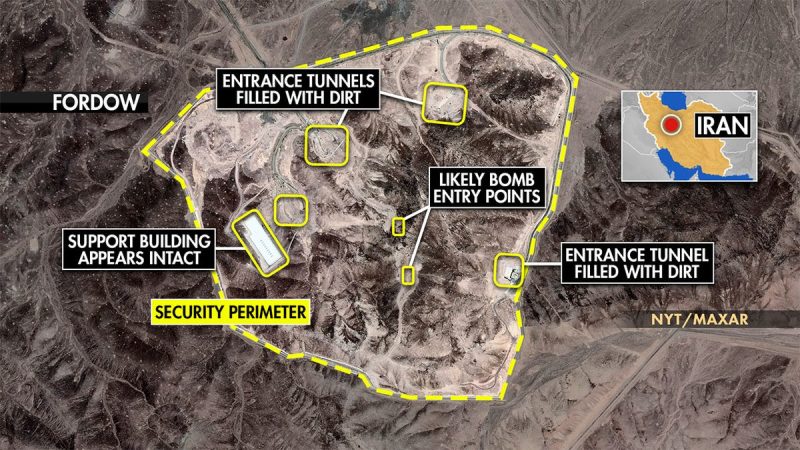
An Israeli assessment determined that the U.S. strikes on Iran set the country’s nuclear program back ‘many years.’ 

The Israel Atomic Energy Commission said that the U.S. destroyed ‘critical infrastructure’ at the Fordow nuclear facility and rendered it ‘inoperable.’

‘The devastating U.S. strike on Fordow destroyed the site’s critical infrastructure and rendered the enrichment facility inoperable. We assess that the American strikes on Iran’s nuclear facilities, combined with Israeli strikes on other elements of Iran’s military nuclear program, have set back Iran’s ability to develop nuclear weapons by many years,’ the Israel Atomic Energy Commission said in a statement. ‘The achievement can continue indefinitely if Iran does not get access to nuclear material.’

The Israeli assessment seemingly aligns with the Iranian Foreign Ministry spokesperson Esmail Baghaei’s statement on the status of the site. According to The Associated Press, Baghaei said that the country’s ‘nuclear installations have been badly damaged, that’s for sure.’

In the early hours of June 22 local time, Iran’s Fordow, Natanz and Isfahan nuclear facilities were hit. U.S. B-2 stealth bombers used 30,000-pound bunker busters on Fordow, which was Iran’s main underground enrichment site. 

Israel hit the site again on Monday as the country carried out strikes on roads leading to the underground facility.

The latest strike on Fordow comes as the Israel Defense Forces said Israel also launched a series of strikes targeting the notorious Evin prison and several Iranian military command centers in an ‘ongoing effort to degrade the Iranian regime’s military capabilities.’

Iran’s nuclear chief, Mohammad Eslami, said on Tuesday that the country was assessing the damage and preparing to restore the facilities, according to Reuters. He added that Iran’s ‘plan is to prevent interruptions in the process of production and services.’ 

Both President Donald Trump and Israeli Prime Minister Benjamin Netanyahu vowed to respond if Iran rebuilds its nuclear program.

Fox News Digital’s Stephen Sorace contributed to this report.

This post appeared first on FOX NEWS

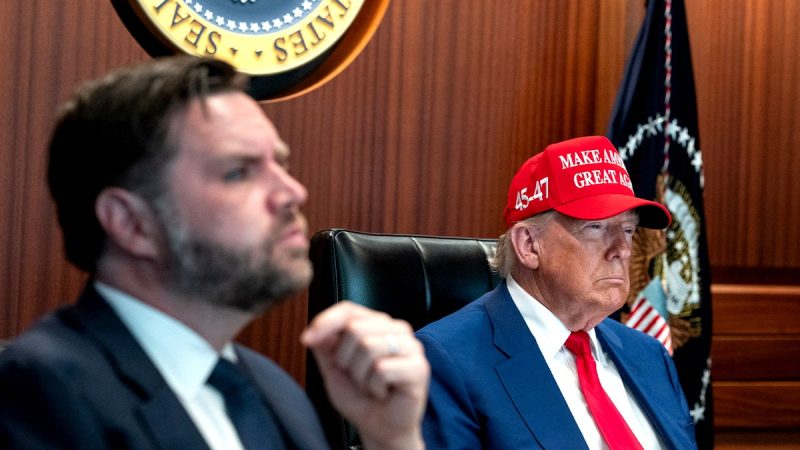
Ukrainian President Volodymyr Zelenskyy thanked President Donald Trump after they had a talk Wednesday at the NATO summit in the Netherlands — months after Vice President JD Vance called out Zelenskyy for not voicing more gratitude for U.S. support for Kyiv as it battles Moscow. 

When Zelenskyy visited the White House in February he sparred openly with Trump and Vance in the Oval Office over engaging in diplomacy with Russia to end the conflict, prompting Vance to ask the Ukrainian leader if he’d ‘said thank you once this entire meeting.’

But on Wednesday Zelenskyy made sure to thank Trump and the U.S. in a post on X following their meeting in The Hague. 

‘We covered all the truly important issues. I thank Mr. President, I thank the United States. We discussed how to achieve a ceasefire and a real peace,’ Zelenskyy said in a post on X on Wednesday. ‘We spoke about how to protect our people. We appreciate the attention and the readiness to help bring peace closer. Details will follow.’

Trump, Vance and Zelenskyy’s infamous Oval Office meeting in February started after Zelenskyy challenged Vance’s statements that diplomacy was the correct avenue to end the conflict. Zelenskyy questioned the value of diplomacy, noting that Russian President Vladimir Putin has broken other agreements in the past.

‘What kind of diplomacy, JD, you are speaking about?’ Zelenskyy said. ‘What do you mean?’

Vance said, ‘I’m talking about the kind of diplomacy that’s going to end the destruction of your country.’

‘Mr. President, with respect, I think it’s disrespectful for you to come into the Oval Office to try to litigate this in front of the American media,’ Vance said. ‘Right now, you guys are going around and forcing conscripts to the front lines because you have manpower problems. You should be thanking the president for bringing it, to bring it into this country.’

Following the tense exchange, Trump announced a halt to peace negotiations and said that Zelenskyy could return to the White House when he was ‘ready’ for peace. Just after leaving the White House, Zelenskyy issued a post on X thanking the U.S., Trump, Congress and the American people for backing Ukraine. 

Although Zelenskyy and Trump continued to exchange harsh barbs at one another following the Oval Office visit, they’ve subsequently spoken over the phone and met in person at St. Peter’s Basilica in Vatican City during Pope Francis’ April funeral. 

Meanwhile, Trump said Wednesday that his administration has not been able to finalize a peace deal with Ukraine and Russia, claiming that both leaders have been more challenging to work with than expected. 

‘Vladimir Putin has been more difficult,’ Trump told reporters Wednesday. ‘Frankly, I had some problems with Zelenskyy. You may have read about him, and it’s been more difficult than other wars.’ 

Still, Trump said that his meeting with Zelenskyy went smoothly, and that he would be speaking to Putin as well. 

‘He’s very nice, actually,’ Trump said of Zelenskyy. ‘A little rough at times. He couldn’t have been nicer. I think he’d like to see an end to this.’ 

This post appeared first on FOX NEWS

Toni McAllister is a prominent voice in Louisiana’s logging industry, but as she told Fox News Digital on Tuesday, she is also ‘a mom and a wife’ from a middle-class family.

She is one of four Americans from across the country invited by House GOP leaders to Capitol Hill to promote President Donald Trump’s ‘one big, beautiful bill.’

It is a vast piece of legislation aimed at advancing Trump’s priorities on taxes, immigration, energy, defense and the national debt – which is taking Herculean political maneuvering to pass.

On Tuesday, House Speaker Mike Johnson, R-La., and other leaders pivoted from promoting it themselves, instead inviting their four guests to talk about their support for the bill, and what is at stake if it does not pass by the end of this year.

‘I believe that our tax rates in Louisiana for small businesses will jump up to around 43.4%. I mean, that’s literally half of what we’re working for. So what will we be working for to pay taxes?’ McAllister told Fox News Digital.

She is the executive director of the Louisiana Logger’s Association, a trade group representing loggers in the Bayou State. In addition to that, however, McAllister said she was concerned about a tax hike for her family if the bill is not passed.

‘I’m just a regular middle-class family. And in Louisiana, the average tax hike would be around $1,300. That’s a month of groceries. That’s anything extra that we can do with our kids. $1,300 is a lot of money,’ she said.

Projections released by the House GOP show that under the lower chamber’s version of the bill, an average family could see an additional $1,300 in tax relief, while a failure to pass it could lead to a $1,700 tax hike.

Republicans are aiming to use the bill to extend Trump’s 2017 Tax Cuts and Jobs Act, as well as implement a host of new policies like eliminating taxes on tipped and overtime wages.

Retired Sheriff James Stuart said those latter measures, which Trump campaigned on in 2024, will be critical to law enforcement recruitment in Minnesota.

‘One of the most persistent struggles of agencies across the country is retention and recruitment. No tax on overtime will increase take-home pay for our peace offices, which will boost morale and ease burdens for them and their families,’ Stuart, who is also executive director of the Minnesota Sheriff’s Association, told Fox News Digital.

However, Paul Danos, the head of a family-owned offshore energy service company in Gray, Louisiana, told Fox News Digital that Republicans’ energy policies are also critical for his business.

‘If this bill doesn’t pass, then we find ourselves where we were in the last administration, with that lack of predictability around lease sales,’ Danos said.

‘Those multibillion-dollar investments that are creating jobs, that are providing safe and affordable energy here in the US, are jeopardized. We start having to depend on other nations for our oil and gas.’

That, he argued, would lead to higher prices for everyone.

Sam Palmeter, who leads engineering at Laser Marking Technologies, one of the last two laser technology companies owned and operated in America, said he and others in Michigan were ‘tired of brain drain,’ hoping Trump’s bill could reverse that and revitalize manufacturing in the region.

‘We won’t grow, and we won’t provide as many jobs in the industrial manufacturing and engineering space,’ Palmeter said.

‘And that’s sad, because there’s nothing that makes me more proud than hiring a local kid…So he’s working 13 miles from home. He doesn’t have to leave his family and everything to exercise that degree.’

It is not yet clear if their arguments or others in favor of Trump’s bill will have any effect, however. 

The legislation has been met with Republican critics in the House and Senate, while GOP leaders have styled it as the best possible path forward for a conservative policy overhaul while they control Congress and the White House.

While the dissent is coming from a relatively small number of Republicans, it could be enough to derail the legislation – both House and Senate GOP leaders are grappling with razor-thin margins of just a few votes.

Trump recently ordered lawmakers to remain in Washington, D.C., until the bill is passed – despite a planned recess next week for the Fourth of July holiday.

The bill passed the House by one vote last month, and a modified version is expected to get a Senate vote sometime this week. Both the House and Senate must pass identical products before they can be sent to Trump’s desk.

This post appeared first on FOX NEWS