Author

admin

Browsing

President Donald Trump on Monday said that his administration would be sending defensive weapons to Ukraine so the war-torn country could defend itself from Russia’s ongoing invasion, an apparent turnaround after the Pentagon said last week it was pausing such deliveries.

His comments came as Russian attacks on Ukraine killed at least 11 civilians and injured more than 80 others, including seven children, officials said Monday.

‘We have to,’ Trump said when questioned at the start of a dinner he was hosting at the White House for Israeli Prime Minister Benjamin Netanyahu. ‘They have to be able to defend themselves. They’re getting hit very hard now. We’re going to send some more weapons — defensive weapons primarily.’

Russia continues to advance and now currently controls just under a fifth of Ukrainian territory, including Crimea, all of Luhansk, the lion’s share of three other regions and slivers of three additional regions.

Trump’s repeated efforts to broker a ceasefire have not been successful, and the president continued to vent his frustration with Russian President Vladimir Putin, who continues to escalate military actions.

‘I’m not happy with President Putin at all,’ Trump said.

The Defense Department later said it would send additional defensive weapons to Ukraine at Trump’s direction, to ensure the Ukrainians can defend themselves while efforts continue to secure a lasting peace. 

‘Our framework for POTUS to evaluate military shipments across the globe remains in effect and is integral to our America First defense priorities,’ Pentagon spokesman Sean Parnell said.

Ukraine has been asking Washington to sell it more Patriot missiles and systems that it sees as key to defending its cities from intensifying Russian air strikes.

Last week the Pentagon froze some shipments of critical weapons to Ukraine, including Patriot missile interceptors and 155 mm artillery shells, at a pivotal moment in Kyiv’s war with Russia, Fox News confirmed. According to U.S. military officials tracking the shipments, the weapons were already staged in Poland before the order came down. 

It came as Russia launched its largest aerial attack of the war, nearly 500 drones and 60 missiles.

In response to Trump’s comments, the Kremlin said it would need time to clarify the specifics of U.S. weapons aid to Ukraine with Kremlin spokesman Dmitry Peskov said there were many contradictory statements about U.S. weapons supplies to Ukraine, though it was clear that European weapons deliveries were continuing.

‘Obviously, supplies are continuing, that’s clear. Obviously, the Europeans are actively involved in pumping Ukraine full of weapons,’ Peskov said, according to Reuters. ‘As for what kind of supplies and in what quantity Ukraine continues to receive from the United States, it will still take time to clarify this definitively,’ he added.

Peskov said that Moscow appreciated Trump’s efforts to initiate direct negotiations between Russia and Ukraine, and that there was significant potential for restarting Russian-U.S. trade and economic relations.

Separately, Russia’s transport minister Roman Starovoit was found dead in what authorities said was an apparent suicide — news that broke hours after the Kremlin announced he had been dismissed by Putin, per The Associated Press. Russian media have reported that his dismissal could have been linked to an investigation into the embezzlement of state funds allocated for building fortifications in the Kursk region, where he served as governor before being appointed transportation minister.

The firing of Starovoit followed a weekend of travel chaos — airports grounded hundreds of flights due to the threat of drone attacks from Ukraine. Russian officials did not give a reason for his dismissal.

Fox News’ Jasmine Baehr and Jennifer Griffin as well as The Associated Press and Reuters contributed to this report.
This post appeared first on FOX NEWS

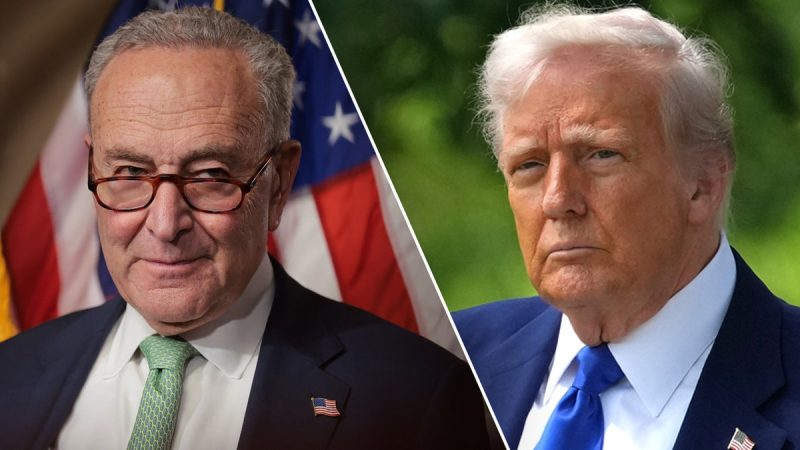
Senate Republicans are set to consider a multibillion-dollar package of cuts from the White House, but the top Senate Democrat warned that doing so could have consequences for a later government funding showdown.

Senate Minority Leader Chuck Schumer, D-N.Y., warned on Tuesday that the Senate GOP’s plan to move forward with a $9.4 billion rescissions package would have ‘grave implications’ on Congress, particularly the forthcoming government funding fight in September.

‘Republicans’ passage of this purely partisan proposal would be an affront to the bipartisan appropriations process,’ Schumer wrote in a letter to fellow Senate Democrats.

‘That’s why a number of Senate Republicans know it is absurd for them to expect Democrats to act as business as usual and engage in a bipartisan appropriations process to fund the government, while they concurrently plot to pass a purely partisan rescissions bill to defund those same programs negotiated on a bipartisan basis behind the scenes,’ he continued.

The rescissions package, proposed by the Impoundment Control Act, allows the White House to request that Congress roll back congressionally appropriated funding. Such proposed cuts must be approved by both chambers within 45 days.

This package in particular, which narrowly squeaked through the House by a two-vote margin last month, would claw back $8.3 billion in funding for the U.S. Agency for International Development (USAID), and over $1 billion in cuts to the Corporation for Public Broadcasting (CPB), the government-backed funding arm for NPR and PBS.

The package, informed heavily by the cuts proposed by President Donald Trump’s Department of Government Efficiency, formerly helmed by tech billionaire Elon Musk, would only need to pass a simple majority in the upper chamber to pass.

Musk and DOGE made USAID a primary target of their hunt for waste, fraud and abuse within the federal government, dismantling much of the long-standing organization ahead of the rescission request. 

The impending deadline to fund the government in September will either require the passage of a dozen appropriations bills – something Congress has not done in years – or the need to work with Democrats to crest the 60-vote threshold in the Senate.

And the rescissions package is not wildly popular among Republicans.

Senate Appropriations Chair Susan Collins, R-Maine, said during a hearing on the package late last month that she was concerned about proposed cuts to the President’s Emergency Plan for AIDS Relief (PEPFAR) and the CPB, and warned that cuts to the AIDS and HIV prevention program would be ‘extraordinarily ill-advised and shortsighted.’

Schumer is no stranger to trying to leverage government funding fights to his advantage. Earlier this year, he withheld support for the House GOP-authored government funding extension before ultimately agreeing to the deal.

That same scenario could play out once more come September.

‘This is beyond a bait-and-switch – it is a bait-and-poison-to-kill,’ Schumer said. ‘Senate Republicans must reject this partisan path and instead work with Democrats on a bipartisan appropriations process.’

This post appeared first on FOX NEWS

The year’s second quarter was a defining period for digital assets.

The industry converged at events like Consensus, held in May in Toronto, where discussions heavily focused on critical themes like regulatory clarity and real-world asset (RWA) tokenization.

Stablecoins, with their promise of enhanced cross-border payment efficiency, were heavily covered, especially regarding the growing interest and innovation in yield-generating products.

Legislative initiatives, policy shifts and infrastructure developments have moved at a dizzying pace, and the ongoing integration of traditional finance with decentralized technologies has driven credibility and institutional engagement.

Looking ahead, continued adoption of digital assets is slated to reshape the global financial landscape fundamentally.

Q2 review: Market maturation, institutional integration and regulatory milestones

Q2 highlighted a maturing market that can absorb shocks while maintaining focus on long-term growth.

While scrutiny of officials’ crypto dealings, including those of US President Donald Trump and his family, kept headlines lively, the broader trend was one of increased credibility.

Early in the quarter, trade tensions between the US and China, combined with ongoing concerns that tariffs will lead to an economic fallout, dampened investor sentiment and weighed on risk assets.

However, investor confidence in Bitcoin was evident in its resilience. After a slide to around US$76,000 at the start of April, it reached the US$90,000s mid-month, before hitting a new all-time high of US$111,000 on May 22.

Institutional accumulation and clearer regulatory signals backed this sentiment, exemplified by the US Securities and Exchange Commission’s (SEC) approval of rule changes allowing Ether exchange-traded fund (ETF) options.

The SEC also updated its guidance on crypto company disclosures, while US President Donald Trump signed a resolution repealing the IRS’s DeFi broker rule. Closing off the quarter, the Federal Housing Finance Agency directed mortgage backers Fannie Mae and Freddie Mac on June 25 to propose single-family mortgage loan risk assessments that consider cryptocurrency on US-regulated exchanges as reserve assets.

These policy shifts were accompanied by surging investor interest in tokenized assets, including tokenized gold — with PAXG and XAUt hitting US$1.54 billion in market cap — and RWA products, particularly within real estate. Momentum was further extended into stablecoin yield products and new ETF filings.

A US$300 million large-scale infrastructure deal between global financial group Macquarie (ASX:MQG) and Bitfarms (TSX:BITF,NASDAQ:BITF) for a high-performance computing center exemplified the growing confidence among fintechs in the long-term viability of digital assets. This growing confidence was further underscored by Robinhood’s (NASDAQ:HOOD) expansion of its crypto footprint, notably with the early June acquisition of Bitstamp.

Combined, these events demonstrated growing market confidence in crypto’s future.

Meanwhile, Ripple’s acquisition of global prime broker Hidden Road signaled a new phase in TradFi-DeFi integration, accompanied by the Fed’s easing of restrictions on banks’ crypto exposure.

The Office of the Comptroller of the Currency’s clarification allowing banks to trade and outsource crypto operations signaled that US regulators increasingly view crypto infrastructure as critical to modern financial services.

Reports of Circle (NYSE:CRCL), BitGo, Coinbase Global (NASDAQ:COIN) and Paxos exploring bank charters further underscored the convergence of TradFi and DeFi, as did Coinbase’s US$100 million credit facility to Riot Platforms (NASDAQ:RIOT); this type of structured financing is typically reserved for banks.

Further solidifying this trend, Stripe finalized a deal to acquire Privy, bringing crypto wallet infrastructure in-house and underscoring how fintech leaders are embedding digital asset rails into their core platforms.

Coinbase also acquired derivatives marketplace Deribit, a US$2.9 billion investment, part of a broader move to dominate digital asset infrastructure and market access. In the retail space, investor exposure widened through Galaxy Digital (NASDAQ:GLXY) and Circle’s Wall Street debut.

Policy also evolved. The GENIUS Act, a legislative companion to the STABLE Act, advanced in the Senate, proposing guardrails for stablecoins while carving out flexibility for banks to issue tokenized deposits, while crypto reserve legislation advanced in New Hampshire, Texas and Arizona.

Still, operational risks remained. A US$223 million exploit hit the Cetus protocol, and Coinbase suffered a US$20 million ransomware attack, reminders that digital assets remain a high-stakes environment.

Bitcoin price performance, Q2 2025. 

Chart courtesy of CoinGecko.

Q3 outlook: Regulatory progress, tokenization growth and market expansion

Further regulatory clarity is expected in Q3, clearing the way to enable more use cases and a deeper integration between DeFi and TradFi. House Republicans are prioritizing the swift enactment of comprehensive stablecoin legislation, aiming to unify the Senate’s GENIUS Act and the House’s STABLE Act.

Meanwhile, the CLARITY Act, which has a broader focus on establishing a general market structure for all digital assets, is positioned for a vote in the House of Representatives after clearing two committees.

Regulators on the SEC’s Crypto Task Force are considering a conditional exemptive order to allow crypto firms to bypass certain broker-dealer, clearing agency and exchange registration requirements. The nuances of regulated staking activities are still being worked out, especially regarding how they apply to specific products like ETFs.

On the retail front, tokenization momentum shows no sign of slowing. A discussion group on RWAs at Consensus agreed that the resurgence of tokenization is largely driven by the utility and functionality it provides to assets.

Beyond efficiency, Carlos Domingo, co-founder and CEO of Securitize, added that tokenization brings assets with intrinsic, real-world value onto the blockchain, allowing new financial applications and broader access to those holdings.

“Now we’re seeing more large-scale production,” he explained.

“We’re seeing (things) like precious minerals coming up, and we’re seeing commodities and other equities, a lot of startups that want to tokenize and use platforms like ours to tokenize their cap tables.”

At Consensus, Arthur Breitman, co-founder of Tezos, explained that his platform, uranium.io, enables the trading of physical uranium using a token, xU3O8, which allows for fractional ownership of a commodity that trades over-the-counter for roughly US$4 million. “Typically, uranium will look at pounds, but you can buy a fraction of a token. So really, you can buy a few cents of xU308,” he told the audience during his presentation.

Additionally, crypto infrastructure development by major fintechs and traditional finance entities, coupled with new public market entrants, could broaden investment opportunities.

For Q3, investors will be monitoring key publicly traded players such as Robinhood, fresh off its Bitstamp acquisition, as well as new Wall Street newcomers Circle and Galaxy Digital.

In the mining and compute infrastructure sector, CoreWeave (NASDAQ:CRWV) is in advanced talks to acquire Core Scientific (NASDAQ:CORZ), marking a move to merge compute-intensive infrastructure with mining operations, driven by crossover demand from AI and crypto sectors.

Beyond dedicated crypto firms, Strategy (NASDAQ:MSTR) and Japan’s Metaplanet (TSE:3350,OTCQX:MTPLF) added substantially to their crypto holdings in Q2, with no signs of slowing down.

For Bitcoin, price projections for Q3 range between a new resistance level around US$120,000 and support at US$75,000. ARK Invest increased its Bitcoin price forecast for 2030 from US$1.5 million to US$2.4 million in Q2, citing growing institutional interest and Bitcoin’s expanding role as “digital gold.’

These developments suggest Q3 will may continue building on the credibility and utility that defined Q2. With regulation advancing, institutional rails expanding and tokenization gaining real-world traction, digital assets are increasingly seen not as a parallel world to the world of finance, but as the next evolution of it.

Securities Disclosure: I, Meagen Seatter, hold no direct investment interest in any company mentioned in this article.

This post appeared first on investingnews.com

Here’s a quick recap of the crypto landscape for Friday (July 4) as of 12:00 p.m. UTC.

Get the latest insights on Bitcoin, Ethereum and altcoins, along with a round-up of key cryptocurrency market news.

Bitcoin and Ethereum price update

Bitcoin (BTC) is priced at US$108,948, down by 1.6 percent in the last 24 hours. The day’s range for the cryptocurrency brought a low of US$107,741 and a high of US$109,997.

Bitcoin price performance, July 4, 2025.

Chart via TradingView.

Bitcoin’s rally to US$108,000 followed strong US labor data that boosted risk appetite early on, alongside continued inflows into Bitcoin spot ETFs (nearly US$50 billion), which helped anchor prices despite broader equity market pullbacks.

Market watchers also noted heightened volatility following the reactivation of two long-dormant Bitcoin wallets containing roughly 20,000 BTC (worth over US$2 billion), raising questions about potential future dumping.

Ethereum (ETH) is priced at US$2,549.85, down by 2.7 percent over the past 24 hours. Its lowest valuation on Wednesday was US$2,502.39 and its highest was US$2,600.55.

Altcoin price update

  • Solana (SOL) was priced at US$150.30, up by 5 percent over 24 hours. Its highest valuation as of Friday was US$153.26, and its lowest was US$146.61.
  • XRP was trading for US$2.24, down by 1.4 percent in 24 hours. The cryptocurrency’s lowest valuation was US$2.21 and its highest was US$2.28.
  • Sui (SUI) is trading at US$2.92, showing a decrease of 3.6 percent over the past 24 hours. Its lowest valuation was US$2.87 and its highest was US$3.07.
  • Cardano (ADA) is priced at US$0.5817, down by 3.1 percent in the last 24 hours. Its lowest valuation as of Wednesday was US$0.5715 and its highest was US$0.6028.

Today’s crypto news to know

Trump’s Big Beautiful Bill passes Congress, sending cryptos higher

US President Donald Trump’s flagship Big Beautiful Bill, featuring sweeping tax cuts, narrowly passed the House of Representatives on July 3 with a 218 to 214 vote and now awaits his signature.

Elon Musk criticized the bill for potentially inflating the deficit by trillions, while Trump suggested Musk’s criticism stemmed from policy clashes on EV incentives.

Coinbase Global (NASDAQ:COIN) CEO Brian Armstrong also raised concerns that a ballooning debt could paradoxically fuel Bitcoin’s status as a reserve asset.

Bitcoin traded near US$109,886 after the news, with other leading coins including Ethereum and Solana also posting gains. The total crypto market cap climbed to US$3.39 trillion following the vote.

Bitcoin power shift as whales sell 500,000 BTC to institutions

A major redistribution of Bitcoin is underway as long-time holders of large amounts of Bitcoin have sold off around 500,000 Bitcoin over the past year, worth more than US$50 billion at current prices.

According to a Bloomberg report, these sales are being absorbed almost equally by institutional buyers, including spot ETFs and corporate treasuries. That pattern is turning Bitcoin from a high-volatility speculative bet into a steadier institutional portfolio allocation. Despite consistent positive news for crypto in recent months, the asset has struggled to break through resistance around US$110,000, showing a consolidation phase.

Some of the whales cashing out are early holders dating back to Bitcoin’s earliest cycles, Bloomberg reports, who are swapping Bitcoin for stock-linked deals instead of simply liquidating.

Russian giant Rostec to issue ruble-backed stablecoin

State-owned Russian conglomerate Rostec is moving to launch a ruble-pegged stablecoin called RUBx and a payments network named RT-Pay before year-end, according to Russian state media.

The stablecoin will be anchored one-to-one with ruble deposits held in treasury accounts, and its code will be independently audited by CertiK. RT-Pay will integrate directly with Russia’s banking system, aiming for instant settlement and smart contract functionality even outside business hours.

Rostec says its platform will follow Russia’s anti-money-laundering and terrorism-financing requirements, in line with the Bank of Russia’s rules.

The stablecoin will run on the Tron blockchain, with its smart contract code to be published on GitHub.

Coinbase’s Base sees US$4 billion in outflows, Ethereum gains US$8.5 billion

Coinbase’s Layer 2 network Base has lost significant traction this year, registering US$4.3 billion in net outflows through cross-chain bridges, data shows.

This downturn is a sharp reversal from the US$3.8 billion of inflows Base attracted in 2024, when it led the sector in bridge activity. Meanwhile, Ethereum has staged a comeback, seeing US$8.5 billion in inflows compared to net outflows last year.

The slowdown in stablecoin supply growth on Base, now holding steady above US$4 billion since May, points to a maturing user base and declining trading volumes.

Bridges are key pieces of crypto infrastructure that allow assets to move between chains, supporting interoperability.

Nano Labs starts US$1 billion BNB buying plan with US$50 million purchase

Hong Kong-based chipmaker Nano Labs (NASDAQ:NA) has made its first major move in an ambitious plan to hold up to 10 percent of Binance Coin (BNB) in circulation, snapping up US$50 million of BNB this week.

The company disclosed buying around 74,315 BNB at an average price of US$672, funded partly by convertible notes.

Nano Labs ultimately plans to allocate US$1 billion to BNB holdings, signaling a vote of confidence in Binance’s ecosystem. However, its shares fell nearly 5 percent on Thursday and lost another 2 percent after hours, reflecting investor worries about its exposure to volatile crypto reserves.

Nano Labs’ reserves, including Bitcoin, now stand around US$160 million in total.

Securities Disclosure: I, Giann Liguid, hold no direct investment interest in any company mentioned in this article.

This post appeared first on investingnews.com

Asara Resources (ASX:AS1,FSE:ALM) is leading the next West African gold rush from a strategic position in Guinea’s underexplored Siguiri Basin—an emerging gold district with over 30 million ounces of historical and current gold production.

Asara Resources’ flagship Kada Kold project hosts a 923,000-ounce, oxide-dominant gold resource just 35 km south of AngloGold Ashanti’s 6.2 Moz Siguiri mine. The company is systematically advancing development using the proven “string-of-pits” model that has driven success across West Africa, guided by a seasoned team behind the Kiniero Project, now a cornerstone asset for Robex (TSX:RBX).

Asara’s near-term strategy focuses on three key priorities: accelerating resource growth with 33,600 metres of RC and diamond drilling planned for 2025; advancing a low-CAPEX, oxide-first development approach that capitalizes on free-dig saprolite, strong gold recoveries, and a conventional CIL flowsheet; and preserving upside exposure to copper and silver-zinc through its Loreto joint venture with Teck and the optional Paguanta asset in Chile.

Company Highlights

  • Flagship Kada gold project – 923,000 oz gold and counting: 30.3 Mt @ 0.95 g/t gold with 59 percent oxide-transition ounces that show over 90 percent CIL recoveries and <3.5:1 strip ratio; resource remains open in every direction along a 15 km corridor.
  • Aggressive growth runway: Three contiguous licence applications (Talico, Banan and Syli) would lift the land package to 348 sq km and extend strike control to 35 km, only ~6 percent of which is drilled.
  • Experienced team who took the Kiniero project from an exploration resource to construction: Senior executives previously turned Robex’s Kiniero from 1 Moz to ~3.5 Moz and into a C$750 million market cap company, bringing an identical on-ground team, in-country relationships and proven workflows to Asara.
  • Strategic Land Package: Kada is in the heart of the prolific Siguiri Basin (>30 Moz gold endowment), just 35 km south of AngloGold Ashanti’s Siguiri Mine.
  • Strong Institutional Support: Top 20 shareholders control 70+ percent of the company.

This Asara Resources profile is part of a paid investor education campaign.*

Click here to connect with Asara Resources (ASX:AS1) to receive an Investor Presentation

This post appeared first on investingnews.com

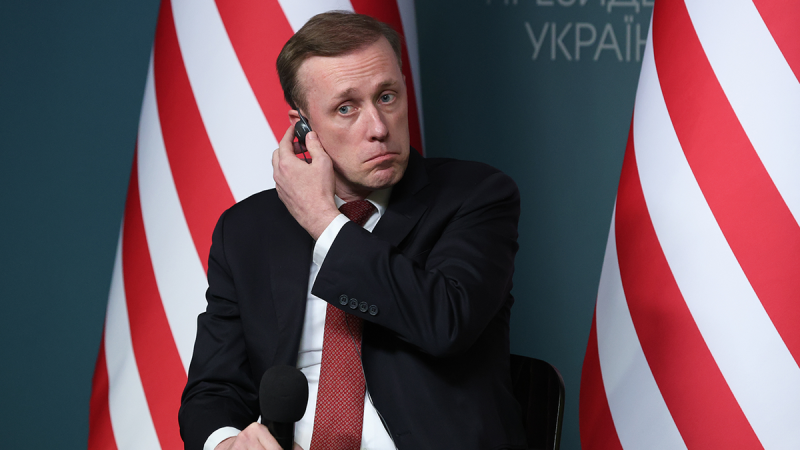
Democrats are assembling a new policy brain trust called Project 2029, an effort aimed at shaping the party’s long-term vision and regaining electoral strength.

But at a time when there’s widespread agreement that Democrats need fresh ideas and new voices, the inclusion of longtime party insiders — especially former President Joe Biden’s national security advisor Jake Sullivan — is raising eyebrows across the political spectrum.

‘It’s really disappointing to see the lack of self-awareness on Jake’s part,’ said Brett Bruen, former director of global engagement in the Obama White House. ‘Having Jake involved, let alone leading this, will only lead to stupid, superficial changes.’

‘These Democratic leaders need to take a long look in the mirror and understand they played a big part in bringing this situation about — and exit stage left.’

Modeled in name and structure after the Heritage Foundation’s conservative Project 2025, Project 2029 brings together high-profile Democratic veterans to outline a policy road map. After a decade of standing more against President Donald Trump than for anything else, the group is dedicated to helping Democrats define the policies that can win the 2028 election.

The initiative, first reported by The New York Times, is led by longtime Democratic strategist Andrei Cherny and a cast of familiar faces — including Sullivan, Neera Tanden, Biden’s domestic policy advisor; Anne-Marie Slaughter, CEO of New America; Justin Wolfers, University of Michigan economist; Jim Kessler, co-founder of Third Way; and Felicia Wong , former president of the Roosevelt Institute. 

But Sullivan’s role has drawn particular criticism from both Republicans and progressives. 

Sullivan was Biden’s top advisor during the chaotic 2021 withdrawal from Afghanistan, which resulted in the deaths of 13 U.S. service members. He reportedly offered to resign at the time once the evacuation didn’t go as planned. 

He’s also drawn fire for the Biden administration’s failure to help Israel and Hamas reach a lasting ceasefire, and for its Ukraine policy — which, as one European diplomat told Fox News Digital, seemed aimed at letting Ukraine ‘lose slowly.’​​

‘Why isn’t Jake Sullivan working at Chipotle?’ quipped Steven Moore, founder of the Ukraine Freedom Project, on a podcast in 2024. 

‘Jake in his position both as national security advisor and in Biden world is one of the last people on earth that should be involved in a reset for the Democratic Party,’ said Bruen.

Sullivan did not reply to a request for comment by Fox News Digital.

Zohran Momdani’s stunning upset in New York City’s mayoral primary over former Gov. Andrew Cuomo has reignited a debate over whether Democrats on a national level need to start taking progressivism seriously.

‘The people responsible for driving the Democratic Party into a ditch are now asking for the keys again,’ said Joseph Geevarghese, executive director of progressive group Our Revolution. ‘Leaders like Zohran Mamdani are showing what’s possible when you speak directly to working-class pain and stand up to entrenched power.’

Despite the criticism, some Democrats defend Sullivan’s role and believe he could help unify the party.

‘He’s a historic organizer of the diverse lanes of Democratic foreign policy, and he’s done a great job with it,’ said Joel Rubin, a former deputy assistant secretary of state and Democratic strategist. However, Rubin questioned how much real influence Project 2029 will have, especially with no clear 2028 front runner.

‘We’re going to have a wide-open primary,’ Rubin said. ‘Unlike Project 2025, where Republicans had a candidate-in-waiting in Trump, we have no standard-bearer. So Project 2029 is going to be one of many blueprints for what a Democratic administration should do.’

Some argue that figures like Sullivan are better suited to bridge the divide between establishment figures and progressives than any leftist leader. 

‘He’s part of the old guard, but the old guard isn’t that old. There’s a lot of young people,’ one Democratic insider said. ‘You’d be hard-pressed to find people in the progressive lane pulling in establishment folks, whereas the establishment lane is working to pull in progressives.’

Sullivan’s GOP critics also point to his role in promoting now-debunked allegations during the 2016 election.

After a report from Slate claimed Trump Tower maintained a secret server communicating with Russia’s Alfa Bank, Sullivan — then a senior advisor to Hillary Clinton — amplified the claim.

‘This could be the most direct link yet between Donald Trump and Moscow,’ Sullivan said in a statement at the time. ‘This secret hotline may be the key to unlocking the mystery of Trump’s ties to Russia.’

Republicans later accused him of spreading unverified information and misleading the public.

This post appeared first on FOX NEWS

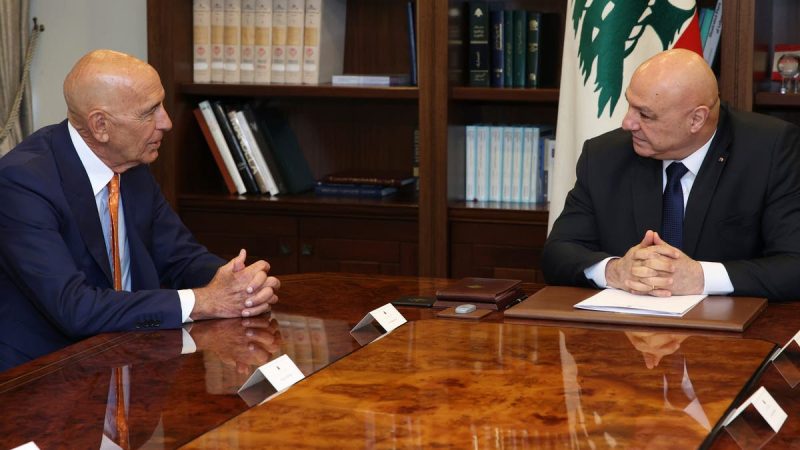
The U.S. envoy to Lebanon championed a response issued by Beirut on Monday to a proposal by Washington that detailed the complete disarmament of the Iran-backed terrorist group Hezbollah in exchange for the withdrawal of Israeli troops from its southern region. 

Envoy Thomas Barrack told reporters he was ‘unbelievably satisfied’ with Beirut’s timely response to a June 19 proposal that called for the disarmament of Hezbollah within a four-month timeframe. 

‘What the government gave us was something spectacular in a very short period of time,’ Barrack said following a meeting with Lebanese President Joseph Aoun, who took the top job in January. ‘I’m unbelievably satisfied with the response.’

The news comes as negotiators are also working to end Israel’s war against Hamas in the Gaza Strip after Jerusalem saw itself facing four fronts just last fall with a war on its southern border against Hamas, back-and-forth missile strikes with Iran as well as with the Houthis in Yemen, and a campaign that unfolded in Lebanon.

A truce was struck in Lebanon following a sophisticated pager bombing that targeted hundreds of Hezbollah members across the country in September. 

Hezbollah largely retreated from Lebanon’s southern region and has reportedly relinquished some arms.

But reporting by Reuters on Monday also suggested that Hezbollah may be unwilling to relinquish all its arms and the details of the U.S.-Lebanon agreement that would see the disarmament of the terrorist network remain unknown.

Israeli troops have remained in parts of southern Lebanon to counter what it argues is a continued threat posed by the terrorist network to Israeli communities that live on the northern border, and skirmishes have continued. 

Barrack, who also serves as U.S. ambassador to Turkey and special envoy for Syria, said he believes that, ultimately, Lebanon and Israel share the same goal – peace.

‘The Israelis do not want war with Lebanon,’ he said. ‘Both countries are trying to give the same thing – the notion of a stand-down agreement, of the cessation of hostilities, and a road to peace.’

Barrack also suggested that the Trump administration may look to add Lebanon to the list of nations that have normalized ties with Israel under the Abraham Accords – a chief policy of Trump’s during his first administration and one which he has once again made a top priority. 

Fox News Digital could not confirm whether Beirut is yet interested in that level of diplomacy with its southern neighbor.

But Barrack also suggested that Syria has already begun ‘dialogue’ with Israel. 

‘The dialogue has started between Syria and Israel, just as the dialogue needs to be reinvented by Lebanon,’ he said. ‘If you don’t want change, it’s no problem. The rest of the region is moving at Mach speed and you will be left behind.’

The comments come one week after Israeli Minister of Foreign Affairs Gideon Sa’ar said Jerusalem ‘is interested in expanding the Abraham Accords circle of peace and normalization.

‘We have an interest in adding countries, such as Syria and Lebanon, our neighbors, to the circle of peace and normalization – while safeguarding Israel’s essential and security interests,’ he added, though much of the normalization efforts would depend on Israel ending its war in the Gaza Strip. 

Reuters contributed to this report. 

This post appeared first on FOX NEWS

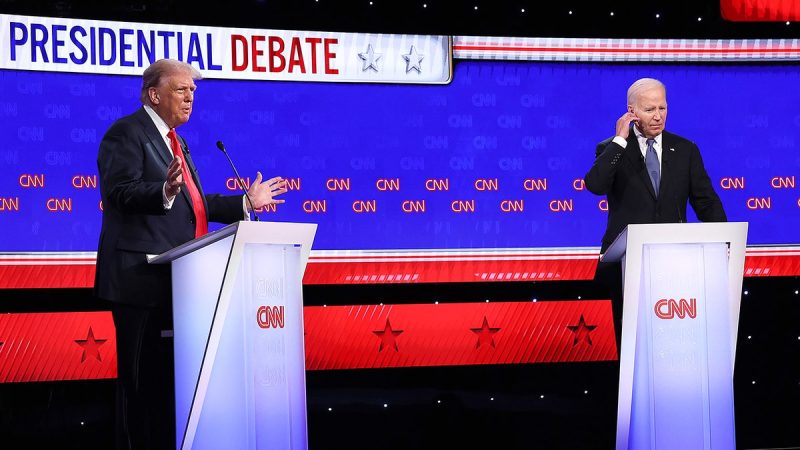
Senior advisors to then-President Joe Biden reportedly urged him to hold a debate against President Donald Trump as early as possible in an attempt to highlight Biden’s ‘leadership’ and Trump’s ‘weakness,’ according to a new book. 

The book, ‘2024: How Trump Retook the White House and the Democrats Lost America,’ is set for release Tuesday and claims that Biden’s team dismissed concerns about his age during the 2024 election cycle.  

The book, authored by Josh Dawsey of the Wall Street Journal, Tyler Pager of the New York Times and Isaac Arnsdorf of the Washington Post, says Biden senior advisors wrote up a memo advocating an initial spring debate, followed by a potential second one in early September after Labor Day. 

This strategy would allow Biden to take on Trump before early voting in battleground states kicked off, set the terms of the debate most advantageous for Biden and highlight Biden’s ‘leadership’ in contrast to Trump’s, according to a memo on the matter. 

‘By holding the first debate in the spring, YOU will be able to reach the widest audience possible, before we are deep in the summer months with the conventions, Olympics and family vacations taking precedence,’ Biden’s senior advisors reportedly wrote in an April 15, 2024, memo, published by Politico Playbook. ‘In addition, the earlier YOU are able to debate the better, so that the American people can see YOU standing next to Trump and showing the strength of YOUR leadership, compared to Trump’s weakness and chaos.’

Even so, the book reports that some Biden aides were hesitant about an early debate, with some even advocating that Biden shouldn’t debate Trump at all. Specifically, the book cites a Biden donor who pressed the White House in May 2024 to find a reason to pull Biden from the debates, after the donor reported being ‘alarmed’ by Biden’s behavior at a Chicago fundraiser. 

Meanwhile, the Trump White House said the debate backfired on Biden, and instead, shed light on Biden’s own weaknesses. 

‘The only highlight from the debate was Joe Biden’s inability (to) form a complete sentence,’ White House spokesperson Taylor Rogers said in a Monday statement to Fox News Digital. ‘American voters got a firsthand look at Biden’s weakness, his campaign in chaos, and what it looks like when real leader is missing from the White House.’ 

‘Unfortunately for the Democrats, no adviser or so-called ‘strategic’ move could save their incompetent candidates and terrible policies from President Trump’s historic, landslide victory,’ Rogers said. 

A spokesperson for Biden did not immediately respond to a request for comment from Fox News Digital. 

Biden and Trump ultimately did face off in a debate on June 27, 2024 – an event that prompted Biden to exit the election in July 2024 and led to Vice President Kamala Harris to take on Trump in November 2024. 

‘2024’ is one of several books that have been released in 2025 detailing Biden’s mental deterioration while in office and how Trump won the election. Another example is the book ‘Original Sin: President Biden’s Decline, Its Cover-up, and His Disastrous Choice to Run Again,’ released May 20. 

This post appeared first on FOX NEWS

Israel exchanged missile fire with Iran-backed Houthi rebels in Yemen on Monday, targeting the group’s ports and other facilities.

Israel’s initial strikes came in reaction to a suspected Houthi attack on a Liberian-flagged ship in the Red Sea. The vessel was targeted with explosives and small arms fire, causing it to take on water and forcing the crew to abandon ship. The Houthis have not yet claimed responsibility for the attack. Israel’s military issued a warning prior to its attack, which targeted ports at Hodeida, Ras Isa and Salif.

‘These ports are used by the Houthi terrorist regime to transfer weapons from the Iranian regime, which are employed to carry out terrorist operations against the state of Israel and its allies,’ the Israeli military said.

The Houthis responded in kind when Israeli missiles started falling, but Israel reported no casualties from the attack.

The Israeli attack also targeted the Galaxy Leader, a vessel seized by the Houthis in 2023. The IDF said the ship had been ‘fitted with a radar system to track international vessels for terror operations.’

Israeli Defense Minister Israel Katz threatened further strikes if Houthi aggression continues in the Red Sea or elsewhere.

‘What’s true for Iran is true for Yemen,’ Katz said in a statement. ‘Anyone who raises a hand against Israel will have it cut off. The Houthis will continue to pay a heavy price for their actions.’

Meanwhile, Houthi military spokesman Brig. Gen. Yahya Saree said the group is ‘fully prepared for a sustained and prolonged confrontation’ and plans to maintain its ‘naval blockade.’

U.S. Army Gen. Michael Kurilla told lawmakers in the House Armed Services Committee last month that Iran is the number one reason the Houthis remain a threat, adding the terrorist network ‘would die on the vine without Iranian support.’

News of Monday’s exchange comes just hours before President Donald Trump and Israeli Prime Minister Benjamin Netanyahu are set to meet at the White House.

The two leaders are expected to discuss the future of Gaza, with Israel insisting Hamas must be removed from the region completely.

The Associated Press contributed to this report

This post appeared first on FOX NEWS

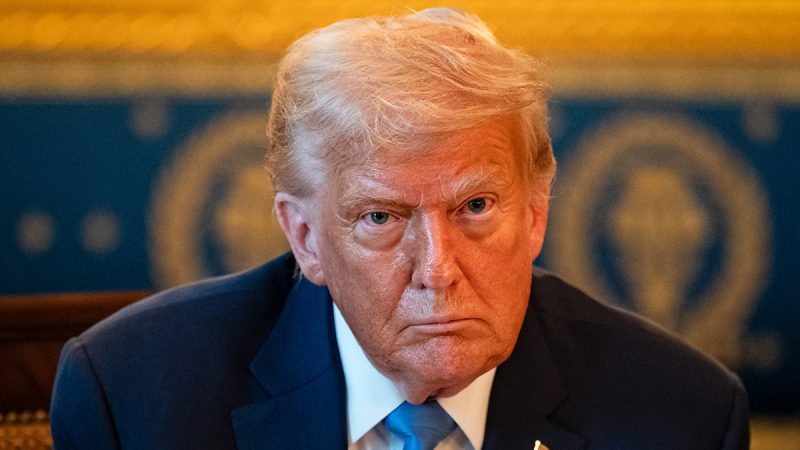
President Donald Trump slammed former first buddy Elon Musk for starting a third political party, saying such parties have ‘never worked’ while also calling the move ‘ridiculous.’

Trump spoke with reporters before boarding Air Force 1 in Bedminster, New Jersey, when he was asked about Musk’s move to start a third party.

‘I think it’s ridiculous to start a third party,’ Trump said from the tarmac. ‘We have a tremendous success with the Republican Party. The Democrats have lost their way, but it’s always been a two-party system, and I think starting a third party just adds to confusion.

‘It really seems to have been developed for two parties,’ the president continued. ‘Third parties have never worked. So, he can have fun with it, but I think it’s ridiculous.’

Musk announced the launching of a new political party called the ‘America Party’ on his social media platform X on Saturday.

The entrepreneur called the formation of the party a direct response to a corrupt political establishment that no longer represents the American people.

The announcement followed a viral July 4 poll on X, where Musk asked whether voters wanted independence from what he called the ‘two-party (some would say uniparty) system.’

Over 1.2 million votes were cast, with 65.4% saying ‘yes.’

‘By a factor of 2 to 1, you want a new political party and you shall have it,’ Musk posted Saturday. ‘When it comes to bankrupting our country with waste & graft, we live in a one-party system, not a democracy. Today, the America Party is formed to give you back your freedom.’

A short time after his gaggle with reporters, Trump turned to Truth Social to express concerns over Musk, while giving insight into what may have led to the two parting ways.

‘I am saddened to watch Elon Musk go completely ‘off the rails,’ essentially becoming a TRAIN WRECK over the past five weeks. He even wants to start a Third Political Party, despite the fact that they have never succeeded in the United States – The System seems not designed for them,’ the president said. ‘The one thing Third Parties are good for is the creation of Complete and Total DISRUPTION & CHAOS, and we have enough of that with the Radical Left Democrats, who have lost their confidence and their minds!

‘Republicans, on the other hand, are a smooth running ‘machine,’ that just passed the biggest Bill of its kind in the History of our Country,’ Trump continued. ‘It is a Great Bill but, unfortunately for Elon, it eliminates the ridiculous Electric Vehicle (EV) Mandate, which would have forced everyone to buy an Electric Car in a short period of time.’

Trump said he has been ‘strongly opposed’ to an EV mandate from the very beginning, and the new bill allows consumers to buy whatever type of vehicle they want, whether it is electric, gas, or hybrid-powered.

‘I have campaigned on this for two years and, quite honestly, when Elon gave me his total and unquestioned Endorsement, I asked him whether or not he knew that I was going to terminate the EV Mandate – It was in every speech I made, and in every conversation I had,’ Trump said. ‘He said he had no problems with that – I was very surprised!’

Trump also said Musk asked a close friend of his to run NASA, but the president took issue with it when he found out that friend was a ‘blue blooded Democrat’ who never contributed to a Republican.

‘I also thought it inappropriate that a very close friend of Elon, who was in the Space Business, run NASA, when NASA is such a big part of Elon’s corporate life,’ he said. ‘My Number One charge is to protect the American Public!’

Musk chose to establish a new political party after expressing grave concerns with the president’s ‘Big, Beautiful Bill,’ which was signed into law on Friday at the White House.

The sweeping $3.3 trillion legislation includes tax cuts, infrastructure spending and stimulus measures and has drawn criticism from fiscal conservatives and libertarians. Though Musk did not reference the bill directly in his America Party posts, the timing suggests rising friction between the billionaire and the president. Musk has previously warned that unchecked spending by both parties threatens the long-term health of the economy.

The new party, according to Musk’s posts, will target a few key seats in Congress. The goal is to create a swing bloc powerful enough to hold the balance of power and block what Musk sees as the worst excesses of both Republicans and Democrats.

Third parties have traditionally had a difficult time gaining ground in American politics as the system is built for two dominant parties. With the Electoral College, winner-take-all elections and strict ballot access laws, outsiders cannot meaningfully compete. Even when a third-party candidate catches fire, it rarely lasts beyond a single election cycle.

One of the biggest third-party efforts in recent history was Ross Perot’s 1992 run. 
He earned nearly 19% of the popular vote as an independent but didn’t win a single Electoral College vote. It was the closest a third-party candidate got to the White House after President Teddy Roosevelt’s famed Bull Moose Party run in 1912 against his onetime protégé, William Howard Taft.

Others, like Ralph Nader, have tried with the Green Party, and Gary Johnson with the Libertarian Party, but no third-party candidate has come close to winning the presidency.

Fox News Digital’s Jasmine Baehr contributed to this report.

This post appeared first on FOX NEWS