Author

admin

Browsing

Here’s a quick recap of the crypto landscape for Wednesday (July 9) as of 9:00 a.m. UTC.

Get the latest insights on Bitcoin, Ethereum and altcoins, along with a round-up of key cryptocurrency market news.

Bitcoin and Ethereum price update

Bitcoin (BTC) is priced at US$108,700 a 0.3 percent increase in the last 24 hours. The day’s range for the cryptocurrency brought a low of US$108,198 and a high of US$109,123.

Bitcoin price performance, July 9, 2025.

Chart via TradingView

Bitcoin pushed past US$109,000 again buoyed by mild support from institutional inflows and risk-on sentiment amid tariff uncertainty.

Ethereum (ETH) is priced at US$2,546.07, up by 3.2 percent over the past 24 hours. Its lowest valuation as of Wednesday was US$2,562.60, and its highest was US$2,659.18.

Altcoin price update

  • Solana (SOL) was priced at US$152.50, up by 1.8 percent over 24 hours. Its lowest valuation as of Wednesday was US$149.74, and its highest was US$154.45.
  • XRP was trading for US$2.33, up 4.1 percent in the past 24 hours. The cryptocurrency’s lowest valuation was US$2.28, and its highest was US$2.39.
  • Sui (SUI) is trading at US$2.91, up by 2.8 percent over the past 24 hours. Its lowest valuation was US$2.87 and its highest was US$2.97.
  • Cardano (ADA) is priced at US$0.5966, up by 5.1 percent in the last 24 hours. Its lowest valuation as of Wednesday was US$0.5801, and its highest was US$0.6148.

Today’s crypto news to know

Tether reveals it holds US$8 billion in gold in private Swiss vault

Tether, the issuer behind the world’s largest stablecoin USDT, has disclosed it holds nearly 80 metric tons of gold worth US$8 billion in a private Swiss vault, according to a Bloomberg report.

The company, which manages over US$159 billion in circulating stablecoins, says most of the gold is directly owned by Tether, making it one of the world’s largest private gold holders outside of sovereign institutions.

CEO Paolo Ardoino confirmed the gold is stored in a highly secure location in Switzerland, though he declined to disclose the exact facility for safety reasons.

The firm also operates a gold-backed token called XAUT, with each coin redeemable for one ounce of physical gold.

Tether’s increasing exposure to gold comes amid rising demand for safe-haven assets and ongoing concerns about US debt sustainability. However, new regulations in the US and EU may force the company to divest gold from USDT’s reserves if it seeks formal approval in those markets.

Trump Media files for ‘Crypto Blue Chip ETF’

Trump Media & Technology Group has filed to launch its third crypto-focused ETF under the Truth Social brand, dubbed the “Crypto Blue Chip ETF.”

The fund aims to allocate 70 percent to Bitcoin, 15 percent to Ether, and the remainder to Solana, Cronos, and XRP.

This marks the latest move by the Trump-affiliated media company to expand its crypto investment footprint following two prior filings focused more narrowly on Bitcoin and Ether. The ETF is set to trade on NYSE Arca, and is being developed in partnership with Crypto.com.

The company had earlier disclosed plans to raise US$2.5 billion to directly acquire Bitcoin. While Trump Media’s stock rose nearly 3 percent on the day of the announcement, it remains down over 40 percent year-to-date.

Sequans Communications soars 43 percent on Bitcoin Treasury Strategy

Chipmaker Sequans Communications saw its stock jump 43 percent after announcing a major pivot to a Bitcoin-based treasury reserve strategy.

The firm raised US$384 million through equity and debt instruments to begin acquiring Bitcoin as a long-term corporate asset, emphasizing Bitcoin’s scarcity and independence from central banks as reasons behind the move and its potential to strengthen the company’s financial footing.

More than 40 institutional investors backed the fundraising, including convertible debentures and warrants that could bring in another US$57 million.

The company plans to allocate future cash flows toward continued Bitcoin purchases.

Securities Disclosure: I, Giann Liguid, hold no direct investment interest in any company mentioned in this article.

Securities Disclosure: I, Meagen Seatter, hold no direct investment interest in any company mentioned in this article.

This post appeared first on investingnews.com

Homerun Resources Inc. (TSXV: HMR,HMRFF) (OTCQB: HMRFF) (‘Homerun’ or the ‘Company’) is pleased to announce the receipt of a second budgetary offer to build Latin America’s first dedicated solar glass manufacturing facility with a production capacity of 1,000 tonnes per day of low-iron solar glass. The Company has received a comprehensive offer from GS Engineering GmbH (‘GS’), a consortium between Grenzebach a market leader for glass annealing lehr equipment and cutting lines (cold ends) and Sorg a leading provider of glass melting technology, two family owned and Germany-based leaders in glass manufacturing technology.

The GS project budget is estimated at approximately EURO 150 million for the solar glass manufacturing technology. As detailed previously, in addition to this amount, there will be an industrial construction, utilities and electrical supply budget for the solar glass manufacturing facility located on the government granted land next to the Company’s silica resources in Belmonte, Bahia, Brazil. The output of the manufacturing facility will be the production of ultra-clear solar glass with very low iron content, ideal for high-efficiency and high-quality solar glass for PV modules, based on rolled glass technology.

The Company has recently signed a Memorandum of Understanding (MoU) with the Municipality of Belmonte, in the State of Bahia, Brazil, and other key public entities, for the donation of land and full infrastructure, for the installation of the industrial facilities for the solar glass manufacturing plant (see press releases here and here).

This is a competitive offer to the budgetary offer received from HORN Glass Industries AG, a leading global supplier of state-of-the-art glass production plants (see press release here). The company has sustained detailed technical and commercial discussions with both contenders, in order to refine and compare the two offers and is now focused on the decision making process of selection between these two very experienced firms.

The Company is on schedule with its plans, having completed the pre-feasibility data capture and is now in the process of selecting a short-list of engineering firms to bid for the Bankable Feasibility Study (‘BFS’).

‘Moving from the idea origination, through planning and development and toward construction has been a fast-track process for our internal team and our external consultants. We congratulate these professionals on achieving these deliverables within our expedited timelines. Seeing our design layouts rendered over land use plots is exciting and we now enter the final stage of development with a massive internally developed pre-feasibility data set to reduce the timelines to a completed BFS,’ said Brian Leeners, CEO of Homerun.

About GS Engineering GmbH

GS Engineering (https://gse-glass.com/) offers a wide range of consultancy, engineering and project management services to glass manufacturers. By uniting the hot end and cold end in a holistic approach, GSE can guide customers throughout the entire journey with a one-stop solution and access to the latest technological developments for state-of-the-art glass making. As a joint venture of the companies Grenzebach (https://www.grenzebach.com/en/) and Sorg (https://www.sorg.de/) the company GS Engineering is offering complete solutions especially for solar and float glass projects.

About Homerun (www.homerunresources.com)

Homerun (TSXV: HMR,HMRFF) is a vertically integrated materials leader revolutionizing green energy solutions through advanced silica technologies. As an emerging force outside of China for high-purity quartz (HPQ) silica innovation, the Company controls the full industrial vertical from raw material extraction to cutting-edge solar, battery and energy storage solutions. Our dual-engine vertical integration strategy combines:

Homerun Advanced Materials

  • Utilizing Homerun’s robust supply of high purity silica sand and quartz silica materials to facilitate domestic and international sales of processed silica through the development of a 120,000 tpy processing plant.
  • Pioneering zero-waste thermoelectric purification and advanced materials processing technologies with University of California – Davis.

Homerun Energy Solutions

  • Building Latin America’s first dedicated high-efficiency, 365,000 tpy solar glass manufacturing facility and pioneering new solar technologies based on years of experience as an industry leader in developing photovoltaic technologies with a specialization in perovskite photovoltaics.
  • European leader in the marketing, distribution and sales of alternative energy solutions into the commercial and industrial segments (B2B).
  • Commercializing Artificial Intelligence (AI) Energy Management and Control System Solutions (hardware and software) for energy capture, energy storage and efficient energy use.
  • Partnering with U.S. Dept. of Energy/NREL on the development of the Enduring long-duration energy storage system utilizing the Company’s high-purity silica sand for industrial heat and electricity arbitrage and complementary silica purification.

With six profit centers built within the vertical strategy and all gaining economic advantage utilizing the Company’s HPQ silica, across, solar, battery and energy storage solutions, Homerun is positioned to capitalize on high-growth global energy transition markets. The 3-phase development plan has achieved all key milestones in a timely manner, including government partnerships, scalable logistical market access, and breakthrough IP in advanced materials processing and energy solutions.

Homerun maintains an uncompromising commitment to ESG principles, deploying the cleanest and most sustainable production technologies across all operations while benefiting the people in the communities where the Company operates. As we advance revenue generation and vertical integration in 2025, the Company continues to deliver shareholder value through strategic execution within the unstoppable global energy transition.

On behalf of the Board of Directors of
Homerun Resources Inc.

‘Brian Leeners’

Brian Leeners, CEO & Director
brianleeners@gmail.com / +1 604-862-4184 (WhatsApp)

Tyler Muir, Investor Relations
info@homerunresources.com / +1 306-690-8886 (WhatsApp)

FOR THE ADEQUACY OR ACCURACY OF THIS RELEASE

The information contained herein contains ‘forward-looking statements’ within the meaning of applicable securities legislation. Forward-looking statements relate to information that is based on assumptions of management, forecasts of future results, and estimates of amounts not yet determinable. Any statements that express predictions, expectations, beliefs, plans, projections, objectives, assumptions or future events or performance are not statements of historical fact and may be ‘forward-looking statements’.

Neither the TSX Venture Exchange nor its Regulation Services Provider (as that term is defined in policies of the TSX Venture Exchange) accepts responsibility for the adequacy or accuracy of this release.

To view the source version of this press release, please visit https://www.newsfilecorp.com/release/258246

News Provided by Newsfile via QuoteMedia

This post appeared first on investingnews.com


Brunswick Exploration Inc. (TSX-V: BRW, OTCQB: BRWXF; ‘ BRW ‘ or the ‘ Company ‘) is pleased to report the final set of results obtained as part of the 2025 Winter drill campaign conducted on its Mirage Project. The Mirage Project is located in the Eeyou Istchee–James Bay region of Quebec, approximately 40 kilometers south of the Trans-Taiga Road. This press release primarily focuses on the drilling work carried out in the eastern extension of the MR-6 dyke and the ‘Stacked Dyke’ zone.


  Highlights include:  


  • The discovery of a further three new major dykes located between 200 and 500 meters northeast of MR-6, which returned 33.2 meters at 1.1% Li    O in drill hole MR-25-110, 20 meters at 1.3% Li    O and 11 meters at 1.2% Li    O in drill hole MR-25-112.
  •  

  • The ‘Stacked Dyke’ zone was extended 150 meters to the north, with hole MR-25-106 intersecting 17.4 meters at 1.01% Li    O .
  •  

  • Over the course of the Winter 2025 program, BRW has discovered a total of 4 new major dykes measuring between 10 meters and 35 meters, all located near surface and in the core of the project all of which remain open in all directions.
  •  

  • Elevated tantalum concentrations continue to be strongly associated with lithium mineralization with values consistently ranging from 150 to 350ppm. Further metallurgical work will be completed to determine the viability of producing a tantalum byproduct.
  •  

Mr. Killian Charles, President and CEO of BRW, commented: ‘Brunswick Exploration remains one of the most compelling stories in the mining sector as we leverage the atypical combination of advanced exploration work at Mirage alongside an aggressive global lithium grassroot program which has no comparable peers. As the lithium market regains strength over the coming quarters and years, we are uniquely positioned to benefit from new discoveries and the continued development of Mirage.


‘Today’s results serve once more to highlight the exploration potential of Mirage. Even after more than 20,000 meters of drilling over the last 18 months, we have repeatedly and continue to intercept new dykes of appreciable width and grade. As we move toward a maiden resource estimate in late 2025, I am extremely proud of the work the BRW exploration team has achieved across its still growing pipeline of projects.’


  Mirage Project Drilling Overview  


The Mirage Project comprises 427 claims located roughly 40 kilometers south of the Trans-Taiga Highway in Quebec’s James Bay region and 34 kilometers northeast of Winsome Resources’ Adina Project.


The drilling campaign was primarily aimed at extending the mineralized ‘Stacked Dyke’ zone to the northeast. The highlights presented in this press release are shown in Table 1 and Figures 1 and 2. Collar locations are provided in Table 2.


  Figure 1 : Zone Location at Mirage Project


  Figure 2 : Central Zone of the Mirage Project


Drill hole MR-25-110 led to the discovery of a new spodumene-bearing pegmatite dyke, grading 1.1% Li₂O over 33.2 meters from 217 to 251 meters (vertical depth of 180 meters), while drill hole MR-25-112 returned 1.3% Li₂O over 20 meters from 367.9 to 387 meters (vertical depth of 290 meters). These two new dykes are interpreted to be sub-parallel, oriented approximately N130/30. Drill hole MR-25-112 also intersected another dyke grading 1.2% Li₂O over 11 meters from 328 to 339 meters (vertical depth of 250 meters), which is believed to be also parallel to the others. These new intersections highlight the stacking of sub-horizontal mineralized dykes in this area. The dykes remain open in all directions.


  Figure 3 : Section A-A’


Drill hole MR-25-117 also intersected a 27-meter-wide pegmatite from 329 to 356 meters. This pegmatite is interpreted to be the same one intersected in drill hole MR-25-112 (which returned 1.3% Li₂O over 20 meters from 367.9 to 387 meters). However, due to the proximity of the Lac Orion fault, in MR-25-117, the pegmatite shows significant alteration and the spodumene has been largely replaced by cookeite. As a result, lower values of lithium were reported and only a smaller subinterval returned significant lithium with 1.8% Li₂O over 3.2 meters. Nonetheless, the presence of the dyke over sizeable widths is extremely encouraging and remains an excellent follow-up target for further drilling campaign.


Drill hole MR-25-109 extended the ‘Stacked Dyke’ zone by more than 100 meters to the North, with several spodumene-bearing pegmatite intersections. The widest interval returned 1.3% Li₂O over 13.3 meters, from 21.4 to 34.7 meters. The dykes in this hole are sub-horizontal and demonstrate a change in orientation compared to the central zone, where dykes typically dip 60 to 70 degrees to the southeast.


Drill hole MR-25-116 intersected over forty moderately mineralized pegmatite dykes, generally of limited thickness. While the lithium grades were modest, this hole highlights the strong potential for the mineralized system to continue toward the Northeast. The intersected dykes remain open in all directions.


Drill hole MR-25-113, located approximately 4.5 km northeast of the central zone, was completed as a reconnaissance exploration hole. Unfortunately, no spodumene-bearing pegmatite was intersected in this hole.


  Table 1: 2025 Winter Drilling Program Discussed in this Release


  Hole ID     From (m)     To (m)     Length (m)     Li2O (%)     Ta2O5 (ppm)  
  MR-25-109     21.4     34.7     13.3     1.3     351  
MR-25-109 64.5 69.2 4.7 1.2 266
MR-25-109 106.6 111.8 5.2 1.3 222
MR-25-110 42.6 47.6 5.0 1.0 245
  MR-25-110     217.8     251.0     33.2     1.1     128  
MR-25-112 113.9 116.3 2.3 1.4 183
MR-25-112 251.5 253.7 2.2 0.8 172
MR-25-112 316.0 321.4 5.4 1.2 193
  MR-25-112     328.0     339.0     11.0     1.2     160  
  MR-25-112     367.9     387.8     20.0     1.3     231  
MR-25-116 52.6 55.8 3.2 0.9 172
MR-25-116 74.5 76.8 2.3 0.5 140
MR-25-116 152.0 164.9 13.0 0.3 123
MR-25-116 200.7 203.6 2.9 1.1 141
MR-25-117 210.9 212.9 2.0 1.2 281
MR-25-117 341.5 344.6 3.2 1.8 309


  True thickness is estimated to vary between 80% and 90% across all reported holes in the 2025 Winter campaign.  


  Table 2 : Drill Hole Collars


  Hole ID     Azimut     Dip     Length (m)     UTM NAD83 z18 – East     UTM NAD83 z18 – North  
MR-25-109 300 -55 279 683432 5941447
MR-25-110 300 -55 267 683227 5941533
MR-25-112 300 -55 399 683324 5941492
MR-25-113 300 -55 169.7 686828 5943668
MR-25-116 340 -45 300 683577 5941438
MR-25-117 300 -50 363 683463 5941701


  3D model update  


Following the completion of the 2025 Winter drill campaign, Brunswick Exploration, in collaboration with PLR Resources (https://www.plr-resources.com/), updated its 3D model in preparation for a first resource estimate planned for late 2025. Figure 3 shows the location of the sections presented in Figures 5 and 6.


  Figure 4: Location of Section B-B’ and C-C’


  Figure 5 : Section B-B”


  Figure 6 : Section C-C’


Observations from field work and drilling indicate that the geometry of the pegmatite dykes in the core of the project (covering North, Central and South Zone) is closely linked to a regional antiformal folding pattern. Although the dykes locally appear to be folded, evidence strongly supports that their emplacement was primarily controlled by the hinges of these antiformal folds, rather than the dykes being simply passively deformed post-emplacement.


The emplacement of the pegmatites is interpreted as syn- to post-tectonic, likely occurring towards the final stages of the second deformation event in the region. This timing corresponds with a decrease in regional stress conditions, allowing pegmatitic melts to be focused and emplaced in structurally favorable zones such as fold hinges and lithological contacts.


Hydrothermal alteration observed in specific segments of certain pegmatite dykes, notably at MR-3 and MR-6, indicates post-emplacement metasomatic fluid activity. These fluids are believed to be associated with reactivation along nearby structures, particularly the Orion Lake Fault, which likely acted as a fluid conduit during late-stage tectonism.


Of note, the role of gabbroic units in the area remains to be fully determined; however, their consistent spatial association with pegmatite dykes suggests they may also have influenced pegmatite emplacement. Some pegmatite dykes could be guided by contacts between metagabbro and metavolcanic rocks, potentially acting as rheological boundaries favorable to dyke propagation.


  QAQC  


All drill core samples were collected under the supervision of BRW employees and contractors. The drill core was transported by helicopter and by truck from the drill platform to the core logging facility in Val-d’Or. Each core was then logged, photographed, tagged, and split by diamond saw before being sampled. All pegmatite intervals were sampled at approximately 1-meter intervals to ensure representativity. Samples were bagged; duplicated on reject, blanks and certified reference materials for lithium were inserted every 20 samples. Samples were bagged and groups of samples were placed in larger bags, sealed with numbered tags, in order to maintain a chain of custody. The sample bags were transported from the BRW contractor facility to the AGAT laboratory in Val-d’Or. All sample preparation and analytical work was performed by AGAT by sodium peroxide fusion with ICP-OES and ICP-MS finish. All results passed the QA/QC screening at the lab and all inserted standard and blanks returned results that were within acceptable limits. All reported drill intersections are calculated based on a lower cutoff grade of 0.3% Li2O, with maximum internal dilution of 5 meters. Host basalts adjacent to the dykes may grade up to 0.3% Li2O but were excluded from the reported intersections.


  Qualified Person  


The scientific and technical information contained in this press release has been reviewed and approved by Mr. Simon T. Hébert, VP Development. He is a Professional Geologist registered in Quebec and is a Qualified Person as defined by National Instrument 43-101.


  About Brunswick Exploration  


 Brunswick Exploration is a Montreal-based mineral exploration company listed on the TSX-V under symbol BRW. The Company is focused on grassroots exploration for lithium in Canada, a critical metal necessary to global decarbonization and energy transition. The company is rapidly advancing the most extensive grassroots lithium property portfolio in Canada and Greenland.


  Investor Relations/information  


Mr. Killian Charles, President and CEO ( info@brwexplo.ca )


  Cautionary Statement on Forward-Looking Information  


  This news release contains ‘forward-looking information’ within the meaning of applicable Canadian securities legislation based on expectations, estimates and projections as at the date of this news release. Forward-looking information involves risks, uncertainties and other factors that could cause actual events, results, performance, prospects and opportunities to differ materially from those expressed or implied by such forward-looking information. Factors that could cause actual results to differ materially from such forward-looking information include, but are not limited to, delays in obtaining or failures to obtain required governmental, environmental or other project approvals; uncertainties relating to the availability and costs of financing needed in the future; changes in equity markets; inflation; fluctuations in commodity prices; delays in the development of projects; the other risks involved in the mineral exploration and development industry; and those risks set out in the Corporation’s public documents filed on SEDAR at www.sedar.com. Although the Corporation believes that the assumptions and factors used in preparing the forward-looking information in this news release are reasonable, undue reliance should not be placed on such information, which only applies as of the date of this news release, and no assurance can be given that such events will occur in the disclosed time frames or at all. The Corporation disclaims any intention or obligation to update or revise any forward-looking information, whether as a result of new information, future events or otherwise, other than as required by law. Neither the TSX Venture Exchange nor its Regulation Services Provider (as that term is defined in the policies of the TSX Venture Exchange) accepts responsibility for the adequacy or accuracy of this news release.  


Photos accompanying this announcement are available at


  https://www.globenewswire.com/NewsRoom/AttachmentNg/d95734af-c249-4da4-a9c2-bb5fbe0aab0f  


  https://www.globenewswire.com/NewsRoom/AttachmentNg/41eac253-f61c-43b4-9753-2cd3d0d6d55d  


  https://www.globenewswire.com/NewsRoom/AttachmentNg/550313e2-f6ad-4966-987c-6d023678ec1f  


  https://www.globenewswire.com/NewsRoom/AttachmentNg/e588a1b4-6128-41e3-944c-5b1097b8ab98  


  https://www.globenewswire.com/NewsRoom/AttachmentNg/58151d57-78ac-4465-adbf-aaf2e0b9ff43  


  https://www.globenewswire.com/NewsRoom/AttachmentNg/2f47949b-b03c-4a78-b3f1-a3c289f8b234  



News Provided by GlobeNewswire via QuoteMedia

This post appeared first on investingnews.com

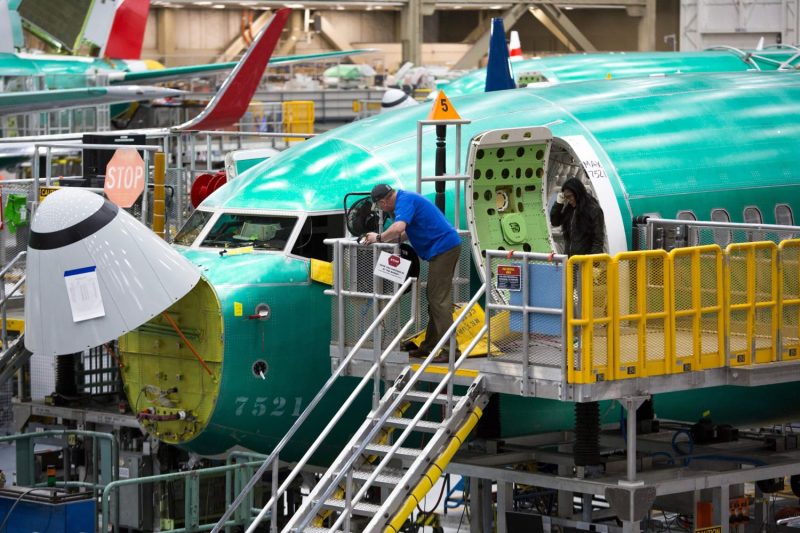
Boeing delivered 60 airplanes last month, the most since December 2023, as the plane maker seeks to raise production of its bestselling 737 Max jets after a series of manufacturing and safety problems.

The tally was the highest since before a door plug from one of its new 737 Max 9 planes blew out midair in January 2024, sparking a new crisis for the company and slowing production and deliveries of aircraft. Of the monthly total, 42 were 737 Maxes, going to customers including Southwest Airlines, Alaska Airlines and United Airlines.

CEO Kelly Ortberg, who took the top job at Boeing last August, has said the company has made progress in improving production rates and quality on its factory lines.

For the three months ended June 30, Boeing handed over 150 airplanes, its best second quarter since 2018, before two crashes of Max planes five months apart grounded the jets and sparked a multiyear crisis at the top U.S. exporter. That was also the last year Boeing posted an annual profit. Its problems also gave rival Airbus a bigger lead over Boeing.

Boeing this spring had been producing about 38 Max aircraft a month and will need Federal Aviation Administration approval to go above that limit, which the agency set after the door plug accident. Ortberg said at a Bernstein investor conference in late May that he’s confident that the company could increase production to 42 of the jets a month.

The company booked 116 gross orders in June, or 70 net orders when including cancellations and accounting adjustments. Boeing often removes or adds orders to its backlog for a variety of reasons including customers’ financial health.

Boeing’s backlog stood at 5,953 as of June 30.

The manufacturer is set to report second-quarter financial results on July 29, when investors will be focused on Ortberg’s plan to increase production and aircraft deliveries.

This post appeared first on NBC NEWS

Waymo announced Tuesday that it is offering accounts for teens ages 14 to 17, starting in Phoenix.

The Alphabet-owned company said that, beginning Tuesday, parents in Phoenix can use their Waymo accounts “to invite their teen into the program, pairing them together.” Once their account is activated, teens can hail fully autonomous rides.

Previously, users were required to be at least 18 years old to sign up for a Waymo account, but the age range expansion comes as the company seeks to increase ridership amid a broader expansion of its ride-hailing service across U.S. cities. Alphabet has also been under pressure to monetize AI products amid increased competition and economic headwinds.

Waymo said it will offer “specially-trained Rider Support agents” during rides hailed by teens and loop in parents if needed. Teens can also share their trip status with their parents for real-time updates on their progress, and parents receive all ride receipts.

Teen accounts are initially only being offered to riders in the metro Phoenix area. Teen accounts will expand to more markets outside California where the Waymo app is available in the future, a spokesperson said.

Waymo’s expansion to teens follows a similar move by Uber, which launched teen accounts in 2023. Waymo, which has partnerships with Uber in multiple markets, said it “may consider enabling access for teens through our network partners in the future.”

Already, Waymo provides more than 250,000 paid trips each week across Phoenix, the San Francisco Bay Area, Los Angeles, Atlanta, and Austin, Texas, and the company is preparing to bring autonomous rides to Miami and Washington, D.C., in 2026.

In June, Waymo announced that it plans to manually drive vehicles in New York, marking the first step toward potentially cracking the largest U.S. city. Waymo said it applied for a permit with the New York City Department of Transportation to operate autonomously with a trained specialist behind the wheel in Manhattan.

This post appeared first on NBC NEWS

President Donald Trump confirmed Tuesday (July 8) he would impose a 50 percent tariff on all copper imports, a dramatic escalation of his administration’s use of targeted trade restrictions under national security grounds.

“I believe the tariff on copper, we’re going to make 50 percent,” Trump said during a White House cabinet meeting.

Though he did not provide a timeline, Commerce Secretary Howard Lutnick said in a subsequent CNBC interview that the tariff could take effect by late July or as early as August 1, with details to be posted on Trump’s Truth Social account.

The announcement triggered immediate market reaction. According to Reuters, copper futures for September delivery surged 13 percent on the day, closing at US$5.6855 per pound—its biggest single-day jump since 1989.

Traders cited fears of a supply crunch and price volatility as buyers scrambled to secure US-bound shipments ahead of the tariff implementation.

The decision marks a culmination of a months-long process that began in February, when Trump signed an executive order instructing the Department of Commerce to investigate whether copper imports posed a national security threat under Section 232 of the Trade Expansion Act of 1962.

The rarely used statute gives the president broad authority to impose tariffs or quotas if imports are deemed harmful to national defense or essential industries.

The copper tariff follows a similar pattern established during Trump’s first term, when the White House used Section 232 to levy tariffs on steel and aluminum.

Since returning to office, Trump has expanded his use of the provision to include automobiles, pharmaceuticals, and critical minerals like rare earths.

Countries in the crosshairs

The brunt of the copper tariff is expected to fall on key US trade partners—most notably Chile, Canada, and Mexico, which collectively accounted for the majority of America’s US$17 billion in copper imports in 2024, according to US Census Bureau data.

Chile alone shipped US$6 billion worth of copper to the US last year.

Officials from Chile, Canada, and Peru, have pushed back against the measure, arguing their exports pose no threat to US national security and citing long-standing free trade agreements.

However, none have been granted exemptions as of Wednesday (July 9), and negotiations remain in limbo.

The looming copper tariff comes on the heels of broader trade actions taken by the Trump administration. On Monday (July 7), the White House imposed stiff tariffs on imports from 14 countries, including Japan, South Korea, Malaysia, South Africa, and Kazakhstan.

These levies—effective August 1—targeted a wide range of sectors, from steel and aluminum to automotive parts and textiles.

Despite its relatively small trade deficit in copper—the US exported US$11.3 billion and imported US$9.6 billion worth of the metal in 2024—the White House argues that the country remains dangerously reliant on foreign refining and processing capacity.

National security as justification

The legal foundation for the copper tariff lies in Section 232, which allows the president to act unilaterally on trade when national security is at stake. Experts say the provision gives Trump more durable legal ground than his recent attempts to use emergency powers to implement broad, country-specific tariffs—some of which are being challenged in federal court.

“Section 232 tariffs are central to President Trump’s tariff strategy,” said Mike Lowell, a trade attorney with ReedSmith, in an interview with CNBC. “They aren’t the target of the pending litigation, and they’re more likely to survive a legal challenge and continue into the next presidential administration.”

The administration’s increasing reliance on Section 232 tariffs reflects a shift toward industrial policy motivated by supply chain security, particularly for materials with dual-use applications in civilian and defense sectors.

Copper is a case in point. Used extensively in electrical wiring, motors, semiconductors, and military-grade communications equipment, the red metal has been classified as critical to US infrastructure and defense capabilities.

Analysts point out that demand for the red metal is set to surge in the coming years due to the ongoing energy transition and growing adoption of electric vehicles.

In April, Trump issued a separate executive order launching a Section 232 investigation into US reliance on imported critical minerals and processed rare earths, calling them “essential for national security and economic resilience.” The order cited specific applications in jet engines, missile guidance, radar systems, and advanced electronics.

As of Wednesday, no formal timeline had been posted on Trump’s Truth Social account, and details around carve-outs or exemptions remained unclear.

For now, however, Trump appears undeterred. The head of state has already threatened that pharmaceuticals may be next in line for potential action.

Securities Disclosure: I, Giann Liguid, hold no direct investment interest in any company mentioned in this article.

This post appeared first on investingnews.com

First lady Jill Biden’s political rise coincided with the end of her husband’s political career, according to a new book about how President Joe Biden lost the White House. 

One year after Biden’s consequential debate performance, the first octogenarian president’s age has inspired congressional investigations and books detailing his alleged cognitive decline. 

‘2024: How Trump Retook the White House and the Democrats Lost America,’ is the latest to tackle the inner workings of the Biden administration. 

The book, released Tuesday by journalists Josh Dawsey of The Wall Street Journal, Tyler Pager of The New York Times and Isaac Arnsdor of The Washington Post, details the influential role Jill Biden played in her husband’s administration.

As Jill Biden gained political influence, so did Anthony Bernal, the first lady’s chief of staff and senior advisor and an assistant to the president. 

He was subpoenaed to testify on July 16 after refusing to appear before the committee investigating the alleged cover-up of Biden’s mental decline, which argued that executive privilege did not apply to him.

According to the book, Bernal accused Anita Dunn, a veteran Democratic political strategist who served in the Biden and Obama administrations, of being disloyal for pushing for more transparency about the Biden family. 

There was a ‘near-total ban’ on discussing Hunter Biden, the journalists wrote in their new book, as Hunter’s federal trial fell in the middle of his father’s re-election campaign in June 2024. 

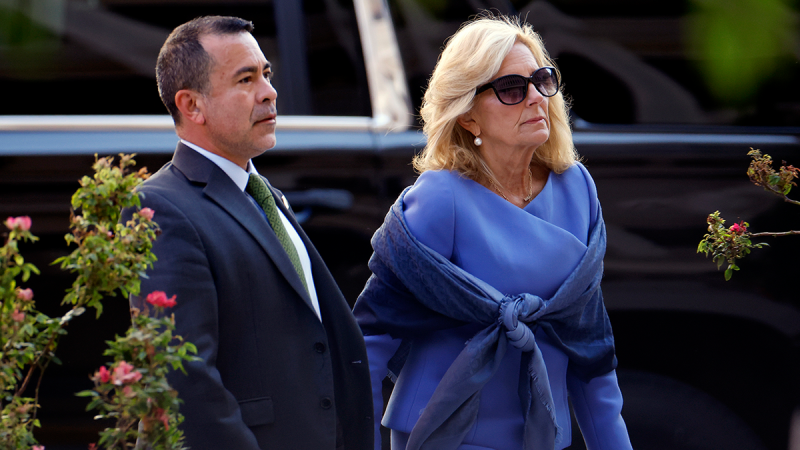
Jill Biden, with Bernal by her side, went to great lengths to attend Hunter Biden’s federal trial, often traveling long distances from overseas trips or campaign events. 

She attended the first three days of the trial, flew to France to join the president at the D-Day commemoration and then returned to Wilmington less than 24 hours later for the fifth day of the trial. 

As described in ‘2024,’ West Wing staffers were surprised when Jill Biden arrived at the trial. Most senior aides had no idea the first lady planned to attend, revealing her willingness to act independently. 

But while Jill Biden demonstrated her independence from the White House, Bernal was right there with her leading the East Wing. 

‘He quickly bonded with Jill Biden and never left her side, becoming unflinchingly loyal to her and using his proximity to her to exert power wherever he decided. It was often unclear if the opinion he was expressing was his own or the first lady’s. Sometimes, when donors or voters asked her questions, Bernal would jump in to answer,’ the authors said. 

Just as Jill jumped to Hunter’s defense during his high-profile trial, she became the president’s staunchest supporter following his disastrous debate performance against President Donald Trump.

‘Joe isn’t just the right person for the job,’ the first lady said at a fundraiser soon after the debate. ‘He’s the only person for the job.’ 

The book alleges that Jill Biden had always played the ‘role of the protective spouse, encouraging the president to eat vegetables, keeping him on time, and questioning staffers when she felt they erred.’

In one such case in January 2022, a Biden aide apologized to the first lady when she questioned why they allowed a press conference to go on for too long, according to the book. 

As Biden struggled to successfully defend his debate performance, with donors and Democratic politicians growing weary, and ‘her husband in the fight of his political life, Jill was making clear: The Democratic Party had to stick with Joe,’ the authors said. 

After the debate, the Bidens took a pre-planned family trip to Camp David.

‘The president was not entertaining the idea of dropping out of the race; he was taking stock of how bad things really were,’ the authors said of Biden’s trip to Camp David. 

The authors described how dropping out ‘was not even a consideration’ at Camp David, and how the first lady was part of those in the inner family circle who persuaded Biden to stay in the race, despite mounting pressure from party leaders and donors to step down. 

Biden huddled with his family in Camp David during the last few days of June, then appeared for debate damage-control interviews on network TV in the weeks following, referring to the debate as a bad night and blaming a cold for his off-night.

‘Biden also acknowledged he needed more sleep and said he told his staff that he should not participate in events that start after 8 p.m. But his message was clear: He was staying in the race,’ the authors said. 

Less than a month after the debate, and one week after an assassination attempt on Trump, Biden announced he was suspending his re-election campaign, and later endorsed Vice President Kamala Harris as the Democratic nominee. 

Fox News Digital has written extensively dating back to the 2020 presidential campaign about Biden’s cognitive decline and his inner circle’s alleged role in covering it up.

A Biden spokesperson did not immediately respond to Fox News Digital’s request for comment. 

This post appeared first on FOX NEWS

Former White House physician Kevin O’Connor, who served as doctor to former President Joe Biden, requested a delay to his upcoming testimony before the House Oversight Committee this week.

O’Connor was scheduled to testify on Wednesday, but is now in a disagreement with the committee over the scope of the questions he will be expected to answer during his testimony. The committee, led by Chairman James Comer, R-Ky., is interviewing the doctor as part of its investigation into Biden’s mental fitness and his administration’s use of an autopen.

A lawyer for O’Connor requested the testimony be delayed to July 28 or August 4 in a letter to Comer.

‘Dr. O’Connor has legal and ethical obligations that he must satisfy and for which violations carry serious consequences to him professionally and personally,’ the letter says.

‘We are unaware of any prior occasion on which a Congressional Committee has subpoenaed a physician to testify about the treatment of an individual patient.  And the notion that a Congressional Committee would do so without any regard whatsoever for the confidentiality of the physician-patient relationship is alarming.’

A spokesman for the Oversight Committee replied in a statement that O’Connor and his legal team were merely trying to ‘stonewall’ the process. The committee is planning to move forward with Wednesday’s testimony, which O’Connor faces a subpoena to attend.

The committee said O’Connor is welcome to object to individual questions during his testimony. But O’Connor is not allowed, in the committee’s view, to delay or decline a congressional subpoena due to concerns over questions about potentially privileged information.

The debate over O’Connor’s testimony comes weeks after a former top aide to Biden, Neera Tanden, told the Oversight Committee that she was authorized to direct autopen signatures but was unaware of who in the president’s inner circle was giving her final clearance.

During Tanden’s interview before Congress last month, which lasted more than five hours, she told lawmakers that, in her role as staff secretary and senior advisor to the former president between 2021 and 2023, she was authorized to direct autopen signatures on behalf of Biden, an Oversight Committee official told Fox News.

‘Ms. Tanden testified that she had minimal interaction with President Biden, despite wielding tremendous authority,’ Comer said at the time. ‘She explained that to obtain approval for autopen signatures, she would send decision memos to members of the President’s inner circle and had no visibility of what occurred between sending the memo and receiving it back with approval. Her testimony raises serious questions about who was really calling the shots in the Biden White House amid the President’s obvious decline. We will continue to pursue the truth for the American people.’

Fox News’ Kelly Phares and Madeleine Rivera and the Associated Press contributed to this report.

This post appeared first on FOX NEWS

A top advisor to former President Joe Biden reportedly labeled Hunter Biden’s presence on a call about the Supreme Court’s landmark ruling that former presidents have some immunity from prosecution ‘inappropriate,’ according to a new book. 

The book, ‘2024: How Trump Retook the White House and the Democrats Lost America,’ was published Tuesday and chronicles how Biden’s team dismissed concerns about his age during the 2024 election cycle, along with how President Donald Trump secured his victory. 

The book said Biden’s White House chief of staff, Jeff Zients, coordinated a video call with key Biden staffers, including White House Counsel Ed Siskel, communications director Ben LaBolt, senior advisor Mike Donilon and others to discuss whether Biden should provide an on-camera statement to the Supreme Court’s July 2024 decision. 

While Donilon already had drafted a written statement, Biden wanted to speak about the matter on-camera, the book claims. Staffers on the call started to hash out specifics of such an appearance, when Biden’s son started to chime into the call. 

‘Suddenly an unidentified voice piped up from Biden’s screen and recommended an Oval Office address,’ the book said. ‘At first, some aides had no idea who was speaking. It soon became clear the voice belonged to Hunter Biden, who the White House staff had not known was on the call. Siskel expressed some concern about the appearance of using the Oval Office.’

‘Hunter snapped back: ‘This is one of the most consequential decisions the Supreme Court has ever made.’ He said his father had every right to use the powerful imagery of the Oval Office to deliver that message,’ the book said. ‘They later settled on the Cross Hall, the long hallway on the first floor of the White House. After the call ended, Siskel told colleagues. Hunter’s presence was inappropriate.’

Biden ultimately delivered a brief speech responding to the Supreme Court’s ruling and took no questions from the press, per the suggestion of his son, the book claimed.  

Siskel and a spokesperson for Biden did not immediately respond to requests for comment from Fox News Digital. 

On July 1, 2024, the Supreme Court issued a 6–3 ruling in Trump v. United States that former presidents have significant immunity from prosecution for acts they committed in an official capacity. The case made its way to the Supreme Court after Trump faced charges stemming from then-Special Counsel Jack Smith’s investigation into whether Trump was involved in the Jan. 6, 2021, Capitol riot and engaged in any other alleged election interference. 

Trump pleaded not guilty to all charges, and claimed a former president could not face a prosecution without a House impeachment and a Senate conviction. 

The book ‘2024’ is one of several that have been released in this year detailing Biden’s mental deterioration while in office and how Trump won the election. It is authored by Josh Dawsey of the Wall Street Journal, Tyler Pager of the New York Times and Isaac Arnsdorf of the Washington Post. 

Another book covering similar material is ‘Original Sin: President Biden’s Decline, Its Cover-up, and His Disastrous Choice to Run Again,’ released May 20.

Fox News Digital has written extensively dating back to the 2020 presidential campaign about Biden’s cognitive decline and his inner circle’s alleged role in covering it up.

According to Dawsey, Hunter Biden’s involvement in his father’s affairs as president was not out of the ordinary during the former president’s time in office. 

‘What we found out over the course of reporting for our book is, Hunter Biden (was) a major figure in the president’s orbit,’ Dawsey said in a Sunday interview with ABC’s ‘This Week.’ ‘He was often on these calls, he would pipe in to calls, he was helping him make campaign decisions, and the president was very concerned about his son. It was one of the things that was an albatross on him as he tried to run for re-election.’

This post appeared first on FOX NEWS