Author

admin

Browsing

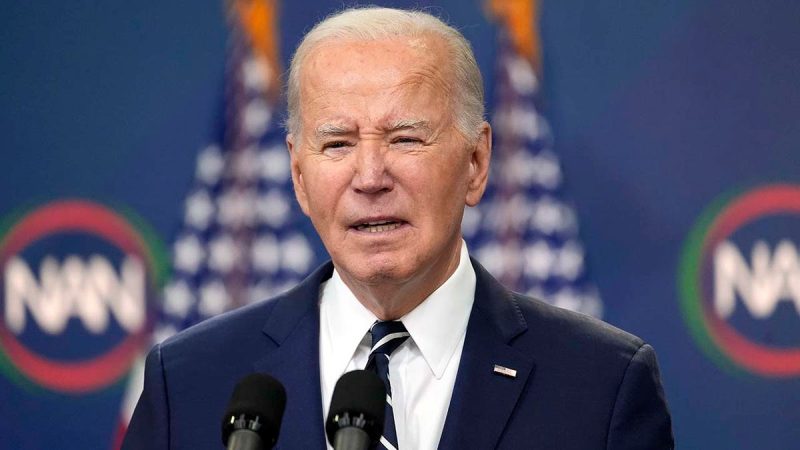
A former top White House advisor is slated to appear before House Oversight Committee investigators on Friday as GOP lawmakers probe whether ex-President Joe Biden’s top aides covered up evidence of his mental and physical decline.

Ashley Williams, who served as deputy director of Oval Office Operations during the Biden administration, is expected to sit with investigators behind closed doors for a transcribed interview around 11 a.m. Friday.

If she appears, Williams will be the third member of the former president’s White House inner circle summoned in Comer’s probe in recent weeks.

In addition to whether senior aides covered up Biden’s alleged decline, Comer is looking at whether any presidential orders were signed via autopen without the former commander-in-chief’s knowledge.

Any allegations of wrongdoing so far have been denied by the ex-president’s allies.

But Republican investigators have pointed to Biden’s disastrous June 2024 debate and subsequent revelations in the media that there were more concerns from Biden’s inner circle about his fitness for office than previously known.

Williams was one of three then-Biden aides called before Comer’s House Oversight Committee in July 2024 to discuss the former president’s mental state, but the White House at the time called it a ‘baseless political stunt’ to NBC News.

Her expected appearance on Friday comes two days after ex-Biden White House physician Dr. Kevin O’Connor briefly sat down with investigators on Wednesday.

O’Connor’s encounter with the committee lasted roughly 30 minutes, with the doctor invoking the Fifth Amendment for all questions except his name.

‘It’s clear there was a conspiracy to cover up President Biden’s cognitive decline after Dr. Kevin O’Connor, Biden’s physician and family business associate, refused to answer any questions and chose to hide behind the Fifth Amendment,’ Comer said in a statement after O’Connor’s appearance.

‘Dr. O’Connor took the Fifth when asked if he was told to lie about President Biden’s health and whether he was fit to be President of the United States. Congress must assess legislative solutions to prevent such a cover up from happening again. We will continue to interview more Biden White House aides to get the answers Americans deserve.’

O’Connor’s lawyers said he did so out of concerns that House investigators would violate doctor-patient privilege.

‘This Committee has indicated to Dr. O’Connor and his attorneys that it does not intend to honor one of the most well-known privileges in our law – the physician patient privilege. Instead, the Committee has indicated that it will demand that Dr. O’Connor reveal, without any limitations, confidential information regarding his medical examinations, treatment, and care of President Biden,’ the attorney statement said.

‘Revealing confidential patient information would violate the most fundamental ethical duty of a physician, could result in revocation of Dr. O’Connor’s medical license, and would subject Dr. O’Connor to potential civil liability. Dr. O’Connor will not violate his oath of confidentiality to any of his patients, including President Biden.’

This post appeared first on FOX NEWS

The State Department informed U.S.-based employees on Thursday that it would soon begin laying off nearly 2,000 workers after the recent Supreme Court decision allowing the Trump administration to move forward with mass job cuts as part of its efforts to downsize the federal workforce.

The agency’s reorganization plan was first unveiled in April by Secretary of State Marco Rubio to eliminate functions and offices the department considered to be redundant. In February, President Donald Trump issued an executive order directing Rubio to revamp the foreign service to ensure that the president’s foreign policy is ‘faithfully’ implemented.

Employees affected by the agency’s ‘reduction in force’ would be notified soon, Deputy Secretary for Management and Resources Michael Rigas told employees in an email on Thursday.

‘First and foremost, we want to thank them for their dedication and service to the United States,’ Rigas said in the email.

‘Every effort has been made to support our colleagues who are departing, including those who opted into the Deferred Resignation Programs … On behalf of Department leadership, we extend our gratitude for your hard work and commitment to executing this reorganization and for your ongoing dedication to advancing U.S. national interests across the world,’ he added.

The department did not specify on Thursday how many people would be fired, but in its plans to Congress sent in May, it had proposed laying off about 1,800 employees of the 18,000 estimated domestic workforce. Another 1,575 were estimated to have taken deferred resignations.

The plans to Congress did not state how many of these workers would be from the civil service and how many from the foreign service, but it did say that more than 300 of the department’s 734 bureaus and offices would be streamlined, merged or eliminated.

Once affected staff have been notified, the department ‘will enter the final stage of its reorganization and focus its attention on delivering results-driven diplomacy,’ Rigas said in the email to colleagues.

The expectation is for the terminations to start as soon as Friday.

State Department spokesperson Tammy Bruce told reporters earlier on Thursday that the only reason there had been a delay in implementing force reductions is because the courts have stepped in, as she said the mass layoffs would be happening quickly.

‘There has been a delay – not to our interests, but because of the courts,’ Bruce noted. ‘It’s been difficult when you know you need to get something done for the benefit of everyone.’

‘When something is too large to operate, too bureaucratic, to actually function, and to deliver projects, or action, it has to change,’ she said.

Reuters contributed to this report.

This post appeared first on FOX NEWS

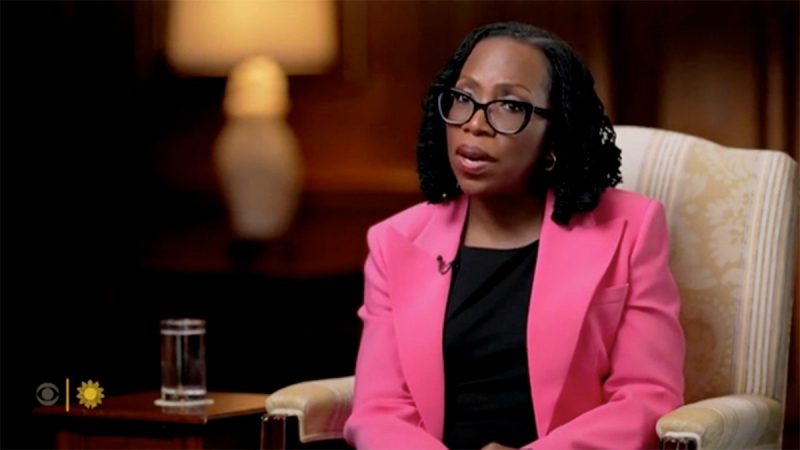
I wrote recently about the chilling jurisprudence of Justice Ketanji Brown Jackson, who has drawn the ire of colleagues in opinions for her rhetoric and extreme positions. Many have expressed alarm over her adherence to what has been described by one as an ‘imperial judiciary’ model of jurisprudence. Now, it appears that Jackson’s increasingly controversial opinions are serving a certain cathartic purpose for the far-left Biden appointee.

‘I just feel that I have a wonderful opportunity to tell people in my opinions how I feel about the issues, and that’s what I try to do,’ Jackson told ABC News.

Her colleagues have not entirely welcomed that sense of license. The histrionic and hyperbolic rhetoric has increased in Jackson’s opinions, which at times portray her colleagues as abandoning not just the Constitution but democracy itself.

Her dissent in the recent ruling on universal injunctions drew the rebuke of Justice Amy Coney Barrett over what was described as ‘a vision of the judicial role that would make even the most ardent defender of judicial supremacy blush.’

‘We will not dwell on Justice Jackson’s argument, which is at odds with more than two centuries’ worth of precedent, not to mention the Constitution itself,’ Barrett wrote. ‘We observe only this: Justice Jackson decries an imperial Executive while embracing an imperial Judiciary.’

Jackson, however, clearly feels that opinions are a way for her to opine on issues of the day. 

She is not alone. Across the country, liberal judges have been adding their own commentary to decisions in order to condemn Trump, his supporters, and his policies.

I previously wrote about this pattern of extrajudicial commentary.

District Court Judge Tanya Chutkan, an Obama appointee who previously presided over Trump’s election interference case, was criticized for failing to recuse herself from that case after she made highly controversial statements about Trump from the bench. Chutkan lashed out at ‘a blind loyalty to one person who, by the way, remains free to this day.’ That ‘one person’ was still under investigation at the time, and when Trump was charged, Chutkan refused to let the case go.

Later, Chutkan again added her own commentary when asked to dismiss a case due to Trump pardoning January 6 defendants. She acknowledged that she could not block the pardons, but proclaimed that the pardons could not change the ‘tragic truth’ and ‘cannot whitewash the blood, feces and terror that the mob left in its wake. And it cannot repair the jagged breach in America’s sacred tradition of peacefully transitioning power.’

One of Chutkan’s colleagues, Judge Beryl Howell, also an Obama appointee, lashed out at Trump’s actions, writing, ‘[T]his Court cannot let stand the revisionist myth relayed in this presidential pronouncement.’

Then there is Judge Amit Mehta, another Obama appointee, who has been criticized for conflicted rulings in Trump cases and his bizarre (and ultimately abandoned) effort to banish January 6 defendants from the Capitol.

Last week, Mehta had a straightforward question of jurisdiction concerning a challenge to the denial of grants by the Trump administration. While correctly dismissing the challenge, Mehta decided to add his own commentary on Trump’s priorities and policies:

‘Defendants’ rescinding of these awards is shameful. It is likely to harm communities and individuals vulnerable to crime and violence. But displeasure and sympathy are not enough in a court of law.’

For Jackson, her opinions have at times left her isolated on the Court. Weeks ago, Jackson and Sotomayor were alone in dissent over the defiance of a district court judge of the Court’s decision on universal injunctions. To her credit, Justice Elena Kagan (who voted with Sotomayor and Jackson in dissent in the earlier case) voted with her conservative colleagues in rebuking Judge Brian Murphy in Boston.

Kagan joined in the reversal of Murphy’s conflicting order and wrote the new order ‘clarifies only one thing: Other litigants must follow the rules, but the administration has the Supreme Court on speed dial.’

This week, Jackson lost even Sotomayor and stood alone in her dissent in support of an injunction over plans to downsize the government. Sotomayor observed that the Trump order only directed agencies to plan for such downsizing and said that the courts could hardly enjoin such policy preparations in the Executive Branch.

However, Jackson could and would. 

The controversial position of Jackson on the Court is not due to her liberal views. We have had many such liberal jurists. The difference is how Jackson views her role as a justice.

The danger is not confined to opinions. For years, justices have yielded to the temptations of public speaking before supportive groups. I have long been a critic of what I called the era of ‘celebrity justices,’ where members seem to maintain political constituencies at public events. 

Such speeches not only undermine the integrity of the Court by discussing matters that may come before it, but they can create a desire to maintain the adoration of supporters. The greatest danger is that justices will consciously or subconsciously pander to their bases with soundbites and inflammatory rhetoric.

Judicial advocacy from the bench has been a concern since the founding. Article III can have a corrosive impact on certain jurists who come to view themselves as anointed rather than appointed. Most judges and justices are acutely aware of that danger and struggle to confine their rulings to the merits of disputes, avoiding political questions or commentary.

The ‘opportunity to tell people how I feel’ can become a slippery slope where opinions become more like judicial op-eds. The Court is not a cable show. The price of the ticket to being ‘one of nine’ is that you should speak only through your opinions and only on the narrow legal matter before you. 

Opinions must remain ‘opportunities’ to do simple justice, not a supreme editorial.

This post appeared first on FOX NEWS

A former White House physician is criticizing Kevin O’Connor after the ex-Biden administration doctor refused to answer questions by House Oversight Committee investigators earlier this week.

Dr. O’Connor, who served as White House physician to former President Joe Biden, sat down for a transcribed interview with committee staff and panel Chair James Comer, R-Ky., on Wednesday. The closed-door meeting lasted roughly 30 minutes, with O’Connor invoking the Fifth Amendment to all questions, save for his name.

His legal team said there were concerns the broad scope of Comer’s probe could force O’Connor into a position of risking doctor-patient confidentiality privileges. 

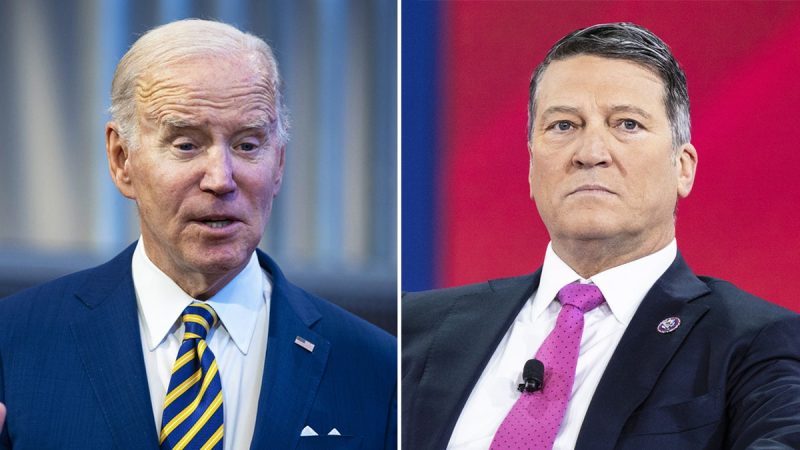
‘Well, you can’t do both,’ Rep. Ronny Jackson, R-Texas, a former White House doctor himself, told Fox News Digital in an interview afterward.

‘I mean, the Fifth Amendment is designed to keep him from incriminating himself in some type of, you know, criminal or unethical behavior. He’d already addressed the issue of patient-doctor privacy, or confidentiality, with the committee.’

He pointed out that O’Connor’s lawyers had already raised issues with patient-doctor confidentiality in a letter to the committee trying to get the interview delayed, but Comer pressed forward.

‘They had already let him know that in this particular case, because he had been subpoenaed, and it was a legal process, he’d been subpoenaed to testify before Congress in this closed session, that the patient-doctor privilege no longer applied,’ Jackson said. ‘And President Trump had waived presidential privilege. So it left him with nothing. Nothing to stand on except for pleading the Fifth.’

Before being elected to Congress, Jackson served as White House physician to both former President Barack Obama and current President Donald Trump.

Comer told reporters on Wednesday that Jackson played a key role in crafting questions for O’Connor. 

‘We have a lot of questions that we’ve prepared for this. We’ve consulted closely with Ronny Jackson, my colleague, who was the White House physician in the first Trump administration. We’ve consulted with a lot of people in the medical community, so there’s going to be a lot of medical questions that are asked,’ he told reporters before the transcribed interview.

He is investigating accusations that Biden’s former top White House aides covered up signs of his mental and physical decline while in office, and whether any executive actions were commissioned via autopen without the president’s full knowledge. Biden allies have pushed back on those claims.

‘The cover-up could not have happened without the assistance and the help of his personal physician, Kevin O’Connor,’ Jackson said. ‘I think that’s why he pled the Fifth, because he realized he was about to implicate himself as a key player in this cover-up.’

O’Connor’s lawyers have denied any implications of guilt.

Jackson said some of the questions he recommended to the committee would have surrounded any potential neurological concerns or cognitive tests while Biden was in office.

But many of those were left unasked, it appears, after O’Connor’s brief meeting with House investigators.

The doctor’s lawyers said O’Connor’s refusal to answer questions on Fifth Amendment grounds was not an admission of guilt, but rather a response to what they saw as an unprecedented investigatory scope that could have violated the bounds of patient-physician privilege.

‘This Committee has indicated to Dr. O’Connor and his attorneys that it does not intend to honor one of the most well-known privileges in our law – the physician patient privilege. Instead, the Committee has indicated that it will demand that Dr. O’Connor reveal, without any limitations, confidential information regarding his medical examinations, treatment, and care of President Biden,’ the attorney statement said.

‘Revealing confidential patient information would violate the most fundamental ethical duty of a physician, could result in revocation of Dr. O’Connor’s medical license, and would subject Dr. O’Connor to potential civil liability. Dr. O’Connor will not violate his oath of confidentiality to any of his patients, including President Biden.’

Fox News Digital reached out to O’Connor’s lawyers for further comment.

This post appeared first on FOX NEWS


FPX Nickel Corp. (TSXV: FPX) (OTCQB: FPOCF) (‘ FPX ‘ or the ‘ Company ‘) announces that the board of directors of the Company has approved the grant of 5,305,000 stock options (the ‘ Options ‘) to directors, officers and employees of the Company pursuant to the Company’s Share Compensation Plan. The Options have an exercise price of $0.30 per share, with a five-year term and are fully vested on the grant date, July 10, 2025 .


The Company also granted an aggregate 750,000 restricted share units (the ‘ RSUs ‘) to certain officers of the Company. The RSUs vest in three equal installments on the annual anniversaries of the grant date and each vested RSU will entitle the holder to receive one common share of the Company or the equivalent cash value upon settlement.


  About FPX Nickel Corp.  


 FPX Nickel Corp. is focused on the exploration and development of the Decar Nickel District, located in central British Columbia , and other occurrences of the same unique style of naturally occurring nickel-iron alloy mineralization known as awaruite. For more information, please view the Company’s website at https://fpxnickel.com/ or contact Martin Turenne , President and CEO, at (604) 681-8600 or ceo@fpxnickel.com .


On behalf of FPX Nickel Corp.


‘Martin Turenne’
Martin Turenne , President, CEO and Director


   Forward-Looking Statements   


  Certain of the statements made and information contained herein is considered ‘forward-looking information’ within the meaning of applicable Canadian securities laws. These statements address future events and conditions and so involve inherent risks and uncertainties, as disclosed in the Company’s periodic filings with Canadian securities regulators. Actual results could differ from those currently projected. The Company does not assume the obligation to update any forward-looking statement.  


  Neither the TSX Venture Exchange nor its Regulation Services Provider accepts responsibility for the adequacy or accuracy of this release.  


SOURCE FPX Nickel Corp.


  View original content to download multimedia: http://www.newswire.ca/en/releases/archive/July2025/11/c5569.html  


News Provided by Canada Newswire via QuoteMedia

This post appeared first on investingnews.com


Cygnus Metals Limited (‘Cygnus’ or the ‘Company’) advises that it has issued an aggregate of 67,050,000 performance rights (‘Performance Rights’) to directors, and key employees and consultants, under the Company’s Omnibus Equity Incentive Plan (‘Plan’).


Shareholders approved the Plan and the issue of Performance Rights to directors at the Company’s annual general meeting held on May 14, 2025. The Performance Rights to key personnel were issued on the same terms and conditions as the director Performance Rights, as set out in the notice of annual general meeting released to ASX on April 14, 2025.


The Performance Rights vest on the later of (a) one year after their date of issue, and (b) the successful completion of specific key performance objectives within three years from the date of issue. Each vested Performance Right is exercisable to one fully paid ordinary share in the capital of the Company (net of applicable withholdings) and will expire on May 31, 2030 unless exercised on or before this date.


The objective of Cygnus’ Plan is to promote the long-term success of the Company and the creation of shareholder value by aligning the interests of eligible persons under the Plan with the interests of the Company.


This announcement has been authorised for release by the Board of Directors of Cygnus.


  David Southam  
Executive Chair  
T: +61 8 6118 1627  
E:    info@cygnusmetals.com   
  Ernest Mast  
President & Managing Director  
T: +1 647 921 0501  
E:    info@cygnusmetals.com   
  Media:  
Paul Armstrong  
Read Corporate  
+61 8 9388 1474  


  About Cygnus Metals  


 Cygnus Metals Limited (ASX: CY5, TSXV: CYG) is a diversified critical minerals exploration and development company with projects in Quebec, Canada and Western Australia. The Company is dedicated to advancing its Chibougamau Copper-Gold Project in Quebec with an aggressive exploration program to drive resource growth and develop a hub-and-spoke operation model with its centralised processing facility. In addition, Cygnus has quality lithium assets with significant exploration upside in the world-class James Bay district in Quebec, and REE and base metal projects in Western Australia. The Cygnus team has a proven track record of turning exploration success into production enterprises and creating shareholder value.


News Provided by GlobeNewswire via QuoteMedia

This post appeared first on investingnews.com

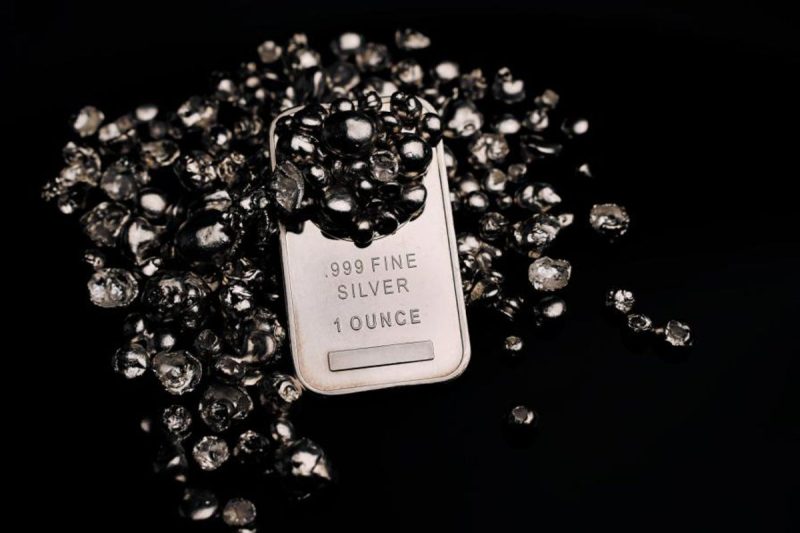
Silver prices surged during the second quarter of 2025, surpassing the US$37 per ounce mark and reaching their highest levels in 14 years.

The price movements stem from a tightening supply and demand situation, which has seen above-ground inventories squeezed due to an increasing need from industrial sectors, particularly the growing photovoltaics industry.

However, demand has also increased due to heightened investor interest in alternative safe-haven assets, as gold prices reached record highs. The shifting sentiment comes amid uncertainty over a US trade policy that could reduce the world’s gross domestic product by 1 percent.

Investors have also been spooked by increasing conflict in the Middle East.

How has silver’s price movement benefited Canadian silver stocks on the TSX, TSXV and CSE? The five companies listed below have seen the best performances since the start of the year. Data was gathered using TradingView’s stock screener on July 7, 2025, and all companies listed had market caps over C$10 million at that time.

1. Santacruz Silver (TSX:SCZ)

Year-to-date gain: 321.82 percent
Market cap: C$387.88 million
Share price: C$1.16

Santacruz Silver is an Americas-focused silver producer with operations in Bolivia and Mexico. Its producing assets include a 45 percent stake in the Bolivar and Porco mines, which it shares with the Bolivian government, and a 100 percent ownership of the Caballo Blanco Group mines in Bolivia, along with the Zimapan mine in Mexico.

In addition to its producing assets, Santacruz also owns the greenfield Soracaya project, an 8,325 hectare land package located in Potosi, Bolivia. According to an August 2024 technical report, the site hosts an inferred resource of 34.5 million ounces of silver derived from 4.14 million metric tons of ore with an average grade of 260 g/t.

In October 2021, Santacruz acquired Glencore’s (LSE:GLEN,OTC Pink:GLCNF) 45 percent stake in the Bolivar and Porco mines and a 100 percent interest in the Soracaya project. Under the terms of the deal, Santacruz made an initial payment of US$20 million and was obligated to make an additional US$90 million over a four-year period from the closing of the transaction. Glencore also retained a 1.5 percent net smelter return.

The pair amended the deal in October 2024, giving Santacruz the option to either pay off the US$80 million base purchase price through annual US$10 million installments or to accelerate the repayment by paying US$40 million by November 2025. The deal also includes additional terms such as monthly payments to Glencore contingent on zinc pricing benchmarks.

Santacruz chose the accelerated option through a structured payment plan, which allows it to satisfy the base purchase price of the properties while saving US$40 million compared to the annual installment option. As of its third payment to Glencore on July 7, Santacruz has now paid US$25 million.

In its Q1 2025 production report released on June 12, Santacruz disclosed consolidated silver production of 1.59 million ounces, marking a 1 percent increase from the 1.58 million ounces produced during the same quarter in 2024.

Santacruz shares reached a year-to-date high of C$1.16 on July 7.

2. Almaden Minerals (TSX:AMM)

Year-to-date gain: 318.18 percent
Market cap: C$32.93 million
Share price: C$0.23

Almaden Minerals is a precious metals exploration company working to advance the Ixtaca gold-silver deposit in Puebla, Mexico. According to the company website, the deposit was discovered by Almaden’s team in 2010 and has seen more than 200,000 meters of drilling across 500 holes.

A July 2018 resource estimate shows measured resources of 862,000 ounces of gold and 50.59 million ounces of silver from 43.38 million metric tons of ore, and indicated resources of 1.15 million ounces of gold and 58.87 million ounces of silver from 80.76 million metric tons of ore with a 0.3 g/t cutoff.

In April 2022, Mexico’s Supreme Court of Justice ruled that the initial licenses issued in 2002 and 2003 would be reverted back to application status after the court found there had been insufficient consultation when the licenses were originally assigned.

Ultimately, the applications were denied in February 2023, effectively halting progress on the Ixtaca project. While subsequent court cases have preserved Almaden’s mineral rights, it has yet to restore the licenses to continue work on the project.

In June 2024, Almaden announced it had confirmed up to US$9.5 million in litigation financing that will be used to fund international arbitrations proceedings against Mexico under the Comprehensive and Progressive Agreement for Trans-Pacific Partnership.

In a December update, the company announced that several milestones had been achieved, including the first session with the tribunal, at which the company was asked to submit memorial documents outlining its legal arguments by March 20, 2025. At that time, the company stated it would vigorously pursue the claim but preferred a constructive resolution with Mexico.

On March 21, the company indicated that it had submitted the requested documents, claiming US$1.06 billion in damages. The memorial document outlines how Mexico breached its obligations and unlawfully expropriated Almaden’s investments without compensation.

The most recent update from the proceedings occurred on May 23, when the company announced that it had established a key personnel retention agreement (KPA) with CFO Korm Trieu and Executive Vice President Douglas McDonald. The KPA is intended as a long-term incentive program to retain employees for their knowledge of the proceedings, and the employees will need to perform certain duties related to the claims.

Under the terms of the agreement, the key personnel will split 4 percent of net proceeds, to a maximum of US$12 million, should Almaden’s claim prove successful.

Almaden shares reached a year-to-date high of C$0.245 on June 30.

3. Avino Silver and Gold (TSX:ASM)

Year-to-date gain: 296.85 percent
Market cap: C$710.8 million
Share price: C$5.04

Avino Silver and Gold Mines is a precious metals miner with two primary silver assets: the producing Avino silver mine and the neighboring La Preciosa project in Durango, Mexico.

The Avino mine is capable of processing 2,500 metric tons of ore per day, and according to its FY24 report released on January 21 the mine produced 1.1 million ounces of silver, 7,477 ounces of gold and 6.2 million pounds of copper last year. Overall, the company saw broad production increases with silver rising 19 percent, gold rising 2 percent and copper increasing 17 percent year over year.

In addition to its Avino mining operation, Avino is working to advance its La Preciosa project toward the production stage. The site covers 1,134 hectares, and according to a February 2023 resource estimate, hosts a measured and indicated resource of 98.59 million ounces of silver and 189,190 ounces of gold.

In a January 15 update, Avino announced it had received all necessary permits for mining at La Preciosa and begun underground development at La Preciosa. It is now developing a 350 meter mine access and haulage decline. The company said the first phase at the site is expected to cost less than C$5 million, which will be funded from cash reserves.

In Avino’s Q1 financial report released on May 13, the company noted that work was progressing at the site according to plan, with blasting and construction of the decline underway. It added that a new drill was working on the haulage ramp to the Gloria and Abundancia veins.

On the production and finance side, the company reported a record quarterly after-tax income of US$5.6 million, 10 percent higher than the US$5.1 million during Q4 2024. Avino also reported a 6 percent increase in silver production to 265,681 ounces. The company attributed the gain to an increase in feeder grade.

Avino shares reached a year-to-date high of C$5.04 on July 7.

4. Excellon Resources (TSXV:EXN)

Year-to-date gain: 238.89 percent
Market cap: C$57.43 million
Share price: C$0.305

Excellon Resources is an exploration and development company that is advancing its recently acquired Mallay silver mine in Peru back into production.

Mining at the site produced 6 million ounces of silver, 45 million pounds of zinc and 35 million pounds of lead between 2012 and 2018 before the operation was placed on care and maintenance.

On June 24, Excellon announced that it had completed its acquisition of Minera CRC, and its Mallay mine and Tres Cerros gold-silver project in Peru.

Excellon began the court-supervised acquisition process in October 2024. On March 11, Excellon announced that it had entered into a definitive agreement with Adar Mining and Premier Silver, which resolved any outstanding disputes between Adar, Premier, and Minera, and paved the way to complete the transaction.

In the June release, the company stated that it will immediately commence the next phase of its strategy to restart the mine. As Mallay is fully permitted with infrastructure in place, Excellon is aiming for run-rate silver production in Q2 of next year.

Additionally, the company announced on July 3 that it had appointed Mike Hoffman to its board of directors. Hoffman has been in the mining sector for over 35 years, and has experience with developing mines in Latin America.

Shares in Excellon reached a year-to-date high of C$0.315 on July 4.

5. Andean Precious Metals (TSX:APM)

Year-to-date gain: 182.61 percent
Market cap: C$481.71 million
Share price: C$3.25

Andean Precious Metals is a precious metals company with a pair of operating assets in the Americas.

Its primary silver-producing operation is the San Bartolomé facility in the Potosi Department of Bolivia. The onsite processing facility has an annual ore capacity of 1.8 million metric tons. The company has transitioned from conventional mining and is processing feed from both its low-cost fines deposit facility and third-party ore purchases.

Its other producing asset is the Golden Queen mine in Kern County, California, US. It hosts a 12,000 MT per day cyanide heap leach and Merril-Crowe processing facility. A mineral reserve statement showed a measured and indicated silver resource of 11.24 million ounces from 41.81 million MT at an average grade of 8.37 g/t silver. The company acquired Golden Queen from Auvergne Umbrella in November 2023 for total consideration of US$15 million.

On May 6, Andean released its Q1 operating and financial results. During the first quarter of the year, it produced 925,000 ounces of silver across its operations, up 0.9 percent over Q1 2024. However, the company noted that its revenues increased 43.9 percent year-over-year, reaching US$62 million compared to US$43.1 million. The company attributed this increase to higher silver and gold prices.

The most recent news from the company came on June 2 when it announced it entered into an exclusive, long-term agreement with the Bolivian state-owned mining company Corporacion Minera de Bolivia to acquire up to 7 million metric tons of oxide ore from mining concessions in Bolivia.

The ore is located within a 250 kilometer radius of the processing facility at its San Bartolomé operation, where it will process the ore. Under the terms of the 10 year agreement, Andean will immediately receive an initial 250,000 metric tons of ore, with the remaining to be delivered in tranches of 50,000 MT.

Shares in Andean reached a year-to-date high of C$3.25 on July 7.

Securities Disclosure: I, Dean Belder, hold no direct investment interest in any company mentioned in this article.

This post appeared first on investingnews.com

President Donald Trump’s proposed 50% tariff on Brazilian imports is bad news for coffee drinkers.

Brazil, the largest U.S. supplier of green coffee beans, accounts for about a third of the country’s total supply, according to data from the U.S. Department of Agriculture.

Coffee beans need to grow in a warm, tropical climate, making Hawaii and Puerto Rico the only suitable places in the United States to farm the crop. But, as the world’s top consumer of coffee, the U.S. requires a massive supply to stay caffeinated. Mintel estimates that the U.S. coffee market reached $19.75 billion last year.

The increase in trade duties could leave consumers with even higher costs after several years of soaring coffee prices. Inflation-weary consumers have seen prices for lattes and cold brew climb as droughts and frost hit the global coffee supply, particularly in Brazil. Earlier this year, coffee bean futures hit all-time highs. They rose 1% on Thursday, although still well below the record set in February.

To be sure, there’s still time for Brazil to strike a deal with the White House before the tariffs go into effect on Aug. 1. Plus, food and beverage makers are hoping that the Trump administration will grant exemptions for key commodities. U.S. Department of Agriculture Secretary Brooke Rollins said in an interview in late June that the White House is considering exemptions for produce that can’t be grown in the U.S. — including coffee.

But if that doesn’t happen, coffee companies like Folgers owner J.M. Smucker, Keurig Dr Pepper, Starbucks and Dutch Bros will face much higher costs for the commodity. Giuseppe Lavazza, chair of Italian roaster Lavazza, said on Bloomberg TV on Thursday morning that the latest tariff could mean “a lot of inflation” for the coffee industry.

Roasters will try to mitigate the impact of the higher tariff, but it won’t be easy.

“Every company is always trying to eke out the next efficiency, to dial into their operations or find the way to minimize inflationary pressures, but a 50% tariff on a commodity that fundamentally is not available in the U.S. — you can’t really do much with that,” Tom Madrecki, vice president of supply chain and logistics for the Consumer Brands Association, a trade group that represents the consumer packaged goods industry.

One mitigation tactic could be to import beans from countries other than Brazil, but companies will likely still be paying more for the commodity.

“A characteristic of tariffs, especially when you have tariffs on multiple countries at once, is that not just the inbound cost rises. It allows the pricing floor to also rise,” Madrecki said. “If you have cheaper coffee in a country different than Brazil, you’re not inclined to sell it at a 30% lower cost. You’re going to try to bump your coffee up a bit more, too.”

At-home coffee brands, like JM Smucker’s Dunkin’ and Kraft Heinz’s Maxwell House, have already been hiking their prices this year in response to spiking commodity costs. More price increases could be on the way for consumers, although retailers may push back.

Keurig Dr Pepper would consider additional price hikes in the latter half of the year to mitigate the impact of tariffs, CEO Tim Cofer said in late April, after Trump introduced his initial round of so-called reciprocal duties.

And Smuckers warned investors on its quarterly conference call in early June that tariffs on coffee were weighing on its profits. Coffee accounts for roughly a third of the company’s revenue.

“Green coffee is an unavailable natural resource that cannot be grown in the continental United States due to its reliance on a tropical climate,” Smuckers CEO Mark Smucker said. “We currently purchase approximately 500 million pounds of green coffee annually, with the majority coming from Brazil and Vietnam, the two largest coffee-producing countries.”

Vietnam, which announced a tentative trade deal with the White House earlier this month, supplies about 8% of the U.S.’s green coffee beans. Under the agreement, the U.S. will impose a 20% duty on Vietnamese imports.

Consumers who prefer a caramel macchiato from Starbucks for their caffeine hit will likely see a more muted impact on their wallets.

After several quarters of sluggish U.S. sales, Starbucks CEO Brian Niccol said in late 2024 that the company wouldn’t raise prices in 2025, in the hopes of winning back customers who had complained about how expensive its drinks had gotten. While it waits for its turnaround to take hold, Starbucks might choose to swallow the higher coffee costs.

The coffee giant also benefits from its diversity — both in suppliers and the breadth of its menu, which now includes the popular Refreshers line. Starbucks imports its coffee from 30 different countries, and roughly 10% of its cost of goods sold in North America comes from coffee.

The new trade duty could mean a 0.5% increase in Starbucks’ North American cost of goods sold, assuming about 22% of its beans come from Brazil, TD Cowen analyst Andrew Charles wrote in a note to clients on Thursday. Starbucks’ packaged drinks, which are distributed by Nestle, could see their cost of goods sold increase 3.5%. Altogether, that represents a 5-cent drag on annual earnings per share, according to Charles.

For rival Dutch Bros, higher coffee costs also wouldn’t hurt its bottom line much. Coffee accounts for less than a tenth of the drive-thru coffee chain’s cost of goods sold. Assuming that Dutch Bros sources more than half of its coffee from Brazil, its cost of goods sold would rise just 1.3%, according to Charles’ estimates.

This post appeared first on NBC NEWS

What’s “Froot Loops” in Italian?

The European confectionary company Ferrero has agreed to buy WK Kellogg Co., the manufacturer of iconic American cereals, for $3.1 billion.

The acquisition is set to bring the publicly traded maker of Froot Loops, Frosted Flakes and Rice Krispies under the privately owned Italian manufacturer of Nutella, Tic Tac and Kinder chocolates.

WK Kellogg, based in Battle Creek, Michigan, was spun off from Kellogg’s in 2023, splitting the company’s North American cereal business from its other snack products like Pringles and Pop-Tarts, a unit that is now owned by the publicly traded conglomerate Kellanova. WK Kellogg, one of North America’s largest cereal makers, saw its shares surge more than 30% Thursday on the news of the deal.

The agreement comes after years of slowing demand for sugary breakfast cereals as many consumers look for healthier options. WK Kellogg came under fire last year when CEO Gary Pilnick said on CNBC that households squeezed by food companies’ price hikes should consider eating “cereal for dinner” to save money, part of a marketing pitch the company was making as an answer to inflation.

Yet snack demand, too, has flagged recently, with The Campbell’s Co. and General Mills each warning this year of slower sales as customers prioritize square meals.

Ferrero Rocher chocolates.Alexander Sayganov / SOPA Images / LightRocket via Getty Images file

Ferrero, perhaps best known for its namesake Ferrero Rocher chocolates in gold foil, originated in Alba, Italy, after World War II and is now a multinational food maker headquartered in Luxembourg. The company reported revenue of 18.4 billion euros last fiscal year, up nearly 9% from the one before.

Ferrero executive chairman Giovanni Ferrero described the acquisition Thursday as “a key milestone” in an effort to grow its footprint in North America, where the closely held company sells an array of popular candies.

The deal is among a series of high-profile Ferrero acquisitions in recent years. The firm bought Butterfinger, Baby Ruth and other U.S. candy brands from Nestlé in 2018, then acquired Kellogg’s bakery business, including Famous Amos and Keebler, in 2019 along with the manufacturer of Halo Top ice cream in 2022.

After the transaction closes, WK Kellogg will be delisted from the New York Stock Exchange and become a wholly owned subsidiary of Ferrero. The deal is expected to close later this year.

This post appeared first on NBC NEWS

President Donald Trump’s budget chief on Thursday said that Federal Reserve Chairman Jerome Powell “has grossly mismanaged the Fed” and suggested he had misled Congress about a pricey and “ostentatious” renovation of the central bank’s headquarters.

The broadside by Office of Management and Budget Director Russell Vought opened up a new front in Trump’s war of words against Powell.

Trump has repeatedly called on the Fed chairman to cut interest rates, without success. He reportedly has considered firing Powell and, more recently, publicly naming the chairman’s replacement months earlier than the end of Powell’s term next spring.

Vought’s letter raises the question of whether Trump will seek to remove Powell for cause, at least ostensibly.

But the Supreme Court in a recent decision strongly suggested that Federal Reserve board members have special protection from being fired by a president.

“While continuing to run a deficit since FY23 (the first time in the Fed’s history), the Fed is way over budget on the renovation of its headquarters,” Vought wrote in a post on the social media site X.

“Now up to $2.5 billion, roughly $700 million over its initial cost,” Vought wrote. “The cost per square foot is $1,923–double the cost for renovating an ordinary historic federal building. The Palace of Versailles would have cost $3 billion in today’s dollars!”

Vought’s tweet linked to a letter he sent Powell that referenced the Fed boss’s June 25 testimony before the Senate Banking Committee.

“Your testimony raises serious questions about the project’s compliance with the National Capital Planning Act, which requires that projects like the Fed headquarters renovation be approved by the National Capital Planning Commission,” Vought wrote.

“The plans for this project called for rooftop terrace gardens, VIP private dining rooms and elevators, water features, premium marble, and much more,” he wrote.

But Powell, in his testimony, said, “There’s no VIP dining room. There’s no new marble. There are no special elevators. There are no new water features. There’s no beehives and there’s no roof terrace gardens,” Vought wrote.

“Although minor deviations from approved plans may be inevitable, your testimony appears to reveal that the project is out of compliance with the approved plan with regard to major design elements,” Vought wrote.

This post appeared first on NBC NEWS