Author

admin

Browsing

President Donald Trump late Thursday directed Attorney General Pam Bondi to work on releasing grand jury transcripts in the case of Jeffrey Epstein. 

It’s unclear exactly when any testimony may go public. The Justice Department is expected to file Friday asking a judge to unseal transcripts.

The order came after a barrage of criticism against the Trump administration following the release of a joint DOJ-FBI memo that concluded there was no evidence that the disgraced financier had blackmailed powerful people, kept a client list or was killed while in jail. 

The memo has created deep fissures among Trump supporters who have complained of a lack of transparency from the administration. A source told Fox News Digital that FBI Deputy Director Dan Bongino had been considering resigning over the matter, though he has not stated anything publicly. 

The president, meanwhile, has pushed back at the criticism, calling the charges a ‘hoax’ and contending that his supporters are being ‘duped’ by Democrats. Trump posted to Truth Social on Friday morning, ‘If there was a ‘smoking gun’ on Epstein, why didn’t the Dems, who controlled the ‘files’ for four years, and had [then-Attorney General Merrick Garland] and [then-FBI Director James Comey] in charge, use it? BECAUSE THEY HAD NOTHING!!!’

Before joining the Trump administration, Bondi was among the staunchest advocates for releasing the Epstein list, telling Fox News’ Sean Hannity in 2024: ‘It should have come out a long time ago.’ 

The Justice Department released a new batch of Epstein files in February, but the documents revealed no new revelations in the case. Many of the documents had already been released during the federal criminal trial of Epstein’s associate, British socialite Ghislaine Maxwell. 

Trump has defended Bondi over the latest fallout, telling reporters earlier this week: ‘She’s handled it very well, and it’s going to be up to her, whatever she thinks is credible she should release.’ 

On Thursday, Trump said he had directed Bondi to release all ‘pertinent’ transcripts on the case.   

‘Based on the ridiculous amount of publicity given to Jeffrey Epstein, I have asked Attorney General Pam Bondi to produce any and all pertinent Grand Testimony, subject to Court approval,’ Trump wrote on Truth Social late Thursday. ‘This SCAM, perpetuated by the Democrats, should end, right now!’ 

Bondi said her team was ‘ready to move the court tomorrow to unseal the grand jury transcripts.’ 

Epstein, a 66-year-old millionaire financier with a private island in the U.S. Virgin Islands, died in federal custody in August 2019 while awaiting trial on sex trafficking charges. 

Fox News Digital’s Rachel Wolf and Ashley Oliver contributed to this report.

This post appeared first on FOX NEWS

A top former Biden administration aide invoked the Fifth Amendment during her closed-door deposition with the House Oversight Committee on Friday, Fox News Digital was told.

Annie Tomasini becomes the third Democratic ex-official to stonewall investigators looking into whether signs of former President Joe Biden’s alleged mental decline were covered up by his inner circle.

The former White House deputy chief of staff was seen entering the committee room in under an hour, saying nothing to reporters either time.

A source familiar with the discussions told Fox News Digital that she invoked the Fifth Amendment multiple times, which likely is what led to the hasty meeting.

Tomasini is the third ex-Biden administration official to come before committee investigators under subpoena, and the fifth to appear overall.

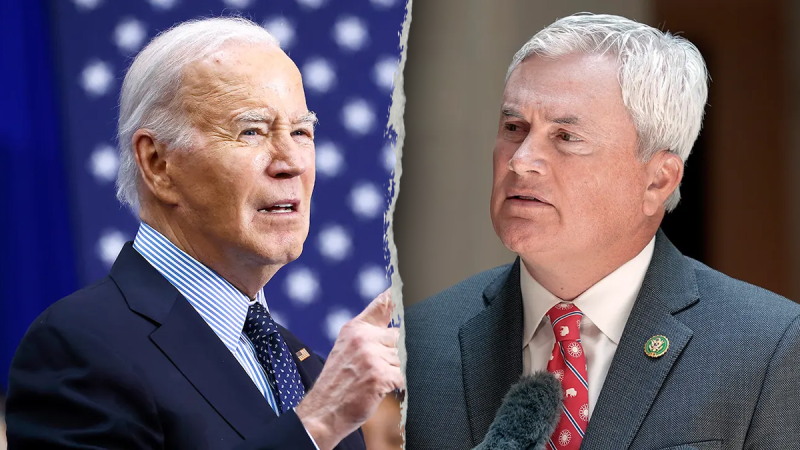
She was meant to appear Friday for a voluntary transcribed interview, but a committee aide previously told Fox News Digital that Tomasini’s lawyers had asked House Oversight Committee Chairman James Comer, R-Ky., to issue a subpoena specifically.

Both prior officials who appeared under subpoena – ex-White House physician Kevin O’Connor and Anthony Bernal, a longtime aide to ex-First Lady Jill – also invoked the Fifth Amendment.

Comer is investigating allegations that Biden’s former top White House aides covered up signs of his mental and physical decline while in office, and whether any executive actions were commissioned via autopen without the president’s full knowledge. Biden allies have pushed back against those claims.

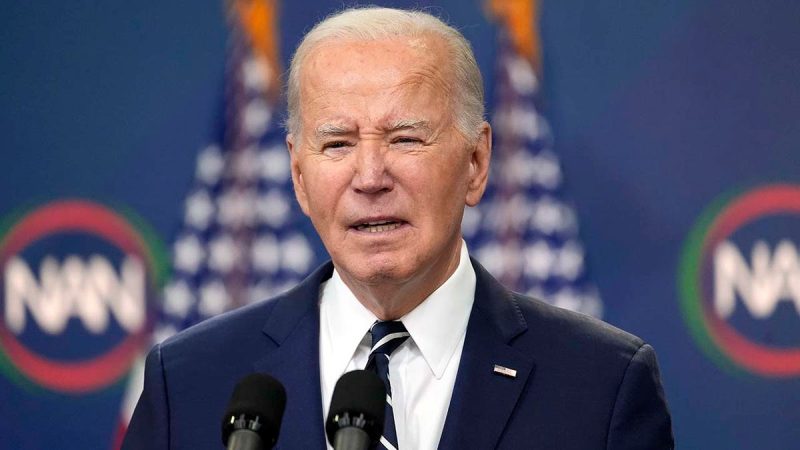
In an interview with The New York Times on Thursday, Biden affirmed he ‘made every decision’ on his own.

But Republicans have repeatedly accused those who have pleaded the Fifth Amendment so far of intentionally hiding critical information about the former president, even as their attorneys argue it is not an admission of guilt.

This post appeared first on FOX NEWS

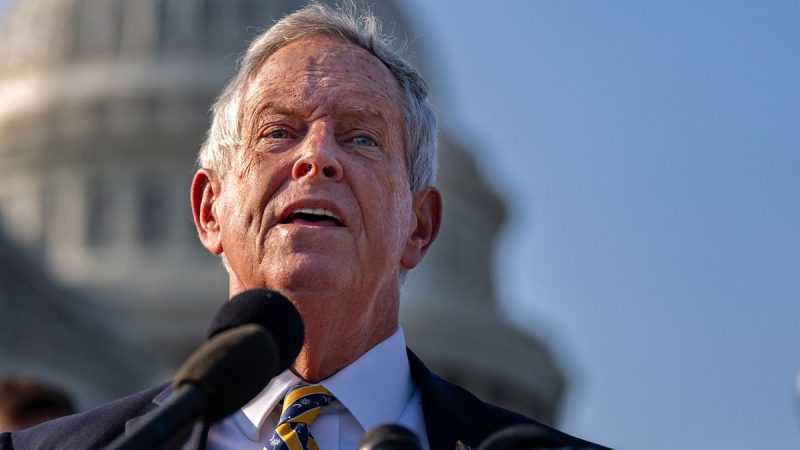
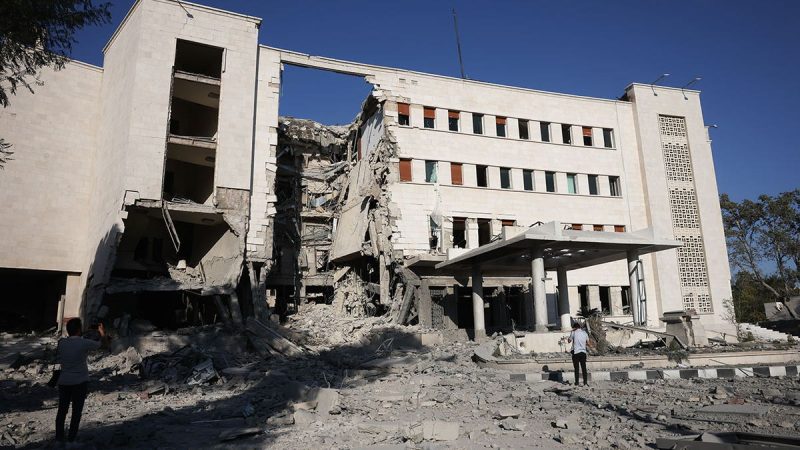
In a rare public rebuke of Israeli military action, Rep. Joe Wilson, R‑S.C., issued a harsh warning that recent airstrikes on Syria are ‘suicidal’ for Tel Aviv. 

‘I’m the co‑chair of the Israel caucus and a lifelong supporter of the State of Israel,’ Wilson told Fox News Digital in an emotional phone call, ‘I am heartsick.’

He said the strikes on Syria’s military headquarters were ‘insulting and mocking to President [Donald] Trump,’ who just recently lifted sanctions on Syria after meeting with leader Ahmed al-Sharaa to give Damascus a ‘chance’ at economic prosperity after the fall of Bashar al-Assad. 

Wilson said he had a tense phone call with Ambassador Yechiel Leiter, urging him to share his warning back home that Israel must stop the strikes. 

Only weeks ago, there were back-channel talks between Israel and Syria on a possible normalization deal. Now, not only are those talks out the window, but the strikes will complicate work on a U.S.-brokered Abraham Accords-style deal to normalize relations between Israel and Saudi Arabia, Wilson said. ‘It’s so sad to me, it’s so detrimental.’

He warned that fractures in Syria could ripple across the region — undermining emerging ties between Israel and Saudi Arabia, straining NATO relations with Turkey, fracturing Druze unity in Jordan and increasing instability among Kurdish populations across Syria, Iraq, Turkey and Iran. He added that such fragmentation would open the door for an ISIS resurgence, targeting Israel first.

Wilson also pointed to broader geopolitical consequences, noting the strikes empower Iran and bolster Russia’s presence in Syria. ‘Efforts should be made to expel [Vladimir Putin’s forces], not to create destabilization,’ he said, asserting that Moscow uses its Syrian bases to project naval power across Africa and the Mediterranean.

‘What is being done is actually beneficial to Iran. The more destabilization, the greater opportunity Iran has to destabilize other countries, whether it be further destabilization of Iraq, and then also it plays into the hands of war criminal Putin.’ 

This week, Israel’s national security minister Ben Gvir said Israel must ‘eliminate’ al-Sharaa. 

On Thursday, Israeli Defense Minister Israel Katz said the nation struck to defend Druze minority communities in Syria, fearing the Syrian leadership would soon strike Israelis. 

‘I did not trust Assad the father, nor Assad the son, and I certainly do not trust a leader like Julani,’ he said, referring to al-Sharaa by his former name. 

He claimed al-Sharaa ‘relies on jihadist groups that he operates against minorities in Syria, and tomorrow he will operate them against Israeli communities in the Golan Heights. 

‘The moment we understood that the Syrian regime was behind the attacks and a partner in the massacre of the Druze — we acted against them with full force.’ The Druze community also has a sizable population in Israel. 

Wilson called the assertion ‘totally contrived and misunderstood.’ 

‘It’s so sad to me that they’re taking the eye off the enemy. The enemy is Khamenei and the enemy is the head of the snake. It is not Damascus. The head of the snake is Tehran.’

‘They’re opening the door for Tehran to rebuild Hamas to rebuild Hezbollah, to replenish and they already have the Houthis. So, it’s just crazy. And again, it’s suicidal. If you can’t figure out who your enemy is, then you’re opening the door for massive loss of life within Israel itself.’

Syria’s leader accused Israel of sowing discord by striking in defense of the Druze, who were involved in deadly sectarian clashes that threaten the nation’s fragile unity. 

Washington is also intensifying pressure for de-escalation. 

The Trump administration has formally urged Israel to halt its strikes and pursue direct talks with Damascus. Special U.S. envoy Tom Barrack reportedly made several calls to Prime Minister Netanyahu’s adviser, Ron Dermer, pressing for restraint. Secretary of State Marco Rubio described the strikes as a ‘troubling and horrifying situation,’ adding that the U.S. is ‘very concerned’ and wants the fighting to stop.

The Israeli defense ministry could not be reached for comment. 

This post appeared first on FOX NEWS

Israel’s military strikes in Syria this week — launched in response to atrocities against the Druze minority — represent a strategic turning point in a deeper power struggle that now entangles Iran, Turkey, Israel, Saudi Arabia and the U.S., according to regional analysts.

Just days ago, speculation swirled about a potential normalization agreement between Israel and Syria — a breakthrough quietly brokered by U.S. officials, but that fragile prospect has been swiftly overtaken by violence, as Israeli airstrikes this week struck near Damascus.

A ceasefire agreement between Druze factions and the Syrian government, announced July 16, was meant to calm days of deadly clashes, but it remains tenuous and largely unenforced, with sporadic fighting continuing and tensions running high.

‘For the Druze in Israel, what’s happening in southern Syria feels like October 7 all over again,’ said Avner Golov, vice president of the Israeli think tank Mind Israel. ‘Israel can no longer treat Syria as just a neighboring crisis. It’s now a domestic one.’

In a rare scene, Israeli Druze citizens crossed the border into Syria to support their embattled relatives — prompting a stern warning from Prime Minister Benjamin Netanyahu.

‘My Druze brothers, citizens of Israel… Do not cross the border,’ Netanyahu said. ‘You are putting your lives at risk — you could be killed, you could be kidnapped — and you are harming the IDF’s efforts. Let the IDF do its job.’

In his first televised address since the Israeli strikes, Syrian transitional President Ahmed al-Sharaa framed the Israeli intervention as a destabilizing act.

‘Government forces deployed to Suweida succeeded in restoring stability and expelling outlawed factions despite the Israeli interventions,’ he said, warning that the strikes led to ‘a significant complication of the situation’ and ‘a large-scale escalation.’ He insisted that protecting the country’s Druze minority was a top priority and declared that Syrians ‘are not afraid of war.’

Within Israel, the collapse of order in Syria has triggered sharp debate. Some policymakers argue for supporting Sharaa as an anti-Iranian strongman, while others advocate broader military action to create a buffer zone in southern Syria. Golov supports a middle course: conditional strikes paired with demands for Druze autonomy and accountability for war crimes.

‘If Sharaa shows he’s willing to punish those responsible for the massacre and agree to Druze autonomy, then Israel can gradually work with him,’ Golov told Fox News Digital.

He also called for a regional diplomatic effort to stabilize Syria. ‘We need a regional summit — the U.S., Saudi Arabia, even Turkey, and Israel’ he said. ‘Bring positive forces into Syria and use Israeli military power not just tactically, but to gain diplomatic leverage.’

‘There’s a temptation to miss the victory lap,’ said Behnam Taleblu, senior director of the Iran Program at the Foundation for Defense of Democracies (FDD). ‘Rather than see Syria through the prism of competition with Turkey, Israel should first see it through the prism of diminished competition with Iran. That in itself is a huge achievement.’

Turkey: Alarmed, but invested

While Iran’s position has weakened, Turkey has quietly expanded its footprint in Syria by backing the al-Sharaa government. 

Turkey’s strategic interest in Syria, Sinan Ciddi, a senior fellow at FDD and director of the Turkey program, explained, is to fill the vacuum left by Iran with its own political and economic influence — using al-Sharaa regime as a conduit. ‘Turkey has a lot riding on al-Sharaa success,’ he said. ‘They’d like to see increased trade, the reconstruction of Syria through al-Sharaa. They want to use him as a means to influence the region politically.’

However, Israel’s military response has triggered alarm in Ankara.

‘Turkey is not in a position to militarily challenge Israel — it would be a disaster,’ said Ciddi. ‘They’re talking tough, but they’re deeply concerned.’

Ciddi emphasized that Turkey’s aging military hardware and lack of air defense leave it highly exposed. Yet, Turkey is deeply invested in al-Sharaa political survival, hoping to leverage him for influence and economic ties in post-war Syria.

A direct clash between Turkey and Israel, Ciddi warned, would ‘result in a diplomatic fiasco… and require the United States and European countries to step in as mediator.’

Iran: Watching, waiting, and ready to return

Even as Israel dismantled key parts of Iran’s military infrastructure in Syria, Tehran remains a long-term threat. Taleblu said Iran is now lying in wait — ready to exploit missteps by others.

‘This is a regime that capitalizes on the mistakes of others,’ he said. ‘They don’t need to win outright — they just need everyone else to lose.’

Tehran is betting that the region’s rival powers — Turkey, Israel, the U.S. and the Gulf — will overplay their hands, allowing Iran to reenter through proxies, sectarian militias, or diplomatic manipulation.

The United States: Pulled back in

Though President Trump recently said Syria’s internal affairs are ‘not our war,’ his administration’s tone has shifted. Secretary of State Marco Rubio called for de-escalation, and regional partners are urging a clearer U.S. role.

‘Real success will come from creating contingencies,’ Taleblu said. ‘What are the costs if Syria collapses? What if Turkey overreaches, or Israel overextends? What if Iran comes back? The states that prepare for these questions.’

This post appeared first on FOX NEWS

Former Biden administration staffer Annie Tomasini is on Capitol Hill Friday after being subpoenaed by House Oversight Committee Chairman James Comer, R-Ky.

She did not say anything to reporters on her way into her closed-door deposition with investigators.

Tomasini, former Assistant to the President and Deputy Chief of Staff for ex-President Joe Biden, was previously scheduled to appear for a voluntary transcribed interview on Friday.

A committee aide told Fox News Digital earlier this week that Tomasini’s counsel requested the subpoena, but did not say why. 

She is the third ex-Biden administration aide to come under subpoena in Comer’s probe in recent weeks.

Comer is investigating allegations that Former President Joe Biden’s former top White House aides covered up signs of his mental and physical decline while in office, and whether any executive actions were commissioned via autopen without the president’s full knowledge. Biden allies have pushed back against those claims.

In an interview with The New York Times on Thursday, Biden affirmed he ‘made every decision’ on his own.

Just before Tomasini, House investigators heard from Anthony Bernal, a longtime aide to ex-first lady Jill Biden. 

Bernal pleaded the Fifth Amendment on all questions about Biden and was out of the committee room less than an hour after going in.

Lawmakers are largely not expected to attend the closed-door deposition, which is traditionally staff-led.

Comer has been to several so far, and progressive firebrand Rep. Jasmine Crockett, D-Texas, has made surprise appearances as well.

CNN anchor Jake Tapper and Axios political correspondent Alex Thompson revealed in their book, ‘Original Sin,’ that Tomasini and Bernal ‘loaded a written Q&A into a prompter ahead of a local interview – a document that the campaign had used in prep with Biden.’

Tomasini and Bernal brought out the teleprompter as his aides were trying to soften his blunders as Biden struggled to stay on message, according to the book. But the teleprompter fiasco became an easy attack line throughout Biden’s re-election campaign, as President Donald Trump ‘weaved’ through his myriad unscripted moments.

The book described how Tomasini and Bernal grew closer to Biden during the pandemic, eventually becoming Joe and Jill Biden’s most trusted aides. 

Tapper and Thompson describe the ‘intensely loyal’ duo – Tomasini and Bernal – as taking on an ‘older-brother-and-little-sister vibe’ among Biden’s inner circle.  

Bernal and Tomasini later took on some of the residence staffers’ roles in the White House. Tapper and Thompson said the aides ‘had all-time access to the living quarters, with their White House badges reading ‘Res’ – uncommon for such aides.’

‘The significance of Bernal and Tomasini is the degree to which their rise in the Biden White House signaled the success of people whose allegiance was to the Biden family – not to the presidency, not to the American people, not to the country, but to the Biden theology,’ the authors wrote. 

A source familiar with the Biden team’s thinking called House Republicans’ probe ‘dangerous’ and ‘an attempt to smear and embarrass.’

‘And their hope is for just one tiny inconsistency between witnesses to appear so that Trump’s DOJ prosecute his political opponents and continue his campaign of revenge,’ the source said.

This post appeared first on FOX NEWS

Here’s a quick recap of the crypto landscape for Friday (July 18) as of 9:00 a.m. UTC.

Get the latest insights on Bitcoin, Ethereum and altcoins, along with a round-up of key cryptocurrency market news.

Bitcoin and Ethereum price update

Bitcoin (BTC) was priced at US$118,687, up by 0.8 percent in the last 24 hours. The day’s range for the cryptocurrency brought a low of US$117,829 and a high of US$120,689.

Bitcoin price performance, July 18, 2025.

Chart via TradingView

Ethereum (ETH) was priced at US$3,604.95, up by 7.2 percent over the past 24 hours. Its lowest valuation as of Friday was US$3,382.09 and its highest was US$3,669.85.

Altcoin price update

  • Solana (SOL) was priced at US$180.04, up by 4.1 percent over 24 hours. Its lowest valuation on Wednesday was US$172.08, and its highest was US$184.13.
  • XRP was trading for US$3.45, up 7.8 percent in the past 24 hours. The cryptocurrency’s lowest valuation was US$3.21, and its highest was US$3.65.
  • Sui (SUI) is trading at US$4.03, down by 2.7 percent over the past 24 hours. Its lowest valuation was US$3.91, and its highest was US$4.23.
  • Cardano (ADA) was trading at US$0.8524, up by 4.3 percent over 24 hours. Its lowest violation was US$0.7885 while its highest was US$0.8865.

Today’s crypto news to know

US passes first major federal crypto regulation

The US Congress has passed the first-ever federal law to regulate stablecoins—marking a milestone victory for the digital asset industry.

The bill, formally titled the “Genius Act,” cleared the House this week after earlier winning bipartisan support in the Senate.

It now awaits President Trump’s signature, which would make it the first major digital asset legislation enacted into law in the US. The legislation establishes clear oversight for stablecoin issuers, including requirements for reserve backing, regular audits, and compliance with anti-money laundering and sanctions laws.

Lawmakers argue that such rules are necessary to ensure the safety of a fast-growing market that is pegged to the US dollar but has, until now, operated in a regulatory gray zone.

Stablecoins are used to facilitate trading, payments, and transfers within the crypto ecosystem without the volatility of traditional cryptocurrencies like Bitcoin. Treasury Secretary Scott Bessent recently stated the law could help grow the stablecoin market to US$3.7 trillion by 2030.

Two other bills also passed the House during the so-called “Crypto Week”: one defining which crypto assets are securities or commodities, and another barring the Fed from launching a US central bank digital currency.

These bills will now proceed to the Senate, but the Genius Act’s passage alone is already being hailed as a defining moment in the evolution of U.S. crypto regulation.

Crypto market soars past US$4 trillion after bill’s passage

The global crypto market capitalization has topped US$4 trillion for the first time, spurred by optimism following the US House’s passage of federal stablecoin legislation.

Investors are piling into altcoins and crypto-related equities as momentum builds behind what markets have dubbed “Crypto Week” in Washington. Ether led the charge with a 22 percent jump over five days, while Bitcoin soared to an all-time high of US$123,205 and continues to make up over half of the market’s total value.

The gains reflect increasing confidence that a regulatory framework is finally taking shape in the world’s largest economy.

Analysts predict that the stablecoin sector alone could balloon to US$3.7 trillion by 2030, especially with state and federal guardrails in place. ETF inflows have been particularly strong this month, with US-listed Bitcoin and Ether funds attracting a combined US$8.4 billion in July.

House blocks digital dollar rollout with Anti-CBDC Act

The US House passed the CBDC Anti-Surveillance State Act, effectively banning the Federal Reserve from issuing or piloting a digital dollar without direct approval from Congress.

The move represents growing Republican backlash against central bank digital currencies, or CBDCs, which critics fear could enable state monitoring of financial transactions.

The bill passed on a razor-thin 219–217 vote, marking the third major crypto bill to clear the chamber during Washington’s so-called “Crypto Week.”

Unlike cryptocurrencies like Bitcoin, CBDCs are centralized and government-controlled, raising concerns about programmability and surveillance.

With this vote, the House has now backed legislation on stablecoins, crypto market structure, and CBDCs — a trifecta of digital asset policy initiatives that now await Senate scrutiny.

Securities Disclosure: I, Giann Liguid, hold no direct investment interest in any company mentioned in this article.

Securities Disclosure: I, Meagen Seatter, hold no direct investment interest in any company mentioned in this article.

This post appeared first on investingnews.com


Element79 Gold Corp (OTCQB: ELMGF, CSE: ELEM,OTC:ELMGF, FSE: 7YS0) a mining company focused on gold and silver exploration with a portfolio of assets in Nevada and Peru, today announced that CEO and Director, James C. Tworek, will present live at the Metals & Mining Virtual Investor Conference hosted by VirtualInvestorConferences.com, on July 23, 2025


  DATE : July 23, 2025
TIME: 1:30pm EST  
LINK:   REGISTER HERE  
Available for 1×1 meetings: July 23-29, 9am-5pm EST – booking link: Element79 Gold – 1×1 Meeting Management Link  


This will be a live, interactive online event where investors are invited to ask the company questions in real-time. If attendees are not able to join the event live on the day of the conference, an archived webcast will also be made available after the event.


It is recommended that online investors pre-register and run the online system check to expedite participation and receive event updates.


Learn more about the event at   www.virtualinvestorconferences.com    .  


  Recent Company Highlights:  


  • Strategic refocus on Nevada exploration
  •  

  • Upcoming 43-101 reports in progress for Elephant and Gold Mountain
  •  

  • Preparing for exploration at Elephant project,
  •  

  • Acquisition of drill-ready Gold Mountain project in Battle Mountain trend
  •  

  Near-term catalysts include:  


  • Updated technical disclosures and resource modeling;
  •  

  • Drilling and exploration program launches at Gold Mountain and Elephant;
  •  

  • Strategic communications and investor engagement to reinforce market positioning
  •  

  About Element79 Gold Corp  


 Element79 Gold Corp is a mining company focused on gold and silver exploration, with a portfolio of assets in Nevada and Peru. The Company is actively advancing its Gold Mountain and Elephant projects in Nevada and holds the high-grade Lucero mine in southern Peru. Element79 Gold is listed on the OTCQB Market (OTCQB: ELMGF), Canadian Securities Exchange (CSE: ELEM,OTC:ELMGF), and the Frankfurt Stock Exchange (FSE: 7YS0).


  About Virtual Investor Conferences ®  


Virtual Investor Conferences (VIC) is the leading proprietary investor conference series that provides an interactive forum for publicly traded companies to seamlessly present directly to investors.


Providing a real-time investor engagement solution, VIC is specifically designed to offer companies more efficient investor access.  Replicating the components of an on-site investor conference, VIC offers companies enhanced capabilities to connect with investors, schedule targeted one-on-one meetings and enhance their presentations with dynamic video content. Accelerating the next level of investor engagement, Virtual Investor Conferences delivers leading investor communications to a global network of retail and institutional investors.


  CONTACTS:  
Mike Smith  
VP, Corporate Development
C: +1.604.319.6853
ms@element79.gold  


  Virtual Investor Conferences  
John M. Viglotti
SVP Corporate Services, Investor Access
OTC Markets Group
(212) 220-2221
johnv@otcmarkets.com  


News Provided by GlobeNewswire via QuoteMedia

This post appeared first on investingnews.com

Gold has notched an extraordinary first half of 2025, climbing 26 percent in US dollar terms and setting 26 new all-time highs — but the rally now faces a murky and fragile second act shaped by inflation, monetary policy, and unresolved global tensions, according to the World Gold Council’s (WGC) recent mid-year report.

Investors around the globe turned to gold as both a tactical hedge and a strategic store of value, pushing trading volumes to an all-time high of US$329 billion per day in the first six months of the year.

The WGC’s mid-year outlook suggests the precious metal’s momentum could continue, but with significant caveats. Under current consensus forecasts, gold is likely to remain rangebound in the second half, potentially rising another 0 to 5 percent.

However, sharp deviations in macro conditions — particularly those involving stagflation, recession, or worsening geopolitical risks — could lift gold by an additional 10 percent to 15 percent before year-end.

A record-breaking first half

Gold’s 26 percent gain in H1 made it one of 2025’s top-performing major assets. The yellow metal benefited from a rare combination of global factors: a declining US dollar — which had its worst start to a year since 1973 — muted Treasury yields, and a sharp uptick in geopolitical tensions, many linked to US trade policies and regional flashpoints.

These factors created fertile ground for strong inflows into exchange-traded funds (ETFs), over-the-counter (OTC) markets, and futures.

Gold ETF holdings surged by 397 metric tons in the first half — the highest since August 2022 — bringing total holdings to 3,616 tonnes and pushing total assets under management to $383 billion, a 41 percent increase from the start of the year.

Central banks, too, continued to buy gold, albeit at a moderated pace compared to the record-setting quarters of 2022 and 2023. Although net purchases have slowed, they remain significantly above the pre-2022 average of 500–600 metric tons annually.

Why investors piled in

According to the WGC’s Gold Return Attribution Model (GRAM), three key drivers contributed to gold’s H1 surge: risk and uncertainty, opportunity cost, and momentum.

Investor demand stemming from heightened geopolitical and financial risks contributed approximately 4 percent of gold’s return, with half of that explained by a measurable increase in the Geopolitical Risk Index.

A further 7 percent of the return was attributed to changes in opportunity cost, primarily due to the weakening dollar and low bond yields, which made non-interest-bearing gold relatively more attractive.

Lastly, momentum effects, including continued ETF inflows and trend-following investment behavior, added another 5 percent, supporting the metal’s climb through positive feedback loops.

Altogether, these macro and market-based dynamics explained around 16 percentage points of gold’s 26 percent performance in the first six months of the year.

The outlook: Three scenarios for H2

While gold’s fundamentals remain supportive, analysts are cautious about expecting a repeat performance in H2. The WGC outlines three macroeconomic paths that could shape gold’s direction in the second half.

In the base case, moderate global growth and inflation settling near 5 percent could keep real yields subdued, especially if the US Federal Reserve cuts rates by 50 basis points in the fourth quarter.

This environment would likely support gold prices modestly, with forecasts pointing to gains of up to 5 percent. Continued interest from ETF and OTC investors could offset softer consumer demand and increased recycling, both of which may act as speed bumps for further upside.

The bull case envisions a sharp rise in gold if economic conditions worsen — either through stagflation or a full-blown recession.

A flight to safety could trigger renewed ETF inflows, central bank diversification away from the dollar, and heavier positioning in COMEX futures. Under this stress-driven rally, gold could surge another 10 to 15 percent in H2, echoing the strong performance seen during previous crises like 2008 and the early pandemic years.

On the flip side, a more stable geopolitical and macroeconomic environment, such as a resolution to major global conflicts or normalization in trade, would dampen demand for gold. In this bear case, stronger yields and renewed investor appetite for risk assets could pull gold down by as much as 12 to 17 percent.

No matter the outcome, gold continues to serve as a resilient portfolio hedge. Its strong showing in the first half of 2025 reaffirmed its utility in volatile markets, particularly as traditional safe havens like US Treasuries struggle to deliver.

Even if jewelry and retail demand sees pressure, structural support could come from institutional players — including reports that Chinese insurers are quietly upping their gold allocations.

For now, gold may consolidate. But should conditions turn, the metal still has plenty of room to move, in either direction.

Securities Disclosure: I, Giann Liguid, hold no direct investment interest in any company mentioned in this article.

This post appeared first on investingnews.com

Formal saving in developing economies surged to its highest level in more than a decade in 2024, powered largely by the widespread use of mobile phones and digital financial tools, the World Bank said in its new Global Findex 2025 report.

For the first time, 40 percent of adults in low- and middle-income countries reported saving money through a bank or other financial institution—marking a 16-percentage-point increase since 2021 and the sharpest three-year rise since the Findex survey began.

Mobile-money services played an outsized role: 10 percent of adults in these economies used mobile accounts to save, up from 5 percent just three years prior.

‘This is real progress,’ said Bill Gates, chair of the Bill & Melinda Gates Foundation, which supports the survey. ‘More people than ever have the financial tools to invest in their futures and build economic resilience, including women and others previously left behind.’

The data points to a broader trend: digital access is quickly becoming the defining factor in who gets to participate in formal financial systems. While nearly 80 percent of the world’s adults now have a financial account, 1.3 billion people still do not—and most of them live in countries where mobile-phone penetration is already high.

According to the report, around 900 million adults without financial accounts do own mobile phones, and more than half of those have smartphones.

“Financial inclusion has the potential to improve lives and transform entire economies,” said World Bank Group President Ajay Banga. “Digital finance can convert this potential into reality, but several ingredients need to be in place.”

Banga cited the Bank’s work supporting digital identification systems, social protection programs with direct cash transfers, and efforts to modernize national payment infrastructure. “We’re helping to remove regulatory roadblocks—so that people and businesses have the financing they need to innovate and create jobs,” he said.

The Findex also recorded an increase in digital merchant payments. In 2024, 42 percent of adults in developing economies made at least one in-store or online purchase using a card or mobile phone—up from 35 percent in 2021.

Among adults receiving wages or government payments, a growing majority are being paid directly into accounts, a shift that has been shown to reduce leakage and fraud.

At the same time, the rise in digital finance has exposed new gaps in consumer protection and digital literacy. Although 4 billion adults in low- and middle-income countries own mobile phones, only about half use passwords or other basic security tools. This leaves hundreds of millions vulnerable to scams, account theft, or misuse of their data.

For the first time, the report incorporated data on personal device ownership and internet use through a new Digital Connectivity Tracker. It found that 86 percent of adults globally now own a mobile phone, including 68 percent with smartphones.

These figures are even higher in some regions: mobile-phone ownership tops 94 percent in Europe and Central Asia, and smartphone use is highest in East Asia and the Pacific, where 86 percent of adults own one.

Sub-Saharan Africa showed the largest gains in mobile-money use, with 35 percent of adults now saving formally—up 12 percentage points since 2021. Meanwhile, women in low- and middle-income countries have made notable strides in account ownership, closing much of the gender gap: 73 percent now have accounts, compared with just 37 percent in 2011.

Still, challenges persist. In the Middle East and North Africa, only 53 percent of adults have an account, and formal saving remains low at 17 percent. In Latin America and the Caribbean, 70 percent have accounts, but usage patterns vary widely by country and income level.

Gates underscored the stakes: “The case for investing in inclusive financial systems, digital public infrastructure, and connectivity is clear—it’s a proven path to unlocking opportunity for everyone.”

The Global Findex, compiled every three years since 2011, remains the world’s most comprehensive database on how adults access, use, and trust financial services. The 2025 edition surveyed over 130,000 people in more than 120 countries.

Securities Disclosure: I, Giann Liguid, hold no direct investment interest in any company mentioned in this article.

This post appeared first on investingnews.com

LaFleur Minerals Inc. (CSE: LFLR,OTC:LFLRF) (OTCQB: LFLRF) (FSE: 3WK0) (‘LaFleur Minerals’ or the ‘Company’) is pleased to announce that it has commenced its diamond drilling program at its Swanson Gold Project (‘Swanson’) in the Abitibi region, Québec, after receiving all the necessary permits including the Authorization to Intervene (ATI) and the Forestry Intervention permits. These permit approvals mark a major milestone, allowing the Company to move forward with its fully funded, minimum 5,000 metre drilling program starting with the Swanson Gold Deposit. Simultaneously, the Company announces the completion of the independent valuation of its Beacon Gold Mill (‘Beacon Mill’) by Bumigeme Inc. (‘Bumigeme’) confirming: (1) the Beacon Mill is in excellent condition, (2) with rehabilitation and commissioning costs estimated at C$4.1 million, and (3) full replacement cost of the mill and tailings storage facility combined with permitting costs estimated to exceed C$71.5 million, underscoring the strategic value of the asset. LaFleur Minerals has also significantly expanded its land position at its wholly-owned Swanson Gold Project, now covering over 18,300 hectares across 445 claims and 1 mining lease, reinforcing its district-scale exploration potential.

These recent developments mark a major operational inflection point for LaFleur Minerals:

  • Aggressive Drilling and Land Expansion: The start of a fully funded 5,000-metre drilling campaign and a significant land expansion within the Swanson Gold Project unlocking substantial discovery potential.

BUMIGEME VALUATION COMPLETE

Independent mining engineering firm Bumigeme has completed its full evaluation of the Company’s Beacon Mill in Val-d’Or, Québec and concluded that the mill is in excellent condition with anticipated rehabilitation and re-commissioning costs of C$4.1 million as part of its planned restart program. Furthermore, Bumigeme estimated the replacement CAPEX cost to build a new similar gold mill today at C$49.5 million. This cost does not include the building of a new tailings storage facility (TSF) including a tailings pond, finishing basin, piping, pumping station, etc., which is estimated at C$12 million, and mining and environmental studies and permitting costs estimated at C$10 million. Bumigeme also estimates it would take a minimum of 18 months to build a new mill and TSF, in addition to a minimum of 5 years to complete all required studies and receive all necessary permits from the federal, provincial, and municipal governments, and local and Indigenous communities prior to construction. The results of this independent valuation confirm the strong value and incredible opportunity the Beacon Mill offers for future milling of gold deposits in the Abitibi region after re-commissioning work is complete. The results of the Bumigeme evaluation will also be incorporated into the Company’s ongoing work towards a Preliminary Economic Assessment (PEA) for the Swanson Gold Project.

The Company’s next immediate priority is to secure the necessary financing to complete the rehabilitation and re-commissioning of the Beacon Gold Mill with the aim to complete the mill restart program by early 2026.

DIAMOND DRILLING COMMENCES AT SWANSON

The diamond drilling program at the Swanson Gold Project (Figure 1) will focus on priority target areas including the Swanson Gold Deposit, as well as Bartec, Jolin, and Marimac target areas (Figure 2). These high-potential zones were selected following an extensive compilation of historical data and recently completed detailed exploration work by LaFleur Minerals, including:

  • High-resolution airborne magnetic and VLF-EM surveys

  • Prospecting and soil geochemistry surveys

  • Induced polarization (IP) survey program

Drilling has already commenced at the Swanson Gold Deposit and will test key structural, geological, geochemical and geophysical anomalies for additional gold mineralization potential along strike. The Company looks forward to sharing additional details and drilling assay results in the coming weeks.

ADDITIONAL CLAIM STAKING AT SWANSON

The Company is also pleased to announce it has recently staked an additional 32 mineral claims, covering approximately 1,824 hectares, on strike and to the northwest of the Swanson Gold Deposit (Figure 3). This claims expansion extends the project’s coverage of favourable geology to over 33 kilometres of strike length, significantly enhancing Swanson’s exploration potential. The Swanson Property represents one of the largest land and mineral packages in the renowned southern Abitibi Gold Belt, which hosts favourable geology and mineralized structures. The Swanson Gold Project now includes 445 mineral claims and 1 mining lease covering a total of 18,304 hectares, positioning it as a key district-scale gold exploration play on a project that hosts over 36,000 metres of historical drilling and multiple high potential drill targets.

Paul Ténière, CEO of LaFleur Minerals stated, ‘We are very pleased with results of the full evaluation of the Beacon Gold Mill by Bumigeme and it truly shows the incredible potential of this milling asset as we advance towards becoming a near-term gold producer. Our technical team has also done an exceptional job integrating historical exploration data with new geophysical and geochemical datasets to define compelling drilling targets at Swanson. Receiving the required permits clears the way for us to advance one of the most exciting exploration and drilling campaigns in the region. Not only are we launching a fully funded, data-driven drilling program, but we’ve also strategically expanded our land position in a way that meaningfully increases our discovery potential.

Figure 1: Swanson Deposit – 50 km from the Beacon Gold Mill

To view an enhanced version of this graphic, please visit:
https://images.newsfilecorp.com/files/6526/259175_463e41b81478eb51_001full.jpg

Figure 2: Swanson drilling target regions and proposed 2025 drill holes (in blue)

To view an enhanced version of this graphic, please visit:
https://images.newsfilecorp.com/files/6526/259175_463e41b81478eb51_002full.jpg

Figure 3: Recent staking at Swanson

To view an enhanced version of this graphic, please visit:
https://images.newsfilecorp.com/files/6526/259175_463e41b81478eb51_003full.jpg

QUALIFIED PERSON STATEMENT

All scientific and technical information in this news release has been prepared and approved by Louis Martin, P.Geo. (OGQ), Exploration Manager and Technical Advisor of the Company and considered a Qualified Person for the purposes of NI 43-101.

About LaFleur Minerals Inc.

LaFleur Minerals Inc. (CSE: LFLR,OTC:LFLRF) (OTCQB: LFLRF) (FSE: 3WK0) is focused on the development of district-scale gold projects in the Abitibi Gold Belt near Val-d’Or, Québec. Our mission is to advance mining projects with a laser focus on our resource-stage Swanson Gold Project and the Beacon Gold Mill, which have significant potential to deliver long-term value. The Swanson Gold Project is approximately 18,304 hectares (183 km2) in size and includes several prospects rich in gold and critical metals previously held by Monarch Mining, Abcourt Mines, and Globex Mining. LaFleur has recently consolidated a large land package along a major structural break that hosts the Swanson, Bartec, and Jolin gold deposits and several other showings which make up the Swanson Gold Project. The Swanson Gold Project is easily accessible by road allowing direct access to several nearby gold mills, further enhancing its development potential. LaFleur Minerals’ fully-refurbished and permitted Beacon Gold Mill is capable of processing over 750 tonnes per day and is being considered for processing mineralized material at Swanson and for custom milling operations for other nearby gold projects.

ON BEHALF OF LaFleur Minerals INC.

Paul Ténière, M.Sc., P.Geo.
Chief Executive Officer
E: info@lafleurminerals.com
LaFleur Minerals Inc.
1500-1055 West Georgia Street
Vancouver, BC V6E 4N7

Neither the Canadian Securities Exchange nor its Regulation Services Provider accepts responsibility for the adequacy or accuracy of this news release.

Cautionary Statement Regarding ‘Forward-Looking’ Information

This news release includes certain statements that may be deemed ‘forward-looking statements’. All statements in this new release, other than statements of historical facts, that address events or developments that the Company expects to occur, are forward-looking statements. Forward-looking statements are statements that are not historical facts and are generally, but not always, identified by the words ‘expects’, ‘plans’, ‘anticipates’, ‘believes’, ‘intends’, ‘estimates’, ‘projects’, ‘potential’ and similar expressions, or that events or conditions ‘will’, ‘would’, ‘may’, ‘could’ or ‘should’ occur. Forward-looking statements in this news release include, without limitation, statements related to the use of proceeds from the Offering. Although the Company believes the expectations expressed in such forward-looking statements are based on reasonable assumptions, such statements are not guarantees of future performance and actual results may differ materially from those in the forward-looking statements. Factors that could cause the actual results to differ materially from those in forward-looking statements include market prices, continued availability of capital and financing, and general economic, market or business conditions. Investors are cautioned that any such statements are not guarantees of future performance and actual results or developments may differ materially from those projected in the forward-looking statements. Forward-looking statements are based on the beliefs, estimates and opinions of the Company’s management on the date the statements are made. Except as required by applicable securities laws, the Company undertakes no obligation to update these forward-looking statements in the event that management’s beliefs, estimates or opinions, or other factors, should change.

To view the source version of this press release, please visit https://www.newsfilecorp.com/release/259175


News Provided by Newsfile via QuoteMedia

This post appeared first on investingnews.com