Author

admin

Browsing

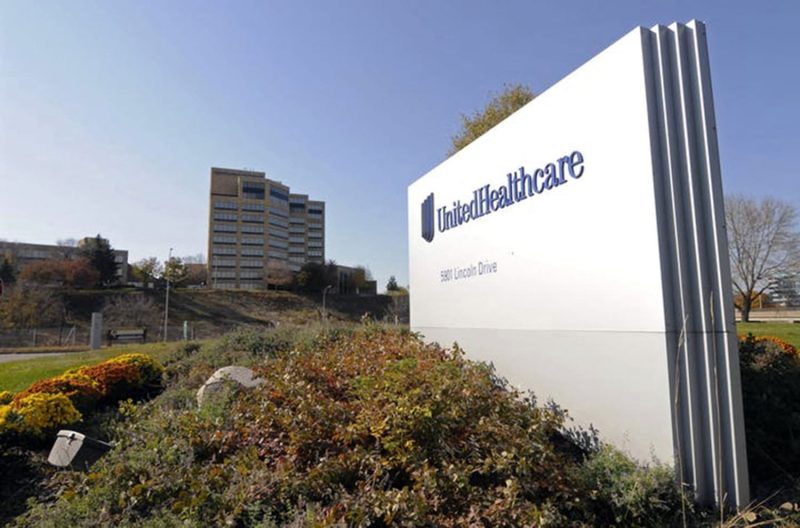
UnitedHealth Group revealed Thursday it is facing a Justice Department investigation over its Medicare billing practices.

It comes after the Wall Street Journal reported in May that the Department of Justice is conducting a criminal investigation into the health-care giant over possible Medicare fraud. In response at the time, the company said it stands “by the integrity of our Medicare Advantage program.”

In July, the Journal also reported that the DOJ interviewed several doctors about UnitedHealth’s practices and whether they felt pressured to submit claims for certain conditions that bolstered payments from the Medicare Advantage program to the company.

That marked the second time this year that the insurer’s Medicare Advantage business has come under federal scrutiny. The Journal also reported in February that the DOJ is conducting a civil investigation into whether the company inflated diagnoses to trigger extra payments to its Medicare Advantage plans.

But in March, UnitedHealth moved a step closer to ending a yearslong legal battle with the DOJ that began with a whistleblower who alleged the company illegally withheld at least $2 billion through the Medicare Advantage program. A special master assigned to the case by the judge issued a recommendation in favor of UnitedHealth, saying the DOJ lacked evidence.

UnitedHealthcare’s Medicare and retirement segment, which includes the Medicare Advantage business, is UnitedHealth Group’s largest revenue driver, raking in $139 billion in sales last year.

The update in the probe comes after a tumultuous last year for UnitedHealthcare, the nation’s largest and most powerful private health insurer. Shares of UnitedHealthcare’s parent company, UnitedHealth Group, are down more than 42% for the year after it suspended its 2025 forecast amid skyrocketing medical costs, announced the surprise exit of former CEO Andrew Witty and grappled with the reported probe into its Medicare Advantage business.

The company’s 2024 wasn’t any easier, marked by a historic cyberattack and the torrent of public blowback after the murder of UnitedHealthcare’s CEO Brian Thompson.

This post appeared first on NBC NEWS

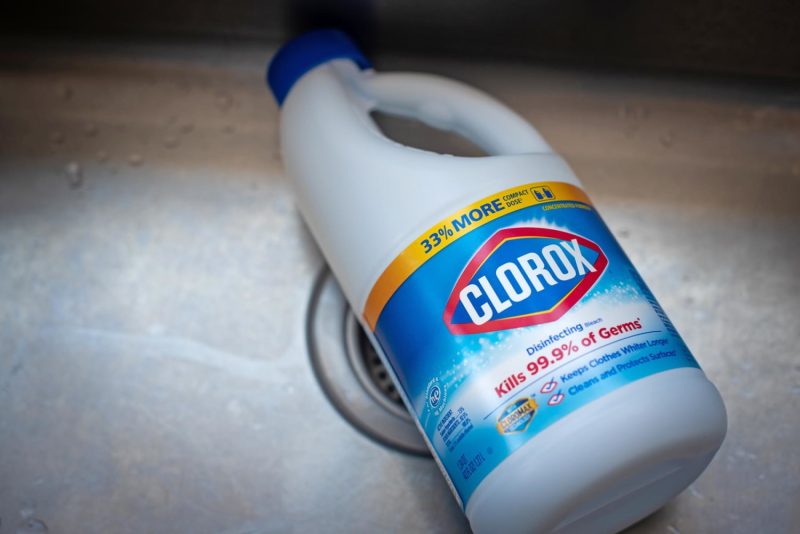
WASHINGTON — Bleach maker Clorox said Tuesday that it has sued information technology provider Cognizant over a devastating 2023 cyberattack, alleging that the hackers pulled off the intrusion simply by asking the tech company’s staff for employees’ passwords.

Clorox was one of several major companies hit in August 2023 by the hacking group dubbed Scattered Spider, which specializes in tricking IT help desks into handing over credentials and then using that access to lock them up for ransom. The group is often described as unusually sophisticated and persistent, but in a case filed in California state court on Tuesday, Clorox said one of Scattered Spider’s hackers was able to repeatedly steal employees’ passwords simply by asking for them.

“Cognizant was not duped by any elaborate ploy or sophisticated hacking techniques,” according to a copy of the lawsuit reviewed by Reuters. “The cybercriminal just called the Cognizant Service Desk, asked for credentials to access Clorox’s network, and Cognizant handed the credentials right over.”

Cognizant did not immediately return a message seeking comment on the suit, which was not immediately visible on the public docket of the Superior Court of Alameda County. Clorox provided Reuters with a receipt for the lawsuit from the court.

Three partial transcripts included in the lawsuit allegedly show conversations between the hacker and Cognizant support staff in which the intruder asks to have passwords reset and the support staff complies without verifying who they are talking to, for example by quizzing them on their employee identification number or their manager’s name.

“I don’t have a password, so I can’t connect,” the hacker says in one call. The agent replies, “Oh, ok. Ok. So let me provide the password to you ok?”

The 2023 hack caused $380 million in damages, Clorox said in the suit, about $50 million of which were tied to remedial costs and the rest of which were attributable to Clorox’s inability to ship products to retailers in the wake of the hack.

Clorox said the clean-up was hampered by other failures by Cognizant’s staff, including failure to de-activate certain accounts or properly restore data.

This post appeared first on NBC NEWS

Corporations are continuing to spend on business travel, but are being strategic about how they allocate those dollars amid ongoing trade uncertainties, according to new reports from the travel and expense platform Navan and the Global Business Travel Association.

Corporate travel spending activity increased 15% year over year in the second quarter of 2025, according to a business travel index published Tuesday from Navan.

Navan’s index, backed by Nasdaq, is derived from millions of corporate business transactions on its platform. It examines the amount spent and number of transactions relating to airline travel, hotel reservations and expense transactions from corporate cards.

Amy Butte, Navan’s CFO, said during an interview that from talking with other chief financial officers over the past few months, she never got the sense that corporate leaders would stop spending on business travel altogether. Instead, they are in “wait and see” mode.

“If you’re making choices about where you’re being cautious, we’re not seeing people be cautious in the area of relationship building, either with their customers or with their teammates. We’re still seeing the spend allocated towards travel as a key component of any business strategy,” Butte said.

But while global business travel is expected to reach a new high of $1.57 trillion in 2025, according to a Monday report by the Global Business Travel Association, that total represents 6.6% year-over-year growth, which is less than the 10.4% increase that was previously predicted. GBTA cited trade tensions, policy uncertainty and economic pressures as the reasons for the more moderate growth.

A string of sentiment polls by GBTA also shows that corporate travel optimism for the rest of 2025 appears muted. The percentage of respondents who said they were optimistic about the overall outlook for the business travel industry in 2025 dropped sharply from 67% in November 2024 to 31% in April and declined slightly again this month to 28%.

The findings from both reports, grouped together with commentary from airline CEOs last week, show C-suite leaders are still largely left in wait-and-see mode amid President Donald Trump’s fluid tariff policies, but companies appear now to have a better read on how they will manage the uncertainty.

“Historically, corporate travel has been the first thing, one of the easiest things, to minimize if you’re a company,” Delta Air Lines CEO Ed Bastian said during the company’s earnings call this month, adding that corporate travel on the airline has been flat on a year-over-year basis.

But Butte said that Navan has not seen a drop-off in business travel. Instead, businesses are shifting how they are spending.

For example, Butte said businesses are continuing to commit to individual, face-to-face meetings, rather than spending on large group outings. The Navan index shows that spending on personal meals, meaning one-on-one meetings held over a meal, was up 9.8% from last year, while spending on team events and meals was the only category in the report that declined.

Navan did see some compression earlier in the year in the share of higher-priced airline tickets purchased that were first class or business class, Butte said, but she added that the platform has since seen an acceleration as uncertainty has lessened.

Airfare prices have also declined so far this year, which means business and consumers alike are spending less on plane tickets. Airfare fell 3.5% in June from a year earlier while inflation overall rose, according to the Bureau of Labor Statistics.

GBTA CEO Suzanne Neufang said during an interview that CFOs have not cut travel spending off entirely, but are looking for efficient ways to get employees on the road. This may look like booking multicity trips, scheduling multiple meetings per trip or booking fewer trips per month, she said.

Neufang said the business travel industry has been focused over the past five years on making sure every trip has a purpose and delivers a return on investment.

“Gone are the days when there’s really frivolous business traveling,” Neufang said.

The new findings on business travel spending also come as airlines are reporting their quarterly earnings.

When Delta reported earnings on July 10, Bastian said he expects both consumer and corporate confidence to improve in the second half of the year, creating an environment for travel demand to accelerate.

Delta and other airlines saw travel demand come in weaker than expected at the beginning of the year, especially from price-sensitive customers traveling domestically. Bastian said back in April that Trump’s trade policies were hurting bookings.

Bastian took a more positive tone this month, telling CNBC that corporate travel has stabilized as businesses have more clarity and confidence than they did earlier this year. But he said corporate travel is in line with last year, not the 5% to 10% growth Delta expected at the start of the year.

Meanwhile, Delta President Glen Hauenstein said on an earnings call this month that corporate travel trends are “choppy” and overall corporate volumes are expected to be “flattish” over last year.

United Airlines reported earnings last week. CEO Scott Kirby said during the company’s call with analysts that so far this month, the airline has seen a double-digit acceleration in business demand as uncertainty has declined.

Andrew Nocella, United’s executive vice president and chief commercial officer, added that the business traffic growth is “across the board” and not restricted to any singular hub or vertical, which he said reflects lessening macroeconomic uncertainty.

Southwest Airlines, Alaska Airlines and American Airlines are scheduled to report their quarterly results this week.

This post appeared first on NBC NEWS

There’s a new player making waves in an industry dominated by big banks.

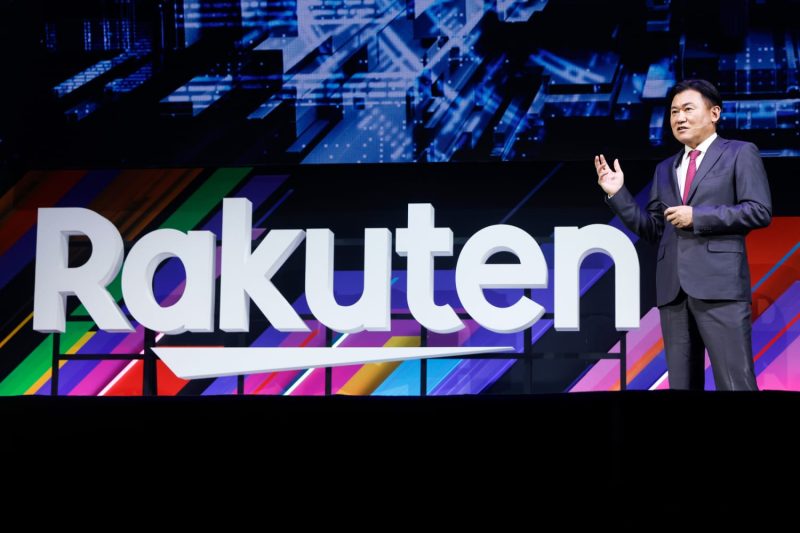
Imprint, the 5-year-old credit card startup, beat out banks in a competitive bidding process for a new co-branded card from online shopping platform Rakuten, CNBC has learned.

The deal is the most recent sign that Imprint is gaining traction in the co-branded credit card industry.

The New York-based startup also just raised $70 million in additional capital, boosting its valuation by 50% to $900 million less than a year from its previous round, according to Imprint CEO Daragh Murphy.

Credit card partnerships with retailers, airlines and hotels are some of the most hotly contested deals in finance. Brands often go through extensive bidding processes to select a card company, while the companies compete for the right to issue cards to millions of loyal customers. The industry’s largest players include JPMorgan Chase, Capital One, Citigroup and Synchrony.

“We’re talking to Fortune 500 companies about being their partner and them choosing us over Synchrony, over Barclays, over U.S. Bank,” Murphy said in an interview. “We have to kind of walk and talk like we’re a big, important company, even though we still have a startup ethos.”

That’s why the company recently raised capital, bringing its total to $330 million, most of which is held on the firm’s balance sheet, according to Murphy. Those funds help show potential partners that Imprint has staying power, he said.

Imprint also has about $1.5 billion in credit lines from banks including Citigroup, Truist and Mizuho, which it uses to extend loans to card customers, Murphy said. The startup is behind the cards from brands including Eddie Bauer, Brooks Brothers and Turkish Airlines.

To offer its credit cards, Imprint usually partners with one of two small banks, First Electronic Bank or First Bank and Trust. Imprint handles the customer experience, including the technology and credit decisions, while using the credit card rails of regulated banks.

In the case of the Rakuten card, Imprint is relying on the American Express network, which allows users to get Amex purchase protections and other perks. It is using First Electronic Bank to help issue the cards.

“Though we’re not a regulated bank, we’re effectively building a bank,” Murphy said. “We have to do all the same things as a bank. We’re a capital markets company; we’re a compliance company; we’re a risk and credit and fraud company; we’re a technology company.”

To gain a toehold in the market for co-branded cards, which can be used anywhere credit cards are accepted, Imprint decided it would focus on a seamless digital experience for customers, Murphy said. That requires technology integration that is difficult for established players who rely on third-party companies including Fiserv to complete transactions, he said.

“The banks are in trouble because they don’t own the technology that the credit card runs on,” Murphy said. “Every credit card in your wallet, whether it’s Chase … or from Citi or Synchrony, they rely on two or three different third parties to power the technology.”

Imprint also decided to set itself apart by making it easy for customers to pay off their loans, Murphy said. Card companies including Bread Financial and Synchrony make a far larger percentage of revenue from late fees than Imprint does, he said.

“You shouldn’t have all these regressive late fees, and you shouldn’t make it hard to pay,” Murphy said. “The easier we make it to pay, the more likely you are to use the card, and the more likely you are to use the card, the better it is for everybody.”

Finally, Murphy said the company’s low customer acquisition costs allow it to fund more rewards for card users.

The new Rakuten card, for instance, offers users an extra 4% in cash back in addition to what customers earn through shopping on the online portal, capped at $7,000 in spending per year.

Users also earn 10% in cash back while dining at Rakuten’s partner restaurants, and 2% cash back on groceries and non-partner restaurants.

The previous Rakuten credit card was issued by Synchrony and discontinued in 2022.

This post appeared first on NBC NEWS

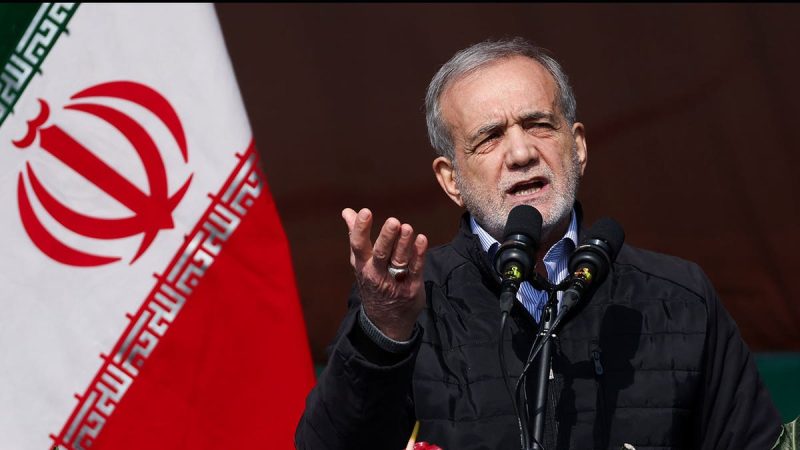
Iran’s President Masoud Pezeshkian on Wednesday doubled down on Tehran’s refusal to abandon its nuclear program and said Iran is ‘fully prepared’ for a renewed fight with Israel. 

The Iranian president’s comments came just two days after Tehran’s foreign minister confirmed to Fox News that Iran will not give up its enrichment program, but continues to claim Tehran is not interested in developing a nuclear weapon. 

‘[US President Donald] Trump says that Iran should not have a nuclear weapon and we accept this because we reject nuclear weapons and this is our political, religious, humanitarian and strategic position,’ Pezeshkian said in an interview with Al Jazeera.

‘We believe in diplomacy, so any future negotiations must be according to a win-win logic, and we will not accept threats and dictates,’ he added. 

Pezeshkian also said Trump’s repeated claims that the U.S. ‘obliterated’ Iran’s nuclear program is ‘just an illusion.’

‘Our nuclear capabilities are in the minds of our scientists and not in the facilities,’ he said.

The U.S. strikes – which came just days after Israel targeted top military figures and nuclear scientists – are believed to have set back Iran’s nuclear program by up to two years. 

But security experts have told Fox News Digital that Iran continues to possess significant military strike capabilities, and questions remain over whether Iran was able to successfully move any enriched uranium off site prior to Washington’s strikes.

Pezeshkian acknowledged the blow that Israel levied against its top officials, but said it ‘completely failed’ to ‘eliminate’ the hierarchy of Iran’s nuclear program.

He further warned that Iran is ready to take on Jerusalem should another conflict break out. 

‘We are fully prepared for any new Israeli military move, and our armed forces are ready to strike deep inside Israel again,’ Pezeshkian said.

Iran and Israel are still operating under a ceasefire brokered by the U.S. and Qatar following last month’s 12-Day War, but the Iranian president said he is not confident this truce will hold. 

‘We are not very optimistic about it,’ Pezeshkian said.

‘That is why we have prepared ourselves for any possible scenario and any potential response. Israel has harmed us, and we have also harmed it,’ he added. ‘It has dealt us powerful blows, and we have struck it hard in its depths, but it is concealing its losses.’

Delegations from France, Germany and the U.K. (E3) are set to travel to Tehran on Friday to discuss nuclear negotiations.

The E3 visit will come just three days after officials from Russia and China, who are also signatories of the 2015 Joint Comprehensive Plan of Action (JCPAO), visited on Tuesday to discuss negotiations and how Iran can avoid sanctions, though details of the talks remain unknown.

Iran began initiating international talks after the E3 last week threatened to employ snapback sanctions – which would see the entire 15-member U.N. Security Council enforce strict economic ramifications – should Iran not enter into a nuclear agreement by the end of August. 

The timeframe is consistent with the time needed for the JCPOA signatories to recall snapback sanctions prior to the Oct. 18 expiration date when the economic tool can no longer be employed en masse per the 2015 terms of the agreement.

This post appeared first on FOX NEWS

The Trump administration revealed details of its highly anticipated artificial intelligence plan of action ahead of President Donald Trump’s major speech later on Wednesday, which is expected to also include the president signing at least one executive order related to the U.S.’ artificial intelligence race. 

Administration leaders, including White House Office of Science and Technology policy director Michael Kratsios and AI and crypto czar David Sacks, held a background call with the media Wednesday morning and outlined a three-pillar plan of action for artificial intelligence focused on American workers, free speech and protecting U.S.-built technologies. 

‘We want to center America’s workers, and make sure they benefit from AI,’ Sacks said on the call while describing the three pillars. 

‘The second is that we believe that AI systems should be free of ideological bias and not be designed to pursue socially engineered agendas,’ Sacks said. ‘And so we have a number of proposals there on how to make sure that AI remains truth-seeking and trustworthy. And then the third principle that cuts across the pillars is that we believe we have to prevent our advanced technologies from being misused or stolen by malicious actors. And we also have to monitor for emerging and unforeseen risks from AI.’

Trump is expected to deliver what White House staffers have described as a major address early Wednesday evening outlining his administration’s artificial intelligence efforts, including lifting restrictions on the technology administration officials say will usher in the next ‘industrial revolution.’

Trump ordered his administration in January to develop a plan of action for artificial intelligence in order to ‘solidify our position as the global leader in AI and secure a brighter future for all Americans.’ 

The presidential action ordered administration leaders to craft a plan ‘to sustain and enhance America’s global AI dominance in order to promote human flourishing, economic competitiveness, and national security’ within 180 days, which was Tuesday. 

Kratsios stressed on the call that by cutting federal red tape surrounding AI, American workers will benefit while the U.S. will avoid going down the same AI path as Europe, which is mired in tech regulations, Kratsios said on the call. ‘The action plan calls for freeing American AI innovation from unnecessary bureaucratic red tape, ensuring all Americans reap the benefits of AI technologies and leveraging AI to drive new scientific breakthroughs.’

‘On deregulation, we cannot afford to go down Europe’s innovation-killing regulatory path. Federal agencies will now review their rules on the books and repeal those that hinder AI development and deployment across industries, from financial services and agriculture to health and transportation.’ 

‘At the same time, we’re asking the private sector to recommend regulatory barriers that they face for the administration to consider removing,’ he added. ‘Instead of cultivating skepticism, our policy is to encourage and enable AI adoption across government and the private sector through regulatory sandboxes and sector-specific partnerships.’ 

Trump rescinded a Biden-era executive order hours after taking office in January that put restrictions on artificial intelligence technologies, including requiring tech companies to keep the federal government appraised of the most powerful technology they were building before the programs are made available to the public. 

Trump’s signature rescinded the Biden order, with a White House fact sheet at the time arguing the Biden executive order ‘hinders AI innovation and imposes onerous and unnecessary government control over the development of AI.’

‘American development of AI systems must be free from ideological bias or engineered social agendas,’ the White House said. ‘With the right government policies, the United States can solidify its position as the leader in AI and secure a brighter future for all Americans.’ 

‘The order directs the development of an AI Action Plan to sustain and enhance America’s AI dominance, led by the Assistant to the President for Science & Technology, the White House AI & Crypto Czar, and the National Security Advisor,’ the White House said. 

Trump is expected to sign an executive order Wednesday related to implementing his administration’s artificial intelligence plan, Fox News learned. The background call Wednesday morning focused specifically on the artificial intelligence plan of action crafted across the past 180 days. 

The Trump administration has notched massive wins in the artificial intelligence race, which has pitted the U.S. against China to develop the most high-tech artificial intelligence systems, including Oracle and OpenAI announcing Tuesday the companies will further develop the Stargate project, which is an effort to launch large data centers in the U.S. The two companies’ most recent announcement promises an additional 4.5 gigawatts of Stargate data center capacity, a move expected to create more than 100,000 jobs across operations, construction, and indirect roles such as manufacturing and local services.

The Stargate project includes a commitment from OpenAI, Oracle, SoftBank and MGX to invest $500 billion in U.S.-based artificial intelligence infrastructure throughout the next four years.

Creating the data centers is key to the U.S. artificial intelligence race, according to admin officials who spoke on the background call Wednesday. Sacks explained that the administration wants to see U.S. artificial intelligence infrastructure grow by leaps and bounds in order for the country to ‘lead in data centers and in the energy that powers those data centers.’ 

Earlier in July, Trump traveled to Pittsburgh for an artificial intelligence summit at Carnegie Mellon University while touting the $90 billion in private-sector investments intended to create the Keystone State into an energy and artificial intelligence hub for the country 

Trump also has signed other executive orders focused on artificial intelligence as it relates to increasing America’s energy grid capacity, and an April executive order aimed at preparing America’s next generation to employ artificial intelligence through educational programs. 

Kratsios said during the call that the U.S. winning the artificial intelligence race is ‘non-negotiable,’ citing not only economic and geopolitical considerations. 

‘We’re not alone in recognizing the economic, geopolitical, and national security importance of AI, which is why winning the AI race is non-negotiable,’ he said. ‘The plan presents over 90 federal policy actions across three pillars. As David (Sacks) discussed, those are accelerating innovation, building American AI infrastructure, and leading international AI diplomacy and security. The action plan was crafted with overwhelming input from industry, academia and civil society, informed by over 10,000 responses to the White Houses request for information.’ 

The plan delivered to Trump could be executed in the next six months to a year, according to the background call. 

The Trump administration repeatedly has rallied around how artificial intelligence will be crucial at catapulting America into the next ‘industrial revolution,’ which administration officials say will lead to job creation and a strong tech industry that can trounce other nations in the race. 

Vice President JD Vance has been one of the most vocal admin leaders touting the U.S. strength on artificial intelligence as it cut red tape surrounding the industry. 

‘The Trump administration is troubled by reports that some foreign governments are considering tightening screws on U.S. tech companies with international footprints,’ Vance said in a fiery February speech from Paris. ‘America cannot and will not accept that, and we think it’s a terrible mistake.’ 

‘At this moment, we face the extraordinary prospect of a new industrial revolution… But it will never come to pass if over-regulation deters innovators from taking the risks necessary to advance the ball,’ he said. ‘Nor will it occur if we allow AI to become dominated by massive players looking to use the tech to censor or control users’ thoughts.’

This post appeared first on FOX NEWS

President Donald Trump’s approval rating remains steady at 45% as he closes out the sixth month of his second term. 

Support for the president is split along party lines, as Republicans express strong approval and Democrats disapprove of his policies almost across the board, according to a new Marquette Law School Poll national survey, conducted July 7-16, 2025.

Independent voters remain substantially more negative than positive, disapproving at 62%, which is down seven points since May. Yet, Trump maintains a 55% disapproval rating among all voters. 

Trump’s overwhelming approval among Republicans, at 86%, and disapproval among Democrats, at 93%, have remained consistent since the start of his second term, according to the four Marquette Law School Poll national surveys conducted this year. 

The polling reflects an omnipresent partisan divide on Capitol Hill and across the country, as Republicans celebrate and Democrats protest Trump’s sweeping second-term agenda, including a robust crackdown on illegal immigration and his marquee legislation, the ‘one big, beautiful bill.’

Trump’s megabill includes tax cuts, funding for border security, Medicaid reform and an American energy overhaul, among other fulfillments of Trump’s 2024 campaign promises. A Republican-led Congress passed the bill through the reconciliation process, and Trump signed the bill by a self-imposed July 4 deadline. 

According to the poll, 59% of all adults disapprove of Trump’s ‘one big, beautiful bill.’ Democrats almost unanimously disapprove of the bill, at 94%, while 79% of Republicans said they support it. 

Some conservative fiscal hawks, including Rep. Thomas Massie, R-Ky., who voted against the bill, sounded the alarm on the megabill adding to the federal deficit. The Congressional Budget Office (CBO) dynamic analysis found it would raise budget deficits by an estimated $2.4 trillion over a decade.

Sixty-eight percent of people think the federal deficit will increase, up 52% from the last survey in May. And that number nearly doubled among Republicans from 22% in May to 44% in July. 

Fifty-nine percent of Americans surveyed think Trump’s tariff plans will hurt the U.S. economy. Inflation is the top issue facing the country for 34% of Americans, followed by the economy at 16% in July. Meanwhile, just 28% of Americans think Trump’s policies will bring down inflation, and 60% say his policies will increase inflation. 

Those views on the economy are split along party lines, as a majority of Republicans believe Trump will decrease inflation and majorities of Independents and Democrats think his policies will increase inflation, per the survey. 

Among Trump’s leading issue of deporting illegal immigrants, 57% favor and 43% oppose his deportation rollout, which is lower than in May, when 66% were in favor and 34% were opposed. 

This polling follows a surge in violence against federal immigration authorities and protests rejecting U.S. Immigration and Customs Enforcement (ICE) erupting across the country, particularly in Los Angeles, where Trump authorized the National Guard to disrupt protests that delved into riots last month.

Republicans continue their overwhelming support for deportations, but a majority of Independents are now opposed, following a decline from May to July. Meanwhile, disapproval among Democrats rose 17 percentage points from May to July. 

According to the poll, 55% of Americans believe the United States is mostly deporting immigrants with no criminal record, with most Republicans agreeing, while majorities of Independents and Democrats think deportations mostly involve those without criminal records. 

Trump has aggressively asserted executive authority in his second term, overturning longstanding government policy and aiming to make major cuts to the federal workforce through an avalanche of sweeping and controversial executive orders and actions, with some aimed at addressing grievances he has held since his first term.

The president started his second administration with poll numbers in positive territory, but his poll numbers started to slide soon after his late-January inauguration. 

His approval ratings sank underwater by early March and have remained in negative territory ever since in most national surveys. The president’s approval ratings were underwater in 17 of the 21 national polls conducted so far in July.

Sunday marked six months since Trump started his second tour of duty in the White House.

Former President Joe Biden, whose single term in the White House is sandwiched by Trump’s two terms, enjoyed positive approval ratings in July 2021, six months into his tenure.

However, Biden’s numbers were sinking at the time, and dropped into negative territory in the late summer and autumn of 2021, after his much-criticized handling of the turbulent U.S. exit from Afghanistan and amid soaring inflation and a surge of migrants crossing into the U.S. along the nation’s southern border with Mexico.

Biden’s approval ratings remained underwater for the rest of his presidency.

This post appeared first on FOX NEWS

Congressional Democrats are trying to get on the same page and display a unified front after threatening to derail the government funding process.

Senate Minority Leader Chuck Schumer, D-N.Y., and House Minority Leader Hakeem Jeffries, D-N.Y., met behind closed doors Tuesday night, along with the top Democrats in the House and Senate Appropriations Committees, to plot a course forward in the forthcoming government funding fight.

The meeting came after Democrats in the upper chamber overwhelmingly supported the first government funding bill to hit the Senate floor, one that would fund military construction and Veterans Affairs. Ahead of the vote, Senate Democrats had signaled they may vote against the bill and further obstruct the appropriations process because of highly partisan legislation rammed through the upper chamber by Senate Republicans.

‘We all want to pursue a bipartisan, bicameral appropriations process,’ Schumer said. ‘That’s how it’s always been done, successfully, and we believe that, however, the Republicans are making it extremely difficult to do that.’

The meeting just off the Senate floor was meant to get congressional Democrats on board with a messaging plan over the next weeks and months ahead of the Sept. 30 deadline to fund the government.

It was also likely designed to prevent a repeat of the Democratic debacle in March, when Schumer broke with Jeffries and threatened to shutter the government before ultimately caving and providing Republicans the votes necessary to advance yet another government funding extension, known as a continuing resolution.

Republicans are quick to point out that when Schumer led the upper chamber, none of the House GOP’s spending bills made it to the floor — in Congress, the spending process begins in the lower chamber.

Since taking over earlier this year, Senate Majority Leader John Thune, R-S.D., has committed to returning to regular order, or passing each of the dozen spending bills to fund the government, and trying to get the appropriations process back to normal.

However, it’s a feat that hasn’t been successfully done in Washington since the late 1990s. 

‘Frankly, I think a lot of us around here think [this] is long overdue,’ Thune said.  

However, Democrats contend that their trust in Republicans is wearing thin after two major partisan bills, one being President Donald Trump’s ‘big, beautiful bill,’ and the other the president’s $9 billion clawback package, were pushed through the chamber without any Democratic input.

Thune argued that Senate Democrats were using the rescissions package to shut down the appropriations process and effectively shut down the government.

In the Senate, most bills that come to the floor require at least 60 votes to smash through the filibuster, meaning that most legislation requires bipartisan support to some extent.

Earlier this year, the House GOP produced a partisan government funding extension that was a tough pill for Senate Democrats to swallow, but they still ultimately opted to vote for it. This time around, they’re demanding more involvement in the process.

Jeffries said that congressional Democrats would play ball if the process was ‘bipartisan and bicameral in nature’ and put the onus of a partial government shutdown at the feet of congressional Republicans.

‘House Republicans are, in fact, marching us toward a possible government shutdown that will hurt the American people,’ he said.

However, House Speaker Mike Johnson, R-La., threw the responsibility on Democrats over whether the government would shutter or stay open come the end of September.

‘They’re gaming out how they can shut the government down,’ Johnson told Bloomberg Government. 

This post appeared first on FOX NEWS

From drone swarms to gene-edited soldiers, the United States and China are racing to integrate artificial intelligence into nearly every facet of their war machines — and a potential conflict over Taiwan may be the world’s first real test of who holds the technological edge.

For millennia, victory in war was determined by manpower, firepower and the grit of battlefield commanders. However, in this ongoing technological revolution, algorithms and autonomy may matter more than conventional arms. 

‘War will come down to who has the best AI,’ said Arnie Bellini, a tech entrepreneur and defense investor, in an interview with Fox News Digital. 

U.S. planners now consider Taiwan the likely locus of a 21st-century great power conflict. Though America doesn’t formally ally with Taiwan, it has steadily armed the island and shifted its forces to focus on the Indo-Pacific. 

The Pentagon is responding with urgency, and nowhere is that transformation more visible than in the U.S. Army’s sweeping AI overhaul. 

The Army goes all-in: $36 billion AI investment

Under Defense Secretary Pete Hegseth’s leadership, the Army has launched a $36 billion modernization initiative aimed directly at countering China in the Indo-Pacific.

By 2026, each of its 10 active combat divisions will be equipped with roughly 1,000 drones, dramatically shifting the battlefield from crewed helicopters to autonomous systems.

Army leaders highlight that legacy weapons and bureaucratic lag are incompatible with future warfare. The new push includes AI-assisted command-and-control, real-world testing under challenging conditions in places like the Philippines and a rapid feedback model to keep doctrine updated.

Stopping wars before they start: Cyber + AI fusion

Beyond hardware, AI may prove most powerful in prevention. Bellini believes U.S. cyber espionage, combined with AI, could strike preemptively. ‘The United States is the very best at cyber espionage and cyber warfare… once you combine [that] with AI, you can stop a war before it even happens.’

This could involve infiltrating Chinese naval systems via cyber-AI tools and neutralizing threats before ships ever set sail.

Biotech on the battlefield: From medics to gene editing

AI isn’t just about machines — it’s changing biology too. The U.S. military is exploring AI-driven trauma care, synthetic blood and regenerative medicine to save lives.

However, China may be pushing the envelope further. ‘China has been one of the more forward-leaning countries in using biotech within its military,’ defense strategist Jack Burnham said. ‘In military hospitals, there is significant research on gene editing … some of this might be dual-use.’

Reports from intelligence chiefs and former DNI John Ratcliffe suggest China may be experimenting with gene-edited soldiers, raising alarms about the ethical gray zone of AI-biotech integration.

Will robots fight battles?

‘The future of warfare is not going to be with people,’ Bellini predicted. ‘It’s going to be robots. It’s going to be drones. And it’s the synchronization.’

Tesla is developing its ‘Optimus’ robot, he noted, complete with an AI-optimized ‘brain’ to complete chores that are ‘dangerous, repetitive and boring’ in warehouses, homes and even hazardous facilities like nuclear plants.

CEO Elon Musk has spoken out against using Optimus as a ‘killer robot,’ but still, foreign adversaries worry about the potential for dual use. 

China has imposed export restrictions on the rare-earth magnets needed for Optimus actuators, specifically requesting assurances that the units won’t be used for military purposes.

War-gaming for tomorrow’s conflict

U.S. forces are already simulating this future in AI-enhanced war games. Through these exercises, commanders learn to operate at AI pace — modeling logistics, battlefield flows, and adversaries at an unprecedented scale.

‘AI is really good at modeling logistics… visualizing and integrating vast quantities of data… [creating] a more immersive experience at a much larger scale,’ Burnham said.

‘These AI opponents are like intelligent enemies you’re playing against in a war game,’ explained Dr. Randall Hill, executive director of the University of Southern California’s Institute for Creative Technologies. ‘It’s important to train not just with AI but also about AI — so soldiers understand where to trust it and where its limits are.’

Hill’s team is developing tools like PAL3, a personalized AI teaching assistant for military trainees that adapts to individual learning speeds. ‘It’s about helping both humans and machines understand each other’s strengths and weaknesses,’ he said.

Ethical concerns: Who keeps a human in the loop?

The U.S. insists on a ‘human-in-the-loop’ for lethal AI decisions — but China may not, experts warn.

‘Here in the U.S., we are focused on ethical and legal decisions on the battlefield… our adversaries… might not be as worried about keeping a human in the loop,’ said RJ Blake, a former defense official.

Hill echoed this concern, emphasizing the need for AI systems to be interpretable and stress-tested rigorously.

‘We need protocols aligned with American values,’ he said. ‘The AI must be explainable and capable of justifying its conclusions — and humans must recognize when those systems are outside their trained boundaries.’

A new era of warfare

As AI redefines warfare — from cyber and command systems to autonomous weapons and biotech — it’s not just a war machine being built. It’s a system of systems, blending digital, physical and biological domains.

Should Beijing move against Taiwan, the battlefield may no longer be measured in tanks or missiles — but in algorithms, networks and gene sequences.

This post appeared first on FOX NEWS


Nevgold Corp. (‘ NevGold ‘ or the ‘ Company ‘) ( TSXV:NAU,OTC:NAUFF) (OTCQX:NAUFF) (Frankfurt:5E50 ) is pleased to announce extremely positive antimony (‘Antimony’, ‘Sb’) metallurgical testwork results at its oxide gold-antimony Limousine Butte Project (the ‘Project’, ‘Limo Butte’) in Nevada, one of the world’s prolific mining jurisdictions.


The positive antimony metallurgical recovery results, that have minimal to no impact on gold recoveries, are a key development in unlocking the substantial gold-antimony potential of the Project, highlighting its promising prospects for further exploration and development.


   Key Highlights   


  • Extremely positive antimony metallurgical testwork results from drill core and surface oxide gold-antimony samples including (Table 2):
  •  

  •  
    • Acid Leaching indicating antimony extraction recovery between 75% and 92%
    •  

    • Sulfidized Flotation indicating antimony recovery between 61% and 78%
    •  

    • Core samples were from both Resurrection Ridge and Cadillac Valley, the two most advanced gold-antimony target areas at the Project
    •  

  •  

  • Acid Leaching and Sulfidized Flotation will be advanced into the next stage of metallurgical testing and trade-off engineering studies  
  •  

  •   Two plus 20-kilogram composite samples of both drill core and surface samples were used for testwork outlining a representative sample of the oxide gold-antimony mineralization at the Project
  •  

  • Antimony recovery has minimal to no impact on the gold recovery in a potential combined gold-antimony mine scenario
  •  

  •   Drill rig will be mobilized in the coming weeks for the next phase of drilling focused on advancing Limo Butte to a gold-antimony Mineral Resource Estimate (‘MRE’) by Q4-2025   
  •  

  NevGold CEO, Brandon Bonifacio, comments:   ‘The results from the first phase of antimony metallurgical test work at Limo Butte have     exceeded our expectations with up to 92% antimony recovery     . Tests from large bulk samples of both core drilling and surface samples demonstrate that    positive antimony recoveries can be attained through different metallurgical process flowsheets, and that the oxide gold is also recoverable.    The information generated from this program has helped us better understand the metallurgical aspects of the antimony mineralization at the Project, and it will guide the design of future metallurgical testwork programs. It has been an extremely positive, critical development to define    numerous options to positively recover both the gold and antimony from the near-surface oxide mineralization    . We continue to execute in de-risking and advancing the oxide gold-antimony potential, and this is another key milestone achieved in unlocking the substantial value of the Limo Butte Project.’  


   Limo Butte Planned 2025 Activities / Status Update   
NevGold will continue its active exploration program at Limo Butte including:


  • Evaluate the historical geological database with focus on gold and antimony (completed) ;
  •  

  • Evaluate and re-analyze historical drilling with focus on gold and antimony (in progress, continues) ;
  •  

  • Metallurgical testwork (    1     st     Phase Completed    ) ;
  •  

  • 2025 drilling of gold-antimony targets (drill rig will mobilize over the coming weeks) .
  •  


  Figure 1 – Limousine Butte Gold-Antimony Project with location of core and surface samples used in the antimony metallurgical testwork program.     To view image please click here    


  Figure 2 – Surface metallurgical grab sample from Resurrection Ridge: silicified and oxidized carbonate breccia with visible stibiconite (antimony) as elongated white crystals up to 6 cm long.     To view image please click here    


   Summary of Antimony Metallurgical Testwork Program   
The gold-antimony zones at Limousine Butte are typically associated with silicification and the formation of jasperoid breccias within the Pilot Shale unit, which is the primary host rock for Carlin-type gold-antimony mineralization in the area.


Two plus 20-kilogram composite samples were sent to the Kappes, Cassiday & Associates laboratory (KCA) in Reno, Nevada, for initial antimony recovery metallurgical test work. The core sample was composed of material from the Resurrection Ridge and Cadilac Valley target areas (Figure 1) ranging from 64 meters to 377 meters deep. The surface outcrop sample was taken from several outcrops in the historically mined Golden Butte pit, and the nearby Nevada Antimony Mine prospect (Figure 1). Both the surface and core samples contained antimony oxide with minor antimony sulfide minerals. Head assays for the composites are summarized in Table 1.


  KCA Sample #     Description     Au g/t     Ag g/t     Sb %  
101178 B Limo Core 0.892 2.64 > 1%
101179 B Limo Surface 0.27 1.13 > 4%


  Table 1 – Summary of test material characteristics from Limo Butte.  


Initial metallurgical testwork on the antimony consisted of various proposed metallurgical processes including gravity, flotation, and leaching methods. The Leach testing consisted of both basic and acid leaches, with the best results produced from acid leaching indicating an overall antimony extraction recovery of between 75% and 92%. The Flotation testing consisted of oxide flotation, sulfide flotation and sulfidized flotation, with the best results produced from the sulfidized flotation indicating an overall antimony recovery of between 61% and 78%. The Gravity testing results indicate an overall antimony recovery of between 25% and 32%. See below in Table 2.  


   Metallurgical Testwork Results – Summary   


  KCA Sample #     Description     Test Type      

Addition  

  Calc. Head,  
% Sb  
  Sb Extracted  
%  
   Leach   
101178 B Limo Core Alkali NaOH 3.56 38
101178 B Limo Core   Acid     H2SO4/HCL     4.67     92  
101179 B Limo Surface Alkali NaOH 7.17 8
101179 B Limo Surface   Acid     H2SO4/HCL     8.41     75  
   Flotation   
101178 B Limo Core Oxide RO CuSO4*5H2O 3.76 33
101178 B Limo Core Sulfide RO Pb(NO3)2 3.77 35
  101178 B     Limo Core     Sulfur Roast + Sulfide RO     Pb(NO3)2     4.06     61  
101179 B Limo Surface Oxide RO CuSO4*5H2O 7.71 12
101179 B Limo Surface Sulfide RO Pb(NO3)2 7.87 3
  101179 B     Limo Surface     Sulfur Roast + Sulfide RO     Pb(NO3)2     8.57     78  
   Gravity   
101178 B Limo Core Gravity   3.01 25
101179 B Limo Surface Gravity   8.15 32


  Table 2 – Summary of antimony metallurgical testwork results from Limo Butte.  


  Figure 3 – Limousine Butte Project with historical antimony in rock chips and soils. The total strike length between Resurrection Ridge and Cadillac Valley is +5km.     To view image please click here    


   US Executive Order – Announced March 20, 2025   
The Company is pleased to report the recent, sweeping    Executive Order     to strengthen American mineral production and reduce U.S. reliance on foreign nations for its mineral supply . Antimony (Sb) has been identified as an important ‘Critical Mineral’ in the United States essential for national security, clean energy, and technology applications, yet no domestically mined supply currently exists.  


The Executive Order invokes the use of the Defense Production Act as part of a broad United States (‘US’) Government effort to expand domestic minerals production on national security grounds. As it relates to project permitting, the Order states that it will ‘identify priority projects that can be immediately approved or for which permits can be immediately issued, and take all necessary or appropriate actions…to expedite and issue the relevant permits or approvals.’ Furthermore, the Order includes provisions to accelerate access to private and public capital for domestic projects, including the creation of a ‘dedicated mineral and mineral production fund for domestic investments’ under the Development Finance Corporation (‘DFC’).


This decisive action by the US Government highlights the urgent need to expand domestic minerals output to support supply chain security in the United States. This important Order will help revitalize domestic mineral production by improving the permitting process and providing financial support to qualifying domestic projects.


   Importance of Antimony   
Antimony is considered a ‘Critical Mineral’ by the United States based on the U.S. Geological Survey’s 2022 list (U.S.G.S. (2022)). ‘Critical Minerals’ are metals and non-metals essential to the economy and national security. Antimony is utilized in all manners of military applications, including the manufacturing of armor piercing bullets, night vision goggles, infrared sensors, precision optics, laser sighting, explosive formulations, hardened lead for bullets and shrapnel, ammunition primers, tracer ammunition, nuclear weapons and production, tritium production, flares, military clothing, and communication equipment. Other uses include technology (semi-conductors, circuit boards, electric switches, fluorescent lighting, high quality clear glass and lithium-ion batteries) and clean-energy storage.


Globally, approximately 90% of the world’s current antimony supply is produced by China, Russia, and Tajikistan. Beginning on September 15, 2024, China, which is responsible for nearly half of all global mined antimony output and dominates global refinement and processing, announced that it will restrict antimony exports. In December-2024, China explicitly restricted antimony exports to the United States citing its dual military and civilian uses, which further exacerbated global supply chain concerns. (Lv, A. and Munroe, T. (2024)) The U.S. Department of Defense (‘DOD’) has designated antimony as a ‘Critical Mineral’ due to its importance in national security, and governments are now prioritizing domestic production to mitigate supply chain disruptions. Projects exploring antimony sources in North America play a key role in addressing these challenges.


Perpetua Resources Corp. (‘Perpetua’, NASDAQ:PPTA, TSX:PPTA) has the most advanced domestic gold-antimony project in the United States. Perpetua’s project, known as Stibnite, is located in Idaho approximately 130 km northeast of NevGold’s Nutmeg Mountain and Zeus projects. Positive advancements at Stibnite including the technical development and permitting has led to US$75 million in Department of Defense (‘DOD’) awards, and over $1.8 billion in indicative financing from the Export Import Bank of the United States (‘US EXIM’) (   see Perpetua Resources News Release from April 8, 2024   ) (Perpetua Resources. (2025))


  Figure   4 – Limousine Butte Land Holdings and District Exploration Activity     To view image please click here    


  ON BEHALF OF THE BOARD  


   ‘Signed’   


  Brandon Bonifacio, President & CEO  


For further information, please contact Brandon Bonifacio at bbonifacio@nev-gold.com, call 604-337-4997, or visit our website at   www.nev-gold.com   .


   Sampling Methodology, Chain of Custody, Quality Control and Quality Assurance:   
NevGold QA/QC protocols are followed on the Project and include insertion of duplicate, blank and standard samples in all drill holes. A 30g gold fire assay and multi-elemental analysis ICP-OES method was completed by ISO 17025 certified American Assay Labs, Reno.


The metallurgical work was carried out by Kappes, Cassiday and Associates based in Reno, Nevada. Head assays were ground to 80% passing 0.075mm and analyzed by standard 30g gold fire assay and multi-elemental analysis ICP-OES methods. Gravity test samples were milled to 80% passing 0.212mm and concentrated by Knelson concentrator and hand-panned to final concentrate and tailings. Flotation test samples were milled to 80% passing 0.045mm and used for the flotation tests using various activators. Leach test samples were milled to 80% passing 0.045mm. The alkaline and acid leach tests were leached at 80 o C for 8 hours.


The Company’s Qualified Person (‘QP’), Greg French, Vice President, Exploration has completed a review of the historical data in this press release. The historic data collection chain of custody procedures and analytical results by previous operators appear adequate and were completed to industry standard practices. For the Newmont and US Gold data a 30g gold fire assay and multi-elemental analysis ICP-OES method MS-41 was completed by ISO 17025 certified ALS Chemex, Reno or Elko Nevada.


Technical information contained in this news release has been reviewed and approved by Greg French, CPG, the Company’s Vice President, Exploration, who is NevGold’s Qualified Person under National Instrument 43-101 and responsible for technical matters of this release.


   About the Company   
NevGold is an exploration and development company targeting large-scale mineral systems in the proven districts of Nevada and Idaho. NevGold owns a 100% interest in the Limousine Butte and Cedar Wash gold projects in Nevada, and the Nutmeg Mountain gold project and Zeus copper project in Idaho.


  Neither the TSX Venture Exchange nor its Regulation Services Provider (as that term is defined in the policies of the TSX Venture Exchange) accepts responsibility for the adequacy or accuracy of this release.  


   Cautionary Note Regarding Forward Looking Statements   


  This news release contains forward-looking statements that are based on the Company’s current expectations and estimates. Forward-looking statements are frequently characterized by words such as ‘plan’, ‘expect’, ‘project’, ‘intend’, ‘believe’, ‘anticipate’, ‘estimate’, ‘suggest’, ‘indicate’ and other similar words or statements that certain events or conditions ‘may’ or ‘will’ occur. Forward-looking statements include, but are not limited to, the proposed work programs at Limousine Butte, and the exploration potential at Limousine Butte. Such forward-looking statements involve known and unknown risks, uncertainties and other factors that could cause actual events or results to differ materially from estimated or anticipated events or results implied or expressed in such forward-looking statements. Such risks include, but are not limited to, general economic, market and business conditions, and the ability to obtain all necessary regulatory approvals. There is some risk that the forward-looking statements will not prove to be accurate, that the management’s assumptions may not be correct or that actual results may differ materially from such forward-looking statements. Accordingly, readers should not place undue reliance on the forward-looking statements. Any forward-looking statement speaks only as of the date on which it is made and, except as may be required by applicable securities laws, the Company disclaims any intent or obligation to update any forward-looking statement, whether as a result of new information, future   events or results or otherwise. Forward-looking statements are not guarantees of future performance and accordingly undue reliance should not be put on such statements due to the inherent uncertainty therein.  


   References   


Blackmon, D. (2021) Antimony: The Most Important Mineral You Never Heard Of.   Article Prepared by Forbes.  


Kurtenbach, E. (2024) China Bans Exports to US of Gallium, Germanium, Antimony in response to Chip Sanctions . Article Prepared by AP News.  


Lv, A. and Munroe, T. (2024) China Bans Export of Critical Minerals to US as Trade Tensions Escalate . Article Prepared by Reuters.  


Lv, A. and Jackson, L. (2025) China’s Curbs on Exports of Strategic Minerals . Article Prepared by Reuters.  


Perpetua Resources. (2025) Antimony Summary . Articles and Videos Prepared by Perpetua Resources.  


Sangine, E. (2022) U.S. Geological Survey, Mineral Commodity Summaries, January 2023 . Antimony Summary Report prepared by U.S.G.S


U.S.G.S. (2022) U.S. Geological Survey Releases 2022 List of Critical Minerals . Reported Prepared by U.S.G.S  


News Provided by GlobeNewswire via QuoteMedia

This post appeared first on investingnews.com