
Author

admin

Browsing

The State Department and the Chairman of the Senate Foreign Relations Committee have joined a chorus of analysts this week in warning Fox News Digital of ‘significant threats to U.S. national security’ from the actions of Iran in Africa. 

Tehran is accused of reportedly buying uranium in Niger, supplying drones in violation of a U.N. arms embargo to forces in Sudan and promoting the growth of destabilizing Islamist fundamentalism and terrorism on the continent.

‘Iran’s long arm of terror stretches around the globe, including in Africa’, Senate Foreign Relations Chairman Sen. Jim Risch, R-Idaho, told Fox News Digital, adding, ‘Iran is an enemy to freedom everywhere, and a threat to U.S. national security; our partners in Africa must proceed with caution before engaging with this dangerous, authoritarian regime.’ 

Reports surfaced initially last year from first the French media outlet Africa Intelligence, and then the Washington-based NGO the Institute for Science and International Security, that the West African nation of Niger had been negotiating the sale to Tehran of $56 million worth of so-called yellow cake – uranium oxide. The 300 tons of uranium, some of which, one source suggests, has been partly delivered already, would allegedly be enough to make 30 nuclear weapons.

Analysts say Niger could be preparing to sell even more ‘yellow cake’ to Iran. Uranium in the country has up until recently been mined by mostly French companies, such as Orano. But Niger’s military leaders, who came to power in a coup in 2023, announced that they will revoke mining licenses and nationalize mining operations. Iran is said to want to strike a deal to start uranium mining itself in Niger, particularly around Imouraren, an area where the ground is estimated to contain 200,000 tons of the metal.

In a move seen to be towards Russia and Iran, Niger ended an agreement with the Biden administration last year, which led to the closing of two U.S. military bases in the country that were used for anti-terror operations. 

‘In Niger, French outlets covering the continent have reported that there is a secret agreement between Iran and Niger trading uranium oxide for either drones or energy,’ Behnam Ben Taleblu told Fox News Digital. Taleblu, senior Director of the Iran Program at the Foundation for Defense of Democracies (FDD) added, ‘The Islamic Republic is an opportunistic actor, both in the Middle East and further abroad.’

A State Department spokesperson confirmed to Fox News Digital that Iran’s activities in Africa are on their radar, saying, ‘On Niger, we are monitoring the possibility of an Iranian acquisition of uranium. We would have serious concerns about Niger, or any country, transferring uranium to Iran.’

The spokesperson continued, ‘Iran’s continued development of its nuclear program, (and its) role as the leading state sponsor of terrorism, and destabilizing regional behavior, pose significant threats to U.S. national security and to global stability.

‘The President has been clear: Iran cannot ever have a nuclear weapon.’

Iran, said to be interested in Sudan’s gold, has been supplying Mohajer-6 drones to Khartoum’s government, according to the U.S. Africa Command’s Africa Defense Forum. They were used effectively by Sudan in recently reclaiming the capital city, Khartoum and the Presidential Palace.

The FDD’s Taleblu added, ‘Iranian drones are active on four continents today, one of which is the African continent, particularly when looking at the conflicts in Sudan and Ethiopia.’

The State Department spokesperson weighed in ‘On Sudan, we are aware of reports. Both the RSF and the SAF have used weapons acquired from foreign actors against the civilian population and infrastructure and have committed human rights violations and abuses.

‘Supplying arms to any of the belligerents prolongs the conflict and heightens the risk of further destabilization in Sudan and the region. The United States calls for an end to all external support to the warring parties, and urges all our partners to press for a comprehensive cessation of hostilities, and increased, unhindered humanitarian access,’ the spokesperson concluded.

Then there is Iran’s reported psychological warfare against Africa’s communities. ‘Iran’s core Africa strategy is to export its ideology into those communities as a counter-balance to what it sees as anti-Iranian efforts in the Middle East,’ Frans Cronje, president of the Washington, D.C.-based Yorktown Foundation for Freedom and a former head of the South African Institute of Race Relations told Fox News Digital.

Cronje continued, ‘Africa has 1.5 billion people. Approximately a third of those are Muslim and make up a quarter of all Muslims worldwide, more than the number in the Middle East. Muslims serve as dominant groups across much of North Africa and down the African east coast.’ 

‘The Iranian Africa strategy can be thought of as having three components,’ Cronje stated. ‘The first is the provision of training and material support to extremist groups in Africa to aid in the export of terror globally, and to target Christians and pro-Western communities on the continent, whilst creating a high-threat environment for Western investors.

‘To that end the global terror threat index scores for several African countries have come to exceed those of traditional Middle Eastern terror staples. Africa’s Christians face increasing volumes of horrific attacks, including Christian church burnings and beheadings, and it has become common for Africa to account for the bulk of global terror-related deaths annually.

‘The second is to identify both Shia and Sunni communities that can be radicalized against the West as well as against Iranian opponents in the Arab world. Iran has employed Al-Mustafa academic and cultural centers in over 30 African countries to train clerics and religious leaders.

‘A third pillar of the strategy is that Iran has deepened diplomatic and economic cooperation ties with scores of African governments and business organizations to win trade and investment deals that help it evade global sanctions, as well as securing the diplomatic support of African governments on global fora such as the U.N., for measures ranging from its nuclear weapons program to its investment in proxy forces that threaten Israel.

‘For example,’ Cronje concluded, ‘just a few months ago, over 700 delegates from nearly 40 African countries attended an investment conference in Tehran.’

Summing up, the FDD’s Taleblu said ‘the threat the Islamic Republic poses on the African continent is both significant and diverse. From seeking to export its revolution through religious indoctrination via state-linked religious seminaries, to drone sales, the world’s foremost state sponsor of terrorism has not missed this opportunity to cause chaos while flying below the radar of the West.’

This post appeared first on FOX NEWS

Japanese populist Sohei Kamiya stunned many in the country when his Sanseitō party won 14 seats in Japan’s Upper House elections last week.

‘From supermarket manager to bright political star … populism has hit the shores of Japan like a tsunami,’ Gatestone Institute senior fellow Gordon Chang told Fox News Digital about 47-year-old Kamiya’s surprise achievement. 

Holding 15 of 248 Upper House seats is not sufficient for Kamiya’s party to submit legislation. However, polling data shows Sanseitō’s impact with younger voters, as Kyodo News reported that more than 20% of voters from 18 to 40 voted for his party.

Inspired by President Donald Trump’s leadership style, Kamiya’s rise has largely been attributed to his social media savvy. He snagged his earliest followers through his opposition to ‘blanket mask mandates, mass PCR testing, and vaccine requirements’ during the COVID-19 pandemic, Japan Forward reported.

Kamiya has also adopted a spin-off of Trump’s MAGA motto, proclaiming ‘Japanese first’ as his party promises to strengthen Japan’s culture, birth rates and food sufficiency, while finding solutions for its reliance on immigration. 

Though the Western media has characterized Kamiya as far-right, fringe or xenophobic, Lance Gatling, a principal at Nexial Research, Tokyo, told Fox News Digital that while Kamiya’s goals of ‘protecting Japan, growing Japan, and educating Japan’ are ‘fairly populist,’ they do not represent ‘a radical move towards the right wing.’ 

In fact, Gatling said many in the Liberal Democratic Party (LDP), which has dominated Japanese politics for decades, ‘are more right-wing than Sanseitō.’ Gatling described members of Kamiya’s party as ‘pretty reasonable.’ 

Gaitlin said that Kamiya, formerly a reservist in the Self-Defense Forces and an English teacher, ‘doesn’t appear to be playing.’ Kamiya ‘has been honing his message for some time,’ Gatling said.

Some critics have expressed particular concern over what they call Kamiya’s anti-immigration stance. Immigration, however, has become a chief issue for the island nation. When former President Joe Biden called Japan ‘xenophobic’ for failing to increase immigration in May 2024, Kamiya responded on social media. ‘It’s not that we’re xenophobic, we are being cautious after seeing your failures,’ Kamiya said. ‘You are meddling too much in our internal affairs.’ 

Gatling says categorizing the Japanese as xenophobic ‘just doesn’t ring true.’ He explained that the country has ‘one of the most astonishing cultures in history,’ formed by adopting Western culture and enriching it to create ‘a completely unique culture that has tremendous appeal around the world.’

Gatling says Kamiya is aiming for a return to traditional cultural values, while also lowering taxes and increasing food self-sufficiency, which is currently the lowest rate of all Organization for Economic Co-operation and Development nations at 38%. 

The rice trade would be critical to this arrangement, with Sanseitō eager to curb imports of U.S. rice. At present, imports of U.S. rice are set to increase by 75%, thanks to a $550 billion trade deal President Donald Trump signed with Japan on July 22.

Another possible friction point in the future might be Sanseitō’s desire to turn the nation’s farmers into public sector employees, Gatling admitted. ‘The agriculture bloc is one of the most powerful in the LDP,’ he explained. ‘I’m not sure how many of the farmers want to be public sector employees.’

While he says that it is too early to determine the future of Sanseitō in Japanese politics, Gatling said Kamiya has stated he is not ‘interested in building a coalition government.’ Gatling believes the party’s future will hinge on preparations for subsequent elections and demonstrating that ‘they have reasonable policies.’

Chang said Sanseitō’s win was a loss for the LDP, which he says has ‘been adrift’ since Abe’s 2020 resignation and subsequent 2022 assassination. Current Prime Minister Shigeru Ishiba ‘is weak and unpopular,’ and the LDP now finds itself ‘in the minority in both houses of the Diet for the first time since the party was formed in 1955,’ Chang said. ‘Ishiba is naturally catching the blame.’

While the political waves leave Japan ‘rudderless,’ Chang said to ‘expect Sanseitō to only get stronger, which means Japan will turn inward. Around the world, societies have had enough of large foreign populations that do not assimilate, so we should not be surprised that Kamiya will become even more influential.

‘Change occurs slowly in Japan until it happens all at once. Japan is now on the verge of an all-at-once moment,’ Chang said.

This post appeared first on FOX NEWS

Sen. Elissa Slotkin, D-Mich., believes it’s ‘weird’ that the Trump administration has not released documents related to Jeffrey Epstein, but at one point, it was the last thing on her mind.

Democrats have searched for an opening to sharpen their messaging against Republicans, and have pounced on the administration and their colleagues across the aisle to release the documents. But Republicans have questioned why their counterparts didn’t have the same energy when former President Joe Biden was in office.

In a recent interview on PBS’ ‘Firing Line,’ Slotkin, who has emerged as a leading voice in the Democratic Party, said that while she did not know what was in the documents, it was odd that President Donald Trump and his administration had not released them.

‘The president and his allies have created so much anticipation about these files at this point, it’s just weird that they’re not releasing them, right? The president fomented this,’ she said.

But nearly five years ago, ahead of Biden’s eventual victory and a Democratic trifecta in Washington, the issue of Epstein was not a priority for the lawmaker, who at the time was in her first term in the House.

In a video from 2020 obtained by Fox News Digital, Slotkin said that diving into the connections between former President Bill Clinton and Epstein were not ‘front of mind.’

The sentiment came in response to a question about why there had been little mention of allegations that Clinton was in the trove of documents related to Epstein. She argued that there were more pressing issues at the time, like the ongoing COVID-19 pandemic and the economic fallout spurred by it.

‘In the face of those problems, I will be honest, I don’t spend a ton of time looking into connections between Bill Clinton and other people, because that doesn’t help my constituents every single day, right? And my job is to focus on those issues,’ she said.

‘I have no special knowledge of those issues, but my job is to focus on the things that affect people’s pocketbooks and their kids, and if I’m not making positive progress towards that, I’m not doing my job,’ she continued. ‘And so, I can’t answer your question, because that’s not where I live and where I focus.’

Fox News Digital reached out to Slotkin for comment for this report but did not hear back.

Congressional Democrats, and some Republicans, have pushed for more transparency from the Trump administration on the release of a trove of documents, known as the so-called Epstein files, in a saga that has engulfed Capitol Hill for much of July.

The furor in Congress stemmed from a Justice Department memo released earlier this month that declared the Epstein case closed, and has not lost steam in the time since.

Epstein intrigue paralyzed the House, causing House Speaker Mike Johnson, R-La., to send lawmakers home early as a bipartisan swell grew to uncover the documents. 

The Senate has been less chaotic. Still, Senate Democrats have ramped up their messaging against the administration, while many Senate Republicans would prefer to focus their attention elsewhere. 

This post appeared first on FOX NEWS

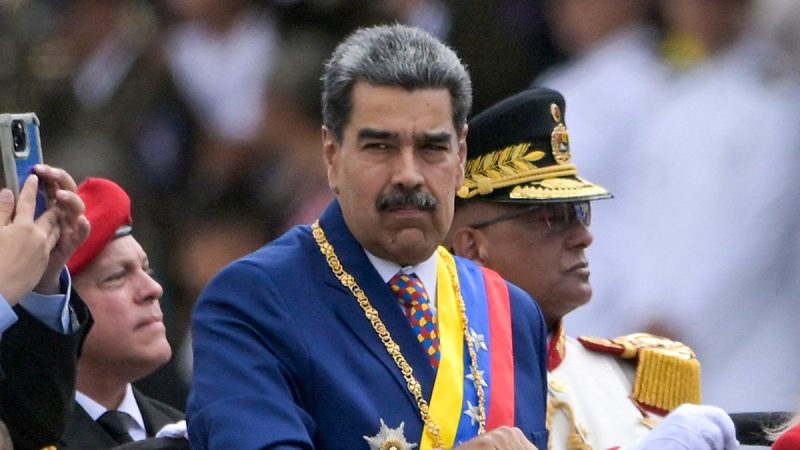
Secretary of State Marco Rubio is hammering Venezuelan dictator Nicolás Maduro on Sunday as the South American country holds municipal elections to fill hundreds of mayoral positions and thousands of council seats.

The municipal contests are happening one day before the one-year anniversary of Venezuela’s presidential election, which was widely condemned by the United States and other international observers as illegitimate. The Trump administration, meanwhile, has been escalating pressure against Maduro in recent days, as Treasury Secretary Scott Bessent on Friday accused the foreign head of state of being the leader of an entity aiding terrorism against the U.S. 

‘One year since dictator Nicolás Maduro defied the will of the Venezuelan people by baselessly declaring himself the winner, the United States remains firm in its unwavering support to Venezuela’s restoration of democratic order and justice,’ Rubio said in a statement on Sunday. ‘Maduro is not the President of Venezuela and his regime is not the legitimate government.’

‘Maduro is the leader of the designated narco-terrorist organization Cartel de Los Soles, and he is responsible for trafficking drugs into the United States and Europe,’ Rubio continued. ‘Maduro, currently indicted by our nation, has corrupted Venezuela’s institutions to assist the cartel’s criminal narco-trafficking scheme into the United States.’

The Justice Department charged Maduro and 14 other former and current Venezuelan officials with narco-terrorism, corruption, drug trafficking and other criminal charges in March 2020. At the start of this year, 10 days before President Donald Trump returned to office, the State Department increased its reward for information leading to Maduro’s capture from $15 million to up to $25 million. 

‘For years, Maduro and his cronies have manipulated Venezuela’s electoral system to maintain their illegitimate grip on power,’ Rubio added on Sunday. ‘By scheduling the municipal elections on the eve of the anniversary of the stolen July 28 presidential election, the regime once again aims to deploy the military and police to suppress the will of the Venezuelan people.’

‘The United States will continue working with our partners to hold accountable the corrupt, criminal and illegitimate Maduro regime. Those who steal elections and use force to grasp power undermine America’s national security interests,’ Rubio said. 

Maduro became the Venezuelan president in 2013, but the U.S. has not recognized his presidency since 2019. The U.S. and other countries have refused to recognize Maduro as the winner of the July 2024 Venezuelan election, citing widespread fraud. 

The Treasury Department on Friday sanctioned the Cartel de los Soles, also known as Cartel of the Suns, as a ‘Specially Designated Global Terrorist.’ The U.S. alleges that Cartel de los Soles is headed by Maduro and other Venezuelan high-ranking individuals in his regime ‘who corrupted the institutions of government in Venezuela, including parts of the military, intelligence apparatus, legislature, and the judiciary, to assist the cartel’s endeavors of trafficking narcotics into the United States.’ 

The U.S. claims the Venezuela-based group provides material support to Tren de Aragua and the Sinaloa Cartel. The Trump administration classified Tren de Aragua and the Sinaloa Cartel as foreign terrorist organizations in February. 

According to the Treasury Department, the name Cartel de los Soles is derived from the sun insignias often portrayed on the uniforms of Venezuelan military officials. 

The cartel ‘supports Tren de Aragua in carrying out its objective of using the flood of illegal narcotics as a weapon against the United States,’ according to the Treasury Department. 

Bessent said on Friday that the new action ‘exposes the illegitimate Maduro regime’s facilitation of narco-terrorism through terrorist groups like Cartel de los Soles.’

‘The Treasury Department will continue to execute on President Trump’s pledge to put America First by cracking down on violent organizations including Tren de Aragua, the Sinaloa Cartel, and their facilitators, like Cartel de los Soles,’ he added. 

This post appeared first on FOX NEWS

Palantir has hit another major milestone in its meteoric stock rise. It’s now one of the 20 most valuable U.S. companies.

The provider of software and data analytics technology to defense agencies saw its stock rise about 3% on Friday to another record, lifting the company’s market cap to $375 billion, which puts it ahead of Home Depot and Procter & Gamble. The company’s market value was already higher than Bank of America and Coca-Cola.

Palantir has more than doubled in value this year as investors ramp up bets on the company’s artificial intelligence business and closer ties to the U.S. government. Since its founding in 2003 by Peter Thiel, CEO Alex Karp and others, the company has steadily accrued a growing list of customers.

Revenue in Palantir’s U.S. government business increased 45% to $373 million in its most recent quarter, while total sales rose 39% to $884 million. The company next reports results on Aug. 4.

Earlier this year, Palantir soared ahead of Salesforce, IBM and Cisco into the top 10 U.S. tech companies by market cap.

Buying the stock at these levels requires investors to pay hefty multiples. Palantir currently trades for 273 times forward earnings, according to FactSet. The only other company in the top 20 with a triple-digit ratio is Tesla at 175.

With $3.1 billion in total revenue over the past year, Palantir is a fraction the size of the next smallest company by sales among the top 20 by market cap. Mastercard, which is valued at $518 billion, is closest with sales over the past four quarters of roughly $29 billion.

This post appeared first on NBC NEWS

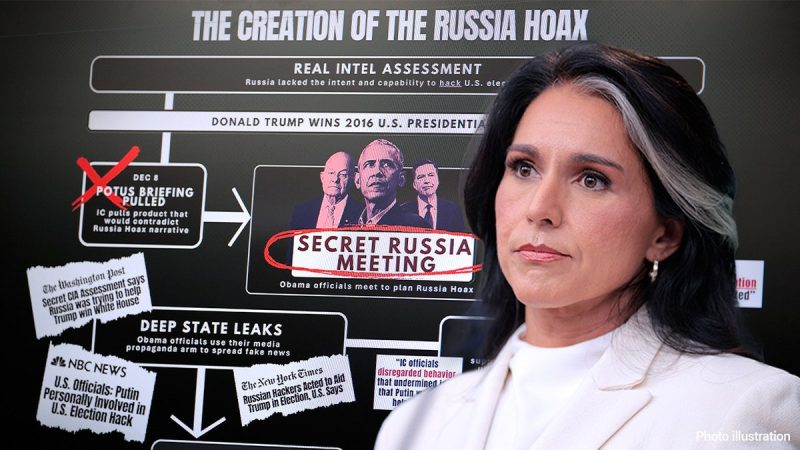
Director of National Intelligence Tulsi Gabbard declassified a slew of documents this month, revealing that Obama administration officials ‘manufactured’ intelligence to push the Trump-Russia collusion narrative.

Here’s a look at the newly declassified records:

Declassified Presidential Daily Brief

Documents revealed that in the months leading up to the November 2016 election, the intelligence community consistently assessed that Russia was ‘probably not trying … to influence the election by using cyber means.’

One instance was on Dec. 7, 2016, weeks after the election. Then-Director of National Intelligence James Clapper’s talking points stated, ‘Foreign adversaries did not use cyberattacks on election infrastructure to alter the U.S. presidential election outcome.’

Fox News Digital obtained a declassified copy of the Presidential Daily Brief, which was prepared by the Department of Homeland Security, with reporting from the CIA, Defense Intelligence Agency, FBI, National Security Agency, Department of Homeland Security, State Department and open sources, for Obama, dated Dec. 8, 2016.

‘We assess that Russian and criminal actors did not impact recent U.S. election results by conducting malicious cyber activities against election infrastructure,’ the Presidential Daily Brief stated. ‘Russian Government-affiliated actors most likely compromised an Illinois voter registration database and unsuccessfully attempted the same in other states.’

But the brief stated that it was ‘highly unlikely’ the effort ‘would have resulted in altering any state’s official vote result.’

‘Criminal activity also failed to reach the scale and sophistication necessary to change election outcomes,’ it stated. 

The brief noted that the Office of the Director of National Intelligence assessed that any Russian activities ‘probably were intended to cause psychological effects, such as undermining the credibility of the election process and candidates.’

The brief stated that cyber criminals ‘tried to steal data and to interrupt election processes by targeting election infrastructure, but these actions did not achieve a notable disruptive effect.’

Fox News Digital obtained declassified, but redacted, communications from the FBI in the Presidential Daily Brief, stating that it ‘should not go forward until the FBI’ had shared its ‘concerns.’

Those communications revealed that the FBI drafted a ‘dissent’ to the original Presidential Daily Brief. 

The communications revealed that the brief was expected to be published Dec. 9, 2016, the following day, but later communications revealed the Office of the Director of National Intelligence, ‘based on some new guidance,’ decided to ‘push back publication’ of the Presidential Daily Brief. 

‘It will not run tomorrow and is not likely to run until next week,’ wrote the deputy director of the Presidential Daily Brief at the Office of the Director of National Intelligence, whose name is redacted. 

The following day, Dec. 9, 2016, a meeting convened in the White House Situation Room, with the subject line starting: ‘Summary of Conclusions for PC Meeting on a Sensitive Topic (REDACTED.)’

The meeting included top officials in the National Security Council, Clapper, then-CIA Director John Brennan, then-National Security Advisor Susan Rice, then-Secretary of State John Kerry, then-Attorney General Loretta Lynch, then-Deputy FBI Director Andrew McCabe, among others, to discuss Russia.

The declassified meeting record, obtained by Fox News Digital, revealed that principals ‘agreed to recommend sanctioning of certain members of the Russian military intelligence and foreign intelligence chains of command responsible for cyber operations as a response to cyber activity that attempted to influence or interfere with U.S. elections, if such activity meets the requirements’ from an executive order that demanded the blocking of property belonging to people engaged in cyber activities.

After the meeting, according to the Office of the Director of National Intelligence, Clapper’s executive assistant emailed intelligence community leaders tasking them to create a new intelligence community assessment ‘per the president’s request’ that detailed the ‘tools Moscow used and actions it took to influence the 2016 election.’

‘ODNI will lead this effort with participation from CIA, FBI, NSA, and DHS,’ the record states.

Later, Obama officials ‘leaked false statements to media outlets’ claiming that ‘Russia has attempted through cyber means to interfere in, if not actively influence, the outcome of an election.’

By Jan. 6, 2017, a new Intelligence Community Assessment was released that, according to the Office of the Director of National Intelligence, ‘directly contradicted the IC assessments that were made throughout the previous six months.’ 

Intelligence officials told Fox News Digital that the ICA was ‘politicized’ because it ‘suppressed intelligence from before and after the election showing Russia lacked intent and capability to hack the 2016 election.’ 

Officials also said it deceived the American public ‘by claiming the IC made no assessment on the ‘impact’ of Russian activities,’ when the intelligence community ‘did, in fact, assess for impact.’ 

‘The unpublished December PDB stated clearly that Russia ‘did not impact’ the election through cyber hacks on the election,’ an official told Fox News Digital.

The official also said the ICA had assessed that ‘Russia was responsible for leaking data from the DNC and DCCC,’ while ‘failing to mention that FBI and NSA previously expressed low confidence in this attribution.’ 

Officials said the intelligence was ‘politicized’ and then ‘used as the basis for countless smears seeking to delegitimize President Trump’s victory, the years-long Mueller investigation, two Congressional impeachments, high level officials being investigated, arrested, and thrown in jail, heightened US-Russia tensions, and more.’

Declassified House Intelligence Committee Report

A report prepared by the House Permanent Select Committee on Intelligence in 2020 said the intelligence community did not have any direct information that Russian President Vladimir Putin wanted to help elect Donald Trump during the 2016 presidential election, but, at the ‘unusual’ direction of then-President Barack Obama, published ‘potentially biased’ or ‘implausible’ intelligence suggesting otherwise.

The report, based on an investigation launched by former House Intelligence Committee Chairman Devin Nunes, R-Calif., was dated Sept. 18, 2020. At the time of the publication of the report, Rep. Adam Schiff, D-Calif., was the chairman of the committee.

The report has never before been released to the public and instead has remained highly classified within the intelligence community.

Fox News Digital obtained the ‘fully-sourced limited-access investigation report that was drafted and stored in a limited-access vault at CIA Headquarters.’ The report includes some redactions.

The committee focused on the creation of the Intelligence Community Assessment of 2017, in which then-CIA Director John Brennan pushed for the inclusion of the now-discredited anti-Trump dossier despite knowing it was based largely on ‘internet rumor,’ as Fox News Digital previously reported.

According to the report, the ICA was a ‘high-profile product ordered by the President, directed by senior IC agency heads, and created by just five CIA analysts, using one principal drafter.’

‘Production of the ICA was subject to unusual directives from the President and senior political appointees, and particularly DCIA,’ the report states. ‘The draft was not properly coordinated within CIA or the IC, ensuring it would be published without significant challenges to its conclusions.’

The committee found that the five CIA analysts and drafter ‘rushed’ the ICA’s production ‘in order to publish two weeks before President-elect Trump was sworn-in.’

‘Hurried coordination and limited access to the draft reduced opportunities for the IC to discover misquoting of sources and other tradecraft concerns,’ the report states.

The report states that Brennan ‘ordered the post-election publication of 15 reports containing previously collected but unpublished intelligence, three of which were substandard — containing information that was unclear, of uncertain origin, potentially biased, or implausible — and those became foundational sources for the ICA judgements that Putin preferred Trump over Clinton.’

‘The ICA misrepresented these reports as reliable, without mentioning their significant underlying flaws,’ the committee found.

‘One scant, unclear, and unverifiable fragment of a sentence from one of the substandard reports constitutes the only classified information cited to suggest Putin ‘aspired’ to help Trump win,’ the report states, adding that the ICA ‘ignored or selectively quoted reliable intelligence reports that challenged — and in some cases undermined — judgments that Putin sought to elect Trump.’

The report also states that the ICA ‘failed to consider plausible alternative explanations of Putin’s intentions indicated by reliable intelligence and observed Russian actions.’

The committee also found that two senior CIA officers warned Brennan that ‘we don’t have direct information that Putin wanted to get Trump elected.’

Despite those warnings, the Obama administration moved to publish the ICA.

The ICA ‘did not cite any report where Putin directly indicated helping Trump win was the objective.’

The ICA, according to the report, excluded ‘significant intelligence’ and ‘ignored or selectively quoted’ reliable intelligence in an effort to push the Russia narrative.

The report also includes intelligence from a longtime Putin confidant who explained to investigators that ‘Putin told him he did not care who won the election,’ and that Putin ‘had often outlined the weaknesses of both major candidates.’

The report also states that the ICA omitted context showing that the claim that Putin preferred Trump was ‘implausible —if not ridiculous.’

The committee also found that the ICA suppressed intelligence that showed that Russia was actually planning for a Hillary Clinton victory because ‘they knew where (she) stood’ and believed Russia ‘could work with her.’

The committee also noted that the ICA ‘did not address why Putin chose not to leak more discrediting material on Clinton, even as polls tightened in the final weeks of the election.’

The committee also found that the ICA suppressed intelligence showing that Putin was ‘not only demonstrating a clear lack of concern for Trump’s election fate,’ but also indicated ‘that he preferred to see Secretary Clinton elected, knowing she would be a more vulnerable President.’

Declassified Hillary Clinton section of House Intelligence Committee Report

One section of the declassified House Intelligence Committee report states that the material in Putin’s possession included Russian intelligence on Democratic National Committee information allegedly showing that senior Democratic leaders found Clinton’s health to be ‘extraordinarily alarming.’ 

‘As of September 2016, the Russian Foreign Intelligence Service had DNC information that President Obama and Party leaders found the state of Secretary Clinton’s health to be ‘extraordinarily alarming,’ and felt it could have ‘serious negative impact’ on her election prospects,’ the report states. ‘Her health information was being kept in ‘strictest secrecy’ and even close advisors were not being fully informed.’ 

The Russian Foreign Intelligence Service also allegedly had DNC communications that showed that ‘Clinton was suffering from ‘intensified psycho-emotional problems, including uncontrolled fits of anger, aggression, and cheerfulness.” 

‘Clinton was placed on a daily regimen of ‘heavy tranquilizers’ and while afraid of losing, she remained ‘obsessed with a thirst for power,’’ the report states.

The Russians also allegedly had information that Clinton ‘suffered from ‘Type 2 diabetes, Ischemic heart disease, deep vein thrombosis, and chronic obstructive pulmonary disease.’’

The Russians also allegedly possessed a ‘campaign email discussing a plan approved by Secretary Clinton to link Putin and Russian hackers to candidate Trump in order to ‘distract the American public’ from the Clinton email server scandal.’ 

Gabbard, during the White House press briefing Wednesday, said there were ‘high-level DNC emails that detailed evidence of Hillary’s, quote, psycho-emotional problems, uncontrolled fits of anger, aggression and cheerfulness, and that then-Secretary Clinton was allegedly on a daily regimen of heavy tranquilizers.’ 

A tranquilizer is a drug used to reduce mental disturbance, such as anxiety and tension. Tranquilizers are typically prescribed to individuals suffering from anxiety, sleep disturbances and related conditions affecting their mental and physical health. 

A Clinton aide dismissed the claims as ‘ridiculous.’ 

Neither Clinton nor Obama responded to Fox News Digital’s requests for comment. 

This post appeared first on FOX NEWS

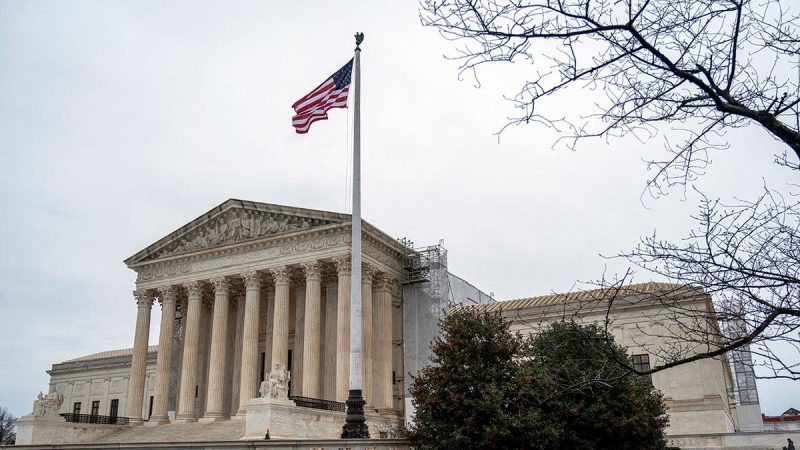
The Supreme Court has temporarily allowed President Donald Trump to fire numerous Democrat-appointed members of independent agencies, but one case still moving through the legal system carries the greatest implications yet for a president’s authority to do that.

In Slaughter v. Trump, a Biden-appointed member of the Federal Trade Commission has vowed to fight what she calls her ‘illegal firing,’ setting up a possible scenario in which the case lands before the Supreme Court.

The case would pose the most direct question yet to the justices about where they stand on Humphrey’s Executor v. United States, the nearly century-old decision regarding a president’s power over independent regulatory agencies.

John Shu, a constitutional law expert who served in both Bush administrations, told Fox News Digital he thinks the high court is likely to side with the president if and when the case arrives there.

‘I think it’s unlikely that Humphrey’s Executor survives the Supreme Court, at least in its current form,’ Shu said, adding he anticipates the landmark decision will be overturned or ‘severely narrowed.’

What is Humphrey’s Executor?

Humphrey’s Executor centered on President Franklin D. Roosevelt’s decision to fire an FTC commissioner with whom he disagreed politically. The case marked the first instance of the Supreme Court limiting a president’s removal power by ruling that Roosevelt overstepped his authority. The court found that presidents could not dismiss FTC commissioners without a reason, such as malfeasance, before their seven-year terms ended, as outlined by Congress in the FTC Act.

However, the FTC’s functions, which largely center on combating anticompetitive business practices, have expanded in the 90 years since Humphrey’s Executor.

‘The Federal Trade Commission of 1935 is a lot different than the Federal Trade Commission today,’ Shu said.

He noted that today’s FTC can open investigations, issue subpoenas, bring lawsuits, impose financial penalties and more. The FTC now has executive, quasi-legislative and quasi-judicial functions, Shu said.

SCOTUS greenlights other firings

If the Supreme Court’s decision to temporarily allow two labor board members’ firings is any indication, the high court stands ready to make the FTC less independent and more accountable to Trump.

In a 6-3 order, the Supreme Court cited the ‘considerable executive power’ that the National Labor Relations Board and Merit Systems Protection Board have, saying a president ‘may remove without cause executive officers who exercise that power on his behalf.’

The order did not mention Humphrey’s Executor, but that and other moves indicate the Supreme Court has been chipping away at the 90-year-old ruling and is open to reversing it.

The case of Rebecca Slaughter and Alvaro Bedoya gets closest to the heart of Humphrey’s Executor.

Where does Slaughter’s case stand?

Slaughter enjoyed a short-lived victory when a federal judge in Washington, D.C., found that Trump violated the Constitution and ruled in her favor on July 17.

She was able to return to the FTC for a few days, but the Trump administration appealed the decision and, on July 21, the appellate court paused the lower court judge’s ruling.

Judge Loren AliKhan had said in her summary judgment that Slaughter’s case was almost identical to William Humphrey’s.

‘It is not the role of this court to decide the correctness, prudence, or wisdom of the Supreme Court’s decisions—even one from ninety years ago,’ AliKhan, a Biden appointee, wrote. ‘Whatever the Humphrey’s Executor Court may have thought at the time of that decision, this court will not second-guess it now.’

The lawsuit arose from Trump firing Slaughter and Bedoya, the two Democratic-appointed members of the five-member commission. They alleged that Trump defied Humphrey’s Executor by firing them in March without cause in a letter that ‘nearly word-for-word’ mirrored the one Roosevelt sent a century ago.

Bedoya has since resigned, but Slaughter is not backing down from a legal fight in which Trump appears to have the upper hand.

‘Like dozens of other federal agencies, the Federal Trade Commission has been protected from presidential politics for nearly a century,’ Slaughter said in a statement after she was re-fired. ‘I’ll continue to fight my illegal firing and see this case through, because part of why Congress created independent agencies is to ensure transparency and accountability.’

Now a three-judge panel comprising two Obama appointees and one Trump appointee is considering a longer-term pause and asked for court filings to be submitted by July 29, meaning the judges could issue their decision soon thereafter.

This post appeared first on FOX NEWS

To endorse, or not to endorse, that is the question for House Minority Leader Hakeem Jeffries (D-NY) as New York City and the nation wait to see if this top Democrat will throw his backing behind socialist mayoral candidate Zohran Mamdani.

According to Zany Zohran’s backers, this should be a no-brainer. After all, Mamdani won the primary fair and square, but given his far-left proposals like city-owned grocery stores, free buses, and replacing cops with social workers. Jeffries is rightfully wary.

This week, would-be Mayor Mamdani ran away to Uganda to let the heat die down over a guy who once said the state should control the means of production potentially governing Wall Street.

This Africa adventure gives Jeffries a little more time to decide whether to endorse, but not much. The moment is still coming.

What makes this choice so hard for Jeffries is that he knows better than anyone just how dangerous these Democratic Socialists can be. In fact, it’s the whole reason he is now in line for the speakership should Democrats retake the House.

In 2019 Jeffries replaced another New Yorker named Joe Crowley as chair of the Democratic Caucus in the House. The coveted spot in leadership was available because Crowley had suffered a shocking primary defeat at the hands of whom? A bartender named Alexandria Ocasio-Cortez.

In spite of the fact that AOC opened the door to power for Jeffries, he is actually much more of a Crowley than a Cortez. He might be the poster child for the old-school Democrat machine politician.

Jeffries was born and raised in Brooklyn, state college undergrad, masters in public policy from Georgetown, law degree from NYU, clerked with a federal judge, a decade of private practice, two years in the state assembly and now, Congress. That is how it used to be done.

Now, Hakeem Jeffries’ party is being overrun with theater kids who skirt through college and whose political training comes almost exclusively from far-left activist organizations and Marxist tracts, and they want him to sign off on it.

The political reality for Jeffries is that if he endorses Zohran, then this 33-year-old, who can be credibly called a communist, will be hung like a millstone around the neck of every Democrat running for the House.

Even moderate House Democrats who try to distance themselves from Mamdani and his parade of pathetic and stale socialist programs will be sharply and publicly reminded that the guy they want to make Speaker of the House endorsed a communist.

Nowhere is this more true than close to home in the suburban New York districts that Republicans swept in 2024 to keep their slim House majority. There is no path back to power that doesn’t flow through Long Island and Westchester.

Republican House candidates like incumbents Mike Lawler and Nick LaLota will absolutely make Mamdani a focal point of their campaigns, no matter who their actual opponents are.

There is no easy way out of this predicament for Jeffries. Either he refuses to endorse Mamdani, and sets off an angry civil war in his party, or he does endorse him, and watches Democrats’ chances to win the House and make him speaker diminish greatly.

For any party leader, herding the cats is a great challenge. It was for Nancy Pelosi, and it is for Jeffries. But the Mamdani question is bigger than managing normal ideological differences. Jeffries has to decide if he will, for the first time, usher actual communists into the Democrats’ tent.

Most of us were born at a time when Democrats still proudly called themselves the party of Jefferson and Jackson. Today, it is starting to look more like the party of Marx and Guevara. Can Hakeem Jeffries hit the brakes? Don’t count on it.

My sources in Gotham, in both parties, the ones I trust the most, all think Jeffries will eventually, as quietly as possible, give his support to Mamdani. I’m not completely convinced, but it is the path of least resistance, which is a siren call for most politicians.

When and if Jeffries makes this cowardly choice, Republicans must be prepared to explain, quite clearly, to Americans that one of their major political parties, its oldest, in fact, has come to embrace communism.

For Hakeem Jeffries this is an existential choice, not just for his political future, but the future of his political party, and of our nation itself.

This post appeared first on FOX NEWS

President Donald Trump arrived in Scotland late Friday for a working trip where he is expected to meet with British Prime Minister Keir Starmer amid ongoing trade negotiations between the U.S. and the U.K., as well as visit several of his properties there. 

‘We’re meeting with the prime minister tonight,’ Trump told reporters Friday before departing for Scotland. ‘We’re going to be talking about the trade deal that we made, and maybe even improve it.’

‘We want to talk about certain aspects, which is going to be good for both countries,’ Trump said. ‘More fine-tuning. Also, we’re going to do a little celebrating together, because, you know, we got along very well. U.K.’s been trying to make a deal with us for like, 12 years, and haven’t been able to do it. We got it done, and he’s doing a very good job, this prime minister. Good guy.’

In May, the U.S. and the U.K. announced the two countries had agreed to a major trade deal, which marked the first historic trade negotiation signed following Liberation Day, when Trump announced widespread tariffs for multiple countries April 2 at a range of rates.

Trump, who is slated to remain in Scotland until Tuesday, is also scheduled to visit his golf courses in Turnberry and Aberdeen while abroad. 

Here’s also what happened this week:

Federal Reserve visit 

Trump visited the Federal Reserve headquarters Thursday, as he has ramped up digs at Federal Reserve Chairman Jerome Powell. 

Trump accompanied other administration officials for a tour of the headquarters, following $2.5 billion in renovations to the building. The massive project has attracted scrutiny from lawmakers and members of the Trump administration, including the president, who suggested the huge renovation could amount to a fireable offense. 

‘I think he’s terrible … I didn’t see him as a guy that needed a palace to live in,’ Trump said July 16. ‘But the one thing I would have never guessed is that he would be spending two and a half billion dollars to build a little extension onto the Fed.’

On Thursday, the two briefly sparred over the cost of the renovation, but Trump told reporters afterward that the two had a ‘good meeting’ and that there was ‘no tension.’ Trump also shut down speculation he might oust Powell, claiming such a move would be unnecessary. 

The Federal Reserve, the United States central bank, oversees the nation’s monetary policy and regulates financial institutions. 

Trump historically has railed against Powell, calling him names like ‘numskull’ and ‘too late.’ Likewise, Trump has expressed ire toward Powell for ignoring requests to lower interest rates. 

‘Well, I’d love him to lower interest rates, but other than that, what can I tell you?’ Trump said Thursday. 

Trump signed into law Thursday his roughly $9 billion rescissions package to claw back already approved federal funds for foreign aid and public broadcasting. 

The rescissions measure revoked nearly $8 billion in funding Congress already approved for the U.S. Agency for International Development (USAID), a formerly independent agency that provided impoverished countries aid and offered development assistance.

The rescissions package also rescinds more than $1 billion from the Corporation for Public Broadcasting (CPB), which provides federal funding for NPR and PBS.

This post appeared first on FOX NEWS

Donald Trump did better with American young people last fall than any Republican candidate in decades. He won men under 30, won men of college age, and even won the youth vote in the swing state of Michigan. American young people were widely assumed to be uniformly liberal, and expected to remain so forever and ever. But the reality was anything but. I saw this trend playing out in real time as I toured the country speaking on college campuses to crowds of three, four, and even five thousand strong.  Young Americans were not happy with Joe Biden’s America or Kamala Harris’ vows to continue it, and they were ready to return to the president they associated with a more prosperous pre-COVID time.

It was a big win. But it was also impermanent. It could be a one-off. It could easily be explained by the aftermath of COVID or the incredible political charisma of Donald Trump himself. The youth vote of 2024 wasn’t so much a win as it was an opportunity: A clear demonstration that conservatives actually can compete to win the votes of American young people, rather than writing them off. 

The challenge for Republicans now is seizing this Gen Z opportunity. Because Gen Z won’t become lifelong conservatives thanks to a good campaign or slick online memes. They’ll only become lifelong supporters if we’re able to deliver for them on the big issues that matter.

Experts expend a lot of effort and ink explaining what Gen Z ‘wants.’ But between my campus visits and my work running Turning Point USA, I talk to as many Gen Z’ers as anyone in the country. They want basic economic success and security like the generations before them. They want a home, they want a family, they want to feel like they are building something and that they are a part of something. 

And right now, on that front, Gen Z has a lot of problems. Economically, things are dire. In 1984, the median American home cost about three and a half times the median income in America. Today, the median house costs almost six times the median income. Rent isn’t much better, and has risen more than 50% in real terms since the 1970s. 

In 1980, tuition at the average public college was about $2,800 in today’s dollars. Today it’s around $10,000, and, unsurprisingly, that means the average college student leaves school with a debt burden that previously could have bought them a car, provided the down payment on a house, or helped them start a family. 

Financially, young people aren’t just facing more expensive necessities, but also a more predatory economic reality. Millions of Gen Zers are buying everything from concert tickets to groceries to Chipotle burritos through buy now, pay later (BNPL) setups from companies like Klarna and Affirm. Some polls indicate Gen Z prefers BNPL to traditional credit cards. Taking on debt for purchases may make sense when buying a house or a car, but once a person is paying for their groceries with 4 monthly payments at 10% interest, something has gone awry. 

Of course, America hasn’t become a poor nation. In fact, we’re as spectacularly wealthy as ever. Yet this wealth doesn’t reach young Americans (unless it’s by way of inheritance). Instead, over and over, policy decisions have ensured that elderly Americans grow wealthier and wealthier. Never in American history has so much wealth been concentrated in those who are already retired from the labor force. This reality became even more pronounced during COVID and the rampant inflation that followed. Older Americans with equities and assets in their portfolio saw their net worth skyrocket, while younger Americans just saw those assets become even more unaffordable.

It wasn’t always like this. When the baby boomers of today were growing up, government policy routinely favored young people. Jobs were easier to get, with far fewer credentialing hurdles. Houses were built far faster. Wages were higher instead of being suppressed through sky-high legal and illegal immigration. Today, though, America is a country built for those who are already owners, and those too young to buy are finding themselves stuck becoming borrowers and renters. The median age of first-time home buyers is now pushing 40, about a decade higher than the 1980s when the average age was just 29!

This isn’t because Gen Z is lazy — a common retort I hear — it’s because they are contending with structural disadvantages older Americans didn’t experience. If this continues, something will break, and young people will lead the way in breaking it. 

Zohran Mamdani has become a celebrity for Gen Z with his slick promises of a New York City rent freeze, state-owned grocery stores, and free daycare as stepping stones to eventually seizing the means of production. Mamdani’s political surge is not a passing fad or pure TV news fodder. 

It should be a giant flashing red alarm. There are millions of Americans who feel cut off from any meaningful economic progress or stability. Eventually, if they can’t obtain prosperity the old-fashioned way, they will simply try to vote themselves prosperity, and there will be plenty of demagogues promising this can be done easily by simply expropriating those with more than them.

Most of Gen Z is ideologically fluid. They’re happy to give Republicans a shot, then turn around and elect a Marxist two years later.

America will have a reordering of its economy. The only question is what that reordering will look like. There are two paths before us. We will either have stabilizing reforms like those of Theodore Roosevelt a century ago and those espoused by nationalist, populist conservatives, or we will have revolutionary, destructive ‘reforms’ like those that have already ruined once-prosperous countries like Cuba or Venezuela. If we succeed in the next three years, or if we fail, will determine which.


This post appeared first on FOX NEWS