Author

admin

Browsing

The US Federal Reserve held its fifth meeting of 2025 from Tuesday (July 29) to Wednesday (July 30) against a backdrop of trade tensions, spurred on by the Trump administration’s tariffs.

The central bank met analysts’ expectations by holding its benchmark rate in the 4.25 to 4.5 percent range.

Chair Jerome Powell stated that although there were differences of opinion among the Federal Open Markets Committee members, they were clear on why they made their decisions, noting that inflation was tracking higher, but the job market remained stable.

“The labor market looks solid, inflation is above target, and even if you look through the tariff effects, we think it’s still a bit above target, and that’s why our stance is where it is,” Powell said.

The Fed chair also noted a slowing in gross domestic product, which he pointed out was up 2.5 percent in 2024, but initial data from 2025 points to a slowing in growth to 1.1 percent.

The vote to hold the rate was 9-2, with Governors Michelle Bowman and Christopher Waller being the dissenters who advocated for cuts. It marks the first time since December 1993 that two board members have broken with consensus.

Both Bowman and Waller were appointed by Donald Trump during his first term in office, with Waller being one of the front-runners to replace Powell when his term as board chairman ends in May 2026.

Trump has been critical of Powell in recent months, with the latest statements coming just minutes before the Fed meeting. The president has said Powell has not moved quickly enough to make rate cuts, despite data suggesting inflation has been starting to increase.

North of the Border, the Bank of Canada (BoC) also held its June meeting on Wednesday.

It also met expectations by holding its benchmark rate at 2.75 percent, with Bank Governor Tiff Macklem citing resilience in the economy despite trade disputes brought on by the Trump administration in the United States.

The BoC last changed its rate with a 0.25 percent cut in March to the current 2.75 percent from 3 percent.

Gold was down in the day’s trading, losing 1.6 percent to US$3,272.75 per ounce. Silver declined more sharply, losing 3.37 percent to US$36.93 per ounce at 3:30 p.m. EST.

The S&P 500 (INDEXSP:INX) was down, recording a 0.4 percent decline to reach 6,344.17. The Nasdaq-100 (INDEXNASDAQ:NDX) slipped 0.17 percent to come in at 23,265 , and the Dow Jones Industrial Average (INDEXDJX:DJI) lost 0.74 percent, coming to 44,297.

Securities Disclosure: I, Dean Belder, hold no direct investment interest in any company mentioned in this article.


This post appeared first on investingnews.com

The psychedelic drugs market is emerging as a strategic investment opportunity in healthcare, with forecasts generally placing its value around US$6.4 billion in 2025.

This burgeoning sector is set for robust, double-digit compound annual growth, significantly driven by North America, which is anticipated to account for approximately 45–50 percent of this market.

The first half of 2025 was characterized by clinical advancements and softening policy stances, furthering momentum and contributing to growing market interest.

Clinical progress and policy shifts drive market interest

Interest in the space continued in H1 as drug candidates advanced into pivotal trials, particularly in the treatment of depression, anxiety and PTSD. Cybin (NYSEAMERICAN:CYBN) reported meaningful progress, citing investor and regulatory confidence in the therapeutic potential of psilocybin, LSD analogs and DMT derivatives.

Cybin’s 2025 financial results, released on June 30, highlighted significant progress in its lead programs, as well as its strong financial position, with C$135 million in cash reported.

CEO Doug Drysdale emphasized the company’s progress in building a strong foundation for anticipated clinical and regulatory milestones.

Key highlights include strengthened intellectual property with new patents for CYB003 and CYB004, strategic partnerships with Osmind and Thermo Fisher Scientific, and promising Phase 2 efficacy data for CYB003 in MDD, showing 100 percent responder rates and 71 percent remission with two 16 mg doses. The Phase 2 study for CYB004 in GAD is underway and expected to be completed around mid-2025.

Likewise, COMPASS Pathways (NASDAQ:CMPS) announced that its COMP360 psilocybin treatment successfully met its primary goal in a Phase 3 trial for treatment-resistant depression on June 23.

A single 25mg dose of COMP360 significantly reduced depression symptoms compared to a placebo at six weeks, showing a clinically meaningful difference and strong statistical significance. This marks the first Phase 3 efficacy data reported for a classic psychedelic, and Compass Pathways said it plans to discuss these positive results with the FDA.

Policy signals were equally consequential. Notably, the Texas House and Senate passed SB 2308 in May, which will provide up to US$100 million in state funds for ibogaine trials.

The results of the trials will be presented to the US Food and Drug Administration (FDA) for potential approval of ibogaine for opioid use disorder, co-occurring substance use disorder and other neurological or mental health conditions. Governor Abbott signed the bill into law on June 11, representing a notable and progressive shift in the Republicans’ approach to drug policy.

However, the sector continues to face real challenges, such as costly clinical access and inconsistent regulatory frameworks that have resulted in a patchwork of state-level regulations. Despite these challenges, there are ongoing efforts towards federal reform and standardized guidelines.

Health Secretary Robert F. Kennedy Jr. recently told members of Congress that new therapeutics using psychedelic substances could revolutionize treatment for mental health challenges.

‘This line of therapeutics has tremendous advantage if given in a clinical setting and we are working very hard to make sure that happens within 12 months,” he said during a House subcommittee meeting regarding the Trump administration’s proposed budget for the US Department of Health and Human Services (HHS).

FDA head Marty Makary has likewise labeled the assessment of MDMA and other psychedelics as a “top priority,” announcing initiatives aimed at potentially expediting their approval.

One new program in particular aims to accelerate drug approval, potentially cutting review times from six months to one month.

This initiative might relax requirements for some drugs, possibly waiving placebo-controlled studies, which have been a hurdle for psychedelic research because patients often know if they’ve received the drug.

Looking ahead

The National Psychedelic Landscape Assessment (NPLA) identifies 11 states with a high likelihood of future movement based on legislative viability, advocacy strength, public support, legislative momentum and strategic impact: New Mexico, Nevada, Texas, Illinois, Missouri, California, Massachusetts, Connecticut, Indiana, New York and Arizona.

The report also points to several key trends and persistent challenges in the current psychedelic market.

Decriminalization at the state level has seen an enactment rate of just two percent, despite being a frequently introduced legislative concept, with 67 bills introduced since 2020. Movements have been hampered by public health and safety concerns, although local efforts are gaining momentum.

However, adult-use access has seen no legislative enactments through state legislatures, with existing programs in Oregon and Colorado being implemented predominantly via citizen-led ballot initiatives.

When it comes to medical access programs, New Mexico stands out as the sole state to successfully enact a licensed and regulated psilocybin therapy program through SB 219, battling hurdles such as regulatory complexity, affordability and securing sufficient provider participation.

The report also found that clinical trials have been gaining traction, particularly when state-funded and focused on vulnerable populations like veterans and first responders, with Indiana emerging as a leader in this area.

The state established a therapeutic psilocybin research fund in 2024 that compares psilocybin against existing treatments, and ensures transparent fund administration and research application processing.

A more moderate approach is seen in pilot programs, which offer a controlled environment for access and data collection. The crucial step of implementing legislation, necessary to operationalize enacted policies, shows a 50 percent success rate, according to the report’s findings.

The report also points to corporate influence and the strategic efforts by corporate entities to gain commercial advantage through state trigger laws and compound-specific legislation favoring patented compounds like COMP360.

Securities Disclosure: I, Meagen Seatter, hold no direct investment interest in any company mentioned in this article.

This post appeared first on investingnews.com

Here’s a quick recap of the crypto landscape for Wednesday (July 30) as of 9:00 p.m. UTC.

Get the latest insights on Bitcoin, Ethereum and altcoins, along with a round-up of key cryptocurrency market news.

Bitcoin and Ethereum price update

Bitcoin (BTC) was priced at US$16,964, down by 0.5 percent over the last 24 hours. Its highest valuation on Wednesday was US$118,644, while its lowest valuation was US$116,079.

Bitcoin price performance, July 30, 2025.

Chart via TradingView

Markets rallied briefly following the release of the White House’s crypto policy report, which called for greater SEC clarity and new legislation to regulate digital assets, but pulled back after the Federal Reserve left interest rates unchanged and warned of slowing economic growth.

Ethereum (ETH) was priced at US$3,764.26, down by 0.1 percent over the past 24 hours. Its lowest valuation on Wednesday was US$3,708.13, and its highest was US$3,820.17.

Altcoin price update

  • Solana (SOL) was priced at US$176.09, down by 2.9 percent over 24 hours. Its lowest valuation on Wednesday was US$173.22, and its highest was US$179.83.
  • XRP was trading for US$3.10, down by 0.6 percent in the past 24 hours. Its lowest valuation of the day was US$3.04, and its highest valuation was US$3.15.
  • Sui (SUI) is trading at US$3.77, down 1.3 percent over the past 24 hours. Its lowest valuation of the day was US$3.66, and its highest was US$3.81.
  • Cardano (ADA) was trading at US$0.7600, down by 2.3 percent over 24 hours. Its lowest valuation on Wednesday was US$0.7414, and its highest was US$0.7759.

Today’s crypto news to know

Ethereum marks a decade since launch

Ethereum marked its 10th anniversary on July 30 with growing corporate interest in Ether as a potential treasury reserve asset.

The Ethereum network launched in 2015 and has since maintained uninterrupted uptime, becoming the backbone of the decentralized finance (DeFi) movement. In the lead-up to the anniversary, Ether’s price approached US$4,000, driven in part by renewed institutional inflows and growing confidence in the asset’s long-term utility.

The Ethereum Foundation will commemorate the milestone by issuing celebratory NFTs and organizing more than 100 events globally.

A live broadcast featuring Vitalik Buterin, Joseph Lubin, and Tim Beiko will also be hosted to reflect on the network’s origins and future direction.

SEC greenlights in-kind ETP creations and redemptions

On Tuesday, July 29, the Securities and Exchange Commission (SEC) gave its approval for in-kind creations and redemptions by authorized participants for crypto asset exchange-traded products (ETPs).

“It’s a new day at the SEC, and a key priority of my chairmanship is developing a fit-for-purpose regulatory framework for crypto asset markets,” said Chairman Paul Atkins in the announcement. “Investors will benefit from these approvals, as they will make these products less costly and more efficient.

“Today’s approvals continue to build a rational regulatory framework for crypto, leading to a deeper and more dynamic market, which will benefit all American investors. This decision aligns with the standard practices for similar ETPs.”

Authorized institutions can now directly exchange crypto assets like Bitcoin or Ethereum for shares of a crypto ETP, and vice versa, making these products more efficient and potentially cheaper to manage than when only cash transactions were allowed.

Senator Lummis proposes bill to allow digital assets for mortgages

In a Tuesday notice, Wyoming Senator Cynthia Lummis introduced the 21st Century Mortgage Act, a law that could compel mortgage purchasers to consider digital assets in applications.

Lummis said her proposed bill would initiate congressional action following a June order from the US Federal Housing Finance Agency (FHFA) that mandated US mortgage purchasers Fannie Mae and Freddie Mac “consider cryptocurrency as an asset for single-family loans.”

“This legislation embraces an innovative path to wealth-building, keeping in mind the growing number of young Americans who possess digital assets,” said Lummis.

A similar crypto mortgage proposal, the American Homeowner Crypto Modernization Act, was introduced by Republican Representative Nancy Mace on July 14. Mace’s proposed bill would mandate that mortgage lenders incorporate the value of a borrower’s digital assets held in cryptocurrency brokerage accounts into their mortgage credit evaluations.

The bill is one of three that the US Senate may consider after a month-long recess, alongside a digital asset market structure bill and a bill aimed at barring the Federal Reserve from launching a central bank digital currency.

eToro expands 24/5 trading and tokenizes US stocks

Trading platform eToro has announced plans to expand its current 24/5 trading for 100 popular US stocks and ETFs, meaning customers can now trade these assets five days a week, almost around the clock, even outside regular market hours.

Co-founder and CEO Yoni Assia spoke with Yahoo Finance Executive Editor Brian Sozzi about the move on Tuesday (July 29).

“We’re expanding a lot of the trading universe and trading hours on the eToro platform. Announced today, more 24-hour stock trading on the platform, as well as near 24/5 trading on exchange CME traded futures, a new type of futures product,” Assia said.

“That’s very exciting for our users worldwide. And very excited also about revamping tokenization in eToro, launching those 100 stocks that trade 24/5 on the eToro platform as tokenized assets, gradually available to people with the eToro crypto wallet.”

The company also announced the launch of tokenized versions of these same US stocks as ERC20 tokens on the Ethereum blockchain.

This will eventually enable true 24/7 trading and transfers, and is part of eToro’s strategy to tokenize all assets on their platform and integrate them into the broader decentralized finance world. They’re also rolling out spot-quoted futures with CME Group, a simpler futures product, currently in Europe, with plans for wider availability.

Trump Working Group calls for aggressive federal action on crypto markets

A White House-appointed working group on digital asset markets has released a sweeping set of recommendations to overhaul US crypto policy, according to a preview.

The group, established under an executive order by Donald Trump in January, urged Congress to pass the Digital Asset Market Clarity Act and called on regulators to use existing powers to support immediate crypto market growth.

The report recommends that the Commodity Futures Trading Commission be granted broader oversight over spot markets for non-security tokens and that safe harbor provisions be used to accelerate product launches.

It also advises federal banking regulators to clarify permissible crypto-related bank activities and modernize capital rules to reflect token-based risks.

The Trump administration said the proposals would help ensure US leadership in the “blockchain revolution” and usher in a “Golden Age of Crypto.”

JPMorgan to let Chase customers buy Crypto via Coinbase

JPMorgan Chase (NYSE:JPM)has announced a major partnership with Coinbase that will allow Chase credit card users to purchase cryptocurrencies directly from the exchange.

The service is expected to roll out in fall 2025, with full account-linking functionality available by 2026. Customers will also be able to redeem Chase credit card reward points for USDC, a stablecoin pegged to the US dollar.

The move marks a notable shift in the firm’s stance toward crypto, going from a cautious observer to an active participant in retail-focused blockchain infrastructure.

With crypto’s total market cap recently crossing US$4 trillion, large banks are now racing to integrate digital asset capabilities into their core offerings.

Securities Disclosure: I, Giann Liguid, hold no direct investment interest in any company mentioned in this article.

Securities Disclosure: I, Meagen Seatter, hold no direct investment interest in any company mentioned in this article.
This post appeared first on investingnews.com

The Canadian province of Ontario has canceled a C$100 million ($68.12 million) satellite high-speed internet contract with Elon Musk’s company Starlink, following through with a vow by the province’s premier to cut ties in retaliation for U.S. tariffs imposed on Canada.

Stephen Lecce, Ontario’s minister of energy and mines, confirmed the cancellation of the contract for internet services at an unrelated news conference in Toronto on Wednesday. Lecce, who oversees broadband connectivity in Canada’s most populous province, didn’t say how much the termination would cost.

“I can confirm that the premier has fulfilled his word, which is to cancel that contract because of the very reasons he cited in the past,” Lecce said. “We are standing up for Canada.”

Under the terms of the deal, which Ontario signed last November, Starlink was to provide high-speed internet access to 15,000 eligible homes and businesses in more remote communities.

In February, Ontario Premier Doug Ford threatened to end the agreement with Starlink in response to U.S. President Donald Trump imposing tariffs on Canadian goods. He later postponed the cancellation after Trump agreed to a 30-day pause on tariffs.

SpaceX, Starlink’s parent, did not immediately respond to a request for comment.

Musk headed Trump’s drive to shrink the federal government and was a close ally before falling out with the president.

Canada and the U.S. are working on negotiating a trade deal by August 1, the date Trump is threatening to impose a 35% tariff on all Canadian goods not covered by the U.S.-Mexico-Canada trade agreement.

Earlier this week, Canadian Prime Minister Mark Carney said talks were at an intense phase while reiterating that a deal that would remove all U.S. tariffs was unlikely.

Lecce said Ontario has taken other measures against the U.S., including restricting the ability of U.S. companies to bid on provincial government contracts, removing U.S.-made alcoholic beverages from store shelves and working to decouple the province’s energy sector from the U.S.

This post appeared first on NBC NEWS

President Donald Trump on Wednesday signed an executive order ending the de minimis trade loophole for low-value packages shipped from all countries.

The order, which takes effect Aug. 29, will subject any shipments of imported goods into the U.S. worth $800 or less to duties, the White House said.

Any goods shipped through the international postal network will be subject to tariff rates based on the value of the package and its country of origin.

The move comes after Trump in May shuttered the de minimis loophole for goods from China and Hong Kong. A federal trade court on Monday declined to block Trump’s de minimis ban, even after an auto parts retailer argued the action was unlawful and threatened its business.

Use of the de minimis provision has exploded in recent years as online shopping has become more prevalent. Ultra-cheap online retailers such as Temu and Shein have used the loophole to ship packages to American shoppers directly from China duty-free.

Shares of PDD Holdings, the parent company of Temu, dipped lower following the announcement.

The Trump administration has sought to close the loophole, calling it a “big scam” that hurts U.S. businesses. Officials have said de minimis facilitates shipments of fentanyl and other illicit substances, saying the packages are less likely to be inspected by customs agents.

The volume of de minimis shipments has skyrocketed to 309 million units so far this fiscal year, up from 115 million for all of last year, the White House said.

This post appeared first on NBC NEWS

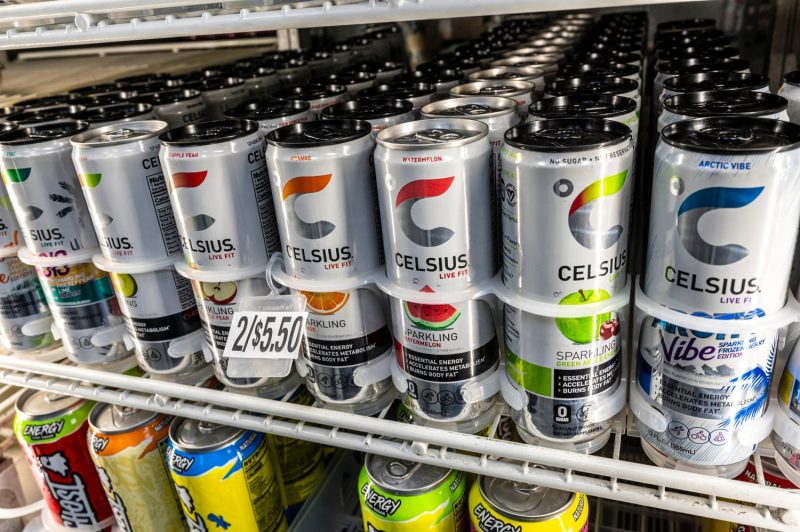
The canned cocktail maker High Noon is warning customers that some of its vodka seltzers were accidentally labeled as Celsius energy drinks.

In a recall notice posted to the Food and Drug Administration’s website, High Noon said an unspecified number of its Beach Variety packs contain cans are filled with High Noon vodka seltzer alcohol but have been mislabeled as Celsius Astro Vibe energy drink, Sparkling Blue Razz Edition, with a silver top.

Celsius Astro Vibe Energy Drink, Sparkling Blue Razz Edition.Celsius

The products were shipped to retailers in Florida, New York, Ohio, South Carolina, Virginia and Wisconsin from July 21 to July 23.

The recall was initiated after High Noon discovered that a shared packaging supplier mistakenly shipped empty Celsius cans to High Noon, it said.

No illnesses have been reported to date.

This post appeared first on NBC NEWS

President Donald Trump warned that his August 1 deadline for making a trade deal with the U.S. ‘stands strong’ on Wednesday, threatening several key nations with a big tariff hike.

‘The August first deadline is the August first deadline — it stands strong, and will not be extended. A big day for America!’ Trump wrote on Truth Social, using all-caps.

Here are the major countries that still need to negotiate deals with the U.S.

Canada

Trump sent a letter to Canadian Prime Minister Mark Carney threatening a 35% tariff if a deal isn’t struck, but negotiations appear to have stalled.

‘We haven’t really had a lot of luck with Canada. I think Canada could be one where they’ll just pay tariffs. It’s not really a negotiation,’ Trump said of the negotiations with our neighbor to the north on Friday.

Carney himself said on Monday that negotiations have reached an ‘intense phase.’

‘It’s a complex negotiation. You see with the various trade deals that have been agreed to by other jurisdictions — the European Union yesterday, Japan before that, Indonesia, United Kingdom — that there are many elements to these negotiations. We’re engaged in them. But the assurance for Canadian businesses, for Canadians, is we will only sign a deal that’s a good deal, the right deal for Canada,’ he told reporters Monday.

According to the US Trade Representative (USTR), Canada is America’s third-largest importer, totaling $412.7 billion in 2024. The U.S. exported $349.4 billion to Canada in the same year.

Mexico

Trump sent a similar letter to Mexican President Claudia Sheinbaum earlier this month, this one threatening a 30% tariff.

No deal has been struck as of Wednesday, however, and neither party has been vocal about where negotiations stand.

Mexico is America’s top source of imports, totaling $506 billion in 2024, according to the USTR. Meanwhile, the U.S. exported $334 billion to the country over the same year.

China

Treasury Secretary Scott Bessent negotiated with Chinese officials in Sweden this week and said Tuesday that the talks were ‘very constructive.’

He emphasized to reporters that no final agreement was made, however. Unlike most countries, China is facing an August 12 deadline rather than August 1, giving them somewhat more breathing room for negotiations.

‘Nothing is agreed until we speak with President Trump,’ Bessent told reporters.

Commerce Secretary Howard Lutnick told Fox News on Monday that the deadline for China could be extended even further than August 12, though that decision will be up to Trump.

South Korea

Trump warned South Korean President Lee Jae Myung in a July 7 letter that the country would face a 25% blanket tariff if a deal isn’t reached by August 1.

Lee’s office said late last week that it was preparing a proposal. Lutnick met with three top Korean officials in Washington this week, though no news has come out of the meeting.

Taiwan

Taiwan has yet to reach a trade deal with the Trump administration, but Taipei has a delegation in Washington hoping to reach one before August 1, Reuters reported Wednesday.

The self-governed island is facing a 32% tariff if it does not secure a deal.

‘All the relevant talks are still ongoing,’ one source familiar with the talks told Reuters, with another saying negotiators were still in the U.S.

‘We hope these negotiations will accomplish four objectives: safeguarding national interests, protecting industrial interests, ensuring public health, and securing food safety. These objectives serve dual purposes: promoting balanced bilateral trade between Taiwan and the U.S., and enhancing cooperation in diverse areas like technology and national security,’ Taiwan’s cabinet said in a statement.

India

Trump appears to have slammed the door shut early on India, announcing on Truth Social that the country will face a 25% tariff across the board beginning August 1.

‘Remember, while India is our friend, we have, over the years, done relatively little business with them because their tariffs are far too high, among the highest in the world, and they have the most strenuous and obnoxious non-monetary trade barriers of any country. Also, they have always bought a vast majority of their military equipment from Russia, and are Russia’s largest buyer of energy, along with China, at a time when everyone wants Russia to stop the killing in Ukraine — all things not good!’ Trump wrote.

‘India will therefore be paying a tariff of 25%, plus a penalty for the above, starting on August first. Thank you for your attention to this matter. MAGA!’ he added.

Brazil

Trump threatened a massive 50% blanket tariff on Brazilian goods in a letter to Brazilian President Luiz Inácio Lula da Silva earlier in July.

Trump credited the higher rate to Brazil’s prosecution of former President Jair Bolsonaro, who many compared to Trump himself. The U.S. president said Bolsonaro was the victim of a ‘witch hunt.’

Lula’s regime has requested that the U.S. exempt certain industries from the tariffs, but a deal before August 1 appears unlikely.

This post appeared first on FOX NEWS

Steve Ricchetti, a longtime Democratic operative and lobbyist, is sitting down with House Oversight Committee investigators Wednesday.

He’s known as a member of former President Joe Biden’s inner circle who reportedly played a key role in downplaying concerns, both public and private, about the ex-commander-in-chief’s mental fitness for office.

Ricchetti also reportedly helped craft Biden’s historic letter announcing the end of his 2024 re-election bid that July, according to the New York Times.

But long before that, Ricchetti graduated from Miami University in Ohio and got a Juris Doctor from Virginia’s George Mason University.

His first major role in electoral politics came when Ricchetti served as executive director for the Senate Democrats’ campaign arm, the Democratic Senatorial Campaign Committee, from 1990 to 1992.

Ricchetti then worked for former President Bill Clinton as a congressional liaison from 1993 to 1996 and then again as White House deputy chief of staff for operations from 1998 to 2001.

During that second stint, he played a critical role in wrangling House Democrats during the GOP’s impeachment proceedings against Clinton.

In between and in later years, Ricchetti enjoyed a lucrative career as a lobbyist, even founding the lobbying firm Ricchetti Inc. with his brother in 2001.

His work with Biden began in 2012 when Ricchetti was appointed to be counselor to the vice president during the Obama administration – one of several ex-lobbyists appointed to that White House, despite former President Barack Obama’s vow not to hire K Street operatives. He was soon elevated to be Biden’s chief of staff in late 2013.

Ricchetti also chaired Biden’s 2020 campaign before playing a critical role in his administration, where he acted as part of a small ‘Politburo’ of close advisors who helped control the White House, Axios reporter Alex Thompson and CNN host Jake Tapper wrote in their book ‘Original Sin.’

‘In terms of who was running the White House, it’s a small group of people that have been around,’ Thompson told the PBS program ‘Washington Week’ earlier this year.

Several members of Ricchetti’s family also notably had roles in the Biden administration; two of his sons and his daughter worked for the Treasury, State Department, and in the White House, respectively.

At the time, the White House argued they got the jobs on their merits rather than their father’s closeness to Biden.

Ricchetti also reportedly played a key role in dismissing concerns about Biden’s mental health.

Two weeks after Biden’s disastrous debate against current President Donald Trump, the New York Times reported that Ricchetti got into a ‘shouting’ argument with Rep. Pete Aguilar, D-Calif., after the latter called to express concerns about Biden’s political viability.

U.K.-based outlet The Times reported that Ricchetti ‘sounded like a mob boss’ in a conversation with actor George Clooney days before the Hollywood star and longtime Democratic donor penned an explosive op-ed calling for a new 2024 nominee in early July 2024.

And multiple outlets have reported that Ricchetti also denied any concerns about Biden’s mental acuity in an off-the-record conversation with an unnamed reporter at an unnamed outlet that almost ran a story shining a light on concerns about Biden’s mental health.

Ricchetti is the seventh ex-Biden aide to speak with investigators in House Oversight Committee Chair James Comer’s probe into whether White House officials covered up signs of Biden’s decline.

This post appeared first on FOX NEWS

President Donald Trump pressured the top Republican on the Senate Judiciary Committee to end a longstanding practice in the Senate to expedite his nominations to district courts and U.S. attorney’s offices, but the lawmaker isn’t budging.

Trump late Tuesday night demanded that Senate Judiciary Chair Chuck Grassley, R-Iowa, ‘have the courage’ to end the ‘blue slip’ tradition in the Senate, which effectively gives senators the ability to veto district court and U.S. attorney nominees in their home states.

He charged that the practice was ‘probably unconstitutional,’ and lamented that a president would ‘never be permitted to appoint the person of his choice’ because of it.

‘Chuck Grassley, who I got re-elected to the U.S. Senate when he was down, by a lot, in the Great State of Iowa, could solve the ‘Blue Slip’ problem we are having with respect to the appointment of Highly Qualified Judges and U.S. Attorneys, with a mere flick of the pen,’ Trump said in a lengthy post on his Truth Social platform.

‘Democrats like Schumer, Warner, Kaine, Booker, Schiff, and others, SLEAZEBAGS ALL, have an ironclad stoppage of Great Republican Candidates,’ he continued.

The 91-year-old Grassely, who has been a member of Congress since 1975 and in the Senate since 1981, handily beat his previous opponent by over 12 points three years ago.

The longtime lawmaker addressed Trump’s comments during a Senate Judiciary Committee hearing on Wednesday that he was surprised to see the president ‘go after me and Senate Republicans over what we call the ‘blue slip.”

‘Now, to people in the Real America — not here in Washington, D.C., an island surrounded by reality — the people in Real America don’t care about what the ‘blue slip’ is, but, in fact, it impacts the district judges who serve their communities and the U.S. Attorneys who ensure law and order is enforced,’ Grassley said. ‘I was offended by what the President said, and I’m disappointed that it would result in personal insults.’

Trump’s fury comes as Senate Republicans are working to ram as many of his nominees through Senate Democrats’ blockade as possible. Currently, lawmakers are working on a deal to get more low-hanging fruit nominations, like ambassadors, through in a large group rather than eating away at floor time.

One instance where Democrats have opted to block some of Trump’s nominees came earlier this year when Senate Minority Leader Chuck Schumer, D-N.Y., used his blue slip privileges to nix Trump’s U.S. Attorney nominees for the Southern and Eastern Districts of New York.

‘Donald Trump has made clear he has no fidelity to the law and intends to use the Justice Department, the U.S. Attorney offices and law enforcement as weapons to go after his perceived enemies,’ Schumer said at the time. 

‘Such blatant and depraved political motivations are deeply corrosive to the rule of law and leaves me deeply skeptical of Donald Trump’s intentions for these important positions,’ he said. 

This post appeared first on FOX NEWS

President Donald Trump dished on the ‘strange story’ stemming from reports that a Secret Service agent attempted to smuggle his wife onto a Secret Service cargo plane accompanying the president on his trip to Scotland, as the Secret Service kicks off an investigation into the incident. 

Trump told reporters that he had just heard about the alleged incident, which he labeled a ‘weird deal’ and said that the agency was handling the matter. 

‘I don’t know, that’s a strange one. I just heard that two minutes ago. I think Sean’s taking care of it … Is that a serious story?’ Trump told reporters on Air Force One Tuesday, appearing to reference Sean Curran, Secret Service director. 

‘I don’t want to get involved, it’s a strange story,’ Trump said. 

The White House did not immediately respond to a request for comment from Fox News Digital on whether Trump had been briefed on the matter or on the investigation. 

Real Clear Politics first reported that a Secret Service agent attempted to smuggle his wife aboard a Secret Service cargo aircraft during Trump’s travels for his Scotland trip. 

When asked about the report, the Secret Service told Fox News Digital a personnel investigation is underway. 

‘The U.S. Secret Service is conducting a personnel investigation after an employee attempted to invite his spouse – a member of the United States Air Force – aboard a mission support flight,’ a Secret Service spokesperson said in a Tuesday statement to Fox News Digital. 

‘The aircraft, operated by the U.S. Air Force, was being used by the Secret Service to transport personnel and equipment,’ the spokesperson said. ‘Prior to the overseas departure, the employee was advised by supervisors that such action was prohibited, and the spouse was subsequently prevented from taking the flight. No Secret Service protectees were aboard and there was no impact to our overseas protective operations.’ 

The Secret Service has come under scrutiny following the aftermath of the July 2024 assassination attempt against Trump in Butler, Pennsylvania. 

In that incident, 20-year-old gunman Thomas Matthew Crooks fired eight bullets at Trump from a rooftop during a campaign rally. One bullet grazed Trump’s ear, and the gunman killed Corey Comperatore, a 50-year-old firefighter, father and husband attending the rally. 

Additionally, another man was apprehended and charged months later with attempting to assassinate Trump at his Trump International Golf Club in West Palm Beach, Florida. 

Both incidents are under investigation, and a bipartisan House task force that investigated the Pennsylvania attack determined the episode was ‘preventable,’ and that various mistakes were not an isolated incident.

Since these episodes, the Secret Service has implemented a host of changes to its agency to beef up its security practices. 

Specific steps taken include expanding the use of drones for surveillance purposes, and overhauling its radio communications networks and their interoperability with Secret Service personnel, and state and local law enforcement officers. 

This post appeared first on FOX NEWS