
Author

admin

Browsing

By Darren Brady Nelson

One of the underrated, and easily dismissed, stories from the first 100 days of the second Donald J. Trump presidency was in March 2025, when the president said: “We’re actually going to Fort Knox to see if the gold is there, because maybe somebody stole the gold. Tonnes of gold.”

Two developments have happened since. First was his May 2025 executive order “Restoring Gold Standard Science.” Second was his signing the July 2025 GENIUS Act. The former could be a word teaser for “Restoring The Gold Standard.” The latter seems to be a step in that direction.

Source: The White House.

Fort Knox gold

The US Department of the Treasury’s Weekly Release of US Foreign Exchange Reserves shows the levels of various official assets, including gold. It reported gold of 261.499 million fine troy ounces. An estimated 56 percent of that is in Fort Knox, with the remainder in West Point, Denver and New York.

The Federal Reserve Act 1913 still gives the power to the US Federal Reserve: “To deal in gold coin and bullion at home or abroad, to make loans thereon, exchange Federal reserve notes for gold, gold coin, or gold certificates, and to contract for loans of gold coin or bullion (and much more).”

The question of how much gold is in Fort Knox and elsewhere is not only important for the purposes of DOGE, but even more so in the case of a potential return to a gold standard. And such an incredible return is not mere speculation, but is due to some credible public comments.

Source: Visual Capitalist.

Trump gold standard

Private citizen Trump commented, as a presidential candidate, about a possible return to a gold standard in June 2016, when he said: “Bringing back the gold standard would be very hard to do, but, boy, would it be wonderful. We’d have a standard on which to base our money.”

More recently, Steve Bannon stated in December 2023: “Nixon took us off the gold standard … over a weekend … in an emergency executive order. That is going to be reviewed strongly in the second Trump term … getting rid of the Fed, yeah, maybe you start with converting back into gold.”

Economist Judy Shelton has an October 2024 book as a guide: “When the US dollar is backed by gold, America prospers, and so does the rest of the world. But this is no curmudgeonly demand to return to the gold standard of yore; (but) gold for a new international monetary order.”

Some sort of gold standard might dovetail with a new global trading system, as outlined in the “Mar-a-Largo Accord” of November 2024, as well as with the GENIUS Act of July 2025, which: “establishes a regulatory framework for payment stablecoins (must redeem for a fixed value).”

Shadow gold price I

Shadow pricing is a method long used in cost benefit analysis that adjusts prices from, or creates prices for, failed or non-existent markets. The shadow price of gold (SPoG) in August 2018 was defined as: “The linkage between the US monetary base and the implied price of gold.”

The In Gold We Trust (IGWT) annual report from May 2025 uses a similar definition: “The theoretical gold price in the event of full gold backing of the base money supply.” The report adds: “The reciprocal value of the (SPoG) gives the degree of coverage of the monetary base.”

The reciprocal SPoG, based on current market prices, is the “Gold Coverage Ratio” (GCR). The report explains further that: “Currently, the (GCR) in the US is only 14.5%. To put it crudely: Only 14.5 cents of every US dollar currently consists of gold, the remaining 85.5% is air.”

Gold backing of monetary base, in percent, 01/1920 to 03/2025.

Source: Incrementum.

Shadow gold price II

According to IGWT: “In the gold bull market of the 2000s, (GCR) tripled from 10.8% to 29.7%. A comparable (GCR) today would only arise if the gold price were to almost double to over $6,000. The record value of 131% from 1980 would correspond to a gold price of around $30,000.”

IGWT goes beyond just $USD: “The international shadow gold price (ISPoG) shows how high the gold price would have to rise if the money supply (M0 or M2) of the leading currency areas were covered by the central banks’ gold reserves in proportion to their share of global GDP.”

“This view impressively reveals the extent of the monetary expansion: With an — admittedly purely theoretical — 100% coverage of the broad money supply M2, the gold price (per ounce) would be over $231,000; even with a moderate 25% coverage, it would be around $58,000.”

International shadow gold price at different gold coverage levels (log), in USD, 12/2024.

Source: Incrementum.

Shadow gold price III

In May 2024, James Rickards predicted: “My latest forecast is that gold may actually exceed $27,000. I don’t say that to get attention or to shock people. It’s not a guess; it’s the result of rigorous analysis.”

This was based on a similar approach to SPoG and GCR that he called “the implied non-deflationary price of gold under a new gold standard (iPoG).” Rickards calculated a gold price, based on iPoG, of $27,533 per ounce.”

He divided US$7.2 trillion of M1 money supply by 261.5 million of gold troy ounces (or 8,133 metric tonnes) in official US reserves estimated by the World Gold Council. The M1 figure is 40 percent of US$17.9 trillion as: “this percentage was the legal requirement for the US Federal Reserve from 1913 to 1946.”

In summary, the sort of gold prices that might be reached under a return to a gold standard, using the shadow price of gold approach, range from lows of US$6,000 to highs of US$231,000, with US$27,533, US$30,000 and US$58,000 in between.

Whatever the gold price ends up at, it would be a once-in-a-lifetime windfall for those holding gold at that time. After that, gold would cease to be an investment, as it has been since 1971 and 1974. Because gold would be actual money once again, and it would be sound money at that.

About Darren Brady Nelson

Darren Brady Nelson is chief economist with Fisher Liberty Gold and policy advisor to The Heartland Institute. He previously was economic advisor to Australian Senator Malcolm Roberts. He authored the Ten Principles of Regulation and Reform, and the CPI-X approach to budget cuts.

Click here to read Goldenomics 101: Follow the Money.
This post appeared first on investingnews.com

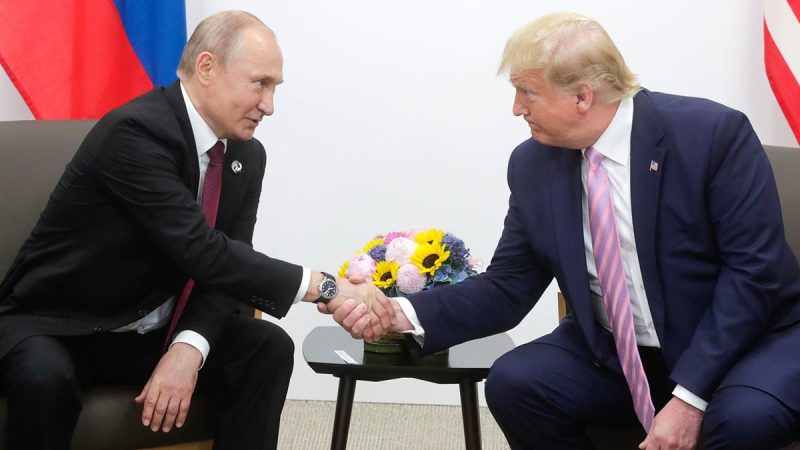
While President Donald Trump previously refrained from speaking ill of Russian President Vladimir Putin, those days are over. 

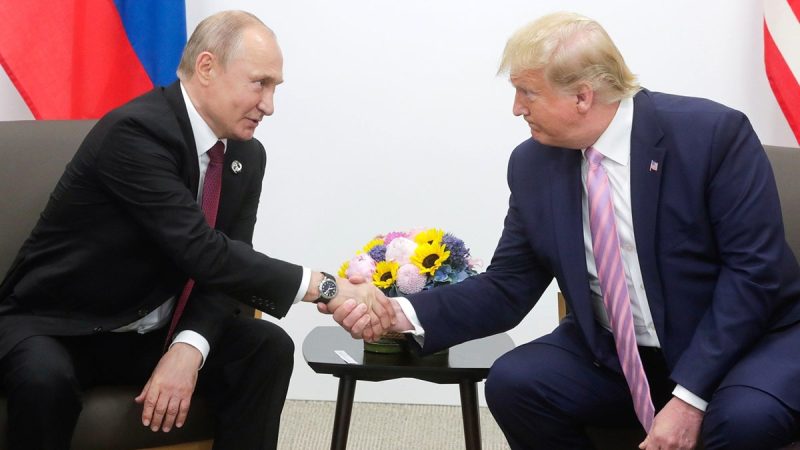
The ongoing war between Russia and Ukraine has changed the nature of their dynamic. Although the two appeared to get along, at least publicly, during Trump’s first administration, their relationship has unraveled as the more recent conflict persists. 

In recent weeks, Trump has refused to mince his words when asked about Putin. Trump said during a Cabinet meeting July 8 he was fed up with Putin and said he was eyeing potentially imposing new sanctions on Russia. 

‘We get a lot of bulls— thrown at us by Putin, if you want to know the truth,’ Trump said. ‘He’s very nice all the time, but it turns out to be meaningless.’ 

John Hardie, Russia program deputy director at the Foundation for Defense of Democracies, said Russia started to attract ire from Trump dating back to March after Ukraine agreed to a 30-day ceasefire. But Russia has failed to get on board with a ceasefire. 

‘Really, since then, I think Trump has come to view the Russians as the main impediment to a deal,’ Hardie told Fox News Digital Thursday. 

Additionally, Hardie said that Trump has also grown frustrated that Russia will launch drone and missile attacks against Ukraine, even after directly speaking with Putin. 

‘What he’s sort of latched on to are these Russian drone and missile barrages,’ Hardie said. ‘That really seems to resonate with him.’  

Tensions only have continued to escalate between the U.S. and Russia since the July Cabinet meeting. 

Trump announced July 14 that he would sign off on ‘severe tariffs’ against Russia if Moscow failed to agree to a peace deal within 50 days. He then dramatically reduced the deadline to only 10–12 days — which ends Friday. 

The decision to reduce the timeline prompted former Russian President Dmitry Medvedev to caution that ‘each new ultimatum is a threat and a step towards war.’ 

In addition to economic sanctions, Trump responded to Medvedev and issued a rare statement disclosing that two U.S. Navy submarines would be moved in response to escalating threats from Russia. 

‘I have ordered two Nuclear Submarines to be positioned in the appropriate regions, just in case these foolish and inflammatory statements are more than just that,’ Trump said Aug. 1. 

Trump’s disclosure of the submarine presence puts additional pressure on Russia to come to the negotiating table, according to Bryan Clark, a retired submarine officer and director of the Hudson Institute think tank’s Center for Defense Concepts and Technology.

‘We have used very sparingly submarines to try to influence adversary behavior before, but this is pretty unusual, to do it against a nuclear-powered adversary like Russia in response to a nuclear threat by Russia,’ Clark told Fox News Digital Monday. ‘So I think this is trying to essentially push back on Russia’s frequent and long-standing threats to use nuclear weapons in part of the Ukraine conflict.’

Momentum is picking up on negotiations though, and U.S. Special Envoy Steve Witkoff met with Putin Wednesday. 

Trump said in a post on Truth Social afterward that ‘great progress’ was made during the meeting. And now, Trump and Putin are expected to meet face to face imminently in an attempt to finally advance negotiations to end the war between Russia and Ukraine. 

Still, Hardie said he is skeptical that the meeting between Putin and Trump will result in meaningful progress. 

‘I don’t expect a summit to produce much,’ Hardie said. ‘And I think Putin could try to use the summit to placate Trump and kind of buy more time continues assault on Ukraine, but I think his goal is he’d love to be able to enlist Trump in his effort to impose these harsh terms on Ukraine.’ 

Russia has pushed for concessions in a peace deal that include barring Ukraine from joining NATO, preventing foreign peacekeeper troops from deploying to Ukraine after the conflict, and adjusting some of the borders that previously were Ukraine’s.

It’s unclear if Trump plans to announce any additional economic burdens upon Russia Friday in accordance with the deadline that he imposed demanding that Russia signal willingness to end the conflict. But according to Trump, the ball is in Putin’s court. 

‘It’s going to be up to him,’ Trump told reporters Thursday. ‘We’re going to see what he has to say. It’s going to be up to him. Very disappointed.’

The White House did not disclose any details regarding potential Friday sanctions, but said that Trump wants to meet with Putin and Ukrainian President Volodymyr Putin to resolve the conflict. 

‘The Russians expressed their desire to meet with President Trump, and the President is open to this meeting,’ White House press secretary Karoline Leavitt said in a statement to Fox News Digital. ‘President Trump would like to meet with both President Putin and President Zelensky because he wants this brutal war to end. The White House is working through the details of these potential meetings and details will be provided at the appropriate time.’

This post appeared first on FOX NEWS

Amid significant budget cuts, NASA is fast-tracking the development of nuclear reactors on the moon and next-generation space stations with one clear objective: beating U.S. adversaries in the new space race.

Two new memos signed by interim NASA chief and Transportation Secretary Sean Duffy outline a bold strategy to secure strategic ground on the moon. The centerpiece of this effort is a lunar nuclear reactor, a renewable and stable power source to support long-term exploration.

‘The goal is to power everything,’ a senior NASA official told Fox News Digital. ‘Our systems, habitats, rovers, robotic equipment, even future mining operations — everything we want to do on the moon depends on this.’

The moon’s environment makes this a necessity. Its month-long day cycle — two weeks of daylight followed by two weeks of darknessc — renders solar power unreliable. A reactor would allow missions to function around the clock.

China and Russia set sights on the moon

NASA officials warn that China and Russia have publicly announced plans for a joint lunar nuclear project by the mid-2030s. If they succeed first, they could establish exclusive control over the moon’s most valuable areas, locations with the most light and access to water and ice.

‘They could set up a ‘keep-out zone’ in the prime locations,’ the NASA official cautioned.

Despite financial constraints, Duffy’s leadership signals a renewed priority to lunar and Martian exploration. 

‘China has already landed on the far side of the moon. We never have,’ the official added. ‘They’re moving on a steady path to dominate this domain.’

New contract structure for nuclear reactor development

The new directive solicits proposals for a 100-kilowatt nuclear reactor — enough to power about 80 homes — with a target launch date of 2030. It also requires NASA to appoint a dedicated program leader.

Today, many robotic spacecraft operate at just a few watts, the equivalent of a couple of light bulbs, which severely limits scientific capabilities. While the ISS uses solar panels, that model doesn’t work on the moon or Mars, where sunlight is too weak or unreliable.

Replacing the ISS: Commercial stations on the horizon

The second memo shifts focus to replacing the aging and leaking International Space Station (ISS), which is scheduled to be retired in 2030. Without a successor, China would become the only country with a permanently crewed station in orbit.

NASA now plans to select two commercial partners within six months of issuing new requests for proposals. Under Duffy’s direction, the agency is moving away from traditional fixed-price contracts and will instead use flexible Space Act Agreements, which give companies more freedom in how they build stations while saving time and money.

‘We’re telling companies what we need,’ a senior NASA official said. ‘But we’re not prescribing how they must do it. That flexibility saves us both time and resources.’

NASA wants the new station to be cheaper and easier to maintain than the ISS. Originally, it envisioned a platform that could host two astronauts for six months. But, under the revised plan, the minimum requirement is four astronauts for just one month.

Background: The Commercial Low Earth Orbit Destination program

NASA’s Commercial Low Earth Orbit Destination (CLD) initiative, launched in 2021, was structured in two phases:

  • Phase 1: Fund companies — like Blue Origin and Northrop Grumman — to design private space stations.
  • Phase 2: Award contracts for building and certifying selected stations.

Duffy’s directive calls for skipping fixed-price contracts in Phase 2 and continuing with Space Act Agreements, in line with tightening budget constraints.

Budget cuts reshape NASA’s future

According to the Trump administration’s fiscal 2026 budget proposal, NASA’s overall budget would drop from $24.8 billion to $18.8 billion, a 25% cut. The Science Mission Directorate, which oversees research in planetary science, astrophysics, Earth observation and heliophysics, would face a nearly 50% reduction. However, human spaceflight programs are slated for increased funding.

NASA has also confirmed that nearly 4,000 employees — about 20% of its workforce — have taken voluntary buyouts in recent months.

Despite these setbacks, agency officials remain optimistic. 

‘Multiple companies tell us they can deliver a station within two years,’ one senior official said. ‘Timelines are always challenging, but we believe we can meet these goals — even on a leaner budget.’

This post appeared first on FOX NEWS

Senate Republicans last month were able to advance President Donald Trump’s desire to clawback billions in federal spending, an effort carried to fruition for the first time in nearly three decades by a first-term senator.

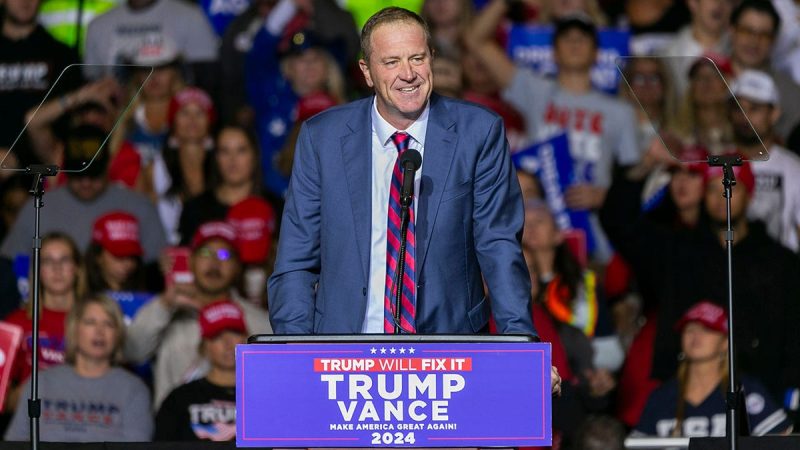
While the effort to slash funding to NPR, PBS and foreign aid was born in the White House, it was executed thanks in large part to Sen. Eric Schmitt, R-Mo.

Schmitt, who was first elected to the Senate in 2022, has become an envoy of sorts for Trump’s agenda in the upper chamber. He has a strong relationship with the president that dates back to his first campaign, which has developed into a regular invite to join Trump for rounds of golf.

He’s launched probes against former President Joe Biden’s alleged mental decline, helped smooth over concerns during passage of Trump’s ‘big, beautiful bill’ and contends that ‘intuitively’ he understands the president’s America First message. 

And his role in bridging the gap between the White House and the Senate, along with negotiating among his conference to get the $9 billion package across the line, has seen his stock rise immensely within the Senate GOP.

But, in an interview with Fox News Digital, he said his entire goal is to just be helpful.

‘I think I approach it with that kind of humility,’ Schmitt said. ‘But I also, I want to be successful, and I want the agenda to move forward. I think it’s really important. Being on the golf course with President Trump is a great honor, and we have a lot of fun. He’s a very good golfer.’

Schmitt, who previously served as Missouri’s attorney general before launching a bid for the Senate, regularly clashed with the Biden administration and said that his role of rebuking lockdowns, vaccine mandates, censorship and mass migration informed how he currently views legislating.

‘My job was to stand in the gap and fight back, with the hopes that President Trump would return,’ he said.

Trump endorsed Schmitt in 2022, and in return the lawmaker became one of the first senators to back his reelection campaign the following year. That turned into Schmitt becoming a mainstay on the campaign trail, jetting across the country in Trump Force One where ‘Big Macs and double cheeseburgers and quarter pounders with cheese’ flowed.

And when Trump won, Schmitt had the opportunity to leave the Senate and join the administration as attorney general, but he opted to stay in the upper chamber.

Had he jumped ship, Trump’s recissions package may not have been able to pass muster with the Senate GOP, where appropriators raised concerns about the impact that clawing back already agreed-upon spending would have on the government funding process and others raised issues with the funding that was targeted.

‘This wouldn’t have happened without Eric Schmitt,’ Sen. Katie Britt, R-Ala., told Fox News Digital. 

Britt was part of the same 2022 class of freshman senators as Schmitt, which included other notable Republicans, like Sen. Markwayne Mullin, R-Okla., and Vice President J.D. Vance.

She said Schmitt’s leadership on the rescissions package, like listening to lawmakers’ concerns and negotiations with Senate Appropriations Committee Chair Susan Collins, R-Maine, to take the lead on the package, led to a final product that could actually pass in the diverse Senate GOP.

Indeed, Schmitt agreed to allow as many amendments to the bill as lawmakers wanted and included his own change to the clawback that would save funding for global AIDS and HIV prevention — a key change that helped bring more Republicans on board.

‘When Eric speaks, people listen,’ Britt said. ‘And he is thoughtful about when he uses his voice, and when he does it most definitely makes an impact.’

Schmitt, however, is more humble in how he views his part in the process.

‘People can label,’ Schmitt said. ‘I don’t get too hung up on any of that. Like for me, honestly, I feel fortunate to be in the position that I’m in. There’s really not a lot of daylight between the President’s agenda and the things that I support.’

Still, he was hopeful that another recissions package would come, describing it as ‘a good exercise for us,’ but noted that the timing for the remaining fiscal year would be tricky given the GOP’s continued push to blast through Democrats’ blockade on nominees and the looming government funding deadline when lawmakers return after Labor Day.

But getting the first one done was key to opening the door for more.

‘I think that was also part of what was on the line,’ he said. ‘When we were, you know, in the middle of the night, trying to make sure we had the votes, was that we have to prove that we have the ability to do it. And once you do it, there’s muscle memory associated with that. There’s a cultural shift in how we view things.’

However, Senate Minority Leader Chuck Schumer, D-N.Y., has demanded that Republicans commit to a bipartisan appropriations process and eschew further rescissions packages.

Should another come from the White House in the waning days of this fiscal year, it could spell trouble in Congress’ bid to avert a partial government shutdown by Sept. 30.

‘I really think it would be a bad idea for Republicans to alter our course of action based on what Democrat threats are,’ Schmitt said. ‘At the end of the day, they’re an obstructionist party without a message, without a messenger.’ 

This post appeared first on FOX NEWS

President Donald Trump is preparing to announce new secondary tariffs Friday on nations who conduct trade with Russia amid its deadly war in Ukraine. 

The White House has remained tight-lipped on what those tariffs will look like after the president first said in July they would amount to ‘100%’ tariffs before causing confusion earlier this week when he told reporters he ‘never said a percentage.’

While the specifics of what tax rates nations that trade with Russia could face remain unclear, Trump’s change in posture toward Russian President Vladimir Putin has become increasingly evident. 

‘Trump’s frustrated that the Russians have not taken advantage of his patience and generous offers, but it’s very interesting that even after Trump announced he was moving submarines, and even after he announced the tough tariffs, the Russians still want to talk to him,’ Fred Fleitz, who served as a deputy assistant to Trump and chief of staff of the National Security Council during the president’s first term, told Fox News Digital.

‘Putin does not want to anger Trump,’ he added. ‘Putin never worried about angering Biden, and I think that this shows a degree of respect. 

‘It shows what Trump has achieved by exercising leadership on the global stage. And we’ll see what happens,’ Fleitz said, adding he hoped it was not merely a stalling tactic by Putin.

Trump’s return to the White House brought with it a sense of shock as he appeared to distance Washington from its top allies in Europe in favor of attempting to improve diplomatic relations with Putin, culminating in the infamous Oval Office showdown with Ukrainian President Volodymyr Zelenskyy in February. 

While the tussle brought renewed support from his top MAGA base, who favor ending U.S. involvement in foreign wars, it prompted concern among security experts. Ultimately, Trump’s patience with Putin began to shift, with the president consistently expressing his frustration at the Kremlin chief’s continued brutal attacks in Ukraine. 

In mid-July, while sitting next to NATO Secretary General Mark Rutte, Trump announced Putin had 50 days to enter into a ceasefire or face ‘very severe’ tariffs that would affect Moscow’s top commodity, oil. 

‘Tariffs at about 100%, you’d call them secondary tariffs,’ he had said, indicating that nations that trade with Russia will see 100% tariffs slapped on them when trading with the U.S. 

This would most greatly affect China and India, according to data released by the U.S. government Thursday, which showed both nations account for 46% of all Russian oil purchases in 2025.

But the U.S. is also the No. 1 export market for both China and India, which means higher price tags at the checkout line on their products will make Americans think twice before completing those purchases. 

After ongoing trade negotiations with both nations and Putin’s continued war effort in Ukraine, Trump last week pushed up his deadline to within 10 days of July 29, forcing a new deadline of Friday.

But while his promised tariffs were met with applause by some in the GOP, including Sen. Lindsey Graham, R-S.C. — he, along with Sen. Richard Blumenthal, D-N.Y., is pushing the charge for 500% sanctions on Russia — other Republican members have not backed the move. 

Sen. Rand Paul, R-Ky., has been outspoken against not only Trump’s tariffs but the bipartisan sanction push and argued to Fox Business’ Larry Kudlow this week that Trump’s tariffs on allies and foes alike will amount to $2 trillion in taxes for the American consumer.

But Fleitz pushed back on this argument and said he is not convinced that the tariffs will hurt the U.S. or Chinese economy, though Russia and India are likely to feel the pain. 

‘I think they’re going to hurt the Russian and Indian economies,’ he said, noting that India could recover by buying oil elsewhere. Though some reporting has suggested that India may have saved over $30 billion by increasingly turning to Russian oil during 2022-2024 due to Moscow’s price cuts. 

‘It is going to be another factor that’s going to pressure Putin to agree to a ceasefire. I don’t know if that’s going to happen immediately or in a few months, but I think it is going to put real pressure, inflict real pain on Russia,’ Fleitz said. 

Once a staunch Trump ally, Rep. Marjorie Taylor Greene, R- Ga., took to X this week in response to a post by Trump that he would be enforcing tariffs on India for purchasing Russian oil and said, ‘End Indian H1-B visas replacing American jobs instead and stop funding and sending weapons to the Obama/Biden/Neocon Ukraine Russia war.’

Trump’s favorable transition toward Ukraine and European allies has also ruffled some MAGA feathers, though security experts have argued it has given the president better leverage to take on major adversaries like Putin, and by extension, China. 

‘Diplomacy and negotiations are a good thing,’ said Fleitz, who serves as vice chair of the America First Policy Institute’s Center for American Security. ‘Peacemaking takes time, and the U.S.-Russia relationship was in a very bad situation when Trump came to office.

‘I think these sanctions will hurt Russia very badly,’ Fleitz continued. ‘The fact that Trump knows that secondary sanctions on India has, at least temporarily, hurt our relationship is really a remarkable sign of how committed Trump is to these sanctions.

‘There’s not going to be exceptions. It’s not going to be some type of soft strategy with all kinds of loopholes,’ he added. ‘I think it shows to Putin how serious Trump is, and it gives Trump leverage to negotiate with Putin.’

This post appeared first on FOX NEWS

The U.S. Court of Appeals for the D.C. Circuit ruled 2-1 Friday that U.S. District Judge James Boasberg cannot move forward with possible contempt proceedings against the Trump administration.

The case involves the administration’s alleged violation of an emergency court order blocking the administration from using a 1798 law to summarily deport hundreds of Venezuelan migrants to El Salvador — the latest in an evolving, high-stakes court clash that has played out for months in various courts. 

Judges Gregory Katsas and Neomi Rao, two Trump appointees on the majority-Democrat bench, sided with the Trump administration Friday in blocking Boasberg’s contempt motion from moving forward. 

Judge Nina Pillard, an Obama appointee, dissented. 

The 2-1 ruling is all but certain to be appealed to the full court to be heard en banc, where the Democrat-majority bench is seen as more favorable to the plaintiffs, or directly to the Supreme Court for review.

‘The district court here was placed in an enormously difficult position,’ Katsas said Friday, writing for the majority.

‘Faced with an emergency situation, it had to digest and rule upon novel and complex issues within a matter of hours. In that context, the court quite understandably issued a written order that contained some ambiguity.’

Katsas noted that the appellate court ruling does not center on the lawfulness of Trump’s Alien Enemies Act removals in March, when administration officials invoked the 1798 immigration law to send more than 250 Venezuelan nationals to CECOT, the maximum-security prison in El Salvador.

‘Nor may we decide whether the government’s aggressive implementation of the presidential proclamation warrants praise or criticism as a policy matter,’ he added. ‘Perhaps it should warrant more careful judicial scrutiny in the future. Perhaps it already has.’

‘Regardless, the government’s initial implementation of the proclamation clearly and indisputably was not criminal.’

The ruling comes months after Boasberg originally found grounds to move on potential contempt proceedings in the case.

It comes as Boasberg has also ordered ongoing status updates on the location and custodial status of the 252 CECOT class migrants, after they were deported last month from El Salvador to Venezuela as part of a prisoner exchange between the U.S. and Venezuela.

It is unclear how many of those migrants had pending asylum applications in the U.S. or had been granted a ‘withholding of removal’ order blocking their return to their country of origin. 

The long-awaited ruling comes months after Boasberg ruled that the court had found probable cause to move on criminal contempt proceedings after he issued a late-night temporary restraining order on March 15 blocking the Trump administration’s use of the Alien Enemies Act to summarily deport certain migrants to El Salvador.

Boasberg had also ordered all migrants to be ‘immediately returned’ to U.S. soil, which did not happen. 

Despite the order, hundreds of migrants were deported to the Salvadorian prison, CECOT, in March, where they remained until late last month, when they were sent from the prison in El Salvador to Venezuela, as part of the prisoner exchange. 

Boasbeg ruled in April that there was ‘probable cause’ to move on criminal contempt proceedings against the Trump administration for failing to return the planes to U.S. soil and said the court had determined that the Trump administration demonstrated a ‘willful disregard’ for his order.

The appeals court granted the Trump administration’s request for an emergency stay of the ruling months earlier, prompting questions as to why they did not move more quickly on the motion.


Still, the decision is almost certain to be appealed either to the full circuit court to be heard en banc, or directly to the Supreme Court for review. 

The Trump administration for months has sparred with judges who have blocked the president’s executive orders from taking force.

Boasberg, in particular, has emerged as one of Trump’s biggest public foes. Last month, the court attempted to have him removed from overseeing the case and have it reassigned to another case — a long-shot effort that legal experts and former judges suggested is unlikely to go far.

This is a breaking news story. Check back for updates.

This post appeared first on FOX NEWS

Virtual Investor Conferences, the leading proprietary investor conference series, today announced the presentations from the OTCQB Venture Virtual Investor Conference, held August 7 th are now available for online viewing.

REGISTER AND VIEW PRESENTATIONS HERE

The company presentations will be available 24/7 for 90 days. Investors, advisors, and analysts may download investor materials from the company’s resource section.

Select companies are accepting 1×1 management meeting requests through August 13 th .

August 7 th

Presentation Ticker(s)
Surge Copper. Corp (OTCQB: SRGXF | TSXV: SURG)
ReGen III Corp. (OTCQB: ISRJF | TSXV: GIII)
Silver47 Exploration Corp. (OTCQB: AAGAF | TSXV: AGA,OTC:AAGAF)
Nature’s Miracle Holding Inc. (OTCQB: NMHI)
Zero Candida Technologies Inc. (OTCQB: ZCTFF | TSXV: ZCT)
NextGen Digital Platforms Inc. (OTCQB: NXTDF | CSE:  NXT)
Telo Genomics Corp. (OTCQB: TDSGF | TSXV: TELO)
Zomedica Corp. (OTCQB: ZOMDF)
Metaguest.AI Incorporated (OTCQB: MGSTF | CSE: METG)
Waste Energy Corp. (OTCQB: WAST)
CleanGo Innovations Inc. (OTCQB: CLGOF | CSE: CGII)
Sekur Private Data Ltd. (OTCQB: SWISF | CSE: SKUR)
CyberCatch Holdings, Inc. (OTCQB: CYBHF | TSXV: CYBE)

To facilitate investor relations scheduling and to view a complete calendar of Virtual Investor Conferences, please visit www.virtualinvestorconferences.com .

About Virtual Investor Conferences ®

Virtual Investor Conferences (VIC) is the leading proprietary investor conference series that provides an interactive forum for publicly traded companies to seamlessly present directly to investors.

Providing a real-time investor engagement solution, VIC is specifically designed to offer companies more efficient investor access. Replicating the components of an on-site investor conference, VIC offers companies enhanced capabilities to connect with investors, schedule targeted one-on-one meetings and enhance their presentations with dynamic video content. Accelerating the next level of investor engagement, Virtual Investor Conferences delivers leading investor communications to a global network of retail and institutional investors.

Media Contact:
OTC Markets Group Inc. +1 (212) 896-4428, media@otcmarkets.com

Virtual Investor Conferences Contact:
John M. Viglotti
SVP Corporate Services, Investor Access
OTC Markets Group
(212) 220-2221
johnv@otcmarkets.com

News Provided by GlobeNewswire via QuoteMedia

This post appeared first on investingnews.com

The 4,000m drilling campaign aims to unlock district-scale potential by testing a possible extension of Aris’ producing vein system in Colombia’s premier high-grade gold corridor

Quimbaya Gold Inc. (CSE: QIM,OTC:QIMGF) (OTCQB: QIMGF) (FSE: K05) (‘Quimbaya’ or the ‘Company’) is pleased to announce the commencement of its inaugural diamond drill campaign at the 100%-owned Tahami South Project in Antioquia, Colombia. The fully permitted 4,000-meter program marks Quimbaya’s transition from surface exploration to drill-testing in one of the country’s most prolific gold-producing districts.

Highlights

  • Tahami South is located adjacent to Aris Mining’s Segovia Mine, one of Colombia’s highest-grade and most productive gold operations.

  • The project covers a series of mapped epithermal gold-silver veins that trend through both the Segovia Mine and onto Quimbaya’s ground.

  • Despite extensive artisanal activity and positive surface sampling, the property has never seen diamond drilling.

  • Quimbaya’s 2025 fieldwork outlined multiple drill-ready targets with strong geochemistry, hydrothermal alteration, and structural control.

  • Drilling began in early August 2025, with initial results anticipated in Q4.

A Strategic First Drill Test in Colombia’s Premier Gold District

Tahami South lies within the Colombia’s premier high-grade corridor, a region known for high-grade quartz epithermal gold systems. Recent work by Quimbaya has confirmed widespread alteration, stockwork veins, and placer-style artisanal mining, all indicators of a potentially fertile gold system.

‘The old adage in exploration holds true: the best place to find a mine is next to a mine,’ said Alexandre P. Boivin, CEO of Quimbaya Gold. ‘We’re the first company to deploy modern exploration on this part of the Segovia trend. Our systematic work, including soil geochemistry, channel and rock sampling, stream sediments sampling and structural modelling, has built a robust case for drill testing. We’re now turning that data into action.’

Drill Targets and Geological Context

The initial program will test multiple zones across a structural corridor interpreted to be a continuation of the Segovia vein system. Planned holes will target:

  • Structural intersections mapped across sections A-A’, B-B’, C-C’, E-E’ and H-H’

  • Zones with strong sericitic alteration, quartz veins, hydrothermal breccias, and gold-bearing stockworks

  • Areas proximal to active artisanal workings, suggesting near-surface mineralisation

Surface sampling has returned:

  • Rock chip assays up to 11.21 g/t Au

  • Panel rock assays up to 23.3 g/t Ag

  • Auger soils up to 59 ppb Au and MMI soils up to 37.1 ppb Au

  • Multi-element pathfinder anomalies (As, Cu, Pb, Zn) coincident with structural targets

‘This program is the culmination of months of disciplined geoscience,’ said Ricardo Sierra, VP Exploration. ‘We’ve mapped out structural trends, alteration zones, and artisanal footprints that all suggest a large-scale epithermal system. Now, we’re finally testing it below surface.’

Figure 1. Planned drill platforms (TDH -001 to TDH-007) overlaid on gold-in-auger soil anomalies (Au g/t) and rock sample assay values (Au g/t) at the Tahami South Project.

To view an enhanced version of this graphic, please visit:
https://images.newsfilecorp.com/files/11347/261779_f9d44764a4c268ae_001full.jpg

Next Steps:

Drilling will continue through Q3 2025 with initial assay results expected in Q4. Follow-up drilling is being planned in parallel to expand on any intercepts and test new targets defined through ongoing mapping and geological exploration.

Qualified Person
The technical information in this news release has been reviewed and approved by Ricardo Sierra, a Qualified Person as defined by National Instrument 43-101.

About Quimbaya

Quimbaya aims to discover gold resources through exploration and acquisition of mining properties in the prolific gold mining districts of Colombia. Managed by an experienced team in the mining sector, Quimbaya is focused on three projects in the regions of Segovia (Tahami Project), Puerto Berrio (Berrio Project), and Abejorral (Maitamac Project), all located in Antioquia Province, Colombia.

Contact Information

Alexandre P. Boivin, President and CEO apboivin@quimbayagold.com

Sebastian Wahl, VP Corporate Development swahl@quimbayagold.com

Quimbaya Gold Inc.
Follow on X @quimbayagoldinc
Follow on LinkedIn @quimbayagold
Follow on YouTube @quimbayagoldinc
Follow on Instagram @quimbayagoldinc
Follow on Facebook @quimbayagoldinc

Cautionary Statements

Certain statements contained in this press release constitute ‘forward-looking information’ as that term is defined in applicable Canadian securities legislation. All statements, other than statements of historical fact, included herein are forward-looking information. Generally, but not always, forward-looking statements and information can be identified by the use of forward-looking terminology such as ‘intends’, ‘expects’ or ‘anticipates’, or variations of such words and phrases or statements that certain actions, events or results ‘may’, ‘could’, ‘should’, ‘would’ or ‘occur’. Forward-looking statements herein include statements and information regarding the Offering’s intended use of proceeds, any exercise of Warrants, the future plans for the Company, including any expectations of growth or market momentum, future expectations for the gold sector generally, the Colombian gold sector more particularly, or how global or local market trends may affect the Company, intended exploration on any of the Company’s properties and any results thereof, the strength of the Company’s mineral property portfolio, the potential discovery and potential size of the discovery of minerals on any property of the Company’s, including Tahami South, the aims and goals of the Company, and other forward-looking information. Forward-looking information by its nature is based on assumptions and involves known and unknown risks, uncertainties and other factors which may cause the actual results, performance or achievements of Quimbaya to be materially different from any future results, performance or achievements expressed or implied by such forward-looking statements or information. These assumptions include, but are not limited to, that the Company’s exploration and other activities will proceed as expected. The future outcomes that relate to forward-looking statements may be influenced by many factors, including but not limited to: future planned development and other activities on the Company’s mineral properties; an inability to finance the Company; obtaining required permitting on the Company’s mineral properties in a timely manner; any adverse changes to the planned operations of the Company’s mineral properties; failure by the Company for any reason to undertake expected exploration programs; achieving and maintaining favourable relationships with local communities; mineral exploration results that are poorer or better than expected; prices for gold remaining as expected; currency exchange rates remaining as expected; availability of funds for the Company’s projects; prices for energy inputs, labour, materials, supplies and services (including transportation); no labour-related disruptions; no unplanned delays or interruptions in scheduled construction and production; all necessary permits, licenses and regulatory approvals are received in a timely manner; the Offering proceeds being received as anticipated; all requisite regulatory and stock exchange approvals for the Offering are obtained in a timely fashion; investor participation in the Offering; and the Company’s ability to comply with environmental, health and safety laws. Although Quimbaya’s management believes that the assumptions made and the expectations represented by such information are reasonable, there can be no assurance that the forward-looking information will prove to be accurate. Furthermore, should one or more of the risks, uncertainties or other factors materialize, or should underlying assumptions prove incorrect, actual results may vary materially from those described in forward-looking statements or information. Readers are cautioned not to place undue reliance on forward-looking information as there can be no assurance that the plans, intentions or expectations upon which they are placed will occur. Forward-looking information contained in this news release is expressly qualified by this cautionary statement. The forward-looking information contained in this news release represents the expectations of Quimbaya as of the date of this news release and, accordingly, is subject to change after such date. Except as required by law, Quimbaya does not expect to update forward-looking statements and information continually as conditions change.

NOT FOR DISTRIBUTION TO UNITED STATES NEWS WIRE SERVICES OR FOR DISSEMINATION IN THE UNITED STATES

To view the source version of this press release, please visit https://www.newsfilecorp.com/release/261779

News Provided by Newsfile via QuoteMedia

This post appeared first on investingnews.com

Demand for helium is rising alongside the semiconductor, healthcare and nuclear energy sectors.

Produced from natural gas wells, helium is an odorless, colorless, non-toxic, non-combustible and non-corrosive gas. While it may bring to mind birthday balloons, the element is an important industrial gas due to its cooling properties.

Helium has several critical applications across various industries witnessing market growth, including the manufacturing of semiconductors and electronics, medical imaging and nuclear power generation.

Global helium supply is mainly attributable to production at liquefaction facilities spread across the US, Qatar, Algeria, Russia, Australia, Canada, Poland and China. However, increasing demand for helium as an industrial gas is spurring further exploration and development of helium projects, including in Canada and in the US.

1. Pulsar Helium (TSXV:PLSR)

Market cap: C$46.05 million

Pulsar Helium is a helium project development company with assets in the United States and Greenland.

The company’s Topaz project in Minnesota is the newest helium discovery in the US, and drilling at its Jetstream #1 well in 2024 demonstrated high helium concentrations of 14.5 percent. Pulsar is also the first company in Greenland to obtain a license for helium exploration. According to the company, its Tunu helium-geothermal project in the country is one of just a few primary helium projects in Europe.

At Topaz, Pulsar is conducting a well flow testing program at the Jetstream prospect during the summer to gain data necessary to assess the project’s production potential. As for Tunu, a pre-feasibility study is underway at the project and is slated for completion by the end of August 2025.

2. Desert Mountain Energy (TSXV:DME)

Market cap: C$18.84 million

Next up on this list of top Canadian helium stocks is Desert Mountain Energy, a company engaged in the exploration, development and production of helium, hydrogen, natural gas and condensate projects in the US. Its key helium project is the West Pecos gas field in New Mexico, where it has a fully operational helium processing facility. It also owns the high-grade Holbrook Basin helium project in Arizona.

In 2025, Desert Mountain Energy is expanding into the international market with the formation of its wholly owned subsidiary Desert Energy UK, which has secured a substantial onshore exploration license for helium and hydrogen in Devon, United Kingdom.

3. Helium Evolution (TSXV:HEVI)

Market cap: C$12.07 million

Helium Evolution is a helium exploration company with over 5 million acres of helium land rights in Southern Saskatchewan, Canada. The company holds a 20 percent working interest in helium wells on joint lands with North American Helium, which is advancing the joint 2-31 discovery, with development wells planned for late 2025.

Earlier this year, Helium Evolution formed a collaboration agreement and secured a substantial investment from ENEOS Explora USA, a subsidiary of Japanese energy conglomerate ENEOS Group (TSE:5020), through two private placements. The second, closed in May, brought ENEOS’ total stake in Helium Evolution to about 28 percent.

4. Avanti Helium (TSXV:AVN)

Market cap: C$11.97 million

Avanti Helium’s helium exploration and development assets include approximately 78,000 acres within the Greater Knappen area, which covers land in both Southern Alberta, Canada, and Northwest Montana, US. It also owns approximately 63,000 acres of prospective helium permits within Southwest Saskatchewan.

Avanti’s Sweetgrass pool project in Montana is on track to achieve helium production in Q4 of 2025, the company stated in its April investor presentation. The company has two wells at Sweetgrass capable of total gas production of approximately 18,500 million cubic feet per day at 1.1 percent helium.

In August, Avanti announced it signed a multi-year offtake agreement with a global industrial gas supplier for a minimum monthly helium purchase volume equivalent to about one third of Sweetgrass’ initial plant output.

5. Altura Energy (TSXV:ALTU)

Market cap: C$8.21 million

Altura Energy is an exploration and production company which holds 27,000 acres in the Holbrook basin of Arizona, where its wells produce helium at concentrations of 5 percent to 8 percent. The company has a development plan for over 300 wells, with nine wells currently connected to a pipeline and an additional 10 wells at various stages of completion.

Formerly known as Total Helium, the company completed a name change and share consolidation in May 2025. In June, Altura announced it closed an up-sized brokered private placement for C$1.99 million, a quarter of which was used to settle outstanding indebtedness, with proceeds also planned for working capital.

Securities Disclosure: I, Melissa Pistilli, hold no direct investment interest in any company mentioned in this article.

This post appeared first on investingnews.com