
Author

admin

Browsing

Best Buy is launching a third-party marketplace, as it tries to bulk up the variety of merchandise it offers and reverse slower sales.

Starting on Tuesday, shoppers who go to Best Buy’s website and app will see products and brands that weren’t available there before, including more tech-related accessories like custom video game controllers and some nontech items including seasonal decor and sports collectibles.

The company’s online marketplace riffs off those of other retailers, such as Amazon and Walmart, by relying on third-party sellers to stock, sell and ship inventory and taking a cut of their sales in the form of a commission.

“Everything we do is really centered around the customer and their technology needs, and we do see customers actually doing a lot of consumer electronics transactions through marketplaces,” Chief Customer, Product and Fulfillment Officer Jason Bonfig said. “And as a result of that, we need to make adjustments to be where the customer’s at.”

He said Best Buy noticed gaps in its assortment that the new platform will help it fill. For instance, Bonfig said the company didn’t carry batteries for some older cameras or cases for older smartphones. And it didn’t offer some items that complement Best Buy purchases, such as furniture that goes around a big-screen TV or cookware to use with a new kitchen appliance.

Along with adding those items, the marketplace makes it possible for smaller vendors with innovative products to sell on Best Buy’s website when they’re not yet big enough to make or distribute the volume needed for its stores, he added.

Best Buy’s marketplace launches at a time when its business could use a boost. Its annual sales have declined over the past three years as the company contends with a sluggish housing market, selective consumer spending and a decline in device replacements after a spike in tech purchases during the Covid pandemic.

The company cut its sales outlook in May and said it expects full-year revenue to range from $41.1 billion to $41.9 billion. That would be similar to Best Buy’s annual revenue of $41.5 billion in the most recent fiscal year, but below the numbers it posted in the years leading up to and during the pandemic.

Best Buy will share its most recent earnings results and sales forecast on Aug. 28.

Tariffs have complicated the backdrop for Best Buy, too, since the higher duties have added costs for consumer electronics vendors and distracted them from other priorities like research and development that leads to new and innovative products, said Jonathan Matuszewski, a retail analyst at Jefferies. He said Best Buy tends to win sales instead of big-box or online competitors when there’s a leap forward in technology.

With the platform’s launch, Best Buy joins other retailers that have jumped on the trend of introducing or expanding third-party marketplaces. Lowe’s and Nordstrom started marketplaces last year. Ulta Beauty plans to launch its own later this year. And Target said it will expand its existing marketplace, Target Plus.

On Best Buy’s earnings call in May, CEO Corie Barry described the third-party marketplace as one of the company’s strategic priorities for the year. She said that new profit stream “is even more important in this environment” and will provide greater flexibility with the range of items and price points.

Plus, she said the marketplace supports the company’s growing advertising business. Sellers can buy ads for their products, including by paying for better placement in search results.

Marketplaces and the advertising opportunities that come with them tend drive higher profits for retailers, said Justin MacFarlane, a managing director for the global retail group of AlixPartners. Sellers buy, stock and ship products instead of the retailer, and take on both the expense of buying inventory and the risk that they may have to mark down unwanted items, he said.

Yet the business model comes with risks, too, he said. For instance, sellers may not have the same standards as a retailer and it could anger a retailer’s customers if they send products in torn boxes, with missing pieces or days later than expected. And he said retailers can flood their websites with so many different categories, brands and products that they overwhelm customers with choices that seem irrelevant to their company’s identity.

“You get addicted to the growth and more is more until it’s not,” he said.

At launch, Best Buy’s marketplace will have about 500 sellers, Bonfig said. He said the company vetted applicants and whittled them down to the ones who can provide a high-quality customer experience. The sellers must match Best Buy’s return policy, he added.

Customers can return purchases either directly to the seller or to Best Buy stores, he said.

This post appeared first on NBC NEWS

Glencore (LSE:GLEN,OTC Pink:GLCNF) has submitted applications to place two of its flagship copper projects in Argentina under a new investment regime.

The Switzerland-based commodities giant said it is seeking to include the El Pachón deposit in San Juan province and the Agua Rica deposit in Catamarca under Argentina’s recently introduced Incentive Regime for Large Investments (RIGI).

Together, the projects represent a planned capital investment of about US$13.5 billion over the next decade — US$9.5 billion for El Pachón and US$4 billion for Agua Rica.

Both sites would benefit from a long-term economic framework with enhanced investor protections under the RIGI program, which the administration of President Javier Milei launched this year to attract foreign investment.

“President Milei and his administration must be credited for introducing the RIGI. This framework has changed the investment landscape in Argentina, providing a key catalyst to attract major foreign investment to the country,” Glencore Chief Executive Officer Gary Nagle said in the company’s announcement.

Martín Pérez de Solay, CEO of Glencore Argentina, added: “The RIGI provides a key platform for the development of Argentina’s significant natural resource endowment. I am confident that the mining sector can be a major contributor to the Argentinian economy with the El Pachón and Agua Rica projects supporting the country’s ambition to become one of the world’s leading copper producers.”

El Pachón is a large-scale copper and molybdenum deposit with estimated mineral resources of about 6 billion metric tons of ore, averaging 0.43 percent copper, 2.2 grams per tonne silver and 130 grams per metric ton molybdenum.

Agua Rica, meanwhile, hosts roughly 1.2 billion metric tons of ore with average grades of 0.47 percent copper, 0.20 grams per tonne gold, 3.40 grams per metric ton silver and 0.03 percent molybdenum.

The Agua Rica ore would be processed at the existing Alumbrera facilities, 35 kilometers away, through the MARA project framework.

The scale of Glencore’s expansion comes amid a broader strategic race among Western producers to secure supplies of critical minerals needed for clean energy technologies, electric vehicles and defense applications.

Copper in particular is considered vital to global electrification, and analysts warn that rising demand could soon outstrip supply.

US enforcement shift on Chinese metals

On Tuesday (August 19), the Department of Homeland Security announced that imports of Chinese steel, copper and lithium would be targeted for “high-priority enforcement” under the Uyghur Forced Labor Prevention Act (UFLPA), a law restricting goods linked to alleged human-rights abuses in China’s Xinjiang region.

“The use of slave labor is repulsive and we will hold Chinese companies accountable for abuses and eliminate threats its forced labor practices pose to our prosperity,” Homeland Security Secretary Kristi Noem said in a post on X.

US officials say the Xinjiang region hosts state-run internment camps where Uyghurs and other minority groups are subject to forced labor.

Beijing has consistently denied the allegations, dismissing them as politically motivated.

The announcement expands Washington’s campaign to scrutinize goods with ties to Xinjiang, which has already affected solar panels, cotton, and other commodities. The new focus on copper and lithium marks a significant escalation, given both metals’ central role in renewable energy and battery production.

Global supply chains in flux

Together, Glencore’s Argentine projects and Washington’s enforcement measures highlight how critical minerals are becoming increasingly entangled with geopolitics.

China currently processes about 70 percent of the world’s rare earths and controls a major share of global copper and lithium refining capacity. Western governments are now trying to diversify away from Chinese supply chains amid rising tensions.

Argentina, with its vast mineral reserves, has emerged as a key player in this strategy. The country is already a major producer of lithium and is positioning itself as a copper hub through projects like Glencore’s expansion.

Securities Disclosure: I, Giann Liguid, hold no direct investment interest in any company mentioned in this article.

This post appeared first on investingnews.com

Rare Earths Americas (REA), a private critical minerals company, has launched a new platform to explore and develop high-grade rare earth assets in the United States and Brazil in a bid to consolidate supply chains for various domestic sectors.

The company, which raised AU$25 million (approximately US$16 million) in a private funding round, said it combines experienced operators and investors with “deep expertise across global mining, energy and critical materials.”

Included in the company’s four asset portfolio is the Foothills discovery, located in Georgia, USA, the site contains rare earth grades of up to 41.3 percent total rare earth oxides (TREO), including heavy rare earth elements crucial for high-performance magnets.

The project benefits from “outstanding logistics, low-cost power and streamlined permitting pathway,” the company said in an August 18 press release.

In Brazil, the Alpha and Constellation projects cover more than one billion metric tons of high-grade ionic clay rare earth mineralization, including dysprosium and terbium, which are essential for permanent magnets. The Homer project targets multiple carbonatite clusters with potential for rare earth and niobium discoveries in a region known for leading niobium mines.

“The rare earths market is undergoing a generational shift as the West races to secure its rare earths future,” said CEO Donald Swartz.

REA’s timing aligns with broader US efforts to reduce reliance on China, which currently controls nearly 70 percent of global rare earth processing and accounts for most heavy rare earth production.

In April, Beijing restricted shipments of seven rare earths to the US and other countries, prompting concern among automakers and defense contractors dependent on these materials.

The US government has recently proposed a pricing support mechanism for domestic rare earth ventures to increase production and mitigate China’s influence. Discussions last month, led by former White House trade advisor Peter Navarro and National Security Council official David Copley, included rare earth producers and major technology firms reliant on these critical minerals.

China’s dominance stems from billions of dollars invested in mining and processing since 2000, often with minimal environmental or safety oversight, allowing the country to produce rare earths at lower cost than Western competitors.

Meanwhile, the US response has included efforts to develop domestic mined supply and the build out of refinement, processing and production capacity. American companies have also sought to secure alternative sources in Africa and Latin America, but investment and technology barriers remain significant.

Mountain Pass in California, the country’s only large-scale rare earth mine, produces bastnaesite carbonate but relies heavily on foreign processing. MP Materials (NYSE:MP), the mine’s operator, posted a net loss of US$65.4 million in 2024, highlighting the challenge of competing with China’s low-cost production model.

REA’s launch positions it as a potential strategic player in this evolving landscape. The Foothills project offers a “streamlined permitting pathway” in the US, while the Alpha and Constellation projects in Brazil provide access to large-scale, high-grade heavy rare earths.

“With grade and strategic geography on our side, we intend to advance our rare earths projects to support the long-term supply of critical materials essential to domestic innovation,” Swartz added.

Securities Disclosure: I, Giann Liguid, hold no direct investment interest in any company mentioned in this article.

This post appeared first on investingnews.com

Apple clinched a major win Monday after the U.S. government announced that the U.K. had agreed to drop its demand for the company to provide a “back door” granting officials access to users’ encrypted data.

The iPhone maker won’t be alone to rejoice in the outcome.

The development came after extensive talks between Britain and the U.S., which had raised national security concerns over the request.

At the root of the row was end-to-end encryption, a technology which secures communications between two devices in a way that means not even the company providing a chat service can view any messages.

The story of Apple’s U.K. privacy battle started earlier this year, when it was reported that the British government had demanded access to the company’s encrypted cloud service via a technical “back door.”

Such a back door has long been contested by Apple. In 2016, the Federal Bureau of Investigation tried to get Apple to create software that would enable it to unlock an iPhone it recovered from one of the shooters involved in the 2015 terror attack in San Bernardino, California.

Other companies have also had to fend off government attempts to undermine end-to-end encryption. For example, when Meta announced plans to encrypt all messages on its Facebook Messenger app, the move drew condemnation from the U.K. Home Office. Meta had already offered encryption on WhatsApp.

The Monday news could have broader implications for the debate around end-to-end encryption globally.

Governments and law enforcement agencies have long pushed for methods to break such encryption systems to assist with criminal investigations into terrorism and child sexual abuse.

However, tech companies have said that building an encryption back door would not only undermine user privacy, but also expose them to possible cyberattacks. Cybersecurity experts say that any back door built for a government would eventually be found and exploited by hackers.

U.S. national intelligence officials were also worried by the ramifications of Apple offering such a back door.

For Apple, the U.K.‘s concession over encryption could mean that the company can bring back its most secure service for users’ cloud data, Advanced Data Protection (ADP), which the company stopped offering to Brits in February.

It is not yet clear if Apple will reintroduce its ADP service to the U.K. market.

CNBC has reached out to Apple and the U.K. government for comment.

This post appeared first on NBC NEWS

One Senate Republican has crafted a blueprint for how conservatives can take on Democrats in the courts and win.

Before he was in Washington, D.C., Sen. Eric Schmitt, R-Mo. served as Missouri’s attorney general during the beginning of the COVID-19 pandemic. And during that time, he filed lawsuit after lawsuit challenging the Biden administration, Dr. Anthony Fauci and even going so far as to sue China.

And more often than not, be it through uncovering discrepancies during the discovery process or winning multibillion-dollar settlements, Schmitt was mostly successful in challenging Democratic ‘lawfare.’

‘The fact of the matter is, what our fights were, were about restoring individual liberty and pulling back the expanse of government,’ Schmitt told Fox News Digital in an interview. ‘What the Left is trying to do now with their lawfare machine was, number one, they’re trying to put their opponents in jail, but then also to defend the expanse of government, to defend the administrative state. And I think if we have the right arguments, we can win.’

Schmitt detailed how to secure those winning arguments through his own experiences in his latest book ‘The Last Line of Defense: How to Beat the Left in Court.’

He described the book as ‘a field manual from the front lines of the battles that were fought against the left-wing law machine.’ Indeed, Schmitt outlined a guide for attorneys general across the country to take on challenges at all levels, from local to federal.

‘Our playbook really is… really in response to what their playbook was, to create a manufactured emergency, a real or manufactured emergency, to aggregate power, to exercise it in ways that never were imagined to other folks who disagree and silence dissent,’ Schmitt said. ‘That’s what they were really trying to do.’

In some cases, he went beyond the country’s borders and sued a foreign country, as Schmitt did to China. He argued in the book that the Chinese Communist Party had withheld information on the COVID-19 virus, and was actively hoarding high-quality personal protective equipment (PPE) while producing and selling lower-quality PPE for the rest of the world. That case resulted in an eventual $24 billion judgment earlier this year.

From there, Schmitt challenged former President Joe Biden’s student loan debt cancellation plan by focusing his case on a local student loan servicing company, a plan that was ultimately blocked by the Supreme Court just months into Schmitt’s first year as a lawmaker in 2023.

Through it all, the pandemic was the ‘inflection point,’ Schmitt said, and his biggest target became Fauci.

He got an opportunity to depose Fauci, who served as the former director of the National Institute of Allergy and Infectious Diseases (NIAID) and medical advisor to Biden, as part of his lawsuit taking on censorship and suppression by social media platforms like Facebook.

‘He wanted to silence anybody who talked about it being a lab leak,’ Schmitt said. ‘Which, of course, we know is that’s exactly what it was now. It wasn’t some bat mating with a penguin, you know, this was actually in the Wuhan Institute of Virology is where this thing came from.’

Schmitt, who is a fan of both Supreme Court Justice Clarence Thomas and the late Justice Antonin Scalia — particularly Scalia’s usage of originalism, or interpreting the Constitution as it was written rather than as a living document — noted in the book that there has been a ‘complete shift’ in the courts.

In particular, conservative-leaning justices have the majority on the Supreme Court, and courts across the country are being filled, albeit slowly, with President Donald Trump’s picks.

When asked if he was at all concerned about partisan politicking coming to the bench, Schmitt countered that courts are returning to a legal system that had been ‘disrupted by the progressive era, beginning with Woodrow Wilson and the rise of the administrative state, FDR, who threatened to pack the court.’

‘The Constitution means exactly what it says, nothing more, nothing less, just like our laws,’ he said. ‘They mean what they say, nothing more, nothing less.’ 

‘I don’t want a judge to necessarily agree with my politics,’ he continued. ‘I just want a judge to adhere to the Constitution.’

This post appeared first on FOX NEWS

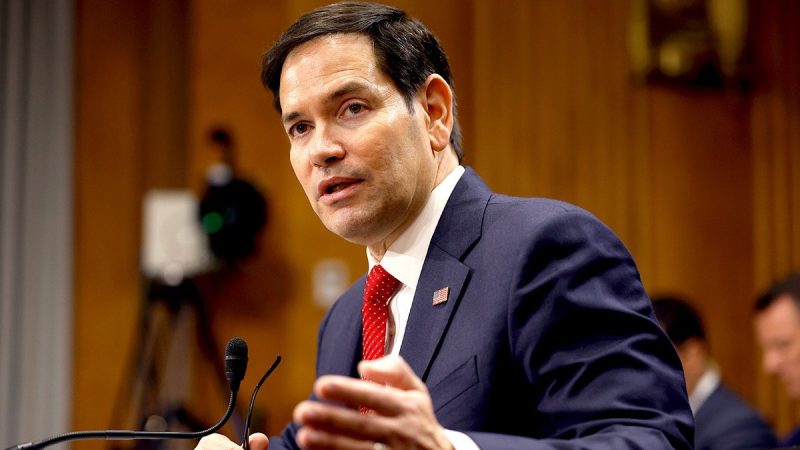
Secretary of State Marco Rubio applauded President Donald Trump for the progress he has made towards peace when it comes to the war in Ukraine, while he accused the former Biden administration of doing nothing to change the circumstances of the war.

Rubio appeared on Fox News’ ‘Jesse Waters Prime Time’ Monday evening after the day-long talks between U.S. and European officials that included Ukrainian President Volodymyr Zelenskyy. During the appearance, he praised Trump as ‘the only leader in the world’ who has proven he can broker a peace deal between Zelenskyy’s Ukraine and Vladimir Putin’s Russia, adding that the Monday talks were ‘unprecedented.’   

‘After three years of deadlock, and no talks, and no change in circumstances, this is the first time where there seems to be some movement,’ the secretary said. ‘This has been going on for three-and-a-half years. A lot of people have died, a lot of territories exchanged back-and-forth, so it’s not an easy thing to unwind, but nothing was happening on this war. Literally, the only option we were given under the previous administration was continue to fund Ukraine for however much they need, for however long it takes.’

Rubio pointed out that finally, under a new administration, people are ‘actually talking about pathways toward ending [the war in Ukraine].’ 

‘It’s going to take a little bit more work, and a little bit more time, but we are making progress,’ Rubio argued. ‘It’s not me saying it, that is virtually every leader there [on Monday] said that.’

Rubio said that prior to Trump, the fighting in Ukraine was nothing more than a ‘stalemated war of death and destruction.’ He also complained that under Biden there was no plan other than to continue giving weapons to Ukraine. 

‘That’s the other dynamic that’s changed – we’re no longer giving Ukraine weapons, we’re no longer giving Ukraine money, we are now selling them weapons and European countries are paying for it through NATO. They are using NATO to buy the weapons and transferring them to Ukraine,’ Rubio pointed out. ‘That’s another big change from the way this war was approached under the Biden administration.’

Following the Monday peace talks in D.C., reports surfaced that Putin had agreed to a future meeting with Zelenskyy, followed by a trilateral meeting involving the United States.

For Rubio, just the fact that the two countries are open to talking to each other is a win and a big change from the previous administration.   

‘I’m not saying they are going to leave that room with a peace deal, but I think the fact that people are now talking to each other – this wasn’t happening for three-and-a-half years,’ Rubio told host Waters, adding that Trump has ‘made it a priority’ to bring about peace in Ukraine.

The secretary also cited six previous peace agreements that he said Trump has brokered, which Rubio said proves Trump’s commitment to peace and fewer wars.

‘President Trump is the only leader in the world – acknowledged by all the Europeans – the only leader in the world that can talk to both [Putin and Zelenskyy] and bring them both to a meeting,’ Rubio said Monday evening. ‘We should be proud that we have a president who has made peace a priority in his administration.’

This post appeared first on FOX NEWS

A conservative think tank that played a key role in shaping President Donald Trump’s ‘one big, beautiful bill’ is circulating a new roadmap of recommendations for Republicans’ second act.

The Economic Policy Innovation Center, which styles itself as ‘EPIC For America,’ has been circulating a new memo with key congressional GOP figures in recent days, a source familiar with the group’s plans told Fox News Digital.

The memo, which was obtained by Fox News Digital, advises lawmakers to broadly push for further Medicaid and regulatory reforms, crack down on federal dollars for government pensions and student loans, and use fiscal policy to extend conservative goals on abortion and transgender treatment.

Passing Trump’s massive agenda bill despite razor-thin majorities in the House and Senate was a major victory for Republican leaders. EPIC, which hails the bill as a success, argues that continued reforms are needed for meaningful fiscal reform.

‘Unfortunately, even with the victories for the American people in the OBBB, our work is far from done. We must rebuild an economy that truly works for every American, while protecting the nation’s financial foundation to ensure lasting resilience,’ the memo said.

‘The federal government is rapidly running out of fiscal space. Maintaining sufficient fiscal space is critical in order to respond appropriately to a crisis. Without space between the fiscal limit and the current level of debt, elected officials will not have room to maneuver in the event of war, a natural disaster, or a recession.’

On Medicaid, the memo advises further cuts to the cost-sharing burden on the federal government – known as the Federal Medical Assistance Percentage (FMAP) – for ‘large, wealthy states’ as well as Washington, D.C.

FMAP refers to the rate at which the federal government matches state Medicaid payments, which is currently 50%.

The memo calls to ‘end the special Medicaid subsidy FMAP treatment’ for D.C., whose minimum is 70%.

Republicans’ first budget reconciliation bill reduced certain FMAP expansions permitted under the Affordable Care Act (ACA), including for emergency care for states that provide Medicaid coverage to illegal immigrants.

In turn, EPIC advises lawmakers to enhance personal and employer-based healthcare, like Individual Coverage Health Reimbursement Arrangements (ICHRAs) and Health Savings Accounts (HSAs).

Medicaid cuts were one of the largest sticking points during talks for the initial bill and will likely be just as politically fraught for Republicans in the second round. Meanwhile, Democrats have been using those reforms as a political cudgel, accusing the GOP of trying to take healthcare from millions of Americans. 

But conservatives have viewed Medicaid as fraught with waste, fraud, and abuse – insisting their reforms better protect the program for vulnerable people who truly need it.

The memo also advises congressional Republicans to use the budget reconciliation process to ‘reform federal bureaucrat compensation and retirement’ and ‘eliminate public sector student loan forgiveness,’ among other goals.

On the social conservative policy front, EPIC appears to view an extension of the ban on taxpayer funds to abortion providers as critical to a second reconciliation bill.

The first bill was viewed as a victory for pro-life advocates in its ban on Medicaid funds for large healthcare providers that perform abortions, which would affect Planned Parenthood and other similar organizations. But that ban is only effective for a year.

In a section titled ‘Protect Life and American Values,’ EPIC urges lawmakers to ‘extend the prohibition of taxpayer funding for big abortion providers’ as well as block Medicaid funds for gender transition care.

It also calls on lawmakers to ‘invest in election security’ and ‘impose an excise tax on higher education institutions that allow males to participate in women’s sports.’

EPIC was founded by Paul Winfree, who served as director of budget policy during the first Trump administration.

The group also has close ties to Capitol Hill, which it flexed during talks for Trump’s first agenda bill by both recommending policy initiatives and tailoring its advice through the various steps of the budget reconciliation process.

Budget reconciliation, which can be used three times during a given congressional term, allows the party in power to enact broad fiscal policy changes while sidelining the opposition – in this case, Democrats – by lowering the Senate’s threshold for passage from 60 votes to 51.

Brittany Madni, EPIC executive vice president and a former congressional aide, confirmed the memo’s veracity to Fox News Digital. She said the group would use the same ‘playbook’ it did during the first reconciliation process.

She said EPIC is looking to offer ‘an initial suggestion to lawmakers on what to target, and is readying to work with Republicans through the various steps of the process as details change and evolve.’

‘Mandatory spending reform is an essential target for actual fiscal change in order to stave off a debt spiral. This is why a second reconciliation bill building on the wins in the OBBB is important,’ Madni said.

Two sources told Fox News Digital that the group’s efforts so far have included a staff-level briefing with the Republican Study Committee (RSC), a 189-member-strong House GOP group that serves as its own de facto think tank for the Republican conference.

Many of the aforementioned proposals were discussed at that meeting, Fox News Digital was told, with EPIC being invited to speak as part of the RSC’s new initiative to workshop a second reconciliation bill.

House Speaker Mike Johnson, R-La., has already publicly stated his goal of passing further reconciliation bills. But what a second bill would look like is still unclear.

This post appeared first on FOX NEWS

Democratic Rep. Sarah McBride of Delaware, who identifies as a transgender woman, accused President Donald Trump of waging an attack against ‘American democracy.’

‘This president is taking notes from his favorite dictator. Let’s be clear: a president with popular policies wouldn’t need to illegally gerrymander districts, ban voting machines, or abolish vote-by-mail,’ a Monday night post on the lawmaker’s @Rep_McBride X account declared. ‘This is an all-out assault not just on free and fair elections—but on American democracy itself.’ 

Fox News Digital reached out to the White House for comment early on Tuesday morning.

Trump, who has been aiming to help bring an end to the Russia-Ukraine war, met with Ukrainian President Volodymyr Zelenskyy and multiple other European figures in Washington, D.C., on Monday after meeting with Russian President Vladimir Putin in Alaska on Friday.

During an interview with Fox News Channel’s Sean Hannity on Friday after meeting with Putin, Trump said of the foreign leader, ‘Vladimir Putin, smart guy, said you can’t have an honest… election with mail-in voting.’

Trump declared in a Truth Social post on Monday that he will ‘lead a movement to’ eliminate voting machines and mail-in balloting from U.S. elections.

‘WE WILL BEGIN THIS EFFORT … by signing an EXECUTIVE ORDER to help bring HONESTY to the 2026 Midterm Elections,’ he declared in part of the lengthy post.

‘ELECTIONS CAN NEVER BE HONEST WITH MAIL IN BALLOTS/VOTING, and everybody, IN PARTICULAR THE DEMOCRATS, KNOWS THIS. I, AND THE REPUBLICAN PARTY, WILL FIGHT LIKE HELL TO BRING HONESTY AND INTEGRITY BACK TO OUR ELECTIONS. THE MAIL-IN BALLOT HOAX, USING VOTING MACHINES THAT ARE A COMPLETE AND TOTAL DISASTER, MUST END, NOW!!!’ the president exclaimed in another portion of the post.

This post appeared first on FOX NEWS

After meeting with Russian President Vladimir Putin in Alaska last week, President Donald Trump touted that he had a ‘very good meeting’ with Ukrainian President Volodymyr Zelenskyy and other European leaders at the White House on Monday.

Trump, who has voiced he would like to put an end to mass bloodshed in Eastern Europe, called the multilateral meetings on Monday ‘a very good, early step for a War that has been going on for almost four years.’

In a Truth Social post after the discussions, Trump wrote, ‘I had a very good meeting with distinguished guests,’ and that ‘everyone is very happy about the possibility of PEACE for Russia/Ukraine.’

Here are the top five takeaways from the president’s ‘big day’ with European leaders.

1. Smiles all around

Monday’s summit marked a dramatic and noticeable shift from Trump and Vice President JD Vance’s now-infamous Oval Office meeting with Zelenskyy in February.

During that meeting, the leaders were caught on camera getting into a heated argument over several topics, including Zelenskyy allegedly not being sufficiently grateful for U.S. support.

On Monday, all the tension seemed to have disappeared. Both Trump and Zelenskyy were all smiles throughout the day, and the Ukrainian leader received a warm welcome from Trump’s Cabinet, including Vance, Secretary of State Marco Rubio and Defense Secretary Pete Hegseth.

Both Zelenskyy and European leaders appeared more at ease with Trump throughout the day and took an optimistic tone. After the meetings, European Union President Ursula von der Leyen posted on X, ‘We are here, as allies and friends, for peace in Ukraine and in Europe. This is an important moment, as we continue to work on strong security guarantees for Ukraine and a lasting and durable peace.’

2. Wardrobe upgrade

Another marked shift from February was Zelenskyy breaking from his trademark jumpsuit attire to wear a suit, something he even joked with the press about while sitting in the Oval Office with Trump.

Zelenskyy, who has been criticized for wearing casual attire to meetings with world leaders, wore all-black attire, including a button-down shirt and jacket. 

‘First of all… President Zelenskyy, you look fabulous in that suit,’ a reporter told Zelenskyy after he sat down with Trump in the Oval Office. 

‘You look good,’ the reporter said before Trump added, ‘I said the same thing.’ 

At another point during the Zelenskyy-Trump bilateral press meeting, the Ukrainian president ribbed a reporter for wearing the same suit he had in February.

‘You’re in the same suit. You see, I changed, you’re not,’ Zelenskyy quipped as both he and Trump burst into laughter.

3. Ceasefire not needed

On a more substantive note, Trump doubled down on his position that a ceasefire is ‘not needed’ to broker a permanent peace between Ukraine and Russia. He cited his recent successes in negotiating peace agreements between other countries across the globe.

‘I don’t think you need ceasefire. You know, if you look at the six deals that I settled this year, they were all at war,’ Trump said during his press conference with Zelenskyy.

‘I didn’t do any ceasefires,’ he went on, adding, ‘And I know that it might be good to have, but I can also understand strategically why, you know, one country or the other wouldn’t want it.’ 

In a rare tense moment during the day, Trump clashed with German Chancellor Friedrich Merz over the need for a ceasefire.

Speaking with Trump and other leaders gathered around a large conference table in the White House, Merz said, ‘To be honest, we all would like to see a ceasefire at the latest from the next meeting on,’ adding, ‘I can’t imagine that the next meeting would take place without a ceasefire. So, let’s work on that.’

He urged the leaders, ‘Let’s try to put pressure on Russia, because the credibility of this effort, these efforts we are undertaking today are depending on, at least, a ceasefire from the beginning of the serious negotiations from the next step on. So, I would like to emphasize this aspect and would like to see a ceasefire from the next meeting, which should be a trilateral meeting wherever it takes place.’

In response, Trump shot back that he is determined ‘to go directly to a peace agreement’ without a ceasefire, saying, ‘Well, we’re going to let the president [Zelenskyy] go over and talk to the president [Putin], and we’ll see how that works out.’

4. United European front

In addition to Zelenskyy, seven major European leaders were present at the White House on Monday, a rare occurrence signaling a united European front and something Trump called an ‘honor’ for the U.S.

This follows Zelenskyy doubling down on Sunday that Ukraine will not agree to cede Crimea or any of its territory to Russia as part of a peace deal.  

‘Since the territorial issue is so important, it should be discussed only by the leaders of Ukraine and Russia at the trilateral [talks with] Ukraine, United States, Russia,’ Zelenskyy said.

Trump said that though the U.S. would be involved with providing Ukraine with security guarantees after the war’s end, he said going forward, Europe must take much of that ‘burden.’

‘I think that the European nations are going to take a lot of the burden,’ Trump said. ‘We’re going to help them, and we’re going to make it very secure. We also need to discuss the possible exchanges of territory, taking into consideration the current line of contact. That means the war zone, the war line center. Pretty obvious. Very sad, actually, to look at them and negotiating positions.’

Meanwhile, French President Emmanuel Macron said Europe is aware that it will shoulder much of the weight of responsibility tied to various security guarantees — and acknowledged it is necessary in order to preserve each respective country’s safety. 

‘In order to have such a long-standing peace for Ukraine and for the whole continent, we do need the security guarantees,’ Macron said. ‘And the first one is clearly a credible Ukrainian army. For the years and decades to come. And the second one is our own commitments. All of us… You can be sure that the Europeans are very lucid about the fact that they have their fair share in the security guarantees for Ukraine, but their own security is clearly at stake in this situation.’

5. Putin on the line

Trump shared that he called Putin after the meetings and that there is already movement on the next step, that is, scheduling a meeting between Zelenskyy and the Russian president. After that meeting, Trump said there would then be a trilateral meeting between Zelenskyy, Putin and himself.

‘At the conclusion of the meetings, I called President Putin, and began the arrangements for a meeting, at a location to be determined, between President Putin and President Zelenskyy. After that meeting takes place, we will have a Trilat, which would be the two Presidents, plus myself,’ wrote Trump.

In another post, Trump called the summit ‘a big day at the White House.’

‘We have never had so many European Leaders here at one time. A great honor for America!!!’ he wrote. ‘Lets see what the results will be???’ 

Fox News Digital’s Diana Stancy, Emma Colton and Amanda Macias contributed to this report.

This post appeared first on FOX NEWS

Questcorp Mining Inc. (CSE: QQQ,OTC:QQCMF) (OTCQB: QQCMF) (FSE: D910) (the ‘Company’ or ‘Questcorp’) is pleased to announce they have completed 25% of the planned drilling program on its La Union Project in northwest Sonora, Mexico. This work is being carried out by property vendor and operator Riverside Resources Inc. (TSXV: RRI).

Highlights

  • The Company has completed 300 metres of the planned drill program of 1200 to 1500m.
  • Drilling to test the carbonate-hosted replacement deposit (CRD) style of mineralization, with gold associated with mantos, chimneys, and along structural zones.
  • Angled drill holes are aimed at cutting perpendicular to stratigraphic targets and some structural targets which is typical in CRD systems
  • Structural features may have served as mineralizing conduits and are key targets in the current drill program.

Questcorp is capitalizing on the recent exploration work over the past three months by Riverside that improved the understanding of the structural geology and stratigraphy that is guiding current exploration efforts at La Union. The exploration target focus is for a large potential gold discovery that expands from previous smaller scale mine operations on the property. The drill program will begin to test the new concepts and expand past previous mining.

Saf Dhillon, President & CEO states, ‘Questcorp is pleased with the progress being made at this first ever drill program at La Union. The Riverside team has been able to work throughout these hot summers months to enable the successful completion of this Maiden drill.

Earlier this year, Questcorp entered into a definitive option agreement with Riverside’s wholly owned subsidiary, RRM Exploracion, S.A.P.I. DE C.V. to acquire a 100% interest in the La Union Project. As part of the agreement, Questcorp issued shares to Riverside, making Riverside a shareholder and aligning both parties’ interests in the Project’s success. With funding provided by Questcorp, an initial C$1,000,000 exploration program is now underway. This marks the first phase of a larger, C$5,500,000 work commitment, contingent on exploration results and Questcorp’s continued participation.

The Drill Program Targets include more than four different areas, beginning with this early-stage stratigraphic and orientation phase of drilling exploration aimed at evaluating the scale of alteration and indications of a mineralized system. This will be the first drilling ever conducted on most of the targets, despite past mining having occurred in the majority of these areas. The initial program will consist of one to three holes per area, primarily for orientation purposes. Follow-up drilling is planned and can be expanded based on initial results, which will help verify the stratigraphy, lithologies, and structural features allowing for improved modeling and next-stage discovery targeting. The four areas are listed below:

  • Union Main Mine Area – The program will use angled drill holes to test limestone and other carbonate stratigraphic hosts within the Clemente Formation, with the potential to reach the underlying Caborca Formation. These units are considered the primary hosts for replacement-style mineralization.
  • North Union Mine Area – The initial focus of the program will be on testing structural interpretations. Additional drilling is anticipated following this first phase, as results will help guide future drill testing of areas with past mining activity and various structural orientations.
  • Cobre Mine Area – The Clemente Formation is the primary host unit, and structural features combined with areas of past mining provide multiple target zones. Drilling will begin with an initial stratigraphic test hole to help orient around the thickness of the host unit and extend into the lower Caborca Formation, which is also a favorable host for CRD-style mineralization.
  • Central Union Area – Structural targets, as possible mineralization feeder zones, are a key focus in this past mining manto area. There are extensive additional target zones in the area, and this initial orientation drilling will provide vectoring for the next stage of drilling and further study of the Clemente Formation, and possibly into the Caborca Formation as currently interpreted.

General Overview of La Union Project

The Project is summarized in a recently published NI 43-101 Technical Report available under Questcorp’s SEDAR+ profile (www.sedarplus.ca). Riverside initially acquired the Project and subsequently consolidated additional inlier mineral claims, building a strong land position. Riverside then advanced the Project through surface access agreements and drill permitting, making it a turn-key exploration opportunity for Questcorp.

The Project was originally identified through Riverside’s exploration work in the western Sonora Gold Belt, conducted in collaboration with AngloGold Ashanti Limited, Centerra Gold Inc., and Hochschild Mining Plc. Earlier research by Riverside Founder John-Mark Staude also contributed to recognizing the district’s potential. Initial work by members of the Riverside team, drawing on more than two decades of geological compilation and analysis, further confirmed the region as highly prospective.

At the Project, historical mining by the Penoles Mining Company targeted chimney and manto-style replacement bodies within the upper oxide zones. As a result, the underlying sulfide zones represent immediate and compelling drill targets for further exploration.

At the La Union Project, immediate drill targets offer the potential for significant-scale discoveries. La Union is well positioned for near-term exploration success, with targets that include both oxide and deeper sulfide mineralization.

The La Union Project

The La Union Project is a carbonate replacement deposit (‘CRD’) project hosted by Neoproterozoic sedimentary rocks (limestones, dolomites, and siliciclastic sediments) overlying crystalline Paleoproterozoic rocks of the Caborca Terrane. The structural setting features high-angle normal faults and low-to-medium-angle thrust faults that sometimes served as mineralization conduits. Mineralization occurs as polymetallic veins, replacement zones (mantos, chimneys), and shear zones with high-grade metal content, as shown in highlight grades of 59.4 grams per metric tonne (g/t) gold, 833 g/t silver, 11% zinc, 5.5% lead, 2.2% copper, along with significant hematite and manganese oxides, consistent with a CRD model (see the technical report entitled ‘NI 43-101 Technical Report on the Union Project, State of Sonora, Mexico’ dated effective May 6, 2025 available under Questcorp’s SEDAR+ profile). These targets also demonstrate intriguing potential for large gold discoveries potentially above an even larger porphyry Cu district potential as the Company’s target concept at this time.

Questcorp cautions investors that grab samples are selective by nature and not necessarily indicative of similar mineralization on the property.

The technical and scientific information in this news release has been reviewed and approved by R. Tim Henneberry, P. Geo (BC), a director of the Company and a ‘qualified person’ under National Instrument 43-101 – Standards of Disclosure for Mineral Projects.

About Questcorp Mining Inc.

Questcorp Mining Inc. is engaged in the business of the acquisition and exploration of mineral properties in North America, with the objective of locating and developing economic precious and base metals properties of merit. The Company holds an option to acquire an undivided 100% interest in and to mineral claims totaling 1,168.09 hectares comprising the North Island Copper Property, on Vancouver Island, British Columbia, subject to a royalty obligation. The Company also holds an option to acquire an undivided 100% interest in and to mineral claims totaling 2,520.2 hectares comprising the La Union Project located in Sonora, Mexico, subject to a royalty obligation.

Contact Information

Questcorp Mining Corp.

Saf Dhillon, President & CEO

Email: saf@questcorpmining.ca
Telephone: (604) 484-3031

This news release includes certain ‘forward-looking statements’ under applicable Canadian securities legislation. Forward-looking statements include, but are not limited to, statements with respect to Riverside’s arrangements with geophysical contractors to undertake orientation surveys and follow up detailed survey to confirm and enhance the drill targets. Forward-looking statements are necessarily based upon a number of estimates and assumptions that, while considered reasonable, are subject to known and unknown risks, uncertainties, and other factors which may cause the actual results and future events to differ materially from those expressed or implied by such forward-looking statements. Such factors include but are not limited to: the ability of Riverside to secure geophysical contractors to undertake orientation surveys and follow up detailed survey to confirm and enhance the drill targets as contemplated or at all, general business, economic, competitive, political and social uncertainties, uncertain capital markets; and delay or failure to receive board or regulatory approvals. There can be no assurance that the geophysical surveys will be completed as contemplated or at all and that such statements will prove to be accurate, as actual results and future events could differ materially from those anticipated in such statements. Accordingly, readers should not place undue reliance on forward-looking statements. The Company disclaims any intention or obligation to update or revise any forward-looking statements, whether as a result of new information, future events or otherwise, except as required by law.

To view the source version of this press release, please visit https://www.newsfilecorp.com/release/262984

News Provided by Newsfile via QuoteMedia

This post appeared first on investingnews.com