
Author

admin

Browsing

Walmart on Thursday raised its full-year earnings and sales outlook as its online business posted another quarter of double-digit gains, even as the company said costs are rising from higher tariffs.

The big-box retailer topped Wall Street’s quarterly sales estimates but fell short of earnings expectations, the first time it missed on quarterly earnings since May 2022. The company said it felt pressure on profits for the period, including from some one-time expenses, such as restructuring costs, pricier insurance claims and litigation settlements.

Walmart said it now expects net sales to grow 3.75% to 4.75% for the fiscal year, up from its previous expectations of 3% to 4%. It raised its adjusted earnings per share outlook slightly to $2.52 to $2.62, up from a prior range of $2.50 to $2.60 per share.

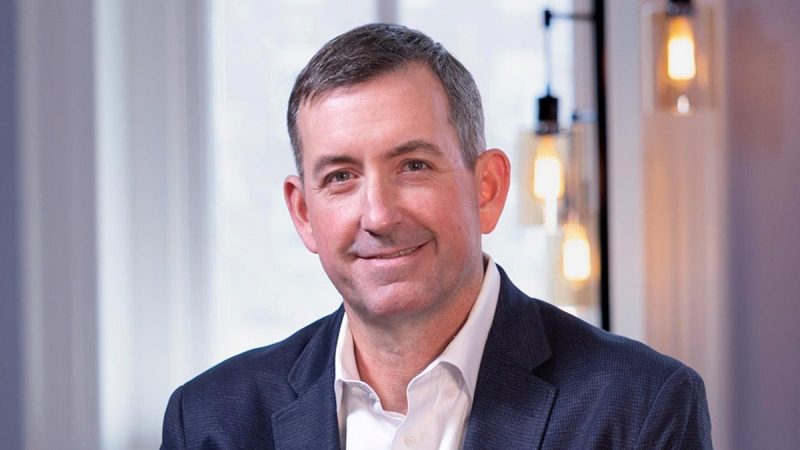
In an interview with CNBC, Chief Financial Officer John David Rainey said the company is working hard to keep prices low — including speeding up imports from overseas and stepping up the number of Rollbacks, or limited-time discounts, in its stores.

“This is managed on an item-by-item and category-by-category basis,” he said. “There are certainly areas where we have fully absorbed the impact of higher tariff costs. There are other areas where we’ve had to pass some of those costs along.”

But he added “tariff-impacted costs are continuing to drift upwards.”

Even so, Rainey said Walmart hasn’t seen a change in customer spending. For example, sales of private label items, which typically cost less than national brands, were roughly flat year over year, he said.

“Everyone is looking to see if there are any creaks in the armor or anything that’s happening with the consumer, but it’s been very consistent,” he said. “They continue to be very resilient.”

Yet on the company’s earnings call, CEO Doug McMillon said middle- and lower-income households have been more sensitive to tariff-related price increases, particularly in discretionary categories.

“We see a corresponding moderation in units at the item level as customers switch to other items, or in some cases, categories,” he said.

Here’s what the big-box reported for the fiscal second quarter compared with what Wall Street expected, according to a survey of analysts by LSEG:

Walmart shares fell about 2% in premarket trading Thursday.

Walmart’s net income jumped to $7.03 billion, or 88 cents per share, in the three-month period that ended July 31, compared with $4.50 billion, or 56 cents per share, in the year-ago quarter.

Revenue rose from $169.34 billion in the year-ago quarter.

Comparable sales for Walmart U.S. climbed 4.6% in the second quarter, excluding fuel, compared with the year-ago period, as both the grocery and health and wellness category saw strong growth. That was higher than the 4% increase that analysts expected. The industry metric, also called same-store sales, includes sales from stores and clubs open for at least a year.

At Sam’s Club, comparable sales jumped 5.9% excluding fuel, higher than the 5.2% that analysts anticipated.

E-commerce sales jumped 25% globally and 26% in the U.S., as both online purchases and advertising grew. In the U.S., Walmart said sales through store-fulfilled delivery of groceries and other items grew nearly 50% year over year, with one-third of those orders expedited. The company charges a fee for some of those faster deliveries, and others are included as a benefit of its subscription-based membership program, Walmart+.

Its global advertising business grew 46% year over year, including Vizio, the smart TV maker it acquired for $2.3 billion last year. Its U.S. advertising business, Walmart Connect, grew by 31%.

As Walmart’s online business drums up more revenue from home deliveries, advertising and commissions from sellers on its third-party marketplace, e-commerce has become a profitable business. The company marked a milestone in May — posting its first profitable quarter for its e-commerce business in the U.S. and globally.

Rainey said on Thursday that Walmart doubled its e-commerce profitability in the fiscal second quarter from the prior quarter.

In the U.S., shoppers both visited Walmart more and spent more on those trips during the quarter. Customer transactions rose 1.5% year over year and average ticket increased 3.1% for Walmart’s U.S. business.

As the largest U.S. retailer, Walmart offers a unique window into the financial health of American households. As higher duties have come in fits and starts — with some getting delayed and others going into effect earlier this month — Wall Street has tried to understand how those costs will ripple through the U.S. economy.

Walmart warned in May that it would have to raise some prices due to higher levies on imports, even with its size and scale. The company’s comments drew the ire of President Donald Trump, who said in a social media post that Walmart should “EAT THE TARIFFS.”

About a third of what Walmart sells in the U.S. comes from other parts of the world, with China, Mexico, Canada, Vietnam and India representing its largest markets for imports, Rainey said in May.

According to an analysis by CNBC of about 50 items sold by the retailer, some of those price changes have already hit shelves. Items that rose in price at Walmart over the summer included a frying pan, a pair of jeans and a car seat.

Rainey on Thursday declined to specify items or categories where Walmart had increased prices, saying the company is “trying to keep prices as low as we can.”

He said one of the company’s strategies has been bringing in inventory early, particularly for Sam’s Club as it gets ready for the second half of the fiscal year and its crucial holiday season. At the end of the quarter, inventory was up about 3.5% at Sam’s Club, Rainey said. It was up 2.2% for Walmart U.S.

On the company’s earnings call, McMillon said the impact of tariffs has been “gradual enough that any behavioral adjustments by the customer have been somewhat muted.”

“But as we replenish inventory at post-tariff price levels, we’ve continued to see our costs increase each week, which we expect will continue into the third and fourth quarters,” he said.

Yet even with higher costs from tariffs, Walmart has fared better than its retail competitors as it has leaned into its reputation for value, competed on faster deliveries to customers’ homes and attracted more business from higher-income households.

The Arkansas-based retailer’s performance has diverged sharply from rival Target, which posted another quarter of sales declines on Wednesday and named the new CEO who will be tasked with trying to turn around the company.

Walmart has gained from Target’s struggles. It has followed the Target playbook by launching more exclusive and trend-driven brands, including grocery brand BetterGoods and activewear brand Love & Sports. It has also expanded its third-party marketplace to include prestige beauty brands and more.

Sales of general merchandise, items outside of the grocery department, were a bright spot for Walmart in the fiscal second quarter, Rainey said. That category struggled during peak inflation in recent years, as consumers spent less on discretionary items because of rising grocery bills.

Comparable sales for general merchandise rose by a low-single-digit percentage and accelerated throughout the quarter, Rainey told CNBC. He added clothing and fashion sales “really shined for us.”
This post appeared first on NBC NEWS

Andrew Roth, president of the State Freedom Caucus Network, helms an organization fighting to help conservatives win and wield control of state governments across the nation.

‘There is a swamp in all 50 states. There are 50 swamps,’ Roth told Fox News Digital during a Tuesday interview, noting that ‘liberal Republicans’ join with Democrats to expand government.

This ‘uniparty’ phenomenon exists in the U.S. Congress and in every state, Roth indicated, asserting that in red states many Democrats cannot win elections unless they don the Republican label.

‘They say they’re good on guns, and babies, and a few other things, but then they get in there, and they vote like liberals, growing government[.] ‘ Roth noted. 

He said that while the goal of state freedom caucuses is to slash taxes and government, the first step is exposing ‘deceitful lawmakers for who they are. And then once you can do that, then you can hopefully start getting good people elected and then cut the budget, cut taxes, cut spending,’ he explained.

So far, the organization boasts freedom caucuses in 13 of the 50 states, including Pennsylvania, Maryland, South Carolina, Georgia, Louisiana, Oklahoma, Illinois, Missouri, South Dakota, Wyoming, Montana, Arizona and Idaho – but deep red states like Texas and Florida are conspicuously absent from the list. 

Asked whether this is because there are not enough conservative legislators in those states to form a freedom caucus, Roth replied, ‘That’s absolutely correct,’ explaining, ‘In Texas I could probably say there’s only one or two House members, and in Florida I’m not even sure I can say two.’

There are ‘zero’ conservative state lawmakers in the Alabama, Tennessee and Mississippi state legislatures, he said.

‘This is a big, big problem’ he noted, ‘and I don’t think enough people realize how bad it is.’

Roth indicated that the organization provides a state director in each freedom caucus state – those directors help read legislation, offer vote recommendations, work with other groups, and help with organizing and strategizing, he explained.

Roth noted that Louisiana state Sen. Blake Miguez, a Republican who belongs to that state’s freedom caucus, is challenging incumbent GOP U.S. Sen. Bill Cassidy. 

This post appeared first on FOX NEWS

A Trump-aligned legal group founded by White House aide Stephen Miller filed Freedom of Information Act requests Thursday targeting a Biden organ transplant program that critics warn could be open to abuse.

The requests from America First Legal went to the Department of Health and Human Services, the Centers for Medicare & Medicaid Services, and the Health Resources and Services Administration. At issue is the Increasing Organ Transplant Access Model, a six-year mandatory program finalized in December 2024 and set to take effect in July 2025, which aims to expand access to kidney transplants but has drawn criticism from Trump officials who warn it may be vulnerable to outside influence.

The model builds on earlier payment experiments, testing whether financial rewards and penalties can improve care and expand access for Medicare and Medicaid patients.

Trump officials and allies, including America First Legal, argue the system risks distortion by outside interests — a charge that prompted AFL’s FOIA requests as part of a broader investigation.

They cited in part recent findings from an HRSA-led probe published earlier this year. That investigation suggested third-party groups or for-profit organizations ‘may have unduly influenced the IOTA Model’— though their exact role or the extent they may have done so is unclear.

HHS Secretary Robert F. Kennedy Jr. also cited concerns from the study, which the department said in a statement ‘revealed clear negligence and disturbing practices’ by a large organ procurement organization in the U.S., prompting him to launch a new reform initiative.

In previewing the FOIA requests to Fox News Digital, AFL cited related concerns about patient safety, ethical misconduct, and discrimination in organ allocation, among other things.

The requests ask HHS, CMS and HRSA for a long list of information regarding the program and related correspondence — including emails, letters and memos between agency personnel and third-party representatives about the development or implementation of the IOTA Model. They also seek meeting records, agendas and summaries of discussions involving agency staff and outside officials.

The payment model will affect more than 100 U.S. transplant hospitals over six years, imposing mandatory financial incentives and penalties tied to a final performance score.

IOTA was touted as a way to help increase access to organ donors and transplants in the U.S. and help address the long waiting list of patients awaiting a transplant, which as of last fall stood at roughly 90,000 people.

Participating hospitals are evaluated for their performance in three key areas, according to CMS’s final rule, which took force in July, including the volume of kidney transplants, their matching efficiency, and post-transplant outcomes of their patients. But the role outside groups have played, including during the process of drafting the final rule, has prompted criticism and calls for additional scrutiny from Trump allies, including AFL. 

Self-interested third parties should play no role in shaping America’s organ transplant policy,’ AFL counsel Laura Stell told Fox News Digital in a statement previewing the FOIA requests and broader investigation.

‘Where monetary incentives and penalties come into play, there must be utmost certainty that CMS developed the program without influence from entities with improper motives.’

America First Legal, though not officially part of the Trump administration, was founded by longtime Trump adviser Stephen Miller after Trump’s first presidential term. 

Miller stepped down from AFL before rejoining the White House in 2025 as Trump’s deputy chief of staff. 

This post appeared first on FOX NEWS

The NATO Chiefs of Defense reaffirmed support for Ukraine in a virtual meeting Wednesday in Brussels that included all 32 allied military leaders and featured the first briefing in this format led by U.S. Gen. Alexus Grynkewich, the new Supreme Allied Commander Europe (SACEUR).

U.S. Joint Chiefs of Staff Chairman Gen. Dan Caine attended the meeting virtually, along with Grynkewich, who also leads U.S. European Command, U.S. officials confirmed to Fox News on Tuesday.

NATO officials said in a statement that the ‘candid discussion’ centered on what security guarantees the alliance might provide Ukraine as part of a potential peace agreement to end Russia’s three-year war.

Col. Martin O’Donnell, spokesperson for Supreme Headquarters Allied Powers Europe, wrote on X that ‘the Supreme Allied Commander was honored to brief the Chiefs of Defense, his first in such a format. As he has said before, ‘these are consequential times.”

‘NATO has faced important times before — and these have only made our Alliance stronger. As we work through these important issues, we will all stay informed, engaged, and united in the defense of the Euro-Atlantic region and with NATO’s ongoing support to Ukraine as progress towards peace continues,’ he added.

The Chair of NATO’s Military Committee also praised the discussions, writing on X that it was a ‘great, candid discussion among NATO Chiefs of Defence’ and an ‘excellent update on the security environment from our new SACEUR, his first with us.’

The chair added that the meeting confirmed support for Ukraine, emphasizing the alliance’s focus on a ‘just, credible and durable peace’ and praising the ‘relentless courage’ of Ukrainian forces.

According to the Associated Press, assurances that Ukraine won’t face another invasion are seen as central to any settlement, with Kyiv pressing for Western-backed military commitments, including weapons and training. European allies are working on options for a multinational security force that could backstop a peace deal.

Wednesday’s virtual session unfolded against the backdrop of President Donald Trump’s push to steer Russian President Vladimir Putin and Ukrainian President Volodymyr Zelenskyy toward a settlement. Trump met with Putin last Friday in Alaska and hosted Zelenskyy and European leaders at the White House on Monday. 

The reaffirmations come a day after Caine convened a smaller meeting in Washington with defense chiefs from Germany, the U.K., France, Finland and Italy to prepare for Wednesday’s broader NATO discussions.

Russian Foreign Minister Sergey Lavrov criticized NATO discussions on Ukraine’s security conducted without Moscow’s involvement, warning that ‘this will not work’ and vowing Russia would ‘ensure its legitimate interests firmly and harshly,’ RIA Novosti reported, according to AP.

The White House did not immediately return Fox News Digital’s request for comment.

The Associated Press contributed to this report.

This post appeared first on FOX NEWS

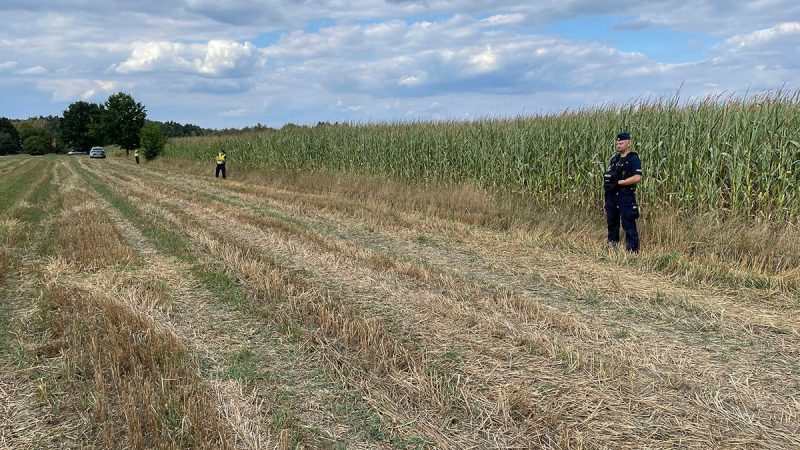
A Russian drone may have crashed in a field in Poland, a move the country’s deputy prime minister called a ‘provocation’ as the United States and European leaders continue to push Moscow to end its war in Ukraine. 

The drone hit a cornfield in the village of Osiny in the eastern Lublin province, about 62 miles from Poland’s border with Ukraine, Reuters reported. 

Deputy Prime Minister Wladyslaw Kosiniak-Kamysz, who also serves as defense minister, said Wednesday’s incident was similar to cases in which Russian drones flew into Lithuania and Romania and could be linked to efforts to end the war in Ukraine, according to the outlet. 

‘Once again, we are dealing with a provocation by the Russian Federation, with a Russian drone. We are dealing with it in a crucial moment, when discussions about peace (in Ukraine) are underway,’ Kosiniak-Kamysz told journalists.

Foreign Ministry spokesperson Pawel Wronski told Reuters some experts have suggested a Russian version of the Shahed drone developed by Iran was involved in the latest incident.

Polish Gen. Dariusz Malinowski said the drone had a Chinese engine and appeared to be a decoy that was designed to self-destruct.

The blast shattered windows in several homes, but nobody was injured, the Polish PAP news agency reported.

Police recovered burnt metal and plastic debris at the site.

‘I was sitting in my room at night, around midnight, maybe, and I heard something just bang,’ local resident Pawel Sudowski told local news website Lukow.tv. ‘It exploded so loudly that the whole house simply shook.’

On X, Polish Foreign Minister Radoslaw Sikorski said his ministry would issue a protest against the airspace violation without naming the perpetrator. 

‘Another violation of our airspace from the East confirms that Poland’s most important mission towards NATO is the defence (sic) of our own territory,’ he wrote. 

The incident came as the Trump administration continues to broker talks between Russia and Ukraine to end the bloody three-year conflict. On Monday, Trump hosted Ukrainian President Volodymyr Zelenskyy and a group of European leaders at the White House.

On Friday, he met with Russian President Vladimir Putin in Alaska. 

This post appeared first on FOX NEWS

The latest addition to the pool of Democrats seeking to challenge Sen. Susan Collins, R-Maine, is doubling down on Zohran Mamdani-style socialism, says the chief of Maine’s Republican Party.

Democrat Graham Platner launched his campaign highlighting his history as an Army and Marine veteran as well as an oyster farmer, but state GOP chief Jason Savage told Fox News Digital that rural accolades aren’t policy positions. He pointed to Platner’s hiring of a top Mamdani adviser, Morris Katz, to produce his campaign launch video.

In that video, Platner rails against the ‘oligarchy’ and endorses universal healthcare. His website features messaging that claims the U.S. has a ‘billionaire economy,’ and that – if elected – Platner would view it as a key part of his job ‘to dismantle’ it.

‘Graham Platner is Maine’s Mamdani,’ Savage told Fox News Digital in an interview. ‘He brought in the Mamdani team to support his campaign. He’s out doing a lot of work with socialist groups.… He’s a Bernie bro.’

‘What we’re seeing here is the exporting of the Mamdani ideology to the state of Maine because they think that they can gain ground in a small state where things aren’t as expensive,’ he added.

‘You can look through Graham Platner’s donor history, and you can see that he donated to Harris for President, Bernie Sanders, Ilhan Omar,’ he continued, arguing that far-left candidates are a major threat to the Democratic Party.

Platner’s campaign did not immediately respond to a request for comment from Fox News Digital.

‘If common-sense Democrats, and then the leadership like [Sen.] Chuck Schumer don’t do something and say that isn’t the future of our party, then they’re gonna run in a bunch of these races. and we’re gonna beat them,’ he said.

Savage argued that the Democratic Party’s embracing of the far-left is a ‘double-edged sword.’ He said Democratic candidates can’t succeed without the ‘extreme wing’ of the party, and now ‘they’ve created a monster that they don’t have the ability to control.’

‘In the long run, it’s going to be catastrophic for them. I mean, Graham Platner advocates for allowing men to be in girls’ and women’s sports,’ Savage said. ‘He advocates for all sorts of policies that are very, very unpopular, and the Democrats can’t say anything to stop that.’

The Democratic challenger list against Collins is growing, and reports say those already in office are trying to tap Janet Mills, the state’s 77-year-old Democratic governor, for the seat.

Republicans currently control the majority of the Senate by a 53-47 margin. Democrats would need to flip four seats in the 2026 midterm elections to take the majority. 

A spokesperson for Collins told Fox News Digital that Platner is ‘just another progressive entering the race.’

Fox News’ Pilar Arias contributed to this report 

This post appeared first on FOX NEWS

ESGold (CSE:ESAU,OTCQB:ESAUF) has signed a binding memorandum of understanding with Colombian firm Planta Magdalena to form a 50/50 joint venture on a fully permitted gold- and silver-bearing tailings project.

Under the agreement, ESGold will invest C$1.5 million for its stake and will retain a first right of refusal to acquire the remaining 50 percent interest from Planta Magdalena within 12 months.

The project is designed to replicate ESGold’s Montauban model in Québec, which focuses on generating cashflow by reprocessing legacy tailings, while providing environmental remediation.

Preliminary due diligence sampling of 27 tailings collected from the project, located in Colombia’s Bolívar department, returned encouraging results, including assays of 42.7 grams per metric ton (g/t) gold and 280 g/t silver.

Several samples exceeded 5 g/t gold and 190 g/t silver, highlighting the potential for high-grade recovery.

Bulk concentrate tests are underway, with final verification to be completed at Actlabs in Québec.

Bolívar is one of Colombia’s most prolific gold regions, with artisanal miners processing an estimated 300,000 metric tons of ore annually. ESGold, a self-described scalable clean mining and exploration innovation company, plans to apply modern, mercury-free recovery methods to improve yields while addressing environmental concerns.

“The region still processes hundreds of thousands of metric tons of ore annually, yet much of it is handled using rudimentary mercury amalgamation methods that leave behind a substantial amount of gold and silver in the tailings,” said Gordon Robb, CEO of ESGold. “This creates an immense opportunity for ESGold to apply modern, environmentally responsible recovery technology that can significantly improve yields while remediating legacy mine sites.”

Pending completion of technical and legal due diligence, ESGold aims to fast track the project toward production in 2026, establishing a second high-margin operation alongside Montauban.

Green revenue stream

It is estimated that there are 8,500 tailings facilities around the globe, holding more than 217 billion cubic meters of mine ‘waste.’ In an effort to reduce the amount of stored tailings and their environmental impact, tailings reprocessing is emerging as both an economic and sustainable revenue stream.

By extracting valuable residual metals, such as gold, copper and critical minerals, from legacy waste, companies can generate revenue while reducing the environmental footprint of tailings facilities.

The approach also aligns with sustainability goals, as it mitigates risks like tailings dam failures and restores degraded sites, turning longstanding liabilities into productive assets

Globally, the growing recognition of untapped value in tailings has spurred renewed interest and investment, with major miners — like Vale (NYSE:VALE) — and governments prioritizing tailings projects as part of circular mining strategies and critical minerals security.

Securities Disclosure: I, Georgia Williams, hold no direct investment interest in any company mentioned in this article.

This post appeared first on investingnews.com

 FPX Nickel Corp. (TSXV: FPX) (OTCQB: FPOCF) (‘ FPX ‘ or the ‘ Company ‘) is pleased to announce its participation in two leading sustainability initiatives in 2025, reinforcing our commitment to responsible mineral exploration and project development. These initiatives include the Company’s new membership in the Mining Association of Canada (‘ MAC ‘) and associated commitment with MAC’s Towards Sustainable Mining program for exploration-stage companies, and participation in the United Nations Global Compact.

‘FPX’s core values have long emphasized environmental stewardship, transparent engagement, and responsible resource development,’ commented Martin Turenne , FPX Nickel’s President and CEO. ‘Our participation with these leading associations provides further validation of our commitment to best practices in our ongoing efforts to advance the Baptiste Nickel Project in the right way, and deliver value for stakeholders, Indigenous communities, and future generations.’

Membership in the Mining Association of Canada

Earlier this year, FPX joined the Mining Association of Canada , a national organization recognized for its leadership in advancing sustainability in the mining sector. Through this membership, FPX has aligned itself with the Towards Sustainable Mining ( ‘TSM’ ) initiative, a globally respected standard that commits FPX to manage key environmental and social risks.

FPX commits to implementing the TSM protocols, that provide guidance on responsible environmental practices, community engagement, safety, and ethical conduct during project development. This alignment represents a significant milestone for the Company as it continues to progress the Baptiste Nickel Project through advanced exploration and the environmental assessment phases.

Commitment to the United Nations Global Compact

As part of its 2025 ESG initiatives, FPX has also committed to the United Nations Global Compact, the world’s largest voluntary corporate sustainability initiative. By becoming a participant, FPX commits to aligning its operations and strategies with the United Nations Global Compact Ten Principles, which cover the areas of human rights, labour, environment, and anti-corruption.

This commitment enhances the Company’s previous commitment to contribute to the achievement of the United Nations Sustainable Development Goals (‘ SDGs ‘) and to conduct business in a manner consistent with internationally recognized standards of responsible corporate citizenship.

A Continued Focus on Responsible Development

Together, these achievements reflect FPX’s ongoing leadership in the junior mining space and its proactive approach to embracing industry-leading standards, as demonstrated in our inaugural Sustainability Report, published in 2024. Going forward, the Company will continue to provide regular updates on its ESG performance and further initiatives as part of its commitment to transparency and continuous improvement.

About the Baptiste Nickel Project

The Company’s Baptiste Nickel Project represents a large-scale greenfield discovery of nickel mineralization in the form of a sulphur-free, nickel-iron mineral called awaruite (Ni 3 Fe) hosted in an ultramafic/ophiolite complex.  The absence of sulphur and our ability to connect to the BC Hydro grid means that Baptiste has the potential to be one of the lowest carbon-intensive nickel producers in the world and will produce a very high-grade product that does not require any intermediate smelting or complex refining.  The Baptiste mineral claims cover an area of 453 km 2 west of Middle River and north of Trembleur Lake, in central British Columbia.  In addition to the Baptiste Deposit itself, awaruite mineralization has been confirmed through drilling at several target areas within the same claims package, most notably at the Van Target which is located 6 km to the north of the Baptiste Deposit.  Since 2010, approximately US$55 million has been spent on the exploration and development of Baptiste.

FPX has conducted mineral exploration activities to date subject to the conditions of agreements with First Nations and keyoh holders. In 2024, the Province of British Columbia identified the Baptiste Nickel Project as the first project to be included in the Province’s new Critical Minerals Office ( ‘CMO’ ) concierge service initiative, a provincial strategy action to enable the prioritization of critical minerals projects in B.C. The CMO initiative is providing an excellent structure to proactively identify and address issues and opportunities ahead of the Project’s entry into the environmental assessment process.

About FPX Nickel Corp.

FPX Nickel Corp.  is focused on the exploration and development of the Baptiste Nickel Project, located in central British Columbia , and other occurrences of the same unique style of naturally occurring nickel-iron alloy mineralization known as awaruite.  For more information, please view the Company’s website at https://fpxnickel.com/

On behalf of FPX Nickel Corp.

‘Martin Turenne’

Martin Turenne , President, CEO and Director

Forward-Looking Statements

Certain of the statements made and information contained herein is considered ‘forward-looking information’ within the meaning of applicable Canadian securities laws. These statements address future events and conditions and so involve inherent risks and uncertainties, as disclosed in the Company’s periodic filings with Canadian securities regulators. Actual results could differ from those currently projected. The Company does not assume the obligation to update any forward-looking statement.

Neither the TSX Venture Exchange nor its Regulation Services Provider accepts responsibility for the adequacy or accuracy of this release.

SOURCE FPX Nickel Corp.

View original content to download multimedia: http://www.newswire.ca/en/releases/archive/August2025/21/c9211.html

News Provided by Canada Newswire via QuoteMedia

This post appeared first on investingnews.com

Uranium mining in Canada accounts for 13 percent of global output, making the Great White North the second largest producer of uranium in the world, behind only Kazakhstan.

Canada hosts 9 percent of the world’s uranium resources and is home to the biggest deposits of high-grade uranium. Their grades of up to 20 percent uranium are 100 times greater than the global average.

Canadian uranium deposits are found mainly in the provinces of Saskatchewan, Newfoundland and Labrador, and Québec, as well as the territory of Nunavut. Of these, Saskatchewan leads the country in both uranium exploration and production.

In this article

    Top Canadian uranium mines

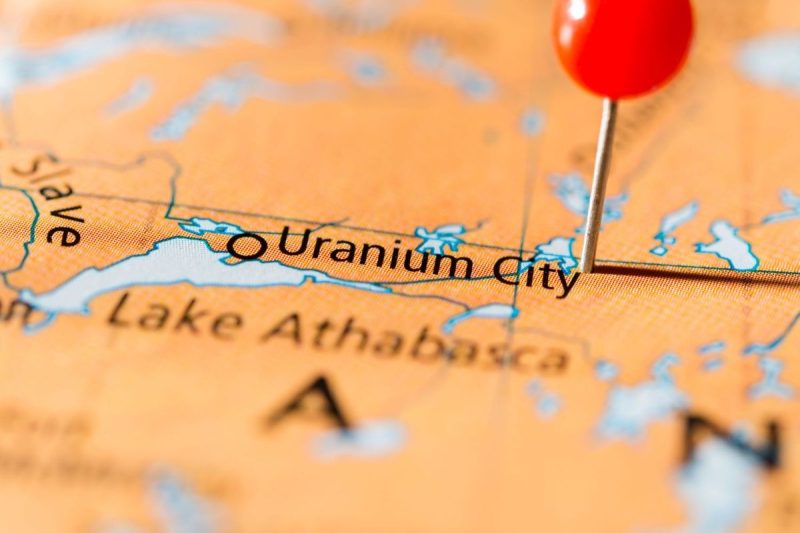
    Canada is home to three producing uranium mines, Cigar Lake, McArthur River and McClean Lake, all of which are located in Saskatchewan’s Athabasca Basin.

    Saskatchewan is a premier uranium mining jurisdiction as home to the Athabasca Basin, a mining-friendly region in the north of the province that’s renowned for its high-quality uranium deposits. The area’s long uranium-mining history has made Canada an international leader in the uranium sector.

    Canada’s major uranium mining companies are Cameco (TSX:CCO,NYSE:CCJ) and Orano Canada, a subsidiary of the multinational company Orano Group. Cameco is the majority owner and operator of Cigar Lake and McArthur River. Orano holds a significant stake in both mines, and is also the majority owner and operator of the recently restarted McClean Lake operation.

    Data and information on the Canadian uranium mines and advanced projects discussed below is taken from mining database MDO. The database only includes projects that have at least partial ownership by public companies.

    1. Cigar Lake Mine

    Ownership:
    54.547% — Cameco
    40.453% — Orano Canada
    5% — TEPCO Resources
    Province: Saskatchewan
    Mine type: Underground
    Deposit type: Unconformity-related

    Cigar Lake, which entered commercial production in 2015, is one of Canada’s largest uranium mines and the world’s highest grade uranium mine. The underground mining operation involves the use of innovative mining methods such as jet boring, which was purposely designed by Cameco to tackle the unique challenges of the Cigar Lake deposit.

    For 2024, production at the Cigar Lake mine was reported at 16.9 million pounds U3O8, up 2 million pounds from the previous year. Guidance for 2025 stands at approximately 18 million pounds.

    Cigar Lake’s proven and probable reserves stand at 551,400 metric tons of ore grading 15.87 percent U3O8 for 192.9 million pounds of contained U3O8. Its mine life is expected to run until 2036.

    2. McArthur River-Key Lake Mine

    Ownership:
    McArthur River mine
    69.805% — Cameco
    30.195% — Orano Canada
    Key Lake mill
    83.3% — Cameco
    16.7% — Orano Canada
    Province: Saskatchewan
    Mine type: Underground
    Deposit type: Unconformity-related

    The McArthur River-Key Lake operation is home to the McArthur River mine and Key Lake mill, respectively the largest high-grade uranium mine and largest uranium mill in the world, according to MDO.

    McArthur River was first brought into production in 2000 using raiseboring and blast hole stoping mining methods, but was put on care and maintenance temporarily in early 2018 due to low uranium prices. Cameco brought the mine and mill back into production in late 2022, progressively ramping up output over the next few years.

    Production in 2024 came in at 20.3 million pounds U3O8, up nearly 43 percent from the previous year’s output, and production guidance for 2025 has been set at 18 million pounds.

    McArthur River’s proven and probable reserves total 2.49 million metric tons grading 6.55 percent U3O8 for 359.6 million pounds of contained metal. Its mine life extends out to 2044.

    3. McClean Lake Mine and Mill

    Ownership:
    77.5% — Orano Canada
    22.5% — Denison Mines (TSX:DML)
    Province: Saskatchewan
    Mine type: Surface mine
    Deposit type: Unconformity-related

    The McClean Lake mine re-entered production in July 2025, 17 years after it was shuttered in 2008 due to low uranium prices made the operations uneconomic.

    After studies demonstrated that the joint venture partners’ patented surface access borehole resource extraction (SABRE) mining method could bring McClean back to life economically, the decision was made in January 2024 to bring the asset back into production.

    The site hosts multiple deposits, including the now-producing McClean North deposit. It also boasts the only mill in the world designed to process high-grade uranium ore without dilution, according to MDO. The mill has the capacity to produce 24 million pounds of uranium concentrate, or yellowcake, annually. Currently, the mill is processing ore from the Cigar Lake mine under a toll mining agreement.

    Proven reserves at McClean Lake are in the form of ore stockpiles, and total 90,000 metric tons at a grade of 0.37 percent for U3O8 for 700,000 pounds of contained metal. The site also hosts significant indicated and inferred resources of 25.4 million pounds across the McLean North, Sue D and Sue F deposits.

    The partners expect to produce approximately 800,000 pounds of U3O8 from McClean North in the first year of operations. In addition, mining at the McClean North and Sue F deposits has the potential to produce about 3 million pounds from 2026 to 2030.

    Upcoming Canadian uranium mines

    There are a handful of contenders for Canada’s next uranium mine: Patterson Lake South, Rook 1 and Wheeler River. None are in the construction stage yet, but most are expecting to come online in the next few years. Learn about the advanced uranium projects below.

    1. Patterson Lake South

    Ownership: Paladin Energy (TSX:PDN,ASX:PDN)
    Province: Saskatchewan
    Mine type: Underground
    Deposit type: Basement hosted vein-type or fracture-filled

    Currently in the permitting phase, the Patterson Lake South (PLS) project hosts the large, high-grade and near-surface Triple R deposit, which has the potential to produce both uranium and gold. The project has a probable mineral reserve estimate of 93.7 million pounds of contained uranium from 3 million metric tons grading 1.41 percent U3O8.

    The 2023 feasibility study for PLS highlights average production of approximately 9 million pounds U3O8 per year over a 10 year mine life.

    Paladin added the PLS uranium project to its portfolio in December 2024 via its acquisition of Fission Uranium. The company is continuing to develop the PLS’s resource potential outside of the Triple R deposit, with a significant focus on the project’s Saloon East zone. Advancing through the environmental permitting process remains ongoing.

    2. Rook 1

    Ownership: NexGen Energy (TSX:NXE)
    Province: Saskatchewan
    Mine type: Underground
    Deposit type: Basement-hosted, vein-type

    NexGen Energy’s Rook 1 project, home to the Arrow deposit, is in the permitting stage with a feasibility study completed in February 2021. Arrow hosts probable mineral reserves of 239.6 million pounds of U3O8 from 4.57 million metric tons of ore at a grade of 2.37 percent, as well as a measured and indicated resource of 256.7 million pounds from 3.75 million metric tons at 3.1 percent.

    Over its 11.7 year mine life, Rook 1 is expected to produce an average of 19.8 million pounds of U3O8 per year, including over 25 million pounds during the first five years.

    Provincial environmental assessment approval was granted in November 2023, and the federal environmental impact statement was accepted as final in January 2025. In March 2025, the company shared that the Canadian Nuclear Safety Commission has proposed hearing dates for the Rook I project on November 19, 2025, and February 9 to 13, 2026.

    NexGen states that a full project execution team is at the ready and the site is fully prepared for construction activities to commence following final federal approval.

    3. Wheeler River

    Ownership:
    95% — Denison Mines
    5% — Uranium Energy (TSX:UEC,NYSEAMERICAN:UEC)
    Province: Saskatchewan
    Mine type:
    Phoenix — In-situ recovery

    Gryphon — Underground
    Deposit type: Unconformity-related

    The Wheeler River uranium project, billed as the largest undeveloped uranium project in the eastern region of the Athabasca Basin, is home to the high-grade Phoenix and Gryphon deposits. Each deposit is considered a standalone asset, and the Phoenix deposit is the more advanced of the two.

    A feasibility study for the Phoenix deposit as an in-situ recovery operation was completed in mid-2023. In February 2025, Denison reported that the Canadian Nuclear Safety Commission is set to conduct hearings for the project’s environmental assessment and license to prepare and construct a uranium mine and mill on October 8 and December 8 to 12, 2025. If granted approval, Denison is prepared to start construction in early 2026, followed by first production by the first half of 2028.

    As for the Gryphon deposit, an update to the pre-feasibility study for a conventional underground mining operation was completed in 2023. Denison conducted a field program in the first quarter of 2025 as part of its efforts to support a feasibility study.

    Canadian uranium exploration companies

    Canada is also home to a slew of uranium exploration and development companies focused on discovering uranium in Saskatchewan, Nunavut and Newfoundland and Labrador.

      For more insight on the uranium companies operating in the Athabasca Basin discussed in this article, check out our breakdown of the 15 uranium companies exploring the basin.

      Securities Disclosure: I, Melissa Pistilli, hold no direct investment interest in any company mentioned in this article.

      This post appeared first on investingnews.com

      Privately owned Rare Earths Americas (REA) has formed in a bid to explore and develop high-grade rare earths assets in the US and Brazil, looking to consolidate supply chains for various domestic sectors.

      The company, which raised AU$25 million in a private funding round, said it combines experienced operators and investors with “deep expertise across global mining, energy and critical materials.”

      Included in the company’s portfolio is the Foothills discovery, located in Georgia, US.

      The site contains grades of up to 41.3 percent total rare earth oxides, including heavy rare earths crucial for high-performance magnets. REA has highlighted its strong logistics, low-cost power and streamlined path to permitting.

      In Brazil, the Alpha and Constellation projects hold more than 1 billion metric tons of high-grade ionic clay rare earths mineralization, including dysprosium and terbium, which are essential for permanent magnets.

      The Homer project, also located in Brazil, targets multiple carbonatite clusters with the potential for niobium discoveries in a region known for leading niobium mines.

      “The rare earths market is undergoing a generational shift as the West races to secure its rare earths future,” said CEO Donald Swartz in a Monday (August 18) press release.

      REA’s timing aligns with broader US efforts to reduce reliance on China, which currently controls nearly 70 percent of global rare earths processing and accounts for most heavy rare earths production.

      In April, Beijing restricted shipments of seven rare earths to the US and other countries, prompting concern among automakers and defense contractors dependent on these materials.

      The US government recently proposed a pricing support mechanism for domestic rare earths ventures in order to increase production and mitigate China’s influence.

      Discussions last month, led by former White House Trade Advisor Peter Navarro and National Security Council official David Copley, included rare earths producers and major tech firms reliant on these critical minerals.

      China’s dominance stems from billions of dollars invested in mining and processing since 2000, often with minimal environmental or safety oversight, allowing the country to produce rare earths at lower cost than western competitors.

      The US response to the Asian nation’s rare earths stranglehold has included efforts to develop domestic mine supply and build out refinement, processing and production capacity. American companies have also sought to secure alternative sources in Africa and Latin America, but investment and technology barriers remain significant.

      Mountain Pass in California, the country’s only large-scale rare earths mine, produces bastnaesite carbonate, but relies heavily on foreign processing. MP Materials (NYSE:MP), the mine’s operator, posted a net loss of US$65.4 million in 2024, highlighting the challenge of competing with China’s low-cost production model.

      REA’s launch positions it as a potential strategic player in this evolving landscape.

      According to the company, the Foothills project offers a “streamlined permitting pathway” in the US, while the Alpha and Constellation projects in Brazil provide access to large-scale, high-grade heavy rare earths.

      “With grade and strategic geography on our side, we intend to advance our rare earths projects to support the long-term supply of critical materials essential to domestic innovation,” Swartz added.

      Securities Disclosure: I, Giann Liguid, hold no direct investment interest in any company mentioned in this article.

      This post appeared first on investingnews.com