Author

admin

Browsing

Bitcoin is prone to price volatility, with wide swings to the upside and downside, making it difficult for investors to know when the right time to buy the top crypto is.

There has been renewed interest in cryptocurrencies following the election of US President Donald Trump, leading the Bitcoin price to soar to new heights in 2025, as investors and other industry insiders speculate on how the Trump administration’s policies could further grow the sector and encourage mainstream adoption.

Trump ran on a platform that promised to make the US the Bitcoin capital of the world, vowing to establish a national reserve for the asset, and several states have already introduced legislation to create similar reserves within their borders.

The price of Bitcoin pulled back to under US$100,000 in February 2025 and fell as low as US$75,000 by April 9, marking a strong buying opportunity for crypto investors. Bitcoin rebounded in May, breaking past the US$100,000 level and surging further over the summer to hit fresh all-time highs in July and August of more than US$120,000 per BTC.

Meanwhile, institutions and businesses like Michael Saylor’s Strategy have continued to buy Bitcoin by the millions, and spot Bitcoin exchange-traded funds (ETFs) remain popular.

This surge of interest paints a bullish picture of Bitcoin’s continued growth. However, buying Bitcoin isn’t a simple decision. Read on to learn the basics of Bitcoin fundamentals, price forecasts and methods for determining if now’s the right time to buy Bitcoin, including several popular technical trading indicators you should know.

In this article

    What gives Bitcoin its value? 5 factors to know

    Before you decide if Bitcoin is a good investment for you, you need to understand Bitcoin and the wider crypto market.

    Bitcoin was the world’s first cryptocurrency, created in January 2009 by the mysterious Satoshi Nakamoto.

    Conceived as a virtual alternative to fiat currency, Bitcoin is built atop blockchain technology, which it uses for both validation and security. Blockchain itself is a distributed digital ledger of transactions, operating through a combination of private keys, public keys and network consensus.

    The best analogy to explain how this works in practice involves Google Docs. Imagine a document that’s shared with a group of collaborators. Everyone has access to the same document, and each collaborator can see the edits other collaborators have made. If anyone makes an edit that the other collaborators don’t approve of, they can roll it back.

    Going back to Bitcoin, the virtual currency primarily validates transactions through proof of work. Also known as Bitcoin mining, this competitive and incredibly resource-intensive process is the means by which new Bitcoins are generated.

    How it works is deceptively simple. Each Bitcoin transaction adds a new ‘block’ to the ledger, identified by a 64-digit encrypted hexadecimal number known as a hash. Each block uses the block immediately preceding it to generate its hash, creating a ledger that theoretically cannot be tampered with. Bitcoin miners collectively attempt to guess the encrypted hex code for each new block — whoever correctly identifies the hash then validates the transaction and receives a small amount of Bitcoins as a reward.

    From an investment perspective, Bitcoin toes the line between being a medium of exchange and a speculative digital asset. It also lacks any central governing body to regulate its distribution. As one might expect, these factors together make Bitcoin quite volatile, and therefore somewhat risky as an investment target.

    As for the source of this volatility, Bitcoin’s value is primarily influenced by five factors.

    1. Supply and demand

    It’s widely known that no more than 21 million Bitcoins can be produced, and that’s unlikely to happen before 2140.

    Only a certain number of Bitcoins are released each year, and this rate is reduced every four years by halving the reward for Bitcoin mining. The last of these ‘halvings’ occurred in April 2024 and the next one is due sometime in 2028. When it happens, there may be a significant increase in Bitcoin demand, largely driven by media coverage and investor interest.

    Bitcoin demand is also strengthening in countries experiencing currency devaluation and high inflation.

    It would be remiss not to mention that Bitcoin represents an ideal mechanism for supporting illicit activities — meaning that increasing cybercrime could itself be a demand driver.

    2. Production costs

    It’s said that Bitcoin benefits from minimal production costs. This isn’t exactly true, however. Solving even a single hash requires immense processing power, and it’s believed that crypto mining collectively uses more electricity than some small countries. It’s also believed that miners were largely responsible for the chip shortage experienced throughout the pandemic due to buying and burning out vast quantities of graphics cards.

    These costs together have only a minimal influence on Bitcoin’s overall value. The complexity of Bitcoin’s hashing algorithms and the fact that they can vary wildly in complexity are far more impactful.

    3. Competition

    Bitcoin’s cryptocurrency market share has sharply declined over the years. In 2017, it maintained a market share of over 80 percent. Bitcoin’s current market share is just under 60 percent.

    Despite that fall, Bitcoin remains the dominant force in the cryptocurrency market and is the marker by which many other cryptocurrencies determine their value. However, there is no guarantee that this will always remain the case. There are now scores of Bitcoin alternatives, known collectively as altcoins, which you can learn more about here.

    The most significant alternative to Bitcoin is Ethereum. Currently accounting for roughly 10 percent of the crypto market, Ethereum has long maintained its position as the second largest cryptocurrency. Some experts have suggested that Ethereum may even overtake Bitcoin, but others don’t see that as a possibility in the near future.

    4. Regulations

    Bitcoin may itself be unregulated, but it is not immune to the effects of government legislation. For instance, China’s 2021 ban of the cryptocurrency caused a sharp price drop, though it quickly rallied in the following months. The European Union has also attempted to ban Bitcoin in the past, and Nic Carter, a partner at Castle Venture, accused the US of trying to do the same in February 2023.

    There has been plenty of discussion surrounding the role of the US Securities and Exchange Commission (SEC) in regulating Bitcoin and other crypto as investment assets. The US made progress in establishing crypto legislation in 2024 when the House passed the Financial Innovation and Technology for the 21st Century (FIT21) Act in a bipartisan 279 to 136 vote on May 22 of last year.

    While that act has yet to make further progress, the new Trump administration has already loosened some crypto regulation with regards to crypto reporting for banks and decentralized finance businesses.

    In April 2025, the SEC approved rule changes allowing Ether ETF options, and also updated its guidance on crypto company disclosures.

    Around the same time, President Trump signed a resolution repealing the Internal Revenue Services’ (IRS) controversial DeFi broker rule. Enacted at the end of the Biden Administration, the rule expanded the definition of “broker” to include decentralized finance, or DeFi, platforms. The reversal passed both chambers of Congress with bipartisan support.

    In July, Trump signed the GENIUS Act into law, which establishes a regulatory framework for payment in stablecoins. Secretary of the Treasury Scott Bessent has stated that the law paves the way for a potential stablecoin market worth US$3.7 trillion by 2030.

    5. Public interest and media coverage

    As with any speculative commodity, Bitcoin is greatly influenced by the court of public opinion.

    Perhaps the best example of this occurred in 2021. At that time, a tweet from Tesla’s (NASDAQ:TSLA) Elon Musk caused Bitcoin’s price to drop by 30 percent in a single day. This also wiped about US$365 billion off the cryptocurrency market.

    Another example occurred on January 9, 2024, leading up to the deadline for eight spot Bitcoin ETFs by the US Securities and Exchange Commission (SEC). In a since-deleted post on X, formerly known as Twitter, a hacker falsely stated that the SEC had approved all eight pending Bitcoin ETFs. This caused the price of Bitcoin to spike to US$48,000, but it quickly dropped back down to around US$46,000 after the SEC confirmed it was a hack, leading some analysts to consider it a ‘sell-the-news’ event.

    Is now a good time to buy Bitcoin?

    The current US administration is crypto friendly, and Bitcoin and altcoins are seeing support in 2025. Could they go even higher, or should you wait for a dip to buy? Bitcoin is notoriously volatile, which can make it difficult to judge where the crypto is going next, but there are several strategies to help investors decide when to invest.

    To determine if it is a good time to invest in Bitcoin, investors should pay attention to the market and listen to the experts, as generally speaking, Bitcoin’s price action is sentiment-driven. To keep on top of big news in the sector, follow our frequent Crypto Market Updates, which drop several times a week.

    There are also different technical indicators that crypto traders use to help them decide if now is the time to buy or sell Bitcoin. We run through some popular indicators below.

    For example, the Relative Strength Index (RSI) is a technical indicator used to gauge the momentum of a cryptocurrency’s price. It fluctuates on a scale from 0 to 100. By analyzing the magnitude of recent price changes relative to the previous 12-month period, the RSI helps traders identify whether a cryptocurrency is potentially overbought or oversold. An RSI above 70 often signals an overbought market, while an RSI below 30 suggests an oversold market.

    Another metric to consider is the MVRV Z-score, calculated by subtracting the ‘realized’ value of Bitcoin, which is an average of the prices at which each Bitcoin was last moved, from the current market value. This is then divided by the standard deviation of the Bitcoin market cap.

    This indicator helps identify when market value deviates strongly from realized value, which could show the market is at a turning point. A score above 7 likely indicates that Bitcoin is overvalued, meaning it could be due for a correction, while a score below 0 suggests that Bitcoin is undervalued, meaning it could be a good buying opportunity.

    Finally, to gauge the overall market sentiment, investors can look at the Fear & Greed Index. This index provides a snapshot of how optimistic or fearful the market is about Bitcoin, with high readings potentially signaling overenthusiasm and a possible correction.

    While it’s useful to learn these technical indicators to help you trade, it is important to remember that there’s no such thing as a guaranteed investment, especially when it comes to cryptocurrencies. On the one hand, there’s virtually no chance that Bitcoin will experience a crash to zero. On the other hand, we also cannot take for granted that its value will continue to climb.

    What is Bitcoin’s long-term price outlook?

    For those considering Bitcoin as a long-term investment, it’s worth considering experts’ thoughts on Bitcoin in the future.

    During the run-up to the new highs posted in July 2025, Eugene Cheung, chief commercial officer of crypto platform OSL, told Cointelegraph that he thinks the digital asset could reach US$130,000 to US$150,000 by the end of the year.

    Fundstrat’s Tom Lee, who predicted Bitcoin’s peak in 2024, is calling for the digital currency to reach US$250,000 before 2025 comes to a close.

    Not everyone is so optimistic about Bitcoin’s prospects. Top Economist Henrik Zeberg has expressed concerns about Bitcoin’s future in the context of continued economic uncertainty, as its price remains highly linked with the performance of the tech-stock heavy NASDAQ.

    Billionaire investor Warren Buffet, meanwhile, has not minced words regarding his opinion on Bitcoin and its future. According to Buffet, Bitcoin is an unproductive asset with no unique value. He also feels that it doesn’t count as a true currency — in fact, he called it “rat poison.” Moreover, he believes that the crypto market as a whole will end badly.

    Who holds the most Bitcoin?

    Regardless of whether you believe Bitcoin’s proponents or naysayers, it’s clear that it has some incredibly prominent backers in both the investment world and the wider business landscape.

    Business analytics platform Strategy (NASDAQ:MSTR) is by far the largest public company in the Bitcoin space, with 628,946 Bitcoin to its name as of August 11, 2025. The next three public companies with the largest Bitcoin holdings are Marathon Digital Holdings (NASDAQ:MARA) with 50,639 Bitcoin, soon-to-list Twenty One Capital (NASDAQ:XXI) with 37,229.7 Bitcoin and Bullish (NYSE:BLSH) with 24,340 Bitcoin.

    The US, China and the United Kingdom hold the top three spots for countries with the most Bitcoin holdings, with 198,012, 194,000 and 61,245 Bitcoin respectively at that time.

    There are also plenty of individuals with large holdings, the most significant of which is believed to be Bitcoin’s creator, Satoshi Nakamoto. Other prominent names include Michael Saylor, Cameron and Tyler Winklevoss, and Tim Draper.

    How to smartly invest in Bitcoin?

    To help increase the odds of crypto being a good investment, investors in the Bitcoin market should learn the basics of safely investing in Bitcoin.

    How to buy Bitcoin

    The good news is that investing in Bitcoin is actually quite simple. If you’re purchasing through a stockbroker, it’s a similar process to buying shares of a company. Otherwise, you may need to gather your personal information and bank account details. It’s recommended to secure your network with a VPN prior to performing any Bitcoin transactions.

    The first step in purchasing Bitcoin is to join an exchange. Coinbase Global (NASDAQ:COIN) is one of the most popular, but there’s also Kraken and Bybit. If you’re an advanced trader outside the US, you might consider Bitfinex.

    Once you’ve chosen an exchange, you’ll need a crypto wallet. Many first-time investors choose a software-based or ‘hot’ wallet either maintained by their chosen crypto exchange or operated by a service provider. While simpler to set up and more convenient overall, hot wallets tend to be less secure as they can be compromised by data breaches.

    Another option is a ‘cold’ wallet — a specialized piece of hardware specifically designed to store cryptocurrency. It’s basically a purpose-built flash drive. If you plan to invest large amounts in crypto, a cold wallet is the better option.

    Once you’ve acquired and configured your wallet, you may choose to connect either the wallet or your crypto exchange account to your bank account. This is not strictly necessary, and some seasoned investors don’t bother to do this.

    Finally, with your wallet fully configured and your exchange account set up, it’s time to place your order.

    Best practices for investing in Bitcoin

    The most important thing to remember about Bitcoin is that it is a high-risk asset. Treat Bitcoin as a means of slowly growing your existing wealth rather than an all-or-nothing gamble, and never invest money that you aren’t willing to lose.

    As with other investments, it’s important to hedge your portfolio. Alongside Bitcoin, you may want to consider investing in other cryptocurrencies like Ethereum, or perhaps an altcoin. You may also want to explore other blockchain-based investments, given that even the most stable cryptocurrencies tend to be fairly volatile.

    It’s also key to ignore the hype surrounding cryptocurrencies. Recall how many people whipped themselves into a frenzy over non-fungible tokens in 2022. The majority of NFTs created during that time are now worthless.

    Make decisions based on your own market research and advice from trusted — and more importantly, certified — professionals. If you’re putting up investment capital based on an influencer’s tweets, you are playing with fire.

    You should also start small. A good rule of thumb is not to dedicate more than 10 percent of your overall capital to cryptocurrency. Even that number could be high — again, it’s all about moderation.

    Make sure to prioritize cybersecurity as well. Cryptocurrencies are an immensely popular target for cybercriminals. In addition to maintaining a cold wallet, make sure you practice proper security hygiene. That means using a VPN and a password manager while also exercising mindfulness in how you browse the web and what you download.

    Finally, make an effort to understand what cryptocurrencies are and how they work. One of the reasons Sam Bankman-Fried was able to run FTX as long as he did was because many of his investors didn’t fully understand what they were putting their money into. Don’t let yourself be fooled by buzzwords or lofty promises about Web3 and the metaverse.

    Do your research into the technology behind it all. That way, you’ll be far better equipped to recognize when something is a sound investment versus a bottomless money pit.

    Indirect crypto investing

    Given Bitcoin’s volatility, it’s understandable that you might be leery of making a direct investment. The good news is that you don’t have to. You can indirectly invest into the crypto space through mutual funds, stocks and ETFs.

    ETFs are a popular and flexible portfolio choice that allows investors to benefit from a sector’s performance without the need to directly own individual stocks or assets. They are an especially appealing option in the cryptocurrency market as the technical aspects of purchasing and holding these coins can be confusing and intimidating for the less technologically inclined.

    Bitcoin futures ETFs provide exposure to the cryptocurrency’s price moves using Bitcoin futures contracts, which stipulate that two parties will exchange a specific amount of Bitcoins for a particular price on a predetermined date.

    Conversely, spot Bitcoin ETFs aim to track the price of Bitcoin, and they do so by holding the asset. Spot Bitcoin ETFs have been offered to Canadians since 2021, and there are now 13 Canadian cryptocurrency ETFs you can buy. Spot Bitcoin ETFs began trading in the US on January 11, 2024. For investors interested in blockchain technology, there are also several blockchain ETFs.

    Do a bit of research and touch base with your stockbroker or financial advisor before you go in this direction.

    Investor takeaway

    Bitcoin is a fascinating asset. Simultaneously a transactional tool and a speculative commodity, it’s attracted the attention of investors almost since it first hit the market. Unfortunately, it’s also incredibly volatile.

    For that reason, while current market conditions are favorable for anyone considering buying Bitcoin, it is an asset you should purchase only at your own risk. Because while Bitcoin may have the potential for significant returns, you may also lose most of your investment. If that knowledge doesn’t bother you, then by all means, purchase away.

    Otherwise, there are better — less volatile — options for your capital.

    FAQs for buying Bitcoin

    What does Cathie Wood say about Bitcoin?

    ARK Invest CEO Cathie Wood is extremely bullish on Bitcoin, telling Bloomberg in February 2023 that her firm believes the cryptocurrency could reach a value of US$1 million by 2030. In July 2025, Wood hiked her 2030 bitcoin price prediction to US$3.8 billion.

    Securities Disclosure: I, Meagen Seatter, hold no direct investment interest in any company mentioned in this article.

    This post appeared first on investingnews.com

    Cracker Barrel tried to reassure customers Monday that its values have remained the same after it received criticism following a new logo reveal and general brand refresh.

    The company promised customers in a statement that while its logo may be different, its values — “hard work, family, and scratch-cooked food made with care’ — are not.

    “You’ve shown us that we could’ve done a better job sharing who we are and who we’ll always be,” the statement read, adding that Cracker Barrel will remain “a place where everyone feels at home, no matter where you’re from or where you’re headed.”

    Last week, the company unveiled a new logo that no longer features a man leaning against a barrel or the words ‘Old Country Store.’ Instead, it featured the company’s name, in a color scheme that it said was inspired by the chain’s scrambled eggs and biscuits.

    The change was part of a ‘strategic transformation’ that aimed to update the chain’s visual elements, spaces, food and retail offerings. The company’s shares are down about 8.5% since the reveal ignited criticism, especially from those in conservative circles.

    Donald Trump Jr., the president’s son, amplified a post Wednesday suggesting that the logo change was intended to erase the American traditions aspect of the branding and make it more general and lean into diversity, equity and inclusion efforts.

    On Monday, the chain also shared an update on the man in the original logo, Uncle Herschel, who is said is still featured on menus and road signs and in stores.

    ‘He’s not going anywhere — he’s family,’ the company said in the statement.

    Cracker Barrel said its focuses remain country hospitality and generous portions of food at fair prices. The refresh, it said, was to ensure the restaurant will be there for the next generation.

    ‘That means showing up on new platforms and in new ways, but always with our heritage at the heart,’ it said.

    ‘We know we won’t always get everything right the first time, but we’ll keep testing, learning, and listening to our guests and employees.’

    This post appeared first on NBC NEWS

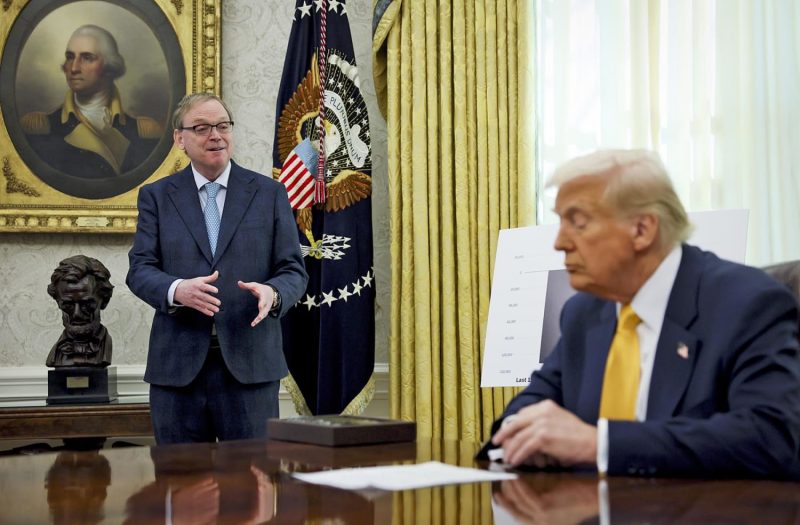
    The U.S. government could take equity stakes in more companies, potentially through an American sovereign wealth fund, according to one of President Donald Trump’s top economic advisers.

    National Economic Council Director Kevin Hassett made the comments Monday, days after the United States took a nearly 10% stake in Intel. The government secured a piece of the semiconductor maker with money intended for grants as part of the CHIPS and Science Act, passed during the Biden administration.

    Speaking about the new Intel position, Hassett told CNBC: “It’s like a down payment on a sovereign wealth fund, which many countries have.” Governments throughout Europe, Asia and the Middle East use such funds to invest in companies and other financial assets.

    The federal government has taken ownership stakes in private companies before, but only under extraordinary circumstances, such as during the global financial crisis of 2008.

    Hassett said the Intel investment was a ‘very, very special circumstance because of the massive amount of CHIPS Act spending that was coming Intel’s way.’

    He added: “So I’m sure that at some point there’ll be more transactions, if not in this industry, in other industries.’

    The CHIPS Act was established as a way for the government to provide financing and capital to foreign and domestic companies that manufactured semiconductors and related products in the United States.

    Americans and the American economy received the benefit of more than $200 billion in private capital investments since the act was signed into law, according to the Council on Foreign Relations. Many companies also announced plans to create new U.S. manufacturing and construction jobs.

    Hassett has said the money was ‘going out and disappearing into the ether.’

    He has also said, ‘We’re absolutely not in the business of picking winners and losers.’ However, the United States is now Intel’s largest single shareholder. The administration has also taken a ‘golden share’ in U.S. Steel as part of approving its merger with Japan’s Nippon Steel. Trump also said he negotiated with Nvidia CEO Jensen Huang to take a 15% cut of the chipmaker’s revenue from some chips sold in China. He also has a similar deal with rival chipmaker AMD.

    Later Monday, Trump said, ‘I want them to do well anyway, but I want them to do well in particular now.’

    He added, ‘I hope I’m going to have many more cases like’ the Intel stake. Asked whether taking equity stakes in private companies was the new way of doing business in the United States, Trump responded: ‘So are tariffs.’

    After Hassett’s interview, Trump said on Truth Social: ‘I PAID ZERO FOR INTEL, IT IS WORTH APPROXIMATELY 11 BILLION DOLLARS. All goes to the USA.’ He also said he would ‘help those companies that make such lucrative deals with the United States.’

    It was unclear why Trump said the United States did not pay anything for the stake. The government purchased 433.3 million Intel shares at $20.47 each, which equates to $8.9 billion.

    Trump has also pushed companies to change course on key products, such as when he pre-emptively announced that Coca-Cola would add cane sugar to an American version of its namesake product.

    Trump has also threatened firms such as Amazon, Mattel, Hasbro and Walmart with retaliation for hiking prices as a result of his sweeping global tariff regime.

    Trump intervention in private industry has sparked widespread criticism, some of it from Republicans. Trump’s former U.N. ambassador Nikki Haley, a former Boeing board member, said on X: ‘Intel will become a test case of what not to do.’

    After the CNBC interview, NBC News asked Hassett about setting up a sovereign wealth fund.

    ‘As we acquire things like Intel, then there’s sort of a question of where it goes and it’s held by the U.S. Treasury. And if the U.S. Treasury has more of that stuff, that is starting to look like [a] sovereign wealth fund, whether an official sovereign wealth fund is established is another question,’ he said.

    ‘But it’s not unprecedented for the U.S. to own equity’ in private companies, he added.

    The United States took equity stakes in private companies during the global financial meltdown of 2008 and 2009.

    Then, it bought troubled assets and took equity stakes in the likes of JPMorgan, Wells Fargo, Citigroup, Bank of America, AIG and other systemically important firms to stabilize the global financial system.

    Trump has expanded his power over the business world, fueled by his view that the U.S. economy is like ‘a department store, and we set the price.’

    ‘I meet with the companies, and then I set a fair price, what I consider to be a fair price, and they can pay it, or they don’t have to pay it,’ Trump said in an April interview.

    This post appeared first on NBC NEWS

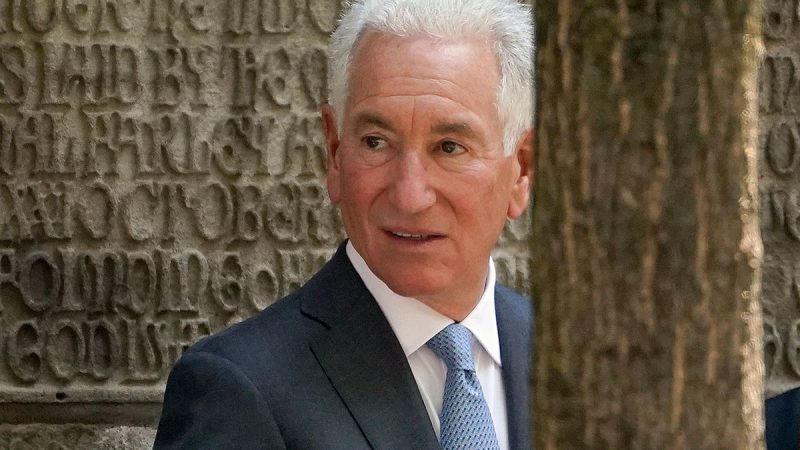
    France has summoned American ambassador Charles Kushner to Paris, after the diplomat accused the country of not doing enough to combat antisemitism in a letter to French President Emmanuel Macron.

    France’s foreign ministry said in a statement issued Sunday that Kushner’s allegations ‘are unacceptable,’ and announced it had summoned the U.S. diplomat to appear Monday at the French Ministry for Europe and Foreign Affairs.

    Kushner, who is Jewish, wrote in the letter that antisemitic incidents in France have been fueled by French government statements about recognizing a Palestinian state.

    ‘Public statements haranguing Israel and gestures toward recognition of a Palestinian state embolden extremists, fuel violence, and endanger Jewish life in France. In today’s world, anti-Zionism is antisemitism – plain and simple,’ Kushner wrote.

    Kushner further urged Macron ‘to act decisively: enforce hate-crime laws without exception, ensure the safety of Jewish schools, synagogues and businesses … and abandon steps that give legitimacy to Hamas and its allies.’

    The French foreign ministry said in its statement that ‘France firmly rejects these allegations’ from Kushner, adding that French authorities have ‘fully mobilized’ to combat a rise in antisemitic acts since Hamas launched a deadly attack on Israel on Oct. 7, 2023. The ministry further deemed antisemitic acts ‘intolerable.’

    The ministry said Kushner’s allegations violate international law and the obligation not to interfere with the internal affairs of another country, adding that they ‘also fall short of the quality of the transatlantic partnership between France and the United States and of the trust that must prevail between allies.’

    The U.S. State Department, however, said it backed Kushner and his comments, department spokesperson Tommy Pigott said Sunday evening.

    ‘Ambassador Kushner is our U.S. government representative in France and is doing a great job advancing our national interests in that role,’ Pigott said.

    Macron has been critical of Israeli Prime Minister Benjamin Netanyahu as the war in Gaza continues, while President Donald Trump has been a staunch supporter of the Israeli leader.

    Kushner, a real estate developer, is the father of Jared Kushner, who is married to Trump’s daughter Ivanka Trump.

    At the end of his first presidential term, Trump pardoned Charles Kushner, who pleaded guilty years earlier to tax evasion and making illegal campaign donations.

    The Associated Press contributed to this report.

    This post appeared first on FOX NEWS

    Jeffrey Epstein did not have the same level of impact in the Senate as the House, but the discourse pushed by many congressional Democrats, and some Republicans, is unlikely to go away when lawmakers return next week.

    And the level of Epstein hysteria in Congress may have had an unlikely impact in derailing Republicans’ push in the upper chamber to ram through President Donald Trump’s nominees.

    Senate Republicans tried and failed to strike a deal with Senate Democrats to push through dozens of non-controversial nominees, particularly picks that made it through committee with bipartisan support.

    Only Secretary of State Marco Rubio, who glided through the Senate unanimously earlier this year, has not been met by Democrats’ blockade.

    Rules changes are in the works, but the avenue of using recess appointments, which requires the Senate to adjourn and the House to come into session for the president to elevate his picks on a temporary basis, was all but shot down after House Speaker Mike Johnson, R-La., sent lawmakers home early to sidestep the simmering push to release documents related to Epstein’s case.

    ‘When the House had an opportunity to take votes on the Epstein files, Speaker Johnson skedaddled out of town, launching the Epstein recess,’ Senate Minority Leader Chuck Schumer, D-N.Y., said last month. ‘This is not complicated.’  

    ‘After promising full transparency for years, every single time Trump, his administration, Republican leaders have had a chance to be transparent about the Epstein files, they’ve chosen to hide. The evasions, the delays, the excuses, they’re not just odd, they’re alarming.’

    Many Republicans in the upper chamber agree that there should be more transparency, but caution that no materials should be released until the names or identifying traits of victims are combed through and kept safe.

    Others question why Democrats suddenly care about the Epstein situation.

    Sen. Roger Marshall, who supported turning to recess appointments to break Democrats’ log jam, told Fox News Digital that it didn’t ‘make sense to me, and this is part of their psychosis, that they are so separated from reality,’ to keep pushing the Epstein issue.

    ‘They had four years to do something with this, and it was just quite the opposite,’ the Kansas Republican said. ‘As I recall, just quite the opposite. It was almost like they were hiding something.’

    ‘My frustration is how they used it to circumvent the agenda of the American people… this is all they’ve got,’ he continued. ‘What else do they have? They don’t have a leader, they don’t have an agenda. They don’t have solutions. All they know is, if it’s President Trump, they’re not going to like it, very matter of fact, they’re going to hate it at the sacrifice of the entire country.’

    Meanwhile, Epstein engulfed Washington once again on Friday, with the House Oversight Committee receiving a trove of related documents and the interview between Epstein accomplice Ghislaine Maxwell and Deputy Attorney General Todd Blanche becoming public.

    When asked about the files eventually coming to light, Trump told reporters that he was in support of keeping them ‘totally open,’ and charged that Democrats were using Epstein as a smokescreen to detract from his administration’s work.

    ‘The whole Epstein thing is a Democrat hoax,’ he said. ‘We had the greatest six months, seven months in the history of the presidency, and the Democrats don’t know what to do, so they keep bringing up that stuff.’

    This post appeared first on FOX NEWS

    When federal agents raided the home and office of former National Security Adviser John Bolton on Friday as part of a classified documents investigation, some Democrats and liberal commentators framed the development as another example of what they claim is President Donald Trump’s political weaponization of the justice system.

    The reaction marked a striking contrast with Democrats’ long history of opposing Bolton. For years, they denounced him as a hardline foreign policy hawk who manipulated intelligence and pushed the U.S. into war. But when Bolton broke with Trump, Democrats began citing him as a key witness and relying on his public comments to bolster their case against the former president.

    Battles over Bolton’s Bush-era role

    Democrats first sought to block Bolton’s 2005 nomination to serve as U.S. ambassador to the United Nations under President George W. Bush. Then-Sen. Joe Biden, D-Del., accused him of being untruthful in a Senate questionnaire, noting that he had been interviewed as part of a joint State Department and CIA investigation into Iraq’s pursuit of nuclear materials from Niger.

    Rep. Henry Waxman, D-Calif., alleged that Bolton played a role in the disputed claim that Iraq had attempted to purchase yellowcake uranium — an accusation that appeared in Bush’s 2003 State of the Union address but could not be confirmed by U.S. intelligence agencies.

    That same year, Carl W. Ford Jr., then head of intelligence at the State Department, described Bolton as a ‘serial abuser’ of power who pressured analysts to alter assessments. One analyst, Christian Westermann, reportedly resisted including claims of Cuban biological weapons in a 2002 speech Bolton wanted to deliver.

    Senate Democrats delayed Bolton’s nomination for months, citing concerns that he sought to shape intelligence findings to fit administration policy goals.

    Renewed opposition during the Trump administration

    When Trump appointed Bolton as national security adviser in 2018, Democrats again criticized him, citing his past support for the Iraq War and his calls for a hardline approach towards Iran and North Korea.

    ‘Bolton is a dangerous radical,’ said Rep. Brendan Boyle, D-Pa. Sen. Ed Markey, D-Mass., accused him of politicizing intelligence in the run-up to the Iraq conflict. Sen. Jeff Merkley, D-Ore., argued Bolton had been consistently ‘wrong on security’ throughout his career.

    Trump himself later grew frustrated with Bolton’s hawkish approach, including his opposition to peace talks with the Taliban and advocacy for military action in Iran. The two split in 2019, with Trump announcing Bolton’s departure on social media and Bolton insisting he had already offered to resign.

    A sought-after witness during impeachment

    Following Bolton’s break with Trump, Democrats began highlighting him during Trump’s first impeachment trial over Ukraine.

    ‘There’s no denying the central relevance of John Bolton’s testimony,’ then-Rep. Adam Schiff, D-Calif., said as House impeachment managers pressed for him to appear.

    Bolton’s memoir later claimed Trump sought to withhold military aid from Ukraine, a move Bolton privately described as a ‘drug deal.’ At the time, MSNBC commentators suggested his testimony could have been decisive in the outcome of the trial.

    Ultimately, Bolton declined to testify, angering some Democrats who accused him of reserving details for his book rather than presenting them under oath.


    Role in today’s political debates

    Since leaving the Trump administration, Bolton has become a regular guest on networks such as CNN and MSNBC, where he continues to weigh in on foreign policy and national security.

    Although many Democrats once opposed his nomination and criticized his record, they have at times pointed to his comments when they align with their critiques of Trump and other Republicans.

    The latest raid underscores how Bolton remains a polarizing figure — one Democrats long opposed but have also leaned on in moments when his testimony or commentary could be used against Trump.

    This post appeared first on FOX NEWS

    Gen. Michael ‘Erik’ Kurilla, the military officer who oversaw the execution of the Iran strikes in June, has retired from military service and has handed over the reins following three years leading U.S. troops in the Middle East. 

    Kurilla, a graduate of the U.S. Military Academy at West Point, became commander of U.S. Central Command (CENTCOM) in 2022, and oversaw planning and execution of at least 15 major combined combat operations, according to the command.

    Among those, two occurred during his final months leading the command: Operation Rough Rider targeting the Houthis in Yemen in March and April, and Operation Midnight Hammer striking Iran nuclear sites in June.


    Operation Midnight Hammer targeted Iranian nuclear facilities Fordow, Natanz and Isfahan, and involved more than 125 U.S. aircraft, including B-2 stealth bombers, according to Chairman of the Joint Chiefs of Staff Gen. Dan Caine. Likewise, a guided-missile submarine also launched more than two dozen Tomahawk cruise missiles at key Iranian targets. 

    ‘General Kurilla is a bold, dynamic, and inspiring leader who strikes fear into the hearts of America’s enemies,’ Secretary of Defense Pete Hegseth said in a June statement to Fox News Digital. ‘He’s a warrior through and through who always puts his country, mission, and troops first. It has been an honor to serve alongside him in defense of our great nation.’

    Kurilla spent an extensive amount of his career focusing on operations in the Middle East. From 2004 to 2014, the general oversaw conventional and special operations forces during consecutive tours that fell under the CENTCOM purview.

    During that span of time, Kurilla completed tours in both Iraq and Afghanistan. Kurilla is known for his involvement in a Mosul, Iraq, firefight in August 2005, where he sustained multiple gunshot wounds. The encounter earned him a Bronze Star with valor and one of his two Purple Heart awards.

    Notable figures who’ve previously led CENTCOM include former defense secretaries, retired Gen. Jim Mattis, who served during Trump’s first term, and retired Gen. Lloyd Austin, who served during former President Joe Biden’s administration.

    As of early August, U.S. Navy Adm. Brad Cooper is now leading CENTCOM, one of the U.S. military’s 11 combatant commands, with 21 nations in the Middle East in its area of operations — including Iraq and Afghanistan. 

    Like Kurilla, Cooper is no stranger to the Middle East. Previous assignments include serving as deputy commander of CENTCOM and overseeing U.S. Naval Forces Central Command in the Middle East, where he spearheaded efforts to employ unmanned service vessels into the fleet. 

    Cooper officially took over leading CENTCOM Aug. 8 during a change of command ceremony in Tampa, Florida, where CENTCOM headquarters are located. Kurilla’s retirement ceremony occurred on the same day, a spokesperson for CENTCOM confirmed to Fox News Digital. 

    ‘U.S. Central Command and the entire joint force have performed exceptionally well under the leadership of Gen. Kurilla, helping to bolster partnerships, increase lethality of U.S. forces, and defend Americans and civilians abroad,’ Cooper said in a Navy statement. ‘I am deeply grateful for the opportunity to lead America’s sons and daughters as we support the important mission of enhancing regional security and stability in the Central Command region.’

    This post appeared first on FOX NEWS

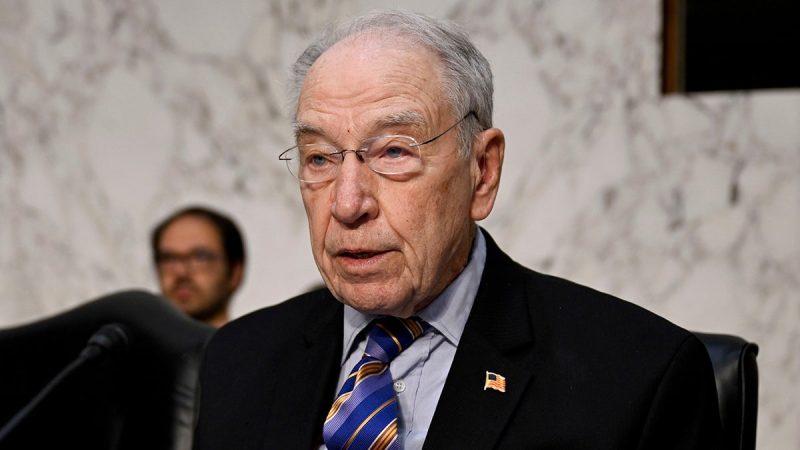
    The top Republican on the Senate Judiciary Committee is again standing firm against President Donald Trump’s demand that Senate tradition be changed to ram through his district court and U.S. attorney nominees.

    Senate Judiciary Chair Chuck Grassley, R-Iowa, came under fire from Trump again late Sunday night over the Senate’s ‘blue slips,’ a longstanding practice in the upper chamber that the president wants to be done away with.

    A blue slip effectively gives Senate Republicans and Democrats the ability to veto district court and U.S. attorney nominees in their home states.

    But Grassley argued in a response on X Monday that without blue slips, none of Trump’s nominees would pass muster in the Senate.

    ‘A U.S. Atty/district judge nominee without a blue slip does not [have] the votes to get confirmed on the Senate floor & they don’t [have] the votes to get out of [committee],’ Grassley said. ‘As chairman I set [President] Trump noms up for SUCCESS NOT FAILURE.’

    Trump argued that it was his constitutional right to appoint judges and U.S. attorneys, but the right had been ‘completely taken away from me in States that have just one Democrat United States Senator.’

    ‘This is because of an old and outdated ‘custom’ known as a BLUE SLIP, that Senator Chuck Grassley, of the Great State of Iowa, refuses to overturn, even though the Democrats, including Crooked Joe Biden (Twice!), have done so on numerous occasions,’ Trump said.  

    ‘Therefore, the only candidates that I can get confirmed for these most important positions are, believe it or not, Democrats! Chuck Grassley should allow strong Republican candidates to ascend to these very vital and powerful roles, and tell the Democrats, as they often tell us, to go to HELL,’ he continued.

    Senate Democrats have indeed used the blue slip tradition this year to block some of Trump’s picks for the bench as part of their broader log jam of his nominees.

    For example, Senate Minority Leader Chuck Schumer, D-N.Y., used his blue slip privileges to nix Trump’s U.S. Attorney nominees for the Southern and Eastern Districts of New York.

    And Sens. Cory Booker and Andy Kim, both Democrats from New Jersey, used the blue slip to object to Alina Habba’s nomination to U.S. Attorney in the Garden State. Habba was tapped by Trump to serve in the role on an interim basis, but after her term expired a panel of judges opted to not extend her position. 

    A replacement was chosen but then fired by Attorney General Pam Bondi. Trump then withdrew his nomination for Habba and restored her interim status. 

    ‘Habba was withdrawn as the President’s nominee for New Jersey U.S. Atty on July 24,’ Grassley said. ‘[And] the [Judiciary Committee] never received any of the paperwork needed for the Senate to vet her nomination.’

    Trump’s renewed ire comes after he singled out Grassley last month for not nixing the longstanding tradition, which is not a law, and demanded that he ‘have the courage’ to change the practice.

    It also comes after Senate Republicans and Democrats failed to reach a deal on ramming through many of the president’s nominees before leaving Washington for all of August. 

    Finding a pathway forward, including a likely change to the Senate’s confirmation process, is expected to be a top priority for Republicans when they return to the Hill after Labor Day. 

    This post appeared first on FOX NEWS

    Here’s a quick recap of the crypto landscape for Monday (August 25) as of 9:00 a.m. UTC.

    Get the latest insights on Bitcoin, Ethereum and altcoins, along with a round-up of key cryptocurrency market news.

    Bitcoin and Ethereum price update

    Bitcoin (BTC) was priced at US$111,481, a 2.6 percent decrease in 24 hours. Its lowest valuation of the day was US$110,788, and its highest was US$114,779.

    Bitcoin price performance, August 25, 2025.

    Chart via TradingView

    ETH was priced at US$4,642.54, down by 2.7 percent over the past 24 hours. Its lowest valuation was US$4,538.58 and its highest was US$4,946.05.

    Altcoin price update

    • Solana (SOL) was priced at US$198.05, down by 3.1 percent. Its lowest was US$195.54 and its highest as of Monday was US$212.69.
    • XRP was trading for US$2.95, up by 2.4 percent in the past 24 hours. Its highest valuation of the day was at US$3.12 and its lowest was US$2.93.
    • Sui (SUI) was trading at US$3.48, down by 3.9 percent over the past 24 hours. Its lowest valuation of the day so far was US$3.345 and its highest was US$3.84.
    • Cardano (ADA) was trading at US$0.8653, down by 3.3 percent over 24 hours. Its lowest valuation for the day was US$0.8575 and its highest was US$0.9587.

    Today’s crypto news to know

    Bitcoin whale selloff triggers US$80 billion market slide

    Crypto markets turned sharply lower late Sunday (August 24) after a dormant whale unloaded roughly US$2.7 billion worth of Bitcoin.

    Onchain data shows the entity, inactive since 2019, moved 24,000 BTC originally linked to a withdrawal from the HTX exchange. The whale rotated into Ether, amassing more than 400,000 ETH while opening leveraged longs and staking positions.

    The timing coincided with a shift in sentiment following Fed Chair Jerome Powell’s Jackson Hole remarks, which were initially read as dovish but left traders questioning how soon rate cuts might arrive.

    By Monday, leveraged liquidations topped US$715 million, erasing more than US$80 billion from total crypto market capitalization. CME’s FedWatch tool still prices September cuts as highly likely, but analysts warn Powell’s speech was more cautious than markets first assumed. T

    The pullback ended a brief rally that had lifted Ether nearly 10 percent and XRP over 5 percent earlier in the week.

    Metaplanet enters FTSE Japan index, buys more Bitcoin

    Metaplanet, the Tokyo-listed hotel operator that has rebranded as a Bitcoin treasury firm, will join the FTSE Japan Index following FTSE Russell’s September 2025 review.

    The upgrade moves Metaplanet from small-cap to mid-cap status, with index inclusion set after markets close on September 19.

    CEO Simon Gerovich called the milestone proof of the firm’s ambition to be Japan’s top Bitcoin holding company, while also confirming a fresh purchase of 103 BTC, lifting reserves to 18,991 BTC.

    The company’s stock base expanded by 4.9 million shares last week after stock acquisition rights were exercised, which provided new funds for Bitcoin buys but diluting existing investors.

    Bloomberg reported last week that Eric Trump, who joined as a strategic adviser in March, is expected at Metaplanet’s shareholder meeting in Tokyo next month.

    Japan’s Finance Minister Backs Crypto in Diversified Portfolios

    Japan’s Finance Minister Katsunobu Kato said Monday that crypto assets can serve as part of a diversified portfolio, even as he cautioned about their volatility.

    Speaking at an event in Tokyo, Kato emphasized the government’s role in fostering innovation while avoiding excessive regulation. Contextually, his remarks come as Japan faces mounting public debt exceeding 200 percent of GDP, raising the likelihood of financial repression measures.

    Notably, Japan has recently updated its stablecoin regulations and approved its first yen-denominated token.

    Philippine lawmaker proposes Bitcoin Reserve to address national debt

    A Philippine congressman has introduced legislation to create a sovereign Bitcoin reserve designed to pay down the country’s debt.

    The Strategic Bitcoin Reserve Act, filed by Rep. Miguel Luis Villafuerte, mandates the Bangko Sentral ng Pilipinas to acquire 2,000 BTC annually over five years, totaling 10,000 BTC.

    The holdings would be locked for two decades, with sales permitted only to retire government debt, and capped at 10 percent of assets in any two-year span thereafter. Villafuerte likened the reserve to the US Strategic Petroleum Reserve or Canada’s maple syrup stockpile, arguing it would diversify the Philippines’ financial base.

    The country’s debt reached US$285 billion, or 60 percent of its GDP, as of January.

    Securities Disclosure: I, Giann Liguid, hold no direct investment interest in any company mentioned in this article.

    Securities Disclosure: I, Meagen Seatter, hold no direct investment interest in any company mentioned in this article.
    This post appeared first on investingnews.com

    CoTec Holdings Corp. (TSXV:CTH)(OTCQB:CTHCF) (‘CoTec’) and Mkango Resources Ltd. (AIM/TSX-V: MKA) (‘Mkango’) are pleased to announce that Intelligent Lifecycle Solutions LLC (‘ILS’) has formally commenced its stockpiling of feedstock initiative pursuant to the recently announced feedstock supply and pre-processing site share agreement between HyProMag USA LLC (‘HyProMag USA’ or the ‘Project’) and ILS. Pre-processing of the feedstock is expected to commence prior to December 31, 2025.

    The stockpiling and pre-processing will take place at both the ILS sites in Williston, South Carolina and Reno, Nevada (the ‘ILS sites’). ILS is a global electronics recycling company processing electronic waste. It is a full-service IT asset disposition, electronics recycling and scrap purchasing company and is fully compliant in ISO 14001:2015, ISO 45001:2018 and ‘Responsible Recycling R2v3 Recycler’ at its USA locations. Through ILS, HyProMag USA will provide full traceability on its products to support the ‘closed loop’ circular economy and critical mineral supply chains within the United States.

    Julian Treger, CoTec CEO commented:‘This is another major milestone in the execution of the HyProMag USA project. Securing feedstock is key to the success of any recycling business and we are pleased to work with credible companies such as ILS. HyProMag USA’s target is to secure between 6 months and 12 months of feedstock prior to commissioning of HyProMag USA’s advanced stage rare earth magnet recycling and manufacturing plant to be located in Dallas-Fort Worth, Texas. HyProMag USA aims to become a major contributor to the USA supply chain of rare earth magnets, a critical input for accelerating the reshoring of the U.S industrial base.’

    Will Dawes, Mkango CEO commented: ‘The agreement with ILS and commencement of stockpiling of NdFeB feedstock underpins the rapid deployment of Hydrogen Processing of Magnet Scrap (HPMS) and associated magnet manufacturing into the United States by HyProMag USA, with detailed engineering well underway following the positive feasibility study last year. These developments will catalyse development of a more robust rare earth supply chain, whilst unlocking new NdFeB scrap sources in the United States and generating significant value for HyProMag USA and its stakeholders.’

    About HyProMag USA LLC.

    HyProMag USA is owned 50:50 by CoTec and HyProMag Limited. HyProMag Limited is 100 per cent owned by Maginito (‘Maginito’), which is owned on a 79.4/20.6 per cent basis by Mkango and CoTec.

    For more information, please visit www.hypromagusa.com

    About CoTec Holdings Corp.

    CoTec is a publicly traded investment issuer listed on the Toronto Venture Stock Exchange (‘TSX- V’) and the OTCQB and trades under the symbols CTH and CTHCF respectively. CoTec Holdings Corp. is a forward-thinking resource extraction company committed to revolutionizing the global metals and minerals industry through innovative, environmentally sustainable technologies and strategic asset acquisitions. With a mission to drive the sector toward a low-carbon future, CoTec employs a dual approach: investing in disruptive mineral extraction technologies that enhance efficiency and sustainability while applying these technologies to undervalued mining assets to unlock their full potential. By focusing on recycling, waste mining, and scalable solutions, the Company accelerates the production of critical minerals, shortens development timelines, and reduces environmental impact. CoTec’s strategic model delivers low capital requirements, rapid revenue generation, and high barriers to entry, positioning it as a leading mid-tier disruptor in the commodities sector.

    For more information, please visit www.cotec.ca.

    About Mkango Resources Ltd.

    Mkango is listed on the AIM and the TSX-V. Mkango’s corporate strategy is to become a market leader in the production of recycled rare earth magnets, alloys and oxides, through its interest in Maginito Limited (‘Maginito’), which is owned 79.4 per cent by Mkango and 20.6 per cent by CoTec, and to develop new sustainable sources of neodymium, praseodymium, dysprosium and terbium to supply accelerating demand from electric vehicles, wind turbines and other clean energy technologies.

    Maginito holds a 100 per cent interest in HyProMag and a 90 per cent direct and indirect interest (assuming conversion of Maginito’s convertible loan) in HyProMag GmbH, focused on short loop rare earth magnet recycling in the UK and Germany, respectively, and a 100 per cent interest in Mkango Rare Earths UK Ltd (‘Mkango UK’), focused on long loop rare earth magnet recycling in the UK via a chemical route.

    Maginito and CoTec are also rolling out HPMS recycling technology into the United States via the 50/50 owned HyProMag USA LLC joint venture company.

    Mkango also owns the advanced stage Songwe Hill rare earths project in Malawi (‘Songwe’) and the Pulawy rare earths separation project in Poland (‘Pulawy’). Both the Songwe and Pulawy projects have been selected as Strategic Projects under the European Union Critical Raw Materials Act. Mkango has signed a Binding Combination Agreement with Crown PropTech Acquisitions to list the Songwe Hill and Pulawy rare earths projects on NASDAQ via a SPAC Merger.

    For more information, please visit www.mkango.ca

    Market Abuse Regulation (MAR) Disclosure

    The information contained within this announcement is deemed by the Company to constitute inside information as stipulated under the Market Abuse Regulations (EU) No. 596/2014 (‘MAR’) which has been incorporated into UK law by the European Union (Withdrawal) Act 2018. Upon the publication of this announcement via Regulatory Information Service, this inside information is now considered to be in the public domain.

    Cautionary Note Regarding Forward-Looking Statements

    This news release contains forward-looking statements (within the meaning of that term under applicable securities laws) with respect to Mkango and CoTec. Generally, forward looking statements can be identified by the use of words such as ‘plans’, ‘expects’ or ‘is expected to’, ‘scheduled’, ‘estimates’ ‘intends’, ‘anticipates’, ‘believes’, or variations of such words and phrases, or statements that certain actions, events or results ‘can’, ‘may’, ‘could’, ‘would’, ‘should’, ‘might’ or ‘will’, occur or be achieved, or the negative connotations thereof. Readers are cautioned not to place undue reliance on forward-looking statements, as there can be no assurance that the plans, intentions or expectations upon which they are based will occur. By their nature, forward-looking statements involve numerous assumptions, known and unknown risks and uncertainties, both general and specific, that contribute to the possibility that the predictions, forecasts, projections and other forward-looking statements will not occur, which may cause actual performance and results in future periods to differ materially from any estimates or projections of future performance or results expressed or implied by such forward-looking statements. Such factors and risks include, without limiting the foregoing, the delivery and effectiveness of the HDD magnet separation system built by Inserma, the results of the Accelerated Pilot Programme at UoB, the availability of (or delays in obtaining) financing to develop Songwe Hill, the Recycling Plants being developed by Maginito in the UK, Germany and the US (the ‘Maginito Recycling Plants’), governmental action and other market effects on global demand and pricing for the metals and associated downstream products for which Mkango is exploring, researching and developing, geological, technical and regulatory matters relating to the development of Songwe Hill, the ability to scale the HPMS and chemical recycling technologies to commercial scale, competitors having greater financial capability and effective competing technologies in the recycling and separation business of Maginito and Mkango, availability of scrap supplies for Maginito’s recycling activities, government regulation (including the impact of environmental and other regulations) on and the economics in relation to recycling and the development of the Maginito Recycling Plants, and Pulawy and future investments in the United States pursuant to the proposed cooperation agreement between Maginito and CoTec, cost overruns, complexities in building and operating the plants, and the positive results of feasibility studies on the various proposed aspects of Mkango’s, Maginito’s and CoTec’s activities. The forward-looking statements contained in this news release are made as of the date of this news release. Except as required by law, the Company and CoTec disclaim any intention and assume no obligation to update or revise any forward-looking statements, whether because of new information, future events or otherwise, except as required by applicable law. Additionally, the Company and CoTec undertake no obligation to comment on the expectations of, or statements made by, third parties in respect of the matters discussed above.

    For further information on CoTec, please contact:

    CoTec Holdings Corp.
    Braam Jonker
    Chief Financial Officer
    braam.jonker@cotec.ca
    Canada: +1 604 992-5600

    For further information on Mkango, please contact:

    Mkango Resources Limited

    William Dawes

    Alexander Lemon

    Chief Executive Officer

    President

    will@mkango.ca

    alex@mkango.ca

    Canada: +1 403 444 5979

    www.mkango.ca

    @MkangoResources

    SP Angel Corporate Finance LLP
    Nominated Adviser and Joint Broker
    Jeff Keating, Jen Clarke, Devik Mehta
    UK: +44 20 3470 0470

    Alternative Resource Capital
    Joint Broker
    Alex Wood, Keith Dowsing
    UK: +44 20 7186 9004/5

    The TSX Venture Exchange has neither approved nor disapproved the contents of this press release. Neither the TSX Venture Exchange nor its Regulation Services Provider (as that term is defined in the policies of the TSX Venture Exchange) accepts responsibility for the adequacy or accuracy of this release.

    This press release does not constitute an offer to sell or a solicitation of an offer to buy any equity or other securities of the Company in the United States. The securities of the Company will not be registered under the United States Securities Act of 1933, as amended (the ‘U.S. Securities Act’) and may not be offered or sold within the United States to, or for the account or benefit of, U.S. persons except in certain transactions exempt from the registration requirements of the U.S. Securities Act.

    Source

    Click here to connect with to receive an Investor Presentation

    This post appeared first on investingnews.com