Author

admin

Browsing

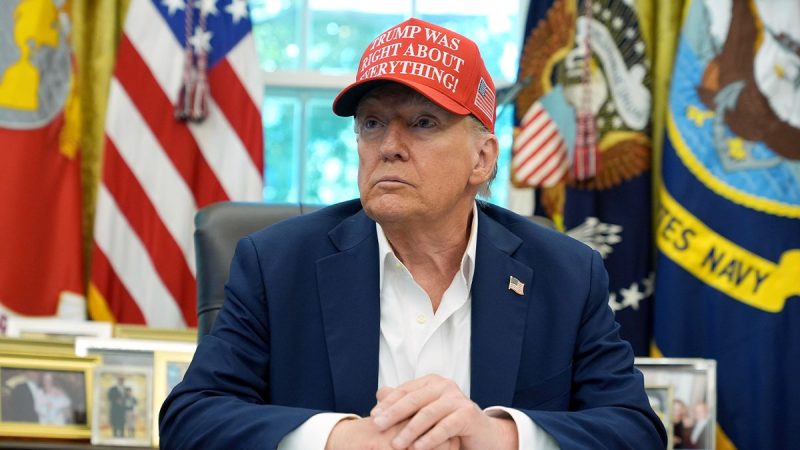
President Donald Trump has attacked the Senate for blocking his preferred nominees from being confirmed to key positions, but lawmakers and people familiar with the process say the Senate is not necessarily to blame.

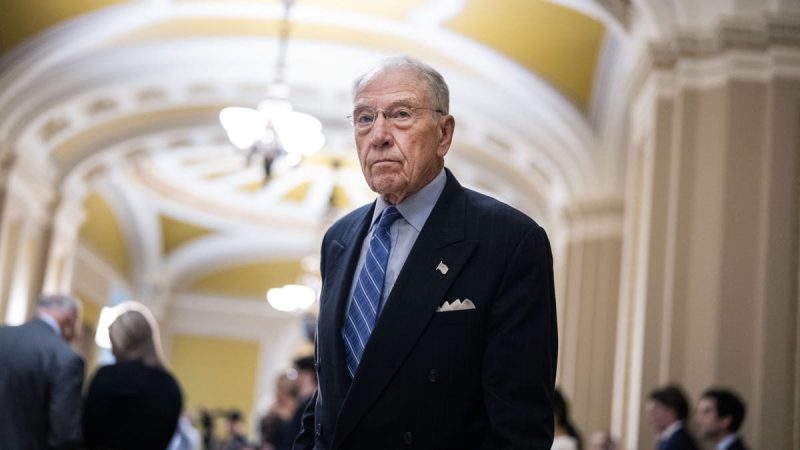
Trump has faulted the Senate’s ‘blue slip’ tradition, an unwritten rule requiring nominees for judge, U.S. attorney and U.S. marshal to obtain home state senators’ approval prior to being confirmed.

He said blue state senators will only greenlight ‘Democrats or maybe weak Republicans.’ The president called on Sen. Chuck Grassley, R-Iowa, chairman of the Senate Judiciary Committee, to abolish the practice, and he threatened to sue over it.

But Grassley and other Republicans are unbudging in their position that blue slips are an indispensable part of the confirmation process. Blue slips have been used for more than a century. Past presidents have gotten many nominees confirmed under the system, suggesting other factors are contributing to Trump’s struggle to secure blue slips from Democrats.

Trump threatens to sue over ‘gentlemen’s agreement’

Trump and his allies escalated attacks on the blue slip process this week, accusing Grassley of blocking nominees by maintaining it.

‘This is because of an old and outdated ‘custom’ known as a BLUE SLIP, that Senator Chuck Grassley, of the Great State of Iowa, refuses to overturn,’ Trump wrote on Truth Social.

The president threatened to sue over what he said was a ‘gentlemen’s agreement,’ though it is unclear whom the government would sue and on what grounds.

‘It’s not based on law, and I think it’s unconstitutional, and I’ll probably be filing a suit on that pretty soon,’ Trump told reporters in the Oval Office.

Asked about the possible lawsuit and why Trump’s nominees in blue states are struggling with confirmation, the White House told Fox News Digital in a statement the holdup must be addressed.

‘Senate Democrats have led a campaign of historic obstruction against President Trump and his nominees,’ White House spokeswoman Abigail Jackson said. ‘The left’s partisan, obstructionist agenda is only hurting the American people and it must end.’

‘Troubling’ pattern of circumventing Senate

Trump appointed his former personal defense lawyer Alina Habba as ‘interim’ U.S. attorney, which carries a 120-day term limit that federal judges have the ability to extend under federal vacancy laws if no one has been confirmed by the Senate to the position by then.

Judges have opted to extend Trump’s nominees, like in Jay Clayton’s case in the Southern District of New York. But in an unusual move, the federal judges of New Jersey rejected Habba.

The judges selected someone else, whom Trump and Attorney General Pam Bondi promptly fired. Trump and Bondi then used a series of legal maneuvers to reinstall Habba to another temporary term, but a federal judge ruled the moves unconstitutional. The Trump administration is appealing that decision in a case that could now make its way to the Supreme Court and force the justices to weigh in on what has become a pattern of Trump end-running around the Senate.

John Sarcone in the Northern District of New York faced a situation similar to Habba’s, and he is now serving as ‘acting’ U.S. attorney. Bill Essayli in the Central District of California, who has taken on a vocal pro-Trump stance amid high-profile deportation cases in his district, has also transitioned from ‘interim’ to ‘acting’ U.S. attorney. Acting U.S. attorneys also carry a temporary term of 210 days. It is unclear how Trump will proceed once those terms expire.

Carl Tobias, University of Richmond law professor, said the workarounds defy the spirit of the Constitution, which says nominees must be confirmed ‘with the advice and consent’ of the Senate.

‘It’s good to have that scrutiny from the Judiciary Committee and then on the floor, and so hopefully they could return to something like that, but I’m not sure that’s going to happen, and so I think it is troubling,’ Tobias told Fox News Digital.

How to get a blue slip from the other party

The administration must engage with the Senate during the nomination process, including by consulting early on with home state senators about possible nominees.

Former President Joe Biden secured blue slips from opposing parties for 49 nominees, including 27 U.S. attorneys, while Trump’s first administration was able to secure confirmations for nearly all the U.S. attorneys the president nominated.

The blue slip, to senators, is a crucial negotiating tool, one that Article III Project founder Mike Davis said is not going away, despite Trump’s intensifying objections to it. Davis, a staunch Trump supporter, served as counsel to the Senate Judiciary Committee and oversaw nominations under Grassley in the prior Trump administration.

‘It’s not going away. Why would it? Why would senators give up their power? They’re not going to do it,’ Davis told Fox News Digital, adding that blue slips to the Senate are ‘the sacred china that’s never going to get broken.’

The vetting process

Nominees must also provide the Senate Judiciary Committee with a questionnaire, an FBI background check and financial disclosures. A source familiar with the process told Fox News Digital the committee did not receive Habba’s paperwork to begin vetting her. 

Habba has said she could not begin the process because Democratic Sens. Cory Booker and Andy Kim of New Jersey, would not give blue slip approval. It is unclear if and when the Trump administration approached the pair of senators about Habba. 

Habba, like Trump, blamed Grassley.

‘The blue slip TRADITION prevents a nominee from getting to the point of making that case to the committee and Senate floor. You know who can get rid of it? YOU @ChuckGrassley,’ Habba wrote on X.

She told Grassley ‘this is a time for leadership, not deflection’ and that the chairman should not be ‘doing the dirty work of Thom Tillis, Corey Booker and Andy Kim.’

Booker’s and Kim’s offices did not respond to a request for comment.

Grassley defends bipartisanship

Grassley went on a tear on social media this week, defending his decision to maintain blue slips, which the committee chair has discretion over.

‘U.S. Atty/district judge nominee without a blue slip does not hv the votes to get confirmed on the Senate floor & they don’t hv the votes to get out of cmte,’ the 91-year-old senator wrote. ‘As chairman I set Pres Trump noms up for SUCCESS NOT FAILURE.’

Sen. Thom Tillis, R-N.C., who is among several Republicans who will not vote for a nominee who has not been approved by home state senators, pointed to a statement on social media when asked for comment by Fox News Digital.

‘Chairman Grassley is a principled conservative who wants to keep radical liberals off the bench. Getting rid of the blue slip is a terrible, short-sighted ploy that paves the path for Democrats to ram through extremist liberal judges in red states over the long-term,’ Tillis wrote on X.

Are Democrats to blame?

Trump has thus far secured opposing party blue slips for four nominees. Davis said Trump is facing a unique level of obstruction from Democrats.

‘Every White House does what it can to engage the opposition party, but Democrats have made it clear they’re not interested in working with President Trump, so it’s understandable that his focus has been elsewhere for now,’ Davis said.

Senate Minority Leader Chuck Schumer, D-N.Y., for instance, has refused to give a blue slip to Clayton, the former Securities and Exchange Commission chairman. But Clayton’s ability to win the vote of the federal judges in the Southern District of New York has allowed him to serve as U.S. attorney without confirmation.

Sen. Dick Durbin, D-Ill., Senate Judiciary Committee ranking member, has further complicated the confirmation process by putting a hold on U.S. attorney nominees, which drastically slows, but does not fully block, the process.

Vice President JD Vance, then a senator, did the same for Biden’s nominees toward the end of the last administration.

Trump’s fight with the upper chamber is likely to evolve, especially as higher courts weigh in on Habba’s nomination, which is currently invalid, according to the district court judge’s decision this month. The U.S. Court of Appeals for the Third Circuit has set a briefing schedule in the case that stretches through October, but eventually the Supreme Court could also chime in on whether Trump’s manner of sidestepping the Senate is constitutional. 
This post appeared first on FOX NEWS

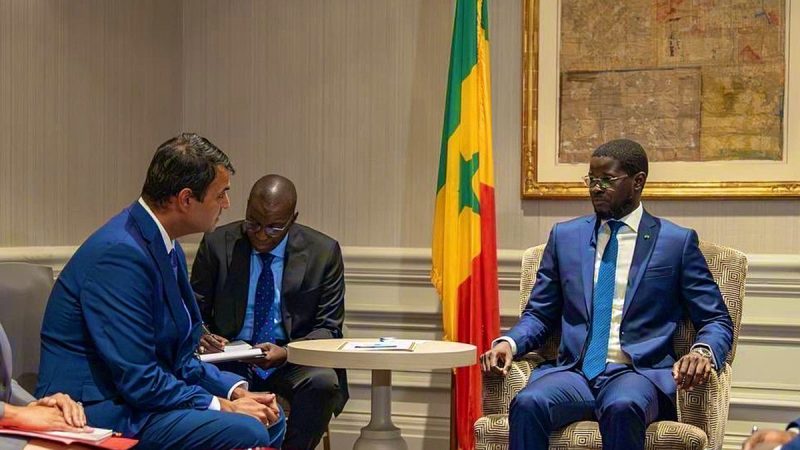
Dr. Sohan Dasgupta, appointed earlier this year as the political head of the Millennium Challenge Corporation (MCC), told Fox News Digital he is stepping down after a four-month sprint, declaring his mission to preserve and reposition the U.S. agency as a strategic foreign policy tool as ‘accomplished.’

Created by Congress in 2004, MCC delivers five-year infrastructure and energy compacts to developing nations that meet strict governance standards. Unlike traditional aid, its investments are structured to drive long-term economic growth and open markets for U.S. companies.

Since its creation under President George W. Bush, MCC has often been grouped with other U.S. aid programs. 

Career staff have long emphasized development goals like poverty reduction, education, and infrastructure, but unlike USAID, MCC was established as a corporate body with a fiduciary duty to ensure effectiveness.

A White House official, speaking on background to Fox News Digital, argued the agency too often presented itself as aid rather than investment before President Donald Trump took office.

Dasgupta pushed staff to adopt a different lens, pressing them to evaluate projects based on the return on investment for the United States, the degree of strategic alignment with partner countries, and whether MCC compacts could be used to strengthen U.S. leverage in negotiations.

A Center for Strategic and International Studies (CSIS) report this spring argued that MCC is not a traditional aid agency but an ‘investment’ tool uniquely suited for an ‘America First’ agenda. 

The authors warned shuttering it would hand China ‘diplomatic and economic wins’ while leaving half-built projects abroad, and noted Trump-era partner selections, from Nepal to Côte d’Ivoire to the Pacific Islands, were strategically chosen to counter Chinese influence. 

‘The United States and the world are safer, stronger, and more prosperous with the MCC model than without it,’ the report concluded.

MCC’s current portfolio under Trump includes some of its largest-ever compacts: a $500 million deal in Nepal funding nearly 200 miles of transmission lines, a $480 million compact in Sierra Leone expanding electricity access and a $202 million program in Kosovo focused on grid-scale battery storage. Other investments include $536 million in Côte d’Ivoire, $537 million in Mozambique and a water compact in Mongolia.

Dasgupta told Fox News Digital that his role was to press MCC staff to think in terms of U.S. national security and economic benefits. ‘Reforming MCC into a vital national security and foreign policy asset’ was how he described his ‘mission accomplished’ moment.

A May 9 email from the White House Liaison to MCC staff, obtained by Fox News Digital, shows Dasgupta was appointed as a Schedule C Senior Advisor ‘assuming political leadership for the agency.’

MCC’s Fiscal Year 2026 Candidate Country Report, released this month, lists Kosovo, Nepal, Sierra Leone, Côte d’Ivoire, Mozambique, Mongolia, Solomon Islands, Fiji and Tonga among its eligible partner nations.

‘Service has many forms. My goal was to carry out particular projects and missions, then make way for others,’ Dasgupta said.

On China, he added: ‘Critical minerals and rare earth elements are a vital part of American strength … MCC has really understood that.’

Kosovo’s ambassador to the U.S., Ilir Dugolli, praised Dasgupta’s responsiveness. ‘We worked closely soon after he arrived at MCC … I respect him enormously for the way he handled his portfolio and how professional he was,’ Dugolli told Fox News Digital.

On energy security, Dugolli said: ‘Kosovo fully aligns with U.S. foreign policy … Batteries are extremely important, especially after last year’s terrorist attack on the Iber-Lepenc canal. The compact is the single most critical investment for our country’s energy security and economic resilience.’

Dasgupta’s departure also comes as the Trump administration pursues cuts to traditional U.S. foreign aid programs and seeks to reframe America’s global engagement under its ‘America First’ policy. 

While agencies such as USAID have faced reductions and restructuring, Dasgupta argues the MCC has been preserved as a leaner, investment-driven tool aligned with the administration’s emphasis on strategic deals and competition with China.

Analysts estimate China controls about 70% of global rare earth mining and nearly 90% of processing capacity, according to the Oxford Institute for Energy Studies. 

Between 2023 and 2025, China imposed export restrictions on strategic minerals, according to CSIS. Dasgupta argues MCC’s work in allied nations can help diversify supply chains and strengthen resilience, though MCC has not publicly described critical minerals as a formal focus of its work.

‘Quick wins’ like Kosovo’s battery project and Nepal’s power lines, Dasgupta said, show how American aid can advance prosperity abroad while reinforcing security at home.

With his departure, MCC continues compacts in dozens of countries worldwide. 

The MCC did not immediately respond to Fox News Digital’s request for comment.

This post appeared first on FOX NEWS

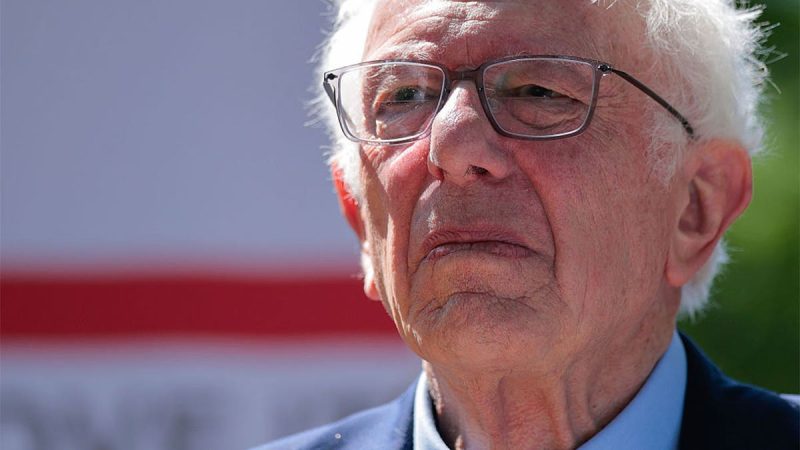
Sen. Bernie Sanders, I-Vt., is demanding that Health and Human Services Secretary Robert F. Kennedy Jr. resign after multiple senior officials at the Center for Disease Control and Prevention departed the agency.

The Trump administration announced the removal of CDC Director Susan Monarez earlier this week, less than a month after she was confirmed, after she refused Kennedy’s directives to adopt new limitations on the availability of some vaccines, including for approvals for COVID-19 vaccines.

Four other senior CDC officials resigned in protest after Monarez’s ouster, pointing, in part, to anti-vaccine policies pushed by Kennedy. Hundreds of workers at the agency also walked out of the CDC’s headquarters in Atlanta in support of their former colleagues.

In response to the departures, Sanders wrote in an op-ed for The New York Times that Kennedy is ‘endangering the health of the American people now and into the future’ and accused the secretary of firing Monarez because she refused ‘to act as a rubber stamp for his dangerous policies.’

‘Despite the overwhelming opposition of the medical community, Secretary Kennedy has continued his longstanding crusade against vaccines and his advocacy of conspiracy theories that have been rejected repeatedly by scientific experts,’ Sanders wrote in the piece published Saturday.

‘It is absurd to have to say this in 2025, but vaccines are safe and effective,’ he added. ‘That, of course, is not just my view. Far more important, it is the overwhelming consensus of the medical and scientific communities.’

Sanders also noted that vaccines for diseases like polio and COVID-19 have saved hundreds of millions of lives around the world.

Sanders, the ranking member of the Senate’s health committee, opposed Kennedy’s confirmation earlier this year. The secretary was sworn in back in February. Deputy HHS Secretary Jim O’Neill was selected to be the acting director of the CDC after Monarez’s termination.

The Trump administration has defended Monarez’s ouster, with White House press secretary Karoline Leavitt saying Thursday the president has the ‘authority to fire those who are not aligned with his mission.’

‘The president and Secretary Kennedy are committed to restoring trust and transparency and credibility to the CDC by ensuring their leadership and their decisions are more public-facing, more accountable, strengthening our public health system and restoring it to its core mission of protecting Americans from communicable diseases, investing in innovation to prevent, detect and respond to future threats,’ Leavitt told reporters.

Sanders earlier this week called for an investigation into Monarez’s ouster, criticizing the move as ‘reckless’ and ‘dangerous.’

In the op-ed, he wrote that Kennedy ‘has profited from and built a career on sowing mistrust in vaccines,’ adding that the secretary is now ‘using his authority to launch a full-blown war on science, on public health and on truth itself.’ 

He also said it will become harder for Americans to obtain ‘lifesaving vaccines’ with Kennedy leading HHS.

‘The danger here is that diseases that have been virtually wiped out because of safe and effective vaccines will resurface and cause enormous harm,’ Sanders wrote, stressing that the U.S. needs to be better prepared in the case of another pandemic.

‘Secretary Kennedy is putting Americans’ lives in danger, and he must resign,’ Sanders wrote. ‘In his place, President Trump must listen to doctors and scientists and nominate a health secretary and a C.D.C. director who will protect the health and well-being of the American people, not carry out dangerous policies based on conspiracy theories.’

Fox News Digital reached out to HHS for comment.

Reuters contributed to this report.

This post appeared first on FOX NEWS

The Israel Defense Forces said on Saturday that it had killed the Houthi prime minister and several other senior officials in a strike in Yemen. 

‘Houthi Prime Minister, Ahmed Al-Rahawi, along with additional senior officials of the Houthi terrorist regime were eliminated during an IDF strike in Sanaa, Yemen,’ the IDF said in a social media post.

The IDF said it had targeted a Houthi site where officials responsible ‘for the use of force, the military buildup of the Houthi terror regime, and the advancement of terror actions against Israel. The IDF will continue to target all threats against Israeli civilians.’ 

The airstrike was conducted by the Israeli Air Force Thursday using intelligence gathered by the IDF. 

‘The strike was made possible by seizing an intelligence opportunity and completing a rapid operational cycle, which took place within a few hours,’ the IDF said. 

A Houthi statement confirmed Al-Rahawi’s death. 

It was Israel’s second strike against the Houthis in Yemen in a week. 

On Sunday, Israel hit Yemen’s capital in response to missiles fired by the Houthis. The attack killed six people and wounded 86 others, according to Reuters, which cited a Houthi Health Ministry spokesperson.

‘As we warned the Houthis in Yemen: ‘After the plague of darkness comes the plague of the death,’’ said Israeli Defense Minister Israel Katz, who was in the IDF central command during the attack. ‘Whoever raises a hand against Israel, their hand will be cut off.’

The IDF previously said the Houthis were operating under Iran’s direction to harm Israel and its allies. The IDF also blamed the Houthis for ‘undermining regional stability and disrupting global freedom of navigation.’ 

The strikes Thursday were launched after Israel intercepted two drones from Yemen and happened during a speech by Houthi leader Abdul-Malik Badreddin al-Houthi, according to YNet. Additionally, the Israeli outlet reported that the speech went on without interruption.

The conflict between Israel and the Houthis has gone on for nearly two years. 

The Iran-backed terror force threatened to strike Israel just days after Hamas’ Oct. 7 massacre. Within weeks of Hamas’ attacks, the Houthis shot missiles and drones at Israel that were intercepted by U.S. forces aboard the USS Carney.

The Houthis have continued to attack Israel in support to Hamas. 

The Associated Press contributed to this report. 

This post appeared first on FOX NEWS

Artificial intelligence (AI) stocks saw continued pressure this week as concerns about overvaluation weighed on the sector ahead of NVIDIA’s (NASDAQ:NVDA) results release for its second fiscal quarter.

The company beat Wall Street projections on revenue, earnings and profits, but shares still fell in extended trading on Tuesday (August 26) after it reported no H20 sales to China, where competition from domestic firms is heating up.

John Murillo, chief business officer at B2BROKER, suggested the pullback could present a short-term buying opportunity for high-quality names with strong fundamentals, but cautioned that it could be the start of a broader correction.

Reports that DeepSeek will train its newest AI models on Huawei chips and Cambricon Technologies’ (SHA:688256) 4,300 percent revenue surge underscore the shifting AI landscape. Still, optimism wasn’t absent: NVIDIA CEO Jensen Huang pointed to accelerating global demand and unveiled a US$60 billion buyback program to reassure investors.

“All in all, the sector’s long-term trajectory remains bullish, with AI adoption accelerating across industries,” said Murillo.

Nasdaq Composite, NVIDIA and Dell Technologies performance, August 26 to 29, 2025.

Chart via Google Finance.

However, it wasn’t enough to reassure the public, and NVIDIA’s share price fell over 4 percent between Wednesday (August 27) and Friday (August 29). As investors analyzed new inflation data that indicates tariffs are impacting prices, other AI-related stocks saw losses too, pulling the S&P 500 (INDEXSP:.INX) from its recent record highs.

With that, here’s a look at some of the other drivers that shaped the tech sector this week.

1. Intel warns of adverse reactions to government equity stake

In a US Securities and Exchange Commission Form 8-K filing dated August 22, Intel (NASDAQ:INTC) warns that the federal government’s 10 percent stake in its business could cause “adverse reactions,” including litigation from investors, employees, customers, suppliers, partners and foreign governments.

The company also discloses a clause in the agreement that would raise the government’s stake to 15 percent if the company fails to meet set manufacturing thresholds.

Moreover, the filing states that, if this agreement prompts other government bodies to seek similar stakes, the varied agendas could diminish the voting power of other shareholders.

The comments come after the White House announced last week that it would take a 10 percent stake in the company in a deal worth around US$8.9 billion. On Monday, (August 25), President Donald Trump suggested he might pursue similar agreements with other American companies, posting on Truth Social:

“I will also help those companies that make such lucrative deals with the United States. I love seeing their stock price go up, making the USA RICHER, AND RICHER.”

Meanwhile, White House economic advisor Kevin Hassett told CNBC that the deal is part of a broader strategy to create a sovereign wealth fund that may include additional companies.

Later, during an interview on CNBC’s Squawk Box on Tuesday, Secretary of Commerce Howard Lutnick said Pentagon officials are considering acquiring equity stakes in leading defense contractors such as Lockheed Martin (NYSE:LMT).

2. Apple sets date to reveal fall product lineup

On Tuesday, Apple (NASDAQ:AAPL) invited media members and analysts to its next launch event, which is scheduled for September 9 at 10:00 a.m. PST.

The event, which will be live streamed from the iPhone maker’s campus, is expected to be the venue for the introduction of the new iPhone 17 lineup and updated Apple Watch models.

The new iPhone series is rumored to include four models:

  • iPhone 17
  • iPhone 17 Pro
  • iPhone 17 Pro Max
  • A new iPhone 17 Air that will reportedly replace the iPhone 16 Plus. This new model is rumored to be exceptionally thin, potentially as slim as 5.5 millimeters, a major new design direction for Apple.

The new iPhones are also expected to feature a new ‘Liquid Glass’-based interface as part of iOS 26.

According to Bloomberg journalist Mark Gurman, who has a reputation for being one of the most accurate and prolific sources of leaks about Apple’s future products, the company is planning three years of major iPhone redesigns, starting with the September release. Apple’s first foldable iPhone, code-named V68, is slated to arrive in 2026, according to Gurman. Apple’s 2027 ‘iPhone 20’ will feature curved glass edges to complement the upcoming Liquid Glass-based interface for iOS and other operating systems.

3. IBM, AMD to partner on quantum supercomputer

IBM (NYSE:IBM) and Advanced Micro Devices (AMD) (NASDAQ:AMD) said on Tuesday that they plan to collaborate to develop quantum-centric supercomputing.

The two companies, which have each fundamentally advanced the frontiers of quantum hardware and software, AI accelerators, CPUs and GPUs, said they will work together to “develop scalable, open-source platforms that could redefine the future of computing” by combining their strengths in quantum and high-performance computing.

“Quantum computing will simulate the natural world and represent information in an entirely new way,” said Arvind Krishna, chairman and CEO of IBM, adding that the firms’ collaborative efforts will “build a powerful hybrid model that pushes past the limits of traditional computing.”

“We see tremendous opportunities to accelerate discovery and innovation,” said Dr. Lisa Su, chair and CEO of AMD.

In an interview with Axios, Jay Gambetta, IBM’s quantum vice president, said he aims to get fault-tolerant quantum computers, a set of techniques and architectural designs that ensure a computation can proceed accurately even in the presence of errors, “by the end of this decade.”

4. Cost of Meta data center to exceed original estimate

During a cabinet meeting on Tuesday, Trump told reporters that Meta Platforms’ (NASDAQ:META) Louisiana data center will cost the company around US$50 billion to build.

That’s over 70 percent of the company’s projected CAPEX spending in its latest quarterly report.

“When they said US$50 billion for a plant, I said, ‘What the hell kind of plant is that?’” said Trump, revealing a photo of the proposed data center, Hyperion, superimposed over the island of Manhattan.

“When you look at this, you understand why it’s US$50 billion,” he added.

When the data center was announced, officials in Louisiana estimated the project would cost around US$10 billion. Meta has not confirmed this new estimate and declined to comment on Trump’s remarks.

5. Fusion developer raises US$863 million for energy development

On Thursday (August 28), Commonwealth Fusion Systems, a leading nuclear fusion developer in the US, announced it has secured US$863 million in an oversubscribed Series B2 funding round.

Investors including Morgan Stanley (NYSE:MS) and NVIDIA contributed to this capital raise, which will facilitate the completion of Commonwealth’s Spac fusion demonstration machine, as well as the commencement of construction on a new ARC power plant in Virginia.

“Investors recognize that CFS is making fusion power a reality. They see that we are executing and delivering on our objectives,” said the company’s CEO and co-founder, Bob Mumgaard. “This funding recognizes CFS’ leadership role in developing a new technology that promises to be a reliable source of clean, almost limitless energy — and will enable investors to have the opportunity to capitalize on the birth of a new global industry.”

Securities Disclosure: I, Meagen Seatter, hold no direct investment interest in any company mentioned in this article.

This post appeared first on investingnews.com

Here’s a quick recap of the crypto landscape for Friday (August 29) as of 9:00 p.m. (UTC).

Get the latest insights on Bitcoin, Ethereum and altcoins, along with a round-up of key cryptocurrency market news.

Bitcoin and Ethereum price update

Bitcoin (BTC) was priced at US$108,292, a 3.2 percent decrease in 24 hours. It opened at its highest valuation of the day, US$110,473. Its lowest valuation today was US$108,107.

Bitcoin price performance, August 29, 2025.

Chart via TradingView.

Bitcoin’s slip below the US$110,000 threshold stoked fears of a broader crypto market correction on Friday as liquidations doubled, the US Federal Reserve’s preferred inflation gauge showed persistent price pressures, and Bitcoin flashed a potential risk pattern. Analysts warned the token could be edging toward bear market territory.

According to analyst Rekt Capital, BTC needs to regain US$114,000 as support to prevent an extended correction period.

Adding to volatility, a long-dormant Bitcoin whale that resurfaced this month — after buying US$2.5 billion in Ethereum — shifted another US$1.1 billion on Friday.

Ether (ETH) was priced at US$4,345.17, down by 2.3 percent over the past 24 hours. Its highest valuation today was US$4,389.08, and its lowest was US$4,279.96.

Altcoin price update

  • Solana (SOL) was priced at US$203.21, down by 3.5 percent over 24 hours. Its lowest valuation on Friday was US$201.61, and its highest valuation was US$211.02.
  • XRP was trading for US$2.82, down by 4.4 percent in the past 24 hours. Its lowest valuation of the day was US$2.80, and its highest was US$2.87.
  • SUI (Sui) was trading for US$3.26, down by 4.8 percent in the past 24 hours. Its lowest valuation of the day was US$3.22, and its highest level of the day was US$3.35.
  • Cardano (ADA) was priced at US$0.8204, down by 3.1 percent. Its lowest valuation for Friday was US$0.8131, and its highest valuation was US$0.8314.

Today’s crypto news to know

Stablecoins cross US$283 billion threshold record

The stablecoin market reached a new milestone on Friday as total supply climbing to $282.8 billion, according to data from DefiLlama. That marks a 128 percent increase since January, driven by stronger demand for dollar-pegged tokens and fresh regulatory clarity in the US. The surge also follows passage of the GENIUS Act, which sets out federal guidelines for stablecoin issuers and has been billed as a growth catalyst within the sector.

Analysts say stablecoins now serve as a “distribution channel” for US dollars, powering cross-border payments and on-chain settlement systems.

Trump-linked miner American Bitcoin targets September Nasdaq listing

American Bitcoin, a mining company backed by Eric Trump and Donald Trump Jr., is preparing to list on Nasdaq in September following its merger with Gryphon Digital Mining, Reuters reported.

The firm is majority owned by Hut 8 Mining (TSX:HUT,NASAQ:HUT), which controls 80 percent of the business, while the Trump brothers are expected to collectively hold about 19 percent. The company has already raised $220 million to expand its operations and accumulate Bitcoin, adding 215 BTC to its balance sheet as of June.

With Bitcoin trading near US$112,000 this week, that stash is valued at roughly US$24 million.

CEO Asher Genoot said American Bitcoin aims to become one of the largest US mining firms, with backing from high-profile investors including Gemini founders Tyler and Cameron Winklevoss.

Hut 8’s own share price has rallied 29 percent this year. If listed today, American Bitcoin would rank among the top 30 public companies holding Bitcoin in the US.

Eric Trump hails US-China leadership in Bitcoin

Speaking at the BTC Asia conference in Hong Kong, Eric Trump praised China’s influence on the digital asset industry and said the US and Beijing were “leading the way” in shaping Bitcoin’s future.

He credited the Middle East as another fast-moving hub for crypto adoption, while stressing Bitcoin’s ability to unite people across borders and cultures.

The younger Trump also added that his father’s administration had accelerated digital asset policy faster in seven months than the prior decade managed. He described America as “winning the digital revolution” with support from Wall Street institutions, sovereign wealth funds, and retirement investors.

Asked whether Bitcoin would be on the agenda in an upcoming US-China trade meeting, he suggested broader topics would dominate but said he “would certainly love to talk about bitcoin.”

21Shares files for SEI-tracking ETF

Crypto asset manager 21Shares has submitted an S-1 registration statement to the US Securities and Exchange Commission (SEC) for an exchange-traded fund (ETF) that would track the price of SEI.

The proposed ETF would utilize CF Benchmarks, a crypto price index provider, to track SEI’s price using data from multiple crypto exchanges. Coinbase Custody Trust Company is slated to act as the SEI custodian.

SEI is the native token of the SEI network, a layer-1 blockchain launched in 2023. The network specializes in trading infrastructure for decentralized exchanges and marketplaces, using the SEI token for network gas fees and governance participation. 21Shares is also exploring the possibility of staking SEI to generate additional returns, though the firm noted in its filing that it is still investigating potential ‘undue legal, regulatory or tax risk’ associated with this practice.

In an X post, 21Shares said the ETF filing is a “key milestone in our vision to expand exchange-traded access to the SEI Network.” US digital asset investment firm Canary Capital also applied for an SEI ETF in April.

Bloomberg’s James Seyffart has listed all 92 crypto ETPs filings and applications awaiting SEC decisions.

US Department of Commerce to publish economic data onchain

The US Department of Commerce (DOC) announced on Wednesday (August 27) that it will begin publishing official economic data on at least nine public blockchains.

Its stated goal is to make vital information immutable and tamper-proof.

In a significant move for the industry that further underscores the potential of decentralized technology to improve governmental operations, the department is collaborating with blockchain data providers Chainlink and Pyth Network to serve as a bridge across various networks, including Bitcoin, Ethereum and Avalanche.

Chainlink will supply data feeds from the Bureau of Economic Analysis, while Pyth will publish GDP data. The DOC will also publish the Personal Consumption Expenditures Price Index and Real Final Sales to Private Domestic Purchasers.

Reports also indicate that exchanges like Coinbase Global (NASDAQ:COIN), Gemini and Kraken helped facilitate the process by assisting with the transactions required to publish the data on-chain.

Aave protocol’s total value locked surges past US$40 billion

While the DOC’s announcement is a major positive for the entire crypto space, the Aave protocol has seen a remarkable surge in its total value locked, exceeding US$40 billion. This comes after the lending platform launched the Horizon RWA Market on Tuesday (August 26), the first real-world application of its ongoing V4 upgrade strategy.

Crypto intelligence platform Nansen also noted the surge in transaction volume on Avalanche this week, with over 11.9 million transactions recorded across over 181,300 active addresses, an increase of 66 percent.

Securities Disclosure: I, Giann Liguid, hold no direct investment interest in any company mentioned in this article.

Securities Disclosure: I, Meagen Seatter, hold no direct investment interest in any company mentioned in this article.

This post appeared first on investingnews.com

America First Legal (AFL) sued the Food and Drug Administration on Friday to obtain Biden-era records related to the government’s internal guidance for the recommended use of puberty blockers for kids.  

The Trump-aligned legal group previously uncovered communications from the former administration through a Freedom of Information Act (FOIA) request, which reportedly showed the FDA knew that these drugs increased mental health risk but still recommended approving them for kids.

Following those uncovered communications, AFL followed up with a separate FOIA requesting documents specifically pertaining to the FDA’s internal guidance for the off-label use of these drugs. Despite acknowledging the federal information request, the FDA has not cooperated, and the deadline to produce documents is up.


‘The Biden administration pushed gender-denying treatments on American kids. Now, it’s time to expose what officials really knew,’ AFL counsel Will Scolinos, said. 

Similar to AFL’s current FOIA request, the group was required to engage in litigation to compel the release of the first set of documents. 

But, eventually, documents were released that seemed to show the Biden-era Division of General Endocrinology at the FDA recommended the agency approve puberty blockers for children despite the knowledge that there were negative impacts associated with them, such as increased depression, suicidality and seizure risks.

‘There is definitely a need for these drugs to be approved for gender transition,’ an FDA official from the agency’s endocrinology division stated in an email uncovered by AFL. In the same communications, the FDA official also explicitly states that studies found ‘increased risk of depression and suicidality, as well as increased seizure risk.’

Such findings have been confirmed by other studies as well.

Researchers at the University of Texas sampled 107,583 patients 18 and older who had gender dysphoria, including some who underwent gender surgery, and concluded that ‘gender-sensitive mental health support … to address post-surgical psychological risks’ is a ‘necessity.’


Males who received surgery had depression rates of 25% compared to males without surgery, who had rates slightly below 12%. Anxiety rates among that group were 12.8% compared to 2.6%.

The same differences were seen among females as well. Those with surgery had 22.9% depression rates compared to 14.6% in the non-surgical group. Females who did get surgery also had a rate of anxiety of 10.5% compared to 7.1% for girls who had not gotten surgery.

Fox News Digital reached out to the FDA for comment but did not immediately receive a response. 

Fox News’ Melissa Rudy and Michael Dorgan contributed to this report

This post appeared first on FOX NEWS

A federal judge in Washington, D.C., on Friday grilled lawyers for the Justice Department and Lisa Cook over President Donald Trump’s historic attempt to fire her from the Federal Reserve.

The landmark case is almost certain to be kicked to the Supreme Court for review. Despite the high-stakes nature of the legal dispute, Friday’s hearing ended after more than two hours without clear resolution. 

U.S. District Judge Jia Cobb, a Biden appointee, declined to immediately grant the temporary restraining order sought by Lisa Cook’s attorneys, which would keep her in her role on the Fed’s Board of Governors for now. 

Cook’s lawyers included the request for the temporary restraining order in the lawsuit filed in federal court on Thursday, challenging Trump’s attempt to fire her from her position on the independent board due to allegations of mortgage fraud. 

Instead, Judge Cobb ordered both parties to submit any supplemental briefs to the court by Tuesday, shortly before she dismissed the lawyers for the long weekend.

Cobb noted the novelty of the case before her, which involves the first attempt by a sitting president to oust a Federal Reserve governor ‘for cause.’ 

The fraud allegations were first leveled by Bill Pulte, a Trump appointee to the federal agency that regulates Fannie Mae and Freddie Mac. He accused Cook of claiming two primary residences in two separate states in 2021, with the goal of obtaining more favorable loan conditions. 

Trump followed up by posting a letter on Truth Social earlier this week that he had determined ‘sufficient cause’ to fire Cook, a dismissal he said was ‘effective immediately,’ prompting her attorneys to file the emergency lawsuit.

The crux of Friday’s arguments centered on the definition of what ‘for cause’ provisions must entail for removal from the board under the Federal Reserve Act, or FRA, a law designed to shield members from the political whims of the commander in chief or members of Congress. 

The arguments also centered on Cook’s claims in her lawsuit that Trump’s attempt to fire her amounts to an illegal effort to remove her from the Fed well before her tenure is slated to end in January 2038 to install his own nominee. 

Lawyers for Cook argued that her firing was merely a ‘pretext’ for Trump to secure a majority on the Fed board, a contention that Cobb admitted made her ‘uncomfortable.’

They also attempted to poke holes in the mortgage fraud allegations, which they said were made on social media and ‘backfilled.’

The case ‘obviously raises important questions’ about the Federal Reserve Board, Cobb said shortly before adjourning court.

She also noted that she had not yet made a determination about the alleged ‘irreparable harm,’ prompting her to set the Tuesday filing deadline.

Cook’s attorneys argued Friday that Trump’s attempt to fire her violates her due process rights under the Fifth Amendment, as well as her statutory right to notice and a hearing under the Federal Reserve Act. 

Her lawyer, Abbe Lowell, noted on several occasions that there was no ‘investigation or charge’ from the administration prior to Trump’s abrupt announcement that he would fire Cook.  

Lowell also vehemently disputed the Justice Department’s allegations that Cook had an ‘opportunity’ to respond to the mortgage fraud accusations leveled by Bill Pulte, noting that they were made just 30 minutes before Trump called for Cook to be removed.  

He told Cobb that it was the latest attempt by the Trump administration to ‘litigate by tweet.’

Lawyers for the Trump administration, for their part, argued that the president has broad latitude to determine the ‘for cause’ provision.

Justice Department attorney Yakoov Roth told Cobb that the determination of when to invoke the provision should be left to the president, regardless of whether it is viewed by others as ‘pretextual.’

‘That sounds to me like the epitome of a discretionary determination, and that is when the president’s power is at [its] apex,’ Roth said.

DOJ lawyers also noted that Cook, to date, has not disputed any of the allegations in question and argued there is ‘nothing she has said’ about the allegations that would cause her to not be fired.

‘What if the stated cause is demonstrably false?’  Cobb asked, going on to cite hypothetical concerns that a president could, theoretically, use allegations to stack federal boards with majorities.

As for the issue of ‘irreparable harm,’ Justice Department attorneys argued that it would be more harmful for Cook to remain in office, arguing that the ‘harm of having someone in office who is wrongfully there … outweighs the harm of someone being wrongfully removed from office.’

Cook’s attorneys said Friday that in reviewing the lawsuit, the court need not itself establish a definition of what ’cause’ means under the Federal Reserve Act.

Instead, Lowell suggested, the court should instead work backwards to determine whether the accusations leveled by Pulte were in fact ‘backfilled’ by Trump to form the basis of her removal.  

‘It’s very difficult to come up with an 11-page definition of what it is,’ Lowell said Friday of the ’cause’ definition, adding that it is far easier to come up with a one-page definition of ‘what it’s not.’ 

‘Whatever it is, it’s not this,’ Lowell said.

This post appeared first on FOX NEWS

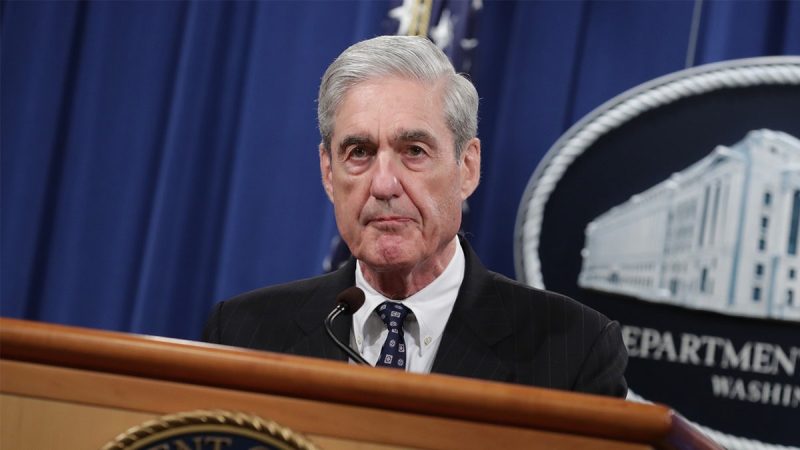
House investigators’ plan to grill former FBI Director Robert Mueller has hit a snag. 

The House Oversight Committee was set to have Mueller appear before the panel on Tuesday as part of the House’s probe into Jeffrey Epstein. However, a source familiar with the investigation told Fox News Digital that lawmakers ‘learned that Mr. Mueller has health issues that preclude him from being able to testify.’ 

‘The committee intends to withdraw its subpoena,’ the source said. 

Mueller was one of many notable figures, including the Clintons, who House Oversight Committee Chair James Comer, R-Ky., subpoenaed to testify before the panel. 

He would have been the second witness appearing in-person before the House Oversight Committee after former Attorney General Bill Barr did so last month.

His closed-door deposition was expected to see at least some lawmakers on both sides attend, with the investigation so far seeing wide bipartisan support in an otherwise highly divided era for Congress.

Mueller was most recently in the headlines for his role as special counsel investigating whether Russia interfered in the 2016 election in favor of President Donald Trump.

That probe, which did not find Trump to have committed any wrongdoing, saw 34 people indicted and eight convictions or guilty pleas, including several people associated with the president.

House investigators were expected to dive into Mueller’s time as director of the FBI. He led the bureau under former Presidents George W. Bush and Barack Obama, from September 2001 until September 2013.

It was during that window that the federal government first investigated Epstein, something Comer pointed out in his letter subpoenaing Mueller.

‘When you were FBI Director, an FBI investigation of Mr. Epstein led to an Assistant U.S. Attorney in the Southern District of Florida preparing a draft 60-count indictment of Mr. Epstein in 2007,’ Comer wrote.

‘However, the next year, Mr. Epstein pled guilty in Florida state court to two prostitution offenses, and, in exchange, he and his co-conspirators received immunity from federal prosecution through a non-prosecution agreement.’

That non-prosecution agreement has been widely criticized and is now the basis for Epstein accomplice Ghislaine Maxwell to appeal her conviction and 20-year prison sentence before the Supreme Court.

It’s not clear how much of a role Mueller would have had in that agreement. Alexander Acosta, the former Trump labor secretary and U.S. attorney in Florida who signed off on the deal, is sitting down with the House Oversight Committee for a voluntary transcribed interview later this month.

Comer sent out a flurry of subpoenas last month in relation to the Epstein probe. 

Other figures also compelled to appear after Mueller are former FBI Director James Comey, former Attorney General Loretta Lynch and ex-first couple Bill and Hillary Clinton.

This post appeared first on FOX NEWS

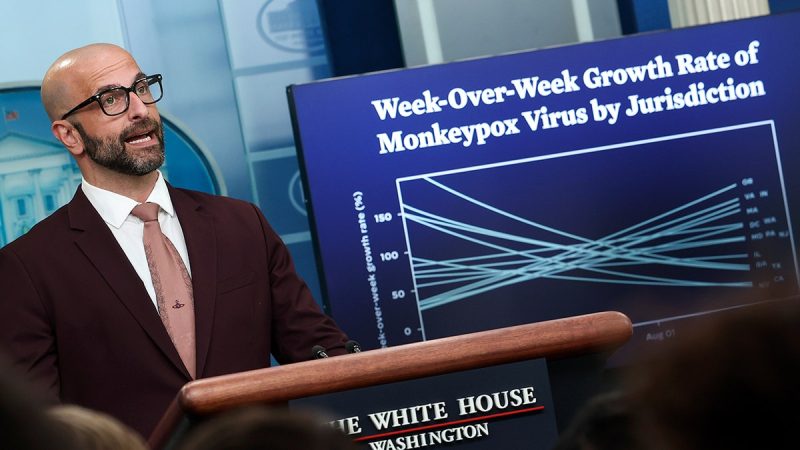
Demetre Daskalakis, an official at the Centers for Disease Control and Prevention (CDC), resigned this week, claiming the Trump administration’s policies ignore science. However, his own leadership during the Biden-era monkeypox response was criticized for putting optics over public health.

Amid the Trump administration’s efforts to push out CDC Director Susan Monarez, a handful of other top CDC officials, including Daskalakis, resigned in protest of the Trump administration’s policies. Daskalakis wrote in his resignation letter that was posted to social media that the health policies put forward by Secretary Robert F. Kennedy do not ‘reflect scientific reality.’ He also accused the Trump administration of attempting to ‘erase transgender populations,’ while also using the term ‘pregnant people’ to describe women who are about to give birth.

But flashback to 2022 and 2023, after the monkeypox virus had spread across several countries and made its way into the U.S., during which Daskalakis was among the Biden administration’s top advisers who spearheaded the national response to the disease outbreak. 

Government communications from that time period, uncovered by watchdog group the Oversight Project, show that officials were aware that the disease was spreading among the gay community. However, those communications, and other records, show the administration appeared to be more concerned with protecting the stigma targeting the gay community, than they were with implementing measures that would provide the best mitigation response.

‘A common theme was public health officials identifying locations where outbreaks occurred, to include bathhouses and saunas,’ according to the Oversight Project. ‘Officials never broached consideration of shutting down these locations. This draws a stark contrast to the public health guidance and shutdowns of gathering places during COVID, to include gyms and skate parks.’

In 2023, after the monkeypox outbreak had taken hold in the U.S., Daskalakis went on national television to let the country know that his team was ‘making sure [they] got the word out in a way that supports people’s joy, as opposed to calling them risky.’

‘You know, one person’s idea of risk, is another person’s idea of a great festival or Friday night, for that matter. So, we have to sort of embrace that with joy and make sure that folks know how to keep themselves safe,’ the Biden monkeypox coordinator added.


Meanwhile, during the outbreak, Daskalkis posted a tweet from gay sex app Grindr that stated ‘Dr. Daskalakis could jab me any day,’ with a sticker of a flattered cat.

In other social media posts from around the same time, Daskalkis can be seen using male models wearing leather bondage straps to make an entrance at an HIV prevention summit. 

While in his role at the White House leading the monkeypox response, Daskalkis also reportedly ran an STD screening operation from an after-hours sex club in New York City. When asked about the operation in an interview, Daskalakis described it as ‘exciting’ and added there was ‘not much sleep time.’ Later in the interview, he added: ‘I’d already kind of been the bathhouse HIV testing doctor.’

Fox News Digital reached out to Daskalakis about the juxtaposition between his criticism of Kennedy’s policies not reflecting ‘scientific reality,’ and his role in the Biden administration’s approach to monkeypox, but did not receive an immediate response.

This post appeared first on FOX NEWS