
Author

admin

Browsing

Bold Ventures Inc. (TSXV: BOL,OTC:BVLDF) (the ‘Company’ or ‘Bold’) is pleased to announce the discovery of a new style of mineralization on its Wilcorp Property (the ‘Property’) in the Atikokan area in Ontario, consisting of significant Au-Ag-Cu mineralization from sulphide-quartz stringers in highly carbonatized rock. One grab sample in September of this year returned 4.3 gt Au, 277 gt Ag (8.9 ozt), and 1.8% Cu, as well as 0.16% Zn. See Photo 1 below.

Photo 1: Sample C278909: 4.3 g/t Au, 277 g/t Ag (8.9 oz/ton), 1.8% Cu

To view an enhanced version of this graphic, please visit:
https://images.newsfilecorp.com/files/5762/269215_37e4026354495898_001full.jpg

The 2025 prospecting aimed to follow up on a 2024 sample in this location which returned 333 ppb Au, 13.8 g/t Ag, 76 ppm Co, 1010 ppm Cr, 0.34% Cu, and 527 ppm Ni (Robertson 20251). One additional gold anomaly of 111 ppb Au was obtained in 2025 in outcrop approximately 90 meters east of the new showing. For sample locations see Table 1.

1 Robertson, C. 2025. Work Report of the Fall 2024 Prospecting and Sampling Programs on the Wilcorp Project, Ontario, for Bold Ventures Inc., Thunder Bay South District, NTS 52B14SW, McCaul Township, Ontario MNDM Assessment file number 20000022746.

The mineralization occurs in outcrop on the north side of an ENE-trending lineament in the southeastern part of the property. The lineament is subparallel to the Quetico Fault Zone (QFZ) to the south and may represent a subparallel fault zone. A 2012 Induced Polarization (I.P.) survey carried out by Bold identified a series of moderate to very strong chargeability anomalies within the lineament south of the new showing (see Figure 1), over a distance of approximately 1.5 km.

The QFZ is intruded by the Atikokan River Intrusions, a series of mafic to ultramafic intrusions which host Fe, Cu and Co mineralization (MacTavish 19992). The closest of these intrusions to the Wilcorp Property is the Shepherd Intrusion, approximately 300 meters south of the Property boundary. It is unclear if the new copper mineralization may be related to these intrusions. A gabbroic rock was observed 15 meters west of the new showing in outcrop, but more geological mapping and petrographic work must be carried out to determine the nature of this rock type and any possible link to the Au-Ag-Cu mineralization as well as the elevated Co, Cr, Ni and Zn mineralization identified in this area.

To date the Wilcorp Project, which consists of 18 staked claims and 4 patented claims covering 264 hectares, has only been known to host orogenic gold mineralization. One 2024 grab sample of quartz veining returned 16 g/t Au in the vicinity of the historic Eagle Prospect in the northwest corner of the property (See Bold’s October 31, 2024 news release). For more details on the Wilcorp Project, refer to Bold’s website.

2 MacTavish, A.D. 1999. The mafic-ultramafic intrusions of the Atikokan-Quetico area, northwestern Ontario; Ontario Geological Survey, Open File Report 5997, 127p.

Burchell Project Ongoing Activities

Washing and channel sampling is ongoing at Bold’s Burchell Project, 100 km west of Thunder Bay, Ontario. A first batch of channel samples has now been submitted for analysis.

QAQC Protocols

Rock samples were collected, documented and photographed in the field, then placed in sealed bags and delivered to Activation Laboratories (ActLabs) in Thunder Bay, which is an ISO / IEC 17025 accredited laboratory. Rock sample collection is subject to Bold’s internal quality assurance / quality control (QAQC) protocols, which include the insertion of blank material and certified reference material into each batch of samples submitted. Rock samples referenced in this news release were analyzed using ActLabs methods 1A2-50, a 50g fire assay with atomic absorption finish, and 1F2, a total digestion with ICP-OES finish for trace elements.

The technical information in this news release was reviewed and approved by Coleman Robertson, B.Sc., P. Geo., the Company’s V.P. of Exploration and a qualified person (QP) for the purposes of NI 43-101.

Bold Ventures management believes our suite of Battery, Critical and Precious Metals exploration projects are an ideal combination of exploration potential meeting future demand. Our target commodities are comprised of: Copper (Cu), Nickel (Ni), Lead (Pb), Zinc (Zn), Gold (Au), Silver (Ag), Platinum (Pt), Palladium (Pd) and Chromium (Cr). The Critical Metals list and a description of the Provincial and Federal electrification plans are posted on the Bold Critical and Battery Minerals page.

About Bold Ventures Inc.

The Company explores for Precious, Battery and Critical Metals in Canada. Bold is exploring properties located in active gold and battery metals camps in the Thunder Bay and Wawa regions of Ontario. Bold also holds significant assets located within and around the emerging multi-metals district dubbed the Ring of Fire region, located in the James Bay Lowlands of Northern Ontario.

For additional information about Bold Ventures and our projects please visit boldventuresinc.com or contact us at 416-864-1456 or email us at info@boldventuresinc.com.

‘Bruce A MacLachlan’ ‘David B Graham’
Bruce MacLachlan David Graham
President and COO CEO
 
Direct line: (705) 266-0847

 
Email: bruce@boldventuresinc.com

Neither TSX Venture Exchange nor its Regulation Services Provider (as that term is defined in the policies of the TSX Venture Exchange) accepts responsibility for the adequacy or accuracy of this release.

Cautionary Note Regarding Forward-Looking Statements: This Press Release contains forward-looking statements that involve risks and uncertainties, which may cause actual results to differ materially from the statements made. When used in this document, the words ‘may’, ‘would’, ‘could’, ‘will’, ‘intend’, ‘plan’, ‘anticipate’, ‘believe’, ‘estimate’, ‘expect’ and similar expressions are intended to identify forward-looking statements. Such statements reflect our current views with respect to future events and are subject to such risks and uncertainties. Many factors could cause our actual results to differ materially from the statements made, including those factors discussed in filings made by us with the Canadian securities regulatory authorities. Should one or more of these risks and uncertainties, such actual results of current exploration programs, the general risks associated with the mining industry, the price of gold and other metals, currency and interest rate fluctuations, increased competition and general economic and market factors, occur or should assumptions underlying the forward-looking statements prove incorrect, actual results may vary materially from those described herein as intended, planned, anticipated, or expected. We do not intend and do not assume any obligation to update these forward-looking statements, except as required by law. Shareholders are cautioned not to put undue reliance on such forward-looking statements.

NOT FOR DISTRIBUTION TO U.S. NEWSWIRE SERVICES OR FOR DISSEMINATION
IN THE UNITED STATES

To view the source version of this press release, please visit https://www.newsfilecorp.com/release/269215

News Provided by Newsfile via QuoteMedia
This post appeared first on investingnews.com

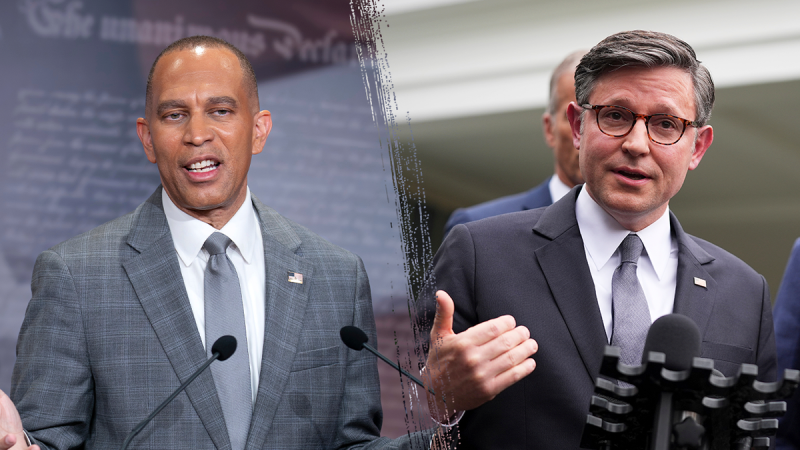
House Speaker Mike Johnson, R-La., said Republicans are winning the messaging war over the ongoing government shutdown and urged his conference to keep the heat on congressional Democrats during a private call with lawmakers on Saturday.

The call came on the fourth day of the shutdown, a day after Senate Democrats again rejected a GOP-led plan to keep federal agencies funded through Nov. 21.

During the call, Johnson and other House GOP leaders urged fellow Republicans to use this next week in their districts to tell constituents about what the ongoing shutdown means for them, Fox News Digital was told.

The House speaker expressed confidence that the shutdown would end quickly if Republicans ‘hold the line,’ Fox News Digital was told, and praised the House GOP’s unity so far amid the fallout.

Johnson also told Republicans toward the end of the call that the House would return only after Senate Democrats voted to reopen the government, a source said.

House and Senate GOP leaders have signaled that they will not budge from their current federal funding proposal, a short-term spending bill called a continuing resolution (CR) that would keep spending levels roughly flat for seven weeks.

That measure passed the House — largely along party lines — on Sept. 19. The House has since been out of session in a bid to put pressure on Senate Democrats to accept the plan.

It is also why Johnson opted on Friday to designate the next week as a district work period, canceling a previously planned legislative session from Tuesday through Friday.

Johnson told House Republicans on the Saturday call that it was the best way to prevent ‘Democrat disruptions,’ Fox News Digital was told. 

No Republicans voiced disagreement with the plan, Fox News Digital was told, signaling the GOP’s unity on the issue.

He told reporters during a press conference Friday morning that the House may not return until Senate Majority Leader Chuck Schumer, D-N.Y., and Democrats agreed with Republicans’ bill.

‘We passed it, and it’s been rejected by the Senate,’ Johnson told reporters during a news conference. ‘So the House will come back into session and do its work as soon as Chuck Schumer allows us to reopen the government. That’s plain and simple.’

Democrats, who were infuriated by being sidelined in the federal funding negotiations, have been pushing for an extension of Obamacare subsidies enhanced during the COVID-19 pandemic. Those enhancements would expire by the end of 2025 without congressional action.

Democrats have also introduced a counter-proposal for a CR that would keep the government funded through Oct. 31 while reversing the GOP’s cuts to Medicaid made in their ‘One Big, Beautiful Bill’ (OBBB).

The counter-proposal would have also restored federal funding to NPR and PBS that was cut by the Trump administration earlier this year.

Republicans have panned that plan as a non-starter full of partisan demands, while pointing out that Democrats have voted for a ‘clean’ measure similar to the GOP proposal 13 times during former President Biden’s time in office.

On the Saturday call, House GOP leaders encouraged Republicans to emphasize that Democrats’ counter-proposal would restore funding for illegal immigrants receiving Medicaid dollars that was cut by the so-called Big, Beautiful Bill, Fox News Digital was told.

Democrats have accused Republicans of lying about that line of attack.

GOP leaders also emphasized on the call that military members are not paid during government shutdowns, urging Republicans to make that point in their districts, while also warning that federal flood insurance funding is also in danger of drying up.

Fox News Digital was also told that House Majority Leader Steve Scalise, R-La., said the next important date in the shutdown fight would be Oct. 15, the date of servicemembers’ next paycheck — which they could miss if the shutdown is ongoing.

Senate Democrats have now rejected the GOP’s funding plan four times since Sept. 19. The Senate is expected to next vote on the bill again on Monday.

This post appeared first on FOX NEWS

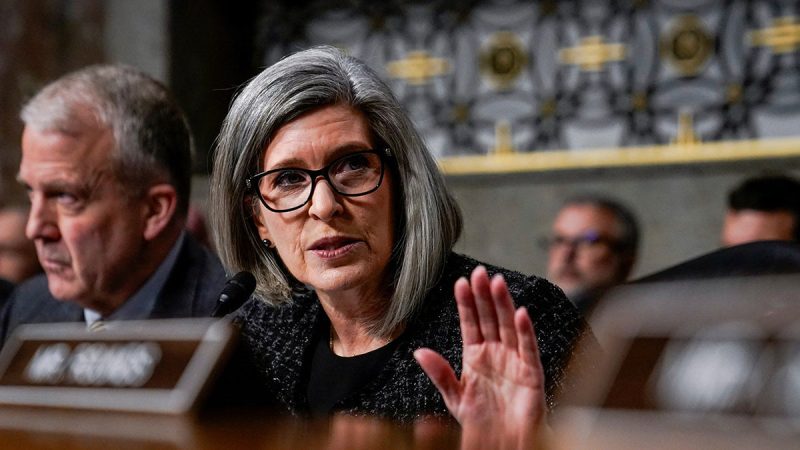
The government shutdown costs taxpayers $400 million every day to pay federal employees who are not actively working, totaling $1.2 billion as of Friday, Congressional Budget Office (CBO) data published by Sen. Joni Ernst’s, R-Iowa, office estimates. 

‘Schumer’s Shutdown Shenanigans mean taxpayers will be on the hook for another $400 million today to pay 750,000 non-essential bureaucrats NOT to work,’ Ernst said in comment to Fox News Digital Friday. 

‘Democrats’ political stunt to fight for taxpayer-funded healthcare for illegal immigrants has officially become a billion-dollar boondoggle,’ she added. ‘Enough has to be enough for the radical left. We must reopen the government and get Washington back to work serving veterans, families, and hardworking Americans.’ 

A law passed in 2019 requires furloughed employees receive backpay after a funding agreement is reached and a shutdown ends. The CBO found that the furloughed employees’ daily cost of compensation sits at about $400 million, or a total of $1.2 billion as of Friday. 

‘Using information from the agencies’ contingency plans and the Office of Personnel Management (OPM), CBO estimates that under a lapse in discretionary funding for fiscal year 2026 about 750,000 employees could be furloughed each day; the total daily cost of their compensation would be roughly $400 million,’ a letter from the Congressional Budget Office to Ernst stated Tuesday. The data was released after the Iowa Republican requested CBO provide a data cost breakdown of the shutdown in September as the deadline clock ran out. 

The CBO data largely was based on statistics from a five-week partial shutdown that ran from Dec. 22, 2018, until Jan. 25, 2019, under the first Trump administration, the office noted in its letter to Ernst.

The letter added that the number of furloughed federal employees, which is currently estimated to sit at about 750,000 staffers, could vary by the day ‘because some agencies might furlough more employees the longer a shutdown persists and others might recall some initially furloughed employees.’ 

The government shut down early Wednesday morning after Senate lawmakers failed to reach a budget agreement. House lawmakers had approved a short-term extension of fiscal year 2025 funding earlier in September that aimed to keep the government funded through Nov. 21. 

The Trump administration and Republicans have since pinned blame for the shutdown on Democrats, claiming they sought taxpayer-funded medical benefits for illegal immigrants. Democrats have denied they want to fund healthcare for illegal immigrants, and instead have blamed Republicans for the shutdown.

Fox News Digital reached out to Schumer’s office for comment on the CBO data and Ernst’s remarks but did not immediately receive a reply. 

White House spokesman Kush Desai slammed Democrats as ‘not serious people’ when asked about the CBO data Friday morning. 

‘Democrats are burning $400 million a day to pay federal workers not to work because they want to spend $200 billion on free health care for illegal aliens,’ Desai told Fox News Digital. ‘These are not serious people.’ 

Trump repeatedly has said he did not want a shutdown to unfold, but noted Tuesday as the clock ran out that some ‘good’ could come from it. 

‘A lot of good can come down from shutdowns,’ he told reporters. ‘We can get rid of a lot of things that we didn’t want, and they’d be Democrat things. But they want open borders. They want men playing in women’s sports. They want transgender for everybody. They never stop. They don’t learn. We won an election in a landslide.’ 

The administration is expected to lay off federal employees across various agencies amid the shutdown, with Trump meeting Office of Management and Budget chief Russell Vought Thursday to map out which departments and programs to target for cuts. 

White House press secretary Karoline Leavitt told reporters Thursday that ‘thousands’ of employees will likely be laid off. 

‘Look, it’s likely going to be in the thousands,’ Leavitt said. ‘It’s a very good question. And that’s something that the Office of Management and Budget and the entire team at the White House here, again, is unfortunately having to work on today.’ 

This post appeared first on FOX NEWS

The FBI says two men have been indicted in connection with an alleged money-laundering scheme tied to Venezuelan dictator Nicolás Maduro’s children.

The indictments come after a years-long investigation that dates back to 2019 when the FBI’s Miami Field Office launched the probe based on indications that Arick Komarczyk opened U.S. bank accounts for Maduro’s children and their U.S.-based associates. Suspicious Activity Reports allegedly showed that Komarczyk received wire transfers from individuals and businesses in Venezuela, according to the FBI.

An undercover operation in 2022 revealed that Komarczyk and his associate, Irazmar Carbajal, agreed to move $100,000 of what the FBI believed to be sanctioned money belonging to members of Venezuela’s government. The FBI said the men moved about $25,000 into the U.S.

The bureau noted that when confronted about the situation, Kormarczyk was not alarmed, rather he called it ‘sexy business.’

FBI Director Kash Patel said money-laundering schemes linked to Maduro were ‘criminal lifelines’ for his regime.

‘Nicolás Maduro is not just another corrupt strongman, he is an indicted narcoterrorist dictator with a $50 million bounty on his head from the United States Department of Justice,’ Patel said in an exclusive statement to Fox News Digital. ‘His regime’s laundering schemes are nothing more than criminal lifelines for a failing dictatorship, and under my leadership, this FBI will continue to choke off every dollar, every account, and every enabler. America will never be a safe haven for Maduro’s blood money.’

On Sept. 25, both Kormarczyk and Carbajal were indicted in Florida. Kormarczyk was indicted on charges of money laundering and conspiracy to commit unlicensed money transmitting, while Carbajal was indicted for conspiracy to commit unlicensed money transmitting.

Carbajal traveled from his home country of Uruguay to the Dominican Republic, but he was deported on Oct. 2. The deportation flight made a layover in the U.S., where Carbajal was arrested, the FBI said. Meanwhile, Komarczyk is believed to be living in Venezuela, according to the bureau.

‘The Maduro regime’s alleged efforts to attempt evasion and conduct money laundering in the United States through third-party individuals will not go unchecked,’ FBI Miami Special Agent in Charge Brett Skiles said in an exclusive statement to Fox News Digital.

‘Komarczyk and Carbajal’s indictments should demonstrate the FBI’s commitment to investigating alleged international money laundering involving [Office of Foreign Assets Control] sanctioned governments and individuals,’ Skiles added. ‘The United States and our financial institutions will never be a safe haven for international corruption and money laundering, particularly for those countries which pose significant risks to our national interests.’

The U.S. does not recognize Maduro as a legitimate leader and the Department of Justice has an active reward for information leading to his arrest and/or conviction.

Patel’s remarks echoed the Trump administration’s condemnation of the Maduro regime.

In July, on the one-year anniversary of an election in which Maduro declared himself the winner, Secretary of State Marco Rubio issued a statement expressing solidarity with the people of Venezuela. He vowed the United States would continue working with its partners ‘to hold accountable the corrupt, criminal and illegitimate Maduro regime.’

This post appeared first on FOX NEWS

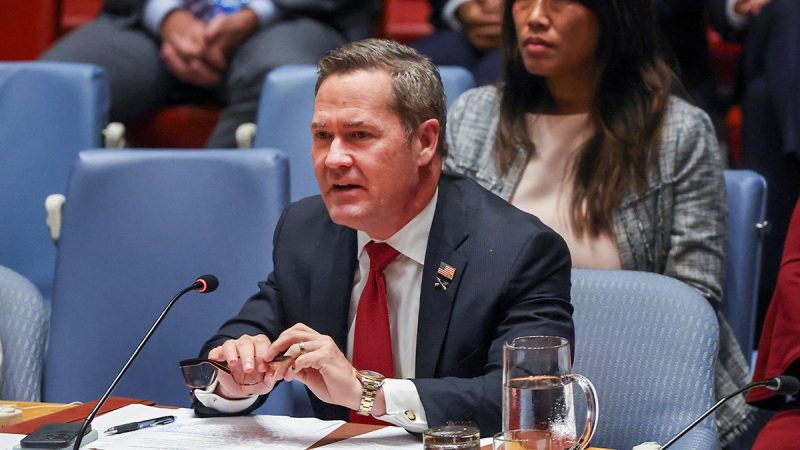
U.S. ambassador to the United Nations Mike Waltz said he believes President Donald Trump’s new Gaza peace plan could represent a ‘once-in-a-generation opportunity for Middle East peace.’

On Monday, Trump released his Gaza peace plan, which Israel agreed to. Despite U.S. criticism of the U.N.’s actions in Gaza, the plan relies on the international body’s assistance. When asked how this would work, Waltz said that the U.S., while working with the U.N. in Gaza, will ‘continue to call it out’ and will ‘demand reforms.’

In an interview with Fox News Digital, Waltz highlighted a key issue with the U.N.: aid delivery in Gaza. The U.N.’s numbers show that nearly 90% of its aid trucks were intercepted by armed groups or crowds of hungry people between May 19 and Aug. 5. The U.S. has pointed to Hamas as the main culprit, saying operatives of the terrorist organization steal the aid to make money by selling it.

‘We can’t have a situation where U.N. agencies — the U.S. pays for about a quarter of their costs — are actually delivering aid in a way that Hamas takes it over. Hamas uses it to make money reselling it on the black market,’ Waltz told Fox News Digital.

The U.S.- and Israel-backed Gaza Humanitarian Foundation, which has been heavily criticized by the U.N., said on Friday that it had delivered more than 178 million meals since starting its operation in May.

Waltz hit the ground running after his appointment to the role on Sept. 19, just days before the international body held its ‘High-level Week.’ During that week, leaders from around the world, including Trump, addressed fellow member states in New York City.

Trump has made it clear that his goal is to be a peacemaker, something Waltz emphasized during his sit-down with Fox News Digital. However, that doesn’t mean he isn’t bringing his own experience to the role.

‘Green Berets are called ‘warrior diplomats.’ We often have a big stick behind us,’ Waltz, who was the first Green Beret elected to Congress, told Fox News Digital.

He compared this ethos to Trump’s handling of Iran over the summer.

‘He gave them opportunity after opportunity to walk away from a weaponized nuclear program, to handover their enriched materials, to engage in diplomacy and when they didn’t, our amazing B-2s went and took it out,’ he said.

Waltz said he was looking to follow Trump and Secretary of State Marco Rubio’s visions to carry out America First policies and ‘make the U.N. great again.’ He said the institution had moved away from its roots and was not acting as a place where everyone from around the world could work out issues, but the U.S. is looking to bring that back.

The other major priority for the U.S. at the U.N., according to Waltz, is to get rid of ‘the bloat.’

‘Like any bureaucracy over 80 years, it has gotten too big, too bureaucratic, and therefore less effective. So I’m not going to say that we’re going to pull the DOGE up here, but we definitely need to make some cuts,’ he told Fox News Digital.

Waltz pointed to a recent vote on Haiti as an example of the U.S. working to achieve results at the U.N. As a former congressman from Florida, he noted that the lawlessness in Haiti has spilled onto U.S. shores. However, Waltz believes the U.N.-backed gang-suppression force will restore law and order, without making the U.S. foot the bill.

‘In line with what the president has demanded, we’re going to share the burden,’ Waltz said. ‘Other countries are involved. Kenya has taken the lead, El Salvador is taking a key role. Other countries are paying for it. It’s not just all on the United States’ shoulders.’

Waltz acknowledged Americans’ skepticism about the U.N., but he argued that it’s essential for the world’s leaders to meet on U.S. soil, and for Washington to remain at the table. He also pointed to the growing influence of international bodies on the American economy through regulation.

‘There’s all these international bodies that can directly affect our economy and our way of life that touch aviation and how we fly around the world, space, telecommunications, radio, data,’ he said. ‘And just as we fight for deregulation in our own federal government, we certainly don’t want global overregulation on many of our industries.’

Waltz stressed that staying engaged globally is critical to protecting U.S. interests and preventing bad actors from filling the void.

‘We have to say engaged, I think, to fight for the values that we hold dear. And if anything, this president is a fighter. We’re going to keep fighting for our way of life,’ Waltz said.

This post appeared first on FOX NEWS

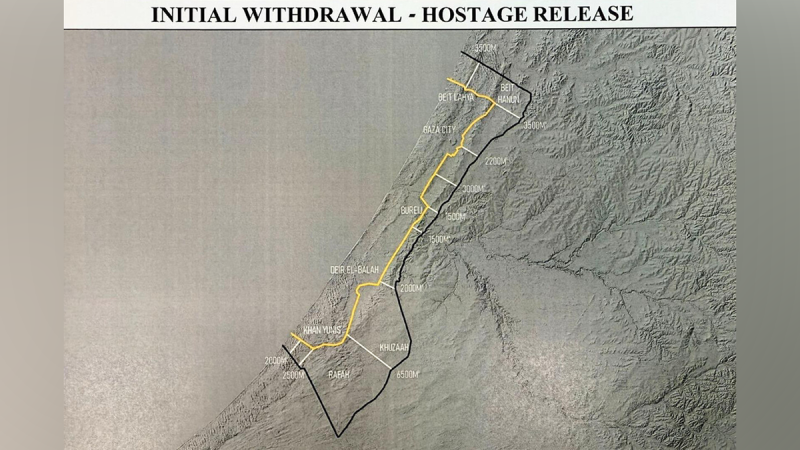
President Donald Trump on Saturday announced Israel has agreed to the ‘initial withdrawal line’ in Gaza, which the U.S. has shared with Hamas.

Pending Hamas confirmation, the agreement will trigger an immediate ceasefire and exchange of Israeli hostages and Palestinian prisoners.

‘After negotiations, Israel has agreed to the initial withdrawal line, which we have shown to, and shared with, Hamas. When Hamas confirms, the Ceasefire will be IMMEDIATELY effective, the Hostages and Prisoner Exchange will begin, and we will create the conditions for the next phase of withdrawal, which will bring us close to the end of this 3,000 YEAR CATASTROPHE,’ Trump wrote in a Truth Social post Saturday. ‘Thank you for your attention to this matter and, STAY TUNED!’

The announcement comes hours after Israeli Prime Minister Benjamin Netanyahu released a statement Saturday morning noting they were ‘on the verge of a very great achievement.’

‘It is not yet final; we are working on it diligently, and I hope, with God’s help, that in the coming days, during the Sukkot holiday, I will be able to inform you about the return of all our hostages, both living and deceased, in one phase, while the IDF remains deep within the Strip and in the controlling areas within it,’ Netanyahu said.

Netanyahu claimed that after intense military and diplomatic pressure, Hamas was pressured into agreeing to Israel’s proposed plan — rejecting the fact that Hamas had previously been ready to release the Israeli hostages without a full withdrawal from Gaza.

In the first stage of the withdrawal plan, he said Hamas will release all Israeli hostages while the IDF redeploys but maintains control over key strategic areas deep inside the Gaza Strip.

Netanyahu will send his negotiating team, headed by Minister Ron Dermer, to Egypt to finalize the technical details of the hostage release, which he expects to conclude within a few days. 

The prime minister emphasized that both Israel and the U.S. intend to prevent any stalling or delay tactics by Hamas. 

In the second stage of the plan, Netanyahu said Hamas will be disarmed and the Gaza strip demilitarized—either through diplomatic means under the Trump Plan or, if necessary, by military force. 

‘I also said this in Washington: Either it will be achieved the easy way, or it will be achieved the hard way—but it will be achieved,’ he said. 

‘Together, we pushed back our enemies’ plans of destruction. From Gaza to Rafah, from Beirut to Damascus, from Yemen to Tehran, together we have achieved great things,’ Netanyahu added. ‘From victory to victory—we are changing the face of the Middle East together. Together we will continue to act to ensure the eternity of Israel.’

Netanyahu thanked Trump for his assistance in dispatching the B2 planes to bomb the nuclear facility in Fordo, and for his ‘steadfast support.’

This post appeared first on FOX NEWS

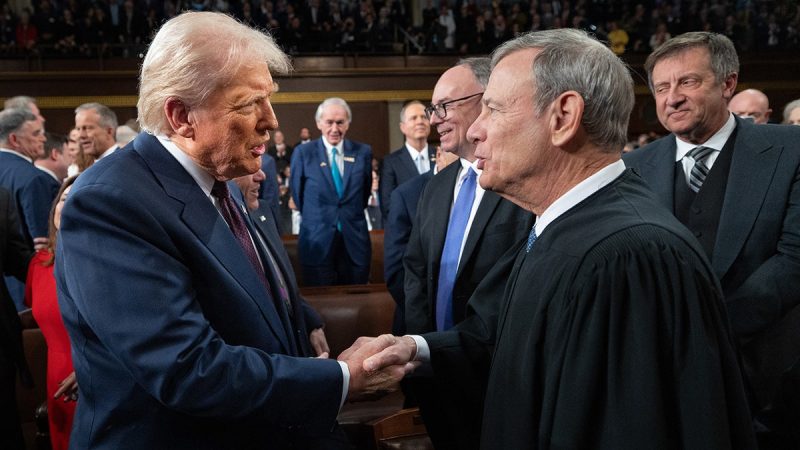
President Donald Trump has an almost flawless record on the Supreme Court’s emergency docket this year, a streak that has delivered crucial moments of relief to the government as it fights hundreds of lawsuits challenging the president’s agenda.

The Supreme Court has ruled in Trump’s favor on government cuts, nationwide injunctions, immigration policies and more, leading the White House to tout what it recently counted as 21 victories before the high court.

Those victories are, however, temporary. The upcoming term, which begins Monday, will allow the justices to begin weighing the full merits of some of these court disputes and ultimately cement or undo key parts of the Trump agenda.

Jonathan Adler, a William & Mary Law School professor, attributed the interim wins to the Supreme Court’s desire to narrow the judicial branch’s role in policymaking.

Speaking during a Federalist Society panel this week, Adler said the high court’s thinking might be that ‘lower courts are doing too much. We’re going to scale that back because it’s not our place, and it’s for the executive branch and the legislative branch to figure that out.’

The Trump administration has only challenged about one-fifth of the adverse rulings it has received from the lower courts. Adler said Solicitor General John Sauer, who represents the government, is strategically selecting which cases to bring to the high court. 

‘If you go through them, setting Humphrey’s Executor stuff slightly to the side, what they all have in common is that there’s a kind of clear argument that … district courts were a little too aggressive here,’ Adler said.

He acknowledged that some might have a different view, that the Trump administration has been ‘too muscular’ and that court intervention is a necessary check.

The emergency docket, sometimes known as the shadow or interim docket, allows the Trump administration or plaintiffs to ask the Supreme Court to quickly intervene in lawsuits and temporarily pause lower court rulings. The process can take a couple of days, weeks or months, and is viewed as a much speedier, albeit temporary, way to secure court relief than if the high court were to fully consider the merits of a case, which can include a long briefing schedule and oral arguments.

The Supreme Court’s emergency docket this year has been extraordinarily active. Attorney Kannon Shanmugam, who has argued dozens of cases before the high court, said Trump’s high volume of executive actions is partly the reason for that.

‘[An increase in emergency motions] coincides with the rise of executive orders and other forms of unilateral executive action really as the primary form of lawmaking in our country with the disappearance of Congress, and that has posed enormous challenges for the court,’ Shanmugam said.

Through the emergency docket, the Supreme Court has greenlit Trump’s mass firings of career employees and high-profile terminations of Democratic appointees. It has curtailed nationwide injunctions and cleared the way for controversial deportations and immigration stops. The high court has said the government can, for now, withhold billions of dollars in foreign aid and discharge transgender service members from the military.

In other instances, parties on both sides in a court fight have construed Supreme Court outcomes as wins.

In one such order, the Supreme Court said the Trump administration must attempt to return Salvadoran migrant Kilmar Abrego Garcia, whom the government admitted in court to improperly deporting to a Salvadoran prison. But at the same time, the high court noted that district court judges must also be deferential to the executive branch’s authority over foreign policy.

Similarly, the high court said the administration must allow deportees under the Alien Enemies Act a reasonable chance to fight their removal through habeas corpus petitions. The justices have not yet weighed in on the merits of Trump’s invocation of the Alien Enemies Act, one of his most aggressive deportation tactics, which the president employed to swiftly remove alleged Tren de Aragua members.

Conservative lawyer Carrie Severino, president of the legal watchdog JCN, said one criterion the Supreme Court considers when making fast decisions is whether parties are at risk of irreparable harm.

As an example, Severino pointed to the Supreme Court recently allowing Trump to fire Biden-appointed FTC Commissioner Rebecca Slaughter, a case that the high court is now using as a vehicle to revisit in the coming months the 90-year precedent set by Humphrey’s Executor v. United States.

Severino said, ‘If one assumes, ‘Okay, if Trump’s right,’ then this is a serious burden on the government to have a good chunk of their four years being taken up with not being able to actually staff the government as they want to. If Trump’s wrong, then Commissioner Slaughter should have been in that position, and they can remedy that by providing her back pay.’

‘When you’re balancing those types of harms, this is the kind of case where the government’s going to have a leg up,’ Severino said.

In a small defeat for Trump on Wednesday, the Supreme Court declined to allow the president to fire Federal Reserve Governor Lisa Cook and instead said it would hear her case in January. The move was a deviation from the court’s typical posture and underscored its unique view on the Federal Reserve compared with other agencies.

The Supreme Court’s majority has often split along ideological lines and offered little reason for its emergency decisions. This differs from final orders from the court, which can be lengthy and include numerous concurring opinions and dissents.

Attorney Benjamin Mizer, who served as a top DOJ official during the Biden administration, cautioned during the panel that the Supreme Court could reverse its shadow docket positions down the road.

‘As cases reach the court on the merits, we shouldn’t presume that the administration will win them all,’ Mizer said.

This post appeared first on FOX NEWS

Iran reportedly executed six prisoners Saturday who the regime claimed carried out deadly attacks in the country’s oil-rich southwest on behalf of Israel, marking the latest surge in executions that rights groups say have reached levels unseen in decades.

The six executions were reported by The Associated Press, as well as Iranian news agency Mizan. 

A seventh prisoner, accused of killing a Sunni cleric in 2009, along with other crimes, was executed in Kurdistan province. 

Saturday’s executions follow the 12-day Iran-Israel war in June, which ended with Tehran vowing it would target its enemies at home and abroad.

According to Amnesty International, Iranian authorities have executed more than 1,000 people so far in 2025, the highest annual figure recorded by the group in at least 15 years.

Iran said the six men linked to Israel killed police officers and security forces, as well as orchestrated bombings targeting sites around Khorramshahr in Iran’s restive Khuzestan province. Iranian state television aired footage of one of the men talking about the attacks, saying it was the first time the details were being made public.

A Kurdish group called the Hengaw Organization for Human Rights said the six were actually Arab political prisoners who had been arrested during the 2019 protests. Hengaw said Iran accused them of having links to the Arab Struggle Movement for the Liberation of Ahvaz, a separatist group blamed for pipeline bombings and other attacks in the region.

The group insisted the men were tortured and forced into giving televised confessions under duress.

The seventh prisoner, Saman Mohammadi Khiyareh, a Kurd, was convicted over the 2009 assassination of Mamousta Sheikh al-Islam, a pro-government Sunni cleric in the Kurdish city of Sanandaj.

Activists have questioned Khiyareh’s case, noting he was only 15 or 16 at the time of the assassination, was arrested at 19 and was held for more than a decade before his execution. His conviction, they said, relied on confessions extracted under torture — a practice activists accuse Iranian courts of using regularly.

The number of state executions has drastically escalated since President Massoud Pezeshkian took office in July 2024. At least 975 people were executed in 2024, according to figures from the United Nations. Pezeshkian answers to Supreme Leader Ayatollah Ali Khamenei, who holds ultimate authority in the country.

Iran has been putting prisoners to death at a pace unseen since 1988, when it executed thousands at the end of the Iran-Iraq war.

Independent U.N. human rights experts have sounded the alarm about the sheer number of executions, calling it ‘a dramatic escalation that violates international human rights law,’ according to a recent press release from the Office of the High Commissioner for Human Rights.

‘With an average of more than nine hangings per day in recent weeks, Iran appears to be conducting executions at an industrial scale that defies all accepted standards of human rights protection,’ the body said.

The Associated Press and Reuters contributed to this report

This post appeared first on FOX NEWS

Japan is on track to get its first female prime minister after the leading conservative party elected Sanae Takaichi as its new leader. 

Takaichi, the former economic security minister of Japan, beat Agriculture Minister Shinjiro Koizumi, the son of popular former Prime Minister Junichiro Koizumi, in a runoff in an intraparty vote on Saturday by the ruling Liberal Democratic Party.

Takaichi is replacing Prime Minister Shigeru Ishiba as the party looks to regain public support and stay in power. 

Despite suffering major election losses, the Liberal Democratic Party remains by far the largest in the lower house and determines Japan’s leader because opposition groups are highly splintered.

In the first round of voting, Takaichi finished first with 183 votes and Agriculture Minister Shinjiro Koizumi placed second with 164. Because neither candidate reached a majority in the first round, the winner was determined in an immediate two-way runoff. 

The LDP, whose consecutive losses in parliamentary elections in the past year have left it in the minority in both houses, sought a leader who can quickly address challenges both domestic and international, while seeking cooperation from key opposition groups to implement its policies.

Takaichi, a hard-line conservative who’s cited former British Prime Minister Margaret Thatcher as her hero, has called for strengthening Japan’s military, and taking a tougher stance against China and North Korea. She also opposes same-sex marriage and retains ties to nationalist groups. 

Takaichi also faces a possible summit with President Donald Trump, who could demand that Japan increase its defense spending. A meeting is reportedly being planned for late October. Trump will travel to the Asia-Pacific Economic Cooperation summit in South Korea starting Oct. 31.

The LDP also needs help from the opposition, which it has long neglected. The party will likely look to expand its coalition with the moderate centrist Komeito with at least one of the key opposition parties, which are more centrist.

A parliamentary vote is expected in mid-October.  

The Associated Press contributed to this report.

This post appeared first on FOX NEWS

Senate Democrats blocked Republicans’ attempt to reopen the government again, all but guaranteeing that the government shutdown rolls through the weekend.

After a day off to observe Yom Kippur, lawmakers made little progress in finding an off-ramp to end the shutdown, which entered its third day on Friday. And as the government remains closed, both sides appear to be digging further into their positions.

Senate Republicans’ attempt to reopen the government failed on a largely party-line 54-44 vote for a fourth time, with the same trio of Senate Democratic caucus members — Sens. John Fetterman, D-Pa.; Catherine Cortez Masto, D-Nev.; and Angus King, I-Maine — joining most Republicans in backing the bill.

Senate Majority Leader John Thune, R-S.D., plans to bring the bill to the floor again and again in a bid to chip away at Democrats’ largely unified front. He lamented the work that could be happening, like advancing spending bills and negotiating other bipartisan priorities, on the Senate floor rather than repeating the same exercise of trying to reopen the government. 

‘They have taken hostage the federal government and, by extension, the American people, who are the only losers in this,’ Thune said. ‘Everybody’s talking about who wins and who loses and who gets the blame. That’s not what this is about. This is about doing what’s in the best interest of the American people. And what’s in the best interest of the American people is keeping the government open and operating so it can continue to work on their behalf.’ 

Senate Democrats, led by Senate Minority Leader Chuck Schumer, D-N.Y., demand that they get a seat at the table to negotiate a bipartisan continuing resolution (CR).

Their main rallying cry has been pushing for an extension to expiring Obamacare tax credits, which Senate Republicans have said they would consider only after the government is reopened. While the credits don’t expire until the end of the year, Democrats argue that if Congress doesn’t act now, people who use Obamacare will see their healthcare premiums skyrocket.

‘We know Americans want this, and we know many of my Republican colleagues want this as well,’ Schumer said. ‘But failure to act would be devastating. And Republicans know it. Even Donald Trump knows it. He talked about it a little bit with us in the White House.’

When asked if the pressure would mount to a point where Democrats cave, Sen. Gary Peters, D-Mich., told Fox News Digital, ‘We’re on the right side of history right now.’

Republicans largely agree it is an issue that should be dealt with, but they also want reforms in the program rather than the blanket, permanent extension that Democrats suggested in their counter-proposal.

Some Democrats also view the shutdown as a way to stand up to President Donald Trump.

‘The truth is, we shut down the government because Republicans wouldn’t negotiate, because Donald Trump wants to shut down,’ Sen. Chris Murphy, D-Conn., said. ‘He’s just bragging in the Oval Office about how good a shutdown will be for him. And we’re going to talk about the consequences of Republicans continuing to push these giant healthcare increases on people and the consequences of a lawless president.’

The administration is not resting on its laurels either and has targeted funding in blue cities and states, along with threats of mass firings beyond the typical furloughs of nonessential federal employees to get congressional Democrats to blink.

Office of Management and Budget Director Russ Vought announced Friday that $2.8 billion in Chicago infrastructure project funding would be put on hold to prevent ‘race-based contracting,’ a move that came on the heels of $18 billion in infrastructure money in New York City and $8 billion in ‘Green New Scam’ funding from going to 16 blue states being withheld earlier this week.

Thune argued that the administration is what Democrats ‘have wrought’ by continuing to withhold their votes. 

‘They are allowing the administration to do the very thing that, back in March, they said they didn’t want to give them the authority to do,’ he said. ‘And that’s to make decisions just like that. But that’s what’s going to happen.’ 

Meanwhile, bipartisan talks are brewing in the background, though no real deal nor compromise has materialized.

There have been suggestions of extending the credits for another year after the government is reopened or doing a shorter CR to match up with the beginning of open enrollment on Nov. 1. But Republicans engaged in talks are more keen to keep the government open until at least Nov. 21 to allow appropriators to finish their work on spending bills.

‘Nobody’s married to any of this, but we’ve got to get the 45 days in effect first,’ Sen. Mike Rounds, R-S.D., said. 

This post appeared first on FOX NEWS