
Author

admin

Browsing

Statistics Canada released October’s job numbers on Friday (November 7). The data showed a surprise expansion of the Canadian labor market with the addition of 67,000 new jobs during the month, as well as a 0.2 percent drop in the unemployment rate to 6.9 percent.

This marks the second consecutive monthly increase, following 60,000 new workers entering the market in September. The gains over the two-month period also offset the cumulative 106,000 losses that were recorded in July and August.

The biggest gains came in the wholesale and retail trade sector, which added 40,700 new jobs; followed by transportation and warehousing, which added 29,500; and information, culture and recreation, which added 25,200.

The report comes just days after the federal Liberal Party tabled its first budget since winning the election in April. The budget estimates an initial deficit of C$78 billion in 2025-26, which would slowly decline to C$57 billion in 2030.

The budget places greater focus on nation-building, strengthening climate competitiveness, streamlining government activities and reducing annual operational costs by C$13 billion by 2029, while maintaining critical social supports.

Highlighting the budget is a promise for a C$51 billion investment over 10 years for local infrastructure projects and a C$81.8 billion over five years for defence spending C$72 billion of which will be new money.

On the mining side of the equation, the Mining Association of Canada said on Tuesday (November 4) that it applauds the budget for several measures aimed at the Canadian mining sector.

Among them, C$2 billion over five years will be directed to Natural Resources Canada to create the Critical Minerals Sovereign fund, which will be used to invest in critical mineral projects and companies.

The budget will also move the existing Critical Minerals Infrastructure Fund into the new First and Last Mile Fund, which will focus investment into near-term projects to get them to production sooner, and provide tax measures so companies can write off capital investments more quickly.

The Mining Association also highlighted the proposed expansion of the Critical Mineral Exploration Tax Credit to include an additional 12 minerals, including bismuth, cesium, manganese, tin and tungsten.

Additionally, the budget indicated that its focus on investing in clean technologies and carbon capture to reduce emissions would eventually render oil and gas emission caps unnecessary.

For more on what’s moving markets this week, check out our top market news round-up.

Markets and commodities react

Canadian equity markets were down this week.

The S&P/TSX Composite Index (INDEXTSI:OSPTX) lost just 0.15 percent over the week to close Friday at 29,912.19.

Meanwhile, the S&P/TSX Venture Composite Index (INDEXTSI:JX) had a much more challenging week, falliing 7.63 percent to 885.31. The CSE Composite Index (CSE:CSECOMP) also had a bad week, plunging 7.35 percent to close out the week at 163.51.

The gold price ended the week flat, closing at US$4,000.20 per ounce by 4:00 p.m. EST Friday. The silver price fell slightly, dropping 0.66 percent to US$48.35.

Meanwhile, in base metals, the copper price shed 2.72 percent to US$5.01 per pound.

The S&P Goldman Sachs Commodities Index (INDEXSP:SPGSCI) fell 0.2 percent to end Friday at 553.62.

Top Canadian mining stocks this week

How did mining stocks perform against this backdrop?

Take a look at this week’s five best-performing Canadian mining stocks below.

Stocks data for this article was retrieved at 4:00 p.m. EST on Friday using TradingView’s stock screener. Only companies trading on the TSX, TSXV and CSE with market caps greater than C$10 million are included. Mineral companies within the non-energy minerals, energy minerals, process industry and producer manufacturing sectors were considered.

1. Quarterback Resources (CSE:QB)

Weekly gain: 160 percent
Market cap: C$11.36 million
Share price: C$1.3

Quarterback Resources is an exploration company focused on exploring the Twin gold property in Northwest British Columbia, Canada.

The project is located in the Omineca Mining District near Fort St. James, and consists of 16 mineral claims covering 11,110 hectares. The site has a history of mineral exploration dating back to the 1970s, including 109 drill holes.

Quarterback holds an option to acquire a 100 percent stake in the property through an earn-in agreement in exchange for C$800,000 in cash payments and C$4.74 million in exploration expenditures over a six-year period.

According to a technical report released in November 2024, the company relogged three of the historic holes from the Takla-Rainbow zone, with one hole returning a grade of 2.26 parts per million (ppm) gold, 2.15 ppm silver and 0.19 percent copper over 22.52 meters.

Shares in Quarterback were up significantly this week. Its most recent news came on Wednesday (November 5) when it filed its monthly progress report on the Canadian Securities Exchange website. The company noted that it was proceeding with a Phase 1 exploration program, which is planned to include LIDAR and induced polarization surveys.

2. Mont Royal Resources (TSXV:MRZL)

Weekly gain: 62.5 percent
Market cap: C$47.55 million
Share price: C$0.26

Mont Royal Resources is an Australia-based exploration company focused on a trio of projects in Québec, Canada. The company began trading on the TSXV on November 5 following a merger with Canada-based Commerce Resources.

The merger combined Commerce’s Ashram rare earth and flourspar project and Eldor niobium projects, with Mont Royal’s existing Northern Lights gold-copper-lithium project, all of which are located in Quebec.

In the October 22 news release announcing the completion of the merger, it stated its core focus would be on the Ashram rare earth and flourspar project and that the deal provided a compelling opportunity to establish a new source of rare earths in North America.

Ashram, located near Nunavik, Quebec, has received more than AU$50 million in investment for exploration activities, development studies and resource definition.

According to the project page, a mineral resource estimate from April 2024 produced an indicated resource grading 1.89 percent total rare earth oxides (TREO) and 6.6 percent fluorspar from 73.2 million metric tons of ore.

Although the company did not release project news this week, two of its projects contain minerals that were added to the CMETC as part of the fall budget.

3. Royalties Inc. (CSE:RI)

Weekly gain: 38.46 percent
Market cap: C$11.36 million
Share price: C$0.09

Royalties is focused on building cash flow through the acquisition of mineral and music royalty assets.

The company has a 100 percent interest in the Bilbao silver property in Zacatecas, Mexico, which hosts silver, zinc and lead deposits. As silver prices improve, the company is seeking to monetize the property.

In June, the company reported that its subsidiary, Minera Portree, won its lawsuit against Capstone Copper (TSX:CS,OTC Pink:CSCCF), asserting its ownership of a 2 percent net smelter return royalty on five mineral concessions at the Cozamin copper-silver mine in Zacatecas.

The protracted legal dispute began after Capstone re-assigned the royalty to itself through a 2019 contract without informing or paying Minera Portree.

Under the terms of the judgment, the 2 percent NSR will revert back to Minera Portree along with royalties for the exploitation of concessions between 2002 and 2019. The amounts for those royalties will be set at the execution phase. Capstone Gold is also ordered to pay royalties from the Portree 1 concession from August 2019 to present.

While Capstone appealed the decision, Royalties announced on Thursday (November 6) that an appellate court had upheld the original June decision, deeming the appellant’s arguments inoperative and inadmissible.

4. Africa Energy (TSXV:AFE)

Weekly gain: 31.82 percent
Market cap: C$64.69 million
Share price: C$0.145

Africa Energy is a South Africa-focused oil and gas exploration and development company.

Its flagship asset is Block 11B/12B located approximately 175 kilometers off the south coast of South Africa. The block covers an area of 18,734 square kilometers and depths between 200 meters and 1,800 meters.

It holds a 4.9 percent interest in the asset through its investment in Main Street 1549, a 49/51 joint venture with Arostyle Investments. The three other partners in the asset announced plans to withdraw from the Block 11B/12B joint venture in July 2024, and announced a definitive agreement for the new ownership structure of the Block 11B/12B asset in May of this year.

The restructuring would result in Africa Energy holding a 75 percent stake in the block, with Arostyle Investments holding the remaining 25 percent. This is contingent on the asset being granted the production rights, which requires approval of its environmental and social impact assessment.

Shares in Africa Energy were up this week. Its most recent news came on October 9, when it provided an operational update from Block 11B/12B. The company announced that it had been granted an extension to submit its environmental and social impact assessment until May 4, 2026.

5. Highland Critical Minerals (CSE:HLND)

Weekly gain: 26.87 percent
Market cap: C$79.73 million
Share price: C$4.25

Highland Critical Minerals is an exploration company focused on advancing its flagship Church lithium property in Ontario, Canada.

The project, located near Thunder Bay, Ontario, is situated within the Quetico region. A preliminary exploration program at the property conducted in August 2023 discovered five pegmatites hosting quartz, feldspar and muscovite and returned high lithium grades up to 3 percent lithium dioxide.

In addition to Church, Highland has been working to acquire other critical mineral properties, with the most recent announced on Friday. In the news release, the company said it had entered into a binding letter of intent to acquire mining claims covering 3,138.874 hectares in the Yathkyed Lake Greenstone Belt in Nunavut, Canada, expanding Highland’s critical mineral portfolio.

FAQs for Canadian mining stocks

What is the difference between the TSX and TSXV?

The TSX, or Toronto Stock Exchange, is used by senior companies with larger market caps, and the TSXV, or TSX Venture Exchange, is used by smaller-cap companies. Companies listed on the TSXV can graduate to the senior exchange.

How many mining companies are listed on the TSX and TSXV?

As of May 2025, there were 1,565 companies listed on the TSXV, 910 of which were mining companies. Comparatively, the TSX was home to 1,899 companies, with 181 of those being mining companies.

Together, the TSX and TSXV host around 40 percent of the world’s public mining companies.

How much does it cost to list on the TSXV?

There are a variety of different fees that companies must pay to list on the TSXV, and according to the exchange, they can vary based on the transaction’s nature and complexity. The listing fee alone will most likely cost between C$10,000 to C$70,000. Accounting and auditing fees could rack up between C$25,000 and C$100,000, while legal fees are expected to be over C$75,000 and an underwriters’ commission may hit up to 12 percent.

The exchange lists a handful of other fees and expenses companies can expect, including but not limited to security commission and transfer agency fees, investor relations costs and director and officer liability insurance.

These are all just for the initial listing, of course. There are ongoing expenses once companies are trading, such as sustaining fees and additional listing fees, plus the costs associated with filing regular reports.

How do you trade on the TSXV?

Investors can trade on the TSXV the way they would trade stocks on any exchange. This means they can use a stock broker or an individual investment account to buy and sell shares of TSXV-listed companies during the exchange’s trading hours.

Article by Dean Belder; FAQs by Lauren Kelly.

Securities Disclosure: I, Dean Belder, hold no direct investment interest in any company mentioned in this article.

Securities Disclosure: I, Lauren Kelly, hold no direct investment interest in any company mentioned in this article.


This post appeared first on investingnews.com

Lobo Tiggre, CEO of IndependentSpeculator.com, shares why copper is his highest-confidence trade for 2026, as well as when he will consider buying.

‘I now have probably more cash to put into play than I’ve ever had sitting on the sidelines waiting for this copper buying opportunity,’ he said.

Securities Disclosure: I, Charlotte McLeod, hold no direct investment interest in any company mentioned in this article.
This post appeared first on investingnews.com

Plus, we break down next week’s market catalysts to watch to help you prepare for the week ahead.

In this article:

    This week’s tech market round-up

    The tech space was marked by heightened volatility this week, with sharp swings driven by concerns over inflated artificial intelligence (AI) valuations and mixed economic data.

    Global markets gained early in the week, driven by optimism over a US-China trade truce, along with a US$38 billion AI cloud deal between OpenAI and Amazon (NASDAQ:AMZN).

    However, gains were tempered following comments from the Global Financial Leaders’ Investment Summit in Hong Kong, where Goldman Sachs (NYSE:GS) CEO David Solomon warned of a likely 10 to 20 percent pullback in equities within the next 12 to 24 months. Other panelists at the event offered similar projections.

    Futures tracking the S&P/TSX Composite Index (INDEXTSI:OSPTX) weakened ahead of the release of Canada’s federal budget, which promises C$925.6 million for sovereign compute capacity, quantum tech funding and support for open banking and stablecoins. The government aims to attract C$500 billion in private sector investment over five years.

    US tech stocks sold off again on Wednesday (November 5) amid uncertainty over the Supreme Court’s tariff ruling and short positions by Michael Burry on NVIDIA (NASDAQ:NVDA) and Palantir Technologies (NASDAQ:PLTR).

    A stronger-than-expected ADP report helped stabilize the tech sector midday, but October jobs data weighed on markets again Thursday (November 6), cooling risk appetite, especially for AI momentum stocks.

    Wall Street’s main indexes extended losses to a second session on Friday (November 7) and posted weekly declines as the Volatility Index (INDEXCBOE:VIX) hit its highest level in a fortnight, just one week after the S&P 500 (INDEXSP:.INX) and Nasdaq Composite (INDEXNASDAQ:.IXIC) notched their longest winning streak in four and seven years, respectively.

    Traders were pricing in a 70.2 percent chance of a 25 basis point interest rate cut from the US Federal Reserve in December at the time of this writing, down from 90 percent last week.

    3 tech stocks moving markets this week

    1. Palantir Technologies (NASDAQ:PLTR)

    Palantir reported a strong Q3 earnings beat with a year-on-year revenue increase of 63 percent to US$1.18 billion, exceeding analyst expectations of US$1.09 billion.

    Earnings per share were also above forecasts, coming in at US$0.21 compared to expectations of US$0.17.

    The company’s total contract value rose to US$2.76 billion, a record high, driven by a 121 percent rise in US commercial revenue and a 52 percent increase in US government revenue.

    The company also raised its full-year 2025 revenue guidance to around US$4.4 billion, driven by continued strong AI demand and government contracts. On the earnings call, management expressed confidence in continued growth fueled by AI, emphasizing strategic partnerships with companies like NVIDIA, while acknowledging challenges in the European market and operational scaling.

    However, Palantir’s share price dropped about 3 percent in after-hours trading. Analysts attributed the market reaction to concerns over the prolonged US government shutdown potentially impacting contracts, alongside a large bearish bet revealed by Michael Burry’s fund.

    The company’s stock is down 14 percent for the week.

    2. Amazon (NASDAQ:AMZN)

    Shares of Amazon rallied on Monday morning after announcing a US$38 billion multi-year partnership with OpenAI to run its advanced AI workloads on Amazon Web Services (AWS) infrastructure, providing access to hundreds of thousands of NVIDIA GPUs and specialized AWS chips.

    The deal significantly strengthens AWS’s position in the AI cloud market. Investors had a marked reaction to the news, driving Amazon’s shares price to a record high of US$US$254.

    However, gains were partially erased during the broader tech sector pullback. Its stock ultimately closed the week down 4.28 percent.

    3. NVIDIA (NASDAQ:NVDA)

    Shares of NVIDIA have been dragged down this week due to valuation concerns and fears related to US export restrictions on advanced AI chips to China.

    During a 60 Minutes interview with Norah O’Donnell on Sunday (November 2) evening that covered a range of topics, President Trump stated NVIDIA’s most advanced AI chips would be reserved exclusively for US companies. The market reacted by sending shares of NVIDIA (up or down?) on Monday morning.

    Also on Monday, Microsoft provided an update on its US$15.2 billion planned investment in the UAE, which will include increasing its AI computing power in the UAE by four times to reach the equivalent of 60,400 NVIDIA A100 GPUs in compute power in the country.

    NVIDIA shares, also boosted by Loop Capital raising its price target by US$100, rose by over four percent from Friday’s closing price in early trading.

    However, a large bearish position against NVIDIA was disclosed from Burry’s fund on Wednesday, adding to downward pressure already on its shares amidst a tech stock sell-off.

    During a Thursday press conference, White House Press Secretary Karoline Leavitt told reporters that Trump “was not interested in selling (the Blackwell chip) to China at this time”.

    Meanwhile, during the Financial Times’ Future of AI Summit, NVIDIA CEO Jensen Huang said the West is being held back by “cynicism” and reportedly told the outlet, “China is going to win the AI race.”

    Huang has previously warned that US restrictions could backfire by accelerating China’s domestic chip development, arguing the US should stay engaged with Chinese developers to maintain leadership. The company’s shares are down 9.53 percent for the week.

    NVIDIA, Palantir and Amazon performance, November 3 to 7, 2025.

    Chart via Google Finance.

    Top tech news of the week

          Tech ETF performance

          Tech exchange-traded funds (ETFs) track baskets of major tech stocks, meaning their performance helps investors gauge the overall performance of different sectors.

          This week, the iShares Semiconductor ETF (NASDAQ:SOXX) declined by 4.81 percent, while the Invesco PHLX Semiconductor ETF (NASDAQ:SOXQ) saw a weekly loss of 5.2 percent.

          The VanEck Semiconductor ETF (NASDAQ:SMH) decreased by 5.41 percent.

          Tech news to watch next week

          Next week, investors will hear earnings results from Cisco Systems (NASDAQ:CSCO), due to report its Q1FY26 earnings on November 12. The company is expected to deliver a year-on-year increase in earnings on higher revenues. Semiconductor equipment supplier, Applied Materials, is also set to report its Q4 earnings on November 13.

          AMD will have its Financial Analyst Day on Tuesday (November 11), providing further strategic updates and outlook.

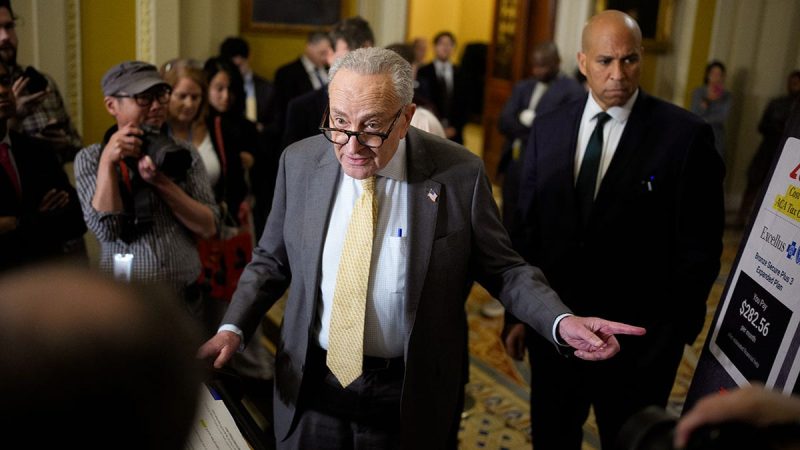
          Analysts and investors will also be watching for any sign of an end to the 38-day government shutdown after Senate Minority Leader Chuck Schumer (D-NY) unveiled a plan to attach a one year extension to the expiring Obamacare subsidies and to create a bipartisan committee that could negotiate further on how to deal with the subsidies after the government reopened. Majority leader John Thune reportedly told CBS News that the Democratic proposal is a ‘nonstarter’.

          Securities Disclosure: I, Meagen Seatter, hold no direct investment interest in any company mentioned in this article.

          This post appeared first on investingnews.com

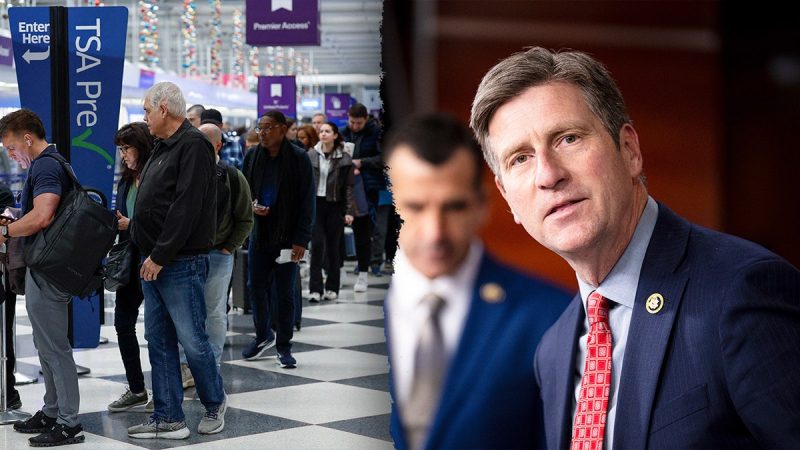
          A Democratic lawmaker is backing the Trump administration’s decision to reduce air traffic as a consequence of the ongoing government shutdown.

          Rep. Greg Stanton, D-Ariz., said, ‘Safety must always be the highest priority’ for the aviation industry in a statement on Thursday evening.

          ‘The decision by Secretary Duffy to reduce flights at America’s 40 busiest airports is the right call for the safety of the flying public,’ Stanton wrote on X. ‘Now it’s critical that Republicans and Democrats get together and reach a bipartisan agreement on a plan to reduce health costs and end the shutdown.’

          He concluded, ‘Arizona deserves better, and so do the hardworking professionals who keep our skies safe.’

          Friday marks the 38th day of the government shutdown. Bipartisan Senate efforts to end the standoff have still not produced a clear off-ramp.

          Thousands of federal employees have been furloughed as agencies and critical programs run low on funds, while government workers deemed ‘essential’ have been forced to work without pay for weeks.

          People in the latter group include air traffic controllers and Transportation Security Administration (TSA) officers, many of whom have been forced to take second jobs and call out sick to make ends meet.

          Transportation Secretary Sean Duffy and the Federal Aviation Administration (FAA) directed a 4% reduction in air traffic across 40 of the busiest airports in the U.S., taking effect on Friday.

          That reduction will gradually ramp up to 10% by Nov. 14 if the shutdown does not end by then.

          An emergency order issued by the FAA said the reduction would ensure the National Airspace System could ‘maintain the highest standards of safety’ amid shortages fueled by the shutdown.

          That includes Phoenix Sky Harbor International Airport, the largest airport serving Stanton’s district.

          Stanton’s nearby 4th Congressional District encompasses parts of Phoenix and its surrounding suburbs, including portions of Tempe and Mesa.

          Back in Washington, whose two main airports are also affected by the reduction order, Democratic leaders are still publicly insisting that any funding deal be paired with an extension of COVID-19-era enhanced Obamacare subsidies that are set to expire at the end of this year.

          Republicans have argued against partisan policy riders in a funding bill to end the shutdown.

          Stanton was among the House Democrats who voted against the GOP’s funding proposal when it passed the House on Sept. 19.

          This post appeared first on FOX NEWS

          One year ago, Donald Trump won a transformative election victory, sweeping all seven swing states, the popular vote, and moving all fifty states redder than they were in 2020.

          How did he do it?

          By motivating men, young men in particular, and sports fans who were fed up with the insanity of men winning women’s sports championships. I wrote about the victory in my new book, ‘Balls,’ which was released on Tuesday.  

          The book addresses the landslide Trump victory, but it also asks an important question when looking forward prospectively: Now that Trump, unfortunately, isn’t able to run for reelection, how do Republicans ensure that the Trump MAGA coalition extends, and even grows, beyond his own presidency?

          In 2024, the two most conservative voting groups in America were male senior citizens and young men under the age of thirty.

          This has never happened before in any of our lives.

          It was a cultural transformation overnight.

          Trump also won record support among White, Black, Asian and Hispanic men as well, but that same momentum didn’t extend to 2025. Indeed, Tuesday’s voting results paint an ominous picture of what 2026 and 2028 could look like if young men aren’t motivated to show up and vote like they did in 2024. 

          Consider the numbers: in 2024, Trump received 1.968 million votes in New Jersey and 2.075 million votes in Virginia. While he lost both states by narrow margins to Kamala Harris — by roughly 5% — he received more votes than the Virginia Democrat candidate for governor, Abigail Spanberger — who won Virginia with 1.961 million votes — and the New Jersey Democrat candidate for governor, Mikie Sherrill — who won New Jersey with 1.792 million votes. 

          So how did both Democratic gubernatorial candidates win election comfortably despite receiving fewer votes than Trump did in their states a year ago? Yes, partly because it was an off-year cycle and overall turnout trended down, but they won comfortably because roughly 600,000 Trump voters didn’t show up to vote in 2025 who did show up to vote in 2024.

          Who are these voters?

          Young men, sports fans, blue collar workers, the Trump MAGA base that will come out to support Trump when he’s on the ballot, but won’t show up when he’s not on the ballot.

          So will these voters return in 2026 and in 2028 when Trump isn’t on the ballot? That depends on how well future Republican candidates speak to these voters. Some of y’all will think I’m crazy for telling you this, but as soon as the 2026 mid-term elections are over, expect a pivot so rapid it will make your head spin — Democrats in 2027 will all argue that Trump’s unique political gifts end with him, that MAGA is over without Trump as its leader. Yep, from ‘He’s Hitler!’ to ‘He’s the most talented Republican president in any of our lifetimes,’ almost overnight.

          I’m telling you, it’s coming.

          Because Democrats are going to bank on Trump as a political unicorn, a candidate so talented that only he could power a coalition as substantial as he won in 2024.

          So what do Republicans need to do to extend and even grow Trump’s appeal with young men? I think it’s a combination of three things, wed the policy and the personal together, as Trump has been uniquely talented at doing.

          1. On the policy front, the 2024 election was about the economy, the border, and crime

          It was as easy as EBC.

          Trump won the arguments on all three of these fronts. So far, Trump 2.0 has ended the border as an issue by ending illegal immigration and driven crime down to record lows in many states and cities. His challenge on the economy is that Biden was so bad, it’s taking time to clean up his mess. With record high stock prices and record low gas prices, Trump is delivering for all of us with stock market assets and all of us who have to fill up our tanks.

          But there’s a lingering anger over how much goods cost. Even I feel it each time I buy a Chick-fil-A meal for my family and it costs over $50. For fast food, really!

          Prices went up so fast under President Joe Biden that the sticker shock is still real even in 2025. Trump has stopped the rapid price increases and, in the case of some purchases like gas, has actually brought them back lower than they were during Biden, but that bitter aftertaste of inflation takes time to wear off.

          So far it hasn’t.

          2. Focus on men in women’s sports

          Is it the most important issue in the country?

          No.

          But it crystallizes the absurdity of Democrat policies for young men and sports fans, who provided the fuel to Trump’s record win in 2024.

          If you believe a man should be able to win a women’s sports championship, how can I trust your opinion on anything? As I wrote in ‘Balls,’ this issue, combined with EBC, won Trump the election in 2024. 

          I think that will still be the message in 2026, too, because, amazingly, Democrats have doubled and tripled down on defending men in women’s sports all over the country.

          This issue isn’t going away.

          3. HAVE FUN and BE ENTERTAINING.

          My two favorite moments of the 2024 campaign were when Trump dressed up as a McDonald’s employee and as a garbage man and rode around in a garbage truck.

          Was it absurd and ridiculous?

          Of course.

          But the number one gift Trump has that he receives zero credit for is this: HE’S FUNNY!

          Yes, politics are serious. But they should also be fun. Trump is a happy warrior and happy warriors win.

          The two most successful Republican presidents of my life were Ronald Reagan and Donald Trump. Both were, in many respects, professional entertainers. They knew how to cut through the noise and were authentic in the way they did so.

          Trump isn’t perfect, none of us are, but he’s the most comfortable president in his own skin that any of us have ever seen and he has tremendous political instincts.

          You can spend a hundred million on an ad campaign and not get the free media attention that Trump did, scooping out fries and talking with voters at the drive-thru in Pennsylvania. That style of politicking is unbeatable. Heck, I would argue the best version of Trump is the one you get in fast food restaurants. He genuinely loves getting out and interacting with people. That’s a skill that can’t be taught, but it can be emulated.

          We used to ask the question, which candidate would you rather have a beer with? While Trump doesn’t drink — as he’s jokingly said, can you imagine what he’d say if he drank? — he’s authentic and real. As artificial intelligence takes over much of the country, I believe authenticity will become the most important political key to the realm.

          Young people in particular, who are steeped in social media artificiality fed to them constantly on their phones, have an innate sense of when they’re being poll-tested and marketed to, they sniff it out better than older voters.

          If you want them to show up and support you, you have to win their trust.

          Which is why I truly believe the election was over when it came to male voters when Trump was shot in Butler, Pennsylvania.

          In that moment, having escaped death by half an inch, Trump, whose critics had labeled him a phony, rose up and screamed, ‘Fight, fight, fight!’ three times. At that instant, the election was over for male voters.

          It was the bravest presidential moment of my life.

          But it was also one of the most authentic.

          In times of great peril, your own personal character is revealed. In those perilous milliseconds, Trump became a legend and won the election.

          He proved once and for all he had ‘Balls.’

          And so far no Democrat has proven that they do.

          So long as that remains the case, Republicans aren’t going to lose men.

          Which is why the best example of an oxymoron in America today isn’t ‘jumbo shrimp,’ it’s ‘masculine Democrat.’

          Because after all, there are certainly big shrimp, but there are still no masculine democrats.

          Clay Travis is the author of the new book, ‘Balls: How Trump, Young Men and Sports Fans Saved America.’ Buy it here.

          This post appeared first on FOX NEWS

          Any optimism either side of the aisle had that the government shutdown could end this week appeared to fade on Capitol Hill, as Senate Democrats appear ready to hold out longer for a deal on expiring Obamacare subsidies.

          Senate Democrats left another long closed-door caucus lunch on Thursday, signaling a unified front as the shutdown entered its 37th day amid Republican demands to make a deal to reopen the government.

          Senate Minority Leader Chuck Schumer, D-N.Y., and his caucus are still riding high after a successful Election Day Tuesday that saw Democratic candidates pummel their Republican opponents. While there are bipartisan talks among centrist Senate Democrats and Republicans on a way out, the majority of the caucus appeared ready to hold the line.

          ‘We had a very good, productive meeting,’ Schumer said as he exited the lunch.

          Others espoused messages of unity among the ranks and bristled that they were holding out from reopening the government.

          ‘It’s not about holding out,’ Sen. Elizabeth Warren, D-Mass., said. ‘We fight for access to healthcare for millions of people across this country. Affordability is a giant issue for American families. They told us that at the polls on Tuesday, but they tell us that every day of their lives.’

          Senate Majority Leader John Thune, R-S.D., plans to put the House-passed continuing resolution (CR) on the floor again Friday to test Democrats’ resolve. It’s expected they’ll block the bill once again.

          Thune and Republicans have remained firm in their position that the Obamacare issue would be considered after the government reopens, and he has offered Senate Democrats a vote on the matter, which is also expected to fail.

          But Senate Democrats demand that President Donald Trump get involved and negotiate a deal on the expiring subsidies. Democrats also brushed aside comments from House Speaker Mike Johnson, R-La., who earlier in the day said he would not promise a vote in the House on the expiring subsidies.

          ‘I can tell you that Mike Johnson is only going to do what one person tells him, and that one person is Donald Trump, who has declared himself basically the Speaker of the House,’ Sen. Jacky Rosen, D-Nev., said.

          Still, Senate Republicans hope that Senate Democrats will accept the offer, along with the plan to pair the CR with a trio of spending bills to jump-start the government funding process.

          ‘I think the clear path forward here with regard to the [Obamacare] issue, open up the government, and we head down to the White House and sit down with the president and talk about it,’ Thune said. ‘But I just, right now there is hostage taking, as you all know. The consequences are getting more pronounced.’

          There is also the question of whether the Senate stays in over the weekend ahead of a scheduled recess for Veterans Day next week.

          Senate Democrats want to remain, but Republicans aren’t keen to stick around unless there are signs of real progress toward reopening the government.

          ‘I do expect to be here this weekend,’ Sen. Gary Peters, D-Mich., said.

          This post appeared first on FOX NEWS

          The Supreme Court cleared the way for the State Department to require people to state their biological sex on new or renewed passports, a victory for the Trump administration as it aims to tighten policies involving transgender people.

          The high court found in a 6-3 order temporarily greenlighting the policy that a lower court in Massachusetts had erred in blocking it. 

          ‘Displaying passport holders’ sex at birth no more offends equal protection principles than displaying their country of birth—in both cases, the Government is merely attesting to a historical fact without subjecting anyone to differential treatment,’ the majority wrote in the unsigned order.

          The three liberal justices dissented. Justice Ketanji Brown Jackson, a Biden appointee, blasted her Republican-appointed colleagues in a lengthy dissent for what she said had become a ‘routine’ of siding with the Trump administration on the emergency docket.

          The majority ‘fails to spill any ink considering the plaintiffs, opting instead to intervene in the Government’s favor without equitable justification, and in a manner that permits harm to be inflicted on the most vulnerable party,’ Jackson wrote, adding that transgender people have been permitted to state their preferred gender on passports for more than three decades.

          The class action lawsuit, brought by a dozen self-described transgender, nonbinary or intersex people on behalf of themselves and others in their situation, will continue to proceed through the lower courts.

          The plaintiffs had argued in court papers that passports should ‘reflect the sex [people] live as and express, rather than the sex they were assigned at birth.’

          Solicitor General John Sauer wrote on behalf of President Donald Trump that passports effectively communicate information to foreign governments and private citizens cannot force the president to communicate in a way that defies his foreign policy preferences and ‘scientific reality.’

          The policy, which reversed the Biden administration’s allowance of an ‘X’ gender option on passports, was implemented as part of a string of executive orders Trump issued when he took office aimed at requiring transgender people to identify as their biological sex in certain situations, including in gender-exclusive sports and in the military.

          Attorney General Pam Bondi celebrated that the high court had handed the Department of Justice roughly two-dozen wins this year on the emergency docket, sometimes referred to as a shadow or interim docket, where cases are fast-tracked so that the Supreme Court can potentially offer temporary resolutions until the merits of the cases are examined.

          ‘Today’s stay allows the government to require citizens to list their biological sex on their passport,’ Bondi said on social media. ‘In other words: there are two sexes, and our attorneys will continue fighting for that simple truth.’

          This post appeared first on FOX NEWS

          Top Democrats emerged from a classified Capitol Hill briefing Wednesday expressing confidence in the intelligence behind recent U.S. strikes on suspected narco-trafficking vessels near Venezuela. But they also faulted the Biden administration for what they called a failure to confront Nicolás Maduro after Venezuela’s disputed 2024 election.

          The Office of Legal Counsel presented lawmakers with its written justification for a series of missile strikes in the Caribbean and eastern Pacific that U.S. officials say have killed 63 suspected traffickers. Lawmakers from both parties said the briefing reassured them the targets were legitimate, even as some voiced unease about the broader strategy.

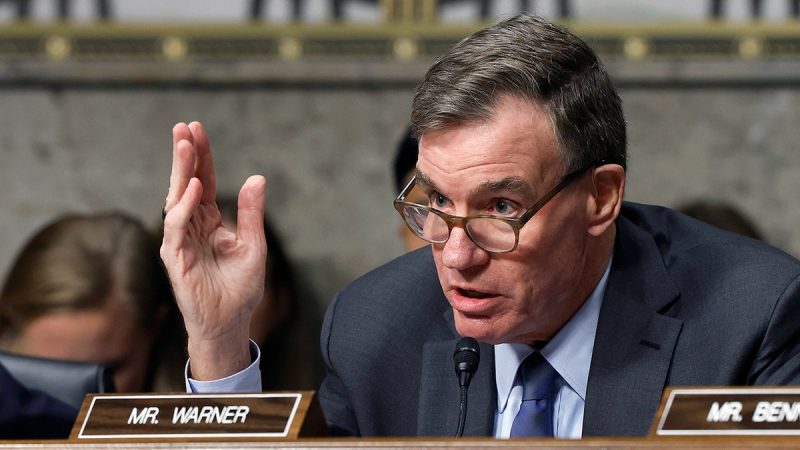
          ‘The final comment I’ll make is just that nothing in the legal opinion even mentions Venezuela,’ said Sen. Mark Warner, D-Va., the top Democrat on the Senate Select Committee on Intelligence.

          ‘I think they do have visibility into drug trafficking,’ Warner added, saying he trusted U.S. intelligence assessments but would prefer traffickers be ‘interdicted and taken to court rather than blown up.’

          Secretary of State Marco Rubio, War Secretary Pete Hegseth and senior Pentagon lawyers led the closed-door briefing for congressional leaders and the chairs and ranking members of the Intelligence, Armed Services and Foreign Affairs committees.

          Lawmakers have complained for days about being left in the dark as the Pentagon launched multiple maritime strikes without first consulting Congress. Officials declined to discuss the intended scope or duration of the campaign and provided few details about who was killed or what evidence tied the targets to narcotics trafficking.

          ‘Lots of mistakes could get made,’ said Rep. Jim Himes, D-Conn., the top Democrat on the House Permanent Select Committee on Intelligence. ‘But, again, they are applying the eyes and ears of our intelligence community to these boats. I don’t worry too much that there will be a strike on a fishing boat or a pleasure boat, but that’s always possible.’

          Himes said the administration described ‘the process by which these boats are selected’ but did not share photographs or the identities of those killed.

          House Speaker Mike Johnson also backed the intelligence underpinning the operation.

          ‘We have exquisite intelligence about these strikes on these vessels,’ Johnson said. ‘We know the contents of the boats. We know the personnel almost to a person.’

          Officials told lawmakers there were no plans to expand the maritime campaign to land operations or to target Maduro directly.

          ‘There are no apparent plans to expand this beyond what they say they are doing,’ Himes said.

          Reports that the administration was considering potential strikes on Mexico did not appear to come up in the briefing, which lawmakers said focused almost exclusively on cocaine — some of which is trafficked through Venezuela — rather than fentanyl, Mexico’s top export.

          ‘It’s as described — to stop the flow of drugs, and, to be clear, to stop the flow of cocaine,’ said Himes.

          Still, several Democrats said the Biden administration missed a critical moment last year to rally Latin American allies after Venezuela’s contested election, when independent monitors and several Western governments recognized opposition candidate Edmundo González as the rightful winner.

          ‘I frankly think the Biden administration didn’t go far enough after the Venezuelan people voted overwhelmingly to get rid of Maduro,’ Warner said. ‘We missed a huge opportunity when Venezuelans — in numbers probably in the mid-sixties percent — came out against Maduro, even under threat of violence. The fact that we didn’t rally the region at that point was, in retrospect, a huge mistake.’

          After the July 2024 vote, the Biden administration imposed sanctions on high-level Maduro officials but stopped short of reimposing broad restrictions on Venezuela’s oil sector, a move officials said could have driven up global fuel prices and worsened migration pressures.

          By contrast, the Trump administration has taken a harder line. It reimposed sweeping sanctions on Maduro during Trump’s first term and has since increased pressure on the South American strongman in his second. The Justice Department has offered a $50 million bounty for information leading to Maduro’s arrest, and officials have not ruled out whether the current strikes could be intended to pressure him to step aside.

          Asked in a CBS interview over the weekend whether Maduro’s days were numbered, Trump said, ‘I would say yeah. I think so.’

          Pressed on whether the U.S. would go to war with Venezuela, he added, ‘I doubt it. I don’t think so.’

          This post appeared first on FOX NEWS

          Here’s a quick recap of the crypto landscape for Friday (November 7) as of 9:00 a.m. UTC.

          Get the latest insights on Bitcoin, Ether and altcoins, along with a round-up of key cryptocurrency market news.

          Bitcoin and Ether price update

          Bitcoin (BTC) was priced at US$103,902, a 3.0 percent decrease in 24 hours. Bitcoin’s highest valuation as of Friday was US$103,421, while its lowest was US$99,931.52

          Bitcoin price performance, November 7, 2025.

          Chart via TradingView.

          Bitcoin continues to extend its slide as it heads for another week of losses. The world’s largest cryptocurrency slipped more than 20 percent from its early October record high and confirming entry into bear-market territory.

          The losses mark Bitcoin’s second consecutive week in the red and its fourth down week in the past five, reflecting the market’s struggle to recover from October’s “Red October” slump. Data showing a sharp rise in US layoffs in October, the highest in two decades, fueled expectations of further Federal Reserve rate cuts in December.

          Despite this, President Trump reaffirmed his administration’s pro-crypto stance this week, calling for the US to become the “Bitcoin superpower” and touting regulatory measures to bolster the digital asset sector. However, his remarks stopped short of signaling direct government purchases of crypto.

          Analysts say Bitcoin is now hovering near a crucial technical threshold around $97,000. Trader Ted Pillows noted that Bitcoin is “holding above the $100,000 level for now,” but warned that ‘until BTC closes a strong daily candle above the $106,000 level,’ investors must brace and expect new lows moving forward.

          Ether (ETH) was priced at US$3,338.69, a 4.1 percent increase in 24 hours. Its lowest valuation of the day was US$3,229.48, and its highest was US$3,397.60.

          Like Bitcoin, Ethereum extended its decline and is struggling for recovery as it it slipped below the US$3,300 mark. While bearish strength remains moderate, the fact that prices continued to drop even after a major liquidation event suggests that spot sellers may now be in control.

          Altcoin price update

          • Solana (SOL) was priced at US$157.08, down by 3.1 percent over the last 24 hours. Its highest valuation of the day was US$160.86, while its lowest was US$152.27
          • XRP was trading for US$2.22, down by 4.8 percent over the last 24 hours. Its highest valuation of the day was US$2.30, while its lowest was US$2.17.

          Crypto derivatives and market indicators

          The cryptocurrency market showed mixed but cautious action.

          Liquidations for contracts tied to Bitcoin totaled approximately US$48.39 million in the last four hours, with the overwhelming majority coming from long positions showing a clear sign of forced selling as leveraged positions were flushed. Ether followed the same pattern: about US$25.82 million of liquidations over the same window, again dominated by longs.

          Futures open interest tells a similar story of modest unwind. Future open interest for Bitcoin edged down 0.03 percent to US$69.44 billion, while Ether declined 1.92 percent to US$38.19 billion, reflecting a slight pullback in leverage as the session closed.

          Technically, Bitcoin’s RSI at 30.81 sits near oversold territory, signaling weak momentum and that the market may be vulnerable to continued downside or, alternatively, due for a short-term relief bounce if buyers step in.

          Today’s crypto news to know

          Crypto market loses nearly all 2025 gains after month-long decline

          The cryptocurrency market has erased almost all of its 2025 value increase in just over a month, marking one of the steepest reversals since the last bear cycle.

          According to CoinGecko data as reported by Bloomberg, total market capitalization peaked near US$4.4 trillion on October 6 before sliding 20 percent, leaving the asset class up only about 2.5 percent for the year.

          The decline began after roughly US$19 billion in leveraged positions were liquidated that sparked a wider selloff and weakening trader sentiment.

          Bitcoin has fallen 8 percent this week alone, dropping below its 200-day moving average for the first time in three years. Altcoins have faced similarly sharp losses amid reduced liquidity and limited new inflows.

          Japan’s financial regulator backs bank-led stablecoin pilot

          Japan’s Financial Services Agency has confirmed it will support a project by the country’s three largest banks—Mitsubishi UFJ Financial Group, Sumitomo Mitsui Financial Group, and Mizuho Financial Group—to jointly issue stablecoins for cross-border payments.

          According to a Reuters report, finance Minister Satsuki Katayama said the FSA will oversee legal and operational compliance as the initiative moves into testing.

          The banks intend to issue yen-pegged tokens under Japan’s revised Payment Services Act, which requires full asset backing and enhanced consumer safeguards.

          The JPYC recently launched its first fully regulated yen-denominated stablecoin backed by domestic savings and government bonds.

          UNDP to launch global blockchain training program for governments

          The United Nations Development Programme is expanding its blockchain education initiatives to include government officials, aiming to accelerate digital infrastructure adoption in the public sector.

          Robert Pasicko, who leads UNDP’s Alternative Finance Lab, said four countries will be selected for the initial rollout within weeks. The program builds on UNDP’s internal blockchain academy and will include both training and hands-on project support.

          Research by UNDP identified over 300 potential government applications for blockchain technology, from transparent fund tracking to public-sector payments.

          Twenty-five major blockchain organizations, including Polygon Labs, Stellar Foundation, and the Ethereum Foundation, have discussed forming an advisory group under UNDP coordination.

          Securities Disclosure: I, Giann Liguid, hold no direct investment interest in any company mentioned in this article.
          Securities Disclosure: I, Meagen Seatter, hold no direct investment interest in any company mentioned in this article.

          This post appeared first on investingnews.com

          Terra Clean Energy CORP. (‘ Terra ‘ or the ‘ Company ‘) (CSE: TCEC,OTC:TCEFF, OTCQB: TCEFF FSE: C 9O0) is pleased to announce that it has scheduled its annual general meeting of shareholders for December 8, 2025 (the ‘ Meeting ‘).  At that Meeting, amongst other things, shareholders will be asked to re-elect the current directors of the Company (being Greg Cameron, Alex Klenman and Tony Wonnacott) and elect two additional directors, being Michael Gabbani and Brian Polla.

          ‘I would like to welcome Mike and Brian to the board of directors and look forward to working with them to deliver shareholder value’ stated Greg Cameron, CEO of the Company.  ‘Mike is an accomplished Engineer having spent decades in the Nuclear Industry. He has a high-level understanding of where the industry  is going and the contacts to allow us to position the Company to benefit. Brian is a serial entrepreneur and seasoned veteran of both private and public companies and also a substantial shareholder of the company.  The shareholders are lucky to have their expertise  to help steer the company forward’.

          Mr. Michael Gabbani is a highly accomplished executive sales and business development leader with a strong engineering acumen. As a professional engineer with over 30 years of experience in the nuclear energy industry his career began with Atomic Energy of Canada Limited and later with GE Hitachi Energy.  Throughout his career, Mr. Gabbani has been a dedicated advocate for the Canadian nuclear Industry. He served for 14 years on the board of directors of the Organization of Canadian Nuclear Industries, representing the nuclear supply chain while promoting collaboration, innovation and international partnerships in efforts to expose the strength and technical innovation within the Canadian Nuclear Industry worldwide.

          Mr. Brian Polla is a seasoned entrepreneur with over 25 years of experience in manufacturing, operations, and business development. Throughout his career, he has built and led multiple successful ventures in the industrial and coatings sectors, earning a reputation for strategic vision and hands-on leadership.  With deep expertise in metal fabrication, production management, and process optimization, Mr. Polla has guided companies through every stage of growth from startup to scale-up including the successful launch of a company on the CSE.  For over two decades, Mr. Polla has owned and operated Kenex Coatings.

          Also, further to the Company’s press releases dated October 20, 2025 and November 5, 2025, in connection with the recently completed non-brokered private placement, the Company clarifies that it paid finders’ fees to certain arm’s length finders comprising of: (i) total cash of $148,868.01; and; and (ii) 848,783 non-transferrable finder warrants of the Company exercisable to acquire common shares in the capital of the Company (the ‘ Common Shares ‘), at an exercise price of C$0.14 per Common Share for a period of 36 months from November 5, 2025.

          About Terra Clean Energy Corp.

          Terra Clean Energy Corp. is a Canadian-based uranium exploration and development company. The Company is currently developing the South Falcon East uranium project, which holds a 6.96M pound inferred uranium resource within the Fraser Lakes B Deposit, located in the Athabasca Basin region, Saskatchewan, Canada as well as past producing uranium mines in Utah, United States.

          ON BEHALF OF THE BOARD OF Terra Clean Energy CORP.

          ‘Greg Cameron’
          Greg Cameron, CEO
          Qualified Person

          The technical information in this news release has been prepared in accordance with the Canadian regulatory requirements set out in National Instrument 43-101, reviewed and approved on behalf of the company by C. Trevor Perkins, P.Geo., the Company’s Vice President, Exploration, and a Qualified Person as defined by National Instrument 43-101.

          *The historical resource is described in the Technical Report on the South Falcon East Property, filed on sedarplus.ca on February 9, 2023. The Company is not treating the resource as current and has not completed sufficient work to classify the resource as a current mineral resource. While the Company is not treating the historical resource as current, it does believe the work conducted is reliable and the information may be of assistance to readers.

          Forward-Looking Information

          This news release contains forward-looking information which is not comprised of historical facts. Forward-looking information is characterized by words such as ‘plan’, ‘expect’, ‘project’, ‘intend’, ‘believe’, ‘anticipate’, ‘estimate’ and other similar words, or statements that certain events or conditions ‘may’ or ‘will’ occur. Forward-looking information involves risks, uncertainties and other factors that could cause actual events, results, and opportunities to differ materially from those expressed or implied by such forward-looking information, including statements regarding the Offering and the potential development of mineral resources and mineral reserves which may or may not occur. Factors that could cause actual results to differ materially from such forward-looking information include, but are not limited to, changes in the state of equity and debt markets, fluctuations in commodity prices, delays in obtaining required regulatory or governmental approvals, and general economic and political conditions. Forward-looking information in this news release is based on the opinions and assumptions of management considered reasonable as of the date hereof, including that all necessary approvals, including governmental and regulatory approvals will be received as and when expected. Although the Company believes that the assumptions and factors used in preparing the forward-looking information in this news release are reasonable, undue reliance should not be placed on such information. The Company disclaims any intention or obligation to update or revise any forward-looking information, whether because of new information, future events or otherwise, other than as required by applicable laws. For more information on the risks, uncertainties and assumptions that could cause our actual results to differ from current expectations, please refer to the Company’s public filings available under the Company’s profile at www.sedarplus.ca.

          Neither the CSE nor its Regulation Services Provider (as that term is defined in the policies of the CSE) accepts responsibility for the adequacy or accuracy of this release.

          For further information please contact:

          Greg Cameron, CEO
          info@tcec.energy
          416-277-6174

          Terra Clean Energy Corp
          Suite 303, 750 West Pender Street
          Vancouver, BC V6C 2T7
          www.tcec.energy


          News Provided by GlobeNewswire via QuoteMedia

          This post appeared first on investingnews.com