Author

admin

Browsing

For months, headlines warned of an impending famine in Gaza — images of starving children, shattered infrastructure and humanitarian collapse filled the news. On Aug. 22, 2025, the Integrated Food Security Phase Classification (IPC) declared that while full data was lacking, expert inference indicated famine was underway. Governments pledged aid; humanitarian agencies sounded alarms. Yet today, the word ‘famine’ has nearly vanished from headlines. What happened?

This is not to deny the human suffering in Gaza; it is to ask difficult, necessary questions. Was famine averted, exaggerated or politically reframed?

Famine has been described as a tree swaying in the wind — at some point it cannot recover and cannot be returned upright. But Gaza’s ‘famine tree’ never appeared to fully sway. If aid efforts or local resilience truly prevented catastrophe, where is the evidence? On August 22, 2025, famine was declared, and the global press carried that narrative. Then came a shift to the word ‘starvation.’ Now, even that language has faded.

The distinction matters. Famine is a technical classification grounded in data — household food security surveys, acute malnutrition rates and mortality. Starvation, by contrast, is a moral and legal term implying intent; under international law, using starvation as a weapon constitutes a war crime. In Gaza, this rhetorical shift occurred before comprehensive data was gathered — an escalation of accusation without empirical foundation.

Recovery from famine typically takes eight to 12 months, even under ideal conditions with full humanitarian access and functioning medical systems. Historical precedents — Somalia in 2011, South Sudan in 2017 and Sudan in 2023 — show that malnutrition persists long after headlines fade. If Gaza truly met famine standards this summer, the signs would still be unmistakable: rising mortality, overwhelmed clinics and a generation of weakened children. Yet no such surge has been confirmed by independent medical reporting.

Another inconsistency is behavioral. True famine unleashes chaos — hunger overrides social norms and people fight to survive. In August, 84% of Gaza aid convoys were reportedly looted. Yet after the Oct. 10 ceasefire, U.N. 2720 data show interceptions fell to 6%, and by November, below 1%. Where did the desperation go? Where is the looting? Where are the crowds of thousands?

Following the ceasefire, Hamas rapidly reasserted control, executing accused defectors and projecting an image of order. Recent videos show bustling markets and calm streets — a façade of normalcy meant to reinforce legitimacy. Within six weeks, famine conditions seemingly vanished. Can that be real?

If famine had truly taken hold, it would not have dissipated so quickly. Either the crisis was overstated, the data manipulated or public perception deliberately managed.

We cannot shy away from uncomfortable questions. Asking what happened to the famine in Gaza is responsible, not callous. Truth demands transparency, even when it challenges narratives we’ve grown accustomed to believing.

This post appeared first on FOX NEWS

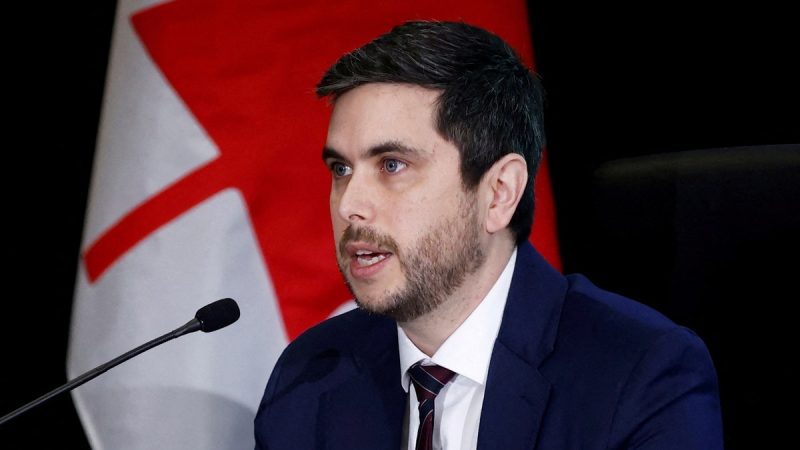
Canadian Security Intelligence Service (CSIS) Director Daniel Rogers, during a rare public appearance Thursday, said nearly one in 10 of the agency’s terrorism investigations include at least one person under the age of 18, marking an alarming trend driven by online extremism.

Since 2014, there have been nearly two dozen violent extremist attacks in Canada resulting in 29 deaths, and at least 60 victims injured, according to Rogers.

Worryingly, he said, nearly one in ten terrorism investigations at CSIS, the country’s domestic spy agency, include at least one ‘subject of investigation’ under the age of 18.

In August, a minor was arrested in Montreal for allegedly planning an attack on behalf of Daesh, according to Rogers.

Just a few months prior, a 15-year-old Edmonton area minor was charged with a terrorism-related offense, as Royal Canadian Mounted Police (RCMP) investigators feared they would commit serious violence related to COM/764, a transnational violent online network that manipulates children and youth across widely accessible online platforms.

Rogers also noted two 15-year-olds were arrested in Ottawa for allegedly conspiring to conduct a mass casualty attack targeting the Jewish community in Canada’s capital in late 2023 and early 2024.

‘Clearly, radicalized youth can cause the same harms as radicalized adults, but the societal supports for youth may help us catch radicalization early and prevent it,’ Rogers said. ‘These tragic numbers would have been higher if not for disruptive actions taken by CSIS and our law enforcement partners.’

The CSIS joined the RCMP and intelligence partners from the U.S., United Kingdom, Australia and New Zealand in releasing a joint public report in December, highlighting the evolving issue of young people and violent extremism. 

The report provides advice to parents, guardians and others with information to help them identify early concerns and address youth radicalization before it’s too late. 

‘Since 2022, CSIS has been involved in the disruption of no fewer than 24 violent extremist actions, each resulting in arrests or terrorism peace bond charges,’ Rogers said. ‘In 2024, CSIS played an integral role in the disruption of two Daesh-inspired plots. In one case, a father and son were allegedly in the advanced stages of planning an attack in the Toronto area. In another, an individual was arrested before allegedly attempting to illegally enter the United States to attack members of the Jewish community in New York. In these examples, and in many others, I can’t discuss publicly, our counter-terrorism teams have partnered with law enforcement and saved lives.’

He attributed the radicalization to ‘eroding social cohesion, increasing polarization, and significant global events,’ which he said ‘provide fertile ground for radicalization.’

‘Many who turn to violence radicalize exclusively online—often without direction from others,’ Rogers said. ‘They use technology to do so secretly and anonymously, seriously challenging the ability of our investigators to keep pace and to identify and prevent acts of violence.’

Rogers also noted the CSIS collects intelligence and defends against transnational repression, previously focusing on transnational repression by the People’s Republic of China, India and others. 

‘In particularly alarming cases over the last year, we’ve had to reprioritize our operations to counter the actions of Iranian intelligence services and their proxies who have targeted individuals they perceive as threats to their regime,’ he said. ‘In more than one case, this involved detecting, investigating, and disrupting potentially lethal threats against individuals in Canada.’

This post appeared first on FOX NEWS

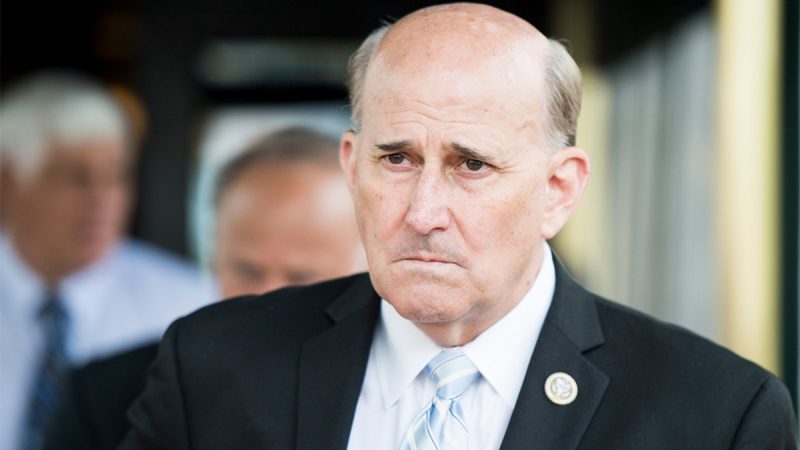
Former Rep. Louie Gohmert blasted ex-Special Counsel Jack Smith for allegedly targeting his personal phone records as part of his investigation into the Jan. 6, 2021, Capitol riots, telling Fox News Digital in an exclusive interview that his action ‘destroys the checks and balances that the founders counted on.’

Fox News Digital exclusively reported Thursday morning that Smith targeted then-House Speaker Kevin McCarthy’s personal, private phone records, as well as Gohmert’s. 

Fox News Digital exclusively reviewed the document that FBI Director Kash Patel recently shared with Senate Judiciary Committee Chairman Chuck Grassley and Sen. Ron Johnson containing the explosive revelations. Grassley and Johnson have been leading a joint investigation into Smith’s ‘Arctic Frost’ probe.

According to the document, Smith, on Jan. 24, 2023, allegedly sought the ‘toll records for the personal cell phones of U.S. Speaker of the House Kevin McCarthy (AT&T) and U.S. Representative Louie Gohmert (Verizon.)’

The information was included as part of a ‘significant case notification’ drafted by the FBI’s Criminal Investigative Division May 25, 2023.

‘It is astounding that Jack ‘Frost’ Smith went on this persecution,’ Gohmert told Fox News Digital Thursday. ‘Apparently, this guy has never read the Fourth Amendment because you have to describe with particularity what it is you’re going after — there should be probable cause, and they had no probable cause. They were going on a witch hunt.’

Smith had sought Gohmert’s personal cellphone records from November 2020 through the end of January 2021.

‘They don’t have any regard for the Fourth Amendment,’ he said. ‘It makes Watergate look like school yard folly.’

But Gohmert said it is the ‘principle.’

‘It is the separation of powers that is the problem,’ Gohmert explained. ‘People and whistleblowers contacted me regularly from within the DOJ and the FBI about overreach within the FBI and DOJ. By grabbing my records, they could stifle reporting of potential crimes by people within the agencies.’

‘You can’t just go seize members of Congress’ records even with a warrant because of that separation of powers,’ Gohmert said. ‘There has to be a wall and that’s what troubles me more than anything.’

Gohmert told Fox News Digital that he didn’t remember who he spoke with during the time period Smith sought records, but said that ‘the last thing I want is for someone who trusted me to keep their name private to have some jack-booted thug like Jack ‘Frost’ Smith grab my records and find out who is tattle tailing on him.’ 

He added: ‘It violates and destroys the checks and balances that the founders counted on.’

Gohmert, though, told Fox News Digital that he trusts the current Justice Department and FBI leadership.

‘I trust the DOJ and trust the people running the FBI,’ he said. ‘We’ll see if there were any crimes committed and, if following the Constitution, they can be properly prosecuted.’ 

Meanwhile, McCarthy said he will take legal action against Smith. 

‘Jack Smith’s radical and deranged investigation was never about finding the truth,’ McCarthy told Fox News Digital. ‘It was a blatant weaponizing of the Justice Department to attack political opponents of the Biden administration. Perhaps no action underscores this point more than the illegal attempt to access the phone records of sitting members of the House and Senate — including the Speaker of the House.’ 

‘His illegal targeting demands real accountability,’ McCarthy continued. ‘And I am confident Congress will hold hearings and access documents in its investigation into Jack Smith’s own abuses.’ 

‘At the same time, I will ask my own counsel to pursue all areas of redress so this does not happen to anyone else,’ McCarthy said. 

The revelations come after Fox News Digital exclusively reported in October that Smith and his ‘Arctic Frost’ team investigating the Jan. 6, 2021, Capitol riots were tracking the private communications and phone calls of nearly a dozen Republican senators as part of the probe, including Sens. Lindsey Graham of South Carolina, Marsha Blackburn of Tennessee, Ron Johnson of Wisconsin, Josh Hawley of Missouri, Cynthia Lummis of Wyoming, Bill Hagerty of Tennessee, Dan Sullivan of Alaska, Tommy Tuberville of Alabama and GOP Rep. Mike Kelly of Pennsylvania.

An official told Fox News Digital that those records were collected in 2023 by Smith and his team after subpoenaing major telephone providers. 

Smith has called his decision to subpoena and track Republican lawmakers’ phone records ‘entirely proper’ and consistent with Justice Department policy.

‘As described by various Senators, the toll data collection was narrowly tailored and limited to the four days from January 4, 2021 to January 7, 2021, with a focus on telephonic activity during the period immediately surrounding the January 6 riots at the U.S. Capitol,’ Smith’s lawyers wrote in October to Grassley.

Grassley, R-Iowa, and Johnson, R-Wis., have been investigating the matter. 

An FBI official told Fox News Digital that ‘Arctic Frost’ is a ‘prohibited case,’ and that the review required FBI officials to go ‘above and beyond in order to deliver on this promise of transparency.’ The discovery is part of a broader ongoing review, Fox News Digital has learned.

Smith, after months of investigating, charged President Donald Trump in the U.S. District Court for Washington, D.C., in his 2020 election case, but after Trump was elected president, Smith sought to dismiss the case. Judge Tanya Chutkan granted that request. 

Smith’s case cost taxpayers more than $50 million. 

Smith did not immediately respond to Fox News Digital’s request for comment.

This post appeared first on FOX NEWS

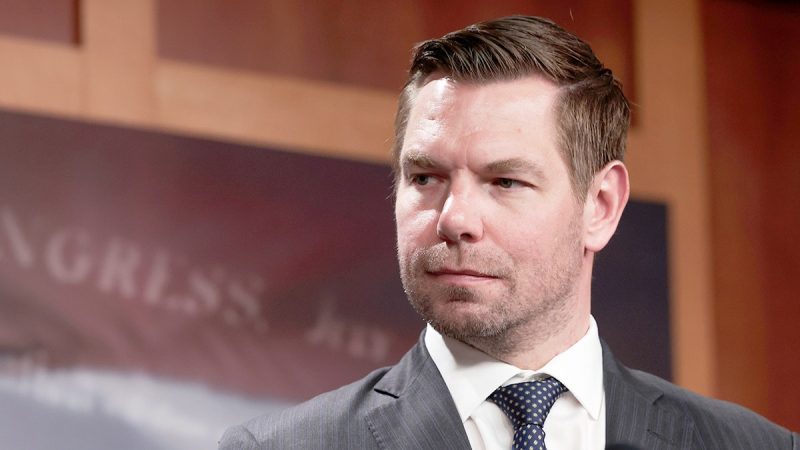
The Department of Justice under President Donald Trump has opened a probe into Rep. Eric Swalwell, D-Calif., over alleged mortgage fraud, Fox News has confirmed.

In response, Swalwell said he was not surprised to be targeted by Trump and vowed to keep speaking out while pursuing his lawsuit.

‘As the most vocal critic of Donald Trump over the last decade and as the only person who still has a surviving lawsuit against him, the only thing I am surprised about is that it took him this long to come after me,’ the California lawmaker said.

‘Like James Comey and John Bolton, Adam Schiff and Lisa Cook, Letitia James and the dozens more to come – I refuse to live in fear in what was once the freest country in the world.

‘Of course, I will not end my lawsuit against him. And I will not stop speaking out against the President and speaking up for Californians,’ he continued. ‘As Mark Twain said, ‘Patriotism is supporting your country all the time, and your government when it deserves it.’ Mr. President, do better. Be better.’

The probe, which was first reported by NBC, will investigate allegations of millions of dollars in loans and refinancing were based on Swalwell declaring that his primary residence was in Washington, D.C., a person familiar with the referral told the news organization.

According to the report, the director of the Federal Housing Agency, Bill Pulte, sent Attorney General Pam Bondi a letter on Wednesday accusing Swalwell of possibly making false or misleading statements on loan documents.

The source also reportedly told NBC the investigation is into possible mortgage fraud, tax fraud at the state and local level, insurance fraud and any related crimes.

Fox News Digital has reached out to the Department of Justice for comment on the matter.

Swalwell has been one of Trump’s most outspoken critics, and last month he faced scrutiny over a ‘bizarre inconsistency’ in his campaign’s Federal Election Commission filings that list several different reasons for payments to a Haitian American staffer totaling more than $360,000.

FEC filings from Swalwell for Congress and his Remedy PAC, dating back to 2021, show more than 75 payments to staffer Darly Meyer, ranging from $53 to more than $12,000 for various reasons.

Meyer received 27 payments last year totaling more than $120,000 and is on pace to earn a similar amount in 2025. The filings list multiple explanations for the disbursements, including travel, car and security services, and salary, as well as reimbursements for personal travel expenses, event flowers, and postage.

Over the years, Swalwell’s campaign has reported numerous expenditures on luxury car services, expensive restaurants, and high-end hotels in international cities such as Dubai, Berlin, Paris and London.

Swalwell also claimed there was strong evidence of collusion between Russia and Trump, but those claims were contradicted by when we.

Durham’s report, released in 2023, found intelligence agencies lacked ‘actual evidence of collusion’ to justify launching the Trump-Russia probe. The findings echoed Robert Mueller’s 2019 report, which found no criminal conspiracy between Trump’s campaign and Russia.

This is a developing story and will be updated as more information becomes available.

This post appeared first on FOX NEWS

Homeownership has long been part of the American dream, but that dream has been deferred.

Households in their 30s have an ownership rate of just 42% — more than 20 points lower than the national average.

The median age of all home buyers is a record-breaking 59, and the age of a first-time buyer is 40 — up from 29 in 1981.

As a solution, the Trump administration is floating a 50-year mortgage.

Though I disagree with that specific idea, I am heartened that they are brainstorming ways to tackle the problem.

We need a Marshall Plan for housing, a collection of broad initiatives to make homes more affordable and put the dream back on track.

The federal government can use its bully pulpit to get changes to red tape and regulations that are holding back building, and encourage policies that would increase housing and decrease costs.

To start, the White House and Fannie Mae should instead promote shorter, 20-year mortgages.

As Ed Pinto of the American Enterprise Institute has argued, a 20-year loan can be paid off ‘when the 30-year-term loan leaves most homeowners saddled with another decade or more of mortgage payments, the cash flow freed up from a paid-off shorter-term loan is available to fund a child’s post-secondary-education needs and later turbocharge one’s own retirement.’

The 20-year loan could be incentivized with a first-time buyer tax credit.

The decline in homeownership is a problem that must be addressed federally and locally.

This would be especially important today when the vast majority of taxpayers no longer itemize their tax returns — which means they cannot avail themselves of the deduction for mortgage interest.

That deduction always favored wealthy buyers of high-end homes anyway — so a targeted tax credit would help those who actually need it far more.

It’s time, as well, for the Trump White House to roll back one of the key initiatives of Elizabeth Warren’s pet project, the Consumer Protection Financial Agency.

The CPFC has pressured banks to limit mortgages to ‘plain vanilla’ mortgages, premised on its rules or what consumers can afford.

Adjustable rate loans and other ‘mortgage products’ can be right for some buyers — who should have a choice of how much risk they want to take in exchange for getting into the home market.

Even a low down payment might be hard to come up with, however, for those who can’t take advantage of generous in-laws.

Those without rich parents might turn to a ‘housing saving account’ — akin to the popular health savings accounts initiated by George W. Bush and which hold some $59 billion and are sheltered from taxation.

The new housing accounts should be tailored only for down payments, however — not long-term maintenance and other homeowner needs.

Buyers also are allowed today to take out $10,000 from their 401(k) penalty-free to go to a downpayment on a home.

Perhaps it’s time to raise that ceiling.

Of course, it goes almost without saying that even the most creative financing and incentives will fall short of addressing our housing needs without the most important problem: Supply.

There are many reasons why there aren’t enough starter homes.

Regulation in many cities makes construction difficult.

More retiring Boomers own second homes.

Banks have increasingly bought real estate as an investment and drive up prices.

Low turnover is another reason Gen X buyers have so much trouble breaking into the market.

During COVID, mortgage rates hit record lows and many refinanced.

These owners have a strong incentive not to trade a 3% mortgage for a new home and a much-higher rate.

Another key reason: more and more of us are living in small households or even alone.

The Census Bureau reports that, between 2019 and 2021, the number of households increased by more than 2 million a year.

That means we not only need more housing but more types of housing — many smaller units especially, rather than the two-acre, one house lots common in so many suburbs.

Here is where the limits of Washington’s hard power is reached.

Much of US housing policy is set at the hyper-local level, by planning boards and zoning boards.

That’s why outgoing New York City Mayor Eric Adams deserves so much credit for his ‘City of Yes’ rezoning in New York, which will permit safe basement apartments and ‘accessory dwelling units’ in parts of the city.

Accessory units — or ‘granny flats’ — can also be the means for older couples to sell the homes to younger households and downsize.

As part of a federal push, though, the Marshall Plan for Housing could encourage these same changes nationwide: Changing zoning to allow more housing; or taking undeveloped state land and providing tax incentives to build on them.

It’s the 18,000 municipalities across the country that are often standing in the way of what might be called naturally occurring affordable housing — small homes on small lots, like those of the original Levittown, where houses were just 750 square feet of living space.

Housing and Urban Development Secretary Scott Turner should urge localities to permit private, unsubsidized, small homes and apartment buildings, or what AEI’s Pinto terms ‘light-touch density.’

It’s far more likely to gain local approval than the subsidized, low-income housing Democrats have long favored, starting with the public housing the socialist Zohran Mamdani wants to revive.

Private building is also less costly; new housing units in California subsidized through the low income housing tax credit can cost upwards of $800,000 per units, a bonanza for developers but not many tenants.

Building costs for any housing, however, will inevitably go up as a result of another Trump policy: his 10% tariff on plentiful Canadian lumber and timber products and a 25% tariff on kitchen cabinets and furniture.

The de facto taxes are causing what the National Association of Home Builders calls ‘headwinds’ holding back new construction.

As a builder himself, he should rethink these tariffs.

Homeownership is a virtuous conspiracy making the nation better.

Owners are more likely to maintain neighborhoods than renters, more likely to improve schools and services by getting involved in local government — the essence of American federalism.

The decline in homeownership is a problem that must be addressed federally and locally.

But the Trump administration can take the lead, with tax breaks and the encouragement of construction.

The president can bring the dream alive again.


This post appeared first on FOX NEWS

China’s gold industry is entering a period of rapid adjustment after Beijing implemented a major overhaul of value-added tax (VAT) rules on physical gold.

The reform, which took effect on the first of November run through December 31, 2027, ending the long-standing practice of allowing full tax deductions on most gold withdrawn from the Shanghai Gold Exchange (SGE) and the Shanghai Futures Exchange (SHFE).

The Ministry of Finance and the State Taxation Administration announced the shift on the same day broader tax changes for platinum and diamonds came into force. But unlike those adjustments, the new gold rules directly target the structure of VAT throughout the supply chain.

Under the old system, when members withdrew gold from SGE or SHFE vaults to turn it into jewelry or branded bars, the tax authority issued a full 13 percent Special VAT Invoice that could be fully offset against output VAT, keeping the tax burden minimal.

VAT was effectively charged only on the value added beyond the underlying gold price, a feature that helped keep jewelry costs lower even as gold prices climbed.

That framework has now been split into two tracks, depending on whether gold is withdrawn for investment or non-investment purposes. SGE and SHFE members who buy and sell on the exchange continue to enjoy VAT exemption.

Investment products, such as bars produced by commercial banks or gold ETFs trading on the exchanges, remain largely unaffected. But once gold exits the vaults, the treatment diverges sharply.

For investment products, the taxation formula still applies only to value added, preserving the low-cost structure for banks and major investment channels. But the new system bars SGE members from issuing special VAT invoices to the clients they supply, meaning downstream buyers cannot claim tax credits on their own sales.

That dynamic will likely push more investors to buy directly from SGE members, whose products can be sold at lower effective prices because they retain the credit advantage at the first tier.

Jewelry sector faces brunt of policy changes

However, the impact on non-investment gold—primarily jewelry—is far more pronounced.

Members withdrawing gold for fabrication can now deduct output VAT by only 6 percent of their costs, rather than 13 percent previously. The SGE will also issue ordinary invoices instead of special ones, removing another layer of tax offset.

Metallurgical and retail analysts calculate that this adjustment will raise jewelr manufacturers’ tax burden enough to lift final consumer prices by roughly 4 percent in typical scenarios, with some retailers already reporting price hikes since early November.

The policy also wipes away the differential treatment between SGE members and non-members. Independent jewelers, small banks, and franchises of major jewelry brands, who open accounts through SGE members, are now treated the same as entities withdrawing gold for non-investment use.

With their inability to claim the full 13 percent tax credit, non-member participants have already raised bar prices by around 13 percent, according to industry feedback as noted by the World Gold Council (WGC)

Amid the reform, Chinese consumer behavior is already shifting. According to data compiled by Metals Focus, retail buyers have moved decisively toward gold bars as they become more sensitive to jewelry mark-ups and increasingly aware of the narrower buy–sell spreads available on investment products.

The research firm estimates that retail investment jumped 20 percent to 336 tonnes in 2024, the highest level since 2013, while jewelry consumption dropped 24 percent, falling to its weakest level since the first year of the pandemic.

That divergence has only widened this year: in the first nine months of 2025, jewelry consumption declined 25 percent year-on-year, even as retail investment climbed 24 percent over the same period.

The country’s core jewelry manufacturing and wholesale hub has remained weak since the National Day Holiday. November is normally an off-season for jewelry buying, but wholesalers say the new VAT regime has already cooled restocking activity.

Instead, manufacturers and retailers have begun shifting product development toward high-value “by piece” items that are less sensitive to gold price swings, while promotional campaigns encouraging consumers to trade in old jewelry for new pieces—transactions exempt from the new tax—are expected to grow.

Financial sector adjusts

The rule change has also spilled into banking products. Reuters reported that China Construction Bank stopped accepting new applications for one of its gold purchasing accounts on the first business day after the tax shift, offering no explanation. Industrial and Commercial Bank of China briefly introduced similar restrictions before reversing them hours later.

While the tax rules do not directly target banks’ paper gold programs, the reform revealed uncertainty among financial institutions as they evaluate how the revised incentives may alter client behavior.

Despite the disruptive effects on jewelry, investment demand is positioned to strengthen heading into 2026. The WGC noted that bar and coin buyers face no additional tax burden so long as they purchase directly from SGE members.

Expectations of further price appreciation, China’s continued economic uncertainty, and the People’s Bank of China’s steady gold acquisitions all reinforce investment interest. Recently, gold also regained the US$4,200 level on expectations of a US rate cut in December and rising concerns about US debt levels.

While analysts call it the most significant gold-market tax change since 2019, most predict that its full effects will only become clear next year as the peak buying season tests whether shifting consumer preferences deepen.

Securities Disclosure: I, Giann Liguid, hold no direct investment interest in any company mentioned in this article.

This post appeared first on investingnews.com

India has approved a sweeping overhaul of royalty rates for several critical minerals, continuing its campaign to expand domestic mining and reduce reliance on Chinese imports.

Under the revised framework, graphite with at least 80 percent fixed carbon will be charged a 2 percent royalty based on the average sale price (ASP) determined by the Indian Bureau of Mines, while graphite with lower purity will carry a 4 percent rate.

Caesium and rubidium will each be levied a 2 percent royalty on the ASP of metal contained in the ore, and zirconium will be charged 1 percent.

The government said the changes would encourage more rational bidding in auctions and attract greater private participation in mineral exploration. “The above decision of the Union Cabinet will promote auction of mineral blocks containing caesium, rubidium and zirconium, thereby not only unlocking these minerals but also associated critical minerals found with them, such as lithium, tungsten, REEs, and niobium,” the statement read.

New Delhi has recently pushed to build a self-reliant critical mineral ecosystem amid mounting global supply chain pressures.

China, which produces more than 80 percent of the world’s rare earth elements and controls much of the refining capacity for battery metals, has tightened export restrictions in recent years.

At least nine mineral blocks were offered in the sixth tranche of auctions launched in September, including five graphite blocks, two rubidium blocks, and one each for caesium and zirconium.

These minerals are integral to India’s green industrial transition: graphite is used in electric vehicle (EV) batteries, zirconium in nuclear reactors, caesium in precision timing systems such as GPS, and rubidium in fiber optics and night vision equipment.

The royalty revision also complements broader measures under Prime Minister Narendra Modi’s administration to secure strategic minerals and reduce import dependency.

Earlier this year, India approved a US$1.9 billion plan to source critical materials used in batteries, electronics, and agriculture.

In addition, the government weeks ago was reported to be nearly tripling its production-linked incentive (PLI) program for rare earth magnet manufacturing to over 70 billion rupees (US$788 million), a major step up from the initial US$290 million proposal.

Pending cabinet approval, the expanded plan seeks to develop a full rare earth magnet supply chain for EVs, renewable energy systems, and defense applications.

In parallel, the government is also investing heavily in human capital to sustain this growth. The Ministry of Mines, in coordination with the Skill Council for Mining Sector (SCMS), has launched an initiative to train 5.7 million workers in mining-related occupations by 2030.

The skills gap study for 2025–2030 will map future workforce requirements and identify pathways to develop a “future-ready” labor pool capable of supporting new mineral projects.

“The report will come up with a detailed action plan for the sector on ways to impart skills training to millions of workers to cater to the increasing demand from the sector in the near future,” a senior government official told The Economic Times.

India currently imports about 60 percent of its graphite needs and remains a minor producer of most other critical minerals. The Modi administration aims to more than double mining’s share of GDP to 5 percent by 2030 from 2.2 percent today.

Securities Disclosure: I, Giann Liguid, hold no direct investment interest in any company mentioned in this article.

This post appeared first on investingnews.com

western copper and gold corporation (TSX: WRN) (NYSE American: WRN) (‘Western’ or the ‘Company’) is pleased to announce the appointment of Mark E. Smith, P.E., P.Eng., to its Board of Directors (the ‘Board’).

Mr. Smith is a professional engineer with over 45 years of global mining experience. He co-founded and managed Vector Engineering for nearly 25 years, a consulting and engineering firm with a staff of 500 people and offices in seven countries. His technical leadership and judgement have been relied upon by many of the world’s largest mining companies, including BHP, Rio Tinto, Barrick, Newmont, Vale, Glencore, and Teck. Mr. Smith holds a Master’s degree in Civil and Geotechnical Engineering from the University of Nevada, Reno.

He has worked extensively in the Yukon, contributing to projects such as Coffee, Macpass, and Mactung, and has advised the Government of Yukon on mine waste and heap leach management practices. More recently, he was appointed by the Government of Yukon to chair the Independent Review Board for the Eagle Mine investigation.

‘We are extremely pleased to welcome Mark to our Board,’ said Sandeep Singh, President & Chief Executive Officer. ‘Mark has a deep understanding of the Yukon and has been a well-respected technical voice in the North for over a decade. His extensive experience and deep knowledge of the territory will be invaluable as we advance Casino through environmental assessment and permitting.’

‘Mark’s addition to the Board builds on Western’s commitment to the highest technical and environmental standards,’ said Raymond Threlkeld, Chairman of the Board. ‘His global expertise will strengthen Western’s ability to sustainably advance a world-class operation in the Yukon.’

‘I’ve dedicated my career to developing successful and environmentally-sound copper and gold projects around the world,’ said Mark E. Smith. ‘From concept to design, construction, operations, and closure, I’ve helped bring hundreds of projects into successful, sustainable production. I’m impressed by the approach taken towards the Casino Project and believe it can have a positive impact on the Yukon. I’m very happy to have been invited to join the Western team.’

ABOUT western copper and gold corporation

western copper and gold corporation is advancing the Casino Project, Canada’s premier copper-gold mine in the Yukon and one of the most economic greenfield copper-gold mining projects in the world.

The Company is committed to working collaboratively with First Nations and local communities to progress the Casino Project, using internationally recognized responsible mining technologies and practices.

For more information, visit www.westerncopperandgold.com.

On behalf of the board,

‘Sandeep Singh’

Sandeep Singh
President & CEO
western copper and gold corporation

For more information, please contact:

Cameron Magee
Director, Investor Relations & Corporate Development
western copper and gold corporation
437-219-5576 or cmagee@westerncopperandgold.com

Cautionary Note Regarding Forward-Looking Statements

This news release includes certain ‘forward-looking information’ and ‘forward-looking statements’ (collectively ‘forward-looking statements’) within the meaning of applicable Canadian and United States securities legislation including the United States Private Securities Litigation Reform Act of 1995. These forward-looking statements are made as of the date of this news release. Forward-looking statements are frequently, but not always, identified by words such as ‘expects’, ‘anticipates’, ‘believes’, ‘plans’, ‘projects’, ‘intends’, ‘estimates’, ‘envisages’, ‘potential’, ‘possible’, ‘strategy’, ‘goals’, ‘opportunities’, ‘objectives’, or variations thereof or stating that certain actions, events or results ‘may’, ‘could’, ‘would’, ‘might’ or ‘will’ be taken, occur or be achieved, or the negative of any of these terms and similar expressions. Such forward-looking statements herein include statements regarding the Company’s plans to advance the Casino Project through environmental assessment and permitting; expectations regarding the contributions and value that Mr. Smith’s appointment will bring to the Board and the Company; the Company’s ability to sustainably advance a world-class operation in the Yukon; expectations that the Casino Project can have a positive impact on the Yukon; and the Company’s commitment to maintaining the highest technical and environmental standards in the development of the Casino Project.

Forward-looking statements involve known and unknown risks, uncertainties and other factors that may cause actual events to be materially different from those expressed or implied by such statements. Such factors include but are not limited to the risk of unforeseen challenges in advancing the Casino Project, potential impacts on operational continuity, changes in general market conditions that could affect the Company’s performance; and other risks and uncertainties disclosed in the Company’s annual information form and Form 40-F for the most recently completed financial year and its other publicly filed disclosure documents.

Forward-looking statements are based on assumptions management believes to be reasonable, such assumptions and factors as set out herein, and in the Company’s annual information form and Form 40-F for the most recently completed financial year and its other publicly filed disclosure document.

Although the Company has attempted to identify important factors that could cause actual results to differ materially from those contained in forward-looking statements, other factors may cause results to be materially different from those anticipated, described, estimated, assessed or intended. These forward-looking statements represent the Company’s views as of the date of this news release. There can be no assurance that any forward-looking statements will be accurate, as actual results and future events could differ materially from those anticipated in such statements. Accordingly, readers should not place undue reliance on forward-looking statements. The Company does not intend to and does not assume any obligation to update forward-looking statements other than as required by applicable law.

To view the source version of this press release, please visit https://www.newsfilecorp.com/release/274462

News Provided by Newsfile via QuoteMedia

This post appeared first on investingnews.com

Copper Quest Exploration Inc. (CSE: CQX; OTCQB: IMIMF; FRA: 3MX) (‘ Copper Quest ‘ or the ‘ Company ‘) is pleased to announce that it has entered into an arms-length Option to Purchase Agreement (the ‘ Agreement ‘) dated November 7th, 2025 with 0847114 B.C. Ltd. (‘ Privco ‘), a British Columbia Incorporated company that holds 100% ownership, title, and interest in the Alpine Gold Property (the ‘ Property ‘), located in the West Kootenay region of British Columbia (the ‘ Acquisition ‘).

Highlights of the Alpine Gold Property

  • 2018 NI43-101 Inferred Resource of 268,000 tonnes estimated using a cut-off grade of 5.0 g/t Au and an average grade of 16.52 g/t Au that represents an inferred resource of 142,000 oz of gold (McCuaig & Giroux, 2018).
  • Substantial opportunity to grow the maiden Alpine resource to the east-west and to depth with only about 300m of the roughly 2km long vein system explored to date by underground mine workings and drilling.
  • Estimated 24,000 tonnes Run of Mine mineralized stockpile on surface presenting a possible near term cash flow opportunity.
  • 1,650 meters of clean and dry underground workings accessing sampled and mineable zones.
  • At least 4 additional relatively unexplored vein systems on the Property (Black Prince, Cold Blow, Gold Crown & past-producing King Solomon), all hosting historic high-grade gold values.
  • Road accessible 4,611.49-hectare Property including 15 Crown Grants (1 with surface rights) and 19 staked mineral claims with all-season operation potential (Figure 1).
  • Additions of Mr. Allan Matovich to the Board of Directors. Mr. Ted Muraro and Mr. John Mirko as Technical Advisors on closing. They have a combined mining and exploration experience of 150+ years in the industry.

The 4,611.49-hectare Property is approximately 20 kilometers northeast of the City of Nelson (Figure 1) and hosts the former operating underground mine with a recorded production of approximately 16,810 tonnes of mineralized vein material (Table 1). This material contained 356,360 grams of gold, 222,054 grams of silver, 49,329 kilograms of lead and 17,167 kilograms of zinc. The other 4 significant vein systems on the property will also be explored including the Black Prince and Cold Blow quartz veins approximately 3km to the northeast of the Alpine mine, the Gold Crown vein system 600m southeast, and the past-producing King Solomon vein workings 1.8km to the south. Further information about the Alpine Gold property will be forthcoming in the upcoming weeks.

Brian Thurston, President & CEO of Copper Quest, commented : ‘ With Gold prices at all-time highs, The Alpine Gold property creates a tremendous opportunity to create near term value. I look forward to closing the transaction and welcoming Mr. Matovich, Mr. Muraro and Mr. Mirko to the team.’

Figure 1: Location Claim Map

Appointment of Mr. Allan Matovich as Director

Copper Quest is also pleased to announce that upon closing of the acquisition, Mr. Allan Matovich will join the Company’s Board of Directors. Mr. Matovich is the principal owner of the Alpine Gold Property.

Mr. Matovich has 60+ years of mining and exploration experience in Canada and the United States. He first started with Cominco in Trail BC working in the smelter operation. Mr. Matovich then started Matovich Mining Industries where they supplied considerable tonnages of siliceous flux materials, lead and zinc concentrates to Cominco for over 20 years. Mr. Matovich then opened up a mining operation in 1997 in Northern British Columbia to supply barite for drilling fluids in the oil and gas industry. This mining operation is still in production today. Mr. Matovich also opened up a barite operation in Washington State that is going into production. He also worked with Halliburton, Baker Hughes, and Newmont and was very successful. In 2000, Mr. Matovich purchased the Alpine Gold Mine and since then has spent a considerable amount of time proving up the project.

Mr. Matovich commented I am very pleased to bring the Alpine Gold Property to Copper Quest and join as a director. The company has a fantastic portfolio of critical mineral projects advancing and the Alpine Gold Project gives a potential near term cash flow opportunity along with upside to grow the current resource with drilling. I look forward to working with the Copper Quest team to help create value for all stakeholders involved.’

Table 1 – Production History – Minfile (082FNW127) for Alpine Mine for gold (Au) and silver (Ag)

YEAR Tonnes Tonnes Au Grams Ag Grams Est
Grade
Est
Grade
Mined Milled Recovered Recovered Au (g/t) Ag (g/t)
1988 200 90 198 591 2.20 6.57
*1948 16,889 11,384 25.32 17.07
*1947 2,768 1,866 15.38 10.37
*1946 11,042 5,785 18.59 9.74
*1942 56,079 34,182 824.69 502.68
1941 11,517 11,517 219,350 130,011 18.26 11.29
1940 3,992 3,992 57,852 35,333 14.49 8.85
1939 3 0 62 62
1938 35 0 1,120 902
1915 4 0 1,938
*ore milled not reported

Appointment of Mr. Ted Muraro as Technical Advisor to the Board

Mr. Muraro will be appointed as Technical Advisor to the board on closing of the transaction. Mr. Theodore (Ted) W. Muraro has accumulated over six decades of experience in mineral exploration, including 35 years with Cominco where he advanced through Exploration to serve as the companies Chief Geologist and Internal Consulting Geologist. Early in his career, Mr. Muraro gained underground experience at Keno Hill, HB Mine, Sullivan, and Western Mines. His tenure at Cominco was marked by direct involvement in the discovery and subsequent successful development of the Westmin Mine at Buttle Lake, the Polaris Mine on Little Cornwallis Island in the high Arctic, and Snip Mine on the Iskut River. Following his service at Cominco, Mr. Muraro assumed the role of Vice President, Exploration at Romanex and International Barytex Resources, contributing his expertise to international gold projects.

Mr. Muraro, who was awarded the Spud Huestis award in 2021 for his outstanding contributions to the industry and excellence in exploration, worked as an independent consultant (T.W. Muraro Consulting 1993-2016) on base metal and gold exploration projects around the world until his retirement in 2016. In these later years, he served on several boards as Director and/or Advisor, most recently with Imperial Metals. Mr. Muraro’s working relationship with Al Matovich started in the Rossland Mining Camp and shifted to the Alpine Property in the late 80’s.

Appointment of Mr. John Mirko as Technical Advisor to the Board.

Mr. Mirko will be appointed as Technical Advisor to the board on closing of the transaction. Mr. Mirko has over 40 years’ experience in the mining industry, past President and Founder of Canam Alpine Ventures Ltd. (recently sold to Vizsla Resources Ltd.), currently President and Founder of Canam Mining Corp. and Rokmaster Resources Corporation.

From 1986 to 2010 Mr. Mirko the founder, President-CEO and Director of 4 public mining-exploration companies and a founder and Director of 3 others. He has been self-employed in the sector since 1972 as a prospector, contractor and consultant involved in exploration, development and mine construction of various projects in 12 counties, and commercial production of mineral concentrates and metal products from 5 of the projects.

In 2008, Mr. Mirko was a recipient of the ‘E. A. Scholtz Medal for Excellence in Mine Development’ from the Association for Mineral Exploration of British Columbia, and in 2009, the Mining Association of British Columbia’s ‘Mining and Sustainability Award’ for the MAX Mine.

Mr. Mirko is currently a member in good standing of the Society of Economic Geologists, Inc., the Canadian Institute of Mining, Metallurgy and Petroleum, the Prospectors and Developers Association of Canada and AME BC.

Transaction Details

The Agreement provides for the purchase of all the minerals claims and crown grants held by the Privco that make up the Alpine Gold Property. At closing Copper Quest will issue 14,177,517 Copper Quest common shares to Privco at a deemed price of $0.175c per share. The Shares will have a 24-month escrow agreement from closing date.

Additionally, Copper Quest will reimburse $225,000 towards the 2025 expenditures of the Property that was completed earlier this year and a 2 percent NSR will be granted to Privco on closing of the Acquisition with half being able to be bought back for CAD$1-million.

Closing is subject to a 45-day due diligence period, exchange approval and other customary closing conditions. Closing may occur prior to the 45-day due diligence period. A finder’s fee is payable in common shares in connection with the transaction.

Qualified Person

Brian Thurston, P.Geo., the Company’s President, CEO and a qualified person as defined by National Instrument 43-101 Standards of Disclosure for Mineral Projects , has reviewed and approved the technical information in this news release.

Gold: Global Demand & Supply

Global demand for gold remains strong, supported by persistent geopolitical uncertainty, inflationary pressures, and ongoing central bank purchases. At the same time, supply growth is limited, with declining reserves at mature mines, few large-scale discoveries, and rising development costs. This tightening supply backdrop highlights the strategic value of advancing new gold projects in secure, mining-friendly jurisdictions. Copper Quest is aligned with these global trends, positioning Alpine to contribute to the next generation of significant gold discoveries.

Stock Options

The Company has granted stock options to Directors, Management, and Consultants of the Company to acquire an aggregate of 2,600,000 common shares in the capital of the Company, pursuant to the Company’s Equity Incentive Plan. The stock options are each convertible into a common share of the Company at an exercise price of $0. 20 until November 13, 2030.

About Copper Quest Exploration Inc.

Copper Quest ( CSE: CQX; OTCQB: IMIMF; FRA: 3MX ) is focused on building shareholder value through strategic acquisitions and the exploration and development of its North American Critical Mineral portfolio of assets. The Company’s land package currently comprises five critical mineral projects that span over 40,000+ hectares in great mining jurisdictions.

Copper Quest has a 100% interest in the Stars Property, a porphyry copper-molybdenum discovery, covering 9,693 hectares in central British Columbia’s Bulkley Porphyry Belt. Contiguous to the Stars Property, Copper Quest has a 100% interest in the 5,389-hectare Stellar Property. CQX also has an earn-in option up to 80% and joint-venture agreement on the 4,700-hectare porphyry copper-molybdenum RIP Project, also in the Bulkley Porphyry Belt.

Copper Quest has a 100% interest in the Nekash Copper-Gold Project, a porphyry exploration opportunity located in Lemhi County, Idaho, along the prolific Idaho-Montana porphyry copper belt that hosts world-class systems such as Butte and CUMO. The project is fully road-accessible via maintained U.S. highways and forest service roads and currently consists of 70 unpatented federal lode claims covering 585 hectares.

Copper Quest has a 100% interest in the Thane Project located in the Quesnel Terrane of Northern BC which spans over 20,658 ha with 10 high-priority targets identified demonstrating significant copper and precious metal mineralization potential.

Copper Quest’s leadership and advisory teams are senior mining industry executives who have a wealth of technical and capital markets experience and a strong track record of discovering, financing, developing, and operating mining projects on a global scale. Copper Quest is committed to sustainable and responsible business activities in line with industry best practices, supportive of all stakeholders, including the local communities in which it operates. For more information on Copper Quest, please visit the Company’s website at Copper Quest .

On behalf of the Board of Copper Quest Exploration Inc.

Brian Thurston, P.Geo.
Chief Executive Officer and Director
Tel: 778-949-1829

For further information contact:

Investor Relations
info@copper.quest

Forward Looking Information

This news release contains certain ‘forward-looking information’ and ‘forward-looking statements’ (collectively, ‘ forward-looking statements ‘) within the meaning of applicable securities legislation. All statements, other than statements of historical fact included herein, including without limitation, future operations and activities of Copper Quest, are forward-looking statements. Forward-looking statements are frequently, but not always, identified by words such as ‘expects’, ‘anticipates’, ‘believes’, ‘intends’, ‘estimates’, ‘potential’, ‘possible’, and similar expressions, or statements that events, conditions, or results ‘will’, ‘may’, ‘could’, or ‘should’ occur or be achieved. Forward-looking statements reflect the beliefs, opinions and projections on the date the statements are made and are based upon a number of assumptions and estimates based on or related to many of these factors. Such factors include, without limitation, risks associated with possible accidents and other risks associated with mineral exploration operations, the risk that the Company will encounter unanticipated geological factors, risks associated with the interpretation of exploration results, the possibility that the Company may not be able to secure permitting and other governmental clearances necessary to carry out the Company’s exploration plans, the risk that the Company will not be able to raise sufficient funds to carry out its business plans, and the risk of political uncertainties and regulatory or legal changes that might interfere with the Company’s business and prospects. Readers should not place undue reliance on the forward-looking statements and information contained in this news release concerning these items. The Company does not assume any obligation to update the forward-looking statements of beliefs, opinions, projections, or other factors, should they change, except as required by applicable securities laws.

The Canadian Securities Exchange has not reviewed, approved or disapproved the contents of this press release, and does not accept responsibility for the adequacy or accuracy of this release.

A photo accompanying this announcement is available at https://www.globenewswire.com/NewsRoom/AttachmentNg/3309c0ba-17fd-4a57-b498-e8a3c49534fc


News Provided by GlobeNewswire via QuoteMedia

This post appeared first on investingnews.com

As its record-setting year continues, gold is on its way to posting its strongest annual performance since 1979, up an impressive 58 percent year-to-date as of Wednesday (November 12).

The yellow metal once again broke past US$4,200 per ounce this week, moving closer to its all-time high of US$4,379.13, reached on October 17. Silver is up 80 percent year-to-date and also on track for its best year ever.

The silver spot price rose on Thursday (November 13) morning to just a few cents shy of its record price of US$54.47 per ounce. Silver futures hit a new record high of US$54.415 per ounce in early morning trading.

Gold rallied this week even amid news that the longest US government shutdown in history was coming to an end — typically the sort of development that would lessen demand for safe-haven assets. Yet continued labor market weakness in the US is priming expectations of further Federal Reserve interest rate cuts in December.

Ipek Ozkardeskaya, senior analyst at Swissquote Bank, explained that gold is gaining on investor sentiment.

What does it mean to say that gold is acting like a meme stock? Basically, it implies that the gold market is displaying unusual trading dynamics with investment demand at times seemingly more momentum-driven than data-driven.

Gold and silver’s surge may be reflective of the good precious metals vibes investors are now feeling. Social media is buzzing with posts like “GOLD to $5,000!” and trending hashtags like #GoldRush2025 and #SilverSqueeze2.

Gold exchange-traded funds in particular are very popular with retail investors. Sherwood News reported on Tuesday (November 11) that daily call volumes for the SPDR Gold Trust (ARCA:GLD), which is backed by physical gold, had outstripped 1 million by 1:10 p.m. EST, ‘roughly triple their 334,000 average over the last 10 full sessions.’

While the speed and size of the price gains in gold and silver point to a highly sentiment-driven acceleration, this momentum doesn’t discount the strong fundamentals for gold and silver.

Yes, we’re likely to see price pullbacks, but the overall upward momentum is still supported by macro forces such as economic uncertainty, Fed independence concerns, geopolitical risks and in the case of silver, supply worries.

Securities Disclosure: I, Melissa Pistilli, hold no direct investment interest in any company mentioned in this article.

This post appeared first on investingnews.com