
Author

admin

Browsing

(TheNewswire)

LiDAR, or Light Detection and Ranging, is a remote sensing technology that uses laser light to ‘see through’ vegetation and soil cover to measure distances, with 15-30 cm scale accuracy, to underlying rock surfaces.  In this way, it can map out features such as structures and lithological contacts that can be related to mineralization but may not be exposed at surface.  The survey also included colour aerial photography with 10-15 cm resolution that will assist in surface exploration and planning of infrastructure upgrades.

‘Although we have been able to follow and map out the Dos de Mayo vein system along strike for approximately 1,600 metres so far, our geologists are restricted by the amount of outcrop exposure ,’ stated Robert Archer, Pinnacle’s President & CEO.  ‘The LiDAR survey should allow us to ‘connect the dots’ along this structural trend and allow us to better define not only the main vein but parallel and splay veins nearby.  This knowledge, along with additional features such as flexures and fault offsets in the vein structures, will be crucial for interpreting the geological environment and planning the surface drill program.  In addition, LiDAR is known for its ability to detect subtle and sometimes buried features such as old mine workings, overgrown pits and trenches that could lead to the discovery of previously unknown mineralization.’

Qualified Person

Mr. Jorge Ortega, P. Geo, a Qualified Person as defined by National Instrument 43-101, and the author of the NI 43-101 Technical Report for the Potrero Project, has reviewed, verified and approved for disclosure the technical information contained in this news release.

About the Potrero Property

El Potrero is located in the prolific Sierra Madre Occidental of western Mexico and lies within 35 kilometres of four operating mines, including the 4,000 tonnes per day (tpd) Ciénega Mine (Fresnillo), the 1,000 tpd Tahuehueto Mine (Luca Mining) and the 250 tpd Topia Mine (Guanajuato Silver).

High-grade gold-silver mineralization occurs in a low sulphidation epithermal breccia vein system hosted within andesites of the Lower Volcanic Series and has three historic mines along a 500 metre strike length.  The property has been in private hands for almost 40 years and has never been systematically explored by modern methods, leaving significant exploration potential.

A previously operational 100 tpd plant on site can be refurbished / rebuilt and historic underground mine workings rehabilitated at relatively low cost in order to achieve near-term production once permits are in place. The property is road accessible with a power line within three kilometres.

Pinnacle will earn an initial 50% interest immediately upon commencing production.  The goal would then be to generate sufficient cash flow with which to further develop the project and increase the Company’s ownership to 100% subject to a 2% NSR.  If successful, this approach would be less dilutive for shareholders than relying on the equity markets to finance the growth of the Company.

About Pinnacle Silver and Gold Corp.

Pinnacle is focused on the development of precious metals projects in the Americas.  The high-grade Potrero gold-silver project in Mexico’s Sierra Madre Belt hosts an underexplored low-sulphidation epithermal vein system and provides the potential for near-term production . In the prolific Red Lake District of northwestern Ontario, the Company owns a 100% interest in the past-producing, high-grade Argosy Gold Mine and the adjacent North Birch Project with an eight-kilometre-long target horizon . With a seasoned, highly successful management team and quality projects, Pinnacle Silver and Gold is committed to building long -term , sustainable value for shareholders.

Signed: ‘Robert A. Archer’

President & CEO

For further information contact :

Email: info@pinnaclesilverandgold.com

Tel.:  +1 (877) 271-5886 ext. 110

Website: www.pinnaclesilverandgold.com

Neither the TSX Venture Exchange nor the Investment Industry Regulatory Organization of Canada accepts responsibility for the adequacy or accuracy of this release .

Copyright (c) 2025 TheNewswire – All rights reserved.

News Provided by TheNewsWire via QuoteMedia

This post appeared first on investingnews.com

Blackrock Silver Corp. (TSXV: BRC,OTC:BKRRF) (OTCQX: BKRRF) (FSE: AHZ0) (the ‘Company’ or ‘Blackrock’) is pleased to report that all resolutions proposed and voted on at the Annual General Meeting of its shareholders held on November 21, 2025, in Vancouver, British Columbia (the ‘Meeting’) were approved.

At the Meeting, shareholders of the Company: (i) approved the election of William (Bill) Howald, David Laing, Thomas (Tom) Peregoodoff, Andrew Pollard, Daniel Vickerman and Antony (Tony) Wood as directors of the Company; (ii) approved the appointment of the Company’s auditor, BDO Canada LLP, Chartered Professional Accountants, as the independent auditor of the Company and the fixing of the auditor’s remuneration; and (iii) approved and confirmed the Company’s Omnibus Equity Incentive Compensation Plan (the ‘Omnibus Plan‘).

A summary of all of the items approved at the Meeting (including details of the Omnibus Plan) are described in the Company’s Information Circular dated October 8, 2025, which can be found under the Company’s profile on SEDAR+ at www.sedarplus.ca. The Omnibus Plan, in its entirety, is attached as Schedule ‘A’ to the Information Circular provided to shareholders of the Company in respect of the annual general meeting of the Company’s shareholders held on December 15, 2023.

After the Meeting, the directors of the Company: (i) appointed the following officers of the Company: Andrew Pollard as President and Chief Executive Officer, William (Bill) Howald as Executive Chairman, Randy Minhas as Chief Financial Officer, Daniel Vickerman as SVP, Corporate Development and Amit Kumar as Corporate Secretary; and (ii) appointed Thomas (Tom) Peregoodoff as the Lead Director.

About Blackrock Silver Corp.

Backed by gold and silver ounces in the ground, Blackrock is a junior precious metal focused exploration and development company driven to add shareholder value. Anchored by a seasoned Board of Directors, the Company is focused on its 100% controlled Nevada portfolio of properties consisting of low-sulphidation, epithermal gold and silver mineralization located along the established Northern Nevada Rift in north-central Nevada and the Walker Lane trend in western Nevada.

Additional information on Blackrock Silver Corp. can be found on its website at www.blackrocksilver.com and by reviewing its profile on SEDAR+ at www.sedarplus.ca.

For further information, please contact:
Andrew Pollard, President & Chief Executive Officer
Blackrock Silver Corp.
Phone: (604) 817-6044
Email: andrew@blackrocksilver.com

Neither TSX Venture Exchange nor its Regulation Services Provider (as that term is defined in policies of the TSX Venture Exchange) accepts responsibility for the adequacy or accuracy of this release.

NOT FOR DISTRIBUTION TO UNITED STATES NEWSWIRE SERVICES OR FOR DISSEMINATION IN THE UNITED STATES

To view the source version of this press release, please visit https://www.newsfilecorp.com/release/275628

News Provided by Newsfile via QuoteMedia

This post appeared first on investingnews.com

Brunswick Exploration Inc. (TSX-V: BRW, OTCQB: BRWXF; FRANKFURT:1XQ; ‘ BRW ‘ or the ‘ Company ‘) is pleased to announce that it has identified the Kingdom of Saudi Arabia (the ‘ KSA ‘ or ‘ Saudi Arabia ‘) as highly prospective for lithium exploration. To support this new initiative and as an initial entry step into the country, BRW was awarded an exploration license in Saudi Arabia. BRW is the first hard-rock lithium company to outline and embark on a country-wide systematic exploration program in Saudi Arabia. This complements the Company’s highly successful efforts in Canada, where a maiden resource for the Mirage project is expected in early Q1 2026 and in Greenland, where an inaugural drill program is planned for 2026.

Mr. Killian Charles, President and CEO of BRW, commented: ‘Following the completion of our grassroots campaign in Greenland, we have continuously sought to utilize and leverage our unique lithium exploration expertise and Saudi Arabia is an under-explored jurisdiction for lithium with exceptional potential.’

‘Importantly, prospecting in Saudi Arabia is preferentially executed during the seasonally colder months in Canada and Greenland, allowing BRW to generate prospecting results twelve months of the year. The team is currently planning a prospecting campaign which will commence in H1 2026. This program, in addition to our forthcoming MRE at Mirage, our new discovery neighboring Rio Tinto’s Galaxy project and our future work in Greenland, promises an exciting start to the year for Brunswick Exploration.’

Exploration License

The Exploration License has been awarded pending final government approval, while the Company completes the administrative requirements to conduct exploration in the country. The license area is located roughly 150 km from the city of Buraydah and roughly 450 km east from Riyadh, the capital city of Saudi Arabia. The claim area is easily accessible by major highways and has smaller roads throughout the property. The license was selected based on preferred geology, geochemistry, and interpreted satellite imagery for a total license area of 8,467 ha.

Saudi Arabia Fundamentals

Saudi Arabia has a long mining history with well-established mining laws and strong government funding. With a supportive and pro-mining government, favorable geology, great outcrop exposure, and exceptional road access in a region of little to no historic hard rock lithium exploration, this presents a fantastic opportunity for BRW.

Saudi Arabia is actively establishing itself as a major lithium processing hub to support Middle Eastern demand. This foresight is part of the KSA’s larger program known as Saudi Vision 2030, which includes developing its resources outside of the oil and gas industry. Overall, KSA is a well-established mining jurisdiction with prominent major and junior mining companies such as Barrick, Ivanhoe Electric, Tinka Resources, and Power Metallic actively exploring there.

Qualified Person

The scientific and technical information related to this press release has been reviewed and approved by Mr. Charles Kodors, Manager, International Projects. He is a Professional Geologist registered in New Brunswick and Quebec.

About Brunswick Exploration

BRW is a Montreal-based mineral exploration company focused on grassroots exploration for lithium, a critical metal necessary to global decarbonization and energy transition. The Company is rapidly advancing its extensive portfolio of grassroots lithium properties and projects in Quebec (Mirage and Anatacau), Greenland (Nuuk Lithium) and the Kingdom of Saudi Arabia.

Investor Relations/information

Mr. Killian Charles, President and CEO ( info@BRWexplo.ca )

Neither TSX Venture Exchange nor its Regulation Services Provider (as that term is defined in policies of the TSX Venture Exchange) accepts responsibility for the adequacy or accuracy of this release

Cautionary Statement on Forward-Looking Information

This news release contains ‘forward-looking information’ within the meaning of applicable Canadian securities legislation based on expectations, estimates and projections as at the date of this news release. Forward-looking information involves risks, uncertainties and other factors that could cause actual events, results, performance, prospects and opportunities to differ materially from those expressed or implied by such forward-looking information. Factors that could cause actual results to differ materially from such forward-looking information include, but are not limited to, delays in obtaining or failures to obtain required governmental, environmental or other project approvals; uncertainties relating to the availability and costs of financing needed in the future; changes in equity markets; inflation; fluctuations in commodity prices; delays in the development of projects; the other risks involved in the mineral exploration and development industry; and those risks set out in the Company’s public documents filed on SEDAR at www.sedar.com. Although the Company believes that the assumptions and factors used in preparing the forward-looking information in this news release are reasonable, undue reliance should not be placed on such information, which only applies as of the date of this news release, and no assurance can be given that such events will occur in the disclosed time frames or at all. The Company disclaims any intention or obligation to update or revise any forward-looking information, whether as a result of new information, future events or otherwise, other than as required by law. Neither the TSX Venture Exchange nor its Regulation Services Provider (as that term is defined in the policies of the TSX Venture Exchange) accepts responsibility for the adequacy or accuracy of this news release.

News Provided by GlobeNewswire via QuoteMedia

This post appeared first on investingnews.com

Bitcoin and ether slumped to multi-month lows on Friday, with cryptocurrencies swept up in a broader flight from riskier assets as investors worried about lofty tech valuations and bets on near-term U.S. interest rate cuts faded.

Bitcoin, the world’s largest cryptocurrency, fell 5.5% to a seven-month low of $81,668. Ether slid more than 6% to $2,661.37, its lowest in four months.

Both tokens are down roughly 12% so far this week.

Cryptocurrencies are often viewed as a barometer of risk appetite and their slide highlights how fragile the mood in markets has turned in recent days, with high-flying artificial intelligence stocks tumbling and volatility spiking VIX.

“If it’s telling a story about risk sentiment as a whole, then things could start to get really, really ugly, and that’s the concern now,” Tony Sycamore, a market analyst at IG, said of the fall in bitcoin.

About $1.2 trillion has been wiped off the market value of all cryptocurrencies in the past six weeks, according to market tracker CoinGecko.

Bitcoin’s slide follows a stellar run this year that propelled it to a record high above $120,000 in October, buoyed by favourable regulatory changes towards crypto assets globally.

But analysts say the market remains scarred by a record single-day slump last month that saw more than $19 billion of positions liquidated.

“The market feels a little bit dislocated, a bit fractured, a bit broken, really, since we had that selloff,” said Sycamore.

Bitcoin has since erased all its year-to-date gains and is now down 12% for the year, while ether has lost close to 19%.

Citi analyst Alex Saunders said $80,000 would be an important level as it is around the average level of bitcoin holdings in ETFs.

The selloff has also hurt share prices of crypto stockpilers, following a boom in public digital asset treasury companies this year as corporates took advantage of rising prices to buy and hold cryptocurrencies on their balance sheets.

Shares of Strategy, once the poster child for corporate bitcoin accumulation, have fallen 11% this week and were down nearly 4% in premarket trade, languishing at one-year lows.

JP Morgan said in a note this week that the company could be excluded from some MSCI equity indexes, which could spark forced selling by funds that track them.

Its Japanese peer Metaplanet has tumbled about 80% from a June peak.

Crypto exchange Coinbase was down 1.9% in premarket trade and is on course for its longest losing streak in more than a month.

Crypto miners MARA Holdings and CleanSpark were down 2.4% and 3.6%, respectively, while the Winklevoss twins’ newly-listed Gemini has plunged 62% from its listing price.

“Bitcoin market conditions are the most bearish they have been since the current bull cycle started in January 2023,” said digital asset research firm CryptoQuant in its weekly crypto report on Wednesday.

“We are highly likely to have seen most of this cycle’s demand wave pass.”

This post appeared first on NBC NEWS

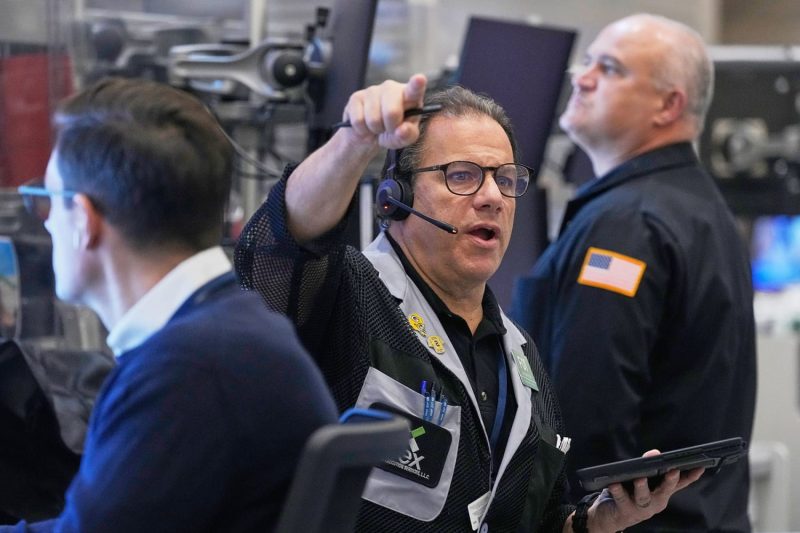
What began as a banner day for stocks turned into a major rout, as investors signaled ongoing skepticism about the longevity of the artificial intelligence boom and trimmed hopes of support from the Federal Reserve.

The tech-heavy Nasdaq fell 2%, and the broad S&P 500 index dropped by more than 1.5%. The Dow Jones Industrial Average, which tracks 30 top-tier stocks, declined by nearly 390 points. It had been up 700 points earlier in the day. Cryptocurrencies also shed billions in value: Bitcoin had fallen below $87,000 as of late Thursday afternoon, weeks after having set highs above $120,000.

The stunning turnaround added further unease to an already shaky economy that has forced households to trim budgets amid stubborn inflation and signs of a wavering job market. With an ever-increasing part of the economy’s principal driver — consumer spending — now reliant on affluent households, an extended market pullback could inflict wider damage.

‘You don’t have to have the biggest bubble in history for an expensive stock market’ and end up seeing declines, said Matt Maley, chief market strategist at Miller Tabak asset management group.

Traders’ hopes were boosted early Thursday by a better-than-expected jobs report that appeared to show the economy remained resilient. Even before the day began, stocks looked poised to rise after Nvidia, the chipmaker at the heart of the AI boom, reported strong quarterly earnings and revenue.

Yet by midday, markets had turned red. The solid September jobs report diminished the odds that the Federal Reserve will cut interest rates next month to lower the cost of borrowing money to spur economic activity. When investors don’t have to pay as much in interest, they often put those savings into stocks.

“The broad rebound in payrolls suggests diminished risks of a higher unemployment rate,” analysts with Morgan Stanley said in a note published shortly before noon. “We no longer expect a Fed cut in December.”

Losses were further compounded by ongoing concerns about AI — specifically, how much more profitable the companies buying chips like Nvidia’s will be. The fears were articulated Wednesday evening on X by Michael Burry, made famous by the movie ‘The Big Short.’

‘Just because something is used does not mean it is profitable,’ he wrote.

Finally, the ongoing sell-off of bitcoin indicated to some traders that a key source of support for stocks — retail or day traders — were beginning to waver on their trademark ‘buy the dip’ mentality.

‘I wouldn’t say we’ve flipped from bull to bear,’ said Steve Sosnick, chief strategist at Interactive Brokers financial group. ‘I would say we’ve flipped from bull to balanced market in the short term. A lot depends on whether sentiment continues to weaken.’

Stocks had already been showing signs of flagging in recent weeks. With Thursday’s losses, the S&P 500 fell to its lowest point since September.

The long-delayed September jobs report, which showed that the United States added a sturdy 119,000 jobs, appeared to show some glimmers of hope for the economy.

Although the unemployment rate ticked up from 4.3% in August to 4.4%, about 450,000 workers entered the labor force. Economists view that as evidence that job opportunities are still plentiful, despite a wave of corporate layoffs.

Just before the Bureau of Labor Statistics released the jobs report, Verizon told employees it planned to lay off 13,000 employees, or about 13% of its workforce.

The company joined a suite of other blue-chip employers that say they plan to eliminate tens of thousands of jobs, including Amazon, General Motors, IBM, Microsoft, Paramount, Target and UPS.

The details of the jobs report, which captured conditions before the government shutdown, as well more recent jobs data, suggested a more mixed picture for the U.S. economy.

Manufacturing shed 6,000 jobs, continuing a trend in a sector the Trump administration has touted as a key target of its economic policies. Transportation and warehousing also lost 25,300 jobs. Wage growth slowed, and job totals for July and August were revised downward.

The employment gains in September were concentrated in the health care, hospitality and social assistance sectors.

Another snapshot of the economy came courtesy of Walmart, which on Thursday reported strong sales and raised its outlook for the year. That strength points to cracks in the economy, though. Executives said the chain is luring more high-income shoppers who are looking for bargains, and noted that lower-income families are feeling more pressure.

‘As pocketbooks have been stretched, you’re seeing more consumer dollars go to necessities versus discretionary items,’ Chief Financial Officer John David Rainey said on an earnings call Thursday morning.

Walmart’s stock closed 6.5% higher.

This post appeared first on NBC NEWS

Former President John F. Kennedy’s granddaughter, Tatiana Schlossberg, announced on Saturday — exactly 62 years after he was assassinated — that she has terminal cancer.

The 35-year-old said she was diagnosed with acute myeloid leukemia, with a rare mutation called Inversion 3, soon after the birth of her daughter in May 2024, and that doctors recently told her she probably has about a year to live.

‘My first thought was that my kids, whose faces live permanently on the inside of my eyelids, wouldn’t remember me,’ she wrote in an essay for The New Yorker. ‘My son might have a few memories, but he’ll probably start confusing them with pictures he sees or stories he hears.’

She said she ‘didn’t ever really get to take care of my daughter—I couldn’t change her diaper or give her a bath or feed her, all because of the risk of infection after my transplants. I was gone for almost half of her first year of life. I don’t know who, really, she thinks I am, and whether she will feel or remember, when I am gone, that I am her mother.’

She said the diagnosis was shocking because she felt perfectly healthy.

‘I did not—could not—believe that they were talking about me,’ she wrote of the first talk of leukemia. ‘I had swum a mile in the pool the day before, nine months pregnant. I wasn’t sick. I didn’t feel sick. I was actually one of the healthiest people I knew.’

She said the cancer is mostly seen in older patients and doctors frequently asked her if she had spent much time at Ground Zero in New York City, which she had not.

Schlossberg, who is the daughter of Caroline Kennedy, JFK’s oldest surviving daughter, described in heartbreaking detail her months on end of different treatments to beat the cancer.

She went through a round of chemotherapy to ‘reduce the number of blast cells in my bone marrow,’ then received a bone-marrow transplant with the help of her sister.

She said after she went into remission and went home she had no immune system and had to get all of her childhood vaccines again.

Then she relapsed, her doctor telling her that leukemia with her mutation ‘liked to come back.’

At the beginning of the year, she joined a clinical trial of CAR-T-cell therapy, ‘a type of immunotherapy that has proved effective against certain blood cancers.’

That was followed by another round of chemotherapy and a second blood transfusion from an unrelated donor.

‘During the latest clinical trial, my doctor told me that he could keep me alive for a year, maybe,’ she wrote.

She also wrote of her concerns after her cousin Robert F. Kennedy Jr., whom she called an ’embarrassment,’ was nominated as secretary of Health and Human Services.

‘Suddenly, the health-care system on which I relied felt strained, shaky,’ she wrote. ‘Doctors and scientists at Columbia [Presbyterian hospital], including [her husband] George, didn’t know if they would be able to continue their research, or even have jobs.’

She praised the rest of her family, whom she said sat at her bedside while she endured treatments and took care of her children.

Of her husband, urologist George Moran, she wrote, ‘he is perfect, and I feel so cheated and so sad that I don’t get to keep living the wonderful life I had with this kind, funny, handsome genius I managed to find.’

Her brother Jack Schlossberg, who is running for congress in New York, wrote on his Instagram on Saturday, ‘Life is short, let it rip.’


View this post on Instagram


Her mother’s cousin, Maria Shriver, shared her essay on Instagram, writing, ‘If you can only read one thing today, please make take the time for this extraordinary piece of writing by my cousin Caroline’s extraordinary daughter Tatiana. Tatiana is a beautiful writer, journalist, wife, mother, daughter, sister, and friend.’

Tatiana added in her essay, ‘For my whole life, I have tried to be good, to be a good student and a good sister and a good daughter, and to protect my mother and never make her upset or angry. Now I have added a new tragedy to her life, to our family’s life, and there’s nothing I can do to stop it.’

Robert F. Kennedy Sr., her mother, Caroline Kennedy’s uncle, was assassinated five years after JFK, and along with having two siblings who died in infancy, Caroline’s only surviving brother, JFK Jr, died in a plane crash in 1999.

Schlossberg’s grandmother, Jacqueline Kennedy Onassis, also died of cancer in 1994, of non-Hodgkin lymphoma when she was 64.

She finished her essay by saying that she lives to be with her children now.

‘But being in the present is harder than it sounds, so I let the memories come and go,’ she admitted. ‘So many of them are from my childhood that I feel as if I’m watching myself and my kids grow up at the same time.’

She added, ‘Sometimes I trick myself into thinking I’ll remember this forever, I’ll remember this when I’m dead. Obviously, I won’t. But since I don’t know what death is like and there’s no one to tell me what comes after it, I’ll keep pretending. I will keep trying to remember.’

This post appeared first on FOX NEWS

Having covered Ukraine and Russia for over three decades, especially the war between the two countries for the last several years, I’ve naturally been fascinated by the latest Trump administration effort to broker peace.

The reaction I’ve been getting from contacts in Ukraine to the 28-point plan to end the war is not all that positive.  

‘It’s not worth the paper it’s written on,’ said one observer.

‘Any deal would have to include Ukraine … and Europe,’ noted another. 

The overall consensus of analysts is that the document is slanted heavily toward Moscow. The man at the center of things, Ukrainian President Volodymyr Zelenskyy, has been diplomatic in various statements, basically saying he’s ‘reviewing the points’ aiming at arriving at a ‘dignified peace.’

There are all sorts of talks happening now between the U.S. and Ukraine and among European leaders. We’re even hearing from Russian President Vladimir Putin. It’s no wonder. The stakes in this war for Europe and the world are enormous. If I were to send a quick note to Zelenskyy, it would go something like this: 

Dear Volodymyr, 

So far so good. You haven’t freaked out, and you’re promising to engage. Rejection of this plan out of hand would have been a non-starter.

You’re staying cool (though a bit grim and determined), and you’re talking to people. 

My overall advice is … pick your fights, don’t sweat the small stuff and keep the big picture in mind. 

I know what your country is going through. Every time I’m in Kyiv, I go to the same military cemetery outside the city, and it keeps getting bigger and bigger and sadder.

So, as to the points of the plan: There are a lot of easy ‘gimmes’ to Russia. Re-joining the G8. Gradual dropping of sanctions. Granting of amnesty for everything Russian troops have done. I know this stuff is going to stick in your craw, but little of it affects your country’s future. 

I mentioned that you shouldn’t ‘sweat the small stuff.’ Some of the points might sound like a big deal. Like prohibiting ‘Nazi ideology’ in Ukraine. And adopting ‘EU rules on religious tolerance and linguistic minorities.’ That’s pretty much window dressing for Moscow. Having the Russian language and Russian church regain official status is not horrendous. 

In fact, the plan’s glass is at least one-third full for you guys. Confirming your sovereignty. Russia expected not to invade you again. You will receive reliable security guarantees. Rebuilding pledges and humanitarian promises. They are all good. Just nail down the specifics. Get all sides to commit for sure.

Now to three of the points which cross your red line, according to analysts.

Like handing over the rest of the eastern Donetsk region to Russia even though Moscow’s troops haven’t even taken it. The region is referred to as a demilitarized zone in the plan. A ‘DMZ’ a la the divider between North and South Korea. Well, hold them to that. No troops from either side. Tough security on both sides. A neutral body running things. And see if you can get them to not call it Russian!

Then there’s the reduction by a third of your military. Troop strength limited to 600,000. That’s a huge cut, but it’s still not a bad-sized force. That is if … it was properly trained, well-armed and finely-positioned.  Guarantees are needed for all of this to happen.

And then there’s the other red line: No NATO troops in Ukraine. That would seem to scupper the plan to have foreign peacekeepers on the ground, which has been in the works, to monitor the peace. A possible compromise? They’re stationed around Ukraine’s borders, surveillance keeps a close eye on things and rapid-response forces are at the ready. 

There are also a few ‘gimmes’ for the U.S. in all this, like sharing in the profits of reconstruction. But that’s the price of doing business with President Trump. 

As for that Thanksgiving deadline to sign the deal? The president has already signaled he’s willing to let that slide if there’s talking. 

And that other deadline? One hundred days until a new election? I know it’s a tough time for you politically with those corruption charges getting near. It might be something you have to live with. 

Anyway, for what it’s worth, that’s my take. 

Negotiations will probably sink on any hard discussion of any of these main points. But you know what the old adage is: ‘Jaw-jaw’ is better than ‘war-war.’ 

For the proud people of Ukraine who have suffered so much during this time, it’s worth your best shot.

Sincerely,

Greg

This post appeared first on FOX NEWS

Two federal inmates previously on death row, one a crooked New Orleans cop and the other the man behind a multi-state killing spree, have been transferred to a notorious ‘supermax’ prison in Colorado, the Justice Department told Fox News Digital. 

News of their transfers comes as U.S. Attorney General Pam Bondi looks to crack down on the previous administration’s sweeping clemency actions, especially those against violent crime. 

The former death row inmates were transferred Thursday to the U.S. Penitentiary Administrative Maximum Facility in Florence, Colorado, also known as ‘ADX,’ Justice Department officials confirmed. 

They are among the 37 death row inmates whose sentences Biden commuted shortly before leaving office last December. The news prompted criticism and complaints that the record clemency and commutation actions were done as a political ‘Hail Mary,’ and without proper vetting.

Eight death row inmates have already been transferred to ADX, the Justice Department told Fox News Digital, bringing to 10 the number of death row inmates that have been transferred to the facility since mid-September. 

More are expected soon, as all 37 death row inmates commuted by Biden are expected to be moved to the facility by ‘early next year,’ the Justice Department told Fox News Digital.

The effort comes as Bondi and the Trump administration have sought to reverse some of the Biden administration’s efforts on criminal justice reform, with an emphasis on cracking down on violent crime.

Though sentence commutations cannot be fully reversed, Justice Department officials told Fox News Digital, Bondi has prioritized ways to penalize these individuals, in coordination with directives from Trump, and to ensure that the ‘conditions of confinement’ are ‘consistent with the security risks those inmates present because of their egregious crimes, criminal histories, and all other relevant considerations,’ according to an earlier DOJ memo. 

‘Two more monsters who plotted and violently murdered innocent people will spend the rest of their lives in our country’s most severe federal prison,’ Attorney General Pam Bondi told Fox News Digital in a statement. 

‘This Department of Justice will continue to seek accountability for the families blindsided by President Biden’s reckless commutations of 37 vicious predators,’ she added.

Like the eight former death row inmates that were sent to Colorado’s supermax prison, the two criminals processed in ADX on Thursday have been convicted of particularly heinous crimes. 

One individual chased down his ex-girlfriend from Roanoke, Virginia, to Charlotte, North Carolina, where he cut the phone lines to the apartment she was living in before using cans of gasoline to set the building on fire.

Though she escaped via a second-story window and was hospitalized for second-and third-degree burns, he followed her back to her family’s home in Virginia two months later, where he gunned her down on the streets of her neighborhood and just steps from her mother.  

Another inmate, a former New Orleans police officer dubbed ‘Robocop’ for his large physical demeanor and aggressive law enforcement style, was caught on tape by the FBI as he ordered and orchestrated the killing of a mother of three who had come to the precinct hours earlier to submit a supposedly confidential brutality complaint about his behavior that she witnessed on her way home the night before. 

The FBI had stumbled upon the conversation as part of a broader probe they had started to investigate a so-called ‘protection racket’ between cocaine dealers in New Orleans and the city’s police force, which had been guarding a warehouse stocked with the drug. The same officer was later revealed as one of the chief conspirators in the protection racket. 

He was also found to have falsely testified in two murder cases, including one murder he has since been linked to. The statements were used to exonerate four men from prison, including three teenagers who had been wrongfully convicted of a murder 28 years prior.

ADX is the only true federal ‘supermax’ prison in the U.S., and its inmates are as notorious as the prison’s reputation. 

Among them are Ramzi Yousef, convicted in the 1993 World Trade Center bombing; Dzhokhar Tsarnaev, one of the Boston Marathon bombers; former Sinola Cartel leader Joaquín Guzmán, or ‘El Chapo’; and Mamdouh Mahmud Salim, the co-founder of al-Qaeda.

Shortly after her confirmation as attorney general, Bondi issued a memo aimed at ‘restoring a measure of justice’ to the victims’ families. 

The measures granted by Biden earned more criticism than former President Barack Obama: As Fox News reported at the time, the vast majority of Obama’s clemency actions focused on commuting the sentences of federal inmates who met certain criteria outlined under his administration’s Clemency Initiative.

Bondi hosted victims’ families earlier this year to hear their concerns about the commutations, DOJ said. Some said they had been stunned by the eleventh-hour commutations, and that they not been given a heads-up by the Biden administration.

In February, Bondi issued a memo to the Bureau of Prisons ordering an evaluation of where these prisoners should be detained.

This post appeared first on FOX NEWS

President Donald Trump’s administration is rejecting claims that its most recent plan for a peace deal in Ukraine was really a Russian ‘wish list.’

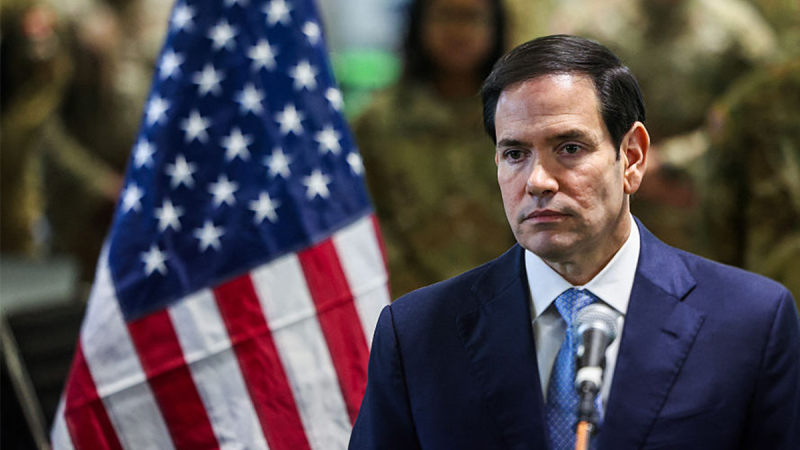
Confusion arose regarding the deal after lawmakers on Capitol Hill claimed they were told by White House officials that the deal was a proposal from the Russian side. Secretary of State Marco Rubio has since pushed back on that claim, however.

‘[Rubio] made it very clear to us that we are the recipients of a proposal that was delivered to one of our representatives,’ Sen. Mike Rounds, R-S.D., said at a press conference. ‘It is not our recommendation. It is not our peace plan. It is a proposal that was received, and as an intermediary, we have made arrangements to share it — and we did not release it. It was leaked.’

According to The Associated Press, Sen. Angus King, I-Maine, said that Rubio told him and his colleagues that it ‘was not the administration’s plan’ but a ‘wish list of the Russians.’

Rubio responded to this narrative with a post on social media, writing that the peace proposal ‘was authored by the U.S.’

‘It is offered as a strong framework for ongoing negotiations. It is based on input from the Russian side. But it is also based on previous and ongoing input from Ukraine,’ he added.

Rounds released another statement through his press office after Rubio’s response.

‘I appreciate Secretary Rubio briefing us earlier today on their efforts to bring about peace by relying on input from both Russia and Ukraine to arrive at a final deal,’ Rounds wrote.

The White House did not immediately respond to a request for comment from Fox News Digital.

Rubio traveled to Geneva on Sunday to meet with Ukrainian officials alongside Army Secretary Dan Driscoll, where they are expected to hash out Kyiv’s misgivings regarding the deal.

Trump himself lashed out at Ukraine over the peace talks in a Sunday statement.

‘UKRAINE ‘LEADERSHIP’ HAS EXPRESSED ZERO GRATITUDE FOR OUR EFFORTS, AND EUROPE CONTINUES TO BUY OIL FROM RUSSIA,’ Trump wrote on Truth Social.

While the current agreement has not been made public, a leaked draft has been reported to include terms that would halt the fighting in Ukraine while giving Russia concessions like control over Ukrainian territory that the Russian military does not yet control, as well as barring Ukraine from membership in NATO.

Ukrainian President Volodymyr Zelenskyy did not reject the plan outright in an address last week, but he insisted on fair treatment while pledging to ‘work calmly’ with Washington and other partners in what he called ‘truly one of the most difficult moments in our history.’

Fox News’ Jennifer Griffin and The Associated Press contributed to this report.

This post appeared first on FOX NEWS

President Donald Trump and former President Barack Obama are polar opposites in many ways, but, as with anyone who has sat behind the Resolute Desk, they do share some similarities.

One thing both have in common is overseeing government shutdowns — one under Obama and two under Trump. And even in that sparse similarity, both men operated differently, particularly in the most recent, 43-day closure.

While both congressional battles were centered on Obamacare, Obama put his shutdown at the center of attention, while Trump kept it at more of an arm’s length.

Romina Boccia, director of budget and entitlement policy at the Cato Institute, told Fox News Digital that a major difference in the Obama and Trump administrations’ approaches to their respective shutdowns was that in 2013, Obama wanted the pain of shutdown to be felt by Americans, while Trump kept the focus centered on Washington, D.C.

‘During the Obama shutdown, it was more to make it extremely visible, shut down beloved functions — even if you didn’t have to — that affect average Americans,’ she said.

Boccia at the time worked for the conservative think-tank the Heritage Foundation and recalled the barricades that were swiftly erected around Washington, D.C.’s many national parks.

Those barricades, both concrete and human, spilled out beyond the nation’s capital and were placed around the hundreds of national parks across America as a stark reminder that the government was closed.

Boccia noted that a direct comparison of the two shutdowns would be difficult given the differing lengths, but that the Trump administration, at least early on, sought to inflict direct pain on congressional Democrats and the federal government.

That was carried out largely by the Office of Management and Budget Director Russ Vought, who ordered mass firings of furloughed workers and withheld or canceled billions in federal funding to blue cities and states.

‘It’s not that this wasn’t a shutdown, it’s just that the choices the administration made were an attempt to focus the impacts of the shutdown this round on the government itself,’ Brittany Madni, executive vice president of the Economic Policy Innovation Center, told Fox News Digital.

‘This was showmanship from President Obama,’ Madni continued. ‘And if you look at what happened over the last 40 something days, it was the exact same playbook by congressional Democrats.’

Madni argued that discussions and debate during the 2013 shutdown were centered largely in Washington, D.C. The latest closure saw some of that, but it also saw Trump continuing to work on trade deals, particularly during his high-profile visit to Asia, which was a point of contention for Democrats on the Hill.

‘He was doing his job,’ Madni said. ‘He was doing his job. Meanwhile, congressional Democrats, quite simply, were not.’

Still, there was a shared thread in both shutdowns: Obamacare.

In 2013, congressional Republicans wanted to dismantle Obama’s signature piece of legislation. Fast-forward, Senate Minority Leader Chuck Schumer, D-N.Y., led his caucus to push extensions to enhanced Obamacare subsidies.

Boccia said that played a large part in why Obama was at the vanguard during his shutdown.

‘He was front and center in the media talking about the shutdown, and because it was over his legacy achievement,’ she said.

It was because his key legislative achievement was under fire that Obama took such a central role in the shutdown, Boccia argued, but for Trump, who tried during his first administration to gut and replace Obamacare, it wasn’t a priority.

‘The fact that it was over the Obamacare COVID credits, I think, made the president less necessary and perhaps interested in being the face of the shutdown,’ she said. ‘It was really a congressional battle.’

Madni disagreed that the latest shutdown wasn’t a direct bid by congressional Democrats to go after one of his legislative achievements.

Before the climactic failed vote in the Senate in late September that ushered in the longest shutdown in history, Democrats offered a counter-proposal that would have stripped several provisions from Trump’s ‘big, beautiful bill,’ which has so far been the crowning legislative achievement of his second term.

‘It’s really important that everyone remembers the subsidy request was one request in a laundry list of radical, incredibly expensive ideas that added up to $1.5 trillion,’ Madni said. ‘Another item in that list was dismantling key portions of the One Big Beautiful Bill Act.’

‘If this was really about the subsidies, then the Democrats would have been willing at any point during the last 43 days to adjust their asks and just make it about subsidies,’ she continued. ‘Not once did they.’

This post appeared first on FOX NEWS