Author

admin

Browsing

We also break down next week’s catalysts to watch to help you prepare for the week ahead.

In this article:

    This week’s tech sector performance

    Tariff concerns sent global stocks drifting on Monday (February 23), with US futures pointing lower at the start of the week even though the Nasdaq Composite (INDEXNASDAQ:.IXIC) ended a three week losing streak the previous week.

    Additionally, a Citrini Research report published on Sunday (February 22) projects that the dominance of artificial intelligence (AI) could lead to the collapse of the “human-centric consumer economy” and cause widespread unemployment, adding to the growing anxiety around AI-induced displacement.

    Markets had a subdued reaction to Anthropic’s announcement ⁠of 10 new AI tools on Tuesday (February 24), including plugins that could help with investment banking tasks, private equity engineering and design.

    Mohit Kumar, chief Europe economist at Jefferies Financial Group (NYSE:JEF), noted that, although AI disruption will remain a market theme for the foreseeable future, the company’s emphasis on “partnership rather than displacement” may have spurred a software sector rally in Tuesday afternoon trading.

    Also aiding the software recovery was a handful of experts pushing back against the Citrini report, including a response published by Citadel Securities’ Frank Flight, who said the thesis is far-fetched at best.

    On Wednesday (February 25), ahead of NVIDIA’s (NASDAQ:NVDA) much-anticipated earnings report, tech stocks boosted indexes in North America, Europe and Asia, with the S&P/TSX Composite Index (INDEXTSI:OSPTX) seeing advances in AI-related software and diversified tech amid positive quarterly reports from Canada’s main financial institutions; meanwhile, semiconductor companies led gains on Wall Street.

    While positive sentiment lifted Canada’s main index to a new record on Thursday (February 26), the US had a weaker session after investors were unimpressed with NVIDIA’S results.

    Although NVIDIA beat expectations, guidance shows deceleration. A 3.2 percent drop in the PHLX Semiconductor Sector (INDEXNASDAQ:SOX) index dragged the Nasdaq down to close 1.2 percent lower.

    Indexes in Canada and the US slipped on Friday (February 27) as renewed positive sentiment from earlier in the week ultimately gave way to concerns over AI-led disruptions.

    3 tech stocks moving markets this week

    1. NVIDIA (NASDAQ:NVDA)

    NVIDIA, which makes up almost 8 percent of the S&P 500 (INDEXSP:.INX), was up on Wednesday ahead of its Q4 earnings report, which showed US$68.1 billion in revenue, an increase of 73 percent. Net income was up 94 percent to US$42.9 billion, and the company generated US$96.6 billion in free cashflow for the year.

    The results exceeded analysts’ estimates, but shares were flat in after-hours trading, despite CEO Jensen Huang’s claim of “skyrocketing” AI agent adoption and sales growth of 78 percent for the current quarter.

    2. Salesforce (NYSE:CRM)

    Salesforce rose modestly intraday ahead of its Q4 earnings release on Wednesday, which showed revenue growth of 12 percent year-on-year, beating analysts’ estimates at US$11.2 billion. Full-year revenue was at US$41.5 billion, up 10 percent, with the company reporting remaining performance obligations of US$72.4 billion, a 14 percent increase.

    Annual recurring revenue from the company’s AI agent platform, Agentforce, led quarterly gains, reaching US$800 million, up 169 percent. Despite CEO Marc Benioff’s revenue projection of US$63 billion by the 2030 fiscal year, 2027 fiscal year guidance of US$45.8 billion to US$46.2 billion was below the consensus estimate of US$46.06 billion, which sent shares down around 5 percent in after-hours trading. The company also said it anticipates a slowdown in core business expansion, projecting organic growth of only 7 to 8 percent for the upcoming fiscal year.

    2. Dell Technologies (NYSE:DELL)

    Dell Technologies was trading higher ahead of its Q4 earnings. The firm delivered revenue of US$33.4 billion, beating estimates, and full-year revenue of a record US$113.5 billion.

    Sales of AI servers hit US$9.8 billion, up 100 percent year-on-year, with a US$64 billion AI pipeline and US$43 billion backlog. Earnings per share topped estimates of US$2.36, coming in at US$2.86.

    Momentum continued after hours following CEO Mike Dell’s comments on “skyrocketing” hyperscaler demand for AI infrastructure despite some margin pressure, with Dell’s share price soaring about 11 percent.

    Top tech news of the week

                Tech ETF performance

                Tech exchange-traded funds (ETFs) track baskets of major tech stocks, meaning their performance helps investors gauge the overall performance of the niches they cover.

                This week, the iShares Semiconductor ETF (NASDAQ:SOXX) advanced by 1.83 percent, while the Invesco PHLX Semiconductor ETF (NASDAQ:SOXQ) advanced by 1.77 percent.

                The VanEck Semiconductor ETF (NASDAQ:SMH) also increased by 1.76 percent.

                Tech news to watch next week

                Next week there will be light earnings, with results expected from MongoDB (NASDAQ:MDB), Alibaba (NYSE:BABA) and Broadcom (NASDAQ:AVGO); however, macro data alongside speeches from US Federal Reserve presidents will dominate alongside tariff developments and AI CAPEX and inflation concerns.

                Securities Disclosure: I, Meagen Seatter, hold no direct investment interest in any company mentioned in this article.

                This post appeared first on investingnews.com

                Statistics Canada released its December data for gross domestic product (GDP) by industry on Friday (February 27).

                While overall GDP increased 0.2 percent, the figures showed a broad 0.9 percent decline in the mining, quarrying, and oil and gas extraction sector, reversing a 0.1 percent increase in November. In real dollars, the sector contributed C$119.62 billion in the month, just shy of C$120.76 billion in November.

                The decrease was due to a 1.1 percent contraction in the oil and gas subsector and a 1.4 percent decline in the mining and quarrying subsector. However, the fall off was slightly offset by a 1.6 percent increase in sector support activities.

                The Canadian reporting agency also released its annual mineral production survey on Wednesday (February 25).

                The data showed that 2025’s production and shipment numbers increased nearly across the board for copper, silver and gold.

                In terms of production, copper output climbed to 499,896 metric tons, beating the 444,587 metric tons in 2024. The quantity of silver produced also rose significantly to 356,052 kilograms in 2025 from 331,965 kilograms. Gold also increased, though narrowly, to 186,923 kilograms from 185,555 kilograms the previous year.

                As for shipments, copper climbed to 480,100 metric tons from 437,861 metric tons in 2024, while silver shipments increased to 344,133 kilograms from 325,705 kilograms. Of the three metals, only gold saw a decline, with shipments falling slightly to 184,456 kilograms from 185,376 kilograms a year earlier.

                Several other resources, including cobalt and nickel, also saw sizeable jumps last year.

                For more on what’s moving markets this week, check out our top market news round-up.

                Markets and commodities react

                Canadian equity markets were positive this week.

                The S&P/TSX Composite Index (INDEXTSI:OSPTX) gained 2.3 percent over the week to close Friday (February 27) at 34,339.99, while the S&P/TSX Venture Composite Index (INDEXTSI:JX) rose 8.4 percent to 1,107.60.

                The CSE Composite Index (CSE:CSECOMP) gained 4.02 percent to 174.55.

                The gold price gained 1.36 percent to close at US$5,261.19 per ounce on Friday at 4:00 p.m. EST. The silver price fared better, closing the week up 6.55 percent at US$93.66 on Friday.

                In base metals, the Comex copper price recorded a 3.24 percent increase this week to US$6.05.

                The S&P Goldman Sachs Commodities Index (INDEXSP:SPGSCI) was up 2 percent to end Friday at 610.89.

                Top Canadian mining stocks this week

                How did mining stocks perform against this backdrop?Take a look at this week’s five best-performing Canadian mining stocks below.

                Stocks data for this article was retrieved at 4:00 p.m. EST on Friday using TradingView’s stock screener. Only companies trading on the TSX, TSXV and CSE with market caps greater than C$10 million are included. Mineral companies within the non-energy minerals, energy minerals, process industry and producer manufacturing sectors were considered.

                1. Adex Mining (TSXV:ADE)

                Weekly gain: 171.43 percent
                Market cap: C$27.09 million
                Share price: C$0.095

                Adex Mining is an exploration company that holds a 100 percent stake in the Mount Pleasant project in Southwest New Brunswick, Canada. The property contains two main deposits: the Fire Tower zone, which hosts tungsten and molybdenum mineralization, and the North zone, which hosts tin, zinc and indium.

                The asset consists of 102 mineral claims covering 1,600 hectares, as well as equipment and facilities from historic mining operations conducted by BHP (ASX:BHP,NYSE:BHP,LSE:BHP) between 1983 and 1985.

                According to its most recent investor presentation released on June 11, the property hosts the world’s largest indium reserve and North America’s largest tin deposit. Indicated resources for the North zone demonstrate contained metal values of 47 million kilograms of tin, and 789,000 kilograms of indium from 12.4 million metric tons with average grades of 0.38 percent tin and 64 parts per million indium.

                Adex Mining has not released news since it published its interim management discussion and analysis on November 18.

                The increase in Adex’s share price this week comes ahead of the Prospectors and Developers Association of Canada convention, which is taking place in Toronto, Ontario, from March 1 to 4.

                In a mid-February interview, New Brunswick Natural Resources Minister John Herron revealed that a deal “is due imminently with a well-known company in the Canadian mining community” for Adex’s Mount Pleasant project.

                Additionally, he said the provincial government plans to introduce its new minerals strategy at PDAC on March 2. According to Herron, New Brunswick will adopt a one project, one process framework to quickly advance critical minerals projects.

                2. US Copper (TSXV:USCU)

                Weekly gain: 100 percent
                Market cap: C$37.17 million
                Share price: C$0.28

                US Copper is an exploration company working to advance its Moonlight-Superior project in Northeast California, United States.

                The project covers approximately 13 square miles of patented and unpatented federal mining claims in the Lights Creek Copper District, near the Nevada border.

                A preliminary economic assessment released on January 6, 2025, demonstrated a post-tax net present value of US$1.08 billion with an internal rate of return of 23 percent and a payback period of 5.3 years, assuming a copper price of US$4.15 per pound.

                The included mineral resource estimate shows a total indicated resource of 2.5 billion pounds of copper, 21.7 million ounces of silver and 140,042 ounces of gold from 402.83 million metric tons of ore with a grade of 0.31 percent copper, 1.85 parts per million (ppm) silver and 0.012 ppm gold. The majority is hosted at its Moonlight and Superior deposits.

                The company has not released any news since December 15, when it announced that it had staked 54 additional claims, totalling 1,104 acres near Moonlight-Superior, that US Copper intends to use for the project’s infrastructure development.

                The company also stated that it had begun metallurgical testing, which it expected to be completed in April 2026, with the release of partial results starting in February 2026.

                3. Doubleview Gold (TSXV:DBG)

                Weekly gain: 95.62 percent
                Market cap: C$27.09 million
                Share price: C$2.68

                Doubleview Gold is an exploration company working to advance its Hat copper-gold project in Northwestern British Columbia, Canada.

                The project is located within BC’s Golden Triangle, an area that hosts numerous active mines and development projects. The property consists of 19 mineral tenures covering an area of 18,000 hectares.

                On February 25, Doubleview released an updated mineral resource estimate for its Hat project, reporting copper equivalent resources of 5.82 billion pounds in the measured and indicated categories and 4.57 billion pounds in the inferred category.

                The measured and indicated resource includes 2.42 billion pounds of copper, 3.22 million ounces of gold, 80.1 million pounds of cobalt and 5.05 million ounces of silver from 609 million metric tons of ore with average grades of 0.21 percent copper, 0.18 grams per metric ton (g/t) gold, 0.008 percent cobalt and 0.38 g/t silver.

                Additionally, the MRE reported a recoverable measured and indicated scandium oxide resource of 2,415 metric tons, grading 28.77 g/t.

                Doubleview’s president and CEO stated that exploration of the property has increased the deposit’s size over the years, with it now covering an area of about 1.6 kilometers by 1.6 kilometers. He also noted that the company discovered additional elements within the deposit that it plans to unveil soon.

                4. BP Silver (TSXV:BPAG)

                Weekly gain: 62.16 percent
                Market cap: C$35.9 million
                Share price: C$1.20

                BP Silver is an exploration company focused on its flagship Cosuño project in Bolivia.

                The property covers approximately 3,375 hectares and hosts a 10.5 square kilometer alteration zone within an underexplored jurisdiction. To date, the company has identified four primary targets in the southern project area.

                On February 27, the company announced assay results from the final eight holes of the 11 hole drill program at Cosuño.

                Exploration encountered several zones of silver mineralization at the Pocañita Chica target. One hole delivered high grades of 600.4 g/t silver over 5 meters, which included an intersection of 1,655 g/t over 1 meter.

                The company said it achieved its main goal of “confirming mineralization within the lithocap beneath surface geochemical anomalies,” which it said de-risks the project.

                Additionally, BP Silver stated the drill program confirmed a silver and polymetallic mineralized system along a 2.7 kilometer long corridor that remains open in all directions.

                5. Tsodilo Resources (TSXV:TSD)

                Weekly gain: 61.29 percent
                Market cap: C$21.75 million
                Share price: C$0.25

                Tsodilo Resources is a metals exploration company advancing its Gcwihaba polymetallic project in Northwest Botswana, which hosts the C26 and C27 rare earth skarn anomalies. It also owns the Xaudum iron formation project in the country.

                At Gcwihaba, Tsodilo has identified a conceptual exploration target of skarn ore in the 81 million to 97 million metric ton range with grades of 0.05 and 1.49 percent total rare earth oxides (TREO).

                The company originally identified the C26 and C27 targets through ground magnetic and gravity surveys, with drilling confirming mineralization at depths of 20 to 50 meters below surface.

                Tsodilo plans to perform 15,000 meters of drilling in 2026, with a focus on defining high-grade REE zones, while also evaluating the system’s overall polymetallic potential.

                The most recent news from the company came on February 2, when it reported that it had closed a C$742,095 private placement by issuing 4.95 million shares. Proceeds from the financing will be used to advance its projects in Botswana.

                FAQs for Canadian mining stocks

                What is the difference between the TSX and TSXV?

                The TSX, or Toronto Stock Exchange, is used by senior companies with larger market caps, and the TSXV, or TSX Venture Exchange, is used by smaller-cap companies. Companies listed on the TSXV can graduate to the senior exchange.

                How many mining companies are listed on the TSX and TSXV?

                As of December 2025, 898 mining companies and 71 oil and gas companies are listed on the TSXV, combining for more than 60 percent of the 1,531 total companies listed on the exchange.

                As for the TSX, it is home to 175 mining companies and 51 oil and gas companies. The exchange has 2,089 companies listed on it in total.

                Together, the TSX and TSXV host around 40 percent of the world’s public mining companies.

                How much does it cost to list on the TSXV?

                There are a variety of different fees that companies must pay to list on the TSXV, and according to the exchange, they can vary based on the transaction’s nature and complexity. The listing fee alone will most likely cost between C$10,000 to C$70,000. Accounting and auditing fees could rack up between C$25,000 and C$100,000, while legal fees are expected to be over C$75,000 and an underwriters’ commission may hit up to 12 percent.

                The exchange lists a handful of other fees and expenses companies can expect, including but not limited to security commission and transfer agency fees, investor relations costs and director and officer liability insurance.

                These are all just for the initial listing, of course. There are ongoing expenses once companies are trading, such as sustaining fees and additional listing fees, plus the costs associated with filing regular reports.

                How do you trade on the TSXV?

                Investors can trade on the TSXV the way they would trade stocks on any exchange. This means they can use a stock broker or an individual investment account to buy and sell shares of TSXV-listed companies during the exchange’s trading hours.

                Article by Dean Belder; FAQs by Lauren Kelly.

                Securities Disclosure: I, Dean Belder, hold no direct investment interest in any company mentioned in this article.

                Securities Disclosure: I, Lauren Kelly, hold no direct investment interest in any company mentioned in this article.

                This post appeared first on investingnews.com

                Bold Ventures Inc. (TSXV: BOL,OTC:BVLDF) (the ‘Company’ or ‘Bold’) is pleased to provide an update on diamond drilling progress at its Burchell Base and Precious Metals Project, located 100 km west of Thunder Bay, Ontario. 4 holes totaling 669 meters have now been completed in the vicinity of the 111 Zone, where channel sampling results from last Fall were reported last December (see Bold news release dated December 2nd, 2025), and where one grab sample from December 2024 returned 68 gt Au (see Bold news release dated January 9th, 2025). 663 samples of drill core have now been submitted to the laboratory and results are pending. While awaiting results from this first phase of drilling, the drill has been moved to Bold’s Wilcorp property located approximately 13 km east of Atikokan, Ontario, and drilling has commenced there.

                Bold’s CEO David Graham, President and COO Bruce MacLachlan, and VP Exploration Coleman Robertson will be meeting with investors at booth #2610 at the Prospectors and Developers Association of Canada (PDAC) Mineral Exploration and Mining Convention in Toronto from March 1st to 4th, 2026. Coleman Robertson will be presenting at the PDAC Spotlight with a talk titled ‘From Burchell to the Ring of Fire,’ at 11:10 a.m. on Monday March 2nd in the Northern Lights Learning Hub, Level 300, Hall A of the North Building of the Metro Toronto Convention Centre. During PDAC Bruce MacLachlan will also be interviewed by the Northern Miner on March 1st, and by CEO.CA on Monday March 2nd.

                In continuing to build Bold’s name recognition and corporate message via video and digital media platforms, the Company will pay fees of $4,520 to the Northern Miner Group and $4,350 to CEO.CA for the interviews which will conclude at the end of the conference and will remain available for viewing at Bold’s website, www.boldventuresinc.com. The Northern Miner draws on 110 years of experience as the leading mining industry journal in Canada to cover the top developments and newsmakers around the globe. CEO.CA is a community for investors & traders in junior resource & venture stocks and is one of the most popular free financial websites and apps in Canada and for small-cap investors globally — with industry leading audience engagement and mobile functionality.

                The Company has registered for the Resourcing Tomorrow 2026 convention to be held from Dec. 1-3 2026 at the Business Design Centre in London, UK. To optimize that event and to build Bold’s name recognition and brand in the United Kingdom, Bold has signed a 12-month contract with The Armchair Trader (Armchair Trader Limited) based in the United Kingdom. The contract begins immediately and provides promotional services to Bold Ventures for a fee of $10,000.

                The Northern Miner Group, CEO.CA and Armchair Trader Limited are all arm’s length to the Company and do not have any interest, directly or indirectly, in the Company or its securities, or any right or intent to acquire such an interest.

                Ring of Fire News

                In other news, the Marten Falls Community Access Road project has moved to the public review stage. The road, which will provide year-round access to the community, is proposed to connect to a forestry road north of Aroland First Nation. The road is part of a broader plan to connect the Ring of Fire to Ontario’s highway network, which also includes the Northern Road Link and Webequie Supply Road projects. See links below:

                Marten Falls road project moves to public review stage – Northern Ontario Business

                Ontario First Nations complete fast-tracked assessments for Ring of Fire road | Globalnews.ca

                The proposed Eagle’s Nest mine in the Ring of Fire has also cleared another regulatory hurdle. The Federal government has decided not to designate the mine for impact assessment. See link below:
                https://globalnews.ca/news/11688531/ring-of-fire-northern-ontario/

                About Bold’s Koper Lake Project in the Ring of Fire

                The Koper Lake Project is a joint venture between Bold Ventures Inc. and Canada Chrome Corporation Inc. (CCC – formerly KWG Resources Inc.) where CCC is the Operator of the exploration effort.

                Bold holds a 10% carried interest (through to production) in the Black Horse Chromite deposit on the Koper Lake Project which hosts an NI 43-101 Inferred Resource of 85.9 Mt grading 34.5% Cr2O3 at a cut-off of 20% Cr2O3 (KWG Resources Inc., NI 43-101 Technical Report, Aubut 2015). Bold also holds a 40% working interest in all other metals found within the Koper Lake claims and has a Right of First Refusal on a 1% NSR covering all metals found within the claim group.

                The Black Horse is contiguous with the Blackbird Chromite deposits owned by Ring of Fire Metals (formerly Noront Resources Inc.). The Koper Lake claims are located approximately 300 m from the Eagle’s Nest Ni-Cu Massive Sulphide Deposit that is in the permit acquisition stage.

                Chromite, nickel and copper are critical minerals that will play an important role in the electrification plans of Ontario and North America. The Company is encouraged by these ongoing developments in this emerging critical mineral mining camp.

                The technical information in this news release was reviewed and approved by Coleman Robertson, B.Sc., P. Geo., the Company’s V.P. Exploration and a qualified person (QP) for the purposes of NI 43-101

                Bold Ventures management believes our suite of Battery, Critical and Precious Metals exploration projects are an ideal combination of exploration potential meeting future demand. Our target commodities are comprised of: Copper (Cu), Nickel (Ni), Lead (Pb), Zinc (Zn), Gold (Au), Silver (Ag), Platinum (Pt), Palladium (Pd) and Chromium (Cr). The Critical Metals list and a description of the Provincial and Federal electrification plans are posted on the Bold website here.

                About Bold Ventures Inc.

                The Company explores for Precious, Battery and Critical Metals in Canada. Bold is exploring properties located in active gold and battery metals camps in the Thunder Bay and Wawa regions of Ontario. Bold also holds significant assets located within and around the emerging multi-metals district dubbed the Ring of Fire region, located in the James Bay Lowlands of Northern Ontario.

                For additional information about Bold Ventures and our projects, please visit boldventuresinc.com or contact us at 416-864-1456 or email us at info@boldventuresinc.com.

                ‘Bruce A MacLachlan’ ‘David B Graham’
                Bruce MacLachlan David Graham
                President and COO CEO

                Direct line: (705) 266-0847 

                Email: bruce@boldventuresinc.com

                Neither TSX Venture Exchange nor its Regulation Services Provider (as that term is defined in the policies of the TSX Venture Exchange) accepts responsibility for the adequacy or accuracy of this release.

                Cautionary Note Regarding Forward-Looking Statements: This Press Release contains forward-looking statements that involve risks and uncertainties, which may cause actual results to differ materially from the statements made. When used in this document, the words ‘may’, ‘would’, ‘could’, ‘will’, ‘intend’, ‘plan’, ‘anticipate’, ‘believe’, ‘estimate’, ‘expect’ and similar expressions are intended to identify forward-looking statements. Such statements reflect our current views with respect to future events and are subject to such risks and uncertainties. Many factors could cause our actual results to differ materially from the statements made, including those factors discussed in filings made by us with the Canadian securities regulatory authorities. Should one or more of these risks and uncertainties, such actual results of current exploration programs, the general risks associated with the mining industry, the price of gold and other metals, currency and interest rate fluctuations, increased competition and general economic and market factors, occur or should assumptions underlying the forward looking statements prove incorrect, actual results may vary materially from those described herein as intended, planned, anticipated, or expected. We do not intend and do not assume any obligation to update these forward-looking statements, except as required by law. Shareholders are cautioned not to put undue reliance on such forward-looking statements.

                NOT FOR DISTRIBUTION TO U.S. NEWSWIRE SERVICES OR FOR DISSEMINATION IN THE UNITED STATES

                To view the source version of this press release, please visit https://www.newsfilecorp.com/release/285792

                News Provided by TMX Newsfile via QuoteMedia

                This post appeared first on investingnews.com
                A man was arrested after a statue of late United Kingdom Prime Minister Winston Churchill was defaced with red graffiti in London, the Metropolitan Police noted in a post on X.

                Photos show the statue and its base defaced with messages such as ‘NEVER AGAIN IS NOW,’ ‘ZIONIST WAR CRIMINAL’ AND ‘GLOBALISE THE INTIFADA!’

                ‘Overnight, the Winston Churchill statue in Parliament Square was graffitied with red paint,’ the police noted in the post on Friday.

                ‘Officers were on scene within two minutes of being alerted shortly after 4am. A 38-yr-old man is in custody having been arrested on suspicion of racially aggravated criminal damage,’ the police added.

                A Dutch activist group claimed credit for the graffiti. 

                ‘On the morning of 27th February, the statue of Winston Churchill at Parliament Square was defaced with red paint. This protest was organised and executed by @freethefilton24nl,’ a post on Instagram claims.

                The post features a pre-recorded statement in which a man says, ‘My name is Olax Outis. I am a citizen of the Netherlands.’ 

                He identifies himself as ‘part of a Dutch action group called Free the Filton 24 NL,’ explaining, ‘I’ve come to the United Kingdom to deface statue of one of history’s most well-known war criminals, Winston Churchill.’

                Related Article

                Former UK ambassador to US released on bail after arrest in Epstein misconduct investigation
                This post appeared first on FOX NEWS

                The ongoing standoff over Homeland Security funding is raising concerns about the potential impact on Homeland Security Investigations (HSI), the agency that has helped bring cases against high-profile figures, including Sean ‘Diddy’ Combs and Sinaloa Cartel co-founder Joaquín ‘El Chapo’ Guzmán.

                HSI is one of several agencies under the Department of Homeland Security (DHS) threatened by the ongoing government shutdown.

                That branch of DHS acts as the investigative arm for Immigration and Customs Enforcement (ICE) — the agency that Democrats want to rein in and reform — and handles investigations into human and sex trafficking, drug trafficking, immigration-related crimes, child exploitation and several other areas.

                Sen. Katie Britt, R-Ala., who was anointed the lead negotiator for Senate Republicans in the ongoing DHS funding back-and-forth, told Fox News Digital the agency’s work is ‘critically important.’

                ‘When you think about interior enforcement, I mean, HSI is a critical component of that,’ Britt said. ‘You look at what they’ve done, you look at the bad actors they’ve been able to hunt down and hold accountable for human trafficking, drug trafficking, sex trafficking, child pornography, trafficking, all kinds of things.’

                Other big names whom HSI has played a role in investigating or indicting include R. Kelly, Josh Duggar, Sinaloa Cartel co-founder Ismael ‘El Mayo’ Zambada, and Jared Fogle.

                While ICE and other immigration enforcement operations like HSI were funded in part through Republicans’ ‘big, beautiful bill,’ the lapse in ongoing appropriations could threaten supplies in the field and travel, hampering investigations already underway.

                A DHS spokesperson told Fox News Digital that HSI was continuing to function during the shutdown, with arrests and investigations still happening. But as the current 14-day shutdown continues, delays in supply procurement and travel for ‘critical personnel to move around the country’ could be impacted.

                ‘Our national security and ability to get criminals, including pedophiles and other public safety threats, off the streets could be impacted the longer this Democratic shutdown continues,’ they said.

                Senate Democrats and the White House have so far tried and failed to reach a deal to fund DHS after trading offers and counteroffers in a slow back-and-forth over the last two weeks.

                Senate Minority Leader Chuck Schumer, D-N.Y., charged that ICE had been ‘unleashed without guardrails’ throughout the country.  

                ‘This is not border security, this is not law and order, this is chaos — created at the top and felt in so many of our neighborhoods,’ Schumer said.

                And with lawmakers gone from Washington, D.C., for the weekend, the shutdown is guaranteed to stretch into its third week. Senate Democrats want stringent reforms to ICE, including requiring agents to obtain judicial warrants, unmask and provide thorough identification — all demands that are red lines for the Republicans and the White House, who fear that doing so would increase the chances of ICE agents being doxxed.

                While Republicans and the administration raised concerns about HSI and other ICE functions, Sen. Chris Murphy, D-Conn., countered that from his understanding, ‘most everybody at HSI is gone.’

                ‘They’ve all been deployed to the interior,’ he told Fox News Digital. ‘Not many, if not most, redeployed to interior enforcement. So the administration has gutted HSI.’

                ‘My impression is that HSI has been one of the agencies that has been essentially turned into ICE Junior,’ Murphy said.

                Related Article

                DHS shutdown drags into week two as Iran threat, SOTU clash complicate Hill talks
                This post appeared first on FOX NEWS

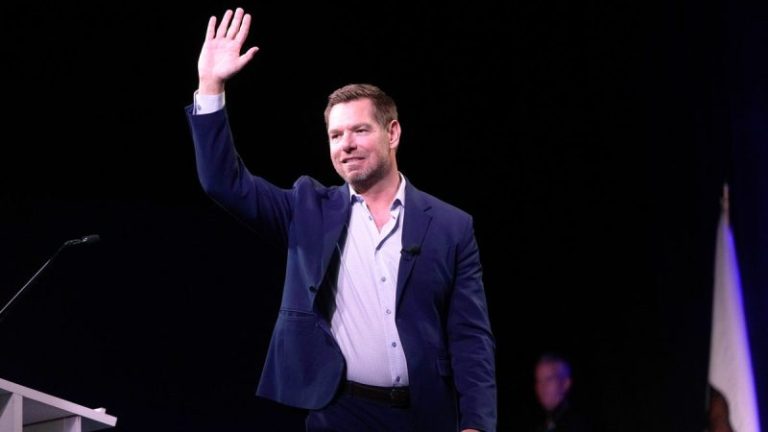
                Rep. Eric Swalwell’s, D-Calif., gubernatorial campaign continues to be bankrolled by Keliang ‘Clay’ Zhu despite concerns over his ties to China and the Chinese Communist Party (CCP). 

                Zhu donated another $25,000 to Swalwell’s campaign earlier this month after he had already donated $5,000 to Swalwell’s gubernatorial campaign in November and previously donated over $10,000 to his House campaigns. 

                Zhu is a partner at DeHeng Law Offices PC, a top Beijing law firm that has deep ties to the Chinese Communist Party, and has also donated thousands to Swalwell’s gubernatorial campaign. The law firm’s website shows their lone ‘Silicon Valley Office,’ located in Pleasanton, Calif., appears to only have a single lawyer who works there – Zhu, who has a history of fighting for Chinese interests in the U.S.  

                ‘Once again, Congressman Swalwell got caught with his hand in the CCP cookie jar,’ lamented Michael Lucci, a top China expert and the founder and CEO of State Armor Action. ‘It’s simply outrageous that Congressman Swallwell would take even more money from Keliang Zhu after Zhu’s connections to the CCP were made public.’


                A Fox News Digital review in January revealed that the law firm Zhu is a partner in was founded as the China Law Office, which was a subsidiary firm established by the CCP’s Ministry of Justice in the early 1990s before being renamed the DeHeng Law Offices in 1995. 

                While the firm, which has over two dozen offices in China, portrays itself as independent, the firm and its lawyers continue to have longstanding cooperation with the Chinese government’s departments and major state-owned enterprises. Many of the firm’s China-based attorneys also have a history of working in Chinese politics.

                Zhu, who is originally from China, touts several examples of how he has helped Chinese state-owned enterprises and other Chinese companies get a foothold in the United States, according to his bio on the law firm’s website. 

                For example, he touts representing an ‘investment fund of a major state-owned enterprise in acquiring majority shares in one data analytics software company in the Silicon Valley,’ which he valued at $100 million. Another bio for Zhu touts how he ‘has assisted Chinese companies and funds to complete more than $9 billion investments in the fields of chips, unmanned vehicles, new energy, artificial intelligence, industrial automation, and biopharmaceuticals in the United States.’

                ‘On behalf of Chinese enterprises, he has negotiated with the U.S. Department of Commerce, the U.S. Department of Treasury and other organizations for many times and achieved compliance plans, which greatly reduced the compliance risks for Chinese clients in the United States,’ the bio continued.

                The bios also indicate Zhu helped advise ‘a governmental investment fund from Shenzhen for its compliance with CFIUS regulations in the U.S.’ and represented ‘WeChat users in a historic lawsuit that sued President Trump and successfully stopped his WeChat ban in 2020.’ 

                At the time, Trump’s first administration sounded the alarm over WeChat and said the ‘data collection threatens to allow the Chinese Communist Party access to Americans’ personal and proprietary information’ and was concerned that the CCP would use data to stalk dissenters or control messaging inside the United States, such as launching disinformation campaigns. Similar efforts to restrict WeChat have occurred in countries like Australia and India, according to the White House.

                Meanwhile, after a federal judge dismissed a lawsuit intended to stop a Texas law banning Chinese nationals from owning or leasing land in the state, Zhu described the legislation as ‘unfair, unconstitutional and un-American,’ according to AsAmNews, a daily news site focused on Asian-American and Pacific-Islander communities. Zhu similarly expressed disfavor with a Florida law meant to prevent individuals from countries that are foreign adversaries to the United States, such as China, from buying up land.

                DeHeng Law Office’s other China-based attorneys have a history of working in Chinese politics as well. This has largely been through the Chinese People’s Political Consultative Conference (CPPCC), which is a ‘key mechanism for multi-party cooperation and political consultation’ under the leadership of the CCP, according to the CPPCC website, and is a crucial tool of the United Front strategy to influence U.S. policy.

                For example, Zhixu Wu, who is a ‘Director and Senior Partner’ of the Kunming, China-based office of DeHeng Law Offices, is a member of the ‘Standing Committee of the 13th Kunming Committee of the CPPCC’ and a member ‘of the 12th Yunnan Committee of the CPPCC.’ His bio also says he was previously awarded in 2017 with ‘the title of ‘Excellent League Member’ for the second assistance event of the National Lawyers Service Group,’ which was approved by the ‘Eight Bureau of United Front Work Department of CPC Central Committee, Guidance Department of Lawyer’s Notarization Work of the Ministry of Justice.’

                Swalwell’s ties to China have come under scrutiny before, particularly after Chinese national, Christine Fang, also known as ‘Fang Fang,’ gained special access to him and his campaign. She was deemed by U.S. officials to be part of a counterintelligence effort linked to China meant to influence and get close to U.S. political figures.

                Swalwell has repeatedly claimed he cut off ties as soon as U.S. intelligence officials warned him of the threat and a congressional ethics investigation into the matter eventually found no wrongdoing on Swalwell’s behalf. However, he was ultimately removed by Republicans from his post on the House Intelligence Committee, with then-House Speaker Kevin McCarthy citing Swalwell’s past run-in with a suspected Chinese spy.

                Fox News Digital uncovered a previously unreported 2013 Facebook post by China’s San Francisco consulate last month showing Swalwell touting ‘great potential’ for U.S.-China cooperation during a meeting with a senior CCP diplomat early in his career, which came during the same time period when Swalwell was allegedly targeted by Chinese espionage efforts.

                The Facebook post was also ‘liked’ by Fang Fang, Fox News Digital’s review found.

                ‘First, Swalwell had a fiery romance with Fang Fang, a CCP honeypot. Then he was caught taking campaign money from China’s favorite big law firm. Congressman Swalwell is either totally oblivious to the dangers of flirting with CCP operatives, or he doesn’t care and would take a check from Xi Jinping himself,’ Lucci told Fox News Digital. ‘Congress should pass a law to prohibit campaign cash from Communist China before Swalwell’s sweet tooth has him hunting for another CCP honey pot or cookie jar.’

                The Swalwell campaign did not respond to Fox News Digital’s request for comment.

                Related Article

                Swalwell governor bid hit with residency questions after court filing alleges he doesn’t live in California
                This post appeared first on FOX NEWS

                President Donald Trump warned that Iran is working to build missiles that could ‘soon reach the United States of America,’ elevating concerns about a weapons program that already places U.S. forces across the Middle East within range.

                Iran does not currently possess a missile capable of striking the U.S. homeland, officials say. But its existing ballistic missile arsenal can target major American military installations in the Gulf, and U.S. officials say the issue has emerged as a key sticking point in ongoing nuclear negotiations.

                Here’s what Iran can hit now — and how close it is to reaching the U.S.

                What Iran can hit right now

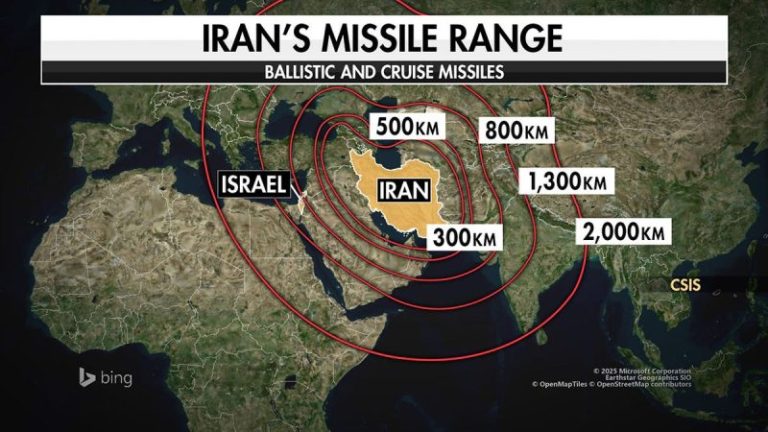
                Iran is widely assessed by Western defense analysts to operate the largest ballistic missile force in the Middle East. Its arsenal consists primarily of short- and medium-range ballistic missiles with ranges of up to roughly 2,000 kilometers — about 1,200 miles.

                That range places a broad network of U.S. military infrastructure across the Gulf within reach.

                Among the installations inside that envelope:

                • Al Udeid Air Base in Qatar, forward headquarters for U.S. Central Command.
                • Naval Support Activity Bahrain, home to the U.S. 5th Fleet.
                • Camp Arifjan in Kuwait, a major Army logistics and command hub.
                • Ali Al Salem Air Base in Kuwait, used by U.S. Air Force units.
                • Prince Sultan Air Base in Saudi Arabia.
                • Al Dhafra Air Base in the United Arab Emirates.
                • Muwaffaq Salti Air Base in Jordan, which hosts U.S. aircraft.

                U.S. forces have drawn down from some regional positions in recent months, including the transfer of Al Asad Air Base in Iraq back to Iraqi control earlier in 2026. But major Gulf installations remain within the range envelope of Iran’s current missile inventory.

                Multiple U.S. officials told Fox News that staffing at the Navy’s 5th Fleet headquarters in Bahrain has been reduced to ‘mission critical’ levels amid heightened tensions. A separate U.S. official disputed that characterization, saying no ordered departure of personnel or dependents has been issued.

                At the same time, the U.S. has surged significant naval and air assets into and around the region in recent days. 

                The USS Abraham Lincoln Carrier Strike Group is operating in the Arabian Sea alongside multiple destroyers, while additional destroyers are positioned in the eastern Mediterranean, Red Sea and Persian Gulf. 

                The USS Gerald R. Ford Carrier Strike Group is also headed toward the region. U.S. Air Force fighter aircraft — including F-15s, F-16s, F-35s and A-10s — are based across Jordan, Saudi Arabia and Bahrain, supported by aerial refueling tankers, early warning aircraft and surveillance platforms, according to a recent Fox News military briefing.

                Iran has demonstrated its willingness to use ballistic missiles against U.S. targets before.

                In January 2020, following the U.S. strike that killed Islamic Revolutionary Guard Corps Gen. Qassem Soleimani, Iran launched more than a dozen ballistic missiles at U.S. positions in Iraq. Dozens of American service members were later diagnosed with traumatic brain injuries.

                That episode underscored the vulnerability of forward-deployed forces within reach of Iran’s missile arsenal.

                 Can Iran reach Europe?

                Most publicly known Iranian missile systems are assessed to have maximum ranges of around 2,000 kilometers. 

                Depending on launch location, that could place parts of southeastern Europe — including Greece, Bulgaria and Romania — within potential reach. The U.S. has some 80,000 troops stationed across Europe, including in all three of these countries.

                Reaching deeper into Europe would require longer-range systems than Iran has publicly demonstrated as operational.

                Can Iran hit the US?

                Iran does not currently field an intercontinental ballistic missile (ICBM) capable of striking the U.S. homeland.

                To reach the U.S. East Coast, a missile would need a range of roughly 10,000 kilometers — far beyond Iran’s known operational capability.

                However, U.S. intelligence agencies have warned that Iran’s space launch vehicle program could provide the technological foundation for a future long-range missile.

                In a recent threat overview, the Defense Intelligence Agency stated that Iran ‘has space launch vehicles it could use to develop a militarily-viable ICBM by 2035 should Tehran decide to pursue the capability.’

                That assessment places any potential Iranian intercontinental missile capability roughly a decade away — and contingent on a political decision by Tehran.

                U.S. officials and defense analysts have pointed in particular to Iran’s recent space launches, including rockets such as the Zuljanah, which use solid-fuel propulsion. Solid-fuel motors can be stored and launched more quickly than liquid-fueled rockets — a feature that is also important for military ballistic missiles.

                Space launch vehicles and long-range ballistic missiles rely on similar multi-stage rocket technology. Analysts say advances in Iran’s space program could shorten the pathway to an intercontinental-range missile if Tehran chose to adapt that technology for military use.

                For now, however, Iran has not deployed an operational ICBM, and the U.S. homeland remains outside the reach of its current ballistic missile arsenal.

                US missile defenses — capable but finite

                The U.S. relies on layered missile defense systems — including Terminal High Altitude Area Defense (THAAD), Patriot and ship-based interceptors — to protect forces and allies from ballistic missile threats across the Middle East.

                These systems are technically capable, but interceptor inventories are finite.

                During the June 2025 Iran-Israel missile exchange, U.S. forces reportedly fired more than 150 THAAD interceptors — roughly a quarter of the total the Pentagon had funded to date, according to defense analysts.

                The economics also highlight the imbalance: open-source estimates suggest Iranian short-range ballistic missiles can cost in the low hundreds of thousands of dollars apiece, while advanced U.S. interceptors such as THAAD run roughly $12 million or more per missile.

                Precise inventory levels are classified. But experts who track Pentagon procurement data warn that replenishing advanced interceptors can take years, meaning a prolonged, high-intensity missile exchange could strain stockpiles even if U.S. defenses remain effective.

                Missile program complicates negotiations

                The ballistic missile issue has also emerged as a key fault line in ongoing diplomatic efforts between Washington and Tehran.

                Secretary of State Marco Rubio has said Iran’s refusal to negotiate limits on its ballistic missile program is ‘a big problem,’ signaling that the administration views the arsenal as central to long-term regional security.

                While current negotiations are focused primarily on Iran’s nuclear program and uranium enrichment activities, U.S. officials have argued that delivery systems — including ballistic missiles — cannot be separated from concerns about a potential nuclear weapon.

                Iranian officials, however, have insisted their missile program is defensive in nature and not subject to negotiation as part of nuclear-focused talks.

                As diplomacy continues, the strategic reality remains clear: Iran cannot currently strike the U.S. homeland with a ballistic missile. But U.S. forces across the Middle East remain within range of Tehran’s existing arsenal — and future capabilities remain a subject of intelligence concern.

                Related Article

                Iran announces test of new naval air defense missile in Strait of Hormuz as US military buildup continues
                This post appeared first on FOX NEWS

                President Donald Trump has lost his tariff case in the Supreme Court. However, with careful and prudent use of the tariff powers he does have, he can turn this into a win for his policies and for America.

                The Supreme Court has just ruled in Learning Services v. Trump that the International Emergency Economic Powers Act (IEEPA) does not authorize the president to impose tariffs. While the act unquestionably gives him the power to regulate imports in the event of unusual and extraordinary emergencies, the dispute was whether tariffs – a kind of tax – are legally and constitutionally ‘regulation.’

                While there were reasonable arguments on both sides, six of the nine justices ruled they are not, and that the IEEPA does not empower the president to impose tariffs. What are the likely economic consequences of this ruling, and what should it imply for future Trump trade policy?

                First, note that as economic policy, tariffs are a bad idea. International trade raises incomes and promotes economic growth in every country that trades. Trade is mutually beneficial, win-win for all trading parties. It is a popular myth that trade destroyed American manufacturing. American manufacturing has steadily increased since 1970, more than doubling, as shown by data collected by the Federal Reserve Bank of St. Louis.

                On the other hand, roughly 90% of the costs of the ‘liberation day’ tariffs have been borne by American businesses and consumers, as shown in analysis by economists at the New York Federal Reserve. The American economy has had solid growth and low unemployment under Trump, but this is owing to his excellent energy and deregulation policies, which have reduced regulatory burdens. Tariff costs are another burden on the economy. Removing this drag should further encourage economic growth and employment.

                It is also a popular myth that a trade deficit is a loss for a country. The trade deficit, or current account, is balanced the capital and financial accounts, that is, foreigners investing in America. There are two reasons why foreign investment flows into America. One is that America’s security and dynamism make it an attractive place to invest, a good thing. The other is the Federal government’s growing appetite for borrowing to cover its burgeoning deficits, a bad thing. Tariffs and trade restrictions make America’s economy less dynamic and do nothing to curb the government’s fiscal irresponsibility. There is no good economic argument for tariffs.

                However, for foreign policy and national security purposes, tariffs can have an important role. Numerous other laws authorize the president to impose such tariffs. For example, the Trade Act of 1974, Section 122 (under which Trump has now imposed 10% tariffs) authorizes tariffs in the event of severe balance-of-payments deficits. The Trade Expansion Act of 1962, Section 232, authorizes tariffs on goods for national security purposes.

                Numerous other laws authorize the president to impose tariffs. However, all of these include various reasonable conditions and limits. For example, if the president imposes a national security tariff, Section 232 gives the administration 270 days to develop a study justifying the tariff. Trump still holds broad power to impose tariffs, but now it is more constrained and requires transparent reasons for any particular exercise of this power.

                While this constrains Trump somewhat, he can turn this into a win for his presidency. Tariff power can be useful as a foreign policy tool, and by using a more nuanced and targeted approach to tariff policy, he can accomplish a lot of good for the American economy.

                For example, the European Union is attempting to impose its ESG (Environmental, Social, and Governance) standards on American firms doing business in Europe, via the EU’s Corporate Due Diligence and Sustainability Mandates. EU mandates would apply to all of a firm’s activities everywhere, not just those in Europe.

                Similarly, the EU has attempted to impose its Digital Services Act on American media platforms such as X (formerly Twitter) and Meta. This would require firms to monitor and censor free speech, despite America’s First Amendment protections. Targeted tariffs could be a very useful tool for punching back at this, protecting free commerce and defending American firms from such attacks. This would have the effect of strengthening America’s economy and position in the world.

                President Trump has lost a round in the Supreme Court and his ability to impose tariffs is constrained. But with judicious use of the powers he retains, he can turn this into an opportunity to make America stronger and his presidency a greater success.

                Related Article

                Trump gives grudging praise to liberal trio who helped sink his tariffs
                This post appeared first on FOX NEWS

                Rua Gold INC. (TSX: RUA,OTC:NZAUF) (NZ: RGI) (OTCQX: NZAUF) (‘Rua Gold’ or the ‘Company’) is pleased to announce that that its common shares have begun trading today on the OTCQX® Best Market under the symbol ‘NZAUF’. U.S. investors can find current financial disclosure and Real-Time Level 2 quotes for the company on www.otcmarkets.com.

                Robert Eckford, CEO of Rua Gold, commented: ‘The graduation to the OTCQX Best Market is a natural progression aligned with the Company’s growth. This milestone coincides with the launch of an expanded exploration program at our gold-antimony project in the Reefton Goldfield on the South Island of New Zealand. This advancement enhances our visibility among U.S. investors, improves liquidity, and underscores our commitment to creating long-term shareholder value as we execute our 2026 growth plan.’

                Upgrading to the OTCQX Best Market is an important step for companies seeking to provide transparent trading for their U.S. investors. For companies listed on a qualified international exchange, streamlined market standards enable them to utilize their home market reporting to make their information available in the U.S. To qualify for OTCQX, companies must meet high financial standards, follow best practice corporate governance and demonstrate compliance with applicable securities laws.

                Along with trading on OTCQX, common shares of Rua Gold will continue to trade on the TSX and NZX.

                About Rua Gold

                Rua Gold is an exploration company, strategically focused on New Zealand. With decades of expertise, their team has successfully taken major discoveries into producing world-class mines across multiple continents. The team is focused on maximizing the asset potential of Rua Gold’s two highly prospective high-grade gold projects.

                The Company controls the Reefton Gold District as the dominant landholder in the Reefton Goldfield on New Zealand’s South Island with over 120,000 hectares of tenements, in a district that historically produced over 2Moz of gold grading between 9 and 50g/t.

                The Company’s Glamorgan Project solidifies Rua Gold’s position as a leading high-grade gold explorer on New Zealand’s North Island. This highly prospective project is located within the North Island’s Hauraki district, a region that has produced an impressive 15Moz of gold and 60Moz of silver. Glamorgan is adjacent to OceanaGold Corporation’s biggest gold mining project, Wharekirauponga.

                FOR FURTHER INFORMATION PLEASE CONTACT:
                Robert Eckford
                Phone: (604) 655-7354
                Email: reckford@ruagold.com

                Neither the TSX nor its Regulation Services Provider (as that term is defined in the policies of the TSX) accepts responsibility for the adequacy or accuracy of this release.

                Forward-Looking Information

                This news release includes certain statements that may be deemed ‘forward-looking statements’. All statements in this news release, other than statements of historical facts, that address events or developments that the Company expects to occur, are forward-looking statements. Forward-looking statements are statements that are not historical facts and are generally, but not always, identified by the words ‘expects’, ‘plans’, ‘anticipates’, ‘believes’, ‘intends’, ‘estimates’, ‘projects’, ‘potential’ and similar expressions, or that events or conditions ‘will’, ‘would’, ‘may’, ‘could’ or ‘should’ occur and specifically include statements regarding: the Company’s strategies, expectations, planned operations or future actions including but not limited to exploration programs at its New Zealand properties and the graduation to the OTCQX. Although the Company believes the expectations expressed in such forward-looking statements are based on reasonable assumptions, such statements are not guarantees of future performance and actual results may differ materially from those in the forward-looking statements.

                Investors are cautioned that any such forward-looking statements are not guarantees of future performance and actual results or developments may differ materially from those projected in the forward-looking statements. A variety of inherent risks, uncertainties and factors, many of which are beyond the Company’s control, affect the operations, performance and results of the Company and its business, and could cause actual events or results to differ materially from estimated or anticipated events or results expressed or implied by forward looking statements. Some of these risks, uncertainties and factors include: general business, economic, competitive, political and social uncertainties; risks related to the effects of the Russia-Ukraine war; risks related to climate change; operational risks in exploration, delays or changes in plans with respect to exploration projects or capital expenditures; the actual results of current exploration activities; conclusions of economic evaluations; changes in project parameters as plans continue to be refined; changes in labour costs and other costs and expenses or equipment or processes to operate as anticipated, accidents, labour disputes and other risks of the mining industry, including but not limited to environmental hazards, flooding or unfavorable operating conditions and losses, insurrection or war, delays in obtaining governmental approvals or financing, and commodity prices. This list is not exhaustive of the factors that may affect any of the Company’s forward-looking statements and reference should also be made to the Company’s documents filed under its SEDAR+ profile at www.sedarplus.ca for a description of additional risk factors.

                Forward-looking statements are based on the beliefs, estimates and opinions of the Company’s management on the date the statements are made. Except as required by applicable securities laws, the Company undertakes no obligation to update these forward-looking statements in the event that management’s beliefs, estimates or opinions, or other factors, should change.

                To view the source version of this press release, please visit https://www.newsfilecorp.com/release/285548

                News Provided by TMX Newsfile via QuoteMedia

                This post appeared first on investingnews.com

                Escalating tensions between the United States and Iran are reviving a risk energy markets have long feared: a potential closure of the Strait of Hormuz, the narrow Gulf passage that carries roughly 20 percent of global LNG trade and 25 percent of seaborne oil.

                New modelling from energy analytics firm ICIS suggests that a three-month disruption would send European benchmark gas prices sharply higher and strain storage levels heading into winter.

                US-Iran nuclear talks are continuing this week after previous meetings failed to produce a breakthrough.

                Meanwhile, the US has increased its military posture in the Gulf region, redeploying a carrier strike group to the Northern Arabian Sea. Iranian Revolutionary Guard forces have conducted drills in the Strait of Hormuz and tested a temporary blockage of the sea passage, with officials publicly raising the possibility of closing the route to international traffic.

                Oil markets have already begun reacting to the rising geopolitical risk.

                Prices climbed to seven-month highs as traders positioned ahead of renewed US-Iran nuclear talks. US crude futures rose to as high as US$67.28 per barrel to start this week, while Brent crude reached US$72.50, its highest level since July 31, 2025, before easing later in the session.

                Disruption scenario points to sharp market shock

                The ICIS postures that the strategic importance of the strait is difficult to overstate. A prolonged closure would disrupt a quarter of global seaborne oil flows and a fifth of LNG trade. For Europe, the most immediate impact would be the loss of Qatari LNG volumes that transit the Gulf.

                To assess the potential impact, ICIS modelled two scenarios: a base case reflecting current market conditions, and a disruption case assuming no contracted Qatari LNG imports to Europe until the end of May—a 102-day halt combined with a 131 terawatt-hour (TWh)reduction in spot LNG volumes over 90 days.

                Under the disruption scenario, the Dutch TTF front-month contract, which is Europe’s gas benchmark, would jump toward 92 euros per megawatt hour, averaging around 86 €/MWh during the 90-day blockade.

                This price point hovers substantially above the base case and far exceeds the price response in ICIS’ cold-winter scenario, which resulted in roughly a 20 percent increase in some Eastern European markets.

                Furthermore, a three-month interruption of Qatari LNG would represent a supply shock of roughly 14 percent during the period, even before accounting for missing spot cargoes.

                According to ICIS, that scale of disruption would likely drive the European gas balance into shortage territory.

                “We see Europe has simultaneously allowed strategic buffers like gas storage levels to erode to dangerously low levels at a critical moment in global affairs,” said ICIS editor Ghassan Zumot.

                Even with elevated prices, not all demand in Central and Eastern Europe could be easily met while still complying with mandated EU storage targets. In the disruption scenario, end-of-winter storage levels fall to about 244 TWh, compared with 275 TWh in the base case .

                Under such conditions, the ICIS noted that competition between Asia and Europe for flexible LNG cargoes would also intensify.

                Its modeling suggests that the marginal price during the blockade would be determined by the relative willingness-to-pay of Asian power systems during the summer cooling season versus Europe’s need to secure LNG for storage injections ahead of winter.

                Volatile market meets gulf risk

                The prospect of disruption in the Gulf adds fresh uncertainty to energy markets that have yet to stabilize.

                “Throughout the year, prices have continued the downtrend they began in April (2024) as OPEC+ continued to hike output and China’s economy continued to struggle under the weight of a flailing property sector, downbeat consumer confidence, overindebted local governments and flagging external demand,” he added.

                US President Donald Trump’s on-again, off-again tariffs also injected uncertainty into markets. “We can see that Trump’s ‘Liberation Day’ tariffs pushed prices down to a level from which they’ve not recovered from, barring a spike in June as a result of the 12 day Iran-Israel war,” Cunningham said.

                Despite current perceptions of abundant oil supply with floating inventories hovering around a billion barrels, analysts caution that geopolitical disruptions could quickly alter the balance.

                “The real question is not if oil and gas production will increase, but by how much,” Cunningham said, noting that production forecasts have been revised higher in response to OPEC+ output hikes and strong US LNG demand. At the same time, tensions within OPEC+ and sanctions on Russia could complicate supply trajectories.

                For Europe, the immediate vulnerability lies in gas. The continent has made significant strides since 2022 in diversifying supply routes and expanding LNG import infrastructure.

                However, a closure of the Strait of Hormuz would instantly test those gains.

                Securities Disclosure: I, Giann Liguid, hold no direct investment interest in any company mentioned in this article.

                This post appeared first on investingnews.com